Results

Adobe sets outlook for fiscal 2024, outlines FTC inquiry

Adobe reported better-than-expected fourth quarter earnings as revenue was up 12% from a year ago.

The company reported fourth-quarter earnings of $1.48 billion, or $3.23 a share, on revenue of $5.05 billion. Non-GAAP earnings for the fourth quarter were $4.27 a share.

Wall Street was expecting fourth-quarter earnings of $4.14 a share on revenue of $5.02 billion.

Adobe CEO Shantanu Narayen, Constellation Research's CEO of 2023, said the company saw strength across its Creative, Document and Experience Clouds. "We believe that every massive technology shift offers generational opportunities to deliver new products and solutions to an ever-expanding set of customers. AI and generative AI is one such opportunity and we have articulated how we intend to invest and differentiate across data, models and interfaces," said Narayen.

Here's Adobe's fourth quarter sales by unit:

  • Digital Media revenue was $3.72 billion, up 13% from a year ago.
  • Digital Experience revenue was $1.27 billion, up 10% from a year ago.
  • Document Cloud revenue was $721 million, up 16% from a year ago.

For fiscal 2023, Adobe reported revenue of $19.41 billion, up 10% from a year ago with net income of $5.43 billion, or $11.82 a share.

As for the outlook, Adobe is projecting fiscal 2024 revenue between $21.3 billion to $21.5 billion with non-GAAP earnings of $17.60 to $18 a share. For the first quarter, Adobe is projecting revenue of $5.1 billion to $5.15 billion with non-GAAP earnings of $4.35 a share to $4.40 a share.

Separately, Adobe said in an SEC filing that it could see "significant monetary costs or penalties" from a potential Federal Trade Commission resolution or defense. Here's what Adobe said in its filing:

"Since June 2022, we have been cooperating with the Federal Trade Commission (“FTC”) staff in response to a Civil Investigative Demand seeking information regarding our disclosure and subscription cancellation practices relative to the Restore Online Shoppers’ Confidence Act. In November 2023, the FTC staff asserted that they had the authority to enter into consent negotiations to determine if a settlement regarding their investigation of these issues could be reached. We believe our practices comply with the law and are currently engaging in discussion with FTC staff. The defense or resolution of this matter could involve significant monetary costs or penalties and could have a material impact on our financial results and operations."

Next-Generation Customer Experience Data to Decisions Innovation & Product-led Growth Future of Work Tech Optimization Digital Safety, Privacy & Cybersecurity adobe ML Machine Learning LLMs Agentic AI Generative AI AI Analytics Automation business Marketing SaaS PaaS IaaS Digital Transformation Disruptive Technology Enterprise IT Enterprise Acceleration Enterprise Software Next Gen Apps IoT Blockchain CRM ERP finance Healthcare Customer Service Content Management Collaboration Chief Information Officer Chief Executive Officer Chief Technology Officer Chief AI Officer Chief Data Officer Chief Analytics Officer Chief Information Security Officer Chief Product Officer

BEST and WORST in 2023 Enterprise Tech | ConstellationTV Episode 70

🚨 Announcing Constellation's BEST and WORST in enterprise tech for 2023 🚨

The results are IN for the 2023 Enterprise Awards... Check out the winners/runners-up for major WINS and biggest FLOPS from the past 12 months and learn what motivated Constellation analysts to make these selections ➡ https://bit.ly/4ajenrt

👏 Congrats to the winners, and cheers to another exciting and unexpected year in tech!

On ConstellationTV <iframe width="560" height="315" src="https://www.youtube.com/embed/cXR0U-3LJMQ?si=lsKRyyGeT_JC6JMa" title="YouTube video player" frameborder="0" allow="accelerometer; autoplay; clipboard-write; encrypted-media; gyroscope; picture-in-picture; web-share" allowfullscreen></iframe>

Constellation Research Presents the 2023 Enterprise Awards

You can sum up 2023 in two words: Generative AI. There wasn't an enterprise that hasn't been affected by generative AI even though many efforts remain in the pilot stage. The year will go down as one of innovation, large language models, efficiency, productivity and some odd plot twists (yes, we're talking about you OpenAI).

Technology vendors named in this year's Enterprise Awards have shown agility, resilience and the ability to play a long game with customers. The Constellation Research team debated, horse traded and bickered (like all families do) to pick this year's 2023 Constellation Enterprise Award Winners. Enjoy.


BEST ENTERPRISE SOFTWARE VENDOR

This category recognizes the enterprise software vendor who improved their customer relevance, market share, customer satisfaction, and brand standing.

WINNER: MICROSOFT

Why did they win?
 

2023 could have been a terrible year for Microsoft if you let the Microsoft365 service outage in January 2023 be the leading indicator of the year to come. Then came the explosive rise of generative AI thanks to OpenAI, which innocently enough captured our collective imagination with the skills of ChatGPT and the GPT3.5 models. By summer, Microsoft had made a massive investment in an existing partnership with OpenAI in what equated to a large, concentrated bet. Overnight, Microsoft seemingly went from worst to first in the AI race with an eagle eye on how many workloads could move to Azure. From there, Microsoft launched a copilot strategy has not missed a beat, curveball or push by a competitor.

The Copilot strategy brings AI into all substrates of work, forcing category realignments across technology. From the way developers write code with GitHub Copilot to Copilot Sales (changing how sellers sell in the channels and places they already like to work like Word and Outlook) to Copilot Service that has the potential to reshape the largely commoditized contact center. Constellation Research’s analysts agree that no matter the industry, Microsoft is actively changing the ground rules with copilots and the cloud to handle the workloads. Microsoft is also leveraging its massive developer ecosystem with Copilot Studio.

CEO Satya Nadella has been giving a master class in focused strategy, noting in the recent Microsoft Ignite event that the company has been more aligned on Copilots and the opportunity of generative AI than ever. Nadella even lent a leadership hand when the OpenAI melodrama spilled out of the board room. The big question is whether Microsoft’s momentum and alignment can be maintained.

RUNNERS UP: DATABRICKS

Why were they recognized?

Databricks was in the right place at the right time for advancing gen AI and AI in general in 2023. Since its founding in 2013, Databrick’s forward-looking vision to build a multi-cloud platform for data engineering, data science, and, in most recently, adding BI and analytics, has proven prescient. In 2023 it was ready to highlight real customers doing real AI and Gen AI while others were talking about adding features in preview. It also pulled off some nice acquisitions in 2023, including Mosaic ML and Arcion to advance its model-building and low-latency capabilities.

RUNNERS UP: ADOBE

Why were they recognized?

Adobe’s Firefly suite of generative AI models continue to expand across text, image and video with no slowdown in momentum, putting mind-boggling creative capacity into the hands of already talented creators. These AI models are purposely generating commercially ready content with as much of an eye to protect originating artists and creators (of the human variety) as it does to protect businesses from using potentially copyright infringing AI creations/copies. The Firefly models are leaps and bounds better than other gen AI models, which is impressive when you see the output from stable diffusion models from teams at OpenAI, Midjourney or Stability.ai. The introduction of Firefly Model 2 only upped the ante. By year’s end, Adobe has made it clear they are continuing to push the boundaries of generative AI as a copilot for every creator.
 

BEST CEO

This category recognizes the best enterprise CEO. Enough said.

WINNER: SHANTANU NARAYEN, ADOBE

Why did they win?

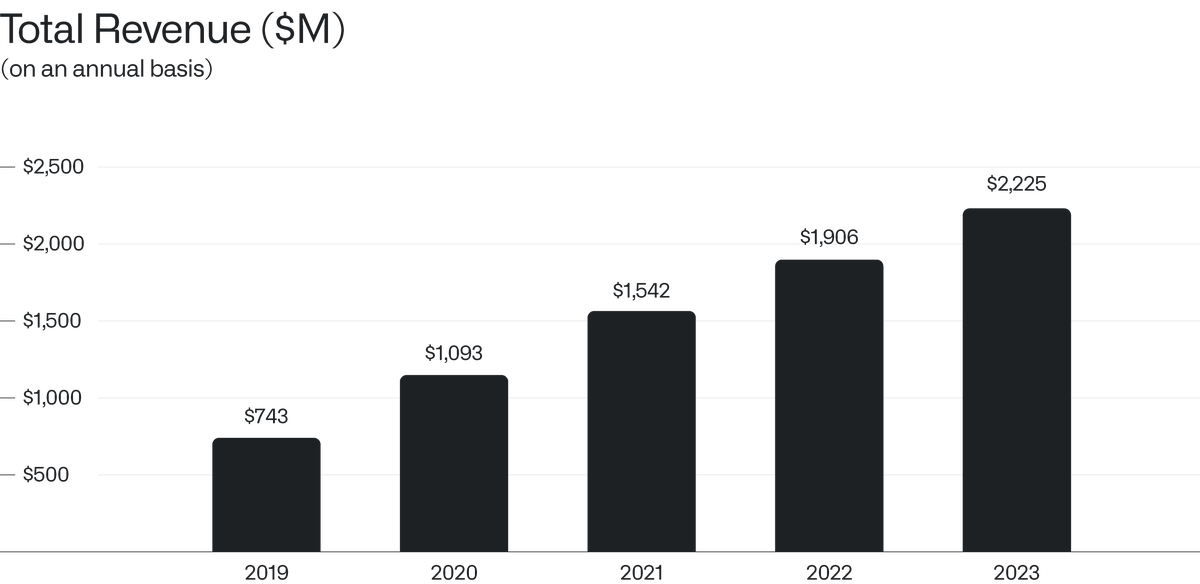
In short, Narayen wins because consistent innovation matters. Adobe is not the biggest company in enterprise technology, but it isn’t the smallest either. Not only is Adobe on a revenue streak with impressive growth year over year (2019 +24%, 2020 +16%, 2021 +23%, 2022 +10%, and 2023 is also shaping up to be a double-digit growth year), the creative and customer experience giant is highly profitable. With a low debt to equity ratio and net profit margins (as of August 2023) of 27.11%, the 41-year-old company continues to perform and deliver. That was especially true in 2023. Under Narayen’s leadership, Adobe consolidated its decade’s long investments into automation, machine learning and artificial intelligence that had been packaged into their AI layer known as Sensei and injected significant resources and investment into generative AI innovation to deliver a new suite of models collectively known as Adobe Firefly.

Rather than rushing out any generative AI offering, Narayan focused the organization to address key concerns of the market, namely the safety, reliability, usability and commercial viability of content generated by AI. The Adobe Firefly models, now with updated releases with Image Model 2 and additional capabilities in generative fill, generative recolor and even 3D to image, Adobe has made it clear that generative AI should be accessible to all creators, offering a free publicly available solution along with a Premium plan that is $4.99/month.

The innovations in AI might get other CEOs onto this list, but what helped set Narayen apart is that this consistent drive to deliver innovations that matter to Adobe customers didn’t stop with Firefly. Narayen continues to push and challenge his leadership team to update their milestones and goals, encouraging the teams to constantly push boundaries and test market norms, while always respecting and celebrating the customer — very specifically all of the creators, marketers, sellers and experience leaders that rely on Adobe solutions to run and drive growth for their businesses.

Narayen continues to be a calm, steady, strategic leader driving Adobe into a new era of AI and wild creativity. He celebrates the foundation on which Adobe was built while charting a course for the future where Adobe remains a critical engine in an experience economy that will connect the personalized ambient experiences customers expect with the bursts of wild creativity and engagement that amplify differentiation.

RUNNERS UP: MARC BENIOFF, SALESFORCE

Why were they recognized?

Not even the threat of activist investors could stop Salesforce’s larger than life leader. What could have paralyzed others actually motivated Benioff to hear the call for austerity as Salesforce cut costs, slashed redundancies and focused time, talent and investments. He brought back familiar faces to shore up leadership roles and tripled-down on AI investments, shifting Salesforce from being a CRM company powered by AI and ML into Salesforce being an AI company rethinking customer-critical business functions. Salesforce even pulled off a price increase across its clouds. It is worth noting that throughout it all--the pressure, the shifts, the change and the challenges--Benioff has done it with that true Benioff style of cheeky humor and unfettered optimism that allows him to believe Salesforce will change the world for the better.

RUNNERS UP: JENSEN HUANG, NVIDIA

Why were they recognized?

This was the year of the GPU and AI and Nvidia’s CEO, Jensen Huang, has been the driving force behind the AI revolution. Huang was a contender for Best CEO of 2023 with a 220% increase in share price for 2023 to be among the S&P 500 leaders. Jensen is the face of AI infrastructure and has never seen a press event he didn’t love. He has been everywhere this year and very few mature companies double sales in three quarters. Huang has a knack for long-term thinking and riding innovation waves such as AI factories. It’s safe to say that generative AI is his largest wave and he’s riding it even as other themes such metaverse, gaming, autonomous vehicles, and other bets faded from 2022.

RUNNERS UP: MELANIE PERKINS, CANVA

Why were they recognized?

Melanie Perkins, co-founder and CEO of online design platform, Canva, exemplifies exceptional leadership and innovation in the tech industry, making her a standout candidate for distinguished recognition. Under her leadership, Canva has skyrocketed from a start-up idea first nurtured from her mother's living room to an industry behemoth valued at $40 billion, now boasting over $1 billion in annual revenue. Her visionary approach has not only revolutionized graphic design accessibility, making it user-friendly and widely accessible, but also created a company culture that prioritizes employee welfare and environmental sustainability. Canva has evolved into a global platform that democratizes design. Her impact extends beyond Canva's enviable financial growth; it's seen in the empowerment of millions of users worldwide to express their creativity. Melanie's story is a testament to the power of innovative thinking, relentless pursuit of a vision, and the ability to lead a company through exponential growth while still maintaining a focus on community and inclusivity.
 

BEST ENTERPRISE SERVICES VENDOR

This category recognizes the enterprise services vendor that transforms delivery models and crafts new client–centric market approaches.

WINNER: PERSISTENT

Why did they win?

When founder and Chairman Anand Desphande handed the CEO reigns over the first time, his goal was to move past the "S” curve and take the company to the next level. While that first attempt at finding a successor did not work out as planned, he learned those lessons when he appointed former Harman executive and HCL veteran, Sandeep Kalra. Prior to Kalra’s arrival, Persistent had been stagnant in growth at $500 million in revenue, but under Sandeep’s leadership, the company grew and crossed the $1 billion mark in 2023. Over the past three years, Persistent has transformed from a specialized technology provider into a trusted digital transformation partner and global brand competing against the Tier 1 global system integrators.

RUNNERS UP: COGNIZANT

Why were they recognized?

Before Ravi Kumar S took the CEO role, Cognizant was seen as a has been. The previous CEO had decimated the culture, the talent flight scared clients, and the losses kept piling up. Clients felt the company lacked the innovation and capability to provide the smartest talent. The arrival of a new CEO has transformed the perception of Cognizant as a company that had lost its way to a company in the midst of a turnaround. Recent top hires from competitors and the stabilization of revenues have shown promise, breathing new life at Cognizant.

RUNNERS UP: ACCENTURE

Why were they recognized?

In 2023, Accenture defied the odds, achieving its 13th consecutive year of growth. In a challenging economic climate, the company achieved unprecedented growth to top expectations. Accenture’s record-breaking new bookings of $64.1 billion were an impressive 8% increase over the previous year, with 106 clients generating revenue that exceeded $100 million each per quarter. This remarkable performance wasn't limited to top-line growth. Accenture also saw continued bookings growth over 2022 and robust cash flow generation, solidifying their position as a leader in the industry.
 

BEST ENTERPRISE SOFTWARE STARTUP

This category recognizes when an enterprise software startup achieves escape velocity in mind share and relevance.

WINNER: HUGGING FACE

Why did they win?

Founded in 2016 by Clément Delangue, Julien Chaumond, and Thomas Wolf in New York City, the company transformed from consumer chatbot to a platform and community in machine learning loved by AI innovators. At its core, Hugging Face is a machine learning (ML) and data science platform and community that helps users build, deploy and train models. In August 2023, the company raised $235 million in Series D funding at a $4.5 billion valuation with Salesforce, Google, Amazon, Nvidia, AMD, Intel, IBM, and Qualcomm in the round.

When it comes to model repositories there is no place other than Hugging Face. Almost every company that is in the AI race has partnered with Hugging Face. They have become a one-stop shop for public model repositories, datasets, spaces/playgrounds for AI, and AI community hangout. Its model leaderboard makes or breaks the newer open-source models. Falcon, LLama, and other top-performing models are judged here. Not only that, but custom models can also be submitted for evaluation as well. Hugging Face’s model evaluation methods and metrics are very transparent.

The shift from specific models winning in AI to a model marketplace puts Hugging Face in a pole position for AI by providing the infrastructure to demo, run and deploy artificial intelligence (AI) in live applications. Offering enterprises, a go-to model marketplace is a winning strategy.

RUNNERS UP: OPENAI

Why were they recognized?

OpenAI's 2023 was marked by both groundbreaking achievements and internal leadership drama. Its revolutionary GPT-4 set the standard this year in generative AI with more than 100 million users and defined the category. OpenAI’s cutting-edge research in robotics and reinforcement learning has been further fueled by its Microsoft partnership. However, internal controversies have cast a shadow over OpenAI. Although the company’s commitment to responsible AI development remains a core strength, OpenAI is like the runner that led a race for the duration but stumbled at the end. It’s unclear how OpenAI’s drama has affected the company, but one thing is clear: Enterprises will pay more attention to model choice now.

RUNNERS UP: ANTHROPIC

Why were they recognized?

Anthropic has had a landmark year with sizeable investments from the likes of Google, Salesforce, AWS, Zoom and SK Telecom. Those partnerships have turned the AI safety and research company into a significant rival to headline leaders like OpenAI’s ChatGPT. Anthropic’s Claude has released a 2.0 update that promises even higher levels of accuracy and adaptability. With a focus on safety, trust and reliability, Anthropic is proving to be a viable if not preferred option for enterprises.

RUNNERS UP: COHERE

Why were they recognized?

Cohere has specialized on LLMs from the get-go - and offers an efficient approach to running models. Its breakthrough came in summer of 2023 when Oracle adopted Cohere as the go-to LLM across Oracle Cloud Infrastructure and its SaaS stack. Cohere also saw uptake in Salesforce offerings, and is available via Amazon SageMaker and Google Vertex AI. Cohere is a viable alternative to the omnipresent ChatGPT offering. Its Canadian roots gives privacy minded European CxOs and their enterprises piece of mind.

BEST PARTNERSHIP

This category recognizes the enterprise partnership that delivered the most impact for customers and the market.

WINNER: Nvidia w/ Anyone and Everyone All At Once

Why did they win?

Can you all guess one AI vendor conference keynote where Jensen Huang was not on stage? There it is. He was everything, everywhere, all at once when it comes to AI.

Nvidia has pretty much partnered with ANYONE that can spell AI. AWS, Microsoft, Google, Hugging Face, Databricks and Snowflake are just a few of the key partnerships. Jensen and his well-traveled leather jacket were on stage at every AI conference--often live and during the same week. Regardless of who wins the AI war, Nvidia will also win. Aside from Nvidia’s big partnerships, the company has done a great job building a broad ecosystem for developers to leverage.

Huang was our runner up as best CEO for a simple reason: He’s a much better partner and ecosystem creator. If you want to win in the arms AI race, you MUST partner with Nvidia.

RUNNERS UP: Oracle / Microsoft
    

Why were they recognized?

Strange bedfellows, to be sure, but with a list of joint customers who will benefit, this partnership had to make the list. Strategically, the partnership is built on enemy of my enemy logic but it serves joint customers well. The key truth of enterprise software came through again: At the end the customer must win. The two tech giants are on a steady course of collaboration with Oracle chairman and CTO Larry Ellison visiting Redmond for the first time, to announce the new expanded partnership. That Oracle Exadata machines are now physically inside Azure data centers and can be provisioned through the Azure console is a first for the industry. More importantly, Microsoft and Oracle give customers a simpler way to manage multi-cloud workloads.

RUNNERS UP: Microsoft / OpenAI
    

Why were they recognized?

In 2023, Microsoft and OpenAI forged a landmark partnership that redefined the boundaries of technical collaboration. This multi-year, multi-billion-dollar investment fueled OpenAI's groundbreaking research in areas like NLP, large language models, and reinforcement learning, leading to breakthroughs like the breakthrough GPT-4 language model. This partnership not only accelerated innovation in cutting-edge AI technologies but also established a model for responsible development, prioritizing ethical considerations and fostering transparency. Notably, Microsoft Azure serves as the exclusive cloud provider for all OpenAI workloads, giving Microsoft access to invaluable industry data, market cachet, and insights. With a shared vision for the future of AI, Microsoft and OpenAI's partnership stands as a testament to the power of collaborative innovation, earning them recognition as one of the top technology partnerships of the year.
 

BEST TECH ACQUISITION

This category recognizes the enterprise tech acquisition that has the most impact for customers, market landscape, and the overall industry direction.

WINNER: ATLASSIAN + LOOM
     

Why did they win?

With a deal coming in at a reported $975 million, the acquisition of Loom, the asynchronous video-based collaboration tool, by work and collaboration power Atlassian isn’t necessarily the biggest deal out there, but it is a mighty one. In Loom, Atlassian acquires video collaboration with already-robust connections into both Jira and Confluence, a customer base of 200K company customers and 21 million people using Loom as a means to connect, collaborate and communicate. For younger generations of workers, Loom has become their default for video creation across sales, training, marketing, project management and even customer support and service as they choose to “Loom an explainer” to engage.

Loom’s solution allows users to record video and screen sharing on any device with easy-to-use desktop and mobile apps and a speedy Chrome extension. AI powers powerful tools like Automated titles, summaries and chapters, automates tasks and optimizes video with silence and filler word removal at a price point that doesn’t pinch even the largest teams at $4/creator/month. Combine this with Atlassian’s tools that address everything from ITSM and issue tracking to project management and content collaboration, you have a new substrate for work built for the mobile, asynchronous video generation.

In this acquisition, Atlassian picks up stellar tech, a new customer base across which a land and expand sales motion could deliver quick returns, and a lead in a market trying to navigate the future of work for more future generations.

RUNNERS UP: Cisco + Splunk
      

Why were they recognized?

In a bold move that stands to redefine the landscape of security and observability, Cisco's acquisition of Splunk marks a key moment for both companies and the industry at large. By uniting Splunk's robust data platform with Cisco's comprehensive Secure Networks portfolio, this strategic partnership empowers organizations to leapfrog from reactive threat detection and response to proactive threat prediction and prevention. This integration unlocks a wealth of benefits for Cisco, including enhanced security through Splunk's data-driven approach to threat analysis across the entire IT infrastructure. Additionally, the combined solution offers industry-leading observability capabilities to provide deep insights into application performance and network health.

This union not only strengthens Cisco's financial position by bolstering its annualized recurring revenue stream with Splunk's $4 billion contribution, but it also catapults Cisco to the forefront of the security and observability market. Furthermore, the combined expertise of both companies paves the way for groundbreaking advancements in AI-driven security and observability solutions, laying the groundwork for a more secure and resilient digital future. Ultimately, the Cisco Splunk acquisition represents a transformative moment that is likely to deliver significant advantages for customers, partners, and the industry as a whole.

RUNNERS UP: Salesforce + Airkit
    

Why were they recognized?

It would be hard to argue that 2023 was the year of AI. Salesforce’s pickup of Airkit is certainly a step into a world where AI is everywhere. Completed in October 2023 for an undisclosed amount, the deal looks like a Service Cloud tuck-in purchase for rapid development of AI powered service bots/agents. But in reality, Salesforce picked up a low code/no code AI bot builder that can be used ANYWHERE across the “Customer360” clouds. The deal quickly ups Salesforce’s game in how to actually deploy and see quick benefits from AI deployments.
 

WORST TECH ACQUISITION

This category recognizes the enterprise tech acquisition that had the least impact for customers, market landscape, and the overall industry direction.

WINNER: BLACKSTONE ACQUIRES CVENT
   

Why did they win?

The acquisition, reported at $4.6 billion is a great deal for Vista Equity Partners who picked up the event management company in 2016 for $1.65 billion. In reality, Cvent has struggled in recent years, failing to be profitable and stacking up debt despite double-digit growth projections in sales. Given that Blackstone went through a span of successfully selling off assets in hospitality and entertainment like Hilton, La Quinta, and Sea World Entertainment, cornering the market with Cvent Hospitality Cloud seems an unlikely strategy. The market reality is that the event space is being forced to evolve, but despite the massive shifts forced by the COVID-19 pandemic, the return to live events has oddly brought back the old traditional muscle memory of event management, leaving many attendees wondering what happened to the momentum of innovation. Constellation Research’s analysts struggled to see where the upside on this investment could lie — in driving Cvent forward as it stands today in the largely commoditized and stagnant event management space (even Hopin sold its event business to Ring Central) or in shifting Cvent into a supporting role in another space. For this acquisition to succeed in the long term, Blackstone will need to catalyze disruption in Cvent’s event malaise even if it means rethinking its portfolio.

RUNNERS UP: CISCO/SPLUNK
 

Why were they recognized?

While the Cisco Splunk merger offers potential benefits, genuine concerns regarding its success linger. Firstly, the $28 billion price tag raises questions about potential overvaluation, especially considering Splunk's long-stagnant stock price and Cisco's history of unsuccessful acquisitions. Secondly, integrating two large, complex companies with quite different cultures and technologies will be a challenging feat, potentially leading to integration delays, employee turnover, and cultural clashes. Additionally, concerns remain regarding potential antitrust scrutiny, as the combined entity could hold significant market power in the security and observability space, potentially stifling competition and innovation. Furthermore, the merger is likely to distract Cisco from its core networking business, potentially hindering its focus and agility in a rapidly evolving market. Finally, the integration of Splunk's subscription-based model with Cisco's traditional hardware-centric approach may require significant adjustments to both companies' business models, posing potential financial and operational risks. Given these factors, the long-term success of the Cisco Splunk merger remains uncertain, and close observation of its development and execution is necessary to assess its true impact.

RUNNERS UP: OpenText / Microfocus
 

Why were they recognized?

From the start, the $9 billion dollars (all cash at that) OpenText’s pick up of Microfocus seemed more about picking up a customer base and widening a TAM than about the technology. This reality seemed at least partially confirmed when OpenText announced the divestiture of its Application Modernization and Connectivity business. While CEO Mark Barrenechea noted there is no intention to divest any other Microfocus units, there are questions as to what OpenText DOES intend to do given the company’s newly stated focus on cloud and AI businesses.
 

BEST NEW IPO

This category recognizes the most successful IPO for the year

WINNER: ARM

Why did they win?

The largest IPO of 2023 was the end of a long tug of war between owner Softbank and the UK government, that wanted UK based ARM to be listed on the FTSE. In the end, great access to capital in the US won and Softbank benefitted from the US listing on NASDAQ. ARM also needed access to capital markets to expand its offering of its low energy consuming chips. Notably it has entered the hot AI chip market and needs capital to aggressively invest here. After an initial dip the ARM stock is up roughly 20% over the IPO prices.
 

BEST NEW ENTERPRISE CATEGORY

This category recognizes the best new enterprise category that made an impact to the market.

WINNER: QUANTUM AS A SERVICE 

Why did they win?

If it weren’t for generative AI, 2023 would have been the year of quantum technology. For the first time, quantum computing is showing real commercial value to enterprises and handling workloads. One of the key leaders in the space, IBM, has delivered on its promise of making both the Condor and Heron chipsets available. AWS unveiled a flip error reduction chip at its re:Invent conference at end of November and outlined its latest plans for Braket. What was long expected before - that quantum technology will be the first technology that that enterprises will not deploy on premises, but consume through the cloud - has proven true. Effectively all working quantum vendors offer quantum computing ‘as-a-Service’ - making the new technology available on a pay-as-you-go basis. Rapid technology innovation, uncertain workload demand and high proprietary knowledge to operate quantum systems make cloud the right approach. There is a veritable conventional compute infrastructure, that prepares data, digests data and stores results of quantum processing. The result is a new software category, Quantum-as-a -Service (QaaS). QaaS is a combination of convention cloud compute, storage and networking services designed to optimize the utlization of a quantum platform via the cloud. QaaS also includes software and observability services available in a serverless architecure. And finally QaaS also means enterprises only pay for quantum when they use it.

RUNNERS UP: Model Marketplaces

Why were they recognized?

AI marketplaces work like an app store where customers can easily buy and sell their own data science models, algorithms, and custom AI models from other places. These marketplaces go beyond open-source communities and AI libraries. A trusted and secure marketplace is essential for the advancement of AI at scale across industries, market segments, and business models.

RUNNERS UP: NexGen Copilots

Why were they recognized?

AI copilots, a novel breed within the Generative AI wave, have rapidly emerged on the scene in 2023 as a transformative aid in employee experience. These intelligent concierges, leveraging natural language processing and advanced machine learning, and backed by deeply powerful large language models, act as personalized digital companions, automating repetitive tasks, providing contextual information, and assisting with decision-making.

Microsoft's new Copilot, a prime example, is now positioned prominently across their product suite and integrates seamlessly into various productivity and line of business applications, boosting productivity and streamlining workflows. Companies across industries are recognizing the potential of AI copilots, investing heavily in their development and integration into their employee environments. This large wave in product development, their prominent positioning within digital tools, and growing adoption signifies that AI copilots are not just a fleeting trend, but rather a fundamental shift in the way we work, paving the way for a more efficient, productive, and fulfilling employee experience.
 

BEST NEW ENTERPRISE SOFTWARE MARKETING OF THE YEAR

This category showcases the best marketing campaign, ad, or perception transformation in the enterprise.

WINNER: GOOGLE CLOUD

Why did they win?

Google has been battling giants (or at least giant headlines) all year. From the cloud wars with AWS and Azure to the AI race against OpenAI and upstarts like Hugging Face and Anthropic, Google had no choice but to supercharge its marketing machine to strike on multiple engagement fronts. First, from a content perspective, from thought leadership to sales collateral, Google Cloud has focused on the core messages and differentiators that have meaning to their IT and AI-focused customers. The “Out with the Old, In With the New” message wasn’t just about cloud or even infrastructure, but also about cost and reliability especially in the new age of AI. Second, a focused event-based strategy, including its marquee event, Google Cloud Next, delivered fresh experiences in an otherwise stale event slate. Few will forget the laugh-inducing keynote nee musical, “Legacyland”, where singers wondered aloud if we could outrun entropy or avoid paying bills known as technical debt. Finally, Google Cloud has masterfully rounded out its end-to-end marketing strategy with advertising placements that have been subtle to sublime — the Las Vegas Sphere takeover with a massive Google Cloud message lumbering over Las Vegas during AWS was covered on media around the globe resulting in both earned and owned impressions galore. Google Cloud CEO, Thomas Kurian, knows how to win in this market, delivering profitable quarters across 2023…but this award has to tip the hat to Google and Google Cloud marketing leaders like Lorraine Twohill, Alison Wagonfeld and Sarah Kennedy Ellis for a consistent demand drum beat and exceptional messaging and storytelling across the year.

RUNNERS UP: Atlassian

Why were they recognized?

From their “Impossible Alone” campaign to the ‘Dreamkeeper’ microsite as well as their new line of dev music, the developer firm kept it very fresh and on-brand in 2023 with their new (and supposedly ‘first-ever’) brand-centric marketing approach in 2023.

RUNNERS UP: ADOBE

Why were they recognized?

Adobe’s mantra in 2023 could have been to drink its own champagne, turning to its own solutions to power marketing and engagement. From leveraging personalization at scale with Adobe Experience Manager (AEM) personalizing web content, email engagements and ads to reflect most recently opened Adobe applications, to unleashing creativity by using Adobe Firefly to create images, vectors and video shown on massive screens across massive events, Adobe let people see the products by using the products. It could be argued that the strategy took an even more dramatic step as Adobe introduced a number of free tools and solutions delivering real creative firepower into any set of hands that wanted to create with the introduction of Adobe Express and a free tier to Adobe Firefly for generative AI content creation.
 

BEST NEW ENTERPRISE SOFTWARE AD CAMPAIGN

This category showcases the best ad campaign in the enterprise.

WINNER: WORKDAY "Rockstar"

Why did they win?

Workday took on workplace-bro culture with the Super Bowl 2023 kickoff of its Rockstar Campaign, With REAL rock starts including Ozzy Osbourne, Joan Jett, Billy Idol and others pointing out that closing a deal, making a quarterly profit goal, or even beating the champion ad campaign does not make you a “ROCK STAR” - So stop calling each other Rock Stars.

RUNNERS UP: IBM WatsonX

Why were they recognized?

IBM’s WatsonX ad campaign takes a little swipe at generative AI in the wild insinuating that while people dream of using AI to create steampunk hats, sending cats to space and generating postmodern artistic avatars, WatsonX is about what AI can do for your business. It may be a quick shot, but an effective one that quickly turns to outline all the ways IBM’s AI studio in WatsonX can accelerate the trusted, enterprise ready deployment of AI tools and workflows and the data needed to train these increasingly critical models. While some might point out that the idea of IBM Watson and AI are hardly new and there are questions around what makes this time at the AI dance different for IBM and Watson, it is hard to resist leaning in to hear the specific use cases IBM has already deployed and the realities of trusting the results of models using untrustworthy data.

RUNNERS UP: Smartsheet Peak Human

Why were they recognized?

Smartsheet's "Operate at Peak Human" campaign ignited recognition of the human spirit and high performance with its innovative approach to work management. Launched in 2023, The campaign is supported by real-world data and research demonstrating the positive impact of Smartsheet on productivity, efficiency, and innovation. This helped lead to bookings of over $700 million, over four million total users, and a tsunami of awards, including Most Innovative Company, Happiest Employees, and Best CEO recognition, showcasing how Smartsheet's platform empowers individuals and teams to maximize efficiency, automate tasks, gain insights, and unleash creativity, ultimately setting the highest industry standard for work management and human potential.
 

BEST LIVE-EVENT

This category showcases the team that adapted and succeeded in their high-touch in-person event to a full on virtual event experience.

WINNER: AWS re:Invent 2023

Why did they win?

AWS has taken over as the biggest event in enterprise tech, though with a decidedly more developer-focused slant than the Dreamforces and Oracle Open Worlds of pre-pandemic times. It also marks the ascendance of Las Vegas and decline of San Francisco as the epicenter of enterprise tech events. With 60,000+ attendees on hand in person and broad cross section of vendors exhibiting, it’s the closing show of the year and puts AWS in a position to set the agenda for the year ahead.

RUNNERS UP: Databricks Data + AI

Why were they recognized?

Databricks brought real customers, like JPMorgan Chase, JetBlue Airways and Rivian, demonstrating real AI in production to its big, exciting and hugely successful Data + AI event.

RUNNERS UP: AdobeMax

Why were they recognized?

Adobe MAX is always a high energy, rambunctious festival of creativity, but this year it was stepped up with demonstrations powered by AI and Adobe’s Firefly models that were truly inspiring. Fun with demos that were engaging and never overly and unnecessarily somber or serious, Adobe MAX is a celebration that never disappoints.
 

RUNNERS UP: Google Cloud NEXT

Why were they recognized?

They win for best organized, well-run, and laid out major tech event, making good strategic use of Moscone Center with bonus points for the excellent and well-placed analyst lounge for serendipitous meetings.
 

BIGGEST TECH FLOP OF THE YEAR

This category simultaneously recognizes the highest potential and largest failure in enterprise tech.

WINNER: The Slow and Painful Death of Legacy Social Media

Why did they win?

How many Threads did you scroll through tonight? Get lost in the quagmire of TikTok because you accidentally clicked a video you THOUGHT was going to have a cute puppy only to be sacrificed to the algorithm that now only serves things you can’t unsee? Lost your voice from screaming at X as you lament the death of Twitter? That’s OK…you aren’t alone.

From the failed promise of Instagram Threads replacing the disaster known as X to the near constant appearance of Social Network CEOs in government hearings and lawsuit court dates, 2023 lay bare all the bumps, bruises and warts that now cover once dominant social media platforms. Take Facebook’s bet with Instagram Threads. Debuted in July and posting an impressive start with some 30 million signups within the first 24 hours of launch, and a reported 100 million monthly users currently, Threads failed to truly dominate over X, seemingly because of poor planning rather than a lack of interest in quick to post text-dominant updates. Despite a summer launch, Threads is only now nearly ready to launch in Europe. A recent update has made Threads accessible in any language, again, months after its debut. And, only until recently, users were forced to delete both Threads AND Instagram, unable to sever the two from one another.

The problem with Threads isn’t entirely Instagram or Facebook’s fault as users have been trying to simply transition their Twitter experience to Threads in an effort to abandon the sinking ship of X. Users have been venting their frustrations as Threads continues to be dominated by the same influencers and celebrity seekers that dominate Instagram itself. For those looking for news, journalists accounts or business influencers, Threads has left most lacking. Rather than lean into this gap in the market Instagram and Facebook seem determined to alienate these markets further by publicly stating they wouldn’t be making the same “mistakes” it made in the early 2010s by quickly promoting journalists and news accounts. So much for that audience warm welcome!

But advertising dollars will ultimately determine the total life expectancy of social…and the outlook is murky as spend is down (drastically in the case of X) and users are skewing older leaving the coveted younger demographic up for grabs as they bounce around newer solutions in search of a community to call home.

RUNNERS UP: OpenAI Board Soap Opera

Why were they recognized?

The OpenAI pre-Thanksgiving CEO Musical Chairs fiasco goes down as a leading example of corp governance run amok that left customers and partners wondering if any adults were left to steer the fast-moving ship. In what one analyst called “poorly written Game of Thrones fan fiction,” the OpenAI board assumed it had too much power and rushed into actions taken in a vacuum. It has been the classic example of who is present to monitor the observers. Not only was it hastily done, but after the fact, rumors abound about midnight phone calls to rival CEOs with interpersonal spats playing out on social channels. All of this was only prologue to the board publicly begging ousted CEO Sam Altman to return a scant 24 hours after showing him the door in the name of ethics. Had the board decided to stand its ground, this inexperienced gaggle might have shown they had the backbone needed to drive OpenAI into its next phase of growth. Instead, they only proved the best move might be to fire them all. Had it not been so ridiculous, it could be a lesson in board and oversight dynamics laced with a best practice reminder that corporate boards are not clubs for friends and family. To be successful, you need seasoned leaders and advisors--not the case of Days of Our Lives with plot twists so insane you are only left thinking that it would be impossible to make any of this stuff up!


Data to Decisions Digital Safety, Privacy & Cybersecurity Future of Work Marketing Transformation Matrix Commerce New C-Suite Next-Generation Customer Experience Tech Optimization Chief Analytics Officer Chief Customer Officer Chief Data Officer Chief Digital Officer Chief Executive Officer Chief Financial Officer Chief Information Officer Chief Information Security Officer Chief Marketing Officer Chief People Officer Chief Privacy Officer Chief Procurement Officer Chief Revenue Officer Chief Supply Chain Officer Chief Sustainability Officer Chief Technology Officer

Google brings Gemini Pro, AI Studio to developers

Google built on its launch of its Gemini large language model (LLM) with Gemini Pro, Google AI Studio and other tools developers and enterprises can use for generative AI use cases.

Last week, Google rolled out Gemini 1.0, its most powerful model designed to compete with OpenAI's ChatGPT. Gemini comes in three sizes with Gemini Ultra focused on complex tasks, Gemini Pro, an all-purpose model, and Gemini Nano, which is aimed at on-device usage.

With Google's follow up, the company looked to build out its AI stack and make it easier for developers and enterprises to build with Gemini. The plan for Google is to get Gemini into as many developer workflows as possible. With the introduction of Gemini, all three hyperscale cloud providers have announced or upgraded models in recent weeks. Amazon Web Services outlined Amazon Q at re:Invent. Microsoft is upgrading Copilot with the latest from OpenAI.

Among the key items:

  • Gemini Pro is available to developers and enterprises with the Gemini Pro API available using Google AI Studio. Software developer kits for Gemini Pro are also available.
  • Gemini Pro accepts text and generates text as output. Gemini Pro Vision is available also.
  • Google AI Studio allows for 60 requests per minute. The company is looking to entice developers with more free offerings, an easy ability to transfer code and low costs once Gemini Pro is generally available in early 2024.   
  • Enterprises get the Gemini Pro API via Google AI Studio, which is available via Google Cloud Vertex AI.
  • Vertex AI will enable developers to tune Gemini models with their own data and use a no-code, low-code environment. 
  • Gemini Pro is part of a curated list of more than 130 models available on Vertex AI.
  • The Gemini Pro API is available on Vertex AI at no cost until general availability.
  • Imagen 2, Google Cloud's text-to-image diffusion tool is available.
  • MediLM, a healthcare industry LLM, is available via Google Cloud.
  • Duet AI for Developers and Security Operations is now available. Duet AI for Developers includes AI code completion, code generation and chat in multiple integrated development environments. Tasks and processes are also streamlined. Duet AI for Security Operations aims to search data in seconds, add context and automate manual reviews.
  • Mistral AI will use Google Cloud infrastructure to distribute and commercialize its LLMs. Mistral is a large AI provider in Europe.

With the moves, Google Cloud is building out its generative AI stack to better compete with the likes of Microsoft Azure and AWS. By offering AI Studio, a free web developer tool, Google Cloud is looking to entice more enterprises to build on its platform.

In a blog post, Google Cloud CEO Thomas Kurian said, "Gemini is part of a vertically integrated and vertically optimized AI technology stack."

This stack includes AI optimized infrastructure, models of different sizes, Vertex AI, and Duet AI assistive agents across Workspace and Google Cloud. Kurian said:

"The release of Gemini, Vertex AI and Duet AI offers a comprehensive and powerful cloud for developers and customers. Google Cloud is propelling the next generation of AI-powered agents across every industry."

Speaking during a Google Cloud webcast, Kurian said:

"Google Cloud Gemini Pro was designed to be our most efficient model to serve. So we priced it to be accessible to all developers. As for price with a focus on hardware and software optimization, we've reduced our pricing by four times per input character and two times per output character, at the same time, improving model quality and reducing serving latency."

Constellation Research analyst Holger Mueller said:

"Google Cloud lost no time to integrate Gemini across its offerings and did it in one week. Remember the time when it was one quarter for platform innovation to be uptaken? In the current AI race, Google does not want to lose any time with the first multi-modal GenAI LLM. The multimodal architecture of Gemini, coupled with the progress of the TPU V5 offerings, will likely prove to be the magic sauce for expanding Google's leadership in all things AI." 

Data to Decisions Innovation & Product-led Growth Next-Generation Customer Experience Future of Work Digital Safety, Privacy & Cybersecurity Tech Optimization Google Cloud Google SaaS PaaS IaaS Cloud Digital Transformation Disruptive Technology Enterprise IT Enterprise Acceleration Enterprise Software Next Gen Apps IoT Blockchain CRM ERP CCaaS UCaaS Collaboration Enterprise Service AI GenerativeAI ML Machine Learning LLMs Agentic AI Analytics Automation Chief Information Officer Chief Technology Officer Chief Information Security Officer Chief Data Officer Chief Executive Officer Chief AI Officer Chief Analytics Officer Chief Product Officer

Intuit’s bets on data, AI, AWS pay off ahead of generative AI transformation

Intuit may be the best example of the need to have a data strategy before tackling generative AI. The company, which has had to adapt to technology and economic shifts for 40 years, realized five years ago that data and AI would be fundamental to its core mission.

The company's mission, to power prosperity around the world, is a bet that it can create a platform that can help you grow your business, run it, manage cash flow and be compliant. Intuit's platform, which also serves as a gateway to human expertise, aims to conduct business with you and for you.

Get this customer story as a PDF

For fiscal 2023, Intuit reported revenue of $14.4 billion, up 13% from the previous year and up from $6.78 billion in 2019. Intuit acquired Credit Karma and Mailchimp in 2020 and 2021, respectively.

"In order to pull that off, we declared five years ago that data and AI was going to be fundamental," said Intuit CEO Sasan Goodarzi, speaking at a recent investor conference. "And everything starts with data. To create a future of done for you, you must have data. We have invested heavily in the last decade, but in the last five years, we really accelerated our investments in data and AI."

That decade period is also notable because Intuit's prescient bet on data lined up with a transformational move to go all-in on Amazon Web Services (AWS) for its infrastructure.

In 2013, Intuit decided to go all-in on AWS and has been a core reference customer ever since. Intuit, which has built a strategy that revolves around AI, data touch points and signals, machine learning and generative AI, is a key reference for AWS given the cloud race to host workloads.

Goodarzi said Intuit has 500,000 data points per small business. "We see all the money coming in, all of the money going out, all the transactions," he said. "We're not new to this game of AI, and particularly it was machine learning and knowledge engineering."

Now with generative AI, Intuit has launched Intuit Assist, a horizontal assistant that will operate across the company's product portfolio. Intuit wants to enable small businesses, which can have 10 to 100 employees, and increasingly mid-sized businesses.

"We're leveraging data and AI and now generative AI to really create a platform where we do the work with you and for you. You’re always in control. And human expertise is critical in what we do because we deal with people's money, whether it's a consumer or a small business," explained Goodarzi. "We have also created on our platform a virtual expert platform where there's always a gateway to human expertise, but that human is also AI-driven."

Intuit's generative AI turn

In September, Intuit updated its plans and goals through 2030. Five years before, Intuit said data and AI would be critical.

"We stood here more than five years ago and shared with you that our belief was that AI was going to be as revolutionary as electricity and the internet. We believe then and we believe now that it will ignite global innovation in ways that we could never imagine possible across every single industry," said Goodarzi.

Now it is time for Intuit to accelerate, said Goodarzi. "With the announcement of Intuit Assist, which is based on years of investment in data in AI and now particularly Gen AI. Intuit is about to paint its masterpiece for our customers and as we think about growth in the future," he said.

Intuit rolls out Intuit Assist generative AI across platform | Constellation ShortListâ„¢ B2C Marketing Automation for Small to Midsize Business

Intuit's 2025 goals are ambitious. It aims to double the household saving rate and improve the small-midsized business success rate by 10 points better than the industry average, grow to more than 200 million customers and accelerate revenue growth. Half of SMBs fail. In 2030, Intuit hopes to make the SMB success rate 20 points better than the industry average.

The big bets for Intuit revolve around speed to benefit, connecting people to experts, unlocking smart money decisions, driving SMB growth and disrupting the market.

Intuit estimates that its total addressable market tops $300 billion. Today, Intuit has about 5% of that market. Goodarzi said Intuit can grow its total market because it is not poaching customers from other vendors. SMB non-adoption--businesses using Google Sheets, paper, Microsoft Word and shoeboxes of invoices--is Intuit's biggest rival.

To get more of that market, Intuit Assist will need to play a big role. The horizontal generative AI assistant can drive customer growth, increase adoption of services, point customers to experts and leverage Intuit's data flywheel for new products.

  • Intuit Assist is powered by GenOS, Intuit's generative operating system that enables the company to design, build and deploy experiences. GenOS, which is designed to use multiple large language models (LLMs), is comprised of the following parts:
  • GenStudio, a developer environment to refine experiences, prompts, and code.
  • GenRuntime, an intelligent layer that can access the right data and platform capabilities and choose LLMs in real time to orchestrate and execute personalized action plans for customers.
  • GenUX, a library of consistent customer interfaces and flows for generative AI experiences.
  • LLMs are designed to run with Intuit's own financial LLMs that are tuned to solve tax, accounting, personal finance and marketing issues.

Goodarzi noted that Intuit Assist's secret sauce isn't technology but data. "It sits on top of years of investment in data, years of investment in AI and all the ecosystem of apps that we now have to provide us the ability on behalf of our customers to do the work for them to help them grow their business to manage their cash flow to manage their employees to get their taxes done for them," he said.

Intuit CTO Alex Balazs, speaking at the company's September Investor Day, said the company's platform is anchored in what it calls the city map.

"Our city map reflects the common architecture shared by all of our products, and it drives our platform vision it shows everything we're developing and plan to develop. It helps us to clarify what do we have, and what do we need to have to achieve our strategy," he said. "It helps to organize our teams and drive accountability and we move faster, the more we consume the capabilities of our platform. It's also important that it's not just a technical point of view. It also reflects our business capabilities to our business architecture."

The city map evolves based on what Intuit needs to meet customer needs, said Balazs.

For instance, Intuit recently elevated identity as a category as well as data integration and embedding fintech. This city map approach keeps Intuit's technology team on track and delivering experiences quickly.

"We've supercharged our platform at GenOS to rapidly create solutions for our customers’ most important financial needs powered by AI and generative AI," he said. "We create a differentiated value for our customers with both scale and speed."

The infrastructure behind Intuit's transformation

Nhung Ho, vice president of AI at Intuit, spoke during AWS re:Invent to outline the company's latest moves on the cloud provider.

"Intuit has built on AWS first from moving our applications onto the cloud to AI and machine learning with SageMaker and now in the era of generative AI with Bedrock," said Ho. "In 2019, we declared that we were going to be an AI driven expert platform. And by combining cutting edge AI with tax and human expertise, we're delivering unparalleled experiences for our customers. Today, we've been able to achieve incredible scale of AWS running all of our data capabilities, as well as our data lake on AWS."

Ho (right) said the AWS infrastructure enables Intuit to make more than 65 billion machine learning predictions per day and analyze more than a half of a million data points for small business customers. Intuit also sees more than 810 million customer-backed AI interactions each day.

Because of those previous moves to AWS, Intuit has ensured it has good data governance and clean data. As numerous technology executives have said, there is no AI strategy without a data strategy.

For Intuit, the AWS infrastructure has enabled it to focus on applications, building prototypes and building out its generative AI operating system.

Ho said that Intuit has to anchor its generative AI strategy to accuracy, latency and cost. "The ability to use smaller, faster models allows us to realize significant latency gains and we're able to host these models on SageMaker," said Ho. "We also use third-party algorithms because the thing you have to really optimize for is the customer experience. Bedrock gives us the optionality with a wide range of models."

Intuit's inference infrastructure runs on AWS VPC so it can keep customer data separated, secure and private, said Ho. Intuit Assist is embedded across Intuit platforms ranging from TurboTax to QuickBooks to MailChimp and can tap into the data and knowledge based to answer questions and create experiences.

"You have to really invest in your underlying data because it's going to be the differentiator for every experience you build," said Ho. "You also need to build in horizontal solutions from day one. There is also no one size fits all LLM, so optionality is incredibly important."

Can Intuit move upstream?

Intuit is known for its base of consumer and SMB customers, the Goodarzi noted that the midmarket isn't out of reach.

"We have defined mid-market as 10 to 100 employees, I want to be clear that our stopping point is not 100. In fact, most companies don't even define 10 to 100 employees as mid-market. It's far greater than that. Our stopping point in the near term was 100. But our goal is to be able to serve mid-market customers that are in the 1,000s because this is a massive opportunity for the company," said Goodarzi.

The midmarket bet is that Intuit has a platform that can assist every customer’s job. The biggest difference between a company with 100 employees and 1,000 is scale.

Goodarzi said:

"We don't want to serve enterprises, but we have a platform that's easy to use and we can be very disruptive on price. We have a big opportunity to be disruptive and we have pricing power in the mid-market. It’s the same service, the same capabilities, just building them at scale.”

Intuit has already been seeing progress in the midmarket, said Goodarzi, who noted there's a lot of white space in the market.

He said:

"What makes us very excited about this space is, there's an enormous gap in those that are between sort of 10 employees and 1,000 employees because in the past there's been players like us that can serve the low end. There have been big players, right, like the Oracles, the SAP can then serve enterprise, and this group in the middle, which is a massive market, has always had to make a choice. Do I pay a ton of money and use something that I don't really need, or do I keep screaming at Intuit to hurry up and create a platform that I can use?"

Data to Decisions Future of Work Next-Generation Customer Experience Innovation & Product-led Growth Tech Optimization Digital Safety, Privacy & Cybersecurity amazon ML Machine Learning LLMs Agentic AI Generative AI AI Analytics Automation business Marketing SaaS PaaS IaaS Digital Transformation Disruptive Technology Enterprise IT Enterprise Acceleration Enterprise Software Next Gen Apps IoT Blockchain CRM ERP finance Healthcare Customer Service Content Management Collaboration GenerativeAI Chief Information Officer Chief Data Officer Chief Executive Officer Chief Technology Officer Chief AI Officer Chief Analytics Officer Chief Information Security Officer Chief Product Officer

Oracle's Q2 mixed as revenue falls short, cloud sales sequentially flat

Oracle posted a mixed second quarter as cloud revenue was $4.8 billion, up 25% from a year ago but up slightly sequentially. Oracle reported better-than-expected second quarter earnings with a revenue miss.

The company reported second-quarter earnings of 89 cents a share on revenue of $12.9 billion, up 5% from a year ago. Non-GAAP earnings in the second quarter were $1.34 a share.

Wall Street was expecting Oracle to report fiscal second quarter earnings of $1.32 a share on revenue of $13.05 billion.

Going into the second quarter results, optimism about Oracle's cloud infrastructure business and generative AI workloads was rampant. Oracle's cloud business, which is approaching a $20 billion annual revenue run rate in the second quarter, broke down like this:

  • IaaS and SaaS revenue combined in the second quarter was $4.8 billion, up 25% from a year ago. The first quarter revenue for IaaS and SaaS was $4.6 billion.
  • Cloud infrastructure revenue in the second quarter was $1.6 billion, up 52% from a year ago.
  • Cloud application second quarter revenue was $3.2 billion, up 15% from a year ago, with Fusion Cloud ERP sales up 21%. NetSuite revenue was up 21% from a year ago.

Oracle CEO Safra Catz said demand for cloud infrastructure and generative AI services is "increasing at an astronomical rate." Oracle's Remaining Performance Obligations (RPO) and indicator of future revenue gains topped $65 billion.

CTO Larry Ellison said Oracle is "is in the process of expanding 66 of our existing cloud datacenters—and building 100 new cloud datacenters." Ellison added that it is turning on 20 new Oracle cloud data centers connected to Microsoft Azure.

AWS, Microsoft Azure, Google Cloud battle about to get chippy | Microsoft uses Oracle Cloud Infrastructure for Bing conversational workloadsOracle, Microsoft launch Oracle services within Azure data centers 

Speaking on a conference call, Ellison said Oracle needs to build out its infrastructure to meet demand. Ellison said Oracle plans to announce two new cloud contracts at $1 billion or more. "Broad demand is not only driven by generative AI customers, but also by nation states, plus large banks, telecommunications, telecommunications and industrial companies buying dedicated cloud," said Ellison.

Catz said the only thing holding back cloud revenue is capacity. She said:

"The only limiting factor is our ability to get the data centers handed over and filled up fast enough. This quarter alone, we're talking about hundreds of millions of dollars that we would have been able to recognize if our capacity was available."

Ellison said Oracle can bring data centers online quickly.

"We're able to build new data centers rapidly and operate them effectively. Because all of our data centers are architecturally identical and highly automated," said Ellison, who said growth for Oracle Cloud Infrastructure should top 50%. He added that data centers are being built for sovereign deals with Japan, Italy, Saudi Arabia, Bangladesh, and others.

Constellation Research analyst Holger Mueller said:

"Oracle's transformation is ongoing, but its new revenue sources are not making up for the slowdown of old on premises revenue. The key is that Oracle keeps investing into its cloud buildout – with almost $7 billion in capex in the second quarter, which marks the first quarter in a year where capex is under $8 billion. The good news is that Oracle has become more profitable, so when the top line grows by only 5% earnings per share are up by 50%. That earnings capacity shows the experienced leadership by Safra Catz and team. All eyes are now on Oracle’s Q3, which traditionally is stronger than the second quarter. In Q4, Oracle is able to capture the budget flush in its installed base."

As for guidance, Catz said total cloud revenue excluding Cerner should grow between 26% and 28%. Non-GAAP earnings will be between $1.35 and $1.39 a share.

By the numbers:

  • Oracle cloud services and license support is now 74% of revenue, up from 70% a year ago.
  • Cloud license and on-premises license revenue was 9% of sales.
  • Americas revenue in the second quarter was $8.08 billion with EMEA was $3 billion. Asia Pacific revenue was $1.61 billion.
  • Hardware was 6% of total revenue in the second quarter, down from 7% a year ago. 

Oracle adds vector search to Oracle Database 23c, melds generative AI, transactional data | Oracle's MySQL HeatWave additions take aim at AWS with lakehouse support

Data to Decisions Tech Optimization Innovation & Product-led Growth Future of Work Next-Generation Customer Experience Digital Safety, Privacy & Cybersecurity Oracle SaaS PaaS IaaS Cloud Digital Transformation Disruptive Technology Enterprise IT Enterprise Acceleration Enterprise Software Next Gen Apps IoT Blockchain CRM ERP CCaaS UCaaS Collaboration Enterprise Service AI GenerativeAI ML Machine Learning LLMs Agentic AI Analytics Automation Chief Information Officer Chief Technology Officer Chief Information Security Officer Chief Data Officer Chief Executive Officer Chief AI Officer Chief Analytics Officer Chief Product Officer
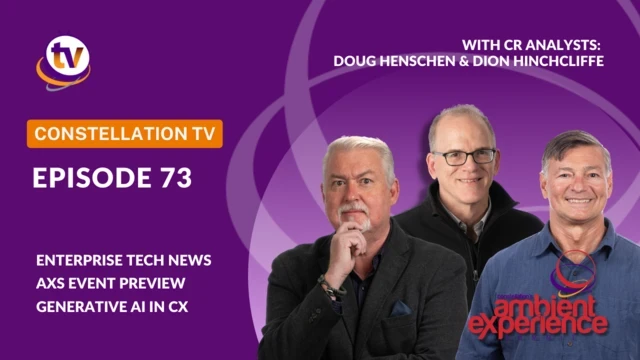
Unleashed Amsterdam: Atlassian Refines the End-to-End Developer Experience

I'm here in Amsterdam this morning at the historic former stock exchange, Beurs van Belage, to get an update on where Atlassian is going on its journey to fully enable DevOps and developer experience (now the newish trendy acronym, DevEx) in the cloud for the developer world.

Atlassian's long-time trajectory has been one of steady growth and innovation in supporting agile software development. A fan-favorite of the developer community, the company's early products were built on the principles of open source software and collaboration. The company has stayed true to this ethos and it continues to be a core part of Atlassian's culture. 

Over the last two years, Atlassian has continued to invest its growth and innovation. The company has also made several acquisitions, including Trello in 2017 and Opsgenie in 2020. These acquisitions have expanded Atlassian's product offerings and strengthened its position in the enterprise software market.

Atlassian has also made significant investments in its cloud business. The company's cloud-based products, such as Jira Software, Jira Service Management and Confluence, are now its fastest-growing segment. Atlassian is also investing in new cloud-based products, such as Jira Product Discovery and Compass. With Atlassian's release of Compass, it arguably unveiled its most strategic product, aimed at helping organizations build the most effective overall development experience possible, using data-based insights, and now artificial intelligence, drawn from its Atlassian Intelligence capability.

Atlassian Unleashed Amsterdam 2023 Show Floor at the

The Atlassian Unleashed Amsterdam 2023 show floor at the historic Beurs van Belage on December 11th, 2023: Photo Crediit: Dion Hinchcliffe

Atlassian Fine-Tunes DevEx with Metrics, AI, and Integrations

The Unleash event here in Amsterdam kicked off with Atlassian's product head of agile and DevOps, Matt Schvimmer, who noted that research conducted by Google shows that organizations that invest in a healthy dev culture have a 30% higher organizational performance, which translates directly into better bottom line results. Matt also repeatedly beat the drum throughout the session on the whole point of DevEx is to produce "customer value", a mantra that organizations who invest in cost software development efforts are sure to appreciate.

Atlassian Matt Schvimmer

Atlassian's Matt Schvimmer, head of product for agile and DevOps, kicks off Atlassian Unleashed Amsterdam 2023. Photo Credit: Dion Hinchcliffe

Then came a sustained raft announcements, some minor as well as some that will almost certainly provide sustained, lasting value to Atlassian customers as the company continues to fill in a full developer experience toolchain.

The full-round up of news today was wrapped around three key tentpole ideas, each of which had specific announcements:

  • Idea 1: Capture the right project/developer metrics to promote healthy culture
  • Idea 2: Reduce the cognitve load on software engineering teams
    • New features involving Compass, Atlassian's DevEx platform
      • The software component catalog in Compass now included in Jira
      • There is new Dev CSAT integration with DevEx surveys (video)
  • Idea 3: Keep developers (and adjacent teams) in the flow 
    • New features in Jira
      • Integration with Figma and Jira, to flow design changes right into the DevEx
      • Work suggestions in Jira, including next best action
      • Command pallete in Jira

There was also a major focus on the capability that is a must-have in 2023: Generative AI. Atlassian announced the general availability of Atlassian Intelligence, which includes the following capabilities, under Idea 2 and Idea 3 both:

  • Generative AI features in Jira, Confluence, and Atlas
  • Intelligent summaries in Confluence, Jira Service Management
  • Natural language automation in Confluence
  • Natural language search in Jira
  • Virtual AI agents with generative answers Jira Service Management
  • AI project configuration in Jira Service Management
  • Natural language to SQL in Atlassian Analytics

You can watch a quick video overview of most of these new AI features from Schvimmers demo of them onstage.

Collectively, these new capabilities provide real acceleration for developers along with metrics and AI support for team members and project leads that will help most organizations better tranform vision into actual product with lower costs. The generative AI features I saw were impressive and if they work consistently as shown, are likely to shave many minutes a day for the typical developer while also improving the quality of team communications and collaboration. Atlassian Intelligence is included in Premium and Enteprise subscriptions.

It's worth taking a quick dive into the comprehensive vision and detailed care taken in Atlassian Intelligence. The design of the domain model behind it spans discovery, execution (architecture, project planning, and development), and operations. The new AI capability specifically designed to reduce the cognitive load and keep developers in the flow, and the resulting demo was impressive, reaching across the DevEx to inject time-saving content or create contextually accurate summarizes, or support on the fly.

The Domain Model for Atlassian Intelligence

The domain model for Atlassian Intelligence. Photo Credit: Atlassian

The company also tipped its hand on upcoming features of Atlassian Intelligence (roadmap below), which shows that Atlassian is just warming up on its committment to bring generative AI to the developer experience. Many new features are coming, notably robust code reviews and intelligent summaries of Jira issues.

Atlassian Intelligence Coming Roadmap of Features

The Atlassian Platform: A Modern Developer Experience, Realized

While the generative AI features stole the show, the significance of all the announcements today show a growing richness and maturity of the Atlassian platform from overarching strategy and design all the way to deteailed execution and operations. Atlassian continues to invest heavily in innovation and seeking to build a best-of-breed developer platform.

In my analysis, CIOs and IT execs can remain confident their investments in Atlassian's platform will continue to take them along a fast-evolving modern development journey, as the company maintains a high "tech intensity" in its R&D and product management efforts. While software and enterprise architecture tools are still not as strongly represented in the plaform as they could be, there are plenty of such offerings on the market that projects can choose from that integrate well enough. For now, Atlassian is maintaining a crisp vision of what it intends to be with a matching high pace of product development.

Related Reading and Research

My social coverage of Atlassian Unleashed Amsterdam 2023, including key videos of new capabilities covered above

AWS re:Invent 2023: Perspectives for the CIO

Dreamforce 2023: Implications for IT and AI Adopters

Google Cloud Next 2023: Perspectives for the CIO

Exploring Wipro Ventures: An Enterprise-Focused Tech Incubator

My new ShortList of IT strategy platforms

My current view of Developer Experience and Platform Engineering:

Developer Experience (DevEx) and Platform Engineering

New C-Suite Future of Work Tech Optimization Chief Information Officer Chief Digital Officer Chief Analytics Officer Chief Technology Officer

CVS Health’s transformation rides on data, AI and customer experiences

CVS Health has big plans to deliver health care to consumers across multiple touch points, but its success will depend on how it leverages data across its multiple touch points to deliver good customer experiences.

What CVS Health is aiming to do is improve customer experiences (and patient outcomes) across its pharmacy infrastructure, benefit plans, retail stores and health care delivery services via clinics. CVS Health is also an omnichannel juggernaut with digital and physical touch points. The CVS Health transformation effort is worth watching ahead of Constellation Research’s Healthcare Transformation Summit December 14-15, 2023.

To understand the scale of what CVS Health hopes is a flywheel of customer engagement it helps to know a few key facts.

  • CVS Health is expected to have $355 billion in revenue for 2023.
  • The company serves more than 120 million consumers, processes more than 2.3 billion pharmacy claims and handles more than 10 million annual health services visits.
  • 85% of the US population lives within 10 miles of a CVS location.
  • CVS Health is comprised of Aetna, which has $104 billion in annual revenue and more than 35 million unique members, CVS Healthspire, which has $182.7 billion in revenue, and CVS Pharmacy with $115.9 billion in revenue.
  • The company has more than 55 million digital customers who will have a more personalized experience via a new CVS Health App.
  • CVS Health's Signify unit has 11,000 clinicians that will do nearly 3 million home visits in 2023.

According to CVS Health CEO Karen Lynch, the company is "dedicated to unlocking the value in health care by delivering superior experiences, improving health and lowering the total cost of care."

Speaking at CVS Health's Investor Day, Lynch said: "We have powerful assets that work together to integrate all the moments of care that matter. We're able to provide panoramic care for all of our 100 million members."

8 takeaways from Constellation Research's Healthcare Transformation Summit | AI Meets Mental Health Assessments: How Futures Recovery Healthcare, Aiberry Co-innovated

Now all CVS Health has to do is connect the dots between its businesses and channels. "We're creating value by bringing all together these powerful assets to engage consumers and health across multiple channels," said Lynch. "The value generation that we will create is for all of our stakeholders, our clients, our customers, our providers, and our shareholders. Our segments individually each are profitable. However, when combined, they mutually reinforce growth and are more successful together than they are alone."

The economic gain from this customer experience effort is straightforward: Increase the lifetime value of a customer.

Here's an example of how CVS Health wants to move customers through its touch points.

Interim CFO Thomas Cowhey explained how this flywheel delivers returns.

"Once you understand how that flywheel works, understanding how we unlock value is pretty straightforward. We have to increase the number of interactions and the number of people we serve. Once they're in our ecosystem, we have to engage them. We have to make them help them play an active role in managing their health. We have to expand those interactions. We have to surround them with integrated services. And if we do that, we'll see enhanced persistency and more enhanced the value of those customers."

While CVS Health can drive returns with better engagement and cross-marketing of services, executives said the company can also drive better health outcomes.

Mike Pykosz, Interim President of Health Care Delivery at CVS Health, said patient and consumer engagement drives value on multiple fronts.

"One of the keys to increasing quality is improving patient engagement. You can't change a patient's health trajectory, if they're not engaged in their care," he explained. "Better quality and value-based contracts lead to your surplus and lead to savings that drives your economic model. And that means you can afford to invest in the innovative model. So, these things are all related."

Indeed, CVS Health estimates that when a member uses more than one of the company's services, she creates an integrated value that's up to 10% greater than the sum of the company's parts.


Data and generative AI

To reach its customer experience nirvana, CVS Health is betting on data, analytics and generative AI.

"We believe that AI and generative AI will transform healthcare," said Lynch. "We're applying technology, data and analytics to every single aspect of our business. The effects will be positive and profound."

Lynch added that the use of technology has preserved the importance of human connection. She added that AI will impact the following:

  • In the CVS Caremark unit, AI is being used to automate underwriter and client contracting.
  • Aetna is using AI to improve and automate operations.
  • CVS Pharmacy is using AI to automate pharmacists’ workflows and improve experiences.
  • Care delivery systems will use generative AI to summarize cases.
  • CVS Health's Signify unit, which conducts home visits, has invested in a logistics and routing platform to optimize travel time and supply chains needed to transport vaccines and immunizations.

Prem Shah, Chief Pharmacy Officer at CVS Health, said the company is using technology to streamline workflows in pharmacies.

"We've launched a clinical decision support tool that generates patient specific alerts to support our pharmacists' clinical conversations at the counter with their patients," said Shah. "We leverage AI and we've augmented our capabilities and our pharmacists to support key tasks, such as the ability to perform prescription verification."

A pharmacy operating platform called RX Connect is also designed to enable CVS Health's more than 9,000 stores as one fleet and integrate digital engagement from the CVS Health app, according to Shah.

CVS Health is also looking to digitally engage with customers to improve satisfaction, improve Net Promoter Scores and reduce calls that can be handled with AI or digital tools.

These digital engagements can enable CVS Health to reach consumers over time since the average tenure of a CVS pharmacy patient is about 10 years.

Ultimately, CVS Health plans to integrate these touch points with last mile care health services from its CVS Healthspire brands, including Oak Street Health, Signify Health and MinuteClinic.

Shah said CVS Health has already lowered the acquisition cost of an Oak Street Health customer via engaging customers and leveraging its retail footprint.

"We're going to engage more consumers in the moments that matter to their health where and how they want to engage us in a local setting," said Shah. "We're going to harness the power and engagement and trust to build connections across the full breadth of our enterprise and care delivery assets."

The tech stack

CVS Health executives did not get into specifics about its technology stack, but like large enterprises built by acquisition the company has a bit of everything.

The operating environment includes public, private and hybrid cloud as well as several business transaction systems. And there are plenty of positions for mainframe developers and engineers and even a bit of COBOL is required.

A tour through three dozen job listings revealed the following about the CVS Health stack.

  • Google Cloud is CVS Health's preferred platform, but AWS and Azure are listed in many job roles too. Multiple Google Cloud database, data services including BigQuery listed. CVS has talked about data discovery strategies with Google Cloud as well as working with Azure.
  • BI platforms include MicroStrategy as well as Tableau.
  • Databases include Oracle, PostgreSQL, MS SQL, MongoDB, Cosmos, Hadoop, Redis.
  • SAS programming skills often cited.
  • Snowflake and Teradata database integration skills are often required. Databricks or Jupyter Notebooks experience a plus for many positions.
Data to Decisions Marketing Transformation Next-Generation Customer Experience Future of Work Innovation & Product-led Growth Tech Optimization AR Chief Information Officer

Will VMware customers balk as Broadcom transitions them to subscriptions?

Broadcom will begin shifting VMware customers to subscriptions from enterprise licensing agreements as it integrates the company over the next year. But there are already signs that VMware customers are beginning to look to rivals such as Nutanix.

During Broadcom's fiscal fourth quarter earnings call, CEO Hock Tan outlined the transition for VMware. In short, Broadcom will spend about $1 billion in transition spending for fiscal 2024, divest VMware's end user compute and Carbon Black businesses, and, more importantly, install a new revenue model.

For Broadcom, VMware's fiscal year contribution of $12 billion in revenue will give the total company about $50 billion in annual revenue. Software, VMware (excluding planned divestitures), CA and Symantec, will be about $20 billion of the total. Broadcom closed the VMware purchase Nov. 22. 

Tan said:

"Our strategy going forward is simply to enable global enterprises to run their applications across the other data centers as well as on public clouds by consuming VMware’s higher-value software stack. And to attract and keep these workloads across the environment, we are investing in a rich catalog of microservices tools. This will be our focus."

The other part of the plan is to convert VMware's installed base from perpetual licenses to subscriptions by the end of fiscal 2024. Today, 60% of VMware's revenue is perpetual. Like similar transitions to subscription models, growth will slow and then reaccelerate with more predictable revenue.

This VMware transition will occur as Broadcom's semiconductor and hardware units pick up steam due to generative AI infrastructure.

Constellation Research analyst Holger Mueller said VMware is seen as the lever to get Broadcom to grow at a double-digit clip. Mueller said:

"Broadcom needs a new spark to return back to double digit growth and hit Tan's ambition for $50 billion in annual revenue and $30 billion in EBITDA. The spark is VMware, which will have to show how much it can grow in the coming fiscal year. It is also clear that Broadcom wants and needs more revenue differentiation, with semiconductor revenue outgrowing the infrastructure software segment. That mix will change with VMware. And then we will see if Broadcom can make its software portfolio grow."

Tan said that VMware's business will revolve around VMware Cloud Foundation and the aim is to virtualize data centers across enterprises for multiple cloud deployments. "We are converting more and more customers step-by-step as they come up for renewal into this higher value stack, and we’re doing it on a subscription basis," said Tan, adding that even during the transition VMware will see double-digit growth for the next three years. Tan said this growth can occur due to "the fact that we are also upselling a higher-value product."

Broadcom expects VMware to be able to accelerate its cloud foundation products via partnerships with Nvidia, Intel and IBM. The game plan is to leverage VMware's platform to enable data centers to run AI workloads easily as well as recently announced updates.

VMware Cloud launches three tailored management options | Constellation ShortList™ Next-Generation Computing Platforms

Tan said he has been meeting with CIOs in small groups and VMware's largest customers and they see the value of the company's stack.

What could go wrong? In a word, business model transitions usually give customers an excuse to look at other options. Nutanix, which reported its fiscal first quarter results at the end of November, is already seeing interest from VMware customers.

To be sure, there are a lot of customers that use VMware and Nutanix in a dual vendor strategy. Nutanix has a Red Hat partnership on OpenShift. That Nutanix-Red Hat option will also be an option for VMware customers.

"(Red Hat) competes against VMware on the application side, we compete with VMware on the infrastructure side," said Nutanix CEO Rajiv Ramaswami. "So, the partnership was very good from that perspective, good synergies on our side. Now, we have seen several customers adopt OpenShift on top of Nutanix, that continues."

Ramaswami said that even before the Broadcom-VMware deal was closed, Nutanix saw interest. "We did close some additional deals that I would consider to be influenced by the Broadcom VMware transaction," he said.

The CEO cited a global 2000 bank that had a dual vendor strategy but plans to standardize on Nutanix given the VMware transition. "They liked us. They were comfortable with us. And then now they have this additional trigger, and they were concerned about what would happen on the other side. So, they went with us as a sole vendor," he said.

According to Ramaswami, enterprise customers are likely to evaluate multiple vendors beyond VMware, but deals will also be unpredictable and cover multiple years. Nutanix could win deals or just be used as a negotiating option as Broadcom tries to transition VMware customers to subscriptions. Ramaswami, said:

"Many customers have signed multiyear ELAs with VMware, prior to the deal closing. And for those that have signed that gives them some time to evaluate options going forward. There certainly continues to be a lot of concerns around all the stuff we've talked about in the past, pricing, increased pricing, potentially dropping support levels, et cetera.

So, we have a significant pipeline of opportunities, and it's growing and a good degree of engagement with prospects, driven by these concerns. It's just difficult to predict timing and magnitude of wins."


Tech Optimization vmware Chief Information Officer

BT150 interview: Doug Benalan, CIO Cure Insurance

Doug Benalan, CIO CURE Insurance, NJ PURE, and Silver Rock Risk Solutions, is in the business of delivering affordable insurance via premiums based primarily on their driving record.

His company underwrites car insurance based on how well a customer drives, not their education, job or credit history. NJ Pure is a business that directly writes medical malpractice insurance in New Jersey. In addition, the company is expanding into new states.

We caught up with Benalan, a 2023-2024 BT150 member at Constellation Research's Connected Enterprise 2023 to talk shop. Here are some of the takeaways from our conversation and the roadmap for 2024.

Standardization. Benalan said Cure Insurance has been focused on expanding into Michigan and recently implemented Guidewire as its core system. "Guidewire is being used for claims and billing and other items," said Benalan. "It's really challenging because there are a lot of rules, regulations and government forms to follow. Guidewire standardizes that."

Customer experience. "Where we differentiate is being able to sell you a policy online regardless of the forms and procedures," said Benalan. "We do that through our automation and data sanitization procedures. We are using some OCR technology to scan the personal injury production forms, medical forms and those types of things so we can issue a policy in real time."

Continual process improvement. Benalan said 2024 will be a focus on strengthening core processes to speed up policy delivery. "We want to standardize processes, so customer time is not wasted," he said. "We want to minimize cost and maximize the use of technology."

Focusing teams on customer needs. "My advice to my team is to focus on the most value to the customer and let's go at speed rather than waiting for an entire release," said Benalan. "If you wait, technology and business can change. We aim for strategic delivery."

Cloud benefits. Benalan said CURE focused on Guidewire, which runs on AWS, because it was an opportunity to offer policies, claims and billing on one platform. "From a resilience, disaster recovery and customer perspective, Guidewire and the cloud enabled us to deploy to multiple regions."

"In addition, the maintenance and enhancements are modernized," said Benalan. "There's less firefighting on the daily operations side so that means the CIO can focus on the real business."

Discipline in customization. Benalan acknowledges that it's sometimes difficult to refrain from customization. "There should be some level of customization, but there will be problems when you need to do upgrades and enhancements," said Benalan. "My vision is that we can't use the product (Guidewire) right out of the box, but we don't want to customize too much so we have a failure down the line."

Technologies on the roadmap. Benalan said Cure is focused on improving mobile experiences as well as continual data integration. "We also are upgrading our analytics platform and data infrastructure," said Benalan. "We also are focused on AI and natural language processing and its use in fraud detection. We are working on fraud detection technologies."

Scaling the business. Speed to market is a critical component of Cure's business model, said Benalan. "In this industry, I don't see many carriers being able to implement in a new state within six months to eight months," said Benalan, noting CURE has been able to expand in Michigan quickly. "We have been able to get all the requirements, put together a team, plan and ready sprints quickly. Speed to market means you have to be ready on the first day when the product is launched. The most important thing to me is that customers are fully satisfied right away."


Data to Decisions Next-Generation Customer Experience New C-Suite Chief Information Officer