Editor in Chief of Constellation Insights
Constellation Research
Larry Dignan is Editor in Chief of Constellation Insights at Constellation Research, where he leads editorial coverage focused on enterprise technology, digital transformation, and emerging trends shaping the future of business. He oversees research-driven news, analysis, interviews, and event coverage designed to help technology buyers and vendors navigate complex markets with clarity and context. ...
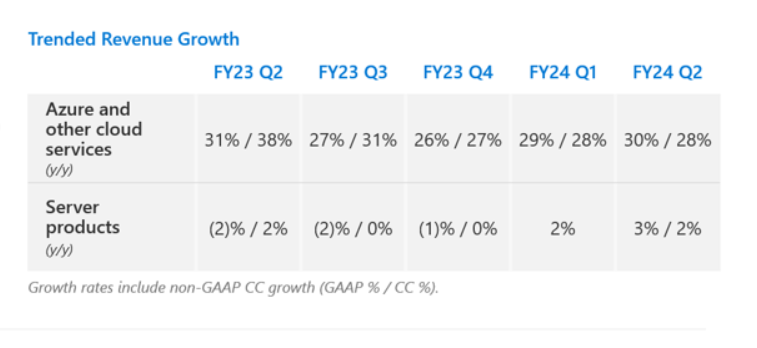
Microsoft said Azure delivered revenue growth of 30% in its fiscal second quarter and CEO Satya Nadella noted that moved from "talking about AI to applying AI at scale."
The company reported second-quarter net income of $21.9 billion, or $2.93 a share, on revenue of $62 billion, up 18% from a year ago. Wall Street was looking for fiscal second quarter revenue of $61.12 billion with non-GAAP earnings of $2.78 a share.
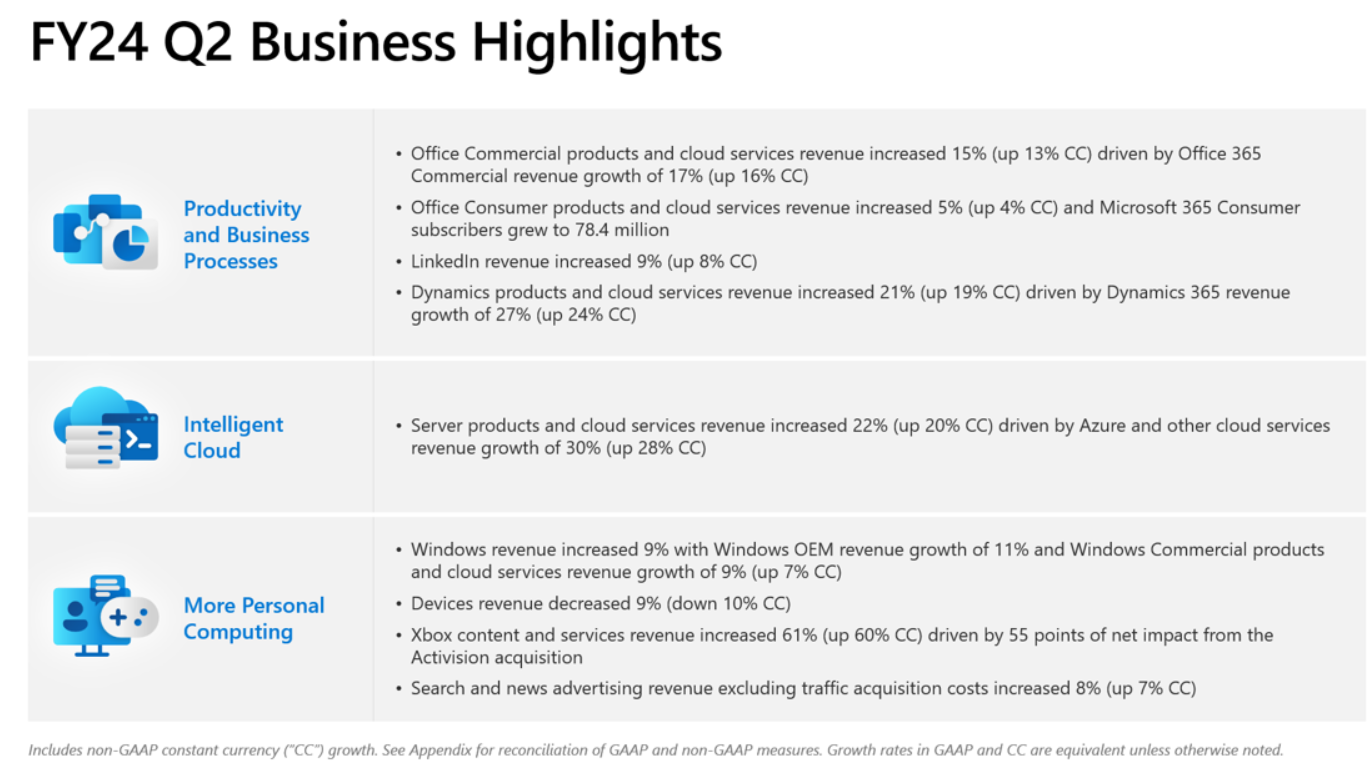
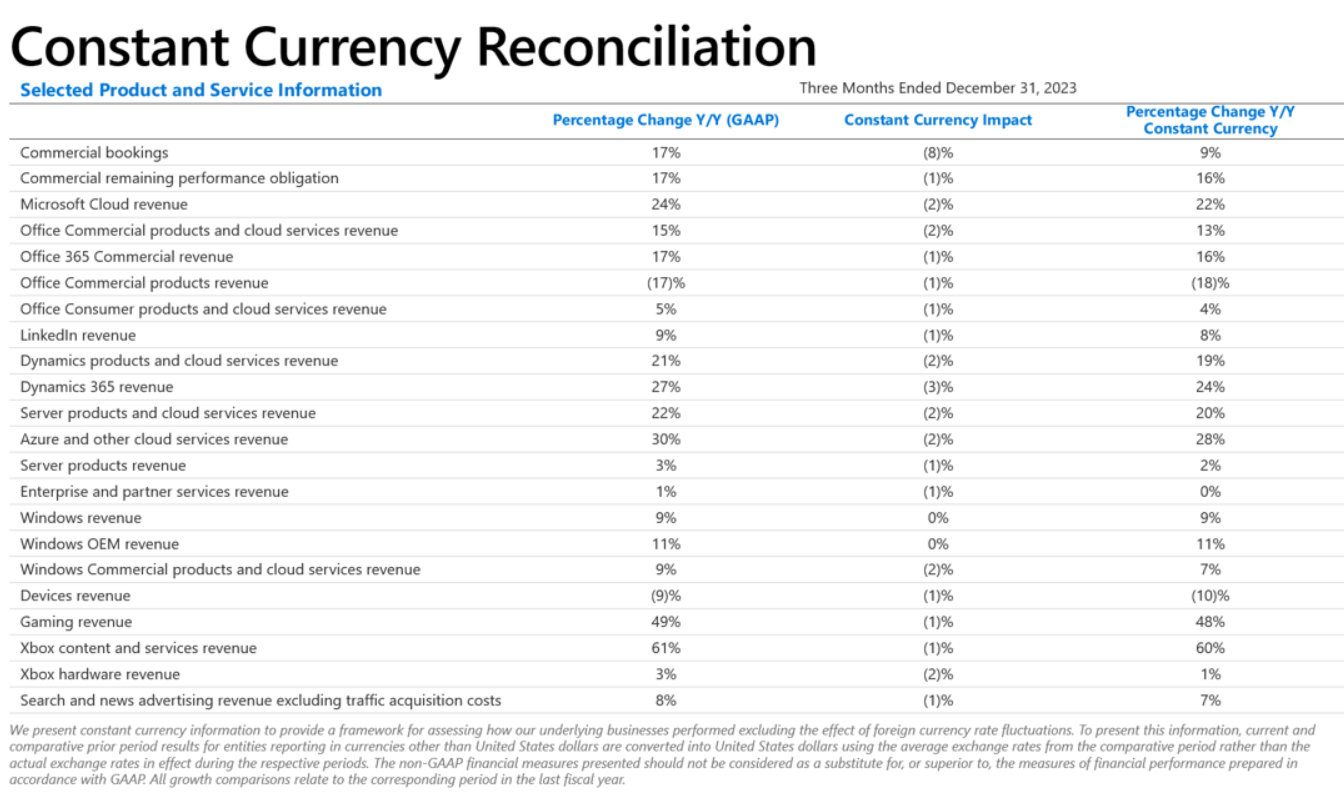
CFO Amy Hood noted that Microsoft Cloud revenue was $33.7 billion, up 24% from a year ago due to "strong execution by our sales teams and partners."
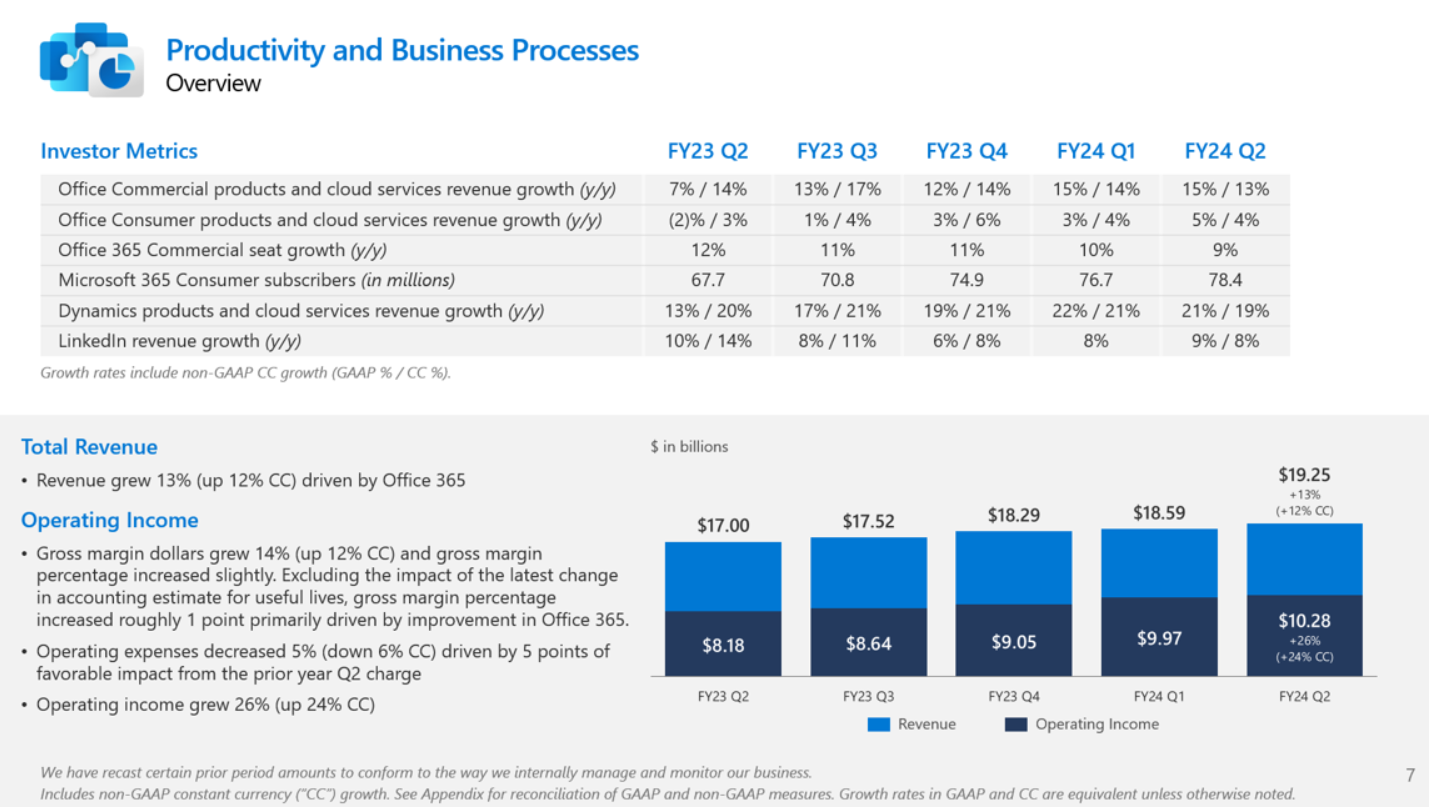
Microsoft said revenue in its productivity and business processes unit was $19.2 billion, up 13% from a year ago, with Office commercial and cloud services revenue gaining 15%. Dynamics had revenue growth of 21%.
For the Intelligent Cloud unit, powered by Azure, second quarter revenue was up 20% from a year ago. The personal computing division saw Windows revenue gain 9% from a year ago.
Azure revenue in the second quarter accelerated sequentially.
Editor in Chief of Constellation Insights
Constellation Research
Larry Dignan is Editor in Chief of Constellation Insights at Constellation Research, where he leads editorial coverage focused on enterprise technology, digital transformation, and emerging trends shaping the future of business. He oversees research-driven news, analysis, interviews, and event coverage designed to help technology buyers and vendors navigate complex markets with clarity and context. ...
Google Cloud delivered fourth quarter operating income of $864 million on revenue of $9.2 billion, up from $7.3 billion a year ago. Wall Street was expecting Google Cloud revenue of $8.94 billion.
Alphabet, the parent company of Google, reported fourth quarter net income of $20.69 billion, or $1.64 a share, on revenue of $86.3 billion, up 13% from a year ago. Wall Street was looking for fourth quarter earnings of $1.59 a share on revenue of $85.33 billion.
Google ended the quarter with more than 182,000 employees, down from 190,000 a year ago. The company saw fourth quarter growth across search, YouTube ads, subscriptions and devices and Google Cloud.
For 2023, Google reported net income of $73.79 billion, or $5.80 a share, on revenue of $307.4 billion.
CEO Sundar Pichai said the company was pleased with strength in search, YouTube and Google Cloud. CFO Ruth Porat noted that Alphabet is on an efficiency mission to "durably re-engineer our cost base as we invest to support our growth opportunities."
Alphabet said it spent $45.43 billion on research and development in 2023.
On a conference call with analysts, Pichai said Google Cloud is seeing strong usage of Vertex AI. "Vertex AI has seen strong adoption with the API requests increasing nearly 6x from the first half to second half last year," said Pichai. Pichai also said Duet AI was boosting productivity.
Porat said Google Cloud is seeing strong demand for its industry focused AI offerings.
Google Cloud is also building out its indirect channel. "We have nearly tripled the number of co-sell deals from 2022 to 2023. In our ecosystem, there are nearly 90,000, Google Cloud and AI enabled consultants and Accenture has teamed up with Google Cloud to create a joint generative AI Center of Excellence," said Pichai.
A few takeaways from the conference call:
Pichai said teams across Google are working on the next version of its Gemini model for use across the company. "By applying generative AI to search we are able to serve a wide range of information needs and answer new types of questions, including those that benefit from multiple perspectives. People are finding it particularly useful for more complex questions, like comparisons or longer queries. It's also helpful in areas where people are looking for deeper understanding, such as education or even gift ideas," said Pichai.
Subscription revenue for Google reached $15 billion, primarily due to YouTube Premium and Music. Google One is also boosting subscription revenue.
Advertisers are using and testing generative AI across the platform.
Google saw strong sales in retail in the fourth quarter.
Porat said Google will continue to become more efficient. "We will continue to invest in top technical and engineering talent," she said. "We also continue to execute to slow expense growth, improve efficiency in our technical infrastructure, streamline operations through the use of AI, increase efficiency of our spend with suppliers and vendors through our central procurement organization and optimize our real estate portfolio."
Vice President & Principal Analyst
Constellation Research
About Liz Miller:
Liz Miller is Vice President and Principal Analyst at Constellation, focused on the org-wide team sport known as customer experience. While covering CX as an enterprise strategy, Miller spends time zeroing in on the functional demands of Marketing and Service and the evolving role of the Chief Marketing Officer, the rise of the Chief Experience Officer, the evolution of customer engagement, and the rising requirement for a new security posture that accounts for the threat to brand trust in this age of AI. With over 30 years of marketing experience, Miller offers strategic guidance on the leadership, business transformation, and technology requirements to deliver on today’s CX strategies. She has worked with global marketing organizations to transform everything from…...
Editor in Chief of Constellation Insights
Constellation Research
Larry Dignan is Editor in Chief of Constellation Insights at Constellation Research, where he leads editorial coverage focused on enterprise technology, digital transformation, and emerging trends shaping the future of business. He oversees research-driven news, analysis, interviews, and event coverage designed to help technology buyers and vendors navigate complex markets with clarity and context. ...
With the Apple Vision Pro officially available Feb. 2 much of the focus is on that apps (Netflix, YouTube, Spotify) that won't be on the $3,499 spatial computing device, but for hybrid work three key collaboration applications are worth watching.
Zoom, Microsoft Teams and Cisco Webex are likely to highlight collaboration experiments in spatial computing and potentially lay the groundwork for the future of hybrid work. Box also has created an app for Apple Vision Pro.
Given the price of Apple Vision Pro it's likely to have more appeal in the enterprise in labs for new consumer experiences as well as collaboration use cases.
In a blog post, Zoom outlined its Apple Vision Pro app, which aims to give customers an immersive environment that'll blend virtual and physical space. The app will feature personas, a spatial Zoom experience that will aim for users to feel like they are in the same room as coworkers and upcoming features such as 3D object sharing, Team Chat and the ability to pin up to five Zoom Meeting participants.
Cisco Webex is likely to showcase its Apple Vision Pro app any day now and Microsoft Teams is going to do the same.
"Mesh helps workers tap into the power of the unspoken by listening using the spatial dynamics of the physical world. By incorporating spatial audio, Team can now mimic the way sound travels in the real world. This subtle feature could enhance the feeling of being "in the room" with colleagues, allowing you to naturally turn your attention to who's speaking based on the sound's direction. Imagine the natural flow of a conversation where you instinctively turn your avatar towards the colleague raising a question, or the quiet murmur of agreement that ripples through the virtual room as your boss delivers a key point."
"The convergence of AR, VR, and the metaverse with visual collaboration platforms heralds a new era of digital interaction, blurring the lines between the physical and virtual realms. AR, with its ability to overlay digital information onto the real world, can transform visual collaboration by enabling users to interact with real-world objects and digital data simultaneously."
Are we there yet? Not even close.
There are a bevy of caveats with the Mesh experiment as well as the collaboration apps on Apple Vision Pro. One thing is clear: Enterprise vendors are pondering the next iteration of hybrid work and collaboration. We're not there yet, but the experiments blending physical and virtual environments are worth monitoring.
Editor in Chief of Constellation Insights
Constellation Research
Larry Dignan is Editor in Chief of Constellation Insights at Constellation Research, where he leads editorial coverage focused on enterprise technology, digital transformation, and emerging trends shaping the future of business. He oversees research-driven news, analysis, interviews, and event coverage designed to help technology buyers and vendors navigate complex markets with clarity and context. ...
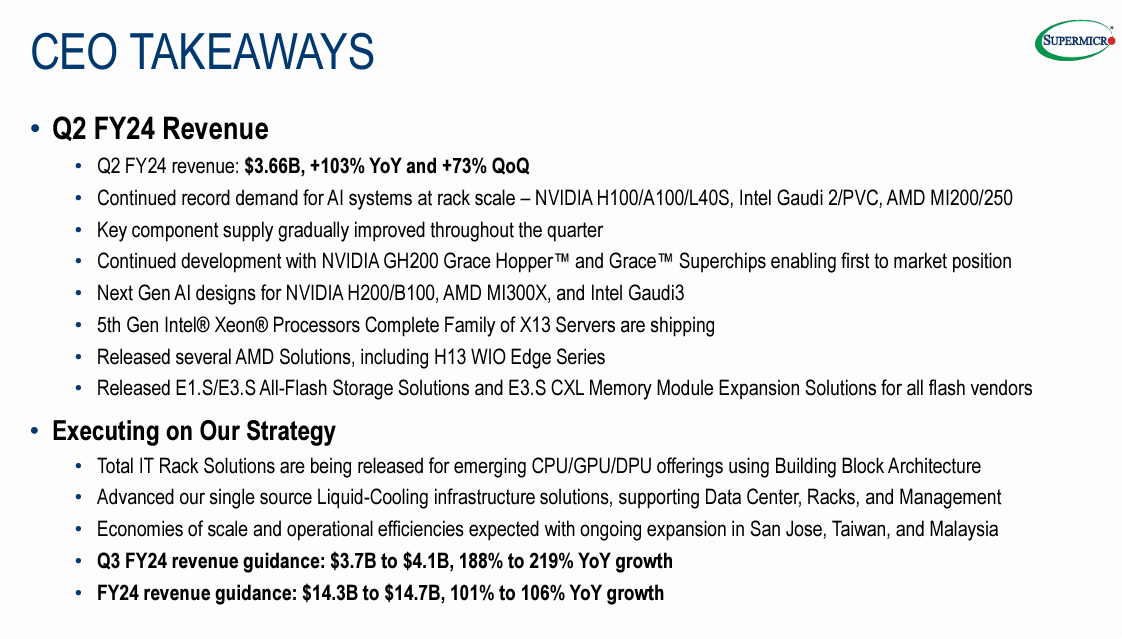
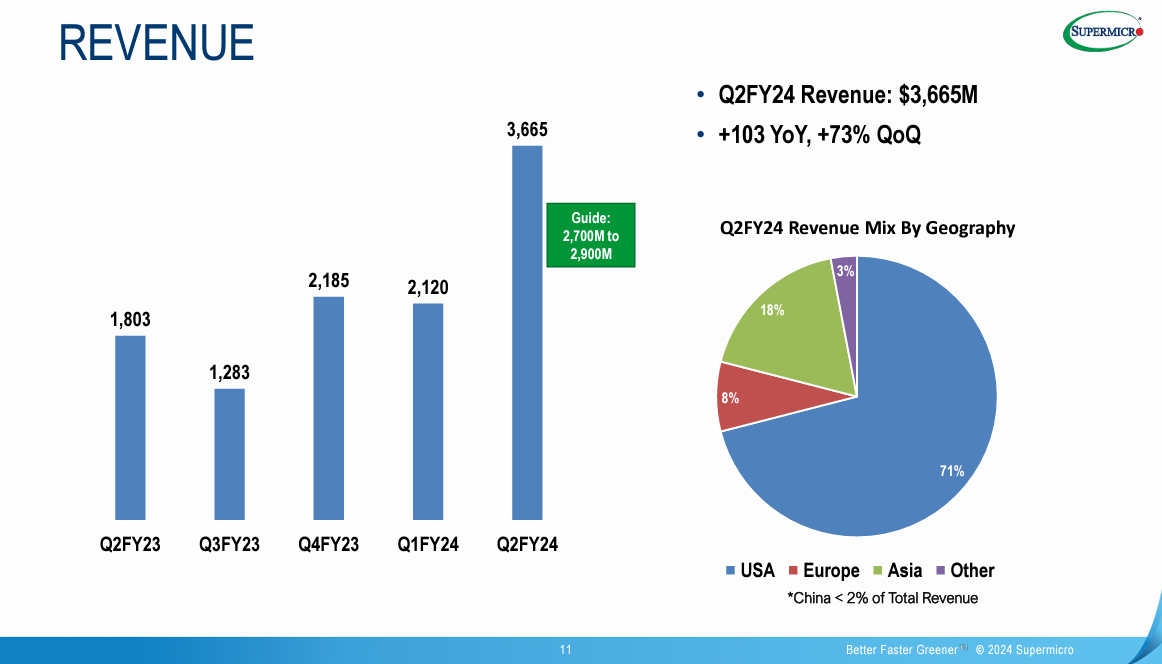
The company reported second-quarter earnings of $296 million, or $5.10 a share. Non-GAAP earnings of $5.59 a share compared to $3.26 a year ago. Supermicro's non-GAAP earnings were above the $5.40 a share to $5.55 a share given on Jan. 18.
Charles Liang, President and CEO of Supermicro, said:
"While we continue to win new partners, our current end customers continue to demand more Supermicro’s optimized AI computer platforms and rack-scale Total IT Solutions. As our innovative solutions continue to gain market share, we are raising our fiscal year 2024 revenue outlook to $14.3 billion to $14.7 billion."
Supermicro's results highlight how the generative AI data center buildout is moving beyond benefiting Nvidia to other hardware vendors downstream.
Both Dell Technologies and HPE have signaled strong pipelines for generative AI systems.
As for the outlook, Supermicro projected third-quarter sales of $3.7 billion to $4.1 billion with non-GAAP earnings of $5.20 a share to $6.01 a share.
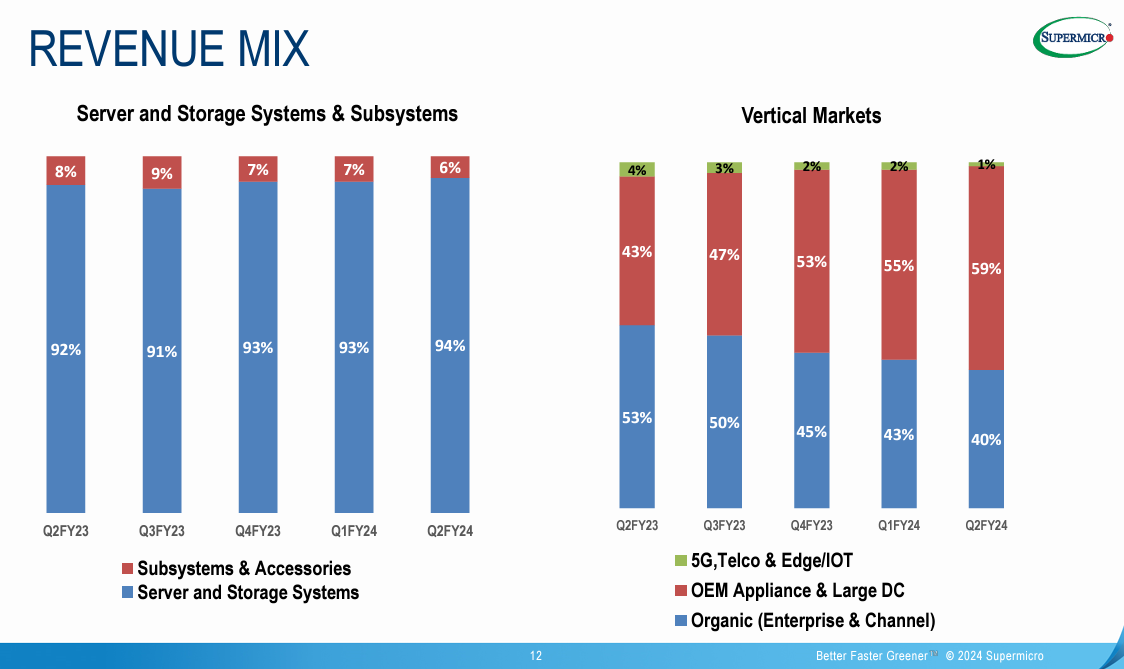
Supermicro said it is seeing record demand for AI systems powered by NVIDIA H100/A100/L40S, Intel Gaudi 2/PVC and AMD MI200/250. Revenue is being driven by hyperscale data center builds in the US.
On a conference call with analysts, Liang said demand was strong for Nvidia powered systems, but AMD and Intel systems were on the runway.
"Our AI rack-scale solutions, especially the Deep-Learning and LLM-optimized based on NVIDIA HGX-H100, continue gaining high popularity. The demand for AI inferencing systems and mainstream compute solutions has also started to grow.
We have been preparing to more than double the size of our current AI portfolio with the coming soon NVIDIA CG1, CG2 Grace Hopper Superchip, H200 and B100 CPUs -- GPUs, L40S Inferencing-optimized GPUs, AMD MI300X/MI300A, and Intel’s Gaudi 2 and Gaudi 3. All these new platforms will be ready for high volume production in the coming month and quarters."
Liang said Supermicro is further optimizing its Nvidia GPU based systems with AMD AI-optimized gear sampling. Supermicro plans the same for Intel's Gaudi platform.
Other takeaways:
Liquid cooled systems demand will pick up. "I think liquid cooling will be the trend and we continue to make ourselves ready and try our best to support the customer, including providing some help to their data center infrastructure," said Liang. "I believe liquid cooling percentage will continue to grow, but at this moment most of the shipping is still air cooled."
AI systems beyond generative AI are seeing growth. "Other than generative AI deep learning segment continues to grow very strong," said Liang. "Our inferencing opportunity in general CPU customer base also growing. So many verticals around the world need more inferencing solutions as well, including private cloud and data center."
Demand will expand beyond large enterprises. "The economies of scale is very important to us when we further grow our total revenue, we will have a more large scale customers and more middle-sized and small-sized customers as well," said Liang.
Vice President and Principal Analyst
Constellation Research
Title: About Dion Hinchcliffe
Dion Hinchcliffe is an internationally recognized business strategist, bestselling author, enterprise architect, industry analyst, and noted keynote speaker. He is widely regarded as one of the most influential figures in digital strategy, the future of work, and enterprise IT. He works with the leadership teams of large enterprises as well as software vendors to raise the bar for the art-of-the-possible in their digital capabilities.
He is currently Vice President and Principal Analyst at Constellation Research. Dion is also currently an executive fellow at the Tuck School of Business Center for Digital Strategies. He is a globally recognized industry expert on the topics of digital transformation, digital workplace, enterprise collaboration, API…...
The breakthrough success that Microsoft has had with Teams, the now-ubiquitous hub for 320 million in-office, hybrid, and remote workers, has long wrestled with the challenge of replicating the nuanced communication and connection of physical presence. Teams is light years ahead of its predecessor, the justly-maligned Skype for Business, but is still a bit clunky at times, despite regular facelifts and feature additions, including the relatively novel Together mode, arguably Microsoft's original foray into more immersive experiences for meetings within Teams.
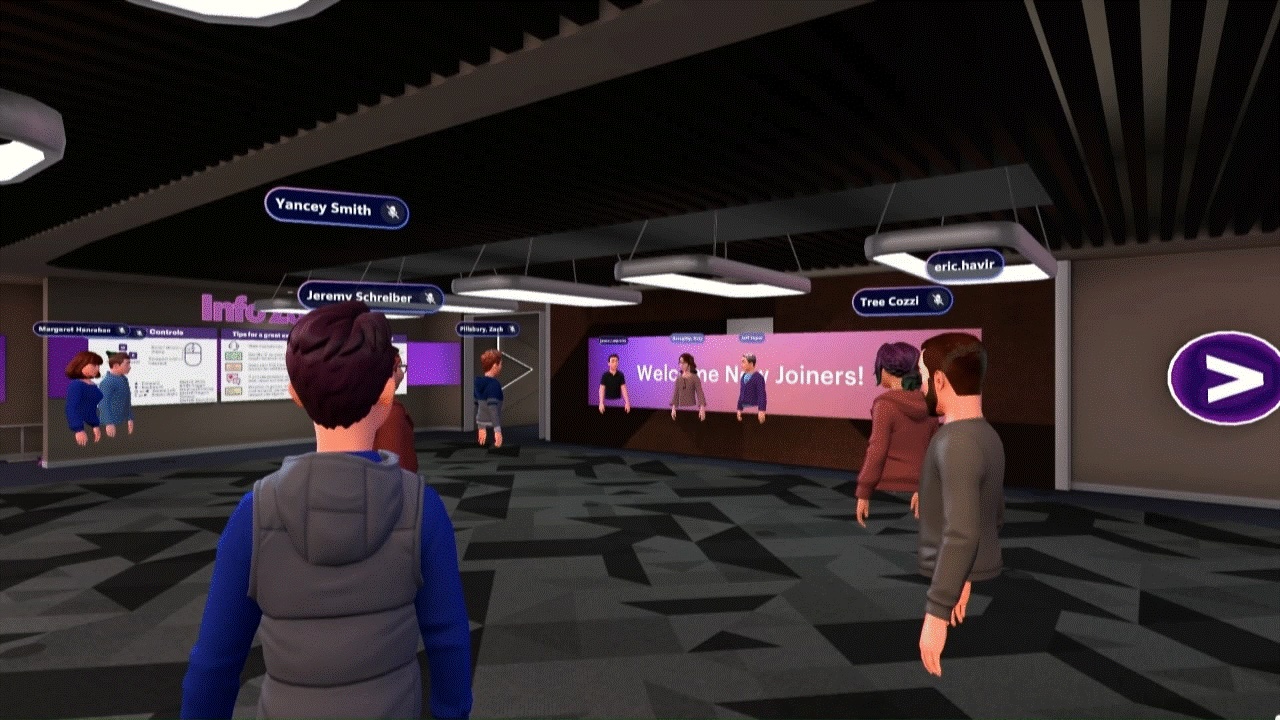
Enter Microsoft Mesh, a significant new experiment in 3D immersive worlds for work that's just landed in Teams. Packed with features that defy the confines of flat video calls, Mesh promises to usher in a new era of multi-dimensional collaboration. But can it truly bridge the hybrid divide to close the gap between in-office and remote workers?
Microsoft touts several large companies using Mesh today in innovative ways, including Takeda, Accenture, bp, and Mercy Ships. The latter has even created a virtual ship that they call the Global Mercy, which is a digital replica of one of their hospital ships, right within Microsoft Mesh. They say this will allow their organization to educate a variety of audiences, including volunteers, staff, and prospective donors, on the culture and operations of the organization without ever having to board the physical ship.
Video: Microsoft has Prepared Elaborate Materials Like This Explainer Video to Educate the Market About Mesh
But the elephant in the room about virtual 3D experiences remains this key question: Has the often clunky experience and awkward usability of virtual worlds been sufficiently addressed in the design of Microsoft Mesh enough to make it of interest outside of niche use cases?
To answer these questions, I spent some time with Mesh over the last few days to delve deeper into its capabilities and ponder its potential to transform the way we work. Here is what I found, as well as what collaboration and digital workplace teams should consider as they evaluate this technology that is now available for many organizations as of last week in their Microsoft 365 licenses.
Using Mesh demands that users step off into a virtual world that is spatial in three dimensions, although not as immersively so on a desktop. The new Microsoft Teams encourages its users to create a new 3D avatar, which I did and though there are plenty of controls, it takes a while to craft a custom avatar that is satisfyingly familiar. There is also a virtual reality version of Mesh available for Meta Quest users that is more involving and truly 3D. The Mesh experiences inside Teams and on the Meta Quest can be connected together into a single immersive experience for multiple workers.
Accenture has created One Accenture Park, a Mesh space that enables immersive experiences during onboarding
Before using Mesh, it is helpful to educate new users on the premise. Namely, that they will be able to ditch the today's sterile video grids and step into vibrant 3D environments like sun-drenched meeting rooms, bustling cafes, or even a fantastical courtyard, all accessible within Mesh, via its new presence within Teams. This shift promises to spark creativity and informal interactions in ways flat screens simply can't. Microsoft would like you to imagine brainstorming under a giant virtual oak tree, grabbing a simulated coffee with colleagues inside a bustling digital cafe, or celebrating a client win in a vibrant digitally-rendered night club.
Custom Avatars and Spatial Audio Differentiate the Experience
Mesh has also done away with static thumbnails for people, even in vanilla Teams. Now it lets you craft and customize your own digital avatar, a virtual you that moves, reacts, and reflects your personality. This personalized touch could foster a sense of embodiment and presence, making interactions feel more natural and engaging. Picture yourself high-fiving colleagues after a successful presentation, a comforting pat on the back to a teammate facing a challenge, or simply the subtle shift in your avatar's posture that conveys your focused attention. The avatars aren't quite a realistic as you might wish, but you have plenty of control over how they look.
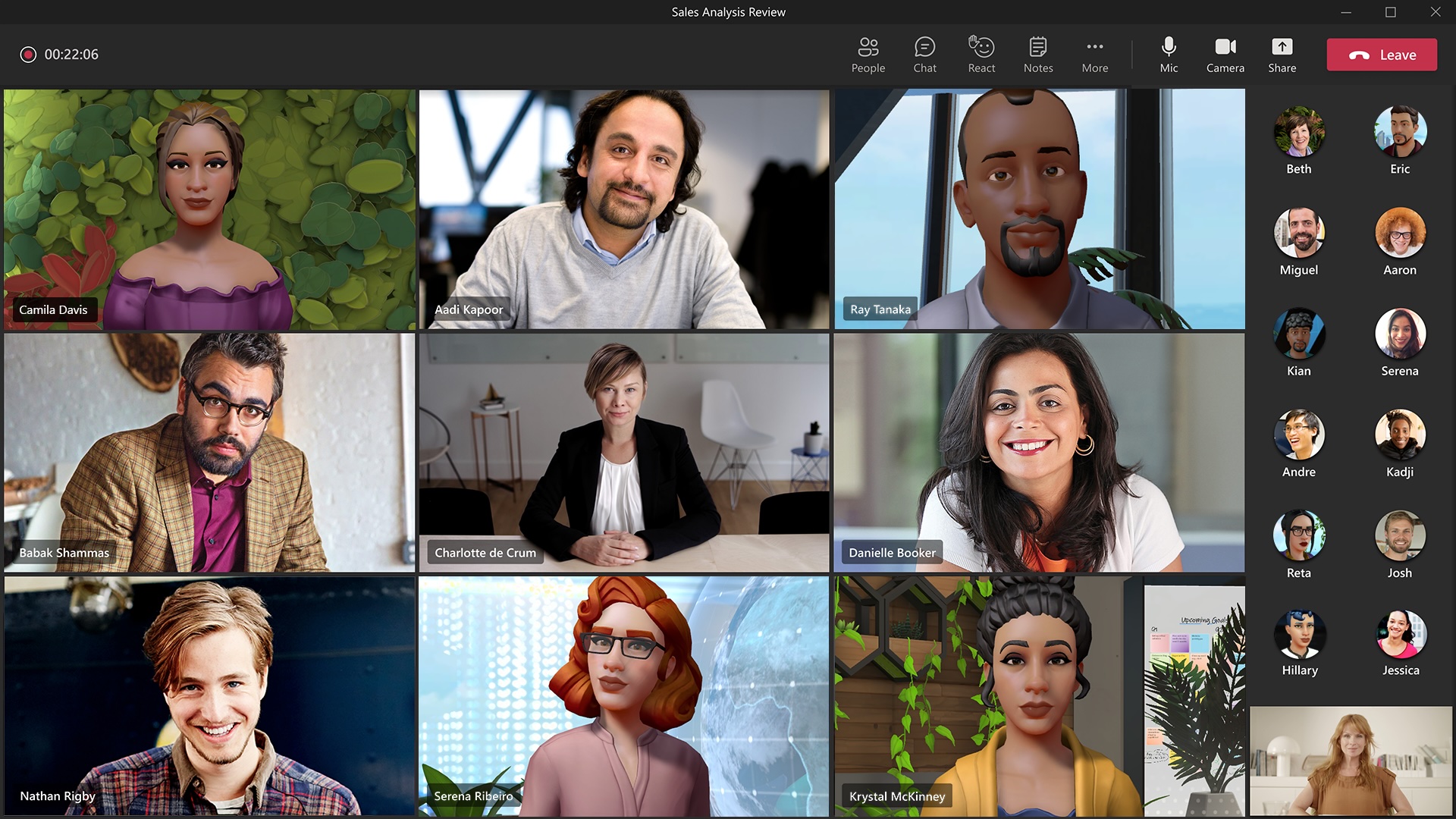
In Microsoft Teams, Workers Can Now Mix and Match Live Video with 3D Avatars That Mimic Their Movements
Mesh helps workers tap into the power of the unspoken by listening using the spatial dynamics of the physical world. By incorporating spatial audio, Team can now mimick the way sound travels in the real world. This subtle feature could enhance the feeling of being "in the room" with colleagues, allowing you to naturally turn your attention to who's speaking based on the sound's direction. Imagine the natural flow of a conversation where you instinctively turn your avatar towards the colleague raising a question, or the quiet murmur of agreement that ripples through the virtual room as your boss delivers a key point.
By reading a user's face with the camera, Mesh can capture gaze, although it did not seem to respond to hand or body gestures. I found that Mesh does a somewhat decent job of mimicing one's gaze, translating it into an avatar's movements. A raised eyebrow or a concerned glance can now be conveyed non-verbally, enriching communication and potentially fostering deeper understanding. Imagine the subtle shift in an avatar's gaze as they consider a colleague's proposal, the encouraging glance from a remote team member during a presentation, or the shared look of concern exchanged between colleagues witnessing a teammate's struggle. At least, that is the intent, and it mostly works in my testing.
Copilot AI: The Secret Weapon in Mesh's Virtual Pocket
The addition of in-experience AI is where Mesh gets truly intriguing. Microsoft's generative AI assistant, Copilot, is a personalized AI concierge embedded right with your avatar. It can transcribe conversations, suggest talking points, and can even translate languages in real-time. This layer of intelligent support could revolutionize meetings, especially for remote or language-barriered participants. Microsoft can expand greatly on the value that generative AI can inject contextually into ongoing meetings, from supporting data to informative 3D visualizations. What we're seeing today, as useful as it is, is just the beginning of what's possible and will likely end up being a key draw to using Mesh over time.
Imagine a world where a shy team member's ideas are amplified through Copilot's suggestions, or a global team seamlessly collaborates across language barriers thanks to real-time translation. Copilot can even be used to re-imagine and re-design the virtual space itself (watch a demonstration of this in the video above), if you have the right license level.
Challenges and Cautions: Is Mesh Enough to Overcome VR's Current Limits?
However, amidst the excitement, challenges remain. Will users truly connect with their pixelated counterparts? Past attempts at 3D avatars often felt gimmicky and isolating. Can Mesh overcome the fatigue often associated with VR experiences? Maintaining focus and engagement in a virtual world for extended periods can be draining. I was able to fairly easily download the Mesh app in the Meta Quest Store, connected it to my Microsoft 365 account and use the Mesh within a virtual reality space, though some fiddling with licenses and admin settings was necessary. When it works, it's pretty neat and the features above work as advertised. But the overall 3D experience -- at least in Meta Quest -- is indeed fatiguing after a fairly short while. It's clear that Mesh will have to wait for better hardware with more comfortable ergonomics, but the promise is there when it arrives. For now, the 3D experience within Teams on a laptop or desktop device is the most sustainable way to use Mesh.
More importantly, is the question of whether Mesh can deliver on its promise of improved communication and collaboration. Although some studies have shown that virtual meetings can hinder productivity and creativity, other research has found dramatic benefits when 3D worlds are involved. Mesh needs to demonstrably overcome today's limitations to justify its existence, but the promise is clear.
A Bold Leap of Faith: A Necessary Immersive Pathfinder
My assessment is that Microsoft Mesh is a brave move, a necessary experiment in today's hybrid work landscape that is yearning for deeper virtual connections between employees. But it's also crucial to remember that gimmicks and fatigue have plagued similar attempts. The success of Mesh hinges on its ability to genuinely deliver something new, something that transcends the limitations of past virtual meeting technologies. Copilot AI might just be that game-changer. But only time will tell if Mesh is the revolutionary tool it aims to be. Regardless, this experiment is one to watch and learn from, for it represents a significant step towards the future of hybrid work, a future where the line between physical and virtual increasingly blur seamlessly altogether.
I am currently bullish on spatial computing long term, and have been analyzing the space closely in my immersive experiences research. In this view, Mesh represents an critical experiment in pathfinding the way forward with virtual meeting tech. As the ergonomics, usability, and the underlying technology become better fleshed out, we'll soon be stepping into our virtual workplaces, meeting with our colleague's avatars in sun-drenched virtual courtyards, with echoes of our AI's helpful whispers guiding us towards a more connected, collaborative future. I recommend most organizations find their own business use cases for Mesh that it will improve -- most likely ones related to education, strategic communication, culture-building, and some creative work -- and build experience and capability with this new mode of digital collaboration.
Editor in Chief of Constellation Insights
Constellation Research
Larry Dignan is Editor in Chief of Constellation Insights at Constellation Research, where he leads editorial coverage focused on enterprise technology, digital transformation, and emerging trends shaping the future of business. He oversees research-driven news, analysis, interviews, and event coverage designed to help technology buyers and vendors navigate complex markets with clarity and context. ...
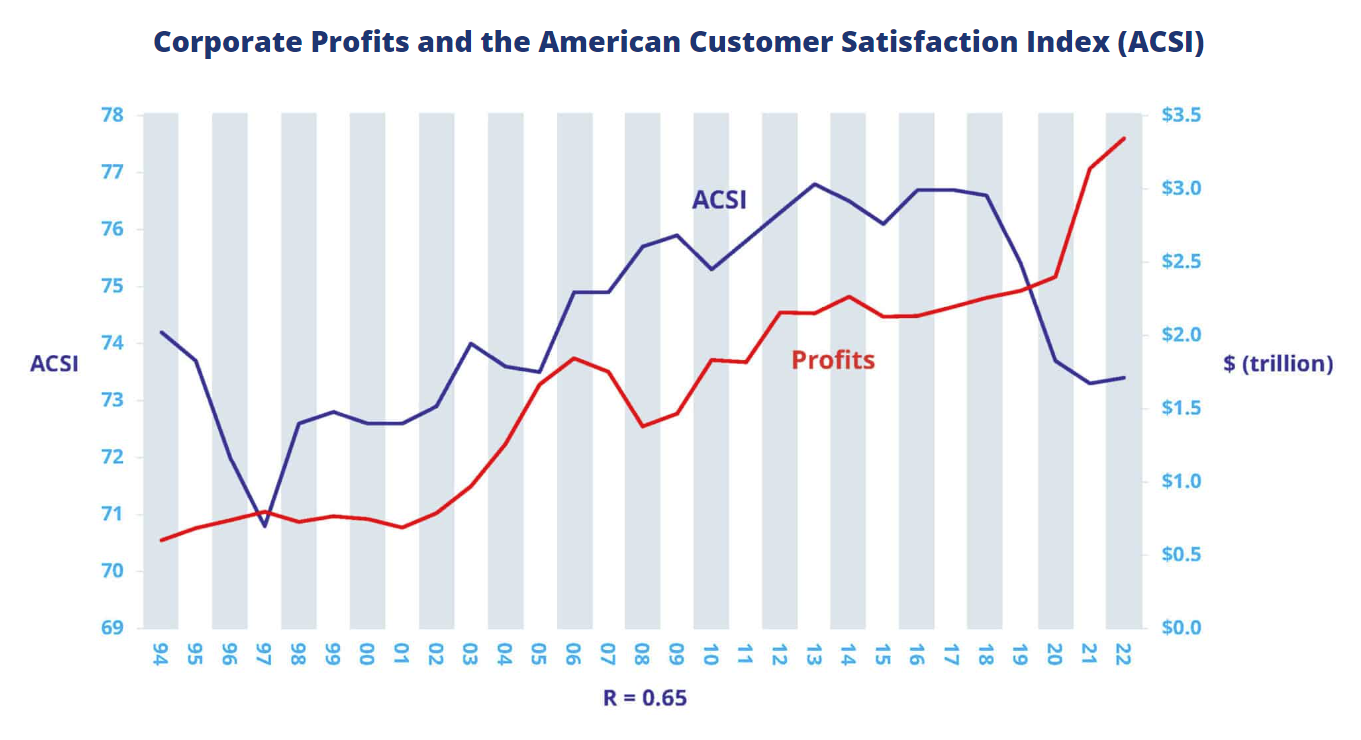
A good customer experience is supposed to lead to profits, revenue growth and stock market returns. But stock returns and customer satisfaction have become decoupled, according to the American Customer Satisfaction Index (ACSI).
Does this mean that you should ditch all those customer experience (CX) projects? Not quite. However, the most recent ACSI data does challenge CX conventional wisdom a bit.
The good news is that the ACSI rose to a record score of 77.8 on a 100-point scale. This surge in satisfaction can be attributed to a return to supply chain and labor shortage normalcy after the COVID-19 pandemic. In addition, consumer expectations have fallen and that has lowered the bar for companies.
Claes Fornell, founder of the ACSI and the Distinguished Donald C. Cook Professor (emeritus) of Business Administration at the University of Michigan, said the following in remarks that came with the latest data.
"There is one remaining economic anomaly. As evidence of a well-functioning economy, companies with superior customer satisfaction usually have superior stock returns. The relationship between strong customer satisfaction and positive abnormal stock returns has yet to recur. It is not that the stock returns on customer satisfaction have been weak, but they have not outperformed the market the way they did in the past."
Indeed, some of the biggest gainers in the ACSI scores were Macy's, Hyatt Hotels, Amazon Prime Video and Avis Car Rentals. None of those companies have been stock market superstars. Historically speaking, ACSI scores at the company level have been correlated with higher profits, cash flow, stock returns, revenue growth, margins and market share.
Fornell had another takeaway that should make any CX pro cringe--the more data you collect on customers the less you seem to know. Fornell said:
"The steep decline in U.S. overall customer satisfaction is not just caused by COVID, shortages, and inflation. While these factors have exacerbated the problem, the weakness and subsequent deterioration in customer satisfaction began about a decade ago. It is not because of a lack of effort by business either. Companies collect much more data on their customers today than they did 10 years ago. Paradoxically, the more data companies collect about their customers, the less they seem to know about how to satisfy them. That’s because data and information are not the same thing. Customer survey data in particular contain a great deal of noise. For such data to become useful beyond descriptive statistics, filtration and calibration are paramount—something that is lacking in just about any analytics tool used by business today."
Should this data prove to be more than an anomaly, the implications on CX could be huge. To date, enterprises have assumed that improved customer experiences lead to better financial results. If that conventional wisdom doesn't hold up, CX will be under a lot of scrutiny.
ACSI in its analysis of ACSI scores as financial indicators said (emphasis mine):
"Recently, there have been economic anomalies affecting both the market and the economy. Inflation, in addition to product and labor shortages have led to declining customer satisfaction. Yet, despite high inflation, due to shortages, consumer demand has exceeded supply in many markets. When demand exceeds supply, customer satisfaction matters less and stock returns on customer satisfaction changed from positive to negative.
Nevertheless, several of the leading ACSI companies have held up reasonably well, but the S&P 500 has become less relevant as a benchmark."
It's too early for a definitive view on whether this decoupling between customer satisfaction and financial returns is permanent, but in the meantime, here are a few thoughts.
It's possible that multiple companies in any category have strong customer satisfaction scores. In that situation, a company is penalized for bad experiences, but not necessarily rewarded for good ones.
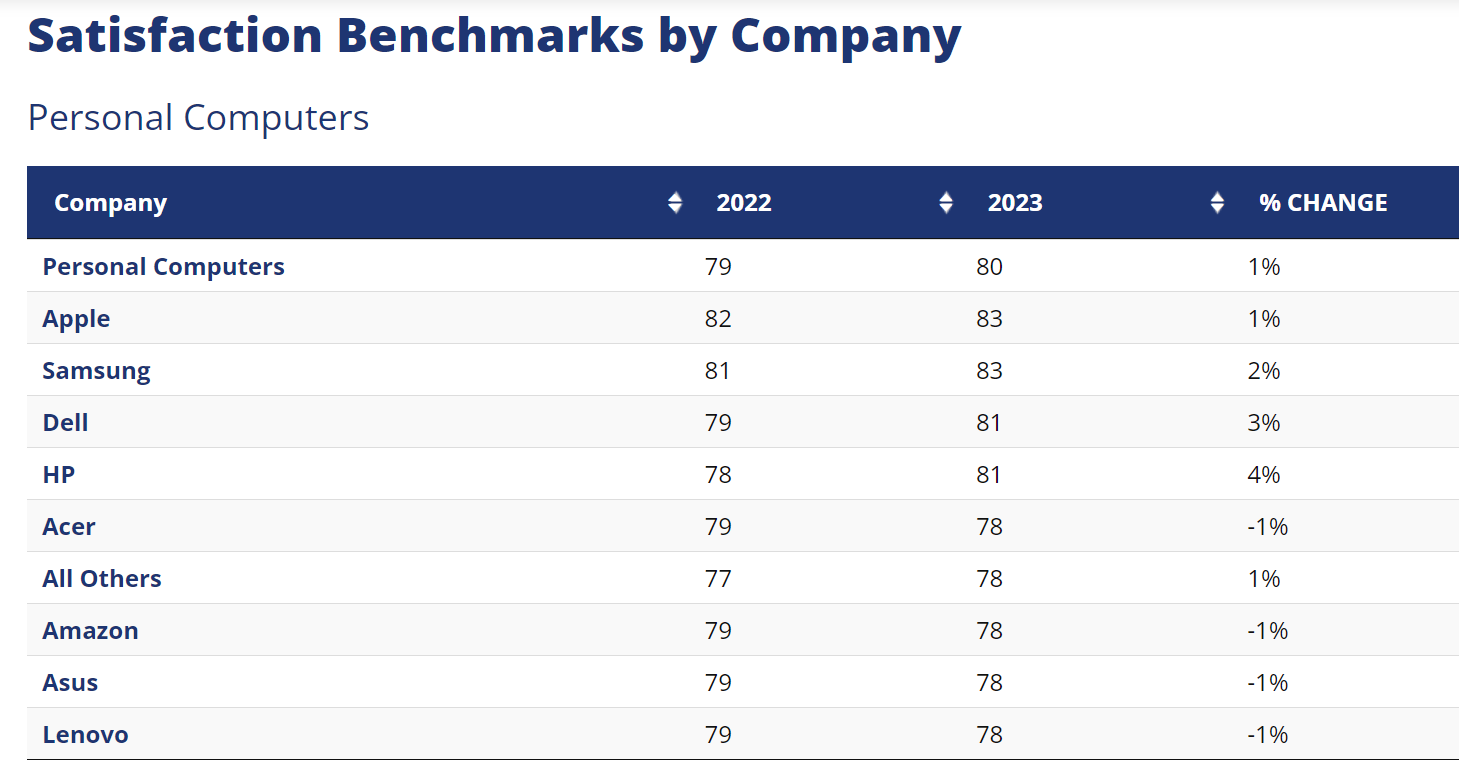
Let us take something like the ACSI scores for PCs. The major players have ACSI scores above 80 so there's little reward for outperformance.
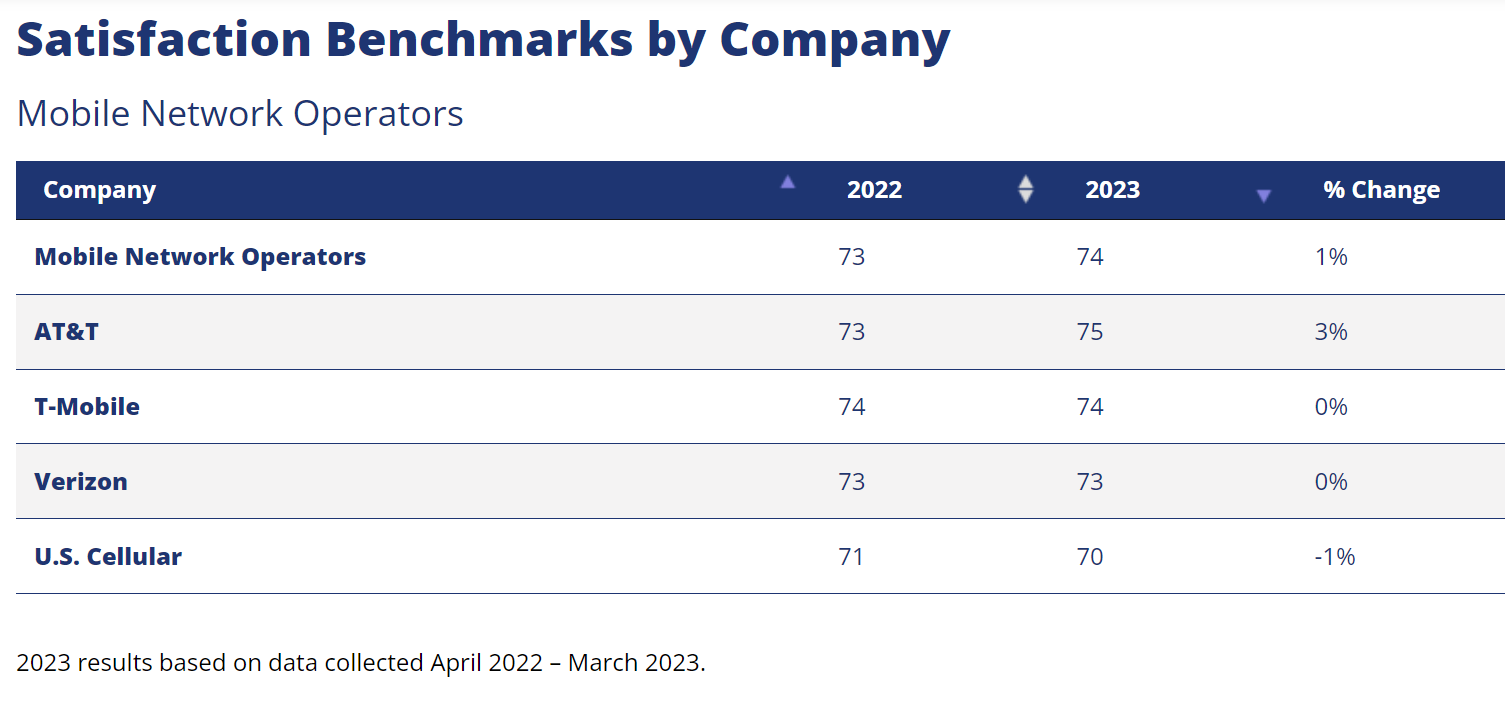
Wireless carriers all have the same customer satisfaction scores.
In fact, many industry groups in the ACSI have similar customer satisfaction scores. In other words, the players are good enough.
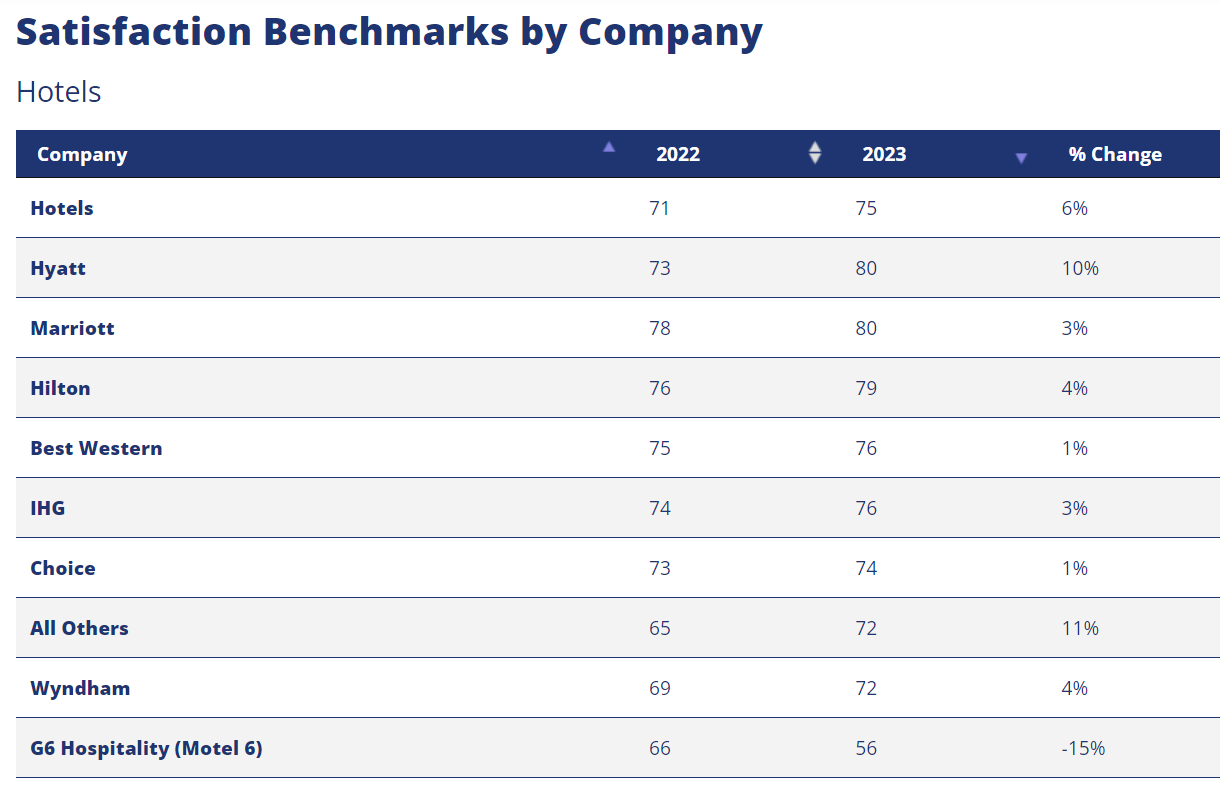
Like any big initiative there is a point of diminishing returns unless something is broken. Companies will aim for good-enough customer experiences given that going above and beyond may not pay off. In hotels, many of the competitors are in the same customer satisfaction ballpark. For instance, IHG may not pay up to go from 76 to 80 on its ACSI score. Motel 6 clearly has to invest after cratering.
Hitachi Vantara will host its latest Exchange event--Building a New Blueprint: How Data and AI Are Forming the Foundation for Innovation--in New York February 1. Hitachi Vantara executives along with executives from Verizon Business, Voya Financial and AllianceBerstein will talk data strategies and frameworks to set the stage for future innovation such as generative AI. Here's the agenda and what's on tap.
Editor in Chief of Constellation Insights
Constellation Research
Larry Dignan is Editor in Chief of Constellation Insights at Constellation Research, where he leads editorial coverage focused on enterprise technology, digital transformation, and emerging trends shaping the future of business. He oversees research-driven news, analysis, interviews, and event coverage designed to help technology buyers and vendors navigate complex markets with clarity and context. ...
Constellation Research held a call with its Business Transformation 150 executives to talk shop, 2024 goals, generative AI and pressing issues such as Broadcom's purchase of VMware.
These gatherings, held under Chatham House rules, are a venue to share information and emerging trends. Here's a look at the topics for our January meetup.
Generative AI and challenges moving to production
Generative AI projects are top of mind for CXOs in the Business Transformation 150, but there are multiple concerns. Here's a look at some of the challenges:
AI projects now have budgets and have gone from proof of concept and enterprises must prove returns. Cost takeouts, safety, regulatory compliance and efficiency are driving generative use cases.
Concerns about the quality of data sets going into large language models (LLMs) abound. We are about to find out that data on the Web is far from open and that'll have an effect on model training. Enterprise insights and information will be hidden in the background.
Transparency into model training data and the ability to select sources are lacking. Models are so complex that it is nearly impossible to follow lineage.
Using an LLM for a proof of concept is one thing, but scaling it has legal concerns that will have to be baked into vendor contracts.
Enterprises are likely to have more models than they assume today given moves toward smaller, more focused models designed for enterprise use cases.
CEOs are wary of taking a recommendation from a decision engine or model without knowing what goes into the LLM and accuracy rates. Bias is another big concern for enterprises using LLMs and generative AI. It doesn't matter how much a company invests in AI if you can't trust the systems.
Our BT 150 CXOs were upbeat about healthcare generative AI use cases and see specialized models being a boon to diagnosis and augmenting human clinicians. There's an opportunity for AI to expand access to care. Google Research's AMIE, an AI system based on an LLM and optimized for diagnostic reasoning, was seen as a promising development.
Current use cases from our CXO panel include:
Generative AI to augment radiologists and oncologists around the world. These models won't replace humans but will eliminate grunt work. Humans won't be able to compete with the speed of generative AI as models improve.
Combining generative AI with robotics process automation (RPA) so data from workflows can enable models to learn on the fly.
Surfacing knowledge from data stores on product, technical specs, catalogs and unstructured data. One enterprise is trying to pull together all tech support emails and chats to build an internal knowledge base that can be mined. Generative AI can also summarize the unstructured data.
Document classification for unstructured data with little metadata.
Generative experiences leveraging enterprise data from core systems and content. Generative AI would generate widgets and materials that could be pulled into a sales or support conversation.
Using AI to organize employee skills and knowledge based on natural language processing. Generative AI is also being used as a time saver to write performance reviews.
Sales talent assessments using generative AI to pull together learnings and benchmarks for sales training.
Automated testing processes for all that generative AI code. It's unclear what it means for testing and transparency of code.
Order processing and using AI to put them into a structured format.
Enterprise buyers pan Broadcom's purchase of VMware
Broadcom's purchase of VMware is complete and there's a shift to subscription-based pricing. CIOs were actively looking at alternatives with many looking to move off VMware. Nutanix appears to be the biggest beneficiary. Among the VMware concerns:
CIOs weren't surprised by Broadcom's move and one exec noted that peers are seeing price hikes of 100%. Broadcom made similar moves when it acquired CA and Symantec, CXOs said.
Without a major change in strategy, it's hard to rip and replace VMware, but many companies are looking at jumping. One catch is that VMware still owns a lot of EMC's old big data portfolio and it's difficult to migrate.
Enterprises took the time to plan a move off VMWare while the Broadcom purchase was delayed by regulatory issues. It will take a few years to move off VMware completely.
Nutanix was gaining share and some CXOs were looking at open-source options for their Linux stacks.
CXOs are expecting VMware's innovation, support and service to all decline--especially for enterprises that fall out of the top 100 or 200 clients.
Editor in Chief of Constellation Insights
Constellation Research
Larry Dignan is Editor in Chief of Constellation Insights at Constellation Research, where he leads editorial coverage focused on enterprise technology, digital transformation, and emerging trends shaping the future of business. He oversees research-driven news, analysis, interviews, and event coverage designed to help technology buyers and vendors navigate complex markets with clarity and context. ...
Kaggle is launching Kaggle Models in a move that will allow community members to publish models and share them. The effort also puts Kaggle in competition with Hugging Face to some degree.
In a post, Kaggle outlined Kaggle Models, which is designed to be an open marketplace for stress testing machine learning and generative AI use cases.
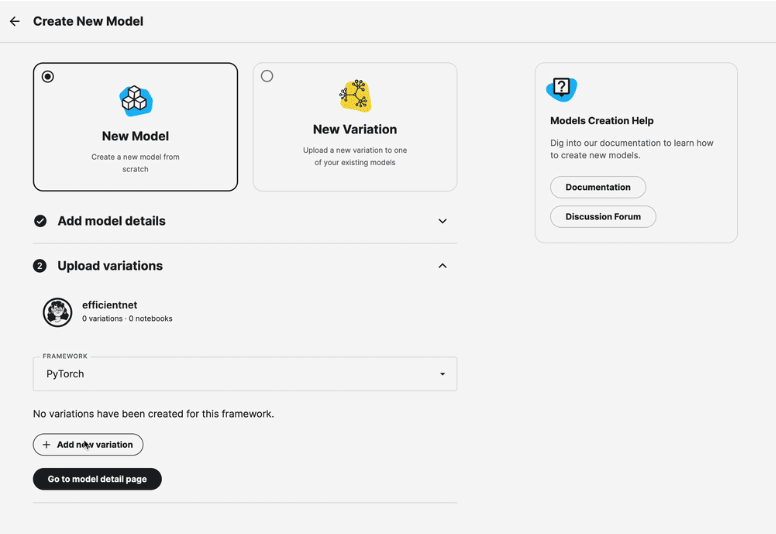
Kaggle users, also known as Kagglers, can publish models via the "+ Create button" on the left of the home page. Kaggle has published a set of API publishing instructions. Kaggle models can be published in any framework and upload to 100GB per model variation.
Users will have to document the model variations including framework, model weights and license as well as document them. Models can be private to the user or made public.
Kaggle said best practices include the open-source approved license such as Apache 2.0, model cards for transparency and instructions with examples.
Going forward, Kaggle said it will listen to feedback and iterate, make it easier to publish models without a review process and publish directly. There will also be additions for organizations to share models and datasets.
Editor in Chief of Constellation Insights
Constellation Research
Larry Dignan is Editor in Chief of Constellation Insights at Constellation Research, where he leads editorial coverage focused on enterprise technology, digital transformation, and emerging trends shaping the future of business. He oversees research-driven news, analysis, interviews, and event coverage designed to help technology buyers and vendors navigate complex markets with clarity and context. ...
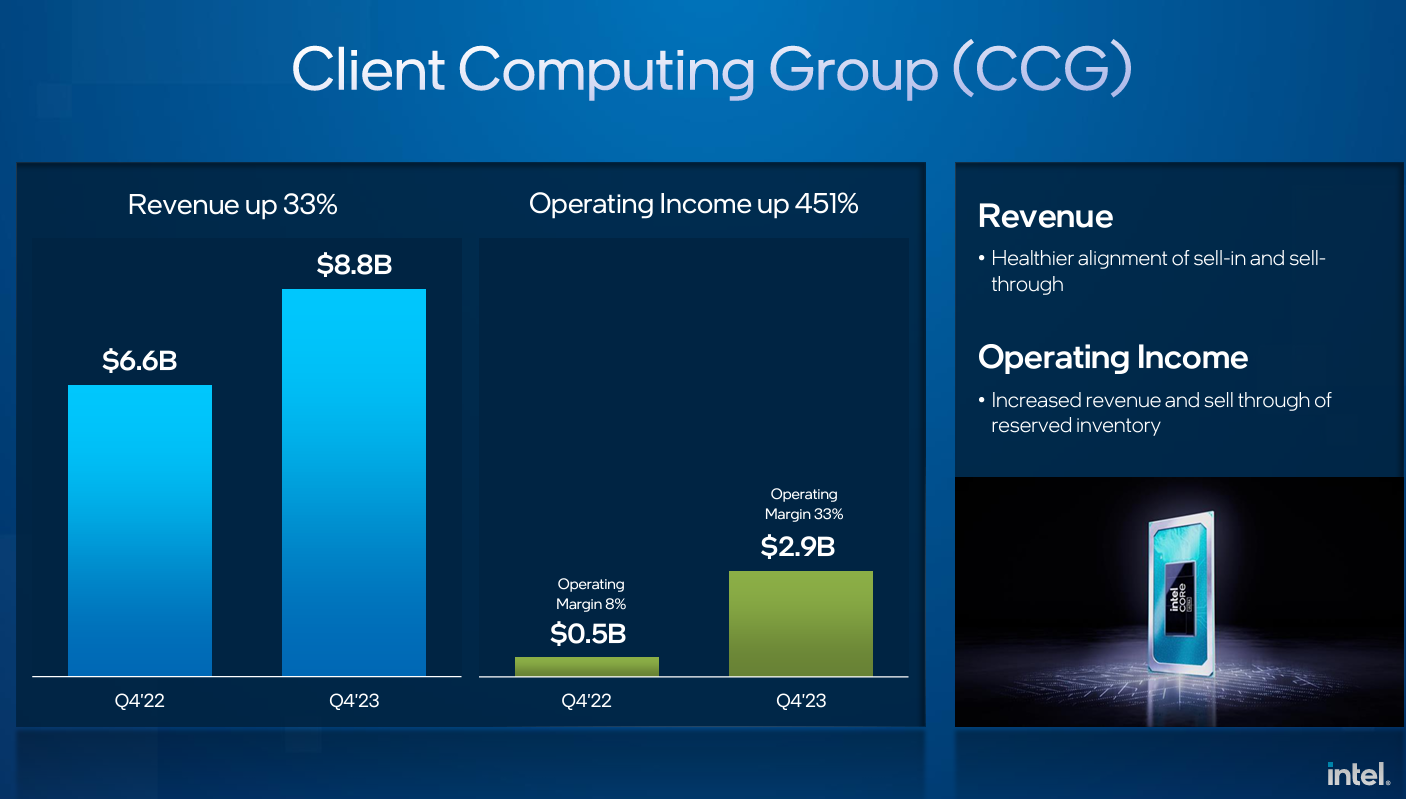
Intel reported better-than-expected fourth quarter results as its PC business continues to bounce back. Intel's client computing group posted fourth quarter growth of 33% from a year ago as its data center and AI and network and edge units showed sales declines.
However, the first quarter outlook disappointed relative to expectations.
The chipmaker reported fourth quarter net income of $2.7 billion, or 63 cents a share, on revenue of $15.4 billion, up 10% from a year ago. Non-GAAP fourth quarter earnings were 54 cents a share. Wall Street was expecting Intel to report fourth quarter earnings of 45 cents a share on revenue of $15.17 billion.
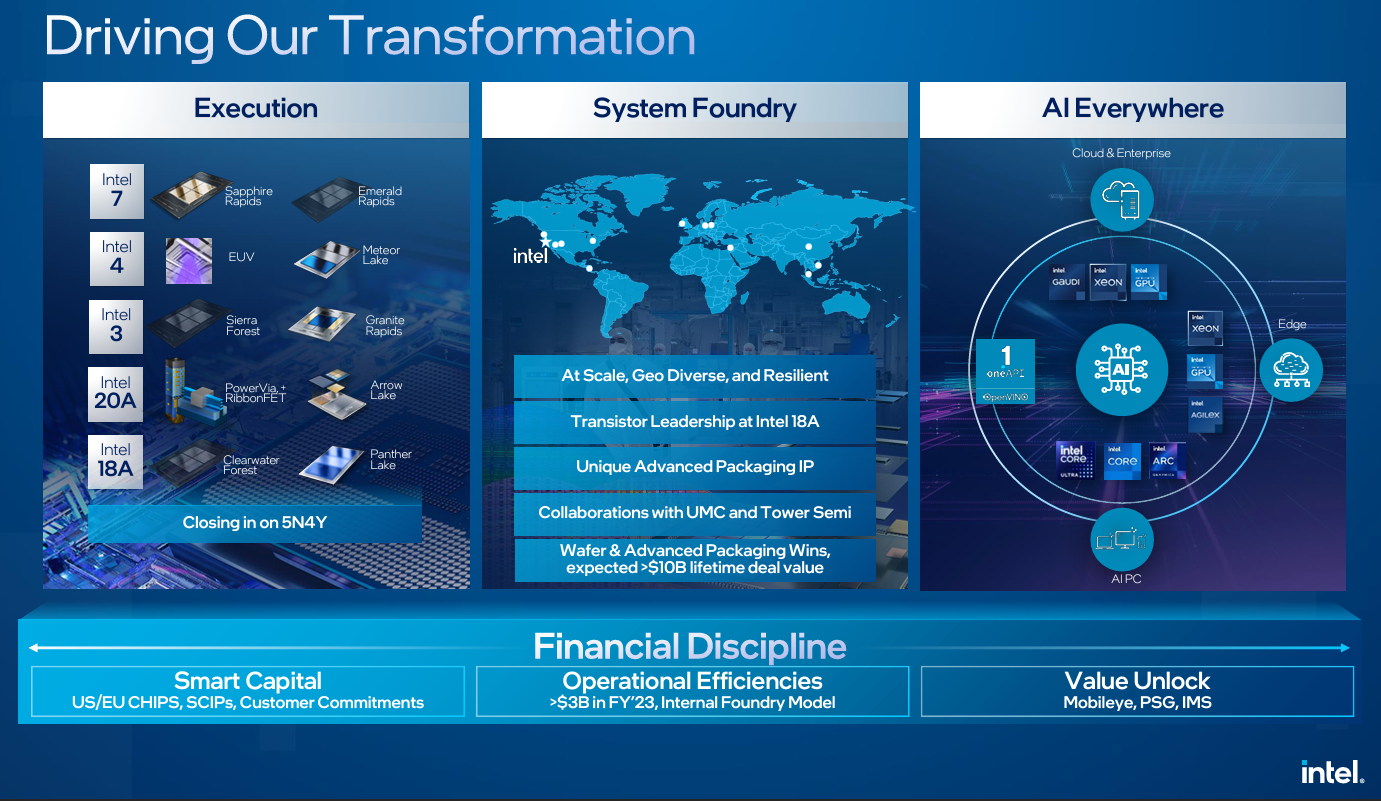
Ahead of the results, Intel announced a foundry partnership with United Microelectronics Corp. (UMC). The two companies said they will collaborate to develop a 12-nanometer semiconductor process platform for mobile, communication infrastructure and networking. UMC, which offers foundry services, has decades of experience it can bring to Intel's US manufacturing efforts.
For 2023, Intel reported net income of $1.7 billion, or 40 cents a share, on revenue of $54.2 billion, down 14% from a year ago.
In a statement, CEO Pat Gelsinger said the company executed well and topped its expectations for the fourth quarter. For 2024, Gelsinger said "we remain relentlessly focused on achieving process and product leadership, continuing to build our external foundry business and at-scale global manufacturing, and executing our mission to bring AI everywhere."
CFO David Zinsner said the company hit its $3 billion in cost savings target in 2023 and expects to "unlock further efficiencies in 2024 and beyond."
By unit, Intel's fourth quarter was driven by the client computing group, which had revenue of $8.8 billion, up 33% from a year ago. For 2023, however, the client computing unit saw sales fall 8%. Intel saw its PC unit rebound in the third quarter.
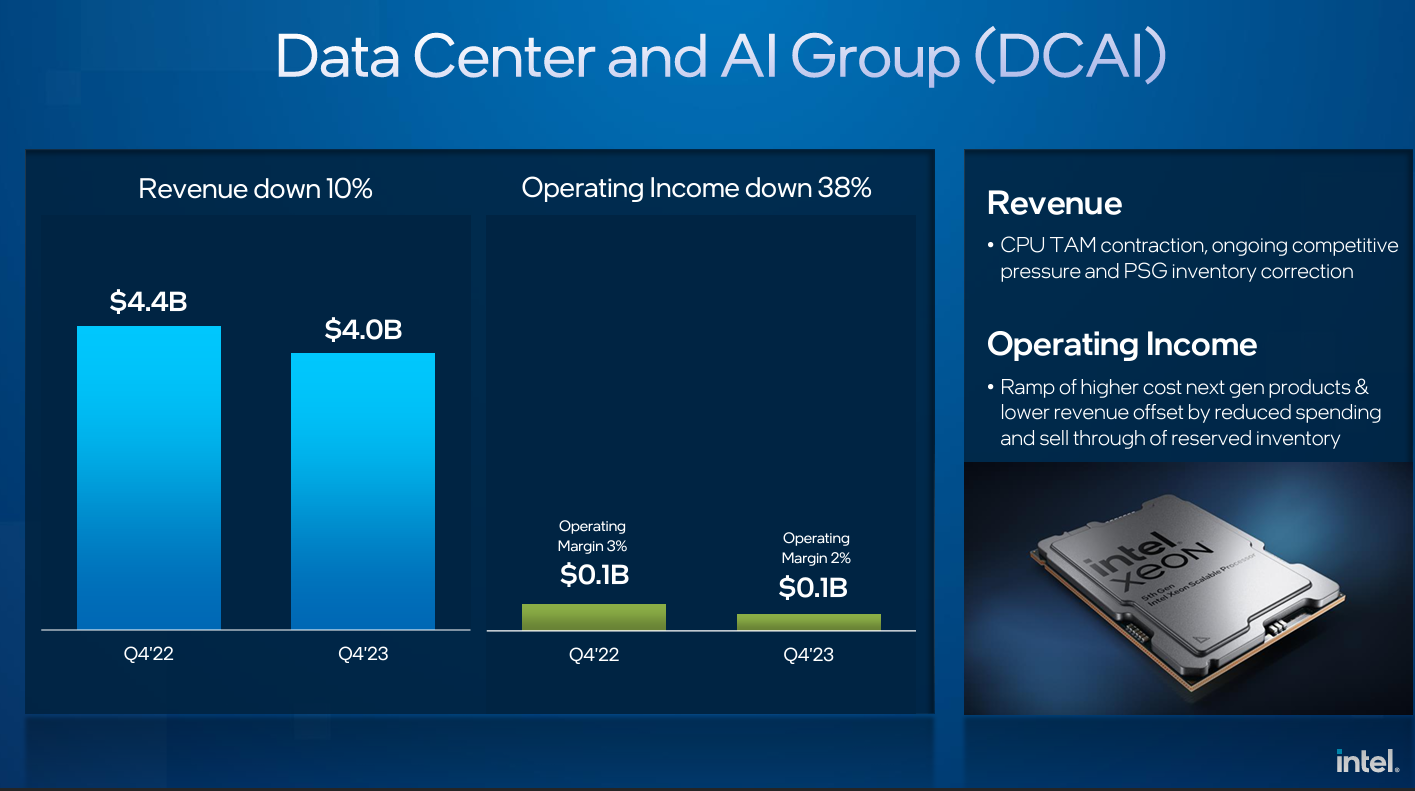
Intel's data center and AI group had fourth-quarter sales of $4 billion, down 10% from a year ago. For 2023, Intel's data center and AI unit had sales of $15.5 billion, down 20%. Intel has largely missed the GPU wave driven by generative AI. Intel's network and edge unit had fourth-quarter sales of $1.5 billion, down 24%. For 2023, network and edge sales of $5.8 billion were down 31% from a year ago.
The chipmaker's Intel Foundry Services had fourth-quarter sales of $291 million, up 63% from a year ago. For 2023, the foundry business had revenue of $952 million. Gelsinger said Intel's foundry business is on the right path. On a conference call, he said:
"While our ambitions will not materialize overnight, we made tremendous progress in both Q4 and fiscal year '23 towards our goal of becoming the second largest external foundry by 2030. The rapid adoption of AI by all industries is proving to be a significant tailwind for IFS as high-performance compute, an area where we have considerable wafer and packaging know-how and IP is now one of the largest, fastest-growing segments of the semiconductor market.
We made major strides in building our foundry ecosystem in 2023 with now over 40 strategic agreements across EDA design services, IP, cloud and U.S. military aerospace and government. Critical agreements with ARM and Synopsys continue to gain momentum."
As for the outlook, Intel projected first quarter revenue of $12.2 billion to $13.2 billion with non-GAAP earnings of 13 cents a share. That outlook was lighter than expectations.
Bottom line: Intel's transformation remains a work in progress.
Other notable quotes from Gelsinger on the conference call.
On AI:
"For the developer working with multitrillion parameter frontier models in the cloud, Gaudi and our suite of AI accelerators provides a powerful combination of performance, competitive ML perf benchmarks and leadership TCO.
As AI proliferates and the world moves towards more AI integrated application, there's a market shift toward local inferencing and smaller, more nimble models. It's a nod to both the necessity of data privacy and an answer to cloud-based inferencing cost and round trip latency."
On Xeon and servers:
"In Q4, our server business experienced solid sequential growth, consistent with market share, which we believe was flat with Q3 levels. Since launching 4th Gen Xeon in early 2023, we have shipped more than 2.5 million units with approximately 1/3 of all 4th Gen demand driven by AI. With our 5th Gen Xeon launch, we enable up to 42% higher AI inference performance compared to the industry-leading 4th Gen Xeon. 5th Gen Xeon has reached general availability at Alibaba is entering public and private previews with several CSPs and is on track to ship with OEMs next month."
On AI PCs:
"Core Ultra is the centerpiece of the AI PC, systems that are capable of natively running popular $10 billion parameter models and drive superior performance on key AI-enhanced applications like Zoom, Adobe and Microsoft. We expect to ship approximately 40 million AI PCs in 2024 alone with more than 230 designs from ultrathin PCs to handheld gaming devices to be delivered this year from OEM partners, Acer, Asus, Dell, HP, Lenovo, LG, MSI, Samsung Electronics and others."