This list celebrates changemakers creating meaningful impact through leadership, innovation, fresh perspectives, transformative mindsets, and lessons that resonate far beyond the workplace.
Executive Summary: The Productivity TrapEnterprise artificial intelligence (AI) adoption has reached an inflection point. Building on years of data modernization investments, most organizations can now deploy models, copilots, and analytics at speed. Yet enterprise-level impact remains uneven, fragile, and difficult to scale.The issue is not model capability. It is execution.
Large language models (LLMs) have taken over Wall Street and most companies have to answer questions about AI opportunities and disruptions.
Not surprisingly, these LLM concerns first emerged with the death-of-SaaS chatter as if we were all going to vibe code enterprise systems without governance. Then, the roving LLM concerns moved to financial services, media and hotels with other industries on deck.
Anthropic said its annual revenue run rate is $14 billion as Claude Code hit an inflection point. The company raised $30 billion in funding at a valuation of $380 billion.
The company said the Series G funding was led by GIC and Coatue and co-led by D. E. Shaw Ventures, Dragoneer, Founders Fund, ICONIQ, and MGX. The list of significant investors is long as Anthropic is planning to go public.
Discover how cross-functional partnerships between customer experience leaders and developers are turning AI promise into real-world impact. Liz Miller, VP & Principal Analyst at Constellation Research, shares insights from IBM TechXchange—a “Customer Experience Day” hiding in plain sight among builders and developers.
Liz unpacks:
ServiceNow said it will acquire Pyramid Analytics, a company that features an analytics, data science and data preparation platform.
According to ServiceNow, Pyramid Analytics will be used to integrate insights directly into workflows with natural language conversations.
The purchase of Pyramid Analytics is a small tuck-in deal following larger acquisitions from ServiceNow of late.
Cisco's fiscal second quarter results were better-than-expected with revenue growth of 10% and strength in AI infrastructure and networking.
The company reported second quarter earnings of $4.1 billion, or 80 cents a share on revenue of $15.3 billion, up 10% from a year ago. Non-GAAP earnings were $1.04 a share. Wall Street was expecting Cisco to report non-GAAP earnings of $1.02 a share on revenue of $15.12 billion.
Cisco AI Summit 2026 communicated a clear message through its powerhouse lineup of speakers: AI is real, it’s here, and the gap will widen quickly between those who experiment boldly and those who wait.
Here are key takeaways from CR analysts R "Ray" Wang and Chirag Mehta:
Teradata showed continued progress with its better-than-expected fourth quarter earnings report, but the biggest takeaway may be how the company is navigating on-premise AI and the use of agentic AI.
The vendor continued to grow its annual recurring revenue and CEO Stephen McMillan touted "revitalized execution" in 2025. "We stabilized the business, meaningfully improved retention, and saw customers choosing to expand their use of Teradata with a mix of both traditional and new types of workloads," said McMillan.
In ConstellationTV episode 123, the Constellation analyst team tackles a question many enterprise technology leaders are quietly asking: Is SaaS over in an AI-first world, or are the rules simply changing? Here is a recap of the main episode takeaways with co-hosts Larry Dignan and Martin Schneider.
“SaaS Apocalypse”: Market Reset, Not Extinction
Analysts Martin Schneider and Larry Dignan address the narrative that “SaaS is dead.” Their view: while the delivery model survives, the business model is under massive pressure.
Healthcare is investing heavily in AI and beginning to shift into agentic AI with the aim of breaking down data silos and becoming more efficient, according to a Deloitte survey.
The Deloitte Center for Health Solutions surveyed 100 US health care technology executives evenly split between health systems and health plans and conducted online focus groups.
Freshworks reported better-than-expected fourth quarter earnings and raised its outlook.
The software vendor, which is focused on employee and customer experience applications, is reporting as SaaS companies have taken a hit of late over AI concerns.
Observability companies, initially thrown out with the SaaS bath water, still matter given strong earnings results from Datadog and Dynatrace. The upshot: AI workloads are only becoming more complicated and that means observability matters.
In fact, executives at the publicly available observability companies are noting that the case for their platforms is stronger with AI. Nevertheless, Wall Street analysts were still asking whether enterprises are going to vibe code their way to observability suites.
Cisco launched its Silicon One G300 AI networking chip in a move that aims to compete with Nvidia and Broadcom.
The Cisco Silicon One G300 was announced at Cisco Live EMEA and headlined a bevy of product announcements. Silicon One G300 powers Cisco's new N9000 and Cisco 8000 switches and offers 102.4 Tbps switching speeds in liquid cooled systems for hyperscalers, neoclouds, sovereign clouds and enterprises.
IBM revamped its FlashSystem storage portfolio with new systems, a 5th generation FlashCore Module, embedded AI capabilities via FlashSystem.ai and features that can detect ransomware, adapt and meet service level agreements.
Sam Werner, General Manager of IBM Storage, said IBM has been working on the portfolio updates for years and the mission was to use AI to improve productivity. Werner said that AI workloads require mission critical uptime and the speed of solid-state drives.
Databricks said its annual revenue run rate is $5.4 billion, up 65% from a year ago, and it has raised another $7 billion to invest in its Lakebase and Genie efforts.
The $5.4 billion annual run rate is above the $4.8 billion annual run rate disclosed in December.
Databricks valuation remains at $134 billion. The $7 billion capital raise includes $5 billion in equity and $2 billion in debt.
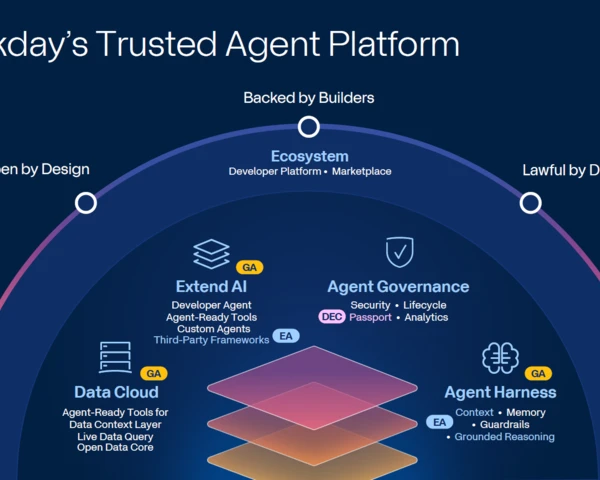
Workday said Co-Founder Aneel Bhusri will as CEO as Carl Eschenbach stepped down. Workday affirmed its outlook.
Eschenbach, credited with strengthening Workday's operations and financial discipline, was CEO for two years.
Software as a service companies are being repriced, re-evaluated and rethought as analysts, investors and customers wonder how AI agents will affect the category. CxOs need to go through the same exercise to ensure they don't get stuck as enterprise software is disrupted.
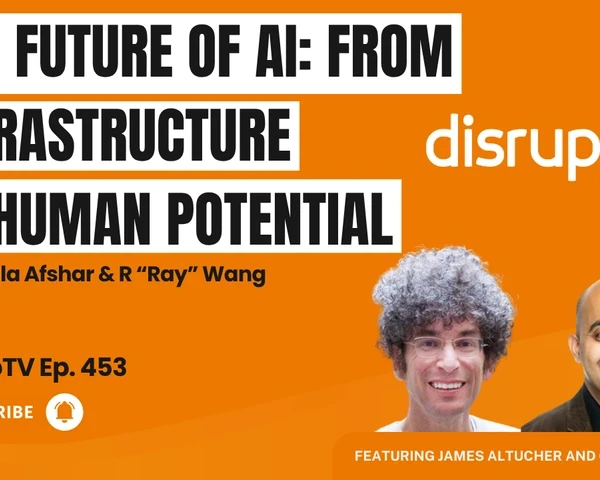
Beating the Odds in an AI Era: Leadership, Probability Hacking, and the Power of KindnessOn the latest episode of DisrupTV, co-hosts Vala Afshar and R "Ray" Wang welcomed two guests who approached success and leadership from very different—but deeply complementary—angles: Kyle Young, author of Success Is a