Results

AWS re:Invent 2023: Perspectives for the CIO | Live Blog

I'm excited to be live from AWS re:Invent 2023 in Las Vegas This year's event is packed with announcements about the leading-edge of cloud computing and the hot topic of the year, generative AI. It's also rife with opportunities for cloud professionals to learn and grow. From a CIO perspective, I'm particularly interested in the keynotes, innovation talks, and builder labs to show where the AWS as a platform is heading for IT leaders. I'm also looking forward to networking with CIOs and cloud experts from around the world to compare notes.

Jump right to the Live Blog

As arguably the cloud industy's pre-eminent event, I'm eager to explore the following topics at re:Invent this week, which I believe are the most vital to examine in our enterprise journey through cloud today:

1. Cloud Economics and Cost Optimization

With rising economic pressures, CIOs are increasingly focused on optimizing cloud costs without compromising performance or agility. AWS re:Invent 2023 is expected to showcase new "tools and strategies for managing cloud expenditures, including cloud cost management tools, FinOps frameworks, and cost optimization techniques.

2. Embracing Hybrid, Private, and Multi-Cloud Environments

Organizations are increasingly adopting hybrid and multi-cloud strategies to leverage the best of each cloud provider and ensure resilience. AWS re:Invent 2023 will explore advancements in hybrid cloud management, including solutions for managing multi-cloud environments, data portability, and application deployment across different cloud platforms including private cloud, the resurgence of which is one of my major research areas currently.

3. Accelerating Innovation with AI and Machine Learning

AI and machine learning (ML) are transforming businesses across industries. CIOs are eager to harness the power of these technologies to drive innovation and gain a competitive edge. AWS re:Invent 2023 will delve into the latest AI and ML services, including tools for building AI models, deploying ML applications, and automating IT operations with ML.

4. Enhancing Cybersecurity and Data Protection

Cybersecurity threats are becoming more sophisticated, and CIOs must prioritize protecting sensitive data and ensuring compliance. AWS re:Invent 2023 will feature sessions on cloud security best practices, identity and access management, data encryption, and threat detection and response.

5. Building and Managing Sustainable Cloud Infrastructures

Sustainability is becoming a critical factor for organizations, and CIOs are seeking ways to reduce their cloud footprint's environmental impact. AWS re:Invent 2023 will highlight cloud-based sustainability solutions, including carbon footprint tracking tools, energy optimization techniques, and green data center initiatives.

6. Empowering Developers with Cloud-Native Technologies

Developers are the backbone of cloud innovation, and CIOs must provide them with the tools and resources they need to succeed. AWS re:Invent 2023 will showcase cloud-native technologies, including containerization, serverless computing, and API management solutions, to empower developers to build and deploy applications rapidly and efficiently.

7. Fostering a Culture of Cloud Agility and Innovation

Cloud adoption is not just about technology; it's also about fostering a culture of agility and innovation within the organization. AWS re:Invent 2023 will explore strategies for driving organizational change, empowering employees to embrace cloud technologies, and creating a culture of continuous learning and experimentation.

8. Leveraging Cloud for Industry-Specific Solutions

Cloud adoption is transforming industries across the board. AWS re:Invent 2023 will feature sessions tailored to specific industries, showcasing how cloud solutions are being used to address unique challenges and opportunities in healthcare, finance, manufacturing, retail, and other sectors. This is a key reason I find that the hyperscalars are key platorms for digital transformation, if they have the blueprints and templates for bringing the cloud directly into how businesses work.

9. Exploring the Future of Cloud Computing

As cloud computing continues to evolve, CIOs are looking to the future for insights into emerging trends and technologies. AWS re:Invent 2023 will provide a glimpse into the future of cloud computing, with sessions on quantum computing, edge computing, and the next generation of cloud infrastructure.

AWS re:Invent 2023 Live Blog

First up is the Monday evening keynote with Peter DeSantis at 7:30pm PT. Peter is Senior Vice President of AWS Utility Computing. He will discusses how AWS is pushing the envelope of what’s possible. He will describe the engineering that powers AWS services and illustrates how their unique approach and approach to innovation helps create leading-edge solutions across the spectrum of silicon, networking, storage, and compute, with the goal of uncompromising performance and cost.

https://aws.amazon.com/rds/aurora/

7:30pm PT: Peter DeSantis comes on stage and begins to make a sophisticated argument for highly scalable cloud computing and serverless.

7:40pm PT: "You can get serverless scaling of your database storage because your database has access to robust distributed storage service [in tthe cloud] that can scale seamlessly and efficiently as a single table from massive database. And when the database gets smaller, that's taken care of to drop a large index to stop paying for the index. That's how the service works. With our launch of Aurora, we took a big step forward on our journey to making the relational database less, more server less."

7:45pm PT: After walking through many scenarios of how to scale databases, DeSantis conclucdes that "we're still limited by the size of the physical server. And that's not serverless. However, database sharding is a well known technique for improving databases performance of a single server, given both horizontally partitioning your data into subsets and distributing it to a bunch of physically separate database servers called shards." Clearly, horizontal scaling is the answer, but how do it with the epic scale that today's multilmillion users systems require?

/system/files/uploads/user-16818/Sharding%20in%20a%20Serverless%20World%20Peter%20DeSantis%20reInvent%202023.png

7:50pm PT: "We've changed the database to use Wallclock to create a distributed database that is very high performance. And it's made possible by a very novel approach to synchronizing. Syncing the clock sounds like it should be as simple as one server or another server timings. But of course, because the time it takes to send a message from one server to another server and without knowing this propagation time, it's impossible from this box by passing protocols to calcualte by sending round trip messages and subtracting tropical clouds." Peter builds up to a big announcement by tipping the breakthrough research required to achieve it.

7:55pm PT: Announces Amazon Aurora Limitless Database. "With a limitless database there's no need to worry about providing a new database, your application is just a single endpoint that has to be available." My take: This is a major reduction in complexity that will move the state-of-the-art in cloud data management forward.

8:30pm PT: Now Peter DeSantis takes us on a fascinating exploration of their efforts in quantum computing, including AWS's work on making it real. The basic issue is that qubits today are far too noisy to tackle serious computation issues. DeSantis takes through the story of logical qubits and the work AWS is doing to make them commercially viable. This tech looks five years out at least, but they are clearly gearing up because the tech will be critical to tackle issues in scientific research, cryptography, pharmacology, and other domains. Overall, an impressive look at where AWS will take enterprises into the frontier of computing, all delivered through public cloud of course.

Logical Qubits in Quantum Computing AWS reInvent Peter DeSantis 2023

Adam Selipsky Keynote | November 28th, 2023 at 8:00am

8:00am PT: Starting right on time, Adam comes out and makes the case that Amazon is the leading cloud platform in the world. "We are relentless about working backwards from our customers needs and from their pain points. And of course, we were the first by about five to seven years to have this broadest and deepest set of capabilities we still have and we're the most secure, the most reliable."

8:10am PT: Continuing the trend to showing love to the core AWS platform, Selipsky talks about S3, their original cloud storage service. "So, 17 years ago, AWS reinvented storage by launching the first cloud service for AWS with S3. As you can see as we continue to how development use store, same simple interface, low cost, and high performance. It's another example of general purpose computing. We realized almost 10 years ago, that we wanted to continue to push the envelope on price performance for all of your workloads, which are reinfect general purpose computing, for the cloud era, all the way down."

8:12am PT: The first big announcement of Day of re:Invent: "I'm excited to announce Amazon s3 Express was a new s3 storage class, purpose built. Purpose Built on a high performance and lowest latency Cloud Object Storage for your most frequently accessed data. Express One uses purpose built hardware and software to accelerate data processing also gives you the option to actually choose your performance for the first time. It can bring frequently accessed data next to your high performance compute resources to minimize latency." Express One supports millions of requests per minute with a claimed single digit millisecond latency with very fast object storage in the cloud. Selipsky says it is up to 10 times faster than S3 standard storage. While cloud costs continue to remain paramount with many IT departments, AWS is still focusing on overall performance as well, key to landing the largest online services.

Amazon S3 Express One Storage

8:15pm PT: Now Selipsky moves onto server compute, the workhorse of cloud platforms. Notes that 50,000 customers currently use their custom-designed Graviton chips today. "For example, SAP partners with AWS to power SAP HANA Cloud with the Graviton chip. SAP is seeing up to 35% better price performance for analytics workloads as it aims to reduce carbon footprints or carbon impact by an estimated 45%." This confirms the performance gains/cost savings of using chips optimized for cloud compute workloads.

8:17pm PT: Announces the Graviton4, "the most powerful and the most energy efficient chip that we have ever built. With 50% more cores and 75% more memory bandwidth the Graviton, with 30% faster on average than the Graviton3, performs even better for certain workloads, like 40% faster for database applications." Notes that AWS is on its fourth generation of cloud servier processors, and says their competitions is often not even on their first. There is a new Graviton4 preview that customers can join if they like.

Graviton4 server processor at re:Invent

8:20am PT: Now Selipsky gets into how AWS things about artificial intelligence. Specifically, they see it having three layers

Layer 1 - Infrastructure for training/inference
Layer 2 - Tools to build with LLMs
Layer 3 - Applications that leverage LLMs

8:22am PT: Next up is GPUs, the workhorse of AI. Selipsky notes that "having the best chips is great and necessary. But to deliver the next level of performance you need more than just the best GPU. You also need really high performance clusters of servers that are running these that can be deployed and easy to use ultra clusters." Next he talks about AWS differentiation with GPUs, namely: "All of our GPU instances that have been released in the last six years are based on our breakthrough Nitro system, which reinvented virtualization by offloading, storage and networking specialized chip to all the service compute dedicated for running your workloads. This is not something that other cloud providers can offer." My take: This lightweight hypervisor is key to AWS's cost/performance advantage for many advanced workloads, and scale them up to 20,000 GPUs at once, AWS claims.

8:23am PT: Brings Jensen Huang up on stage, co-founder and CEO of NVIDIA, who is certainly making the rounds at all the cloud events as the generative AI partner darling of the year, given their pre-eminence in the GPU industry, instrumental to training and running AI models. Their DGX platform has been a key differentiaor for them and has captured the leading marketshare in the industry.

Jensen Huang CEO NVIDIA at re:Invent 2023

8:28am PT: Huang makes a lot of interesting statements, mostly about scale, which is the signature challenge of generative AI. "We are incredibly excited to build the largest AI factory NVIDIA has ever built. We're going to announce inside our company we call it Project Siba(?). Siba, as you all probably know, is the largest, most magnificent tree in the Amazon. We call it project Siva. Siva is going to be 16,384 cores connected into one giant AI supercomputer. This is utterly incredible. We will be able to reduce the training time of the largest language models the next generation mo ease these large, extremely large mixture mixture of experts models, and be able to train it in just half the time. essentially reducing the cost of training in just one year and how now we're going to be able to train much much larger multimodal M models this next generation large language models." Another proof point that NVIDIA is at the forefront of helping build the largest AI models ever created.

8:35am PT: Now the new Tranium2 chip is announced. Designed to quickly and inexpensive training AI models. "This second generation system is purpose-built for high performance training. It was designed to deliver four times faster performance compared to our first generation chips that makes it ideal for training front foundation models with multiple hundreds of billions or even trillions of parameters." This will very much help sustain AWS's claims that their Tranium chips offer unique performance and cost effective aids for organizations making major forays into generative AI. 

Tranium 2 chips at re:Invent 2023

8:37am PT: Now Selipsky talks about the software frameworks on top of their custom ML and AI chips.  "AWS Neuron is our software development kit that helps customers get maximum performance from our ML chips. Neuron supports our machine learning framework frameworks like TensorFlow so customers can use their existing knowledge both training and inference pipelines is just a few lines of code. Just as importantly, you also need the right tools to help train and deploy your models. And this is why we have Amazon Sagemaker. Our managed service makes it easy for developers to train to build machine learning and foundation balls. In the six years since the first Sagemaker, we've introduced many powerful innovations like automatic public tuning, a distributed training, flexible model deployment tools for ml ops and built in features like responsible AI." This vertical integration of hardware and software is a very compelling offering in the ML and AI spaces, and certainly we've seen Sagemaker climb the usage charts around the world since its release. Selipsky continually beats the drum today on public cloud being the most compelling price/performance for training. My verdict: It depends on the workload and how often is must be trained especially.

The Price Performance Value Prop of AWS at reInvent 2023

8:40am PT: Selipsky reaffirms AWS's stance on full model choice: "So you don't want a cloud provider who's beholden primarily to one model. You need to be trying out different models. You need to be able to switch between them randomly even combining them with the same use case. And you need a real choice model as you decide who's got the best technology, but also who has dependability that you need a business partner. I think the events of the past 10 days. We've been consistent about lead for choice for the whole history of AWS." So, after taking a swing at the turbulence at OpenAI, Selipsky then shows that they do have preference, just that they're open. Because of who is up next...

8:42am PT: Now the CEO of Anthropic, Dario Amodei, is invited up on stage with Selipsky. They talk about Claude 2. Talks about their desire to be the leader in safe, reliable, steerable Generative AI. Claude 2 can handle 200K tokens and is "10 times" more resistant to halllucinations that other opic models. My take: It looks like Anthropic is the AI model that's first among equals in AWS AI model choice.

AWS and Anthropic at re:Invent 2023

9:03am: After some customers stories from Pfizer and others, Selipsky moves onto the vital enterprise topic of Responsible AI, something that AWS recenly reaffirmed its corporate commitment to. "We need generative AI to be deployed in a safe, trustworthy and responsible fashion.  That's because the capabilities to make generative AI such a promising tool for innovation also have the potential to deceive. We must find ways to unlock generaive AI's full potential while mitigating the risks. Dealing with this challenge is going to require unprecedented collaboration through a multi-stakeholder effort across technology companies, policymakers, community groups, scientific communities, and academics.

We've been actively participating in a lot of the groups have come together to discuss these issues. We've also made a voluntary commitment to promoting safe, secure and transparent AI development technology [to build] applications that are safe, but avoid harmful outputs, and that stay within your company. And the easiest way to do this is actually placing limits on what information we can or can't return. We've been working very hard here and so today we're announcing Guardrails for Amazon bedrock." 

This is maybe the most impactful announcement regarding AI at re:Invent so far. Making enterprise safe, transparent, and risk managed is one of the highest priorities for organizations as they develop generative AI policies -- see my roadmap for AI at work here -- and build applications for it.

Guardrails for Amazon Bedrock at reInvent 2023

9:16am PT: Now Selipsky talks about cloud talent, is vital subject and urgent situation holding back innovation and digitat transformation in many organizaitons today. He notes that that AWS plans to "provide the cloud skills that we are going to be needed across the world for years to come. AWS has committed to training 29 million people for free with cloud computing skills by the year 2025. We're well on our way to 21 million already."

9:18am PT: Selipsky moves the conversation onstage to "generative AI chat applications. So these days, what the early [generative AI] providers in the space have done is really exciting, and it's genuinely super useful for consumers. But a lot of ways these applications don't really work at work. With their general knowledge and their capabilities are great But they don't know your company. They don't know your data or your customers or your operations. And this limits how useful their suggestions can be.

They also don't know much about who you are at work. They don't know your all your preferences. What information you use, what you do and don't have access to. So critically other providers from the launch tools, they launched out their privacy and security capabilities that virtually every enterprise requires. So many CIOs actually banned the use of a lot of these [Dion: 22% of orgs in my most recent CIO survey] most popular AI systems inside their organization that has been well publicized. Just ask any Chief Information Security Officer CISO. They'll tell you the full time security fact and expect it to work as well much much better to build security, fundamental design technology."

The Challenges of Chat AI Apps at Work - re:Invent 2023

9:20am PT: In what is probably the biggest enerprise AI announcement at re:Invent, Selipsky tips Amazon Q, a new enterprise-grade generative AI chat system, akin to ChatGPT, but designed businesses. Amazon Q is especially designed for enterprises to "understand your systems, your data repositories, your operations. And of course we know how important rock solid security privacy are that you understand respect your existing identities for roles in your permissions that the user does not have permission to access something without you they cannot access it with you either. We've designed to meet enterprise requirements. Enterprise customers have stringent requirements from day one." Says they will never use customer data in their models, ever, which will be absolutely key. Amazon Q is in preview today (see link above.)

The pricing page for Amazon Q puts a premium investment level on AWS's new business chat app service:

- $20/month per user for Q Business
- $25/month per user for Q Builder

My take: Given that finding information to carry out knowledge work is still one of the biggest unmet needs in the digital workplace, if Amazon Q can deliver the goods, it has the potential to be worth the price.

Amazon Q - AWS's Chat AI for Enterprises at re:Inventt 2023

9:25am PT: Amazon Q is also an expert on the AWS platform, and can actively help developers and operations staff (DevOps teams) get far more from he platform. "Amazon Q is your expert assistant for building on AWS how to supercharge developers and IT pros. We've trained as on two and a half years worth of AWS knowledge. So I can transform the way you think, optimize and operate application workloads on AWS. And we put Amazon Q where you work, so it's ready to assist you in the AWS Management Console as your code whisperer and in your team chat apps like Slack, Amazon Q is an expert in AWS tech pattern and practices and solution implementations."

Swami Sivasubramanian Keynote | November 29th, 2023 at 8:30am

8:30am PT: Sivasubramanian comes out and talks about Ada Lovelace, and her conjecure that computers could only do what they're programmed to do, not come up with ideas that are enirely new. Suggests the AI era will change that. Then dives right into a discussion of the generative AI stack as AWS sees it:

The Generative AI Stack reInvent 2023

8:41pm PT: Now Sivasubramanian gets to the most important topic perhaps of all: Model choice. He underscores the AWS position: "No one model will rule them all." Large language models and foundation models will come in many flavors for many needs. Indeed, our estimate is that most orgs will soon have dozens or even hundreds of them.

Model Choice AWS reInventt 2023

8:43am PT: Next, Sivasubramanian explores the specific foundation models (FMs) and large language models (LLMs) that Amazon Bedrock supports. Bedrock stands at the core of AWS's generative AI services in the cloud. AWS describes Bedrock as a "managed service that offers a choice of high-performing foundation models (FMs) via a single API." It supports FMs and LLMs from leading AI companies including AI21 Labs (Jurassic), Anthropic (Claude), Cohere (Command + Embed), Meta (Llama 2), Stability AI (Stable Diffusion), and Amazon (Titan).

My take: Model choice is one of the most important dimensions of generative AI to properly realize and enable. Cloud vendors are now in a race to provision and make safe as many FMs and LLMs as possible, with Google at the head of the pack, AWS catching up, and Microsoft betting heavily mostly on OpenAI. Choice is likely to win the day and will be a critical dimension to track over the next couple of years.

Model Choice in Bedrock reInvent 2023

8:51am PT: Interestingly -- and continuing a trend throughout re:Invent -- gives special attention to Anthropic's Claude 2.1 LLM, citing key advantages like a comparatively large 200K token context window, 2x less model hallucination, and 25% lower cost of prompts/completions.

Anthropic Claude 2.1 at AWS re:Invent 2023

8:53am PT: Multimodal applications that use different types of daa are complex and hard to build says Sivasubramanian, correctly. "Developers need to spend time piecing together multiple models. Not only does this increase the complexity of your daily tasks, but it also decreases the efficiency and impacts customer experience. We wanted to make these applications even easier."

Multimodal AI Apps at AWS reInvent 2023

8:54am PT: "That's why today I'm excited to announce the general availability of Titan Multimodal Embeddings. This model enables you to create richer, multimodal search and recommendation options, we can quickly generate store and retrieve embeddings more accurately and contextually relevant, in one type of search. Companies like Opera are using pattern multimodal embeddings as well as inline which is using this morning to revolutionize this document search experience for their customers." A key feature is that it can adapt to unique and proprietary business data. And it has built-in bias reduction.

Amazon Titan Multimodal Embeddings AWS reInvent

8:55am PT: Continuing a focus on price/performance in AI -- something key as FMs and LLMs can be very costly to run in daily opeations -- Sivasubramanian announces Titan Text Lite and Titan Text Express (see video demo here). "These next models help you optimize for accuracy, performance and cost depending on your use cases. These are really, really small models that are extremely cost effective model that supports use cases like text summarization. It is ideal for fine tuning, offering your highly customizable model for your use case. Express can be used for a wide range of tasks such as open ended text generation and conversational chat. These two models provides a sweet spot for cost and performance compared to other really big [foundation/large language] models."

Titan Text Lite and Titan Text Express at AWS reInvent 2023

8:56am PM: The new Amazon Titan Image Generator service is announced, now available in preview.

  • Studio-quality images from natural language prompts
  • Customize with enterprise data/brand​​​​​​
  • High alignment of text to image

Amazon Titan Image Generator AWS re:Invent

9:05am PT: After a deep-dive into how Intuit is using AWS's AI platforms, Sivasubramanian shifts the conversation to the absolute centrality of data to generative AI. The key here is that AWS is prepared to indemnify orgs against what's generated on their platform, including saying it will guard them against legal and reputational damage. They also promise enterprise data will never flow back into their models, but don't offer the same sort of indemnification. 

Data as the Differentiator in Generative AI at AWS reInvent

9:07am PT: So, how can organizations "enable your model to understand your business over time." Sivasubramanian explains how fine-tuning is the process for customizing models with enterprise data. Titan supports both fine-tuning with labelled and unlabelled raw data, and is key to getting AI adapted to a business. Sivasubramanian re-emphasizes that fine-tuning always stays with the customer, and never flows back into AWS's base AI models.

Fine Tuning AI Models with Enterprise Data AWS reInvent

9:09am PT: There are two major ways to customize AWS's Titan model to adapt to a given business:

  1. Small, labelled data -> Fine-tuning
  2. Large amount of unlabeled data -> Continued pre-training

These two approaches are key to making generative AI adapt to a business.

Sivasubramanian gives an example: "A healthcare company can pre-train the model that using medical journals, articles or research papers to make it more knowledgeable on the evolving industries are not. And you can leverage both of these techniques, to act on Titan Lite and Titan Express. These approaches complement each other and will enable your model to understand your business over time. But no matter which method you use, the output model is accessible only to you and it never goes back to the base model."

Fine Tuning and Continued Pre-Training of AI Models at AWS reInvent

9:12am PT: Then Sivasubramanian takes us through an an example of how a generative AI model in Bedrock can be fine-tuned w/itha copy of Meta's Llama2 LLM. Then labelled enterprise data is added in via the S3 storage service. The resulting fine-tuned model is used to generate customized, business-relevant content as needed. This is one way to adapt a model in the AWS platform to a business. But it's not the only way, and may not be suitable for large amounts of data or when domain accuracy is strictly needed.

Retrieval Augmented Generation at AWS reInvent

9:15am PT: But there are other ways to integrate enterprise data with an LLM, even than these two more strategic options. There is also an approach known as retrieval augmented generatation (RAG), which Sivasubramanian walks through as well, and is what many people already do by hand with LLMs today. Understanding these options in terms of pros/cons so that enterprises can evaluate how best to mix in their valuable data with an AI model's data. In the RAG approach "the prompt that is sent to your foundation model contains contextual information such as product details, which it draws from your private data sources. These are in the context within the prompt text itself. Hence the model provides more accurate and relevant response due to the use of specific prompt-supplied business details." This is a 3rd way, beyond fine-tuning and continued pre-training, to get an AI model to generate using business-specific private data.

Retrieval Augmented Generation at AWS reInvent

9:18am PT: The next announcement that Sivasubramanian makes is Knowledge Bases for Amazon Bedrock, which is an off-the-shelf way to implement the RAG workflow described above to give foundation models contextual information from an organization's private data sources. Specifically Knowledge Bases performs the following in a proven workflow:

  • Converts text docs into embeddings (vector representations)
  • Stores them in a vector database
  • Retrieves them + augment prompts Avoids custom integrations.

Put simply, the service can look at Amazon S3 and then it automatically fetches the documents, divides them into blocks of text, converts the text into embeddings, and stores the embeddings in a vector database. Then this information can be retrireved and used in a variety of generative activities. Interestingly and very usefully, the service can provide source attribution if needed as well.

Knowledge Bases for Amazon Bedrock at AWS reInvent

Related Research

My AWS re:Invent 2023 "mega thread" with all the ongoing details this week

A Roadmap to Generative AI at Work

Last year's AWS reInvent Live Blog for 2022 

My current Digital Transformation Target Platforms ShortList

Private Cloud a Compelling Option for CIOs: Insights from New Research

The Future of Money: Digital Assets in the Cloud for Public Sector CIOs

New C-Suite Tech Optimization Data to Decisions Innovation & Product-led Growth Future of Work Next-Generation Customer Experience Digital Safety, Privacy & Cybersecurity AWS reInvent aws amazon ML Machine Learning LLMs Agentic AI Generative AI Robotics AI Analytics Automation Quantum Computing Cloud Digital Transformation Disruptive Technology Enterprise IT Enterprise Acceleration Enterprise Software Next Gen Apps IoT Blockchain Leadership VR SaaS PaaS IaaS CRM ERP CCaaS UCaaS Collaboration Enterprise Service business Marketing finance Healthcare Customer Service Content Management Chief Analytics Officer Chief Data Officer Chief Digital Officer Chief Financial Officer Chief Information Officer Chief Information Security Officer Chief Procurement Officer Chief Supply Chain Officer Chief Sustainability Officer Chief Technology Officer Chief Executive Officer Chief AI Officer Chief Product Officer Chief Operating Officer

AWS, Salesforce expand partnership with Amazon Bedrock, Salesforce Data Cloud, AWS Marketplace integrations

Amazon Web Services and Salesforce expanded their partnership in a deal that will put Salesforce applications on AWS Marketplace, integrate Amazon Bedrock into Salesforce's ecosystem and better connect Salesforce Data Cloud to AWS services.

The announcement, made at AWS re:Invent, plays on the theme of foundational model choice as well as seamless data flows for joint customers.

According to the companies, Salesforce will support Amazon Bedrock, AWS' managed service for foundational models with one API. Amazon Bedrock will also be available through Salesforce's Einstein Trust Layer. Salesforce Prompt Builder will give customers the ability to send templates to their preferred foundational models available on Bedrock.

Model choice in generative AI applications will be a big theme at AWS' annual customer conference. AWS' approach is to offer a series of models for developers to easily leverage for generative AI applications. Model choice has been elevated as a topic given the OpenAI soap opera.

Constellation Research analyst Holger Mueller said:

"This deail is a key win for AWS Bedrock as AWS needs to implement its AI platform into SaaS vendor platforms, to ensure uptake and with that guarantee further cloud revenue. On the other side it is announcement that had to happen, since Salesforce is already using AWS as one of its public cloud platforms."

The availability of Salesforce applications on AWS Marketplace is also notable because it will give AWS to subscribe, manage and track Salesforce spending. Data Cloud, Service Cloud, Sales Cloud, Industry Clouds, Tableau, MuleSoft, Platform and Heroku will be available on the AWS Marketplace. Joint customers can buy Salesforce products through AWS Marketplace now and Salesforce said it will expand in 2024.

On the data front, Salesforce said Salesforce Data Cloud will expand data sharing across AWS including S3 via centralized controls. The companies said customers can use zero-ETL technologies and unite data visibility across Salesforce with integrations between Data Cloud and Amazon Elastic Compute Cloud (Amazon EC2), Amazon Elastic Kubernetes Service (Amazon EKS) and AWS Lambda.

Other key items include:

  • Salesforce agreed to expand its usage of AWS services.
  • Salesforce Service Cloud and Amazon Connect will tighten integrations for voice, digital engagement, forecasting, capacity planning and agent scheduling as well as generative AI tools.
  • Salesforce said Heroku will be revamped as a platform-as-a-service layer across Salesforce and AWS. Integrations will cover model training instances, Amazon CodeWhisperer and Einstein Copilot Studio. "Mueller said the Heroku news is interesting because it "helps developers bridge the gap between Salesforce and AWS services for their next generation applications." 
  • Product integrations will be available in 2024.

Related:

Data to Decisions Innovation & Product-led Growth Future of Work Tech Optimization Next-Generation Customer Experience Digital Safety, Privacy & Cybersecurity salesforce amazon AI GenerativeAI ML Machine Learning LLMs Agentic AI Analytics Automation Disruptive Technology Chief Information Officer Chief Executive Officer Chief Technology Officer Chief AI Officer Chief Data Officer Chief Analytics Officer Chief Information Security Officer Chief Product Officer

BT150 interview: Wayfair CTO Fiona Tan on transformation, business alignment and paying down tech debt

Fiona Tan, CTO of Wayfair, said alignment between business and technology is critical--especially when navigating a demand surge and a pivot to efficiency. The key to navigating the change is to have a platform mindset.

At Constellation Research's Connected Enterprise conference, I caught up with Tan, a Constellation Research BT150 member, to talk about business and technology alignment, transformation and being nimble enough to scale up and down. Before becoming CTO at Wayfair, Tan was Global Head of Customer and Supplier Technology at Wayfair, and Head of Technology at Walmart US. Tan also managed engineering teams at WalmartLabs, Ariba and Tibco Software.

How Wayfair's tech transformation aims to drive revenue while saving money Get this customer story as a PDF

Here are the highlights of our conversation.

Wayfair scaling up amid a demand boom and then honing its cost focus. When the Covid-19 pandemic hit, Tan said Wayfair was well along with a migration to the cloud. "We were fortunate that we moved a lot of things so in some ways we were well protected when we scaled up," said Tan. The challenge came after the pandemic waned and consumers had already upgraded homes and offices. Tan said the thinking at the top would be that high growth rates would stay, but the home category saw a pullback. The pullback was "a good forcing function to go back to be really proficient with our costs from a technical perspective and operational perspective," said Tan. "We've been able to really focus on growth and profitability and continue to grow our market share."

Business and technology alignment. Since Wayfair is digitally native the business case is usually enabled by technology. "My leadership team is there to ensure we have the right platform and infrastructure from a technology perspective to enable us to grow in a flexible, scalable, lean way," said Tan, who noted that everything from customer reviews to service and support to marketing is enabled by a platform mindset.

Tan said:

"We work closely on great business use cases. One thing I appreciate is that a lot of our stakeholders realize there's tech enablement of the business that's important. Our stakeholders on the commercial and operational side are very open to technology and that comes from being a digitally native company."

Wayfair's value chain. Tan said the lens of technology at Wayfair revolves around the entire value chain since it orchestrates third party suppliers and customer purchases. Wayfair is merchandising to customers, managing logistics and the supply chain. "For suppliers, we're making sure that we provide them with a platform that enables them to sell their products and represent them in the best way possible," said Tan. "We are shipping and handling some of the toughest things to ship. We support both the commerce part as well as the supply chain operations."

Metrics for success. Tan said her metrics revolve around the KPIs for the business. "From a company perspective, it’s about making sure we have the right products at the right price for customers with selection and availability," said Tan. For instance, Wayfair needs to understand and analyze supplier parts and goods, know the customer, customize offerings, and support marketing. All of those functions will have their own metrics.

Technical debt. Tan said a big focus with Wayfair's transformation is retiring technical debt. "We've been doing a lot of work to pay down technical debt," said Tan. "We are trying to harness the latest technology to fix problems." Tan added that CIOs should look to legacy code, databases, procedures and processes to see what can be reused elsewhere. "There's always something new to learn and maybe something old is going to come back to address a use case," said Tan.

What's ahead for 2024? "We will be focusing on our tech transformation and continuing to enable new capabilities," said Tan. "I think there will be some interesting changes in how customers interact and we'll need new user experiences." She said generative AI can make buying home goods more conversational. Tan added that large language models also can be useful for text and imagery used for presentations.

Matrix Commerce Next-Generation Customer Experience Innovation & Product-led Growth Tech Optimization Future of Work Sales Marketing Revenue & Growth Effectiveness BT150 AI ML Machine Learning LLMs Agentic AI Generative AI Analytics Automation B2B B2C CX EX Employee Experience HR HCM business Marketing SaaS PaaS IaaS Supply Chain Growth Cloud Digital Transformation Disruptive Technology eCommerce Enterprise IT Enterprise Acceleration Enterprise Software Next Gen Apps IoT Blockchain CRM ERP Leadership finance Customer Service Content Management Collaboration M&A Enterprise Service Chief Information Officer Chief Technology Officer Chief Digital Officer Chief Data Officer Chief Analytics Officer Chief Information Security Officer Chief Executive Officer Chief Operating Officer

I'm thankful that Sam Altman is back as OpenAI CEO because LLMs shouldn't be controlled by middle school cliques

This Thanksgiving I'll be thankful that I won't have to care (even slightly) about who is running OpenAI. The saga is over (until it isn't). Sam Altman is back as OpenAI CEO.

You really can't make this up. But you can question who is driving a technology as important as generative AI. For now, any enterprise customer of OpenAI can stop wondering if the company and its APIs will exist.

On X, Altman said (punctuation his):

i love openai, and everything i’ve done over the past few days has been in service of keeping this team and its mission together. when i decided to join msft on sun evening, it was clear that was the best path for me and the team. with the new board and w satya’s support, i’m looking forward to returning to openai, and building on our strong partnership with msft.

Microsoft CEO Satya Nadella said:

We are encouraged by the changes to the OpenAI board. We believe this is a first essential step on a path to more stable, well-informed, and effective governance. Sam, Greg, and I have talked and agreed they have a key role to play along with the OAI leadership team in ensuring OAI continues to thrive and build on its mission. We look forward to building on our strong partnership and delivering the value of this next generation of AI to our customers and partners.

OpenAI has a new board:

We have reached an agreement in principle for Sam Altman to return to OpenAI as CEO with a new initial board of Bret Taylor (Chair), Larry Summers, and Adam D'Angelo. We are collaborating to figure out the details. Thank you so much for your patience through this.

And MC Hammer is stoked.

For a recap.

On Black Friday, we'll start questioning why ChatGPT was owned by what appears to be a middle school (a highly valued one). On Monday, every CIO that bet on OpenAI will be asked about backup plans and why she bet on one LLM vendor. The answer (probably not laid out as directly): Because the board demanded something generative AI without any thought about governance so I went for speed. 

Earlier, I questioned whether we had too many large language models to choose from. We'll still have too many, but choice will matter more than ever. Don't put all of your LLMs in one basket. In fact, grab an open source model, add your proprietary data to it and make it your own. At least you won't have to worry about your model being fired by a non-profit board.

To that end, Anthropic launched its latest model, Claude 2.1. You may want to check it out as it could be a good holding in your LLM portfolio. Or better yet, screw the models and ponder the abstraction layer so you can hot swap LLMs. 

Data to Decisions Innovation & Product-led Growth Future of Work Tech Optimization Next-Generation Customer Experience Digital Safety, Privacy & Cybersecurity openai ML Machine Learning LLMs Agentic AI Generative AI Robotics AI Analytics Automation Quantum Computing Cloud Digital Transformation Disruptive Technology Enterprise IT Enterprise Acceleration Enterprise Software Next Gen Apps IoT Blockchain Leadership VR GenerativeAI Chief Information Officer Chief Data Officer Chief Executive Officer Chief Technology Officer Chief AI Officer Chief Analytics Officer Chief Information Security Officer Chief Product Officer

HP Q4 sales lighter than expected

HP's fourth-quarter sales were light relative to expectations as personal systems revenue fell 8% from a year ago. HP's results are closely watched for signs of a PC recovery.

The company reported fourth-quarter earnings of 97 cents a share, or 90 cents a share non-GAAP, on revenue of $13.8 billion, down 6.5% from a year ago.

Wall Street expected HP to report revenue of $13.86 billion with non-GAAP earnings of 90 cents a share.

For fiscal 2023, HP reported earnings of $3.26 a share on revenue of $53.7 billion, down 14.6% from a year ago. Non-GAAP earnings were $3.28 a share for fiscal 2023.

HP CEO Enrique Lores said 2023 was "a year of steady progress" in a tough market.

By unit, HP's personal systems division reported revenue of $9.4 billion, down 8% from a year ago. Consumer revenue was down 1% with commercial systems sales falling 11%. Printing revenue was $4.4 billion, down 3% from a year ago.

As for the outlook, HP projected first quarter non-GAAP earnings of 76 cents a share to 86 cents a share. For fiscal 2024, HP is projecting non-GAAP earnings of $3.25 a share to $3.65 a share.

Future of Work Data to Decisions Innovation & Product-led Growth New C-Suite Tech Optimization HP Chief Information Officer Chief Experience Officer
Nvidia sees Q4 sales of $20 billion, up from $6.05 billion a year ago

Nvidia crushed third quarter estimates on the top and bottom lines as data center revenue was up 279% from a year ago. Nvidia also projected fourth-quarter revenue of $20 billion, up from $6.05 billion a year ago.

The company reported third quarter net income of $9.24 billion, or $3.71 a share, with revenue of $18.12 billion, up 206% from a year ago. Non-GAAP earnings were $4.02 a share.

Wall Street was expecting fiscal third quarter non-GAAP earnings of $3.37 a share on revenue of $16.18 billion.

In prepared remarks, Nvidia CFO Collette Kress said:

"Data Center revenue was a record, up 279% from a year ago and up 41% sequentially. Strong sales of the NVIDIA HGX platform were driven by global demand for the training and inferencing of large language models, recommendation engines, and generative AI applications.

"Strong sales of the NVIDIA HGX platform were driven by global demand for the training and inferencing of large language models, recommendation engines, and generative AI applications. Data Center compute grew 324% from a year ago and 38% sequentially, largely reflecting the strong ramp of our Hopper GPU architecture-based HGX platform from cloud service providers (CSPs), including GPU-specialized CSPs; consumer internet companies; and enterprises. Our sales of Ampere GPU architecture-based Data Center products were significant but declined sequentially, as we approach the tail end of this architecture."

CEO Jensen Huang said growth reflects the transition "from general-purpose to accelerated computing and generative AI." He said GPU, CPU, networking, and AI software are taking off.

As for the outlook, Nvidia said fourth quarter revenue will be $20 billion with GAAP gross margins of 74.5% (75.5% non-GAAP).

Kress also addressed Nvidia's China business and US trade restrictions on China. Nvidia's A100, A800, H100, H800, and L40S products will take a hit. Kress said:

"Our sales to China and other affected destinations, derived from products that are now subject to licensing requirements, have consistently contributed approximately 20-25% of Data Center revenue over the past few quarters. We expect that our sales to these destinations will decline significantly in the fourth quarter of fiscal 2024, though we believe the decline will be more than offset by strong growth in other regions."

Key recent developments:


By the numbers:

  • Data center revenue in the third quarter was $14.51 billion, up 279% from a year ago. 
  • Gaming revenue in the third quarter was $2.86 billion, up 81% from a year ago. 
  • Professional visualization revenue in the third quarter was $416 million, up 108% from a year ago. 
  • Automotive revenue in the third quarter was $261 million, up 3% from a year ago. 

Constellation Research analyst Holger Mueller said:

"If you wanted to see the demand and growth for AI in a single vendor’s balance sheet – Nvidia is it. Even in the hypergrowth era of other parts of the tech industry, vendors have not seen that balance sheet expansion--  operating income, net income and diluted EPS being around 600% at a double billion revenue run rate that will end up closer to $100B for the FY, than $10B. And for a hardware business, with unseen profitability increases – we have almost double quarterly revenue at Nvidia YoY and cost is only up by 15%. That is an un-hardwarish number, that even software vendors do not deliver. And if you think that a few years ago the concern was that no cloud vendor was using Nvidia now it is 50% of data center revenue. The good news is that inference workloads on Nvidia are growing as well and that AI needs fast networking, so its networking business is on a 10B+ runrate. The concern is only export controls to China but that will not concern investors too much, as Nvidia will find buyers for the slotted chips easily. Except for the software revenue, that is at $1B run rate now, things look good for Jensen Huang an team. No more questions on bitcoin, gaming and automotive for now."

Key takeaways from the Nvidia earnings call:

  • Kress said that cloud service providers drove roughly half of data center revenue. "Demand was strong from all hyperscale CSPs, as well as from a broadening set of GPU-specialized CSPs globally that are rapidly growing to address the new market opportunities in AI. We have significantly increased supply every quarter this year to meet strong demand and expect to continue to do so next year," she said.
  • Many countries are investing in their own AI infrastructure to support economic growth and industrial policy. Nvidia is working with India, France and other countries in Europe.
  • "Inference is contributing significantly to our data center demand, as AI is now in full production for deep learning, recommenders, chatbots, copilots and text to image generation and this is just the beginning," said Kress.
  • SAP and Amdocs are the first customers of the NVIDIA AI foundry service on Microsoft Azure.
  • Networking now exceeds a $10 billion annualized revenue run rate as data centers adopt InfiniBand.
  • Data center growth can continue through 2025. Huang said:

"We believe the Data Center can grow through 2025. And there are, of course, several reasons for that. We are expanding our supply quite significantly. We have already one of the broadest and largest and most capable supply chain in the world. Now, remember, people think that the GPU is a chip. But the HGX H100, the Hopper HGX has 35,000 parts, it weighs 70 pounds. Eight of the chips are Hopper. The other 35,000 are not. It is -- even its passive components are incredible.

High voltage parts. High frequency parts. High current parts. It is a supercomputer, and therefore, the only way to test a supercomputer is with another supercomputer. Even the manufacturing of it is complicated, the testing of it is complicated, the shipping of it complicated and installation is complicated."

More:


Data to Decisions Tech Optimization Innovation & Product-led Growth Future of Work Next-Generation Customer Experience Digital Safety, Privacy & Cybersecurity nvidia AI GenerativeAI ML Machine Learning LLMs Agentic AI Analytics Automation Disruptive Technology Chief Information Officer Chief Executive Officer Chief Technology Officer Chief AI Officer Chief Data Officer Chief Analytics Officer Chief Information Security Officer Chief Product Officer

BT 150 interview: Nate Melby, CIO Dairyland Power Cooperative on data, digital twins, smart grids, sustainability

Dairyland Power Cooperative, a La Crosse, Wis., is a utility designed to serve rural areas and supply power to customers in four states. It also sits in the middle of multiple trends including energy transition, sustainability and the convergence of information and operational technologies.

I caught up with Nate Melby, Chief Information Officer of Dairyland Power Cooperative, to talk utilities, transformation and IT. Melby is a Business Transformation 150 member.

Transformation and utilities. Melby said utilities are going through a massive transformation that extends from back-office, customer experience to the technology in the field. Operational technology is where the action is. Melby said:

"Not only are we transforming our information technology world, but we’re also transforming those operational technologies. We're in the middle of an energy transition. We're seeing the sources of our generation change and as we add more renewables to the grid, increased complexity creates some new use cases and new scenarios. We have to manage it all and try to do it at scale."

Renewable challenges. "One of the challenges is that the sun doesn't shine all the time, and the wind doesn't blow all the time. And our utilities in the Upper Midwest have extreme weather conditions. Winters are very cold," explained Melby. "How do we continue to sustain the right type of generation for the load that we have across our utility and make sure that we're resilient in the event of those extreme weather conditions?"

With renewables the technology behind the grid has to be smarter and nimbler. The evolution of the smart grid will have to evolve to be more real-time with data about power generation and overall performance. Melby said:


"You had a power plant that would run, and you could control that, but it would run in a steady state. With renewables, you have changes in real time. A cloud goes over a solar array, and the generation drops off for a certain period. We need to be able to control very quickly, and it's not a 15-minute decision in the future, but maybe real time interaction. We see opportunities for machine learning and artificial intelligence to apply that to those problems. There's some potential for us to automate that decision making to provide better control and more resilience."

When will this smart grid arrive? Melby said the smart grid concept is coming in faster than the industry is prepared for just because of demand and need. "We're seeing integration on the power grid before we even have a notion of a virtual power plant and what that could mean. Connecting different types of generation resources in a way we can predict and scale up and down generation with storage and renewables is critical," said Melby.

Digital twins and the grid. Melby said he sees "huge potential for digital twins in our industry." These digital twins could replicate multiple power plants and energy sources so utilities could understand proactive maintenance and the impact of decisions. "Multiply that example by fleet, add the renewables and you can essentially create a virtual model to predict your future performance," he said.

Are the data strategies in place to create virtual power plants? "It's a heavy lift, but one of the advantages of the utility space is that historical data and the capturing of historical data has always been something we've had to do," said Melby, who noted that utilities are regulated to keep 10 years of data. "We have really good foundational data, datasets and data structure. Leveraging that for the future is really about data governance. How do we build the right architecture and the right structure to leverage that data?"

Melby said the historical data at 15-minute and 5-minute intervals are useful, but the future grid will produce "an explosion of data points." "We're seeing exponential growth in data and that means an exponential growth in the data that we have to store. We will need platforms to manage all of that," he said.

Regulation, compliance and security. Melby said regulation, compliance and security has typically meant that utilities kept control of data in closed systems. AS a result, cloud computing has been used on the corporate side but not in operations. Melby said:

"We're now starting to see areas like energy management systems where the cloud is becoming part of it. The cloud architectures have to be built through the lens of managing security and compliance boundaries. Cloud adoption starts with energy management systems, and then distributed energy resource management, and the challenge is how you integrate operations of utilities across regions."

Efficiency and use cases. Melby said utilities are really about efficiency and improving business cases so they can operate at a lower cost and lower rates. "Our mission is to have the lowest rates possible, so we make decisions based on that," he said. Use cases to advance efficiencies revolve around weather prediction, proactive maintenance and managing resources.

Sustainability also overlaps with efficiency. Melby said.

"Sustainability is one of our largest goals. It intersects with technology, efficiency, and the data that we need to effectively manage the grid. Sustainability for us is also about the sustainability of our utility for the people that need us. We provide power in rural areas. We were created to solve the quality-of-life issue where it couldn't be profitable to provide power to rural areas. Our whole mission is to provide power at the lowest cost possible as efficiently and into the future with diverse resources. It's evolving as our industry has been changing, and we're seeing this energy transition happen."


Data to Decisions Innovation & Product-led Growth Tech Optimization Future of Work BT150 AI ML Machine Learning LLMs Agentic AI Generative AI Analytics Automation B2B B2C CX EX Employee Experience HR HCM business Marketing SaaS PaaS IaaS Supply Chain Growth Cloud Digital Transformation Disruptive Technology eCommerce Enterprise IT Enterprise Acceleration Enterprise Software Next Gen Apps IoT Blockchain CRM ERP Leadership finance Customer Service Content Management Collaboration M&A Enterprise Service Chief Information Officer Chief Technology Officer Chief Digital Officer Chief Data Officer Chief Analytics Officer Chief Information Security Officer Chief Executive Officer Chief Operating Officer

Zoom reports strong Q3, sees AI Companion uptake

Zoom Video Communications reported better-than-expected third quarter as the company saw strong usage of its AI capabilities and better retention of small business customers.

The company reported third-quarter earnings of $141.2 million, or 45 cents a share, on revenue of $1.136.7 billion. Non-GAAP earnings in the quarter were $1.29 a share.

Wall Street expected Zoom to report third quarter earnings of $1.07 a share on revenue of $1.12 billion.

CEO Eric Yuan said Zoom's collaboration platform and Zoom AI Companion were showing traction. "We are also pleased with our Online business where we drove higher retention and saw usage of our new AI capabilities, enhancing the value of our platform," he said.

In prepared remarks, Yuan said that Zoom saw 220,000 accounts enabling Zoom AI Companion. Last quarter, Yuan was peppered with questions about generative AI monetization and the company's decision to not charge an add-on price for features. 

As for the outlook, Zoom is projecting fourth quarter revenue between $1.125 billion and $1.13 billion with non-GAAP earnings between $1.13 a share and $1.15 a share. For fiscal 2024, Zoom is projecting revenue between $4.506 billion and $4.511 billion with non-GAAP earnings of $4.93 a share and $4.95 a share.

Wall Street was expecting fourth quarter earnings of $1.13 a share and $1.15 a share and fiscal 2024 earnings of $4.66 a share.

By the numbers for the third quarter:

  • Enterprise revenue of $660.6 million was up 7.5% from a year ago. Online revenue--the more volatile self-serve accounts--was $476.1 million, down 2.4% from a year ago.
  • Zoom Phone reached about 7 million paid seats.
  • The number of customers on Zoom One bundles grew 330% from a year ago.
  • Zoom Contact Center hit nearly 700 customers at the end of the quarter.
  • Zoom ended the quarter with 219,700 enterprise customers, up 5% from a year ago.
  • 3,731 customers contributed more than $100,000 in revenue.
  • Online average monthly churn was 3% in the quarter, down 10 basis points from a year ago.
Future of Work Next-Generation Customer Experience Data to Decisions Innovation & Product-led Growth New C-Suite Tech Optimization Digital Safety, Privacy & Cybersecurity zoom AI GenerativeAI ML Machine Learning LLMs Agentic AI Analytics Automation Disruptive Technology Chief Information Officer Chief Experience Officer Chief Executive Officer Chief Technology Officer Chief AI Officer Chief Data Officer Chief Analytics Officer Chief Information Security Officer Chief Product Officer
Work in a generative AI world will need critical, creative thinking

Critical and creative thinking, problem solving, and design are the top skills employers are banking on as generative AI is widely adopted through 2028, according to an Amazon survey.

The survey, which lands roughly a week ahead of AWS' re:Invent conference, was based on 1,340 employers and 3,297 employees in the US.

Amazon outlined some key takeaways about usage--92% of respondents expect to use AI applications by 2028 with IT being the biggest beneficiary--but many of those items were known. Yes, we know generative AI will have a huge impact on multiple departments and routine tasks will be automated.

What's left out of many of these generative AI discussions is what skills will be necessary in the new work landscape. When you consider two years ago folks were preaching coding to kids. Today, generative AI does a lot of the heavy lifting. With that backdrop, Amazon's more detailed data in its PDF caught my eye.

In the report, Amazon wrote:

"Critical thinking is essential to evaluate the accuracy and relevance of AI outputs, while problem-solving helps optimize the capabilities of AI systems by defining and structuring analyses appropriately on available data. Ethics and risk management is also ranked as the fourth most important skill needed to use AI effectively. That’s because while AI can mimic many human skills and competencies, it still falls short in other areas, like emotional intelligence, contextual understanding, common sense, adaptability, ethics, and intuition."

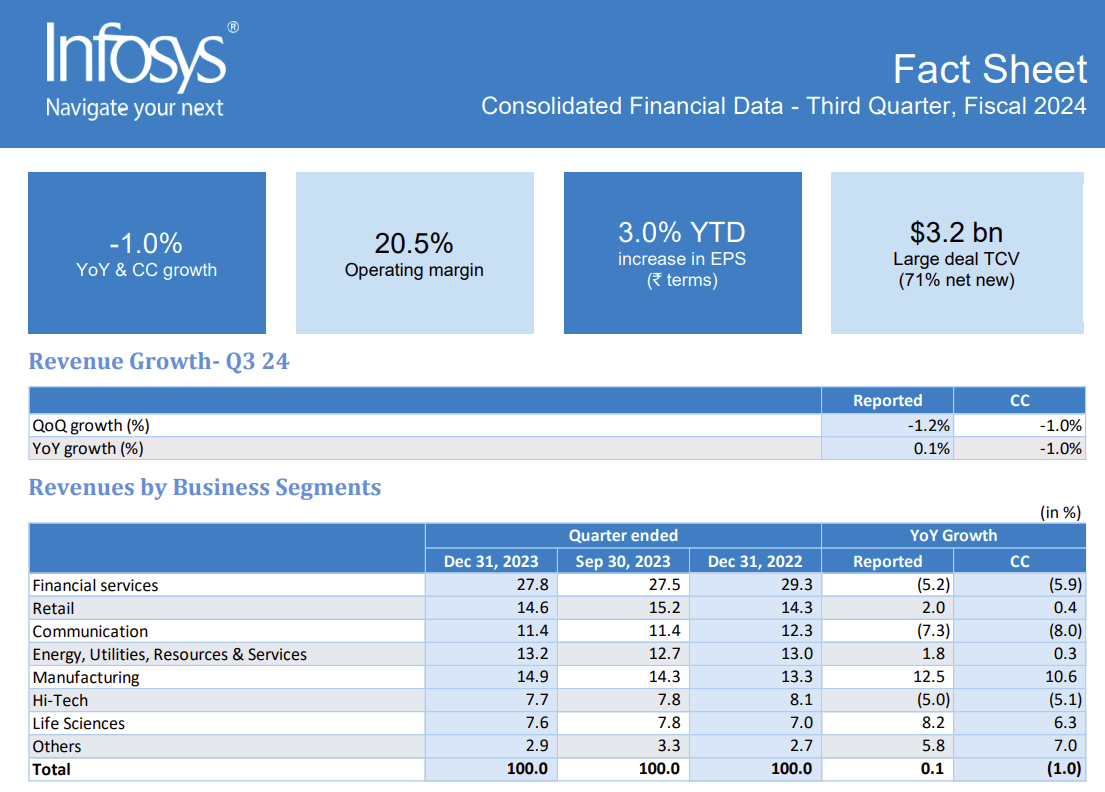
Here's the data from the survey. More than half of respondents say thinking well will be key to using AI well. Technical skills were cited by 47%.

Also see: How Generative AI Has Supercharged the Future of Work | Generative AI articles | Why you need a Chief AI Officer | Software development becomes generative AI's flagship use case | Enterprises seeing savings, productivity gains from generative AI 

Not surprisingly, a lack of skills, knowledge and career paths were cited as barriers to AI adoption.

Other key items from the report include:

  • The interest in AI skills crosses multiple generations with GenZ and Millennial employees interested in developing AI skills checking in at 81% to 84% with Gen X at 78%. Indeed, 65% of Boomers were interested in AI skills too.
  • 47% of respondents said IT was the department expected to benefit the most from AI skills, followed by sales and marketing, finance and business operations.
  • 62% of employers expect generative AI to boost innovation and creativity, but only 52% of employees do. The two sides were roughly aligned on automating tasks. 

Data to Decisions Future of Work Innovation & Product-led Growth New C-Suite Tech Optimization Next-Generation Customer Experience Digital Safety, Privacy & Cybersecurity AI GenerativeAI ML Machine Learning LLMs Agentic AI Analytics Automation Disruptive Technology Chief Information Officer Chief Experience Officer Chief Executive Officer Chief Technology Officer Chief AI Officer Chief Data Officer Chief Analytics Officer Chief Information Security Officer Chief Product Officer

Microsoft, OpenAI, Altman and the enterprise: What did we learn?

In a boardroom drama designed for the TikTok generation, Sam Altman was ousted as CEO of OpenAI, negotiated for a return and then landed at Microsoft along with Greg Brockman to lead an "advanced AI research team." The fact Microsoft CEO Satya Nadella moved so quickly illustrates the high stakes.

Nadella said on X that it will remain a partner of OpenAI, led CEO Emmett Shear, Co-founder of Twitch, but added Altman and Brockman. Perhaps the biggest takeaway--at least for Microsoft's market cap--is that Nadella said:

"We have confidence in our product roadmap, our ability to continue to innovate with everything we announced at Microsoft Ignite, and in continuing to support our customers and partners."

For enterprises, that's about all you need to know about this OpenAI soap opera. A brief recap:

Given that OpenAI was the hub for a good bit of Microsoft's Copilot strategy, the software giant needed to manage through the OpenAI-Altman drama quickly and possibly use its own Azure models-as-a-service. On Friday, OpenAI said it fired Altman. Brockman resigned after the news. Key executives at OpenAI also started to bail.

Altman said on X that the "mission continues." The back-and-forth with Altman, Nadella and Brockman was only interrupted by Tesla and X CEO Elon Musk noting that Altman will have to use Teams now (Altman was fired on Google Meet).

Constellation Research CEO Ray Wang raised the questions about who will acquire OpenAI, where talent goes and the economics of generative AI. Here are a few other observations to ponder.

  • Microsoft and OpenAI were a perfect match between a massive company with resources and a startup that could innovate quickly--until it wasn't. This blueprint will be analyzed going forward as a strategy case study. Did too much of Microsoft's generative AI strategy hitched to just a few people that didn't work for the company?
  • Diversification matters. As I noted before, there can be too much choice in large language models. The trick is navigating how much generative AI choice gives an enterprise diversification. Bring your own model will look much better after this OpenAI fiasco.
  • Yes, you'll need a Chief AI Officer to sort vendor AI messes.
  • Own your intellectual property. The Microsoft-OpenAI weekend illustrates why your IP needs to be owned by you even if you're building on top of an LLM. The model that may emerge is one that revolves around first party data and open-source models.
  • Don't bet too much of your strategy on a startup. Yes, OpenAI was an odd duck with a board composed of non-profit types and venture capital types. Startups can give enterprises more innovation and attention but have a plan in case of an emergency.


Data to Decisions Innovation & Product-led Growth Future of Work Tech Optimization Next-Generation Customer Experience Digital Safety, Privacy & Cybersecurity openai Microsoft ML Machine Learning LLMs Agentic AI Generative AI Robotics AI Analytics Automation Quantum Computing Cloud Digital Transformation Disruptive Technology Enterprise IT Enterprise Acceleration Enterprise Software Next Gen Apps IoT Blockchain Leadership VR GenerativeAI Chief Information Officer Chief Executive Officer Chief Technology Officer Chief AI Officer Chief Data Officer Chief Analytics Officer Chief Information Security Officer Chief Product Officer