Editor in Chief of Constellation Insights
Constellation Research
Larry Dignan is Editor in Chief of Constellation Insights at Constellation Research, where he leads editorial coverage focused on enterprise technology, digital transformation, and emerging trends shaping the future of business. He oversees research-driven news, analysis, interviews, and event coverage designed to help technology buyers and vendors navigate complex markets with clarity and context. ...
Adobe and Figma are calling off their $20 billion merger since the deal was unlikely to get regulatory approval from the European Commission and UK Competition and Markets Authority.
Adobe will pay Figma a $1 billion breakup fee, according to an SEC filing. CEO Shantanu Narayen said:
"While Adobe and Figma shared a vision to jointly redefine the future of creativity and productivity, we continue to be well positioned to capitalize on our massive market opportunity and mission to change the world through personalized digital experiences."
Constellation Research CEO Ray Wang said Adobe will likely build a competing product to take on Figma.
“The UK's CMA ultimately played a key role in stopping Adobe's acquisition of Figma. From a competitive point of view, this move makes no sense as the products are tangential. Adobe builds creative tools and Figma enables work coordination among creatives. This type of regulatory overreach stifles innovation across sectors. Adobe will now have to pay Figma $1B and then build a competitive offering to challenge Figma."
Constellation Research analyst Liz Miller said:
"I'm not sure the regulators could have misunderstood markets, solutions or categories more than in this case. But then again, considering how many times marketers and creatives must explain their jobs as NOT being advertising it shouldn’t really shock anyone. The reality is that this is a bit of a melancholy decision: the opportunity to truly shake up the product development space was considerable with this deal and for many mutual customers who got a taste of what could be when the teams would informally brainstorm pre-deal-closure.
So now what? Adobe will power forward with tools already announced in 2023 that focused on the intersection points of analytics and product design. We will likely see more focus on how insights from product performance can be automated into workflows and actions. The goal is to create more self-driving, self-healing and self-advancing digital products that understand when unintended points of user friction and frustration derail experience and engagement. The backbone of a solid solution in AdobeXD still exists, but only time will tell if Adobe has the appetite to truly take on that market. As we have seen throughout the regulatory questioning, there is plenty of market and customer appetite for a Figma alternative. But Adobe may not want to derail focus that has been advancing revenue.
This DOES open the door to some interesting options specific to where that cashflow may go. Is another acquisition already in Adobe’s view? Based on the earnings call last week, the digital media and document sides of the business are growing, but it seems that while digital experience is growing that growth is sluggish in comparison to competitors in the marketing and customer engagement/experience spaces. Perhaps a shake up on that side of the cloud is next."
Editor in Chief of Constellation Insights
Constellation Research
Larry Dignan is Editor in Chief of Constellation Insights at Constellation Research, where he leads editorial coverage focused on enterprise technology, digital transformation, and emerging trends shaping the future of business. He oversees research-driven news, analysis, interviews, and event coverage designed to help technology buyers and vendors navigate complex markets with clarity and context. ...
Enterprise technology vendors see strong revenue growth ahead due to generative AI, but they're clearly stuck in the hurry up and wait phase when it comes to recognizing sales. In other words, technology vendors are increasingly talking about generative AI pilots, remaining performance obligations (RPOs) and pipeline in lieu of actual revenue.
This focus on future revenue instead of actual revenue has picked up in recent earnings conference calls. Oracle highlighted RPO in its recent second quarter earnings results, which were mixed. Oracle CEO Safra Catz said the company's RPO topped $65 billion with about 48% of that sum expected to be recognized as revenue over the next 12 months. In an SEC filing, Oracle noted that 35% of the $65.5 billion will be recognized as revenue in 13 months to 36 months and 17% recognized more than 3 years from now.
At the very least, 17% of Oracle's RPO should be heavily discounted. Revenue more than three years from now is worth less than if it were collected today.
Catz said that Oracle is building data center capacity to meet demand. Oracle CTO Larry Ellison said: "We have to build 100 additional cloud data centers because there are billions of dollars more in contracted demand than we currently can supply. Oracle Cloud Infrastructure (OCI) demand is huge and growing at an unprecedented rate. In the next few weeks, we expect to sign a couple more billion-dollar Cloud Infrastructure contracts."
Ellison also said OCI will have a growth rate topping 50% in the future due to generative AI and database demand.
RPO was also a topic for Adobe on its fourth quarter earnings call due to several large enterprise transformational deals that gained momentum due to generative AI. RPO for Adobe’s fourth quarter was $17.22 billion, up 13% from a year ago.
"In Q2, we closed 62 agreements, including 36 pilots and trials. Our new pilot count is up 270% from a year ago. Notably, 20 of these were generative AI pilots, a 150% increase from Q1. With the lower entry price points of our pilots, we are more easily able to land new accounts. With our pilots, we are engaging customers across a diverse set of industries in this quarter. Our pilots came from manufacturing, federal, defense, aerospace, pharmaceuticals and other industries."
All those pilots sound promising, but so far, C3.ai's revenue has been between $72 million and $73 million for the last three quarters.
"The pipeline for AI-optimized servers tripled quarter-over-quarter during Q3. Lead times remain 39 weeks, demand is ahead of supply. We continue to work to improve supply. And we're working now to convert that pipeline into real sales into orders, so we can continue to ship and benefit from this exciting time."
The problem with the focus on pipeline, total addressable market and future revenue potential is that it's hard to value. In some cases, this potential revenue may never hit the top line. For technology vendors, generative AI is at a promising yet unfulfilling stage in terms of actual revenue.
Enterprise buyers are interested in the generative AI use cases and may even be recognized as pipeline for many vendors. However, strategies are still being formulated along with budgets. There's also another reason to be a touch skeptical about the pipeline and RPO chatter: Enterprises may agree to spend over time but are also managing payments because they can earn interest income while the vendors wait for the checks.
It's likely that the next round of technology earnings in January and February will feature more RPO and pipeline talk. The key themes to watch are the following:
RPO increases for vendors as customers commit to longer-term contracts.
The time frames associated with those long-term contracts and how much is being stretched out beyond 24 months.
What is the value of revenue two years from now to Wall Street?
Payment terms. Are annual payments over because enterprise buyers are seeing better returns from interest rates relative to vendor discounts?
Editor in Chief of Constellation Insights
Constellation Research
Larry Dignan is Editor in Chief of Constellation Insights at Constellation Research, where he leads editorial coverage focused on enterprise technology, digital transformation, and emerging trends shaping the future of business. He oversees research-driven news, analysis, interviews, and event coverage designed to help technology buyers and vendors navigate complex markets with clarity and context. ...
IBM will buy StreamSets and webMethods from SoftwareAG in a deal valued at €2.13 billion. IBM said the deal will bolster AI platform watsonx's ability to ingest data.
Silver Lake is Software AG's majority owner. At Software AG, webMethods and StreamSets served as the root of its integration platform-as-a-service play. IBM paid cash for StreamSets and webMethods.
For IBM, StreamSets and webMethods will give it more API management and data integration tools. StreamSets will add to watsonx's ability to ingest data because it can access and deliver multiple data sources and types and design pipelines.
WebMethods, an API management platform, can be implemented on-premises and in the cloud.
Combined, StreamSets and webMethods have more than 1,500 customers. IBM also said the two platforms will be integrated into IBM's portfolio beyond watsonx, including Red Hat and IBM Consulting.
Constellation Research analyst Doug Henschen said:
"IBM's purchase of webMethods and StreamSets will give it a modern integration platform as a service (iPaaS) spanning application and data integration, and, with the inclusion of StreamSets, real-time streaming use cases. Software AG had recently streamlined, modernized and integrated WebMethods and StreamSets assets into a next-generation platform it calls a Super IPaaS. The Super iPaaS also spans SAP, on-premises, hybrid and mainframe integration, so it’s a good fit for IBM."
Editor in Chief of Constellation Insights
Constellation Research
Larry Dignan is Editor in Chief of Constellation Insights at Constellation Research, where he leads editorial coverage focused on enterprise technology, digital transformation, and emerging trends shaping the future of business. He oversees research-driven news, analysis, interviews, and event coverage designed to help technology buyers and vendors navigate complex markets with clarity and context. ...
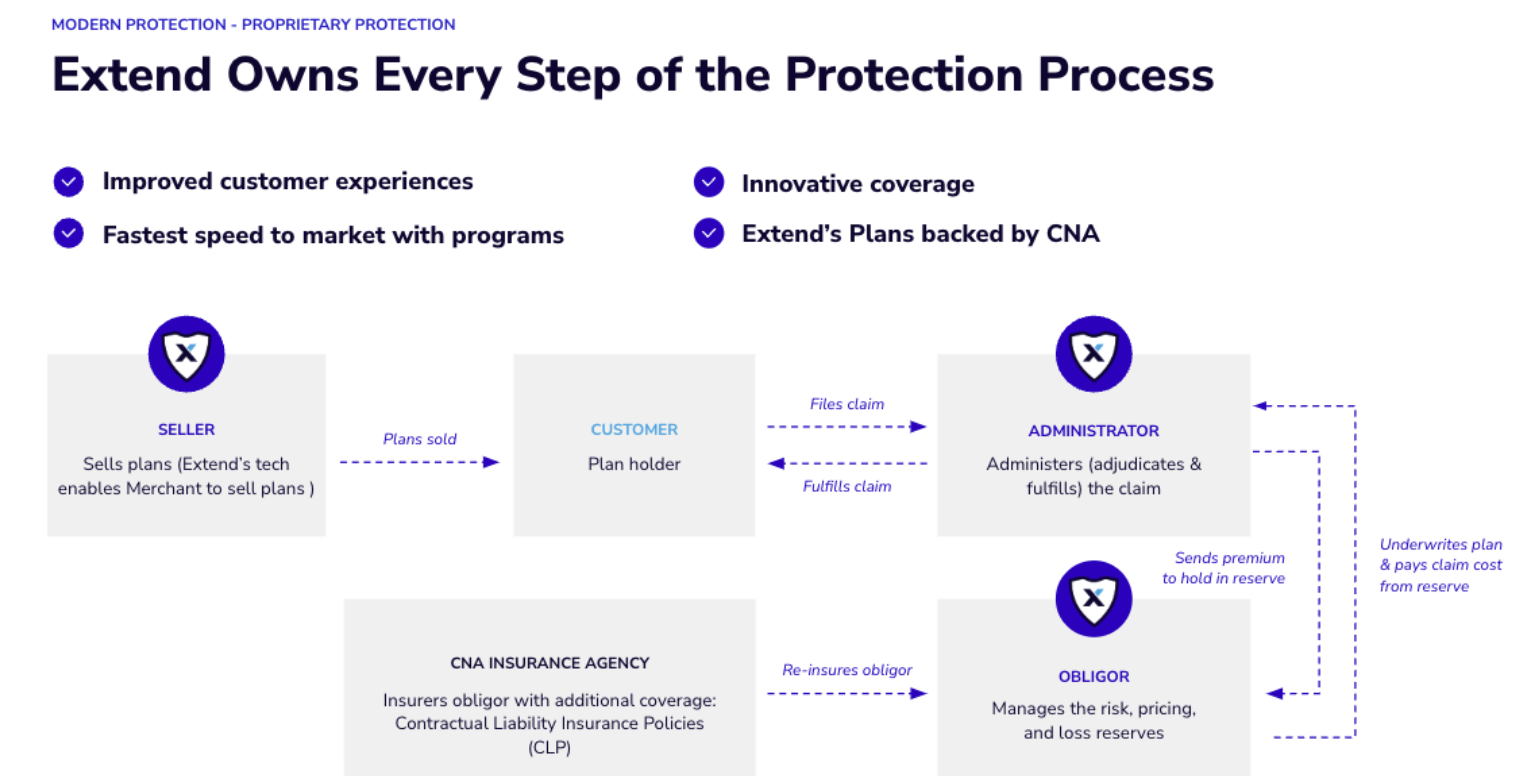
Tis the season for stolen and damaged packages, warranties and potentially a startup named Extend. Extend's platform, which merchandises and optimizes warranties and shipping protection, resolves claims with data, orchestration and artificial intelligence.
Extend is becoming a brand as it partners with multiple retailers to offer extended warranties and shipping protection. The company has more than 800 manufacturers and retail customers including Casper, Tonal, Oura and others. It also counts Shopify and BigCommerce as key partners. Extend said that 98% of its claims are approved in 90 seconds.
We caught up with Rohan Shah, Extend's Co-founder and Chief Revenue Officer, to talk about the extended warranty industry, processes and customer experiences. Here are the takeaways from our conversation.
The extended warranty business. Shah (right) said retailers, notably Best Buy, have developed profit centers from extended warranty sales. But other retailers did not have similar business opportunities. "Despite consumer demand and financial opportunity there was no access," said Shah. According to Shah, there was a distribution problem with extended warranties. As a result, Shah and CEO and Co-founder Woodrow Levin created Extend in 2019 to distribute warranties much like Stripe, Affirm and Klarna popularized after pay services.
Customer experience as the differentiator. Extend offers extended warranties and package projection but aims to differentiate with customer experience. Extend's processes have "a very strong lens on the most problematic aspect of the industry which was customer experience," said Shah.
Extend created an extended warranty distribution network and API-first integrations and paired it with a customer experience where retailers could enhance customer relationships.
Building out the shipping protection business. While extended warranties were driving incremental profits for retail partners, Shah said it's important to continually ask customers what other problems they needed to solve. The answer was quick: Support operations for shipping issues. "Customers said that 30% to 50% of support team call volume was around shipping issues," said Shah. "Orders not arriving on time, packages arriving damage and theft were issues merchants saw the most. Retailers can't control those issues but can't tell the customer sorry you're out of luck. Most retailers were replacing goods at their own costs."
Now shipping protection is added to the Extend network as an add-on during the purchase process.
The business today. Extend is seeing strong cash flow for extended warranties and the business continues to grow 75% to 100% year over year. In the future, shipping and theft protection could become a bigger chunk of revenue. "We see more merchants adopting shipping protetion and it touches 100% of ecommerce volume," said Shah. However, shipping protection requires more market education relative to extended warranties. "Over the next few years theft and shipping coverage will become table stakes for retailers," said Shah.
Price points for extended warranties and shipping protection. Individuals have their own internal price points when they consider an extended warranty, said Shah. Higher priced items have higher attach rates for extended warranties. That trend kicks in for prices above $100. However, there are exceptions. Extend's first warranty went for $1.99 on a $12 pair of headphones.
Shipping protection has lower price points. "I have anxiety about deliveries so I will buy shipping protection because it's a nominal fee. It's usually like 2% of the cart," said Shah. "We see serious adoption even at a $50 price point. At $1,500 you might want shipping protection because there's no guarantee you'll get a replacement."
The use of AI. Shah said Extend leverages artificial intelligence to optimize the merchandising and messaging to pitch extended warranties and shipping protection. "I would say AI is most relevant on the claims side where we handle most cases in under 90 seconds," said Shah. "It's a dramatic difference from a 7 to 10-day claim process. We're leveraging AI from a fraud perspective to see photo validation and whether a package was delivered or not. Other products are more complicated for repairs and things that have to be sent to a depot. AI helps us do the routing in that case or schedule a technician."
Data and orchestration. Extend's biggest value to legacy retailers is focus and the ability to share data. Shah said:
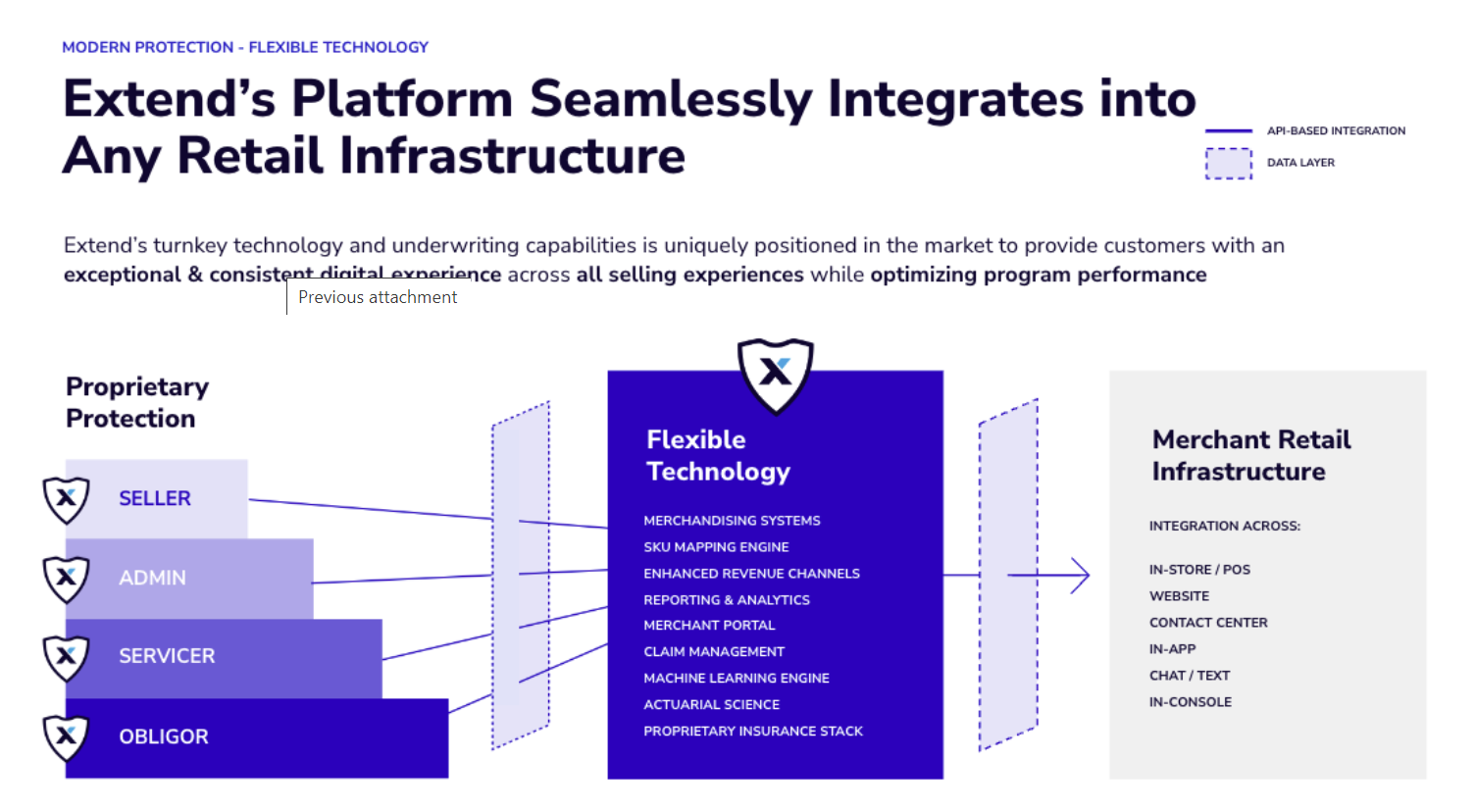
"Retailers can have legacy infrastructure built on top of disparate systems that don't talk to each other today. There's not consistent middleware and we play that role where we integrate and orchestrate with our data model. Warranty is a space that has been seen from a profit perspective, but we can tell them what products are seeing complaints, where the delivery problems are and experience."
The data model also gives Extend good visibility into retail operations. Shah explained:
"We're integrated into the e-commerce system. We're integrated into the POS (point-of-sale) system, and we're integrated into any order management or ERP system they have on the back end. In many cases, these are not connected for retailers, especially large retailers with legacy systems. We also integrate with CRM systems. We're able to create a data model that touches sales, customer claims and operations and support, as well as all of our claims infrastructure. We understand down to the SKU level what products are breaking at an exorbitant rate or what products customers are having issues with. The data model is a side benefit of working with Extend."
Editor in Chief of Constellation Insights
Constellation Research
Larry Dignan is Editor in Chief of Constellation Insights at Constellation Research, where he leads editorial coverage focused on enterprise technology, digital transformation, and emerging trends shaping the future of business. He oversees research-driven news, analysis, interviews, and event coverage designed to help technology buyers and vendors navigate complex markets with clarity and context. ...
Intel's launch of its Core Ultra mobile processors and 5th Gen Intel Xeon chips rhymed with product rollouts of yesteryear, but this one had higher stakes. Intel had to prove that it can be an AI player along with Nvidia and AMD even though the company is playing catch-up with its Gaudi3 AI accelerator.
In New York, CEO Pat Gelsinger made it clear that AI is "in the early innings." In fact, AI may just be still in the preseason of the impact it'll have. There's a big opportunity to leverage AI everywhere across the computing stack to create augmented intelligence.
Gelsinger said AI will be more of a hybrid affair across cloud, data centers, edge, network and end-user devices. Gelsinger said Intel is positioned to bring AI across multiple levels of the stack. He also noted that Intel can infuse AI into existing infrastructure and save enterprises the hassle of a new buildout, which by the way has so far benefited Nvidia.
He said:
"You don't have to build new data centers. You don't have to stand up new networks, new management, new security. We're going to infuse AI into every data center that's built on Xeon and that's what we're announcing today. Same applications. You don't need a forklift, those applications now. We're just going to build it in and enhance what you already do with new AI capabilities.
"We're also seeing that the world is moving from high end training. A few people create weather models, lots of people use them. The same is going to happen with AI. A few people train and lots of people inference."
Gelsinger's argument--and Intel's pitch--is that inference will happen at the edge and increasingly PCs. Gelsinger's other mission was to highlight that Intel can execute. He reiterated that Intel is on track to deliver five new process technology nodes in four years.
Intel's AI Everywhere Dec. 14 rhymed with AMD's Dec. 6 launch of its AI accelerators that are now in production. AMD has a similar vision of using its processors to power AI applications in the cloud, data centers and all the way to PCs. AMD CEO Lisa Su said:
"We are so well positioned to power that end-to-end infrastructure that defines this new AI era from massive cloud server installations to on-prem enterprise clusters to the next generation of AI and embedded in PCs."
Su added that AMD must deliver energy efficient GPUs, CPUs and adaptive computing systems for AI training and inference everywhere.
Sounds familiar, eh? Nevertheless, Intel vs. AMD hasn't been zero sum through the PC era and most likely won't in the AI era either. Directionally, AMD and Intel have similar visions. And Nvidia is the biggest risk to both companies.
Here's what Intel outlined for its AI everywhere stack.
Intel Core Ultra
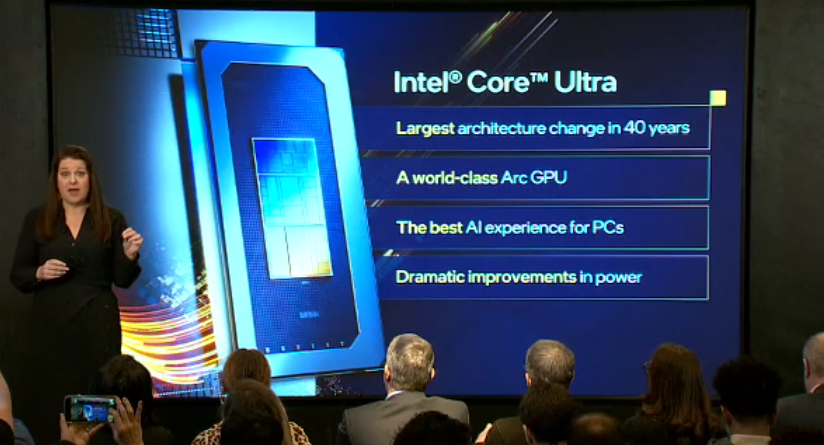
Gelsinger said Intel Core Ultra represented the biggest PC transformation since the company launched Centrino chips to give laptops the ability to connect to Wi-Fi.
Intel Core Ultra is designed to launch a set of more than 230 AI capable PCs. Intel Core Ultra spreads AI acceleration chores across the CPU, GPU and neural processing unit (NPU) and can give PCs the ability to power multiple industry use cases and visual workloads.
The company's Intel Core Ultra is designed to counter Apple's silicon and upcoming efforts from ARM chipmakers. It can offer up to 16 cores and has Intel AI Boost, which is designed for AI workloads on Evo edition laptops.
5th Gen Intel Xeon
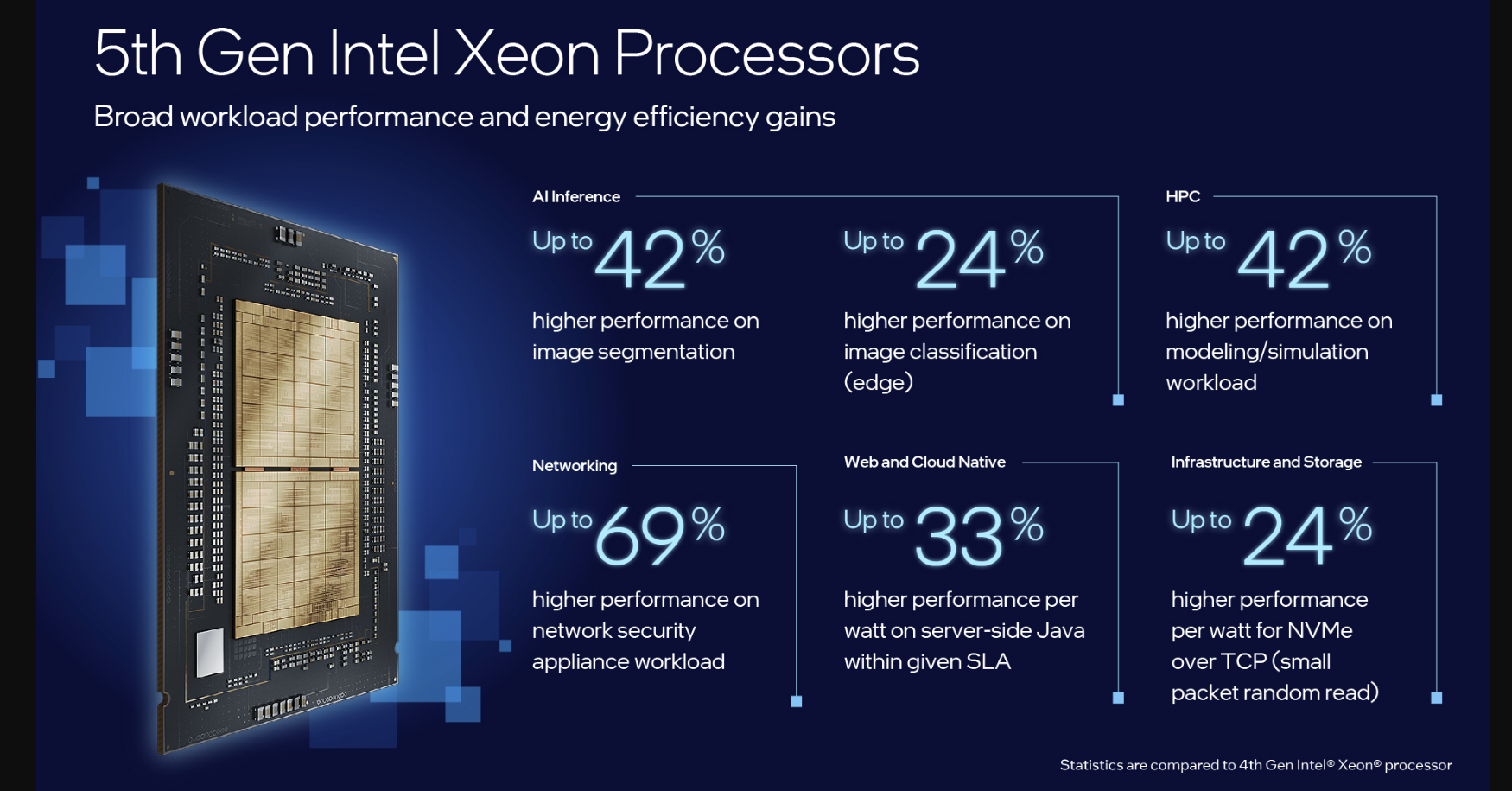
The 5th Gen Intel Xeon is set up to refresh previous Xeons in data centers with performance and efficiency gains over previous generations.
Xeon will also have built-in AI acceleration as Intel makes the case that CPUs can also be used to fine-tune models as large as 20 billion parameters.
IBM was cited as a customer that used the 5th Gen Intel Xeon for better query throughput on its watsonx.data platform. Google Cloud also verified performance gains over 4th Gen Xeon instances.
During the event, Intel positioned Core Ultra and 5th Gen Xeon processors as AI workhorses in edge computing use cases. Gelsinger argued that inference will be conducted at the edge instead of the data center.
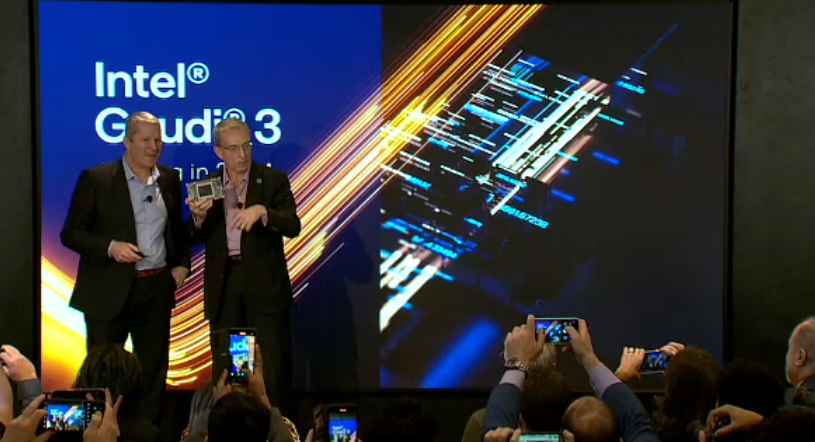
Gelsinger showed Intel Gaudi3, the company’s next-gen AI accelerator for deep learning and large-scale AI models.
Intel said it has seen the pipeline of Gaudi surge and it plans to gain share in 2024. Gaudi3 will compete with AMD, Nvidia and custom processors by AWS, Microsoft Azure and Google Cloud.
"Gaudi3 is out of the fab and into the lab being powered on and looking healthy," said Gelsinger. "We are executing like crazy."
Editor in Chief of Constellation Insights
Constellation Research
Larry Dignan is Editor in Chief of Constellation Insights at Constellation Research, where he leads editorial coverage focused on enterprise technology, digital transformation, and emerging trends shaping the future of business. He oversees research-driven news, analysis, interviews, and event coverage designed to help technology buyers and vendors navigate complex markets with clarity and context. ...
Salesforce is adding a vector database and generative AI-powered search to Data Cloud as it aims to surface unstructured data and combine it with CRM data.
The updates, Data Cloud Vector Database and Einstein Copilot Search, were announced at Salesforce's New York World Tour stop. Data Cloud Vector Database will be built into Salesforce's Einstein 1 Platform.
Overall, Salesforce is using its Data Cloud and generative AI to unify multiple enterprise data stores. Data Cloud Vector Database will be able to leverage data from PDFs, email, documents and transcripts and combine it with transactional data.
Vector databases are being announced by a bevy of data platform players as a way to bring data to generative AI applications without a lot of fine tuning for large language models (LLM). Vector database announcements have proliferated.
Salesforce's pitch with Data Cloud Vector Database is that it will bring unified business data into AI prompts and be integrated into its platform. Enterprise buyers, however, will have to ultimately determine what vector database and platform makes the most sense for their data.
With Einstein Copilot Search, Salesforce will bring AI search tools to Einstein Copilot.
Data Cloud Vector Database and Einstein Copilot Search will be in pilot in February 2024. Einstein Copilot will be generally available in February.
Separately, Salesforce launched Unlimited Edition+, a pricing plan that includes the company's suite of data and AI tools with its various clouds. Unlimited Edition+ for Service Cloud will run you $500 per user per month billed annually. Unlimited is $330 per user per month and there are lower tiers available.
Editor in Chief of Constellation Insights
Constellation Research
Larry Dignan is Editor in Chief of Constellation Insights at Constellation Research, where he leads editorial coverage focused on enterprise technology, digital transformation, and emerging trends shaping the future of business. He oversees research-driven news, analysis, interviews, and event coverage designed to help technology buyers and vendors navigate complex markets with clarity and context. ...
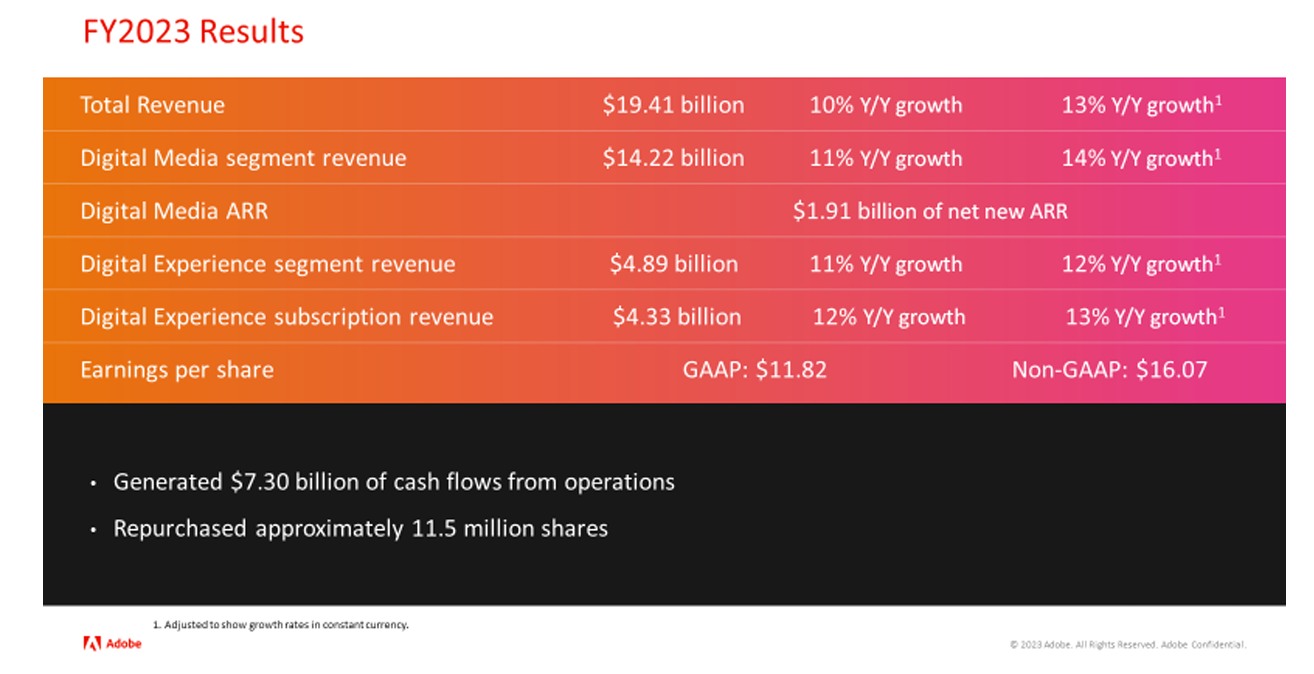
Adobe reported better-than-expected fourth quarter earnings as revenue was up 12% from a year ago.
The company reported fourth-quarter earnings of $1.48 billion, or $3.23 a share, on revenue of $5.05 billion. Non-GAAP earnings for the fourth quarter were $4.27 a share.
Wall Street was expecting fourth-quarter earnings of $4.14 a share on revenue of $5.02 billion.
Adobe CEO Shantanu Narayen, Constellation Research's CEO of 2023, said the company saw strength across its Creative, Document and Experience Clouds. "We believe that every massive technology shift offers generational opportunities to deliver new products and solutions to an ever-expanding set of customers. AI and generative AI is one such opportunity and we have articulated how we intend to invest and differentiate across data, models and interfaces," said Narayen.
Here's Adobe's fourth quarter sales by unit:
Digital Media revenue was $3.72 billion, up 13% from a year ago.
Digital Experience revenue was $1.27 billion, up 10% from a year ago.
Document Cloud revenue was $721 million, up 16% from a year ago.
For fiscal 2023, Adobe reported revenue of $19.41 billion, up 10% from a year ago with net income of $5.43 billion, or $11.82 a share.
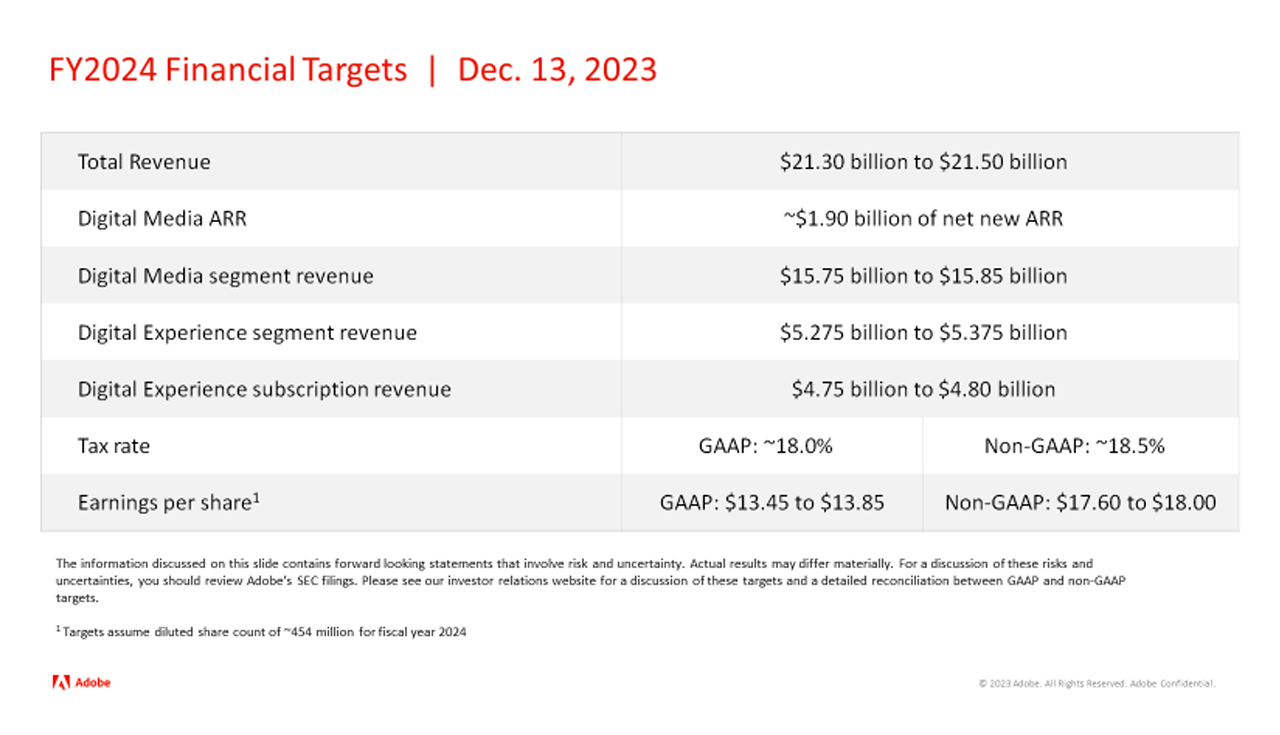
As for the outlook, Adobe is projecting fiscal 2024 revenue between $21.3 billion to $21.5 billion with non-GAAP earnings of $17.60 to $18 a share. For the first quarter, Adobe is projecting revenue of $5.1 billion to $5.15 billion with non-GAAP earnings of $4.35 a share to $4.40 a share.
Separately, Adobe said in an SEC filing that it could see "significant monetary costs or penalties" from a potential Federal Trade Commission resolution or defense. Here's what Adobe said in its filing:
"Since June 2022, we have been cooperating with the Federal Trade Commission (“FTC”) staff in response to a Civil Investigative Demand seeking information regarding our disclosure and subscription cancellation practices relative to the Restore Online Shoppers’ Confidence Act. In November 2023, the FTC staff asserted that they had the authority to enter into consent negotiations to determine if a settlement regarding their investigation of these issues could be reached. We believe our practices comply with the law and are currently engaging in discussion with FTC staff. The defense or resolution of this matter could involve significant monetary costs or penalties and could have a material impact on our financial results and operations."
Vice President and Principal Analyst
Constellation Research
About Andy Thurai
Andy Thurai is an accomplished IT executive, strategist, advisor, enterprise architect and evangelist with more than 25 years of experience in executive, technical, and architectural leadership positions at companies such as IBM, Intel, BMC, Nortel, and Oracle. Andy has written more than 100 articles on emerging technology topics for publications such as Forbes, The New Stack, AI World, VentureBeat, DevOps.com, GigaOm and Wired.
Andy’s fields of interest and expertise include AIOps, ITOps, Observability, Artificial Intelligence, Machine Learning, Cloud, Edge, and other enterprise software. His strength is selling technology to the CxO audience with a value proposition rather than the usual technology sales pitch.
Find more details and samples of Andy’s work on his…...
Vice President and Principal Analyst
Constellation Research
Title: About Dion Hinchcliffe
Dion Hinchcliffe is an internationally recognized business strategist, bestselling author, enterprise architect, industry analyst, and noted keynote speaker. He is widely regarded as one of the most influential figures in digital strategy, the future of work, and enterprise IT. He works with the leadership teams of large enterprises as well as software vendors to raise the bar for the art-of-the-possible in their digital capabilities.
He is currently Vice President and Principal Analyst at Constellation Research. Dion is also currently an executive fellow at the Tuck School of Business Center for Digital Strategies. He is a globally recognized industry expert on the topics of digital transformation, digital workplace, enterprise collaboration, API…...
Former Vice President and Principal Analyst
Constellation Research
Doug Henschen is former Vice President and Principal Analyst where he focused on data-driven decision making. Henschen’s Data-to-Decisions research examines how organizations employ data analysis to reimagine their business models and gain a deeper understanding of their customers. Henschen's research acknowledges the fact that innovative applications of data analysis requires a multi-disciplinary approach starting with information and orchestration technologies, continuing through business intelligence, data-visualization, and analytics, and moving into NoSQL and big-data analysis, third-party data enrichment, and decision-management technologies.
Insight-driven business models are of interest to the entire C-suite, but most particularly chief executive officers, chief digital officers,…...
Vice President and Principal Analyst
Constellation Research
Holger Mueller is VP and Principal Analyst for Constellation Research for the fundamental enablers of the cloud, IaaS, PaaS and next generation Applications, with forays up the tech stack into BigData and Analytics, HR Tech, and sometimes SaaS. Holger provides strategy and counsel to key clients, including Chief Information Officers, Chief Technology Officers, Chief Product Officers, Chief HR Officers, investment analysts, venture capitalists, sell-side firms, and technology buyers.
Coverage Areas:
Future of Work
Tech Optimization & Innovation
Background:
Before joining Constellation Research, Mueller was VP of Products for NorthgateArinso, a KKR company. There, he led the transformation of products to the cloud and laid the foundation for new Business Process as a…...
Editor in Chief of Constellation Insights
Constellation Research
Larry Dignan is Editor in Chief of Constellation Insights at Constellation Research, where he leads editorial coverage focused on enterprise technology, digital transformation, and emerging trends shaping the future of business. He oversees research-driven news, analysis, interviews, and event coverage designed to help technology buyers and vendors navigate complex markets with clarity and context. ...
Vice President & Principal Analyst
Constellation Research
About Liz Miller:
Liz Miller is Vice President and Principal Analyst at Constellation, focused on the org-wide team sport known as customer experience. While covering CX as an enterprise strategy, Miller spends time zeroing in on the functional demands of Marketing and Service and the evolving role of the Chief Marketing Officer, the rise of the Chief Experience Officer, the evolution of customer engagement, and the rising requirement for a new security posture that accounts for the threat to brand trust in this age of AI. With over 30 years of marketing experience, Miller offers strategic guidance on the leadership, business transformation, and technology requirements to deliver on today’s CX strategies. She has worked with global marketing organizations to transform everything from…...
Principal Analyst and Founder
Constellation Research
R “Ray” Wang is the CEO of Silicon Valley-based Constellation Research Inc. He co-hosts DisrupTV, a weekly enterprise tech and leadership webcast that averages 50,000 views per episode and blogs at www.raywang.org. His ground-breaking best-selling book on digital transformation, Disrupting Digital Business, was published by Harvard Business Review Press in 2015. Ray's new book about Digital Giants and the future of business, titled, Everybody Wants to Rule The World was released in July 2021. Wang is well-quoted and frequently interviewed by media outlets such as the Wall Street Journal, Fox Business, CNBC, Yahoo Finance, Cheddar, and Bloomberg.
Short Bio
R “Ray” Wang (pronounced WAHNG) is the Founder, Chairman, and Principal Analyst of Silicon Valley-based Constellation Research Inc. He…...
🚨 Announcing Constellation's BEST and WORST in enterprise tech for 2023 🚨
The results are IN for the 2023 Enterprise Awards... Check out the winners/runners-up for major WINS and biggest FLOPS from the past 12 months and learn what motivated Constellation analysts to make these selections ? https://bit.ly/4ajenrt
👠Congrats to the winners, and cheers to another exciting and unexpected year in tech!
Editor in Chief of Constellation Insights
Constellation Research
Larry Dignan is Editor in Chief of Constellation Insights at Constellation Research, where he leads editorial coverage focused on enterprise technology, digital transformation, and emerging trends shaping the future of business. He oversees research-driven news, analysis, interviews, and event coverage designed to help technology buyers and vendors navigate complex markets with clarity and context. ...
Principal Analyst and Founder
Constellation Research
R “Ray” Wang is the CEO of Silicon Valley-based Constellation Research Inc. He co-hosts DisrupTV, a weekly enterprise tech and leadership webcast that averages 50,000 views per episode and blogs at www.raywang.org. His ground-breaking best-selling book on digital transformation, Disrupting Digital Business, was published by Harvard Business Review Press in 2015. Ray's new book about Digital Giants and the future of business, titled, Everybody Wants to Rule The World was released in July 2021. Wang is well-quoted and frequently interviewed by media outlets such as the Wall Street Journal, Fox Business, CNBC, Yahoo Finance, Cheddar, and Bloomberg.
Short Bio
R “Ray” Wang (pronounced WAHNG) is the Founder, Chairman, and Principal Analyst of Silicon Valley-based Constellation Research Inc. He…...
Vice President and Principal Analyst
Constellation Research
Holger Mueller is VP and Principal Analyst for Constellation Research for the fundamental enablers of the cloud, IaaS, PaaS and next generation Applications, with forays up the tech stack into BigData and Analytics, HR Tech, and sometimes SaaS. Holger provides strategy and counsel to key clients, including Chief Information Officers, Chief Technology Officers, Chief Product Officers, Chief HR Officers, investment analysts, venture capitalists, sell-side firms, and technology buyers.
Coverage Areas:
Future of Work
Tech Optimization & Innovation
Background:
Before joining Constellation Research, Mueller was VP of Products for NorthgateArinso, a KKR company. There, he led the transformation of products to the cloud and laid the foundation for new Business Process as a…...
Vice President & Principal Analyst
Constellation Research
About Liz Miller:
Liz Miller is Vice President and Principal Analyst at Constellation, focused on the org-wide team sport known as customer experience. While covering CX as an enterprise strategy, Miller spends time zeroing in on the functional demands of Marketing and Service and the evolving role of the Chief Marketing Officer, the rise of the Chief Experience Officer, the evolution of customer engagement, and the rising requirement for a new security posture that accounts for the threat to brand trust in this age of AI. With over 30 years of marketing experience, Miller offers strategic guidance on the leadership, business transformation, and technology requirements to deliver on today’s CX strategies. She has worked with global marketing organizations to transform everything from…...
Vice President and Principal Analyst
Constellation Research
About Andy Thurai
Andy Thurai is an accomplished IT executive, strategist, advisor, enterprise architect and evangelist with more than 25 years of experience in executive, technical, and architectural leadership positions at companies such as IBM, Intel, BMC, Nortel, and Oracle. Andy has written more than 100 articles on emerging technology topics for publications such as Forbes, The New Stack, AI World, VentureBeat, DevOps.com, GigaOm and Wired.
Andy’s fields of interest and expertise include AIOps, ITOps, Observability, Artificial Intelligence, Machine Learning, Cloud, Edge, and other enterprise software. His strength is selling technology to the CxO audience with a value proposition rather than the usual technology sales pitch.
Find more details and samples of Andy’s work on his…...
Vice President and Principal Analyst
Constellation Research
Title: About Dion Hinchcliffe
Dion Hinchcliffe is an internationally recognized business strategist, bestselling author, enterprise architect, industry analyst, and noted keynote speaker. He is widely regarded as one of the most influential figures in digital strategy, the future of work, and enterprise IT. He works with the leadership teams of large enterprises as well as software vendors to raise the bar for the art-of-the-possible in their digital capabilities.
He is currently Vice President and Principal Analyst at Constellation Research. Dion is also currently an executive fellow at the Tuck School of Business Center for Digital Strategies. He is a globally recognized industry expert on the topics of digital transformation, digital workplace, enterprise collaboration, API…...
Former Vice President and Principal Analyst
Constellation Research
Doug Henschen is former Vice President and Principal Analyst where he focused on data-driven decision making. Henschen’s Data-to-Decisions research examines how organizations employ data analysis to reimagine their business models and gain a deeper understanding of their customers. Henschen's research acknowledges the fact that innovative applications of data analysis requires a multi-disciplinary approach starting with information and orchestration technologies, continuing through business intelligence, data-visualization, and analytics, and moving into NoSQL and big-data analysis, third-party data enrichment, and decision-management technologies.
Insight-driven business models are of interest to the entire C-suite, but most particularly chief executive officers, chief digital officers,…...
Former Vice President and Principal Analyst
Constellation Research
Steve Wilson is former VP and Principal Analyst at Constellation Research, leading the business theme Digital Safety and Privacy. His coverage includes digital identity, data protection, data privacy, cryptography, and trust. His advisory services to CIOs, CISOs, CPOs and IT architects include identity product strategy, security practice benchmarking, Privacy by Design (PbD), privacy engineering and Privacy [or Data Protection] Impact Assessments (PIA, DPIA).
Coverage Areas:
- Identity management, frameworks & governance- Digital identity technologies- Privacy by Design
- Big Data; “Big Privacy”- Identity & privacy innovation
Previous experience:
Wilson has worked in ICT innovation, research, development and analysis for over 25 years. With double…...
You can sum up 2023 in two words: Generative AI. There wasn't an enterprise that hasn't been affected by generative AI even though many efforts remain in the pilot stage. The year will go down as one of innovation, large language models, efficiency, productivity and some odd plot twists (yes, we're talking about you OpenAI).
Technology vendors named in this year's Enterprise Awards have shown agility, resilience and the ability to play a long game with customers. The Constellation Research team debated, horse traded and bickered (like all families do) to pick this year's 2023 Constellation Enterprise Award Winners. Enjoy.
BEST ENTERPRISE SOFTWARE VENDOR
This category recognizes the enterprise software vendor who improved their customer relevance, market share, customer satisfaction, and brand standing.
WINNER: MICROSOFT
Why did they win?
2023 could have been a terrible year for Microsoft if you let the Microsoft365 service outage in January 2023 be the leading indicator of the year to come. Then came the explosive rise of generative AI thanks to OpenAI, which innocently enough captured our collective imagination with the skills of ChatGPT and the GPT3.5 models. By summer, Microsoft had made a massive investment in an existing partnership with OpenAI in what equated to a large, concentrated bet. Overnight, Microsoft seemingly went from worst to first in the AI race with an eagle eye on how many workloads could move to Azure. From there, Microsoft launched a copilot strategy has not missed a beat, curveball or push by a competitor.
The Copilot strategy brings AI into all substrates of work, forcing category realignments across technology. From the way developers write code with GitHub Copilot to Copilot Sales (changing how sellers sell in the channels and places they already like to work like Word and Outlook) to Copilot Service that has the potential to reshape the largely commoditized contact center. Constellation Research’s analysts agree that no matter the industry, Microsoft is actively changing the ground rules with copilots and the cloud to handle the workloads. Microsoft is also leveraging its massive developer ecosystem with Copilot Studio.
CEO Satya Nadella has been giving a master class in focused strategy, noting in the recent Microsoft Ignite event that the company has been more aligned on Copilots and the opportunity of generative AI than ever. Nadella even lent a leadership hand when the OpenAI melodrama spilled out of the board room. The big question is whether Microsoft’s momentum and alignment can be maintained.
RUNNERS UP: DATABRICKS
Why were they recognized?
Databricks was in the right place at the right time for advancing gen AI and AI in general in 2023. Since its founding in 2013, Databrick’s forward-looking vision to build a multi-cloud platform for data engineering, data science, and, in most recently, adding BI and analytics, has proven prescient. In 2023 it was ready to highlight real customers doing real AI and Gen AI while others were talking about adding features in preview. It also pulled off some nice acquisitions in 2023, including Mosaic ML and Arcion to advance its model-building and low-latency capabilities.
RUNNERS UP: ADOBE
Why were they recognized?
Adobe’s Firefly suite of generative AI models continue to expand across text, image and video with no slowdown in momentum, putting mind-boggling creative capacity into the hands of already talented creators. These AI models are purposely generating commercially ready content with as much of an eye to protect originating artists and creators (of the human variety) as it does to protect businesses from using potentially copyright infringing AI creations/copies. The Firefly models are leaps and bounds better than other gen AI models, which is impressive when you see the output from stable diffusion models from teams at OpenAI, Midjourney or Stability.ai. The introduction of Firefly Model 2 only upped the ante. By year’s end, Adobe has made it clear they are continuing to push the boundaries of generative AI as a copilot for every creator.
BEST CEO
This category recognizes the best enterprise CEO. Enough said.
WINNER: SHANTANU NARAYEN, ADOBE
Why did they win?
In short, Narayen wins because consistent innovation matters. Adobe is not the biggest company in enterprise technology, but it isn’t the smallest either. Not only is Adobe on a revenue streak with impressive growth year over year (2019 +24%, 2020 +16%, 2021 +23%, 2022 +10%, and 2023 is also shaping up to be a double-digit growth year), the creative and customer experience giant is highly profitable. With a low debt to equity ratio and net profit margins (as of August 2023) of 27.11%, the 41-year-old company continues to perform and deliver. That was especially true in 2023. Under Narayen’s leadership, Adobe consolidated its decade’s long investments into automation, machine learning and artificial intelligence that had been packaged into their AI layer known as Sensei and injected significant resources and investment into generative AI innovation to deliver a new suite of models collectively known as Adobe Firefly.
Rather than rushing out any generative AI offering, Narayan focused the organization to address key concerns of the market, namely the safety, reliability, usability and commercial viability of content generated by AI. The Adobe Firefly models, now with updated releases with Image Model 2 and additional capabilities in generative fill, generative recolor and even 3D to image, Adobe has made it clear that generative AI should be accessible to all creators, offering a free publicly available solution along with a Premium plan that is $4.99/month.
The innovations in AI might get other CEOs onto this list, but what helped set Narayen apart is that this consistent drive to deliver innovations that matter to Adobe customers didn’t stop with Firefly. Narayen continues to push and challenge his leadership team to update their milestones and goals, encouraging the teams to constantly push boundaries and test market norms, while always respecting and celebrating the customer — very specifically all of the creators, marketers, sellers and experience leaders that rely on Adobe solutions to run and drive growth for their businesses.
Narayen continues to be a calm, steady, strategic leader driving Adobe into a new era of AI and wild creativity. He celebrates the foundation on which Adobe was built while charting a course for the future where Adobe remains a critical engine in an experience economy that will connect the personalized ambient experiences customers expect with the bursts of wild creativity and engagement that amplify differentiation.
RUNNERS UP: MARC BENIOFF, SALESFORCE
Why were they recognized?
Not even the threat of activist investors could stop Salesforce’s larger than life leader. What could have paralyzed others actually motivated Benioff to hear the call for austerity as Salesforce cut costs, slashed redundancies and focused time, talent and investments. He brought back familiar faces to shore up leadership roles and tripled-down on AI investments, shifting Salesforce from being a CRM company powered by AI and ML into Salesforce being an AI company rethinking customer-critical business functions. Salesforce even pulled off a price increase across its clouds. It is worth noting that throughout it all--the pressure, the shifts, the change and the challenges--Benioff has done it with that true Benioff style of cheeky humor and unfettered optimism that allows him to believe Salesforce will change the world for the better.
RUNNERS UP: JENSEN HUANG, NVIDIA
Why were they recognized?
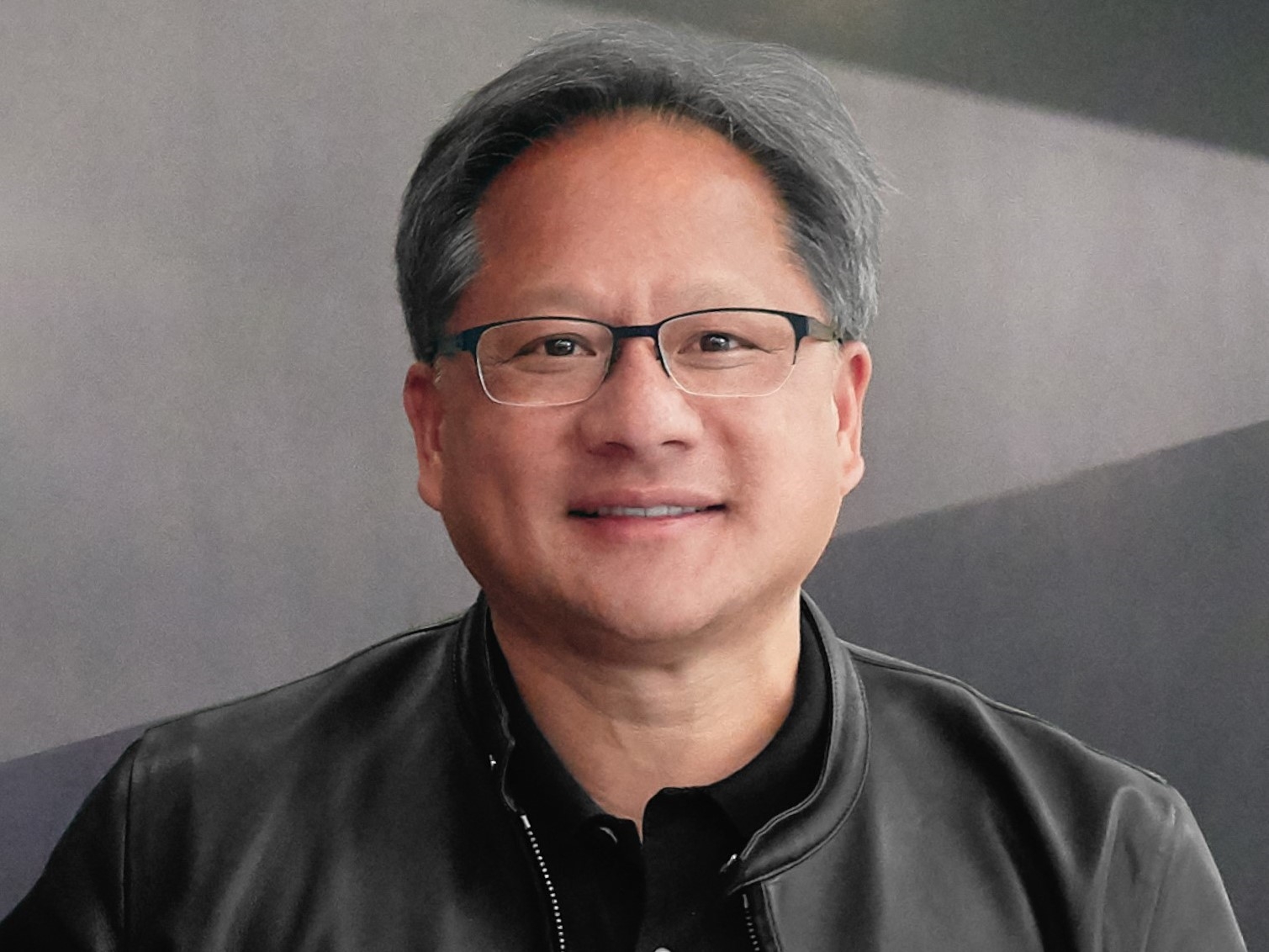
This was the year of the GPU and AI and Nvidia’s CEO, Jensen Huang, has been the driving force behind the AI revolution. Huang was a contender for Best CEO of 2023 with a 220% increase in share price for 2023 to be among the S&P 500 leaders. Jensen is the face of AI infrastructure and has never seen a press event he didn’t love. He has been everywhere this year and very few mature companies double sales in three quarters. Huang has a knack for long-term thinking and riding innovation waves such as AI factories. It’s safe to say that generative AI is his largest wave and he’s riding it even as other themes such metaverse, gaming, autonomous vehicles, and other bets faded from 2022.
RUNNERS UP: MELANIE PERKINS, CANVA
Why were they recognized?
Melanie Perkins, co-founder and CEO of online design platform, Canva, exemplifies exceptional leadership and innovation in the tech industry, making her a standout candidate for distinguished recognition. Under her leadership, Canva has skyrocketed from a start-up idea first nurtured from her mother's living room to an industry behemoth valued at $40 billion, now boasting over $1 billion in annual revenue. Her visionary approach has not only revolutionized graphic design accessibility, making it user-friendly and widely accessible, but also created a company culture that prioritizes employee welfare and environmental sustainability. Canva has evolved into a global platform that democratizes design. Her impact extends beyond Canva's enviable financial growth; it's seen in the empowerment of millions of users worldwide to express their creativity. Melanie's story is a testament to the power of innovative thinking, relentless pursuit of a vision, and the ability to lead a company through exponential growth while still maintaining a focus on community and inclusivity.
BEST ENTERPRISE SERVICES VENDOR
This category recognizes the enterprise services vendor that transforms delivery models and crafts new client–centric market approaches.
WINNER: PERSISTENT
Why did they win?
When founder and Chairman Anand Desphande handed the CEO reigns over the first time, his goal was to move past the "S” curve and take the company to the next level. While that first attempt at finding a successor did not work out as planned, he learned those lessons when he appointed former Harman executive and HCL veteran, Sandeep Kalra. Prior to Kalra’s arrival, Persistent had been stagnant in growth at $500 million in revenue, but under Sandeep’s leadership, the company grew and crossed the $1 billion mark in 2023. Over the past three years, Persistent has transformed from a specialized technology provider into a trusted digital transformation partner and global brand competing against the Tier 1 global system integrators.
RUNNERS UP: COGNIZANT
Why were they recognized?
Before Ravi Kumar S took the CEO role, Cognizant was seen as a has been. The previous CEO had decimated the culture, the talent flight scared clients, and the losses kept piling up. Clients felt the company lacked the innovation and capability to provide the smartest talent. The arrival of a new CEO has transformed the perception of Cognizant as a company that had lost its way to a company in the midst of a turnaround. Recent top hires from competitors and the stabilization of revenues have shown promise, breathing new life at Cognizant.
RUNNERS UP: ACCENTURE
Why were they recognized?
In 2023, Accenture defied the odds, achieving its 13th consecutive year of growth. In a challenging economic climate, the company achieved unprecedented growth to top expectations. Accenture’s record-breaking new bookings of $64.1 billion were an impressive 8% increase over the previous year, with 106 clients generating revenue that exceeded $100 million each per quarter. This remarkable performance wasn't limited to top-line growth. Accenture also saw continued bookings growth over 2022 and robust cash flow generation, solidifying their position as a leader in the industry.
BEST ENTERPRISE SOFTWARE STARTUP
This category recognizes when an enterprise software startup achieves escape velocity in mind share and relevance.
WINNER: HUGGING FACE
Why did they win?
Founded in 2016 by Clément Delangue, Julien Chaumond, and Thomas Wolf in New York City, the company transformed from consumer chatbot to a platform and community in machine learning loved by AI innovators. At its core, Hugging Face is a machine learning (ML) and data science platform and community that helps users build, deploy and train models. In August 2023, the company raised $235 million in Series D funding at a $4.5 billion valuation with Salesforce, Google, Amazon, Nvidia, AMD, Intel, IBM, and Qualcomm in the round.
When it comes to model repositories there is no place other than Hugging Face. Almost every company that is in the AI race has partnered with Hugging Face. They have become a one-stop shop for public model repositories, datasets, spaces/playgrounds for AI, and AI community hangout. Its model leaderboard makes or breaks the newer open-source models. Falcon, LLama, and other top-performing models are judged here. Not only that, but custom models can also be submitted for evaluation as well. Hugging Face’s model evaluation methods and metrics are very transparent.
The shift from specific models winning in AI to a model marketplace puts Hugging Face in a pole position for AI by providing the infrastructure to demo, run and deploy artificial intelligence (AI) in live applications. Offering enterprises, a go-to model marketplace is a winning strategy.
RUNNERS UP: OPENAI
Why were they recognized?
OpenAI's 2023 was marked by both groundbreaking achievements and internal leadership drama. Its revolutionary GPT-4 set the standard this year in generative AI with more than 100 million users and defined the category. OpenAI’s cutting-edge research in robotics and reinforcement learning has been further fueled by its Microsoft partnership. However, internal controversies have cast a shadow over OpenAI. Although the company’s commitment to responsible AI development remains a core strength, OpenAI is like the runner that led a race for the duration but stumbled at the end. It’s unclear how OpenAI’s drama has affected the company, but one thing is clear: Enterprises will pay more attention to model choice now.
RUNNERS UP: ANTHROPIC
Why were they recognized?
Anthropic has had a landmark year with sizeable investments from the likes of Google, Salesforce, AWS, Zoom and SK Telecom. Those partnerships have turned the AI safety and research company into a significant rival to headline leaders like OpenAI’s ChatGPT. Anthropic’s Claude has released a 2.0 update that promises even higher levels of accuracy and adaptability. With a focus on safety, trust and reliability, Anthropic is proving to be a viable if not preferred option for enterprises.
RUNNERS UP: COHERE
Why were they recognized?
Cohere has specialized on LLMs from the get-go - and offers an efficient approach to running models. Its breakthrough came in summer of 2023 when Oracle adopted Cohere as the go-to LLM across Oracle Cloud Infrastructure and its SaaS stack. Cohere also saw uptake in Salesforce offerings, and is available via Amazon SageMaker and Google Vertex AI. Cohere is a viable alternative to the omnipresent ChatGPT offering. Its Canadian roots gives privacy minded European CxOs and their enterprises piece of mind.
BEST PARTNERSHIP
This category recognizes the enterprise partnership that delivered the most impact for customers and the market.
WINNER: Nvidia w/ Anyone and Everyone All At Once
Why did they win?
Can you all guess one AI vendor conference keynote where Jensen Huang was not on stage? There it is. He was everything, everywhere, all at once when it comes to AI.
Nvidia has pretty much partnered with ANYONE that can spell AI. AWS, Microsoft, Google, Hugging Face, Databricks and Snowflake are just a few of the key partnerships. Jensen and his well-traveled leather jacket were on stage at every AI conference--often live and during the same week. Regardless of who wins the AI war, Nvidia will also win. Aside from Nvidia’s big partnerships, the company has done a great job building a broad ecosystem for developers to leverage.
Huang was our runner up as best CEO for a simple reason: He’s a much better partner and ecosystem creator. If you want to win in the arms AI race, you MUST partner with Nvidia.
RUNNERS UP: Oracle / Microsoft
Why were they recognized?
Strange bedfellows, to be sure, but with a list of joint customers who will benefit, this partnership had to make the list. Strategically, the partnership is built on enemy of my enemy logic but it serves joint customers well. The key truth of enterprise software came through again: At the end the customer must win. The two tech giants are on a steady course of collaboration with Oracle chairman and CTO Larry Ellison visiting Redmond for the first time, to announce the new expanded partnership. That Oracle Exadata machines are now physically inside Azure data centers and can be provisioned through the Azure console is a first for the industry. More importantly, Microsoft and Oracle give customers a simpler way to manage multi-cloud workloads.
RUNNERS UP: Microsoft / OpenAI
Why were they recognized?
In 2023, Microsoft and OpenAI forged a landmark partnership that redefined the boundaries of technical collaboration. This multi-year, multi-billion-dollar investment fueled OpenAI's groundbreaking research in areas like NLP, large language models, and reinforcement learning, leading to breakthroughs like the breakthrough GPT-4 language model. This partnership not only accelerated innovation in cutting-edge AI technologies but also established a model for responsible development, prioritizing ethical considerations and fostering transparency. Notably, Microsoft Azure serves as the exclusive cloud provider for all OpenAI workloads, giving Microsoft access to invaluable industry data, market cachet, and insights. With a shared vision for the future of AI, Microsoft and OpenAI's partnership stands as a testament to the power of collaborative innovation, earning them recognition as one of the top technology partnerships of the year.
BEST TECH ACQUISITION
This category recognizes the enterprise tech acquisition that has the most impact for customers, market landscape, and the overall industry direction.
WINNER: ATLASSIAN + LOOM
Why did they win?
With a deal coming in at a reported $975 million, the acquisition of Loom, the asynchronous video-based collaboration tool, by work and collaboration power Atlassian isn’t necessarily the biggest deal out there, but it is a mighty one. In Loom, Atlassian acquires video collaboration with already-robust connections into both Jira and Confluence, a customer base of 200K company customers and 21 million people using Loom as a means to connect, collaborate and communicate. For younger generations of workers, Loom has become their default for video creation across sales, training, marketing, project management and even customer support and service as they choose to “Loom an explainer” to engage.
Loom’s solution allows users to record video and screen sharing on any device with easy-to-use desktop and mobile apps and a speedy Chrome extension. AI powers powerful tools like Automated titles, summaries and chapters, automates tasks and optimizes video with silence and filler word removal at a price point that doesn’t pinch even the largest teams at $4/creator/month. Combine this with Atlassian’s tools that address everything from ITSM and issue tracking to project management and content collaboration, you have a new substrate for work built for the mobile, asynchronous video generation.
In this acquisition, Atlassian picks up stellar tech, a new customer base across which a land and expand sales motion could deliver quick returns, and a lead in a market trying to navigate the future of work for more future generations.
RUNNERS UP: Cisco + Splunk
Why were they recognized?
In a bold move that stands to redefine the landscape of security and observability, Cisco's acquisition of Splunk marks a key moment for both companies and the industry at large. By uniting Splunk's robust data platform with Cisco's comprehensive Secure Networks portfolio, this strategic partnership empowers organizations to leapfrog from reactive threat detection and response to proactive threat prediction and prevention. This integration unlocks a wealth of benefits for Cisco, including enhanced security through Splunk's data-driven approach to threat analysis across the entire IT infrastructure. Additionally, the combined solution offers industry-leading observability capabilities to provide deep insights into application performance and network health.
This union not only strengthens Cisco's financial position by bolstering its annualized recurring revenue stream with Splunk's $4 billion contribution, but it also catapults Cisco to the forefront of the security and observability market. Furthermore, the combined expertise of both companies paves the way for groundbreaking advancements in AI-driven security and observability solutions, laying the groundwork for a more secure and resilient digital future. Ultimately, the Cisco Splunk acquisition represents a transformative moment that is likely to deliver significant advantages for customers, partners, and the industry as a whole.
RUNNERS UP: Salesforce + Airkit
Why were they recognized?
It would be hard to argue that 2023 was the year of AI. Salesforce’s pickup of Airkit is certainly a step into a world where AI is everywhere. Completed in October 2023 for an undisclosed amount, the deal looks like a Service Cloud tuck-in purchase for rapid development of AI powered service bots/agents. But in reality, Salesforce picked up a low code/no code AI bot builder that can be used ANYWHERE across the “Customer360” clouds. The deal quickly ups Salesforce’s game in how to actually deploy and see quick benefits from AI deployments.
WORST TECH ACQUISITION
This category recognizes the enterprise tech acquisition that had the least impact for customers, market landscape, and the overall industry direction.
WINNER: BLACKSTONE ACQUIRES CVENT
Why did they win?
The acquisition, reported at $4.6 billion is a great deal for Vista Equity Partners who picked up the event management company in 2016 for $1.65 billion. In reality, Cvent has struggled in recent years, failing to be profitable and stacking up debt despite double-digit growth projections in sales. Given that Blackstone went through a span of successfully selling off assets in hospitality and entertainment like Hilton, La Quinta, and Sea World Entertainment, cornering the market with Cvent Hospitality Cloud seems an unlikely strategy. The market reality is that the event space is being forced to evolve, but despite the massive shifts forced by the COVID-19 pandemic, the return to live events has oddly brought back the old traditional muscle memory of event management, leaving many attendees wondering what happened to the momentum of innovation. Constellation Research’s analysts struggled to see where the upside on this investment could lie — in driving Cvent forward as it stands today in the largely commoditized and stagnant event management space (even Hopin sold its event business to Ring Central) or in shifting Cvent into a supporting role in another space. For this acquisition to succeed in the long term, Blackstone will need to catalyze disruption in Cvent’s event malaise even if it means rethinking its portfolio.
RUNNERS UP: CISCO/SPLUNK
Why were they recognized?
While the Cisco Splunk merger offers potential benefits, genuine concerns regarding its success linger. Firstly, the $28 billion price tag raises questions about potential overvaluation, especially considering Splunk's long-stagnant stock price and Cisco's history of unsuccessful acquisitions. Secondly, integrating two large, complex companies with quite different cultures and technologies will be a challenging feat, potentially leading to integration delays, employee turnover, and cultural clashes. Additionally, concerns remain regarding potential antitrust scrutiny, as the combined entity could hold significant market power in the security and observability space, potentially stifling competition and innovation. Furthermore, the merger is likely to distract Cisco from its core networking business, potentially hindering its focus and agility in a rapidly evolving market. Finally, the integration of Splunk's subscription-based model with Cisco's traditional hardware-centric approach may require significant adjustments to both companies' business models, posing potential financial and operational risks. Given these factors, the long-term success of the Cisco Splunk merger remains uncertain, and close observation of its development and execution is necessary to assess its true impact.
RUNNERS UP: OpenText / Microfocus
Why were they recognized?
From the start, the $9 billion dollars (all cash at that) OpenText’s pick up of Microfocus seemed more about picking up a customer base and widening a TAM than about the technology. This reality seemed at least partially confirmed when OpenText announced the divestiture of its Application Modernization and Connectivity business. While CEO Mark Barrenechea noted there is no intention to divest any other Microfocus units, there are questions as to what OpenText DOES intend to do given the company’s newly stated focus on cloud and AI businesses.
BEST NEW IPO
This category recognizes the most successful IPO for the year
WINNER: ARM
Why did they win?
The largest IPO of 2023 was the end of a long tug of war between owner Softbank and the UK government, that wanted UK based ARM to be listed on the FTSE. In the end, great access to capital in the US won and Softbank benefitted from the US listing on NASDAQ. ARM also needed access to capital markets to expand its offering of its low energy consuming chips. Notably it has entered the hot AI chip market and needs capital to aggressively invest here. After an initial dip the ARM stock is up roughly 20% over the IPO prices.
BEST NEW ENTERPRISE CATEGORY
This category recognizes the best new enterprise category that made an impact to the market.
WINNER: QUANTUM AS A SERVICE
Why did they win?
If it weren’t for generative AI, 2023 would have been the year of quantum technology. For the first time, quantum computing is showing real commercial value to enterprises and handling workloads. One of the key leaders in the space, IBM, has delivered on its promise of making both the Condor and Heron chipsets available. AWS unveiled a flip error reduction chip at its re:Invent conference at end of November and outlined its latest plans for Braket. What was long expected before - that quantum technology will be the first technology that that enterprises will not deploy on premises, but consume through the cloud - has proven true. Effectively all working quantum vendors offer quantum computing ‘as-a-Service’ - making the new technology available on a pay-as-you-go basis. Rapid technology innovation, uncertain workload demand and high proprietary knowledge to operate quantum systems make cloud the right approach. There is a veritable conventional compute infrastructure, that prepares data, digests data and stores results of quantum processing. The result is a new software category, Quantum-as-a -Service (QaaS). QaaS is a combination of convention cloud compute, storage and networking services designed to optimize the utlization of a quantum platform via the cloud. QaaS also includes software and observability services available in a serverless architecure. And finally QaaS also means enterprises only pay for quantum when they use it.
RUNNERS UP: Model Marketplaces
Why were they recognized?
AI marketplaces work like an app store where customers can easily buy and sell their own data science models, algorithms, and custom AI models from other places. These marketplaces go beyond open-source communities and AI libraries. A trusted and secure marketplace is essential for the advancement of AI at scale across industries, market segments, and business models.
RUNNERS UP: NexGen Copilots
Why were they recognized?
AI copilots, a novel breed within the Generative AI wave, have rapidly emerged on the scene in 2023 as a transformative aid in employee experience. These intelligent concierges, leveraging natural language processing and advanced machine learning, and backed by deeply powerful large language models, act as personalized digital companions, automating repetitive tasks, providing contextual information, and assisting with decision-making.
Microsoft's new Copilot, a prime example, is now positioned prominently across their product suite and integrates seamlessly into various productivity and line of business applications, boosting productivity and streamlining workflows. Companies across industries are recognizing the potential of AI copilots, investing heavily in their development and integration into their employee environments. This large wave in product development, their prominent positioning within digital tools, and growing adoption signifies that AI copilots are not just a fleeting trend, but rather a fundamental shift in the way we work, paving the way for a more efficient, productive, and fulfilling employee experience.
BEST NEW ENTERPRISE SOFTWARE MARKETING OF THE YEAR
This category showcases the best marketing campaign, ad, or perception transformation in the enterprise.
WINNER: GOOGLE CLOUD
Why did they win?
Google has been battling giants (or at least giant headlines) all year. From the cloud wars with AWS and Azure to the AI race against OpenAI and upstarts like Hugging Face and Anthropic, Google had no choice but to supercharge its marketing machine to strike on multiple engagement fronts. First, from a content perspective, from thought leadership to sales collateral, Google Cloud has focused on the core messages and differentiators that have meaning to their IT and AI-focused customers. The “Out with the Old, In With the New” message wasn’t just about cloud or even infrastructure, but also about cost and reliability especially in the new age of AI. Second, a focused event-based strategy, including its marquee event, Google Cloud Next, delivered fresh experiences in an otherwise stale event slate. Few will forget the laugh-inducing keynote nee musical, “Legacyland”, where singers wondered aloud if we could outrun entropy or avoid paying bills known as technical debt. Finally, Google Cloud has masterfully rounded out its end-to-end marketing strategy with advertising placements that have been subtle to sublime — the Las Vegas Sphere takeover with a massive Google Cloud message lumbering over Las Vegas during AWS was covered on media around the globe resulting in both earned and owned impressions galore. Google Cloud CEO, Thomas Kurian, knows how to win in this market, delivering profitable quarters across 2023…but this award has to tip the hat to Google and Google Cloud marketing leaders like Lorraine Twohill, Alison Wagonfeld and Sarah Kennedy Ellis for a consistent demand drum beat and exceptional messaging and storytelling across the year.
RUNNERS UP: Atlassian
Why were they recognized?
From their “Impossible Alone” campaign to the ‘Dreamkeeper’ microsite as well as their new line of dev music, the developer firm kept it very fresh and on-brand in 2023 with their new (and supposedly ‘first-ever’) brand-centric marketing approach in 2023.
RUNNERS UP: ADOBE
Why were they recognized?
Adobe’s mantra in 2023 could have been to drink its own champagne, turning to its own solutions to power marketing and engagement. From leveraging personalization at scale with Adobe Experience Manager (AEM) personalizing web content, email engagements and ads to reflect most recently opened Adobe applications, to unleashing creativity by using Adobe Firefly to create images, vectors and video shown on massive screens across massive events, Adobe let people see the products by using the products. It could be argued that the strategy took an even more dramatic step as Adobe introduced a number of free tools and solutions delivering real creative firepower into any set of hands that wanted to create with the introduction of Adobe Express and a free tier to Adobe Firefly for generative AI content creation.
BEST NEW ENTERPRISE SOFTWARE AD CAMPAIGN
This category showcases the best ad campaign in the enterprise.
Workday took on workplace-bro culture with the Super Bowl 2023 kickoff of its Rockstar Campaign, With REAL rock starts including Ozzy Osbourne, Joan Jett, Billy Idol and others pointing out that closing a deal, making a quarterly profit goal, or even beating the champion ad campaign does not make you a “ROCK STAR” - So stop calling each other Rock Stars.
IBM’s WatsonX ad campaign takes a little swipe at generative AI in the wild insinuating that while people dream of using AI to create steampunk hats, sending cats to space and generating postmodern artistic avatars, WatsonX is about what AI can do for your business. It may be a quick shot, but an effective one that quickly turns to outline all the ways IBM’s AI studio in WatsonX can accelerate the trusted, enterprise ready deployment of AI tools and workflows and the data needed to train these increasingly critical models. While some might point out that the idea of IBM Watson and AI are hardly new and there are questions around what makes this time at the AI dance different for IBM and Watson, it is hard to resist leaning in to hear the specific use cases IBM has already deployed and the realities of trusting the results of models using untrustworthy data.
Smartsheet's "Operate at Peak Human" campaign ignited recognition of the human spirit and high performance with its innovative approach to work management. Launched in 2023, The campaign is supported by real-world data and research demonstrating the positive impact of Smartsheet on productivity, efficiency, and innovation. This helped lead to bookings of over $700 million, over four million total users, and a tsunami of awards, including Most Innovative Company, Happiest Employees, and Best CEO recognition, showcasing how Smartsheet's platform empowers individuals and teams to maximize efficiency, automate tasks, gain insights, and unleash creativity, ultimately setting the highest industry standard for work management and human potential.
BEST LIVE-EVENT
This category showcases the team that adapted and succeeded in their high-touch in-person event to a full on virtual event experience.
WINNER: AWS re:Invent 2023
Why did they win?
AWS has taken over as the biggest event in enterprise tech, though with a decidedly more developer-focused slant than the Dreamforces and Oracle Open Worlds of pre-pandemic times. It also marks the ascendance of Las Vegas and decline of San Francisco as the epicenter of enterprise tech events. With 60,000+ attendees on hand in person and broad cross section of vendors exhibiting, it’s the closing show of the year and puts AWS in a position to set the agenda for the year ahead.
RUNNERS UP: Databricks Data + AI
Why were they recognized?
Databricks brought real customers, like JPMorgan Chase, JetBlue Airways and Rivian, demonstrating real AI in production to its big, exciting and hugely successful Data + AI event.
RUNNERS UP: AdobeMax
Why were they recognized?
Adobe MAX is always a high energy, rambunctious festival of creativity, but this year it was stepped up with demonstrations powered by AI and Adobe’s Firefly models that were truly inspiring. Fun with demos that were engaging and never overly and unnecessarily somber or serious, Adobe MAX is a celebration that never disappoints.
RUNNERS UP: Google Cloud NEXT
Why were they recognized?
They win for best organized, well-run, and laid out major tech event, making good strategic use of Moscone Center with bonus points for the excellent and well-placed analyst lounge for serendipitous meetings.
BIGGEST TECH FLOP OF THE YEAR
This category simultaneously recognizes the highest potential and largest failure in enterprise tech.
WINNER: The Slow and Painful Death of Legacy Social Media
Why did they win?
How many Threads did you scroll through tonight? Get lost in the quagmire of TikTok because you accidentally clicked a video you THOUGHT was going to have a cute puppy only to be sacrificed to the algorithm that now only serves things you can’t unsee? Lost your voice from screaming at X as you lament the death of Twitter? That’s OK…you aren’t alone.
From the failed promise of Instagram Threads replacing the disaster known as X to the near constant appearance of Social Network CEOs in government hearings and lawsuit court dates, 2023 lay bare all the bumps, bruises and warts that now cover once dominant social media platforms. Take Facebook’s bet with Instagram Threads. Debuted in July and posting an impressive start with some 30 million signups within the first 24 hours of launch, and a reported 100 million monthly users currently, Threads failed to truly dominate over X, seemingly because of poor planning rather than a lack of interest in quick to post text-dominant updates. Despite a summer launch, Threads is only now nearly ready to launch in Europe. A recent update has made Threads accessible in any language, again, months after its debut. And, only until recently, users were forced to delete both Threads AND Instagram, unable to sever the two from one another.
The problem with Threads isn’t entirely Instagram or Facebook’s fault as users have been trying to simply transition their Twitter experience to Threads in an effort to abandon the sinking ship of X. Users have been venting their frustrations as Threads continues to be dominated by the same influencers and celebrity seekers that dominate Instagram itself. For those looking for news, journalists accounts or business influencers, Threads has left most lacking. Rather than lean into this gap in the market Instagram and Facebook seem determined to alienate these markets further by publicly stating they wouldn’t be making the same “mistakes” it made in the early 2010s by quickly promoting journalists and news accounts. So much for that audience warm welcome!
But advertising dollars will ultimately determine the total life expectancy of social…and the outlook is murky as spend is down (drastically in the case of X) and users are skewing older leaving the coveted younger demographic up for grabs as they bounce around newer solutions in search of a community to call home.
RUNNERS UP: OpenAI Board Soap Opera
Why were they recognized?
The OpenAI pre-Thanksgiving CEO Musical Chairs fiasco goes down as a leading example of corp governance run amok that left customers and partners wondering if any adults were left to steer the fast-moving ship. In what one analyst called “poorly written Game of Thrones fan fiction,” the OpenAI board assumed it had too much power and rushed into actions taken in a vacuum. It has been the classic example of who is present to monitor the observers. Not only was it hastily done, but after the fact, rumors abound about midnight phone calls to rival CEOs with interpersonal spats playing out on social channels. All of this was only prologue to the board publicly begging ousted CEO Sam Altman to return a scant 24 hours after showing him the door in the name of ethics. Had the board decided to stand its ground, this inexperienced gaggle might have shown they had the backbone needed to drive OpenAI into its next phase of growth. Instead, they only proved the best move might be to fire them all. Had it not been so ridiculous, it could be a lesson in board and oversight dynamics laced with a best practice reminder that corporate boards are not clubs for friends and family. To be successful, you need seasoned leaders and advisors--not the case of Days of Our Lives with plot twists so insane you are only left thinking that it would be impossible to make any of this stuff up!
Editor in Chief of Constellation Insights
Constellation Research
Larry Dignan is Editor in Chief of Constellation Insights at Constellation Research, where he leads editorial coverage focused on enterprise technology, digital transformation, and emerging trends shaping the future of business. He oversees research-driven news, analysis, interviews, and event coverage designed to help technology buyers and vendors navigate complex markets with clarity and context. ...
Google built on its launch of its Gemini large language model (LLM) with Gemini Pro, Google AI Studio and other tools developers and enterprises can use for generative AI use cases.
Last week, Google rolled out Gemini 1.0, its most powerful model designed to compete with OpenAI's ChatGPT. Gemini comes in three sizes with Gemini Ultra focused on complex tasks, Gemini Pro, an all-purpose model, and Gemini Nano, which is aimed at on-device usage.
With Google's follow up, the company looked to build out its AI stack and make it easier for developers and enterprises to build with Gemini. The plan for Google is to get Gemini into as many developer workflows as possible. With the introduction of Gemini, all three hyperscale cloud providers have announced or upgraded models in recent weeks. Amazon Web Services outlined Amazon Q at re:Invent. Microsoft is upgrading Copilot with the latest from OpenAI.
Gemini Pro accepts text and generates text as output. Gemini Pro Vision is available also.
Google AI Studio allows for 60 requests per minute. The company is looking to entice developers with more free offerings, an easy ability to transfer code and low costs once Gemini Pro is generally available in early 2024.
Enterprises get the Gemini Pro API via Google AI Studio, which is available via Google Cloud Vertex AI.
Vertex AI will enable developers to tune Gemini models with their own data and use a no-code, low-code environment.
Gemini Pro is part of a curated list of more than 130 models available on Vertex AI.
The Gemini Pro API is available on Vertex AI at no cost until general availability.
Imagen 2, Google Cloud's text-to-image diffusion tool is available.
MediLM, a healthcare industry LLM, is available via Google Cloud.
Duet AI for Developers and Security Operations is now available. Duet AI for Developers includes AI code completion, code generation and chat in multiple integrated development environments. Tasks and processes are also streamlined. Duet AI for Security Operations aims to search data in seconds, add context and automate manual reviews.
Mistral AI will use Google Cloud infrastructure to distribute and commercialize its LLMs. Mistral is a large AI provider in Europe.
With the moves, Google Cloud is building out its generative AI stack to better compete with the likes of Microsoft Azure and AWS. By offering AI Studio, a free web developer tool, Google Cloud is looking to entice more enterprises to build on its platform.
In a blog post, Google Cloud CEO Thomas Kurian said, "Gemini is part of a vertically integrated and vertically optimized AI technology stack."
This stack includes AI optimized infrastructure, models of different sizes, Vertex AI, and Duet AI assistive agents across Workspace and Google Cloud. Kurian said:
"The release of Gemini, Vertex AI and Duet AI offers a comprehensive and powerful cloud for developers and customers. Google Cloud is propelling the next generation of AI-powered agents across every industry."
Speaking during a Google Cloud webcast, Kurian said:
"Google Cloud Gemini Pro was designed to be our most efficient model to serve. So we priced it to be accessible to all developers. As for price with a focus on hardware and software optimization, we've reduced our pricing by four times per input character and two times per output character, at the same time, improving model quality and reducing serving latency."
Constellation Research analyst Holger Mueller said:
"Google Cloud lost no time to integrate Gemini across its offerings and did it in one week. Remember the time when it was one quarter for platform innovation to be uptaken? In the current AI race, Google does not want to lose any time with the first multi-modal GenAI LLM. The multimodal architecture of Gemini, coupled with the progress of the TPU V5 offerings, will likely prove to be the magic sauce for expanding Google's leadership in all things AI."


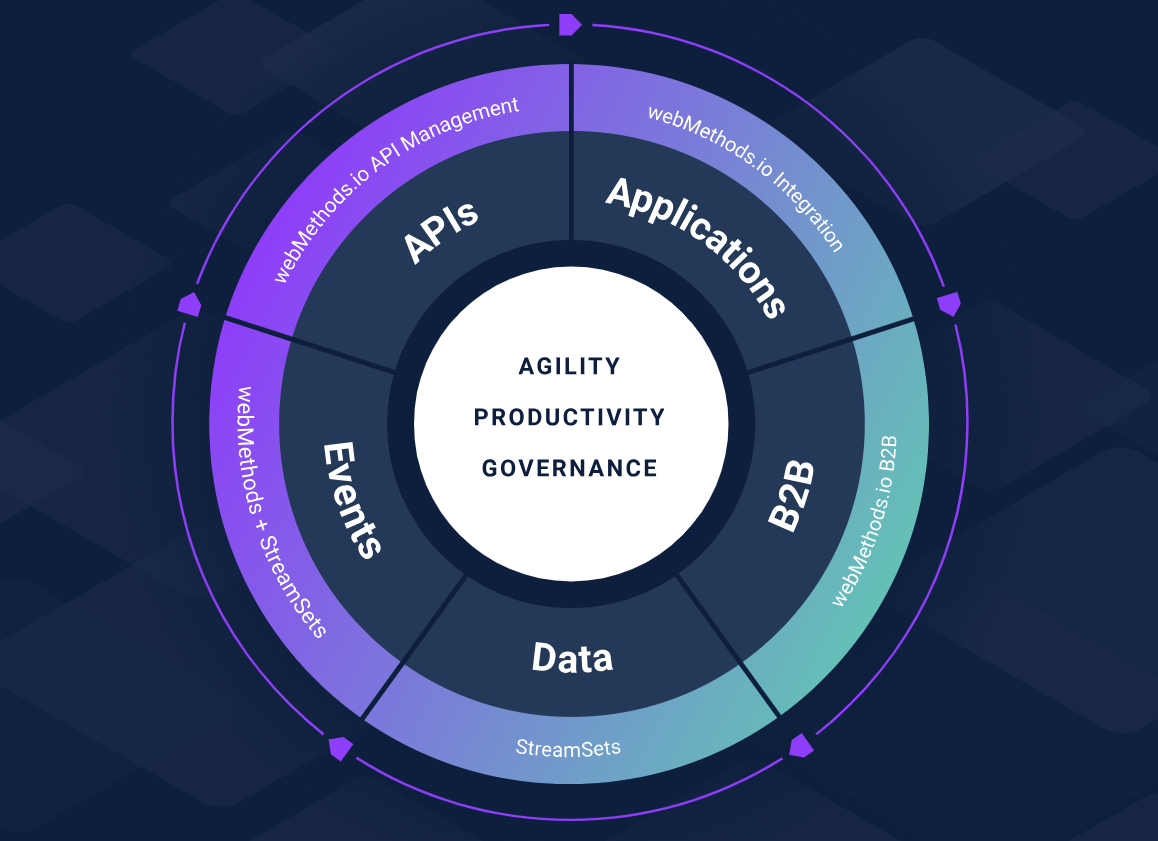
 experiences. Here are the takeaways from our conversation.