Results

Zoho CEO Sridhar Vembu: Playing the long game with innovation, technology, people

Zoho CEO Sridhar Vembu has scaled the company with humility, a focus on giving back to smaller communities, and playing the long game when it comes to #technology, people and customer value...

At #ZohoDay2024, Constellation Research CEO R "Ray" Wang sat down with Sridhar to talk about approaching #business and social good, #innovation and focusing on #customers. Their conversation touches on the following topics...

📌 Transnational localism
📌 Taking a long-term view
📌 Jobs, #automation and #AI
📌 Zoho's technology investments
📌 Giving customers choice.
📌 #Enterprise-class #software for SMBs
📌 Perils of the hard sell

It is always a priviledge to listen to Sridhar's proven insights on building a strong and successful enterprise, so this is one interview you won't want to miss!

👉 Want a deeper dive? Catch Larry Dignan's article summarizing the key takeaways: https://lnkd.in/gdU6cSsY

On <iframe width="560" height="315" src="https://www.youtube.com/embed/4cAP-Hml0OI?si=g9pnwbliFxnOpcNO" title="YouTube video player" frameborder="0" allow="accelerometer; autoplay; clipboard-write; encrypted-media; gyroscope; picture-in-picture; web-share" allowfullscreen></iframe>

Zoho CEO Sridhar Vembu: Long-term thought leadership on innovation, technology, people


Zoho CEO Sridhar Vembu has scaled a company with humility, a focus on giving back to smaller communities and playing the long game when it comes to technology, people and customer value.

Vembu's approach is refreshing and effective--not to mention a touch quirky compared to many CEOs we encounter.

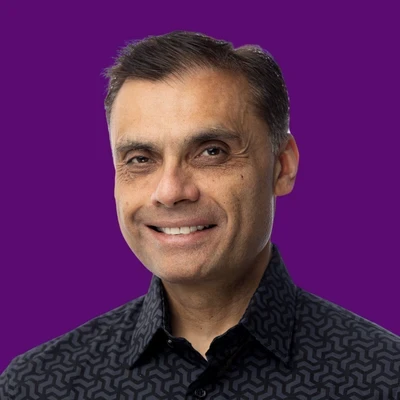
At Zoho Day 2024, Constellation Research CEO Ray Wang caught up with Zoho CEO Sridhar Vembu (right) to talk about how to approach business and social good, innovation and focusing on customers. Here's are some of the takeaways from the conversation.

Transnational localism. "It's really about getting closer to the customers at one level, and just talking about business first. But beyond that, it's also putting back into communities that income needed from technology, create good jobs, in smaller communities, which people are not doing enough," said Vembu.

The approach to giving back to smaller communities is a bit part of Zoho's strategy. Zoho has offices in Chennai, India; McAllen, TX; and a bevy of other locations in UK, US, India, Egypt, Nigeria, Kenya to name a few.

"You can operate out of smaller towns and create high impact R&D. And that helps the customer from smaller places and creates opportunities for people who didn't have it before," said Vembu.  

McAllen, Texas. Zoho has built out its operations in McAllen, Texas. Vembu explained why McAllen was chosen.

"We looked around for communities that are small, but not too small and there are enough people that are similar to our value system, and the demographic where we can recruit and train people and there's a low cost of living and affordable housing. We want this for our employees because we want to keep them forever. If our employee can buy a home and build families, they're more contented. They're more likely to be satisfied employees, which will lead to more satisfied customers. McAllen checked all the boxes, and then we sent an email to the Mayor's office and got an instant response."

Taking a long-term view. Vembu said Zoho is running its own schools, which is about giving back but also building a talent base for the years ahead. "That requires us to take a long-term view that you cannot just go hire for today and then be productive two weeks later," said Vembu. "40% to 50% of hires don't actually work out. In an interview process, you really cannot tell culture fit and a lot of things that go into making someone successful at work. We believe that first we have to nurture the talent and that automatically brings in good people to us over time."

Jobs, automation and AI. Wang asked Vembu about the future of meaningful work, AI and automation and what a long-term view looks like. Vembu said there has to be a way to balance automation and human work as well as wealth.

"We have to balance this out if we want a sustainable society so there isn't a civil war. We have to balance things out. We cannot just create all the wealth in one place. Income as a percentage of GDP is at all-time lows or near all-time lows. Profit as a percentage of GDP is near all-time highs. This can't go on forever. This has run this for 20, 30, 40 years now, but the bills are coming due. We have to think differently. This is not a political statement. I actually believe that the solutions aren't in the political arena today. We have to try new experiments like a scientist trying new things."

Zoho's technology investments. Vembu said the company's strategy has been evolving rapidly from building individual products to complete platforms that appeal to large companies with more complex requirements. Zoho is also infusing artificial intelligence throughout the platform.

"We are particularly very happy with smaller domain specific models, which are also cheaper to run," explained Vembu. "We're getting good payoff from the approach where we have a mix of smaller models, not one chain model."

Vembu said Zoho has long-run experiments on raising developer productivity with smaller models that ensure the correctness of code that will build future products.

Giving customers choice. Vembu said that software as a service should be about freedom of choice and simple payment plans. He said:

"We actually believe in two cardinal virtues as a company to keep ourselves grounded. One is humility. The customer always comes first. Their needs take precedence over immediate revenue. The second is contentment. We have to stay contented because there are times where you end up chasing growth for its own sake. And companies get in trouble when they do that. These two principles we practice which is why we say that if you don't need all of this just buy the stuff you need."

Zoho offers a monthly plan but doesn't force customers to pay annually. In other words, Zoho has reached hit scale with $50 a month as other vendors have gone from that sum to $500 today and priced companies out.

Enterprise class software for SMBs. "SMB software is relegated to a niche where it is not as powerful and doesn't scale," said Vembu. "We deliver so you can go from two employees to 200 to 20,000 to 200,000. We will scale with you."

Wang noted that one large services firm asked whether Zoho could scale to a 500,000 to 1 million user organization. Vembu said Zoho has won a deal that size but hasn't announced it yet. "We will show you if you give us the opportunity," he said. "We will not say give us the money. Give us the opportunity. We'll show you."

Perils of the hard sell. Vembu said Zoho isn't into the hard sell and pushing limits for sales. "We let the customer slowly figure us out and understand us. I want to sleep at night. I don't want to piss off customers by pushing hard. A lot of people do that and the result of it is employee burnout," said Vembu. "Not a lot of CEOs can't do this job for a long period. I've done this for nearly 27 years now. I'm still going strong. I say okay, we can win this customer next year. Let's not push this hard if you're not ready."

More on Zoho:


Data to Decisions Next-Generation Customer Experience Innovation & Product-led Growth Future of Work New C-Suite zoho Leadership Chief Executive Officer Chief Information Officer Chief Experience Officer

Dell Technologies AI optimized server backlog swells to $2.9 billion exiting Q4

Dell Technologies reported a better-than-expected fourth quarter as the company saw strong demand for AI-optimized servers.

Jeff Clarke, vice chairman and chief operating officer, Dell Technologies, said orders for AI-optimized servers grew 40% sequentially and backlog doubled to $2.9 billion. "We've just started to touch the AI opportunities ahead of us, and we believe Dell is uniquely positioned with our broad portfolio to help customers build GenAI solutions that meet performance, cost and security requirements," said Clarke. 

Dell shipped $800 million of AI optimized servers in the quarter. "We are also seeing strong interest and orders for AI optimized servers equipped with the next generation of AI GPUs, including the H200 and MI300X," said Clarke, referring to Nvidia and AMD GPUs, respectively. HPE's quarter was mixed and executives cited GPU deals as a reason for weaker sales

During the quarter, Dell Technologies managed through revenue declines compared to a year ago. The company reported fourth-quarter revenue of $22.32 billion, down 11% from a year ago, with net income of $1.16 billion, or $1.59 a share. Non-GAAP earnings for the quarter were $2.20 a share. Dell also unveiled a 20% hike to its annual dividend to $1.78 per share.

Wall Street was expecting Dell Technologies to report fourth quarter earnings of $1.72 per share on revenue of $22.17 billion.

For fiscal 2024, Dell reported net income of $3.2 billion, or $4.36 a share, on revenue of $88.42 billion, down 14% from a year ago. The company said it expects to return to growth in fiscal 2025.

By unit, Dell's Infrastructure Solutions Group had revenue of $9.3 billion, down 6% from a year ago. Operating income was $1.4 billion. Clarke said there's the obvious buildout in the public cloud for AI workloads, but enterprises are increasingly buying AI-optimized servers too. Dell can sell more richly configured GPU servers and attach services to them as enterprises build out. 

"83% of all data is on-prem. More data will be created outside of the data center going forward that inside the data center today, that's going to happen at the edge of the network, a smart factory and oil derrick. We believe AI will ultimately get deployed next to where the data is created driven by latency.

We sold to education customers, manufacturing customers, governments. We've sold the financial services, business, engineering and consumer services. Companies are seeing vast deployments, proving out the technology. Customers quickly find that they want to run AI on-prem because they want to control their data. They want to secure their data. It's their IP and they want to run domain specific and process specific models to get the outcomes they're looking for."

The PC business had fourth quarter revenue of $11.7 billion, down 12$ from a year ago. Commercial PC revenue was $9.6 billion of that total. Operating income was $726 million.

In prepared remarks, Clarke said:

"FY 24 was one of those years that didn’t go as planned, but I really like how we navigated it.  We showed our grit and determination by quickly adapting to a dynamic market, focusing on what we can control, and extending our model into a high growth AI opportunity."

Clarke added that AI-optimized PowerEdge XE9680 server sales were ramping quickly. He added that Dell's storage business should also fair well due to projected growth in unstructured data.  


Tech Optimization Data to Decisions Innovation & Product-led Growth Future of Work Next-Generation Customer Experience Digital Safety, Privacy & Cybersecurity dell Big Data ML Machine Learning LLMs Agentic AI Generative AI AI Analytics Automation business Marketing SaaS PaaS IaaS Digital Transformation Disruptive Technology Enterprise IT Enterprise Acceleration Enterprise Software Next Gen Apps IoT Blockchain CRM ERP finance Healthcare Customer Service Content Management Collaboration Chief Information Officer Chief Technology Officer Chief Information Security Officer Chief Data Officer Chief Executive Officer Chief AI Officer Chief Analytics Officer Chief Product Officer

HPE Q1 server revenue falls 23% in mixed quarter

Hewlett Packard Enterprise posted a mixed first quarter where sales fell short of expectations due to what CFO Marie Myers said were "challenges brought by the softening of the networking market and GPU deal timing."

The company reported first quarter non-GAAP earnings of 48 cents per share, GAAP earnings of 29 cents a share and revenue of $6.8 billion, down 14% from a year ago. Wall Street was expecting HPE to report adjusted earnings of 45 cents per share on revenue of $7.1 billion. HPE is planning to buy Juniper Networks in a deal valued at $14 billion.

By unit, HPE said server revenue fell 23% in the first quarter to $3.4 billion. Intelligent edge revenue was $1.2 billion, up 3% from a year ago. Hybrid cloud revenue was $1.2 billion in the first quarter, down 10% from a year ago.

CEO Antonio Neri said HPE had operational discipline to manage through the quarter and remained confident in the strategy. Myers added that "we are controlling what we can control, and we are optimistic about delivering strong shareholder returns over the remainder of the fiscal year.”

As for the second quarter, HPE said revenue will be between $6.6 billion to $7 billion with non-GAAP earnings of 36 cents per share to 41 cents per share. For fiscal 2024, revenue growth will be flat to up 2% from a year ago. HPE non-GAAP earnings per share will be between $1.82 and $1.92.

On a conference call with analysts Neri said HPE lacked GPU supply and customers were digesting Aruba networking orders. The networking comments have been echoed by Cisco, who said something similar in its most recent earnings call. Regarding AI-optimized servers, Neri said "several large GPU acceptances shifted" and the company "did not have the GPU side."

Here's a look at the key points from the conference call via Neri:

  • "We saw campus networking weaken and the decline late in the quarter was greater than expected. There was a large headwind relative to our expectations. Customers are taking longer to digest prior orders than we had anticipated."
  • "We expect weakness in the networking market to persist and impact reveneu through fiscal year 2024."
  • "Server demand remains very strong evidenced by our growing cumulative order book. However, GPU availability remains tight and our delivery timing has also been affected by the increase in length of time. Customers required to set up the data center space power and cooling requirements needed to run these systems. As a result of our AI server orders conversion was below our expectations."
  • "We have already a lot of GPUs that we already built that the customers will take time to assemble systems. But the reality is that we need more supply against the backlog that we announced today, which was $3 billion at the end of the q1."
  • "Our pipeline is large and growing across the entire AI lifecycle from training to tune into inferencing. We are starting to see a demand pull through for other solutions, including storage. We expect our server and hybrid cloud segments to grow sequentially through the fiscal year."
  • "Given the softening network in market GPU deal timing and to some extent GPU availability. We're focused on execution as we navigate the fluctuations in demand we see in certain areas of the market."
  • "This quarter is a moment in time and does not at all dampen our confidence in the future ahead of us."

Tech Optimization Data to Decisions HPE greenlake HPE SaaS PaaS IaaS Cloud Digital Transformation Disruptive Technology Enterprise IT Enterprise Acceleration Enterprise Software Next Gen Apps IoT Blockchain CRM ERP CCaaS UCaaS Collaboration Enterprise Service Big Data Chief Information Officer Chief Technology Officer Chief Information Security Officer Chief Data Officer

Oracle adds generative AI features to Autonomous Database

Oracle continued to build out its generative AI tools for its Autonomous Database with conversational AI, a broad set of large language models, new analytics for knowledge graphs, spatial learning and no-code modeling.

By bringing generative AI models to its database portfolio, Oracle is looking to make models more dynamic by connecting them to real-time data. The general theme behind Autonomous Database Select AI is to enable insights in natural language without the user needing to know where and how data is stored.

Here's a breakdown of new additions to Oracle Autonomous Database:

  • Select AI, which uses LLMs to generate SQL queries based on natural language conversations. Select AI enables apps to integrate private data with generative AI and supports multiple models.
  • Spatial machine learning, an addition to Oracle Machine Learning. Spatial machine learning uses location data to improve model performance and supports spatial algorithms.
  • Model monitoring user interface, which is a no-code UI in Oracle Machine Learning. Model monitoring UI is designed to make it easier to monitor models and detect concept and quality drift.
  • Operational graph views on knowledge graphs, a new no-code UI that facilitates graph analytics on knowledge graphs without duplicating data and examines connections.

Oracle executives said Select AI is available today in Oracle Autonomous Database and can be used in any database application. The Select AI rollout comes a few weeks after Oracle announced general availability of its Oracle Cloud Infrastructure Generative AI service and plans to integrate generative AI across its stack and applications.

Previously:

Data to Decisions Innovation & Product-led Growth Future of Work Tech Optimization Next-Generation Customer Experience Digital Safety, Privacy & Cybersecurity Oracle AI GenerativeAI ML Machine Learning LLMs Agentic AI Analytics Automation Disruptive Technology Chief Information Officer Chief Executive Officer Chief Technology Officer Chief AI Officer Chief Data Officer Chief Analytics Officer Chief Information Security Officer Chief Product Officer

What VMware customers are doing through the lens of Nutanix

If you want to know what VMware customers are plotting in the wake of Broadcom's acquisition it's worth checking out Nutanix's results, which are getting a gradual boost.

Not surprisingly, Nutanix's second quarter earnings conference call featured a heavy dose of VMware questions from Wall Street analysts. CEO Rajiv Ramaswami initially just mentioned VMware as an unnamed competitor, but analysts went right to the VMware between-the-lines benefit to Nutanix.

Ramaswami said VMware customers are rethinking overall strategies and looking toward other more automated options. "(VMware customers) were happy with the vendor prior, and now they don't feel happy. So, they got to look at an alternative. And we are a very solid infrastructure alternative," he said.

First, the numbers.

Nutanix's second quarter earnings handily topped estimates with non-GAAP earnings of 46 cents a share on revenue of $565.2 million, up 16% from a year ago. Nutanix reported second-quarter net income of $32.8 million, or 13 cents a share.

The company said annual contract value (ACV) billings were up 23% from a year ago in the second quarter with annual recurring revenue up 26%.

As for the outlook, Nutanix projected third quarter revenue of $510 million to $520 million and fiscal 2024 revenue of $2.12 billion to $2.15 billion.

Ramaswami noted a few wins and how Nutanix is landing larger deals. "A good example is a seven-figure win with a global EMEA based provider of automotive technology solutions. This new customer had an existing three tier footprint in need of a refresh but was frustrated by the recent price increases of their incumbent vendor and was also looking to have the flexibility to potentially move some of their footprint to the public cloud in future. They chose our Nutanix Cloud Platform, including our AHP hypervisor, as well as Nutanix Cloud Management, based on its superior TCO, built-in automation for infrastructure as a service," he said.

Constellation ShortListâ„¢ Next-Generation Computing Platforms

It doesn't take Sherlock Holmes to figure out that competitor given the multiple reports of VMware disgruntlement. Ramaswami also said a converged infrastructure partnership with Cisco was showing promise even though it's early. Nutanix CFO Rukmini Sivaraman said the company is "seeing a higher mix of larger deals in our pipeline" as well as new and expansion opportunities in an uncertain environment.

So, what are VMware customers thinking? Here's a distilled version of the lessons from Nutanix's second quarter conference call.

VMware customer migrations are likely to be a multi-year events. Ramaswami said the timing and magnitude of landing VMware's customers is unpredictable, but the "pipeline is quite substantial and growing." Ramaswami said:

"We expect contribution for the opportunity to build gradually, and here are the reasons. First is that many customers signed multi-year ELAs enterprise agreements with VMware prior to the deal closing for three to five years. That buys them some time to make decisions. The second is converting from VMware 3-tier accounts or legacy storage accounts, which is a good chunk of VMware footprint, in many cases requires a refresh of their storage and our servers. That could also impact the timing of the potential software purchases that they would make with us."

Larger customers have a lot of work to do to migrate away from VMware, but inertia isn't much of an option. Customization is also a factor since that can slow migration work.

Ramaswami said:

“One of the reasons we're seeing these large deals is because of course for a while we've been working on a portfolio, that product portfolio, which we think is ready for large scale enterprise deployments. And so, we have segmented our focus a bit further up the market in terms of our own sales for segmentation, and then on top of that, we've got the industry disruption with VMware where many large customers, of course, who are not necessarily engaged with us before are now engaging with us. So that's the reason why we're seeing more of these large deals in our pipeline."

The catch? Those large deals have a lot of variability on timing even as the pipeline builds. "It's a sea of engagement, when you have these types of deals between both companies, we are investing resources, customers investing a lot of resources as well, because there's a lot of testing certifications, go into contract negotiations, security audits, a whole bunch of things that get through this process," he said.

VMware Cloud Foundation is the target. Broadcom has focused VMware on its VMware Cloud Foundation business. That platform happens to be the one that lines up with what Nutanix offers. Ramaswami said:

"If you compare the full stack that Broadcom was offering with VMware Cloud Foundation, that, -- and our Nutanix cloud platform pretty much goes head-to-head against that, and we've got all the capabilities. That's a full stack that includes the hypervisor, a software defined storage, networking and management. So, we compare very well with that full stack and we're able to go to a very comparable offering."

VMware customers on lower-tier offerings, VMware Virtual Foundation (formerly vSphere) attached to legacy storage, will look at Nutanix as a broader transformation move. Ramaswami said:

"Customers are actually making a shift from a legacy architecture that say hypervisor plus external storage to a modern HCI (hyperconverged infrastructure) architecture that includes our hypervisor, but also the rest of our stack."

As a side note, this is where Dell's decision to terminate a commercial agreement with VMware may affect HCI decisions.

Broadcom's VMware purchase may be speeding up moves to HCI. Nutanix has put incentives in place for partners, advertising more to highlight its platform and helping customers with migrations.

Cisco is going to be Nutanix's BFF and help with migrations. It's early in the Cisco-Nutanix partnership, but Cisco's scale and market position can only help Nutanix. "There's a lot of cooperation happening between our sellers, and Cisco sellers in the field. So, all good, good omens at this point in time, but still very early," said Ramaswami.

Tech Optimization Data to Decisions vmware Big Data Chief Information Officer Chief Technology Officer Chief Information Security Officer Chief Data Officer

The Human Toll of a Ransomware Attack

Imagine you walk into a pharmacy to get a critical medicine that you need right now. The pharmacist says, “we can’t fill your prescription because your insurance provider’s system has been hacked.”

This is not a science fiction. It has been a week since Change Healthcare’s (a subsidiary of UnitedHealthcare) system has been hacked by BlackCat, the same group responsible for recent ransomware attacks on MGM and Caesars. Many pharmacies around the country are struggling to fill prescriptions due to the disruption caused by this attack. The company has been working hard to resolve the issue but it is still not resolved. Unfortunately this is way too common—so common that people have stopped paying attention to it. There are hundreds of reported ransomware attacks each year including dozens on healthcare facilities. When you hear about cybersecurity impacting business continuity, remember: the "business" in this case is us, human beings.

No one wants breaches and yet they occur. In my numerous conversations with CISOs and CIOs, I sense their apprehension. I also sense a tool fatigue. Despite their best intentions and earnest efforts, they are finding it increasingly difficult to navigate the cybersecurity maze. AI-led attacks are both easier to launch and surprisingly difficult to defend against due to their sophistication. As the attack vectors continue to evolve and expand, traditional threat-based defense approach is simply not good enough. Unless and until business and technology leaders adopt comprehensive risk-based and outcome-based approaches, in close collaboration with the larger cybersecurity community, it is going to be a game of whack-a-mole.

All it takes is one hacker to launch an effective attack but it takes a village to defend against it.

Digital Safety, Privacy & Cybersecurity Security Zero Trust Chief Information Officer Chief Information Security Officer Chief Privacy Officer

Snowflake's Slootman steps down as CEO, technologist Ramaswamy takes over

Snowflake has a new CEO. The company said Sridhar Ramaswamy will become CEO immediately as Frank Slootman stepped down but remains Chairman of the board.

Ramaswamy (right) had been SVP of AI at Snowflake. Slootman said "there is no better person than Sridhar to lead Snowflake into this next phase of growth and deliver on the opportunity ahead in AI and machine learning."

Previously, Ramaswamy led all of Google's Advertising products, which included search, display and video advertising, analytics, shopping, payments, and travel.

Slootman explained the succession strategy on Snowflake's earnings conference call:

"The Board has run a succession process that wasn't based on arbitrary timeline, but instead, looked for an opportunity to advance the company's mission, well into the future. The arrival of Sridhar Ramaswamy through the acquisition of Neeva last year represented that opportunity.

With the onslaught of generative AI, Snowflake needs a hard-driving technologist to navigate the challenges the new world represents. Sridhar's vision for the future and his proven ability to execute at scale made it clear to us as a Board, he is the right executive at the right time to lead Snowflake."

Ramaswamy added:

"To deliver on the opportunity ahead, we must have clear focus and move even faster to bring innovation on the Snowflake platform to our customers and partners. This will be my focus."

The news overshadowed a strong quarter from Snowflake. Snowflake reported fourth quarter revenue of $774.7 million, up 33% from a year ago, with a net loss of $169.35 million, or 51 cents a share. The non-GAAP fourth quarter earnings per share were 35 cents per share.

Wall Street was expecting Snowflake to report fourth quarter earnings of 18 cents per share on revenue of $760.22 million.

Constellation Research analyst Doug Henschen said Snowflake could be entering a newer slower growth phase.  

For the first quarter, Snowflake said product revenue will be $745 million to $750 million, up 26% to 27% from a year ago. For fiscal 2025, Snowflake projected revenue $3.25 billion, up 22% from a year ago.

Henschen said:

"Frank Slootman joined Snowflake in May 2019 and quickly and spectacularly achieved what he was brought there to do: take the company public. Snowflake's September 2020 IPO raised an impressive $3.4 billion and still stands as the biggest software IPO in history. Now that market conditions have changed, there's a sense that Snowflake's fastest growth years may be behind it and it will require even harder work to maintain what's likely to be moderating growth. I wouldn't be surprised to see Slootman come out of retirement at some future date to take another company public."

CFO Mike Scarpelli said the fourth quarter was more normalized after a challenging year. 

"Holidays make it difficult to discern meaningful consumption trends. In the quarter, younger customers led revenue growth. These accounts are adding new workloads in migrating from legacy vendors. Financial Services and retail were our largest revenue contributors, and we are seeing emerging momentum from the EMEA region and technology vertical.

Customer optimizations returned to a normal level, with eight of our top 10 accounts growing sequentially. We proactively engaged with customers to help them optimize their Snowflake usage and we'll continue to do so. History has shown that optimizations expand our long-term opportunity. We now have 83 customers with trailing 12-month product revenue greater than $5 million, up from 75 in Q3."

Scarpelli noted that Snowflake's outlook accounts for a few moving parts related to storage pricing and product efficiency. 

"We are forecasting increased revenue headwinds associated with product efficiency gains, tiered storage pricing and the expectation that some of our customers will leverage Iceberg Tables for their storage. We are not including potential revenue benefits from these initiatives in our forecast. These changes in our assumption impact our long-term guidance. Internally, we continue to march towards $10 billion in product revenue. Externally, we will not manage expectations to our previous targets until we have more data. We are focused in executing in FY '24 to ensure long-term durable growth."

Scarpelli said that Snowflake is assuming an additional $50 million of GPU related costs in fiscal 2025 and $10 million should flow to product revenue. Snowflake's guidance isn't assuming that product revenue. 

Constellation Research analyst Holger Mueller noted that Snowflake's expenses have been rising. 

"Snowflake had a great year on the top line, but all costs went up – from cost of revenue all the way to operating expenses that topped $3 billion for the first time. The change in the CEO position – not telegraphed before – may or may not have to do with this, but certainly a slightly increased loss per share was not what investors wanted to see. Slootman is now out and with Ramaswamy a more technology focused executive is in charge. Like all data centric vendors, Snowfllake needs address the generative AI trend, and that is something Ramaswamy is probably in a better position to deliver on. Future will tell – starting with Q2."

Ramaswamy said he is focused on executing on Snowflake's current roadmap.

"I've had over 100 conversations with customers over the past year about generative AI in particular. And the product announcements that we've already made, things in private preview, including Snowflake Cortex, which is our managed AI and search layer combined with applications like Document AI for extracting structured data or our Copilot. These have been very well received. Document AI, for example, has hundreds of customers waiting for it to hit GA that are on our waitlist. So, I would say it is a matter of executing to the roadmap that we have already laid out. Cortex will hit public preview soon. Getting this in the hands of our customers, and having them realize value is the top priority. I don't think of this as needing a new strategy."

Data to Decisions snowflake Big Data Chief Information Officer Chief Technology Officer Chief Information Security Officer Chief Data Officer

Salesforce posts strong Q4, adds dividend, outlook conservative

Salesforce delivered revenue growth of 11% from a year ago and joined the ranks of tech companies paying dividends.

The company reported fourth quarter earnings of $1.47 per share and non-GAAP earnings of $2.29 per share on revenue of $9.29 billion.

Wall Street was expecting Salesforce to report fourth quarter earnings of $2.27 a share on revenue of $9.22 billion.

For fiscal 2024, Salesforce delivered earnings of $4.20 a share and non-GAAP earnings of $8.22 per share. Annual revenue was $34.86 billion, up 11% from a year ago.

The company also said it will pay a quarterly dividend of 40 cents per share per share of common stock. Salesforce also added $10 billion to its share buyback program.

Salesforce’s earnings land a day after the company said its Einstein Copilot was in public beta to kick off what the company hopes is a subscription upgrade cycle. Einstein Copilot is native across Salesforce applications to answer questions, generate content and automate. Salesforce customers can access Einstein Copilot with an upgrade to Einstein 1 Editions. Einstein Copilot is available in beta for Sales Cloud and Service Cloud with Commerce Cloud and Marketing Cloud available later in 2024. Einstein Copilot for Tableau will launch in the second half of 2024.

CEO Marc Benioff touted Einstein 1, operating margin improvements and said the company is "well positioned to build on our success and capitalize on the massive surge in tech spending expected over the coming years."

CFO Amy Weaver said the company saw a strong close to the fiscal year. In the fourth quarter, Salesforce's integration and analytics products (MuleSoft and Tableau) posted the strongest revenue growth of 21%. Marketing and Commerce Cloud had growth of 7% with Sales, Service and Platform posting revenue growth of 10% to 12%.

As for the outlook, said first quarter revenue will be $9.12 billion to $9.17 billion with non-GAAP earnings per share of $2.37 to $2.39. Fiscal 2025 revenue will be between $37.7 billion and $38 billion with non-GAAP earnings of $9.68 per share and $9.76 per share.

Weaver added that generative AI won't be a material revenue contributor yet. "In terms of the new products, in Data Cloud, we're already seeing this great traction, which is certainly factored in. Some of the GenAI, it's still early, and given that the adoption curve at really our size and scale as a $38 billion company, we're not factoring in material contribution from these new products into our FY25 revenue guidance at this time," she said.

On a conference call with analysts, Benioff said the company will highlight its next-generation AI that will go beyond copilots and delve into Data Cloud. 

He said:

"There is no other time in the history of our industry that that rich data and metadata together in one place is so important, because that is what you're going to need to drive this artificial intelligence. And you're going to see that next week at Trailhead DX as we show you our copilot for our first time and prompt builder for the first time, and data cloud for the first time, and how it works together so that you can get the insights that you need."

Other items from Benioff include:

  • "Our deals greater than $10 million, well, they grew nearly 80% year-over-year in fiscal year '24."
  • "In Q4 25% of our deals already over $1 million have included Data Cloud. And we've recently added over 1,000 new customers to Data Cloud. We've never seen traction like this of a new product because you can just easily turn on the Data Cloud and it adds huge value to Sales Cloud, it adds huge value to Service Cloud, to Marketing Cloud, to the CDP."
  • "All of us can understand the tasks that the Copilot is performing. And I bet a lot of people, even on this call, that a lot of other companies might say they can do this. But I assure you, without the deep integration of the data and the metadata across the entire platform, with the Copilot's deep integration of that data, they cannot do it. They cannot do it. I assure you they cannot because they don't have the data and the metadata, which is so critical to making an AI assistant so successful."


Data to Decisions Marketing Transformation Next-Generation Customer Experience salesforce Chief Information Officer

PGA Tour eyes spatial computing, new models

Travis Trembath, VP, Fan Strategy & Experience at the PGA Tour, sees Apple's Vision Pro potentially as the future of golf experiences and engagement with fans.

Speaking at Constellation Research's Ambient Experience in Austin, Trembath detailed PGA Tour's Apple Vision Pro rollout and how it can influence experiences, advertising and gambling.

Constellation Research Ambient Experience: Everything we learned about CX, EX, AI, data | Ambient Experience Summit | AX100 2024 | All AX Leaders

"We're excited about it, but we don't expect it to drive massive engagement yet," said Trembath. "But if I were to step back, close my eyes and picture the future of how people engage with golf I see something similar to what's on the Vision Pro. You might have a leaderboard in front of you, statistics on making a birdie and the ability to click into an experience that's beyond the tee box or on the green."

These experiences would be delivered while watching live, he added. "We're learning about the space and making smart investments," said Trembath. "We see the future potential."

As for the business model, Trembath said spatial computing would expand its sponsorship opportunities and media rights. There are also integrated product offers that would be available.

Gambling is also likely to be a revenue stream for PGA Golf in the future too. "In the sport of golf, the number of bets you can place is literally endless," said Trembath. "It's a commercial opportunity and an opportunity for additional fan engagement."

Spatial computing could also widen the customer base to a younger demographic. Trembath noted that PGA Golf also has a game on Meta Quest for that purpose too.  

Marketing Transformation Next-Generation Customer Experience Innovation & Product-led Growth Future of Work Sales Marketing apple Metaverse Chief Information Officer Chief Marketing Officer