Results

Nvidia's GPU boom continues, projects Q1 revenue of $24 billion, up more than $20 billion a year ago

Nvidia's data center business continued to surge and the company continues to raise its revenue guidance at a rapid clip.

The company reported fourth quarter revenue of $22.1 billion, up 265% from a year ago, with earnings of $4.93 a share. Non-GAAP earnings for the fourth quarter were $5.16 a share.

Wall Street was looking for Nvidia to report fourth-quarter non-GAAP earnings of $4.64 a share on revenue of $20.62 billion.

For fiscal 2024, Nvidia reported earnings of $11.93 a share on revenue of $60.9 billion.

The fact Nvidia is raking in dough isn't surprising given cloud providers and Meta said they were spending heavily on GPUs to train models. Constellation Research CEO Ray Wang said "we haven't hit peak Nvidia yet." 

By business unit, Nvidia's quarterly revenue trend is almost comical. The company's fourth quarter data center revenue was $18.4 billion, up from $3.83 billion a year ago.

As for Nvidia's outlook, the company projected first quarter revenue of $24 billion with GAAP margins of 76.3%.

To date, most of the spoils from the generative AI boom have gone to Nvidia with SuperMicro being an exception.

CEO Jensen Huang said generative AI and accelerated computing has hit an inflection point with surging demand. "Our Data Center platform is powered by increasingly diverse drivers — demand for data processing, training and inference from large cloud-service providers and GPU-specialized ones, as well as from enterprise software and consumer internet companies," he said.

Nvidia CFO Colette Kress said:

"In the fourth quarter, large cloud providers represented more than half of our Data Center revenue, supporting both internal workloads and external customers. Strong demand was driven by enterprise software and consumer internet applications, and multiple industry verticals including automotive, financial services, and healthcare. Customers across industry verticals access Nvidia AI infrastructure both through the cloud and on-premises."

Kress added that sales to China declined significantly. Gross margins improved due to lower component costs. Nvidia's cash, cash equivalents and marketable securities was $26 billion, nearly double from a year ago. Regarding inventory, Kress added:

"Inventory was $5.3 billion with days sales of inventory (DSI) of 90. Purchase commitments and obligations for inventory and manufacturing capacity were $16.1 billion, down sequentially due to shortening lead times for certain components. Prepaid supply agreements were $5.0 billion. Other non-inventory purchase obligations were $4.6 billion, which includes $3.5 billion of multi-year cloud service agreements, largely to support our research and development efforts."

Kress said data center revenue was driven by the Nvidia Hopper GPU computing platform along with InfiniBand and and networking. Compute revenue grew more than 5x and networking growth revenue tripled from last year, she said. "We are delighted that the supply of Hopper architecture products is improving and demand remains very strong. We expect our next generation products to be supply constrained as demand far exceeds supply," said Kress.

Conference call highlights

Key items from the conference call with analysts:

Nvidia's networking business is at a $13 billion annualized revenue run rate. Spectrum X Ethernet has adaptive routing congestion control, noise isolation and traffic isolation. Huang said Spectrum X Ethernet will be an AI optimized system and InfiniBand will be an AI dedicated networking option.

Huang said there's strong demand across industries but cited healthcare and financial services as well as sovereign AI as key areas.

He said:

"Sovereign AI has to do with the fact that the language, the knowledge, the history, the culture of each region, are different. And they own their own data. They would like to use their data, train it to create their own digital intelligence and provision it to harness that raw material themselves. It belongs to them."

He added that the generative AI boom experienced in the US will be replicated in multiple countries.

Nvidia's supply constraints are improving. "Our supply chain is just doing an incredible job for us," said Huang. "The Nvidia Hopper GPU has 35,000 parts. It weighs 70 pounds. These things are really complicated. We call it an AI supercomputer for good reason."

Demand will outstrip supply. "We expect the demand will continue to be stronger than supply provides, and we'll do our best," said Huang. "The cycle times are improving. Whenever we have new products, it ramps from zero to a very large number. And you can't do that overnight."

Allocation depends on how soon customers can launch services and infrastructure. Kress said allocation is a moving process and Nvidia looks to get inventory to customers right away. Huang said cloud service providers have a clear view of Nvidia's roadmap and the visibility of what products can buy and when. "We allocate fairly and to avoid allocating too early. Why allocate before a data center is ready?" said Huang. "We bring our partners customers. We are looking for opportunities to connect partners and users all the time."

Nvidia will work within government constraints to reset its product offering to China. Nvidia is doing its best to compete. "Hopefully we can go there and compete for business," said Huang, who said the company is sampling with China customers.

Software is as important as hardware. "Software is fundamentally necessary for accelerated computing. If you don't have software, you can't open new markets or enable new applications," said Huang, who said Nvidia has teams working with a bevy of enterprise software companies.

Huang said Nvidia will do the optimization, patching and optimization for enterprise software companies. "Think of Nvidia AI enterprise as a runtime like an operating system. It's an operating system for artificial intelligence," said Huang.

Constellation Research's take

Wang said there's no reason why Nvidia can't keep rolling. He said:

"This is the most important stock in the world right now and a barometer of AI health. Four years ago we talked about Nvidia hitting a $1 trillion market cap and $2 trillion by 2025. We are in the age of AI and Nvidia is king. This is real demand and it's growing. We haven't hit peak Nvidia nor peak AI and we'll see software as the second wave of AI in about 6 months to a year."

Constellation Research analyst Dion Hinchcliffe said Nvidia's moat is also about software. Hinchcliffe said:

"Amid all the hoopla about NVIDIA's chip prowess, what most observers still miss is that Nvidia has carefully cultivated and strategically wielded its CUDA (Computing Unified Device Architecture). CUDA is the unique software stack that has won the hearts and minds of next-gen compute devs in gaming, HPC, and now AI.

CUDA has become the key competitive weapon that connects 3rd party apps to Nvidia GPUs. It’s the magic handshake that enables AI algorithms to work effortlessly with the massive compute power of Nvidia's modern chip architectures. 

But CUDA isn’t just an ordinary piece of software. It's a closed-source, low-level API that optimally wraps a powerful software stack around Nvidia’s GPUs. The result has created an ecosystem for parallel computing that's potent while also carefully keeping devs captive due to their code's dependency on it. Even the most formidable competitors such as AMD and Intel have struggled with only minor success as CUDA has become widely adopted in various industries like HPC, AI, and deep learning. 

I project that we'll continue to see Nvidia's lead grow as it continues to corral devs with the success of CUDA and and keeps competitors at bay as long as the API remains relatively non-portable."

Data to Decisions Tech Optimization Innovation & Product-led Growth Future of Work Next-Generation Customer Experience Digital Safety, Privacy & Cybersecurity nvidia ML Machine Learning LLMs Agentic AI Generative AI AI Analytics Automation business Marketing SaaS PaaS IaaS Digital Transformation Disruptive Technology Enterprise IT Enterprise Acceleration Enterprise Software Next Gen Apps IoT Blockchain CRM ERP finance Healthcare Customer Service Content Management Collaboration GenerativeAI Chief Information Officer Chief Executive Officer Chief Technology Officer Chief AI Officer Chief Data Officer Chief Analytics Officer Chief Information Security Officer Chief Product Officer

Conversational AI, Tech News, Analyst Intro | ConstellationTV Episode 74

ConstellationTV episode 74 just in! 🎬 This week, co-hosts Liz Miller and Holger Mueller talk #enterprise tech news, then grill new Constellation analyst Chirag Mehta during a lively Salon 50 session. Round out the episode with CR analyst Andy ThurAI explaining his Conversational #AI ShortList with Liz. And this week...you won't want to miss the bloopers!

00:00 - Welcome from our hosts!
01:40 - Enterprise #technology news (#Digital strategy adoption, AI investment, upcoming events)
12:15 - Salon 50 interview with Chirag Mehta
22:25 - Conversational AI ShortList explainer with Andy Thurai
33:35 - Bloopers!

ConstellationTV is a bi-weekly Web series hosted by Constellation analysts, tune in live at 9:00 a.m. PT/ 12:00 p.m. ET every other Wednesday!

On ConstellationTV <iframe width="560" height="315" src="https://www.youtube.com/embed/hjJDfXlvsXA?si=LDjvbjvfGa1PSwmR" title="YouTube video player" frameborder="0" allow="accelerometer; autoplay; clipboard-write; encrypted-media; gyroscope; picture-in-picture; web-share" allowfullscreen></iframe>

3 Steps to Making Success More Successful: Is It Time To Up-Level With Value-Based Strategies?

Is Customer Success Broken?

In mid-2023 a trio of partners at the famed venture capital firm Andreessen Horowitz published a blog titled “Customer Success Is Broken. Here’s How to Fix It.” They noted that customer success failures occurred most often when problems originating outside of the team directly associated with the project took center stage and priority. Success teams were often focused on managing relationship problems, ironing out when and where needs, intentions, or goals had been miscommunicated or where promises had been broken.

According to the blog’s authors, solving this issue lies in where the success teams focus and the context of the organization’s transformation project. Success, they argue, should be “laser-focused” on the customer’s “hierarchy of needs” to ensure that customers stay “on track to realize positive business outcomes” that all involved have agreed upon. Rather than adding to processes or attempting to “fix culture,” the authors stress, success teams should realign and fix disconnected processes, paying special attention to the blind spots that stymie a shared customer focus.

For some, customer success feels in need of a refresh. Although it might not be broken, when customer success doesn’t deliver the business results a customer desires, it can be disappointing. For others, customer success is the critical resource needed to realize their digital transformation goals. Across the board, regardless of vendor or customer, there is a universal truth to customer success: No two customer success programs are the same, and one size certainly does not fit all.

Everyone focuses on the excitement of aligning on a solution, establishing that plan, and setting out into the bright new world of possibilities, but customer success programs can often become an afterthought to the main event, added on as an incidental piece of the larger transaction.

This is especially true in enterprise software, where customer success can be defined by any number of parameters—from renewing, cross-selling, or upselling to achieving lifetime revenue. Some organizations have entire departments dedicated to customer success; others have eliminated expensive, bloated, and underperforming success teams that have failed to move a needle that was never well established to begin with.

Many vendor organizations treat customer success programs as an offshoot of sales or service, a floating support service that may weave in and out of a particular customer to resolve issues, mitigate churn, or set the stage for a renewal. This doesn’t even begin to account for customer success programs that never truly start, because customers are not handed off between sales and success accurately or appropriately, are never onboarded in the first place, or have failed to fully adopt a solution.

In the end, the authors are left with their biggest question unanswered: “How do we fix customer success?”

Instead of fixing a broken machine, what if we decide to ask an entirely different question? If we could architect customer success from Moment 1, knowing the challenges and the pitfalls of where transformation success can lose focus and force, how would we purpose-build success to prioritize the needs of both the business and the technology buyer? Is there a way to turn success from a frustrating failure into a value driver?

Whereas some technology vendors have established success services as a standard offering intended to lengthen their customers’ lifetime value and increase retention and upselling, others have turned to a more premium offering that shifts the gaze of success from an internal driver of revenue for the vendor and works to center focus on the demands of the customer. In these programs, customer success delivers a deeper level of partnership for ongoing support and operational optimization. For organizations investing in complex technology environments, this opportunity to opt into premium support has created a call to reassess where and how to partner with their vendor ecosystem to recenter success on tangible business goals and operational demands.

The 3 Steps to Recentering Success

Step 1: Determine What Success Program Is Right for You and Your Business

Not all customer success programs are alike. Some are free programs based on enhanced service and support, purpose-built to accelerate implementation and adoption. For some solutions, this extra layer of success support is more security blanket than added hands—but that may be all you and your team need. Not every nail requires a heavy-duty extra-large hammer!

However, for complex business- and mission-critical systems such as enterprise resource planning (ERP), service management, enterprise content management (ECM), and enterprise asset management (EAM) or across customer experience (CX) platforms, customer success (and perhaps even more importantly, customer success strategy and planning) can be critical to outcome optimization. These customer success programs are likely longer in scope and have dedicated resources assigned to accounts.

Because customer success programs can vary in scope and vision, don’t assume that a program will be proactive in addressing needs. If you need a dedicated resource or an executive leader focused on data about implementation, utilization, support, and experience, speak up and ensure that the customer success program you are working with is proactive in nature and entrenched in data. Some are more reactive, laser-focused on customer happiness. Others are more data-driven, looking for cues and signals that could indicate that a challenge or issue is on the horizon.

There are also premium customer success programs that operate as on-demand resources for program rollout or flexible, on-call resources. These premium programs also often include significant program, goal, and resource planning and strategy sessions that a more reactive success program may be able to provide. A good example of this type of premium program is the customer success program offered by IFS, a global enterprise applications company best known for its ERP software. IFS’s premium offering actually kicks off before a contract is ever signed, establishing goals, needs, and business-value parameters with which both IFS and the customer align. The vendor’s vision is of a value-driven customer success program that is proactive in strategy but flexible and agile to be reactive to real-time business needs for resources and support. It focuses on the reality of business transformation demands to align success activities with real business outcomes and value.

Step 2: Look Beyond the SLA

For CX and operations leaders—especially those who have stood up complex, holistic, and fully integrated platforms that power critical operations of their business—the service-level agreement (SLA) is both a requirement and a potential pitfall. Time and again, SLAs overfocus on operational implementation benchmarks, which are, in turn, assigned achievement incentives or missed-mark penalties. The SLA focuses on getting to value quickly—delivering on the promise the given software or solution has provided. To be clear, the SLA and the ongoing customer success strategy should be two different, albeit connected, things.

Although SLAs are focused on benchmarks, they can often be templated and fairly standardized goals for operational implementation and project management. There is often an underfocus on business outcomes or key indicators of value. Teams focused on an SLA can lack a shared understanding of how the customer defines value and the outcomes that can make a lasting impact for the business. Alignment with key business stakeholders and business value prioritization are rarely SLA line items. In a purely SLA-driven success environment, it is easy to imagine that everyone involved is running a race with very different prizes in mind, meaning that this is often a race to a nonexistent finish line.

Success in a vacuum is simply not success: It is just a service agreement—elegant as it may be—and still in a vacuum. Outcomes evolve, especially those tied to ongoing business operations and growth. Technology in modern infrastructures aims to stay flexible, to have the ability to bend easily without breaking, in order to scale. When it comes to successful digital transformation initiatives, organizations need elasticity—the ability to stretch and shift under pressure yet return to their expected shape once the forces and pressures causing the shift are removed. Digital transformation has muscle memory that customer success and ongoing improvements and optimization should rely on to advance the key moments that matter.

Step 3: Be Realistic About Goals, Resources, and Priorities

It may sound obvious to say that a key to customer success for both the vendor and the customer is to set short-term goals with long-term visions. In reality, teams often do one or the other. This is where reality comes in: You need both and shouldn’t settle for choosing one over the other or be told that one will organically follow the other. It won’t.

Create a prioritized plan with near-term timelines and success markers and long-term outcomes and shared definitions that quantify success. By tracking priorities and goals, teams can quickly realize value in near-term priorities; report and even brag about those achievements; and instead of stalling or getting stuck in that afterglow of near-term wins, will be motivated to build on that success, even if priorities have shifted in response to business needs. With an outcomes mindset, stakeholders can focus on quick wins and track each win toward a more durable long-term transformation.

But reality also needs to be a constant partner in assessing everything from business goals to business resources. With any digital transformation effort, no matter how large or small, the reality may be that access to talent and resources is the primary challenge to moving forward effectively. Customer success programs where partnering organizations have ready access to on-call and on-demand talent help address this reality head-on without risking future success. An interesting example of this came to my attention with Associa, which happens to be the largest property management company in the world, with more than 14,000 team members in 275 branch offices across North America delivering management and lifestyle services to more than 6.5 million residents worldwide. Associa has a massive service remit that ranges from simple maintenance and repairs to larger-scale projects such as concrete and asphalt repairs.

As Associa made the transition to the cloud with the IFS Field Service Management platform, it needed rapid access to expertise to scale operations and address crisis situations. With a regular cadence of support and access to expertise, thanks to an ongoing premium success engagement, Associa could lean on IFS to be more proactive in establishing and optimizing business rules and hit the ground running to address issues. In one example, Associa experienced a significant performance degradation where billions in revenue processes had ground to a halt, creating a massive backlog and disrupting operations. IFS, being embedded in Associa’s operations and understanding the challenges, customizations, and complexities, quickly jumped in with experts and on-call business specialists who were able to rapidly identify legacy business rules that were at the root of the problem. Within a week, IFS specialists had resolved the issue and the backlog.

Conclusion: Success Isn’t a Destination

There is no last page of a customer success journey that reads “The End” and sends us on our merry way. Customer success is an ongoing process of proactive analysis and engagement that is more of a partnership than a vendor-to-customer sales contract. Customer success teams should—and can—be a vital part of digital transformation impact and outcomes. Many customer success programs focus on three core stages of a transformation initiative: strategy, planning, and execution. Others look beyond to create stages centered on the capacity to engineer business value where long-term strategy and short-term corrections can be integrated across all stages of any project, buoyed by the collective buy-in and support of senior business leaders and stakeholders.

Moreover, regardless of what type or style of customer success your technology partners may offer, customer success should be focused on long-term business success and not just near-term application achievements. Milestones are nice, but meaningful value-based metrics are better.

In an age of frenetic change and more than a few transformation and technology implementation failures, customers are looking for consistency, scalability, and focus. In the end, by adopting a posture of intentional outcome-driven success, customer success teams can help their customers fix their eyes firmly on the future: future innovations, future transformation, and future-proofed technology investments that drive tangible business value. Customers, with a shared vision of value and a clearly articulated transformation plan, can rest assured that their business value is the first priority.

Future of Work New C-Suite Next-Generation Customer Experience Tech Optimization Chief Customer Officer Chief Digital Officer Chief Executive Officer Chief Information Officer Chief Procurement Officer Chief Revenue Officer Chief Technology Officer

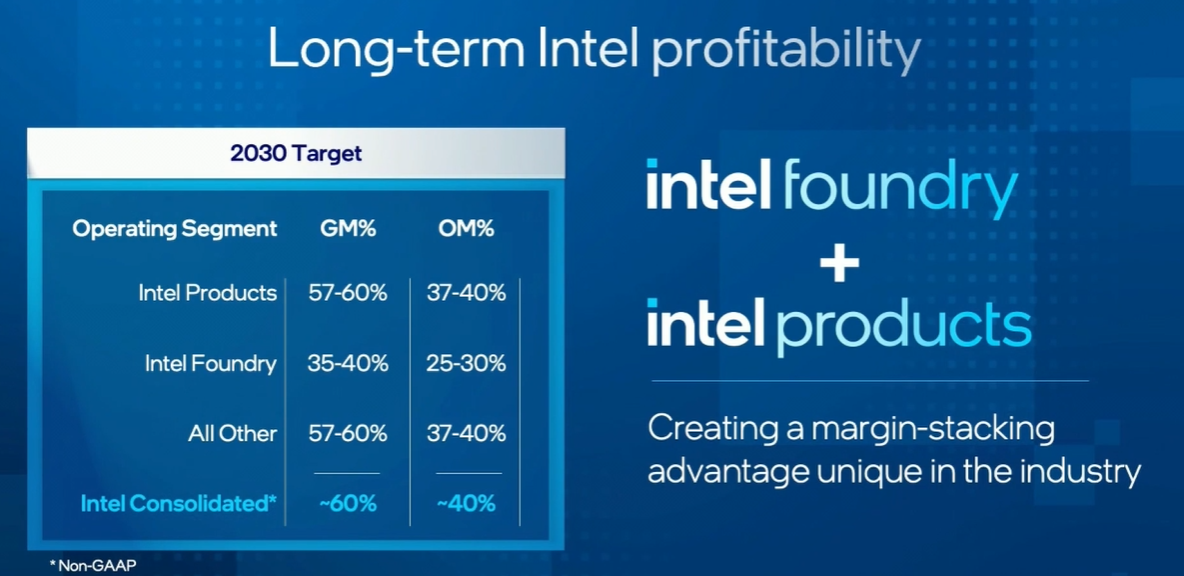
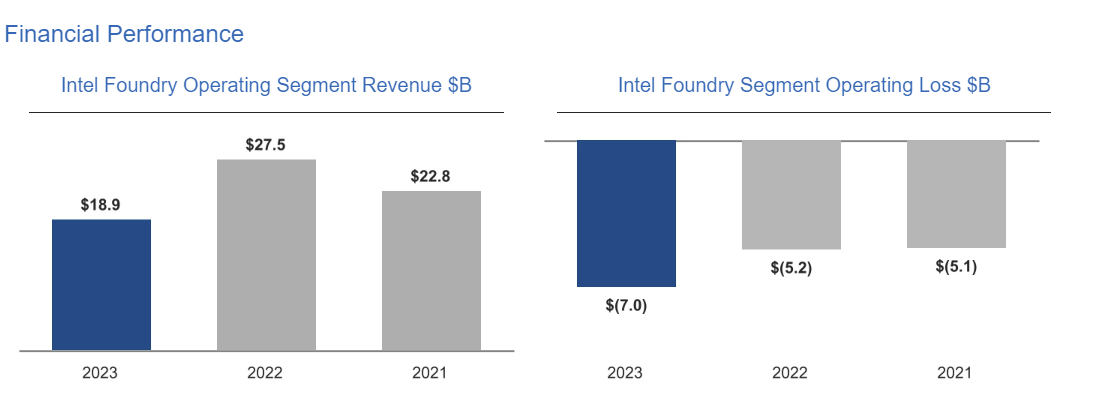
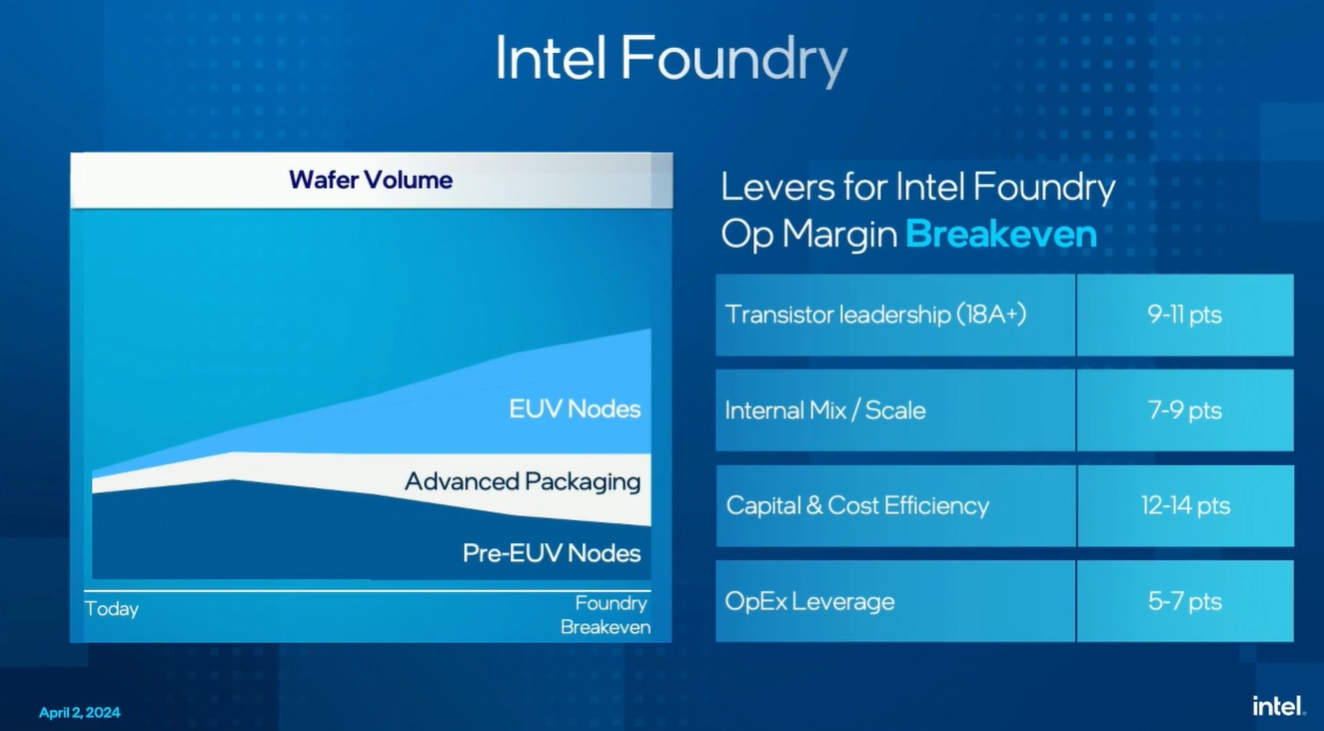
Intel Foundry sets roadmap, aims to be No. 2 foundry by 2030

Intel CEO Pat Gelsinger launched Intel Foundry and a roadmap for process technology that'll manufacture artificial intelligence processors for internal and external customers. The bet is that Intel Foundry can be the manufacturer for a wide range of AI systems.

The goal is to be the No. 2 foundry by 2030. The lifetime value for Intel Foundry deals is $15 billion so far. For context, TSMC did $19.62 billion in net revenue in the fourth quarter. Intel executives argued that Intel Foundry’s systems approach will trump TSMC over time.

At IFS Direct Connect 2024, Gelsinger said "I want to manufacture every AI chip." To get there, Intel Foundry outlined a new roadmap with Intel 14A process technologies, advanced system assembly and test capabilities and a design win with Microsoft, which will manufacture a chip on Intel's 18A process.

In addition, Intel Foundry announced a series of partners including Synopsys, Cadence, Siemens and Ansys. The event features a series of speakers including ARM CEO Rene Haas and Open AI CEO Sam Altman.

The upshot to the Intel Foundry event was that Intel can enable a resilient semiconductor supply chain in the US. Gelsinger affirmed Intel's plan to launch five process nodes in four years.

Intel, which is lagging behind Nvidia in GPUs and accelerating computing and battling AMD on GPUs and CPUs, is betting that it can use its manufacturing heft to become a rival to TSMC. "There are only a few companies that can do this. That have the capital, capacity and resilience," said Gelsinger, who positioned Intel as a stabilizer amid economic and geopolitics turmoil.

Gelsinger said Intel plans to regain process leadership with Intel 18A in 2025.

Here's a look at Intel Foundry's roadmap.

Can Intel pull off its Intel Foundry plans? Certainly, Intel has a big customer in Microsoft. Microsoft CEO Satya Nadella said that the company has chosen a chip design that'll be produced on Intel's 18A process.

Intel also has electronic design automation (EDA) partners lined up with Synopsys, Cadence, Ansys and others.

The company will also work with Arm under a partnership where Intel Foundry will provide services for Arm-based system on chips.

For Gelsinger, the game plan is to expand Intel's reach into the total addressable market (TAM) for AI processors. He said:

"We're engaging in 100% of the AI TAM clearly through our products on the edge and PC and clients and then the data centers, but through our foundry. I want to manufacture every AI chip in the industry, Those being done by the cloud service providers, merchant providers and technology providers. We'll be the systems foundry for the AI era where semis are essential."

Tech Optimization Data to Decisions intel Big Data Chief Information Officer Chief Technology Officer Chief Information Security Officer Chief Data Officer

Palo Alto Networks launches platform deals as it aims for cybersecurity share

Palo Alto Networks is changing its strategy to entice enterprises to spend on its security platform as customers consolidate security vendors. Palo Alto Networks' bet is to accelerate security vendor consolidation by offering platform deals with introductory offers and deferred payments to grab share.

When Palo Alto Networks reported its second quarter earnings it handily topped expectations. The outlook, however, was light. Palo Alto Networks projected fiscal 2024 billings between $10.1 billion to $10.2 billion, down from the earlier range of $10.7 billion to $10.8 billion. Revenue for fiscal 2024 will be between $7.95 billion and $8 billion, down from $8.15 billion to $8.2 billion.

The efforts to gain share will impact revenue growth for about 12 months to 18 months, but Palo Alto Networks CFO Dipak Golechha said the security vendor has internal expense levers to preserve operating margins. Rest assured that other cybersecurity platforms—namely CrowdStrike and Zscaler will offer enterprise deals and incentives too.

CEO Nikesh Arora said customers are seeing spending fatigue and optimizing security budgets to see returns on investment.

Here's Arora's assessment of enterprise security spending on Palo Alto Networks' earnings call.

"Most of our customers have ended up spending more on cybersecurity than they wanted to. As a consequence, they're feeling like the budget for cybersecurity keeps going up in double digits every year and you see the number of breaches continue to rise. So, customers are sitting down and saying if I spend more money, then show me how I get a lower total cost of ownership across my enterprise. How do I spend less on the services that I have to deploy? How do I get better ROI? It's more about optimizing their current cybersecurity budgets. Demand continues to be very strong, but customers are demanding more for the money allocated to cybersecurity. That's where platform consolidation kicks in."

Palo Alto Networks said it will offer programs to trade in legacy vendors, no cost deals, introductory offers and product add-ons and incentives to convince enterprises to standardize on Palo Alto Networks.

Arora said the programs and offers are designed to address customers' economic concerns and Palo Alto Networks "must bear the cost of the transition to lower upfront financial outcomes."

As a result, customers entering a platform transaction won't pay Palo Alto Networks for a time period. Over time, customers will migrate to full billing and revenue contribution.

"We believe we can sustain high growth rates for longer aspire to by sticky and broad platform relationships and incremental customers, allowing us to aspire the goal of $15 billion in next generation security in 2030," said Arora.

He added that as Palo Alto Networks puts more customers on its platform it'll gain as AI gains as a use case for cybersecurity in the years ahead. said Golechha. "Once a customer deploys the platform, it's easier to continue to consolidate vendors and adopt new innovations. We expect this to drive a significant increase in our overall revenue mix that is occurring," said Golechha.

For the second quarter ending Jan. 31, Palo Alto Networks had non-GAAP earnings of $1.46 a share on revenue of $2 billion. Wall Street was looking for earnings of $1.30 a share on revenue of $1.97 billion.

Digital Safety, Privacy & Cybersecurity Data to Decisions Innovation & Product-led Growth Future of Work Tech Optimization Next-Generation Customer Experience palo alto networks Security Zero Trust AI GenerativeAI ML Machine Learning LLMs Agentic AI Analytics Automation Disruptive Technology Chief Information Officer Chief Information Security Officer Chief Privacy Officer Chief Executive Officer Chief Technology Officer Chief AI Officer Chief Data Officer Chief Analytics Officer Chief Product Officer

Hitachi Vantara names HPE alum CTO

Hitachi Vantara named Ayman Abouelwafa as its new chief technology officer as it continues to build out its executive team.

Abouelwafa, who was previously CTO of Hewlett Packard Enterprise's storage group, lands at Hitachi Vantara just weeks after the hybrid cloud infrastructure company named Octavian Tanase as chief product officer. Tanase was previously at NetApp.

Like Tanase, Abouelwafa will report to Hitachi Vantara CEO Shiela Rohra. Abouelwafa will also serve on Hitachi Vantara's executive committee. In a statement, Rohra said Abouelwafa will bring a deep understanding of emerging technologies and market trends as Hitachi Vantara aims to become a leading hybrid cloud company.

At HPE, Abouelwafa was responsible for commercializing next-generation data storage platforms and software as well as strategic research.

Here's more on Hitachi Vantara, a Constellation Insights underwriter.  


Tech Optimization Data to Decisions Digital Safety, Privacy & Cybersecurity Innovation & Product-led Growth Future of Work SaaS PaaS IaaS Cloud Digital Transformation Disruptive Technology Enterprise IT Enterprise Acceleration Enterprise Software Next Gen Apps IoT Blockchain CRM ERP CCaaS UCaaS Collaboration Enterprise Service Chief Information Officer Chief Technology Officer Chief Information Security Officer Chief Data Officer

First-party data combined with customer actions rewire ad business, CMO priorities

Is there anyone who doesn't have an ad business?

Walmart's purchase of smart TV maker Vizio for $2.3 billion to expand its Walmart Connect advertising business highlights how chief marketing officers have more options than ever. Amazon has a booming advertising business and has become No. 3 behind Google and Facebook. Uber sees advertising as a big growth business. So does Lyft.

For publishers, media companies and traditional ad players, the marketing landscape doesn't look so great. For everyone else--especially companies with first-party data and relationships with customers--advertising is great.

Seth Dallaire, executive vice president and chief revenue officer, Walmart U.S., said: "We believe Vizio's customer-centric operating system provides great viewing experiences at attractive price points. We also believe it enables a profitable advertising business that is rapidly scaling. Our media business, Walmart Connect, is helping brands create meaningful connections with the millions of customers who shop with us each week."

Vizio also brings more than 500 direct advertiser relationships to Walmart's ad business, which had annual revenue of $3.4 billion, up 28% from a year ago.

The Constellation Ambient Experience Summit (AXS)

Walmart isn't the only advertising giant in the making. Amazon CEO Andy Jassy said the company's ad business was up 26% in the fourth quarter to $14.65 billion. "Our advertising growth remains strong, up 26% year-over-year, which is primarily driven by our sponsored ads. We've recently added Sponsored TV to this offering in the U.S. a self-service solution for brands to create streaming TV campaigns with no minimum spend, putting this advertising within reach of any business," said Jassy.

And then there's Uber, which is leveraging its data platform to create a flywheel that'll drive advertising. "The power of our advertising platform stems from what Uber users tell us every time they use our apps where they want to go and what they want to get. And as a result, we've got the unique ability to bring together both location based and shopping data with closed loop attribution across our mobility and delivery channels for both performance and brand campaigns," said Iber CEO Dara Khosrowshahi.

How we got here

If you look at those aforementioned three companies advertising moves, they have common assets. Walmart, Amazon and Uber have scale, first party data and strong relationships with their customers.

Simply put, first party data is everything. Google's move to depreciate cookies, which enabled tracking across the web, only makes first party data more important.

Constellation Research analyst Liz Miller recently walked through the long-awaited end of cookies by the third quarter of 2024. Miller said big brands and advertisers have been evaluating alternatives to cookies.

She said:

"I think a lot of marketers have gotten really smart about those first party data requirements, building those direct relationships and building those consent-based relationships. We're having more open value exchange conversations as we should be. This is really about the best practices about how we want to engage. This is really about how we're choosing to personalize how we're choosing to collect data, how we're choosing to engage that through a digital channel."

Miller also had the following recommendations for the post-cookie world:

  • Audit site for all third-party cookies and trackers. Understand what is being collected and used.
  • Use Google's auditing tools as well as manual searching to fully identify third party cookies.
  • Ask third party providers about their plans for cookies and privacy sandbox.
  • Move away from or phase out advertising-related cookies. Transition to consent-based data collection.
  • If site functionality breaks from cookie deprecation, apply for exemption by April 1, 2024.
  • Implement alternatives for measurement, targeting and personalization without third party cookies.

A volatile time for CMOs

Jeffrey Green, CEO of The Trade Desk, recently served up perspectives on the global advertising market and said it shifts just like the economy or any other market.

"The current shifts will help companies with authenticated users and traffic, which also sit next to large amount of advertiser demand. These macro changes hurt those, especially content owners and publishers who don't have authentication," said Green, who added that 2024 will be a year of volatility and big winners and losers.

Green cited Unified ID 2.0, a cookieless identity platform, as an alternative as well as retail ad channels. He cited HP as a reference customer that used first-party data that consumers consented to when making a purchase combined with UID2 used for campaigns on Disney+ and Hulu, and its data platform to segment groups and measure specific product campaigns with accuracy.

The Trade Desk CEO argued that the ad industry is being rewired. "For nearly all of 2023, there was uncertainty, particularly around economic growth rates and recessionary fears. In that environment, CMOs become much more reliant on their CFOs, and CFOs needed to make sure that every dollar spent was in service of growth. Which means CMOs had to focus more than ever on where they could achieve efficacy and deliver strong and provable return on ad spent," said Green.

Given that economic backdrop it's not surprising, streaming, audio and retail media fared well because they had authentication and precision measurement.

Green said it's no surprise that retail platforms and Uber are faring well. The game is to connect experience, identity, advertising to real-world actions. "Retail media has become one of the fastest growing areas of our business, and we expect this to continue in 2024. Retail partnerships and retail media are revolutionizing the way many advertisers think about connecting advertising to actual consumer actions," said Green. 

Constellation Research's take

Miller said there's upside ahead despite the volatility. She said:

"There is an incredible upside to the deprecation of the Cookie that in the throws of the past several years of bemoaning the Cookiepocalypse some seem to have overlooked: It appropriately right sizes advertising back into being a TOOL in the CMO's far more expansive toolkit. Advertising has never been the whole pie for marketing no matter how often people want to use the terms interchangeably! Walmart's pick up of a presentation layer opens opportunity as a content provider and advertising network. In an age of headless content delivery and AI powered ad engagement capabilities, this deal could kick start a whole new level of contextual content delivery, be that advertising or programmed content."

Marketing Transformation Sales Marketing New C-Suite Marketing B2B B2C CX Customer Experience EX Employee Experience AI ML Generative AI Analytics Automation Cloud Digital Transformation Disruptive Technology Growth eCommerce Enterprise Software Next Gen Apps Social Customer Service Content Management Collaboration Chief Marketing Officer Chief Analytics Officer Chief Data Officer

Nvidia's uncanny knack for staying ahead

This post first appeared in the Constellation Insight newsletter, which features bespoke content weekly and is brought to you by Hitachi Vantara.

Nvidia's ability to stay ahead of the curve is fascinating. Nvidia has dominated generative AI with GPUs that until recently were the only game in town for accelerated computing, but should a new buzzword turn up CEO Jensen Huang will be riding that wave too.

The company reported fourth quarter revenue of $22.1 billion, up 265% from a year ago, with earnings of $4.93 a share. Non-GAAP earnings for the fourth quarter were $5.16 a share. Wall Street was looking for Nvidia to report fourth-quarter non-GAAP earnings of $4.64 a share on revenue of $20.62 billion. For a bit of perspective, Nvidia quarterly revenue is approaching what it used to put up a year. In fiscal 2023, Nvidia revenue was $26.97 billion.

But it's worth noting how well Nvidia's previous bets have paid off--even the ones you probably already forgot about like the company's networking business, which is now on a $13 billion annual revenue run rate. I started thinking about Nvidia's bets after checking out Arista Networks' results. Arista Networks reported a strong quarter (as it usually does) and CEO Jayshree Ullal noted that generative AI will change networking infrastructure.

It's worth doing a long excerpt from Ullal just to outline the moving network parts with AI workloads. He said (emphasis mine):

"AI at scale needs Ethernet at scale. AI workloads cannot tolerate the delays in the network, because the job can only be completed after all flows are successfully delivered to the GPU clusters. All it takes is one culprit of worst-case link to throttle an entire AI workload.

Three improvements are being pioneered by Arista and the founding members of the Ultra Ethernet Consortium to improve job completion time. Number one, packet spraying. AI network topology needs packet spraying to allow every flow to simultaneously access all parts of the destination. Arista's developing multiple forms of load balancing dynamically with our customers.

Two is flexible ordering. Key to an AI job completion is the rapid and reliable bulk transfer with flexible ordering using Ethernet links to optimally balance AI-intensive operations, unlike the rigid ordering of InfiniBand. Arista is working closely with its leading vendors to achieve this.

Finally, network congestion. In AI networks, there's a common congestion problem whereby multiple uncoordinated senders can send traffic to the receivers simultaneously."

Cisco CEO Chuck Robbins was also optimistic that AI will drive networking demand but noted that "we're still in the early stages of AI workloads."

Simply put, the pilots in the network today will be in production in 2025. The network will be revamped in the near future. Companies like Cisco, Arista and Juniper Networks should benefit—unless Nvidia’s networking business gets a piece of the AI pie.

For instance, Arista said it won a handful of big deals, but one customer decided to stick to InfiniBand.

Remember InfiniBand, which was championed by Mellanox? Well, Mellanox was acquired by Nvidia in 2020 for $7 billion. The deal was announced in 2019. Here's what Huang said when the Mellanox deal closed: "With Mellanox, the new NVIDIA has end-to-end technologies from AI computing to networking, full-stack offerings from processors to software, and significant scale to advance next-generation data centers."

Nvidia also offers Ethernet gear as well as DPUs (data processing units) under its BlueField brand. Nvidia offers a set of networking gear and software for AI workloads in addition to its InfiniBand routers, gateways and switches.

Here's the big question: Will customers go the path of least resistance with AI-induced networking upgrades and a Nvidia bundle? Or will customers stick with networking specialists?

Today, Nvidia's Mellanox purchase probably wouldn't have been approved by regulators. The argument would be that Nvidia would have full-stack AI offerings. Can you imagine if Nvidia bought Arm like it wanted to?

Nvidia's networking was also a hot topic on Cisco's earnings call. Cisco and Nvidia have partnered on integrated AI systems. However, analysts were wondering whether Cisco's networking technology would be used in integrated systems. Robbins said the deal "would include our Ethernet technology with their GPUs" when connecting multiple clusters instead of Nvidia’s networking stack.

Robbins added that Nvidia is hoping to gain from Cisco's channel and go-to-market scale. Analysts were clearly worried about Cisco being threatened by Nvidia's Spectrum-X networking platform. Nvidia networking business appears to be in co-opetition with established networking vendors. Chalk it up as another bet that paid off for Nvidia.

Huang talked a bit about Nvidia's networking business, notably Spectrum-X. Spectrum X Ethernet has adaptive routing congestion control, noise isolation and traffic isolation. Huang said Spectrum X Ethernet will be an AI optimized system and InfiniBand will be an AI dedicated networking option. Simply put, Nvidia is going to get some of the AI-optimized networking pie too. Huang said on Nvidia's conference call:

"We're ramping Spectrum-X. We're doing incredibly well with Spectrum-X. It's our brand-new product into the world of ethernet. InfiniBand is the standard for AI-dedicated systems. Ethernet with Spectrum-X --Ethernet is just not a very good scale-out system.

But with Spectrum-X, we've augmented, layered on top of ethernet, fundamental new capabilities like adaptive routing, congestion control, noise isolation or traffic isolation, so that we could optimize ethernet for AI. And so InfiniBand will be our AI-dedicated infrastructure."

Nvidia is too often in the right place at the right time for it to be coincidence. Is it luck? A crystal ball? Time travel? Who knows, but consider:

  • Nvidia was a blockchain darling for a bit as demand for GPUs surged for bitcoin mining.
  • The metaverse--which was huge, then dead and likely to be huge again--is also powered by Nvidia.
  • Digital twins? Yep Nvidia.
  • Growth of the video game industry. Nvidia again.
  • Robotics. Nvidia.
  • Automobiles that will ultimately be autonomous. Huang can riff on the auto industry for days.

I could go on, but you get the idea. What's next? Quantum computing. Nvidia is building a stack for hybrid quantum computing featuring accelerated computing. Nvidia sees a world where GPUs and QPUs (quantum processing units) will work together. Rest assured Nvidia will ride the QPU wave too.

Data to Decisions Tech Optimization Innovation & Product-led Growth Future of Work Next-Generation Customer Experience Digital Safety, Privacy & Cybersecurity nvidia Big Data ML Machine Learning LLMs Agentic AI Generative AI AI Analytics Automation business Marketing SaaS PaaS IaaS Digital Transformation Disruptive Technology Enterprise IT Enterprise Acceleration Enterprise Software Next Gen Apps IoT Blockchain CRM ERP finance Healthcare Customer Service Content Management Collaboration Cloud CCaaS UCaaS Enterprise Service GenerativeAI Chief Information Officer Chief Technology Officer Chief Information Security Officer Chief Data Officer Chief Executive Officer Chief AI Officer Chief Analytics Officer Chief Product Officer

VMware mansplains to customers about model changes, subscription pricing, account upheaval

VMware acknowledged that customers are disgruntled, chafing against a switch to subscription licensing and annoyed that account contacts may change. You have to cut through a lot of VMware mansplaining--delivered via a Valentine's Day blog post--to get those takeaways.

In a lengthy blog post, Prashanth Shenoy, VMware Vice President Marketing, Cloud Platform, Infrastructure, and Solutions, tried to address the elephant in the VMware ecosystem--the changes since Broadcom closed the VMware deal have rattled customers.

Meanwhile, VMware customers are actively looking at alternatives. VMware customers will likely be a huge topic when rival Nutanix reports earnings. Members of the Constellation Research BT150 have already noted that they have mapped out VMware exit strategies. By the way, VMware partners aren't pleased either.

With that backdrop, you almost feel sorry for Shenoy. Here are a few excerpts and a quick translation.

"Since the completion of Broadcom’s acquisition of VMware, we have been all about change. For the VMware Cloud Foundation division, all of this change was necessary to transform our business to deliver faster innovation with more value to customers, and even better profitability and market opportunity for our partners."

Translation: VMware has received enough pushback that it's worry about its numbers.

From there, Shenoy notes that VMware's transition to subscription licensing has been done before. A simplified portfolio will make it easier on customers and standardization will drive value.

Translation: VMware is forcing customers to buy a bundle of stuff wrapped into VMware Cloud Foundation and some of it won't be used.

"Subscription is the model all major enterprise software providers are on today. Subscription software is the right model for fueling continuous innovation for customers. This past quarter we finalized the switch fully to subscription software, just like everyone else. We immediately turned this transformation into net new value for our customers. How? Do you want to have deployment flexibility? Now you can. When you purchase VMware Cloud Foundation, you get license portability."

Translation: Yes, we're mansplaining that you'll most likely be spending more than you used to. We'll allow you to take your licenses to hyperscalers, but so far only Google Cloud is signed up.

Shenoy then noted that VMware has consolidated product teams and R&D and lumped them into VMware Cloud Foundation. While that move is nice for Broadcom's costs, VMware will have to show customers the innovation payoff. Shenoy added that automation tools for data services, load balancing and private AI as examples.

VMware customers aren't happy, but partners in the channel aren't pleased either. Shenoy devoted a subhead to channel changes. Again, VMware does a bit of mansplaining and noted that Broadcom is taking the big accounts.

"It makes business sense for Broadcom to have close relationships with its most strategic VMware customers to make sure VMware Cloud Foundation is being adopted, used and providing customer value. However, we expect there will be a role change in accounts that will have to be worked through so that both Broadcom and our partners are providing the most value and greatest impact to strategic customers."

Translation: VMware is taking big accounts and partners will have to figure something out.

Finally, VMware customers get to the kicker. Shenoy said that VMware feels customer pain.

"Broadcom identified things that needed to change, and as a responsible company, made the changes quickly and decisively. The changes that have taken place over the past 60+ days were absolutely necessary. We understand this massive transformation and simplification of the portfolio and our business model has raised many questions and concerns as you continue to evaluate how to maximize value from your VMware software investments. We are proactively working with the sales teams and channel partners to help customers make this transition and encourage customers to engage them to work through the best approach for their businesses."

Translation: Embrace the pain. These changes are happening anyway. We'll figure it out and you'll stick with VMware because it's too hard this minute to migrate off of our platform. You're stuck until proven otherwise.

Shenoy ended with "it will only get better" in a statement that seems to assume customers will stick around. It remains to be seen whether customers reply with "it only takes one to end a relationship."

Tech Optimization Data to Decisions Digital Safety, Privacy & Cybersecurity Innovation & Product-led Growth Future of Work vmware SaaS PaaS IaaS Cloud Digital Transformation Disruptive Technology Enterprise IT Enterprise Acceleration Enterprise Software Next Gen Apps IoT Blockchain CRM ERP CCaaS UCaaS Collaboration Enterprise Service Chief Information Officer Chief Technology Officer Chief Information Security Officer Chief Data Officer

Google Cloud rolls out Gemini models to Vertex AI customers, Gemini 1.5 in private preview

Google Cloud said Google's new Gemini 1.0 models, Gemini 1.0 Pro and Gemini 1.0 Ultra are generally available to enterprises and an private preview is available for Gemini 1.5.

The search and cloud giant launched Gemini, its new model with consolidated branding across Google, last week. Now Gemini models are coming to Vertex AI for productivity, personalization and AI agent use cases.

Vertex AI customers will have access to Gemini 1.0 Pro, which is optimized for content generation, editing, classification and summaries. Gemini 1.0 Ultra will give Vertex AI customers a model for coding, reasoning and multi-language use cases.

Google Cloud also said Gemini 1.5 Pro will be available in private preview for Vertex AI in Google AI Studio. This model is midsized and optimized for multiple use cases. It performs at a similar level to Gemini 1.0 Ultra.

According to Google Cloud, Gemini 1.5 Pro gives enterprises the ability to analyze an entire code library in one prompt, reason across long documents, compare and analyze hours of video content, enable chatbots to hold long conversations with memory and personalize experiences without fine-tuning.

Gemini models will be available to enterprises via the Gemini API in Vertex AI and available to Vertex AI Search and Vertex AI Conversation.

Data to Decisions Digital Safety, Privacy & Cybersecurity Innovation & Product-led Growth Tech Optimization Future of Work Next-Generation Customer Experience Google Cloud Google SaaS PaaS IaaS Cloud Digital Transformation Disruptive Technology Enterprise IT Enterprise Acceleration Enterprise Software Next Gen Apps IoT Blockchain CRM ERP CCaaS UCaaS Collaboration Enterprise Service AI GenerativeAI ML Machine Learning LLMs Agentic AI Analytics Automation Chief Information Officer Chief Technology Officer Chief Information Security Officer Chief Data Officer Chief Executive Officer Chief AI Officer Chief Analytics Officer Chief Product Officer