Results

A neutral vendor in your stack is great, but also a pipe dream

Every enterprise technology stack needs neutral vendors that play well with others, integrates seamlessly and keeps customer value front and center while refraining from the dreaded cross-sell.

The problem is that these neutral vendors are acquired if they become too successful. Once these neutral vendors are acquired it's all about the cross-sell game under new ownership.

We had a near miss recently with Informatica. Informatica has a data management platform that connects with all the primary clouds and enterprise systems. As businesses look to adopt generative AI, they're increasingly realizing that a vendor like Informatica is a go-to player.

Informatica was doing well being Switzerland that Salesforce reportedly wanted to buy it. Talks broke down and Informatica remains a neutral party--for now.

There are a bevy of neutral vendors considering regulators around the world are a hard sell on mergers and acquisitions. At some point that'll change. There are already signs that the M&A market will accelerate.

This post first appeared in the Constellation Insight newsletter, which features bespoke content weekly and is brought to you by Hitachi Vantara.

It's possible that HashiCorp looked like a neutral vendor across clouds, but it has now been acquired by IBM in a $6.5 billion deal. IBM is an example of a company that has played the neutrality game and scaled. IBM has morphed repeatedly over the years, but the combination of AI and consulting are strong. Keep in mind that IBM also acquired Red Hat, which has kept most of its neutrality cred.

When conditions change vendor neutrality will become a bit of a pipe dream. Consider VMware. VMware was neutral across data center infrastructure and connected clouds. Now that VMware is part of Broadcom, customers are antsy about lock-in and the transition to subscriptions over licenses. Nutanix gets the neutrality sales pitch--until it's acquired.

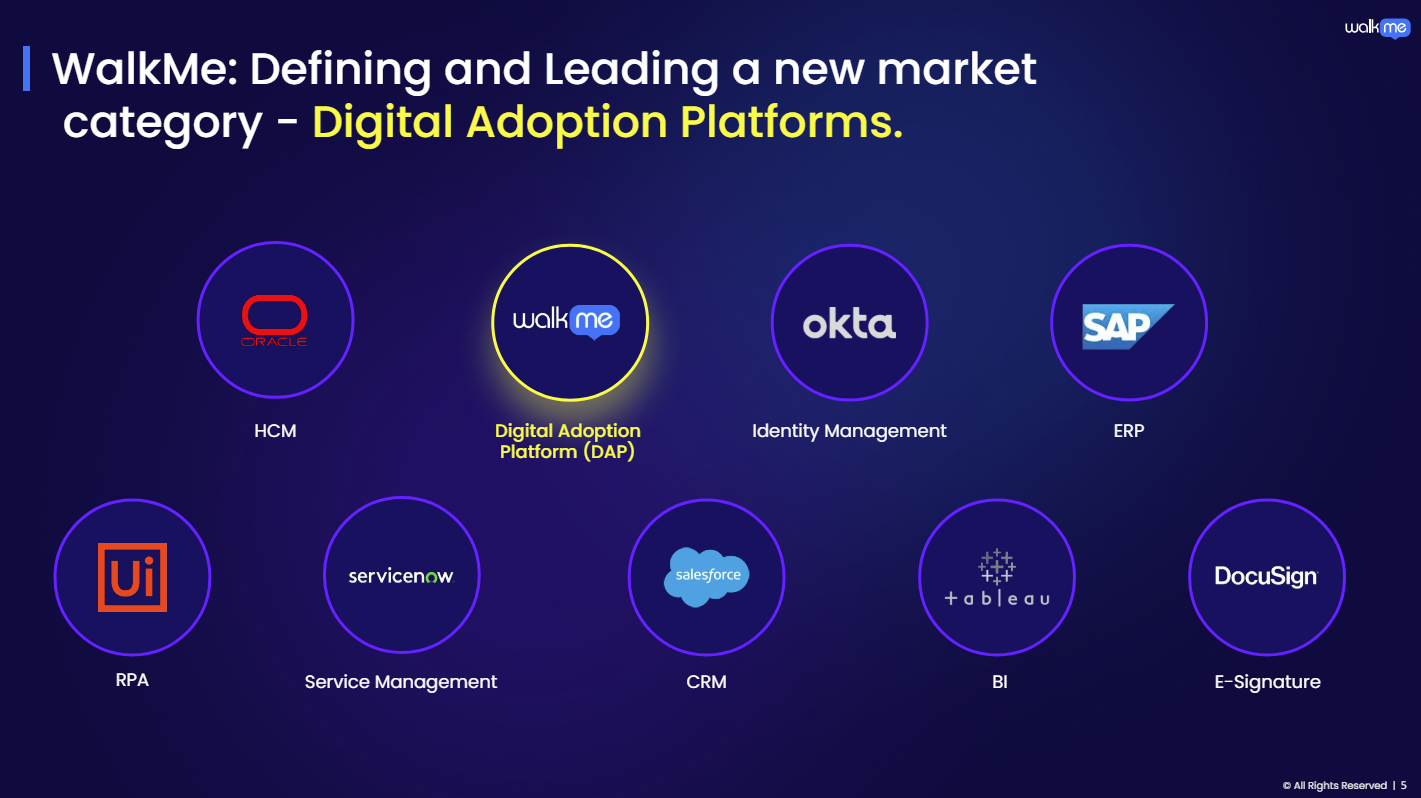
I'd argue ServiceNow is a version of a neutral play as it can build workflows and processes on top of multiple systems of records. However, ServiceNow dependence also means higher prices at some point, but hopefully there's value too. "We're not interested in shutting anybody out. We're actually technology capable enough to open up to everybody and that's really turning on the whole ecosystem in our favor," said ServiceNow CEO Bill McDermott, speaking on the company's first quarter earnings call.

When it comes to large language models (LLMs), AWS obviously wants to be your Switzerland of generative AI. Google Cloud will also play that game. Microsoft will speak to it, but for now is closely affiliated with OpenAI. Hugging Face is your neutrality play but could be acquired down the line.

Celonis is another company that's neutral and can tap into multiple systems for process intelligence. It might grow into an IPO--or become part of a larger vendor. UiPath is in a similar automation and process bucket. There are plenty of other neutrality options including Atlassian, Nvidia and data platforms such as Snowflake, MongoDB and DataBricks.

Bottom line: Chances are that your neutral vendor today will not remain that way 5 years from now. CIOs can manage the vendor neutrality dream if they play along early and then keep their options open. The biggest lesson from the Informatica cadence is that neutrality can be successful, but eventually it's a pipe dream.

Also:

New C-Suite Tech Optimization Data to Decisions Future of Work Innovation & Product-led Growth AI ML Machine Learning LLMs Agentic AI Generative AI Analytics Automation B2B B2C CX EX Employee Experience HR HCM business Marketing SaaS PaaS IaaS Supply Chain Growth Cloud Digital Transformation Disruptive Technology eCommerce Enterprise IT Enterprise Acceleration Enterprise Software Next Gen Apps IoT Blockchain CRM ERP Leadership finance Customer Service Content Management Collaboration M&A Enterprise Service Chief Information Officer Chief Technology Officer Chief Digital Officer Chief Data Officer Chief Analytics Officer Chief Information Security Officer Chief Executive Officer Chief Operating Officer

SoundCommerce CEO Eric Best: 'Data capability enables customer lifetime value'

SoundCommerce Co-Founder and CEO Eric Best said retail winners will increasingly be determined by how they leverage data and artificial intelligence to drive customer lifetime value.

Best, along with CTO Jared Stiff started the company to help brands deliver better shopper experiences with data. SoundCommerce, founded in 2018, has raised more than $33 million in funding. The company platform is designed to take retail data infrastructure and make it composable and no code so retailers can better model experiences on the fly.

Retailers will need to leverage data to thrive amid margin compression, pricing arbitrage, higher cost of capital and fierce competition. On DisrupTV, Constellation Research's Ray Wang and Holger Mueller caught up with Best. Here are some of the key takeaways. 

Two megatrends impacting retail. Best said there are two obvious megatrends that are reshaping retail. The first is the return to shopping in person and retail as a community activity. The second is that the cost of capital has increased dramatically. Both are impacting direct-to-consumer retailers.

Best said of direct-to-consumer retail:

"There are high variable costs on the front end to acquire a customer through some combination of Facebook, Tik Tok, Instagram and Google and on the other end, there are very high costs associated with doorstep delivery. We often joke internally that there are a thousand things that must go right to be successful in digital retail. And you fail if any one of them goes wrong."

Best of times, worst of times. Best said it is easier than ever to start a retail business because of platforms like Shopify and marketplace providers like Amazon and Walmart. "Getting started is very easy. Anyone can throw up a shingle," said Best. "Scaling the business is hard and profitable growth is exceedingly difficult."

Because of this difficulty you see direct-to-consumer brands like Casper, Warby Parker and Dollar Shave Club to back to omnichannel, wholesale and physical stores. "The market is proving that these are difficult businesses to operate," said Best.

Who owns the customer? Best added that there are trade-offs between following a direct-to-consumer model vs standing up for business in a marketplace. For instance, if you're an Amazon seller much of the complexity of the business model is removed once you figure out how to promote your products.

The trade-off happens when the marketplace owns the customer and experience as well as the data, which is "a really important asset to the enterprise value of consumer brands," said Best. "It is rare to see companies that are able to rely on a marketplace," he added.

Feedback loops. Data is critical because digital commerce requires a lot of data, analytics and insights to power the next best actions and feedback loops. Best said he expects data platforms to become more important to retail. "We have a proliferation of brand-new companies building data capabilities on the backs of Snowflake or Google Cloud or DataBricks," said Best.

Best said Amazon is a great example of retail as data feedback loop. AWS was created as a proprietary infrastructure for predictions, modeling inventory and logistics based on demand signals. "The use cases we see emerging wit generative AI began with proprietary algorithms that were developed by Amazon or Walmart," said Best.

The SoundCommerce bet. Best said SoundCommerce is scaling on two core constructs. First, every retail business decision has the potential to be a generative AI prediction that can be tactical as well as strategic. And then there's the data capabilities that can be game changers. "We think data capability enables customer lifetime value. There's a connection of individual tactical decisions that can be tied together to drive long-term customer relationships," said Best.

Data management will be mission critical for retailers since the biggest barrier to AI adoption isn't the algorithm, but having the data cleaned and properly structured for AI consumption. SoundCommerce has a set of models for omnichannel, acquisition and retention marketing, products and promotions and fulfillment. "The challenge we see across industries is readiness and the heavy lifting to get the data ready in the first place," said Best.

More:

Data to Decisions Marketing Transformation Matrix Commerce Next-Generation Customer Experience Innovation & Product-led Growth Future of Work Tech Optimization Digital Safety, Privacy & Cybersecurity B2B B2C CX Customer Experience EX Employee Experience business Marketing eCommerce Supply Chain Growth Cloud Digital Transformation Disruptive Technology Enterprise IT Enterprise Acceleration Enterprise Software Next Gen Apps IoT Blockchain CRM ERP Leadership finance Social Customer Service Content Management Collaboration M&A Enterprise Service AI Analytics Automation Machine Learning Generative AI ML LLMs Agentic AI SaaS PaaS IaaS Healthcare Chief Information Officer Chief Customer Officer Chief Data Officer Chief Digital Officer Chief Executive Officer Chief Financial Officer Chief Growth Officer Chief Marketing Officer Chief Product Officer Chief Revenue Officer Chief Technology Officer Chief Supply Chain Officer Chief AI Officer Chief Analytics Officer Chief Information Security Officer

Intel Q2 outlook weaker than expected

Intel's second quarter outlook was below expectations even though its first quarter was better-than-expected.

The chipmaker, which is trying to catch up in AI processors, said it expects second quarter revenue between $12.5 billion to $13.5 billion, well below the $13.61 billion Wall Street expected. Intel also projected non-GAAP earnings of 10 cents a share in the second quarter, well below estimates of 25 cents a share.

Intel's outlook overshadowed better-than-expected first quarter earnings. The company reported a first quarter net loss of 9 cents a share on revenue of $12.7 billion, up 9%. Non-GAAP earnings in the first quarter were 18 cents a share. Analysts expected Intel to report first quarter earnings of 14 cents a share on revenue of $12.78 billion.

CEO Pat Gelsinger said the company was making "steady progress." "We are confident in our plans to drive sequential growth throughout the year as we accelerate our AI solutions," he said.

By unit:

  • Intel's Product revenue group had first quarter revenue of $11.9 billion, up 17% from a year ago.
  • Client Computing Group showed growth of 31% to revenue of $7.5 billion. Intel said more than 5 million AI PCs have shipped since December.
  • Data Center and AI had revenue of $3 billion, up 5%.
  • Intel Foundry revenue was $4.4 billion in the first quarter, down 10%.
  • Altera and Mobileye saw first quarter revenue declines of 58% and 48%, respectively.

Tech Optimization Data to Decisions Big Data Chief Information Officer Chief Technology Officer Chief Information Security Officer Chief Data Officer

Alphabet shows Q1 strength in Google Cloud, initiates dividend

Alphabet's Google Cloud business is now pushing a $40 billion annual revenue run rate as the company overall delivered strong first quarter results.

Alphabet reported first quarter revenue of $80.54 billion, up 15% from a year ago, with net income of $23.66 billion, or $1.89 a share. Wall Street was expecting Alphabet to report first quarter earnings of $1.50 a share on revenue of $78.7 billion.

CEO Sundar Pichai said first quarter results were driven by strength in search, YouTube and Google Cloud. "We are well under way with our Gemini era and there’s great momentum across the company. Our leadership in AI research and infrastructure, and our global product footprint, position us well for the next wave of AI innovation," said Pichai.

Ruth Porat, CFO and Chief Investment Officer of Alphabet, said the company's margins were expanding due to "ongoing efforts to durably reengineer our cost base."

The company also initiated a dividend of 20 cents a share to be paid on June 17. The company will pay quarterly cash dividends going forward. Alphabet also said it will repurchase up to $70 billion of shares.

On a conference call, Picahi said:

"We are already seeing developers and enterprise customers enthusiastically embrace Gemini 1.5 and use it for a wide range of things beyond Gemini for your build to other useful models, including our Gemma open models, as well as image and visual models and others."

Pichai added that Google is leveraging its infrastructure edge. "We have developed new AI models and algorithms that are more than 100 times more efficient than they were 18 months ago," he said. 

Pichai also said Alphabet will continue to invest heavily in AI infrastructure. 

"The increases in our capital expenditures this will fuel growth in cloud help us push the frontiers of AI models and enable innovation across services," said Pichai. "We have clear paths to AI monetization through ads and cloud as well as subscriptions."
 

By unit:

  • Google Search revenue was $46.16 billion, up from $40.36 billion a year ago.
  • YouTube revenue was $8.09 billion.
  • Google Network revenue was $7.4 billion.
  • Google Ad revenue was $61.66 billion.
  • Google Services’ operating income was $27.9 billion.
  • Google Cloud operating income was $900 million on revenue on $9.57 billion.
  • Other bets loss was $1.02 billion on revenue of $495 million.
  • Alphabet took a hit of $2.3 billion in the first quarter for real estate optimization and severance.

Key points from Porat:

  • "Cloud segment revenues were $9.6 billion for the quarter, up 28% reflecting significant growth in GCP with an increasing contribution from AI and strong Google Workspace growth, primarily driven by increases in average revenue per seat."
  • "With respect to Google Cloud performance in q1 reflects strong demand for our GCP infrastructure and solutions as well as the contribution from our workspace productivity tools. The growth we're seeing across cloud is underpinned by the benefit AI provides for our customers."
  • "Looking ahead, we remain focused on our efforts to moderate the pace of expense growth in order to create capacity for the increases in depreciation and expenses associated with the higher levels of investment in our technical infrastructure."
  • Cap-ex in the first quarter was $12 billion driven by investment in technical infrastructure, servers and data centers. "We do expect the quarterly capex throughout the year to be roughly at or above the $12 billion cash capex we had here in q1," said Porat.  

Data to Decisions Digital Safety, Privacy & Cybersecurity Innovation & Product-led Growth Tech Optimization Future of Work Next-Generation Customer Experience alphabet Google Google Cloud SaaS PaaS IaaS Cloud Digital Transformation Disruptive Technology Enterprise IT Enterprise Acceleration Enterprise Software Next Gen Apps IoT Blockchain CRM ERP CCaaS UCaaS Collaboration Enterprise Service AI GenerativeAI ML Machine Learning LLMs Agentic AI Analytics Automation Chief Information Officer Chief Technology Officer Chief Information Security Officer Chief Data Officer Chief Executive Officer Chief AI Officer Chief Analytics Officer Chief Product Officer

Microsoft Azure revenue in Q3 up 31%

Microsoft reported a strong third quarter with revenue growth was 17% with Microsoft Cloud revenue up 23% from a year ago. Azure and other cloud services revenue growth was 31% driven by AI services.

The company reported third quarter net income of $21.9 billion, or $2.94 a share, on revenue of $61.9 billion. Wall Street was expecting Microsoft to report third quarter earnings of $2.84 a share on revenue of $60.89 billion.

All eyes were on Azure and AI services. Here's the money slide:

Satya Nadella, CEO of Microsoft, said: "Microsoft Copilot and Copilot stack are orchestrating a new era of AI transformation, driving better business outcomes across every role and industry."

CFO Amy Hood Microsoft had good sales execution for Microsoft Cloud. 

Hood said capital expenses including finance leases were $14 billion to support cloud demand and AI infrastructure. 

As for the outlook, Hood said fourth quarter revenue for intelligent cloud will be between $28.4 billion to $28.7 billion. She said demand is outpacing capacity. For the fiscal 2025 year, revenue will grow at a double digit clip with higher capital expenditures than fiscal 2024.  Hood said:

"We continue to focus on building businesses that create meaningful value for our customers, and therefore significant growth opportunities for years to come. For FY 2025 that focus and execution should again lead to double digit revenue and operating income growth, to scale to meet the growing demand signal for our cloud and AI products. We expect FY 25 capital expenditures to be higher than FY 24 expenditures over the course of the next year are dependent on demand signals and adoption of our services. So we will manage that signal through the year."

The quarter in review:

Key points from Nadella on the earnings conference call include:

  • More than 65% of the Fortune 500 now use Azure OpenAI Service. 
  • Azure Arc has 33,000 customers. 
  • "We are seeing an acceleration in the number of large Azure deals from leaders across industries," he said. 
  • Half of Azure AI customers also use Microsoft's data and analytics products. 
  • Microsoft Fabric has more than 11,000 paid cusotmers. 
  • "We're also seeing increased usage and density from early adopters including a nearly 50% increase in the number of copilot assisted interactions per user in teams, bridging group activities and business processes, workflows and enterprise knowledge," he said. 
  • AI features are accelerating LinkedIn's Premium subscription growth. 

Hood said commercial remaining performance obligation in the third quarter was $235 billion and 45% of that will be recognized in the next 12 months. 

By business:

  • Microsoft said revenue in productivity and business processes was $19.6 billion, up 13%, with strength in Office 365 Commercial.
  • LinkedIn revenue was up 10%.
  • Dynamics product and cloud services sales were up 19%.
  • Revenue in intelligent cloud was $26.7 billion, up 21% from a year ago.
  • Windows revenue was up 11%.

Data to Decisions Tech Optimization Innovation & Product-led Growth Future of Work Next-Generation Customer Experience Digital Safety, Privacy & Cybersecurity Microsoft SaaS PaaS IaaS Cloud Digital Transformation Disruptive Technology Enterprise IT Enterprise Acceleration Enterprise Software Next Gen Apps IoT Blockchain CRM ERP CCaaS UCaaS Collaboration Enterprise Service AI GenerativeAI ML Machine Learning LLMs Agentic AI Analytics Automation Chief Information Officer Chief Technology Officer Chief Information Security Officer Chief Data Officer Chief Executive Officer Chief AI Officer Chief Analytics Officer Chief Product Officer

Enterprises Must Now Cultivate a Capable and Diverse AI Model Garden

My conversations with Chief Information Officers (CIOs) in 2024 continues to show they remain under steady pressure from corporate boards to rapidly harness the strategic potential of Artificial Intelligence (AI) ahead of their competition, while heading off disruption due to the market changes AI is causing. This expectation places a significant burden on CIOs to not only understand and integrate AI into their existing IT portfolios faster than the technology is actually maturing, but also to do so in a way that genuinely meets diverse business demands across departments, divisions, and geographies. The challenge is particularly daunting because no single AI model or vendor offers anything close to a one-size-fits-all solution. Therefore, CIOs must navigate a complex technology landscape, selecting from an array of AI models from a fast-evolving set of offerings that can address specific needs while aligning with the enterprise's overall technology strategy.

Developing a robust AI model portfolio—often visualized these days as a diverse 'garden' of different AI models, large and small—requires capability development, enthusiastic experimentation, thoughtful planning and strategic foresight. AI models not only have to be able to provide good answers, they must also be selected to be cost-effective, as measured by metrics like cost per kilo-inference, as well as technologically sound to integrate seamlessly into the broader IT infrastructure. Additionally, these models must align with strict corporate governance standards, including adherence to centralized IT, AI, and cybersecurity policies, safeguarding of personally identifiable information (PII), and compliance with regulatory requirements. This task involves a delicate balance of technical acumen and strategic management, ensuring each model performs efficiently and ethically within the corporate framework.

The Enterprise AI Model Garden

To effectively manage this complex integration and ensure AI models deliver tangible business value, the role of the CIO has emerged as virtually the only leader in the organization with the resources, insights, and ability to deliver well on enterprise-wide AI. The CIO must champion the strategic deployment of AI technologies across the enterprise, fostering a culture of innovation while navigating the technical and ethical challenges involved. By effectively overseeing the development of a healthy and effective AI model mix, the CIO ensures that the enterprise not only keeps pace with technological advancements but does so in a way that is both sustainable and aligned with the company's long-term goals. This strategic leadership is essential for translating AI investments into competitive advantages, fulfilling both the board's expectations and the company's operational needs.

Organizations Must Become Fluent in a Wide Variety of AI Models

The single largest differentiator in AI is now the specific model that is used to produce inferences for the business. While the biggest discriminator currently is the size of the model, due to the cost of training and operating them, domain specific models are the next big frontier, especially in high-value use cases in healthcare, finance, and insurance. Organizations must have enough models to meet different business requirements, but not so many they cannot properly oversee or support them. A smart mix of models of various capabilities, with as few gaps as possible, is therefore a top level requirement.

Aspect

Small Models

Medium Models

Large Models

Abilities

Handle specific tasks; limited complexity

Broader capabilities; moderate complexity

Advanced capabilities; high complexity, multimodal

Limitations

Specific, narrow use cases; struggles with complex tasks

Improved generalization but has limitations

Best generalization; can handle very complex reasoning tasks

Use Cases

Mobile apps, embedded systems, simple web services

Consumer applications, enterprise solutions, moderate analytics

Large-scale analytics, high-end services, sophisticated multimodal applications

Range of Parameters

Tens of thousands to a few billion

Few million to tens of billions

A hundred billion to trillions

Typical Hardware

CPUs, low-end GPUs

Mid-range GPUs, TPUs

High-end GPUs, TPUs, specialized AI hardware

Training Cost

Low

Moderate

High

Inference Speed

Fast

Moderate

Can be slower due to model size, depends on optimization

Data Efficiency

Requires less data to train, but less effective with new data

More data-efficient than small models, adaptive

Highly data-efficient, very adaptive, highest zero-shot probability

Flexibility

Low; often task-specific

Moderate flexibility; can adapt to various tasks

High; highly adaptable to new tasks and environments

Cost of 1,000 Inferences

$0.001 - $0.10

$0.10 - $0.50

$0.50 - $10.00

Examples

MobileNet, Orca 2, GPT-J, Phi-3, Falcon 7B

ResNet-50, BERT-BaseT5-XXL

GPT-4, PaLM, LaMBDA, Gemini Ultra, BaGuaLu

Figure 1: The different sizes and capabilities of AI language models today

To successfully navigate the ever-changing landscape of AI requires a robust supporting ModelOps strategy with the accompanying creation of centralized AI model gardens/hubs, which are typically overseen by IT as well as the emerging Chief AI Officer, or whomever is in charge of enterprise-wide AI. This centralized infrastructure is critical for ensuring that AI initiatives are implemented effectively, ethically, and in accordance with regulations. By establishing an overarching ModelOps practice and fostering a collaborative culture around AI development, CIOs can empower their organizations to unlock the transformative potential of AI and achieve significant business value, while providing a central capability to operate, monitor, measure, govern, and secure AI models.

Enterprise Model Ops for the CIO v1.1

ModelOps: The Engine Room of Enterprise AI

ModelOps encompasses the entire lifecycle of AI models, from development and testing to deployment, monitoring, and governance. A well-defined ModelOps strategy ensures that AI models are operationalized efficiently and effectively. It streamlines workflows, fosters collaboration between data scientists and IT operations teams, and promotes the responsible use of AI.

AI Model Gardens/Hubs: A Single Source of Truth

AI model gardens/hubs serve as centralized repositories for vetted and approved public -- and especially private -- AI models. These hubs provide data scientists and business users with easy access to reusable AI models, reducing redundancy and development time. Additionally, AI model gardens/hubs facilitate governance by ensuring that all deployed models adhere to organizational standards and regulatory requirements.

The Need for a Sustainable AI Capability

The landscape of AI vendors, open source AI projects, and their models is constantly evolving. By building a strong internal capability for ModelOps and AI model management, CIOs can avoid vendor lock-in and ensure that their organizations are not dependent on any single provider. This future-proofs their AI strategy and empowers them to adapt to new technologies and business needs. ModelOps can also ensure the energy consumption of AI models is understood and well-managed, an issue that is gaining visibility and importance rapidly.

The Strategic Imperative for AI Readiness

While the real business impact hasn't even arrived yet, AI has clearly become a strategic technology. By taking a proactive approach to AI readiness and establishing a robust ModelOps practice, CIOs can ready their organizations to seize the transformative potential of AI. This not only positions them to achieve significant financial gains in the medium-term and operational efficiencies right away, but also enables them to deliver a superior customer experience to gain a competitive edge.

Key Components of the ModelOps Enterprise Approach to AI

The visual above depicts a ModelOps enterprise approach to AI, which outlines the various roles and stakeholders involved. Here's a breakdown of the key components and roles involved:

  • Enterprise AI Owner (CIO, CAIO, CDAO): Provides strategic oversight and leadership for the organization's AI initiatives.
  • AI Architect: Establishes technical standards and best practices for AI development and deployment.
  • Local AI Architect or SME: Understands the specific needs of different lines of business and translates them into actionable AI requirements.
  • Line of Business (LOB): Represents the various business units within the organization that can benefit from AI solutions. Identifies use cases and champions AI adoption within their departments.
  • Data Management for AI: Ensures that high-quality data is available to train and fuel AI models.
  • Model Development: Develops, tests, and iterates on AI models to meet specific business needs.
  • ModelOps Capability: Operationalizes AI models, including deployment, monitoring, and governance.
  • Governance, Monitoring, and Compliance: Oversees the ethical and responsible use of AI models and ensures adherence to regulations.
  • DevOps, DataOps: Integrates AI development and operations processes to streamline workflows.
  • FinOps: Manages the financial costs associated with AI model development, deployment, and maintenance.

While the allure of specific AI models and vendors remains a siren song, even as there are growing worries some organizations won't see immediate returns (which is typical of many advanced technologies), building a sustainable internal capability for ModelOps and AI model management remains crucial for long-term sustainability of the business. Preparing a strong foundation for data, AI models, and associated operations future-proofs the organization's AI strategy, allowing for adaptation to evolving technologies and business needs, ultimately maximizing the return on investment in AI and ensuring its readiness and strategic alignment with an organization's goals as vital opportunities arise.

My Related Research

Enterprises Must Now Rework Their Knowledge into AI-Ready Forms: Vector Databases and LLMs

AI is Changing Cloud Workloads, Here’s How CIOs Can Prepare

A Roadmap to Generative AI at Work

Spatial Computing and AI: Competing Inflection Points

Salesforce AI Features: Implications for IT and AI Adopters

Video: I explore Enterprise AI and Model Governance

Analysis: Microsoft’s AI and Copilot Announcements for the Digital Workplace

How Generative AI Has Supercharged the Future of Work

How Chatbots and Artificial Intelligence Are Evolving the Digital/Social Experience

The Rise of the 4th Platform: Pervasive Community, Data, Devices, and AI

Data to Decisions Future of Work New C-Suite Tech Optimization Chief Executive Officer Chief Information Officer Chief Digital Officer Chief Analytics Officer Chief Data Officer Chief Technology Officer

Rubrik's IPO: Everything enterprises need to know

Rubrik, an enterprise backup and recovery company, has filed for an initial public offering in a move that indicates a new batch of security vendors are likely to hit the market as companies prep their post-breach strategies. Rubrik, which trades under the ticker RBRK, priced its IPO at $32 a share, raising $752 million at a $5.6 billion valuation. The price was above its expected range.

The nine-year old company, which is on the Constellation ShortListâ„¢ for Enterprise Backup and Recovery, competes with Dell, Cohesity, which is combining with Veritas' data recovery unit, Veeam and others. The IPO market has bounced back in 2024 from a two-year drought.

Chirag Mehta, an analyst at Constellation Research, said Rubrik is hitting the market when post-breach planning is a hot topic. Mehta said:

"As AI-led attacks become more sophisticated and breaches become inevitable, security and technology leaders are actively planning for their post-breach strategy. Organizations are bolstering their post-breach resilience to effectively mitigate the impact of cyber incidents and expedite recovery processes. Organizations recognize the intrinsic value of data as a strategic asset and are prioritizing measures to safeguard its integrity, availability, and confidentiality. Rubrik has an important role to play in helping CxOs as data resilience emerges as a linchpin of cyber resilience."

Rubrik will trade under the ticker RBRK. No price range has been set. Holger Mueller, Constellation Research analyst, said Rubrik's IPO will give the company a mindshare lift, but then the real work begins. "For Rubrik it will be key to manage expectations and have an eye on managing investor expectations. For instance Rubrik has done good progress improving profitability, it now has to deliver towards that and other shareholder needs quarter by quarter," he said.  

Here's what you need to know about Rubrik:

The platform. Rubrik Security Cloud (RSC) has a series of layers designed to address AI security and protecting data from threats. The platform also assesses data protection, security posture, analytics and recovery. Here's the stack:

Simply put, Rubrik's platform is built on Zero Trust design principles to address the fact that cyberattacks are inevitable, so the recovery matters more than ever. "Our Zero Trust Data Security platform assumes that information technology infrastructure will be breached, and nothing can be trusted without authentication," said Rubrik in its regulatory filing.

Indeed, Rubrik disclosed that in March 2023 a malicious third party accessed a limited amount of information in one of its non-production IT testing environments. The incident didn't include access to customer or sensitive data.

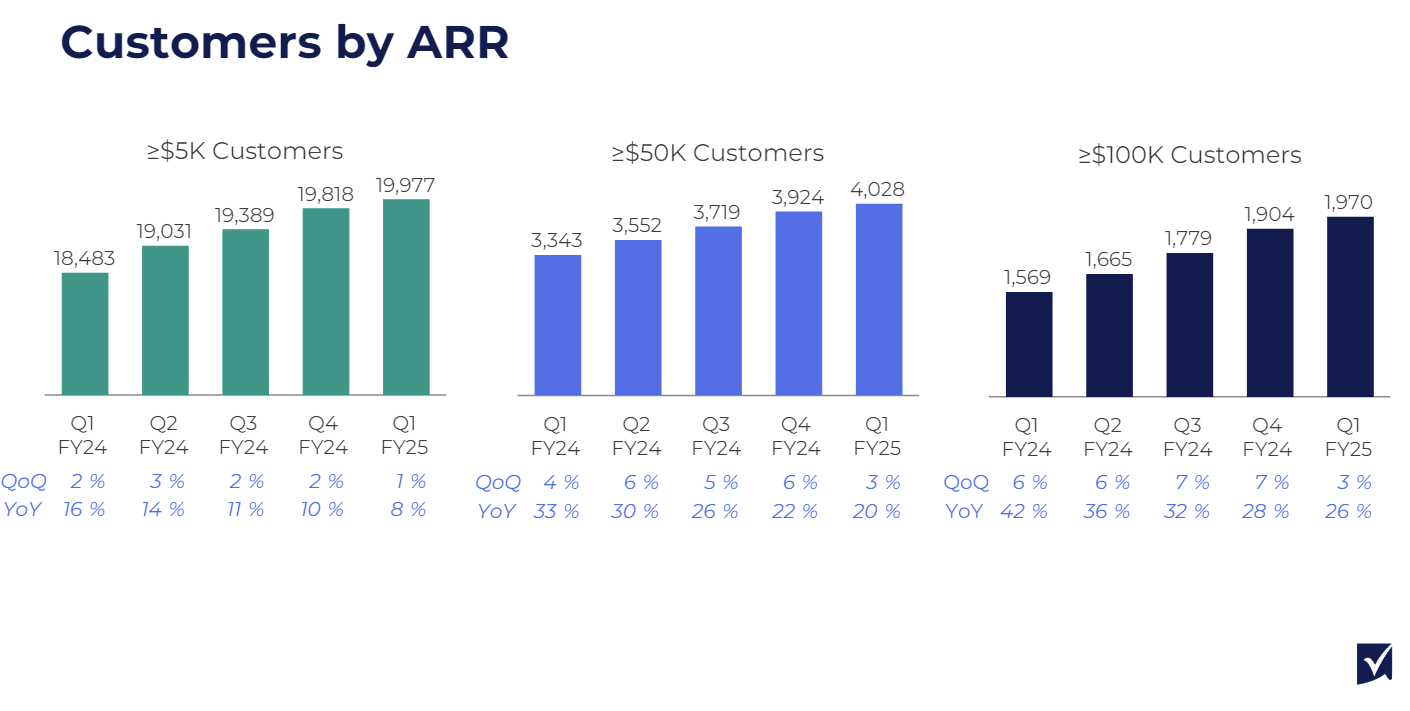
Customer base. Rubrik has more than 6,100 customers as of Jan. 31 and 1,742 of them have subscription annual recurring revenue of more than $100,000. For fiscal 2023, Rubrik had 5,000 customers. Rubrik said its cloud ARR for fiscal 2024 was $525 million.

Rubrik is paying heavily to acquire customers and its go-to-market operations. For fiscal 2024, Rubrik delivered a net loss of $354.2 million on revenue of $627.9 million, up from $599.82 million in fiscal 2023. Rubrik spent $482.53 million on sales and marketing in fiscal 2024. In fiscal 2023 and fiscal 2024, operating cash flow was $19.3 million and $(4.5) million, respectively, and free cash flow was $(15.0) million and $(24.5) million, respectively.

Much of that investment in sales and marketing is to transition customers from subscription term-licenses to SaaS. Rubrik cited this transition as a risk factor:

"We are implementing certain initiatives to accelerate our existing customers’ migration to RSC as part of our business transition to SaaS, which include enforcement of migration deadlines. These initiatives may be perceived negatively by our customers. For example, these initiatives may require customers to prioritize preparation for their migration over other organizational needs, potentially resulting in diversion of resources. For certain existing customers, the perceived benefits from undertaking the migration may be outweighed by the anticipated time and effort required to prepare for and execute the migration, resulting in potential delays in customers’ transition to RSC."

Rubrik was founded in December 2013 with products and services launched in 2016. RSC, however, has only been offered as a cloud platform based on subscriptions in fiscal 2023. Rubrik noted that RSC is now the majority of revenue as Rubrik-branded appliances and licenses and support sales diminish.

Leadership. Bipul Sinha, CEO, Chairman and Co-Founder, has been a software engineer, venture capitalist and a CEO. In a shareholder letter, Sinha said Rubrik is trying to leverage market disruption to create a durable business. "We built a distinct architecture to combine data and metadata from business applications across the cloud to ensure data security and availability irrespective of incidence," he said. "This allowed us to transform backup data into a strategic asset that sits at the epicenter of security and artificial intelligence."

The generative AI play. No IPO can go forward without generative AI as a hook. Rubrik said generative AI breakthroughs will require more guardrails for security, privacy and compliance. Generative AI will also mean more sophisticated attacks. In its IPO filing, Rubrik argues that its approach accounts for backup and recovery after a cyberattack.

Rubrik also offers Ruby for AI data defense and recovery. In its filing, Rubrik said:

"Ruby is designed to augment human efforts with its generative AI capabilities, helping customers scale their data security operations with automation, boosting productivity, and bridging the users’ skills gap. Ruby uses Microsoft Azure OpenAI Service in combination with our own proprietary, internally developed software. Our proprietary software augments user queries to generate prompts that are submitted to the Azure OpenAI model and also enhances the model output to generate responses presented back to the user."

The company added that it chose Microsoft Azure OpenAI Service based on its security features that keep data with Rubrik's control. Microsoft is a core Rubrik partner.

Generative AI is also cited in Rubrik's lengthy risk factor section for everything from code to intellectual property, regulation globally, liability and customer adoption.

What does Rubrik secure? Rubrik works across the main enterprise applications and platform including VMware, Microsoft Hyper-V, Microsoft SQL Server, Oracle, Microsoft Windows, Nutanix, Kubernetes, Cassandra, MongoDB, Linux, UNIX, AIX, NAS, Epic, SAP HANA, Google Cloud, Azure, AWS, M365 (Microsoft Teams, SharePoint, Exchange Online, and OneDrive), and Atlassian Jira Cloud.

Competition. Multiple competitors were cited including Dell Technologies, IBM, Commvault, Veeam and Cohesity as well as cloud data management vendors in some areas and broader cybersecurity platforms.

Supermicro makes Rubrik-branded appliances. Rubrik said: "A large majority of the customer enterprise data we secure relies upon Rubrik-branded Appliances, which are currently built on servers supplied and designed by Super Micro Computer, Inc., or Supermicro."

Rubrik offers a Ransomware Recovery Warranty. Rubrik said one risk is liability. The company said:

"As part of our ransomware recovery warranty, or the Ransomware Recovery Warranty, we also provide certain customers with up to $10,000,000 for recovery expenses related to data recovery and restoration in the event that data backed up using our solutions cannot be recovered following a ransomware attack. As part of the Ransomware Recovery Warranty, if an eligible customer’s data that has been backed-up onto a Rubrik-branded Appliance, Rubrik-certified compatible third-party commodity server, or a Rubrik-hosted cloud platform, is not successfully recovered by way of one of our data security products due to a failure of such solution, we will reimburse the customer for its reasonable and necessary fees and expenses to restore, recover, or recreate its data up to $10,000,000. As of January 31, 2024, there had been no claims made under the Ransomware Recovery Warranty."


Digital Safety, Privacy & Cybersecurity Data to Decisions Innovation & Product-led Growth Future of Work Tech Optimization Next-Generation Customer Experience Security Zero Trust ML Machine Learning LLMs Agentic AI Generative AI AI Analytics Automation business Marketing SaaS PaaS IaaS Digital Transformation Disruptive Technology Enterprise IT Enterprise Acceleration Enterprise Software Next Gen Apps IoT Blockchain CRM ERP finance Healthcare Customer Service Content Management Collaboration GenerativeAI Chief Information Officer Chief Information Security Officer Chief Privacy Officer Chief Executive Officer Chief Technology Officer Chief AI Officer Chief Data Officer Chief Analytics Officer Chief Product Officer

Here's why Meta is spending $35 billion to $40 billion on AI infrastructure, roadmap

As long as the ad revenue continues to flow into Meta properties such as Facebook and Instagram, CEO Mark Zuckerberg is going to invest aggressively in an AI buildout. "I think it makes sense to go for it," he said.

That's the message from Meta following its first quarter results, which landed after the company launched its powerful large language model (LLM) Llama 3. Meta reported first quarter net income of $12.37 billion, or $4.71 a share, with revenue of $36.46 billion, up 27%. Meta said its second quarter revenue will be $36.5 billion to $39 billion. The real zinger was that Meta said its 2024 capital expenditures would be $35 billion to $40 billion, above previous guidance of $30 billion to $37 billion.

"Meta needs to keep investing into AI so it keeps the consumers and clicks that drive ad revenue. If you lose the traffic because AI is better somewhere else it will be hard for Meta to keep the flywheel going," said Constellation Research analyst Holger Mueller. "And the foe is Google, which has a similar spend, but a lead when it comes to custom algorithms on custom silicon. Zuckerberg has no alternative but to spend and stay relevant. Meta must stay ahead of its ad competitors Google, and then Microsoft as well."

Needless to say, that capital expenditure guidance led to a bevy of analyst questions about Meta's AI strategy and potential. Zuckerberg was happy to elaborate. Here's what he had to say about Meta's AI buildout and the long-term view. The upshot is that Meta intends to be an AI leader.

Meta AI as helper. Zuckerberg said Meta AI will be an assistant across the company's apps and glasses that will connect people via APIs for everything from commerce to customer support as well as coding and development. The initial rollout of Meta AI has had "tens of millions of people" trying it. "We believe that Meta AI with Llama 3 is now the most intelligent AI assistant that you can freely use. And now that we have the superior quality product we are making it easier for lots of people to use them within WhatsApp, Messenger, Instagram, and Facebook," said Zuckerberg.

Further model improvements. Meta has said it is working on a 400 billion parameter model that is still in training. "I expect our models are just going to improve further from open-source contributions," he said. "We have the talent, data and ability to scale infrastructure to build the world's leading AI models and services. And this leads me to believe that we should invest significantly more over the coming years to build even more advanced models and the largest scale AI services in the world," said Zuckerberg.

This AI investment isn't cheap. Zuckerberg said Meta will operate the rest of its business as efficiently as possible and will shift those savings to AI investments. Nevertheless, Meta is going to spend heavily. "We will still grow our investment envelope meaningfully before we make much revenue from some of these new products," he said.

Meta CFO Susan Li said:

"As we develop more advanced and compute intensive recommendation models, and scale capacity for our generative AI training and inference needs, we expect that having sufficient infrastructure capacity will be critical to realizing many of these opportunities. As a result, we expect that we will invest significantly more in infrastructure over the coming years."

Investors aren't going to like the AI investment, but Meta is used to it. The company has "historically seen a lot of volatility in our stock during this phase of our product playbook, where we're investing in scaling and new products but aren't yet monetizing it," said Zuckerberg. It has happened before with Reels, news feed and the transition to mobile. APIs are likely to be a profitable AI service for Meta. "Building a leading AI will also be a larger undertaking than the other experiences we've added to our apps, and this is likely going to take several years," he added.

The payoff is there. Zuckerberg said:

"Once our new AI services reach scale, we have a strong track record of monetizing them effectively. There are several ways to build a massive business here, including scaling business messaging, introducing ads or paid content into AI interactions. And enabling people to pay to use bigger AI models and access more compute. And on top of that. AI is already helping us improve app engagement which naturally leads to seeing more ads and improving ads directly to deliver more value."

Zuckerberg said that 30% of the posts on Facebook's feed are served by AI and 50% of Instagram content is AI recommended.

The cost efficiency of model training will be a priority. Zuckerberg said open-source contributions will likely enable efficiency gains as will Meta's proprietary accelerator chips. The goal is to run AI workloads on a less expensive stack.

There's an AI and augmented reality intersection. "Glasses are the ideal device for an AI assistant because you can let them see what you see and hear what you hear. So, they have full context on what's going on around you, as they help you with whatever you're trying to do," said Zuckerberg.

And the time is now. Zuckerberg said:

"With the latest models, we're not just building good AI models that are that are going to be capable of building some new goods, social and commerce products. I actually think we're at a place where we've shown that we can build leading models and be the leading AI company in the world, and that opens up a lot of additional opportunities."

The future. Zuckerberg said:

"I think that the next phase for a lot of these things are handling more complex tasks and becoming more like agents rather than just chatbots. You're going to give an agent something to do like an intent or a goal. Then it goes off and actually performs many queries on its own in the background in order to help accomplish your goal. Whether that goal is researching something online, or eventually finding the right thing that you're looking to buy. I think people don't even realize that they will be able to ask computers to do it for them.

I think the opportunity is really big. So, it makes sense to go for it. And we're going to, and I think it's going to be a really good long-term investment."

Data to Decisions Marketing Transformation Next-Generation Customer Experience Innovation & Product-led Growth Future of Work Tech Optimization Digital Safety, Privacy & Cybersecurity meta ML Machine Learning LLMs Agentic AI Generative AI AI Analytics Automation business Marketing SaaS PaaS IaaS Digital Transformation Disruptive Technology Enterprise IT Enterprise Acceleration Enterprise Software Next Gen Apps IoT Blockchain CRM ERP finance Healthcare Customer Service Content Management Collaboration GenerativeAI Chief Information Officer Chief Executive Officer Chief Technology Officer Chief AI Officer Chief Data Officer Chief Analytics Officer Chief Information Security Officer Chief Product Officer

ServiceNow posts strong Q1 touts genAI uptake

ServiceNow posted strong first quarter results and said its genAI offerings are the "fastest selling in the company’s history."

ServiceNow reported first quarter net income of $347 million, or $1.67 a share. Non-GAAP earnings were $3.41 a share. Revenue for the first quarter was $2.6 billion, up 24% from a year ago. Wall Street was expecting ServiceNow to report earnings of $3.13 a share on revenue of $2.59 billion.

CEO Bill McDermott said: "Our GenAI offerings are the fastest selling in the company’s history. We are humbled by the trust our customers are investing in our platform."

ServiceNow CFO outlines method to Pro Plus SKU pricing

77% of CxOs see competitive advantage from AI, says survey | Why digital, business transformation projects need new approaches to returns | Why you'll need a chief AI officer | Enterprise generative AI use cases, applications about to surge

The company said its current remaining performance obligations contract revenue to be recognized over the next 12 months was $8.45 billion. The company had 1,933 total customers with more than $1 million in annual contract value. ServiceNow said it had 8 deals in the quarter worth more than $5 million and four worth more than $10 million.

Speaking on a conference call with analysts, McDermott said "GenAI adoption remained on a tear in Q1. Companies are leaning into GenAI as a powerful deflationary force to drive productivity." He added that the pipeline for Pro Plus, which features GenAI is strong. 

McDermott added:

"Process optimization is the number one Gen AI use case in the global economy today. This is why ServiceNow's strategic relevance as the AI platform for business transformation has never been higher. Every business workflow in every enterprise will be engineered with Gen AI at its core. We are the single pane of glass that enables end-to-end digital transformation." 

As for the outlook, ServiceNow projected second-quarter subscription revenue of $2.52 billion to $2.53 billion, up 21.5% to 22% from a year ago. For 2024, ServiceNow projected subscription revenue of $10.56 billion to $10.57 billion.

The company ended the quarter with 23,362 employees, up from 22,668 as of Dec. 31.

Data to Decisions Future of Work servicenow Chief Information Officer

IBM acquires HashiCorp for $6.5 billion, reports mixed Q1

IBM said it will acquire HashiCorp in a deal valued at $6.4 billion as it builds out its infrastructure and security lifecycle management tools to go along with its hybrid cloud and AI portfolio.

The purchase price equates to $35 a share in cash for HashiCorp shareholders.

IBM CEO Arvind Krishna said the acquisition  will help customers "manage the complexity of today's infrastructure and application sprawl" as they build out hybrid cloud and generative AI infrastructure. HashiCorp is a play on hybrid and multi-cloud workflows and a solid add-on to Red Hat. 

According to IBM, HashiCorp will accelerate its growth and cross-selling opportunities with Red Hat, watsonx, data security, IT automation and consulting. HashiCorp, which has more than 4,400 customers, is expected to be accretive to IBM's adjusted EBITDA within the first year of closing.

Krishna said:

"IBM’s and HashiCorp’s combined portfolios will help clients manage growing application and infrastructure complexity and create a comprehensive hybrid cloud platform designed for the AI era.”

Constellation Research's take

Constellation Research analyst Dion Hinchcliffe said:

"Hashicorp is the latest in a long spree of acquisitions over the last year by IBM CEO Arvind Krishna to round out their cloud offerings to make them more competitive with the hyperscalers. Hashicorp has struggled at times to crack the enterprise sales market, despite being one of the cooler companies on the block. While IBM will undoubtedly use Hashicorp's strong developer 'street cred' as a proof point in its own offerings, it remains to be seen if Hashicorp can retain its perceived neutrality as a cloud infrastructure software provider at a time that robust multicloud and crosscloud support continues to grow in importance."

Constellation Research analyst Holger Mueller said:

"Hashicorp does not make sense for IBM. The services model lives from being independent and now they may look biased. And the service revenue around DevOps is going to dry up. The multicloud aspect of HashiCorp makes sense from an IBM credibility perspective." 

Constellation Research analyst Chirag Mehta said:

"HashiCorp's switch from MPL 2.0 to BSL 1.1 for future products has sparked concern among developers. The BSL's perceived limitations on open-source contribution worry them, potentially impacting the long-term development of these products, particularly those previously under the more permissive MPL.

In light of IBM's strong commitment to open source, many developers are urging them to consider a license like Apache 2.0 for the new HashiCorp products. This license allows for wider modification and distribution, even commercially. By embracing a more open-source friendly license, IBM has a golden opportunity to gain developer trust, a crucial factor for successfully integrating HashiCorp's infrastructure and security solutions into their go-to-market strategy.  Ultimately, this shift could strengthen both IBM's offerings and its position in the strategic multi-cloud and cybersecurity domains."

First quarter results

Separately, IBM reported its first quarter results. IBM reported first quarter earnings of $1.6 billion, or $1.69 a share, on revenue of $14.5 billion, up 1% in constant currency. Non-GAAP earnings for the quarter was $1.68 a share.

Wall Street was expecting IBM to report first quarter earnings of $1.59 a share on revenue of $14.54 billion.

  • IBM said software revenue was up 5% in the first quarter with consulting revenue flat. Infrastructure revenue was down 1%.
  • In software, Red Hat revenue was up 9% with automation up 13%. Data and AI revenue was up 1% and security fell 3%.
  • For 2024, IBM is projecting revenue growth in the mid-single digit range with $12 billion in free cash flow.


Data to Decisions Tech Optimization IBM SaaS PaaS IaaS Cloud Digital Transformation Disruptive Technology Enterprise IT Enterprise Acceleration Enterprise Software Next Gen Apps IoT Blockchain CRM ERP CCaaS UCaaS Collaboration Enterprise Service Chief Information Officer Chief Technology Officer Chief Information Security Officer Chief Data Officer Chief Executive Officer