Results

CR CX Convos: LIVE from PegaWorld with Matt Healy

Liz Miller comes to you LIVE again from #PegaWorld with another CR #CX convo! 📣 This time, with Matt Healy, director of product strategy and marketing at Pegasystems.

Learn how Pegasystems brings together hashtag#applications, systems, #AI, workflows and #automation to improve #customerexperience and customer journeys.

Plus the ever-engaging commentary from Liz Miller about #marketing, #digital technology and more! Watch the full convo below👇

On cx_convos <iframe width="560" height="315" src="https://www.youtube.com/embed/XS-rBwyrqps?si=qDi450gA0KAUlnuR" title="YouTube video player" frameborder="0" allow="accelerometer; autoplay; clipboard-write; encrypted-media; gyroscope; picture-in-picture; web-share" referrerpolicy="strict-origin-when-cross-origin" allowfullscreen></iframe>

Broadcom delivers strong fiscal Q2 on AI demand, splits stock 10-for-1

Broadcom saw strong AI demand in the fiscal second quarter and said VMware accelerated its software business.

The company reported fiscal second quarter net income of $2.12 billion, or $4.42 a share, on revenue of $12.49 billion, up 43% from a year ago. Non-GAAP earnings were $10.96 a share. The company also said it will split its stock 10-for-1 on July 15.

Wall Street was looking for second quarter non-GAAP earnings of $10.84 a share on revenue of $12.1 billion.

Broadcom also raised its revenue guidance for fiscal 2024 to $51 billion compared to estimates of $50.28 billion.

CEO Hock Tan said the second quarter results were "once again driven by AI demand and VMware." AI product revenue was $3.1 billion in the quarter.

By unit, Broadcom's semiconductor revenue, which is being driven by AI data centers, was $7.2 billion, up 6% from a year ago. Infrastructure software revenue was $5.28 billion, up 175% from a year ago due to the VMware acquisition.

Nutanix winning deals vs. VMware, but Broadcom punching back with pricing

Broadcom ended the quarter with cash and cash equivalents of $9.81 billion.

Key points from the earnings conference call include:

  • VMware revenue in the second quarter was $2.7 billion, up from $2.1 billion in the first quarter. Tan said the integration was going well and the company is making "good progress on the transition. The company has signed up nearly 3,000 of its largest 10,000 customers to deals, mostly multi-year contracts. 
  • Tan reiterated that VMware would deliver $4 billion a quarter in revenue, but declined to give a time frame. 
  • Networking revenue for Broadcom is expected to grow 40% in the third quarter. Tan said networking products were benefiting from AI data centers. 
  • Tan downplayed any Nvidia competition. He said Broadcom uses its IP portfolio to create custom AI accelerators so the companies don't compute much. "We are not competitors to them and don't try to be either," said Tan. "On networking that may be different, but we are approaching it from different angles. We are very deep in Ethernet and have been doing it for over 25 years. It's a natural extension for us to go into AI, but we don't do GPUs. We enable GPUs to work very well."

Tech Optimization Data to Decisions Innovation & Product-led Growth Future of Work Next-Generation Customer Experience Digital Safety, Privacy & Cybersecurity vmware ML Machine Learning LLMs Agentic AI Generative AI AI Analytics Automation business Marketing SaaS PaaS IaaS Digital Transformation Disruptive Technology Enterprise IT Enterprise Acceleration Enterprise Software Next Gen Apps IoT Blockchain CRM ERP finance Healthcare Customer Service Content Management Collaboration Chief Information Officer Chief Executive Officer Chief Technology Officer Chief AI Officer Chief Data Officer Chief Analytics Officer Chief Information Security Officer Chief Product Officer

CR CX Convos: LIVE from PegaWorld with Matt Camuso

Liz Miller had a chance to catch up with Matthew Camuso, Senior Product Marketing Manager at Pegasystems, while attending #PegaWorld. What does Moose (you gotta watch...there's even a hand signal) think about the intersection point of Marketing, Experience, Data, Analytics and AI? A lot...and they have a blast catching up and talking strategy in the blazing heat of cool Las Vegas. 

On cx_convos <iframe width="560" height="315" src="https://www.youtube.com/embed/WwYVzDe7Yfo?si=LovDXmtcD46ObyoM" title="YouTube video player" frameborder="0" allow="accelerometer; autoplay; clipboard-write; encrypted-media; gyroscope; picture-in-picture; web-share" referrerpolicy="strict-origin-when-cross-origin" allowfullscreen></iframe>

GM builds its data factory, eyes genAI

Brian Ames, senior manager of production AI and data products at General Motors, said the company has stood up its data factory and plans to layer in generative AI capabilities in the next year.

Ames' talk at the Databricks Summit conference is one part of a broader effort at GM to improve its data and software game. In February, GM CEO Mary Barra said the company is "determined to get the software right" to deliver good customer experiences. GM is working to improve its software in autos as well as revamp the technology behind Cruise.

In May at an investor conference, Barra noted that artificial intelligence will be critical to Cruise and the company overall. "When you talk about artificial intelligence, the ultimate application of that is autonomy is our Cruise operations that use machine learning and AI. But there's a lot that we're working on to leverage AI in some of the business processes to take cost and complexity out of what we do," said Barra.

With that backdrop, Ames' talk highlighted how companies need to get their cloud and data strategies right before embarking on generative AI.  We've documented this trend repeatedly in customer stories on CVSWayfair, Equifax, Intuit, Rocket and JPMorgan Chase to name a few.

Ames said GM's first move was to create an infrastructure that could surface data more easily. "GM has a ton of data. That's not the problem. We had a beautiful on prem infrastructure. Why change? Well, two reasons. Number one was data efficiency. More importantly, the world changed. And GM understood that if we didn't have AI and ML in our arsenal, we could find ourselves at a competitive disadvantage," he said.

GM set out to transform its data infrastructure about 15 months ago to go all cloud. The plan was to build a data insight factory that could democratize information that can be used for safety and vehicle telemetry. "We needed to move from solution silos to single sources of truth with rapid collaboration. We needed to move away from fragmented governance into a simple unified governance. And we felt if we did those two things extremely well, that we'd be able to go from pockets of limited AI and ML execution to really building AI and ML into the DNA of GM," said Ames.

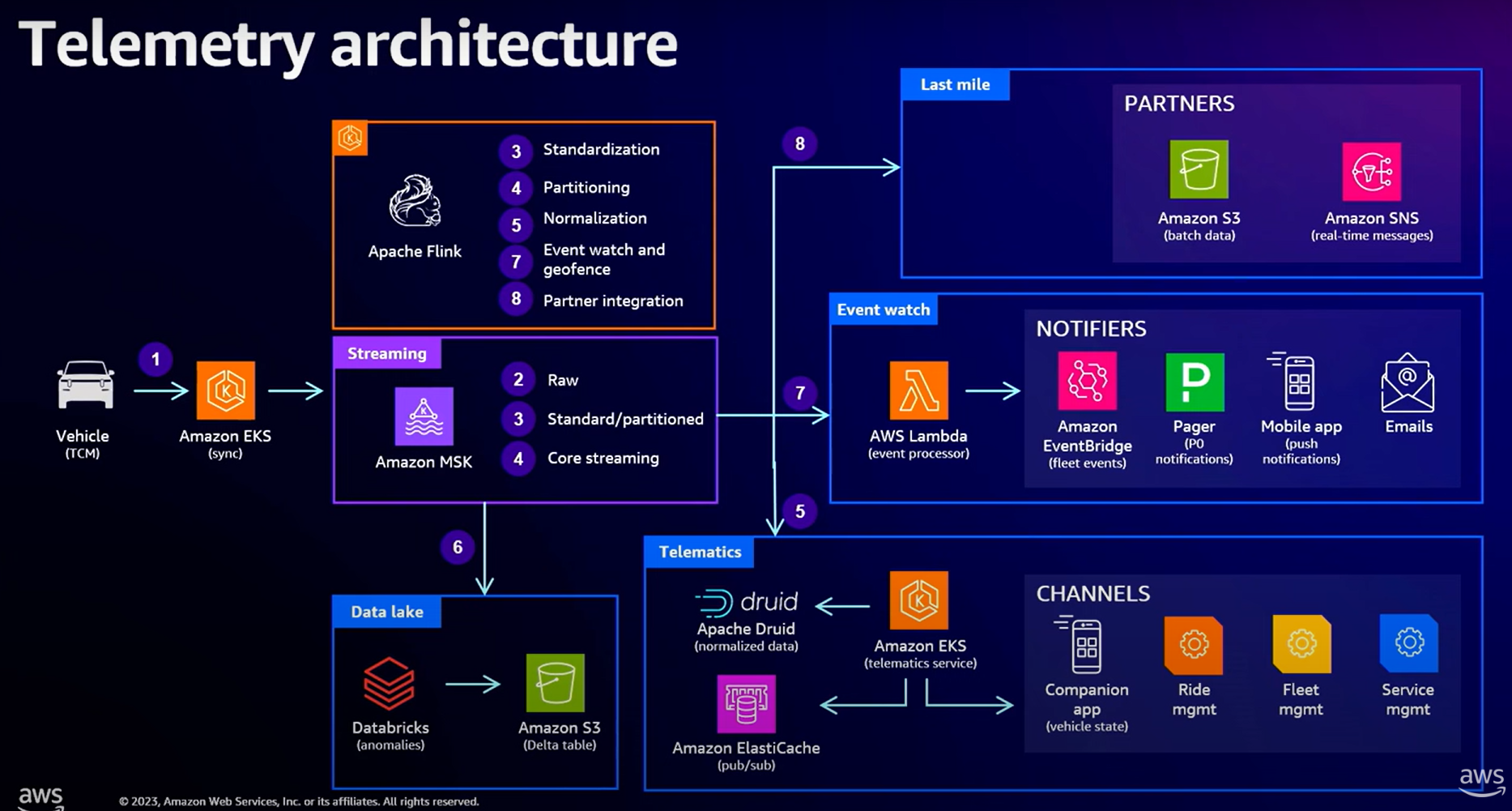
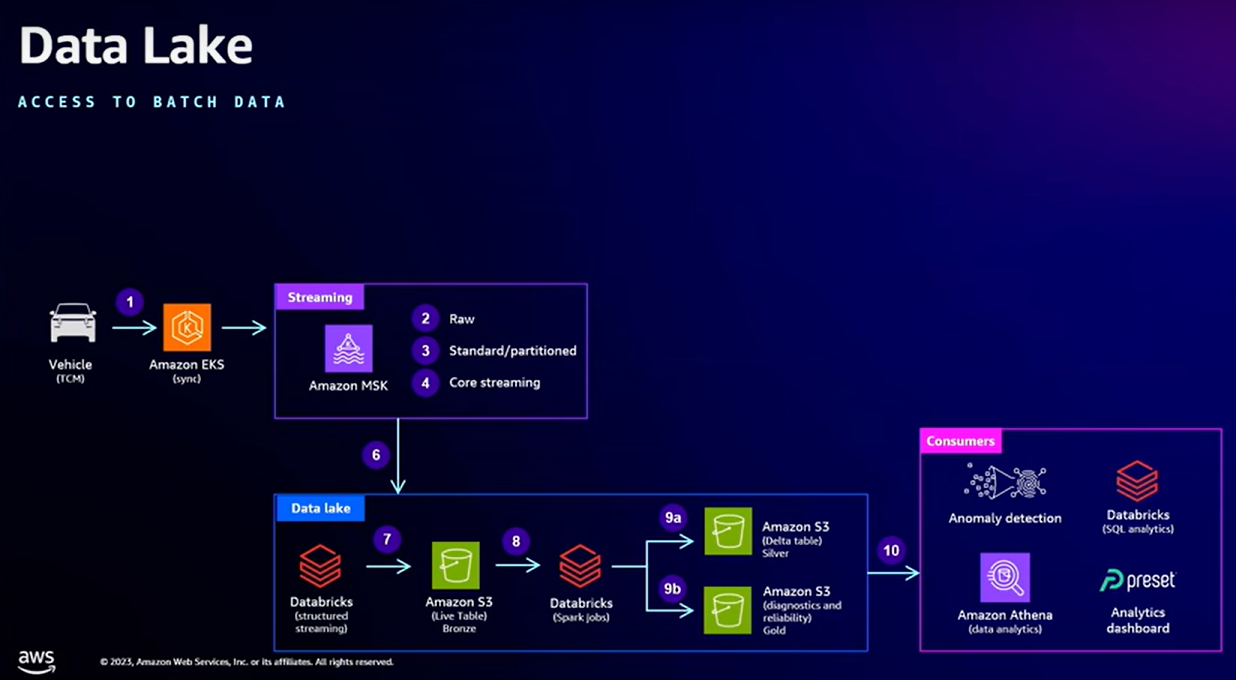
Today, GM has this architecture built on Databricks. GM also built an interface that can distribute insights by brand and product. The killer app for this data platform has been telemetry data from GMs fleet to be used to gauge the health of the autos on the road as well as predictive maintenance and safety. The fleet includes 10s of millions of cars with multiple combination of sensors. The goal? Zero crashes.

Going forward, Ames said GM's plan is to break down silos for various AI and machine learning projects around the company and move them to production faster. "we're reducing the time to insight and we're finding ways to contribute value. In year two, we're going to layer on genAI and perhaps take another step at GM towards our mission of zero crashes," said Ames.

More:

Data to Decisions Next-Generation Customer Experience Future of Work Innovation & Product-led Growth New C-Suite Tech Optimization Digital Safety, Privacy & Cybersecurity databricks Big Data SaaS PaaS IaaS Cloud Digital Transformation Disruptive Technology Enterprise IT Enterprise Acceleration Enterprise Software Next Gen Apps IoT Blockchain CRM ERP CCaaS UCaaS Collaboration Enterprise Service AI GenerativeAI ML Machine Learning LLMs Agentic AI Analytics Automation Chief Information Officer Chief Technology Officer Chief Information Security Officer Chief Data Officer Chief Executive Officer Chief AI Officer Chief Analytics Officer Chief Product Officer

Databricks launches Data Intelligence Platform, melds data, AI workflows

Databricks is adding generative AI capabilities via Mosaic AI across its data and AI platform, up its data warehousing game and get more out of data via business intelligence tools. The launches come a week after Databricks acquired Tabular.

At its Databricks Summit, which arrives a week after Snowflake's customer conference, the company laid out a strategy that revolves around tightly coupling data management and AI. What Databricks is building now are the tools to add governance to data and AI and deliver real insights.  The idea is that large language models (LLMs) will allow you to interact with data with simple queries.

In a briefing, Databricks officials noted that about 85% of the generative AI experiments in enterprises fail to make it to production. The problem in a nutshell revolves around cost at scale, data privacy and getting the right answers out of models. It is not the model, but what model delivers the best results for your data.

If you zoom out, the battle between Snowflake and Databricks boils down to this: Snowflake needs to prove it can evolve from a data warehouse and data management vendor to an AI platform. Databricks is a data and AI platform that can also offer data warehouse and business intelligence capabilities. Nevertheless, Constellation Research analyst Doug Henschen boiled down the race. "Databricks is leading on AI and genAi, but It has a lot to prove on data warehousing and is behind on data marketplace and data apps," he said. 

With generative AI, Databricks is creating a Data Intelligence Platform that includes Delta Lake, a unified data storage system, Tabular, which will bridge Databricks with the Iceberg crowd, the generally available Unity Catalog, and Mosaic AI, Databricks SQL, dashboards and other tools. Databricks Data Intelligence Platform will be 100% serverless.

The vision and Databricks strategy


During a keynote, Databricks CEO Ali Ghodsi said data and AI is converging. "In the last 18 months, every CEO from a Fortune 500 company or small company I've talked with thinks that data and AI is going to be super strategic for them over the next five years. They think that that's how they're going to win," said Ghodsi. "That's going to be the main differentiating factor whether it's the financial sector, retail,  media, healthcare or in the public sector. Doesn't matter, all of it. It's going to be data and AI."

Ghodsi said that the last 18 months has only increased the pressure to bring use cases into production. He said: 

"There's a food fight inside organizations over who owns an AI. That's number one. Number two, everybody's worried about security and privacy of their data with genAI. They are worried about security and privacy for the whole data estate. And that data estates today is super fragmented."

Ghodsi said the fragmentation can be solved by storing data in open formats so enterprises don't hand data to vendors that'll only lock them in. "Our vision starts with the lakehouse. We said stop giving your data to vendors. It doesn't matter if it's a proprietary data warehouse in the cloud, Snowflake or Databricks. Don't give it to us either."

Databricks acquisition of Tabular was designed to create a USB-like standard for data. Ghodsi said interoperability between Delta Lake and Iceberg will solve a lot of enterprise problems. He added that Databricks will work with the communities in Delta Lake and Iceberg to bring formats together over time. He likened data lakehouse formats as a Betamax vs. VHS type of challenge. 

The other broad theme from Databricks was combining its Lakehouse platform with Mosaic AI. Data intelligence will enable enterprises to ask common questions with genAI and create a AI-meets-business intelligence format. "That's what the whole company is working on," said Ghodsi. 

Nvidia CEO Jensen Huang also showed up at the keynote with Databricks CEO Ali Ghodsi and delivered a few interesting nuggets:

  • Huang argued that open source LLMs "were probably the most important events this year" because it enables enterprises to better leverage genAI. 
  • GenAI will have the most impact on customer service. "Customer service represents probably several trillion dollars worth of expenses and every company is deciding between the chatbot or the customer service agent. It is partly about the fact that you could automate but it's mostly about the data flywheel," said Jensen. "You want to capture the engagement for the data flywheel. We're going to have proactive customer support."
  • AI factories shouldn't be built near populations where the energy grid is already challenged. "Earth has a lot more energy," said Huang. "It's just in the wrong places."

News overview

The news out of Databricks Summit adds up to building out this data and AI platform that's accessible. Here's a look at a few of the announcements.

  • Mosaic AI Agent Framework is in preview and includes tools to build an agent application, evaluate at them with humans and LLM judges and deployment tools with real-time APIs.
  • Mosaic AI Model Training to fine tune small open-source models. Databricks said customers in private preview can use smaller models and reduce costs while reducing latency. Some customers are seeing 10x improvements in inference costs and 2x improvements in latency.
  • A text-to-image model trained on Shutterstock data by Mosaic AI.

  • Support for usage tracking, rate limits and guardrails as well as hooks into Unity Catalog.
  • Databricks SQL is now 70% faster and Databricks showed comparisons for its price/performance vs. Snowflake
  • Databricks AI/BI with dashboards generally available. A tool called Genie so you can query data is in public preview. To date, Databricks hasn't tried to tackle BI use cases, but going forward BI will be a focus.

  • Genie will learn from your data and semantics and feature an ensemble of AI agents to leverage Unity Catalog metadata. Genie will also query data across all workloads and related assets, remember and learn and seek clarifications.
  • Lakeflow Connectors will ingest data from SaaS applications and databases. Lakeflow won't have all of its components right away, but Databricks said there will be a steady cadence over the next 12 months. The aim is to simplify the data engineering process.
  • Unity Catalog OSS, which will be an open catalog that's available now and combines data and AI with interoperability across formats, open APIs and governance.
  • Enhanced Federation that includes Lakehouse Federation to connect data sources to Unity Catalog with policies and Hive Metastore Federation, which can read/write for internal or external Hive Metastore or AWS Glue.
  • Secure Collaboration via Clean Rooms and Foreign Catalog Sharing.
  • Business Metrics, which will pull from your lakehouse assets, leverage a central inventory of certified metrics and make them accessible.

The launches across Databricks Summit have a heavy dose of combining genAI and data warehousing as well as its usual data engineering fare. The case Databricks is making is that it can consolidate your data platforms and silos. In the end, Snowflake and Databricks will compete for customers. 

Constellation Research analyst Holger Mueller said:

"CxOs always need to remind themselves where the vendor came from. Snowflake came out of the data warehouse and showed it could add cloud elasticity. A large part of Snowflake's success was the familiarity with data warehousing. Databricks lived in the big data and cloud world from its inception in a model less familiar to CxOs. If Snowflake manages to add good enough lakehouse capabilities soon, it will win as it has the transactional data. If Snowflake is slow or fumbles, it's Databricks' game to win because the ability to master large amounts of unstructured data is the harder engineering challenge and Databricks has mastered it."

More Databricks:

Data to Decisions Innovation & Product-led Growth Future of Work Tech Optimization Next-Generation Customer Experience Digital Safety, Privacy & Cybersecurity databricks Big Data ML Machine Learning LLMs Agentic AI Generative AI AI Analytics Automation business Marketing SaaS PaaS IaaS Digital Transformation Disruptive Technology Enterprise IT Enterprise Acceleration Enterprise Software Next Gen Apps IoT Blockchain CRM ERP finance Healthcare Customer Service Content Management Collaboration GenerativeAI Chief Information Officer Chief Data Officer Chief Technology Officer Chief Information Security Officer Chief Executive Officer Chief AI Officer Chief Analytics Officer Chief Product Officer

Splunk adds genAI tools, more Cisco touchpoints across observability and security

Splunk launched a new set of generative AI tools across its products, security operations additions, and data management applications as well as more Cisco integrations.

The announcements made at Splunk's .conf24 conference come a week after Cisco's customer conference where the two companies outlined integrations to connect observability platforms. At Cisco Live, the companies announce a new single sign-on system that streamlines workflows between Cisco AppDynamics and Splunk and Splunk Log Observer Connect for Cisco AppDynamics. Cisco AppDynamics will also integrate with Splunk Enterprise, Splunk Cloud and Splunk ITSI. Overall, Cisco and Splunk will look to unify the observability experiences across both platforms as they ultimately integrate them.

Observability and security customers of both Splunk and Cisco are watching integrations closely as well as clues to how the platforms will come together. A Splunk report found that the total cost of downtime for Global 2000 companies is $400 billion annually.

Cisco Q3, Q4 outlook better as company preps Splunk integration

Here's what Splunk announced at .conf24:

  • Splunk added generative AI tools for Observability, security and IT Service Intelligence. AI Assistant in Observability Cloud adds a natural language interface for engineering teams to detect and correct issues. AI Assistant in Security brings genAI to workflows in a move to speed up analyst investigation. Splunk AI Assistant in SPL makes the insights from the company's unified security and observability platform more understandable to customers.
  • Advanced AI for IT Service Intelligence has a new Configuration Assistant and gets Drift Detection for KPIs and Adaptive Thresholds for entities.
  • Splunk Enterprise 8.0 adds a bevy of security operations center advances to simplify how analysts detect, investigate and respond to threats.
  • Federated Analytics enables customers to analyze data directly where it resides starting with Amazon Security Lake.
  • Splunk Attack Analyzer, Splunk Enterprise Security and Splunk SOAR customers will see integrations that leverage Cisco Talos threat intelligence.
  • Splunk's Data Management portfolio will get Pipeline Builders to enable customers to filter, mask and transform data to simplify processing and Ingest Processor, which will give customers the ability to convert logs to metrics and route them to Splunk Observability Cloud, Splunk Platform or Amazon S3.

Constellation Research's take

Constellation Research analyst Andy Thurai said:

"The natural language interface Splunk AI assistant for SPL can be very useful to power Splunk users. SPL is not easy to write and needs an expert level understanding to write it. By providing a natural language interface AI assistant, Splunk/Cisco hopes to democratize the SPL creation.

Natural language queries of incident, related observability data, ITSI, and finding fixes quicker can be good. However, I have found some of Splunk's closest competitors are way ahead of them in this regard.

Data ingestion pipeline and log/data optimization are areas where competitors have an advantage over Splunk, even after these announcements.

The Log Observer connect as a full two-way centralized log mover could be powerful with all telemetry in one place, but I do anticipate scaling issues. But my guess is Log Observer is a temporary fix to connect log and observability clouds.

Splunk's AI announcements today are nothing earth shattering and competitors already are ahead. Cisco/Splunk now has a problem of integrating Splunk Observability Cloud, Log Enterprise, AppDynamics, and ThousandEyes, and Network Observability data into one meaningful solution. While Cisco and Splunk all service portions customer needs well, the combined solutions is going to take a while to build. I estimate that it might take two years or longer. 
 
There are also overlapping solutions such as FSO, RUM, synthetic monitoring, incident intelligence, and logs which that all need to be redesigned.
 
I still stand by my original comments that it might take two years for this to come to fruition at the earliest. It is going to be difficult to decide which architecture will win and if all can be cloud or hybrid. The good thing is that they have one chief product officer who will drive the product and strategy. But it is too early to make a call. I haven't seen enough yet."

More Cisco and Splunk:

Data to Decisions Digital Safety, Privacy & Cybersecurity Tech Optimization Innovation & Product-led Growth Future of Work Splunk cisco systems Chief Information Officer

LIVE from Zoholics with Constellation Analysts

Constellation Research analysts R "Ray" Wang, Doug Henschen, Andy Thurai, and Chirag Mehta tune in live from Zoholics at the Convention Center in Austin, Texas to discuss the latest announcements, trends, and technology from the Zoho conference, including how Zoho is enabling the ability to drive down margin compression.

Watch the full interview!

On ConstellationTV <iframe width="560" height="315" src="https://www.youtube.com/embed/s04MGck2Z3A?si=nP9v-fnzTTUD8B45" title="YouTube video player" frameborder="0" allow="accelerometer; autoplay; clipboard-write; encrypted-media; gyroscope; picture-in-picture; web-share" referrerpolicy="strict-origin-when-cross-origin" allowfullscreen></iframe>

Oracle partners with Google Cloud, takes on OpenAI workloads

Cloud hell may have just frozen over as Oracle and Google Cloud outlined a partnership that gives enterprises an option to combine Oracle Cloud Infrastructure and Google Cloud.

For any enterprise technology veteran who remembers Oracle and Google duking it out in court over Android and Java, the partnership is almost like a trip through bizarro world. Oracle also has a similar partnership with Microsoft Azure. To that end, OpenAI is also now buying capacity from Oracle via the OCI and Azure tie-up.

Simply put, Oracle Cloud has nailed being an efficient cost-effective infrastructure and has aligned up with all the large players not named Amazon Web Services (AWS). Should a similar deal be cut with AWS and OCI hell will really freeze over. Oracle CTO Larry Ellison jabs at AWS as much as he did SAP back in the day.

Nevertheless, Ellison wouldn't rule out a AWS partnership either. 

"Customers are using multiple clouds not only infrastructure clouds, but they might have Salesforce applications or Workday applications or they use multiple cloud clouds in their in their business right now. We think that these are all the clouds become interconnected. We are thrilled we have that connection with Microsoft and the same thing with Google Cloud. We'd love to do the same thing with AWS. 

We think we should be interconnected to everybody. And that's what we're attempting to do within our multi cloud strategy. I think that's what customers want. I'm optimistic that that's the way the world will settle out. We'll get rid of these fees for moving data from cloud, the cloud. And all the clouds will be interconnected."

Here are the details of the Oracle and Google Cloud tie-up followed by the OpenAI deal and the not-too-surprising strong cloud results.

Google Cloud and OCI

Google Cloud's Cross-Cloud Interconnect will be initially available in 11 global regions so customers can deploy general purpose workloads without data transfer charges. Later in 2024, the companies said Oracle Database @ Google Cloud will be available with the database, network, feature and pricing at OCI.

Ellison said the deal with Google Cloud is good for joint customers. Sundar Pichai, CEO of Google and Alphabet said the partnership will combine Oracle's database and applications with its AI layer.

Oracle Database @ Google Cloud would give customers direct access to OCI database services deployed in Google Cloud data centers. That combination would enable Vertex AI and Gemini from Google Cloud to be leveraged without latency. For Google Cloud, the Oracle partnership can embed its AI services into more enterprises. Customer references cited by Google Cloud for AI adoption include Bayer, Best Buy, Discover Financial and TD Bank to name a few. Also see what Equifax and Wayfair have done with Google Cloud.

Google Cloud Next 2024: Google Cloud aims to be data, AI platform of choice | Google Cloud Next: The role of genAI agents, enterprise use cases

The two companies said they will jointly sell Oracle Database @ Google, provide support and a unified experience and then provide a bevy of services to mix and match.

Australia East (Sydney), Australia Southeast (Melbourne), Brazil East (São Paulo), Canada Southeast (Montreal), Germany Central (Frankfurt), India West (Mumbai), Japan East (Tokyo), Singapore, Spain Central (Madrid), UK South (London), and US East (Ashburn) are the regions that will initially launch. 

Constellation Research analyst Holger Mueller said the Google Cloud and Oracle partnership makes sense. 

"When something works, tech vendors copy the playbook: In this case it is the Oracle / Microsoft partnership that allows to run OracleDB @ Azure from the Azure console. Now the same gets repeated for Google Cloud. This is great news for enterprises, and good for Google Cloud and Oracle. And it makes it harder for cloud databases to compete with Oracle for building Next Generation Applications."

Other details about the Google Cloud and OCI partnership include:

  • In 11 regions, customers can move data across Google Cloud and Oracle. 
  • Joint customers will be able to access and deploy Exadata and Autonomous Database later this year through Google Cloud. 
  • Customers can bring their licenses and get access to support. 
  • If you use your GCP commitment to consume extra data, OCI will credit you toward support costs. 
  • Field teams are aligned. 
  • Oracle services across the board will be used in Google Cloud including Oracle apps. 
  • The two clouds will be available in one console. 
  • Interconnects will be up to 100 gigabit per second.
  • Google customers can take their license and deploy on Google Cloud if self managed. 
  • Pricing parity will be available on both clouds. 

Oracle CEO Safra Catz said the Google Cloud deal highlights broader traction and the ability to integrate applications as well as cloud infrastructure. 

"A very large enterprise tech company signed a contract in Q4 for over $600 million where we will be helping them transform their operations with Fusion to enable them to become more agile, faster, growing and more profitable. We will replace out many of our competitors products." 

OpenAI buys OCI capacity

OpenAI will use OCI for additional capacity in a partnership with Microsoft Azure and Oracle. Microsoft is already using OCI for additional workloads.

"We are delighted to be working with Microsoft and Oracle. OCI will extend Azure's platform and enable OpenAI to continue to scale," said Sam Altman, OpenAI CEO, in a statement.

OpenAI needs all the capacity it can get. The company is scaling fast, constant training models and needs to serve 100 million monthly users with its ChatGPT services.

Ellison said Oracle ramped up the Azure partnership in the fourth quarter with 11 of the 23 planned OCI datacenters inside Azure going live.

Ellison outlined some of the OpenAI partnership details. 

"We're building a very large data center with lots of Nvidia chips. The new Nvidia chips and new Nvidia interconnect liquid cooled. These are primarily for training. The training goes beyond languages because they're neural networks trained with not just language but math and masses of images as well. That's a very different problem than answering a question posed by someone. Everyone that's big is going to be training their models on imaging. That's a huge amount of additional data and training and we're right in the middle of it."

The Google Cloud, OpenAI deal trump earnings miss

Oracle also reported fourth-quarter earnings that missed expectations. The company reported fourth-quarter earnings of $1.11 a share on revenue of $14.3 billion, up 3% from a year ago. Non-GAAP earnings were $1.63 a share.

Wall Street expected fourth quarter earnings of $1.65 a share on revenue of $14.57 billion.

Cloud revenue in the fourth quarter was $5.3 billion, which missed estimates of $5.45 billion. Nevertheless, cloud infrastructure revenue in the fourth quarter was up 42% from a year ago. Cloud application revenue was $3.3 billion, up 10%.

For fiscal 2024, Oracle delivered net income of $10.5 billion, or $3.71 a share on revenue of $53 billion.

Oracle CEO Catz said the company "signed the largest sales contracts in our history—driven by enormous demand for training AI large language models in the Oracle Cloud." Remaining performance obligations exiting the fourth quarter was $98 billion, up 44% from a year ago. She did note that currency fluctuation continues to be a wild card to results.  

In fiscal 2025, Catz said Oracle will continue to gain workloads. "I also expect that each successive quarter should grow faster than the previous quarter—as OCI capacity begins to catch up with demand," said Catz. "In Q4 alone, Oracle signed over 30 AI sales contracts totaling more than $12.5 billion—including one with Open AI to train ChatGPT in the Oracle Cloud."

AWS, Microsoft Azure, Google Cloud battle about to get chippy

"Customer conversations are now absolutely only focused on our cloud services," said Catz. "It is all about our comprehensive, highly differentiated and secure cloud offering. Customers have progressed from their initial curiosity about Oracle Cloud into full blown rollout."

Catz said that OCI consumption revenue would have been higher if it weren't for supply side constraints. 

"As on-premise databases migrate to the cloud, either to OCI directly or using database Azure or Google Cloud. we expect these cloud database services will be that third leg of revenue growth alongside OCI," she said.  

Other items:

  • Oracle won't break out Cerner's impact. Catz would typically give guidance that excluded Cerner. 
  • As for the outlook, Catz said OCI capacity will meet demand and boost revenue each quarter in fiscal 2025. 
  • OCI will grow faster in fiscal 2025 than the 50% this year. 
  • Capital expenditures will double in fiscal 2025. 
  • Oracle will hone its outlook going forward in October at Oracle World. 
  • Revenue in the first quarter will grow 6% to 8%. 
  • Total cloud revenue will be 21% to 23% in the first quarter. 
  • Non-GAAP EPS is expected to grow between 11% to 15% and be between $1.33 and $1.37.

What's next? Bigger and smaller OCI data centers


Ellison said OCI's integrated stack is uniquely suited for AI. "When you charge by the minute, faster also means less expensive. OCI trains large language models several times faster and at a fraction of the cost of other clouds," he said. "The operating system and the database are fully autonomous."

Ellison said Oracle also occupies less space with OCI and that's why it can park infrastructure in Azure and Google Cloud facilities.  He said:

"We talked for a while about our ability to build very small data centers when needed. Virtually any one of our customers could choose to have the full Oracle Cloud in their data center. We can start very small." 

Ellison, however, noted that Oracle will also go big. He said:

"We're now bringing 200 megawatt data centers online. We are literally building the smallest most portable, most affordable cloud data centers, all the way up to 200 megawatt data centers, ideal for training very large language model and keeping them up to date. This AI race is gonna go on for a long time. It's not a matter of getting ahead in AI, but you also have to keep your model current. And that's going to take larger and larger data centers. Some of the data centers we have that we're planning are absolutely even bigger."
 

More on genAI dynamics:


Data to Decisions Tech Optimization Innovation & Product-led Growth Future of Work Next-Generation Customer Experience Digital Safety, Privacy & Cybersecurity Oracle Big Data SaaS PaaS IaaS Cloud Digital Transformation Disruptive Technology Enterprise IT Enterprise Acceleration Enterprise Software Next Gen Apps IoT Blockchain CRM ERP CCaaS UCaaS Collaboration Enterprise Service AI GenerativeAI ML Machine Learning LLMs Agentic AI Analytics Automation Chief Information Officer Chief Technology Officer Chief Information Security Officer Chief Data Officer Chief Executive Officer Chief AI Officer Chief Analytics Officer Chief Product Officer

How Virginie Nowak blended employee and customer experiences at Access Bank

V. Nowak, Group Chief Customer Experience Officer at Access Bank PLC, had an interesting problem to solve: How do you maintain and improve customer experience at a bank with multiple touchpoints and employee turnover in an emerging market?

Access Bank is a Nigerian multinational commercial bank that started in corporate banking before expanding into personal and business banking in 2012. The company, which has more than 28,000 employees, features more than 700 branches and service outlets across 21 countries and serves more than 65 million customers. The bank is one of Africa's largest retail banks.

When Nowak (right) joined Access Bank over two years ago, Access Bank's customer satisfaction rate was at 54% with a negative Net Promoter Score. The bank improved its customer satisfaction rate to 64% for fiscal 2023 and moved its Net Promoter Score from the negatives, to 13, to today's 23 across its channels.

The CX improvements and approach to technology by Virginie at Access Bank PLC was recognized by Avaya at its CX Force Awards. The awards recognized CX leaders at Avaya's ENGAGE 2024 conference in May.

"My job is to create a seamless experience and make sure that I remove friction. I don't want to keep a customer on the call 3, 5, or 10 minutes because first I need to authenticate and the customer has to hit one or two buttons," explained Virginie.

To transform Access Bank's customer experience, Nowak set out to reach customers through multiple touchpoints leveraging Avaya's solutions including video banking, conversational Interactive Voice Response (IVR) systems, and voice biometrics with real-time analytics. Nowak also sprinkled gamification to keep agents motivated to respond to customers.

Here's a look at the key parts of Access Bank's CX transformation:

Technology: Nowak chose to use the Avaya Experience Platformâ„¢ (AXP) for digital efforts and Avaya Elite Voice for on-premises. The hybrid plan included Voice Biometrics, Conversational IVR, Video Banking, Call Back assist, Auto QM, Real time Speech Analytics, Microsoft Dynamics CRM integration with Avaya as Agent Interface, Enhanced Reporting, Dashboards and Gamification. The stack was chosen to revamp IVR to make it easier to use, and to give agents real-time information and speech analytics for context on customer issues.

As for the roadmap ahead, Access Bank plans to add AXP Connect and build a new chatbot with 14 self-service workflows, with avenues to AXP chat agents to escalate problems. Nowak chose an architecture that allows the addition of new technology and the room to move completely to the cloud when ready, which pairs well with Avaya’s core value proposition ‘Innovation Without Disruption’. Through this strategy, Avaya empowers organizations like Access Bank to choose their own cloud journey, rather than risky and costly ‘rip-and-replace’ cloud migration strategies that many companies eagerly chase.

"When it came to upgrading our technology, I needed to ensure it's sustainable," said Nowak. "By 2027, our ambition is to expand to 125 million customers, so I need to make sure we are prepared to serve this number of customers."

She also is looking to use blockchain, AI and large language models (LLMs) to reduce failed transactions, speed up dispute resolutions, and serve Hausa language speakers, the second largest community in Africa. "We are good at mitigating risk, so we can adjust after we try something with new technology on a small scale," said Nowak.

Metrics that matter. Nowak, who has spoken at multiple conferences about African business, customer experience, and digital banking, has taken a continuous improvement approach to CX at Access Bank. The metrics back up the CX improvement:

  • Voice response time in the Access Bank contact center has improved from 2:25 minutes in fiscal 2022 to 38 seconds in fiscal 2023 and 30 seconds in the first quarter.
  • Email response time in the contact center has improved from more than 144 hours in fiscal 2022 to just under 7 hours in the first quarter.
  • Contact center first contact resolution has improved to 74% in the first quarter from 70% in fiscal 2022.
  • Digital channel customer satisfaction perception has improved from 63% in fiscal 2022 to 80% in the first quarter.

Today, voice improvements are critical, but Access Bank will see digital interactions increase over time. "I would say about 80% of our interactions with our customers are still voice," said Nowak.

Industry collaboration. Nowak frequently works within industry groups to improve operations across banking, and to better integrate with Nigeria's Central Bank. She spearheaded an African banking group for quarterly CX reviews. Notable wins include forming a group of card point-of-sale processors to review best practices and speed up dispute reviews.

Employee experience translating to good customer services. One of Access Bank's big challenges with its CX statement was the growth of new staff and turnover. Nowak instituted CX training within a week of employee onboarding at the bank and implemented KPIs that are part of performance reviews.

"There is no CX without EX," she said. "We're trying to really help the business see the potential pain points that a customer would get and that an employee would get, so you can remove friction and make it seamless."

Other CX Force winners include:

  • CX for Education: Tara Pasalic, Systems Integration Specialist, McMaster University. Pasalic was an early adopter of cloud contact center as a service and a longtime Avaya customer. McMaster University focused on improving experiences for international students leveraging SMS messaging and call center resources.
  • CX for Employees: Jayne Hogle, Director of Unified Communications, American Heart Association. Hogle said customer experience at the American Heart Association is really about being heard. The technology plan has focused on everything from automated responses to call-to-ticket workflows and self-service tools made possible with a migration to the cloud.
  • CX for Healthcare: Rafael Sousa, Chief Technology Officer, Hospital Nipo-Brasileiro (HNIPO). Sousa led an effort to link customer experience, hospital operations and patient outcomes. Leveraging Avaya, Sousa has been able to provide faster and more personalized assistance to patients and routing them to appropriate departments.
  • CX for Good: Ian Cole, Chief Innovation Officer at Give Kids the World Village. Cole is responsible for creating and delivering experiences for critically ill children and their families. Cole's company is in Florida's Lightning Alley and needed to improve communications reliability during natural disasters. He moved from analog lines to SIP and leveraged Avaya, e911, cloud and AI to bolster reliability.
  • CX for Growth: Hugh Carr, Director of Customer Services, Standard Focus. Carr has been able to leverage Avaya customer experience technologies to improve experiences and boost revenue growth. By focusing on customer journeys, Standard Focus is reducing costs per contact by leveraging bots for easy issues and using humans for complex items. The result is customer trust and more revenue.
  • Rising CX Superstar: Emily Stubbs, Director of CX, Aerflo. Stubbs has focused on funneling CX data into business intelligence tools to build views that head off customer issues before they happen. The proactive approach is critical to product launches and customer experiences associated with them.
Next-Generation Customer Experience Chief Information Officer

Top 150 Digital Transformation Executives Pioneering Innovation with Disruptive Technologies

We are thrilled and honored to announce the nominees for the 2025 Business Transformation 150 (BT150). The executives named on this year’s BT150 exemplified outstanding leadership and disruptive innovation over the past twelve months.

In today's fast-paced business environment, disruptive and innovative technologies like Generative AI, automation, and machine learning are playing a crucial role in accelerating digital transformation across all industries. As a result, digital leaders who possess unique expertise in these cutting-edge technologies are taking on more responsibility and earning their seat on the executive leadership team. Several of these leaders have even been promoted to the CEO position, thanks to their ability to balance stakeholder and shareholder interests with a clear focus on driving innovation and growth. We're excited to announce that the 2025 BT150 includes several new members who embody these shared traits of digital leadership and are at the forefront of using these technologies to drive their organizations forward.

Over the past six months, BT150 nominations have been submitted by peers, industry influencers, technology vendors and analysts. It was a vigorous process to determine the final listing, and we are excited to recognize the executives today and at our fourteenth anniversary of CCE
 

Congrats again to the listed leaders:

  • Ted Abebe, President, Operations Technology at UPS
  • Nilanjan Adhya, Chief Digital Officer at Blackrock
  • Marco Agenti, CIO at Goldman Sachs
  • Julie Averill, EVP, CIO at Lululemon
  • Liz Bacelar, Executive Director, Global Tech Innovation at Estee Lauder
  • Erik Barthel, Chief Information and Digital Officer at National Grid
  • Suvajit Basu, CIO and Head of Technology at Goya Foods
  • Mona Bates, Digital Technology and Chief Information Officer at Collins Aerospace
  • Behshad Behzadi, CTO and Chief AI Officer at Sportradar
  • Vidhya Belapure, CIO at Ilsa, SPA
  • Bob Benoit, CIO at Gates Foundation
  • Parminder Bhatia, Chief AI Officer at GE Healthcare
  • Jason Birnbaum, CIO at United Airlines
  • Michael Brooker, SVP and CIO at Synaptics
  • Robin Brown, CIO at Cirrus Aircraft
  • Jen Cardello, SVP, Head of UX Research & Insights at Fidelity Investments
  • Rich Carter, SVP and Chief Digital Officer at Eli Lilly
  • Joseph Cevetello, CIO at City of Santa Monica
  • Andrew Chen CIO at Envista Holdings
  • Indy Cho, AVP of Data Science and Analytics at Costco
  • Mark Costa, Chief Digital Officer at JCDecaux North America
  • Tracey Cournoyer, Vice President & CIO/COO - Bond and Specialty Insurance at Travelers
  • Terri Couts, SVP and Chief Digital Officer at Guthrie Clinic
  • Tom Cullen, CIO at Choboni
  • Vagesh Dave, Global Vice President & Chief Information Officer at McDermott International
  • Helen Davis, SVP & Head of NA Operations at The Kraft Heinz Company
  • Samir Desai, Chief Digital + Technology Officer at Abercrombie & Fitch Co
  • Archie Deskus, CTO at Paypal
  • Judy Dinn, EVP and CIO at TD US Bank
  • Paul Dongha, Group Head of Data & AI Ethics, Chief Data & Analytics Office at Lloyd's Banking Group
  • Kumar Dronamraju, CIO of Digital Solutions at Toyota North America
  • Brian Dummann, Chief Data Officer and Vice President of Technology Innovation & Architecture at AstraZeneca
  • Pamela Dyson, CIO at PCAOB
  • Jodi Euerle Eddy, Chief Information and Digital Officer at Boston Scientific
  • Bridget Engle, CIO at Bank of NY
  • John Fitzpatrick, Senior MD, CTO at Blackstone
  • Kristy Folkwein, SVP and CIO at ADM
  • Kathleen Boutté Foster-Gee, Chief Information Officer at City of Sunnyvale
  • Francisco Fraga, Chief Information and Technology Officer at McKesson
  • Michelle Froah, Global Marketing and Chief Innovation Officer at ETS
  • Rita Fuller, CVP for Data Science and AI at New York Life Insurance
  • Carissa Ganelli, SVP Marketing, Products, and Technology at Equinox
  • Curt Garner, Chief Customer and Technology Officer at Chipotle Grill
  • Shannon M Gath, CIO at Teradyne
  • Mark Gingrich, CIO at Surescripts
  • Seemantini Godbole, EVP, Chief Digital and Information Officer at Lowes
  • Sowmya Gottipati, Vice President, Global Supply Chain Technology at The Estée Lauder Companies
  • DeDwayne Griffin, Chief Information and Digital Officer at Insight Global
  • Avidypta (Avi) Guha, IT VP- Wood Products Transformation, Enterprise Architecture and Automation Leader at Weyerhaeuser
  • Jason Hair, Chief Digital Officer at Westpac
  • Neil Hampshire, Chief Information and Digital Officer at Ocean Spray
  • George Hanna, Chief Technology and Digital Officer at LA Clippers
  • Jon Harding, SVP and Global CIO at Conair
  • Tim Harris, Chief Digital and Information Officer at ATI
  • Shawn Harrs, CIO at Red Lobster
  • Rachel Hayden, CIO at Scansource
  • Hanna Hennig, CIO at Siemens
  • Reggie Henry, Chief Information Officer at American Society of Association Executives (ASAE)
  • Chitra Herle, EVP, Global CIO at GM Financial
  • Karen Higgins-Carter, Chief Information and Digital Officer at Gilbane
  • Cindy Hoots, Chief Digital Officer and CIO at Astrazeneca
  • Elizabeth Horton, CIO at Tuff Shed
  • John Howard, SVP Enterprise Data and Analytics at Signet Jewelers
  • Bryan Hutson, SVP Information Services at JM Smucker
  • Omar Jacques Omran, Chief Technology Officer at Six Flags
  • Charu Jain, SVP Merchandising and Innovation at Alaska Airlines
  • Yogaraj (Yogs) Jayaprakasam, SVP and Chief Technology and Digital Officer at Deluxe Corp.
  • Ganesh Jayaram, Chief Information and Digital Officer at American Airlines
  • Shannon (Varley) Johnston, SVP and Chief Information Officer at Global Payments
  • Raj Kadam, SVP, Health Plan Operations & CIO at Liberty Dental Plan
  • Sarah Karthigan, GM Strategy & Innovation, Enterprise Data and Insights at Chevron
  • Tracy Kerrins, Global CIO at Wells Fargo
  • Monica Khurana, Chief Information Officer at Dodge & Cox
  • Anthony Kosturos, CFO at 29 Palms
  • Warren Kudman, SVP and CIO at Turner Construction
  • Goran Kukic, SVP Chief Information Officer Health at Reckitt
  • Rashmi Kumar, SVP and Global CIO at Medtronic
  • Gopal Kumarappan, Head of Engineering, Product & Operations (Digital & Platform Services) / Managing Director at JP Morgan Chase
  • Jarek Kutylowski, CEO & Founder at Deep L Translate
  • Jorn Lambert, Chief Product Officer at Mastercard
  • John LaPlante, CIO at Extended Stay America
  • Matt Lasmanis, Chief Technology and Innovation Officer at Sage Therapeutics
  • Maria Latushkin , GVP, Technology and Engineering at Albertsons
  • Gene Lee, Chief Data and Analytics Officer at Caesars Entertainment
  • Bob Leek, CIO at Clark County, Nevada
  • Mojgan Lefebvre, Executive Vice President Chief Technology & Operations Officer at Travelers
  • Lo Li Carper, Chief Technology Officer, Managing Vice President Bank Technology at Capital One
  • Lisa Lou , Vice President of Strategy and Technology at ADT
  • Praveen Madhavankutty, Chief Information Officer at The Save Mart Companies
  • Kyall Mai, Chief Innovation Officer at Esquire Bank
  • William Mayo, SVP Research IT at Bristol Myers Squibb
  • Bron McCall, Chief Information and Digital Officer at Savage
  • Jeff McMillan, Managing Director and Head of Firm-Wide AI at Morgan Stanley
  • Dara Meath, SVP and CTO at Build-a-Bear
  • Brad Miller, CIO at Moderna
  • Jared Miller, EVP and CIO at Sphere Entertainment Co.
  • Elaine Montilla, CTO at Pearson
  • Tracy Mozena, CIO at Atlantic Aviation
  • David Mulligan, Chief Operating Officer at QBE North America
  • Leena Munjal, Chief Strategy Officer at St Jude's Children Hospital
  • Deborah Muro, Chief Information Officer at El Camino Hospital
  • Mark Murphy, Chief Information and Digital Officer at 3M
  • Michael Naggar, Chief Digital Officer at Citi
  • Rucha Nanavati, CIO at Mahindra Group
  • Andrew Nebus, Senior Director, Defense Programs at ASRC Federal
  • Anthony Noble, SVP and Chief Strategy Officer at American Tower
  • Patrick  Noon, SVP, Chief Information & Digital Officer at Bechtel
  • Onome Okuma, Chief Digital Officer at Chick-fil-A
  • Andy Paisley, Chief Digital Officer at Ferguson Enterprises
  • Gil Perez, Chief Innovation Officer, Head of Innovation Network, AI/ML, and Corporate VC Group at Deutsche Bank
  • Tamir Peres, VP and CIO at Herc Rentals
  • Thomas Phelps, SVP at Laserfiche
  • Surabhi Pokhriya, Chief Digital Growth Officer at Church and Dwight
  • Andy Quick, Chief AI Officer at Entergy
  • Allison Radecki, Chief Digital and Information Officer at Havi
  • Ashwin Rangan, SVP Engineering and CIO at ICANN
  • Aaratee Rao, Managing Director at JP Morgan Chase
  • Harish Rao, Vice President of Data Analytics at Costco
  • Sunitha Ray, Vice President, IT & Digital at SharkNinja
  • John Repcko, Global CIO at AIG
  • Janet Robertson, CIO, VP of Enterprise Application Services at Raytheon
  • Parul Saini, Head of IT at Uber
  • Rebecca Salsbury, CTO at Financial Times
  • Raju Sankuratri, Chief Information Officer at Aramark
  • Keith Sarbaugh, Chief Information Officer at Zoetis
  • Melissa Scheppele, SVP and CIO at AO Smith
  • Erik Severinghaus, Co-CEO at Bloomfilter
  • Hena Shamim Jalil, CIO at BT Group
  • Brian Shield, CTO at Boston Red Sox
  • Cedric Sims, SVP of Enterprise Innovation and Integration at MITRE
  • Adam Smith, CTO at FedEx
  • Michael Spandau, SVP and Global IT at Fender
  • Scott Spradley, CTO at Lennar
  • Jim Stathopoulos, Chief Information Officer at Sun Country Airlines
  • Gülay Stelzmüllner, CTO at Allianz Technology
  • Elizabeth Stone, CTO at Netflix
  • Sehr Thadhani, Chief Digital Officer at Nasdaq
  • John Trainor, CTO at Wahoo Fitness
  • Steve Turk, Chief Data & Analytics Officer, Commercial Banking at JP Morgan Chase
  • Eileen Vidrine, Chief Data and AI Officer at US Air Force
  • Karla Viglasky, Chief Information Officer at Evans Network of Companies
  • Dan Vinh, CMO at Culinary Institute of America
  • Chad Wallace, EVP Global Head or Commercial Solutions at Mastercard
  • Laurie Wheeler, Chief Operating Officer, Information Services & Technology at MultiCare Health System
  • John Winn, Managing Director at Blackstone
  • Gabrielle Wolfson, CDO and CIO at Quest Diagnostics
  • Johnny Wu, EVP and Chief Clinical Officer at Centurion Health
  • Rowena Yeo, CTO and Global VP of Technology Services at Johnson and Johnson
  • Angela Yochem, Global Chief Information Officer at Krispy Kreme
  • Sherril Zack Kaplan, Chief Digital Officer at MMA Global


This prestigious recognition and induction ceremony will be held at Constellation’s Connected Enterprise in October 2024.

For more details about the listed executives, visit: https://www.constellationr.com/business-transformation-150-2024-2025


Data to Decisions Digital Safety, Privacy & Cybersecurity Future of Work Marketing Transformation Matrix Commerce New C-Suite Next-Generation Customer Experience Tech Optimization Chief Analytics Officer Chief Customer Officer Chief Data Officer Chief Digital Officer Chief Executive Officer Chief Financial Officer Chief Information Officer Chief Information Security Officer Chief Marketing Officer Chief People Officer Chief Privacy Officer Chief Procurement Officer Chief Revenue Officer Chief Supply Chain Officer