Editor in Chief of Constellation Insights
Constellation Research
Larry Dignan is Editor in Chief of Constellation Insights at Constellation Research, where he leads editorial coverage focused on enterprise technology, digital transformation, and emerging trends shaping the future of business. He oversees research-driven news, analysis, interviews, and event coverage designed to help technology buyers and vendors navigate complex markets with clarity and context. ...
Sakana AI, an artificial intelligence startup based in Tokyo, has launched a new generative AI model called AI Scientist that aims to automate scientific research discovery processes.
In a blog post, Sakana AI said The AI Scientist enables large language models (LLMs) to perform research independently. Sakana AI and researchers from the University of Oxford and University of British Columbia released a paper on The AI Scientist.
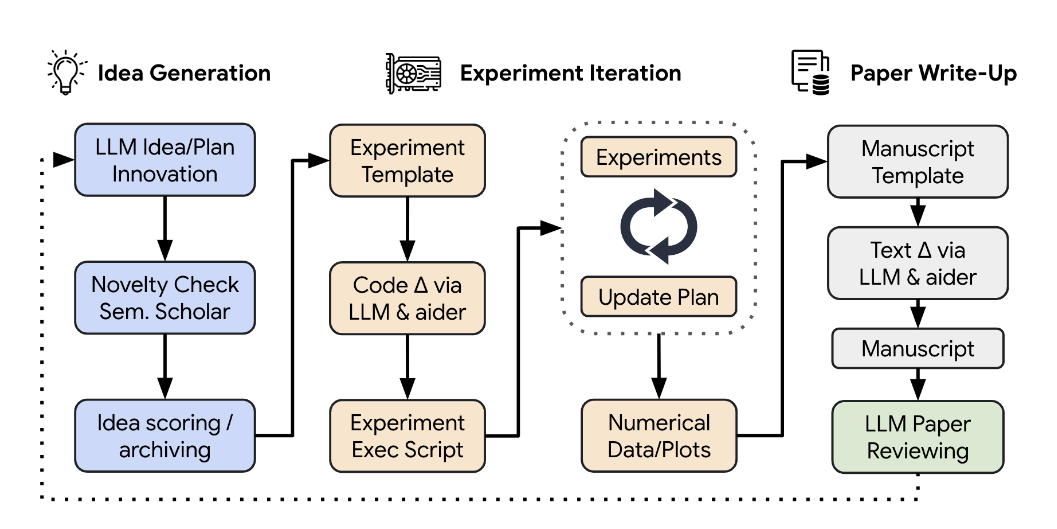
The paper outlines an AI-driven system for automated scientific discovery for machine learning that includes generating novel research ideas, writing code, executing experiments, summarizing results and presenting findings via text and visualizations.
Sakana AI also said The AI Scientist has an automated peer review process to evaluate papers, write feedback and improve results. The process can be repeated to develop ideas.
According to Sakana AI, The AI Scientist is also designed to be compute efficient with a full paper delivered at about $15 per paper. There are flaws in the first version of papers, but the initial demonstration highlights how LLMs can be applied to scientific discovery.
Here's an overview of how The AI Scientist works.
The AI Scientist has a bevy of limitations in that it needs an existing code base as a starting point, needs computer vision and can be prone to errors. Nonetheless, the initial paper on The AI Scientist highlights an interesting use case.
Constellation Research analyst Holger Mueller said:
"Science is an interesting use case, as it lends itself very well to AI. There's plenty of public data out there, and the profession follows a rigid standardized methodology to come to scientific insights. Similarly, the process of validating and challenging insights is highly structured. Of course, anybody trying to automate scientists will face a lot of scrutiny, and we'll have to prove that it can deliver value of a daily scientist. Research. Human supervision will of course be a critical aspect, but from its overall characteristics, science lends itself very well to be automated by artificial intelligence."
Editor in Chief of Constellation Insights
Constellation Research
Larry Dignan is Editor in Chief of Constellation Insights at Constellation Research, where he leads editorial coverage focused on enterprise technology, digital transformation, and emerging trends shaping the future of business. He oversees research-driven news, analysis, interviews, and event coverage designed to help technology buyers and vendors navigate complex markets with clarity and context. ...
Google's Made by Google event featured Pixel 9 devices with a heavy dose of its Gemini models as well as its tech stack that extends from cloud to edge.
Yes, Google's event was technically about devices, better cameras and other features, the main event really revolved around genAI and natural language experiences.
I'm pondering the implications of Google's Pixel event in terms of that genAI as UI theme. Will this experience melding happen on devices first and then extend to enterprise software? It remains to be seen, but as Airbnb recently noted: The phone UI hasn't changed a whole lot even with genAI.
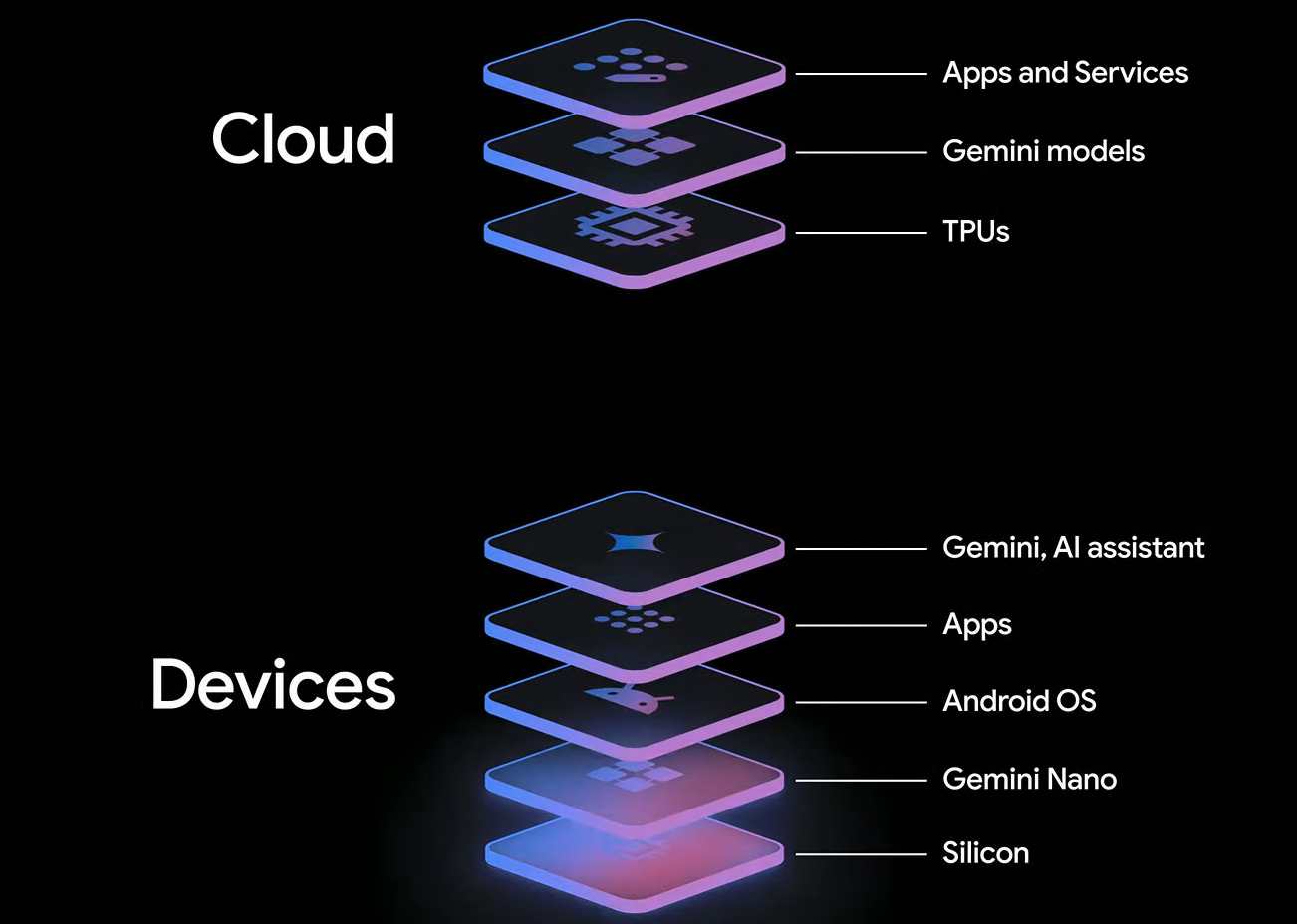
Rick Osterloh, Senior Vice President of Platforms and Devices, outlined the Google AI stack and vision.
"We're fully in the Gemini era, with AI infused into almost everything we're doing at Google across our full tech stack. Our integrated AI strategy means we're in control of where we're heading.
We're innovating with AI at every layer of the tech stack, from the infrastructure and the foundation models to the OS and devices and the apps and services you use every day. It's a complete end to end experience."
The other theme here with Google's Pixel event is the integration of Android and Gemini. The upshot here is that Google wants to charge you for advanced Gemini feature. The problem is users can wind up with AI sprawl. GenAI isn't a streaming service. Do you roll with Gemini or OpenAI?
Here are the moving parts from the Made by Google launch:
Gemini Live will roll out to Gemini Advanced subscribers. Gemini will give a natural language window into multiple applications including Keep, Tasks, Utilities and YouTube Music as well as Gmail and Calendar. Gemini will also pull in context as needed. The only catch here is that Gemini works with Google apps, but ultimately needs to extend into third party apps too.
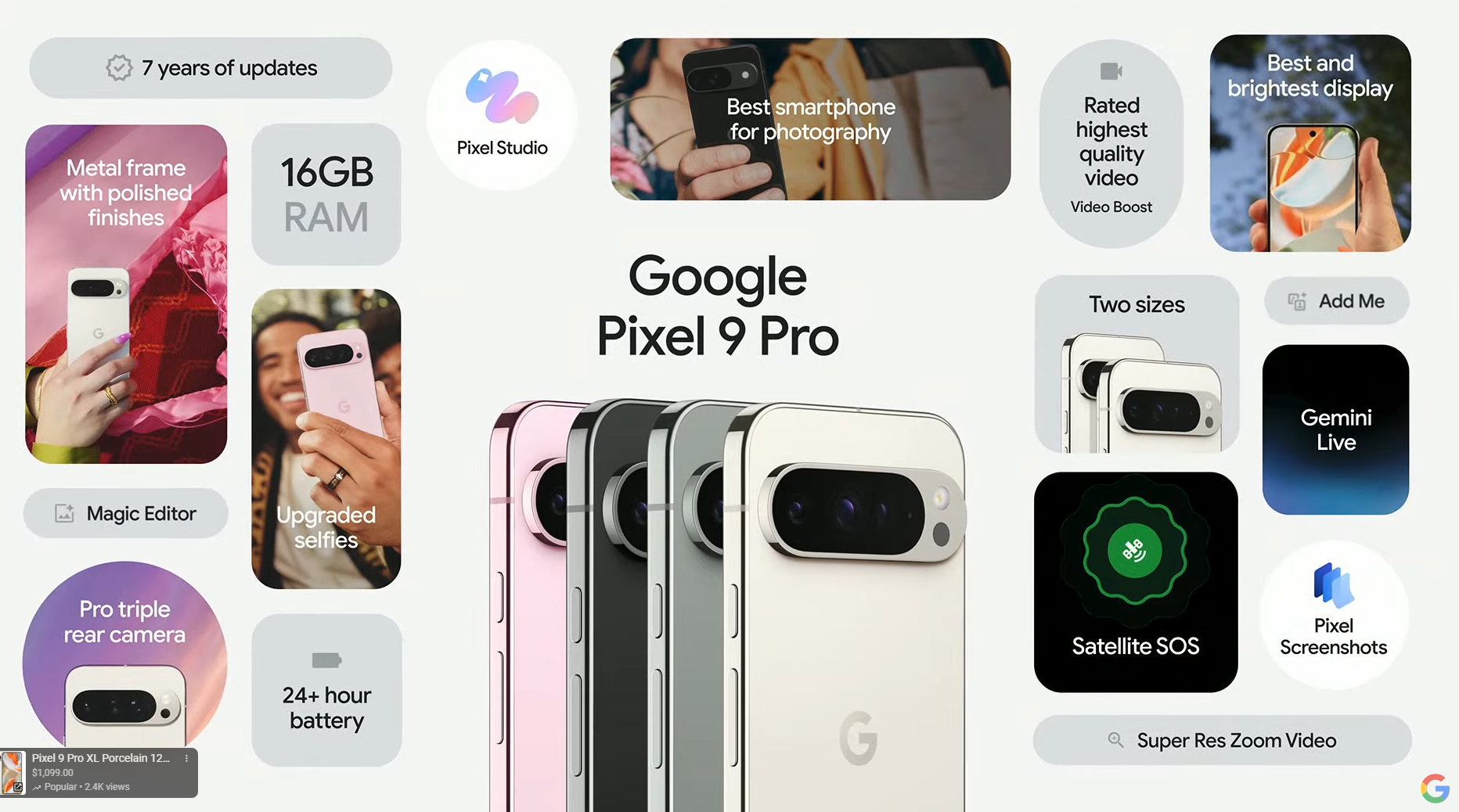
Pixel 9 devices will be powered by Google's Tensor G4 silicon that was designed with Google DeepMind. The Tensor G4 will run Gemini Nano with Multimodality so the phone can understand text, images and audio. Google also launched the Pixel 9 Pro Fold. Pixel 9 devices start at $799.
For now, Google is layering Gemini and genAI throughout its devices and features ranging from camera to Pixel Studio to Circle to Search.
Add it up and Google's Pixel event is notable as a comparison to Apple Intelligence. Neither has leveraged genAI to change the mobile UI paradigm, but consider the Pixel launch more like a first installment. The larger story over time will be Pixel as edge device and the leverage Google has with its tech stack.
Editor in Chief of Constellation Insights
Constellation Research
Larry Dignan is Editor in Chief of Constellation Insights at Constellation Research, where he leads editorial coverage focused on enterprise technology, digital transformation, and emerging trends shaping the future of business. He oversees research-driven news, analysis, interviews, and event coverage designed to help technology buyers and vendors navigate complex markets with clarity and context. ...
Generative AI projects largely depend on change management and culture to move from pilot to production, according to BT150 members. In addition, performance management is an area where AI could be a big help.
Those are some of the takeaways from Constellation Research's August BT150 meetup.
Generative AI, budgets and proof-of-concepts. With 2024 nearly 75% complete, the jury is still out on generative AI proof-of-concepts getting to production. Anecdotally, the lack of returns for many genAI projects is an issue since AI took funds from other critical enterprise projects.
One issue for genAI projects is that there are vanity proof-of-concept genAI projects. These projects were championed more for resume building than use cases. In addition, many companies have lacked the data strategy to execute well on AI.
BT150 members noted that in their experience culture for change and change management was a more important indicator of success than vendors, models and other technology.
A BT150 member said AI-driven management coaching softwarehas been helpful to employees and has boosted performance at a double digits clip. This bot works though scenarios and difficult conversations. The upshot is that one return from AI products may be behavior change and thinking through scenarios differently. CxOs could start thinking in terms of AI apps beyond just doing tasks faster.
Performance management software is a tough sell even if it has returns. "Performance management is highly relevant at this time; however, time are tough, the economy sucks and no want wants to pay for anything," said one BT150 member. "Everyone realizes there's a huge problem with performance management, but not one use case was allowed to go forward. Our use cases are either things that save money, increase margin or are customer facing."
Perhaps the biggest issue is that enterprises can't measure the ROI for effectiveness well. Instead, enterprises fall into the trap of efficiency where cuts are more important than effectiveness.
Editor in Chief of Constellation Insights
Constellation Research
Larry Dignan is Editor in Chief of Constellation Insights at Constellation Research, where he leads editorial coverage focused on enterprise technology, digital transformation, and emerging trends shaping the future of business. He oversees research-driven news, analysis, interviews, and event coverage designed to help technology buyers and vendors navigate complex markets with clarity and context. ...
Disruption is coming for enterprise #software. Enterprise software could become disrupted as new #AI and #data-driven entrants smell opportunity by either serving as an overlay to the acronym-laden soup of systems or replacing them. The disgruntlement with enterprise software has been brewing throughout 2024. Forced migrations, multi-cloud cross-selling, copilot upcharges and lack of value are forcing the issue.
Watch the full recap by Larry Dignan, Editor in Chief of Constellation Insights to learn more about why winter is coming for #enterprise software. 🔔 Subscribe to the Constellation Insights newsletter and never miss an enterprise #technology update: https://zc.vg/pdcuq
Editor in Chief of Constellation Insights
Constellation Research
Larry Dignan is Editor in Chief of Constellation Insights at Constellation Research, where he leads editorial coverage focused on enterprise technology, digital transformation, and emerging trends shaping the future of business. He oversees research-driven news, analysis, interviews, and event coverage designed to help technology buyers and vendors navigate complex markets with clarity and context. ...
Enterprise software could become disrupted as new AI and data driven entrants smell opportunity by either serving as an overlay to the acronym-laden soup of systems or replacing them.
The disgruntlement with enterprise software has been brewing throughout 2024. Forced migrations, multi-cloud cross-selling, copilot upcharges and lack of value are forcing the issue.
Migrations and upgrades are challenging and a hard sell due to the lack of value. The enterprise software ecosystem is using the same integrator heavy playbook even as they allegedly simplify with AI.
Enterprise software vendors are mostly data stores with a UI and could be relegated to systems of record. Vendors will move to keep your data on their respective platforms.
There's a need for platforms that can bring automation, AI and process intelligence to legacy investments.
Add it up and I can only conclude that the table is set for disruption. If this were Game of Thrones, you could say winter is coming for enterprise software.
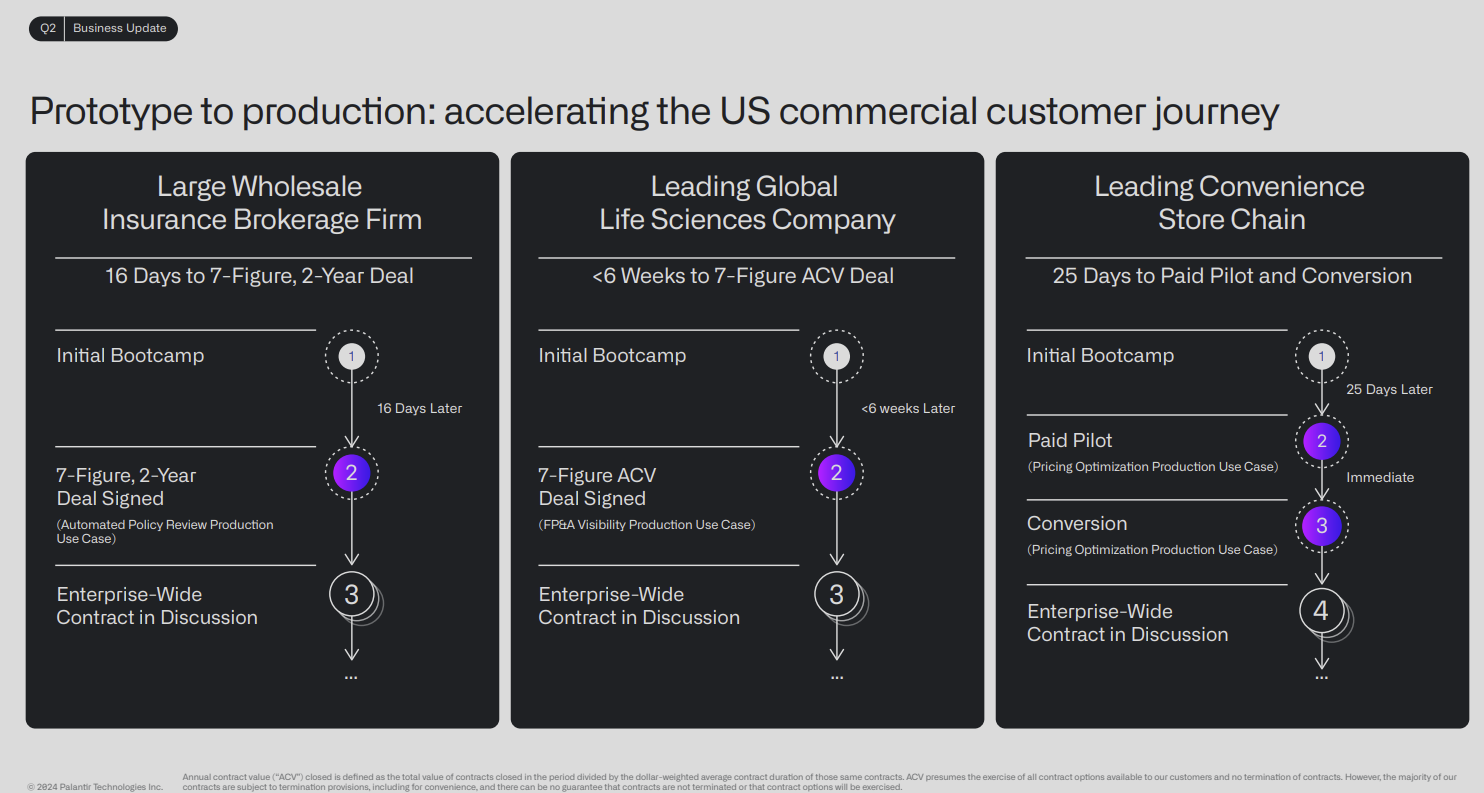
Palantir this week outlined Warp Speed, built on the company's Artificial Intelligence Platform (AIP), to target manufacturers. The Palantir argument is that traditional ERP systems were built for the CFO and don't support modern requirements.
Speaking on Palantir's second quarter earnings conference call, CTO Shyam Sankar said the US needs to reindustrialize, but is hampered by outdated enterprise systems. It's why SpaceX and Tesla have built their own ERP systems. The new reality also means companies like Rivian and Uber build more of their enterprise software than buy it.
"Warp Speed, built on AIP, on our industrial AI, and with ontology is the modern American manufacturing operating system that reimagines how to bend atoms better with bits," said Sankar. "Warp Speed is conceived as an operating system for the modern American manufacturer. It touches not just ERP, but MES (manufacturing execution system), PLM (product lifecycle management), PLCs (programmable logic controllers) and it's interacting with the factory floor. We think there's an opportunity to reimagine this."
Sankar said Warp Speed will appeal to next-gen manufacturers instead of large ones that have already bet on legacy systems. These next-generation enterprises are focused on leveraging data for competitive advantage. "It's not actually believable that the same ERP manufacturing system that you use to build rockets is what you'd use to build rackets," said Sankar.
Manufacturers need to be thinking about driving value instead of creating services revenue for systems integrators, said Sankar. "We live in a world today where it's $1 of license for $9 of implementation that never seems to quite work," he added.
Palantir appears to be focused on next-gen manufacturers so it's not quite taking SAP head on. However, SAP is hellbent on being more than a system of record and said Business AI is driving deals. The real battle in the future between companies like Palantir and SAP will revolve around data ontologies.
Speaking at C3 AI's annual Transform conference in March, CEO Thomas Siebel said AI can make enterprise systems more valuable, by riding on top of them. Siebel noted that the enterprise software stack needs to be reinvented, but it won't be by replacing systems. "No way no how is SAP going away. Sorry, the bad news is SAP isn't going away," said Siebel.
"Your accounting software and HR software isn't going away. It's not a replacement market for the entire enterprise application software stack. But generative AI certainly does change the entire enterprise application software stack."
Siebel said that if you fast forward to 2027 no CEO or CFO is going to survive without predictive insights from AI-driven systems. Siebel was more in the genAI as UI camp. He noted that the human-computer interface is going to be reshaped by genAI and replace the crappy user experience that hasn't changed in enterprise software for more than two decades.
My take
As with everything in life, your view of this issue will depend on timeline. It's clear to me that enterprise software is hitting a wall on multiple fronts and the tension between margin compression and margin preservation is palpable.
In the short term (3 years), it's highly likely enterprises are stuck with what they have. If you can't migrate off of VMware just remember how hard it is to migrate off your legacy systems. As a result, the plan for many enterprises is to box these systems out with an abstraction layer.
That abstraction layer--facilitated by generative AI as a front end--will give enterprises more control over the UI and leverage some of that internal data Palantir's Sankar was talking about. Some companies, especially the next-generation of enterprises that build over buy, will get to that genAI as UI moment quickly. Others will need to develop their data ground games and move more into generative AI.
One note about the abstraction layer with genAI as the new UI is that it may take a while.
Palantir and C3 AI are coming at the enterprise disruption from a big data and AI perspective. ServiceNow can also be an abstraction layer and has invested more in process intelligence.
"Our Gen AI strategy is focused on infusing intelligence into the flow of work, end-to-end across the enterprise, every department, every persona," said ServiceNow CEO Bill McDermott on the company's latest earnings call. "With our native integrations, we already help people orchestrate across different systems and data sources. Now we can train the machines to do the low value work so the people can up level to the knowledge work."
Beyond the next three years, Siebel's vision about enterprise software makes sense. Enterprise software has become stagnant and more about sales playbooks than value. What is missing from many potential disruptors is the process intelligence and automation that would go with the AI and data.
Here are a few developments to watch as this enterprise software disruption theme plays out:
Data lock-in. Every cloud vendor and enterprise software provider wants your data on their platform. Your data has been in play for years. Yes, SAP wants to keep you on its data ontology. Salesforce wants you in Data Cloud. And guess what? Palantir and C3 will want your data on their ontologies too. A neutral vendor in your stack is great, but also a pipe dream
How does this enterprise software disruption play out for data platforms? Enterprises are more likely to consider Databricks and Snowflake as their platforms to remain agile. Both have pushed open source and visions to ensure customers keep their data.
Vendors without your data may become critical. ServiceNow automates your workflows, but doesn't have your data. That reality may become more critical to enterprise technology strategy.
M&A. Look for a series of acquisitions revolving around orchestration, process automation and automation. Some vendors will have to buy their way into this abstraction layer concept.
Editor in Chief of Constellation Insights
Constellation Research
Larry Dignan is Editor in Chief of Constellation Insights at Constellation Research, where he leads editorial coverage focused on enterprise technology, digital transformation, and emerging trends shaping the future of business. He oversees research-driven news, analysis, interviews, and event coverage designed to help technology buyers and vendors navigate complex markets with clarity and context. ...
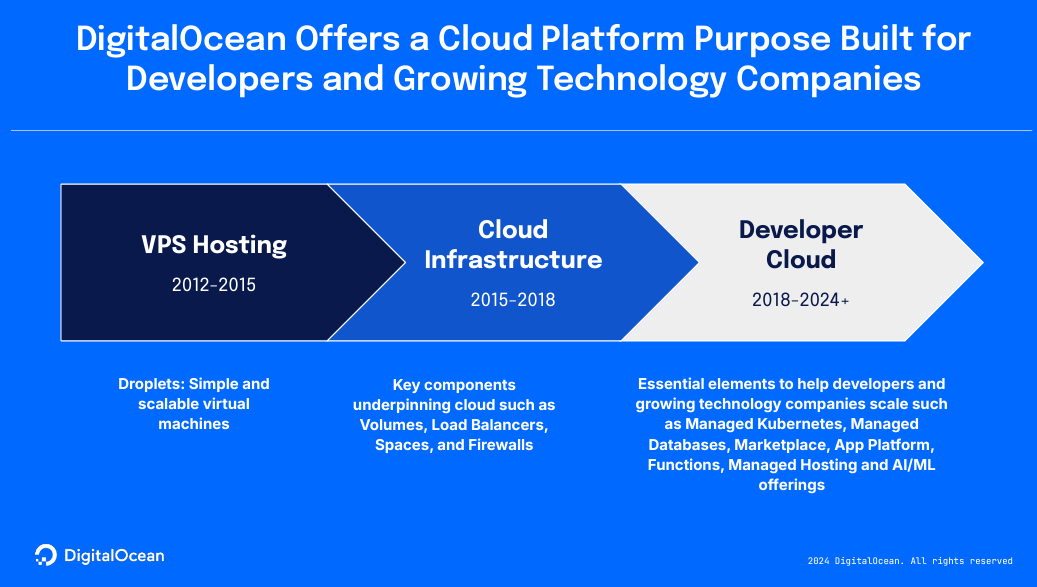
DigitalOcean Holdings' strong second quarter results highlight how a new breed of cloud compute providers are gaining traction due to AI workloads and access to Nvidia GPUs.
On a conference call with analysts, CEO Paddy Srinivasan said annual recurring revenue for AI and machine learning products are up more than 200% year over year with help from the Paperspace acquisition a year ago. DigitalOcean also saw revenue contributions from managed hosting as well as new customers.
In its second quarter, DigitalOcean reported net income of $19 million, or 20 cents a share, on revenue of $192 million, up 13% from a year ago. DigitalOcean as well as providers like CoreWeave are increasingly gaining cloud traction for AI workloads. In addition, bitcoin mining companies, notably Core Scientific, that have data centers with GPUs are also gunning for AI workloads to expand.
Constellation Research analyst Holger Mueller said DigitalOcean is on the right path. He said:
"Boutique cloud provider Digital Ocean had another good quarter, growing 13%, fueled by innovation, access to Nvidia GPUs, Xeon compute and more. More impressive is that Paddy Srinivasan and team have turned the ship towards profit, a nearly $70 million net swing from a loss to a profit of $33 million in the first half of the 2024. Digital Ocean now manages to turn $1 out of $20 of revenue into net income. Not a bad turnaround – and definitely what investors want to see."
DigitalOcean has launched "GPU droplets" that allow customers to slice Nvidia H100 instances by 1, 8 or more GPUs, use case and budget limitations. The company also launched global load balancers as well as managed OpenSearch. DigitalOcean said 2024 revenue will be about $770 million to $775 million. To scale, DigitalOcean has hired a Chief Product and Technology Officer, Chief Ecosystem and Growth Officer and Chief Revenue Officer in recent weeks.
Srinivasan said:
"We continue to see very strong demand for our AI platform. To support that growing demand and to take the first step of our long-term data center optimization strategy, I'm very excited to announce that we will be opening a new state-of-the-art data center in Atlanta in Q1 of 2025.
This not only expands our geographic footprint, providing us cost effective additional coverage across the U.S. for our core workloads, but also gives us near term incremental space and power to support our AI strategy and growth."
The plan going forward for DigitalOcean is to provide easy access genAI and AI infrastructure similar to the way cloud computing did. That vision will also require a focus on software too, said Srinivasan. "Our longer-term AI vision is more software-centric, with the mission of making it easy for our approximately 638,000 current customers and other companies that look like them to leverage AI in their application stack without needing super deep AI and machine learning expertise," he said.
DigitalOcean's big bet is that AI instances focused on business value can be a long-term winner as the customer base shifts from large foundational model players. AI model builders and consumers will all have different requirements that need GPU capacity at different levels.
"Our AI strategy, which includes the GPU infrastructure, is tailor made for customers that are looking to consume AI, not necessarily build foundational models. When I talked about the GPU droplets, that's an abstracted version of the core GPU as a service," said Srinivasan. "We feel our strategy is going more up stack and enabling applications that derive business value from AI rather than focusing on model builders that are building and training foundational models. So, there's going to be different needs for customers that are looking to derive business value and build applications and platforms on top of our infrastructure."
Srinivasan added that today's generative AI cloud infrastructure market is all about Nvidia-powered instances used by foundational model builders. The next layer is going to be important too.
"The true business value is going to be when this infrastructure is leveraged to build platforms like simple example would be operating systems based on x86 architecture. And then you have applications, which are the ones that truly deliver business value for everyone. This AI wave goes up stack from one layer to the other, we feel there's a tremendous amount of need to democratize the access to these GPUs and also provide other software frameworks," said Srinivasan.
Editor in Chief of Constellation Insights
Constellation Research
Larry Dignan is Editor in Chief of Constellation Insights at Constellation Research, where he leads editorial coverage focused on enterprise technology, digital transformation, and emerging trends shaping the future of business. He oversees research-driven news, analysis, interviews, and event coverage designed to help technology buyers and vendors navigate complex markets with clarity and context. ...
Both vendors offered to help Delta, but didn't get responses.
Delta's creaky infrastructure and IT practices shouldn't be put on vendors.
Delta has to explain why it couldn't recover when competitors restored operations faster.
What's next? More volleying between a customer and two vendors and a handful of lawsuits. The discovery process on Delta's technical architecture is going to be fascinating to watch and fodder for IT management case studies in the future.
Vice President & Principal Analyst
Constellation Research
About Liz Miller:
Liz Miller is Vice President and Principal Analyst at Constellation, focused on the org-wide team sport known as customer experience. While covering CX as an enterprise strategy, Miller spends time zeroing in on the functional demands of Marketing and Service and the evolving role of the Chief Marketing Officer, the rise of the Chief Experience Officer, the evolution of customer engagement, and the rising requirement for a new security posture that accounts for the threat to brand trust in this age of AI. With over 30 years of marketing experience, Miller offers strategic guidance on the leadership, business transformation, and technology requirements to deliver on today’s CX strategies. She has worked with global marketing organizations to transform everything from…...
For decades, the capacity to automate and operationalize outbound calls being made for sales, promotions or collections calls were a tightly isolated and specialized toolset. Contact center leaders were typically forced to manage the operations and orchestration of inbound calls separately from outbound calls, with the data and intelligence in those calls being trapped within individual communications solutions. Mix those channel streams and chaos ensued. In highly regulated and sensitive markets like finance and healthcare, this is doubly true.
Enter the age of customer experience strategy that realizes carefully orchestrated, data-driven communications like proactive calls, texts or emails would be welcome by customers and could help turn a potentially negative experiences into exceeding positive ones. From campaigns designed to help customers stay on track for payments, to setting appointments or even managing renewals, these interactions could not only impact the bottom line favorably, but in the long run, would have a massive impact on customer lifetime value and loyalty.
This is the strategy of proactive engagement…and this is the underlying opportunity for Five9 customers thanks to the intended acquisition of Revenue Execution Platform, Acqueon.
What We Know About the Deal: The announcement was short on financial details, but what we do know (aside from the deal expecting to close in 2024) is that Acqueon and the revenue potential and customer base it brings to Five9 is hardly an unknown quantity. The two organizations know each other well, establishing a successful technology partnership since 2022 when Acqueon called itself a conversational intelligence platform.
In a briefing just prior to the formal acquisition announcement, executives from both Five9 and Acqueon told Constellation Research that beyond the technology integrations, most notably around the EPIC Electronic Health Record (EHR) Connector, the two organizations have been effectively selling together and have seen significant common ground from both a vision and culture perspective. Both are also eagerly eyeing a larger role in the larger customer experience stack that would have both move beyond their current positions in the contact center.
What Makes Acqueon so Interesting: From appointment setting sent in a preferred channel to payment reminders for mortgages to utilities sent to customers most likely to pay late, Acqueon has taken a very familiar approach for marketers and applied it to revenue execution: establishing personalized engagements with the right customer, at the right time and in the right channel. Where Acqueon has built a shining reputation is in orchestrating customer communications that are purpose-built for revenue realization be it through sales or collections. Currently servicing over 200 customers, Acqueon boasts an impressive logo list of large banks, financial institutions, healthcare, government agencies, utilities and mortgage and lending institutions, working exclusively with B2C brands, many in regulated markets. This plays exceedingly well with Five9’s own industry focus and continued investment into moving upmarket in larger enterprise accounts. It also could prove to be an interesting companion and natural partner of the data and analytics solution for the contact center, Aceyus, that Five9 acquired in 2023.
What it Means for the Market: This acquisition brings Five9 into that cadre of contact center and communications players that know and understand that a customer’s experiences refuse to remain in a single channel, let alone single silo. Others in the market have moved in a similar direction with NICE closing their acquisition of LiveVox in late 2023. On the customer interaction data front, players like 8x8 have introduced their Customer Interaction Data Platform (CIDP) as the core data repository from which a company can make more intelligent customer and agent experiences.
What it Means for Existing Customers: According to Five9, Acqueon’s customers should expect the same exceptional levels of service and innovation they receive today. Five9 has noted they expect to operate the company as a business unit of Five9, similar to Aceyus. Acqueon had spent a good part of 2023 forging deeper partnerships with contact center players like Genesys, NICE and Twilio. Built atop AWS, it is also no surprise that there is also a partnership with Amazon Connect. For the immediate future, and similar to the operational structure and practices of Aceyus, Acqueon customers should not expect any major disruptions while Five9 customers will be eager to see more native integrations and a carry-over of the AI innovations (especially around automations) that Acqueon has built into their solution.
My Parting Thoughts: This is a nice round-out to Five9’s capabilities, delivering a truly comprehensive modern contact center experience that sheds the baggage of the industry’s history and developmental path. Through acquisition and platform innovation, Five9 is delivering on a far more “total experience” as opposed to cementing old operational lines drawn decades ago. The pain and complexity of revenue clawbacks and collections should not be minimized. While the ethical and regulatory guidelines for all phone-based communications are well discussed and debated, there are far more stringent and costly regulations set forward to specifically protect consumers from predators that have used voice and digital channels to terrorize, torment and turn awkward and sensitive moments into some of the worst experiences of a customer’s life. Bringing these key experiential actions into a single pane of glass to align the best of intentions with the best of our innovations is not something to overlook. This acquisition adds depth to the Five9 offering and brings revenue opportunity into view for the contact center…and who doesn’t like revenue?
Editor in Chief of Constellation Insights
Constellation Research
Larry Dignan is Editor in Chief of Constellation Insights at Constellation Research, where he leads editorial coverage focused on enterprise technology, digital transformation, and emerging trends shaping the future of business. He oversees research-driven news, analysis, interviews, and event coverage designed to help technology buyers and vendors navigate complex markets with clarity and context. ...
Five9 said it will acquire Acqueon, a revenue execution company, to round out its Intelligent CX Platform.
The company is aiming to be "the orchestration engine for every interaction across the entire customer journey, including marketing, e-commerce, sales and customer service."
Five9 CEO Mike Burkland said the plan is to leverage Acqueon to combine customer preferences with omnichannel outreach. The data from Acqueon will also bolster Five9's Genius AI Suite. Five9 also fleshed out its Genius AI Suite with Five9 AI Knowledge.
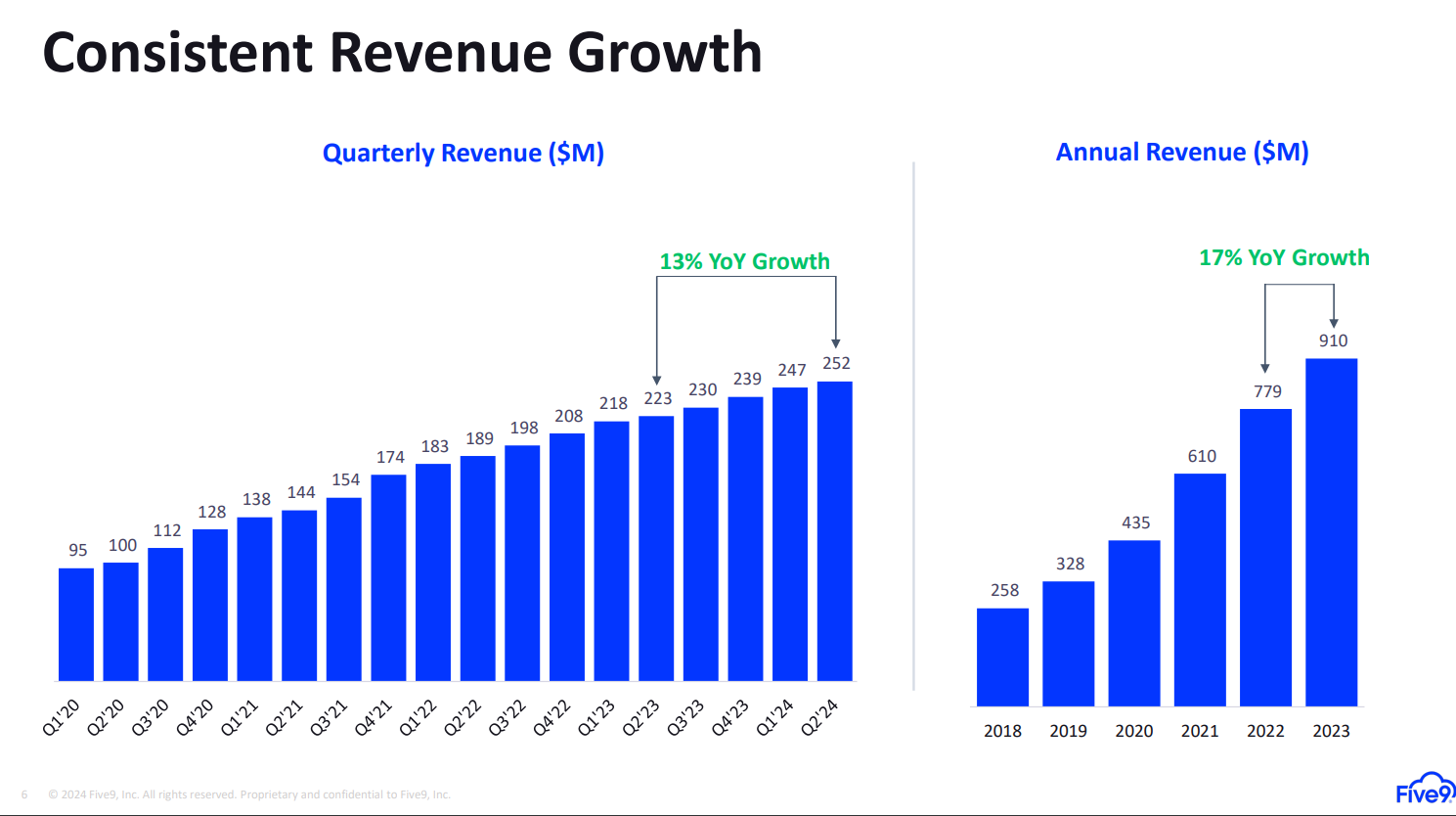
Separately, Five9 reported a second quarter net loss of $12.8 billion, or 17 cents a share, on revenue of $252.1 million, up 13% from a year ago. Non-GAAP second quarter earnings were 52 cents a share, 8 cents a share better than Wall Street estimates.
As for the outlook, Five9 projected third quarter revenue between $254.5 million and $255.5 million with non-GAAP earnings of 57 cents a share to 59 cents a share. For 2024, Five9 is projecting revenue of $1.013 billion and $1.017 billion with non-GAAP earnings of $2.25 a share to $2.29 a share.
For the third quarter, Wall Street was looking for revenue of $267.2 million. For 2024, Wall Street was looking for revenue of $1.06 billion. "As we look to the remainder of the year, we are reducing our annual revenue guidance by 3.8%, reflecting recent bookings trends and the uncertain economic conditions," said Burkland.
Editor in Chief of Constellation Insights
Constellation Research
Larry Dignan is Editor in Chief of Constellation Insights at Constellation Research, where he leads editorial coverage focused on enterprise technology, digital transformation, and emerging trends shaping the future of business. He oversees research-driven news, analysis, interviews, and event coverage designed to help technology buyers and vendors navigate complex markets with clarity and context. ...
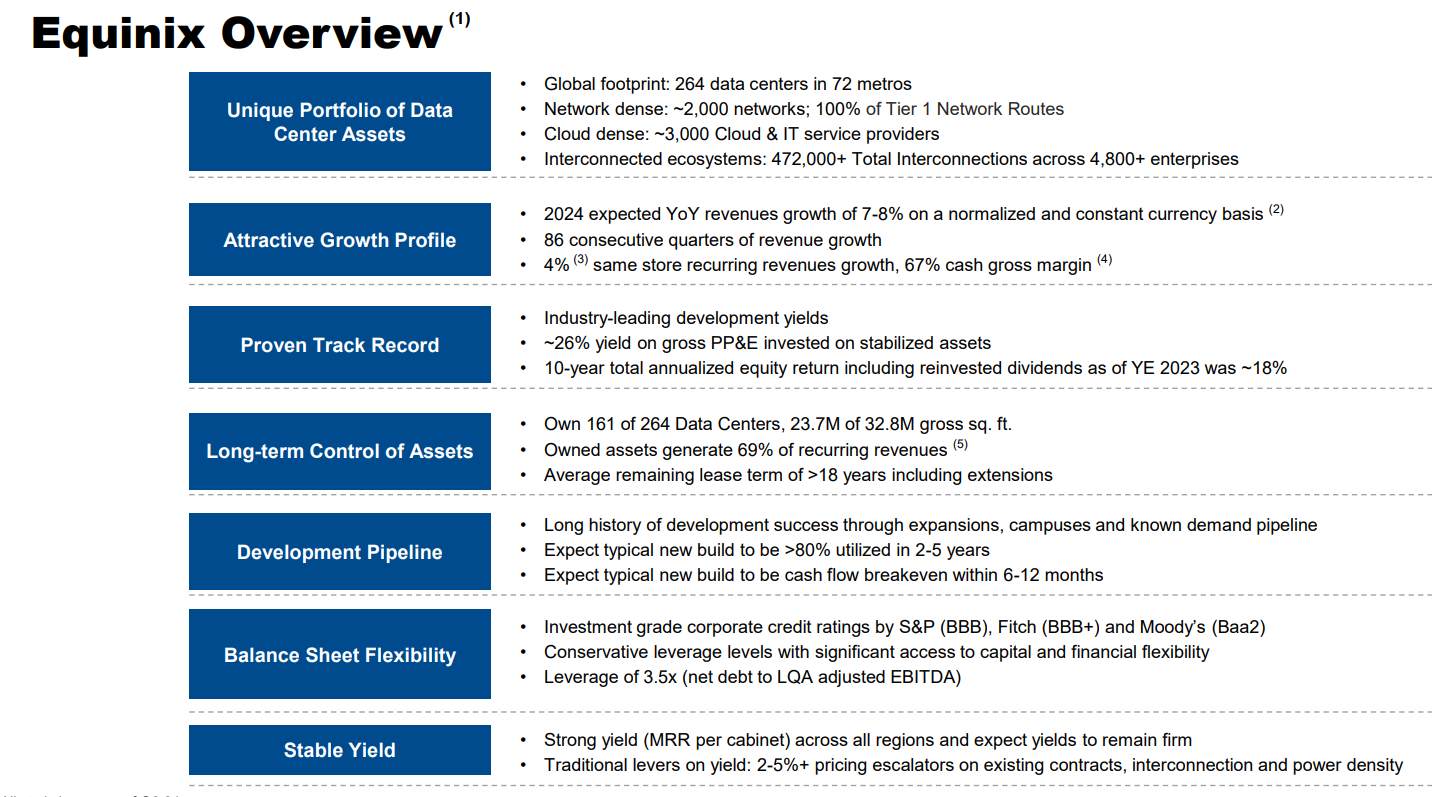
Enterprises are beginning to leverage data centers for generative AI workloads, but it's more of a progression in conjunction with hybrid cloud deployments.
That's one of the high-level takeaways from recent earnings from Equinix and Digital Realty, which have a broad footprint of co-location facilities used by cloud service providers as well as enterprises.
Constellation Research analyst Holger Mueller said:
"AI is moving workloads to the cloud and Equinix and Digital Realty benefit from that demand. We are a critical juncture though, as the next generation of AI requires liquid cooling and there is substantial CAPEX needed. When looking at the cloud growth rates of the top 3 - and their dozen or so liquid cooled data centers - they are doing better than the co-location vendors. We will see in the next quarter where the workloads go. It is clear that the next-gen of AI computing architecture will also follow the rules of data gravity - so critical amounts of data will determine where the AI workloads - and with that revenue will flow."
Speaking on Equinix's second quarter earnings call, CEO Adaire Fox-Martin outlined how AI workloads--training and inference--will work out for the company.
"When I think about our demand and the customer needs, it is actually much broader than the AI portfolio. Many of our customers have made a very significant commitment to hybrid and to multi-cloud. And as customers become more at ease with cloud as a technology paradigm, we can see many more workload-based decisions beginning to occur," said Fox-Martin.
He added that short-term demand is coming from cloud service providers using Equinix's xScale platform. These are mostly model training workloads today, but inference will be a big market too, said Fox-Martin.
"Many CIOs, like in the early days of cloud, are looking to ensure they have an AI strategy. We are beginning to see enterprise training and a funnel as we look at customers evolving from proof-of-concept into working production systems," said Fox-Martin.
Equinix is seeing strong backlog for AI workloads as well as strength in the enterprise mid-market retail business. "We absolutely have AI-ready data centers ready to take workloads," said Fox-Martin. "We are working with many of our CIOs to support their AI strategy."
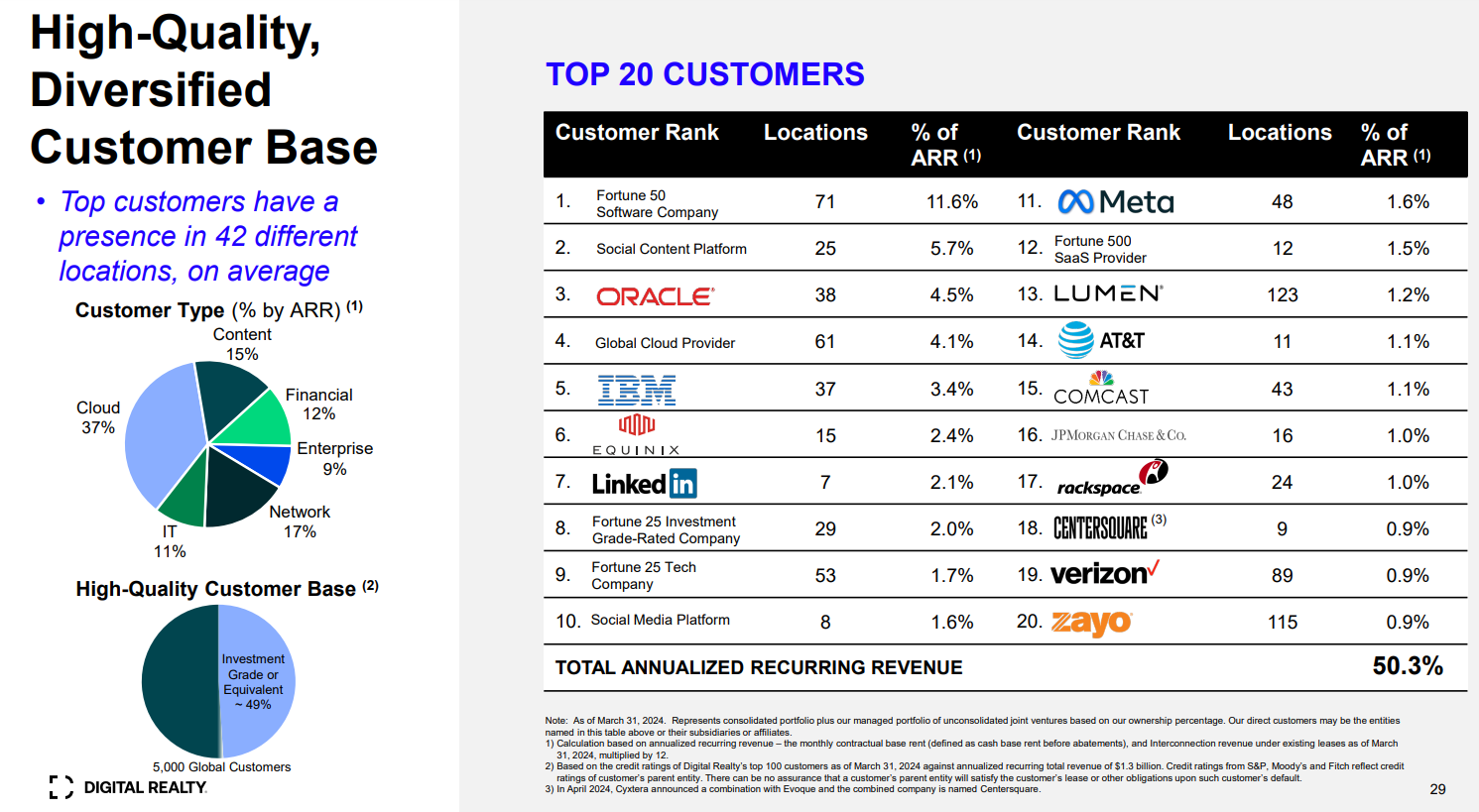
Digital Realty Trust last month on its second quarter earnings call outlined a top customer list that was heavy on cloud service providers and social media companies. JPMorgan Chase was one of the few named enterprises on the list.
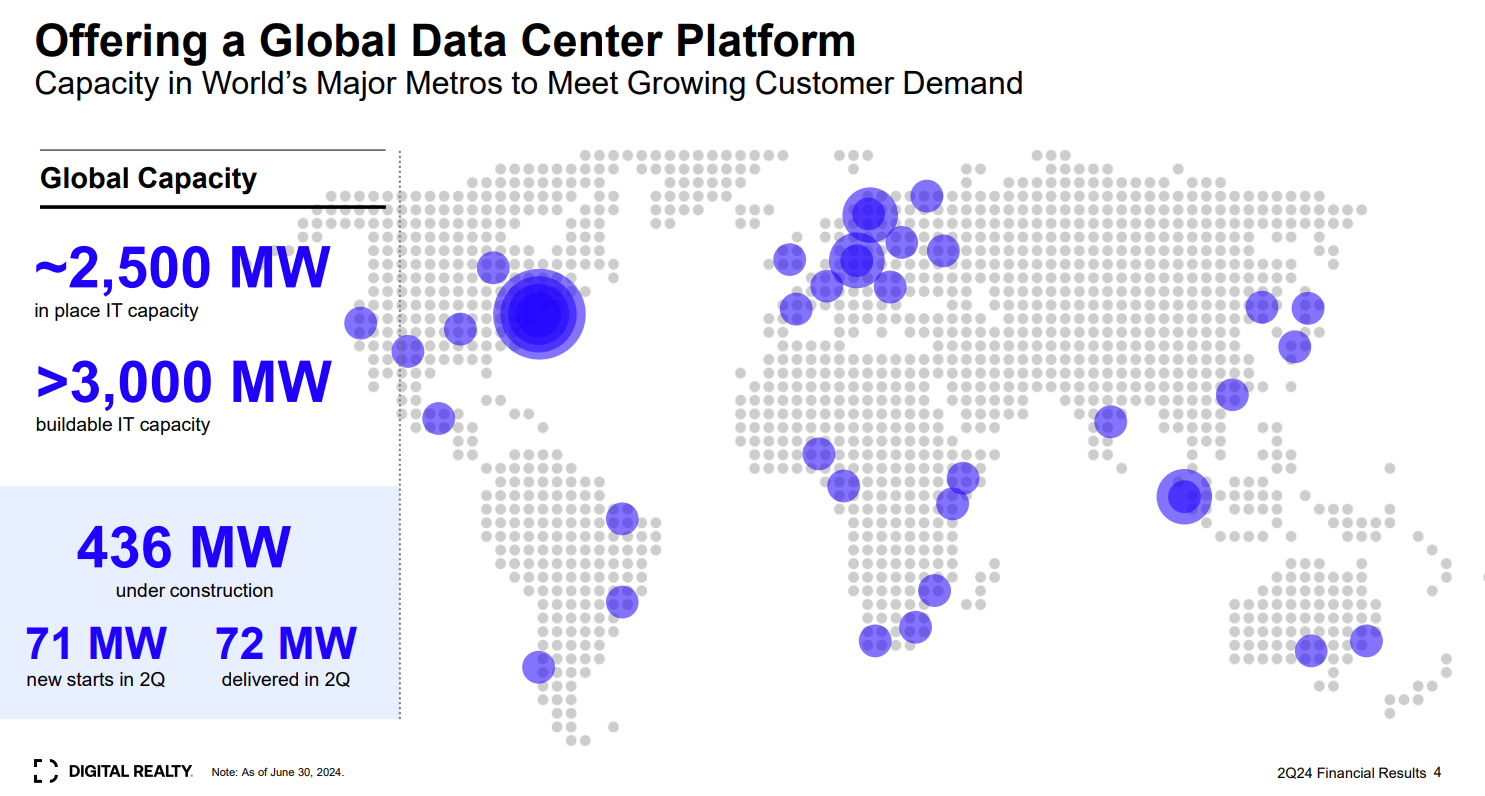
Andrew Power, CEO of Digital Realty Trust, said "demand for data center capacity remains as strong as we've ever seen" and noted that the company has "a robust land bank and shell capacity that could support 3 gigawatts plus of incremental development."
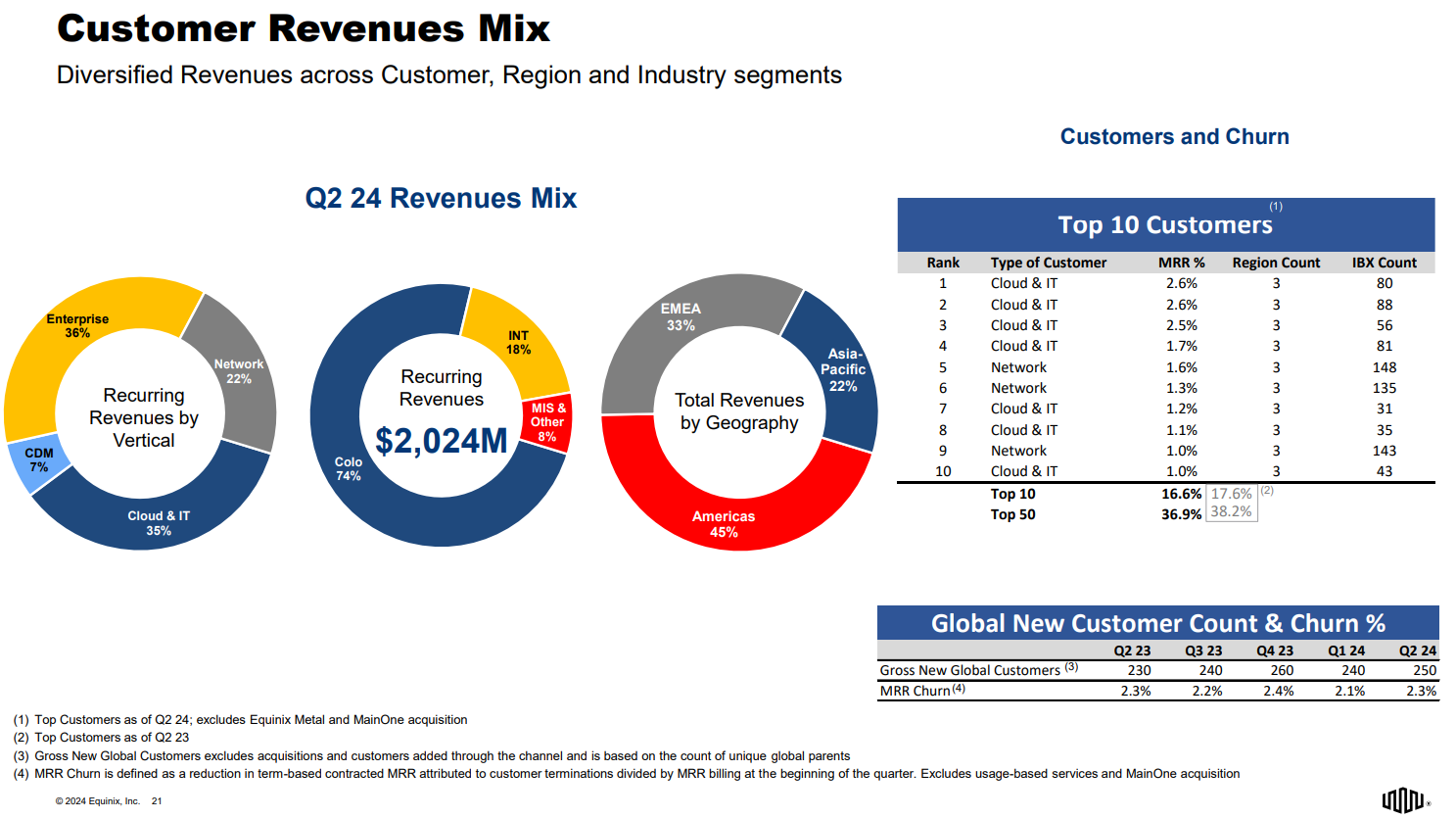
It's not hard to figure out who is gobbling up Digital Realty Trust data centers based on its top 10 customers.
Power said the company is seeing strong demand from digital transformation, cloud and AI workloads. Power said:
"Traditional data centers were already being pushed to their limits on demand for cloud and digital transformation. Whereas demand for AI-oriented data center infrastructure is being accommodated in upgraded suites in our existing facilities and in newly built facilities. These AI workloads are taking place on specialized hardware with massive parallel processing capabilities and lighting fast data transfer speeds.
Fortunately, Digital Realty's modular data center design can accommodate these evolving requirements."
The biggest wild cards for this data center boom are power, construction, easements and a concentration of facilities in one area like Northern Virginia, said Power, who added sustainability concerns are critical too.