Results

Time for Parents to Step Up as Digital Role Models

Time for Parents to Step Up as Digital Role Models

1

Working in digital and social media means you are often drawn into quite personal conversations with people. And by “conversations” I don’t just mean “discussions” or “chats” – but one way broadcasts where your only interaction may be to virtually “nod” (via a “Like”), acknowledge or amplify a situation (via sharing or a retweet). For while social media allows us to “engage” or interact with others, the vast majority don’t. Most of us are “lurkers”.

Lurkers are the 90% of people who use social media to observe. Watch. Listen in. It’s only 1% who create this content. We call this the 90-9-1 rule – or the “1 percenters”.

Participation-Funnel

You may only be “Friends on Facebook”, but this can expose you to a vast insight into a person’s life. For example, lurking you will learn about:

  • Private details – birthdays, relationships status, holidays, workplace, friends and networks
  • Lifestyle – favourite restaurants, foods, cafes, sports, hobbies, games
  • Travel – holiday destinations, desires, interests.

Social media reveals the pattern of your life

Now it all sounds innocuous enough, but think about all these pieces of information put together. What does it reveal? It reveals the pattern of your life. Every item that you post, share, click, promote and comment on can be found in your own feed. Perusing a Facebook profile page essentially provides a glimpse into your private world. For while you may feel that you are just sharing an inspirational quote with your loved ones, it generally means that you are sharing that quote with the friends of your friends. And in isolation you can easily ask – does this tell the “story of me” – and do I feel comfortable with strangers thinking that?

In fact, researcher Sam Gosling and author of Snoop – what your stuff says about you, uses his psychological framework, observation and analysis to explain how our small objects and personal spaces reveal a great deal about ourselves. While his research methodology centres on the analysis of personal bathrooms – his OCEAN framework has also been deployed as a Facebook technology to generate insights from Facebook profiles.

So when you see that 50 people have Liked one of your posts, the 1 Percenters rule suggests that more than 10x that number have “seen” it. And while this doesn’t mean that your update or profile has gone “viral”, it is far from private.

Think of the children

As an adult, this is not that frightening, right? But think of the role modelling that is taking place here. Especially for those who are parents – or who have high levels of interaction with children.

Telstra’s Cyber Safety – Balancing Screen Time Survey asked 1348 Australian parents of children aged 3-17 about their own use of devices. They also surveyed these parents on their children’s use of technology. The research revealed:

  • 65% of parents don’t think they’re good role models when it comes to device usage
  • 77% of parents considered putting controls on the device but 33% didn’t know what is available or HOW to implement it

It is that second bullet point that concerns me the most. Telstra provides Cyber Safety information available via their website, including links to:

  • eSmart – a cyber safety behaviour-change initiative of the Alannah and Madeline Foundation, aimed at schools and libraries
  • Smart Controls for customer mobile accounts that can create restrictions on devices
  • Online Security – tools for broadband customers designed to keep your family safe

In the survey, when children were asked about perceptions of their parents’ device usage, 12 per cent said the amount of time their parent spends on their device impacts how well they look after their family, and a further nine per cent say the amount of time their parents spend on their device takes away from their family time.

Telstra’s Cyber Safety Manager, Shelly Gorr, said:

The results are a reminder to parents that they’re a key influencer on their children’s online behaviour.

Moving beyond screen time

There are plenty of additional insights coming from the survey – especially around the often vexed subject of screen time. How much is too much? How do you manage it? Why should you? Most of this is subjective – and dependent upon your own style of parenting. And while there is a real risk related to screen time – there is also much hype, conflicted and skewed research supporting both more and less screen time for kids. But surely this is not  a question of technology – but a question of “what kind of family” and “what kind of adults” are you preparing for the world.

If it is time for parents to step up as digital role models, there’s also a need for support for those parents. We are currently putting together a simple online course for parents interested in protecting their family online – and managing the effects of screen time. If you are interested in this, sign up below and we’ll let you know when it is available.


Marketing Transformation Sales Marketing Marketing B2B B2C CX Customer Experience EX Employee Experience AI ML Generative AI Analytics Automation Cloud Digital Transformation Disruptive Technology Growth eCommerce Enterprise Software Next Gen Apps Social Customer Service Content Management Collaboration Chief Marketing Officer

81% of all Marketers Say They Need to Overhaul Their Marketing Organizations

81% of all Marketers Say They Need to Overhaul Their Marketing Organizations

Marketo commissioned the Economist Intelligence Unit to do a survey where they asked nearly 500 CMOs and marketing leaders from around the world on where they think marketing stands today and where marketing’s headed in 2020. It’s the first of of an annual survey. Here’s some of the insights they found:

  • 81% of all marketers say they need to overhaul their marketing organizations if they hope to drive revenue and been seen as a strategic organization within their companies
  • While nearly 60% of all marketers think they are doing a bad job of using data and technology to engage their customers, they are stepping up to make a major investment to fix this shortcoming as
    • 77% of them say two big areas of investment skills-wise will be in data analysis and marketing ops
    • Top 4 areas of financial investment will be in social marketing software, mobile marketing, engagement software and data analytics and email marketing systems
    • These levels of investment aren’t a waste of time. For those marketers who have already taken the plunge with marketing tech and are using data to engage customers, almost 70% of them are setting company strategy.
  • Impact of technology in marketing can’t be understated – IoT and beacons are some of the biggest trends that will shape marketing.

So what does this all mean? Marketers need technology but most are not using it optimally. This not a surprise. The report I wrote a year ago showed that most marketers were only at steps 1 or 2 in optimizing what they have.

So not only do Marketers need to optimize what they have but they also have to figure out the gaps in what they have and what else to add. Without a framework to benchmark where they are, especially compared to their competitors, knowing the answers to that could prove difficult. Here’s some questions that can help marketers understand where they are at:

what questions marketers need to ask

While marketers do need technology, it can only help the business if it is optimized. It will be interesting to see how 2015 pans out and the results of the survey next year. Marketers may need to create a new type of relationship between IT and Marketing to reach this optimized state.

@drnatalie


Marketing Transformation Chief Marketing Officer

The State of Retail in 2015 – trends and technologies affecting retail

The State of Retail in 2015 – trends and technologies affecting retail

Constellation recently published our “State of Enterprise Technology” series of research reports. These reports assess the state of enterprise technologies Constellation identified as essential to digital transformation. These reports also describe the future usage and evolution of these technologies. Constellation will continue to publish reports in our State of Enterprise Technology series throughout Q1.

My contributions to “State of Enterprise Technology” series focus on Matrix Commerce (retail and commerce technologies). In my report, The State of Retail in 2015 and Beyond  I identified seven trends impacting retail. This report is designed to help you set benchmarks and prepare for your retail future.

Here’s an excerpt from the report:

The Customer–Retailer Relationship Becomes More Cooperative

From conversations with clients, prospective buyers, systems integrators, partners, and vendors, Constellation sees a number of retail themes. These trends all revolve around the continuing amplification of the consumer voice in the retail supply chain. As consumers gain more influence within the retail supply chain, retailers will continue to focus on areas that allow for greater cooperation among all entities. Savvy retailers realize they can no longer expect to dominate the relationship but instead should allow for an atmosphere of cooperation.

State of retail graphic[1]

About Matrix Commerce

Matrix Commerce Addresses the Buyer in Digital Transformation

The theme of Matrix CommerceTM analyzes the disruptive pressures influencing the commerce paradigm. Commerce faces rapidly changing business models and new payment options that are often misunderstood and poorly integrated.

Matrix Commerce means the fusing of demand signals and supply chains in an increasingly complex world of buyers seeking frictionless buying experiences. Friction in this new world originates from new regulatory requirements such as sustainability, taxation, and privacy.

As the world revolves around the buyer, channels, demand signals, supply chains, payment options, enablers, and Big Data will converge to create what Constellation coined in 2011 as Matrix Commerce. Matrix Commerce spans across disciplines as people, process, and technologies continue to transform today’s commerce models.

Download the report snapshot and table of contents of The State of Retail in 2015 and Beyond

Download Report Snapshot


Matrix Commerce Next-Generation Customer Experience Sales Marketing Revenue & Growth Effectiveness Innovation & Product-led Growth Tech Optimization Data to Decisions Future of Work New C-Suite B2B B2C CX Customer Experience EX Employee Experience business Marketing eCommerce Supply Chain Growth Cloud Digital Transformation Disruptive Technology Enterprise IT Enterprise Acceleration Enterprise Software Next Gen Apps IoT Blockchain CRM ERP Leadership finance Social Customer Service Content Management Collaboration M&A Enterprise Service AI Analytics Automation Machine Learning Generative AI Chief Information Officer Chief Procurement Officer Chief Supply Chain Officer Chief Customer Officer Chief Data Officer Chief Digital Officer Chief Executive Officer Chief Financial Officer Chief Growth Officer Chief Marketing Officer Chief Product Officer Chief Revenue Officer Chief Technology Officer

Last Chance to Watch Connected Enterprise Recordings

Last Chance to Watch Connected Enterprise Recordings

Just a warning... this is your last chance to watch Constellation's Connected Enterprise session recordings! On February 2, the majority of the recordings will be restricted to Research Unlimited and Constellation Executive Network members.

Don't miss out on these informative sessions with industry leaders. 

digital government

Here are a few of my favorites: 

Full list of Connected Enterprise 2014 Recordings

Connected Enterprise Innovation Summit

Want full access to these recordings? Ask us about Research Unlimited and Constellation Executive Network.

RSVP for Connected Enterprise 2015


Data to Decisions Digital Safety, Privacy & Cybersecurity Future of Work Marketing Transformation Matrix Commerce New C-Suite Next-Generation Customer Experience Tech Optimization Innovation & Product-led Growth Connected Enterprise Chief Customer Officer Chief Digital Officer Chief Executive Officer Chief Financial Officer Chief Information Officer Chief Marketing Officer Chief People Officer Chief Procurement Officer Chief Supply Chain Officer Chief Experience Officer

5 Possibilities for 2015: Our Futures of Work

5 Possibilities for 2015: Our Futures of Work

1

I’ve kicked off 2015 thinking of the “futures of work.” Notice that I did not say the future, but rather the “futures.” No one clear future is on the horizon -- artificial intelligence in the workplace? further integration of global workforces? new technologies? -- but I am certain 2015 will be a year of discovery in each such area and more. I feel these five resolutions will help position you for the nimbleness and lighter touch that has become the hallmark of today’s manager. I welcome your suggestions for further resolutions in the comments field!

  1. Use light-weight experiments rather than all-or-nothing approaches to change in your organization. Taking small steps in organizational change is more important than ever these days given the pace of the world around us. In 2015, go to the next level by finding fast, cheap ways to test the leap-of-faith assumptions underlying the adjustments you want to make. Use a crowdfunding campaign to test the market for a new product, for instance, or have half your teams try one form of flexible work scheduling and the other half another -- learn from both. Steer clear of surveys, you don’t want to base your change on someone giving you an answer they think you want to hear. Instead, measure behaviors like prepayments, performance, or repeat business.

  1. Take advantage of the on-demand global workforce for addressing your temporary, cyclical, or even long-term needs. In March, two of the most visible online freelance job markets merged to become Elance-oDesk. They offer managers everything from on-demand software development to virtual receptionists and business card design. The combined company has grown to 9.3M freelancers worldwide -- a big move from the Kelly Girls of the 1940s.

  1. Combine the growing trend of “wearable computers,” with personal responsibility for productivity (and perhaps light-weight experiments) to create a more healthy, productive workplace. Smart watches, fitness trackers, and the like can serve as more than just gizmos for your employees in their personal time. The US Centers for Disease Control notes that workplace health programs can increase productivity . Consider a contest in which your employees conduct experiments showing the effects of walking meetings, or short walking breaks on performance. The most effective experiment can become a permanent fixture of the workplace. I hope to do this myself: I’d like to connect my fitness tracker data to number of quality articles written and my students’ engagement in class. If I walk more before class, do they learn more from our sessions together?

  1. Move away from once a year or once a quarter performance reviews and instead focus on feedback tied to projects and “check-in” style peer review. With the infusion of millennials into the workplace, demand has grown for managers to shorten the distance between goal-setting, feedback, and coaching. Similar to a Facebook post, managers who use Salesforce.com’s Work.com tool can post feedback when it’s most useful -- right after (or even during) a project.

  1. Consider making IBM’s Watson (the artificial intelligence that won Jeopardy!) your next employee. If your business is health care, finance, retail, or the public sector, subscribing to this AI technology could be a great addition to your team. Watson can play a role in customer interactions, the management of big data, or accelerating research. My colleague Christine Isakson and I are just starting to look into the issues of whether we should think of artificial intelligence as a full-on member of the team, a consultant, or a tool. No doubt Watson will be covering more industries soon and I hope he will soon help us with our research. Another technology that I predict you’ll be finding ways to integrate in the near future: drones. Unmanned vehicles (drones) in the air, on the land, or in the water have the potential to conduct mission-critical tasks including photography, surveying, environmental research, package delivery, security, and cell tower and road inspections. Perhaps a drone crew will loom large in your 2015 future!

Click here to provide your comments. I would love to hear about your own futures of work.

Many thanks to Deborah Lohse. She asked me if I had ideas for managers looking forward in the new year and kept me on the straight and narrow through the development, including helping see the connection to drones!

"Futures of work" image care of CoolText.com

Future of Work Chief Executive Officer

Medallia Releases Next-Generation Module to Help Companies Systematically Eliminate Recurring Customer Issues

Medallia Releases Next-Generation Module to Help Companies Systematically Eliminate Recurring Customer Issues

Medallia® Customer Experience Management (CEM) provider announced the release of Medallia Resolve, an advanced customer experience capability that helps companies quickly find the root causes of recurring customer pain points so they can be addressed at the source of the problem. One of the biggest issues is that companies don’t keep track of what reoccurring issues their customers have and use that feedback to correct things in their company. As a result, the same problems happen over and over and over again, waisting thousands and sometimes millions of dollars. Closing the ‘inner loop’ with customers has become standard practice for some companies resolve individual customer issues. And even more difficult is the challenge is to increase the strategic impact of customer feedback by closing the ‘outer loop,’ or aggregating feedback to uncover business improvement opportunities that provide tangible value for large groups of customers.

To assist companies in figuring out what those reoccuring issues are, Medallia Resolve’s new features include:

  • Best-practice-tailored case management tools that help companies engage in a productive dialogue with customers when things go wrong: by alerting the employee who is closest to the problem to close the loop with the customer, helping them better understand the issue, and letting them record findings for systemic learning and analysis.
  • Enhanced internal collaboration tools: which aggregate historical data from all touchpoints to give employees the context they need to solve customer problems — and allow them to pull in teammates for help.
  • An upgraded reporting dashboard: which opens the ‘outer loop’ by identifying root causes of recurring customer pain points — includingbroken processes, common misunderstandings, and training gaps.
  • A real-time mobile app: which alerts employees about customer issues on the go and provides the ability for them to respond directly even if they’re away from their desk.

In a time where margins are thin and customer expectations are higher than ever, it only makes sense to learn from a brand’s mistake, fix time and try best not to repeat them. Having this process automated can accelerate the ability of the company to better meet the needs of their customers and provide better customer experiences and engagement. How does your company find and resolve reoccurring issues?

Next-Generation Customer Experience Chief Customer Officer

Survey: Real Forces Disrupting Marketing Effectiveness

Survey: Real Forces Disrupting Marketing Effectiveness

1
 

Disruption Customer Journey Glass

In a 2014 survey conducted by McKinsey & Company and the ANA, B2B and B2C marketers revealed the real forces disrupting marketing effectiveness today. Below is a summary highlighting the results.

1. Complexity and Fragmentation

48% of marketers reported that the fragmentations of the audience, and complexity of solutions and options for audience engagement, are significant disruptions to the success of their marketing efforts. There doesn’t seem to be much hope for a near-term fix; 44% of marketers reported that these factors will remain a challenge in the next 1-3 years.

Customer Journey Survey 1

2. Mobile Tops Budget Allocation

There is a lot of debate on what effect mobile technologies and mobile adoption among consumers have really had on marketing; many of the mobile opportunities and threats once prophesized by analysts have yet to come to fruition here in North America. Yet, B2B and B2C marketers once again point to mobile as both a major obstacle and opportunity – so much so that it tops the 5 areas that are being allocated greater budgets.

Customer Journey Survey 2

3. Migration to Networked Organizational Structures 

A challenge that is receiving less publicity than technology and social networking is the shift from more traditional organizational structures (where lines of authority are clearly defined and linear) to matrixed organizational structures, which feature multiple reporting lines that see employees reporting to more than one formal boss.

Customer Journey Survey 3

4.  Analytics Capabilities to Understand Customer Behavior

While marketers are keen to report the disruptions their businesses face, they also acknowledge the number of challenges in managing those disruptions. It should not surprise us that decision-making based on big data analysis and ROI measurement still top the list.

Customer Journey Survey 4

5. Poorly Defined “Customer Journey”

What dismayed me the most in reviewing the study’s findings is that only half of the businesses surveyed have a clearly defined “customer journey” mapped out.

Customer Journey Survey 5

That said, with 77% stating that they will have this figured out within the next 3 years, it seems that the importance of this roadmap is understood, if perhaps not how to map it. The customer journey can be defined as the full experience of being the customer of a specific business. In other words, it’s the sum of interactions between an individual and a brand and the net effect that journey has on the business’s bottom line. Those interactions include initial awareness of a product or the brand (lead generation, community, advertising, etc.) to the purchase decision (sales transaction, billing, sales personnel), and from purchase to advocacy (customer service, billing, loyalty programs, etc.).

It’s this customer journey that is at the center of almost every disruption and challenge highlighted by this study. Managing any of these disruptions, be they mobile adoption, data analytics, or changing organizational structures, requires an understanding of the customer journey – and where that journey may be blocked – as a baseline from which to effect change, make improvements, or track progress in the business’s value.

Marketing Transformation Chief Marketing Officer

Where Big Data Jobs Will Be In 2015

Where Big Data Jobs Will Be In 2015

1

Big Data Drives Rapid ChangesDemand for Computer Systems Analysts with big data expertise increased 89.9% in the last twelve months and 85.40% for Computer and Information Research Scientists.

Demand for Python programming expertise increased 96.9% in big-data related positions in the last twelve months.

These and other key insights are from a recent analysis completed of big data hiring trends using WANTED Analytics, the leading provider of data analytics on the workplace.  For purposes of this analysis, the term “big data” is comprised of the four skill sets of data analysis, data acquisition, data mining and data structures. The WANTED Analytics taxonomy references these skill sets when queries are made on the term “big data”.

The company currently maintains a database of more than one billion unique job listings and is collecting hiring trend data from more than 150 countries. WANTED Analytics has never been a client, they provided complimentary access based on my requesting a trial account. Many Forbes readers are interested in staying current on big data hiring trends, which led me to complete this analysis.

Key Take-aways include the following:

  • Demand for big data expertise across a range of occupations saw significant growth over the last twelve months. There was a 123.60% jump in demand for Information Technology Project Managers with big data expertise, and an 89.8% increase for Computer Systems Analysts. The following table provides an overview of the distribution of open positions by occupation and the percentage growth in job demand over time.

job growth matrix

  • The five leading industries with the most job openings requiring big data expertise include Professional, Scientific and Technical Services (27.14%), Information Technologies (18.89%), Manufacturing (12.35%), Retail Trade (9.62%) and Sustainability, Waste Management & Remediation Services (8.20%). The following graphic shows the distribution of open positions between September 1, 2014 to today, December 29, 2014:

top 20 industries hiring

  • The Hiring Scale is 76 for jobs that require big data skills with 12 candidates per job opening as of December 29, 2014.  The higher the Hiring Scale score, the more difficult it is for employers to find the right applicants for open positions. Nationally an average job posting for an IT professional with cloud computing expertise is open just 47 days.

big data hiring scale

  • The median salary for professionals with big data expertise is $103,000 a year. Sample jobs in this category include Big Data Solution Architect, Linux Systems and Big Data Engineer, Big Data Platform Engineer, Lead Software Engineer, Big Data (Java, Hadoop, SQL) and others.  The distribution of median salaries across all industries shown below:

big data market salary

  • San Jose – Sunnyvale – Santa Clara, CA, San Francisco – Oakland – Fremont, CA, and Washington – Arlington – Alexandria, DC are the top three U.S. employment markets for big data related jobs as of today.  Mapping the distribution of job volume, salary range, candidate supply, posting period and hiring scale by Metropolitan Statistical Area (MSA) or states and counties is supported by WANTED Analytics and shown in the following graphic. A summary of the top twenty employment markets is also shown following the map:

US Hiring Map

US Top Markets

  • Cisco (NASDAQ:CSCO), IBM (NYSE:IBM) and Oracle (NYSE:ORCL) have the most open big data-related positions today. Cisco, its supplier, partner and support ecosystem companies have 3,613 related big data positions available.  The following table shows the top ten big data employers today, the distribution of jobs, and the number of new jobs added over the last year.

top ten employers

  • Python programming (96.90%), Linux expertise (76.60%) and Structured Query Language (SQL) (76%) are the three most in-demand skills in positions that mention big data as a requirement.  The following table provides an overview of the top 10 most in-demand skills:

skills

Data to Decisions Tech Optimization AI ML Machine Learning LLMs Agentic AI Generative AI Robotics Analytics Automation Cloud SaaS PaaS IaaS Quantum Computing Digital Transformation Disruptive Technology Enterprise IT Enterprise Acceleration Enterprise Software Next Gen Apps IoT Blockchain CRM ERP CCaaS UCaaS Collaboration Enterprise Service developer Metaverse VR Healthcare Supply Chain Leadership business Marketing finance Customer Service Content Management Chief Information Officer Chief Technology Officer Chief Information Security Officer Chief Data Officer Chief Executive Officer

Why Top Marketers Create Branded Social Networks for Customer Engagement

Why Top Marketers Create Branded Social Networks for Customer Engagement

Branded Social Networks for Customer EngagementMy new report, Why Top Marketers Create Branded Social Networks for Customer Engagement is about how Marketers can create social networks to deliver better engagement and business results with branded online communities. In the business environment that dominated the past few decades, successful marketers helped drive business value by demonstrating proficiency in customer acquisition and lead conversion.

In the digital era, however, top marketers help their brands reap the business value of using branded social networks to drive enhanced customer engagement/experience. The business value of branded social networks comes from the simple idea that forward-looking brands should reimagine their businesses as social networks of customers, fans, partners and many stakeholders who share an enthusiasm for the brand and thus provide the essential elements of a top-performing, revenue-generating brand.

This report explores how smart marketers can apply investments in social networks to drive business results. Constellation provides key criteria for marketing leaders to evaluate when selecting a brand-owned social network technology. In addition, Constellation shares six best practices for successful deployment of brand-owned social networks.

For more information about this report, you con find it here.

Why Top Marketers Create Branded Social Networks for Customer Engagement

Download the report snapshot and table of contents

Download Report Snapshot


Next-Generation Customer Experience Sales Marketing Innovation & Product-led Growth Tech Optimization Future of Work New C-Suite Digital Safety, Privacy & Cybersecurity Chief Customer Officer Chief Marketing Officer Chief People Officer Chief Human Resources Officer

Constellation Publishes "State of Enterprise Technology" Research

Constellation Publishes "State of Enterprise Technology" Research

Updated March 12, 2015

Constellation recently published our State of Enterprise Technology series of research reports. These reports assess the current state and describe the future direction of several technologies. Use these reports to measure your organization's progress with your enterprise solutions and plan for the future. 

Check our research library often as Constellation will publish reports in our State of Enterprise Technology series throughout Q1. Want to suggest a topic for a report in the "State of Enterprise Technology" series? Drop us a line. 

The State of Marketing 

By Natalie Petouhoff

State of Marketing Customer Experiences and Marketing Further Intertwine  

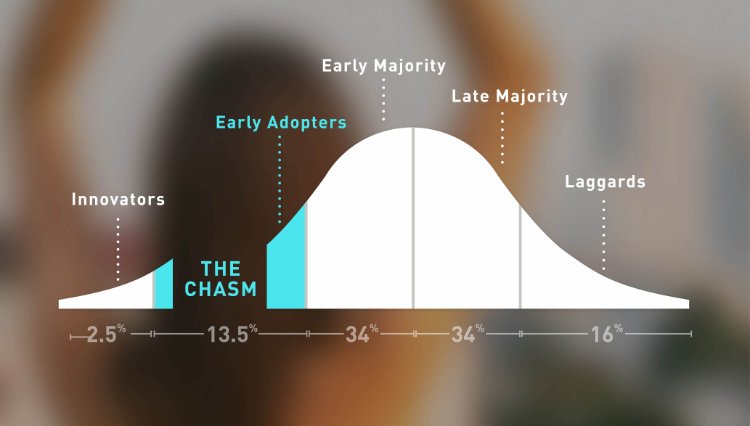
 Seven measures early adopters must take to prepare for the disruptive forces influencing marketing. Use this report to benchmark and plan for your marketing future.


The State of Manufacturing

By Guy Courtin and R "Ray" Wang

State of Manufacturing Manufacturing Adopts Mass Personalization Ideology

 In 2015 manufacturing will dive into digital transformation as producers take advantage of data insights to create ever-more customized products. 


The State of HCM

By Holger Mueller

State of HCM

Inside the Future of HCM

This report examines seven trends influencing human capital management. Find out how organizations will manage their most valuable resource: their people. 


The State of the Cloud

By Holger Mueller

9 Cloud Trends CXOs Need to Know 2015

Inside the Nine Cloud Trends Every CxO Needs to Know in 2015

As internal and external apps continue to dominate business, the cloud evolves into the responsibility of the entire C-suite. Consequently, all CxOs should be aware of major trends in cloud technology. Prepare yourself for a productive conversation about the future of the cloud in your organization.
 

The State of IT Services

By R "Ray" Wang

State of Digital Transformation Services

Digital Transformation Services Take Center Stage For 2015

The Digital Transformation Services market is set to explode in 2015. Constellation forecasts it to surpass $100.7B in 2020. This report defines the Digital Transformation Services space, identifies seven trends to watch as the market gains traction in 2015, and provides notes on identified services providers.  

The State of Retail in 2015 and Beyond

By Guy Courtin

State_of_Retail_coverDigital Technologies Reshape Retail and Shift Customer-Retailer Relationship

The customer-retailer relationship will become more cooperative in 2015. Learn about the Amazon Trap, visibility, the Internet of Things, network insights, and more trends in the state retail in 2015. 
 

The State of Collaboration in 2015

By Alan Lepofsky

State of Collaboration

The Future of Collaboration Lies at the Intersection of Social Interaction and Data-Driven Insights

Currently collaboration shows maturity in market and user adoption. The future of collaboration must address the human element in Digital Transformation. 


The State of Customer Success Management in 2015

By Natalie Petouhoff

Npetouhoff_state_of_state_custserv

Next-Generation Customer Experience Is Guiding Customer Success Management

Customer service and support evolves into customer success management. Customer success management becomes a top priority for all companies, at all levels.  


The State of Digital Safety and Privacy in 2015

By Steve Wilson

state_of_digital_privacy_cover

Digital Safety and Privacy is about the art and science of maximizing the information assets of a business, including its most important assets – its people. The future of digital safety and privacy requires new awareness of data flows.


The State of Post-Sale Commerce in 2015

By Guy Courtin

SoS_post_sale_commerce_gcourtin_cover

Post-sale commerce is set to be an important revenue driver for many organizations. Organizations moving to post-sale commerce must consider five key elements included in this report.  


The State of Digital Transformation and Digital Leadership

By Andy Mulholland

SOS_Digital_Leadership_BoardroomThe State of the Digital Boardroom and CxO in 2015

Digital transformation remains an important initiative for businesses in 2015 and boards need to learn how to guide digital transformation projects. The Internet of Things emerges as the key to real digital business transformation.  
 

The State of Supply Chain Management

By Guy Courtin

Supply_Chain_State_of_State_GcourtinThe future of supply chains demonstrates how digital will transform business models. 

Being demand-driven remains the goal to achieve, the Future of Work and BYOD will affect the supply chain, and data is the product in the state of the supply chain in 2015.


Data to Decisions Digital Safety, Privacy & Cybersecurity Future of Work Marketing Transformation Matrix Commerce New C-Suite Next-Generation Customer Experience Tech Optimization Sales Marketing Revenue & Growth Effectiveness Innovation & Product-led Growth B2B B2C CX Customer Experience EX Employee Experience business Marketing eCommerce Supply Chain Growth Cloud Digital Transformation Disruptive Technology Enterprise IT Enterprise Acceleration Enterprise Software Next Gen Apps IoT Blockchain CRM ERP Leadership finance Social Customer Service Content Management Collaboration M&A Enterprise Service AI Analytics Automation Machine Learning Generative AI ML LLMs Agentic AI HR HCM SaaS PaaS IaaS Chief Customer Officer Chief Digital Officer Chief Executive Officer Chief Financial Officer Chief Information Officer Chief Marketing Officer Chief People Officer Chief Procurement Officer Chief Supply Chain Officer Chief Data Officer Chief Growth Officer Chief Product Officer Chief Revenue Officer Chief Technology Officer Chief Analytics Officer Chief Information Security Officer Chief Operating Officer