Results

Constellation Named Independent Analyst Firm of the Year

Constellation Named Independent Analyst Firm of the Year

IIAR Independent Analyst Firm of the YearToday the Institute of Industry Analyst Relations named Constellation Research Independent Analyst Firm of the Year! The Constellation team is humbled by this great honor. This is the second IIAR award bestowed upon Constellation since our founding in 2011 when we were named New Firm of the Year. 

IIAR's members and other carefully vetted AR professionals  evaluated Constellation against a rigorous set of criteria to independently and informatively select Constellation as Independent Analyst Firm of the Year. The most knowledgeable and critical analyst relations professionals comprise IIAR's survey pool. 

"We're honored to be recognized and we appreciate all the hard work influence relations professionals face in navigating their organization's mission and the mission that industry analysts and influencers play.
 
The team has worked hard to put together the right culture to serve the needs of a modern analyst firm.   From Silicon Valley insights, to innovative solutions, to a community of market leading buy side clients our goal is still to help our clients achieve the art of the possible." - R "Ray" Wang, Chairman and Founder, Constellation Research
Tomorrow IIAR announces "Analyst of the Year"--we can't wait to find out who won!
 
 
Innovation & Product-led Growth Future of Work New C-Suite Tech Optimization Sales Marketing Marketing B2B B2C CX Customer Experience EX Employee Experience AI ML Generative AI Analytics Automation Cloud Digital Transformation Disruptive Technology Growth eCommerce Enterprise Software Next Gen Apps Social Customer Service Content Management Collaboration Chief Experience Officer Chief Marketing Officer

Weekly Recap - Week ending December 12th 2014

Weekly Recap - Week ending December 12th 2014

Another week - another recap done (late, soory).


So here is the content:


  • Webinar with Cornerstone - Unified vs. integrated Talent Management 
  • Webinar with TideMark / Proformative - New trends for FP&A and ABB 
  • Webinar with Intellicorp - How to lower the cost testing SAP 
  • Briefing with SAP / Ariba - Insights on Spend Management
  • Briefing with Retarus - Message Systems with innovative approach

Blog posts
  • Time to reinvent email
 
Next week
  • Webinar with Dell Boomi - register here
  • A lot of briefings


Tech Optimization dell Chief Information Officer

The Ruble reminds us – our supply chains do not operate in a vacuum

The Ruble reminds us – our supply chains do not operate in a vacuum

This week has not been a good for the Russian currency, as it has dropped close to 20% versus the US Dollar. Some analyst fear that the Putin and Russia will default on their debt and this might throw the global economy into a tail spin. The impact could have graver consequences in places such as Ukraine – where Russia has already acted belligerently this year – in Eastern Europe or the Baltics. It is not simply the Russian ruble that should enter our thinking process for our supply chains – look at what is happening this week in Belgium as well. As union workers have gone on strike, halting ports, airports and highways it has brought much of Belgium to a halt.

But this is not meant to be a post about geo-politics and world history, although those are the areas of my early formal training. What the issues in Russia and Belgium remind us, especially those of us in the supply chain space, is that we do not operate in a vacuum. I realize that I am stating the obvious, but at times I am surprised at how many turn a blind or an ignorant eye when it comes to global events. There have been and will continue to be articles and studies done on risk management. Something that is crucial for our supply chains. However

You need a complete view...otherwise the world remains blurry

You need a complete view…otherwise the world remains blurry

one aspect that remains missing from these conversations is how to account for these global events. Much thinking has been done around assessing risk for suppliers, customers, geography, transportation, raw material costs, weather and natural disruptions to name a few. Yet it remains difficult to quantify geo-political risk. In other disciplines this has been marginally tackled, but for supply chains it still takes a back seat.

When it comes to assessing our supply chain risks we need look to an index that looks at a number of geo-political aspects. A combination of credit rating, political stability, regional history, religious tension, border fluctuation, socioeconomic make up, relationship with neighboring nations to name a few, could make up a supply chain exposure and risk indices that would compliment the other data points we study.

Companies, such as General Electric, have chief economists on their executive committee, this is should be a role all businesses that are international and that have extended supply chains have – which means 99% of companies. But let us not limit ourselves to economists…as a political scientist at heart…I would argue corporations need to also look to have geo-politically focused assets at their disposal. Our supply chains touch all the four corners of the globe, if we do not have the assets in place to provide better insight into the impact history and politics have on the geographies, we risk exposing our supply chains to a greater array of disruptions.


Tagged: Belgium, Geo-politics, Matrix Commerce, Risk, Ruble, Russia, Supply Chain

Matrix Commerce Innovation & Product-led Growth Supply Chain Automation Cloud Digital Transformation Disruptive Technology Enterprise IT Enterprise Acceleration Enterprise Software IoT Blockchain ERP Leadership Collaboration M&A Chief Supply Chain Officer

9 Actions to Consider Before 2015

9 Actions to Consider Before 2015

This year end checklist offers suggestions designed to enable you to take control of your digital strategy in 2015. Consider these actions to ensure you dominate digital disruption in the new year. 


1. Matrix Commerce: Scrub your data

By Guy Courtin

Guy Courtin Headshot Constellation Research

When it comes to Matrix Commerce, companies need to focus on the basics first. What are the basics? Cleaning up and getting your data in order. Much is discussed about the evolution of supply chains and the surrounding technologies. However these solutions are only as useful as the data that feeds them. Many CxOs that we have spoken to have discussed the need to focus on cleaning up their data. First work on a data audit to identify the most important sources of data for your efforts in Matrix Commerce. Second, focus on the systems that can process and make sense of this data. Finally, determine the systems and business processes that will be optimized with these improvements. Matrix Commerce starts with the right data. The systems and business processes that layer on top of this data are only as useful as the data. CxOs must continue to organize and clean their data house.

2. Safety and Privacy - Create your Enterprise Information Asset Inventory

By Steve Wilson

Steve Wilson Headshot Constellation Research

In 2015, get on top of your information assets.  When information is the lifeblood of your business, make sure you understand what really makes it valuable.  Create (or refresh) your Enterprise Information Asset Inventory, and then think beyond the standard security dimensions of Confidentiality, Integrity and Availability.  What sets your information apart from your competitors?  Is it more complete, more up-to-date, more original or harder to acquire? To maximise the value of information, innovative organisations are gauging it in terms of utility, currency, jurisdictional certainty, privacy compliance and whatever other facets matter the most in their business environment. These innovative organizations structure their information technology and security functions to not merely protect the enterprise against threats, but to deliver the right data when and where it's needed most.  Shifting from defensive security to strategic informatics is the key to success in the digital economy. Learn more about creating an information asset inventory. 

3. Data to Decisions - Create your Big Data Plan of Action 

By Andy Mulholland

Andy Mulholland Headshot

Big Data is arriving at the end of the hype cycle. In 2015, real-time decision support using ‘smart data’ extracted from Big Data will manifest as a requirement for competitiveness. Digital Business, or even just online sellers, are all reducing reaction and response times. Enterprises have huge business and technology investments in data that need to support their daily activities better, so its time to pivot from using Big Data for analysis and start examining how to deliver Smart Data to users and automated online systems. What is Smart Data? Well, let's say creating your organization's definition of Smart Data is priority number one in your Big Data strategy.  Transformation in Digital markets requires a transformation in the competitive use of Big Data. Request a meeting with Constellation's CTO in residence, Andy Mulholland. 

4. Next Gen CXP - Make Customer Experience Instinctual  

By Natalie Petouhoff

Natalie Petouhoff Headshot

STOP thinking of Customer Experience as a functional or departmental initiative and start thinking about experience from the customer’s point of view. 

Customers don’t distinguish between departments when they require service from your organization. Customer Experience is a responsibility shared amongst all employees. However, the division of companies into functional departments with separate goals means that customer experience is often fractured. Rid your company of this ethos in 2015 by using design thinking to create a culture of cohesive customer experience. 

Ensure all employees live your company mythology, employ the right customer and internal-facing technologies, collect the right data, and make changes to your strategy and products as soon as possible.  Read "Five Approaches to Drive Customer Loyalty in a Digital World".

5. Future of Work - Take Advantage of Collaboration

By Alan Lepofsky

Alan Lepofsky Headshot

Over the last few years, there has been a growing movement in the way people communicate and collaborate with their colleagues and customers, shifting from closed systems like email and chat, to more transparent tools like social networks and communities. That trend will continue in 2015 as people become more comfortable with sharing and as collaboration tools become more integrated with the business software they use to get their jobs done. Employees should familiarize themselves with the tools available to them, and learn how to pick the right tool for each of the various scenarios that make up their work day.  Read "Enterprise Collaboration: From Simple Sharing to Getting Work Done".

6. Future of Work - Prepare for Demographic Shifts

By Holger Mueller

Holger Mueller Headshot

In the next ten years 10% to 20% of the North American and European workforce will retire. Leaders need to understand and prepare for this tremendous shift so performance remains steady as many of the workforce's highly skilled workers retire.

To ensure smooth a smooth transition, ensure your HCM software systems can accommodate a massive number of retirements, successions and career path developments, and new hires from external recruiting. 

Constellation fully expects employment to be a sellers market going forward. People leaders should ensure their HCM systems facilitate employee motivation, engagement and retention, lest they lose their best employees to competitors. Read "Globalization, HR, and Business Model Success". Additional cloud HR case studies here and here

7. Digital Marketing Transformation - Brand Priorities Must Convey Authenticity

By R "Ray" Wang

R Ray Wang Constellation Research Headshot

Brand authenticity must dominate digital and analog channels in 2015. Digital personas must not only reflect the brand, but also expand upon the analog experience. Customers love the analog experience, so deliver the same experience digitally. Brand conscious leaders must invest in the digital experience with an eye towards mass personalization at scale.  While advertising plays a key role in distributing the brand message, investment in the design of digital experiences presents itself as a key area of investment for 2015. Download free executive brief: Can Brands Keep Their Promise?

8. Consumerization of IT: Use Mobile as the Gateway to Digital Transformation Projects

By R "Ray" Wang

Constellation believes that mobile is more than just the device. While smartphones and other devices are key enablers of 'mobile', design in digital transformation should take into account how these technologies address the business value and business model transformation required to deliver on breakthrough innovation. If you have not yet started your digital transformation or are considering using mobile as an additional digital transformation point, Constellation recommends that clients assess how a new generation of enterprise mobile apps can change the business by identifying a cross-functional business problem that cannot be solved with linear thinking, articulating the business problem and benefit, showing how the solution orchestrates new experiences, identifying how analytics and insights can fuel the business model shift, exploiting full native device features, and seeking frictionless experiences. You'll be digital before you know it. Read "Why the Third Generation of Enterprise Mobile is Designed for Digital Transformation"

9. Technology Optimization & Innovation - Prepare Your Public Cloud Strategy

By Holger Mueller

Holger Mueller Constellation Research

In 2015 technology leaders will need to create, adjust and implement their public cloud strategy. Considering estimates pegging Amazon AWS at 15-20% of virtualized servers worldwide, CIOs and CTOs need to actively plan and execute their enterprise’s strategy vis-à-vis the public cloud. Reducing technical debt and establishing next generation best practices to leverage the new ‘on demand’ IT paradigm should be a top priority for CIOs and CTOs seeking organizational competitiveness, greater job security and fewer budget restrictions. 

Dominate digital disruption in 2015. Join Constellation Executive Network for exclusive research, advisory, and events. 

Data to Decisions Digital Safety, Privacy & Cybersecurity Future of Work Marketing Transformation Matrix Commerce New C-Suite Next-Generation Customer Experience Tech Optimization Innovation & Product-led Growth Chief Customer Officer Chief Digital Officer Chief Executive Officer Chief Financial Officer Chief Information Officer Chief Marketing Officer Chief People Officer Chief Procurement Officer Chief Supply Chain Officer

News Analysis - IBM had a very good year in the cloud - but 2015 will be key

News Analysis - IBM had a very good year in the cloud - but 2015 will be key

This morning IBM summed up its achievements of its IBM cloud business and it was worth a new analysis. 


So we dissect the press release (can be found here) in our usual style:
 
 
ARMONK, N.Y. - 17 December 2014: IBM (NYSE: IBM) today announced a broad expansion of its global cloudcomputing network to 40 cloud centers with 12 new locations serving a growing roster of enterprise clients looking to move to hybrid cloud computing.


MyPOV – This is a significant expansion to IBM’s original plans of moving to 40 locations as announced in January of 2014 – my analysis is here. And it’s a sign of something working for IBM here – as IBM communicates locations and signs up deals with customers, more locations than the 40 will be in demand. What works well for IBM here is that it has one of the smallest pod footprints in the industry, among the large players. We estimate Amazon AWS being 4-5 times and Microsoft Azure 2-3 times larger than the smallest IBM Cloud / SoftLayer footprint. That certainly helps when putting your flag around locations in the world, as less business needs to be acquired to reach economies of scale for a location.  

IBM will reach customers in 12 new locations including IBM Cloud centers in Frankfurt, Mexico City and Tokyo, and nine more centers through a strategic partnership with Equinix in Australia, France, Japan, Singapore, The Netherlands and the US.  


MyPOV – Germany is a key market in Europe and given Amazon AWS is now open for business here (read my analysis here) it is important for its competitors to be open for business there. Equally it is good to see that IBM (like almost all other players) partner with Equinix or use Equinix facilities.

IBM's agreement with Equinix provides direct access to the full portfolio of SoftLayer cloud services via the Equinix Cloud Exchange™ in nine markets worldwide spanning the Americas, Europe and Asia Pacific, including Amsterdam, Dallas, Chicago, Paris, Silicon Valley, Singapore, Sydney, Tokyo and Washington, D.C.  Through this partnership, SoftLayer provides customers with the ability to easily move production workloads in and out of the cloud, thus better enabling them to fully realize their hybrid cloud strategies.
 
MyPOV – An important partnership – the question (that likely will never be answered publicly) is what took IBM and Equinix so long to partner.

Hybrid Cloud Growth in Enterprises

Enterprise cloud deployments, specifically hybrid cloud, are growing at a significant rate.  According to leading technology research firm, Gartner, Inc., nearly half of all enterprises will have a hybrid cloud deployed by 2017.  Chief among the driving forces behind the adoption of cloud computing worldwide including hybrid cloud, are requirements for businesses and governments to store certain data locally to comply with data residency regulations, as well as a growing desire for startups to expand their businesses globally.  IBM estimates about 100 nations and territories have adopted laws that dictate how governments and private enterprises handle personal data.
 
MyPOV – No surprise that IBM caters to the localization / statutory demands that today in most international cloud deployments are violated. We expect that in 2015 the ‘time bomb’ in this regards will likely burst, most likely in a highly PII sensitized market like e.g. Germany or France. We expect legislators giving vendors and enterprises 2-3 years to comply, so an early land grab by any IaaS vendor will draw SaaS vendor attention with IBM. And with that comes load, which is the most important cloud success ingredient that IBM needs to acquire.

The new IBM Cloud centers in Frankfurt, Mexico City and Tokyo are part of IBM's $1.2 billion commitment to grow IBM's Cloud presence around the world to meet these local mandates with performance, security and data controls built in. These centers further expand IBM’s global cloud footprint which includes facilities in Mumbai, London, Amsterdam, Beijing, Hong Kong, Singapore, Melbourne, Toronto, Dallas and Raleigh, N.C., opened this year. This effort includes IBM's business consulting division, which features thousands of cloud experts with deep industry knowledge who are located around the globe to help clients to move to cloud.   IBM consultants are dedicated to working face-to-face with clients to address all of their industry specific needs as they transform to the cloud era.
 
MyPOV –Again no surprise – IBM using its strong services arm to cater to the local enterprises and their services needs. Similar to the recent deals announced with ABN Amro and Lufthansa, we expect comparable deals being in the pipeline for IBM in the above mentioned locations.

Open 24 hours a day, seven days a week, the new facilities offer an array of solutions including proven cloud resiliency services. These services guarantee customers up times of 99.99 percent across any IT environment, including traditional IT, public, private, or hybrid cloud deployments. In the event of an outage, the centers’ support team can recover data in minutes to ensure that is has little to no impact on business operations while going virtually unseen by customers.
 
MyPOV – Achieving 4 9s is certainly good enough to local IT leaders to consider the IBM offering. Not mentioned here are the bare metal capabilities of SoftLayer which we know are highly valued by IBM prospects and customers. We expect bare metal capabilities and the ability to ‘touch and see my hardware’ remaining a key trust factor for CIOs to move load to the public cloud for the next 2-3 years to come.

Clients around the world are using IBM cloud centers spread across every major market to help them adopt cloud for growth and innovation.  Since the start of November, IBM has announced more than $4 billion worth of cloud agreements with major enterprises around the world including Lufthansain Germany, ABN AMROin the Netherlands, WPPin the UK, Woox Innovations in Hong Kong, Dow Water and Thomson Reuters.
 
MyPOV – As mentioned above, all the data center locations have a good looking pipeline at the moment. Let’s keep in mind that IBM is combining its existing legacy pipeline with the SoftLayer pipeline for data center location expansion.

IBM today announced that  global transport operator National Express Group PLC is delivering a data-driven railway to improve both operational performance and customer experience on the IBM Cloud to provide up-to-the-minute train information and allow postcode-to-postcode journey planning – a first in UK rail.

In addition, born-on-the-web innovators are increasingly choosing to build their business on the IBM Cloud. In just the last month, IBM has announced wins with Diabetizer and Preveniomed in Germany,Hancom in South Korea, Musimundoin Argentina and Nubity Inc.in Mexico. Collectively these wins reflect IBM's unique ability to deliver a full range of services through the cloud in ways that other cloud providers cannot match.
 
MyPOV – Given the enterprise strengths of IBM these clients are often overseen, so good to see that IBM mentioned them here. And startups with high data residency requirements in sensitive countries like e.g. Diabetizer and Preveniomed are great showcases for the location strategy by IBM.

“IBM recognizes that businesses and governments need the cloud to help them innovate, grow and operate more efficiently in concert with their existing IT investments," said Jim Comfort, General Manager, IBM Cloud Services.   "Everything IBM does is designed to help companies transition to the cloud in a responsible way at a pace that best fits their business model and industry.   Just as we helped major organizations transform in each preceding era of IT, IBM now serves as the cloud platform for the enterprise.”
{C}
{C}
MyPOV – Always smart for veteran vendors to remind customers and prospects how they have helped them to migrate across previous platform changes in the past. What is not mentioned, but plays an equal important view in my experience is that being closer to the data center location plays a key day to day role in performance. And for the provider in networking cost.

IBM has announced key cloud investments throughout 2014.   In addition to expanding its global cloud footprint and the establishment of the Bluemix PaaS to bring enterprise developers into the hybrid cloud era, IBM also launched a new Cloud marketplace that brings together IBM’s vast portfolio of cloud capabilities and new third-party services in a way that delivers a simple and easy experience for the enterprise. The IBM Cloud marketplace serves as a single online destination serves as the digital front door to cloud innovation bringing together IBM’s capabilities-as-a-service and those of partners and third party vendors with the security and resiliency enterprises expect.
 
MyPOV – Bluemix is critical for IBM’s success in the cloud, as we see forward looking enterprise that embrace the cloud today also having a need for next generation applications that need to build on the cloud, for the cloud in a PaaS. We lookedat Bluemix earlier this year when it was announced and covered the marketplace announcement here.

IBM Cloud Growth through Strategic Partnerships

Today's announcement with Equinix further extend the reach IBM has achieved through its own cloud portfolio and well as a string of recent cloud partnerships with other notable companies including:
  • SAP selected IBM as a premier strategic provider of Cloud infrastructure services for its business critical applications to accelerate customers’ ability to run core business in the cloud. SAP applications are now available through IBM’s highly scalable, open and secure cloud and enables SAP HANA Enterprise Cloud to major markets with the addition of the IBM cloud data centers.
  • IBM and Microsoft are working together to provide their respective enterprise software on Microsoft Azure and IBM Cloud. This relationship will give clients, partners and developers more choice in the cloud, helping them drive new business opportunities, spur innovation and reduce costs.
  • IBM and Tencent Cloud recently signed a business cooperation memorandum to collaborate on providing public cloud with Software-as-a-Service solutions for industries. The companies will focus on emerging small and medium enterprises in the smarter cities, healthcare industries and other fields to enable these industries to utilize mobile, cloud computing and big data tools to transform internal processes and operations, thus achieving cloud transformation in the era of mobility.
  • AT&T and IBM are collaborating to speed business adoption of cloud services by extending AT&T NetBondSM services to the SoftLayer platform for stronger security and performance. This extension of the IBM and AT&T alliance will allow businesses to easily create hybrid-computing solutions.
  • IBM and Intel worked together to make SoftLayer the first cloud platform to offer its customers bare metal servers powered by Intel® Cloud Technology that provides monitoring and security down to the microchip level. Through this agreement, the Intel® Trusted Execution Technology provides hardware monitoring and security controls that help assure businesses that a workload from a known location on SoftLayer infrastructure is running on trusted hardware.
MyPOV – As mentioned earlier IBM needs to bring load to its cloud to achieve economies of scale. The partnerships with SAP (my take on the partnership here), Microsoft and Tencent go into that direction, though it remains to be seen how much load they will really bring, but certainly a good start. Equally it’s good to see how IBM can forge relationships with key providers for the cloud space with AT&T and IBM (the security announcement analysis is here).

In addition to these partnerships, IBM is also contributing Private Computing services from IBM Cloud OpenStack Services platform to the OpenStack and Cloud Foundry Foundations.  The initial usage of these services will offer expanded capabilities to enable automated integration, reduced cycle time and increased quality for software distribution. This will accelerate time to market for all uses of OpenStack based infrastructure.
MyPOV – IBM made a big decision with moving its PaaS product Bluemix on the CloudFoundry stack, but that seems to be paying off given the traction CloudFoundry and the CloudFoundry Foundation enjoy these days both in then enterprise and the open source community.

By better enabling the open community, partnering with key companies that provide even greater value to the IBM Cloud portfolio and continuing to make financial and technological investments that has helped IBM achieve significant growth in its cloud business:
  • IBM reported cloud revenue of $4.4 billion for 2013 – up 69 percent year-to-year
  • IBM cloud revenue has increased 50 percent through the third quarter 2014 with a $3.1 billion run rate in as-a-service revenue.
  • IBM Cloud supports 47 of the top 50 Fortune 500 companies
  • For two years in a row, IBM has been named a leader in the IDC MarketScape on Cloud Professional Services.  (IDC MarketScape: Worldwide Cloud Professional Services 2014 Vendor Analysis, doc #250238, August 2014)
  • Businesses across the U.S. recently ranked IBM the as the number one cloud computing provider, according to an IDC survey of US market preferences for infrastructure-as-a-service (IaaS). *Source: IDC's U.S Outsourced Cloud Services Survey, 4Q13
  • In addition to overall top ranking, IBM was also rated the leader in six of eight major industries covered in the study including Financial Services, Manufacturing, Healthcare, Professional Services, Wholesale and Retail and Public Sector (government). *Source: IDC's U.S Outsourced Cloud Services Survey, 4Q13
  • IBM also finished in the top three in Transportation and Telecommunications, the only vendor to lead in as many industries and rank no lower than third in any industry. *Source: IDC's U.S Outsourced Cloud Services Survey, 4Q13
  • Synergy Research Group recently ranked IBM among the top three cloud providers and the leader in hybrid and private cloud engagement in a market analysis of public, private and hybrid IaaS and PaaS.
MyPOV – A lot of accolades and achievement and certainly a good start in the first full year that IBM has SoftLayer as an asset inside the company.
 

Overall MyPOV

A key press release for IBM and its cloud effort summing up well what the vendor has achieved – here are my key takeaways of the press release and the year overall:
 
 
  • IBM certainly knows when it needs to invest into something that works. The race to the announced 40 locations of January 2014 – that was not responded for by the usual competitors – has even more accelerated with IBM tracking to 48 locations now.
     
  • IBM’s reputation to help enterprises in technology transformation times is a well working and resonating messaging with customer and prospects.
     
  • Bluemix is, remains and will be a critical component of IBM’s cloud success. How well IBM can not only attract the new ‘cloud developer’ but also the existing (Rational) IBM developer will be a key area to watch in 2015 and beyond.
     
  • The service capabilities of IBM work to its favor with the enterprise need to be advised and often literally ‘taken by the hand’ to move to the public cloud.
     
  • IBM knows how to partner and will have more partnerships in stock for us to see in 2015.

What remains critical for IBM (as well as all its competitors – except AWS) is to attract load to reach economies of scale for its cloud effort. With an esteemed analyst company estimating that AWS is 4-5 larger than all major competitors combined – every IT executive knows that all competitors cannot get the same attractive conditions from all relevant suppliers like AWS does. IBM (and competitors) know that and are desperately looking for load, across the field IBM has done the best in 2014, but must continue to do so to reach similar cloud load levels Microsoft / Google.

2015 will be critical for IBM, and if we see a similar press release by end of 2015 we know it will have done well. We will be watching throughout the year. 

----------


More on IBM :
 
  • Event Report - IBM Insight 2014 - Is it all coming together for IBM in 2015? Or not? 
  • First Take - Top 3 Takeaways from IBM Insight Day 1 Keynote - read here
  • IBM and SAP partner for cloud - good move - read here
  • Event Report - IBM Enterprise - A lot of value for existing customers, but can IBM attract net new customers? Read here
  • Progress Report - The Mainframe is alive and kicking - but there is more in IBM STG - read here
  • News Analysis - IBM and Intel partner to make the cloud more secure - read here
  • Progress Report - IBM BigData an Analytics have a lot of potential - time to show it - read here
  • Event Report - What a difference a year makes - and off to a good start - read here
  • First Take - 3 Key Takeaways from IBM's Impact Conference - Day 1 Keynote - read here
  • Another week and another Billion - this week it's a BlueMix Paas - read here
  • First take - IBM makes Connection - introduces the TalentSuite at IBM Connect - read here
  • IBM kicks of cloud data center race in 2014 - read here
  • First Take - IBM Software Group's Analyst Insights - read here
  • Are we witnessing one of the largest cloud moves - so far? Read here
  • Why IBM acquired Softlayer - read here
 
Find more coverage on the Constellation Research website here.


Tech Optimization Future of Work Matrix Commerce Innovation & Product-led Growth New C-Suite Digital Safety, Privacy & Cybersecurity Data to Decisions Google HP softlayer cisco systems salesforce IBM amazon SAP Oracle Microsoft SaaS PaaS IaaS Cloud Digital Transformation Disruptive Technology Enterprise IT Enterprise Acceleration Enterprise Software Next Gen Apps IoT Blockchain CRM ERP CCaaS UCaaS Collaboration Enterprise Service Security Zero Trust Chief Information Officer Chief Technology Officer Chief Information Security Officer Chief Data Officer Chief Privacy Officer Chief Executive Officer

Racksapce Wins SuperNova Award For Next Generation Customer Experience With Zimbra Community

Racksapce Wins SuperNova Award For Next Generation Customer Experience With Zimbra Community

Each year at our conference, Constellation’s Connected Enterprise, companies submit case studies in several categories, including next generation customer experiences.

This post is about how Rackspace, who was a SuperNova Award Winner for Next Gen Customer Experiences, used a Zimbra Community, along with Rackspaces’s Knowgedge Center and Support Drawer to provide a global online community that provides its customers with a central place to share questions, discuss challenges, rate content and provide feedback.

Overall, the Rackspace community focuses on scaling the delivery of Fanatical Support, educating core customers, increasing customer engagement and sharing Racker knowledge.

A few standouts about the community include:

  • Previously, there was no mechanism available to provide assistance with non-supported products being used by customers. With the Rackspace community, the ability to share experiences about non-supported products now exists.
  • Customers now have direct access to Rackspace-produced content and information obtained in conversations with other customers about issues that may be applicable to all customers. Prior to the community, this was not readily available to customers.
  • Customers now have access to transparent communication with Rackspace leadership around important issues.

The results and benefits?

  • Reduced interactions on agent-based support channels on average: 50 percent for phones, 15 percent for tickets, and 20 percent for chat

Read "How Rackspace Creates the Next Generation Customer Experience" case study. 

Next-Generation Customer Experience Innovation & Product-led Growth AR Executive Events Chief Customer Officer

Internet of Things; Enterprise Value = Integration, Automation and Scale

Internet of Things; Enterprise Value = Integration, Automation and Scale

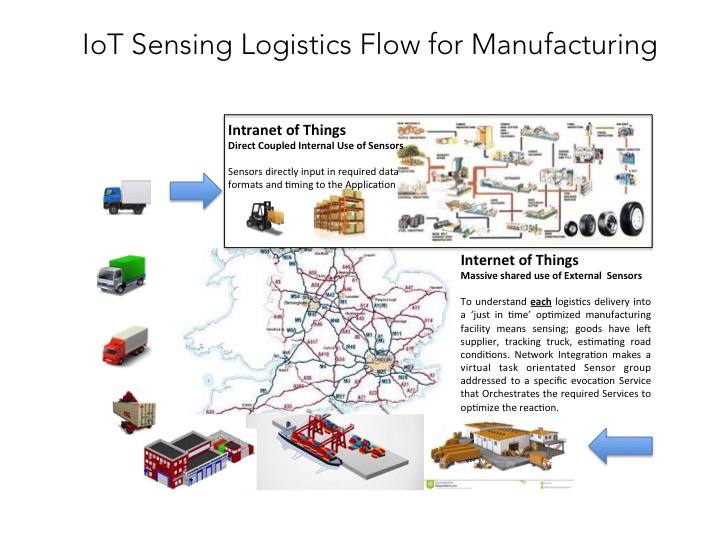
Enterprises are going to need any large scale deployment of IoT sensors not only grouped into standalone IoT functional Services, but in turn those IoT Services will need to be integrated into the Enterprises overall existing operations. However valuable IOT driven functional Services might be, if they are standalone, then all the lessons of the last twenty years of IT in creating automated end to end operational business efficiency through integration are being ignored.

Research report now available: The Foundational Elements for the Internet of Things (IoT)

Question; if you have full sensor data as to the possible, or actual, failure of a critical machine, then aren’t you going to need to ‘kick off’ your existing fault management process to turn the IoT data into a successful response?

Really ramping up the number of sensors we can use, and widening exactly what can be sensed, in line with the expectation of what low cost IoT will introduce into Enterprise use has big implications. Forget the mass of Big Data argument and think instead of the massive increase in the ‘real time’ awareness triggers that are going to need responsive actions.  We are glibly saying that this is a good thing as preventative, or corrective actions will happen more quickly, at less cost, but it looks like a heck of a lot of manual intervention!  

Standalone IOT reporting Services have the same challenge as standalone online Web based ecommerce systems a few years back. Great for pilots and proof of concepts, but sooner, or later a victim of their own success and requiring proper integration into existing order systems.

For some fifty years the challenge to any technology project has always been the consequences of scale, and no that doesn’t mean cheap virtual machines are now the answer. IT Architecture arrived in the mid nineties simply because of the need get the integrated and automated efficiency in line with the ERP based Enterprise Business models. The technology innovation of PC based Client-Server created ERP as we recognize it today and in turn the rethinking of operational process flow. Adding e-commerce in the early 2000s and shifting towards Web based technology didn’t alter the need to continue to recognize the need for integrated processes.

Adding IoT will, as with past technology innovations, introduce some genuine competitive breakthroughs initially justifying a higher cost of operation. In time this well become the new competitive norm resulting in a refocus on the cost of provisioning, and requiring integrated automated capabilities within an Enterprises overall operations. It’s back to good IT system practices around ‘Integrate, Automate and Scale’.

But how real are the capabilities to achieve this level of integration today? Most IT professionals rightly fear that this could turn into a really nasty internal integration effort that should be avoided! Trying to get an update on IoT integration from the Enterprises mainstream IT partners often seems to get a blank look from account managers struggling with the breadth of existing product portfolios. Sadly, it usually takes a determined member outside of the IT department to make the connection after they have seen, or discussed a real deployments by others at a business event for their industry sector.

All the mainstream technology providers have dedicated business units for IoT staffed with the necessary expertise in the use of their products to build IoT solutions to integrate with their existing products. An Internet search will normally get you in contact with the IoT team, then let them manage their colleagues in your Enterprise account team!

Fortunately, and encouragingly, there are some very real capabilities matched with thought provoking business case studies around. Salesforce ran a briefing session for industry analysts in London a few weeks ago that provided both product and reference updates. Salesforce has been steadily releasing capabilities for some time, though often at different events, which have made the full big picture difficult to see.  Salesforce strategy not surprisingly focuses on supporting sales marketing and customer satisfaction with the recent blog post; “Five Ways the Internet of Things will make Marketing smarter” providing some views on how this will be achieved.

Salesforce product capabilities support using existing building block functionality to assemble a new process, or link to an existing process, in the same way as any other Salesforce requirement is built and deployed. If you are a Salesforce user this provides really familiar territory, so there is no excuse not get started with IoT pilots that are integrated and will scale. At their briefing Salesforce offered several case studies that offer insights into how companies in different industry sectors saw ways to really break through in their Digital Business with radical competitive capabilities using integrated IoT and Business Process.

As an example; Stanley Black & Decker Connected Tools strategy links IoT sensing on the high-end large professional powered tools via the Salesforce1 Customer Platform to the rest of their business. Visibility of worn, or failing, tools allows Stanley Black & Decker to offer the right support, including selling a replacement, at a critical time for their customers. Find the full story here, and another one on how Dependable Auto Shippers moved beyond tagging cars in transit to offering their customers visibility of where their cars are, even after they have been delivered.

These case studies are compelling in the manner in which IoT has resulted in rethinking customer relationships and service by being aware of triggering events. Its arguable that any ‘mature’ Digital Business Model will have to use IoT to automate its capability to ‘sense’ key events, and that its capability to competitively ‘respond’ will depend on how well its capabilities are integrated to the IoT inputs.

Salesforce obviously have an advantage with their customer base being Internet savvy, and that their technologies/products designed for Internet based solutions. If your Enterprise ‘go to market’ CRM etc. is based on Salesforce there is obvious sense in adding and integrating your IoT services through Salesforce too. However, if you are not a Salesforce shop then don’t despair as SAP, and Microsoft have been working on their own capabilities for IoT too.

So far this blog has focused on good strategic planning for IoT, but so-called ‘Shadow IT’ has landed many Enterprises with a need for simple ways to provide a more cohesive working environment right now for key staff facing IoT and other event triggers.

Nowhere is that more apparent than in the deployment of multiple and different Social Collaboration tools as each user group took it on themselves to solve their problems in finding answers to a new generation of questions arising from Digital Business customers. These front line users turned to Collaboration tools to gain the advantage of collective experience in determining how to relate customer’s queries into the Enterprises processes. Failure to strategically address this as discussed in this blog leads to users finding their own solutions and answers, a point that was explored in the previous blog “Turning Big Data Upside Down to become Smart Data”.

One outcome of this blog and its definition of the need for ‘Smart data’ was a briefing by harmon.ie on their new product aimed squarely into this space. Called Collage and announced this week it aims to solve the problem harmon.ie defines as; “Enterprise cloud services provide information to workers but each one surfaces information in a separate app and in a different language – making workers struggle to manage the information overload”. And the result;

“End users are increasingly overwhelmed and can’t make sense of the data being pushed to them from disconnected services and apps. What workers need is need is an intuitive way to see the big picture by piecing together the right information, at the right time and within the right topical context so they can make intelligent business decisions.”

A simple explanation might be if you have multiple tools, such as Yammer, Chatter, and others from the long list of products, that are really working well in different use groups then making this a single shared environment should further boost the benefits. Collage makes it seem like a one screen environment, see for yourself by watching the concept video and the demonstration on YouTube. Assuming that Collage does what it says on the tin then you should have an easy way to bring the benefits of enterprise level integration to overcome shadow IT fragmentation. For many enterprises Collage could be a quick win to get both scale and integration of knowledge and experiences into enterprise wide ‘smart data’.

Digital Business is usually characterized as ‘Sense’ and ‘Respond’, a recognizable business model for optimizing online success. But IoT sensing with resulting ‘triggers’ cascading into the enterprise changes the scale, and requires a corresponding change in the scale of integration with existing processes and automation optimized responding. The time has come for a serious look at your strategy for your Enterprise Digital Business Architecture and the inclusion of IoT.

Research report now available: The Foundational Elements for the Internet of Things (IoT)

Data to Decisions Future of Work Innovation & Product-led Growth New C-Suite Tech Optimization

Research Report: Inside The 2015 Boardroom Priorities (Parts 1 & 2)

Research Report: Inside The 2015 Boardroom Priorities (Parts 1 & 2)

Boardrooms In Market Leader And Fast Follower Organizations Rapidly Take Action To Address the Digital Chasm Ahead

Constellation Research surveyed over 200 CXO’s and identified 10 board room priorities for 2015. As anticipated, digital transformation has emerged as a significant board room topic and market leaders and fast followers seek guidance on what elements are required in the design to support digital business.

Digital Transformation is defined as methodology in which organizations transform and create new business models and culture with digital technologies. The driver for digital transformation stems from the fact that since 2000, 52 percent of companies in the Fortune 500 have either gone bankrupt, been acquired or ceased to exist.

These market leaders and fast followers surfaced a theme of ten priorities heavily skewed towards the higher end of the Constellation Corporate Hierarchy of Needs (see Figure 1)

Figure 1. The Constellation Corporate Hierarchy Of Needs

@rwang0 Hierarcy Of Needs

Boardroom Priorities Reflect An Urgency For Change At Digital Speed

After categorizing boardroom priorities according to the Constellation Corporate Hierarchy of Needs, 10 trends emerged across all five categories.  Of note, a greater number of priorities for 2015 emerged in the higher level of needs.   This changed from previous surveys indicate a desire to shift strategy or embark in business transformation (see Figure 2).

Figure 2. 2015 Boardroom Priorities

2015 Boardroom Priorities @rwang0

Brand Priorities Support the Delivery of Authenticity in Both Analog and Digital Worlds

1.      Investment in digital presence.  Digital personas must not only reflect the brand, but also expand upon the analog experience.  Brand conscious leaders invest in the digital experience with an eye towards mass personalization at scale.  While advertising plays a key role in carrying out the message, investment in the design of digital experiences emerges as the hot area of investment.

2.      Consistent delivery of customer experience (CX).  Board members in highly competitive markets emphasize the need to improve and expand customer experience in order to grow lifetime customer value.  They realize these initiatives require both a sustainable engagement model through communities and a loyalty dimension through gamification and value exchange. The hottest area of growth is the post sales experience that includes installation, warranty, service, training, migration, and upgrade.

Strategic Differentiation Focuses On Proactive and Reactive Digital Transformation Techniques

3.      Digital transformation of the business.  Leaders are scrambling to create new business models through disruptive technologies.  One trend includes the introduction of new unit – cost business models.  These business models seek to deliver the smallest unit of product or service to a customer and then seek subscription models for longer-term predictability.  In addition, leaders are hoping to take advantage of the scale of digital to deliver on the long-term goal, which are customer segments of one.

4.      Rapid response to non-traditional competitors.  With the rise of non-traditional competitors to almost every market segment, boards are asking their management teams to create SWAT teams to proactively identify potential market competitors. The goal – create potential responses to likely market scenarios based on start ups business models and disruptive technologies.

5.      Creation of insights driven business models.  Expect organizations to deliver 20% of their revenue growth from big data business models by 2020.  The brokering of insights as a content provider, network, or arms dealer emerges as new source of competitive differentiation and also revenue stream.  Organizations must create the ability to deliver insights on their own and feed information brokers such as Thomson Reuters and Bloomberg.

Preorder Disrupting Digital Business, published by Harvard Business Review Press In Q2 2015.  Learn more.

Revenue and Growth Strategies Prepare for Highly Skilled And Inorganic Fueled Strategies


6.      Prioritized development of a high performance culture.  The war for talent continues at the high end of the hiring spectrum.  In fact, the market is highly competitive for the top 10% of the workforce.  Why? Despite hiring fewer workers, most organizations prioritize quality over quantity.  In addition, the pending retirement of a highly knowledgeable and experienced generation creates a vacuum of skilled workers in not only the top ranks, but also the middle of the employee base.

7.      Readiness for inorganic growth.  Cheap capital, patent portfolio accumulation global growth ambitions, war for talent, and declining margins drive organizations towards mergers, acquisitions, and joint ventures.  Moreover, the elusiveness of organic growth challenges boards to consider mergers and acquisitions as an accelerant for intellectual property, talent, customer base, and partner networks.  The goal is to create platform ecosystems and attract partners to co-create and co-innovate.

Cost and Operational Efficiency Remains An Important Pillar Through Automation And Post Merger Integration

8.      Mass automation of work and thought.  Automation expands into both the low end and high end of the market. Leaders invest in robotics, internet of things, and augmented humanity.  The hallowing out of jobs in the middle will expand as machines get smarter and regulatory costs from healthcare to safety increase.  Decision management systems gain favor in making more consistent and smart recommendations based on machine learning and algorithms. From supply chains to customer experience, automation advances at a rapid pace of change.

9.      Efficiency in post merger integration.  With inorganic growth a priority for 2015, boards will measure management teams on their ability to not only complete a merger and acquisition, but also drive out cost, merge product lines, improve up-sell and cross-sell, grow market share, and improve profitability.   Experienced leaders plan for scale by building direct and platform capabilities for core and leveraging outsourced services providers for non core requirements.

Regulatory Compliance

10.    Cost reduction of regulatory and security compliance.  As regulatory compliance proliferates and security threats mushroom, organizations seek capabilities to drive down the cost.  Solutions include creating shared services among competitors to address regulatory requirements and common core processes.

The Bottom Line: Digital Darwinism Is Unkind To Those Who Wait

Unfortunately, in almost every segment, the top three competitors control 43 to 71 percent of the market share and 53 to 77 percentage of the profits. In the technology space only 80 companies since 2000 have made the billionaire’s club.  Meanwhile, intense competition, short-term shareholder and management thinking, and minimal investment hamper the pace of investment and innovation required by business leaders to survive today’s competitive landscape.

While boards have not been complacent about addressing change, the past five years have shown the difference between those who invested in digital transformation and those who have not.  The corporate digital chasm is massive among market leaders, fast followers, and everyone else.  Astute board members realize they must invest in transformational change for face a vicious Digital Darwinism.

Your POV.

Ready for digital disruption by starting with mobile?  Add your comments to the blog or reach me via email: R (at) ConstellationR (dot) com or R (at) SoftwareInsider (dot) org.

Please let us know if you need help with your Digital Business transformation efforts. Here’s how we can assist:

  • Developing your digital business strategy
  • Connecting with other pioneers
  • Sharing best practices
  • Vendor selection
  • Implementation partner selection
  • Providing contract negotiations and software licensing support
  • Demystifying software licensing

Resources

Reprints

Reprints can be purchased through Constellation Research, Inc. To request official reprints in PDF format, please contact Sales .

Disclosure

Although we work closely with many mega software vendors, we want you to trust us. For the full disclosure policy,stay tuned for the full client list on the Constellation Research website.

* Not responsible for any factual errors or omissions.  However, happy to correct any errors upon email receipt.

Copyright © 2001 -2014 R Wang and Insider Associates, LLC All rights reserved.
Contact the Sales team to purchase this report on a a la carte basis or join the Constellation Customer Experience

The post Research Report: Inside The 2015 Boardroom Priorities (Parts 1 & 2) appeared first on A Software Insider's Point of View.

Data to Decisions Future of Work Marketing Transformation Matrix Commerce New C-Suite Next-Generation Customer Experience Tech Optimization Innovation & Product-led Growth Leadership Chief Customer Officer Chief Executive Officer Chief Information Officer Chief Digital Officer Chief Experience Officer

Research Report: Inside The 2015 Boardroom Priorities (Parts 1 & 2)

Research Report: Inside The 2015 Boardroom Priorities (Parts 1 & 2)

Boardrooms In Market Leader And Fast Follower Organizations Rapidly Take Action To Address the Digital Chasm Ahead

Constellation Research surveyed over 200 CXO’s and identified 10 board room priorities for 2015. As anticipated, digital transformation has emerged as a significant board room topic and market leaders and fast followers seek guidance on what elements are required in the design to support digital business.

Digital Transformation is defined as methodology in which organizations transform and create new business models and culture with digital technologies. The driver for digital transformation stems from the fact that since 2000, 52 percent of companies in the Fortune 500 have either gone bankrupt, been acquired or ceased to exist.

These market leaders and fast followers surfaced a theme of ten priorities heavily skewed towards the higher end of the Constellation Corporate Hierarchy of Needs (see Figure 1)

Figure 1. The Constellation Corporate Hierarchy Of Needs

@rwang0 Hierarcy Of Needs

Download a free snapshot of The Elements of Business Architecture for Digital Transformation

Boardroom Priorities Reflect An Urgency For Change At Digital Speed

After categorizing boardroom priorities according to the Constellation Corporate Hierarchy of Needs, 10 trends emerged across all five categories.  Of note, a greater number of priorities for 2015 emerged in the higher level of needs.   This changed from previous surveys indicate a desire to shift strategy or embark in business transformation.

Brand Priorities Support the Delivery of Authenticity in Both Analog and Digital Worlds

1.      Investment in digital presence.  Digital personas must not only reflect the brand, but also expand upon the analog experience.  Brand conscious leaders invest in the digital experience with an eye towards mass personalization at scale.  While advertising plays a key role in carrying out the message, investment in the design of digital experiences emerges as the hot area of investment.

2.      Consistent delivery of customer experience (CX).  Board members in highly competitive markets emphasize the need to improve and expand customer experience in order to grow lifetime customer value.  They realize these initiatives require both a sustainable engagement model through communities and a loyalty dimension through gamification and value exchange.

Strategic Differentiation Focuses On Proactive and Reactive Digital Transformation Techniques

3.      Digital transformation of the business.  Leaders are scrambling to create new business models through disruptive technologies.  One trend includes the introduction of new unit – cost business models.  These business models seek to deliver the smallest unit of product or service to a customer and then seek subscription models for longer-term predictability.  In addition, leaders are hoping to take advantage of the scale of digital to deliver on the long-term goal, which are customer segments of one.

4.      Rapid response to non-traditional competitors.  With the rise of non-traditional competitors to almost every market segment, boards are asking their management teams to create SWAT teams to proactively identify potential market competitors. The goal – create potential responses to likely market scenarios based on start ups business models and disruptive technologies.

5.      Creation of insights driven business models.  Expect organizations to deliver 20% of their revenue growth from big data business models by 2020.  The brokering of insights as a content provider, network, or arms dealer emerges as new source of competitive differentiation and also revenue stream.  Organizations must create the ability to deliver insights on their own and feed information brokers such as Thomson Reuters and Bloomberg.

Preorder Disrupting Digital Business, published by Harvard Business Review Press In Q2 2015.  Learn more.

Revenue and Growth Strategies Prepare for Highly Skilled And Inorganic Fueled Strategies


6.      Prioritized development of a high performance culture.  The war for talent continues at the high end of the hiring spectrum.  In fact, the market is highly competitive for the top 10% of the workforce.  Why? Despite hiring fewer workers, most organizations prioritize quality over quantity.  In addition, the pending retirement of a highly knowledgeable and experienced generation creates a vacuum of skilled workers in not only the top ranks, but also the middle of the employee base.

7.      Readiness for inorganic growth.  Cheap capital, patent portfolio accumulation global growth ambitions, war for talent, and declining margins drive organizations towards mergers, acquisitions, and joint ventures.  Moreover, the elusiveness of organic growth challenges boards to consider mergers and acquisitions as an accelerant for intellectual property, talent, customer base, and partner networks.  The goal is to create platform ecosystems and attract partners to co-create and co-innovate.

Cost and Operational Efficiency Remains An Important Pillar Through Automation And Post Merger Integration

8.      Mass automation of work and thought.  Automation expands into both the low end and high end of the market. Leaders invest in robotics, internet of things, and augmented humanity.  The hallowing out of jobs in the middle will expand as machines get smarter and regulatory costs from healthcare to safety increase.  Decision management systems gain favor in making more consistent and smart recommendations based on machine learning and algorithms. From supply chains to customer experience, automation advances at a rapid pace of change.

9.      Efficiency in post merger integration.  With inorganic growth a priority for 2015, boards will measure management teams on their ability to not only complete a merger and acquisition, but also drive out cost, merge product lines, improve up-sell and cross-sell, grow market share, and improve profitability.   Experienced leaders plan for scale by building direct and platform capabilities for core and leveraging outsourced services providers for non core requirements.

Regulatory Compliance

10.    Cost reduction of regulatory and security compliance.  As regulatory compliance proliferates and security threats mushroom, organizations seek capabilities to drive down the cost.  Solutions include creating shared services among competitors to address regulatory requirements and common core processes.

The Bottom Line: Digital Darwinism Is Unkind To Those Who Wait

Unfortunately, in almost every segment, the top three competitors control 43 to 71 percent of the market share and 53 to 77 percentage of the profits. In the technology space only 80 companies since 2000 have made the billionaire’s club.  Meanwhile, intense competition, short-term shareholder and management thinking, and minimal investment hamper the pace of investment and innovation required by business leaders to survive today’s competitive landscape.

While boards have not been complacent about addressing change, the past five years have shown the difference between those who invested in digital transformation and those who have not.  The corporate digital chasm is massive among market leaders, fast followers, and everyone else.  Astute board members realize they must invest in transformational change for face a vicious Digital Darwinism.

Your POV.

Ready for digital disruption by starting with mobile?  Add your comments to the blog or reach me via email: R (at) ConstellationR (dot) com or R (at) SoftwareInsider (dot) org.

Please let us know if you need help with your Digital Business transformation efforts. Here’s how we can assist:

  • Developing your digital business strategy
  • Connecting with other pioneers
  • Sharing best practices
  • Vendor selection
  • Implementation partner selection
  • Providing contract negotiations and software licensing support
  • Demystifying software licensing

Resources

Reprints

Reprints can be purchased through Constellation Research, Inc. To request official reprints in PDF format, please contact Sales .

Disclosure

Although we work closely with many mega software vendors, we want you to trust us. For the full disclosure policy,stay tuned for the full client list on the Constellation Research website.

* Not responsible for any factual errors or omissions.  However, happy to correct any errors upon email receipt.

Copyright © 2001 -2014 R Wang and Insider Associates, LLC All rights reserved.
Contact the Sales team to purchase this report on a a la carte basis or join the Constellation Customer Experience

The post Research Report: Inside The 2015 Boardroom Priorities (Parts 1 & 2) appeared first on A Software Insider's Point of View.


Data to Decisions Digital Safety, Privacy & Cybersecurity Future of Work Marketing Transformation Matrix Commerce New C-Suite Next-Generation Customer Experience Tech Optimization Innovation & Product-led Growth AI ML Machine Learning LLMs Agentic AI Generative AI Analytics Automation B2B B2C CX EX Employee Experience HR HCM business Marketing SaaS PaaS IaaS Supply Chain Growth Cloud Digital Transformation Disruptive Technology eCommerce Enterprise IT Enterprise Acceleration Enterprise Software Next Gen Apps IoT Blockchain CRM ERP Leadership finance Customer Service Content Management Collaboration M&A Enterprise Service Chief Customer Officer Chief Digital Officer Chief Executive Officer Chief Financial Officer Chief Information Officer Chief Marketing Officer Chief People Officer Chief Procurement Officer Chief Supply Chain Officer Chief Technology Officer Chief Data Officer Chief Analytics Officer Chief Information Security Officer Chief Operating Officer Chief Experience Officer

Ten Ways Big Data Is Revolutionizing Manufacturing

Ten Ways Big Data Is Revolutionizing Manufacturing

1

quality1McKinsey & Company recently published How Big Data Can Improve Manufacturing which provides insightful analysis of how big data and advanced analytics can streamline biopharmaceutical, chemical and discrete manufacturing.

The article highlights how manufacturers in process-based industries are using advanced analytics to increase yields and reduce costs. Manufacturers have an abundance of operational and shop floor data that is being used for tracking today.  The McKinsey article shows through several examples how big data and advanced analytics applications and platforms can deliver operational insights as well.

The following graphic from the article illustrates how big data and advanced analytics are streamlining manufacturing value chains by finding the core determinants of process performance, and then taking action to continually improve them:

Advanced Analytics Big Data in Manufacturing

Big Data’s Impact on Manufacturing Is Growing

In addition to the examples provided in the McKinsey article, there are ten ways big data is revolutionizing manufacturing:

  • Increasing the accuracy, quality and yield of biopharmaceutical production.  It is common in biopharmaceutical production flows to monitor more than 200 variables to ensure the purity of the ingredients as well as the substances being made stay in compliance. One of the many factors that makes biopharmaceutical production so challenging is that yields can vary from 50 to 100% for no immediately discernible reason. Using advanced analytics, a manufacturer was able to track the nine parameters that most explained yield variation. Based on this insight they were able to increase the vaccine’s yield by 50%, worth between $5M to $10M in yearly savings for the single vaccine alone.
  • Accelerating the integration of IT, manufacturing and operational systems making the vision of Industrie 4.0 a reality. Industrie 4.0 is a German government initiative that promotes automation of the manufacturing industry with the goal of developing Smart Factories. Big data is already being used for optimizing production schedules based on supplier, customer, machine availability and cost constraints. Manufacturing value chains in highly regulated industries that rely on German suppliers and manufacturers are making rapid strides with Industrie 4.0 today.  As this initiative serves as a catalyst to galvanize diverse multifunctional departments together, big data and advanced analytics will become critical to its success.
  • Better forecasts of product demand and production (46%), understanding plant performance across multiple metrics (45%) and providing service and support to customers faster (39%) are the top three areas big data can improve manufacturing performance.   These findings are from a recent survey LNS Research and MESA International completed to see where big data is delivering the greatest manufacturing performance improvements today. You can find the original blog post here.

LNS Graphic

  • Integrating advanced analytics across the Six Sigma DMAIC (Define, Measure, Analyze, Improve and Control) framework to fuel continuous improvement.  Getting greater insights into how each phase of a DMAIC-driven improvement program is working, and how the efforts made impact all other areas of manufacturing performance is nascent today. This area shows great potential to make production workflows more customer-driven than ever before.
  • Greater visibility into supplier quality levels, and greater accuracy in predicting supplier performance over time.  Using big data and advanced analytics, manufacturers are able to view product quality and delivery accuracy in real-time, making trade-offs on which suppliers receive the most time-sensitive orders.  Managing to quality metrics becomes the priority over measuring delivery schedule performance alone.
  • Measuring compliance and traceability to the machine level becomes possible. Using sensors on all machinery in a production center provides operations managers with immediate visibility into how each is operating. Having advanced analytics can also show quality, performance and training variances by each machine and its operators.  This is invaluable in streamlining workflows in a production center, and is becoming increasingly commonplace.
  • Selling only the most profitable customized or build-to-order configurations of products that impact production the least.  For many complex manufacturers, customized or build-to-order products deliver higher-than-average gross margins yet also costs exponentially more if production processes aren’t well planned.  Using advanced analytics, manufacturers are discovering which of the myriad of build-to-order configurations they can sell with the most minimal impact to existing production schedules to the machine scheduling, staffing and shop floor level.
  • Breaking quality management and compliance systems out of their silos and making them a corporate priority.  It’s time for more manufacturers to take a more strategic view of quality and quit being satisfied with standalone, siloed quality management and compliance systems.  The McKinsey article and articles listed at the end of this post provide many examples of how big data and analytics are providing insights into which parameters matter most to quality management and compliance. The majority of these parameters are corporate-wide, not just limited to quality management or compliance departments alone.
  • Quantify how daily production impacts financial performance with visibility to the machine level. Big data and advanced analytics are delivering the missing link that can unify daily production activity to the financial performance of a manufacturer.  Being able to know to the machine level if the factory floor is running efficiently, production planners and senior management know how best to scale operations.  By unifying daily production to financial metrics, manufacturers have a greater chance of profitably scaling their operations.
  • Service becomes strategic and a contributor to customers’ goals by monitoring products and proactively providing preventative maintenance recommendations.  Manufacturers are starting to look at the more complex products they produce as needing an operating system to manage the sensors onboard. These sensors report back activity and can send alerts for preventative maintenance. Big data and analytics will make the level of recommendations contextual for the first time so customers can get greater value.  General Electric is doing this today with its jet engines and drilling platforms for example.

Additional sources of information on Big Data in Manufacturing:


Data to Decisions Matrix Commerce Innovation & Product-led Growth Tech Optimization Future of Work Supply Chain Automation Cloud Digital Transformation Disruptive Technology Enterprise IT Enterprise Acceleration Enterprise Software IoT Blockchain ERP Leadership Collaboration M&A AI ML Machine Learning LLMs Agentic AI Generative AI Robotics Analytics SaaS PaaS IaaS Quantum Computing Next Gen Apps CRM CCaaS UCaaS Enterprise Service developer Metaverse VR Healthcare business Marketing finance Customer Service Content Management Chief Supply Chain Officer Chief Information Officer Chief Technology Officer Chief Information Security Officer Chief Data Officer