Results

2014 Logo Hits and Fails; How Important is a Logo to Your Business?

2014 Logo Hits and Fails; How Important is a Logo to Your Business?

1
 

Brand Logo Identity

Sensei introduced a brand and logo refresh this week to usher in a new era of service based on its new Customer Insight Analysis (CIA) platform.  The goal in redesigning our logo was to provide a visual aid that better represented the business’s unique differentiator in a crowded marketplace. The response has been overwhelmingly positive yet it begs the question: What effect will this change have on our business’s bottom line in 2015?

That question encouraged me to look back at businesses that changed their logos in 2014 and what effect it had. Do logos actually have a significant effect on customer acquisition or customer development? In fact, is a logo simply a “nice to have” element of the brand or a critical element in driving or sustaining business?

Here’s a few of the businesses that changed their logos with mixed reviews in 2014.

Airbnb

One of the most talked about logo changes of the year was Airbnb, the popular accommodation marketplace. The change was met with overwhelming negativity and ridicule.

 Airbnb logo

The new logo was intended to represent “a sense of belonging and connectivity” among community members, yet most people could not get past the sexual innuendo the logo seems to elicit. Putting the “Did they or did they not purposely choose a salacious symbol?” argument aside, one of the key aspects of the change was to add an icon to the wordmark (which was also updated) in hopes that it would become an easily recognizable symbol. The question is: What impact will the logo have on the business, which was already experiencing positive growth, unprecedented media attention, an estimated worth of $13 billion, and is heading for an IPO?

Hershey

Where Airbnb sought to create an iconic logo, The Hershey Company already had one. The logo was so iconic in fact that many called the change “un-American.”

 Hersheys Logo

The logo change went far beyond a design change; the company hid a corporate name change in the re-launch by removing the ‘S from the name. What effect, if any, will this logo change have on the business when in reality most will continue to refer to it as “Hershey’s?”

Foursquare

Foursquare finally understood what marketers were saying for years: The check-in app would only hold the public’s attention for only so long and there’s no way it could compete with Facebook when it too added a check-in functionality.

 Foursquare logo

The change, which included a flag-like pin icon, successfully represents the business’s shift from check-in app to local business reviews and suggestion app. However, will the new icon/logo have any effect on its success in tackling Yelp! and other existing businesses in this space?

Southwest Airlines

Unlike Foursquare, Southwest’s logo change seems to be contrary to the business’s operations.

Southwest logo

Southwest built its success on low fares, not superior service. The new logo, with a heart at the center of traditional flight wings, is intended to portray a brand “with heart” that puts customer experience first. Will this new icon replace less service for lower costs with a warm a fuzzy feeling in the minds of customers?

Sensei

While we’re at it, , let’s throw Sensei Marketing’s logo change into the mix.

Sensei Logo Comparison

The new icon was crafted to merge the inner Yin-Yang symbol that represents the interdependent customer acquisition and customer development disciplines of business growth, with the outer circle that represents the stages of the customer lifecycle that interface with both spheres. It certainly represents the core services that Sensei Marketing offers; however will the change inspire a change in our business?

Sensei Debates

Can a logo change, augment or reverse the fortunes of an existing business?


Sam Fiorella
Feed Your Community, Not Your Ego

 11

The post 2014 Logo Hits and Fails; How Important is a Logo to Your Business? appeared first on Sensei Marketing.

Marketing Transformation Chief Marketing Officer

Consumerization of Authentication

Consumerization of Authentication

For the second year running, the FIDO Alliance hosted a consumer authentication showcase at CES, the gigantic Consumer Electronics Show in Las Vegas, this year featuring four FIDO Alliance members.

This is a watershed in Internet security and privacy - never before has authentication been a headline consumer issue.

Sure we've all talked about the password problem for ten years or more, but now FIDO Alliance members are doing something about it, with easy-to-use solutions designed specifically for mass adoption.

The FIDO Alliance is designing the authentication plumbing for everything online. They are creating new standards and technical protocols allowing secure personal devices (phones, personal smart keys, wearables, and soon a range of regular appliances) to securely transmit authentication data to cloud services and other devices, in some cases eliminating passwords altogether.

See also my ongoing FIDO Alliance research at Constellation.

New C-Suite Digital Safety, Privacy & Cybersecurity FIDO Security Zero Trust Chief Information Officer Chief Information Security Officer Chief Privacy Officer

We cannot pigeon-hole risk

We cannot pigeon-hole risk

One approach is to categorise different classes of IdP, matched to different transaction types. "Levels of Assurance" (LOAs) have been loosely standardised by many governments and in some federated identity frameworks, like the Kantara Initiative. The US Authentication Guideline NIST SP 800-63 is one of the preeminent de facto standards, adopted by the National Strategy for Trusted Identities in Cyberspace (NSTIC). But over the years, adoption of SP 800-63 in business has been disappointing, and now NIST has announced a review.

One of my problem with LOAs is simply stated: I don't believe it's possible to pigeon-hole risk.

With risk management, the devil is in the detail. Risk Management standards like ISO 31000 require organisations to start by analysing the threats that are peculiar to their environment. It's folly to take short cuts here, and it's also well recognised that you cann't "outsource" liability.

To my mind, the LOA philosophy goes against risk management fundamentals. To come up with an LOA rating is an intermediate step that takes an RP's risk analysis, squeezes it into a bin (losing lots of information as a result), which is then used to shortlist candidate IdPs, before going into detailed due diligence where all those risk details need to be put back on the table.

I think we all know by now of cases where RPs have looked at candidate IdPs at a given LOA, been less than satisfied with the available offerings, and have felt the need for an intermediate level, something like "LOA two and a half" (this problem was mentioned at CIS 2014 more than once, and I have seen it first hand in the UK IDAP).

Clearly what's going on here is an RP's idea of "LOA 2" differs from a given IdP's idea of the same LOA 2. This is because everyone's risk appetite and threat profile is different. Moreover, the detailed prescription of "LOA 2" must differ from one identity provider to the next. When an RP thinks they need "LOA 2.5" what they're really asking for is a customised identification. If an off-the-shelf "LOA 2" isn't what it seems, then there can't be any hope for an agreed intermediate LOA 2.5. Even if an IdP and an RP agree in one instance, soon enough we will get a fresh call for "LOA 2.75 please".

We cannot pigeonhole risk. Attaching chunky one dimensional Levels of Assurance is misleading. There is no getting away from the need to do detailed analysis of the threats and therefore the authentication needs required.

Other thoughts on LOAs from over the years:

http://lockstep.com.au/blog/2011/04/08/i-dont-get-loas
http://lockstep.com.au/blog/2012/03/16/ski-runs-and-loas
http://lockstep.com.au/blog/2011/03/11/nstic-and-banking

Digital Safety, Privacy & Cybersecurity Security Zero Trust Chief Information Officer Chief Information Security Officer Chief Privacy Officer

360 Degree Retailing: Reassessing Brick and Mortar Stores

360 Degree Retailing: Reassessing Brick and Mortar Stores

1

Reinventing Retail Stores Banner

There’s no doubt that that Internet has changed the business of retailing. Thanks to consumers’ proclivity for pre-purchase research and the availability of online commerce, retail growth is no longer dependent on brick and mortar expansion. In fact, expanding physical stores can negatively affect a retailer’s bottom line because online sales are eradicating revenues previously used to offset the added expenses associated with expansion.

Adding more retail locations has long been the traditional growth plan for retailers.  Doing more of the same, even if that which was done proved successful in the past, is no longer a recipe for success.  However, transitioning to online sales may not guarantee success either.

More than half of consumers now research their retail purchases online. This means in-store purchase decisions are becoming less frequent as are, thanks to online shopping, physical visits to the store itself.

Is Online Shopping The Solution?  

At first glance, the number of store closings across North America and the UK would suggest that there’s declining value in brick and mortar stores. In the USA, fashion retailer Gap has closed more than 250 locations and retail giant Walmart is opening new, smaller-format stores. In the UK, electronics stores, the darling of the retail world, have seen a 20 to 30 percent reduction in physical footprints.

Fewer stores – or smaller footprints – are enabled by “virtual space,” which is the space required in a physical footprint to generate the sales achieved through online shopping.

There’s no limit to the number of online stores or products that can be made available, which at first may seem to be an opportunity.  The overabundance of virtual space, plus the new ease with which individuals and businesses can build and maintain online stores, has created competition greater than that found in the physical retail world.

Transferring traditional sales operations online has not proven to be a sure-fire profit generator for retailers.

 360 Degree Retailing

Is There a Role for Brick and Mortar Stores in Today’s Economy?

While the merits of online retailing are being debated, a return to expanding brick and mortar stores may not be the answer.

The answer lies in re-inventing the customer experience across all channels and ensuring that the experience is inclusive across all those channels: Physical store, online store, social media, billing, customer service, product support, content marketing, loyalty programs, etc.

The physical store may no longer be the center of the customer’s experience but it can play a critical role towards fostering greater customer satisfaction and advocacy.

360 Degree Retailing: Reassessing Brick ‘n Mortar Stores

The answer lies not in the store’s size or window dressing but how customers rate the physical transaction and experience towards their overall impression of the brand.  Retailers must ask what role the retail store plays in the customer’s decision-making process. How does the store – or the customer’s experience within the store – affect interactions with the consumers they engage outside the store?

In other words, focus on building a 360 degree customer experience that does not rely on any one channel, but includes them all. Here are few strategies that you may find helpful:

1. Facilitate in-person meetings or experiences for those who purchase online or for customers who engage with other customers in social media.  For example: A craft store may offer in-store workshops specifically for those who transact online; a music store or electronics shop may host live performances for those who are members of the site’s online fan forum; a wine retailer can offer in-house or in-store wine tasting events for those who prefer to purchase online.

2. Create inspirational or educational events within the store that foster stronger relationships with customers, who may choose to purchase online in the future. For example, consider a bike shop that offers bike maintenance lessons each spring.

3. Host events outside the physical store: The Running Room, a popular and growing Canadian retailer of active wear including running shoes, coordinates free local running and walking clubs where customers can train together and sponsors races for customers and non-customers alike.  The local stores become a connection point for offsite social engagement and exercise.

4. Hire and promote an industry expert whose office is located in the physical store. For example, a furniture store may hire and advertise a popular interior designer who is made available exclusively to existing clients or selectively to prospects whom the store engages with in social media. The designer could make house calls, offer “staging services” for those selling their homes, etc. In other words, offer unique value in-store that cannot be effectively delivered online. Such a practice will develop stronger personal relationships with prospects and customers and possibly add additional revenue streams that can only be earned through the physical store.

5. Offer free in-store consultations and support for those who purchase and return products online or for those who need added support.  Giving customers the option to engage with an expert will decrease returns, reduce negative online publicity, and increase loyalty.  Stores like Best Buy and Staples are embracing this tactic well with their “geek squads” that offer in-store technical support or home and office support visits. This added service increases the likelihood of online purchases because it instills confidence in long-term support.

Conversely, transactions and engagements that occur in the physical store or at hosted off-site events should be designed in such as manner as to encourage reciprocal online engagement. For example: The Running Room offers a private online member forum for those participating in its running clubs;  a local restaurant I frequent posts pictures of wine-tasting events on its website, allowing those who attended the opportunity to tag themselves and share the branded photos across their social networks.

Sensei Debates

Is the value of brick and mortar stores diminished with the rise of online shopping?

Marketing Transformation Matrix Commerce Next-Generation Customer Experience Sales Marketing Revenue & Growth Effectiveness Innovation & Product-led Growth Tech Optimization Data to Decisions B2B B2C CX Customer Experience EX Employee Experience business Marketing eCommerce Supply Chain Growth Cloud Digital Transformation Disruptive Technology Enterprise IT Enterprise Acceleration Enterprise Software Next Gen Apps IoT Blockchain CRM ERP Leadership finance Social Customer Service Content Management Collaboration M&A Enterprise Service AI Analytics Automation Machine Learning Generative AI Chief Marketing Officer Chief Customer Officer Chief Data Officer Chief Digital Officer Chief Executive Officer Chief Financial Officer Chief Growth Officer Chief Information Officer Chief Product Officer Chief Revenue Officer Chief Technology Officer Chief Supply Chain Officer Chief People Officer Chief Human Resources Officer

NRF15 – Retail’s Big Show, so what will we see?

NRF15 – Retail’s Big Show, so what will we see?

Next week I will be deep in the heart of the Javits Center for the 2015 Retail Big Show, running between meetings and navigating the ever growing maze of companies. Every year I go into these meetings wondering what the “big theme” will be for the show. In the past we have had Big Data, omni-channel retail, store level replenishment, eCommerce to name a few. This year it feels like a continuation of omni-channel and analytics. But the underlying theme I have picked up from the pre-briefings and press releases that have flooded my inbox is the rise of the Internet of Things (IoT) in retail. Good. Well good because we just published a piece on the evolution of IoT within supply chains, retail and CPG being part of that study. Click here to see the report.

One finding from the research is that retail’s readiness for IoT lags behind other industries such as A&D or industrial. In part because these industries have already being practicing IoT for asset management or monitoring of inventory – they just did not have a cool name to label what they were doing. An airplane engine  or locomotive manufactured by GE is a large piece of machinery that warrants having some connectivity, as opposed to a pair of Diesel denim jeans. However, retailers and their supply chains are ripe for adoption of certain uses of IoT. Especially when it comes to the connected home, connected warehouse, connected truck

Any wood behind that arrow?

Any wood behind that arrow?

or even connected store shelf. The question becomes what are the near term business cases for retailers. Where will they be able to create the business cases for IoT that will be funded and return a favorable ROI for their businesses? Retail and CPG supply chains have already tried their hands in what we are calling IoT 0.0 and 1.0 – bar codes and RFID. Will the third time be the charm?

What I will be looking for during my time at NRF is what are the business initiatives for retailers and CPG companies that can leverage the potential influx of new data that IoT will be throwing off. Many retailers and CPG companies I meet with are already speaking of struggling with the data they already have and how to handle it and make it actionable. IoT has the potential of adding another massive amount of data on top of that existing information. We have advocated that companies in any industry need to ask themselves the simple question – why do I need this information and what business aspect will it impact? This is even more important in the retail space, as many have narrow margins and let’s be honest, have been burned by the promises RFID held out but were never achieved.

I am an optimist with regards to IoT  there will, like every technology evolution, be growing pains. I will be keen to learn where retailers are going with their IoT strategies, are they just trying to ride the hype wave or do some have real tangible business initiatives that will put some real wood behind the IoT arrow. Stay tuned!

Will I see you at NRF15?


Tagged: Internet of Things, IOT, Javits Center, New York City, NRF15, Retail, Supply Chain, The Big Show

Matrix Commerce Sales Marketing Revenue & Growth Effectiveness Next-Generation Customer Experience Innovation & Product-led Growth Tech Optimization Data to Decisions B2B B2C CX Customer Experience EX Employee Experience business Marketing eCommerce Supply Chain Growth Cloud Digital Transformation Disruptive Technology Enterprise IT Enterprise Acceleration Enterprise Software Next Gen Apps IoT Blockchain CRM ERP Leadership finance Social Customer Service Content Management Collaboration M&A Enterprise Service AI Analytics Automation Machine Learning Generative AI Chief Customer Officer Chief Marketing Officer Chief Procurement Officer Chief Supply Chain Officer Chief Digital Officer Chief Data Officer Chief Executive Officer Chief Financial Officer Chief Growth Officer Chief Information Officer Chief Product Officer Chief Revenue Officer Chief Technology Officer

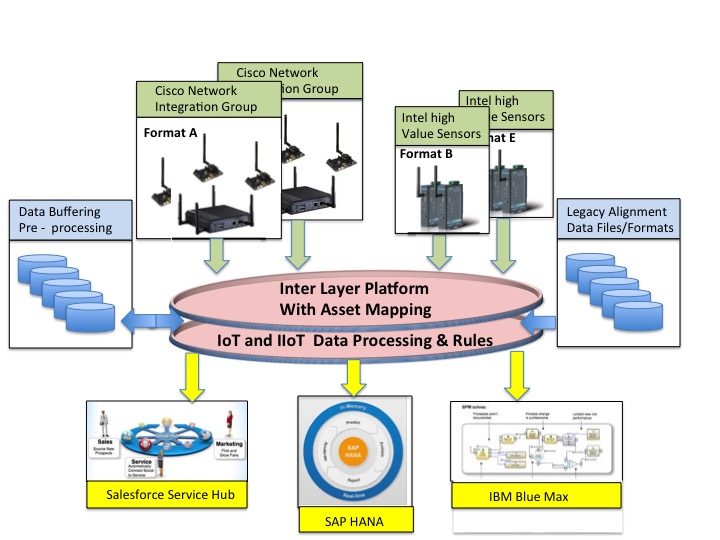
Understanding your Digital Business Model by its Business Functional Requirements for Operational Technology

Understanding your Digital Business Model by its Business Functional Requirements for Operational Technology

Part 1; Why your IT Operation can’t run your Digital Business Operations, and in turn, why your Digital Operations can’t run your IT Operations

Just for a moment lets stop thinking about all the pages, and pages, of well thought through comment on recognizing the market opportunities, the pressures to compete in new ways, the transformation challenges for the enterprise, even the new operating skills, and just focus on the Business Functional Requirements for Operational Technology that all of this requires.

That’s not to say any of this is wrong, but it is in danger of masking some basic functional changes that give rise to new core principles in choosing and operating both existing and new technologies in support of an Enterprise that would describe itself as operating a Digital Business model.

Recognizing this and defining by functionality shows your enterprise and its business activities to be clearly split into two halves. To get best business value out of each half means recognizing this point and understanding some very fundamental differences in the business and technology alignments. That’s doesn’t sound too hard to address, but the real challenge is just how different those two halves are; in every way not just in technically but also in business functionality.

One half corresponds to the Back Office where IT has transformed the cost and operational efficiency of operations internally by using large complex integrated enterprise applications. The automation of processes to flow across the enterprise as a set of ‘book to bill’, processes was as big a competitive game changer in its time as Digital Business is becoming today.

The other half, the new and non IT half, is focused on the Front Office of the enterprise, and is frequently defined as ‘Consumer IT’ for the very good reason that the ‘consumers’ of the technology choose what they want to use by their understanding how the business value they can gain.

In this new ‘half’ the focus has shifted towards using technology externally to win new revenues with new products out in the markets. That’s a very different reason for using very different technologies so not surprisingly it’s very different operationally. Digital Business itself is based on these consumer technologies that allow mass and common use across the Internet, if the technology elements were not simple and open, then there would be no Digital Business.

Perhaps we should describe Digital Business as taking advantage of the new opportunities created by common and freely available consumer based technologies? Frankly it makes more sense to think in this manner when considering how the Front Office use of technology should be operated.

The users working in the enterprise Digital Business Front Office are themselves consumers who understand the capabilities delivered and how to apply beneficially. The provisioning and operational complexity of technology has been hidden and simplified inside the ‘services’ model of external Cloud and App suppliers. For these Digital Business natives the agile, dynamic, sense and response environment based on Operational Attributed cost is far removed from the environment of the Back Office where the IT department is the supplier and operator of big capital investments.

However much as we try to define Front Office Digital Business technology as part of the responsibilities of the IT Department, it simply doesn’t fit with their experiences, methodologies or even operational deployment of new business requirements. But, and it’s a big but, the IT department can rightly see the core important issue of enterprise level integration, and wants to make sure that the enterprises Digital Business is going to work with the existing IT.

The IT department is right; whatever enterprises do to win business through Digital Business externally with new technologies, they still have to operate an efficient internal ‘Book to Bill’ set of IT processes in their Back Office.  On this fact Enterprise IT good practice certainly still rules, but IT departments are wrong about their role in operating the technologies of Digital Business!

If we take the right answer from the existing IT point of view, we know that the resulting ‘good practices’ will be so confining to Digital Business initiatives, and operations, as to defeat the requirement for ‘agile’, dynamic, ‘sense’ and ‘respond’ business models. One-size fits all IT methods simply cant be made to work! Wholly new technologies have created wholly new capabilities that in turn have created wholly new business requirements, operated in a wholly different manner!

In the Front Office of a Digital Business everything that makes up the Business model and Technology Operational model is totally different to that of the Back Office and IT. Failing to understand this andmuddling’ the two halves together in the business management transformation towards a ‘Digital Business’ model is a serious, but frequent, mistake!

Back Office IT is hugely important for continuing to operate the enterprises internal fulfillment processes at the right cost and level of efficiency. But it’s the Front Office Digital Business that’s going to drive an enterprise’s ability to really identify and win new business externally. It is a wholly different business requirement made possible by the ability to operate in a wholly different manner  using wholly different technology.

Most important of all, Digital Business is external, outside the firewall, relies upon integrating with people who aren’t part of your enterprise and are using their own technologies. Digital Business requires the creation of an entirely new technology environment to support an equally entirely new Business model for the Front Office.

The enterprises Front Office Digital Business doesn’t rely on deep technology skills, or the IT department to be the provider, or even operator, instead it is driven by people who know how to make use of these ‘consumer’ capabilities to win business. To these Business savvy users the technology model is simple and uses the capabilities of external service providers.

No wonder there is conflict between the two technology halves of the enterprise as there is so little in common; pretty obvious why there are challenges as to whether CIOs, (using their current role and methods), are the right people to support the enterprise Digital Business. The introduction of Chief Digital Officers, Chief Marketing Officers, and all the other titles, are just moves to address a need for the enterprise to operate a new and different environment in its Front Office Digital Business.

 By now those working in the Digital Business Front Office are probably saying ‘you are right let us operate our way to suit an entirely new environment’. And those working in Back Office IT are probably saying ‘its madness as this ignores enterprise level integrity and process integration’.

Clearly Digital Business Front Office activities must connect to, and do require, Back Office IT processes in order to provide the fulfillment of their sales!  Designing, building and managing the integration points is a job for IT as an extension of the Back Office good practices. Similarly providing an Enterprise infrastructure for managing Identities, Brokering Services etc. is equally a role for IT with its technology skills. It’s just the Day to Day operations of Digital Business in the Front Office made possible by an entirely new environment of User/Consumer based capabilities that is not the role for IT.

Lets try to make this a little clearer with some diagrams, starting in this case with defining the two halves of the Agile Digital Business Front Office and the Stable Business Fulfillment Back Office. An apology for the complex diagram but it’s a complex subject! Start by just read the boxes in red for the key points!

Enterprise's Business requirement for technology

In a series of following blogs these points will be examined in greater depth, starting next with the splitting out of three primary technology functions in the front office, and four different primary functions in the back office that in turn align with seven different business functionalities. Defining each, with its role, is the first step in understanding what and how to provision and manage to support a business requirement. The true challenge at an enterprise level is to excel in each for its unique element of competitive advantage as well as to seamless operate across the seven different business functions that are enabled by technology. This is the role of the eighth function, the most crucial of all, defining how the Front and Back Office inter-operates and in turn defining the choice of architecture and platform for the Digital Business Front Office.

Transforming to become a Digital Business means moving from ‘good to great’ performance as a fully integrated technology based enterprise, failing to grasp this takes us back to ‘bolt on’ e commerce web sites that took orders online, but relied on internal manual inputs to re enter into the existing order capture system!

Data to Decisions Digital Safety, Privacy & Cybersecurity Future of Work Marketing Transformation Matrix Commerce New C-Suite Next-Generation Customer Experience Tech Optimization Innovation & Product-led Growth AI ML Machine Learning LLMs Agentic AI Generative AI Analytics Automation B2B B2C CX EX Employee Experience HR HCM business Marketing SaaS PaaS IaaS Supply Chain Growth Cloud Digital Transformation Disruptive Technology eCommerce Enterprise IT Enterprise Acceleration Enterprise Software Next Gen Apps IoT Blockchain CRM ERP Leadership finance Customer Service Content Management Collaboration M&A Enterprise Service Chief Customer Officer Chief Digital Officer Chief Executive Officer Chief Financial Officer Chief Information Officer Chief Marketing Officer Chief People Officer Chief Procurement Officer Chief Supply Chain Officer Chief Technology Officer Chief Data Officer Chief Analytics Officer Chief Information Security Officer Chief Operating Officer

Event Report: Three Big Themes From #CES2015

Event Report: Three Big Themes From #CES2015

R-Wang-640x480


Innovation Is Alive And Well At CES

Screen Shot 2015-01-06 at 9.44.34 AM

Over 160,000 attendees from around the globe gathered in Las Vegas January 6th to 9th for the annual consumer tech pilgrimage. A few big themes have emerged that have cross over potential to other market segments:

  1.  Devices move from smart to smarter to smartly connected in an IOT world.  Manufacturers continued to show case the evolution of dumb devices to smarter and more connected devices.  This has impacted a wide range of devices from drones to self-quantification to even cars.  While IOT is once again a big theme this year, the real value of CES is showing where all this connectivity and insight can play a role in changing our lives.
  2. Continuity across devices and platforms.  As connected devices evolve, the insights gathered, studied, and shared will play a role in creating new ecosystems.  People will want to seamlessly move content and experiences across devices.  While standards have not emerged, the growing market to broker insights from these devices and sensor analytic ecosystems will create new market places where insights are brokered, remixed, and exchanged.
  3. A realization that mobile is more than just a device.  The notion of mobility moves way beyond devices.  What’s worn, where one travels, how one completes activities in motion defines mobility.  As material science improves and the ability to put a chip, an IP address, and a power source anywhere, new mediums emerge.  From rollable glass to textile technology, everything including fashion is technology enabled.

The Bottom Line: The Digital Lifestyle Permeates All Industries

Announcements at CES have always represented the latest thinking from the major consumer technology innovators.  As consumer tech trends permeate the culture, the three trends from Day 1, highlight the push to a digital lifestyle with no turning back.  Once the hype has subsided, expect these key concepts play roles in future business models as well as drive new fashion and cultural trends.


Your POV.

Ready for digital disruption by starting with mobile?  Add your comments to the blog or reach me via email: R (at) ConstellationR (dot) com or R (at) SoftwareInsider (dot) org.

Please let us know if you need help with your Digital Business transformation efforts. Here’s how we can assist:

  • Developing your digital business strategy
  • Connecting with other pioneers
  • Sharing best practices
  • Vendor selection
  • Implementation partner selection
  • Providing contract negotiations and software licensing support
  • Demystifying software licensing

Resources

Reprints

Reprints can be purchased through Constellation Research, Inc. To request official reprints in PDF format, please contact Sales .

Disclosure

Although we work closely with many mega software vendors, we want you to trust us. For the full disclosure policy,stay tuned for the full client list on the Constellation Research website.

* Not responsible for any factual errors or omissions.  However, happy to correct any errors upon email receipt.

Copyright © 2001 -2014 R Wang and Insider Associates, LLC All rights reserved.
Contact the Sales team to purchase this report on a a la carte basis or join the Constellation Customer Experience

The post Event Report: Three Big Themes From #CES2015 appeared first on A Software Insider's Point of View.


Future of Work Marketing Transformation New C-Suite Tech Optimization Innovation & Product-led Growth Event Report SoftwareInsider Executive Events Leadership Chief Customer Officer Chief Information Officer Chief Digital Officer Chief Technology Officer Chief Information Security Officer Chief Data Officer Chief Executive Officer Chief Experience Officer

2014 Cloud and Next Generation Applications Highlights - Month by Month

2014 Cloud and Next Generation Applications Highlights - Month by Month


After using the format for the HCM 2014 highlights, I will re-use the same for the cloud and next generation Applications in this post: So basically I revisited my blog posts of 2014 and determined which event in each month had the most impact, was the most important event one. One thing that became clear is that some months – January, February, July, August and December are slower months – so less to choose from – and March, April, May, September, October and November are more on the busy side. And of course it is to a certain point biased as I can only cover so much in a year.


So here we go:


January - IBM


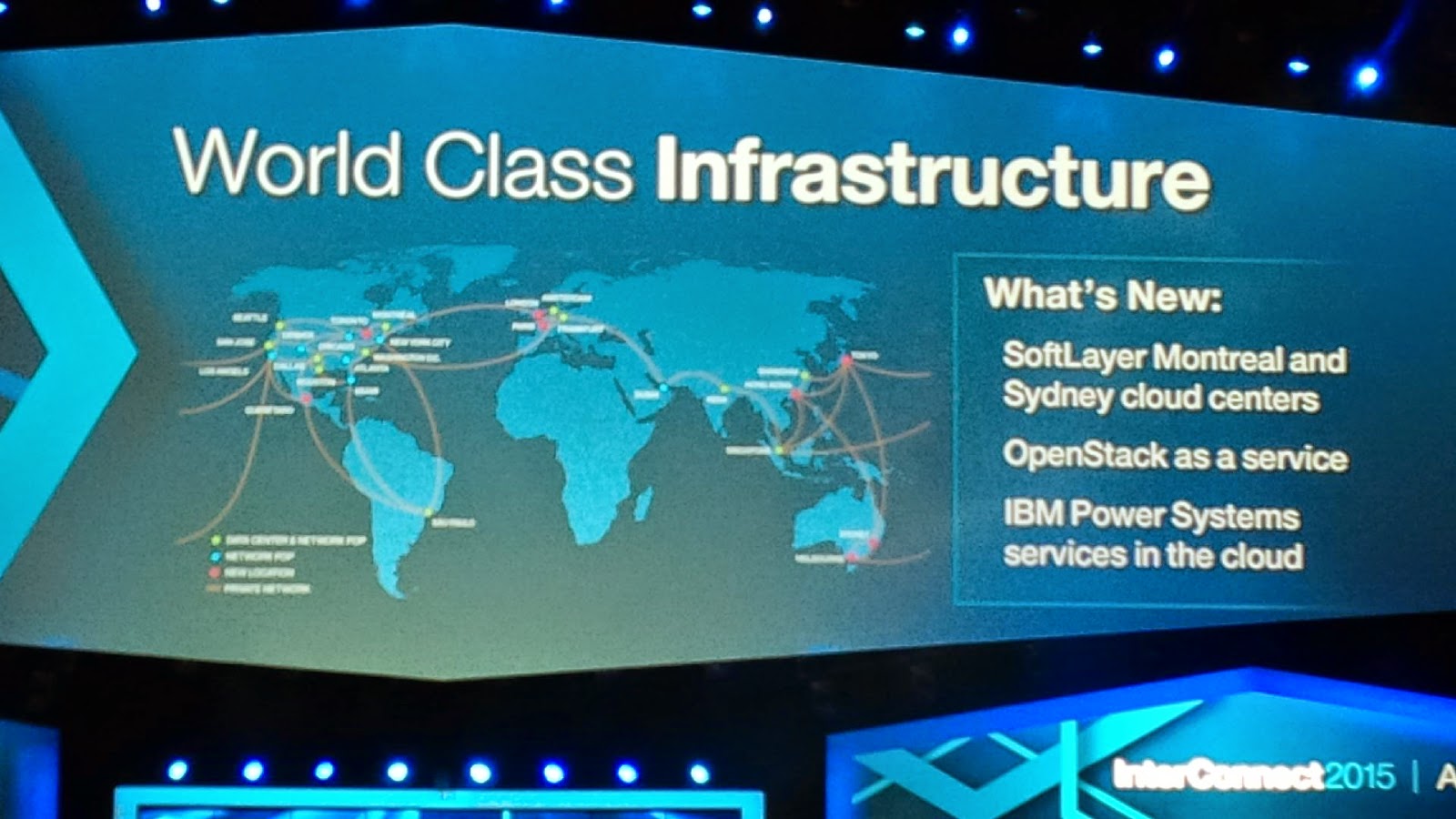
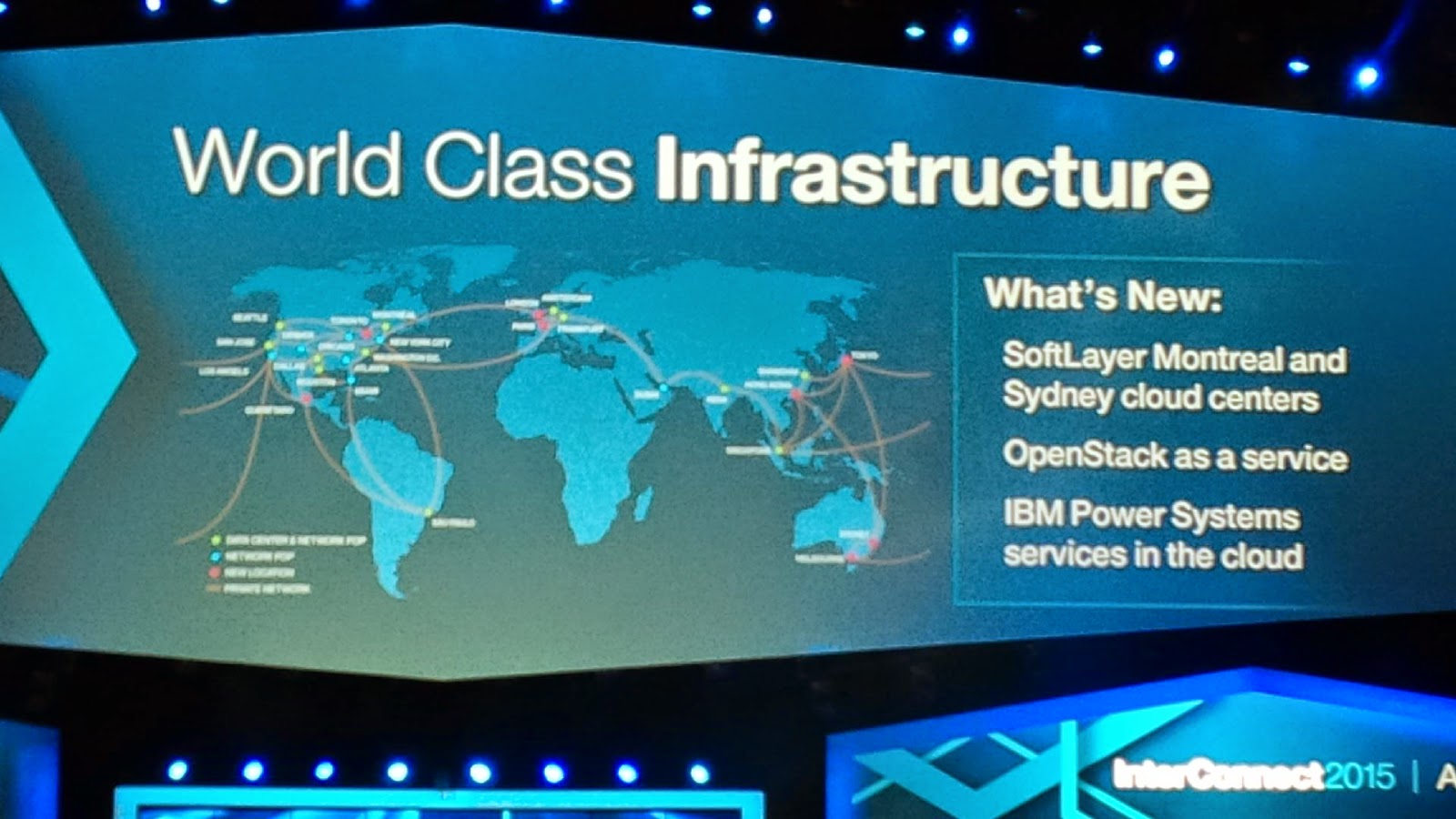
 Until January the major cloud competitors moved more or less in lockstep mode, European data center, Australian data center, China data center etc. were all milestones that across AWS, Google, Microsoft and IBM were achieving only a few months apart. But when IBM announced in January that it planned to roll out its cloud infrastructure to 40 locations in the next 24 months – that move remained un countered. And as we know throughout 2014 IBM rolled out a number of locations, and even raised the location target to 48 by end of 2014. Locations matter for cloud for two main reasons – one being compliance with legal and statutory requirements and the other for pure performance reasons. Anyone who has tried to access a server in the northern hemisphere from the southern hemisphere knows about this. So a good move by IBM as it gives the vendor a lead over other cloud vendors in some of the markets, key time for IBM to use its good ties to the enterprise and secure load to the IBM cloud. Load is the key that IBM needs when compared with AWS, Google, Microsoft who have considerate consumer load, and Oracle, SAP and Salesforce.com who have considerate B2B load either as real or potential load they need to tackle. It will be interesting to see in 2015 how IBM can capitalize on that lead. My blog post can be found here


February - IBM

 February was a relatively slow month and at the risk of being boring, the most important event went to IBM again, with the launch of its PaaS platform, BlueMix. A key event for the creation of next generation applications, where there is now a well-known vendor in the enterprise to rely on. Remarkable is also that IBM, contrary to tradition, is leveraging / OEMing Pivotal’s CloudFoundry as the platform for BlueMix. When a proven technology vendor like IBM uses an open source based platform it shows the complete turnaround we have seen in software platform development, starting from proprietary platforms and today arriving at large, community driven open source projects. But IBM did not rest here but put significant investment into the platform that stands and falls in the enterprise by providing attractive services while maintaining the IBM commitment to safety and reliability. And IBM also realized that BlueMix, next to its SaaS portfolio and Watson, is the largest driver it has under control to get critical load onto the SoftLayer powered IBM cloud. At the end of 2014 it is safe to say that this was a bold move by IBM that is starting to pay off both in mindshare with traditional enterprise customers as well as more dynamic startups and developer communities focusing the enterprise. How well IBM Cloud can still attract born on the web startups, like e.g. their banner reference WhatsApp, will be an area to watch in 2015.


March - Google & Oracle


And in March things got busier, and it was a tie for the most important news coming from Google and Oracle:

 Google’s cloud event was a key event in March and probably for all of 2014... While there was some speculation back in 2013 that there may be a two tier pricing in the cloud, a basic consumer one (dominated by AWS) and higher end enterprise one (still up for grabs) and the money was on Google to use its very high end infrastructure for the latter. Well that thought is now history, as with this Clear busy by Google in the race referred to as the ‘race to nothing’ in cloud, by basically giving away the Moore’s Law cost savings early in the year, and not at the end of the year or 12 month period. This mixed calculation created havoc for many cloud providers, but was also the death nail for most private cloud (or at least a temporary hold from which the projects have not recovered). And so far price leader AWS did not respond, at least right away. So kudos goes to Google for boldly going after more enterprise load and resetting the cloud cost curve, effectively giving the IT world a one (or so) year fast forward on the cost curve. If Google will repeat this in 2015 – which is widely expected – and key competitors will more or less match that move, then we will see much, much more public cloud adoption in 2015. Barring more security fiascos and NSA type concerns. Investing into private cloud will be very, very hard. But let’s wait and see. Read the blog post here.


For the first time Oracle gave a more detailed insight into its cloud plans to a select group of analysts in March. And while much of the briefings where under NDA, it’s clear that Oracle in 2014 really ‘gets’ cloud and is massively investing into its cloud capabilities. What was new was the positioning of a forth service dimension, Data as a Service (DaaS), next to the traditional IaaS, PaaS and SaaS. With the recent acquisition of Datalogix (more here) it is clear that Oracle does not see DaaS as a pure platform capability, but as synergetic play between DaaS and SaaS, which gives more flexibility to licensing models as well as creates a new level of stickiness for enterprise applications. The Oracle vision of the integrated technology stack, from the chip all the way to the end user application remains very compelling, 2015 will be a key year where Oracle will have to show similar success in IaaS and PaaS as it has shown in SaaS. How much re-platforming of the older SaaS products on the newer IaaS and PaaS offerings will require, is a key development to watch closely in 2015. Read my blog post here.


Honorable mention: Cisco launches its Intercloud. It was about time for the networking giant to go public on its cloud plans, and a network centric, collaboration focused cloud (using Cisco’s WebEx assets) certainly has compelling value for the enterprise. On the flipside a partner approach (see e.g. also HP) always faces challenges on the SLA, build out and consistency side. And overall Cisco’s efforts – aside from the acquisition of MetaCloud (read here) has gone more or less quiet. Cisco will have to redouble its efforts in 2015 if it want to play in the cloud game, and e.g. address how developers can build next generation (and e.g. network centric) applications in 2015. Read my blog post here.


April - Microsoft 

The most important event for me in April was Microsoft’s Build conference and the related developments both for cloud and next generation apps. Azure made massive progress, on the location and services side, but most of the key news were on the next gen apps side. In a surprise move Microsoft said it will create an open source style community for .NET and open source the .NET compiler "Rosslyn". Universal Apps are a key tool for developers on Microsoft platforms. Opening of Office APIs enables a whole set of new, next generation applications. And advances to Windows Mobile as well as commitments to support iOS and Android were well received by the developer community. Read my blog post here.


May - HP

In May HP threw its hat into the cloud ring – announcing HP Helion. HP has key software assets that could make the building of next generation applications on Helion (very) attractive. And HP understand the enterprise well, its indemnification clause on the open source code side and the mature service levels will help putting some concerns on cloud and open source to rest – even in the most conservative enterprise. The later in the year addition of Eucalyptus and with that Marten Mickos as cloud leader make HP a cloud vendor to watch in 2015 (more here). HP’s challenge, even more drastic than IBM’s is that it does not have load available both from a real and potential load perspective like AWS, Google, Microsoft and Oracle. Read my blog post here.


June - MongoDB

In June things tend to slow down, but the key event for me was MongoDB’s user conference in New York City. We see most next generation apps project including key database and data storage components. The interest that MongoDB has garnered in the enterprise was impressive to see. What helps MongoDB is that some of these new software development projects need to leverage NoSQL and BigData and with that play into MongoDB’s hands. 2015 will be key to see if MongoDB can monetize the many promising partnerships it has setup back in 2014. Read my blog post here.


July - SAP


In the usual quiet month of July SAP surprised us with a clear endorsement of open source – both with CloudFoundry and OpenStack. And while it remains still a little bit hazy what SAP is doing with CloudFoundry (we hear that hybris is building its next generation platform on CloudFoundry) the usage of OpenStack is pretty straight forward. Few enterprise vendors have such a diverse SaaS stack to manage like SAP. With new acquisitions coming in, the latest being Concur (read more here) and more likely to come, SAP needs a flexible way to manage its diverse cloud infrastructure and that makes SAP a perfect showcase for OpenStack. But the overall general data point is that (even) SAP embraces open source (anyone remember the SAP JVM?), another testament of the power of community based development and at the same time its acceptance in the enterprise world in 201x. Read my blog post here.


August - VMware


As we saw Cisco and HP getting formally into the cloud game, there was the realistic expectation that VMware would do the same at VMWorld. And hybrid cloud was more prominent than ever at VMWorld, but VMware still seems not to be ready to enable its on premise customers to aggressively move to the cloud. By now it’s clear that it’s not short term revenue generation that hinders VMware, but the realization that VMware needs to offer more than bare metal to escape and stay above the commoditization game. The solution is an attractive PaaS platform for their customers to build next generation applications. But that PaaS offering still needs to be created, and VMware teams are working hard to make that real in 2015, that will be key to watch. VMware remains uniquely positioned for this as no vendor understand the on premise load of enterprises better than VMware. It is about to get time where VMware needs to put that knowledge into cloud revenue. Read my blog post here.


September - SAP


When it comes to next generation applications, it is clear that these will not exist in a vacuum only, but will have to ‘play ball’ nicely with the existing enterprise applications. Which brings us to SAP and its long and thorny path to a PaaS message. So the key event for September was that SAP got not only the messaging right around the HANA Cloud Platform (HCP) but also addressed a number of issues that were holding it back previously. With key changes to the purpose, improved platform capabilities and improved licensing, HCP becomes an attractive platform for next generation applications in the enterprise. But a good start does not even guarantee a good intermediate position during a race and SAP will have to keep stretching to keep HCP an attractive platform in 2015. Read my blog post here.


October - Oracle 


As if the situation of VMware was equally clear to Oracle executives, the main messaging at Oracle OpenWorld was… PaaS. Oracle understands very well that it needs a strong PaaS layer to stay away from the bare metal price game. And with the Oracle Database, Java and MySQL it has attractive products developers need to build next generation applications. Oracle also made key advancements on the database side, releasing the Oracle Database In-Memory, which opens attractive hybrid next generation application scenarios for traditional database and in memory usage. With the co-existence with Hadoop style DBs, Oracle has achieved very good viability for its existing customers for next generation applications. How well Oracle can attract non Oracle shops in 2015 will be a key metric to watch. Equally on the Application Server side, Oracle has done a number of key additions that add to the attractiveness of the overall Oracle platform. The challenge for Oracle will be to get all things done in time, at a good quality and above the attractiveness gate keeper that is needed for new products. And while the team around Kurian is certain to pull this off in 2015 – it remains a herculean task. But there is no alternative for Oracle, the execution speed and quality will be key to monitor in 2015. Read my blog post here.


Honorable mention: Salesforce.com had its Dreamforce event in San Francisco, and its Salesforce1 platform is making good progress. And while the new ‘analytics’ with Wave are not ‘true’ analytics yet (read here for my definition), they address a long term reporting attractiveness issue. Mobile enhancements as well as PaaS enhancements were well received. Overall Salesforce.com understands very well that its future cannot only be SaaS but has to have an attractive PaaS components. From the traditional enterprise vendors Salesforce.com is doing probably the best job in developer outreach and engagement. And it will have to keep doing this, as its platform does not necessarily come to mind as the first option for building a next generation application, if outside of the enterprise space. But inside the enterprise space, extending Salesforce.com applications or building database centric, enterprise scale applications, that’s where Salesforce.com’s platform sweet spot is and it will be interesting to see how the market dynamics vs. other vendors with similar positioning (IBM, Oracle, SAP and maybe even Workday) will play out in 2015. Read my blog post here.


November - AWS

And November prove to be a busy months, the key event was the AWS re: Invent conference. AWS for the first time gave key insights into how it builds, operates and maintains its infrastructure, a key step for overcoming the black box image that AWS previously had. For enterprises to build the comfort level to put data into the public cloud they want more certainty that derives from tangibility and elimination of ‘magic’. Magic that is understood is great, magic that is uncertain created concerns. AWS has done a great job addressing this. On the product side both Aurora and lambda are key announcements for next generation applications. Aurora will mean the end of a lot of (bad) sharding code that is out there and not needed. And lambda is an intriguing capability to address BAM and CEP style applications, without having to rig up the infrastructure for it. And both are more PaaS like offerings that are key for AWS, as in the next 2-3 year it will have to compete with vendors that has platforms already – like IBM, Microsoft and Oracle. While 2013 was more on the SaaS side with Workspaces and 2014 added Amazon Zocalo – it is clear that AWS has realized that it needs to add attractive PaaS and productivity applications to its portfolio to generate load for its IaaS infrastructure. What moves AWS will be doing in this regard will be key to watch in 2015. Read my blog post here.


December - Constellation

A quiet month – and so I offer my 2015 prediction from our team post:


In 2015 technology leaders will need to create, adjust and implement their public cloud strategy. Considering estimates pegging Amazon AWS at 15-20% of virtualized servers worldwide, CIOs and CTOs need to actively plan and execute their enterprise’s strategy vis-à-vis the public cloud. Reducing technical debt and establishing next generation best practices to leverage the new ‘on demand’ IT paradigm should be a top priority for CIOs and CTOs seeking organizational competitiveness, greater job security and fewer budget restrictions. 


MyPOV

A lot of exciting progress in both cloud and next generation application offerings in 2014. With richer cloud offerings that de-emphasize IaaS and bring more PaaS in the forground we see good developments for enterprises to build modern applications in the cloud even more in 2015 than ever before. And it will become widely accepted best practice that next generation applications will be built in the cloud and no where else. And cloud is equally the enabler of key business trends as globalization and digital transformation. 

What were your 2014 Cloud and Next Generation Application takeaways?


Find more coverage on the Constellation Research website here.


New C-Suite Tech Optimization Innovation & Product-led Growth Next-Generation Customer Experience Data to Decisions Future of Work Digital Safety, Privacy & Cybersecurity HP mongodb cisco systems Google vmware salesforce IBM amazon SAP Oracle Microsoft SaaS PaaS IaaS Cloud Digital Transformation Disruptive Technology Enterprise IT Enterprise Acceleration Enterprise Software Next Gen Apps IoT Blockchain CRM ERP CCaaS UCaaS Collaboration Enterprise Service Chief Information Officer Chief Technology Officer Chief Information Security Officer Chief Data Officer Chief Executive Officer

Making cyber safe like cars

Making cyber safe like cars

This is an updated version of arguments made in Lockstep's submission to the 2009 Cyber Crime Inquiry by the Australian federal government.

In stark contrast to other fields, cyber safety policy is almost exclusively preoccupied with user education. It's really an obsession. Governments and industry groups churn out volumes of well-meaning and technically reasonable security advice, but for the average user, this material is overwhelming. There is a subtle implication that security is for experts, and that the Internet isn't safe unless you go to extremes. Moreover, even if consumers do their very best online, their personal details can still be taken over in massive criminal raids on databases that hardly anyone even know exist.

Too much onus is put on regular users protecting themselves online, and this blinds us to potential answers to cybercrime. In other walks of life, we accept a balanced approach to safety, and governments are less reluctant to impose standards than they are on the Internet. Road safety for instance rests evenly on enforceable road rules, car technology innovation, certified automotive products, mandatory quality standards, traffic management systems, and driver training and licensing. Education alone would be nearly worthless.

Around cybercrime we have a bizarre allergy to technology. We often hear that 'Preventing data breaches not a technology issue' which may be politically correct but it's faintly ridiculous. Nobody would ever say that preventing car crashes is 'not a technology issue'.

Credit card fraud and ID theft in general are in dire need of concerted technological responses. Consider that our Card Not Present (CNP) payments processing arrangements were developed many years ago for mail orders and telephone orders. It was perfectly natural to co-opt the same processes when the Internet arose, since it seemed simply to be just another communications medium. But the Internet turned out to be more than an extra channel: it connects everyone to everything, around the clock.

The Internet has given criminals x-ray vision into peoples' banking details, and perfect digital disguises with which to defraud online merchants. There are opportunities for crime now that are both quantitatively and qualitatively radically different from what went before. In particular, because identity data is available by the terabyte and digital systems cannot tell copies from originals, identity takeover is child's play.

You don't even need to have ever shopped online to run foul of CNP fraud. Most stolen credit card numbers are obtained en masse by criminals breaking into obscure backend databases. These attacks go on behind the scenes, out of sight of even the most careful online customers.

So the standard cyber security advice misses the point. Consumers are told earnestly to look out for the "HTTPS" padlock that purportedly marks a site as secure, to have a firewall, to keep their PCs "patched" and their anti-virus up to date, to only shop online at reputable merchants, and to avoid suspicious looking sites (as if cyber criminals aren't sufficiently organised to replicate legitimate sites in their entirety). But none of this advice touches on the problem of coordinated massive heists of identity data.

Merchants are on the hook for unwieldy and increasingly futile security overheads. When a business wishes to accept credit card payments, it's straightforward in the real world to install a piece of bank-approved terminal equipment. But to process credit cards online, shopkeepers have to sign up to onerous PCI-DSS requirements that in effect require even small business owners to become IT security specialists. But to what end? No audit regime will ever stop organised crime. To stem identity theft, we need to make stolen IDs less valuable.

All this points to urgent public policy matters for governments and banks. It is not enough to put the onus on individuals to guard against ad hoc attacks on their credit cards. Systemic changes and technological innovation are needed to render stolen personal data useless to thieves. It's not that the whole payments processing system is broken; rather, it is vulnerable at just one point where stolen digital identities can be abused.

Digital identities are the keys to our personal kingdoms. As such they really need to be treated as seriously as car keys, which have become very high tech indeed. Modern car keys cannot be duplicated at a suburban locksmith. It's possible you've come across office and filing cabinet keys that carry government security certifications. And we never use the same keys for our homes and offices; we wouldn't even consider it (which points to the basic weirdness in Single Sign On and identity federation).

In stark contrast to car keys, almost no attention is paid to the pedigree of digital identities. Technology neutrality has bred a bewildering array of ad hoc authentication methods, including SMS messages, one time password generators, password calculators, grid cards and picture passwords; at the same time we've done nothing at all to inhibit the re-use of stolen IDs.

It's high time government and industry got working together on a uniform and universal set of smart identity tools to properly protect consumers online.

Stay tuned for more of my thoughts on identity safety, inspired by recent news that health identifiers may be back on the table in the gigantic U.S. e-health system. The security and privacy issues are large but the cyber safety technology is at hand!

New C-Suite Digital Safety, Privacy & Cybersecurity Infosec Security Zero Trust Chief Information Officer Chief Information Security Officer Chief Privacy Officer

The consumerization of security

The consumerization of security

Increasingly, commentators are calling into question the state of information security. It's about time. We infosec professionals need to take action before our customers force us to.

Standard security is just not intellectually secure. Information Security Management Systems and security audits are based on discredited quality management frameworks like ISO 9000 and waterfall methodologies. The derivative PCI-DSS regime mitigates accidental losses and amateur attacks but is farcically inadequate in the face of organised crime. The economics of perimeter security are simply daft: many databases are now worth billionsof dollars to identity thieves, but they're protected by meagre firewalls and administrators with superuser privileges on $40K salaries. Threat & Risk Assessments have their roots in Failure Modes & Criticality Analysis (FMECA) which is hopeless in the highly non-linear and unpredictable world of software, where a trivial mistake in one part of a program can have unlimited impact on the whole system; witness the #gotofail episode. Software is so easy to write and businesses are so obsessed with time to market that the world now rests on layer upon layer of bloated spaghetti code. The rapidity of software development has trumped quality and UI design. We have fragile home computers that are impossibly complex to operate safely, and increasingly, Internet-connected home appliances with the same characteristics.

We can't adequately protect credit card numbers, yet we're joy-riding like a 12-year old on a stolen motorcycle into an Internet of Things.

We're going to have to fix complexity and quality before security stands a chance.

Maybe the market will come to the rescue. Consumers seem to tolerate crappy computer quality to some degree, doubtless weighing up the benefits of being online versus the hassle of the occasional blue screen or hard drive crash. But when things like cars, thermostats and swimming pool filters, which don't need to be computers, become computers, consumers may make a harsher judgement of technology reliability.

Twenty years ago when I worked in medical device software -- pre-Internet, let alone the Internet of Things -- I recall an article about quality which predicted the public would paradoxically put up with more bugs in flight control software than they would in a light switch. In a way, that analysis predicted one of the driving forces for technology today: consumerization.

New C-Suite Digital Safety, Privacy & Cybersecurity Infosec Security Zero Trust Chief Information Officer Chief Information Security Officer Chief Privacy Officer