Results

Salesforce debuts Agentforce: Will enterprises pay $2 per AI agent conversation?

Salesforce is rolling out AI agents via its Agentforce platform across its core clouds including Sales, Service, Marketing and Commerce. What remains to be seen is whether enterprises will pay $2 per conversation for Agentforce assuming no volume discounts.

The news drop from Salesforce wasn't that surprising given that CEO Marc Benioff has been talking about Agentforce and agentic AI since the company's second quarter earnings call. In addition, Salesforce has had a steady drumbeat of agentic AI themes leading up to Dreamforce. Benioff even previously mused about the $2 per Agentforce conversation model

Salesforce's biggest issue with Agentforce is that the AI agent bandwagon has rapidly filled up. ServiceNow's Xanadu release this week included AI agents and Google Cloud CEO Thomas Kurian also talked monetization for agentic AI. Oracle at CloudWorld also had some AI agent mojo.

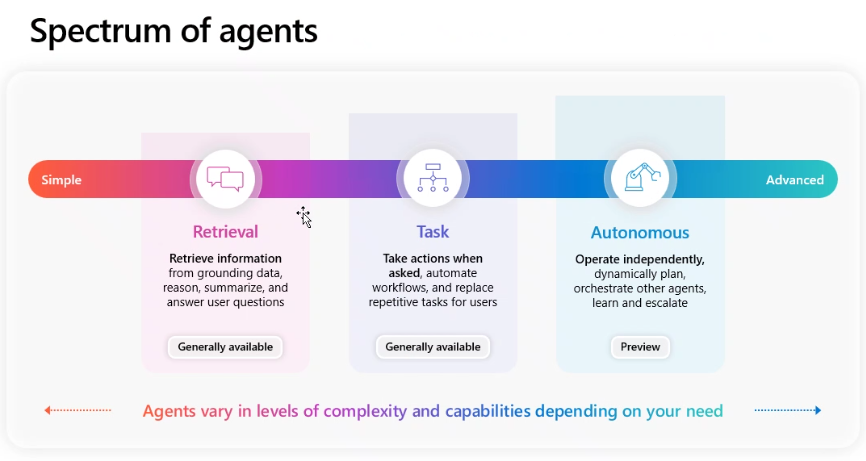
Dreamforce 2024 is really about showing what Agentforce can do and move the conversation up the stack away from generative AI copilots to digital agents that are autonomous and can act on your behalf. Much of the technology behind Agentforce was acquired in last year's Airkit.ai purchaseSalesforce's acquisition of Own highlights small ball approach to M&A

Salesforce is also trying to thread the needle between blending humans and AI focusing on core strengths. In this AI agent vision applied to sales, humans focus on relationship building, industry knowledge, collaboration and goal setting while agents scale by answering questions, booking meetings, researching and collecting information.

Key items to know about Agentforce:

  • Data Cloud sits at the center of Agentforce as well as every Salesforce app. Data Cloud puts together all of the customer data as well as metadata.
  • Salesforce's Atlas Reasoning Engine is the brain behind Agentforce. Atlas is built on proprietary code that's designed to simulate how humans think and plan. The system evaluates user queries, refines them, retrieves data and then makes a plan to execute. Plans are then refined.
  • Agentforce has native integration with MuleSoft, Salesforce Flow and Apex.
  • Einstein Copilot has been upgraded as an agent under the Agentforce banner.
  • Agentforce will include Agent Builder to customize out-of-the-box agents, Model Builder and Prompt Builder.
  • Agentforce partners include AWS, Box, Coupa, Google, IBM, Workday, Zoom and others. This partner network has built more than 20 agents and agent actions available via Salesforce AppExchange.
  • Agentforce for Service and Sales will be generally available Oct. 25 with some components of the Atlas Reasoning Engine launching in February.

The upshot here is that Salesforce's clouds are now unified one core platform with Revenue and Orders Cloud, Marketing, Commerce and Tableau all on the same underpinning as Sales, Service, Platform and Industries. Data Cloud is the common thread.

Constellation Research analyst Holger Mueller said that the real story is the infrastructure behind the agents. 

"While the front end aspects of agent announcements are taking all the limelight it's the behind-the-scenes architecture innovation that is critical. This infrastructure is the difference in changing the future of work for people. And Salesforce has laid the foundation with its Data Cloud and now it's Atlas reasoning engine, combined with low code/no code across the key agent platform. Being able to compose performing agent applications through conversations is key to increase developer velocity and productivity." 

Ahead of Dreamforce, Salesforce highlighted a pair of Einstein Sales Agents including SDR (sales development representative) and a Sales Coach to enhance sales rep results. The company noted that agents are more impactful than bots because they are dynamic, outcome oriented and can adapt to various situations.

For Salesforce, Agentforce is the connective tissue that'll make the company's various clouds a cohesive platform.

Salesforce is going to back up Agentforce with an ongoing cadence of Data Cloud apps, Sales AI copilots and tools to accelerate value.

Here's a look at Salesforce's Agentforce lineup beyond SDR and Sales Coach:

  • Service Agent will replace chatbots with AI without preprogrammed scenarios.
  • Merchant aims to assist ecommerce merchandisers with promotions, site setup, goal setting, product descriptions and insights.
  • Buyer will help buyers find products, purchase and track orders via chat or portals.
  • Personal Shopper acts as a concierge on ecommerce sites.
  • Campaign Optimizer automates, analyzes, generates and optimizes marketing campaigns.
Data to Decisions Future of Work Innovation & Product-led Growth Tech Optimization Next-Generation Customer Experience Digital Safety, Privacy & Cybersecurity salesforce AI GenerativeAI ML Machine Learning LLMs Agentic AI Analytics Automation Disruptive Technology Chief Customer Officer Chief Information Officer Chief Marketing Officer Chief Revenue Officer Chief Data Officer Chief Executive Officer Chief Technology Officer Chief AI Officer Chief Analytics Officer Chief Information Security Officer Chief Product Officer

Ford Pro aims to be software business focused on TCO

Ford CFO Navin Kumar sounds like an enterprise software executive when he talks about Ford Pro, a unit focused on vehicles for businesses, and total cost of ownership, data and subscriptions.

Speaking at Goldman Sachs Communacopia + Technology Conference, Kumar noted the flywheel of data, vehicles, telematics, uptime and customer experience. Ford Pro includes commercial vehicles, all-electric trucks and vans and various services including telematics, telematics with dashcam, data services and fleet management.

The Ford Pro strategy is similar to Rivian's model: Build a fleet, create a data flywheel and deliver a great customer experience. See: How Rivian Data, AI, and a Software-Defined-Vehicle Strategy Is Paying Off

Kumar noted that Ford Pro has 600,000 paid software subscriptions and 32 dedicated elite service centers with 100 operational by 2026. Mobile repair orders grew 100% from a year ago in the second quarter. In the second quarter, Ford Pro delivered EBIT of $2.6 billion on revenue of $17 billion, up 9% from a year ago. Demand was driven by Super Duty trucks and Transit commercial vans. Demand for those vehicles outpaced production.

Kumar said:

"We're building out a fast, reliable, data driven service network that keeps vehicles on the road. And for Pro, this is a virtuous cycle. The more software subscriptions we have, the more data intelligence and analytics that flows into how our customers can operate their fleets more efficiently, how we can service these fleets more effectively and also make the software better and better.

So, for Pro, growing our software across all customer channels and use cases really builds out an intelligence mode that sustains our market leadership and helps our customers improve their bottom line."

Kumar said Ford Pro is looking to integrate hardware, software and cloud applications to improve customer productivity and uptime. "Our service is getting smarter and much more proactive to minimize vehicle downtime. For our customers, that's improving their bottom line. And for Pro, it is diversifying and growing our business into higher margin software and services which are more durable earnings streams," said Kumar.

Related: General Motors needs to fix its software issues quickly

Ford Pro is expanding into fleet management for small and medium sized businesses with a focus on driver management, inventory management, service scheduling and parts expense management.

Kumar said the telematics dashboard blended ARPU is about $20 per month and can vary based on size of fleet and use cases. Data services are priced lower. Rental companies want a full data pipe and the pricing starts at $5 a month and expands. On a blended basis, Ford Pro is seeing ARPU between $7 to $8 a month.

Kumar said:

"We run our software team like a software business. You have annual recurring targets, you have gross margin targets, you have churn targets. But from an enterprise standpoint, we want as many vehicles connected and need vehicles in our ecosystem that could drive differentiation and uptime and productivity. That has dividends when it comes to vehicle loyalty and market share leadership and growing our service parts business. From an enterprise holistic mix standpoint, it's about subscription growth."

Ford Motor is using Google Cloud's deep learning services to build simulations for virtual wind tunnels to replace computational fluid dynamics. Ford also leverages Google Cloud's database services

Data to Decisions Next-Generation Customer Experience Innovation & Product-led Growth Tech Optimization Future of Work AI ML Machine Learning LLMs Agentic AI Generative AI Analytics Automation B2B B2C CX EX Employee Experience HR HCM business Marketing SaaS PaaS IaaS Supply Chain Growth Cloud Digital Transformation Disruptive Technology eCommerce Enterprise IT Enterprise Acceleration Enterprise Software Next Gen Apps IoT Blockchain CRM ERP Leadership finance Customer Service Content Management Collaboration M&A Enterprise Service Chief Information Officer Chief Technology Officer Chief Digital Officer Chief Data Officer Chief Analytics Officer Chief Information Security Officer Chief Executive Officer Chief Operating Officer

Zoho Analytics revamp aims to connect, BI, data scientists, business users

Zoho launched a new version of Zoho Analytics that includes more than 100 enhancements in a bid to appeal to data scientists who can then feed business users easy to consume insights and models.

The company added multiple artificial intelligence (AI) and machine learning (ML) features to Zoho Analytics including an ML model-building studio, integration with OpenAI, and more than 25 connectors to third party business intelligence systems.

With the launch of Zoho Analytics 6.0, Zoho is looking to converge AI and ML in the context of business intelligence (BI) workflows with Zoho Flow integration. The bet is that Zoho and its pricing model can bring "AI-powered self-service BI" to multiple enterprise personas.

Historically, data science has been too complicated for broad business user adoption. Zoho Analytics is looking to bridge that data scientist/business user gap with a new DSML Studio for data science and machine learning and be one pane of BI glass via integration with Salesforce Tableau, Microsoft's PowerBI and other third-party platforms.

The new version of Zoho Analytics touches on many of the themes that Constellation Research analyst Doug Henschen has been highlighting including the combination of BI and generative AI, value plays in BI, and the importance of embedded analytics. “Zoho Analytics’ greatest strength is the value that it offers for very little money,” said Henschen. “The latest upgrade adds yet more features, particularly augmented analytics and data science capabilities, to bring more value to an already competitive platform.”

In a blog post, Henschen added:

"Zoho is not just a cost-competitive disruptor in the CRM, personal productivity and collaboration spaces; since 2009 the company also has been steadily gaining market share in the business intelligence (BI) and analytics arena."

According to Raju Vegesna, Chief Evangelist for Zoho, Zoho Analytics, which launched as Zoho Reports in 2009, is the first offering that integrates the company's investments over the last decade. Those investments include automation, no-code and low-code development, third party integration, machine learning and Zoho's Zia AI engine.

Zoho Analytics is part of Zoho Enterprise but can be purchased as a standalone application. Zoho Analytics has more than 17,000 standalone users up from 10,000 in 2020. Via the Zoho One suite, Zoho Analytics has more than 70,000 businesses that tap into the platform daily.

"The latest version of Zoho Analytics is one of the first solutions from the company that takes advantage of every one of these decades-long investments," said Vegesna. "The result is a democratized platform that is powerful, intelligent, and flexible enough to benefit everyone and anyone."

Zoho Analytics has four plans, the most popular plan is Premium at $115 a month billed annually for 15 users and 5 million rows. Zoho Analytics Enterprise is $455 a month billed annually for 50 users and 50 million rows. Additional users are $6.40 per user per month billed annually. Viewers are $80 for 25 viewers per month billed annually.

“The buying option that makes sense for organizations with 100 or more employees is Zoho Analytics Enterprise, which bundles everything, including Zoho Data Prep, Zia Insights, Ask Zia, Auto Analysis, DSML Studio, the analytic portal, and higher-level allowances for data connectors, storage, data refreshes, alerts, scheduled report delivery, and more,” said Henschen.

Here's a look at Zoho Analytics by category.

Data Management Hub

Zoho Analytics gets expanded data management tools including Stream Analytics, ETL data pipelines, metric enhancements and a bevy of connectors.

According to Zoho, Zoho Analytics now has more than 500 data connectors by adding 25 new connectors including streaming source options Google Cloud Pub/Sub, Kafka and the PubNub platform.

Zoho also made Zoho Analytics more accessible by giving business users the ability to create and manage ETL data pipelines, visual builder tools to build custom transforms and ML models with Python Code Studio. Zoho Analytics is also infused with Zoho's natural language with Ask Zia.

Zoho Flow, the vendor’s optional workflow engine, also is integrated with Zoho Analytics to orchestrate data pipelines. In addition, Zoho Analytics gains a new Metrics Layer to manage all business metrics in one place. Data apps can also consume the same metrics as Zoho Analytics Headless BI mode.

Generative AI

Throughout Zoho Analytics, Zoho has added generative AI capabilities. The platform features Open AI integration with retrieval-augmented generation (RAG) using Open AI APIs and bring your own keys. Users can more easily find public datasets and create formula and SQL queries.

Other genAI additions to Zoho Analytics include:

  • Zia Insights, Zoho's automated insights engine, now provides diagnostic analytics contextually.
  • Ask Zia, Zoho's natural language query AI copilot, now allows users to trigger actions and build custom data models. The Ask Zia Bot can also be integrated with instant messaging platforms including Microsoft Teams.
  • Auto Analysis, a tool within Zoho Analytics, has been enhanced to take advantage of the Metrics Layer and automatically generate metrics, reports and dashboards.

Data Science and Machine Learning Studio

Zoho added the Data Science and Machine Learning (DSML) Studio to Zoho Analytics. DSML Studio enables users to build custom machine learning models for business use cases.

DSML Studio includes:

  • AutoML, a no-code assistant to build custom ML models, to train, test, compare and deploy models.
  • Code Studio, a new Python code environment to create custom ML models. Code Studio can import Python models and external built libraries.

Extensibility

Zoho Analytics has a no-code builder for data connectors, actions, BI fabric and software developer kits.

Here's a look at other extensibility features:

  • BI fabric gives Zoho Analytics to consolidate insights from multiple BI platforms including Power BI and Tableau into one portal.
  • Zoho Analytics users can trigger actionable workflows and integrates with Zoho Flow, which has more than 500 app triggers.
  • No-code data connector builder to bring data from custom applications. Data connectors can be sold on Zoho Marketplace.

Data to Decisions Innovation & Product-led Growth Sales Marketing Next-Generation Customer Experience Tech Optimization Future of Work Digital Safety, Privacy & Cybersecurity zoho intel Marketing B2B B2C CX Customer Experience EX Employee Experience AI ML Generative AI Analytics Automation Cloud Digital Transformation Disruptive Technology Growth eCommerce Enterprise Software Next Gen Apps Social Customer Service Content Management Collaboration Machine Learning LLMs Agentic AI business SaaS PaaS IaaS Enterprise IT Enterprise Acceleration IoT Blockchain CRM ERP finance Healthcare Chief Information Officer Chief Data Officer Chief Technology Officer Chief Information Security Officer Chief Executive Officer Chief AI Officer Chief Analytics Officer Chief Product Officer

Zoho Advances Its Value-Leading Analytics and Business Intelligence Platform

Zoho Analytics 6.0 brings AI-infused upgrades to data management, natural-language interaction, and data science capabilities – all at superow prices. 

Zoho is not just a cost-competitive disrupter in the CRM, personal productivity, and collaboration spaces; since 2009 the company also has been steadily gaining market share in the business intelligence (BI) and analytics arena. Zoho Analytics 6.0, the latest upgrade of the vendor’s BI and analytics platform, announced on September 12, ups the ante by adding advanced, artificial intelligence (AI)-powered capabilities for data management, natural-language (NL) interaction, and data science. Although some of the tools are aimed at data professionals, they’re integrated with a platform that brings the power of insight, prediction and action back to ordinary business users.

There’s no doubt that competitive pricing has a lot to do with Zoho Analytics’ adoption by more than 17,000 organizations and three million users. What buyer would not at least consider a BI and analytics platform with all-inclusive pricing that comes in at less than $10 per user, per month (based on the annual pricing of Zoho Analytics Enterprise)? That does not mean that customers must sacrifice much when it comes to functionality. Zoho stays competitive with state-of-the-industry features, as plified by the three Zoho Analytics 6.0 upgrade themes detailed below.

Going Deeper on Data Integration and Data Management   

To recap some of the basics of Zoho Analytics, the platform is most often purchased as a multitenant software-as-a-service (SaaS) offering that runs on Zoho Cloud, which operates 16 data centers around the globe, with redundant data centers in North America, Europe, India, China, Japan, Saudi Arabia, and Australia. Zoho Cloud has stringent, transparent privacy policies and meets compliance requirements in multiple countries and jurisdictions (including the California Consumer Privacy Act in the U.S. and the General Data Protection Regulation in Europe).

Zoho Analytics is also available as a server-based offering deployable through the Amazon Web Services (AWS) and Microsoft Azure marketplaces or by customers themselves on other public clouds or on private clouds.

Where data integration and data management are concerned, Zoho Analytics offers out-of-the-box connections with more than 500 data sources, including cloud and on-premises databases, popular productivity tools and business applications, files, feeds, and spreadsheets. Zoho DataPrep, included with Zoho Analytics Enterprise, supports automated data modeling and blending, smart (augmented) data cleansing, no-code data transformation, data enrichment, and data cataloging.

Zoho Analytics 6.0 upgrades include new data modeling capabilities and a metrics store, above, that helps ensure consistency and promote reuse of approved metrics and measures.

Zoho Analytics 6.0 enhances the platform’s data integration and data management capabilities by offering the following:

  • New data connectors, including streaming options.  The pace of business is always accelerating, so Zoho has added pre-built connectors for popular streaming sources Google Cloud Pub/Sub, Kafka and the PubNub platform for real-time applications. Among the 25 other new connectors added with version 6.0 are app integrations with Oracle NetSuite, Expensify, and Monday.com, and data source integrations with Databricks, Google Cloud Storage, Neo4J, and Yellowbrick.
  • Ask Zia NL assistance within Zoho DataPrep.  In the 6.0 release, Ask Zia, Zoho’s NL copilot, has been added to Zoho DataPrep. Users can now simply ask it to “remove duplicates” or “join two datasets,” for example, to clean up or enrich data.
  • New metrics layer. Semantic modeling capabilities help to ensure data consistency, reliability, and reusability, so Zoho is stepping up on this front in Zoho Analytics 6.0 by adding data modeling capabilities, a metrics store, and deeper access control capabilities. The upgrade will make it easier to provide and secure consistent data and to standardize and reuse key performance measures.
  • Zoho Flow integration. The vendor has integrated Zoho Data Prep with Zoho Flow, the vendor’s lightweight workflow engine, providing an (extra-cost) option to meet more sophisticated data pipelining and data orchestration requirements.

Infusing AI Across the Platform

Generative AI (GenAI) continues to grab lots of attention, but it’s not the only form of AI that’s driving innovation. Zoho is infusing a variety of AI capabilities into Zoho Analytics to speed analysis and derive deeper insights:

  • Zia Insights gets diagnostic. Zia Insights is an existing AI/machine learning (ML)-powered automated insights feature that helps users spot variances, outliers, and trends; do comparative analysis; and get top insights through NL explanations. In the 6.0 release, Zia Insights gains diagnostic capabilities for root-cause analysis. This helps to answer the “why” questions, explaining with short NL narratives the key drivers behind changes in any measure or key performance indicator (KPI).
  • Ask Zia adds actions, languages and integrations. As of the 6.0 release, Ask Zia can handle complex calculations and trigger actions. For example, you can Ask Zia to create a new calculated field, generate a new report containing that field, and then send a PDF copy of the resulting report to specific users or groups. Ask Zia is also now multilingual, understanding and generating French and Spanish as well as English. Finally, the Ask Zia Bot can now be integrated with collaboration/messaging platforms such as Microsoft Teams, bringing NL analysis capabilities outside of the context of reports and dashboards.
  • Auto Analysis generates high-value reports and dashboards. Now that Zoho Analytics has a metrics layer, the platform’s augmented Auto Analysis feature has been enhanced to automatically generate metrics, reports and dashboards. With the click of a button, Auto Analysis can generate dashboards focusing on, for example, sales analysis, net revenue analysis, ad spend, or sales versus net spend. In case the results don’t quite fit the needs of the organization, customization features are available to tweak the automated output.
  • Open AI integration. Zoho Analytics’ bring-your-own-key (BYOK) integration with Open AI has been enhanced to provide contextual assistance for SQL query creation, metrics generation, and data-enrichment using public datasets. The integration also now supports retrieval augmented generation (RAG) against customer data without data sharing. To ensure security and privacy, only underlying metadata is shared with OpenAI.

Supporting Data Science and Machine Learning

Many organizations want to go beyond descriptive and diagnostic analytics – rearview analysis of what happened and why. They want to graduate to predictive and prescriptive analytics – gaining insight into what will happen and what should be done about it. Following this interest, many BI and analytics vendors are moving into the predictive domain.  

in the 6.0 release, Zoho is adding a new DSML Studio supporting-- you guessed it--data science and machine learning. DSML Studio is aimed at data scientists, data engineers and savvy data analysts, but once their data transformation and modeling work is done, the resulting predictive results can be shared with the broad base of ordinary business users through reports, dashboards, key metrics and so on. Salespeople, for example, could be exposed to leads predicted to be most likely to convert, and service agents could see if customers they are busy supporting are likely to churn.

Zoho Analytics’ new DSML Studio and its AutoML feature help customers go beyond descriptive and diagnostic analytics and move into the predictive realm.

  • AutoML.  DSML Studio’s AutoML feature draws from an assortment of pre-built algorithms – XGBoost, decision tree, random forest, adaptive boost, linear regression and so on – and automates feature selection, model selection, and hyperparameter tuning based on the selected data and type of prediction desired. The feature also supports testing, deployment, and management of resulting models.
  • Code Studio. Aimed more squarely at data scientists, DSML Studio’s Code Studio component is an integrated Python environment for custom model development.

Constellation’s Analysis

There’s more to the Zoho Analytics 6.0 upgrade, including analytic portal integration with Tableau and Power BI, but the overarching theme is adding more features, more AI/ML/GenAI capabilities, and more value to an already competitive platform.

As I detailed in my in-depth analysis of Zoho Analytics, among Zoho Analytics’ few weaknesses are the fact that it’s available as a service only on Zoho Cloud. That’s not a concern for customers using other Zoho apps that also run on Zoho Cloud, but customers with data concentrated on AWS, Azure, or Google Cloud have a choice: either live with cloud data connections (and their potential latency) or self-manage Zoho Analytics on a third-party cloud. One other drawback: Zoho Analytics is a view-only system lacking write-back capabilities, a drawback in certain embedded scenarios where interactivity with parent applications is desirable.

Again, Zoho Analytics’ greatest strength is the value that it offers for very little money.  There are entry-level price points, but the buying option that makes sense for any organization with more than 100 employees is Zoho Analytics Enterprise, which starts at $455 per month for 50 users, based on an annual subscription. Best of all, the Enterprise package includes everything, including Zoho Data Prep; Zia Insights; Ask Zia; Auto Analysis; DSML Studio; the analytic portal; and higher-level allowances for data connectors, storage, data refreshes, alerts, scheduled report delivery, and more.  

One last point I’ll make is about the Zoho Analytics support experience, which is “fantastic,” according to customer Kris James of Sparex. That’s not something I’m used to hearing from a lot of BI and analytics customers.

Data to Decisions Tech Optimization Innovation & Product-led Growth Future of Work Next-Generation Customer Experience Digital Safety, Privacy & Cybersecurity Sales Marketing intel ML Machine Learning LLMs Agentic AI Generative AI Robotics AI Analytics Automation Quantum Computing Cloud Digital Transformation Disruptive Technology Enterprise IT Enterprise Acceleration Enterprise Software Next Gen Apps IoT Blockchain Leadership VR Marketing B2B B2C CX Customer Experience EX Employee Experience Growth eCommerce Social Customer Service Content Management Collaboration business SaaS PaaS IaaS CRM ERP finance Healthcare Chief Information Officer Chief Analytics Officer Chief Data Officer Chief Technology Officer Chief Executive Officer Chief AI Officer Chief Information Security Officer Chief Product Officer

Dell Technologies COO Clarke: Data gravity will drive enterprise genAI infrastructure demand

Dell Technologies Chief Operating Officer Jeff Clarke said “there’s no question that AI is coming to the enterprise” due to data gravity and proprietary information that won’t be moved to the cloud.

Today, the generative AI buildout is primarily driven by cloud service providers, but enterprises are starting to drive demand. Indeed, Dell Technologies and HPE saw strong growth in AI servers with enterprises becoming part of the mix.

Speaking at the Goldman Sachs Communacopia + Technology conference, Clark said:

“There's no question AIs coming to the enterprise. One through all the data is, and data is very expensive to move. And in many cases, that is proprietary is unique. It's part of your business model, your value add, your secret sauce. It's not going to be transferred into other things. So, data gravity is clearly driving AI over time to the enterprise.”

Clarke added that there are five foundational models trained on anywhere from 30- to 50-terabytes of data. “Dell has hundreds of petabytes of data and we’re not unique. Let’s just say it’s all value-added data for the moment,” said Clarke. “We're going to do fine tuning and run inference on our data to make us serve our customers better. And every customer is going to go through that same sort of calculus. They're going to try to understand what part of their data allows them to serve their customers better, produce their products and services better, serve their customers better in terms of services or end user services.”

What will be different with enterprise AI will be the deployment model. Clarke said hyperscale cloud providers are buying AI infrastructure in bulk. Enterprises aren’t likely to deploy AI in large clusters. “They’re going to deploy it as a model here and a usage model there,” said Clarke. “We’re seeing customers experiment.”

Clarke added that enterprises are also upgrading servers with AI capabilities to replace older hardware from the COVID-19 pandemic. “We went through the longest digestion period in the history of the server marketplace eight quarters. Data centers are full of older products,” he said.

As for use cases, Clarke said genAI use cases boil down to the big five. “Five primary use cases really are driving what we see in enterprise. One is around cogeneration. Two is around agents and sales assistance. Three is a focus on content creation, content automation. Four is around customer service and the fifth is around supply chain. Those use cases are universal across most companies,” he said.

Enterprise demand is also being driven by a few verticals. Clarke cited financial services and quant traders being aggressive with AI. Pharmaceuticals are another area as is healthcare. Industrials, manufacturing and oil and gas are also driving enterprise AI demand.

Tech Optimization Data to Decisions Innovation & Product-led Growth Future of Work Next-Generation Customer Experience Digital Safety, Privacy & Cybersecurity Big Data AI GenerativeAI ML Machine Learning LLMs Agentic AI Analytics Automation Disruptive Technology Chief Information Officer Chief Technology Officer Chief Information Security Officer Chief Data Officer Chief Executive Officer Chief AI Officer Chief Analytics Officer Chief Product Officer

Oracle & SAP Announcements, ShortList Spotlights | ConstellationTV Episode 88

Don't miss ConstellationTV episode 88 📺 This week, co-hosts Liz Miller and Holger Mueller unpack the latest enterprise #tech news (Oracle's #CloudWorld announcements and database integration with Amazon Web Services (AWS) and Microsoft Azure AND how recent leadership changes at SAP will impact it's future direction).

Then, Holger introduces his 2024 Workforce Management ShortList, describing what qualifies vendors for the list, and highlighting ADP specifically for its strong scheduling capabilities, #UX, labor forecasting, and #payroll integration.

Finally, Liz highlights her 2024 Digital Asset Management (#DAM) in High-Volume Commerce Shortlist, emphasizing the importance of scale, usability, integrations, and speed, and naming OpenText for its integration capabilities, simplicity, and all-inclusive subscription pricing.

00:00 - Meet the Hosts
00:59 - #Enterprise Tech News updates (Oracle & SAP announcements)
17:41 - Workforce Management ShortList feat. ADP
23:16 - DAM for High-Volume Commerce ShortList feat. OpenText
34:55 - Bloopers!

ConstellationTV is a bi-weekly Web series hosted by Constellation analysts, tune in live at 9:00 a.m. PT/ 12:00 p.m. ET every other Wednesday!
_

News Video Transcript (Disclaimer: this transcript has not been edited and may contain errors)

Hello everybody. It's Holger Miller here from Constellation Research. Welcoming my fabulous course. Liz Miller to episode number 88 welcome Liz 88 Thank you, Holger. It's great to be here, although you and I now have officially kicked off event silly season. So here is a randomly moving pin on a map to be determined later. But it started. It has begun. We've kicked off three months of absolute madness, but we couldn't be happy to be here with you folks. Let's get right into it with the news. Thank
Yeah, I'm in Las Vegas, so it's cloud world going on once a year, Oracle User Conference. And I didn't expect it would happen now. I would expect it would happen at some point. As you know, Oracle's been putting its database into Azure, where it started. All got renewed last year with being available to provision Oracle for the Azure console, they added Google Cloud and spring and now, believe it or not, Matt Garman was on stage with Oracle founder Larry Ellison, talking about the benefits of running the Oracle database inside of AWS. Now great news for customers, of course, because it means you can use your trusted, transactional, mission critical database in conjunction with the whole AWS stack. I think it's a win win for customers behind the scenes. On the database side, it means that the last people who were kind of like saying, we have a better database for transactional applications was AWS, and that has got similar like Microsoft or SQL Server, Google was never in that field, but basically, Oracle has won the competition for performance critical transaction databases.

And interesting enough, also big here, the heatwave database, which also runs on AWS since a long time, and running on Azure as well, has also low code, low offering, MySQL, open source based so to like database answer, great, great progress, or great situation from Oracle perspective, good situation for customers, because there's really only one database. Let's hope that Oracle doesn't abuse that position. Otherwise compares to who would never do this? Oracle, right? No, no. Oracle would never do this. So good news on the OCI side as well, more latency, smaller instances, basically, or it can put their cloud into any on premise solution, so satellites, public cloud, and last but not least, SaaS, I mean, massive investment the SaaS side, it's all going agent based over 50 agents announced always going to be more last year, they said 50. AI solutions channel to be 100. The industry stuff is super deep and vertical. It's a really good time to be an Oracle customer. If you're a prospect, you definitely have to look at Oracle across the stack. And I mean, last comment on this right, Larry Allison's vision was always build the better IBM, or the next IBM, or the 20th century. Well, now then 21st century. And he basically, I think, has achieved that, but he has something across compute, hardware, compute, networking missed that already pass database and software application, and it runs in the multi cloud.

So, I mean, what else would be the IBM of the 21st century, the all the one place where every company has to stop by for it as the SMB offering. On the NetSuite side, there's a small case database side, so fitting all boxes, it's good time on the Oracle side for Oracle customers. I think it's why, when I, when I see everything they're doing, that it is, it is really smart. It is really methodical, very strategic on both the infrastructure and on the data, on just, you know, the availability and the usability of everything that you know you've got something that is financially sound and secure, which you can't necessarily say for a lot of their competitors. It is one of the reasons why I think I have a heightened expectation that their reworked CX solutions and their strategies around CX sales, marketing, service and commerce. If we look at all four of those, I need to see more, right? If I'm being super honest, I need to see, you know, I'm expecting a whole lot, maybe not out of this cloud world. But what happens three months from now? Four months from now, what are we going to continue to see coming out of them? They reworked that fusion platform.

We know that they took the best of the best out of all of their acquisitions over the past, you know, 567, years, they got rid of a lot of the advertising nonsense that was really mucking up. Here's right, if we're really being honest about what happens when you try to merge ad tech in with your CX platform, it is never going to be a pretty picture. I think everyone has learned that at. This point, but with Oracle, I really have high expectations, because because of a lot of the work that they've done there, my expectation is that we start to hear a heck of a lot more around what CX leaders who are on OCI, where your IT infrastructure has made this decision. They've moved their databases. They've moved their infrastructure into the cloud. They are now working in this environment where the data is truly available for these business applications. I want to hear more about the whims and the use cases, right? I want to hear more about the connectivity. I want to hear more about the interoperability of all of these suites of not just fusion sales, fusion service, fusion commerce and these buckets. I want to hear how these customers are bringing it all together. And so I'm hoping that we hear that through a lot of these industry conversations. I think that the way that they have brought these tools together is really smart. Now it's going to be, at least for CX buyers. This is where the rubber has to meet the road. It can't just be about, well, we have OCI, like, we've got this great infrastructure. It's like, okay, great. Now I want to see more.

So I think it's going to be a really interesting time, as much as I wish I could be at Cloud world. I am off doing other nefarious things here in New York with the team at Sprinklr, and then I'll be heading up and seeing the folks at emphasis and you know, both are really trying to make strides into that CX space, offering different solutions and offering very different suite and platform offerings with a new AI driven marketing automation that's coming out of emphasis, we've got, you know, certainly, more connected solutions here at Sprinklr. So it's, it's a very interesting space right now. All of it comes with that magical sparkle pixie dust that's going to solve everything. It's going to cure everything. I don't know if you know about this folder. It's called AI, yeah, exactly. It's interesting. It's interesting that we see a lot of activity, again, from the formerly beaten CRM players at the ERP vendor trying to get back in the game. We saw that SAP at Sapphire as well. Also interesting, like just minor side, right? So Oracle doesn't talk about HCM, finance, supply chain, purchasing, but sales, service and marketing. I live in the same level like HCM finance and so on. So at least they can get some airtime. I hope that the execution works on the HCM side. And the important thing there is that workforce management necessary for Cerner, you can't have a ehm solution or workforce management had to be built. So that means and the partnership with Kronos, aka UKG, and it turns out that healthcare scheduling is so complex that it also works really well for retail, which also one of the most scheduled, exactly so. But that's where workforce is getting really interesting. And I think that is where, I mean, we talk about it a lot here at Constellation, right the breakdown of that wall between the technologies and solutions that are required for customer experience and employee experience. And it's not that fluffy middle ground, right? Of like, everyone's happy. So everyone's happy, it's like, no. This is really hard stuff to manage, managing customer journeys and managing scheduling. Isn't as easy as dropping three blips into a workflow and having the arrow go in the right direction, right? These are really hard things to do with a lot of different systems have to connect into these tools to make this flow, especially if you want to look at autonomous actions. So when you start to look at something like contact center scheduling, it's not an Excel spreadsheet anymore. Kids, right? Like we have to start looking at some of these automated fashions, but we also then have to look at, how does that impact everything downstream? So I think we're going to start to see those blend together. We're certainly, we're certainly gonna be talking about it more at our ambient experience Summit.

That's gonna come up in 2025 so holders gonna get dragged in kicking and screaming on that one. So then, how's that for news everyone? That's a good news flash. Yeah, one takeaway from the Oracle side, right? I mean, Oracle was pronounced this more than a few times, right? And I think the lesson learned, really there is, as long as a software vendor keeps the customers and the customers don't go away, even if they don't like you, which is exactly case of war, you may eventually get it right. And then, if you have, if you're profitable enough, which oracle was, and you know when to invest. I mean, if you look Oracle, put like 30 billion or so into OCI and Nvidia GPUs, right? I mean, always jokingly say Larry and Safra spent money like drunken sailors on this, but when they saw an opportunity, they had the financial resource to invest. Which the big difference to all the vendors which were relevant in the 90s as well. If you look at IBM, if you look at Cisco, if you look at Dell, all these people, all these vendors didn't have the resources to build their own cloud infrastructure. So that makes Oracle unique. Now that's a SaaS vendor which has their own cloud and coming into the eye area. What could be good about this? Right? We can think of lots of things which for another video.

So that's absolutely and I think this is and I think that this theme, and everything that you're talking about here that we're going to start seeing cloud start seeing cloud world. I mean, talk about what happens in the next week when we start to head into things like Dreamforce, and you start looking at all the heavy lifting that the folks at Salesforce has had to do over the past couple of years to get their own cloud and get their own platform in order and create that foundation so they could build these solid business applications. And on top of it. So you now have a scenario where, okay, you know what? What are we going to start to see at Dreamforce? Are we going to start to see what happens when all of this connectivity can happen and all of these agents in this kind of big agentic life that we can now start experiencing within corporations? How does that have to happen? It has to happen because you've got, you've collectivized all of the data and all of the infrastructure in that public cloud space, and with all that data available, so customers have not moved to the public cloud as they could have. So that will be the interesting thing that for me next week at Dreamforce to see what is holding them up right at the same time rising right the bromance between workday and Salesforce, again, another partnership, same problem there, build on their own, and haven't gone to the public cloud yet. So the partnership with Salesforce and AWS, they, you know, they are now, are also available in Azure. So I think that, I do think that we're going to start to see, you know, we've seen, we've seen some pre briefings.

We can't talk about them right now, of course, just because they're under NDA until Dreamforce. But I think we are going to see a couple things that are going to start showing why the last several years of building this foundation had to happen, and now there's a reason why, I think for a lot of customers, there wasn't a reason why, because there were just certain clouds that weren't available over there, right? If you can't get everything in one spot. Why do you want to tip over the apple cart? So I think we're going to start to see some of those reasons and those reasons to believe. So stay tuned, because I know in our next episode, episode number 89 with Larry and with Martin, they're going to be doing some stuff from Dreamforce. And of course, you're going to probably see a whole lot of us posting from there. You're going to see Holger talking. You'll see me talking. But listen, lots of news is happening. We didn't even get to touch on the fact that Google has officially started their trial, or the DOJ actually has officially started its trial against Google with its antitrust in creating unfair advertising practices and creating unfair imbalance in the online advertising business. That's going to have a whole lot of fireworks. We're going to have to get big buckets of popcorn. This is not going to be a quick and easy trial. A lot of stuff is going to come out. There's going to be a lot of stuff that comes out about what happens when Google and Facebook try to go do a couple things that they might not, might not be great. So lots of stuff is going to be coming out there. We've also had a big shake up at SAP, um, you know, and we're kind of entering into a new era. We've gotten rid of threes and boxes and seen, you know, other board members, but you know Holger, we're going a little bit over here. We're going to get yelled at by our wonderful producer, Hannah, but let's take a minute.

When you look at SAP, of course, it's sad to see folks that we had great relationships with go, but they're all going to move on to other things. You know, we've already seen one board member. We've already seen Scott Russell be announced as the new CEO over at, nice, the big C Cass and, you know, contact center leader. So that's a great role for him. It's a great pickup for nice opens up a Rolodex of CIOs that have trusted Scott for decades. So it really brings them into a very, very different posture. So great pickup for them, you know, but, you know, it's sad to see folks go. But what does this mean for SAP? If you were to kind of crystal ball this, and you look at this and say, Okay, what this means for the next six months, 12 months? What do you see happening with SAP? Yeah, so we're definitely in the post hustle platinum era in SAP, right? Some of the board members, which are no longer there, were very close to him. Were pushed by him to be in their position, got their back strengthened by him in multiple occasions. So we'll see how that's going to pan out. To all these roles will be filled. What we know for sure it's the least experienced board SAP ever since SAP went public, and no board member had public company experience, obviously, right? So there's only two board, three board members, and barely one that CFO Dominic Assam is is barely over one year, and Thomas our IC and Christine Klein irons basically on their shoulders to move sap to as Farhana convince SAP customers to move there, which is a really, really difficult challenge, specifically on the platform side. Wilk Muller gum, Christine Klein always spoke very highly of the platform in his early days, before he was even CEO, much of this was to Bill McDermott, who had bets with he would say platform in the keynote, and he wouldn't say it.

But fine, that doesn't matter. So history, what's interesting from that? And report the platform reports directly to Christian. So we'll see how that changes the dynamics. We're moving more to an SAP board, like at the original founding, where every board member had a development functionality and go to market functionality, right? So we have Thomas Allen, all they do go to market part, all the maintenance of the old things, all the customer transformation, because the client, basically, apart from Moritz alarm, who has the application side, has a platform and so on. So we'll see so for a moment. And you know the history of SAP say, Hey, can I be in charge of your sales, or Japan sales, or whatever? Just as to go back to the old traditional, yeah. I think it's a big opportunity though. Like, I don't you know, like, it's always sad to see those, those phases happen, and you never want to see people go but I will say, after the momentum that I saw of what they're doing with primarily grow right, primarily some of that motion with that mid market, I think there are a lot of positive signs that people are kind of understanding where SAP wants their organizations and wants their enterprises to go. They've got the heavy the heavy industrial, you know, position. But I will say the interesting thing of this for me are the changes that happen on the supervisory board, kind of before all of this happened. Because I think that's where a lot of the guidance, and that's where a lot of the push for innovation can really come from. You have a lot of folks that are kind of very new to the SAP ecosystem that are potentially going to ask leaders like Christian, leaders like Thomas to say, Okay, where are we going next? Where are we pushing next? So I actually think this could be a real opportunity for Christian to really become his own CEO. So I'm kind of excited to see it like I'm not, I'm not, I'm not gonna lie. I think it's I think it's gonna be a challenge for him, but I think it's one that he's a little battle tested already for. So I think it could be a good thing you and I, of course, have had a chance to get some of the inside scoop on some of the tools and solutions that are going to be coming out over the next several months. SAP. It's going to be super interesting to see what generation, age wise, cmo and CRO SAP is going to hire. Right is that, might they be younger, or might they get somebody experienced older in there? But it could set up a management team for SAP for the next 20 years. Right between consistency being a cloud world would be the same like at Oracle 20 plus experience on every side, on database, leadership side, on the application leadership side, right? Only the Cloud Guy claiming Gore is a newbie with six, seven years or something being there, which is completely new. It's more tenure than all the new SAP board members have together, right?

So and consistency is very important in this business, right? People build relationships. Software's the business of trust. They have to trust your bits and bytes to what you say. So it's high stakes, certain amount of risk, I think Christian has ability to get it right, and we'll see. First thing will be nominate, seeing who they get for CMO of zero.

So yeah, okay, well, we're gonna have the hook pulled on us by stop from she's just gonna pop on here and just tell us to be quiet. So hey, thanks for joining us. We got a couple interviews that are gonna be coming up. We got we're gonna talk about some short lists. We're gonna talk about what's happening out there in the world of digital. So stay tuned. We do have a little bit more content for you, but, you know, Holger and I could rant all day, but we'll see That's right.

On ConstellationTV <iframe width="560" height="315" src="https://www.youtube.com/embed/BbXcDQWRumg?si=ivG9Ear809KMX3Vt" title="YouTube video player" frameborder="0" allow="accelerometer; autoplay; clipboard-write; encrypted-media; gyroscope; picture-in-picture; web-share" referrerpolicy="strict-origin-when-cross-origin" allowfullscreen></iframe>

AI150 Interview: Inizio Medical's Matt Lewis on AI, humans ability to change, life sciences

Larry Dignan, Editor in Chief of Constellation Insights, sits down with Matt Lewis, Global Chief Artificial Augmented Intelligence Officer at New Medical, to discuss the intersection of life #sciences, #mentalhealth, and #AI. Lewis highlights the challenges of AI adoption, emphasizing trust, and self-efficacy as critical human factors.

He noted that 80% of AI adoption success depends on these psychological considerations. Lewis also discusses the regulatory hurdles in life sciences and the potential of AI to transform industries, particularly in early disease detection and mental health support. Despite concerns, he expressed optimism about AI's future benefits, particularly in improving health outcomes.

Full Video Transcript: (Disclaimer: this transcript is not edited and may contain errors)

Hi. I'm Larry digner from constellation insights, and we're here with Matt Lewis. He's part of Constellation Research. Is AI 150 Hi Matt. Thanks for joining us. Hey, Larry, thanks so much for having me. It's great, great honor to be here. So you're playing at the intersection of Life Sciences, mental health and AI, so I guess you want to explain your role and kind of how you're viewing things. Yeah, sure. So it's a really interesting time. Generally, it's an interesting time to be alive and to be in the space I'm currently serving as global chief artificial augmented intelligence officer in new medical and I'm also in that in that space, I'm the executive sponsor of new medicals mental health business Employee Resource Group, which is 1000 person large division of folks that kind of put our medical affairs kind of a proposition forward, and the mental health Burg is all the folks that are challenged with mental health and well being issues, either themselves, or, you know, their children, their parents as caregivers and the rest. So my world is kind of like a mix of, how do we leverage emerging technologies like generative artificial intelligence, machine learning, deep learning, NLP, and the rest to speed time to commercialization. But also, how do we support the mental health and well being needs of our colleagues and our counterparts and the people with whom we work so that they can live good lives and enjoy what they're doing? So how do you see generative AI contributing to mental health? And, you know, I mean, my, I mean, there are some looming things, like, you know, the therapist professions, you know, a lot of folks are aging out. You know, there's cost, there's comfort, there's a bunch of things. How do you see generative AI playing in that space?

Yeah, I mean, it is one of these things that I think a lot of people you know recognize that there's a kind of an imperative, technologically, to adopt and to kind of put the AI into their world, whether it's you know, as people you know, I went to a blog party recently, and people you know at the pool are asking, like, how do I use chatgpt to make my life better? So it's like a real thing that actual people ask about, but in, you know, the board room and in the corporate corridors, people ask the same question. They don't really know how to make sense of it. And one of the early meetings that we had when I first stepped into role as chief AI officer, and I've been the Chief Data and Analytics officer for years before that, one of the first questions someone asked me was, you know, are robots going to take my job? That's literally what they ask. And you know, it underlying that question is a question of fear, really and anxiety, which are really mental health concerns that are not really kind of questions of, you know, do they know the technology they understand its merits and its benefits and features, but you know, do they feel safe and secure in their organization to support them in their learning journey as technology is adopted across the enterprise and a lot of people that work in these environments really don't give proper consideration to the kind of psychological or cognitive or affective concerns of knowledge workers in an environment that is rapidly Changing.

They almost kind of think, Oh, well, together. Just Well, the other just kind of talking. They're just saying things like, robots are going to take my job, but they don't really kind of give it the proper consideration. And as it turns out, the research literature on the adoption of artificial intelligence suggests that at least up to 80% of successful adoption in the enterprise is due to what's called human factors. And most of the Human Factors literature is around psychological considerations of adoption, and with what we kind of think about in that space, it's like, really how someone shows up to their role, and their role as kind of a counterpart to AI, and if they don't show up in a way that is kind of intentional. They don't show up in a way that is welcoming. They don't try to collaborate with AI. Lots of bad things happen, but for themselves, as individuals, as professionals, and for the companies with which they work. So really, at the at the core of it, it really is a kind of human factor, kind of mental consideration, that determines whether AI adoption is successful or not. But a lot of people just kind of poo, poo it away and say, oh, you know, they're just talking nonsense. What are, what are some of those human factors? If you were to rank them, like, I know, there's change management, there's culture, there's a bunch of things, but, but I guess, how do you I guess?

What would you rank in terms of, you know, three human factors that, you know, exactly need to think about. Yeah, I think the first one that is that comes to mind that, you know, is talked about a lot, but it has a number of kind of sub components to it is definitely trust. And it's not necessarily just related to artificial intelligence, but to any emerging technology, and honestly, any decision that we as humans make ultimately has trust at the core. I mean, we're not going to, you know, hire a plumber to come in and fix our toilet in our bathroom in our home if we don't trust that they're going to do a good job and they're not going to cause our family or ourselves to be at risk while they're in our home. It's it doesn't matter if it's kind of a basic thing like that, or if we're going to use, you know, a service like chatgpt that takes our data and potentially sends it off to the cloud and sends it back to OpenAI in California. Fundamentally, if humans don't trust the service or the professional that's providing them value, they won't work with them. And there are so many aspects of how trust is kind of moderated or mediated in a relationship, professionally or personally, that if you don't satisfy that nothing, nothing really works. Well, another big consideration in the human factor environment is what's called a locus of control, which is kind of how the individual perceives themselves to be in, like the broader network with which they they work or they live.

So people that tend to kind of consider themselves as part of a broader system or a broader network or a community end up working better, actually, with generative AI than those that consider themselves to be, like a lone wolf, if you will, or like really kind of calling all the shots. And it also, there's a lot of research, very interesting research that suggests that if you remind people of their spiritual and religious obligations immediately before prompting in generative they're better at working with generative AI than if they just go in blind. And the reason why that is is that if humans are kind of reminded of the fact that they're not alone in the world and that there's a connection, either to nature or to earth or to a deity, that they're able to kind of connect with the other being generative and partner directly, whereas if they approach generative without that prompt, no pun intended, they they do so more from a hostile perspective, and they don't try to collaborate. And the outputs suck. They they're much worse than if they go at that from a kind of position of vulnerability, if you will. So logos of control is probably the second biggest thing. And then I'd say the third biggest thing is what might be called in the in the psychological literature, and it's all learning literature, which I did most of my doctoral degree in, is around like self efficacy, which is like the intention to act or like, you know, the confidence that someone has in their ability to actually perform a task. And a lot of people even like very highly technical people, like people that have, you know, medical degrees, PhDs, pharmds, very technical people.

And these are the people with whom I work regularly across both in Israel and in the life sciences ecosystem. They don't really rate their own skills with deep tech, with emerging tech, with general artificial intelligence, with emerging tech, Blockchain, VR, anything like that, very highly. So when they show up into those environments and are asked to take on the role of thought partner to AI, they don't do well, not because they're not capable, but largely because they're not confident. So they're they are competent, but they're not confident, and as a result, their work suffers because they don't believe in themselves. And you know, this shows up not just in people that are highly technical, but like our athletes and our Olympians, like how many times you watch the the Olympics recently, and Simone Biles is talking about the twisties. The twisties is like a a self efficacy thing writ large. People don't believe in what they can do, even though they're super competent. They just don't show up when it matters. So does this mean that you're almost going to have to, I'm just thinking aloud about, you know, how this affects the future of work.

So are you almost like the people that, I guess, thrive and adapt? Are they going to have to have those three qualities and sort of have that trust level and be willing to collaborate? And if so, what that mean? What's that mean for the workforce, especially folks who are, you know, kind of like the lone wolf and what, and have control? Yeah. Yeah, Ithink, you know, there's a lot of things like all happening at the same time, and it's hard to kind of piece it apart, really pull it apart and piece it back together. Part of it is that the world in which we are working now is not really set up for the type of transformative change that's happening as a result of generative AI. So we're almost like, you know, we're working in 2024 but generative AI is like making possible a 2031 type of work. And there are certain kind of structures and processes and systems that would make 2031 work possible, but we just happen not to be living in that environment, like, for example, when when you work with content, any content that originates digitally, it would be preferable to know the origin of that content and to know, for example, like when people view this interaction between you and I, that we're taping it live right now on Friday, September 6, at 11:26am, Eastern and its origin is recorded directly at this point, but most people can't do that. When they watch it directly, they'll only see the asset itself in 2031 almost guaranteed, every piece of media that emerges into the world will have some type of watermark or some type of transparency stamp on it, either from ctpa, which is on the media side, or the equivalent in healthcare and life sciences. And you can derive what's called Providence, and be able to say, Okay, well, the origination of this was actually a prompt that someone made to generative platform and then a human edited it or annotated it or labeled it or curated it, or did something to it, and then later it went back through a generative platform and then emerged into the ecosystem as the final deliverable. And you can see the whole kind of chain, the logic chain, if you will.

But since people don't have that, all they had was what existed in 2014 or 2004 they tend to approach it with a healthy degree of skepticism, and they don't trust it, understandably, but it's like our systems and our processes haven't caught up with our technology yet, but they will eventually, and when they do the the trust level will increase dramatically. And when that happens, you won't really have to ask people to do things so they don't, you know that they're not ready for yet. But for those of us that are deep in on AI and are in this world, we kind of know that that world is coming. It just hasn't appeared yet. For the other two areas, like locus of control and for self efficacy, I think you're going to start seeing true platforms. I don't mean like the consumer platforms like chatgpt and Gemini, but true platforms, AI platforms that are being built right now, mostly in the startup ecosystem, that focus on things like, how do we encourage people in the real world and also in our companies, to start showing up as themselves, as their best selves, in ways that make them able to really contribute fully in the workforce and contribute ways that amplify value for the work they're doing, and hopefully enjoy the work better, because it's not fun to do work where you don't really like, you're not able to contribute the things that you that make you happy, because the things you really enjoy doing are like, kind of like in your personal time, and things you have to do at work or just for work that that's not great, we've all been there. And then, on the self efficacy side, it really, I think a lot of people feel like they can't do what's required of them because they haven't been trained, or they their company hasn't given them the skills that are necessary to kind of contribute in an equitable manner. When that's actually not necessary. At present, it's, you know, I've been in artificial intelligence for 15 years, and there was a time back in the late 2000s early 2000 10s, when you really needed, like a team, a full team of like 20, 3050, 100 PhDs in machine learning, to build a single model and keep it running for a going period of time. It's just not like that. Now, if you want to see value from generative AI, all you really need to do is identify a pressing problem that exists in your life or at work, find a platform or application that can solve against that and then use it long enough to either get really frustrated that it's not working well, or find something else that does work well and then figure out those kind of guardrails as to how to progress it forward. And that's really all it takes.

And if you don't have that type of experience, you really can't contribute in the world that is transformed by generative and I think that's the gap between having confidence to play in this space and not having confidence. And I've seen it firsthand in my teams. I've seen it in client environments. It's really building experience and kind of growing with the technology, if you will, as opposed to kind of running away from it, as that first person mentioned a couple years ago, the robots and the like, and I think we're going to see a lot more of that in the days to come. So in terms of, you know, enterprises, a lot of vendors, they all talk about, you know, the the trust of generative AI and all that, you know, usually they're talking about corporate data, or, you know, things like that, or keeping private. Data secure, but, but really, the whole trust thing needs to be solved before any of this other stuff gets going, correct? Yeah, yeah, for sure. And I think, you know, there, there are a number of kind of aspects to trust that that people either recognize, but don't spend the time to really, kind of really fix, if you will, or that they recognize they're important, but I think they think perhaps, that they're going to be like someone else's problem, like down the road, like, you know, this is going to be an issue that, you know, our kind of predecessors are, you know, kind of will inherit later. You know, that's not, I didn't say it the right way, but you know, though, that will these aren't problems that the current leadership will have to deal with their problems. That'll happen three to five years now, but it's just not true.

There are problems of today like you know, for example, I've when I speak, sometimes when I do keynotes and other conferences. I'll use examples of some of the activist boards that are trying to claim that existing companies today are not actively including generative AI in their plans and their current marketing activities. And when you look at companies like Disney or the large kind of blue chip companies out there that have not been proactive in adopting generative artificial intelligence, they indicate that in some of these types of organizations, they could potentially transform the entire way that they communicate with their customers and turn what essentially is like a very kind of anachronistic model into more of a engagement model with their customers using gender of artificial intelligence. And really what's at issue is not so much the business model, but really how the leadership considers what their business to be, and how customers really trust that organization for the value that they accrue, like whether they come to Disney, for example, for just a theme park, or for a streaming platform, or for for example, like a broader experience that is leveraged on the insights of all the activities that undergird the whole kind of corpus that Disney supports.

And to get to that, like later consideration requires a real shift in how current leadership thinks about what it really is in business to do, and also how they kind of communicate with with all their stakeholders. And the failure to do that in the near term is encouraging a number of startups out in the generative AI ecosystem to try to solve that same problem of generative AI experiences, using content for family audiences, if you will, that can do it on a shoestring budget, and kind of pull those eyeballs away from legacy, you know, enterprises. So it really is a, an actual issue today, not like a an issue that will exist three, five years from now. And, you know, it's, it is fixable and solvable. But it's not fixable and solvable necessarily by just throwing more software across the enterprise gates. It's fixable really by a hard look at kind of who the organization is and who it wants to be, and how it can really speak, you know, vulnerably, about like, where it can create value in the ecosystem and how it can do that, you know, given what it's already done historically, and I think every group, if they're not willing to do that, they're going to have threats externally from organizations and entrepreneurs that are willing to do it themselves. So in terms of Life Sciences, you know, we've talked a lot about, you know, the various challenges with, you know, trust and the psychology of Gen AI and working with it. Is life sciences a harder nut to crack, or is it about on par with other industries?

Yeah, I mean, it isn't harder in the sense that that it's not possible. I think it's harder for the same reasons that all the regulated industries are challenging, because ultimately, when you're interacting with consumers, you have to first pass through the regulatory considerations of, at least in this country, the Food and Drug Administration and its counterparts in Europe and in Asia and other markets. So you know, when you're actually talking about, say, getting a drug or a device or digital therapeutic across to someone that has a health condition, that you can't directly change what you're doing without first getting the say so of a regulatory body, which is different, say, than if you change the flavor of coke and then you want to put it on shelves. It's a lot easier to do that than it is to, you know, to adjust like a drug that your mother is taking just just much harder. That's not to say, though, that a lot of the kind of so called back office or operational aspects of communicating and commercializing novel science aren't already being transformed by gender AI, and they are. And historically, AI is has always had a very strong foundation in life sciences and in healthcare as well, especially in areas like research and development and in post launch marketing and a number of other areas as well that are not as close to the regulatory schema because not being kind of held to those same kind of considerations, there's a lot. That is either friction full, you know, that just doesn't work the way it should, or where there are places to make things more efficient or effective, or to ensure that people doing the work find the work engaging, so they stay around with it long enough to bring a novel intervention to market. So there are a tremendous number of use cases. You know, we've partnered on the nysio side with McKinsey.

I've worked with other consultants as well. There are hundreds of use cases within life sciences that are medical to intervention from a generative AI perspective, the challenge is not finding things to do with Gen AI, you could we could be here all day thinking about things that could be done. The challenge is really aligning those to the priorities of your specific business, both from a resource, time and people and financial perspective, as well as find the people, internally and externally, that are committed to seeing that through and that from a human factor standpoint, actually want to do it and want to see the outcomes of it benefit the organization. Because if they don't want to do it and you just build the thing, build a solution, the platform, and then kind of throw it across the fence, they will actively resist it being done, and it won't benefit the organization. You'll get these results that people always talk about, that 90% of AI projects fail and that that is a true statement, but it's probably 90% of those are human factor driven, and it's not the software or the model. The models are great now they weren't always, but it's largely because the people that are adopting them have no interest in seeing them work, and they do everything possible to sabotage them once they're actually in their world. I mean, it's, it's almost comical, like Gen AI is, you know, this, this new whiz bang technology, and the models are really cool and all that. But end of the day, like any IT project, totally depends on the human factors and whether people are into it or not. Yeah, whether it's data analytics. ERP, pick your pick your acronym, like, yeah, if the troops, if the troops resist it, it's not going to work. Yeah. I mean, there used to be this acronym. I you and I probably are old enough to remember this.

I don't know if everyone viewing this will remember this. But back when I I've had a beard for 26 years, but it didn't always have gray in it. And I used to have all the hair on my head, and it was involved in the top but back in the early, like the late 90s, early 2000s there used to be this acronym in the space called pebcac, the problem exists between the chair and the keyboard. And you know, you'd get, you know, all these issues. People couldn't figure out how to use email, they couldn't run filters or tag messages. And it wasn't there was no problem with like Lotus Notes or with with Outlook. The problem was the person using the software, and it was almost always the person that was the problem. But it couldn't say, like, you know, to the Senior Vice President, the issue was you so they use this pebcac, person exists between the chair and the problem exists between the chair and the keyboard. You know, acronym as as the problem now to be called at Human Factors. That's really where human factors research came from, is, you know, it is the person that's the problem, but you'd rather than blame the person. You need to really think about their motivation or their mental health or their psychology, or their interests, or their training, or, you know, you said, strategic enablement, earlier training, like, you know, the people have a lot of experience and expertise when we ask them to do things. And in life sciences, especially today, and a lot of the economy, it's a very difficult time. Like, we've got just come out of the pandemic, which is a lot of difficulty for a lot of people. A lot of organizations are restructuring, you know, their difficult economic climate. Those two changes alone are more than a lot of people could handle from a change perspective. And then you're throwing generative AI on top of them and saying, Hey, like, the whole way you've done knowledge work, your whole career, is shifting from, you know, you use software to the software talks to you and tells you what you should do. And a lot of people are like, I can't I can't I can't handle that. So it's, it's a realistic, kind of understandable thing that this is, this is why this is but you know, rather than kind of cast blame on the people that are involved, the human factors, your community, is really trying to make sense of why it is that way, and to try to stand up a solution that makes it better, because the generative AI wave is not slowing down. It's just going to continue to wash across our shores. And if we can help people kind of figure out if they need to go grab a surfboard and ride the wave, or, you know, run up for the hills or run away from the wave, I don't know, but, you know, it just kind of telling them that they shouldn't stand there and get hit by the wave is not helpful, right?

All right. Is there anything I didn't ask I should have? Or any final points you want to make? I'll just say that, you know, there is a lot of concern these days about generative AI, and I think that it's, it's definitely appropriate for people to be asking good questions, and, you know, be thoughtful and considerate about what is at risk, and what potentially are dangers and concerns in the space. But I'll also say that I think there's a tremendous opportunity for good as a result of generative AI. And I've honestly never been more excited about our collective future as a result of generative AI than any technology I've worked in the 27 years I've been working in life sciences. There are. More true examples of what generative AI can do to help identify diseases early, to help people that are suffering, improve their actual health today, and even if all the AI research stopped today and we just only had access to the actual models that existed today and nothing ever improved, which won't, won't happen. But if that were to be the case, we could do so much good for humanity just with what's been discovered in the last two years, that it would be a major benefit for society just for what we've already discovered. But that won't happen. What will happen is more likely that the next 235, years, we'll see so much benefit for society, hopefully for human health, for mental health, and for all of us as people, that the balance of the risks and the benefits will kind of even it themselves out, I think, and hopefully we'll start seeing you know why some of us are so passionate about the space. All right? Thanks for joining us. Thank you so much 

On Insights <iframe width="560" height="315" src="https://www.youtube.com/embed/jITo-_vS3iY?si=GDYYhD45Vbh5C-Br" title="YouTube video player" frameborder="0" allow="accelerometer; autoplay; clipboard-write; encrypted-media; gyroscope; picture-in-picture; web-share" referrerpolicy="strict-origin-when-cross-origin" allowfullscreen></iframe>

AI 15O's Matt Lewis on GenAI adoption, psychology and life sciences

Inizio Medical's Matt Lewis, Global Chief Artificial and Augmented Intelligence Officer, has been named to Constellation Research's AI 150 list and sits at the intersection of AI, life sciences, human change management and mental health.

I caught up with Lewis to talk about AI's role in mental health, human factors in AI adoption, life sciences and how trust is key for workers to collaborate with AI. The big challenge with AI adoption is that generative AI has made it possible to do 2031 work, but the infrastructure, people and processes aren't in place yet.

Here are a few of the highlights from our wide-ranging chat.

Fear, anxiety and AI. Enterprises realize that it is imperative to adopt generative AI and AI, but there is a lot of fear and anxiety around adoption. "One of the first questions asked is 'will robots take my job?' said Lewis. "That question is about anxiety, a mental health concern and do they feel safe and secure in their organization. (Enterprises) really don't give proper consideration to the kind of psychological or cognitive or affective concerns of knowledge workers in an environment that is rapidly changing."

Human factors in AI adoption. Psychology is just one human factor that will determine whether AI is successful or not. Trust in AI systems is critical, as people are reluctant to engage if they don’t feel confident in the technology. Cultural factors, change management, and transparency also play crucial roles in how AI is accepted within organizations. "Any decision that we as humans make ultimately has trust at the core," said Lewis, who noted control is another big issue.

He added:

"It's like our systems and our processes haven't caught up with our technology yet, but they will eventually, and when they do, the trust level will increase dramatically. For those of us that are deep in AI we know that world is coming. It just hasn't appeared yet."

Challenges with AI in life sciences. Lewis said the life sciences sector faces unique challenges but AI isn't necessarily harder to integrate relative to other industries. He said:

"There are hundreds of use cases within life sciences and medical intervention from a generative AI perspective. The challenge is not finding things to do with genAI as much as it is aligning to the priorities of your specific business, both from a resource, time and people and financial perspective, as people committed to seeing it through."

Optimism about AI's impact on society. Lewis was optimistic about AI's potential to improve mental health and societal well-being. While challenges exist, Lewis believes that generative AI will contribute significantly to both the present and future of healthcare and human services. He said:

"Even if all the AI research stopped today and we only had access to the models that existed today we could do so much good for humanity with just what's been discovered in the last two years. The next two to three to five years will see so much benefit for society for human health and mental health. Yes, there are risks, but the benefits will be there too."

More:

Data to Decisions Future of Work Innovation & Product-led Growth Next-Generation Customer Experience Tech Optimization Digital Safety, Privacy & Cybersecurity AR AI GenerativeAI ML Machine Learning LLMs Agentic AI Analytics Automation Disruptive Technology Chief Executive Officer Chief Information Officer Chief Technology Officer Chief AI Officer Chief Data Officer Chief Analytics Officer Chief Information Security Officer Chief Product Officer

How Google Cloud is monetizing AI

Google Cloud CEO Thomas Kurian said the company is increasingly monetizing AI based on consumption models, volumes of data and selling agents to line of business executives over IT.

Speaking at Goldman Sachs Communacopia and Technology conference, Kurian touched on a big theme in software and cloud services: AI monetization. Many technology companies are pondering consumption models for AI agents, say $2 per customer service inquiry resolved. Other tech vendors are pondering value-based models.

As AI has been integrated throughout the Google Cloud portfolio, Kurian said the company has altered its model. Historically, cloud projects were controlled by IT, but AI adoption is driven by business initiatives.

"We monetize it in different ways, and we're focused on three important things: winning new customers, winning more projects within the customer, upselling new products," said Kurian, who added that the company is focused on industries and line of business. "Many of these solutions are not bought in the IT organization. They are bought by the Head of Customer Service, the Head of Commerce, the head of Finance, and so you have to learn to sell outside of the IT organization."

Here are some of the monetization comments from Kurian.

Security. Google Cloud is monetizing volumes of data used to detect and respond to threats. "We're seeing growth because we have helped people speed up how quickly they can use our tools to detect and respond to threats. We've seen a 4x increase in customer adoption, 3 times the volume of data ingested, an 8 times increase in threat hunting. We monetize this based on the volume of data we're processing and the number of threat hunts or queries that are happening on the system," said Kurian.

Democratizing analytics. Data agents have become popular as a way to "migrate data, stage it, aggregate it, visualize it, it even builds you charts and spreadsheets," said Kurian. As a result, BigQuery has 80% more machine learning operations in the last six months with 13x growth in multimodel data due to Gemini models. "Because we've opened up analysis from being the domain of people who know SQL, Python, etc. It also drives a lot more end user subscription growth because we can sell more seats in an organization," said Kurian. "We see growth in our analytical platform BigQuery."

Google Workspace. Kurian said Google Cloud is introducing new applications for customer experience and customer service. "Think of it as you can go on the web, on a mobile app, you can call a call center or be at a retail point of sale, and you can have a digital agent, help you assist you in searching for information, finding answers to questions using either chat or voice calls," said Kurian.

The bet with Google Workspace is that it will stand out because it can handle web, mobile point-of-sale and call center in one system with multimodal data. These call center use cases are monetized based on value, said Kurian. He said:

"We monetize based on the value we save for users, either the costs we're displacing or the reach expansion we're giving their agents. We've seen growth across all the dimensions, the adoption of agents, digital agents, the volume of traffic going to these agents, etc. Examples of customers using our customer experience platform. If you call Verizon, you're talking to our chat system and our call system, 60% containment rate, high rate of call deflection.

If you drive a General Motors vehicle and you hit OnStar, you're talking to our conversational AI system."

Partner led deals. Google Cloud's recent Accenture expansion is an example of how the company is leveraging integrators. "We're not a big consulting shop. We're not a services organization. So, we work with a broad partner ecosystem. Because we don't conflict with the partner ecosystem, we've invested in them. We've invested in technology, commercial incentives, training and certifications, as well as go-to-market incentives," said Kurian.

AI Agents. AI agents will be specialized with different models. "We have people building insurance agents, research analysis agents, customer service agents of their own," said Kurian. "We've also provided packaged agents, a data agent, a cybersecurity agent, a collaboration agent for helping you write things and increasingly, we are specializing in them by industry. So, for example, an insurance agent is different than a nursing agent. All three monetized in different ways."

Other items from Kurian on Google Cloud include:

  • Google Cloud now offers close to 1 gigawatt of water cooling in its data centers.
  • Google Cloud has seen 10x growth from a year ago in AI training workloads.
  • Ford Motor is using Google Cloud's deep learning services to build simulations for virtual wind tunnels to replace computational fluid dynamics.
  • 45% of the Fortune 500 projects with Google Cloud and Accenture have gone live.

Data to Decisions Digital Safety, Privacy & Cybersecurity Innovation & Product-led Growth Tech Optimization Future of Work Next-Generation Customer Experience Google Cloud Google SaaS PaaS IaaS Cloud Digital Transformation Disruptive Technology Enterprise IT Enterprise Acceleration Enterprise Software Next Gen Apps IoT Blockchain CRM ERP CCaaS UCaaS Collaboration Enterprise Service AI GenerativeAI ML Machine Learning LLMs Agentic AI Analytics Automation Chief Information Officer Chief Data Officer Chief Information Security Officer Chief Technology Officer Chief Executive Officer Chief AI Officer Chief Analytics Officer Chief Product Officer

Oracle CTO Ellison talks AWS partnership with Garman, the need for autonomous security

Oracle CTO Larry Ellison hit the stage with AWS CEO Matt Garman to talk about their multicloud partnership and optimizing. Ellison also talked about Oracle's autonomous security efforts to prevent ransomware, identity theft and other attacks.

Speaking during his Oracle CloudWorld keynote, Ellison followed up the AWS announcement with a few more details and a lot of strategy for Oracle. His main argument is that seamless multicloud technology is happening now.

"We lost the idea that customers could buy technology from many different companies, and those technologies work gracefully together and we're entering a new phase where services on different clouds work gracefully together," said Ellison. "The clouds are becoming open. They're no longer walled gardens, but customers will have choices and can use multiple clouds together."

Garman said Oracle and AWS have multiple joint customers. He said:

"We'll take an example of somebody like a Best Buy, who runs many of their systems inside of AWS. Best Buy has recommendations for their customers and lots of interesting e commerce applications, and they run their core database workloads on Oracle. This is a great solution for them."

Garman said that the integration between AWS and Oracle will result in a native experience to the point where Oracle database backs up to AWS S3. The prices through Oracle Cloud and AWS are the same for databases.

Ellison added:

"We think this (Oracle and AWS) dramatically expands the market. It's what customers have asked for very long time. My friend Jamie Dimon has got huge commitments at JPMorgan Chase. Every time he saw he asked when we are going to have AWS. Now I finally have an answer."

State Street CTO Andy Zitney said the deal will be a big gain for the company, a big Oracle Exadata and AWS customer. "we were starting down the journey of starting to integrate the clouds, and this comes right at the perfect time to expedite that and make it easier for us," said Zitney. "It will help us accelerate our digital transformation."

AWS and Oracle's first region will be in Virginia, but Zitney noted that State Street needs global coverage and can prioritize locations. Zitney said State Street's current footprint with AWS is 43, but the plan is to scale that down. "We're thinking the number will be 30 to 40 in the end," said Zitney. "With this I won't need on-prem as much as I used to."

Ellison added that Oracle's multicloud strategy doesn't end with AWS, Microsoft Azure and Google Cloud. He noted that Oracle embeds its database services in Fujitsu as well as NTT.

"The interesting thing about this multicloud world is whichever is your primary cloud you can reach out to other clouds, infrastructure, and mix and match the applications and the services you want," said Ellison.

Cyber defense robots

Ellison's other big topic was cybersecurity.

"Oracle is using AI to build cyber defense robots and autonomous systems to defend against identity theft," said Ellison. "We are using AI to prevent that from happening. We can use AI to dramatically improve cloud security. The cyberwars are getting worse not better."

Ellison said the CIA was among Oracle's first customers and data security is critical. "We look at four pillars of security at Oracle. One is data security. Make sure under no circumstance can people steal, look at your data, steal your data, or lock you out and away from your own data. We have to have absolute data security," he said.

Ellison also added that Oracle's other pillars for security are application and network security.

The pitch from Ellison is that cybersecurity systems need to be autonomous. "what we need to do is a set of cyber robots, defense robots to stop these attacks," he said. "We can do a better job of protecting our data if the database system that is managing that data is fully autonomous. And this is something that Oracle has been working on for a very long time."

Like most cybersecurity experts, Ellison said human error is largely to blame for many attacks. Autonomous systems are simply safer.

As a result, Oracle is moving all of its applications to Autonomous Database by 2025. "No human labor, no human error. It's really interesting that it is the most economical way to do things and the safest way to do things," said Ellison. "We're moving not to save money, but to secure data better."

Other security takeaways from Ellison:

  • Biometric security needed. Oracle won't have any passwords in the future because biometrics will replace them. Ellison added that biometric databases have multiple use cases especially credit cards. Passport control, secure school entry and prescription pickups are also good use cases for biometric security.
  • Autonomous code generation will also be more secure. "When the application generator generates the code, we don't generate security vulnerabilities. We don't we don't generate security vulnerabilities. A computer program is writing the code, it will not make that mistake," he said. 
  • Zero Trust Packet Routing (ZPR) is another pillar. "The solution to the problem is you really have to separate network security from network configuration," said Ellison, who noted that ZPR is being rolled out in Oracle Cloud. 

"Let's build an all new system that's responsible for network security and that all new, that all new system will authorize certain paths through the network for certain users to use certain services, look at certain data, and only authorized pads are allowed. No other paths will be allowed. It's a brand new network security system that is separate from network configuration, rather than blended with network configuration." 

Robots are designed to inspect every packet every second, he added. 


Data to Decisions Tech Optimization Digital Safety, Privacy & Cybersecurity Innovation & Product-led Growth Future of Work Next-Generation Customer Experience amazon Oracle AI GenerativeAI ML Machine Learning LLMs Agentic AI Analytics Automation Disruptive Technology cybersecurity SaaS PaaS IaaS Cloud Digital Transformation Enterprise IT Enterprise Acceleration Enterprise Software Next Gen Apps IoT Blockchain CRM ERP CCaaS UCaaS Collaboration Enterprise Service Chief Information Officer Chief Information Security Officer Chief Privacy Officer Chief AI Officer Chief Experience Officer Chief Technology Officer Chief Data Officer Chief Executive Officer Chief Analytics Officer Chief Product Officer