Editor in Chief of Constellation Insights
Constellation Research
Larry Dignan is Editor in Chief of Constellation Insights at Constellation Research, where he leads editorial coverage focused on enterprise technology, digital transformation, and emerging trends shaping the future of business. He oversees research-driven news, analysis, interviews, and event coverage designed to help technology buyers and vendors navigate complex markets with clarity and context. ...
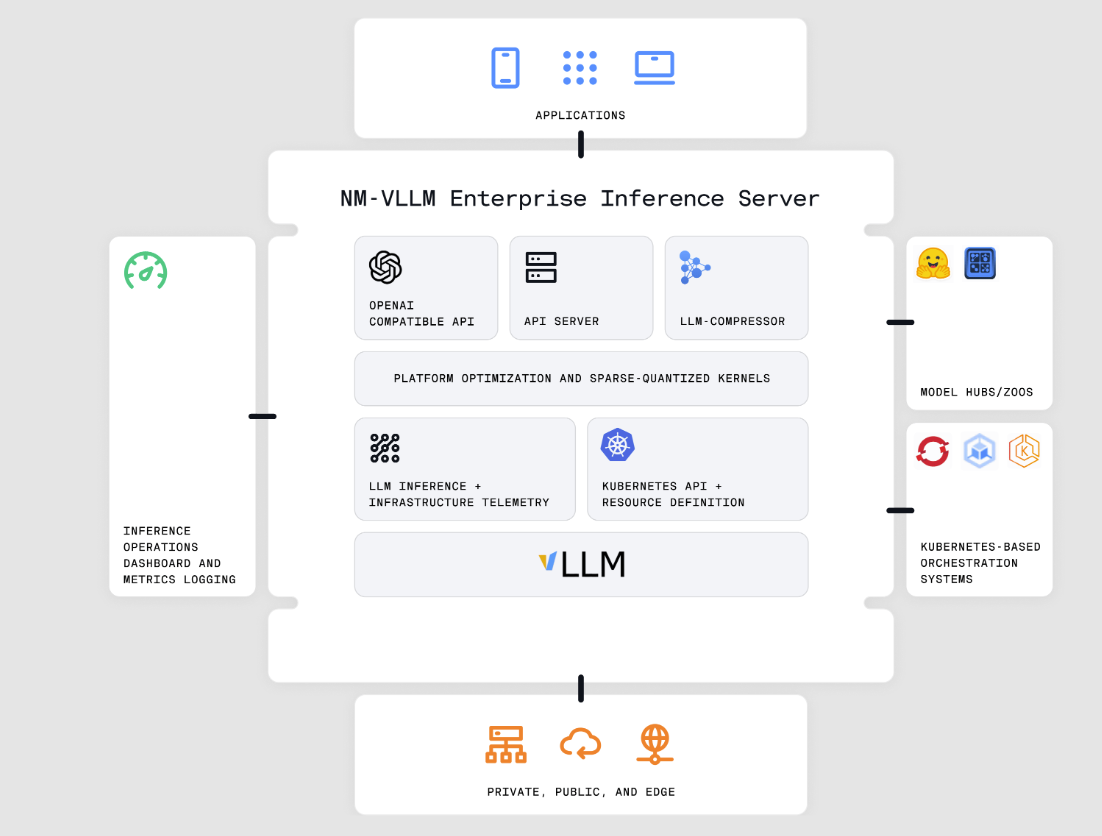
For Red Hat, a unit of IBM, Neural Magic will enable the company to align its open platform to AI workloads. Red Hat said it is planning to make generative AI more accessible to enterprises via vLLM, an open source project for serving multiple models. Neural Magic has been a big backer of the vLLM project.
In a statement, Red Hat said it will combine Neural Magic's focus on vLLM with its hybrid cloud AI technologies to run open source models, fine tune LLMs and improve inference performance. Neural Magic has a vLLM-based stack with infrastructure choice, security policies and model lifecycle management and offers a unified library for optimizing LLMs.
Red Hat AI includes Red Hat Enterprise Linux AI, a foundation model platform, Red Hat OpenShift AI, a platform to train models across Kubernetes environments, an InstructLab, which fine tunes IBM's Granite LLMs.
Neural Magic's two primary products are Nm-vllm, an enterprise inference server for LLMs on GPUs, and DeepSparse, an inference server for models on CPUs.
Editor in Chief of Constellation Insights
Constellation Research
Larry Dignan is Editor in Chief of Constellation Insights at Constellation Research, where he leads editorial coverage focused on enterprise technology, digital transformation, and emerging trends shaping the future of business. He oversees research-driven news, analysis, interviews, and event coverage designed to help technology buyers and vendors navigate complex markets with clarity and context. ...
Akamai launched its Akamai App Platform, which aims to make it easier for developers to deploy cloud native applications on Kubernetes. Akamai's App Platform highlights how the company continues to transition to a security and cloud infrastructure company.
The Akamai App Platform is built on Kubernetes technology Otomi, which Akamai acquired from Red Kubes. The platform provides templates and tools to deploy, manage and scale Kubernetes clusters as well as frameworks and catalogs and a self-service environment.
Tom Leighton, CEO of Akamai, said the company hit two milestones during its recent third quarter. First, the company's annual revenue run rate topped $4 billion. And more than half of that was security. Akamai also showed cloud compute revenue growth of 28% in the third quarter.
In the third quarter, Akamai said its compute revenue was $167 million, up 28% from a year ago. Overall, the company reported third quarter net income of $58 million on revenue of $1 billion. Security revenue and cloud revenue grew at double-digit rates, but Akamai's content delivery sales fell 16%. Non-GAAP earnings in the third quarter were $1.59 a share.
Leighton said:
"We continue to add new compute customers at a strong pace and we remain on track for our new enterprise compute solutions to exit the year with an annualized revenue run rate of more than $100 million. In Q3, we saw enterprise compute wins in the US at one of the largest retailers, one of the world's largest SaaS platforms, a large e-gaming platform, a large sports gaming platform, a nationwide passenger railroad and a global weather forecaster."
Leighton said retailers are using Akamai Connected Cloud to run mobile apps and AI workloads are revolving around image generation and processing, speech recognition, analytics and prediction and short-form video. See: Why generative AI workloads will be distributed locally
The Akamai App Platform is designed to acquire more workloads and position Akamai as an alternative IaaS providers with compute at the edge of networks. Leighton added that Akamai is selling cloud computing to more enterprises and a broader customer base.
Leighton added that Akamai's cloud compute unit is also seeing traction among independent software vendors across multiple industries.
However, Akamai needs to continue to invest in its cloud business. "We plan to shift more investment into the development of our cloud computing capabilities and new security products, as well as into the go-to-market resources and partner ecosystem to sell these services to a broader portion of the enterprise marketplace," said Leighton.
Editor in Chief of Constellation Insights
Constellation Research
Larry Dignan is Editor in Chief of Constellation Insights at Constellation Research, where he leads editorial coverage focused on enterprise technology, digital transformation, and emerging trends shaping the future of business. He oversees research-driven news, analysis, interviews, and event coverage designed to help technology buyers and vendors navigate complex markets with clarity and context. ...
John Kreul, Chief Information Officer at Jewelers Mutual Group, said the company's AI experiments and investments will revolve around personalizing customer experiences. Kreul also said the company is building a data strategy and architecture that can adapt to new technologies.
Jewelers Mutual provides insurance for the jeweler industry for everything from personal policies to shipping and services for jewelers.
I caught up with BT150 member Kreul to talk shop. Here's a look at the takeaways.
Customer experience. Kreul said the company looks at customer experience through multiple lenses. The first is personal insurance policies for consumers, which have a different view than agents. Kreul said the employee experience is critical because they need as little friction as possible to process claims and handle calls. "The experience is very personalized based on the type of need you have," he said.
AI and how it applies to experiences. "When I think of AI, the ultimate vision is to use it for personalization and to make decisions at the point of interaction," said Kreul. "We believe AI will provide us with the information we need to personalize the experience and meet customers where they want to be met. AI is a key enabler of our strategy to create personalized, differentiated experiences for our customers."
Productivity use cases for AI. Jewelers Mutual has experiments for improving efficiency and automating multiple processes including claims. "We're doing experiments today and AI is going to be a key component of operational efficiency."
Prioritization. "Investing and experimenting in AI doesn't necessarily start with prioritization," said Kreul. "It starts with looking at the risks and opportunities and then conducting experiments. That's where we are right now. We're learning to understand the value."
He added:
"From those experiments, we'll prioritize depending on how they go. We're not putting 50 things up on the wall and saying, 'What's the perfect AI use case.' Let’s start experimenting, grow, and then evolve to create value."
Buy vs build? Kreul said the company is looking to do a little of both. For cloud computing, data processing, and large language models the plan is to buy. "What we have is our own proprietary data that we need to feed and train the models," said Kreul. "We're going to leverage capabilities from very large tech companies and then we're going to make it work within our environment and manage our data. Things that create the most value for our customers will be built. As we get closer to the customer we will differentiate with customer software."
Most valuable metrics. Jewelers Mutual focuses heavily on Net Promoter Score. "We want to understand if a customer is a promoter of our company and make sure we are investing to continue to get our score up," said Kreul.
Returns on AI projects. Kreul said it's early in the AI experiment process, but "we believe strongly that we're going to get returns on this." "Automation is absolutely going to be a return on cycle time," he said. "A key return is going to be around personalization and tailoring experiences so customers will want to use our products and services. It could lead to more growth, upsell and cross-sell opportunities. Our customers will engage and create lifetime value for our company."
Modeling risk. Kreul said the company has a team focused on modeling volatility and the effects of hurricanes and other events. "We have retail jewelers and customers that can be impacted by volatile events," he said. "We have a team that's looking at analytics and trying to predict where and when we'll need to help customers."
Budgeting for 2025 and beyond. Jewelers Mutual puts projects in three buckets: Innovation, experimentation, and investments. Augmented reality is more innovative and there's a small team doing experiments. AI is in the experiment stage, but quickly becoming an investment. "We look at different areas of the company where we want to do investments and experiments in AI," said Kreul. "We are investing heavily in preparing our data and getting it ready to train models and that'll be a foundational investment to enable experiments in AI."
Future-proofing. According to Kreul, future-proofing needs to go beyond AI. He said:
"We are architecting our environment to be microservice-based, open, and agile so we can rapidly swap components out. We have an end-to-end thought process about how we architect our systems from data to technology as well as software engineering, models, and embedding models. We're spending a ton of time to make sure we are future-ready and able to take advantage of new things because they're coming out very fast."
The human element with AI. Kreul said CxOs need to think about the human element to AI and automation and change the way they work overall. "You're not just automating the things you do today," he said. "I think you have to take a step back and really think about disrupting your processes. The people element is a key component. Change management and culture are also critical. We believe our people are our differentiators. We spend a lot of time with our teams and stakeholders on the importance of talent and how it's all going to work together.
Editor in Chief of Constellation Insights
Constellation Research
Larry Dignan is Editor in Chief of Constellation Insights at Constellation Research, where he leads editorial coverage focused on enterprise technology, digital transformation, and emerging trends shaping the future of business. He oversees research-driven news, analysis, interviews, and event coverage designed to help technology buyers and vendors navigate complex markets with clarity and context. ...
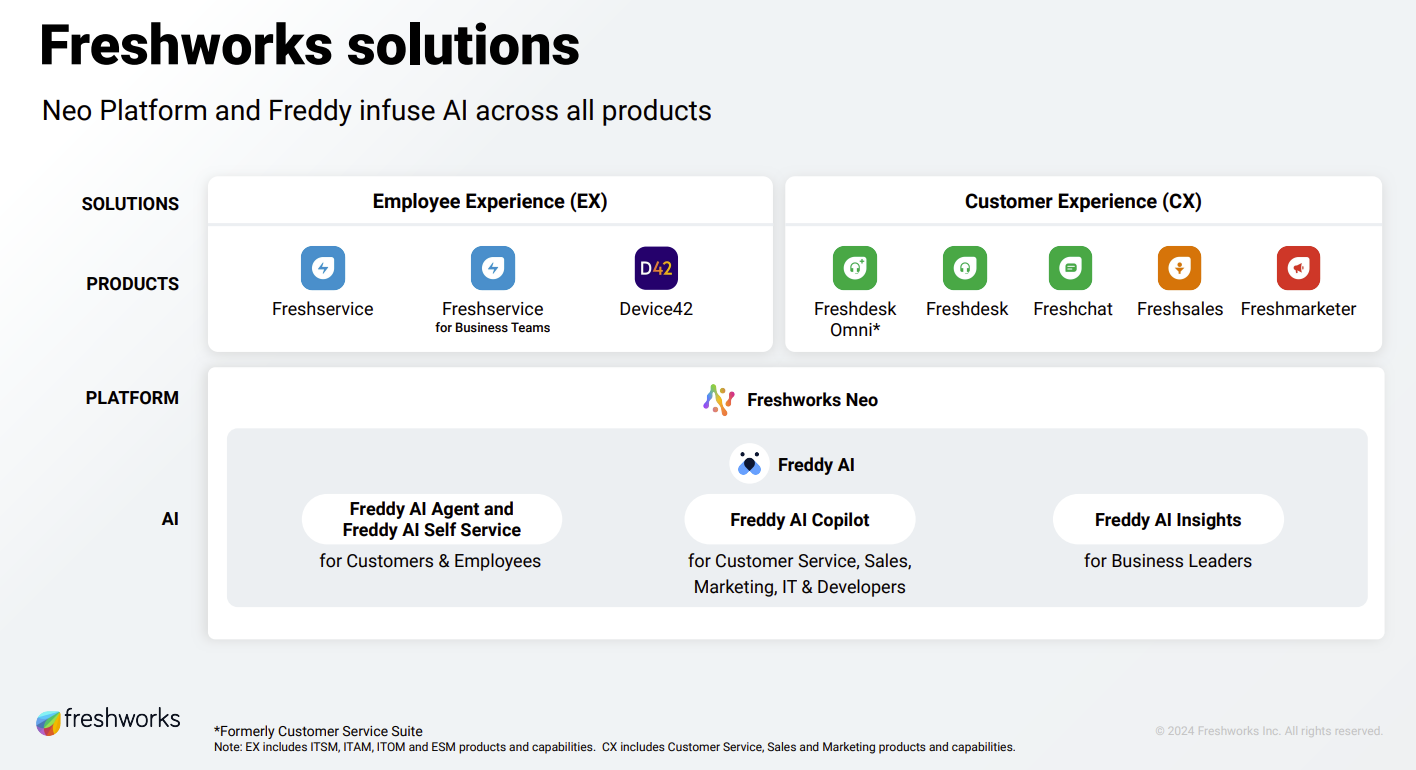
Freshworks is winning more mid-market and enterprise deals and plans to double down on its employee experience business as it builds out its IT service management, IT operations and service management products.
The company delivered strong third quarter results and raised its fourth quarter outlook. Freshworks also said it will cut 13% of its workforce.
Freshworks reported a third quarter net loss of 10 cents a share on revenue of $186.6 million, up 22% from a year ago. Non-GAAP earnings of 11 cents a share were ahead of expectations. For the fourth quarter, Freshworks projected $187.8 million to $190.8 million, up 17% to 19% from a year ago, with non-GAAP earnings of 9 cents a share to 10 cents a share.
For the year, Freshworks is projecting non-GAAP earnings of 38 cents a share to 39 cents a share with revenue growth of 20% to $713.6 million to $716.6 million.
Speaking on Freshworks earnings conference call, CEO Dennis Woodside said the company is expanding in its employee experience (EX) business, which is less known than the customer experience offerings. Woodside said:
"Our EX business is strong with over $390 million in ARR and a year-over-year growth rate of over 40% in Q3. Today, more than 17,800 customers are using our EX solutions to deliver IT and employee service management. By prioritizing investments in EX, we are moving up-market and winning more mid-market and enterprise deals. We won 16 new and expansion deals over 100,000 in ARR in EX, including several against our largest competitor in Q3."
The bet for Freshworks is that it can provide enterprise grade EX software to midmarket companies that are "tired of being forced into oversized solutions that are hard to implement and operate," said Woodside.
By leveraging its AI assistant, called Freddy, it can provide an employee and customer experience stack that's effective for midmarket firms. With the acquisition of Device42, closed in June, Freshworks has been able to sell IT asset management to Freshservice customers.
Freshworks also said that it is prioritizing R&D to focus on EX and accelerate features for change management, access and controls. While EX has a solid footprint, it's smaller than Freshworks' CX business, which has 56,100 customers.
"By adding these resources to EX, we have significantly pulled forward our product road map, in some cases, up to four quarters," said Woodside.
With its EX moves, Freshworks is looking to sell to larger enterprises without running into ServiceNow. Woodside said:
"EX is a fantastic market. The market is growing at double-digit rates. The competitive landscape is very clear. You got ServiceNow, who cares about the biggest companies in the world. We do run into Atlassian. There’s a number of small players and some incumbents, but nobody is really focused on that mid-market and lower end of enterprise where sophisticated IT departments that need a solution. They want to automate their IT operations, ITAM, ESM, and they need an enterprise-grade platform. That’s what we provide. There’s a lot of growth in that market."
Fortunately, Freshworks won't have to bump into much larger EX players. It'll do fine by adding EX plans to its existing CX customers as it upsells its AI capabilities.
Editor in Chief of Constellation Insights
Constellation Research
Larry Dignan is Editor in Chief of Constellation Insights at Constellation Research, where he leads editorial coverage focused on enterprise technology, digital transformation, and emerging trends shaping the future of business. He oversees research-driven news, analysis, interviews, and event coverage designed to help technology buyers and vendors navigate complex markets with clarity and context. ...
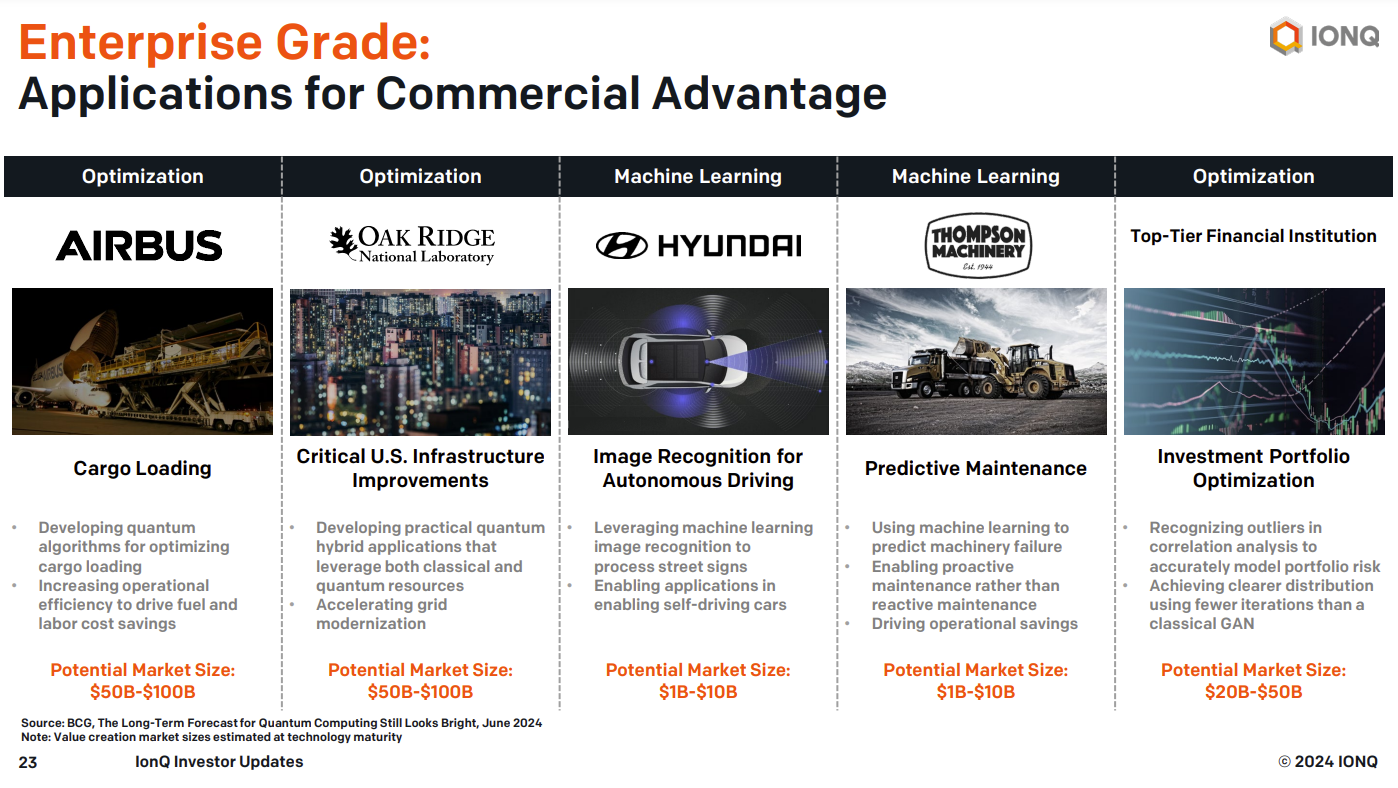
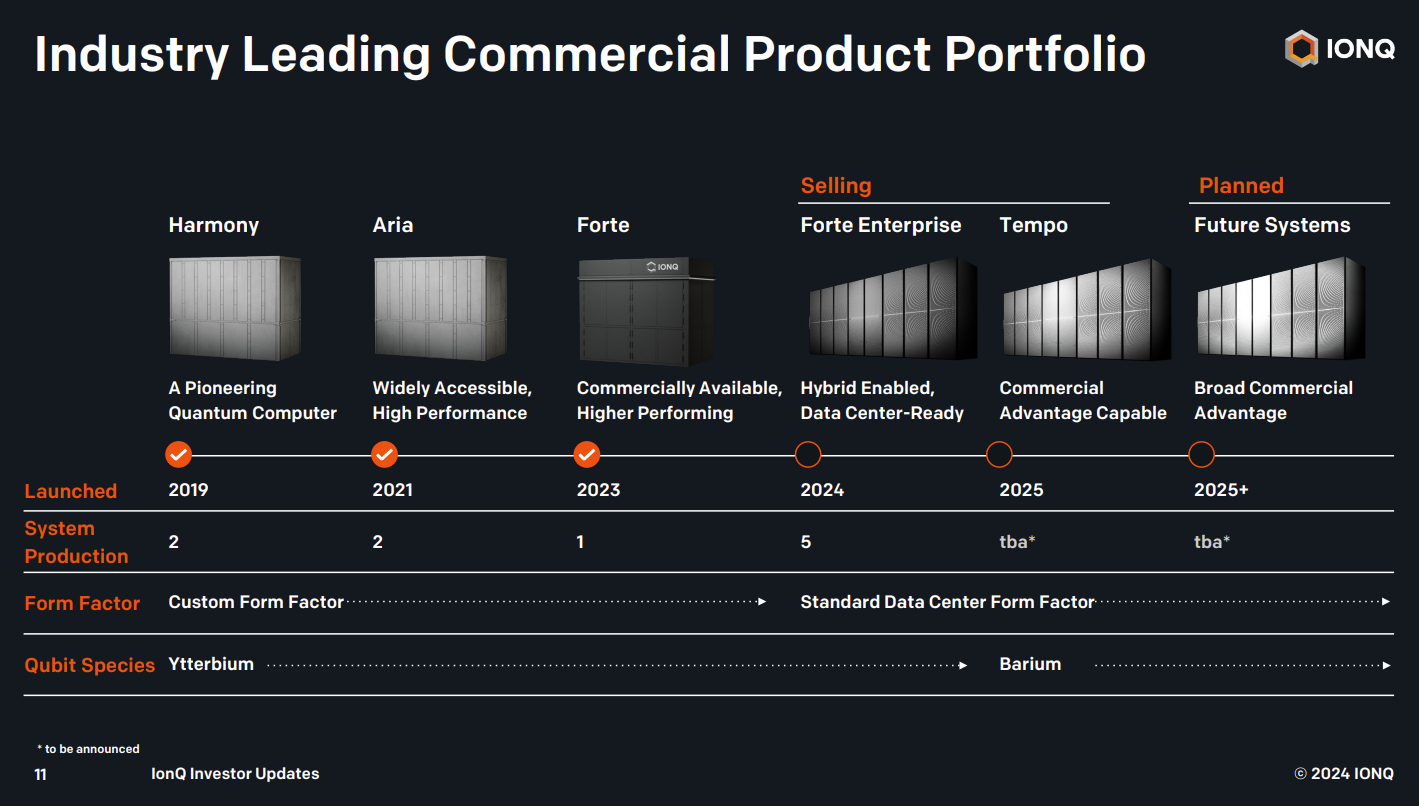
IonQ's bet to focus on making quantum computing applications relevant for enterprises today instead of waiting for quantum supremacy appears to be paying off nicely.
The company lifted its sales outlook for the 2024 to $38.5 million to $42.5 million. IonQ said fourth quarter revenue will be between $7.1 million to $11.1 million. In the third quarter, IonQ reported a net loss of $52.5 million, or 24 cents a share, on revenue of $12.4 million, up 102% from a year ago.
Although those revenue figures are small compared to a market cap currently at $3.52 billion, IonQ's approach is gaining commercial traction. Consider:
IonQ said it will partner with AstraZeneca to develop quantum applications for drug discovery and development.
The company announced a deal with Ansys to bring quantum applications to computer-aided engineering.
Inked a $9 million partnership with the University of Maryland.
Partnered with NKT Photonics to develop and deliver three prototype optical subsystems for IonQ systems in 2025.
And acquired Quibitekk, a quantum networking company. Quantum networking is a potentially large market and IonQ expects it to be its first cash flow positive unit.
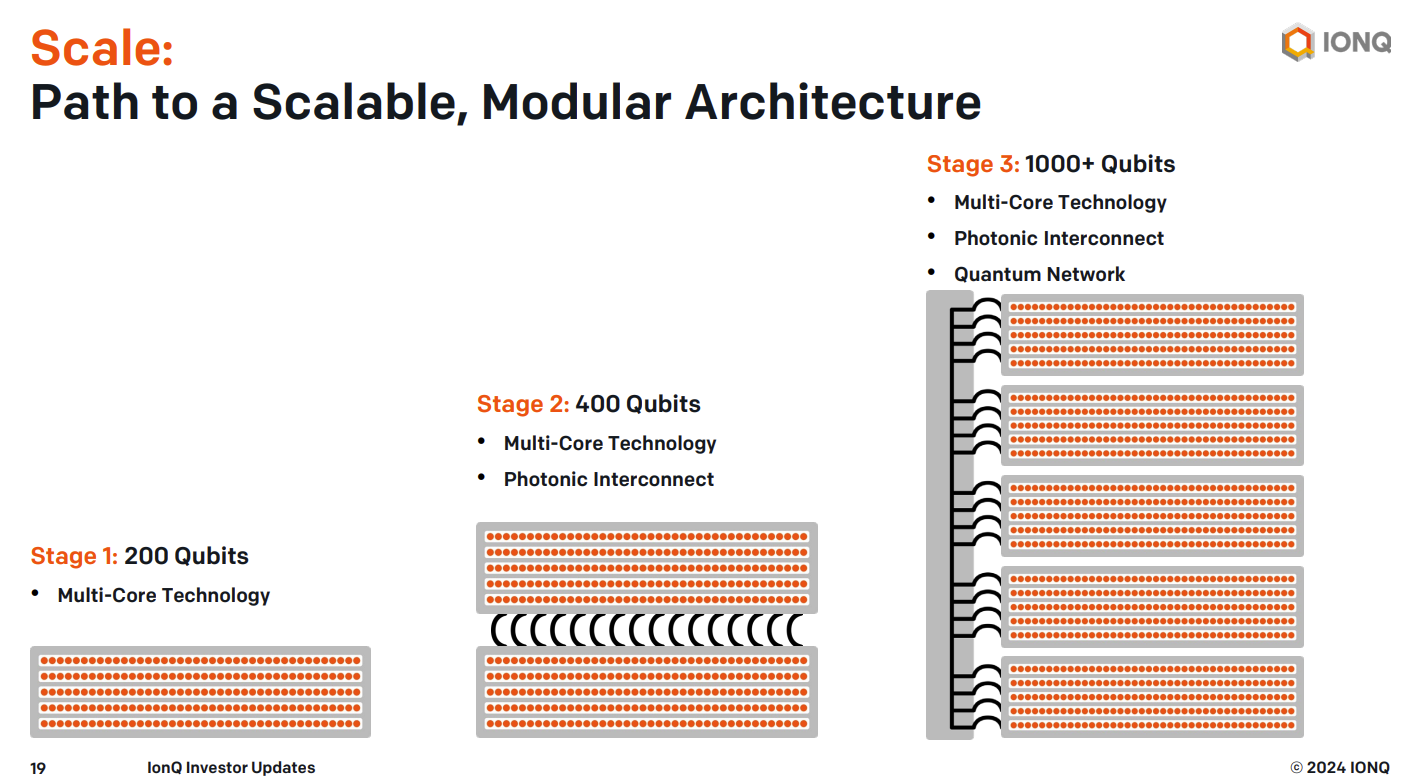
Chapman said to scale IonQ will leverage Quibitekk to network its systems together. IonQ paid $22 million in cash for Quibitekk, which has partnerships with telecommunications companies.
"Quantum networking, like classical networking hardware, is also expected to require several orders of magnitude more physical hardware than quantum computing to build the infrastructure for the quantum internet," said Chapman. "This is another element of the networking market, where IonQ is particularly well suited, given the investments we have made over the past years to scale up our production manufacturing capabilities."
IonQ also said that it landed $63.5 million in third quarter bookings including a $54.5 million award from the US Air Force Research Lab.
On IonQ's earnings conference call, CEO Peter Chapman said, "one can no longer ignore the scale of IonQ's commercial success." Chapman added that 18 months ago, the company bet that it could make its quantum systems enterprise ready.
"In the quantum world, there are two camps or schools of thought on this topic. One camp believes you need near perfection before value can be unlocked. If they are correct, sadly, Quantum is still a long way off. The naysayers belong to this camp, but their numbers are dwindling every day.
The other camp, which IonQ and others belong to, believe today's early noisy quantum computers can provide value even before they are perfected. If we are right, it gives us a significant advantage by generating early meaningful cash collection as we work towards perfection."
Chapman acknowledged that he wasn't concerned with academic arguments over quantum computing. The plan was to take IonQ's integrated quantum stack and apply the technology for commercial value.
The focus for IonQ is to make sure it has software ready to go when its latest hardware systems are ready to roll.
"When we have the hardware done, we want the software to come along at exactly the same time as when the hardware is ready to run those applications," said Chapman. "We're timing those two things together. What the two announcements that are today with both Ansys and AstraZeneca are the beginnings of working on those applications."
While IonQ’s commercial traction is impressive, the company will still face tough competition from much larger companies.
Constellation Research analyst Holger Mueller said:
"The race for software is heating up, as vendors want to see utlization as soon as the hardware is ready. So it is no suprise IonQ is focussing on software readiness as well, assuming its Forte Enterprise system is delivered and it's on track with its Tempo system. In the meantime, the revenue is in quantum scale encryption - so the acquisition of Quibitekk makes sense and deliver immediate, reliable revenue."
Editor in Chief of Constellation Insights
Constellation Research
Larry Dignan is Editor in Chief of Constellation Insights at Constellation Research, where he leads editorial coverage focused on enterprise technology, digital transformation, and emerging trends shaping the future of business. He oversees research-driven news, analysis, interviews, and event coverage designed to help technology buyers and vendors navigate complex markets with clarity and context. ...
If Unit4's strategy is successful, midmarket enterprises will leverage the company’s ERP platform and employees will never know it, said CEO Michael Ettling.
The Unit4 strategy revolves around a "self-driving ERP" plan where the platform operates in the background with automated workflows that come to multiple applications.
Speaking at the Unit4 Analyst Summit in Philadelphia, Ettling outlined the midmarket ERP vendor's strategy. Unit4 is focused on people-centric companies (think services), non-profit and education with up to 10,000 employees.
Ettling said:
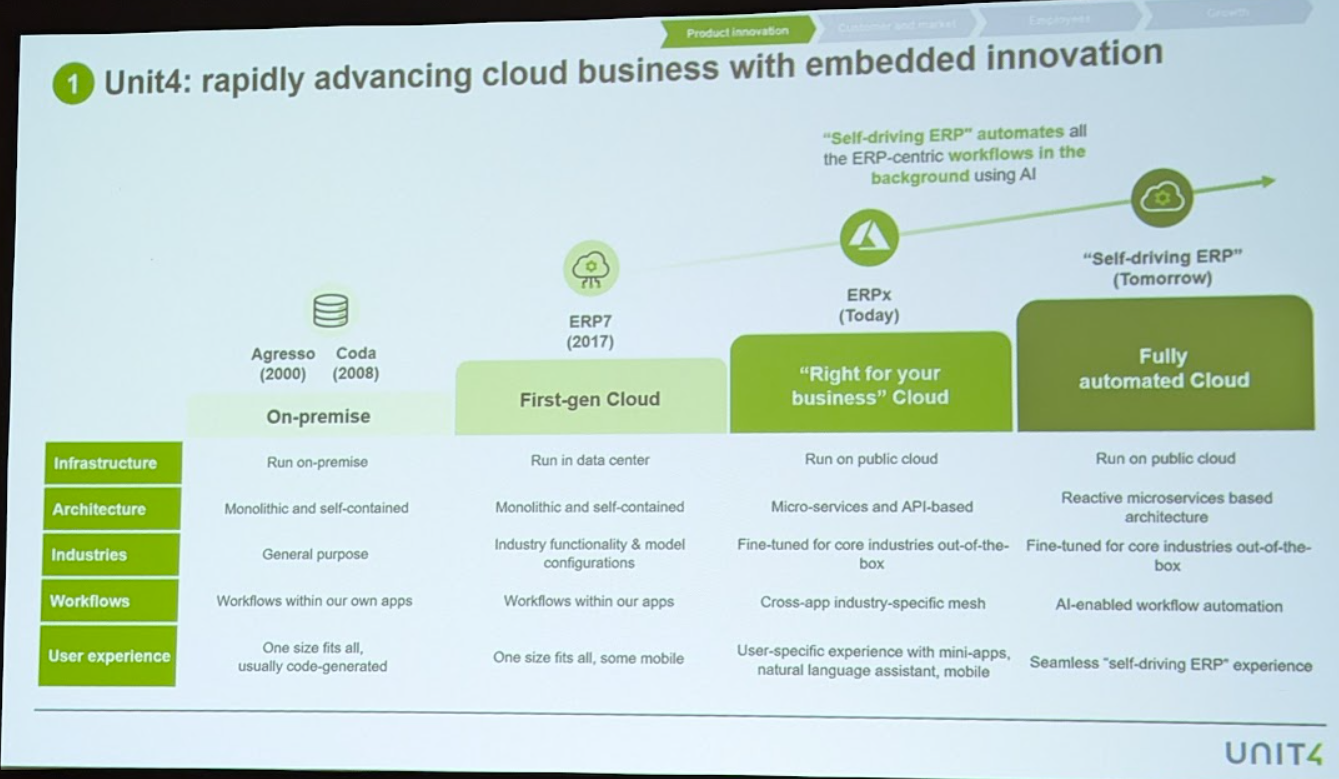
"Today, we are on ERP X, and tomorrow we're chasing this vision of self-driving ERP. We think this is going to become more and more prevalent. My Holy Grail of self-driving ERP is that you buy my ERP and nobody in the organization ever logs into it. Your access is through Microsoft Teams, Slack or through whatever. No one wakes up in the morning and logs in to the ERP to do ERP work."
This Unit4 strategy could be ahead of its time. As generative AI becomes the new UI for enterprise software, many of the SaaS applications you log into will fade to the background. With copilots and agentic AI, the concept of headless enterprise applications is going to be more prevalent.
To Claus Jepsen, Chief Product and Technology Officer at Unit4, the self-driving ERP concept is really about not having a UI for ERP. Jepsen:
"The way we look at this is that the best user experience is actually no UI. The best ultimate user experience is you don't even have to go into the ERP. ERP systems have a tendency to be very monolithic with complex UIs. There should be a mix between a conversational user experience where we move users away from dealing with the maintenance of data."
Constellation Research analyst Holger Mueller said:
"Unit4 has been painting a compelling vision of ERP for close to a decade. The good news is that it is now serious about moving customers to the cloud with an end of life date by end of 2026. The migration of the masses has not started yet - so all eyes will be on 2025 and Unit4 getting its customer base to move to ERPx."
Unit4, which has €425 million in revenue, ARR growth of 25 and cloud ARR growth of more than 25%, has been on a transformation of its own since 2021 to evolve the product and support it. The company has migrated to the cloud, focused on ERP workflows and integrated automation with robotics process automation with the ability to swap into generative AI.
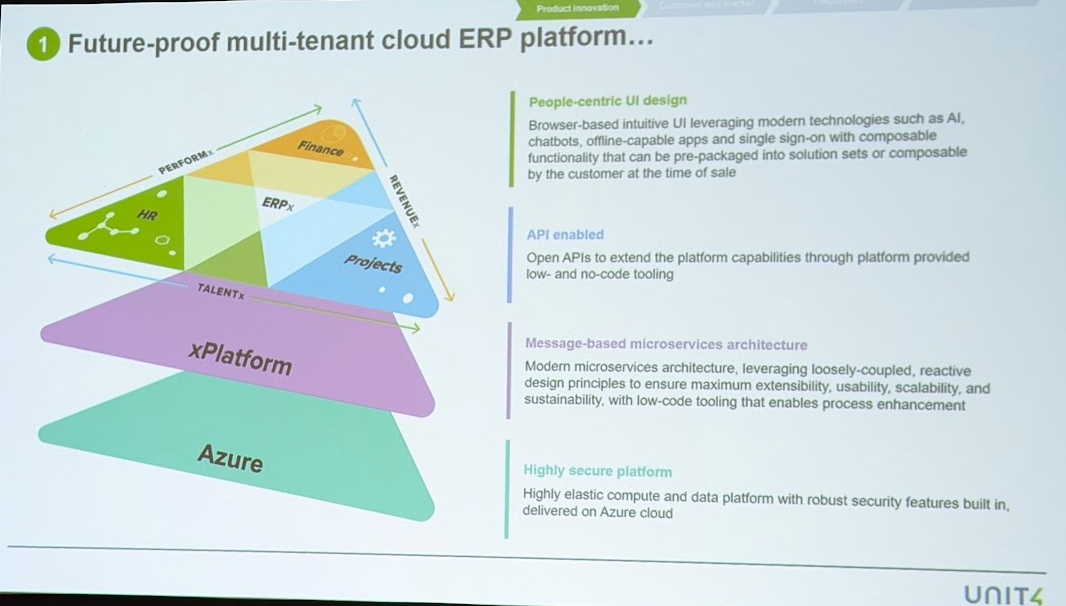
The stack, which uses Microsoft Azure as its infrastructure, breaks down like this:
Unit4 is "gently nudging" its on-premises customers to the cloud with a common platform. On-premises customers have until the end of 2026 to migrate to the cloud. Unit4 announced the transition in October 2023. There will be exceptions based on government use cases, data sovereignty and security needs.
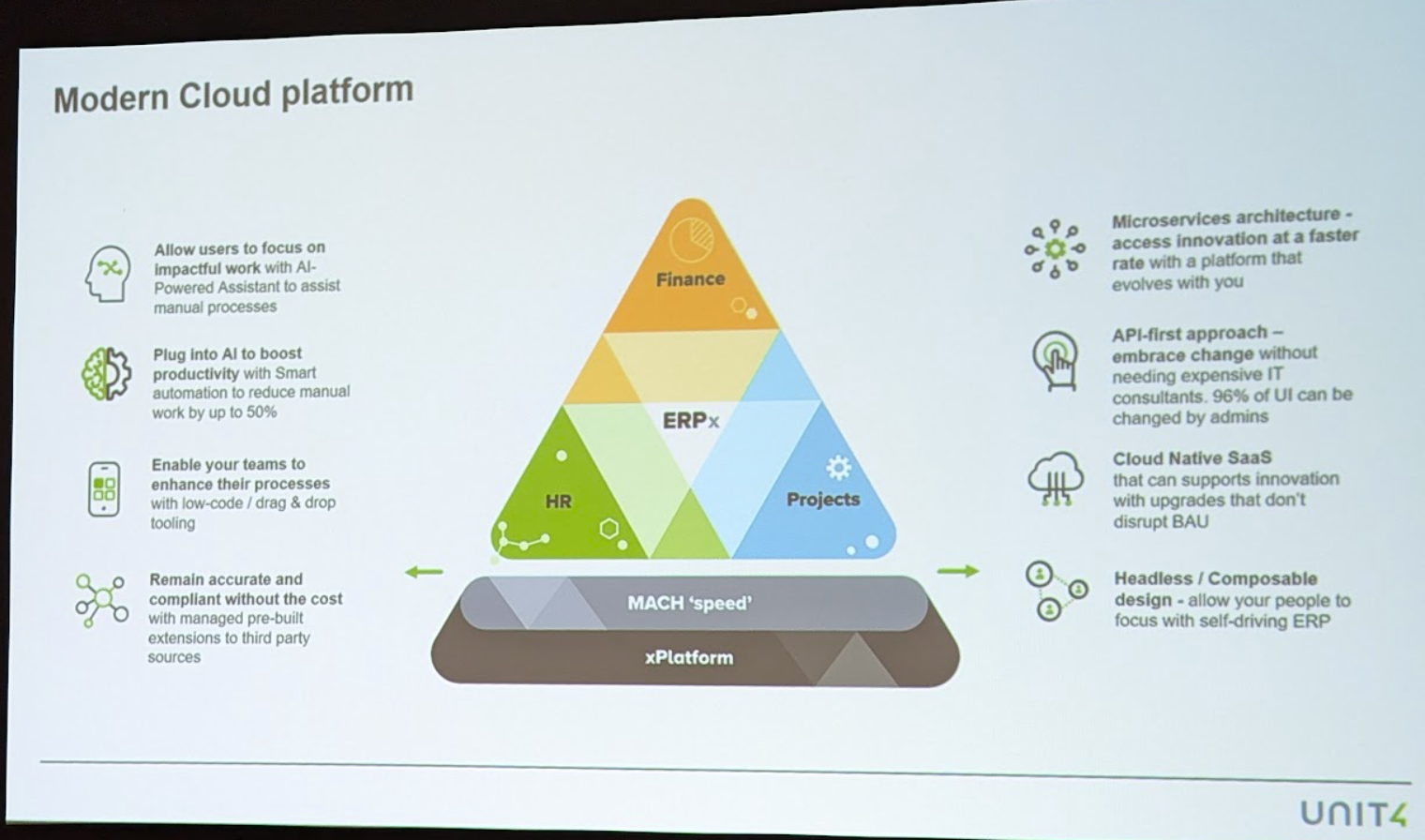
Ettling said that the move to get customers to go to the cloud enables AI and automation delivery. Unit4 is betting that the real value in ERP is in the workflows, AI and automation between the components--finance, HR and projects--on a common data model that is extensible.
"AI is obviously the buzzword of the moment and we've been thoughtful about how we approach AI," said Ettling. "For AI to work you still need to read and write a transaction and then get AI to do something with those transactions." Ettling also said the company's work with RPA extends into large language models too. That argument has also been made by UiPath. The general idea is that automation and process is more important than the underlying models powering workflows and experiences.
"Generative AI is now just a different smart in smart automation, as opposed to something new. It's the user experience in self-driving ERP and processes that enable it. Sometimes it may be AI, but sometimes it may also be a robotic solution or something else. We really have a view on AI that it's part of the user experience. A lot of the marketing or story around AI is AI for the sake of AI, as opposed to AI to deliver better on a North Star."
Other takeaways from Ettling's talk:
Unit4 wants to get 1 billion annual revenue by chasing a North Star of a self-driving ERP that's automated.
95% of new logos added to Unit4 over the last two years are cloud deals.
Unit4 is open to mergers and acquisitions for smaller tuck-in deals that would add functionality or provide a legacy base that can be converted to the cloud.
Editor in Chief of Constellation Insights
Constellation Research
Larry Dignan is Editor in Chief of Constellation Insights at Constellation Research, where he leads editorial coverage focused on enterprise technology, digital transformation, and emerging trends shaping the future of business. He oversees research-driven news, analysis, interviews, and event coverage designed to help technology buyers and vendors navigate complex markets with clarity and context. ...
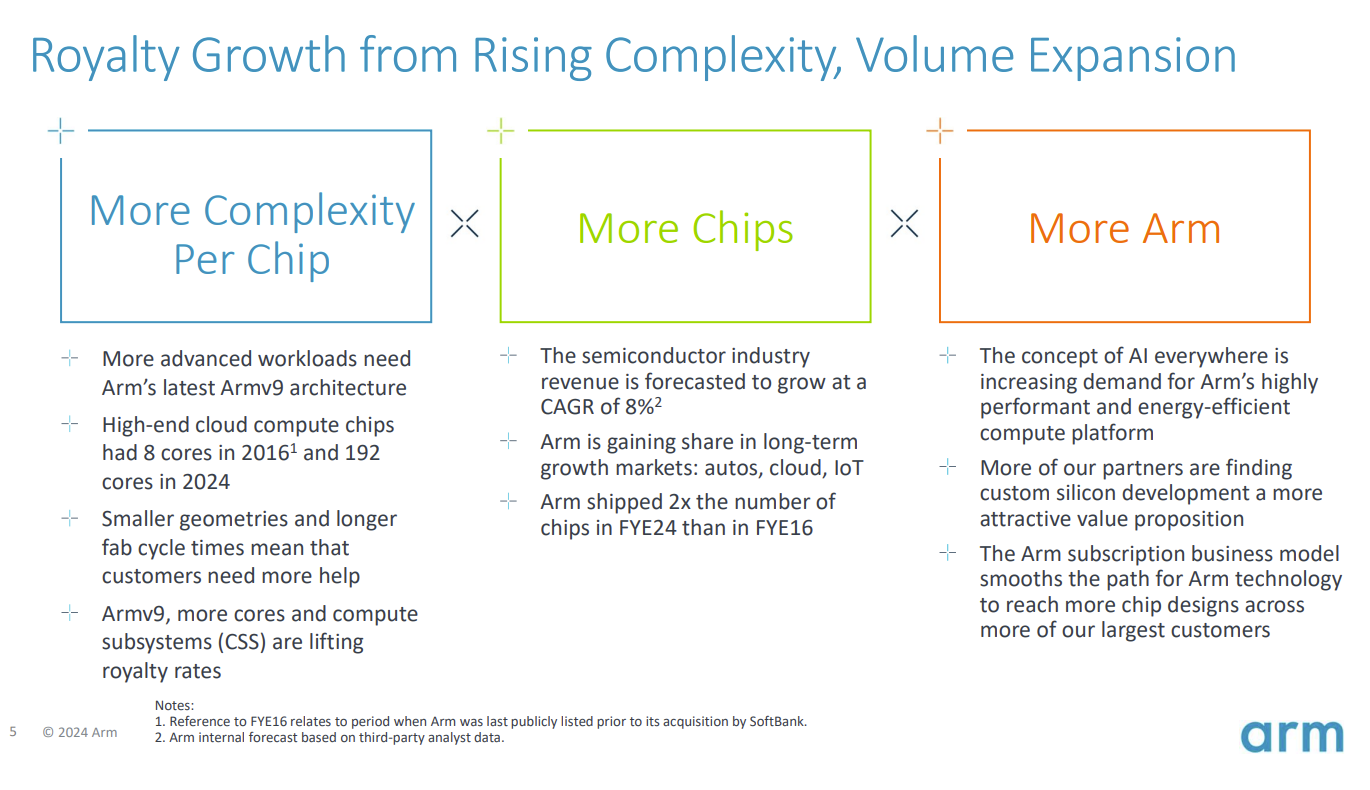
Arm said more complex AI chips are driving license revenue as its second quarter was better-than-expected with and in-line third quarter outlook.
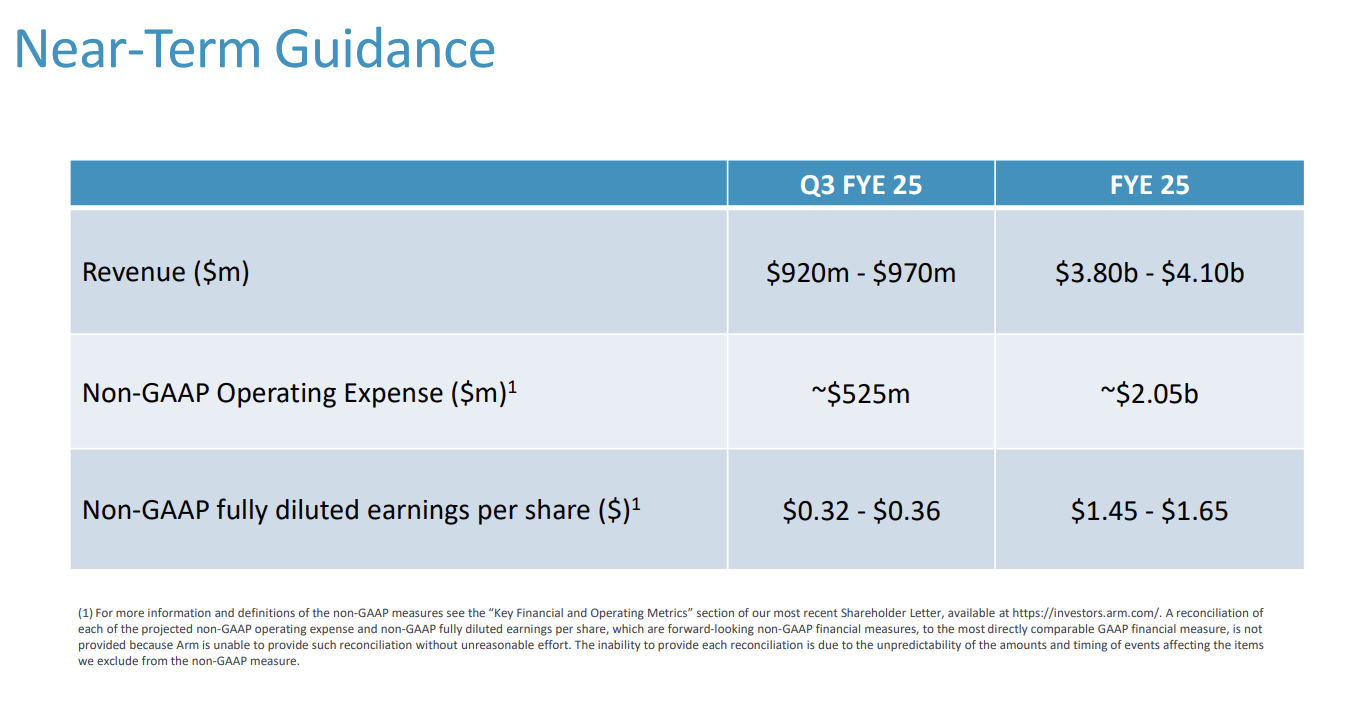
For the third quarter Arm said it expects non-GAAP earnings between 32 cents a share and 36 cents a share with revenue between $920 million to $970 million. Wall Street was expecting third quarter non-GAAP earnings of 34 cents a share on revenue of $951 million.
Arm reported fiscal second quarter earnings of $107 million, or 10 cents a share, on revenue of $844 million, up 5% from a year ago. Non-GAAP earnings were 30 cents a share. Analysts were expecting earnings of 26 cents a share on revenue of $810.9 million.
"Demand for our high-performance Armv9 and CSS compute platforms continues to exceed expectations, and to accelerate our licensing and royalty revenue growth. AI everywhere is generating new opportunities for the Arm compute platform from the cloud to the edge."
In a shareholder letter, Arm executives said the company is benefiting from "AI everything" and the need for more energy-efficient chips.
"Demand for Compute Subsystems (CSS) has been higher than expected and is also contributing to licensing growth. Our royalty revenue growth has also been very positive. Royalty revenue is benefiting from higher revenue per device as more customers deploy our latest high performance Armv9 to address AI demand and as our CSS royalty revenue ramps. The cumulative number of chips shipped by the Arm ecosystem has now exceeded 300 billion."
Editor in Chief of Constellation Insights
Constellation Research
Larry Dignan is Editor in Chief of Constellation Insights at Constellation Research, where he leads editorial coverage focused on enterprise technology, digital transformation, and emerging trends shaping the future of business. He oversees research-driven news, analysis, interviews, and event coverage designed to help technology buyers and vendors navigate complex markets with clarity and context. ...
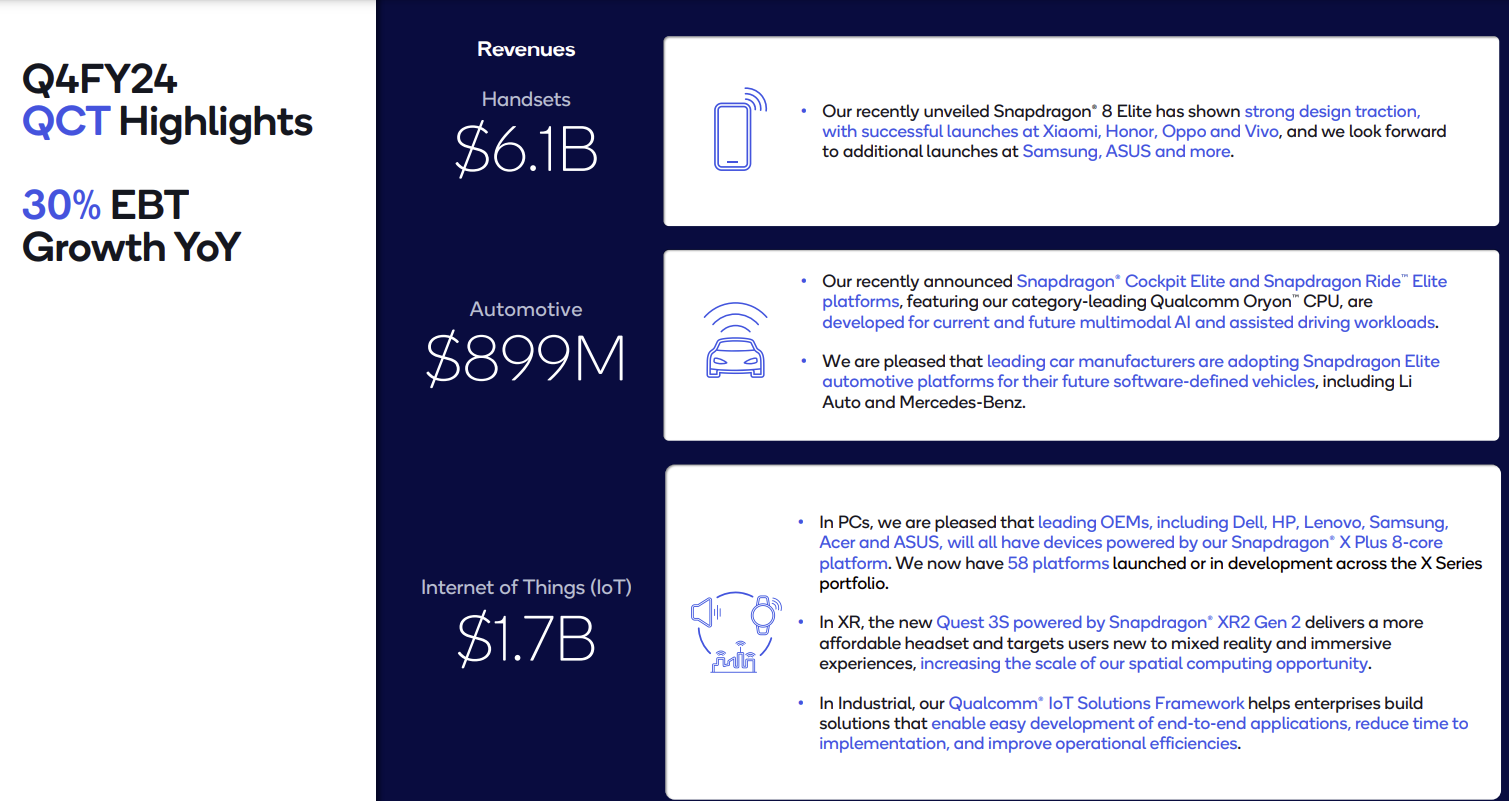
Qualcomm delivered fourth quarter revenue growth of 19% as it saw strength across its smartphone, auto and Internet of things units.
The company reported fourth quarter earnings of $2.92 billion, or $2.59 a share, on revenue of $10.24 billion, up 19% from a year ago. Non-GAAP earnings were $2.69 a share.
Wall Street analysts were expecting Qualcomm to report fourth quarter non-GAAP earnings of $2.57 a share on revenue of $9.93 billion.
For 2024, Qualcomm reported earnings of $10.14 billion, or $8.97 a share, on revenue of $38.96 billion, up 9% from fiscal 2023.
CEO Cristiano Amon said the company's product cadence is strong and positions us well across handsets, PC, automotive and industrial IoT." The company will outline plans to diversify its business on November 19. On a conference call, Amon said:
"As the strong pace of AI innovation continues, there is now broad recognition of the opportunity for on-device AI to enable new capabilities and transform the human-computer interface. On-device AI provides context, enhances immediacy and reliability, and enables personalization while providing privacy and security. Additionally, GenAI-enabled devices and applications are evolving to understand natural language, images, sound, and the world around us, driving a new generation of AI-first experiences. This has the potential to create a new cycle of semiconductor innovation and content, and Qualcomm is well-positioned to capitalize on this opportunity across devices at the edge."
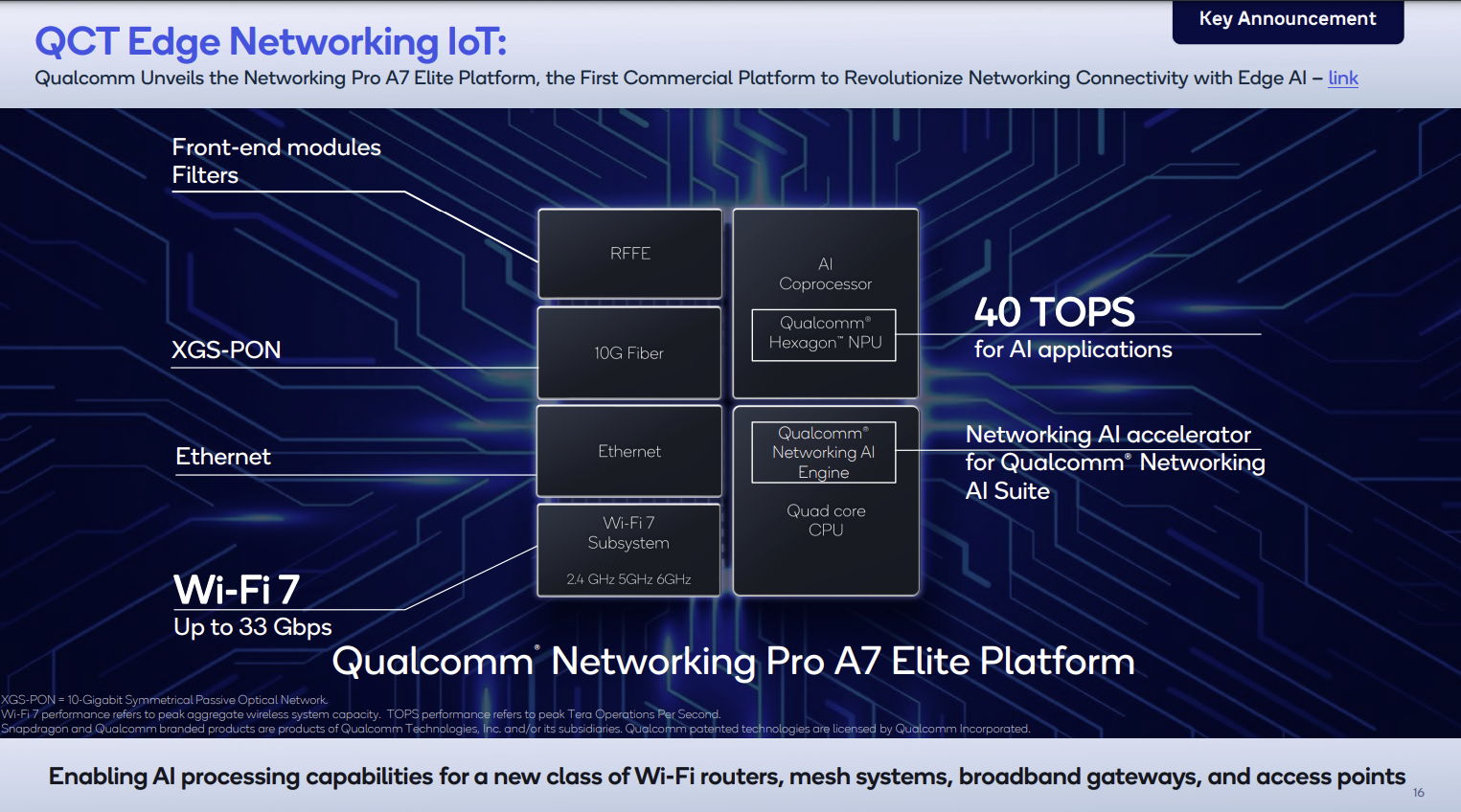
Qualcomm has moved to expand into AI PCs as well as automotive and IoT. Ultimately, Qualcomm is expected to expand in the AI server processor market as well as edge computing.
Constellation Research analyst Holger Mueller said:
"Qualcomm had a very strong Q4 with all revenue lines growing, The growth in automotive is particularly encouraging, a market that has been traditionally slower for Qualcomm, but showed 68% growth. Qualcomm almost doubled its EPS. Cristiano Amon and team remain optimistic with an realistic but optimistic growth for the next fiscal year. All eyes will be on the performance and uptake of the new Snapdragon Elite platform."
Handsets fourth quarter revenue was $6.10 billion, up 12% from a year ago. Automotive fourth quarter revenue was $899 million, up 68% from a year ago. IoT revenue in the quarter was $1.68 billion, up 22%.
Qualcomm also said it will spend $15 billion to buy back stock.
As for the outlook, Qualcomm is projecting first quarter revenue of $10.5 billion to $11.3 billion with non-GAAP earnings of $2.85 a share to $3.05 a share.
Vice President & Principal Analyst
Constellation Research
About Liz Miller:
Liz Miller is Vice President and Principal Analyst at Constellation, focused on the org-wide team sport known as customer experience. While covering CX as an enterprise strategy, Miller spends time zeroing in on the functional demands of Marketing and Service and the evolving role of the Chief Marketing Officer, the rise of the Chief Experience Officer, the evolution of customer engagement, and the rising requirement for a new security posture that accounts for the threat to brand trust in this age of AI. With over 30 years of marketing experience, Miller offers strategic guidance on the leadership, business transformation, and technology requirements to deliver on today’s CX strategies. She has worked with global marketing organizations to transform everything from…...
Vice President and Principal Analyst
Constellation Research
Holger Mueller is VP and Principal Analyst for Constellation Research for the fundamental enablers of the cloud, IaaS, PaaS and next generation Applications, with forays up the tech stack into BigData and Analytics, HR Tech, and sometimes SaaS. Holger provides strategy and counsel to key clients, including Chief Information Officers, Chief Technology Officers, Chief Product Officers, Chief HR Officers, investment analysts, venture capitalists, sell-side firms, and technology buyers.
Coverage Areas:
Future of Work
Tech Optimization & Innovation
Background:
Before joining Constellation Research, Mueller was VP of Products for NorthgateArinso, a KKR company. There, he led the transformation of products to the cloud and laid the foundation for new Business Process as a…...
In ConstellationTV episode 92, co-hosts Liz Miller and Holger Mueller tune in independently to discuss the latest #enterprise news. They cover #earnings of major #technology companies and recent leadership changes, including retirement and succession plans of several CEOs.
Next, Larry Dignan interviews Erik Severinghaus, co-CEO of Bloomfilter, about the company's #software development efficiency and the role of #generativeAI in analyzing pull requests and ensuring compliance.
Round out the episode w/ daily recaps from our analysts of last week's executive summit, #CCE2024. They highlight main speakers, key takeaways and future trends.
Editor in Chief of Constellation Insights
Constellation Research
Larry Dignan is Editor in Chief of Constellation Insights at Constellation Research, where he leads editorial coverage focused on enterprise technology, digital transformation, and emerging trends shaping the future of business. He oversees research-driven news, analysis, interviews, and event coverage designed to help technology buyers and vendors navigate complex markets with clarity and context. ...
CrowdStrike said it will acquire Adaptive Shield, a company focused on software-as-a-service security. The company said Adaptive Shield will be integrated into its Falcon platform.
CrowdStrike said the purchase will enable it to defend against identity-based attacks from on-premises Active Directory to cloud identity systems and SaaS.
The deal lands as CrowdStrike digs out from a high-profile outage and is being sued by Delta.
George Kurtz, CEO of CrowdStrike, said: "As SaaS and AI adoption grows, every new application brings additional complexity and the risk of misconfigurations across human and non-human accounts that create openings for sophisticated attacks."
Adaptive Shield brings the following to CrowdStrike:
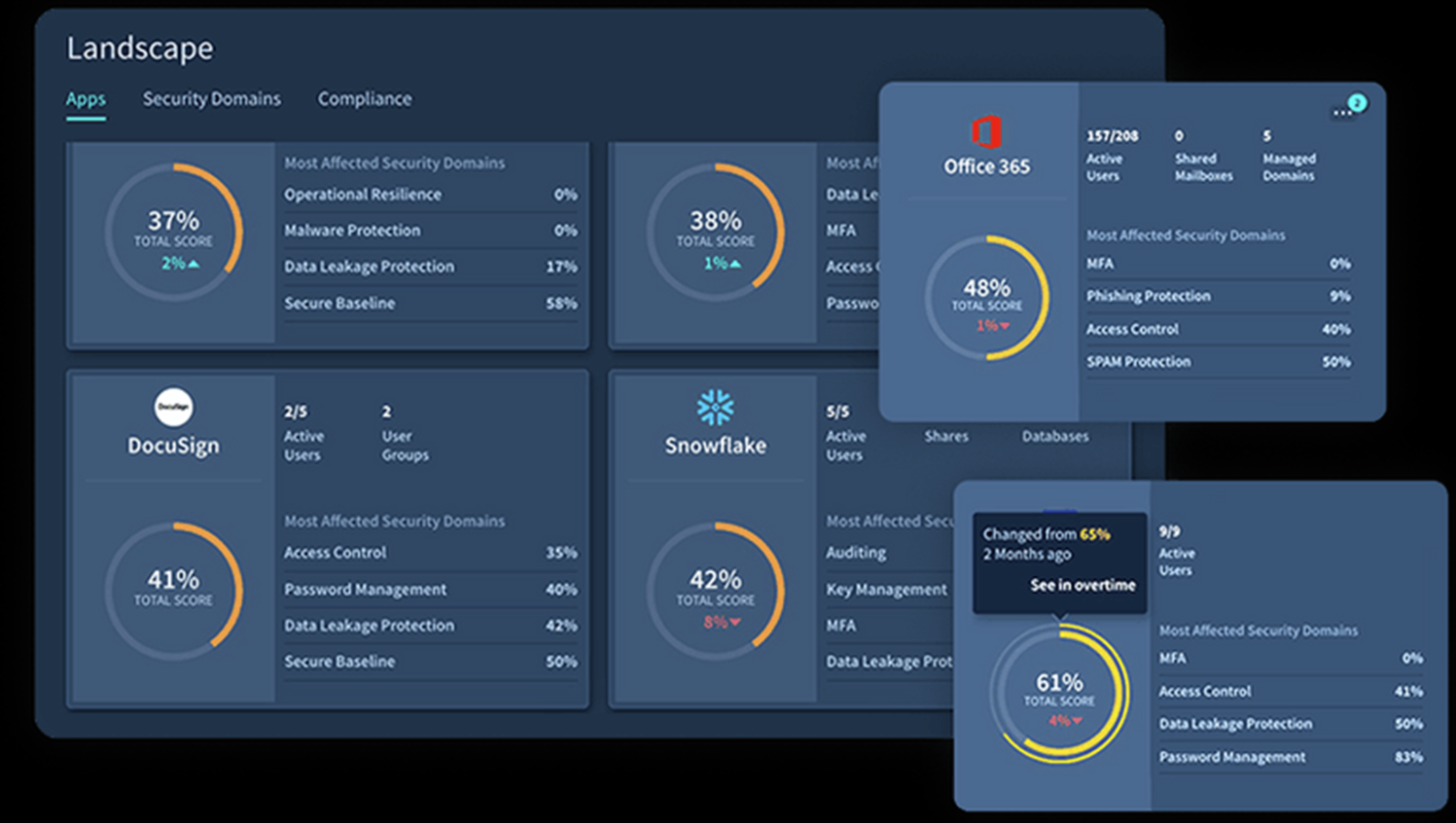
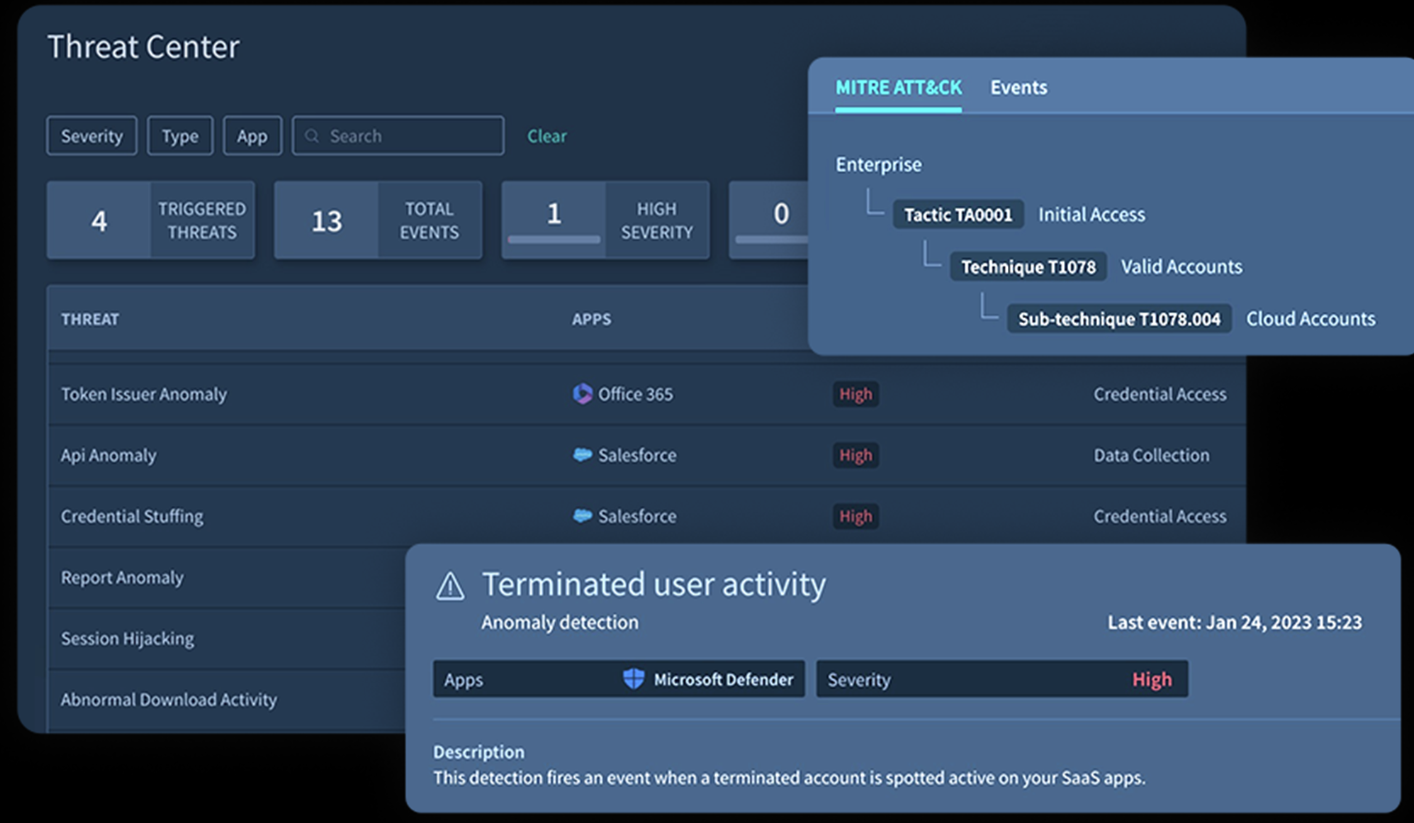
SaaS Security Posture Management (SSPM) to provide visibility to misconfigurations and activity from human and non-human identities.
Generative AI application security controls via Adaptive Shield's ability to control AI settings and find shadow AI applications.
Hybrid identity and cloud security. The companies will combine Adaptive Shield with CrowdStrike Falcon Identity Protection and Falcon Cloud Security in one console and workflow.
Adaptive Shield is already integrated with CrowdStrike's Falcon Next-Gen SIEM.