Results

Broadcom reports strong Q3, but Q4 revenue outlook light

Broadcom reported better-than-expected third quarter results as revenue growth was driven by Ethernet networking and custom accelerators for AI data centers. The fourth quarter outlook, however, was a bit light. 

The company reported a third-quarter net loss of $1.87 billion, or 40 cents a share, on revenue of $13.07 billion, up 47%. Non-GAAP earnings in the third quarter were $1.24 a share.

Wall Street as expecting Broadcom to report earnings of $1.21 a share on revenue of $12.96 billion.

CEO Hock Tan said the quarter reflected “continued strength in our AI semiconductor solutions and VMware.” Revenue from AI will be $12 billion for the fiscal year due to networking and custom AI accelerators. “The integration of VMware is driving adjusted EBITDA margin to 64% of revenue as we exit fiscal year 2024,” said Tan.

Going into the results, analysts were mostly interested in Broadcom as an AI play. However, AI infrastructure players such as Nvidia and chipmakers like AMD have tailed off of late. VMware integration was also a hot topic as Tan addressed VMware customers directly. “You're telling us you want our products to work better and be more user friendly. You want them to work together. You're asking us--me particularly--to roll up your sleeves and do the hard work. That's exactly what we've done,” said Tan.

VMware is facing the heat from customers and competitors such as Nutanix. Rajiv Ramaswami, CEO of Nutanix, said: "The VMware acquisition continues to be positive for Broadcom shareholders, but at what expense to VMware customers? Higher prices, support changes, lack of innovation - it all adds up to a genuinely frustrating experience for customers, and in the end, effectively cutting VMware –a one-time enterprise leader–out at the knees."

By unit, Broadcom semiconductor revenue was $7.27 billion, up 56% from a year ago. Infrastructure software revenue was $5.8 billion, up 200% from a year ago due to the VMware purchase. In the third quarter, software revenue was 44% of the total pie, up from 22% a year ago.

As for the outlook, Broadcom projected fourth-quarter revenue of $14 billion with adjusted EBITDA of about 64%. Wall Street was expecting revenue of $14.13 billion in the fourth quarter. 

Here's what Tan said on Broadcom's earnings conference call:

  • "We booked more than 15 million CPU costs of VCF (VMware Cloud Foundation), representing over 80% of the total VMware products we booked during the quarter. And this translates into an annualized booking value, or ABV as I had described before, of $2.5 billion during Q3, up 32% from the preceding quarter. Meanwhile, we continue to drive down costs in VMware. We brought VMware spending down to $1.3 million in Q3 from $1.6 million in Q2."
  • "Our hyperscale customers continue to scale up and scale out their AI clusters. Custom AI accelerators grew 3.5 times year-on-year."
  • "We do not focus very much on enterprise AI market as you know well. Our products in AI are largely, very much largely focused, especially on the AI accelerator or XPU side, but even -- also just as much on networking side, on hyperscalers, on cloud, those three large platform and some digital natives, what you call, big guys. We don’t deal very much on AI with enterprise."
  • "The VMware business continues to book very well, as we convert our customers very much in two ways, one, from perpetual to a subscription license, but also those subscription license for the full stack of VCF. And that has been very successful."
Data to Decisions Tech Optimization vmware Chief Information Officer

Scotts Miracle-Gro and UserTesting: 9 customer experience takeaways

Scotts Miracle-Gro is focused on a three-year strategy aimed at driving 3% annual growth by expanding its retail presence and growing its direct-to-consumer (DTC) channels.

Constellation Research analyst Liz Miller recently caught up with Scotts Miracle-Gro leaders Hailey Schraer, lead user experience researcher at Scotts Miracle-Gro, and Jess Bailey, senior manager of digital experience at Scotts Miracle-Gro, to talk customer experience (CX). I followed up with a look at how those Scotts Miracle-Gro efforts align to the broader corporate strategy laid out by CEO Jim Hagedorn.

Scotts Miracle-Gro: How CX and UserTesting Drive Omnichannel Revenue

Here's a look at the takeaways:

  1. CX is critical: CX plays a vital role in driving omnichannel revenue and continuous testing is the path to success. Scotts Miracle-Gro emphasizes building consumer confidence through education and content, which leads to increased purchase likelihood and repeat visits.
  2. Real-time feedback's role: Scotts Miracle-Gro uses UserTesting to capture customer feedback in real-time. UserTesting enables continuous optimization of user experience (UX) by identifying pain points and improving interfaces based on consumer reactions.
  3. Data drives decision-making: The integration of feedback loops, A/B testing, and analytics allows Scotts Miracle-Gro to make data-driven decisions, optimizing content, and improving conversion rates. UX and CX teams work collaborate to enhance the consumer's path to purchase.
  4. Efficiency and ROI through CX: Leveraging UserTesting has resulted in measurable benefits, including a 33% increase in webpage views, 60% faster project completion, and a 477% projected ROI due to CX improvements.
  5. Conversion through education: Scotts Miracle-Gro focuses on educating consumers about lawn and garden care across its digital platforms. The approach builds consumer confidence, enhances engagement and drives conversions directly to Scotts Miracle-Gro or retail partners.
  6. Omnichannel connective tissue: By combining efforts across sales, marketing, and supply chain, Scotts Miracle-Gro ensures consistency in CX and aligns with business goals. Retail partnerships are enhanced through joint marketing efforts, which drive traffic both in-store and online.
  7. Aligning CX metrics: Key metrics such as engagement, brand perception, and overall brand health are tracked across channels. These metrics guide the broader business objectives, ensuring that CX initiatives directly impact sales and revenue growth.
  8. Agility: Scotts Miracle-Gro can turn around user studies in less than 24 hours, enabling a responsive and agile approach to customer feedback. Insights from UserTesting are shared across teams so they can influence strategic decisions at the executive level.
  9. Managing seasonality and promotions: The company’s sales strategies are highly influenced by planting seasons, with spring being their most critical period. Promotional activities and CX during key retail times are crucial for driving sales and negotiating retailer partnerships.

Data to Decisions Matrix Commerce Next-Generation Customer Experience Innovation & Product-led Growth Future of Work Tech Optimization Digital Safety, Privacy & Cybersecurity ML Machine Learning LLMs Agentic AI Generative AI AI Analytics Automation business Marketing SaaS PaaS IaaS Digital Transformation Disruptive Technology Enterprise IT Enterprise Acceleration Enterprise Software Next Gen Apps IoT Blockchain CRM ERP finance Healthcare Customer Service Content Management Collaboration Chief Marketing Officer Chief Revenue Officer Chief Analytics Officer Chief Data Officer Chief Executive Officer Chief Information Officer Chief Technology Officer Chief AI Officer Chief Information Security Officer Chief Product Officer

C3 AI Q1 solid, outlook slightly light

C3 AI's revenue growth in its first quarter checked in at 21% as the company continued to land enterprise use cases. C3 AI's outlook for the second quarter was light.

The company reported a first quarter net loss of 50 cents a share on revenue of $87.2 million, up 21% from a year ago. Non-GAAP loss for the quarter was 5 cents a share. Subscription revenue was 84% of total revenue. 

Wall Street was expecting C3 AI to report a fiscal first quarter loss of 13 cents a share on revenue of $86.94.

As for the outlook, C3 AI projected second-quarter revenue of $88.6 million to $93.6 million with a non-GAAP loss from operations of $26.7 million to $34.7 million. Wall Street was expecting second quarter revenue of $91.3 million. For the fiscal year, C3 AI projected revenue between $370 million to $395 million with the midpoint slightly below estimates of $383.9 million.

Speaking on the earnings call, CEO Tom Siebel said:

"C3 AI's customer base continues to expand, both within and across industries, while maintaining exceptional levels of customer satisfaction by by our continued focus on delivering measurable, significant enterprise value. Our bookings continue to be increasingly diverse. Our generative AI business is surprisingly diverse, with many candidly unanticipated use cases across the board in a wide range of industries."

By the numbers:

  • C3 AI closed 71 agreements in the first quarter including 52 pilots.
  • The company closed 25 agreements with municipal, county and state agents.
  • C3 AI’s federal business was 30% of bookings in the first quarter.
  • Electrobras, US Marine Corps. And Nucor were among the named customer additions.
  • Partners represented 72% of total agreements in the first quarter and Google Cloud and C3 closed 40 deals.
  • C3 AI closed 17 C3 AI Generative AI pilots in the quarter.
Data to Decisions Innovation & Product-led Growth Future of Work Tech Optimization Next-Generation Customer Experience Digital Safety, Privacy & Cybersecurity AI GenerativeAI ML Machine Learning LLMs Agentic AI Analytics Automation Disruptive Technology Chief Information Officer Chief Executive Officer Chief Technology Officer Chief AI Officer Chief Data Officer Chief Analytics Officer Chief Information Security Officer Chief Product Officer

HPE posts Q3 revenue growth on AI systems

Hewlett Packard Enterprise said its third quarter was driven by AI systems as revenue was up 10% from a year ago.

The company reported third quarter net income of 38 cents a share on revenue of $7.7 billion, up 10% from a year ago. Non-GAAP earnings in the quarter were 50 cents a share.

Wall Street was expecting HPE to report third quarter earnings of 47 cents a share on revenue of $7.66 billion.

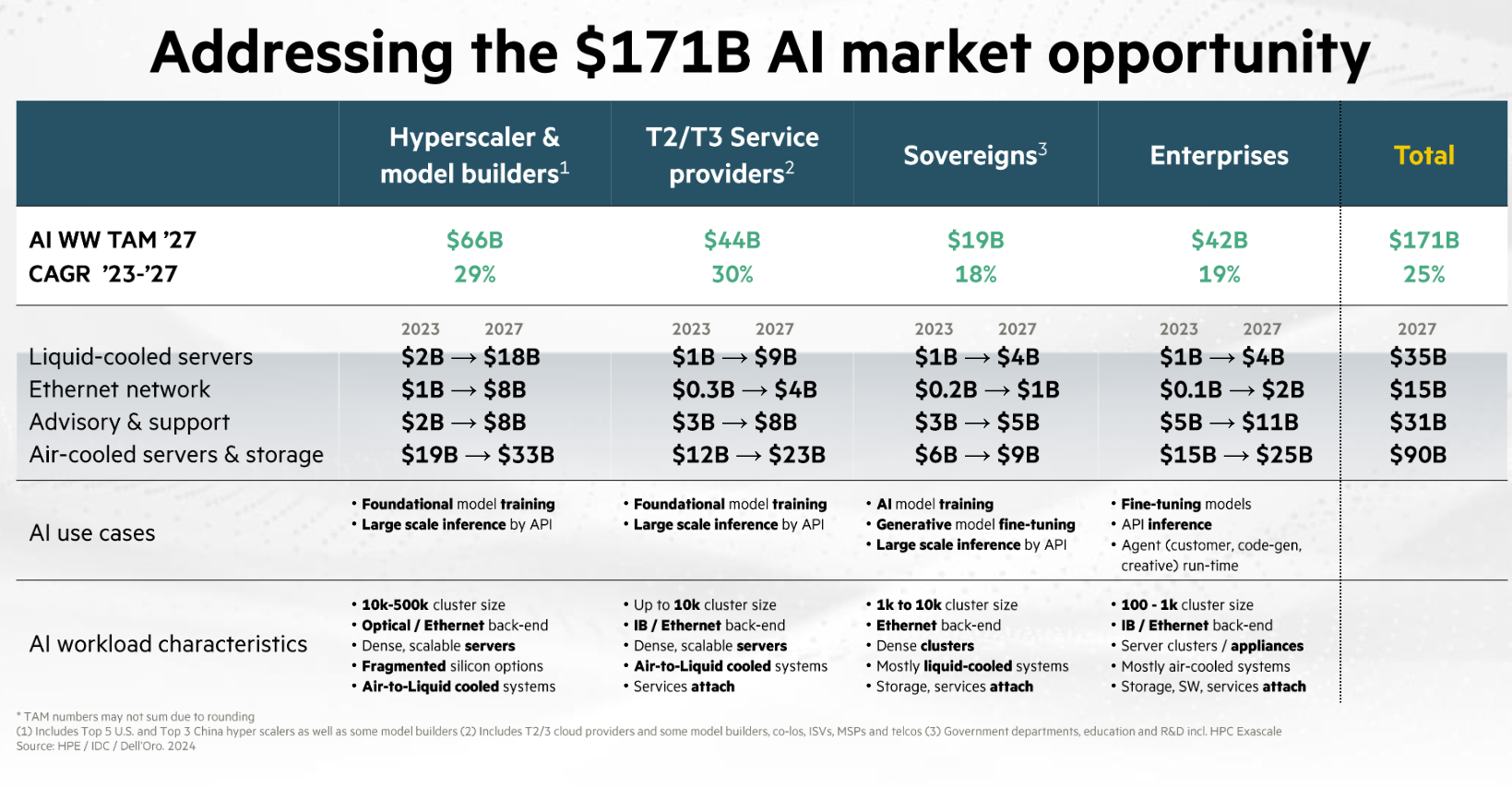
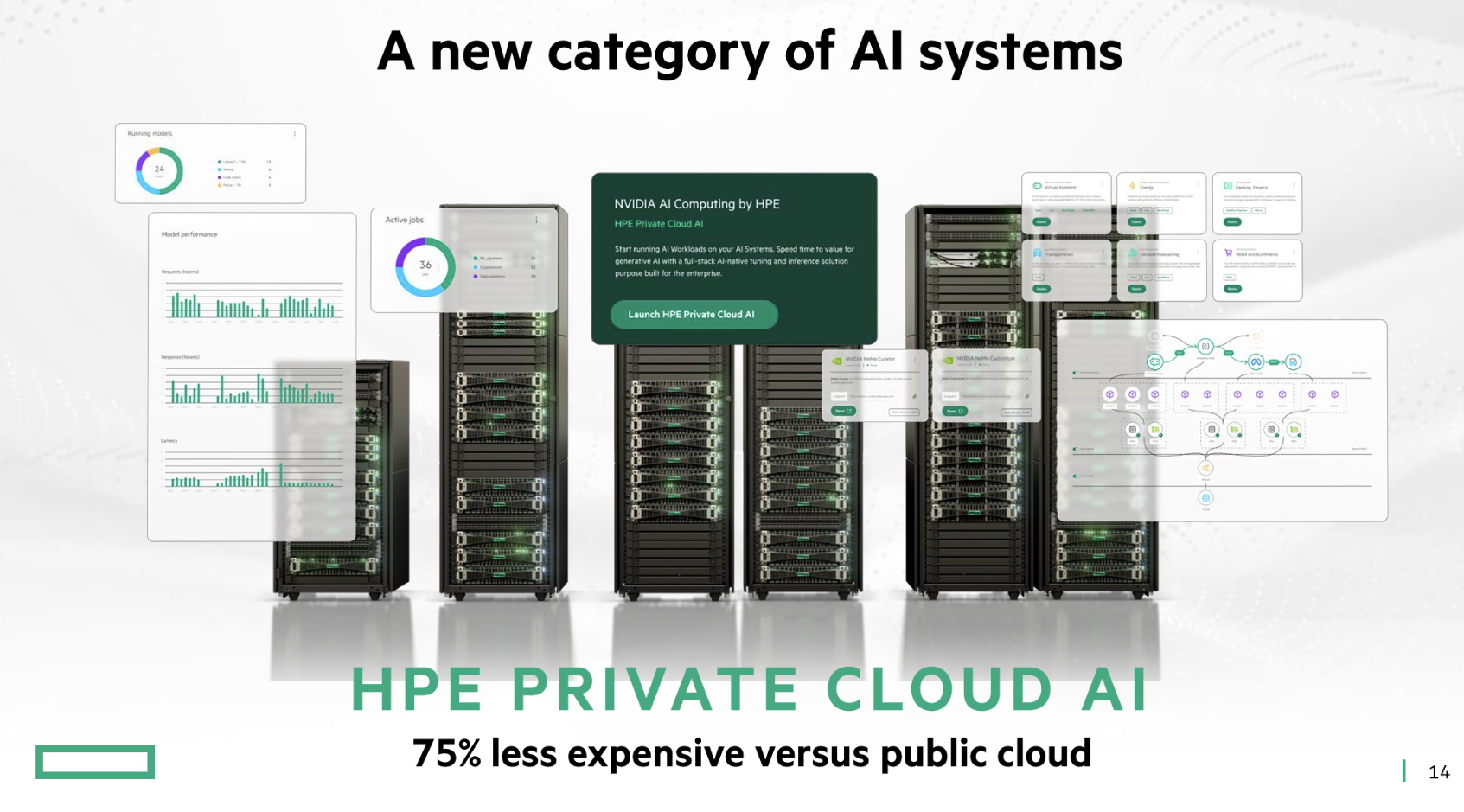
CEO Antonio Neri said the third quarter was strong with growth due to AI system sales. HPE noted that it was well positioned to gain market share in AI infrastructure.

In a blog post, Neri noted:

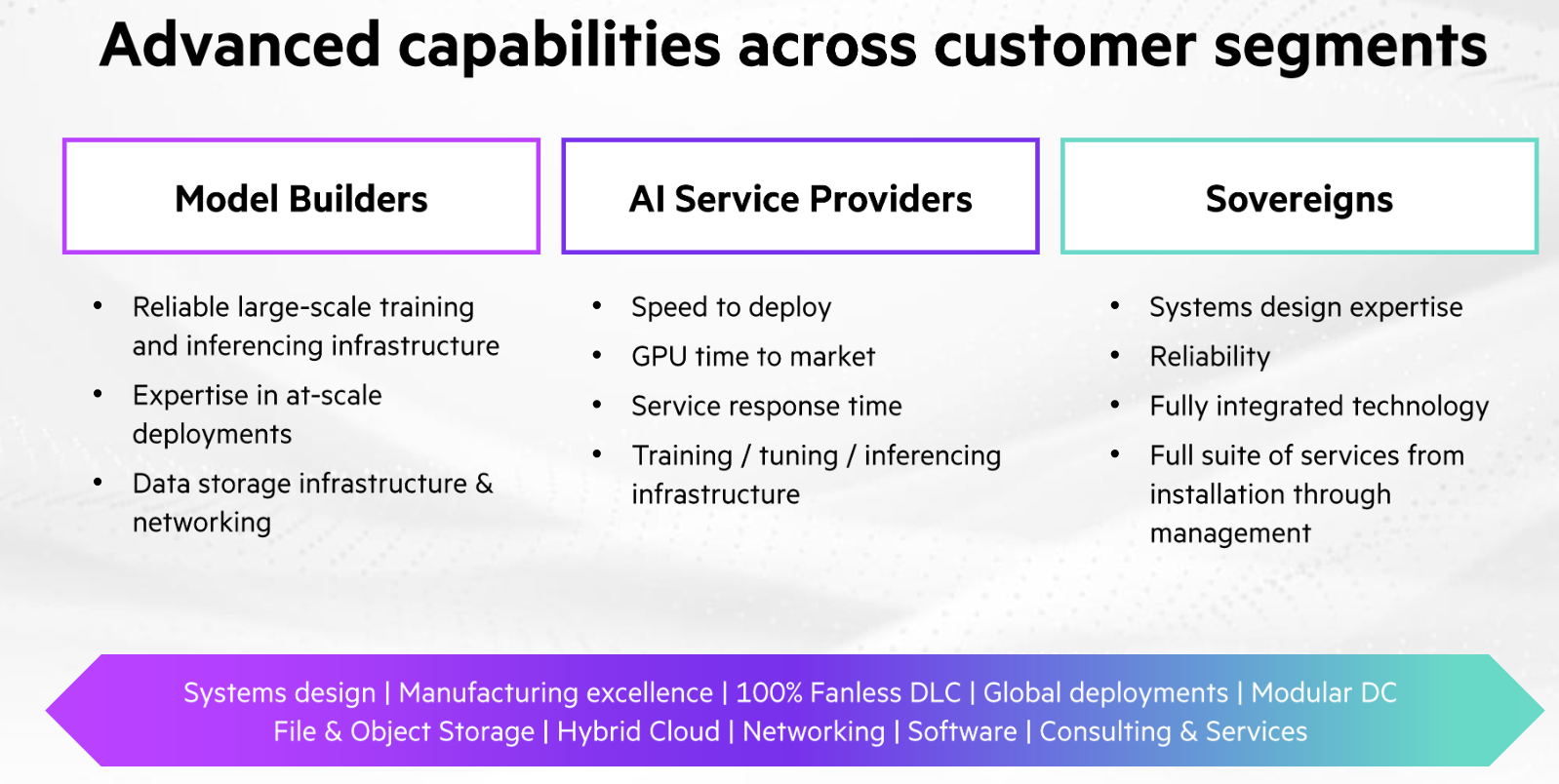
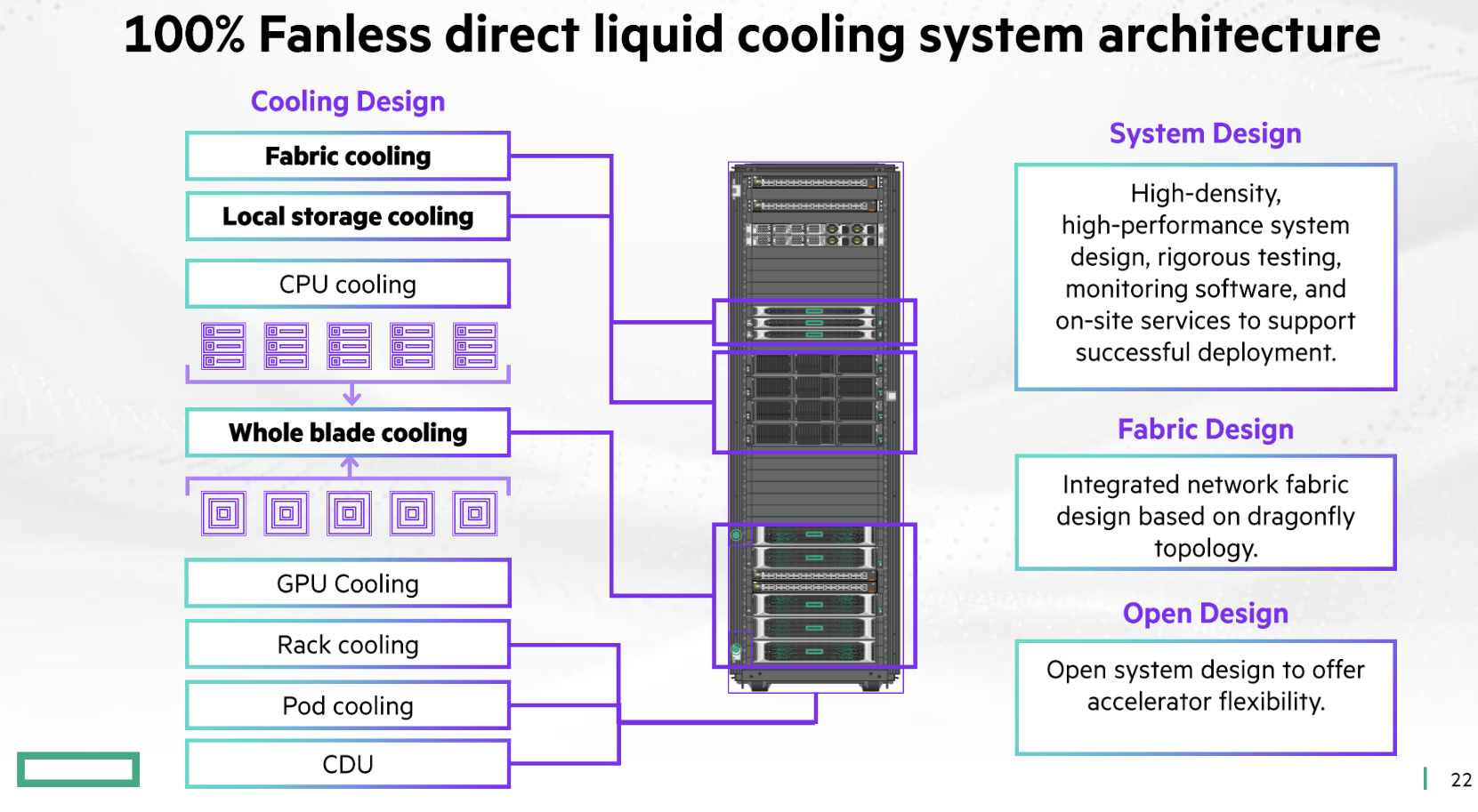
"Our AI leadership is built on decades of large-scale infrastructure expertise including technologies like direct liquid cooling that are powering our largest AI systems for model builders, service providers, and supercomputing users. Interest in our HPE AI solutions, particularly from enterprise and sovereign customers, continues to grow. AI systems orders climbed $1.6 billion in the quarter to a cumulative $6.2 billion since Q1 2023 – an increase of approximately $3.5 billion over the last year."

Server revenue in the quarter was $4.3 billion, up 35% from a year ago. Intelligent edge revenue was $1.1 billion, down 23% from a year ago. That business is mostly Aruba.

Hybrid cloud revenue was $1.3 billion, down 7% from a year ago.

As for the outlook, HPE projected fourth-quarter revenue between $8.1 billion and $8.4 billion with non-GAAP earnings of 52 cents a share to 57 cents a share. The non-GAAP figure excludes an after-tax net gain due to H3C income of $2.1 billion due to a partial sale and various adjustments. For fiscal 2024, HPE projected revenue growth of 1% to 3% with non-GAAP earnings of $1.92 a share to $1.87 a share.

Speaking on the earnings call, Neri said:

"We saw sequential and year over year orders growth, but with some geographic variation, demand was strong in North America, Asia Pacific, Japan and India, as Europe and the Middle East lacked. We are aggressively going after the opportunities presented by better market conditions, and are well positioned in a competitive and dynamic environment. 

We have accelerated innovation across all pillars of our strategy, networking, hybrid cloud and AI delivered through a unified cloud, native and AI driven experience as a part of our HP Greenlake Cloud Platform. Today, almost 37,000 unique customers use our HP Greenlake cloud to manage their hybrid IT estate."

Neri also addressed AI use cases:

"We continue to pursue profitable deals within our target server margin range, underscoring stability in our operating profit profile. In AI our momentum is very clear. Customer demand for HPE AI systems rolls sequentially, with opportunities increasing in both enterprise and sovereign AI clouds. 

Customers are exploring new ways to use AI, adding to our already robust pipeline and creating even more runway for our broad AI offerings. Enterprise interest in generative AI is high, and while adoption is still in the initial stages, it is accelerated. Customers tell us that they see the possibilities in building the business cases."

Data to Decisions Tech Optimization HPE Chief Information Officer

Quantum Brilliance, Oak Ridge National Laboratory aims to meld quantum computing, HPC

Quantum Brilliance and Oak Ridge National Laboratory (ORNL) said they will collaborate on a platform that couples quantum computing with high-performance computing (HPC).

Under the partnership, Quantum Brilliance's on-premise quantum computing cluster will integrated into ORNL's HPC systems. Specifically, Quantum Brilliance's room-temperature diamond quantum accelerators and ORNL's infrastructure will be combined to solve problems traditional computing can't.

Constellation Research analyst Holger Mueller said:

"The foreseeable performance of quantum systems is not sufficient to solve many of the real-world quantum problems. One solution is the combination of quantum with HPC, where part of the process is offloaded to tried and tested HPC architectures and platforms. The partnership between Quantum Brilliance and Oak Ridge Laboratory brings on some formidable players in the field – so we will see what comes out of this partnership – hopefully soon."

More quantum computing:

Melding quantum computing and HPC has become a common theme in the industry. Quantum Brilliance and ORNL said they will focus on hybrid and parallel quantum computing. The goal is to leverage CPUs, GPUs and quantum processors to solve problems.

In a statement, the companies said the collaboration plans to "co-develop new computational methods that exploit parallel and hybrid computing and new software tools that will enable users to implement those methods and develop their own."

Data to Decisions Innovation & Product-led Growth Tech Optimization Quantum Computing Chief Information Officer

Anthropic launches Claude Enterprise with 500K context window, GitHub integration, enterprise security

Anthropic launched Claude Enterprise, which offers an expanded 500K context window, more usage capacity and GitHub integration as well as single sign-on, role-based permissions and admin tooling.

With the move, Anthropic is building out a suite of enterprise plans powered by its Claude large language model (LLM). Anthropic is also available on the hyperscale cloud providers such as AWS used by enterprises.

Here's a look at Anthropic's steady cadence of enterprise tools:

With that backdrop, Anthropic's Claude Enterprise is aimed at companies that want to use their proprietary data with Claude for competitive advantage with enterprise-grade security. Claude Enterprise's default is that it doesn't train models on user data. Anthropic is also leveraging Claude Enterprise to popularize its collaboration features for multiple use cases.

On the security front, Claude Enterprise has single sign-on and domain capture, role-based access with fine-grained permissions, audit logs and system for cross-domain identity management, which will be available in the weeks ahead.

Early customers of Claude Enterprise include GitLab, BCG and North Highlander.

Other key points:

  • The 500k context window equates to hundreds of sales transcripts, dozens of 100 page documents and 200,000 lines of code to give Claude company-specific knowledge.
  • GitHub integration is designed for engineering teams looking to sync code repositories with Claude.
  • Projects and Artifacts are designed team-based use cases for marketing and product and engineering.
  • Target use cases for Claude Enterprise include marketing, engineering, sales, product management, human resources and legal.

Anthropic's Claude Enterprise competes with ChatGPT Enterprise, which launched a year ago.


Constellation Research's take

Constellation Research analyst Andy Thurai said:

"As the LLM wars heat up, and the delta of data used to train these models starts to narrow, a lot of LLM providers are trying to offer differentiation in other ways. LLM offerings can add larger context windows, prompt caching, platform capabilities, bias removal of input date, ethical training of models, green/carbon neutral trained models, enterprise capabilities, and massive price reductions in their API-based pricing.

Anthropic is no exception. Some of the additions released this week are in those categories. The context window of 500K while not the largest (that honor currently goes to Gemini 1.5 Pro with a 2 million context window size) is among the largest.  The additional features of GitHub integration, admin controls, enterprise identity settings, single sign-on and other perks matter.

This launch should allow enterprise users to consider using these models to unleash their enterprise data where data privacy and security are major concerns.

Essentially, Anthropic Enterprise is aimed to compete squarely against ChatGPT enterprise launched a year ago."

Related:

Data to Decisions Future of Work Innovation & Product-led Growth Tech Optimization Next-Generation Customer Experience Digital Safety, Privacy & Cybersecurity AI GenerativeAI ML Machine Learning LLMs Agentic AI Analytics Automation Disruptive Technology Chief Information Officer Chief Executive Officer Chief Technology Officer Chief AI Officer Chief Data Officer Chief Analytics Officer Chief Information Security Officer Chief Product Officer

Zscaler CEO upbeat on fiscal 2025, but outlook falls short

Zscaler had a strong fourth quarter, but its outlook for fiscal 2025 fell well short of estimates.

The company, known for its Zero Trust Exchange platform, is among the cybersecurity leaders and in the middle of the platformization debate that has been dented by the CrowdStrike outage.

Zscaler reported a fourth quarter net loss of $14.9 million, or 10 cents a share, on revenue of $592.9 million. Non-GAAP earnings in the quarter were 88 cents a share. Wall Street was expecting Zscaler to report non-GAAP earnings of 69 cents a share on revenue of $567.61 million.

For fiscal 2024, Zscaler reported a net loss of $57.7 million, or 39 cents a share, on revenue of $2.17 billion, up 34% from a year ago. Non-GAAP earnings for the year were $3.19 a share.

CEO Jay Chaudhry said customer adoption was "stronger than ever" and that fiscal 2025 would feature a "strong go-to-market machine and a high pace of innovation."

Yet the outlook for the fiscal year fell short of expectations. Zscaler projected first quarter revenue of $604 million to $606 million with non-GAAP earnings of 62 cents a share to 63 cents a share. Wall Street was expecting first quarter earnings of 72 cents a share.

For fiscal 2025, Zscaler said it would post non-GAAP earnings of $2.81 a share to $2.87 a share on revenue of $2.6 billion to $2.62 billion. Wall Street was looking for fiscal 2025 non-GAAP earnings of $3.36 a share on revenue of $2.63 billion.

Zscaler CFO Remo Canessa said the first half of fiscal 2025 will see billings growth of about 13% and accelerate to 23% in the second. Canessa said sales productivity will improve over the year and the pipeline supports second-half acceleration.

Canessa added that Zscaler will continue to invest for long-term growth at the expense of profits to some degree.

Chaudhry remained upbeat about Zscaler's prospects and took a few shots at CrowdStrike. Key quotes from Chaudhury include:

  • "When customers rely on a mission critical cyber security service, there is no room for service interruptions. From inception, Zscaler has built a cloud security platform that has been seamlessly scaling with high reliability and resilience. Operating such a service is no trivial task and it requires years of experience. Unproven vendors, including new entrants and legacy firewall companies, do not have this experience. By operating the world’s largest security cloud with superior resilience for over a decade, we have earned the trust of the largest enterprises.
  •  "The importance of mission criticality has gone up significantly since the outage that was caused by CrowdStrike. While our customers want resilience, they also do want consolidation, but they do not want consolidation such that it makes them dependent on a single vendor."
  • "The increasing use of AI is creating new avenues of growth for us. For example, the rising adoption of GenAI is exposing new gaps in organizations’ security posture."
  • "The cyber threat environment continues to worsen as the limitations of firewall and VPN based architecture are exploited by threat actors to launch an increasing volume of sophisticated attacks. Over the last year, we saw an 18% increase in ransomware attacks blocked by the Zscaler cloud."
  • "In addition to landing new logo platform purchases, we are also upselling our platform. Our land-and-expand motion creates a flywheel of continuous engagement and upsells."
  • "Most of the CIO I talk to have been standardizing in-line access to three providers, one for EDR (endpoint detection and response), one for identity, and one for Zero Trust actions. I think that's a good combination because you end up getting a couple of extra layers, but you still have separation. So in this environment, our customers aren't really pushing back on us because we tell them don't buy everything through Zscaler. You've got an EDR provider, you've got an identity provider and we'll do the rest of Zero Trust on activity." 
Digital Safety, Privacy & Cybersecurity Security Zero Trust Chief Information Security Officer Chief Privacy Officer

Intel launches Lunar Lake laptops, aims to scale AI PCs, spur upgrade cycle

Intel joined the AI PC parade with its Intel Core Ultra 200V series, code named Lunar Lake, with a launch designed to show that x86 architecture can compete with Arm in Copilot+ PCs.

PC makers are already betting that AI PCs will create an upgrade cycle for long-in-the-tooth devices purchased in the COVID-19 pandemic.

To date, the Qualcomm vs. AMD AI PC debate revolves around battery life vs. graphics performance. Intel's Core Ultra 200V series is designed to do both with performance improvements up to 50%.

With Intel now in the AI PC race, there will be a bevy of laptops scaling. Intel said in a statement that there will be more than 95 consumer designs from more than 25 PC makers including Dell Technologies, HP, Lenovo and others. Preorders start today with systems available Sept. 24.

What remains to be seen is whether Intel's AI PC processors and accelerators can turn around the company. Intel reported a disastrous second quarter. Speaking at a recent investment conference, CEO Pat Gelsinger acknowledged the challenges.

"It's been a difficult few weeks. And with that we've been working hard to address the issues and at earnings we were determined to lay out a clear view, right, of where we were, but also some of the next steps that we needed to address for the next phase of our strategy. And obviously, the market didn't respond positively. We understand that, and we're taking seriously what the market's telling us, and hearing that clearly. But we're also staying very focused on delivering and executing on the large number of the things that we laid out."

Key points about Intel Core Ultra 200V:

  • Intel claims its Intel Core Ultra 200V series processors have up to 50% lower package power and 120 TOPS (tera operations per second) across central processing unit (CPU), graphic processing unit (GPU) and neural processing unit (NPU).
  • The fourth-generation NPU is more than 4x powerful than its previous generation.
  • Intel said it worked with more than 100 integrated software vendors to optimize performance. Intel also noted that its Core Ultra platform is compatible with all applications.
  • Intel Core Ultra 200V features the company's Xe2 graphics microarchitecture .
  • Laptops will have up to 20 hours of battery life in productivity use cases with the ability to support more than 500 optimized AI models.

Here's a look at the SKUs available for Intel-powered Lunar Lake laptops.

Data to Decisions Future of Work Tech Optimization Innovation & Product-led Growth New C-Suite Next-Generation Customer Experience Digital Safety, Privacy & Cybersecurity AI GenerativeAI ML Machine Learning LLMs Agentic AI Analytics Automation Disruptive Technology Chief Information Officer Chief Experience Officer Chief Executive Officer Chief Technology Officer Chief AI Officer Chief Data Officer Chief Analytics Officer Chief Information Security Officer Chief Product Officer

The generative AI Price Wars: What CXOs Need to Know About the Shifting Generative AI Landscape


In the fast-paced world of generative AI, a new battle is brewing – and this time, it's all about pricing. Let's cut through the hype and examine what's really happening in the market, and more importantly, what it means for your business. Pricing for generative AI APIs, services from Google, Anthropic and OpenAI among others, receiving deep discounts this year and generally trending downward. There are many factors that are contributing to this trend. The reasons include the commoditization of LLM and other generative AI solutions, competitive pressure, procurement negotiation by large enterprises, and failure to gain traction in the market among others.

Here are five key takeaways every CXO needs to understand:

  1. The Great AI Discount Bonanza Remember when generative AI was the hottest ticket in town, commanding premium prices? Those days are fading fast. Major players like Google, Anthropic, and OpenAI are slashing prices faster than a Black Friday sale. But why? It's a perfect storm of commoditization, fierce competition, and large enterprises flexing their procurement muscles.
  2. The Commoditization Conundrum Let's be clear: unless you've got a truly unique offering, your AI model is becoming a commodity. The gap between closed-source leaders and open-source alternatives is narrowing by the day. This means one thing for providers: differentiate or die. For CXOs, it's a buyer's market – but choosing wisely is more crucial than ever.
  3. The Edge Revolution Here's a shocker: enterprises are getting sticker shock when deploying AI models in production. The solution? Cheaper Edge inferencing. By offering smaller, distilled models for edge deployment, providers can dramatically cut costs. Smart CXOs are already exploring this option to make AI economically viable at scale.
  4. The Platform Play The standalone model is dead – long live the platform. Major players like AWS, IBM, and Google are bundling models with governance, security, and compliance features. It's no longer just about the model; it's about the ecosystem. For CXOs, this means evaluating not just the AI, but the entire stack it comes with.
  5. The Vertical Advantage While general-purpose models are locked in a race to the bottom, specialized models for finance (BLOOM) or healthcare (MedPALM) still command a premium. The lesson? In AI, as in business, niches matter. CXOs should be looking at how AI can solve industry-specific problems, not just general tasks.

The Bottom Line: The AI pricing landscape is shifting faster than a quantum particle. For providers, the message is clear: cost-cutting alone is a losing game. The real winners will be those who can offer unique value – be it through industry specialization, edge solutions, or comprehensive platforms.

For CXOs, this price war presents both opportunities and pitfalls. Yes, AI is becoming more affordable, but choosing based on price alone is short-sighted. The real questions to ask are:

  • How well does this AI solution integrate with our existing systems?
  • Can it scale to edge deployment for cost-effective production use?
  • Does it offer the governance and compliance features we need?
  • Is it solving our specific industry challenges, or just offering generic capabilities?

Remember, in the world of AI, today's bargain could be tomorrow's technical debt. The smartest move isn't just to buy cheap – it's to buy smart. Look for providers who are innovating beyond the model, offering comprehensive solutions that align with your long-term strategy.

As the dust settles on this price war, one thing is clear: AI is no longer just a novelty – it's becoming a utility. And like any utility, the winners will be those who can offer reliability, scalability, and value beyond the basic service.

So, CXOs, are you ready to navigate the new AI landscape? The game has changed, and the stakes have never been higher. It's time to look beyond the price tag and focus on the true value AI can bring to your organization. The future belongs to those who can harness AI not just as a tool, but as a transformative force in their industry. Are you ready to lead the charge?

Related:


Data to Decisions Future of Work Innovation & Product-led Growth New C-Suite Tech Optimization Next-Generation Customer Experience Digital Safety, Privacy & Cybersecurity AI GenerativeAI ML Machine Learning LLMs Agentic AI Analytics Automation Disruptive Technology Chief Analytics Officer Chief Data Officer Chief Digital Officer Chief Executive Officer Chief Information Officer Chief Procurement Officer Chief Product Officer Chief Technology Officer Chief AI Officer Chief Information Security Officer

Big software deals closing on AWS Marketplace, rival efforts

Enterprise software giants have spent heavily on sales teams, channel strategies and cross-selling playbooks, but it increasingly looks like sales are going to run through AWS Marketplace and similar efforts from other cloud giants.

This week featured a round of enterprise heavy hitters all reporting earnings at once, but a trend that's easy to overlook is the growing importance of cloud marketplaces.

Salesforce Brian Millham, President and Chief Operating Officer, said during the company's second quarter earnings conference call: "Our channel diversification has big upside for us. AWS Marketplace is a driver going forward. Three of our top 10 deals went through the marketplace."

Meanwhile, CrowdStrike CEO George Kurtz said a customer doubled spend on its Falcon platform via AWS Marketplace.

"Through Falcon Flex, this customer accelerated consolidation. They contracted for every Falcon module displacing seven technologies. And through the AWS Marketplace, their spend with CrowdStrike will grow from $2.2 million in ARR to more than $5 million in ARR over the subscription," said Kurtz.

This post first appeared in the Constellation Insight newsletter, which features bespoke content weekly and is brought to you by Hitachi Vantara.

CrowdStrike sees AWS Marketplace and Google Cloud's marketplace as a more frictionless way to sell software. CrowdStrike is that fastest growing Google Cloud vendor in its marketplace.

Kurtz said that selling software through cloud marketplaces makes sense since "customers of all sizes are increasingly looking to utilize their committed hyperscaler spend."

For good measure, Nutanix also noted it was landing deals via marketplaces on Microsoft Azure and AWS. Rajiv Ramaswami, CEO of Nutanix, said the company landed significant wins for its Nutanix Cloud Clusters or NC2 via marketplaces.

Ramaswami said one customer was already committed to Microsoft Azure and purchased Nutanix licenses via the Azure marketplace. Nutanix saw similar deals via AWS Marketplace.

What is notable from these examples isn't that sales went through marketplaces as much as big deals ran through them. The enterprise software sales playbook typically revolves around complicated contracts, negotiations, and friction due to lawyers, salespeople, project leaders and procurement departments.

Given the possibilities, it is not surprising that enterprise software players such as ServiceNow, Informatica, Snowflake, Databricks and MongoDB are hooking up with AWS Marketplace.

I'd rank the hyperscale cloud marketplace trends as another disruptive thing facing enterprise software--as if there aren't enough already. To recap:

The numbers behind AWS Marketplace are hard to ignore for enterprise software vendors. AWS has more than 5,000 sellers across more than 70 categories. Google Cloud offers more than 1,700 SaaS and API products. Azure Marketplace covers 19 product categories.

In July at the AWS Analyst Forum in New York, I had a briefing on AWS Marketplace with Karthik Balakrishnan, GM, AWS Marketplace Core.

Key takeaways from the conversation were the following:

  • AWS Marketplace is scaling quickly as vendors realize it's easier to discover products, start small and scale.
  • The ability to consolidate invoices, charges, and contracts on one platform is appealing.
  • AWS can leverage Amazon's know-how in frictionless commerce.
  • And procurement departments are fans of marketplaces due to standard contracts, easier expense tracking and efficient processes.

The win for enterprise vendors is also clear: Marketplaces from cloud giants give them more opportunities to land and expand. There is also something to be said for using standard contracts on the vendor side too and potentially fewer sales headcount.

Insights Archive

Data to Decisions Marketing Transformation Matrix Commerce Future of Work Innovation & Product-led Growth New C-Suite Tech Optimization Next-Generation Customer Experience Digital Safety, Privacy & Cybersecurity amazon ML Machine Learning LLMs Agentic AI Generative AI Robotics AI Analytics Automation B2B B2C CX EX Employee Experience HR HCM business Marketing Metaverse developer SaaS PaaS IaaS Supply Chain Quantum Computing Growth Cloud Digital Transformation Disruptive Technology eCommerce Enterprise IT Enterprise Acceleration Enterprise Software Next Gen Apps IoT Blockchain CRM ERP Leadership finance Social Healthcare VR CCaaS UCaaS Customer Service Content Management Collaboration M&A Enterprise Service GenerativeAI Chief Information Officer Chief Executive Officer Chief Technology Officer Chief Data Officer Chief Digital Officer Chief Analytics Officer Chief Financial Officer Chief Operating Officer Chief Marketing Officer Chief Revenue Officer Chief AI Officer Chief Information Security Officer Chief Product Officer