
Enterprise software will be reinvented with headless platforms, AI agents and enterprises that will aim to build their own systems. But a lot has to happen for enterprise software and SaaS incumbents to be disrupted.
The storyline that's emerging is one that revolves around enterprise software disruption due to AI agents that can traverse multiple systems and data silos. Today, enterprise software resides in buckets of acronyms--ERP, CRM, HCM--with multiple silos and data stores. AI agents threaten to break down that hierarchy.
Here's the big question: If all you're buying from a SaaS vendor is a browser-based user experience and a database underneath what are you really purchasing?
Simply put, enterprise applications are going to look a lot different in the future. Your guess on timing is as good as mine.
Speaking at a ServiceNow meetup in New York, IBM Research Vice President Sriram Raghava said agentic AI is going to create a new future for enterprise applications.
Get Constellation Insights newsletter
Raghava noted that every inflection point in enterprise technology had a new application paradigm. The emergence of the web created a new application approach. Mobile also meant enterprises need to think through mobile apps.
"I see agents as basically the emerging application paradigm of the AI. We're going to have enterprise applications of the future," said Raghava. "They're all going to be agent based and the way we build applications for the future."
After Raghava spoke, I caught up with him for a follow-up. He said that the current chat-based approach may be part of the enterprise mix, but companies are going to need an abstraction layer that can handle tasks like model selection, use cases, processes and testing to ensure the data is correct.
The challenge for enterprises is that agentic AI constructs have been consumer-based and corporations will need more than model context protocol (MCP) and Agent2Agent (A2A) to address needs. Developers could leverage Android and Apple iOS to deploy mobile applications. That layer for enterprise AI agents isn't baked yet, but standards are moving faster than previous technology inflection points.
- Secure browsers will matter more with AI agents
- The road to AI Exponential will be bumpy
- Enterprise technology customers look to AI, efficiency to combat uncertainty
- The rise of good enough LLMs
- Lessons from early AI agent efforts so far
- Every vendor wants to be your AI agent orchestrator: Here's how you pick
- Agentic AI: Everything that’s still missing to scale
I couldn't help but quip that the enterprise abstraction layers for quantum computing seem to be more baked than agentic AI. Raghava didn't disagree. Then again, quantum computing due to the raw science underneath needs an abstraction layer to work for real use cases.
MongoDB CEO Dev Ittycheria, speaking on the company's second quarter earnings call, hit a similar theme. "The quality of the output of these AI systems is high. Obviously, AI systems are probabilistic in nature, not deterministic in nature. So you can't always guarantee the output. You can hope that you've trained the models well. You've hoped that you've given it the right information, but you can't always guarantee the output," said Ittycheria. "It's going to take a little bit of time for people to really get comfortable that they can really deal with the last mile issues."
While we don't know how the future of enterprise software turns out, there are some common themes to ponder. Here's a look:
Build may catch up to buy. SVPG riffed on the build vs. buy equation for enterprises in the age of AI. Marty Cagan, founder and partner in charge of Product at SVPG, makes the argument that new AI-driven tools are going to make building enterprise applications more appealing. If you know the business logic behind the processes, you can likely use AI to spin up your own enterprise systems. The reality is that you’ll probably build and buy more.
Constellation Research analyst Esteban Kolsky said that the build-vs.-buy debate is picking up again. “This debate is not about building core functionality for business functions (e.g., ERP, CRM, and HCM) but about how to build a better infrastructure to support the growth of AI and coming technologies,” said Kolsky. “The debate about the value of having data available is over: We need data everywhere—protected, accessible, and available. However, the connections necessary to provide that, and the security and elements necessary to make it happen, are far from settled.”
Platforms win. ServiceNow has been able to expand into CRM and various industries due to a platform approach. The company aims to provide AI, data, workflow, security, automation and governance in one platform vs. SaaS vendors focused on a lucrative niche.
In a platform driven world, cloud providers could pull together building blocks that function as enterprise applications via AI agents without the business model disruption. Customers are used to consumption models with hyperscale cloud providers.
- Research: Time to Introduce Hi-Fi for Enterprise Processes
- Ray’s Law on AI Intelligence
- The Future of Agentic AI: Get Ready to Build Your Own Agents With Ease
- Exponential Efficiency in the Age of AI
Orchestration will be at the core. It's highly unlikely that enterprises will move to one data lake or application platform. The current state of heterogeneous enterprise systems will also be the future. Given that reality, orchestration between humans, processes, AI agents, data and tools will be critical.
Processes and value will be everything. Enterprise software will be sold by value and what process problems can be solved. Corporations will move toward solving problems and generating value over simply buying an acronym.
Terence Chesire, VP of CRM and Industry Workflows at ServiceNow, noted how Blackhawk Network, which processes gift cards for brands, was able to resolve disputes with scale and speed with AI agents with a 95% to 98% approval rate. "At the end of the day, AI needs to flow in an actual business process," said Chesire.
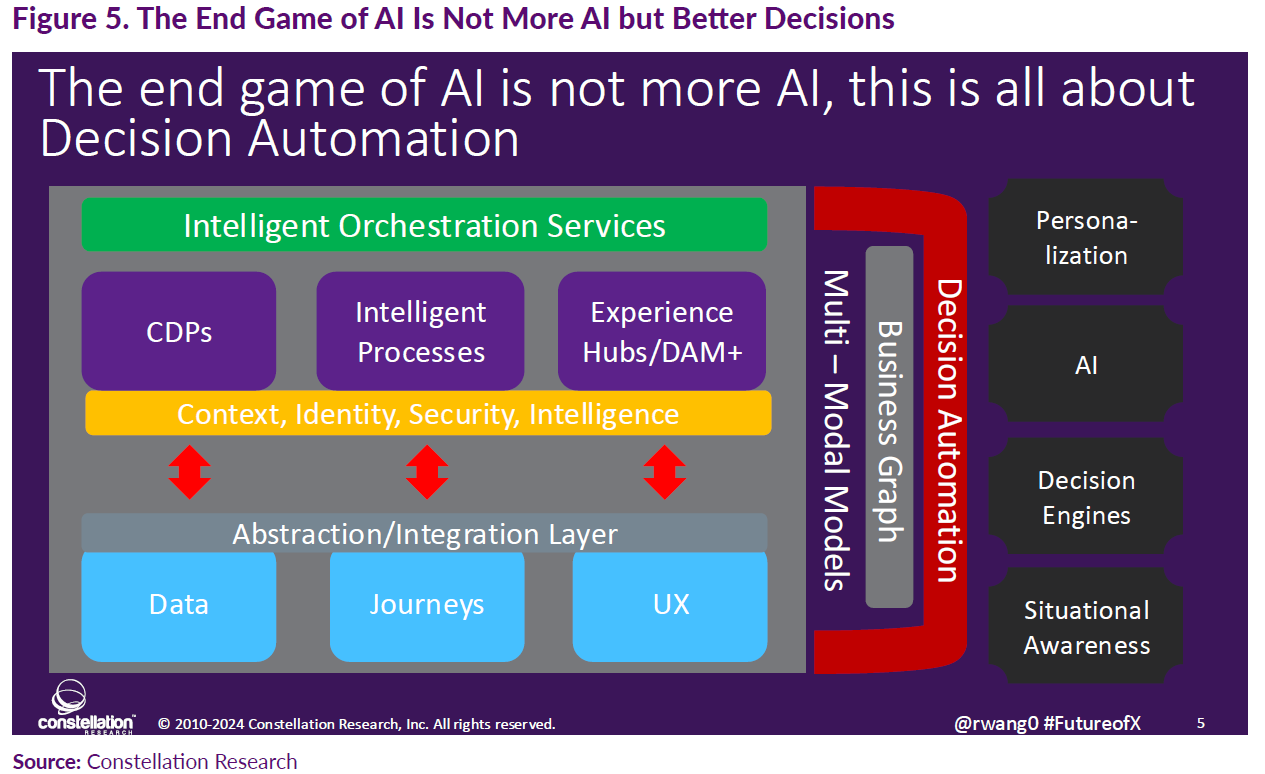
Box CEO Aaron Levie, speaking on the company's second quarter earnings call, said "enterprises are going to spend quite a bit of time trying to figure out what is the right AI architecture, what are the AI solutions that are working, which ones actually are driving ROI."
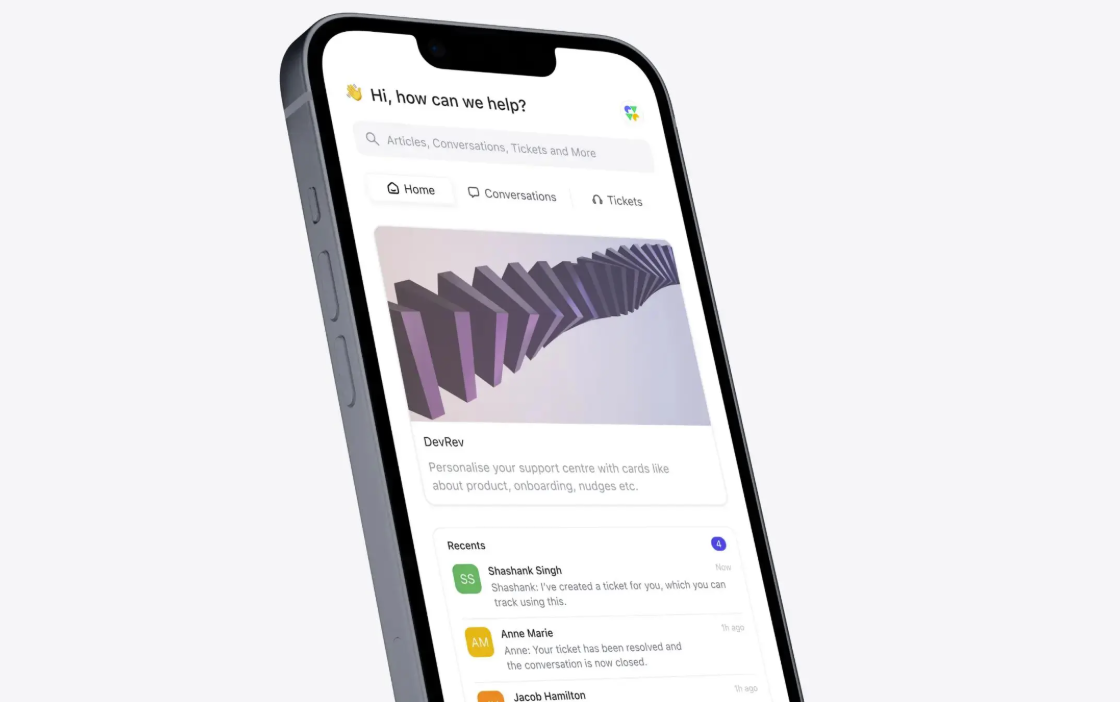
Don't assume that incumbent enterprise software vendors will win. Ittycheria said AI native startups have been choosing the company's Atlas platform as a foundation for their applications. Ittycheria cited DevRev as an example as a company looking to disrupt the help desk market.
A look at DevRev may indicate the future of enterprise software. An army of AI agents that can traverse multiple systems.
"Enterprises know that AI agents are going to bring a new level of automation and deliver deeper business insights to their businesses. Software has historically been good for automating processes that deal with structured data, take payroll, CRM systems, accounting, HRIS or supply chain workflows," said Box's Levie. "We can imagine a future where there are over 100x more agents than people inside of an organization, where any task you want done in a company is only a matter of how much compute you want to throw at the problem. You'll have agents running in the background and in parallel for any workflow around content that you can imagine."
The new enterprise software model will take time to develop. Speaking on Snowflake’s second earnings conference call, CEO Sridhar Ramaswamy was asked about whether AI and LLMs have plateaued. Ramaswamy’s answer was instructive. He said:
- "Every prediction that we have made about various kinds of plateauing has not really turned out to be true some 6- odd months later."
- "Experiences only become useful only when data that matters to the enterprise, all of the PDFs that are sitting in SharePoint or the various other data sources that there are also become accessible to these models."
- "You're going to see situations in which every complicated task that humans are involved in is going to have agentic solutions that are human-assisted where the model using tools does some of the work and then the humans guide the model to be able to be a lot more productive."
- "Think of all the work that happens in an enterprise, whether it is insurance claims processing or regulatory reporting or anomaly detection of various kinds or even going through the due diligence process for an M&A or a complicated legal thing that you have to do. Those are areas where application of data and AI is very much in its infancy. There are years of work ahead in terms of the value that we can get from AI."


