


Enterprise technology customers look to AI, efficiency to combat uncertainty
Enterprise technology companies are leveraging artificial intelligence and technology to drive efficiencies designed to offset everything from tariffs and inflation to growth investments.
Cognizant CEO Ravi Kumar said: "The AI opportunity is a double engine transformation for our clients, both on productivity and innovation. In the second quarter, we delivered a healthy combination of wins in AI efficiency-led large deals and innovation-led projects with Agentic AI unlocking new revenue pools and spend cycles.
Also see: Infosys sees good demand for AI agents
This theme has surfaced repeatedly from both integrators, vendors and customers. Here's a look at what CxOs are saying on second quarter earnings calls.
UPS
UPS has a program called Efficiency Reimagined to drive process efficiency and digital efforts. "We are redesigning end-to-end processes to drive savings, like a new global payment strategy. Here, we've centralized how we make and receive payments under a digital-first strategy, which will drive efficiency for UPS and improve the customer experience," said UPS CEO Carol Tome.
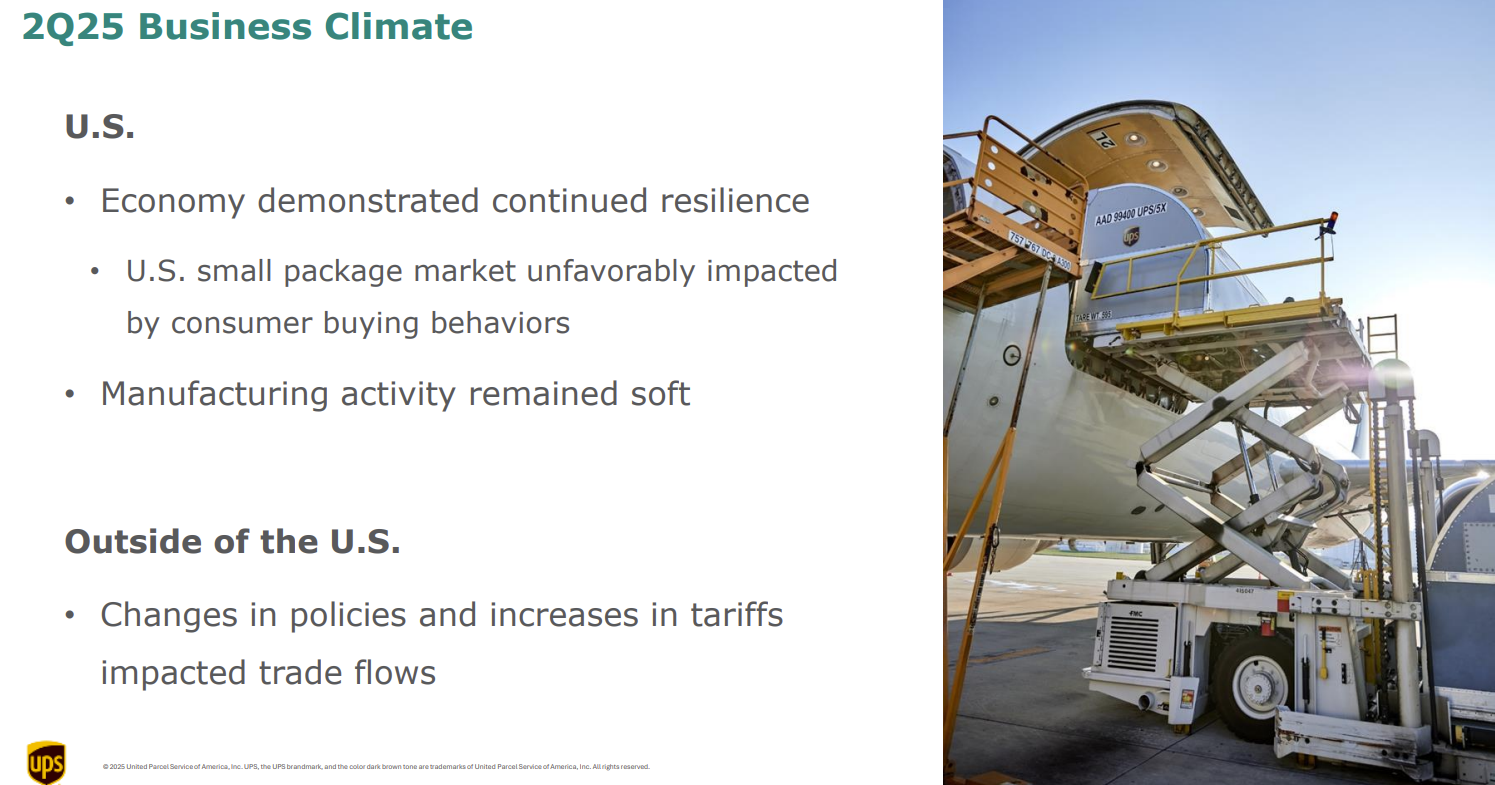
The company is also offering digital services that are enabling customers to remap supply chains.
"In the second quarter, nearly 90% of all cross-border transactions were processed digitally. Given our proven trade expertise and vast global network, our customers are coming to us for solutions that will help them navigate tariff uncertainty," said Tome. "In fact, so far this year, we've engaged in over 600 supply chain mapping assessments to help customers visualize, evaluate and optimize their global supply chains, including looking at opportunities for nearshoring."
UnitedHealth Group
UnitedHealth Group is looking to AI to drive efficiency efforts.
Patrick Conway, CEO of Optum, a unit of UnitedHealth, said on the parent company's second quarter earnings call. "We are aggressively advancing operational disciplines across our portfolio of businesses. The more concentrated operating model I mentioned earlier plays into more standardized approaches, predictable outcomes and lower operating costs," said Conway. "We will complete the final stages of our technology integration, which will enable meaningful advances with emerging technologies like AI to drive efficiency gains. For 2026, we expect to deliver almost $1 billion in cost reductions."
Royal Caribbean
Royal Caribbean Cruises President and CEO Jason Liberty said the company is looking to drive efficiency as well as revenue through better customer experiences.
Liberty said:
"We're utilizing disruptive technology like AI and other tools to be able to -- to manage 15 million price points a day and to be able to listen to what our customers are looking for and curate what our customers are looking for that are relevant to them. That enhances the experience for them, takes friction out of the experience and also allows us to be more efficient and gain more margin."
Merck
Merck CFO Caroline Litchfield said the company is looking to save $3 billion in costs to reinvest in higher growth businesses.
"In terms of this $3 billion saving opportunity, which will come through productivity across our enterprise. It will impact the R&D line, SG&A as well as cost of goods. That said, we will reinvest all of that $3 billion plus further investments, especially in R&D, given the strength of our pipeline as well as in SG&A over time as we launch the new products and look to excel in the marketplace with those launches in order to drive long-term growth for our company."
Google CEO Sundar Pichai:
"As we ramp our AI investments, we continue to focus on driving improvements in productivity and efficiency to offset growth in technical infrastructure-related expenses, particularly from higher depreciation."
Waste Management
Waste Management President and Chief Operating Officer John Morris:
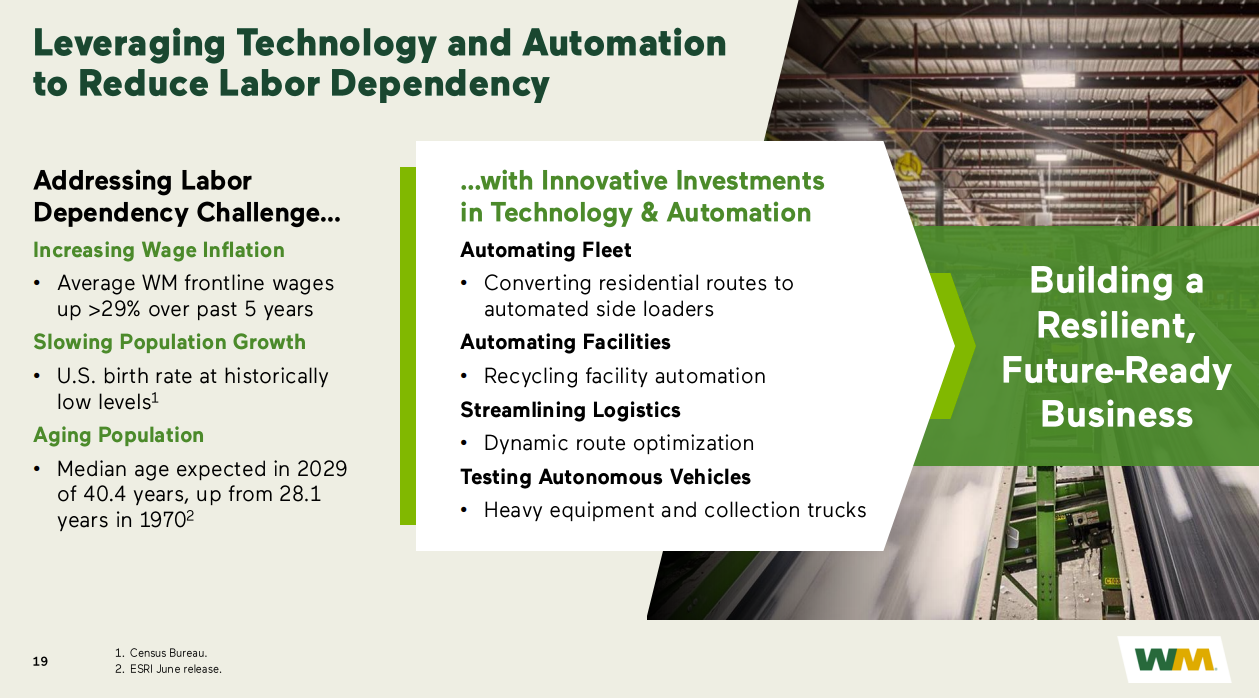
"One of the clearest indicators of the progress we're making is our ability to consistently reduce operating costs as a percentage of revenue. Structurally lowering our cost base isn't about temporary cuts, it's about using technology and process discipline to build a more efficient, scalable model for the long term, and our team delivered that in Q2. The second quarter marks a record period in which we achieved operating expenses below 60% of revenue.
This reflects the significant progress we've made in connecting the full value chain of WM from routing and fleet management to customer communication and maintenance. Our connected fleet continues to serve as a key differentiator. We achieved a 70 basis point improvement in repair and maintenance costs as a percentage of revenue in the second quarter as real-time telematics are helping us anticipate and resolve vehicle issues faster, reduce downtime and streamline maintenance scheduling."
ADP
ADP CEO Maria Black:
"On the AI front, we continued the rollout of ADP Assist which provides the latest AI-driven capabilities into our products, and we're seeing fantastic engagement from our clients with millions of interactions in fiscal '25.
To further build on our unmatched expertise, we have also deployed these tools across ADP to thousands of our associates, driving efficiencies in our sales, service and technology functions. By coupling our decades of experience with our significant data insights and AI investments, we are simplifying work for our associates and elevating the end-to-end client experience."
Hershey
Hershey CEO Michele Buck said:
"As we got hit by some of the record high cocoa prices early on, we stated that our approach was going to be taking a long-term approach to ensure continued category health, and we've done that. We've continued to spend on our brands, we've invested in technology with our new ERP platform, and then new AI and tech-enabled capabilities that have driven significant efficiency, whether in the transformation program or other places."
Larry Dignan is Editor in Chief of Constellation Insights at Constellation Research, where he leads editorial coverage focused on enterprise technology, digital transformation, and emerging trends shaping the future of business. He oversees research-driven news, analysis, interviews, and event coverage designed to help technology buyers and vendors navigate complex markets with clarity and context. ...
Read morePublished
Author
