Results

BT150 zeitgeist: Consumption-based pricing angst abounds

Enterprise software vendors' consumption-based pricing is creating uncertainty and concern among CxOs trying to get a grip on budgets.

In the September BT150 CxO meetup, IT decision-makers said consumption-based models from software providers have come with price increases that impacted adoption. Snowflake and Domo were cited as vendors that recently raised prices. In a February meeting, CxOs were more constructive about consumption-based models.

Here's a recap of our CxO call, which operates under Chatham House rules.

One CxO noted that the biggest concern with consumption pricing--often couched in terms like flex credits--was "the lack of predictability and impact on adoption." CxOs agreed that when they can't accurately forecast technology costs there's a reticence to adopt tools like AI agents.

BT150 members also noted that the unpredictable nature of consumption-based pricing was also straining vendor relationships. "There needs to be a balance between value-based pricing and predictability for long-term partnerships." Vendors want to capture value from usage, but customers also require cost certainty.

According to CxOs in the BT150, the pricing challenges are leading to a few strategies:

  • Be more cautious about platform selection and usage patterns. CxOs noted that they have no desire to leverage multiple platforms.
  • Seek alternatives with more predictable cost structures.
  • Search for value in discussions with vendors where the focus is on more predictable pricing for the two or three areas that are really driving value for the enterprise. Once usage on these high-value areas settles, costs should be more predictable.

The pain with consumption based pricing is more acute for mid-tier customers that are used to having more fixed cost models. Larger enterprises tend to be more familiar with consumption pricing and have more visibility into what the company will consume.

Previously:

Data to Decisions Next-Generation Customer Experience Chief Information Officer

Snowflake, Salesforce, BlackRock lead effort to standardize semantic data

Snowflake, Salesforce, BlackRock and other enterprise vendors have launched the Open Semantic Interchange initiative, which aims to standardize data and ensure semantic metadata interoperability.

The move comes as standards have been flying in 2025 as vendors create frameworks for agentic AI. Model Context Protocol (MCP) from Anthropic is the best known, but Google Cloud launched Agent2Agent (A2A) and last week outlined AP2, a standard for agentic commerce.

While AI obviously needs protocols to connect AI agents, fragmented data definitions are also a big problem for interoperability. Snowflake said Open Semantic interchange (OSI) is an open source initiative that wants to create a vendor-neutral specification for how semantic metadata is defined and shared.

Christian Kleinerman, executive vice president of product at Snowflake, said OSI is looking "to solve a foundational challenge for AI — the lack of a common semantic standard."

OSI is looking to address semantic data for businesses, domains and industries as a framework to make metadata interoperable.

The goals of OSI include enhancing interoperability across multiple AI, business intelligence and analytics tools, accelerating adoption of AI app and streamlining operations.

Initial partners include Alation, Atlan, BlackRock, Blue Yonder, Cube, dbt Labs, Elementum AI, Hex, Honeydew, Mistral AI, Omni, RelationalAI, Salesforce, Select Star, Sigma, Snowflake and ThoughtSpot.

Data to Decisions Big Data Chief Information Officer Chief Data Officer Chief Technology Officer Chief Information Security Officer

Nvidia to invest $100 billion in OpenAI, which will deploy Nvidia next-gen AI infrastructure

Nvidia and OpenAI said they have struck a partnership where OpenAI will deploy at least 10 gigawatts of AI datacenters built on Nvidia's Vera Rubin GPUs. Nvidia will invest up to $100 billion in OpenAI as each gigawatt is deployed.

In other words, Nvidia is investing in $10 billion a gigawatt deployed. OpenAI will also be the first public reference for Nvidia's Vera Rubin platform when the first phase of the deal comes online in the second half of 2026.

In a press release, the two companies said they have inked a letter of intent for the partnership. OpenAI, which has noted it is chasing superintelligence, will use Nvidia to power the training of its next-gen ChatGPT models.

Nvidia CEO Jensen Huang said the two companies have "pushed each other for a decade, from the first DGX supercomputer to the breakthrough of ChatGPT."

OpenAI CEO Sam Altman said that "everything starts with compute."

Key points of the partnership include:

  • OpenAI will use Nvidia as its preferred compute and networking partner for AI factories.
  • OpenAI and Nvidia will optimize roadmaps for models, infrastructure and software.
  • The partnership will include a bevy of collaborators.
  • The companies said they will finalize details of the partnership in the weeks ahead.

Constellation Research analyst Holger Mueller said:

"Good to see OpenAI will build its own data centers, and good to see plans for Nvidia's next platform, Vera Rubin. Someone please add up all the purchase commitments OpenAI has done for Oracle, Microsoft and now own data centers and see if Sam Altman might have to sell his shirt in 2026."

Data to Decisions Next-Generation Customer Experience Tech Optimization Innovation & Product-led Growth Future of Work Digital Safety, Privacy & Cybersecurity openai nvidia ML Machine Learning LLMs Agentic AI Generative AI Robotics AI Analytics Automation Quantum Computing Cloud Digital Transformation Disruptive Technology Enterprise IT Enterprise Acceleration Enterprise Software Next Gen Apps IoT Blockchain Leadership VR Big Data Chief Information Officer Chief Executive Officer Chief Technology Officer Chief AI Officer Chief Data Officer Chief Analytics Officer Chief Information Security Officer Chief Product Officer
Thoma Bravo buys PROS for $1.4 billion

Thoma Bravo has acquired PROS Holdings, a pricing and revenue management software company, in a deal valued at $1.4 billion.

The deal is the third in less than a month for Thoma Bravo, which recently took Verint and Dayforce private.

Under the terms of the deal, Thoma Bravo will pay $23.25 per share in cash, nearly a 42% premium over PROS closing price Sept. 19.

PROS said it will continue to focus on advancing its agentic AI product plans with the capital and expertise of Thoma Bravo. PROS CEO Jeff Cotten said that the company will "be more agile and have greater flexibility to invest in innovation and expand our platform" as a private company.

When PROS reported its second quarter earnings in July, it projected 2025 revenue of $360 million to $362 million with free cash flow of $40 million to $44 million.

Depending on the specific product, PROS competes with Conga, Oracle CPQ, Zilliant, Salesforce Revenue Cloud and others. Conga happens to be a Thoma Bravo portfolio company.

Here's a look at PROS platform and use cases. 


Data to Decisions Marketing Transformation Matrix Commerce Sales Marketing Revenue & Growth Effectiveness Next-Generation Customer Experience Chief Information Officer

Oracle names Magouyrk and Sicilia co-CEOs as Catz moves to Vice Chair

Oracle has named Clay Magouyrk, who led Oracle Cloud Infrastructure, and Mike Sicilia, who led Oracle Industries, co-CEOs as Safra Catz becomes Executive Vice Chair.

The company announced that changes in a statement and SEC filing.

Catz joined Oracle in 1999 as a senior vice president and was CFO in two different stints. In 2014, Catz became co-CEO with Mark Hurd when Larry Ellison stepped down to be CEO. In 2019, Catz became sole CEO after Hurd's death.

With Catz as CEO and Ellison as CTO, Oracle transformed itself into a leading cloud infrastructure company. Magouyrk, 39, joined Oracle Cloud Infrastructure in 2014 and was a founding engineer. He has led OCI's expansion into AI training and inference.

Sicilia, 54, joined Oracle via the acquisition of Primavera Systems and has led the company's vertical applications including the rebuild of Oracle Health, which was built via the acquisition of Cerner.

"At this time of strength is the right moment to pass the CEO role to the next generation of capable executives," said Catz, who also functionally served as CFO.

Now Magouyrk and Sicilia are co-CEOs Oracle the duo will split oversight of OCI and the AI applications that'll run on top of it. The co-CEOs will make their debut at Oracle AI World next month and an analyst day that will go along with it.

Ellison said on a conference call:

"I've never seen an opportunity on this scale before. The immense impact of AI across our economy is hard to grasp. The colossal size of the AI endeavor and the size of the responsibility that goes with it, it's difficult to imagine. But Oracle's job is not to imagine gigawatt scale data centers.

Oracle's job is to build them. Clay and Mike are proven successful leaders prepared and experienced in pursuing AI opportunities. I'm looking forward to working with Clay, Mike and Safra, over the coming years to develop AI technology and enable our customers to use large language models with their private data."

In a statement, Magouyrk and Sicilia said, "our combined strengths in AI, cloud infrastructure, horizontal applications and industry applications, will enable Oracle to deliver the latest AI capabilities to our customers."

On a call, Magouyrk added that Oracle's stack is really about integration.

"The whole is more than the sum of the parts. And I think that's true even within our infrastructure, the fact that our database services can then provide more and more value to the applications and then the fact that the applications themselves become more valuable when you can take advantage of multiples of those together. That really is the true strength of Oracle. We are the only company that can do both infrastructure and applications."

Sicilia said:

"Our customers are increasingly interested in and seeing value in all of our offerings, from industry applications, to Fusion, to OCI, to database and to our AI data platform. As we help businesses transform, this also creates much bigger deals that are multiple times larger than what we experienced in the past."

According to regulatory filings, Magouyrk and Sicilia will receive stock option grants on Sept. 24 with options to buy $250 million shares of Oracle common stock with 80% of the grant time-based and the remainder on performance.

Catz as Vice Chair will continue to work with Ellison. Ellison noted that he and Catz "will be able to continue our 26-year partnership."

Oracle reaffirmed its financial guidance. Since Catz was principal financial officer at Oracle, Douglas Kehring, executive vice president of operations since March 2015 will become CFO.

New C-Suite Oracle Chief Executive Officer

The big AI, SaaS, transformation themes to watch in 2025’s home stretch

Technology conference season is about to hit overdrive. Enterprises are plotting IT budgets for the year ahead. And the fourth quarter, which is critical, is about to kick off. And the only thing that's scaling into 2026 are open questions that aren't going to be answered quickly (even if vendors tell you otherwise).

Here's a look at the themes I'm watching through the rest of the year.

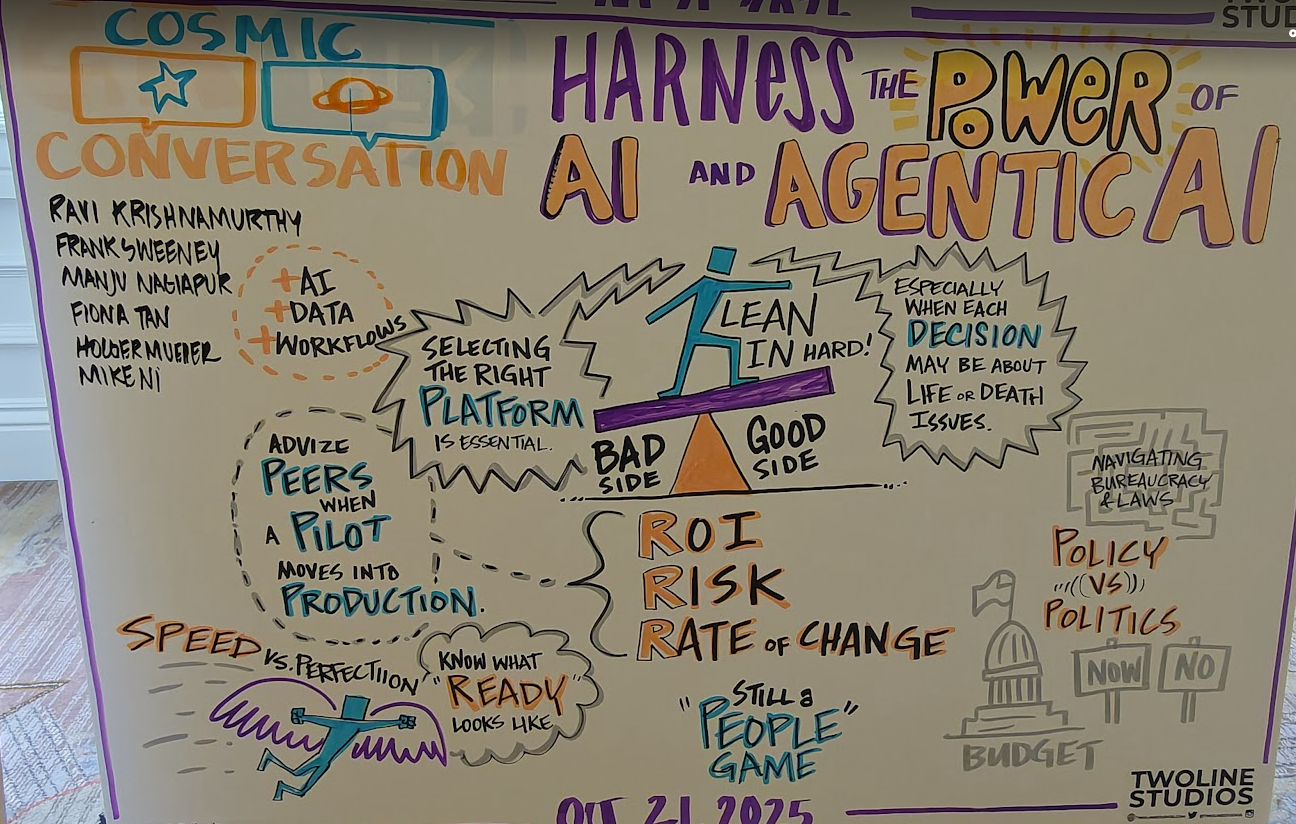
AI costs and ROI become critical.

It almost doesn't matter that the MIT Nanda survey that revealed 95% of AI pilots failed relied on anecdotes and murky methodology. That 95% statistic has been cited repeatedly in briefings and keynotes. Given perception is reality, enterprises are disillusioned. At the very least, enterprises are well out of the gee whiz science project stage and well into the show me the money stage.

Get ready for the great vendor pivot and a lot more rationality. Marketing glitz is out as vendors follow the AWS practical approach. ServiceNow, Salesforce and Workday are all talking about internal agentic AI use cases and driving returns.

Workday Executive Chairman Aneel Bhusri summed the state of enterprise AI today.

"People thought AI was going to solve everything, and vendors were out there marketing way ahead of what they had product wise. People have gotten a lot more realistic about what AI can do and what AI can't do. Vendors have gotten more realistic about delivering solutions to their customers, and, frankly, smarter about what works and what doesn't work,” said Bhusri. “What you'll see from Workday and others over the next 12 to 18 months will be real solutions that really help you run your business better and really leverage the power of AI, not just quick fixes."

Now vendors tell us.

Smaller LLMs solve more problems for enterprises and may get their due.

While we're on the AI cost theme it's worth watching the headlines for smaller more effective models. As HubSpot recently noted, you don't need the latest greatest LLM for many use cases. Simply put, small and cheap LLMs can work well. To that end, watch companies like Writer, which just launched more lightweight Palmyra models designed efficient inferencing.

These smaller models--also championed by IBM, ServiceNow, hyperscale cloud giants and others--will be critical to AI costs given that AI inference will become the most important enterprise workload. Small models will matter even more if LLMs hit the wall on big advances.

Every SaaS vendor wants to be a platform, but many will fail.

Every enterprise software vendor will have a data cloud, agent builder and spiel about being a platform. And why not? Being a platform is a great business. However, customers are only going to tolerate so many platforms.

Workday mentioned the word "platform" 78 times on its investor day at Workday Rising. "The platform becomes the product, maybe for the first time in Workday history," said Workday CTO Peter Bailis.

ServiceNow CEO Bill McDermott said on the company's second quarter earnings call: "We've become the CEO's agentic AI story in enterprise software. And notice I didn't say SaaS. We actually don't live in a SaaS neighborhood. We live in an enterprise AI neighborhood. The big picture is a CEO should want ServiceNow's AI platform for business transformation." ServiceNow executives said the word "platform" 21 times in an hour-long conference call.

Salesforce noted its Agentforce platform 20 times on its second quarter call and said it is expanding beyond CRM into ITSM. "There's no question about that. We've built the software infrastructure for the agentic enterprise, we have our metadata platform unifying our apps, our data and agents into one powerful agentic operating system. We are rebuilding every single one of our products to be agentic. We're delivering almost every single one of those products at Dreamforce," said Benioff.

Agentic AI is the UI and application (maybe).

We've covered this one before and Workday was among the first traditional enterprise software vendors to make a big bet on AI as the new UI with its purchase of Sana for $1.1 billion. In theory, Sana will be the new "front door for work" and leverage Workday's data on people and money. Workday's Data Cloud will dish out critical ERP data to Sana's front end and connectors will bring everything else to the interface.

Gerrit Kazmaier, president, product and technology at Workday, said during Workday's investor day: "We think about Sana like the iOS for enterprise in the future. And we see it being like a power combination with Workday because we have incredible distribution. We have 75 million users already. And you can ask 100% expect us to leverage that to bring Sana as an experience to every one of them."

He added that workers will interact with Sana instead of that SaaS layout that we all know so well. "People engage with Sana today on average 7 times a day in the current form. If we bring this to all of our customers and we open up that AI extensibility for them many things that they are doing today with legacy ticket-based automation, programmed exits, DIY AI systems, they will just naturally fall into this," said Kazmaier.

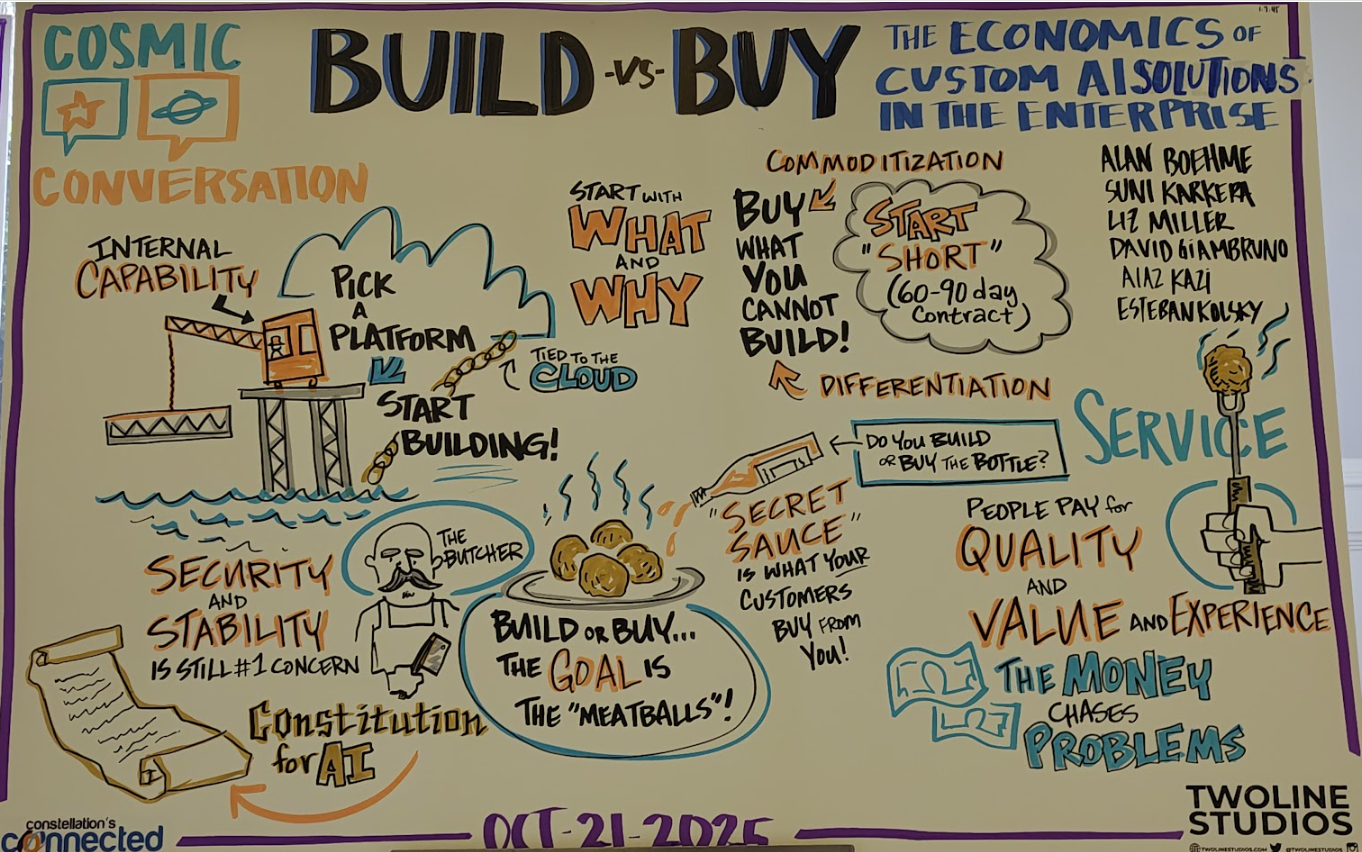
Build vs buy.

Kazmaier said DIY AI doesn't work in the enterprise and the biggest reason is the data isn't ready. In addition, processes are more complicated. Kazmaier was singing from the same hymn book as Salesforce CEO Marc Benioff.

Benioff noted that most enterprises don't have the talent or money to DIY AI. Even the ones that can build their own are simply creating a rabbit hole. "Customers have gotten very entranced by these ideas should they have their own models. Should they have this? Should they build this themselves? should they DIY their AI?" said Benioff.

Kazmaier argued that you can't simply provide AI Lego blocks and hope they magically optimize enterprise processes. "Business processes are complex. They run organizations, they have systems, whether it's hire to retire on the HR side, whether it's quote to cash, or source to pay. All of these processes are long running and an orchestration of a complex network of actions and systems. And you cannot just superficially slap AI across off that, right, on legacy APIs and have to hope that this would reconfigure transform the process itself," he said.

In other words, AI needs to be brought to the workflows to be useful.

This build vs. buy debate is fascinating and we won't be able to declare a winner for years if not decades. Here's a thought. AI native companies and startups will build and possibly buy later. Midmarket will buy. Large enterprises will do both.

Are we in an AI bubble?

There's a subtle positioning among vendors just in case this AI bubble bursts. It's curious that OpenAI executives seem to be acknowledging the bubble the most. The AI bubble question will common through the fourth quarter, but it's worth remembering a bit of history. In December 1996, then Federal Reserve Chairman Alan Greenspan said there was "irrational exuberance" in the market. The dot-com bubble peaked March 2000 and then crashed.

The signs of a bubble are all there including the return of SPACs, big stock moves on remaining performance obligations (RPO) and valuations that are on par with the dot-com boom.

Oracle Q1 misses, but sees OCI revenue surging over next 4 years

Code transformation may lead us all away from tech debt--or not.

Oracle CTO Larry Ellison said on the company's first quarter conference call: "We're not just building application generators. We're building application generators and then we're building the applications, which gives us insights to make the application generator better. It's a huge advantage to be on both sides of that equation, both being an application builder and a builder of the application generation technology, the underlying AI application code generators. That's a huge advantage."

MongoDB also launched an application modernization program that has AI-driven code transformation as well as the playbooks to work through some of the enterprise nuances.

AWS Transform is built around modernizing everything from mainframes to VMware to .NET.

AI is going to create a lot of new software, but tech debt is funny. As soon as you modernize, the tech debt clock begins again. Tech debt is a bit like the US government's debt that way.

Data to Decisions Future of Work Innovation & Product-led Growth Next-Generation Customer Experience Tech Optimization Digital Safety, Privacy & Cybersecurity ML Machine Learning LLMs Agentic AI Generative AI Robotics AI Analytics Automation Quantum Computing Cloud Digital Transformation Disruptive Technology Enterprise IT Enterprise Acceleration Enterprise Software Next Gen Apps IoT Blockchain Leadership VR Chief Executive Officer Chief Information Officer Chief Technology Officer Chief AI Officer Chief Data Officer Chief Analytics Officer Chief Information Security Officer Chief Product Officer
Research Report: Should AI Be Blamed for Hiring Decisions, or Should the Employer Bear Responsibility? Landmark Mobley v. Workday Case Raises the Question but Is the Wrong Case

Media Name: @rwang0 @workday 20250912 CR R Wang News Analysis Mobley vs Workday Front Page.png

Executive Summary

On May 16, 2025, U.S. District Judge Rita Lin of the Northern District of California granted preliminary certification of the case of Mobley v. Workday as a collective action. Specifically, the suit claims that Workday’s artificial intelligence (AI)-based applicant recommendation system unfairly discriminates against job seekers above the age of 40. The plaintiff claims that he was denied across multiple companies using the same system. The judge’s preliminary certification of the case as a collective action enables qualified individuals across the U.S. to opt in to the lawsuit.

Constellation believes the case has no merit, given that the AI system did not make the final decision on its own and that the same system used by different employers breaks the notion of a unified policy. Talent-acquisition professionals work very differently at each organization. The implementation, configuration, policies, and practices can differ greatly at each employer. Ultimately, the employers in question should bear responsibility in hiring decisions when AI is programmed to uniquely meet the employers’ requirements. However, the issue of AI ethics should remain top of mind for employers and technology vendors, who must comply with regulatory requirements and applicable laws.

At Issue: Alleged Discrimination by AI, Not  the Employer

Disparate impact theory is a legal framework holding that a seemingly neutral policy or  practice can be unlawful if it has a disproportionately negative effect on a protected  group, even if the policy was not created with discriminatory intent. The theory was  codified in Title VII of the Civil Rights Act of 1991 after the Griggs v. Duke Power Co.  (1971) case. In the Mobley v. Workday case, the plaintiff, Mobley, argues that his protected class is those over the age of 40. To prove a case, the employee must show the policy’s negative impact, after which the employer must demonstrate the policy is job-related and consistent with business necessity or show that no less-discriminatory alternative was available. 

Employers typically have to defend these cases by showing that this policy is necessary for business operations and that there are no less-discriminatory options. However, in a strange twist, the plaintiff in this case has decided to sue Workday, the technology vendor used to help the employer with its recruiting. This Age Discrimination in Employment Act (ADEA) case could be one of the largest collective actions ever certified. 

CHROs and Employers Ultimately Make Hiring  Decisions, Not Technology Vendors or AI

Falsely preying on society’s dystopian fears of AI systems going amuck may rightfully raise  attention paid to AI ethics and governance policies. However, the merits of this case remain flawed. Constellation believes the following:

1. A candidate who is not qualified regardless of age still should not be hired. Just  because candidates over 40 are rejected does not mutually exclude them from  being unqualified.

2. The judge’s reasoning to treat screening systems as a “unified policy” even if used  by different companies for a variety of positions at a national level invites a flurry of frivolous lawsuits and discrimination claims.

3. Passing off an employer’s individual responsibility to create fair policies across a  wide variety of job classes and placing the blame on AI vendors is grossly negligent. 

Until AI systems actually hire people without human involvement or control, blaming the  technology vendor is absolutely wrong. So long as the AI vendor has configured and implemented the employer’s policies, guidelines, and protocols, the vendor should not be liable for potential bias and discrimination. Moreover, screening systems should not be treated as a “unified policy,” especially when these systems are all individually uniquely configured and are leveraged by individual recruiting professionals in a myriad of different ways. The fact that users of an AI system all will configure their systems for their own unique needs across a variety of job positions should dismantle conditional certification to begin with.

Workday must challenge the lawsuit’s merits and its preliminary certification, or other technology vendors may be falsely accused of creating disparate impact when the employer is the one ultimately in charge. Other technology vendors should rise up and provide an amicus brief in support of Workday.

Read the full report for advice to CHRO's

Your POV

Will you blame AI for your decisions or will you own up? Do you think Mobley has a case or is Workday in the right?

Add your comments to the blog or reach me via email: R (at) ConstellationR (dot) com or R (at) SoftwareInsider (dot) org. Please let us know if you need help with your strategy efforts. Here’s how we can assist:

  • Working with your boards to keep them up to date on technology and governance.
  • Connecting with other innovation minded leaders
  • Sharing best practices
  • Vendor selection
  • Implementation partner selection
  • Providing contract negotiations and software licensing support
  • Demystifying software licensing

Reprints can be purchased through Constellation Research, Inc. To request official reprints in PDF format, please contact Sales.

Disclosures

Although we work closely with many mega software vendors, we want you to trust us. For the full disclosure policy,stay tuned for the full client list on the Constellation Research website. * Not responsible for any factual errors or omissions.  However, happy to correct any errors upon email receipt.

Constellation Research recommends that readers consult a stock professional for their investment guidance. Investors should understand the potential conflicts of interest analysts might face. Constellation does not underwrite or own the securities of the companies the analysts cover. Analysts themselves sometimes own stocks in the companies they cover—either directly or indirectly, such as through employee stock-purchase pools in which they and their colleagues participate. As a general matter, investors should not rely solely on an analyst’s recommendation when deciding whether to buy, hold, or sell a stock. Instead, they should also do their own research—such as reading the prospectus for new companies or for public companies, the quarterly and annual reports filed with the SEC—to confirm whether a particular investment is appropriate for them in light of their individual financial circumstances.

Copyright © 2001 – 2025 R Wang and Insider Associates, LLC All rights reserved.

Contact the Sales team to purchase this report on a a la carte basis or join the Constellation Executive Network

Digital Safety, Privacy & Cybersecurity Future of Work New C-Suite Tech Optimization Data to Decisions Innovation & Product-led Growth Next-Generation Customer Experience workday AI Analytics Automation CX EX Employee Experience HCM Machine Learning ML SaaS PaaS Cloud Digital Transformation Enterprise Software Enterprise IT Leadership HR LLMs Agentic AI Generative AI business Marketing IaaS Disruptive Technology Enterprise Acceleration Next Gen Apps IoT Blockchain CRM ERP finance Healthcare Customer Service Content Management Collaboration Chief Executive Officer Chief Financial Officer Chief People Officer Chief Information Officer Chief Procurement Officer Chief Technology Officer Chief Human Resources Officer Chief AI Officer Chief Data Officer Chief Analytics Officer Chief Information Security Officer Chief Product Officer
News Analysis: The War on H-1B Visas - The New Services Economics

Media Name: @rwang0 Ray Wang USCIS_Signature_Preferred_FC.jpg

POTUS Cracks Down on H-1B Abuse to Bolster Domestic Jobs

On September 19th, 2025, the President issued a proclamation restricting entry of certain non-immigrant workers.  In that proclamation:

  • $100,000 payment would be required for every H-1B visa recipient starting September 21, 2025 with an annual term.
  • Special exemptions by the Secretary of Homeland Security for any individual alien, all aliens working for a company, or all aliens working in an industry, if the Secretary of Homeland Security determines, in the Secretary’s discretion, that the hiring of such aliens to be employed as H-1B specialty occupation workers is in the national interest and does not pose a threat to the security or welfare of the United States.

Intended and Unintended Consequences Abound

Constellation expects three simultaneous responses with the reduction of H-1B petitions:

  1. Domestic hiring will increase.  The economics of adding $100k to each H-1B applicant will reduce the number of petitions for special talent.  Companies will prioritize US workers for domestic positions given the huge cost burden.
     
  2. Enterprises will accelerate automation and AI.  The baffling existence of BPO amidst a wave of automation and AI will cease to become a mystery.  Savvy organizations will take the opportunity to reduce as much of their labor costs as possible.  Should there be a dearth of talent, then automation and AI investments will accelerate.
  3. GCC's will overtake outsourcing.  So after 12/31/2025, if you outsource for a service let’s say $100k to a medical bill or claims processing in India from the US, that full amount is deductible today, providing a $21,000 corporate tax deduction (i.e. assuming a 21% corporate tax rate), resulting in a net cost of $79,000. However, the HIRE act complicates things. 

    Under the HIRE act what happens is the $100,000 payment would lose its deductibility while triggering a $25,000 excise tax. The effective after-tax cost would increase to $146,000 — an 85% increase over current costs. So if you have the HIRE Act pass plus less H1-Bs and already in place 1 year vs 15 year depreciation, offshore work will be much less affordable than US based work. This will have a punishing effect on outsourcers but lead to an increase of GCCs in India. 

The Bottom Line: A New World Order In Services Economics Will Emerge

The short term effect for IT Services firms would be an increase of GCC’s in India, more hiring in the US, and certainly more pressure to deliver automation and AI,  Concurrently, expect less outsourcing, less H-1B’s, and less job mobility.  This new world order on services economics could have devastating effects on attracting the best and brightest talent to the US just as countries such as UAE, Qatar, and Kingdom of Saudi Arabia are ramping up a talent war.

Your POV

How will you adjust to these new H-1B requirements? Do you think this will help the US or hurt the US? 

Add your comments to the blog or reach me via email: R (at) ConstellationR (dot) com or R (at) SoftwareInsider (dot) org. Please let us know if you need help with your strategy efforts. Here’s how we can assist:

  • Working with your boards to keep them up to date on technology and governance.
  • Connecting with other innovation minded leaders
  • Sharing best practices
  • Vendor selection
  • Implementation partner selection
  • Providing contract negotiations and software licensing support
  • Demystifying software licensing

Reprints can be purchased through Constellation Research, Inc. To request official reprints in PDF format, please contact Sales.

Disclosures

Although we work closely with many mega software vendors, we want you to trust us. For the full disclosure policy,stay tuned for the full client list on the Constellation Research website. * Not responsible for any factual errors or omissions.  However, happy to correct any errors upon email receipt.

Constellation Research recommends that readers consult a stock professional for their investment guidance. Investors should understand the potential conflicts of interest analysts might face. Constellation does not underwrite or own the securities of the companies the analysts cover. Analysts themselves sometimes own stocks in the companies they cover—either directly or indirectly, such as through employee stock-purchase pools in which they and their colleagues participate. As a general matter, investors should not rely solely on an analyst’s recommendation when deciding whether to buy, hold, or sell a stock. Instead, they should also do their own research—such as reading the prospectus for new companies or for public companies, the quarterly and annual reports filed with the SEC—to confirm whether a particular investment is appropriate for them in light of their individual financial circumstances.

Copyright © 2001 – 2025 R Wang and Insider Associates, LLC All rights reserved.

Contact the Sales team to purchase this report on a a la carte basis or join the Constellation Executive Network

Data to Decisions Digital Safety, Privacy & Cybersecurity Future of Work Innovation & Product-led Growth Marketing Transformation Matrix Commerce New C-Suite Next-Generation Customer Experience Tech Optimization Chief Analytics Officer Chief Customer Officer Chief Data Officer Chief Digital Officer Chief Executive Officer Chief Financial Officer Chief Information Officer Chief Information Security Officer Chief Marketing Officer Chief People Officer Chief Privacy Officer Chief Procurement Officer Chief Product Officer Chief Revenue Officer Chief Supply Chain Officer Chief Sustainability Officer Chief Technology Officer

From Navy SEAL Lessons to AI-First Businesses: Redefining Success | DisrupTV Ep. 411

From Navy SEAL Lessons to AI-First Businesses: Redefining Success | DisrupTV Ep. 411

In Episode 411 of DisrupTV, hosts R “Ray” Wang and Vala Afshar engage with three distinguished guests:

  • Mike Hayes – Former Navy SEAL Commander and author of Never Enough: A Navy SEAL Commander on Living a Life of Excellence, Agility, and Meaning.
  • Natalie Nixon – Creativity strategist, CEO of Figure 8 Thinking, and author of Move. Think. Rest: Redefining Productivity and Our Relationship with Time.
  • Henry King – Co-author of Autonomous: Why the Fittest Businesses Embrace AI-First Strategies and Digital Labor

The discussion dives into what it means to lead with purpose, rethink productivity, and build AI-first businesses. Mike Hayes shares lessons on mission-driven leadership and transformation, Natalie Nixon explores how movement and rest fuel creativity, and Vala Afshar with Henry King explain why the fittest companies embrace autonomy in the age of AI.

Key Takeaways

From the episode, several themes emerged that are particularly actionable for leaders, innovators, and organizations aiming to be AI-first:

Mission & Purpose Lay the Foundation for Leadership
Mike Hayes emphasizes that leadership anchored in mission (like that of Navy SEALs) provides clarity under pressure. Purpose becomes the guiding star for decisions, culture, and values — especially when facing uncertainty. C

Rest & Creative Pauses Are Not Luxuries, They’re Strategic Necessities
Natalie Nixon discusses how movement, rest, and intentional pauses enable creativity—not by slowing things down, but by allowing new insights to emerge. The ability to “step back” can spark innovation. 

AI-First Means Autonomy, Adaptability & Continuous Learning
Henry King (with contributions from the hosts) frames “AI-first” organizations as those that leverage AI not just as a tool but as part of their operating model. That includes giving teams autonomy, embracing iterative feedback, and being willing to evolve. 

Resilience Over Raw Efficiency
The conversation calls out that in fast-changing environments, the “fittest” aren’t always the fastest. Resilience—preparing for disruption, being able to rebound, maintaining core values—is what lets organizations endure. 

Mindset & Culture Matter
Across all guests, there’s consensus that having the right mindset (mission-driven, adaptable, centered on human values) and culture (rest, trust, autonomy) is as important as technology for sustainable innovation.

Final Thoughts

This episode reminds us that success today is multi-dimensional: it’s not just about speed or output, but about purpose, rest, adaptability, and resilience. AI-first businesses will differentiate themselves by how they treat people—by giving autonomy, embedding rest and reflection, and making mission central to operations. Leaders who want to build organizations that last must integrate these principles with both their strategy and culture.

If you are considering how to evolve your organization or team, think about which of these pieces are under-developed: mission alignment, creative rest, autonomy, or learning mindsets. Investing in those will yield outsized returns in innovation and sustainability.

Related Episodes

If you found this episode insightful, you might also enjoy:


New C-Suite Future of Work Tech Optimization Chief Executive Officer Chief Information Officer Chief Digital Officer Chief Information Security Officer Chief Technology Officer On DisrupTV <iframe width="560" height="315" src="https://www.youtube.com/embed/Vr_MqqRNh80?si=odyTpjLB6wiPad7W" title="YouTube video player" frameborder="0" allow="accelerometer; autoplay; clipboard-write; encrypted-media; gyroscope; picture-in-picture; web-share" referrerpolicy="strict-origin-when-cross-origin" allowfullscreen></iframe>

Southwest Power Pool building small AI factory to better simulate electric grid

Southwest Power Pool (SPP) is building a mini AI factory with Nvidia, Hitachi Vantara and other Hitachi units to better simulate future demand on the electric grid in its region.

The first phase of the SPP effort is expected to become operational in the fourth quarter of 2025 or early 2026. Hitachi Vantara announced the partnership with SPP in June. The goal at the time was to develop industrial AI infrastructure to speed up simulations to resolve energy shortages, boost grid reliability and respond to outages.

Speaking at Hitachi Vantara's Analyst Live 2025 event, Felek Abbas, CTO and CISO for SPP, outlined the collaboration which aims to dramatically speed up the simulation process by at least 80% to predict future demand on the electric grid in its core states.

"The preliminary tests we've done show us getting an 80% reduction in time and we're hoping to beat that once we're on the final hardware," said Felek. "We'll essentially have a small AI factory within our facility."

SPP is a regional transmission organization that aims to improve the reliability of the electric grid while keeping costs low. The organization's footprint runs from Northwest Texas to the Canadian border. SPP also provides energy services such as reliability coordination and market facilitation in Arizona and Colorado.

SPP has about 125 stakeholders and member companies. Before AI data center demand, Felek said that electric peak loads for their region increased by about 1.5% a year. Today, growth is anywhere from 4% to 5% a year, said Felek..

"One of the things we absolutely need to do is bring more generation to the grid and in order to serve that load from AI, data centers and crypto mining is to run studies to determine what's feasible, whether the transmission system is robust enough and will it require additional construction," explained Felek.

The AI infrastructure deployed for SPP combines Hitachi Vantara's Hitachi-IQ and Nvidia's accelerating computer platform. Hitachi Vantara and Nvidia have been collaborating on enterprise AI and industrial AI systems and the storage provider has been called out during Nvidia CEO Jensen Huang's GTC keynotes.

Hitachi Vantara, along with its sibling companies such as Hitachi's GlobalLogic unit and Hitachi Energy, can bring expertise to multiple industrial AI use cases. SPP was a collaboration between Hitachi Vantara, Hitachi Digital Services along with Nvidia.

Felek said SPP's previous simulation process, which was largely manual, took 27 months. He added that SPP would run three simultaneously so it could deliver decisions for project requests once a year. "While this project is about speed, it's also about gaining more information, analyzing more areas of the grid and providing data to generation builders so they have expectations on the economic returns," said Felek. "To do that you need to know all the scenarios over the 20 year to 40 year lifespans."

This project with SPP, Hitachi Vantara and Nvidia is in the early stages but highlights on-premise AI and industrial AI use cases. Here are the key points:

  • Felek said the company is reinventing the entire simulation process.
  • SPP with Nvidia and Hitachi Vantara are looking to consolidate the data intake process and "have AI analyze the data as it is coming in and provide feedback to our stakeholders on quality." The previous process required human back-and-forth on data quality and corrections.
  • SPP is planning to automate reports and analysis to free up engineers.
  • Once the data is consolidated in a single repository, SPP can build models. Today, SPP takes six months to build models, but Felek said that process can dramatically sped up.
  • Felek added that SPP plans on leveraging an AI agent to build models from the data repository in real time. "The AI agent is going to determine issues with the models and automatically fix them," he said.
  • Leveraging Nvidia GPUs, SPP is building an inference engine that can deliver analysis on power flows dynamically and also provide economic analysis.

SPP will oversee the systems and technology implementation, but the Hitachi IQ and Nvidia enterprise stack will cover process automation, predictive analysis and communication systems integration. The Nvidia and Hitachi partnership runs alongside the SPP project and focuses on transmission planning processes and future needs for interconnections, planning, forecasting and analysis.

Data to Decisions Next-Generation Customer Experience Tech Optimization Chief Information Officer