Results

Why customer satisfaction, CX shows diminishing returns

This post first appeared in the Constellation Insight newsletter, which features bespoke content weekly and is brought to you by Hitachi Vantara.

A good customer experience is supposed to lead to profits, revenue growth and stock market returns. But stock returns and customer satisfaction have become decoupled, according to the American Customer Satisfaction Index (ACSI).

Does this mean that you should ditch all those customer experience (CX) projects? Not quite. However, the most recent ACSI data does challenge CX conventional wisdom a bit.

The good news is that the ACSI rose to a record score of 77.8 on a 100-point scale. This surge in satisfaction can be attributed to a return to supply chain and labor shortage normalcy after the COVID-19 pandemic. In addition, consumer expectations have fallen and that has lowered the bar for companies.

Claes Fornell, founder of the ACSI and the Distinguished Donald C. Cook Professor (emeritus) of Business Administration at the University of Michigan, said the following in remarks that came with the latest data.

"There is one remaining economic anomaly. As evidence of a well-functioning economy, companies with superior customer satisfaction usually have superior stock returns. The relationship between strong customer satisfaction and positive abnormal stock returns has yet to recur. It is not that the stock returns on customer satisfaction have been weak, but they have not outperformed the market the way they did in the past."

Indeed, some of the biggest gainers in the ACSI scores were Macy's, Hyatt Hotels, Amazon Prime Video and Avis Car Rentals. None of those companies have been stock market superstars. Historically speaking, ACSI scores at the company level have been correlated with higher profits, cash flow, stock returns, revenue growth, margins and market share.

Fornell had another takeaway that should make any CX pro cringe--the more data you collect on customers the less you seem to know. Fornell said:

"The steep decline in U.S. overall customer satisfaction is not just caused by COVID, shortages, and inflation. While these factors have exacerbated the problem, the weakness and subsequent deterioration in customer satisfaction began about a decade ago. It is not because of a lack of effort by business either. Companies collect much more data on their customers today than they did 10 years ago. Paradoxically, the more data companies collect about their customers, the less they seem to know about how to satisfy them. That’s because data and information are not the same thing. Customer survey data in particular contain a great deal of noise. For such data to become useful beyond descriptive statistics, filtration and calibration are paramount—something that is lacking in just about any analytics tool used by business today."

Should this data prove to be more than an anomaly, the implications on CX could be huge. To date, enterprises have assumed that improved customer experiences lead to better financial results. If that conventional wisdom doesn't hold up, CX will be under a lot of scrutiny.

ACSI in its analysis of ACSI scores as financial indicators said (emphasis mine):

"Recently, there have been economic anomalies affecting both the market and the economy. Inflation, in addition to product and labor shortages have led to declining customer satisfaction. Yet, despite high inflation, due to shortages, consumer demand has exceeded supply in many markets. When demand exceeds supply, customer satisfaction matters less and stock returns on customer satisfaction changed from positive to negative.

Nevertheless, several of the leading ACSI companies have held up reasonably well, but the S&P 500 has become less relevant as a benchmark."

It's too early for a definitive view on whether this decoupling between customer satisfaction and financial returns is permanent, but in the meantime, here are a few thoughts.

  • The data on customer satisfaction is noisy due to the "shortage economy" and supply issues amid strong demand. There's a good chance that noisy data may be the norm given the supply chain is likely to be volatile for the foreseeable future.
  • It's possible that multiple companies in any category have strong customer satisfaction scores. In that situation, a company is penalized for bad experiences, but not necessarily rewarded for good ones.

Let us take something like the ACSI scores for PCs. The major players have ACSI scores above 80 so there's little reward for outperformance.

Wireless carriers all have the same customer satisfaction scores.

In fact, many industry groups in the ACSI have similar customer satisfaction scores. In other words, the players are good enough.

  • Like any big initiative there is a point of diminishing returns unless something is broken. Companies will aim for good-enough customer experiences given that going above and beyond may not pay off. In hotels, many of the competitors are in the same customer satisfaction ballpark. For instance, IHG may not pay up to go from 76 to 80 on its ACSI score. Motel 6 clearly has to invest after cratering.

More on CX:

From our underwriter

Hitachi Vantara will host its latest Exchange event--Building a New Blueprint: How Data and AI Are Forming the Foundation for Innovation--in New York February 1. Hitachi Vantara executives along with executives from Verizon Business, Voya Financial and AllianceBerstein will talk data strategies and frameworks to set the stage for future innovation such as generative AI. Here's the agenda and what's on tap.

Next-Generation Customer Experience B2C CX

BT150 CXO zeitgeist: AI trust, AI pilots to projects, VMware angst, projects ahead

Constellation Research held a call with its Business Transformation 150 executives to talk shop, 2024 goals, generative AI and pressing issues such as Broadcom's purchase of VMware.

These gatherings, held under Chatham House rules, are a venue to share information and emerging trends. Here's a look at the topics for our January meetup.

Generative AI and challenges moving to production

Generative AI projects are top of mind for CXOs in the Business Transformation 150, but there are multiple concerns. Here's a look at some of the challenges:

  • AI projects now have budgets and have gone from proof of concept and enterprises must prove returns. Cost takeouts, safety, regulatory compliance and efficiency are driving generative use cases.
  • Concerns about the quality of data sets going into large language models (LLMs) abound. We are about to find out that data on the Web is far from open and that'll have an effect on model training. Enterprise insights and information will be hidden in the background.
  • Transparency into model training data and the ability to select sources are lacking. Models are so complex that it is nearly impossible to follow lineage.
  • Using an LLM for a proof of concept is one thing, but scaling it has legal concerns that will have to be baked into vendor contracts.
  • Enterprises are likely to have more models than they assume today given moves toward smaller, more focused models designed for enterprise use cases.
  • CEOs are wary of taking a recommendation from a decision engine or model without knowing what goes into the LLM and accuracy rates. Bias is another big concern for enterprises using LLMs and generative AI. It doesn't matter how much a company invests in AI if you can't trust the systems.

Related:

Generative AI use cases

Our BT 150 CXOs were upbeat about healthcare generative AI use cases and see specialized models being a boon to diagnosis and augmenting human clinicians. There's an opportunity for AI to expand access to care. Google Research's AMIE, an AI system based on an LLM and optimized for diagnostic reasoning, was seen as a promising development.

Current use cases from our CXO panel include:

  • Generative AI to augment radiologists and oncologists around the world. These models won't replace humans but will eliminate grunt work. Humans won't be able to compete with the speed of generative AI as models improve.
  • Developer productivity was a big use case to automate code, improve processes and drive efficiency. Product quality was another developer use case.
  • Marketing content, processes and efficiency.
  • Combining generative AI with robotics process automation (RPA) so data from workflows can enable models to learn on the fly.
  • Surfacing knowledge from data stores on product, technical specs, catalogs and unstructured data. One enterprise is trying to pull together all tech support emails and chats to build an internal knowledge base that can be mined. Generative AI can also summarize the unstructured data.
  • Document classification for unstructured data with little metadata.
  • Generative experiences leveraging enterprise data from core systems and content. Generative AI would generate widgets and materials that could be pulled into a sales or support conversation.
  • Using AI to organize employee skills and knowledge based on natural language processing. Generative AI is also being used as a time saver to write performance reviews.
  • Sales talent assessments using generative AI to pull together learnings and benchmarks for sales training.
  • Automated testing processes for all that generative AI code. It's unclear what it means for testing and transparency of code.
  • Order processing and using AI to put them into a structured format.

Constellation ShortList™ Artificial Intelligence and Machine Learning Cloud Platforms | Get ready for a parade of domain specific LLMs | Trust In The Age of AI | How much generative AI model choice is too much?

Enterprise buyers pan Broadcom's purchase of VMware

Broadcom's purchase of VMware is complete and there's a shift to subscription-based pricing. CIOs were actively looking at alternatives with many looking to move off VMware. Nutanix appears to be the biggest beneficiary. Among the VMware concerns:

  • CIOs weren't surprised by Broadcom's move and one exec noted that peers are seeing price hikes of 100%. Broadcom made similar moves when it acquired CA and Symantec, CXOs said.
  • Without a major change in strategy, it's hard to rip and replace VMware, but many companies are looking at jumping. One catch is that VMware still owns a lot of EMC's old big data portfolio and it's difficult to migrate.
  • Enterprises took the time to plan a move off VMWare while the Broadcom purchase was delayed by regulatory issues. It will take a few years to move off VMware completely.
  • Nutanix was gaining share and some CXOs were looking at open-source options for their Linux stacks.
  • CXOs are expecting VMware's innovation, support and service to all decline--especially for enterprises that fall out of the top 100 or 200 clients.
Data to Decisions Innovation & Product-led Growth Future of Work Tech Optimization Next-Generation Customer Experience Digital Safety, Privacy & Cybersecurity vmware AI GenerativeAI ML Machine Learning LLMs Agentic AI Analytics Automation Disruptive Technology Chief Information Officer Chief Executive Officer Chief Technology Officer Chief AI Officer Chief Data Officer Chief Analytics Officer Chief Information Security Officer Chief Product Officer

Kaggle launches Kaggle Models

Kaggle is launching Kaggle Models in a move that will allow community members to publish models and share them. The effort also puts Kaggle in competition with Hugging Face to some degree.

In a post, Kaggle outlined Kaggle Models, which is designed to be an open marketplace for stress testing machine learning and generative AI use cases.

Kaggle users, also known as Kagglers, can publish models via the "+ Create button" on the left of the home page. Kaggle has published a set of API publishing instructions. Kaggle models can be published in any framework and upload to 100GB per model variation.

Hugging Face developers to plug into Google Cloud infrastructure

Users will have to document the model variations including framework, model weights and license as well as document them. Models can be private to the user or made public.

Kaggle said best practices include the open-source approved license such as Apache 2.0, model cards for transparency and instructions with examples.

Going forward, Kaggle said it will listen to feedback and iterate, make it easier to publish models without a review process and publish directly. There will also be additions for organizations to share models and datasets.

Data to Decisions Innovation & Product-led Growth Future of Work Tech Optimization Next-Generation Customer Experience Digital Safety, Privacy & Cybersecurity AI GenerativeAI ML Machine Learning LLMs Agentic AI Analytics Automation Disruptive Technology Chief Information Officer Chief Data Officer Chief Executive Officer Chief Technology Officer Chief AI Officer Chief Analytics Officer Chief Information Security Officer Chief Product Officer

Intel's Q4 strong amid PC rebound, outlook light: Here are the takeaways

Intel reported better-than-expected fourth quarter results as its PC business continues to bounce back. Intel's client computing group posted fourth quarter growth of 33% from a year ago as its data center and AI and network and edge units showed sales declines.

However, the first quarter outlook disappointed relative to expectations.

The chipmaker reported fourth quarter net income of $2.7 billion, or 63 cents a share, on revenue of $15.4 billion, up 10% from a year ago. Non-GAAP fourth quarter earnings were 54 cents a share.  Wall Street was expecting Intel to report fourth quarter earnings of 45 cents a share on revenue of $15.17 billion.

Intel's AI everywhere strategy rides on AI PCs, edge, Xeon CPUs for model training, Gaudi3 in 2024

Ahead of the results, Intel announced a foundry partnership with United Microelectronics Corp. (UMC). The two companies said they will collaborate to develop a 12-nanometer semiconductor process platform for mobile, communication infrastructure and networking. UMC, which offers foundry services, has decades of experience it can bring to Intel's US manufacturing efforts.

For 2023, Intel reported net income of $1.7 billion, or 40 cents a share, on revenue of $54.2 billion, down 14% from a year ago.

In a statement, CEO Pat Gelsinger said the company executed well and topped its expectations for the fourth quarter. For 2024, Gelsinger said "we remain relentlessly focused on achieving process and product leadership, continuing to build our external foundry business and at-scale global manufacturing, and executing our mission to bring AI everywhere."

CFO David Zinsner said the company hit its $3 billion in cost savings target in 2023 and expects to "unlock further efficiencies in 2024 and beyond."

By unit, Intel's fourth quarter was driven by the client computing group, which had revenue of $8.8 billion, up 33% from a year ago. For 2023, however, the client computing unit saw sales fall 8%. Intel saw its PC unit rebound in the third quarter

Intel's data center and AI group had fourth-quarter sales of $4 billion, down 10% from a year ago. For 2023, Intel's data center and AI unit had sales of $15.5 billion, down 20%. Intel has largely missed the GPU wave driven by generative AI. Intel's network and edge unit had fourth-quarter sales of $1.5 billion, down 24%. For 2023, network and edge sales of $5.8 billion were down 31% from a year ago.

The chipmaker's Intel Foundry Services had fourth-quarter sales of $291 million, up 63% from a year ago. For 2023, the foundry business had revenue of $952 million. Gelsinger said Intel's foundry business is on the right path. On a conference call, he said:

"While our ambitions will not materialize overnight, we made tremendous progress in both Q4 and fiscal year '23 towards our goal of becoming the second largest external foundry by 2030. The rapid adoption of AI by all industries is proving to be a significant tailwind for IFS as high-performance compute, an area where we have considerable wafer and packaging know-how and IP is now one of the largest, fastest-growing segments of the semiconductor market.

We made major strides in building our foundry ecosystem in 2023 with now over 40 strategic agreements across EDA design services, IP, cloud and U.S. military aerospace and government. Critical agreements with ARM and Synopsys continue to gain momentum."

As for the outlook, Intel projected first quarter revenue of $12.2 billion to $13.2 billion with non-GAAP earnings of 13 cents a share. That outlook was lighter than expectations.

Bottom line: Intel's transformation remains a work in progress.

Other notable quotes from Gelsinger on the conference call. 

On AI: 

"For the developer working with multitrillion parameter frontier models in the cloud, Gaudi and our suite of AI accelerators provides a powerful combination of performance, competitive ML perf benchmarks and leadership TCO.

As AI proliferates and the world moves towards more AI integrated application, there's a market shift toward local inferencing and smaller, more nimble models. It's a nod to both the necessity of data privacy and an answer to cloud-based inferencing cost and round trip latency."

On Xeon and servers:

"In Q4, our server business experienced solid sequential growth, consistent with market share, which we believe was flat with Q3 levels. Since launching 4th Gen Xeon in early 2023, we have shipped more than 2.5 million units with approximately 1/3 of all 4th Gen demand driven by AI. With our 5th Gen Xeon launch, we enable up to 42% higher AI inference performance compared to the industry-leading 4th Gen Xeon. 5th Gen Xeon has reached general availability at Alibaba is entering public and private previews with several CSPs and is on track to ship with OEMs next month."

On AI PCs:

"Core Ultra is the centerpiece of the AI PC, systems that are capable of natively running popular $10 billion parameter models and drive superior performance on key AI-enhanced applications like Zoom, Adobe and Microsoft. We expect to ship approximately 40 million AI PCs in 2024 alone with more than 230 designs from ultrathin PCs to handheld gaming devices to be delivered this year from OEM partners, Acer, Asus, Dell, HP, Lenovo, LG, MSI, Samsung Electronics and others."

Tech Optimization Data to Decisions Big Data Chief Information Officer Chief Technology Officer Chief Information Security Officer Chief Data Officer

Hugging Face developers to plug into Google Cloud infrastructure

Hugging Face will enable developers to use Google Cloud infrastructure for its services and training models.

The new partnership makes Google Cloud a strategic cloud partner and preferred destination for Hugging Face training and inference workloads. Hugging Face has been landing partnerships with the likes of Google Cloud, AWS, Dell Technologies and ServiceNow to name a few.

Developers on Hugging Face's platform will be able to easily use Google Cloud's tensor processing units and graphics processing units to build generative AI applications. Model choice has been a key theme as enterprises want the ability to mix and match large language models depending on use cases.

Hugging Face models will be able to use Vertex AI, Google Kubernetes Engine (GKE), Cloud TPU v5e, future virtual machines powered by NVIDIA's H100 Tensor Core GPUs and the Google Cloud Marketplace.

Vertex AI and GKE will be available on the Hugging Face platform in the first half of 2024.

Data to Decisions Digital Safety, Privacy & Cybersecurity Innovation & Product-led Growth Tech Optimization Future of Work Next-Generation Customer Experience Google Cloud Google SaaS PaaS IaaS Cloud Digital Transformation Disruptive Technology Enterprise IT Enterprise Acceleration Enterprise Software Next Gen Apps IoT Blockchain CRM ERP CCaaS UCaaS Collaboration Enterprise Service AI GenerativeAI ML Machine Learning LLMs Agentic AI Analytics Automation Chief Information Officer Chief Technology Officer Chief Information Security Officer Chief Data Officer Chief Executive Officer Chief AI Officer Chief Analytics Officer Chief Product Officer

Privacy, data concerns abound in enterprise, says Cisco study

Enterprise concerns about the data and privacy risks with generative AI abound as 63% of organizations are putting in controls to limit exposure to the technology, according to a Cisco study.

The study, the Cisco 2024 Data Privacy Benchmark Study, drills down on generative AI concerns. The study was based on responses from 2,600 privacy and security professionals around the world.

Among the key findings:

  • 27% have banned generative AI use at least temporarily.
  • 48% admit entering non-public company information into generative AI tools.
  • 91% of businesses say they need to do more to reassure customers about how their data will be used.
  • More than 90% of respondents said generative AI needs new techniques to manage data and risks.
  • 69% said generative AI is a threat to an organization’s legal and intellectual property rights.


Data to Decisions Digital Safety, Privacy & Cybersecurity Innovation & Product-led Growth Future of Work Tech Optimization Next-Generation Customer Experience Security Zero Trust AI GenerativeAI ML Machine Learning LLMs Agentic AI Analytics Automation Disruptive Technology Chief Information Officer Chief Information Security Officer Chief Privacy Officer Chief Executive Officer Chief Technology Officer Chief AI Officer Chief Data Officer Chief Analytics Officer Chief Product Officer

Analysis: Box's Acquisition of Crooze Stands to Accelerate Customer Innovation

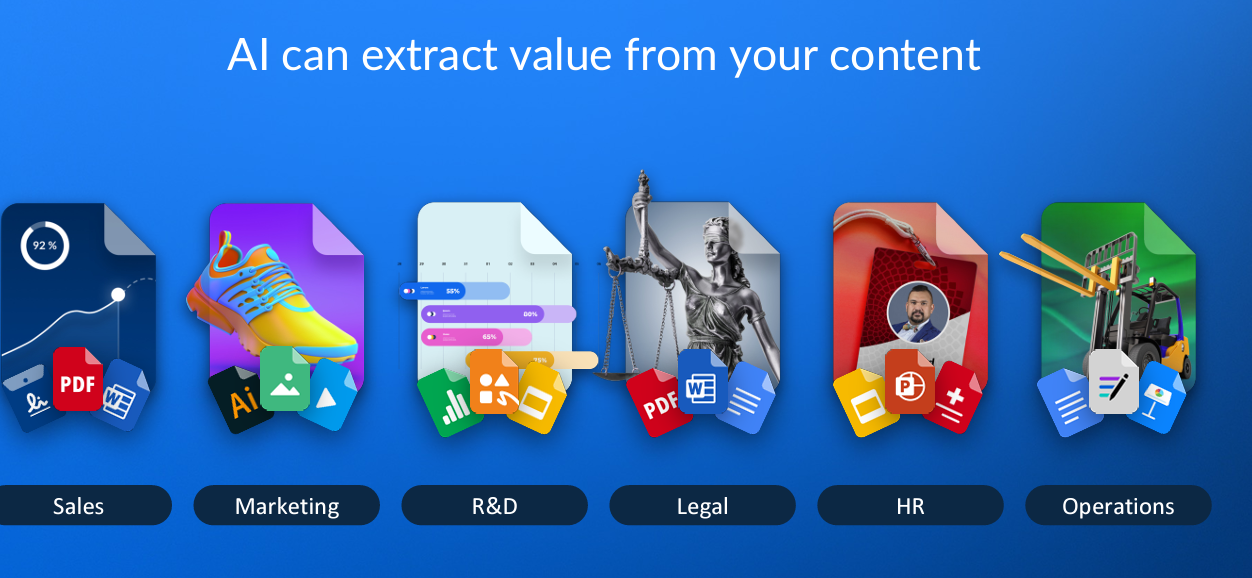
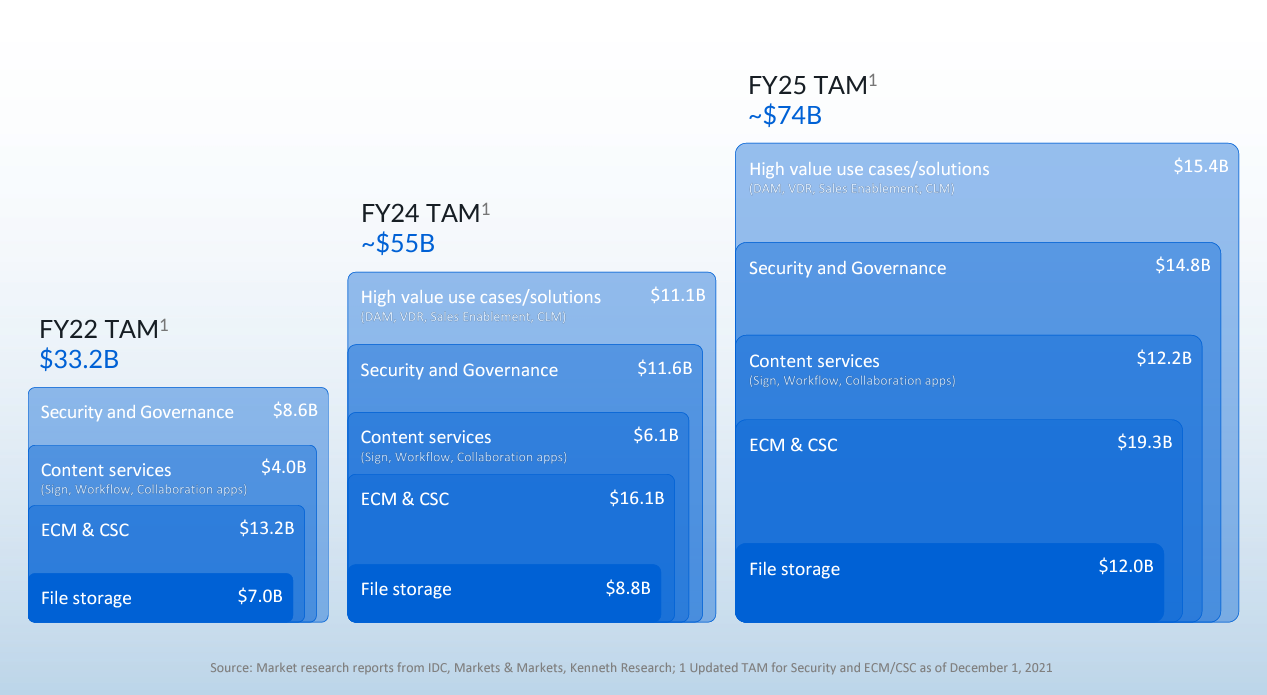
The acquisition by Box of Crooze, a no-code enterprise content management app maker, which was announced early today, marks a notable milestone in the company's trajectory as a recognized leader in both the enterprise content management (ECM) and cloud file sync spaces. For its part, Crooze has established itself as a prominent player in the field by enabling organizations to rapidly build and manage digital processes efficiently. Its suite of applications facilitates contract lifecycle management, digital asset management, document management, and streamlines enterprise content flows. The integration of Crooze's capabilities with Box's robust ECM solutions is poised to foster real synergy, an overused industry term, but one that hits the mark here. The Box/Crooze acquisition holds real promise to redefine how businesses manage and interact with their content.

Box's Acquisition of Crooze

Crooze: Tapping into Customer Innovation with Content

The acquisition is strategically aligned with Box's mission to provide more value-added scenarios to its customers. Crooze's no-code platform and advanced metadata capabilities empower organizations to customize their content management systems without the need for practically any  programming knowledge. This democratization of content management not only simplifies processes but also fosters innovation within organizations. By integrating these capabilities, Box is set to enhance its platform, making it more adaptable and user-friendly, thereby driving user engagement and increasing adoption rates.

Moreover, the acquisition is timely, as it aligns with the growing demand for digital transformation initiatives centered around content and documents. In an era where digital agility is paramount, the combined strengths of Box and Crooze can be expected to provide a comprehensive solution that addresses the complex needs of file- and content-intensive flows within key business processes. This integration is likely to streamline operations, reduce bottlenecks, and enable businesses to respond more swiftly to market dynamics, thereby accelerating their digital transformation journeys. Box Relay has previously provided some workflow capabilities within the platform, but Crooze brings a more fully realized way to build real apps around critical document types and even integrates with Relay to do so. Crooze also provides rich custom metadata, audit control, governance, and enterprise-grade permissions along the way.

Another significant aspect of this acquisition is its potential to tap into the burgeoning trend of citizen development. The rise of no-code and low-code platforms has empowered non-technical users to develop and deploy applications that meet their specific needs, fostering a culture of innovation and agility. By incorporating Crooze's no-code solutions, Box is positioned to capitalize on this trend, offering tools that enable users across various organizational levels to contribute to the development and optimization of digital processes. This approach not only accelerates innovation but also aligns with the evolving expectations of the modern workforce, where flexibility and user empowerment are highly valued.

Crooze's Enterprise Features for Box
Crooze Has Enterprise-Grade Features for Large Data Volumes with Advanced Metadata Automation

Holds Promise to Spur Wider Adoption/Growth for Box

The bottom line, my take is that Box's acquisition of Crooze has the potential to be a strategic move that could significantly enhance their value proposition in the enterprise content management sector, especially after Crooze's features are integrated more natively into the Box platform. By combining Crooze's proficiency in managing sophisticated digital processes with Box's established ECM platform, the company is poised to deliver a more robust, user-friendly, and adaptable solution that unleashes customer innovation. This integration aligns with the current industry trends, including the demand for digital transformation and the rise of citizen development, setting the stage for Box to drive further growth, increase customer engagement, and solidify its position as a leader in the ECM market.

My Related Research

A Comprehensive Guide to the Future of Work in 2030

Report: The Leading Trends in Visual Collaboration

Analysis: Microsoft’s AI and Copilot Announcements for the Digital Workplace

An Update on Enterprise Low-Code in 2023

My recent Keynote at KMWorld 2023 [Video]: Anatomy of a Next-Generation Digital Workplace with AI

Updating the Next-Generation Digital Employee Experience for 2024

How to Embark on the Transformation of Work with Artificial Intelligence

The Future of Work Trends for 2024

How Leading Digital Workplace Vendors Are Enabling Hybrid Work

Future of Work Tech Optimization Chief Information Officer Chief Technology Officer

IBM Q4 better than expected, watsonx gains traction

IBM reported better-than-expected fourth quarter results and CEO Arvind Krishna said, "our book of business for watsonx and generative AI roughly doubled from the third to the fourth quarter."

The company reported fourth-quarter revenue of $17.4 billion, up 4% from a year ago. IBM showed revenue growth in software, consulting, and infrastructure. Big Blue delivered fourth-quarter earnings of $3.54 a share and $3.87 a share on a non-GAAP basis.

Wall Street was looking for IBM to report fourth quarter earnings of $3.80 a share on revenue of $17.28 billion. Krishna said IBM expects 2024 revenue growth in the mid-single digit range with about $12 billion in free cash flow.

Krishna's reference to watsonx's book of business highlights the trend of companies talking about future revenue. On a conference call, Krishna said:

"We are confident in achieving our midterm revenue model and the strength of our diversified business model allows us to make progress each quarter.  We enter the year intend on enhancing our software portfolio and strengthening our consulting position. We have done both. Mid last year we launched watsonx, our flagship AI and data platform. We are excited by the traction we are seeing." 

IBM buys StreamSets, webMethods from SoftwareAG for €2.13 billion | IBM Delivers AI How It Is Meant to Be With Watsonx

Krishna added:

"Last quarter I shared with you that our book of business the third quarter, specifically related to generative AI and watsonx, was in the low hundreds of millions. Since then demand continues to increase. And our book of business in the fourth quarter is roughly double that third quarter. We continue to have thousands of hands on private interactions, including an acceleration and pilots that were completed during the quarter. Software transactional revenue and SaaS ACV was approximately a third of our book of business related generative AI in the fourth quarter two-thirds was consulting signings. There was a balance of both large and small transactions across both segments." 

For 2023, IBM reported revenue of $61.9 billion, up 2%, with earnings of $8.15 a share.

By the numbers for the fourth quarter:

  • Red Hat revenue was up 8% as software revenue overall was $7.5 billion, up 3.1% from a year ago.
  • Consulting revenue was $5 billion, up 5.8% from a year ago.
  • Infrastructure revenue was $4.6 billion, up 2.7% from a year ago. IBM zSystems revenue was up 8% in the quarter.

More:

Data to Decisions IBM Chief Information Officer

ServiceNow delivers strong Q4, ups 2024 outlook

ServiceNow reported better-than-expected fourth quarter results, delivered revenue growth of 26% and said it landed more than 168 deals with annual contract value topping $1 million.

The company reported fourth-quarter net income of $295 million, or $1.43 a share, on revenue of $2.44 billion, up 26% from a year ago. Non-GAAP fourth quarter earnings were $3.11 a share.

Wall Street was expecting ServiceNow to report earnings of $2.78 a share on revenue of $2.4 billion.

For 2023, ServiceNow reported net income of $1.73 billion, or $8.42 a share, on revenue of $8.97 billion, up 24% from a year ago.

As for the outlook, ServiceNow projected first quarter subscription revenue growth of 24% to 24.5% with non-GAAP margins of 29%. Here's the full outlook. 

Separately, ServiceNow said it inked a five-year strategic alliance with Visa. The two companies will launch ServiceNow Disputes Management, Built with Visa. The two companies aim to streamline the disputes management process for issues with AI. ServiceNow also expanded a partnership with EY to offer generative AI compliance, governance and risk management tools.

CEO Bill McDermott said generative AI is "injecting new fuel into our already high-performing engine." ServiceNow CFO Gina Mastantuono said the company saw 99% renewal rates in the fourth quarter.

On a conference call, McDermott said:

"We see AI as a 360 degree strategic imperative. I've told the ServiceNow team worldwide that the company is now moving into Phase Five, the culmination of our long term goal of surpassing $10 billion in ACV, which incidentally only a handful of software companies have ever achieved. We have so much runway ahead for the long term growth of this company. There are two key elements of our strategy, execution and scale. Execution is an art form and scale is all about capitalizing on new opportunities as a truly global platform company."

By the numbers:

  • Current remaining performance obligations to be recognized as revenue over the next 12 months was $8.6 billion, up 24% from a year ago.
  • The company has 1,897 customers with more than $1 million in annual contract value.
  • ServiceNow spent $2.12 billion on R&D in 2024.
  • 63% of ServiceNow's revenue is from North America. 


Data to Decisions Future of Work Innovation & Product-led Growth Tech Optimization Next-Generation Customer Experience Digital Safety, Privacy & Cybersecurity servicenow AI GenerativeAI ML Machine Learning LLMs Agentic AI Analytics Automation Disruptive Technology Chief Information Officer Chief Executive Officer Chief Technology Officer Chief AI Officer Chief Data Officer Chief Analytics Officer Chief Information Security Officer Chief Product Officer

TikTok Layoffs, Google Cookies, New Cloud Tech | ConstellationTV Episode 72


ConstellationTV episode 72 just dropped! 🎬 You don't want to miss this week's dynamic duo Liz Miller and Holger Mueller talking #enterprise tech news, Google's farewell to cookies & IBM's Cloud Code Engine #technology.

00:00 - Welcome from our hosts!
02:00 - #Enterprise tech news (acquisitions, TikTok #layoffs, etc.)
16:06 - CRTV perspective on Google's long farewell
23:44 - IBM Cloud Code Engine differentiators
34:07 - Bloopers! (feat. the year of Holger)

ConstellationTV is a bi-weekly Web series hosted by Constellation analysts, tune in live at 9:00 a.m. PT/ 12:00 p.m. ET every other Wednesday!

On ConstellationTV <iframe width="560" height="315" src="https://www.youtube.com/embed/oFLJOXowpp0?si=-p5z9b5idhUDxG-v" title="YouTube video player" frameborder="0" allow="accelerometer; autoplay; clipboard-write; encrypted-media; gyroscope; picture-in-picture; web-share" allowfullscreen></iframe>
Media Name: YouTube Video Thumbnails.png