Editor in Chief of Constellation Insights
Constellation Research
Larry Dignan is Editor in Chief of Constellation Insights at Constellation Research, where he leads editorial coverage focused on enterprise technology, digital transformation, and emerging trends shaping the future of business. He oversees research-driven news, analysis, interviews, and event coverage designed to help technology buyers and vendors navigate complex markets with clarity and context. ...
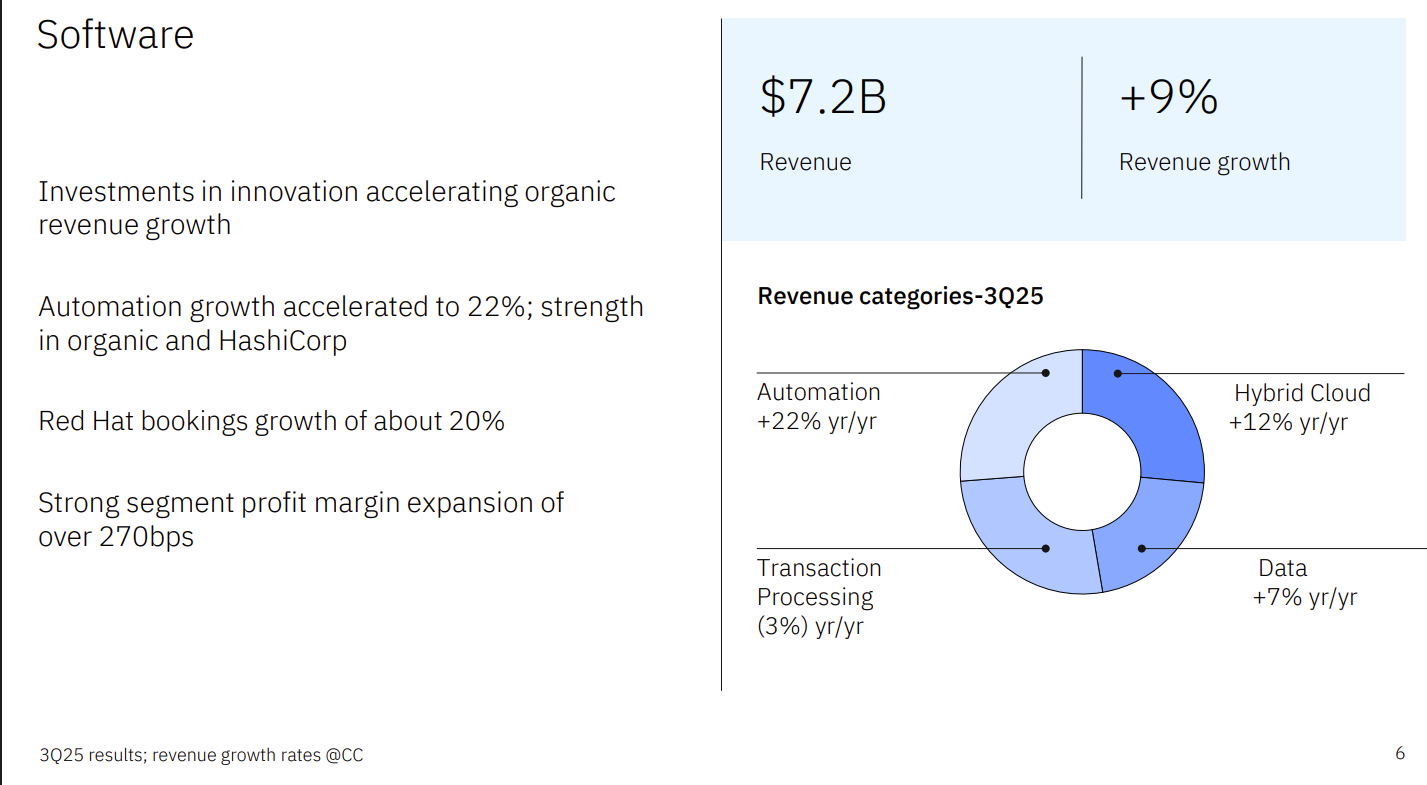
IBM reported better-than-expected third quarter results and said its AI book of business now tops $9.5 billion.
The company reported third quarter earnings of $1.7 billion, or $1.84 a share, on revenue $16.3 billion, up 9% from a year ago. Non-GAAP earnings were $2.65 a share.
Wall Street was expecting IBM to report third quarter non-GAAP earnings of $2.45 a share on revenue of $16.09 billion.
As for the outlook, IBM said its revenue will top more than 5% with free cash flow of $14 billion, up from its previous projection of $13.5 billion.
CEO Arvind Krishna said IBM "accelerated performance across all of our segments."
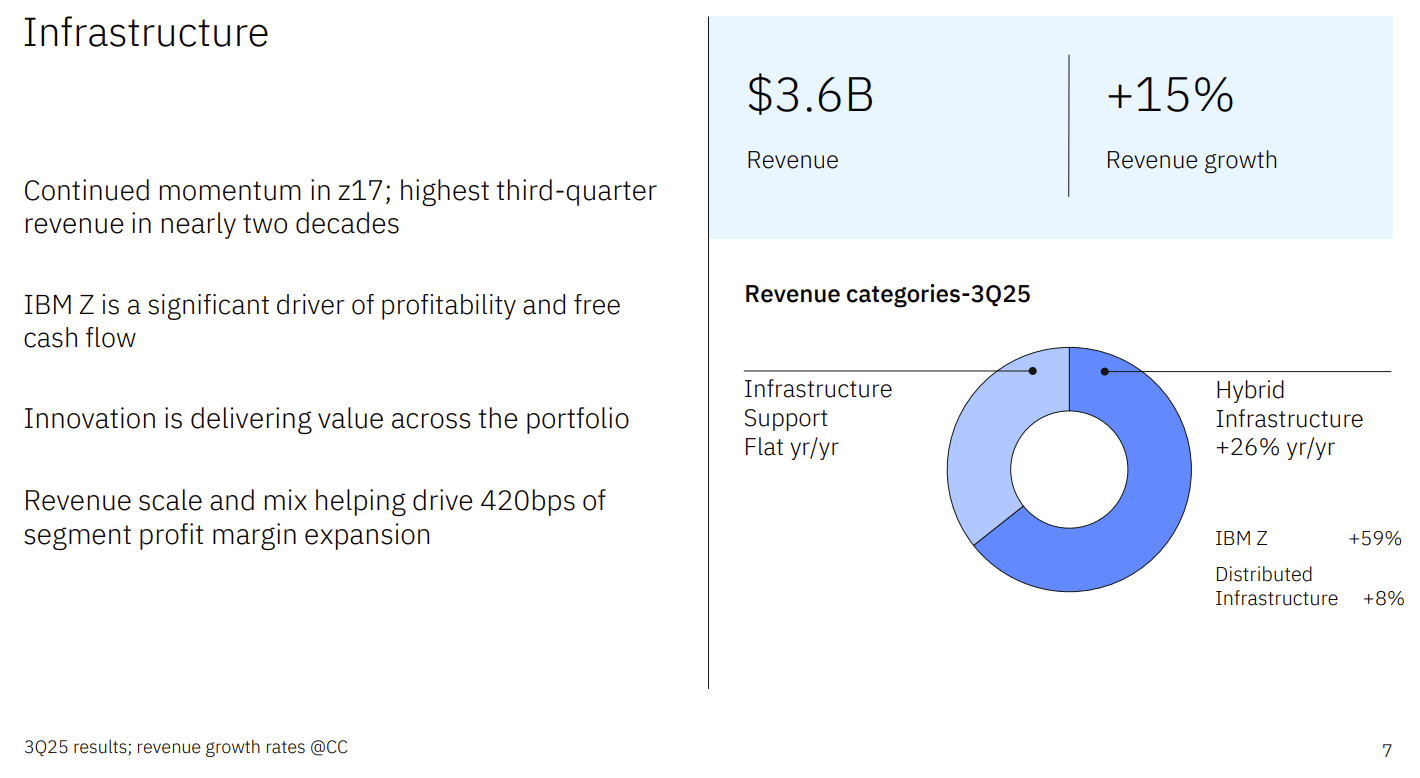
In the third quarter, IBM delivered software revenue growth of 10% with infrastructure up 17% driven by its new mainframe cycle. Consulting revenue was up 3%.
Here's the segment breakdown:
Software revenue of $7.2 billion in the third quarter was driven by hybrid cloud (Red Hat), automation, up 24%, and data, up 8%.
Hybrid infrastructure was up 28% and IBM Z revenue was up 61%.
Vice President and Principal Analyst
Constellation Research
Holger Mueller is VP and Principal Analyst for Constellation Research for the fundamental enablers of the cloud, IaaS, PaaS and next generation Applications, with forays up the tech stack into BigData and Analytics, HR Tech, and sometimes SaaS. Holger provides strategy and counsel to key clients, including Chief Information Officers, Chief Technology Officers, Chief Product Officers, Chief HR Officers, investment analysts, venture capitalists, sell-side firms, and technology buyers.
Coverage Areas:
Future of Work
Tech Optimization & Innovation
Background:
Before joining Constellation Research, Mueller was VP of Products for NorthgateArinso, a KKR company. There, he led the transformation of products to the cloud and laid the foundation for new Business Process as a…...
Editor in Chief of Constellation Insights
Constellation Research
Larry Dignan is Editor in Chief of Constellation Insights at Constellation Research, where he leads editorial coverage focused on enterprise technology, digital transformation, and emerging trends shaping the future of business. He oversees research-driven news, analysis, interviews, and event coverage designed to help technology buyers and vendors navigate complex markets with clarity and context. ...
Vice President & Principal Analyst
Constellation Research
About Liz Miller:
Liz Miller is Vice President and Principal Analyst at Constellation, focused on the org-wide team sport known as customer experience. While covering CX as an enterprise strategy, Miller spends time zeroing in on the functional demands of Marketing and Service and the evolving role of the Chief Marketing Officer, the rise of the Chief Experience Officer, the evolution of customer engagement, and the rising requirement for a new security posture that accounts for the threat to brand trust in this age of AI. With over 30 years of marketing experience, Miller offers strategic guidance on the leadership, business transformation, and technology requirements to deliver on today’s CX strategies. She has worked with global marketing organizations to transform everything from…...
Vice President and Principal Analyst
Constellation Research
Michael Ni is Vice President and Principal Analyst at Constellation Research, covering the evolving Data-to-Decisions landscape—where CDOs, CIOs, and CPOs must modernize data infrastructure, integrate AI into decision-making, and scale automation to improve business outcomes.
Ni’s research examines how enterprises operationalize AI, automate decision-making, and integrate data management and analytics into core business processes. He focuses on the challenges of scaling AI-driven decision systems, aligning data strategy with business goals, and the growing role of data and decisioning “products” in enterprise ecosystems.
With 25+ years as a product and GTM executive across enterprise software, AI platforms, and analytics-driven technologies, Ni brings a practitioner’s perspective to…...
Vice President and Principal Analyst
Constellation Research
Martin Schneider has had a unique career that has spanned both analyst and marketing practitioner roles, focused on high technology and related industries. The unifying factor has always been both a keen analysis of go-to-market trends, while also having achieved success as a marketing leader.
Schneider started his career as a journalist covering B2B technologies, and quickly transitioned into a leading analyst covering application software for the 451 Group in NYC, where he specialized in CRM, marketing automation, and business intelligence/analytics technologies. After analyzing various go-to-market strategies of dozens of technology vendors, Schneider made the move to the vendor side, where he led successful go-to-market teams for several startups and established tech providers,…...
In the relentless storm of technology buzzwords, it’s easy to feel overwhelmed. Professionals are constantly bombarded with hype around the next revolutionary AI model or game-changing digital platform, creating a sense of pressure to adopt, adapt, and innovate at a breakneck pace. The noise can be deafening, making it difficult to separate genuine trends from fleeting fads.
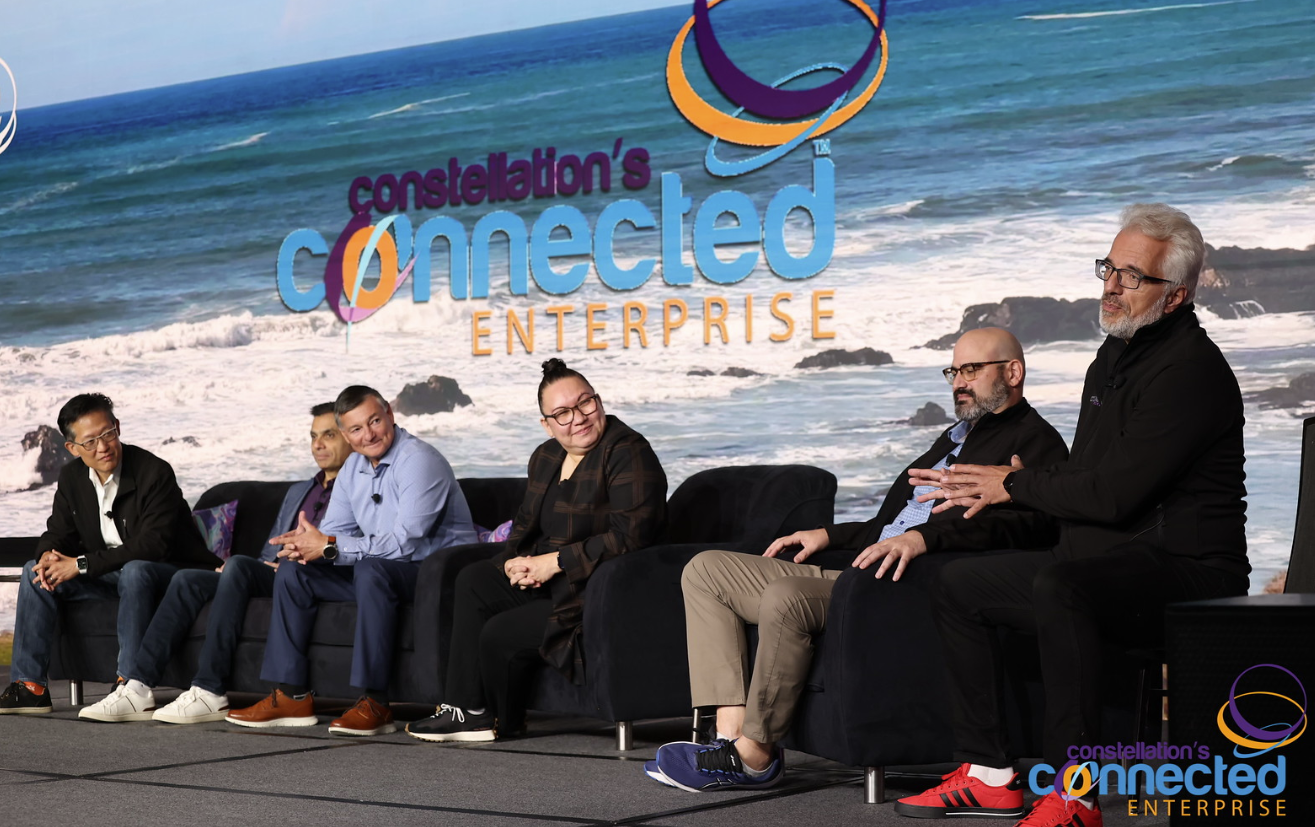
Against this backdrop, the Constellation Connected Enterprise (CCE) 2025 conference offers a refreshing dose of reality. In a live analysis after CCE day one, Constellation analysts addressed the skepticism, fatigue, and genuine uncertainty that many organizations are experiencing behind closed doors.
This post distills the six main takeaways from their discussion and offers a more straightforward path forward for anyone navigating the complex modern tech landscape.
1. The "Pick a Platform" Play for AI is Fueling Executive Fatigue
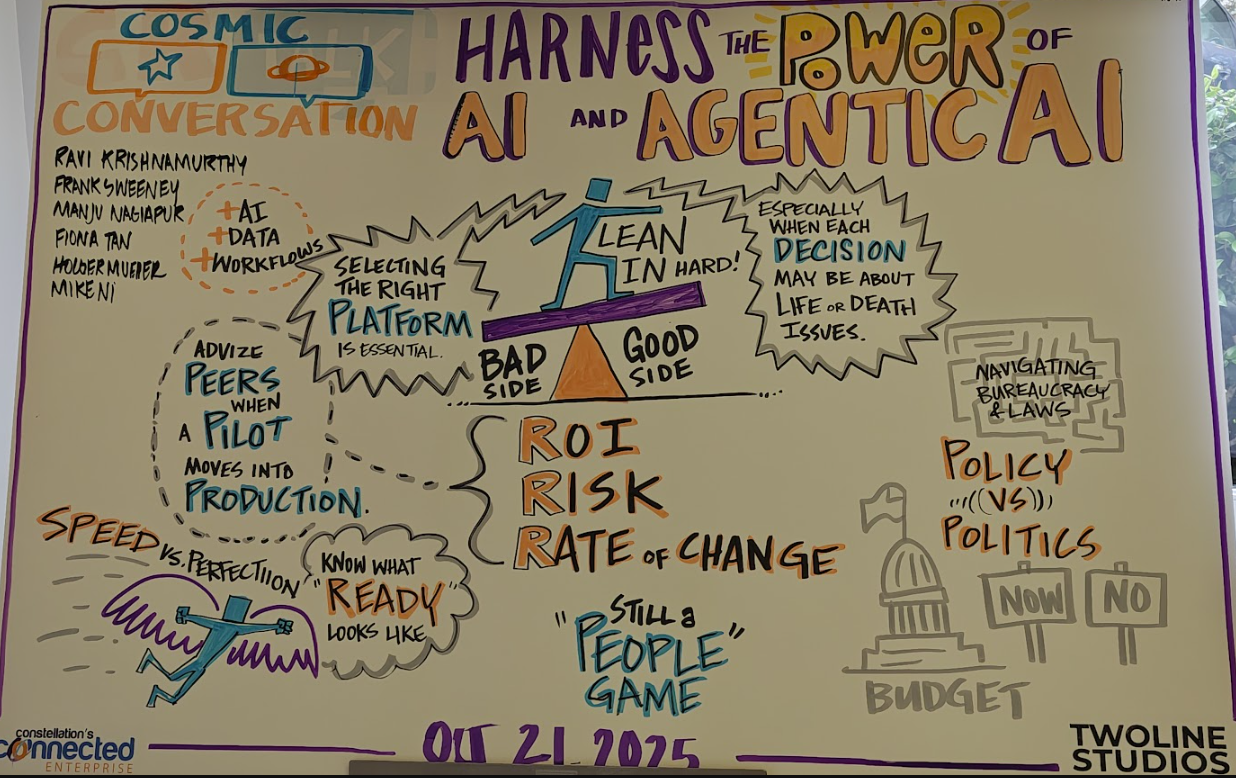
The idea that every business problem can be solved by adopting a new platform is facing significant backlash. According to the CCE panel, IT buyers are experiencing severe SaaS and platform fatigue, particularly when it comes to AI. CR Editor in Chief Larry Dignan confirmed this sentiment, providing a detailed view of the specific pain points:
“There are some serious SaaS concerns among IT buyers because they’re not sure about this platform play. They’re tired of platforms. They’re worried about pricing, and they are looking at options.”
This isn't just a matter of financial caution; it's an emotional exhaustion with the entire paradigm. Analyst Liz Miller captured the feeling of many technology leaders with a candid and widely shared frustration:
“Every time someone would be like, here’s what you gotta do with AI. You’ve got to pick a platform and go. And then everyone was like, okay. What platform?... but I’m really sick of platforms.”
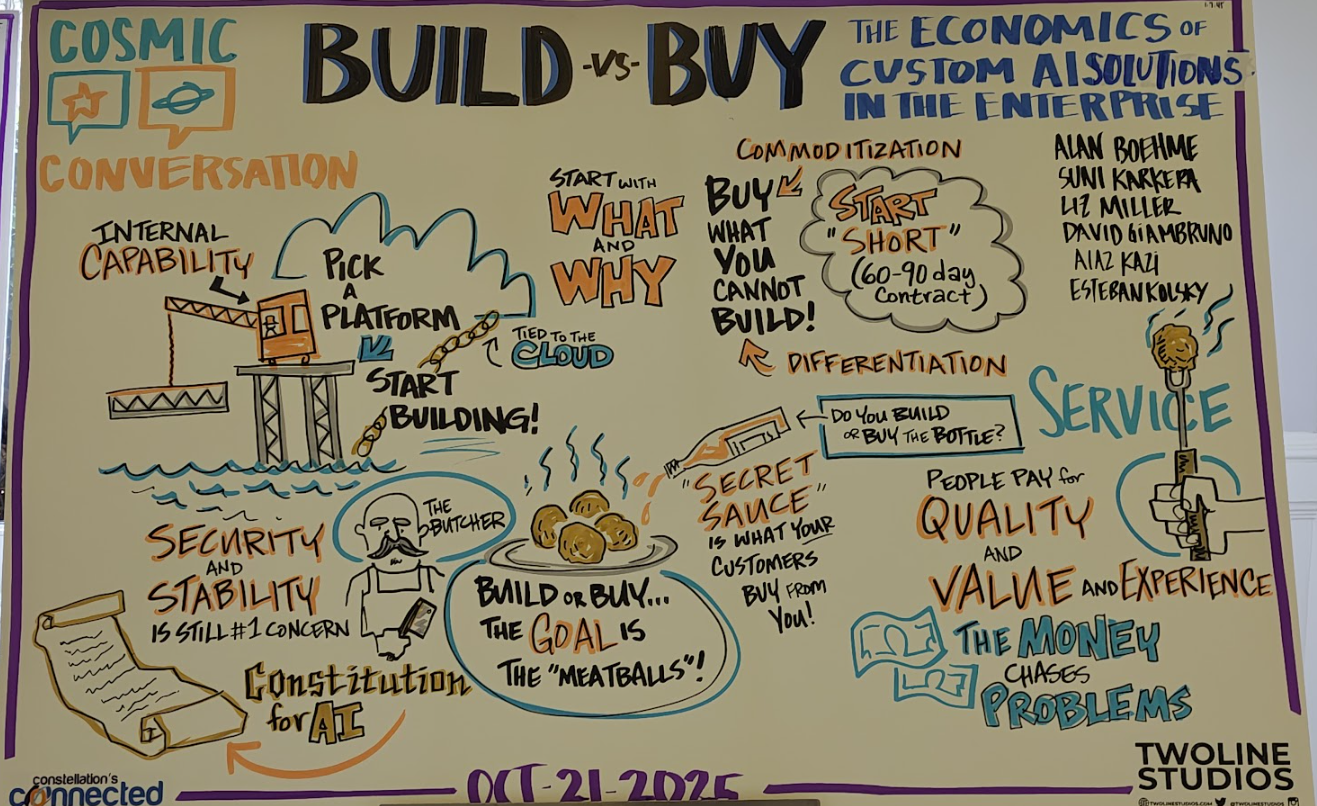
This insight serves as a critical reality check for the entire tech ecosystem. For vendors, it signals that differentiation and transparent value are no longer optional. For buyers, it validates the need to demand more before adding another "solution" to the pile. This skepticism is forcing a fundamental re-evaluation of IT strategy, starting with the age-old question of whether to build or buy.
2. It's Not 'Build vs. Buy' Anymore
The long-standing debate over whether to build a proprietary solution from scratch or buy an off-the-shelf product has become a staple of IT strategy sessions. The discussion at CCE, however, decisively reframed this dilemma, signaling a maturity in the market. The new perspective moves away from an "either/or" mindset and toward a more nuanced, strategic approach. As one analyst stated directly, the question has changed: "It’s not build versus buy. It’s what you're going to build and what you’re going to buy."
This simple but profound shift requires businesses to conduct a more sophisticated analysis. Instead of choosing one path, leaders must now honestly evaluate their goals, capabilities, and existing tech ecosystems to find their unique, optimal mix. It’s a move from a simple choice to a complex, strategic composition tailored to the specific needs of the organization.
3. The AI Agents Are Already Talking to Each Other
While much of the public conversation around AI focuses on standalone models, the next wave of innovation is already here, and it’s fundamentally altering business models.
Analyst Martin Schneider declared, “The AI exponentials are here… services will be provided… pricing models are changing.” This isn't just a technical evolution; it's a commercial one, driven by the rise of interconnected, "agentic" ecosystems. In practical terms, this means individual AI agents are beginning to interact with each other across different platforms, creating an entirely new layer of automated digital workflow. This isn't a far-off concept; it's happening now. Schneider underscored the urgency for organizations to prepare:
“What your agentic AI orchestrator is… because these agents are here. They’re getting used to it, and they are talking to each other, and it’s multi-platform.”
This evolution from standalone AI tools to a collaborative network of agents signals a fundamental change in how digital operations will be structured. Understanding this interconnected future is a critical first step for any organization looking to leverage AI for a true competitive advantage.
4. It's Okay to Be Learning as You Go
In the high-stakes world of enterprise technology, conferences are often stages for experts who present themselves as infallible authorities. One of the most surprising and valuable takeaways from the CCE panel was a direct contradiction of this culture: a refreshing admission of collective uncertainty.
The analysts openly acknowledged that when it comes to emerging technologies, nobody has all the answers. This honesty stands in stark contrast to the typical industry posturing. Analyst Holger Mueller perfectly captured this counterintuitive insight:
“Very few people know stuff with no offense. Right? They’re all learning. Nobody is coming as an authority and saying, This is the data lake I want to use… this is the AI framework which we’re going to use. But nobody has that certainty.”
This admission is incredibly liberating. It gives organizations permission to move past "analysis paralysis"—the fear of making the wrong choice in a rapidly changing field. This collective humility is not a sign of weakness, but a prerequisite for genuine innovation. Success will come not from picking the "perfect" solution from the start, but from embracing flexibility, experimentation, and a culture of learning by doing.
5. The Best First Step Isn't Action—It's a Strategy
After days of absorbing new ideas and discussing cutting-edge tools, the temptation for conference attendees is to rush back to the office and start implementing. However, the CCE panel offered a crucial piece of grounding advice: strategy must always come before action. Liz Miller provided a final reality check that cut through the post-conference excitement:
"I’m just not sure how much action we’re going to be taking, but the conversation is being had. And I think the lesson to be learned and the best practice is… You need a strategy."
Her point is a vital reminder that for any new initiative to be sustainable and impactful, it must be guided by a clear roadmap. In an environment saturated with trends, prioritizing strategic planning over impulsive implementation allows an organization to stay focused on its long-term objectives and avoid the costly, directionless churn that comes from chasing every new tool.
6. Your AI Strategy is Only as Good as Your Data Foundation
In the rush to adopt sophisticated AI and analytics tools, the most critical component is often the most overlooked: data. The panel stressed that a clean, well-structured data foundation is the absolute backbone of success. Ignoring this fundamental layer risks building a digital house of cards.
This insight serves as a powerful counter-narrative to the hype around shiny new technologies. Analyst Mike Ni brought the conversation back to this grounding truth:
“Start first with your platform, make sure you have your data foundations right… It does come back to the data.”
Without a solid data strategy, any investment in the "agentic AI ecosystems" discussed earlier is premature and likely to fail. Data remains an untapped goldmine for most organizations, and focusing on a robust data architecture is the essential first step to unlocking its value. Before scaling operations or deploying new AI, you must first get your data house in order.
Conclusion: Are You Ready for What's Real?
The overarching theme from the CCE 2025 analyst panel was one of readiness—not for a hypothetical, hype-fueled future, but for the complex reality of today. True preparedness in this era of technological uncertainty comes from a pragmatic blend of strategic patience and agile learning. It requires embracing honest assessments of platform fatigue, committing to a clear strategy, and continuously learning in a field where no one has all the answers.
Ultimately, the path forward is paved with fundamentals. Before chasing the next big thing, the most effective organizations will be the ones that ensure their data foundations are rock solid. In a world selling easy answers and perfect platforms, what is the one strategic question your organization needs to ask before making its next move?
Vice President & Principal Analyst
Constellation Research
About Liz Miller:
Liz Miller is Vice President and Principal Analyst at Constellation, focused on the org-wide team sport known as customer experience. While covering CX as an enterprise strategy, Miller spends time zeroing in on the functional demands of Marketing and Service and the evolving role of the Chief Marketing Officer, the rise of the Chief Experience Officer, the evolution of customer engagement, and the rising requirement for a new security posture that accounts for the threat to brand trust in this age of AI. With over 30 years of marketing experience, Miller offers strategic guidance on the leadership, business transformation, and technology requirements to deliver on today’s CX strategies. She has worked with global marketing organizations to transform everything from…...
Vice President and Principal Analyst
Constellation Research
Martin Schneider has had a unique career that has spanned both analyst and marketing practitioner roles, focused on high technology and related industries. The unifying factor has always been both a keen analysis of go-to-market trends, while also having achieved success as a marketing leader.
Schneider started his career as a journalist covering B2B technologies, and quickly transitioned into a leading analyst covering application software for the 451 Group in NYC, where he specialized in CRM, marketing automation, and business intelligence/analytics technologies. After analyzing various go-to-market strategies of dozens of technology vendors, Schneider made the move to the vendor side, where he led successful go-to-market teams for several startups and established tech providers,…...
Vice President and Principal Analyst
Constellation Research
Michael Ni is Vice President and Principal Analyst at Constellation Research, covering the evolving Data-to-Decisions landscape—where CDOs, CIOs, and CPOs must modernize data infrastructure, integrate AI into decision-making, and scale automation to improve business outcomes.
Ni’s research examines how enterprises operationalize AI, automate decision-making, and integrate data management and analytics into core business processes. He focuses on the challenges of scaling AI-driven decision systems, aligning data strategy with business goals, and the growing role of data and decisioning “products” in enterprise ecosystems.
With 25+ years as a product and GTM executive across enterprise software, AI platforms, and analytics-driven technologies, Ni brings a practitioner’s perspective to…...
Vice President and Principal Analyst
Constellation Research
Holger Mueller is VP and Principal Analyst for Constellation Research for the fundamental enablers of the cloud, IaaS, PaaS and next generation Applications, with forays up the tech stack into BigData and Analytics, HR Tech, and sometimes SaaS. Holger provides strategy and counsel to key clients, including Chief Information Officers, Chief Technology Officers, Chief Product Officers, Chief HR Officers, investment analysts, venture capitalists, sell-side firms, and technology buyers.
Coverage Areas:
Future of Work
Tech Optimization & Innovation
Background:
Before joining Constellation Research, Mueller was VP of Products for NorthgateArinso, a KKR company. There, he led the transformation of products to the cloud and laid the foundation for new Business Process as a…...
Editor in Chief of Constellation Insights
Constellation Research
Larry Dignan is Editor in Chief of Constellation Insights at Constellation Research, where he leads editorial coverage focused on enterprise technology, digital transformation, and emerging trends shaping the future of business. He oversees research-driven news, analysis, interviews, and event coverage designed to help technology buyers and vendors navigate complex markets with clarity and context. ...
🎥 ConstellationTV episode 116 is LIVE from Half Moon Bay, recapping themes from Day 1 at Constellation Connected Enterprise. Here's a few things that stood out, according to Constellation analysts:
- SaaS skepticism: IT buyers are growing wary of platforms and pricing models—many are asking, “What’s next?”
- AI’s exponential rise: We’re witnessing a paradigm shift as AI agents and orchestrators become central, but the challenge is deciding your approach—build, buy, or both?
- Back to data basics: Every strategic move with AI relies on robust data foundations. Yet, even as everyone’s building, nobody has the “perfect” platform or all the answers.
- It’s early days: From framework selection agents to composable platforms, leaders are taking baby steps—testing, learning, and seeking best practices.
- Ready for action: There’s a buzz on what’s possible and a collective determination to turn strategy into action.
Stay tuned—Day 2 will dive into functional applications, from HR and sales to data and customer experience.
Editor in Chief of Constellation Insights
Constellation Research
Larry Dignan is Editor in Chief of Constellation Insights at Constellation Research, where he leads editorial coverage focused on enterprise technology, digital transformation, and emerging trends shaping the future of business. He oversees research-driven news, analysis, interviews, and event coverage designed to help technology buyers and vendors navigate complex markets with clarity and context. ...
"This implementation of the Quantum Echoes algorithm is enabled by the advances in quantum hardware of our Willow chip. Last year, Willow proved its power with our Random Circuit Sampling benchmark, a test designed to measure maximum quantum state complexity. The Quantum Echoes algorithm represents a new class of challenge because it models a physical experiment. This means this algorithm tests not only for complexity, but also for precision in the final calculation. This is why we call it “quantum verifiable,” meaning the result can be cross-benchmarked and verified by another quantum computer of similar quality. To deliver both precision and complexity, the hardware must have two key traits: extremely low error rates and high-speed operations."
Other key points.
The current-generation Willow chip features fidelities of 99.97% for single-qubit gates, 99.88% for entangling gates, and 99.5% for readout across its 105-qubit array.
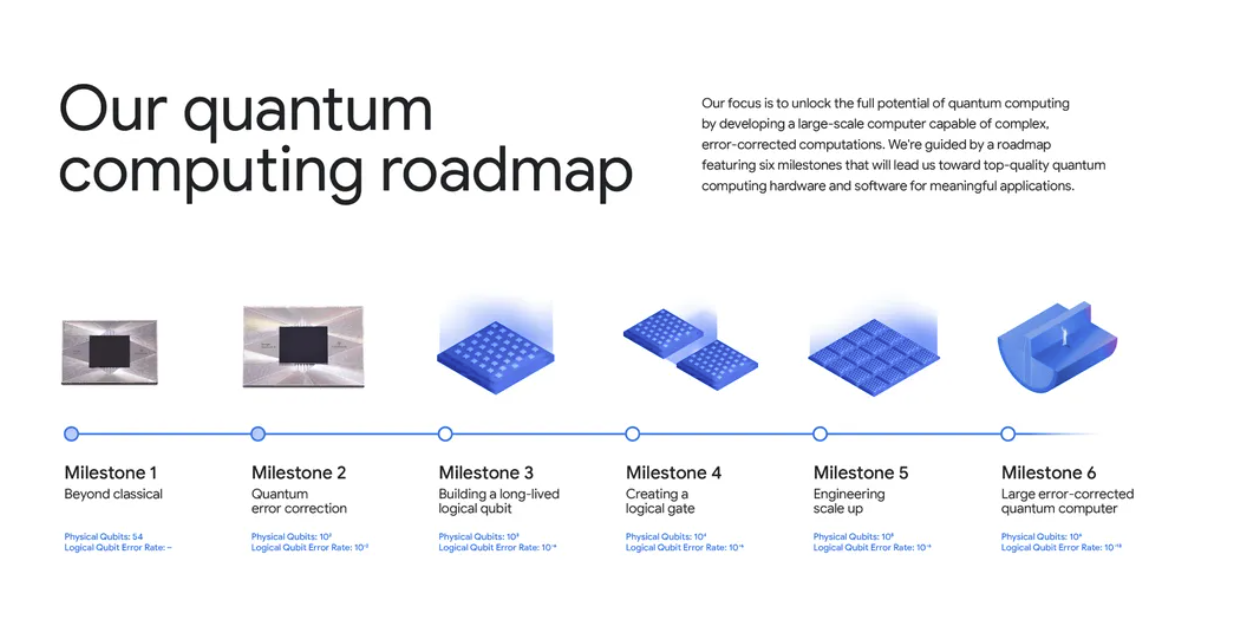
Google said its next milestone will be a long-lived logical qubit.
The company also showed its progress against its quantum roadmap.
The fallout
Quantum computing stocks, which have been on a tear of late, took a hit on the Google news.
Why?
Many of the pure play quantum computing companies are using different technology than Google, which is focused on superconductors for quantum. IBM, which is also focused on the same technology as Google, was up.
IonQ, Rigetti, D-Wave and others were down double-digit percentages.
The big question is whether quantum computing is nearing its VHS-Betamax moment when it's clear one type of technology will win out.
Here's a look at the types of quantum computing and the vendors in that category.
Superconducting qubits are seen as general quantum computing options and vendors in this category include IBM, Google and Rigetti Computing.
Trapped Ion quantum computing has high fidelity and long coherence times. IonQ is the big player in this category along with Quantinuum, which was created by the merger of Honeywell's quantum unit and Cambridge Quantum.
Neutral atom quantum computing has the potential to scale better and QuEra is a player here.
Quantum annealing is designed for optimization over general purpose computing and D-Wave has championed this approach.
Topological quantum computing has the potential to be more fault tolerant and is an avenue being pursued by Microsoft. Topological quantum computing uses a concept similar to semiconductors using "anyons," which can arrange qubits into patterns.
Today, quantum computing chatter talks about the sector as if all the vendors are all using the same technique. Ultimately, CxOs will have to ponder use cases and how they align to the various flavors of quantum computing.
Editor in Chief of Constellation Insights
Constellation Research
Larry Dignan is Editor in Chief of Constellation Insights at Constellation Research, where he leads editorial coverage focused on enterprise technology, digital transformation, and emerging trends shaping the future of business. He oversees research-driven news, analysis, interviews, and event coverage designed to help technology buyers and vendors navigate complex markets with clarity and context. ...
The technology budget process is well underway at most enterprises and the time frames are getting shorter. Here's a few mileposts to consider as 2026 technology budgets are being sketched.
The discussion at Constellation Research Connected Enterprise 2025 was under Chatham house rules so we're not calling out enterprises, but they represent household names.
Here's a look at the takeaways about 2026 budgets from the Constellation Research community.
Expectations
The 12-month budget process doesn't exist. Enterprises are working on 6-month time frames due to rapid changes.
Enterprises are expecting revenue to increase in the next six months.
Profits are expected to fall. Companies are investing in AI and there will be multiple variables working against profits in the next six months.
Overall budgets
IT budgets are expected to come back and accelerate in the second half of 2026.
2026 budgets are in stasis right now. One CxO said: "With everything that's going on, we're wait and see. We're pretty much on the hold to see what's happening. Officially, 2026 budget will be up, but I think it's going down."
Hiring
Hiring is expected to pick up, but how that scenario plays out will impact profits. "There's profit pressure to make sure that we can maintain profit. AI is also reducing the need to do some hiring that we would have done," said one decision-maker.
In addition, enterprises are not announcing layoffs, but quietly shedding jobs. "We are switching out the workforce so they are more AI ready in a discreet way," said one CxO.
A common complaint in the Constellation Research community was that it's hard to find the right people largely because the current processes are broken.
"The system of search and hiring is completely broken," said an IT leader. "We need a new platform. We need people who knows how to think and solve problems, not the usual It person right now. We also need diversity of talents."
Another CxO noted: "Technology has taken us too far by using AI to write resumes and match people. That's something that has to be fixed. We need to think holistically about hiring the right human."
Priorities
One CxO said her company is doubling down on cybersecurity. However, cybersecurity spending isn't driving the total technology budget higher because it is taking from other categories.
In this case, cybersecurity is taking budget at the expense of networking spend.
AI is also an obvious priority for enterprise, but there's nuance to consider. "I've noticed that communities are getting smarter about where they want to put their money as it relates to AI, and moving out of migration modernizations much more quickly," said one CxO.
Editor in Chief of Constellation Insights
Constellation Research
Larry Dignan is Editor in Chief of Constellation Insights at Constellation Research, where he leads editorial coverage focused on enterprise technology, digital transformation, and emerging trends shaping the future of business. He oversees research-driven news, analysis, interviews, and event coverage designed to help technology buyers and vendors navigate complex markets with clarity and context. ...
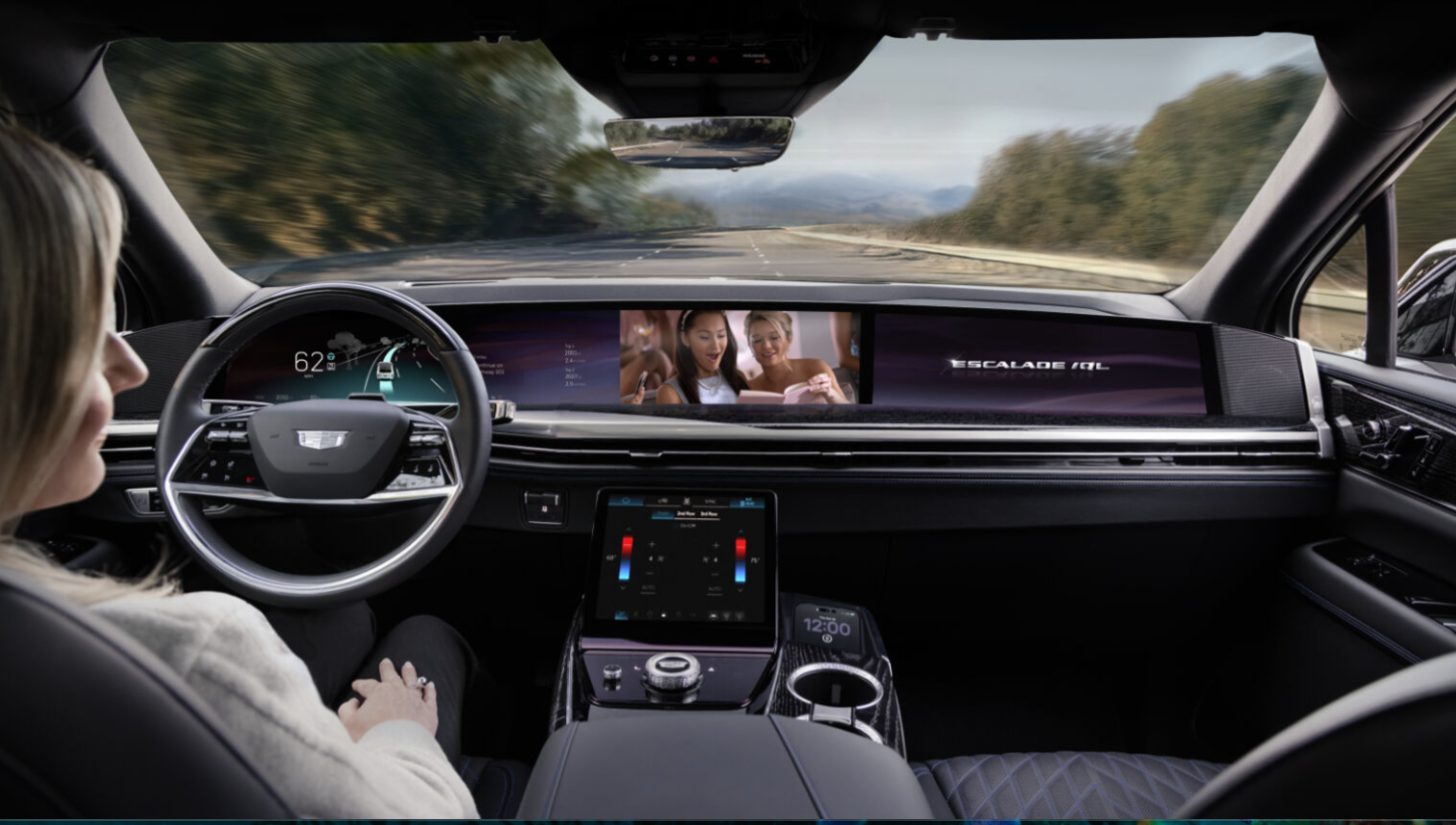
General Motors will integrate Google Gemini into its vehicles, introduce eyes off, hands off autonomous driving systems in the 2028 Cadillac Escalade IQ and move to a unified software defined vehicle architecture.
The announcements, made at GM Forward in New York, highlights how large language models will be entering the vehicle cockpit. GM added that it will introduce a software defined vehicle unified architecture for both its electric and internal combustion vehicles.
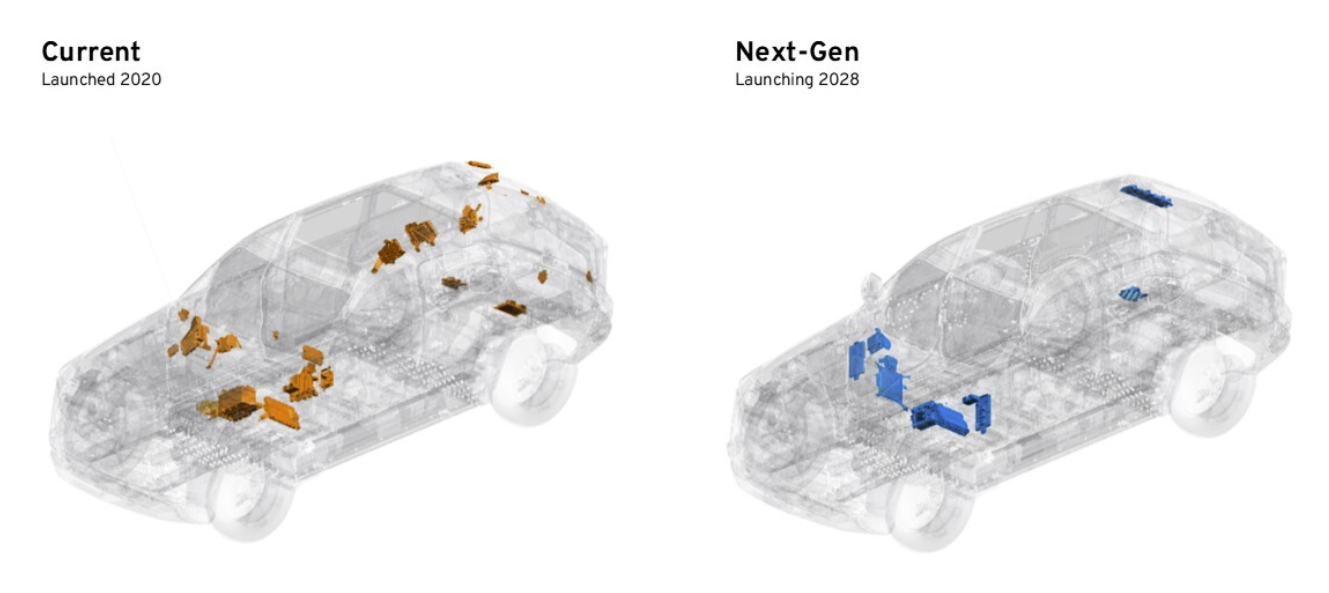
GM's new architecture will also appear in the 2028 Escalade IQ. The software defined vehicle architecture includes a central compute unit, simpler edge components and wiring as well as easier software development.
The automaker has been retooling, adding AI talent and integrating Super Cruise into its operations. The technology plans land a day after GM reported third quarter earnings. GM outlined a partnership with Nvidia to use the Nvidia Omniverse platform and Nvidia Drive AGX.
"Our software and services business is also expanding rapidly. Deferred revenue from OnStar, Super Cruise, and other offerings grew 14% from the second quarter to almost $5 billion, supported by a base of 11 million OnStar subscribers, including over 500,000 Super Cruise customers. We expect robust, double-digit revenue growth from OnStar and Super Cruise through the end of the decade, with gross margins of approximately 70%.
We are also making significant progress on our autonomous vehicle strategy and our next-generation software-defined vehicle platform, which will deliver smarter, more personalized vehicles, reduce complexity, improve stability, and unlock new revenue streams."
Dave Richardson, SVP of Software at GM and an Apple alum, said the decision to use Google Gemini was a broader plan to simplify. "We already have a voice assistant and companion in vehicle, but this will be a replatforming around Gemini so that you can have much better natural conversations. You can ask questions about your vehicle. You can learn more about a destination. We strongly believe that it is an enabling platform technology that's going to let us, over time, bring a whole bunch of new AI companion customized offerings," said Richardson.
Richardson added that GM is planning to leverage insights from its OnStar service as well as vehicle telemetry and meld it with Gemini models for everything from predictive maintenance and route planning.
GM's plan is to create AI that's custom-built for your vehicle and fine tuned based on telemetry and personal preferences.
GM is leveraging a hybrid cloud approach with its data and AI strategy, but most workloads will be in the cloud including on Microsoft Azure and platforms like Databricks.
Regarding autonomous driving, GM said its Super Cruise technology will roll out for highway driving across North America with the 2028 Escalade IQ. Richardson said GM has about 600,000 miles of road mapped and customers have driven more than 700 million miles on Super Cruise. "We're starting with the highway because the average commuter spends between four and five hours a week there," said Richardson. "It's an obvious area to give people a lot of time back."
The expectation is that highway eyes off, hands off driving will lead to faster additional steps to complete autonomy. Richardson said Super Cruise with eyes off, hands off driving will run on Nvidia's platform.
Other items from GM Forward include:
Software defined vehicles. Richardson said the new unified architecture goes beyond zonal approaches. Infotainment, continuous learning and advanced features will be delivered by one computing core. GM estimates the unified architecture will deliver the following:
10 times more over-the-air software update capacity;
1,000 times more bandwidth;
And up to 35 times more AI performance for autonomy and advanced features.
"In our current vehicle architectures, we have a lot of components spread around the vehicle. In our new architecture, we'll have a central compute unit and then a lot simpler components on the edge. The logic, the software, the orchestration work happens in that central unit," said Richardson. "And this will allow us to greatly simplify the wiring inside the vehicle. It simplifies doing OTAs and updates and software development."
Richardson added that it will also build its own hardware components to boost efficiency and have more control over the software stack.
Cobots and robotics. Richardson said GM is deploying cobots in its factories. GM today has robots in big cages away from humans because they're not safe. Cobots are robots that are safe to operate near humans.
"There's a lot of hype around humanoids. That's not our focus. Instead of we're looking at building specific cobots to handle tasks that are either that can be dangerous or really hard ergonomically so that they're right next to the humans inside our manufacturing plants," said Richardson. "Humans can then spend more of their time working on the stuff that humans are great at, and more of their craft."
Richardson was bullish on cobot deployments given its manufacturing at scale expertise, data and ability to leverage AI to build multiple use cases.
GM's robotics efforts come from the company's Autonomous Robotics Center (ARC) in Warren, Michigan, and a sister lab in Mountain View, California. GM employs more than 100 robotics experts and hardware specialists.
Home energy systems. GM has offered home energy systems for a while and the batteries work with solar. EV batteries can also do bi-directional charging to power your house. In 2026, GM will start a leasing option for home energy systems.
Editor in Chief of Constellation Insights
Constellation Research
Larry Dignan is Editor in Chief of Constellation Insights at Constellation Research, where he leads editorial coverage focused on enterprise technology, digital transformation, and emerging trends shaping the future of business. He oversees research-driven news, analysis, interviews, and event coverage designed to help technology buyers and vendors navigate complex markets with clarity and context. ...
Every enterprise software vendor likes to talk about its platform as a way to enable AI transformation, automation and AI agents. But there are signs that platform fatigue is setting in among buyers.
These technology buyers are continuously hearing platform pitches from software as a service vendors in multiple categories. At Constellation Research's Connected Enterprise, platform fatigue was a clear topic. One audience member even said that the word "platform" should be eradicated from software lingo.
Here's a look at some of the platform weariness from enterprise buyers.
The platform pitch
Fiona Tan, CTO of Wayfair, said the platform pitch from SaaS is something enterprise customers need to be wary about. She said:
"We're looking for a horizontal platform partner that we can work with. Some of those integrations we will do directly, and then some of them we will look for with SaaS partners. The difficulty right now with SaaS is that they're also trying to go horizontal. We want to access enhanced capabilities of each of the SaaS partners, but control it. We may not want that necessarily."
Tan is like most CxOs that have to navigate through multiple vendors touting platforms that are pitched to be an AI easy button. A few recent examples:
Constellation Research CEO R "Ray" Wang frequently notes that CxOs often complain that the two costs that never fall are SaaS and healthcare. The SaaS budget is eating up more of the IT budget.
"If you want to go get money, build a legal lab. We're testing it. It took about three weeks loaded up a million plus contracts worth $3.5 million of annual SaaS spend. Look at your SaaS cost, because most of it you can replace, and self-fund every funding venture you want," said David Giambruno, VP of Tivity Health.
Worries about SaaS costs aren't new and moves to consumption models have only amplified those concerns. SaaS providers are moving to offer more pricing options, but enterprise buyers say vendors should move toward more outcome-based pricing.
"Contract to outcomes that have shared risk. Make sure that you're not the only one with the seat at the table that's taking on majority of the risk for the money that you're trying to drive," said Kim Smith, Chief Revenue Officer at Clinical AI.
Revisit history, don't repeat it
Enterprises are looking toward AI agents and thinking they can collapse software platforms. After all, how many software platforms can a company support? How many platforms should they support?
Aiaz Kazi, Founder and CEO at rtZen Inc., said enterprises should be careful not to repeat previous platform mistakes. "We've been having the same conversation for 30 to 40 years. That's how SaaS came about," said Kazi. "I'd argue the difference now is that you should not be buying a platform. You're not buying agents. You're buying services. The entire point of an AI agent is that your end-to-end workflow should be more efficient and controllable. Why are you buying disparate agents? We will wind up managing them the same way we manage disparate applications today."
What AI agents can do is collapse various software suites and give enterprises the ability to focus on services and processes. In other words, AI agents have the potential to realize the business process outsourcing dream with much lower costs.
Vice President and Principal Analyst
Constellation Research
Martin Schneider has had a unique career that has spanned both analyst and marketing practitioner roles, focused on high technology and related industries. The unifying factor has always been both a keen analysis of go-to-market trends, while also having achieved success as a marketing leader.
Schneider started his career as a journalist covering B2B technologies, and quickly transitioned into a leading analyst covering application software for the 451 Group in NYC, where he specialized in CRM, marketing automation, and business intelligence/analytics technologies. After analyzing various go-to-market strategies of dozens of technology vendors, Schneider made the move to the vendor side, where he led successful go-to-market teams for several startups and established tech providers,…...
Join us live from Dreamforce as CR analyst Martin Schneider interviews Simon Creasey from HPE and Jocelyn Zanasi from Salesforce about integrating professional services and Customer Success teams for holistic customer lifetime value, leveraging Certinia CS Cloud and Agentic AI. Unlocking customer lifetime value starts with proper alignment between professional services and Customer Success. Integrating your data and workflows—not just your tech—builds transparency, trust, and efficiency. With AI-driven platforms, you can scale personalized experiences for every customer. Focus on innovative processes, leverage standard tools, and eliminate friction to drive real results.
1:17 – HPE Journey
3:57 – Power of One Platform
5:22 – Agentic AI in Action
9:06 – Tangible Benefits
12:50 – Advice for New Adopters
Editor in Chief of Constellation Insights
Constellation Research
Larry Dignan is Editor in Chief of Constellation Insights at Constellation Research, where he leads editorial coverage focused on enterprise technology, digital transformation, and emerging trends shaping the future of business. He oversees research-driven news, analysis, interviews, and event coverage designed to help technology buyers and vendors navigate complex markets with clarity and context. ...
It's easy to build an AI agent and even scale them. It's much harder to orchestrate them to drive returns. AI agents need a manager pronto.
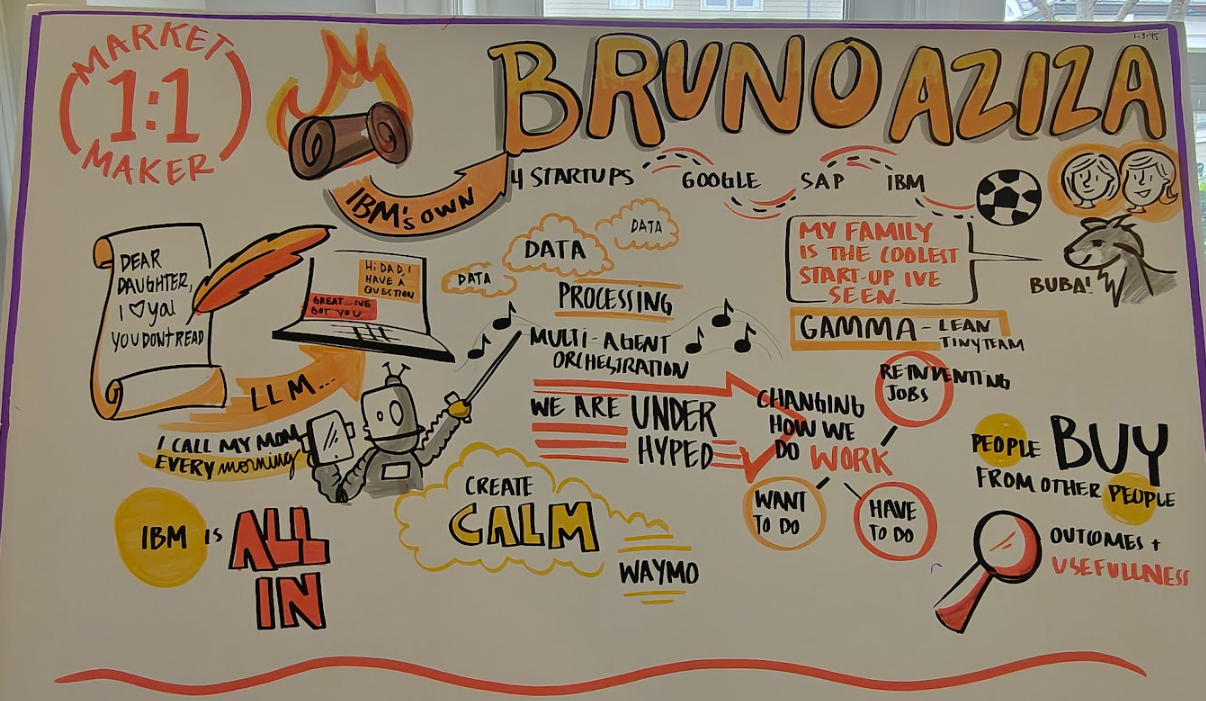
Those are the takeaways from Boomi CEO Steve Lucas and IBM's Bruno Aziza, Group VP of Data, BI and AI. Aziza also is a member of IBM Ventures' investment committee.
Both tech leaders spoke at Constellation Research's Connected Enterprise conference where AI agent sprawl and orchestration was a recurring theme.
Boomi calls BS on inflated AI agent numbers
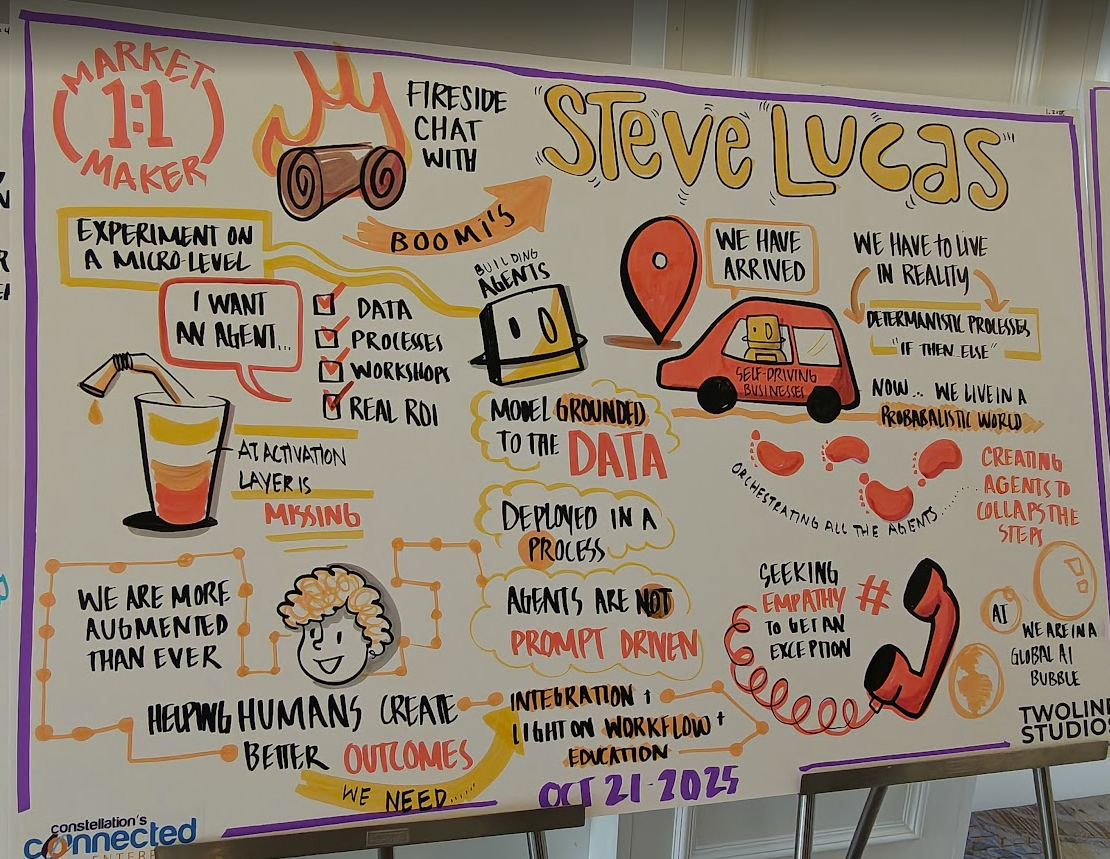
Boomi CEO Steve Lucas said enterprises are moving to AI agents as they shift from deterministic processes to probabilistic processes, but be wary of inflated claims about how many are being deployed.
"We live in this world called reality," said Lucas. "We've deployed roughly 50,000 agents in our customers that are real with code and grounding for business processes. That's not millions and anyone that tells you millions is full of shit. It's not true."
Lucas added that AI agents need to be judged on returns and real business process impact. "We're seeing real ROI," said Lucas, who noted Boomi is deploying internally and with customers.
He added that there's a ground game to consider. "When we walk into a client today we start with a workshop. You can build a new agent with a chat interface, but do they have the right data and process?" asked Lucas.
Next up will be the orchestration of agents, which is often more of a vendor talking point. "How do I monitor for effectiveness and ROI? You have to determine the ROI and whether agents are overlapping all day," said Lucas.
Boomi has an agent builder that includes governance, but will extend the tool to monitor ROI and orchestrate multiple AI agents. "What we're going to be announcing next year is the multi agent orchestration extension. We're not building an agent control towers. We don't just watch AI agents work. You need to orchestrate multiple agents and figure out do you have the right model and what are the costs."
Lucas said 2026 will be about creating an AI activation layer and moving beyond automation. "It's not just about creating agents it's going to be about orchestrating," said Lucas.
Aziza said it's easy to create an agent--he has five or six GPTs to serve up answers to his kids.
He said:
"Building an agent of agents is really simple. The problem stuff that's going to get us in trouble is you're going to have multiple agents built across multiple platforms, and no single vendor will have the incentive to just help you manage and orchestrate across multiple platforms. AI has no manager right now."
The state of play today is the following:
Vendors are making it easy to build agents for developers as well as business users.
Enterprises can choose to stay on one platform for agentic AI, but that's limiting.
The challenge will be finding the vendor that's horizontal and "coming to help you orchestrate and operationalize these agents."
Editor in Chief of Constellation Insights
Constellation Research
Larry Dignan is Editor in Chief of Constellation Insights at Constellation Research, where he leads editorial coverage focused on enterprise technology, digital transformation, and emerging trends shaping the future of business. He oversees research-driven news, analysis, interviews, and event coverage designed to help technology buyers and vendors navigate complex markets with clarity and context. ...
Constellation Research analysts were split on whether we're in an AI bubble or not, recapped 2025 in AI agents and gave a hint of what's to come in 2026 around decisions, automation and exponential efficiency.
Here's a look at what Constellation Research analysts said about 2025 and 2026 at the opening panel of Connected Enterprise 2025.
Michael Ni
2025: The great divide between enterprises is not about digital. "It's actually a decisional divide and it will decide winners and losers," said Ni. "Winners and losers will really be about who can actually get to decision velocity while keeping compliance control."
2026: "You'll see a massive shift toward a decision centric architecture. Unified data foundations will need to extend to context and grounding. You'll see process and workflow automation incorporate decisions and governance."
Chirag Mehta
2025: "The biggest adoption barrier for AI is security, control and trust. It's not a lack of use cases. It's not a lack of money," said Mehta. "Enterprises want control. They want a specific outcome system and that's driving a lot of innovation and spend in cybersecurity, which was traditionally considered a cost center. Now people are looking at ROI for security and it's amazing."
2026: "Right now people are building AI agents, but they have no idea how to manage a life cycle of an agent, access and privileges. The innovation will be in AI agent identities."
Me
2025: "Agentic AI is the obvious trend and everyone and their mom wants to be a platform. And this game of musical chairs isn't going to go well."
I also noted that we need to start segmenting the AI market. AI infrastructure is bubblelike. Enterprise AI hasn't really started yet. It's time for nuance.
2026: "We're going to realize later in 2026 that all we did was scale mediocrity with the same LLMs and data. We're going to need to come up with ways to be creative and innovative."
Liz Miller
2025: "The challenge for marketing tends to be that you're always being sold a silver bullet," said Miller. "We've seen so many bubbles. The real trend is that marketing is actually using AI. We're really on the front line, but there's a gap between the expectation and the delivery."
2026: Marketing departments will start hiring people because they'll realize the limitations of agents.
Esteban Kolsky
2025: "The biggest trend right now is the commoditization of subsidized AI."
2026: "In the second half of 2026, we're going to start investing in what really matters. Private platforms with a distributed computing architecture.
Martin Schneider
2025: "Revenue ops will optimize using AI but there will be smaller models that are precise and can get better understanding of workflows," said Schneider.
2026: Revenue ops will continue to be revamped via AI agents.
Holger Mueller
2025: "There is a broad revival as everything is going agent with HCM." the disappearance of the divisional / Departmental HR people.
2026: "There will be frontline worker empowerment to complement the agents that are being built," said Mueller. He also said that AI agents will begin to replace divisional and departmental HR people.
Ray Wang
2025: "There's a romantic notion that there will be an agent per persona. We're going to tell you that it's false. You're seeing automation push across the back office."
"We're seeing a manufacturing renaissance. It's supply chain, precision manufacturing, data centers, distribution and energy."
2026: "One of the biggest things we'll be talking about is the notion of exponential efficiency. You're seeing revenue per employee going from $100,000 to $1 million to $10 million," said Wang. "We're going to see the difference between winners and losers based on who adopted AI."