Results

So long, annual IT budget. Hello, 6 month IT budget

So long, annual IT budget. Hello, 6 month IT budget

Media Name: Screenshot 2025-10-22 123517.png

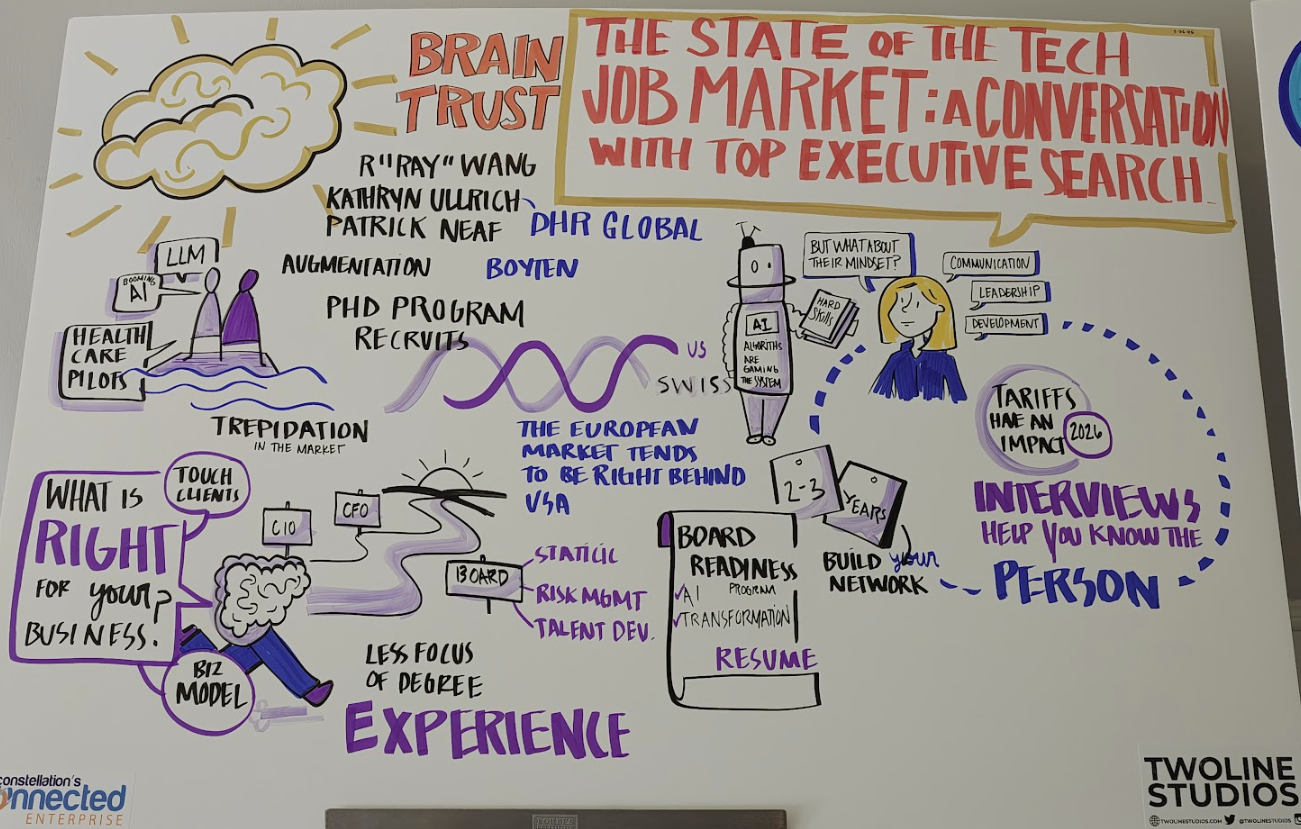
The technology budget process is well underway at most enterprises and the time frames are getting shorter. Here's a few mileposts to consider as 2026 technology budgets are being sketched.

The discussion at Constellation Research Connected Enterprise 2025 was under Chatham house rules so we're not calling out enterprises, but they represent household names.

Here's a look at the takeaways about 2026 budgets from the Constellation Research community.

Expectations

The 12-month budget process doesn't exist. Enterprises are working on 6-month time frames due to rapid changes.

Enterprises are expecting revenue to increase in the next six months.

Profits are expected to fall. Companies are investing in AI and there will be multiple variables working against profits in the next six months.

Overall budgets

IT budgets are expected to come back and accelerate in the second half of 2026.

2026 budgets are in stasis right now. One CxO said: "With everything that's going on, we're wait and see. We're pretty much on the hold to see what's happening. Officially, 2026 budget will be up, but I think it's going down."

Hiring

Hiring is expected to pick up, but how that scenario plays out will impact profits. "There's profit pressure to make sure that we can maintain profit. AI is also reducing the need to do some hiring that we would have done," said one decision-maker.

In addition, enterprises are not announcing layoffs, but quietly shedding jobs. "We are switching out the workforce so they are more AI ready in a discreet way," said one CxO.

A common complaint in the Constellation Research community was that it's hard to find the right people largely because the current processes are broken.

"The system of search and hiring is completely broken," said an IT leader. "We need a new platform. We need people who knows how to think and solve problems, not the usual It person right now. We also need diversity of talents."

Another CxO noted: "Technology has taken us too far by using AI to write resumes and match people. That's something that has to be fixed. We need to think holistically about hiring the right human."

Priorities

One CxO said her company is doubling down on cybersecurity. However, cybersecurity spending isn't driving the total technology budget higher because it is taking from other categories.

In this case, cybersecurity is taking budget at the expense of networking spend.

AI is also an obvious priority for enterprise, but there's nuance to consider. "I've noticed that communities are getting smarter about where they want to put their money as it relates to AI, and moving out of migration modernizations much more quickly," said one CxO.


Data to Decisions Future of Work Chief Executive Officer Chief Financial Officer Chief Information Officer

GM to integrate Google Gemini, delivered unified software defined vehicle architecture

GM to integrate Google Gemini, delivered unified software defined vehicle architecture

General Motors will integrate Google Gemini into its vehicles, introduce eyes off, hands off autonomous driving systems in the 2028 Cadillac Escalade IQ and move to a unified software defined vehicle architecture.

The announcements, made at GM Forward in New York, highlights how large language models will be entering the vehicle cockpit. GM added that it will introduce a software defined vehicle unified architecture for both its electric and internal combustion vehicles.

GM's new architecture will also appear in the 2028 Escalade IQ. The software defined vehicle architecture includes a central compute unit, simpler edge components and wiring as well as easier software development.

The automaker has been retooling, adding AI talent and integrating Super Cruise into its operations. The technology plans land a day after GM reported third quarter earnings. GM outlined a partnership with Nvidia to use the Nvidia Omniverse platform and Nvidia Drive AGX.

In a letter to shareholders following earnings, GM CEO Mary Barra said that software and services will be part of the plan for growth. 

"Our software and services business is also expanding rapidly. Deferred revenue from OnStar, Super Cruise, and other offerings grew 14% from the second quarter to almost $5 billion, supported by a base of 11 million OnStar subscribers, including over 500,000 Super Cruise customers. We expect robust, double-digit revenue growth from OnStar and Super Cruise through the end of the decade, with gross margins of approximately 70%. 

We are also making significant progress on our autonomous vehicle strategy and our next-generation software-defined vehicle platform, which will deliver smarter, more personalized vehicles, reduce complexity, improve stability, and unlock new revenue streams." 

Dave Richardson, SVP of Software at GM and an Apple alum, said the decision to use Google Gemini was a broader plan to simplify. "We already have a voice assistant and companion in vehicle, but this will be a replatforming around Gemini so that you can have much better natural conversations. You can ask questions about your vehicle. You can learn more about a destination. We strongly believe that it is an enabling platform technology that's going to let us, over time, bring a whole bunch of new AI companion customized offerings," said Richardson.

Richardson added that GM is planning to leverage insights from its OnStar service as well as vehicle telemetry and meld it with Gemini models for everything from predictive maintenance and route planning.

GM's plan is to create AI that's custom-built for your vehicle and fine tuned based on telemetry and personal preferences.

GM is leveraging a hybrid cloud approach with its data and AI strategy, but most workloads will be in the cloud including on Microsoft Azure and platforms like Databricks.

Regarding autonomous driving, GM said its Super Cruise technology will roll out for highway driving across North America with the 2028 Escalade IQ. Richardson said GM has about 600,000 miles of road mapped and customers have driven more than 700 million miles on Super Cruise. "We're starting with the highway because the average commuter spends between four and five hours a week there," said Richardson. "It's an obvious area to give people a lot of time back."

The expectation is that highway eyes off, hands off driving will lead to faster additional steps to complete autonomy. Richardson said Super Cruise with eyes off, hands off driving will run on Nvidia's platform.

Other items from GM Forward include:

Software defined vehicles. Richardson said the new unified architecture goes beyond zonal approaches. Infotainment, continuous learning and advanced features will be delivered by one computing core. GM estimates the unified architecture will deliver the following:

  • 10 times more over-the-air software update capacity;
  • 1,000 times more bandwidth;
  • And up to 35 times more AI performance for autonomy and advanced features.

"In our current vehicle architectures, we have a lot of components spread around the vehicle. In our new architecture, we'll have a central compute unit and then a lot simpler components on the edge. The logic, the software, the orchestration work happens in that central unit," said Richardson. "And this will allow us to greatly simplify the wiring inside the vehicle. It simplifies doing OTAs and updates and software development."

Richardson added that it will also build its own hardware components to boost efficiency and have more control over the software stack.

Cobots and robotics. Richardson said GM is deploying cobots in its factories. GM today has robots in big cages away from humans because they're not safe. Cobots are robots that are safe to operate near humans.

"There's a lot of hype around humanoids. That's not our focus. Instead of we're looking at building specific cobots to handle tasks that are either that can be dangerous or really hard ergonomically so that they're right next to the humans inside our manufacturing plants," said Richardson. "Humans can then spend more of their time working on the stuff that humans are great at, and more of their craft."

Richardson was bullish on cobot deployments given its manufacturing at scale expertise, data and ability to leverage AI to build multiple use cases.

GM's robotics efforts come from the company's Autonomous Robotics Center (ARC) in Warren, Michigan, and a sister lab in Mountain View, California. GM employs more than 100 robotics experts and hardware specialists.

Home energy systems. GM has offered home energy systems for a while and the batteries work with solar. EV batteries can also do bi-directional charging to power your house. In 2026, GM will start a leasing option for home energy systems.


Data to Decisions Next-Generation Customer Experience Innovation & Product-led Growth Chief Information Officer

Among CxOs, SaaS platform fatigue setting in

Among CxOs, SaaS platform fatigue setting in

Every enterprise software vendor likes to talk about its platform as a way to enable AI transformation, automation and AI agents. But there are signs that platform fatigue is setting in among buyers.

These technology buyers are continuously hearing platform pitches from software as a service vendors in multiple categories. At Constellation Research's Connected Enterprise, platform fatigue was a clear topic. One audience member even said that the word "platform" should be eradicated from software lingo.

More from Connected Enterprise:

Here's a look at some of the platform weariness from enterprise buyers.

The platform pitch

Fiona Tan, CTO of Wayfair, said the platform pitch from SaaS is something enterprise customers need to be wary about. She said:

"We're looking for a horizontal platform partner that we can work with. Some of those integrations we will do directly, and then some of them we will look for with SaaS partners. The difficulty right now with SaaS is that they're also trying to go horizontal. We want to access enhanced capabilities of each of the SaaS partners, but control it. We may not want that necessarily."

Tan is like most CxOs that have to navigate through multiple vendors touting platforms that are pitched to be an AI easy button. A few recent examples:

Cut SaaS costs to fund other projects

Constellation Research CEO R "Ray" Wang frequently notes that CxOs often complain that the two costs that never fall are SaaS and healthcare. The SaaS budget is eating up more of the IT budget.

"If you want to go get money, build a legal lab. We're testing it. It took about three weeks loaded up a million plus contracts worth $3.5 million of annual SaaS spend. Look at your SaaS cost, because most of it you can replace, and self-fund every funding venture you want," said David Giambruno, VP of Tivity Health.

Worries about SaaS costs aren't new and moves to consumption models have only amplified those concerns. SaaS providers are moving to offer more pricing options, but enterprise buyers say vendors should move toward more outcome-based pricing.

"Contract to outcomes that have shared risk. Make sure that you're not the only one with the seat at the table that's taking on majority of the risk for the money that you're trying to drive," said Kim Smith, Chief Revenue Officer at Clinical AI.

Revisit history, don't repeat it

Enterprises are looking toward AI agents and thinking they can collapse software platforms. After all, how many software platforms can a company support? How many platforms should they support?

Aiaz Kazi, Founder and CEO at rtZen Inc., said enterprises should be careful not to repeat previous platform mistakes. "We've been having the same conversation for 30 to 40 years. That's how SaaS came about," said Kazi. "I'd argue the difference now is that you should not be buying a platform. You're not buying agents. You're buying services. The entire point of an AI agent is that your end-to-end workflow should be more efficient and controllable. Why are you buying disparate agents? We will wind up managing them the same way we manage disparate applications today."

What AI agents can do is collapse various software suites and give enterprises the ability to focus on services and processes. In other words, AI agents have the potential to realize the business process outsourcing dream with much lower costs.

Data to Decisions Tech Optimization Innovation & Product-led Growth Future of Work Next-Generation Customer Experience Digital Safety, Privacy & Cybersecurity ML Machine Learning LLMs Agentic AI Generative AI Robotics AI Analytics Automation Quantum Computing Cloud Digital Transformation Disruptive Technology Enterprise IT Enterprise Acceleration Enterprise Software Next Gen Apps IoT Blockchain Leadership VR Chief Information Officer Chief Executive Officer Chief Technology Officer Chief AI Officer Chief Data Officer Chief Analytics Officer Chief Information Security Officer Chief Product Officer Chief Digital Officer Chief Operating Officer

Live from #DF25 | Unlocking Customer Lifetime Value with AI and Integrated Services

Live from #DF25 | Unlocking Customer Lifetime Value with AI and Integrated Services

Join us live from Dreamforce as CR analyst Martin Schneider interviews Simon Creasey from HPE and Jocelyn Zanasi from Salesforce about integrating professional services and Customer Success teams for holistic customer lifetime value, leveraging Certinia CS Cloud and Agentic AI. Unlocking customer lifetime value starts with proper alignment between professional services and Customer Success. Integrating your data and workflows—not just your tech—builds transparency, trust, and efficiency. With AI-driven platforms, you can scale personalized experiences for every customer. Focus on innovative processes, leverage standard tools, and eliminate friction to drive real results.

1:17 – HPE Journey
3:57 – Power of One Platform
5:22 – Agentic AI in Action
9:06 – Tangible Benefits
12:50 – Advice for New Adopters

On <iframe width="560" height="315" src="https://www.youtube.com/embed/I9CcTNtGB10?si=DUoc48_S7tUH3OPx" title="YouTube video player" frameborder="0" allow="accelerometer; autoplay; clipboard-write; encrypted-media; gyroscope; picture-in-picture; web-share" referrerpolicy="strict-origin-when-cross-origin" allowfullscreen></iframe>

Boomi, IBM point to AI agent orchestration inflection point

Boomi, IBM point to AI agent orchestration inflection point

It's easy to build an AI agent and even scale them. It's much harder to orchestrate them to drive returns. AI agents need a manager pronto.

Those are the takeaways from Boomi CEO Steve Lucas and IBM's Bruno Aziza, Group VP of Data, BI and AI. Aziza also is a member of IBM Ventures' investment committee.

Both tech leaders spoke at Constellation Research's Connected Enterprise conference where AI agent sprawl and orchestration was a recurring theme.

Boomi calls BS on inflated AI agent numbers

Boomi CEO Steve Lucas said enterprises are moving to AI agents as they shift from deterministic processes to probabilistic processes, but be wary of inflated claims about how many are being deployed.

"We live in this world called reality," said Lucas. "We've deployed roughly 50,000 agents in our customers that are real with code and grounding for business processes. That's not millions and anyone that tells you millions is full of shit. It's not true."

Lucas added that AI agents need to be judged on returns and real business process impact. "We're seeing real ROI," said Lucas, who noted Boomi is deploying internally and with customers.

He added that there's a ground game to consider. "When we walk into a client today we start with a workshop. You can build a new agent with a chat interface, but do they have the right data and process?" asked Lucas.

Next up will be the orchestration of agents, which is often more of a vendor talking point. "How do I monitor for effectiveness and ROI? You have to determine the ROI and whether agents are overlapping all day," said Lucas.

Boomi has an agent builder that includes governance, but will extend the tool to monitor ROI and orchestrate multiple AI agents. "What we're going to be announcing next year is the multi agent orchestration extension. We're not building an agent control towers. We don't just watch AI agents work. You need to orchestrate multiple agents and figure out do you have the right model and what are the costs."

Lucas said 2026 will be about creating an AI activation layer and moving beyond automation. "It's not just about creating agents it's going to be about orchestrating," said Lucas.

IBM's Aziza: AI agents have no manager right now

Aziza said it's easy to create an agent--he has five or six GPTs to serve up answers to his kids.

He said:

"Building an agent of agents is really simple. The problem stuff that's going to get us in trouble is you're going to have multiple agents built across multiple platforms, and no single vendor will have the incentive to just help you manage and  orchestrate across multiple platforms. AI has no manager right now."

The state of play today is the following:

  • Vendors are making it easy to build agents for developers as well as business users.
  • Enterprises can choose to stay on one platform for agentic AI, but that's limiting.
  • The challenge will be finding the vendor that's horizontal and "coming to help you orchestrate and operationalize these agents."

IBM TechXChange 2025: Big blue connects agentic AI, mainframe dots, partners with Anthropic

"The key word for us in the next 10 years is going to be multi-agent orchestration," said Aziza.

Data to Decisions Innovation & Product-led Growth Future of Work Tech Optimization Next-Generation Customer Experience Digital Safety, Privacy & Cybersecurity ML Machine Learning LLMs Agentic AI Generative AI Robotics AI Analytics Automation Quantum Computing Cloud Digital Transformation Disruptive Technology Enterprise IT Enterprise Acceleration Enterprise Software Next Gen Apps IoT Blockchain Leadership VR Chief Information Officer Chief Executive Officer Chief Technology Officer Chief AI Officer Chief Data Officer Chief Analytics Officer Chief Information Security Officer Chief Product Officer

Constellation Research’s sneak peek at 2026

Constellation Research’s sneak peek at 2026

Constellation Research analysts were split on whether we're in an AI bubble or not, recapped 2025 in AI agents and gave a hint of what's to come in 2026 around decisions, automation and exponential efficiency.

Here's a look at what Constellation Research analysts said about 2025 and 2026 at the opening panel of Connected Enterprise 2025.

Michael Ni

2025: The great divide between enterprises is not about digital. "It's actually a decisional divide and it will decide winners and losers," said Ni. "Winners and losers will really be about who can actually get to decision velocity while keeping compliance control."

2026: "You'll see a massive shift toward a decision centric architecture. Unified data foundations will need to extend to context and grounding. You'll see process and workflow automation incorporate decisions and governance."

Chirag Mehta

2025: "The biggest adoption barrier for AI is security, control and trust. It's not a lack of use cases. It's not a lack of money," said Mehta. "Enterprises want control. They want a specific outcome system and that's driving a lot of innovation and spend in cybersecurity, which was traditionally considered a cost center. Now people are looking at ROI for security and it's amazing."

2026: "Right now people are building AI agents, but they have no idea how to manage a life cycle of an agent, access and privileges. The innovation will be in AI agent identities."

Me

2025: "Agentic AI is the obvious trend and everyone and their mom wants to be a platform. And this game of musical chairs isn't going to go well."

I also noted that we need to start segmenting the AI market. AI infrastructure is bubblelike. Enterprise AI hasn't really started yet. It's time for nuance.

2026: "We're going to realize later in 2026 that all we did was scale mediocrity with the same LLMs and data. We're going to need to come up with ways to be creative and innovative."

Liz Miller

2025: "The challenge for marketing tends to be that you're always being sold a silver bullet," said Miller. "We've seen so many bubbles. The real trend is that marketing is actually using AI. We're really on the front line, but there's a gap between the expectation and the delivery."

2026: Marketing departments will start hiring people because they'll realize the limitations of agents.

Esteban Kolsky

2025: "The biggest trend right now is the commoditization of subsidized AI."

2026: "In the second half of 2026, we're going to start investing in what really matters. Private platforms with a distributed computing architecture.

Martin Schneider

2025: "Revenue ops will optimize using AI but there will be smaller models that are precise and can get better understanding of workflows," said Schneider.

2026: Revenue ops will continue to be revamped via AI agents.

Holger Mueller

2025: "There is a broad revival as everything is going agent with HCM." the disappearance of the divisional / Departmental HR people.

2026: "There will be frontline worker empowerment to complement the agents that are being built," said Mueller. He also said that AI agents will begin to replace divisional and departmental HR people. 

Ray Wang

2025: "There's a romantic notion that there will be an agent per persona. We're going to tell you that it's false. You're seeing automation push across the back office."

"We're seeing a manufacturing renaissance. It's supply chain, precision manufacturing, data centers, distribution and energy."

2026: "One of the biggest things we'll be talking about is the notion of exponential efficiency. You're seeing revenue per employee going from $100,000 to $1 million to $10 million," said Wang. "We're going to see the difference between winners and losers based on who adopted AI."

Data to Decisions Future of Work Innovation & Product-led Growth Next-Generation Customer Experience Chief Information Officer

Microsoft Dynamics 365 expands sales AI agent roster

Microsoft Dynamics 365 expands sales AI agent roster

Microsoft said its Dynamics 365 Sales Qualification Agent and Quality Evaluation Agent are generally available with its Sales Close Agent and Sales Research Agent in public preview.

The rollout follows a blistering pace for AI agent losses in recent days. Salesforce had its Agentforce heavy Dreamforce conference, Oracle layered AI agents throughout its Fusion applications, Google launched Gemini Enterprise as an agent orchestration platform and AWS said its Bedrock AgentCore is generally available.

You could say it's an agenteriffic time in enterprise technology.

For Microsoft the general availability of its agents come as the company is evolving Dynamics 365 from a system of record to a system of action. Dynamics 365's future will revolve around agentic business applications.

Microsoft is starting its agent parade with sales functions. Sales Agents in Dynamics 365 Sales are mapped to "jobs to be done." These jobs are encompassed in various roles such as sales development reps, sales reps and sales leaders. Here's how it breaks down:

  • Sales Qualification Agent is designed to assist a sales development rep who has a goal of generating pipeline. The agent will carry out tasks such as researching leads, customer outreach, qualifying leads and ultimately converting them. Sales Qualification Agent can engage hundreds of leads at once with personalized emails and follow-ups. It also identifies customer fit and stage and routes to seller after qualification.

  • Sales Close Agent will assist sales reps trying to win deals and will cover handoffs, discovering use cases, proving value and negotiating and closing deals. Sales Close Agent can also autonomously engage customers, follow long-running deals and mitigate risks and provide insights to stakeholders.
  • Sales Research Agent is for sales leaders on the hook for growing revenue and optimizing the business. Managing pipeline, team account and territory planning and sales ops are core tasks. Sales Research Agent automatically generates research plans and uncovers patterns.

These agents join various offerings covering customer intent, customer knowledge management and case management in Dynamics 365 Contact Center and Customer Service.


Data to Decisions Future of Work Innovation & Product-led Growth Tech Optimization Next-Generation Customer Experience Digital Safety, Privacy & Cybersecurity Microsoft ML Machine Learning LLMs Agentic AI Generative AI Robotics AI Analytics Automation Quantum Computing Cloud Digital Transformation Disruptive Technology Enterprise IT Enterprise Acceleration Enterprise Software Next Gen Apps IoT Blockchain Leadership VR Chief Information Officer Chief Executive Officer Chief Technology Officer Chief AI Officer Chief Data Officer Chief Analytics Officer Chief Information Security Officer Chief Product Officer

Live From #DF25 | Revolutionizing Professional Services with Certinia’s AI Vision

Live From #DF25 | Revolutionizing Professional Services with Certinia’s AI Vision

Constellation Analyst Liz Miller sits down with Raju Malhotra, Chief Product & Technology Officer at Certinia, during #Dreamforce 2025. Watch the full interview to discover how AI is redefining professional services, enabling hybrid human-agent collaboration, unlocking value-based pricing, and creating trillion-dollar opportunities for organizations like PwC, Siemens, and Salesforce.

Hear Raju’s vision for autonomous professional services and get strategic advice for driving growth and efficiency in an AI-powered world.

01:00 Certinia’s vision & market impact
02:47 How AI is disrupting professional services
07:45 7x sales pipeline growth
11:46 Three key industry changes  
17:23 Real-time resource planning with AI
19:34 Shift to value-based pricing

Don’t miss these key insights—watch now and stay ahead of the curve!

On ConstellationTV <iframe width="560" height="315" src="https://www.youtube.com/embed/ULJRzKBi_WE?si=Fy0KasDNuqU1rEcC" title="YouTube video player" frameborder="0" allow="accelerometer; autoplay; clipboard-write; encrypted-media; gyroscope; picture-in-picture; web-share" referrerpolicy="strict-origin-when-cross-origin" allowfullscreen></iframe>

Oracle’s application strategy: Industries, AI, automation, integrated stack

Oracle’s application strategy: Industries, AI, automation, integrated stack

Oracle's Fusion applications business can't compete in buzz or growth rates compared to Oracle Cloud Infrastructure (OCI), but you'd be wise to pay attention to the software plan. Yes Virginia, Oracle is still a software company.

At the just concluded Oracle AI World, the buzz machine revolved around OCI as well as an AI platform and data lakehouse play. Fusion application news landed on Oracle AI World's last day. For what it's worth, Oracle is scaling up AI agents across its applications focused on various processes like accounts payable, payments, fulfillment, legal and financial planning and analysis.

In a week full of AI agent hubbub due to Salesforce's Agentforce barrage, you are forgiven for missing the Oracle AI agent news. But it's worth catching up.

Steve Miranda, Executive Vice President of Oracle Applications Development, said at the company's investor day at Oracle AI World:

"What I talked about at this conference last year was that we would have 100 AI agents in Fusion. We actually have 600 AI agents, 400-plus in Fusion, 200-plus in the industry verticals. The 600 are agents that we've built and that does not count agents that our customers are building through the agent studio or what our partners have built."

Oracle also launched an AI agent marketplace to expand the ecosystem. Mike Sicilia, co-CEO of Oracle and leader of the applications side of the company, said Fusion AI agents are native to the company's stack and available to customers at no additional costs.

"We have 2,400 customers already leveraging Oracle AI embedded inside our applications today," said Sicilia. "They are live across a large variety of industries. Fusion applications are quickly becoming a collection of AI agents."

Today's reality: Oracle applications revenue tops infrastructure

Given the growth rates of Oracle's cloud infrastructure business, up 55% in the first quarter, it's easy to forget that the company even has an applications business. After all, Oracle has been all about Nvidia GPUs, now AMD too, and building capacity for customers like OpenAI.

Here's the comical part. In the first quarter where Wall Street went bonkers over remaining performance obligations, Oracle's cloud applications revenue was still larger than infrastructure. Oracle's applications business, primarily Fusion Cloud ERP and NetSuite, delivered first quarter revenue of $3.8 billion, up 11% from a year ago. Fusion Cloud ERP was up 17% and NetSuite up $1 billion. Oracle's SaaS revenue for the quarter was $3.8 billion. Cloud infrastructure revenue in the first quarter was $3.35 billion.

Going forward, Oracle's revenue mix will change toward infrastructure (at lower margins for a bit). But for now, don't discount applications. For fiscal 2025, Oracle cloud applications revenue was $14.3 billion compared to cloud infrastructure revenue of $10.23 billion.

Another point for your Oracle future file. Oracle's applications business will have to more than pull its weight to fund the OCI investment.

Industry and process focused

Sicilia spent a good bit of time talking about Oracle Fusion and its industry plays. Oracle has its core ERP and HCM systems, but company has a penchant for targeting industries and regulated processes.

Healthcare is the obvious play and one of CTO Larry Ellison's passions. Oracle is planning to automate entire healthcare ecosystems.

"We've got dozens of AI agents live across our health ecosystem today, many more planned. We're looking at chart review care navigation, clinical decision support, patient risk predictions, preventative care and many more. In fact, our next-generation AI EHR is now generally available," said Sicilia.

To Sicilia, the more regulated an industry is the more Oracle can play a role. He said in the next year, Oracle will have 125 AI agents live in banking and insurance.

Oracle is aiming to automate multiple industry ecosystems. The company is projecting fiscal 2030 revenue of $225 billion with a compound annual growth rate of more than 31% over the next five years. For earnings, Oracle is targeting $21 cents a share in annual earnings by fiscal 2030.

An Apple-ish approach to the stack

In many ways, Oracle has lifted the Apple approach with integrated hardware and software. With tight integration, Apple has argued it can provide a better experience.

Oracle's integrated stack between infrastructure, database and applications is a similar story. AI is juicing that integrated stack approach.

Clay Magouyrk, co-CEO of Oracle overseeing OCI, laid out the integrated stack strategy.

"We do applied technology. We do applications. We use our tech, and we also build the tech. We build data centers. We train models. We build databases. We build code generators. We do all this stuff to enable the creation of applications and then we actually create the applications. The database is now inextricably linked to our AI strategy and inextricably linked to our application strategy. So all the pieces at Oracle now are fitting together."

Magouyrk said it wasn't that long ago that the integrated approach looked like a disadvantage because the company was doing too much. The applications and infrastructure approach gives Oracle a built in feedback wheel to continuously improve.

Mark Hura, Oracle President of Field Operations, said the company is engaging companies with its entire portfolio. The argument is that Oracle can take away the enterprise integration pain.

"For our customers to be able to consume and bring outcomes that deliver real value, where they're not focused on integrating solutions, they're not focused on deploying differentiated capabilities, they're not worrying about where their data is moving and how is it secured or not," said Hura.

Miranda said Oracle is threading the needle where customers are able to spend less on IT, but spend more with Oracle. "The customers are actually spending less. They're spending more with Oracle because of the single stack advantage and all the engineering putting all the pieces together instead of customers having to stitch it together," said Miranda.

Sicilia added that the Oracle ambition is have the world run on its integrated stack. "What does it look like beyond 2030? I think we're rapidly heading towards self-implementing self-learning, self-healing systems," he said. "What does it mean in terms of Oracle? It's hard to say. I can't imagine that there's anything negative to say about it because I like our chances of being able to deliver that full system ecosystem."

Constellation Research's take

Constellation Research analyst Michael Ni made the following points about Oracle's strategy.

  • Vertically AI integrated. "Oracle moved from 'catch-up' to a credible top-tier option for decision-centric, governed agents. Especially for enterprises already standardized on Oracle data and apps. AWS and Microsoft remain broader ecosystems, and Google is strong on tooling and AI platform and partners. Oracle’s differentiator is vertical integration from database to governance that expands to private data to apps with agent lifecycle controls promising to simplify management and decrease costs."
  • The stack not the tools. "Oracle’s embedding move is classic Larry Ellison. Centralize complexity by delivering an “engineered stack” that brings tight integration, delivered semantics and data models, and governed context. This helps Oracle own the applications context and actions differentiates Oracle’s offering from other hyperscalers. While AWS and Google sell you the toolkit, Oracle ships the machinery already wired for output. That’s provides performance and extensibility, but at a tradeoff to portability."
  • Differentiated. "Oracle’s strategy is differentiation through vertical integration, not head-to-head competition on horizontal cloud scale. While Oracle Cloud Infrastructure (OCI) is already positioned has highly competitive from a price-performance perspective, Oracle is doubling down on the enterprise data–to–decision stack by connecting applications, context and ability to act, where governance, trust, and application context matter more than raw hyperscale capacity."
  • AI peanut butter and jelly. "Oracle's dual investment in AI and infrastructure are not two bets. Those investments are one play: control the cost curve and own the decision loop as a data and AI foundation for enterprise AI. Ellison eyes the large hyperscaler market and knows Oracle can differentiate if it can manage the margin hungry AI solutions that is increasingly creating cost as fast as it creates value for the application level. You can’t win the AI platform war without owning both the brains (agents) and the body (infrastructure)."
Data to Decisions Innovation & Product-led Growth Future of Work Tech Optimization Next-Generation Customer Experience Digital Safety, Privacy & Cybersecurity Oracle ML Machine Learning LLMs Agentic AI Generative AI Robotics AI Analytics Automation Quantum Computing Cloud Digital Transformation Disruptive Technology Enterprise IT Enterprise Acceleration Enterprise Software Next Gen Apps IoT Blockchain Leadership VR Big Data Chief Executive Officer Chief Financial Officer Chief Information Officer Chief Technology Officer Chief AI Officer Chief Data Officer Chief Analytics Officer Chief Information Security Officer Chief Product Officer

Salesforce Bets on the Rise of the Agentic Enterprise

Salesforce Bets on the Rise of the Agentic Enterprise

At Dreamforce 2025, Salesforce centered its entire narrative around a single concept: the agentic enterprise. Every announcement, demo, and customer story pointed toward a vision where AI agents drive business operations, decision-making, and collaboration. The company is aligning its products, platform, and partnerships through Agentforce 360, the core of the Salesforce 360 ecosystem that connects people, data, and systems in an intelligent, trusted framework.

Observations

The Convergence of Products and Platform

When Salesforce introduced Agentforce a year ago, it created the foundation for building AI agents. The initial rollout included only a few built-in agents, but the intent was clear: to move toward a more intelligent, agent-driven architecture.

This year, Salesforce took a major step forward by introducing Agentforce 360 and renaming its product families. The familiar “clouds” are now Agentforce Sales, Agentforce Service, Agentforce Marketing, and so on. The goal goes beyond rebranding. It reflects a shift toward embedding agentic intelligence directly into the core products. Customers now gain agentic capabilities without needing to build separate custom agents, while developers and partners can still extend and integrate through the broader Agentforce platform.

Salesforce is advancing its portfolio in two directions: making its first-party products to be AI-first and expanding a platform that enables customers and partners to create agents that connect and extend those products. The company now positions itself at the intersection of product and platform within the broader Salesforce 360 vision of the agentic enterprise.

Deterministic and Agentic: Finding Balance in Workflow Design

Salesforce introduced AgentScript, a JSON-like declarative scripting language that lets customers define the specific actions an agent must follow. This addition provides structure and predictability to agent workflows by combining deterministic steps with agentic reasoning. Customers can specify where precision is required while still allowing agents to adapt intelligently in less controlled areas. This balance between control and autonomy reinforces the kind of reliability enterprises expect from agent-driven systems.

A similar trend is emerging in the broader AI agent market: Claude Skills, recently announced by Anthropic, operates as reusable modules, which are folders of custom instructions, scripts and resources that an agent loads only when needed. The appeal is clear: when the workflow is predictable and proven enterprises prefer to hold on to that predictability rather than discard it. In this context, the deterministic part and the agentic part end up in an and relationship rather than an or relationship. Using predefined workflows saves tokens and therefore cost for the platform because the model does not have to reason from scratch when it is given instructions to follow. In other words, embedding structure into the agentic layer improves efficiency and lowers consumption.

Incorporating this kind of workflow pattern into Agentforce makes sense; customers gain confidence because there is a “known path” for common tasks and the flexibility to deviate when needed. That dual mode of deterministic structure plus agentic flexibility aligns with what enterprises have begun to prefer in their agentic enterprise journey.

Slack Becomes the Interface of the Agentic Enterprise

Slack’s role has evolved from a collaboration hub to a conversational agentic interface. Historically, it operated alongside Salesforce applications with a few integrations. That separation is now diminishing as Slack becomes deeply integrated into Agentforce 360.

Salesforce now treats Slack as an agentic operating system, a space where people, apps, and agents work together through natural conversations. Slack runs on the Agentforce foundation and connects workflows across multiple Salesforce and third-party products. With more than a million customers, Slack gives Salesforce a powerful opportunity to extend the agentic enterprise vision beyond its traditional CRM base.

Although the current integrations remain centered on Salesforce products, Slack now serves as an important gateway for expanding Agentforce’s influence across the Salesforce 360 ecosystem and beyond.

My View: Progress, Gaps, and the Road Ahead

Adoption and Trust: Salesforce’s Next Test

Salesforce continues to invest heavily in helping customers adopt Agentforce 360. Forward deployed engineers and success teams are gathering insights from real implementations, and customer stories prominently featured at Dreamforce highlighted measurable progress.

Still, adoption remains low. Fewer than ten percent of Salesforce customers are using Agentforce capabilities at scale. This number reflects both the challenge and the opportunity ahead. Expanding adoption within the framework of the agentic enterprise will determine Salesforce’s success over the next two years.

Recently, news surfaced that millions of Salesforce customer records were leaked following a failed ransom bid; attackers used social engineering and malicious OAuth connections to access data. Salesforce frames security under a shared responsibility model: it secures infrastructure, while customers manage configurations, access controls, and integrations. Even under a shared responsibility model, customers will not adopt advanced agentic tools unless they believe them to be safe. Perception and reality both matter, and doubt in security can stall adoption. At Dreamforce, Salesforce acknowledged security topics via dedicated trust and security sessions, but it did not allocate meaningful spotlight to the breach and its implications. If Salesforce is serious about driving Agentforce 360 adoption, it must invest heavily not just in preventing future incidents, but also in proactive, transparent education around Agentforce security. For AI systems, security is often the highest adoption barrier.

Pricing Clarity as a Growth Lever

Customers and partners continue to point to pricing predictability as a barrier. Salesforce has introduced more flexible models such as usage-based credits and unlimited enterprise licenses, yet uncertainty about long-term costs persists.

When enterprises cannot accurately forecast their spending, they hesitate to expand use. Partners face similar concerns when recommending Salesforce solutions. Greater transparency in pricing and consistent commercial frameworks would strengthen customer trust and make it easier for partners to promote the platform. This evolution would also open space for global systems integrators and service partners to take a larger role in delivering agentic enterprise solutions. Historically, Salesforce has focused its marketplace on ISVs. The next phase requires deeper engagement with implementation partners who can drive scale across industries.

Reaching Beyond the Salesforce Core

Agentforce 360 adoption remains concentrated within Salesforce’s existing customer base. Yet the agentic enterprise extends beyond CRM. Growth will increasingly depend on expanding into non-Salesforce environments.

Slack, Heroku, and potentially Informatica (once the acquisition is closed) can help bring Agentforce 360 into more open enterprise landscapes. These platforms provide pathways for organizations that want to deploy agentic systems without migrating entirely to Salesforce.

Leadership Continuity and Focused Execution

The Dreamforce 2025 stage featured several new leaders compared with the previous year, reflecting ongoing organizational change. Marc Benioff remains deeply involved in shaping Salesforce’s agentic enterprise strategy, but consistent leadership and execution will be essential to sustain progress.

Transforming a company of Salesforce’s size requires coordinated teams, continuity, and a clear operating rhythm. Retaining and attracting talent with deep expertise in AI, integration, and enterprise systems will be vital to advancing the Salesforce 360 vision.

Final Thoughts

Dreamforce 2025 marked a defining moment for Salesforce. The company is no longer defining itself through separate clouds or individual applications but through the agentic enterprise, powered by Agentforce 360. Together with Slack as the agentic operating system and AgentScript as a control layer, Salesforce is building a connected ecosystem where agents enhance reasoning, collaboration, and decision-making across the enterprise.

The foundation is strong, but execution alone will not determine success. Trust and security must stand at the center of Salesforce’s next phase. Customers will not expand adoption of Agentforce 360 until they are confident that their data, models, and workflows remain secure. Predictable pricing, leadership stability, and a broader partner ecosystem will remain important, but lasting growth will depend on whether Salesforce can make trust its most visible and consistent differentiator.

Salesforce’s future now rests on its ability to operationalize the agentic enterprise it unveiled at Dreamforce 2025 and to prove that innovation and trust can advance together.

Tech Optimization Digital Safety, Privacy & Cybersecurity Innovation & Product-led Growth Dreamforce salesforce Chief Information Officer Chief Information Security Officer Chief Technology Officer Chief Product Officer