Results

Salesforce Bets on the Rise of the Agentic Enterprise

At Dreamforce 2025, Salesforce centered its entire narrative around a single concept: the agentic enterprise. Every announcement, demo, and customer story pointed toward a vision where AI agents drive business operations, decision-making, and collaboration. The company is aligning its products, platform, and partnerships through Agentforce 360, the core of the Salesforce 360 ecosystem that connects people, data, and systems in an intelligent, trusted framework.

Observations

The Convergence of Products and Platform

When Salesforce introduced Agentforce a year ago, it created the foundation for building AI agents. The initial rollout included only a few built-in agents, but the intent was clear: to move toward a more intelligent, agent-driven architecture.

This year, Salesforce took a major step forward by introducing Agentforce 360 and renaming its product families. The familiar “clouds” are now Agentforce Sales, Agentforce Service, Agentforce Marketing, and so on. The goal goes beyond rebranding. It reflects a shift toward embedding agentic intelligence directly into the core products. Customers now gain agentic capabilities without needing to build separate custom agents, while developers and partners can still extend and integrate through the broader Agentforce platform.

Salesforce is advancing its portfolio in two directions: making its first-party products to be AI-first and expanding a platform that enables customers and partners to create agents that connect and extend those products. The company now positions itself at the intersection of product and platform within the broader Salesforce 360 vision of the agentic enterprise.

Deterministic and Agentic: Finding Balance in Workflow Design

Salesforce introduced AgentScript, a JSON-like declarative scripting language that lets customers define the specific actions an agent must follow. This addition provides structure and predictability to agent workflows by combining deterministic steps with agentic reasoning. Customers can specify where precision is required while still allowing agents to adapt intelligently in less controlled areas. This balance between control and autonomy reinforces the kind of reliability enterprises expect from agent-driven systems.

A similar trend is emerging in the broader AI agent market: Claude Skills, recently announced by Anthropic, operates as reusable modules, which are folders of custom instructions, scripts and resources that an agent loads only when needed. The appeal is clear: when the workflow is predictable and proven enterprises prefer to hold on to that predictability rather than discard it. In this context, the deterministic part and the agentic part end up in an and relationship rather than an or relationship. Using predefined workflows saves tokens and therefore cost for the platform because the model does not have to reason from scratch when it is given instructions to follow. In other words, embedding structure into the agentic layer improves efficiency and lowers consumption.

Incorporating this kind of workflow pattern into Agentforce makes sense; customers gain confidence because there is a “known path” for common tasks and the flexibility to deviate when needed. That dual mode of deterministic structure plus agentic flexibility aligns with what enterprises have begun to prefer in their agentic enterprise journey.

Slack Becomes the Interface of the Agentic Enterprise

Slack’s role has evolved from a collaboration hub to a conversational agentic interface. Historically, it operated alongside Salesforce applications with a few integrations. That separation is now diminishing as Slack becomes deeply integrated into Agentforce 360.

Salesforce now treats Slack as an agentic operating system, a space where people, apps, and agents work together through natural conversations. Slack runs on the Agentforce foundation and connects workflows across multiple Salesforce and third-party products. With more than a million customers, Slack gives Salesforce a powerful opportunity to extend the agentic enterprise vision beyond its traditional CRM base.

Although the current integrations remain centered on Salesforce products, Slack now serves as an important gateway for expanding Agentforce’s influence across the Salesforce 360 ecosystem and beyond.

My View: Progress, Gaps, and the Road Ahead

Adoption and Trust: Salesforce’s Next Test

Salesforce continues to invest heavily in helping customers adopt Agentforce 360. Forward deployed engineers and success teams are gathering insights from real implementations, and customer stories prominently featured at Dreamforce highlighted measurable progress.

Still, adoption remains low. Fewer than ten percent of Salesforce customers are using Agentforce capabilities at scale. This number reflects both the challenge and the opportunity ahead. Expanding adoption within the framework of the agentic enterprise will determine Salesforce’s success over the next two years.

Recently, news surfaced that millions of Salesforce customer records were leaked following a failed ransom bid; attackers used social engineering and malicious OAuth connections to access data. Salesforce frames security under a shared responsibility model: it secures infrastructure, while customers manage configurations, access controls, and integrations. Even under a shared responsibility model, customers will not adopt advanced agentic tools unless they believe them to be safe. Perception and reality both matter, and doubt in security can stall adoption. At Dreamforce, Salesforce acknowledged security topics via dedicated trust and security sessions, but it did not allocate meaningful spotlight to the breach and its implications. If Salesforce is serious about driving Agentforce 360 adoption, it must invest heavily not just in preventing future incidents, but also in proactive, transparent education around Agentforce security. For AI systems, security is often the highest adoption barrier.

Pricing Clarity as a Growth Lever

Customers and partners continue to point to pricing predictability as a barrier. Salesforce has introduced more flexible models such as usage-based credits and unlimited enterprise licenses, yet uncertainty about long-term costs persists.

When enterprises cannot accurately forecast their spending, they hesitate to expand use. Partners face similar concerns when recommending Salesforce solutions. Greater transparency in pricing and consistent commercial frameworks would strengthen customer trust and make it easier for partners to promote the platform. This evolution would also open space for global systems integrators and service partners to take a larger role in delivering agentic enterprise solutions. Historically, Salesforce has focused its marketplace on ISVs. The next phase requires deeper engagement with implementation partners who can drive scale across industries.

Reaching Beyond the Salesforce Core

Agentforce 360 adoption remains concentrated within Salesforce’s existing customer base. Yet the agentic enterprise extends beyond CRM. Growth will increasingly depend on expanding into non-Salesforce environments.

Slack, Heroku, and potentially Informatica (once the acquisition is closed) can help bring Agentforce 360 into more open enterprise landscapes. These platforms provide pathways for organizations that want to deploy agentic systems without migrating entirely to Salesforce.

Leadership Continuity and Focused Execution

The Dreamforce 2025 stage featured several new leaders compared with the previous year, reflecting ongoing organizational change. Marc Benioff remains deeply involved in shaping Salesforce’s agentic enterprise strategy, but consistent leadership and execution will be essential to sustain progress.

Transforming a company of Salesforce’s size requires coordinated teams, continuity, and a clear operating rhythm. Retaining and attracting talent with deep expertise in AI, integration, and enterprise systems will be vital to advancing the Salesforce 360 vision.

Final Thoughts

Dreamforce 2025 marked a defining moment for Salesforce. The company is no longer defining itself through separate clouds or individual applications but through the agentic enterprise, powered by Agentforce 360. Together with Slack as the agentic operating system and AgentScript as a control layer, Salesforce is building a connected ecosystem where agents enhance reasoning, collaboration, and decision-making across the enterprise.

The foundation is strong, but execution alone will not determine success. Trust and security must stand at the center of Salesforce’s next phase. Customers will not expand adoption of Agentforce 360 until they are confident that their data, models, and workflows remain secure. Predictable pricing, leadership stability, and a broader partner ecosystem will remain important, but lasting growth will depend on whether Salesforce can make trust its most visible and consistent differentiator.

Salesforce’s future now rests on its ability to operationalize the agentic enterprise it unveiled at Dreamforce 2025 and to prove that innovation and trust can advance together.

Tech Optimization Digital Safety, Privacy & Cybersecurity Innovation & Product-led Growth Dreamforce salesforce Chief Information Officer Chief Information Security Officer Chief Technology Officer Chief Product Officer

Welcome to the context chorus: There’s no AI without context

Don't look now, but enterprise technology vendors have a new fascination with context engineering to give AI agents the data and insights to go from pilot to production. You can almost see "context" trending as a theme the more enterprise vendors talk.

Elastic on its investor day earlier this month talked extensively about context. Elastic has enterprise search, observability and security platforms that are leveraged to ingest data from multiple sources, process it and create AI agent experiences and workflows.

Ashutosh Kulkarni, CEO of Elastic, led the charge with a focus on context. Kulkarni said that large language models (LLMs) have transformed what you can do with unstructured data and represent the new enterprise operating system.

To make that AI operating system work though, you need context and data. "To use LLMs within the enterprise, you have to provide them with context. You have to provide them with relevant data to be able to address the problem that they're trying to address. So, AI fundamentally depends on data, being able to have access to it. And relevance is key to making any AI system worthy, production grade," said Kulkarni.

In other words, data matters, but context and relevance may matter more.

Kulkarni made the case that Elastic is set up as a premier platform for context engineering. Context engineering is a set of technology approaches designed to give LLMs the right data and right tools at the right time to do job accurately.

Elastic launched its Agent Builder and the Elastic Inference Service, which will give users access to the company's embedding, retrieval and reranking models. Kulkarni said context and relevance needs more than just a vector database. Elastic also acquired Jina AI to build out its multimodal models for looking at documents.

Ken Exner, Chief Product Officer at Elastic, said the company's long-running focus on relevance has given it the ability to pull context out of data and present it to other systems.

Exner said LLMs have to be grounded with the right data and context to be accurate. Agentic AI only ups the ante. "Now that an AI agent is performing an action, it's doing a task and potentially doing it badly," said Exner. "The consequence of not grounding that LLM or that agent, not giving it the right context could be disruptive and damaging. I think relevance matters so much in the age of AI. Context engineering as a concept is going to be talked about constantly as people move forward with agentic AI because it's all about having relevance. It's all about having context. That's what you need to do AI correctly."

Elastic's discussion of the importance of context was a notable theme by itself, but then the context chorus revved up.

At Dreamforce 2025, Salesforce CEO Marc Benioff's keynote had a hefty dose of context. The pitch for Agentforce is that the Salesforce platform has your customer data and can personalize at scale. "AI alone is not enough. It's not enough just have an LLM. It needs (Agentforce) capabilities to connect it, to give it the context, to give it the guardrails, and all of the critical pieces," said Benioff.

The argument for Agentforce, according to Benioff and a bevy of Salesforce executives, is that you need the customer data, the ability to navigate unstructured and structured information, and trust to bring context to every conversation.

Dreamforce 2025

The context engineering topic is one worth pondering as enterprises start designing different types of agents with unique architectures. Salesforce updated its enterprise agentic architecture whitepaper as did Google Cloud. Both are worth a read since each AI agent type will have a unique flow and design. One obvious takeaway is that context will be critical throughout that AI agent design.

Workday Rising also featured a bit of the context thread largely because Workday is building its Data Cloud to combine the data on people and money. “We're building the best AI agents for HR and finance that deliver real business value. Our data has context, and we're deeply embedding AI into HR and finance processes,” said Workday CTO Peter Bailis. “We're shifting from the system of record for people and money to a system of action for people and money that understands their customer businesses, understands what they need and helps them reimagine what work gets done.”

The working theory is that most vendors are going to talk about context just as much as they do data, AI and AI agents. For instance, Constellation Research analyst Michael Ni recently attended Teradata's conference and reported the following:

“Joining this month’s parade of vendors focused on context, Teradata believes there’s no AI without context. For them, context isn’t just data — it’s the metadata, business logic, and domain know-how that make AI decisions relevant and reliable. Over 95% of enterprise AI projects fail, they argue, because models are built in isolation from business context. Without that grounding, even the best algorithms can’t deliver the accuracy or explainability needed in real-world, regulated environments.

To close that gap, Teradata is turning decades of decision analysis experience into domain and industry knowledge models. These include pre-built layers of business logic, KPIs, and rules from managing customer lifetime value to financial services metrics that give AI agents real context from day one. Their context intelligence framework captures how industries actually operate, so organizations don’t have to start from scratch. The goal: help teams build agents faster, with enterprise-grade performance, governance, and trust already built in.”

Data to Decisions Future of Work Next-Generation Customer Experience Innovation & Product-led Growth Tech Optimization Digital Safety, Privacy & Cybersecurity ML Machine Learning LLMs Agentic AI Generative AI Robotics AI Analytics Automation Quantum Computing Cloud Digital Transformation Disruptive Technology Enterprise IT Enterprise Acceleration Enterprise Software Next Gen Apps IoT Blockchain Leadership VR Chief Information Officer Chief Data Officer Chief Executive Officer Chief Technology Officer Chief AI Officer Chief Analytics Officer Chief Information Security Officer Chief Product Officer

Big bank CEOs, CFOs riff on state of AI exuberance

The big banks and financial giants have reported earnings and across the board they were strong due to increased M&A and trading volume. That said it’s worth noting some key comments about the AI infrastructure buildout. Here’s a look at what financial sector CEOs and CFOs are saying about the AI market.

Goldman Sachs CEO David Solomon said on the company’s fiscal third quarter call:

“There is no question that there is a fair amount of investor exuberance at the moment with U.S. equity markets consistently hitting record highs over the last several months. Much of this has been fueled by a tremendous amount of investment in AI infrastructure, which has driven significant capital formation. But as students of history, we know that following periods of broad-based excitement around new technologies, there will ultimately be a divergence where some ventures thrive and others falter. While I feel good about the forward outlook on balance, the market operates in cycles and disciplined risk management is imperative. We are especially vigilant in times like these to proactively manage risks.”

JPMorgan Chase CFO Jeremy Barnum talked about his opinion on the AI boom and current market. He said: “The risk is because of how incredibly overwhelming the AI theme is for the whole marketplace right now and all the various effects that it's having in terms of equity market performance, MAG 7, data center build-out, electricity costs, like it's an overwhelming thing. And I think for us, running a company of this type, we need to make sure we stay anchored in like facts and reality and tangible outcomes. We’re putting a lot of energy into AI. A lot of people are spending a lot of time on it. We're spending a lot of money on it. We have very deep experts.”

Barnum continued:

“We've been doing it for a long time, well before the current generative AI boom. But in the end, the proof is going to be in the pudding in terms of actually slowing the growth of expenses. And so, what we're doing is kind of rather than saying you must prove that you're generating this much savings from AI, which turns out to be a very hard thing to do. It’s hard to prove and might at the margin result in people scrambling around to use AI in ways that are actually not efficient and that distract you from doing underlying process reengineering that you need to do. What we're saying instead is let's just do old-fashioned expense discipline.”

Citigroup CEO Jane Frasier had a similar theme on the bank’s third quarter earnings call.  She said: “The macro environment reflects the global economy that's proved more resilient than many anticipated. The U.S. continues to be a pace setter, driven by consistent consumer spending as well as tech investments in AI and data centers. That said, there were pockets of valuation frothiness in the market. So, I hope discipline remains.”

The AI buildout is also a theme abroad, notably China. Frasier said:

“In Asia, China's domestic spending has slowed. However, the investments they are making in technology are staggering, and the world should take notice. India's fundamentals of the young tech-savvy labor force and robust domestic consumption continued to drive high growth there. But in Europe, structural challenges still need to be dealt with for the continent to escape this low growth cycle.”

Data to Decisions Tech Optimization Chief Information Officer

Mastering AI Content Revolution: Strategy for the Future


The world of content is in the midst of a seismic shift, driven by the transformative power of artificial intelligence (AI). Constellation Research analysts Ray “Ray” Wang and Liz Miller deep-dive into the monumental changes brought by large language models (LLMs) to the ways we create, consume, and optimize content. If you’re a brand, a content creator, or anyone invested in the digital landscape, this breakdown gives you actionable insights to thrive in this new AI era.

The Game-Changing Role of Content

Liz opens by cutting straight to the point: “Content in the age of AI is fundamentally changing. Right? Because it's not only feeding our experiences, our engagements, it's feeding LLM answers.” Let that sink in—content today doesn’t just engage users on websites or social platforms; it directly impacts what AI models are trained and optimized to deliver. Content is no longer passive. Instead, it actively shapes answers generated by LLMs like ChatGPT, Google Gemini, or other AI-driven tools.

This evolution means that the importance of content has magnified exponentially. The way you craft your narratives, keywords, and overall messaging doesn’t just affect human audiences—it influences AI responses, which increasingly dictate user behavior.

A World of Scale: Exponential Production and Consumption

Ray elaborates on the enormity of what these models bring to the table: “You're both a content producer and a content consumer, but I'll do this at 10x, 100x, 1000x scale because that's what the LLMs are gonna be doing.”

AI operates on a mind-boggling scale—producing and consuming content at rates we’ve never seen before. For brands, this opens up profound implications. Whether you realize it or not, your content can now be optimized, replicated, and expanded at massive scales, often without direct human intervention. What you produce today might inform answers across millions of AI interactions tomorrow.

Challenge Ahead: With such an unprecedented scale, questions of authority and ranking take center stage. If every brand is creating thousands upon thousands of pieces of content optimized for AI, what determines visibility and credibility?

The Growing Anxiety Among Brands

As exciting as it is, Liz acknowledges the flip side: “People are starting to freak out about it already. You're starting to see things like, Why does ChatGPT show up in my traffic all of a sudden? Why are all the bots starting to answer things differently?”

The explosion of AI usage adds to brand concerns of visibility and influence. Why is AI favoring one answer over another? How do these bots interact with our content? For businesses, it means asking more complex questions:

  • How do we ensure our content influences AI-generated responses?
  • Are bots accurately understanding our brand essence and messaging?
  • How do we avoid being drowned out by poorly optimized or generic answers fed into LLMs?

These are critical challenges brands must address in the evolving AI environment.

New Optimization Strategies: GEO and Visibility

Liz introduces a strategy that feels groundbreaking yet inevitable: “That's when you're gonna start to look for things like GEO or generative engine optimization… But you're also gonna look for things like AI visibility and LLM visibility.”

Let’s pause to unpack this. GEO—short for Generative Engine Optimization—may soon become a fundamental approach for brands. Much like SEO (Search Engine Optimization), GEO focuses specifically on ensuring content reaches and resonates within generative AI models. This isn’t just about appearing in search engines; it’s about helping your content surface prominently in AI-driven interactions.

Liz further discusses the importance of concepts like "AI visibility" and "LLM visibility." These ideas extend traditional optimization methods into the AI realm, where brands must consider:

  • How crawlable is your content for AI algorithms like OpenAI's?
  • Are LLMs interpreting your intent correctly?
  • Does your content "answer" user queries better than competitors'?

Tools to Lead the Way

Thankfully, brands aren’t being left to navigate this uncharted territory alone. Liz pointed out an incredible advancement to help: “The newly released Adobe LLM Optimizer… is now generally available. But this is really a tool that, if you are on AEM, guess what? You've got it. Go check it out.”

Adobe LLM Optimizer is poised to play a pivotal role. If you’re using Adobe Experience Manager (AEM), this tool is a must-check-out resource. It provides critical insights into how LLMs view, crawl, and interpret your content—and helps guide adjustments to maximize visibility in generative AI responses.

This marks the beginning of an era where tools like Adobe Optimizer will become essential for brands aiming to outpace their competitors in AI-powered ecosystems.

Why This Moment is the Most Exciting Time

Ray closes the discussion with a refreshing burst of optimism: “We are living in the most exciting time. It was boring before when just one search engine dominated.”

In his view, the emergence of an AI-driven world means all bets are off. Gone are the days when a single search engine (read: Google) dictated the rules of engagement. Today, the playground is more dynamic, more complex, and, frankly, more exhilarating. If you’re ready to embrace change, there’s opportunity everywhere—whether you’re a small creator or a global brand.

But the excitement comes with a challenge: staying ahead of the curve. AI isn’t waiting for anyone to adapt. It’s moving fast, and those who understand its implications first will reap the rewards.

Actionable Takeaways

  • Rethink Content Strategies: Your content doesn’t just serve human audiences—it now directly impacts LLM-generated answers. Craft messaging and insights strategically to shape AI responses in your favor.
  • Scale with Precision: Embrace the exponential production and consumption power of AI. Build systems to scale your content while retaining authority.
  • Prepare for GEO: Generative Engine Optimization could soon dominate the marketing playbook. Invest early in strategies that enhance your visibility in AI-driven ecosystems.
  • Explore Tools for LLM Visibility: Technologies like Adobe LLM Optimizer can transform how you cater to AI models. Take time to experiment and integrate such tools into your workflow.
  • Keep Up the Pace: Change is constant, and the pace of development is astounding. Stay informed and proactive about emerging trends, tools, and systems shaping the AI landscape.

Why Brands and Creators Should Pay Attention

The conversation between Ray and Liz underscores this singular truth: we’re on the brink of an entirely new digital era. AI isn’t just another technology trend; it’s the force reshaping how humans interact with brands, content, and the world at large.

For businesses, this means adapting. It’s not simply about maintaining a presence but about ensuring your content actively shapes AI interactions. The brands that figure this out first—those who navigate GEO, embrace AI visibility, and leverage emerging tools—will emerge as the leaders in the age of AI-powered content.

In short, if you’re looking for the golden ticket to future-proofing your brand, it lies in understanding and mastering AI’s influence on content creation and consumption. As Ray and Liz reminded us, embrace this transformative moment—it’s about to redefine everything.

Data to Decisions Digital Safety, Privacy & Cybersecurity Future of Work Innovation & Product-led Growth Marketing Transformation Matrix Commerce New C-Suite Next-Generation Customer Experience Tech Optimization ML Machine Learning LLMs Agentic AI Generative AI AI Analytics Automation business Marketing SaaS PaaS IaaS Digital Transformation Disruptive Technology Enterprise IT Enterprise Acceleration Enterprise Software Next Gen Apps IoT Blockchain CRM ERP finance Healthcare Customer Service Content Management Collaboration Chief Analytics Officer Chief Customer Officer Chief Data Officer Chief Digital Officer Chief Executive Officer Chief Financial Officer Chief Information Officer Chief Information Security Officer Chief Marketing Officer Chief People Officer Chief Privacy Officer Chief Procurement Officer Chief Product Officer Chief Revenue Officer Chief Supply Chain Officer Chief Sustainability Officer Chief Technology Officer Chief AI Officer

Content Creation to LLM Optimization: Navigating the New AI Frontier

Hear from Constellation analysts R "Ray" Wang and Liz Miller as they explore how AI and LLMs are transforming content creation, search authority, and brand visibility.

Learn about innovative strategies like generative engine optimization, discover how tools such as Adobe LLM Optimizer can help you stay ahead, and gain actionable advice for navigating today’s rapidly evolving digital landscape. Don’t miss this expert conversation!

Data to Decisions Future of Work Innovation & Product-led Growth Marketing Transformation New C-Suite Next-Generation Customer Experience Tech Optimization Chief Customer Officer Chief Executive Officer Chief People Officer Chief Marketing Officer Chief Digital Officer Chief Technology Officer On <iframe width="560" height="315" src="https://www.youtube.com/embed/2WAFtcfIAug?si=Q88hayvFuFeLk6Wh" title="YouTube video player" frameborder="0" allow="accelerometer; autoplay; clipboard-write; encrypted-media; gyroscope; picture-in-picture; web-share" referrerpolicy="strict-origin-when-cross-origin" allowfullscreen></iframe>
Fix Your Blindspots. Unleash RevOps. Scale Smarter. | DisrupTV Ep. 415

Fix Your Blindspots. Unleash RevOps. Scale Smarter. | DisrupTV Ep. 415

This week on DisrupTV, R "Ray" Wang and Vala Afshar caught up with innovators shaping the next chapter of business and technology:

  • Amy Osmond Cook, PhD, and Ryan Westwood, Co-authors of The RevOps Advantage: How To Maximize Your Revenue Team’s Potential
  • Marty Dubin, Author of Blindspotting: How to See What’s Holding You Back as a Leader

In this episode, we dive into The RevOps Advantage, and uncover how aligning revenue operations can turn chaos into clarity. Our guests break down why RevOps is every company’s “pit crew,” how it helps organizations adopt AI strategically, and what leaders can do to eliminate the blindspots holding their teams back.

We explore the FACTOR framework, leadership awareness, and how RevOps as a mindset drives real growth in times of change. Whether you’re a CEO, RevOps pro, or just trying to run smarter, this episode will help you see what’s been hiding in plain sight.

The Role of RevOps in Business Success

Amy Osmond Cook, a seasoned marketing, revenue operations, and communications executive, emphasizes that RevOps is not just a back-office function—it’s a business growth engine. When implemented correctly, RevOps aligns marketing, sales, and customer success around a shared view of data, enabling faster decision-making and more scalable growth.

Ryan Westwood, a tech entrepreneur and board director, adds that CEOs must commit to collaboration, transparency, and data centralization to make RevOps effective. When leadership prioritizes RevOps, silos are removed, and data becomes the backbone of growth strategy.

Bala Baskaran notes that alignment and transparency are critical to unlocking AI’s potential within organizations. RevOps helps businesses harness automation while maintaining the right level of human oversight—ensuring decisions remain strategic and empathetic.

AI, Data, and Automation: The RevOps Accelerator

AI’s integration into RevOps has transformed how companies operate. The panel discusses how AI-powered analytics, predictive modeling, and data enrichment can help leaders make smarter, faster decisions.

However, the challenge of data hygiene remains front and center. Businesses often struggle to keep information current and relevant—a barrier that technology must continue to solve.

The recent acquisition of Copy.ai was highlighted as a milestone moment for the ecosystem, adding deeper automation and intelligence capabilities to RevOps platforms. As Bala notes, “the next phase of RevOps is about intelligent alignment—connecting data, decisions, and human insight.”

Building a World-Class Revenue Operations Function

The group agrees that a world-class RevOps organization requires more than just software—it requires a CEO who believes in it.

RevOps leaders are increasingly reporting directly to the CEO, reflecting the function’s growing influence in shaping strategy, optimizing performance, and improving customer experiences.

For RevOps to succeed at scale, leaders must build teams grounded in trust, radical transparency, and accountability, ensuring alignment across departments and functions.

Leadership Blind Spots and the Path to Self-Awareness

The conversation transitions as Marty Belden joins to discuss his book Blind Spotting—a framework designed to help leaders uncover the blind spots that limit performance and growth.

Drawing on his experience as a psychotherapist and executive coach, Marty outlines six key blind spots that can derail leadership effectiveness, including emotional biases, flawed assumptions, and identity misalignment.

He explains that even high-performing CEOs can suffer from blind spots when they fail to see how their self-perception differs from others’ experiences of them. These gaps can lead to poor communication, resistance to change, and missed opportunities for innovation.

  • “Self-awareness isn’t a soft skill—it’s a leadership discipline,” Marty explains. “You can train it through science, structure, and consistent feedback.”

Identity, Imposter Syndrome, and Growth

The discussion touches on imposter syndrome, a common blind spot among accomplished leaders. Even successful CEOs can feel undeserving of their achievements, leading to overcompensation or self-doubt.

The key to overcoming these challenges lies in acknowledging personal blind spots, seeking feedback, and consciously aligning one’s identity with evolving leadership roles.

One speaker notes that leadership transformation often begins with humility—being open to small, consistent changes that compound into lasting behavioral growth.

Belonging, Curiosity, and Listening in Leadership

The panel emphasizes that effective leadership isn’t about having all the answers—it’s about creating space for others to contribute.

Leaders who ask thoughtful questions, reflect before reacting, and foster belonging build teams that feel valued and heard. This emotional connection drives innovation and retention far more effectively than command-and-control leadership.

As R "Ray" Wang closes, he reminds listeners that self-awareness and curiosity are foundational to leading in an age of rapid technological change. Science-backed methods, coaching, and reflection help leaders stay adaptive as they scale businesses in an AI-driven world.

Key Takeaways

  • RevOps drives alignment and scalability by centralizing data and promoting cross-functional transparency.
  • AI amplifies RevOps through automation and analytics—but human judgment remains critical.
  • Data hygiene is essential for AI-driven organizations; clean, enriched data powers better decisions.
  • Blind spots hinder leadership effectiveness, but self-awareness can be developed through feedback and reflection.
  • Leaders must align identity with evolving roles to maintain authenticity and confidence.
  • Curiosity and belonging are the new cornerstones of modern leadership.

Final Thoughts

DisrupTV Episode 415 highlights a powerful truth: scalable growth in the modern enterprise is driven by alignment, self-awareness, and intelligent technology.

Revenue Operations is no longer a niche discipline—it’s the central nervous system of every data-driven organization. And as AI reshapes how we work, the most successful leaders will be those who remain human at the core—curious, self-aware, and committed to transparency.

In the end, business transformation isn’t just about systems or automation. It’s about leaders who can see their blind spots, empower their teams, and build cultures where data, empathy, and innovation thrive together.

Related Episodes

If you found Episode 415 valuable, here are a few others that align in theme or extend similar conversations:


Future of Work Marketing Transformation New C-Suite Tech Optimization Chief Executive Officer Chief People Officer Chief Marketing Officer Chief Revenue Officer Chief Technology Officer On DisrupTV <iframe width="560" height="315" src="https://www.youtube.com/embed/3Zt0L8jB7Dc?si=a2PMDztrlVbQyWLo" title="YouTube video player" frameborder="0" allow="accelerometer; autoplay; clipboard-write; encrypted-media; gyroscope; picture-in-picture; web-share" referrerpolicy="strict-origin-when-cross-origin" allowfullscreen></iframe>

Oracle AI World 2025: Shifting left AND right into Oracle’s suite spot

We’re no longer in the “let’s try a model” era. We’ve crossed into the territory of “make the model do your work.” For Oracle, that’s exactly where AI World 2025 landed.

This week, Oracle went beyond unveiling products by doubling down on its brand promise: reduce complexity so enterprises don’t have to stitch the stack. It’s a shift from experimentation to embedding, from model tuning to decision automation.

Why This Matters to CDAOs and AI Leaders

Let’s be real: most data and AI teams are buried under too many tools, too many silos, and too much governance debt. The promise of AI is huge … but but but the complexity of getting there is overwhelming for even the enterprise fast-followers.

That’s why this move from Oracle hits a nerve. The company’s DNA has always been about centralizing complexity -> integrating the dominant innovations/design of the moment so enterprises don’t have to stitch them together. The promise is engineered together + removing abstractions = performance, manageability, and extensibility. 

Let's look at some of key announcements.

Data Foundation Layer: From Data Silos to Self-Governing Intelligence

Oracle’s Lakehouse isn’t a new product, it’s the convergence of several mature ones:

  • Autonomous AI Lakehouse: Oracle merges its Autonomous Database with Iceberg support, offering query acceleration, multicloud availability (OCI, AWS, Azure, Google), and zero-ETL / zero-copy flows.
  • A “catalog of catalogs” for unified governance of data and model assets across environments.
  • AI Database 26ai: enhancements include vector/hybrid search, support for Model Context Protocol (MCP), built-in “AI Private Agent Factory,” and open agent interoperability.

Think of it as Oracle teaching its database to govern itself across clouds, formats, and workloads.

For data teams, that means fewer pipelines across silos to manage. For CDAOs, it means centralized metadata governance, policy management, and context-rich retrieval for RAG and reasoning agents. Tradeoffs of buying into the Oracle governance and architectural choices always to be considered.

Intelligence Layer: From Insights to Agents

Then came the bigger reveal … 

  • Oracle AI Data Platform: blends Oracle’s cloud, database, and GenAI services into one environment for a full-stack environment uniting data, AI frameworks, and agent lifecycle management. Don't move data to the AI, but move AI to the data (for Oracle, in the DB, of course)!
  • Built-in Agent Studio/Agent Hub providing a developer workbench and business-user cockpit for building, orchestrating, and governing AI agents. The Agent Studio is importantly expanding observability, lineage, evals, human-machine interface controls, and policy enforcement across data and models.
  • Fusion Data Intelligence / Embedded Agents: Oracle embeds reasoning into finance, HR, supply chain apps.
  • … all supported by expanded partner commitments with Global SIs (Accenture, Cognizant, PwC) pledging over $1.5B in investment in capabilities and industry use case building.

This isn’t just about running models. It’s about running the business with AI. TK Anand reiterated Larry Ellison’s point around Oracle’s advantage of “bringing your enterprise data and foundation models together to build agentic experiences.” Implication = enterprises need to play the long game, where value is captured by models that reason over private, proprietary data in context, in real time, and absolutely inside enterprises. 

The Bigger Shift: Start of Decision Automation era

This year marks a turning point: The good: We’re climbing the next S-curve of enterprise AI adoption and moving intelligence into the enterprise. The not so good: most enterprises are still on the last S-curve of moving data and apps to the cloud.

For CDAOs, what will define who wins this next wave? You are already seeing vendor innovation around the next area of innovation.

  • Governance becomes a differentiator. Trust will separate pilots from platforms. Those who can convincingly deliver reasoning without sacrificing privacy or performance will capture the gatekeeper role in the enterprise AI stack.
  • Context, context, context. The winners will be those who can ground every model, prompt, and agent in a business context — connecting metadata, semantics, and decision logic so AI acts with understanding, not hallucination. Context is how insight becomes action, how automation earns trust, and how data turns into decisions.
  • Decision-centric architecture takes center stage. We’re moving from shared data to contextualized intelligence, from dashboards to decisions, from human control to adaptive collaboration and decision automation.

I’ll be writing more in the coming month on the rise of the decision-centric architecture, how it is forming, and what it means for CDAOs designing for the next decade of AI.

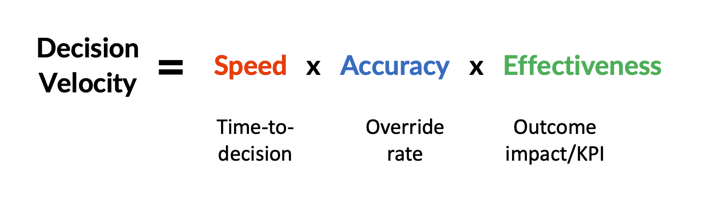
What do you think? Will enterprises favor vertically integrated stacks or open, federated ecosystems? Which domain (HR, supply chain, customer, finance) is your “first agentic battleground”? How will you measure decision velocity in your organization?

Drop your thoughts below 👇 — let’s debate where the next S-curve leads.

#OracleAIWorld #DecisionVelocity #CDAO #DataToDecision #AgenticAI #AIInfrastructure #Analytics #ConstellationResearch

New C-Suite Data to Decisions Tech Optimization Oracle Chief Information Officer Chief Analytics Officer Chief Data Officer Chief Technology Officer

7 takeaways on enterprise AI projects from Infosys, Wipro Q2 results

Infosys and Wipro executives said that enterprises are starting to operationalize artificial intelligence projects, scale agentic AI and build a new software stack as pilots move to production with industries such as banking and financial services leading the way.

Those were the highlights from a pair of earnings reports from the Indian services firms that landed within minutes of each other. Infosys reported second quarter earnings of $839 million on revenue of $5.08 billion, up 2.9% from a year ago. Wipro reported second quarter earnings of $368 million on revenue of $2.56 billion, up nearly 2% from a year ago.

Earnings results from services firms are a handy way to get a high level view of what's happening with AI efforts. Both Infosys and Wipro provided color on AI implementations, but the former delivered named references including ABN Amro, Mastercard, Telstra, HanesBrands and Agco Corp.

Here's a look at the takeaways from the Infosys and Wipro results.

Enterprise AI is being scaled by customers.

Infosys CEO Salil Parekh said that "client interactions show strong focus on deploying AI across the enterprise for growth and on cost efficiency programs." He said clients are leveraging Infosys' platforms for AI agents and AI overall.

Wipro CEO Srinivas Pallia said customers are prioritizing cost optimization, vendor consolidation, modernization and scaling AI agents.

On the delivery side, both companies said they are leveraging AI agents more.

AI-driven productivity pays the bills, but growth matters too.

Across industries, AI investments are justified based on cost savings, but customer experience and growth is becoming a bigger part of the ROI mix. Infosys CFO Jayesh Sanghrajka said:

"Clients are actively planning modernization and AI-driven initiatives with a clear focus on cost efficiency, enhanced customer experience and strategic transformation."

Pallia said Wipro's customers are "clearly looking for cost optimization."

The broader theme for both companies is that enterprises aren't into AI pilots as much as they are business outcomes.

Can you monetize trust?

Questions from analysts around agentic AI and automation frameworks often revolved around accuracy and hallucinations. What happens if an AI agent goes rogue?

Both companies highlighted guardrails, years of experience automating processes and industry knowhow. Wipro's Hari Shetty, chief strategist, said Wipro Intelligence is a layer for responsible AI guardrails built into the platform.

Meanwhile, Infosys Chief Delivery Officer Satish H.C. said: "Our Responsible AI office ensures clients have the defense and technical guardrails to address AI-related risks. We are among the first certified on ISO 42001:2023."

The questions were notable since they raised more queries. Can Indian IT giants monetize trust in AI? And are vendors on the hook if AI agents wind up hurting a client's business?

Banking, financial services and insurance lead AI spending.

The fact that financial companies lead the way on AI spending isn't surprising to anyone keeping tabs on earnings reports. The financial sector is one of the most mature industries for AI adoption. Both Infosys and Wipro noted that financial firms are scaling AI pilots.

Sanghrajka said:

"In financial services, clients are actively planning modernization and AI-driven initiatives with a clear focus on cost efficiency, enhance customer experience and strategic business transformation. We see strong momentum in mortgages, capital markets commercial banking and wealth management areas. Banks have spent significantly to build AI infrastructure. Many initiatives are progressing from proof of concepts to full-scale projects with notable traction in Agentic AI."

Healthcare transformation

Healthcare was cited as a strong vertical. Infosys cited strength in healthcare with clients deploying AI and automation. Wipro's Pallia cited a mega deal with a healthcare client. Palia noted:

  • Healthcare is going through structural changes and companies are navigating various policy changes.
  • Payers are trying to accelerate and transform contact centers.
  • Wipro healthcare clients are looking for real-time claim processing, efficiencies in pre-authorization and enhanced transparency.

Healthcare was Wipro's best vertical in the second quarter with revenue growth of 3.9%.

Manufacturing and energy mixed.

Infosys' Sanghrajka said manufacturing "continues to face trade and macro uncertainties, which is creating pressure on discretionary spend specifically in the automotive sector."

However, Sanghrajka said manufacturers are spending on the following:

  • Application and infrastructure rationalization.
  • Leveraging AI for automation.
  • Predictive maintenance.
  • Resolving supply chain bottlenecks.

As for energy, Sanghrajka said utilities are trying to leverage new technologies to meet data center demand. "Utility companies are looking for partners to meet the accelerating electricity demand, creating opportunities in areas like renewable integration, grid modernization, AI-driven optimization, et cetera," he said.

Industries are aiming AI spend at specific issues. Telecom, technology and communication are focused on using AI for customer experience, but cost optimization remains critical. Retailers are also mixed as they wrestle with tariffs and consumer demand.

The new AI stack

Other nuggets worth noting include:

  • Infosys and Wipro both said that big deals are signed due to vendor consolidation plans. Enterprises are looking for end-to-end services and horizontal plays.
  • That vendor consolidation is leading to large scale generative AI and agentic AI deployments.
  • Forward deployed engineers are being used for AI transformation deals.
  • Indian IT services firms are increasingly developing AI stacks for enterprises instead of deploying packaged applications. Infosys' Satish HC said:

"The opportunity with AI is that we are developing a new breed of services stack or software stack for our clients, which wasn't done before. This is a reimagining how we run business or how we even deliver services. The onus is on co-creation with our clients, which is why I think there is a sharper pivot to the leverage of forward-deployed engineers. As we move from POCs to enterprise scale adoption, we see that there will be a lot more need for forward-deployed engineers to work with our clients to drive this co-creation of the new breed of software stack."


Data to Decisions Chief Information Officer

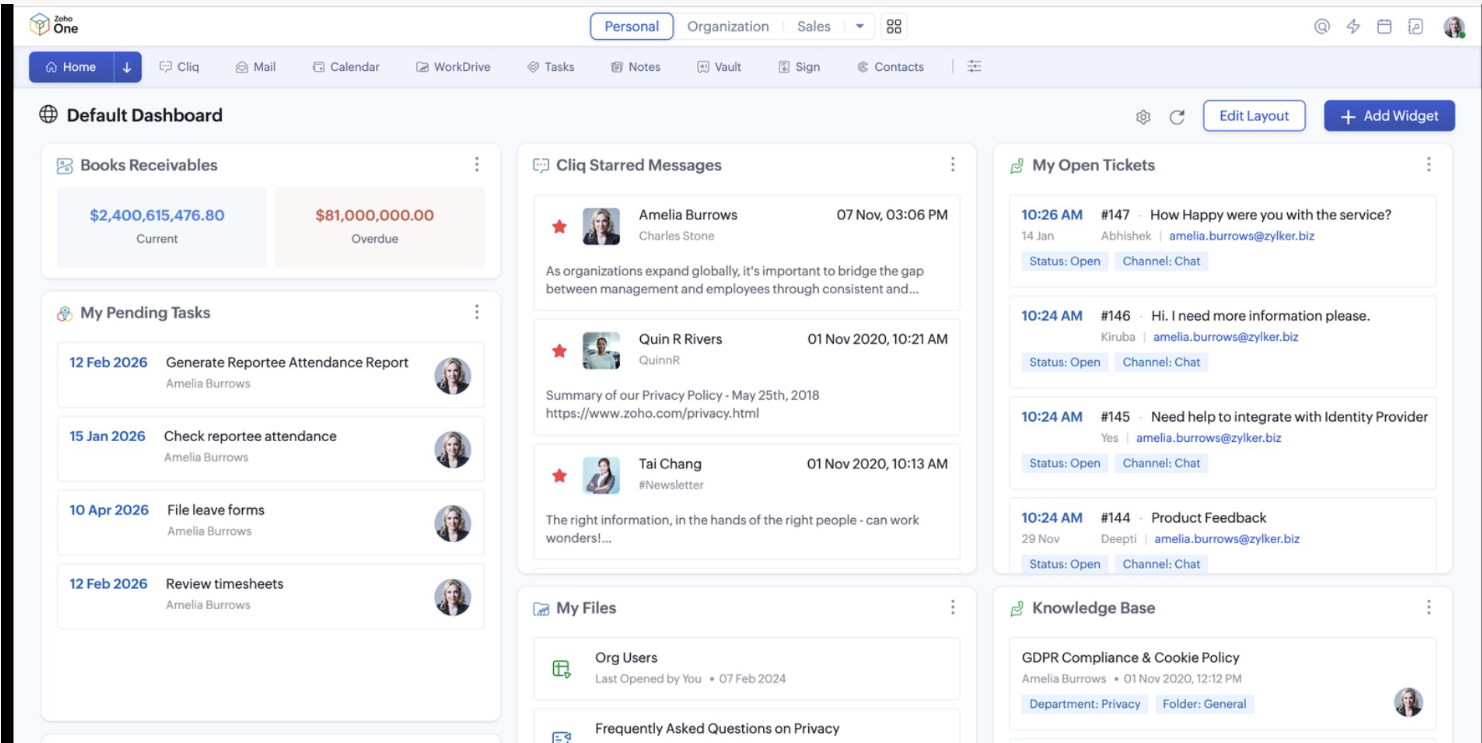
Zoho details Indian government migration, expands roster of AI agents

Zoho has moved 1.1 million Government of India users to Zoho Workplace in a move that highlights how the vendor, known for its disruptive pricing and reach with smaller enterprises, can scale.

In addition, Zoho, which has more than 130 million users, rolled out a series of AI agents for its collaboration, human resources and customer experience apps across its platform.

Regarding the India government migration, Zoho Chief Evangelist Raju Vegesna said during a briefing that the 1.1 million users is just the first installment of the migration. "There are a few other million users coming," said Vegesna. "It's an ongoing process."

Zoho said India's National Informatics Center (NIC) asked for proposals in 2023 to shift collaboration services to a dedicated, secure environment. Zoho was selected to manage and migrate official email and office suite services.

The custom rebranded version of Zoho Workspace will be available for government departments for email, files, documents and communications. India's government is specifically using Zoho Mail, WorkDrive, Meeting, Cliq, Mobile Device Management, Writer, Sheet and Show, OneAuth and Contacts.

Zoho's apps are hosted in a secure data center under NIC's control and includes a complete cybersecurity stack.

As for the agentic AI additions, Zoho said its latest AI agents will be available at no charge across Zoho Collaboration, Customer Experience and Human Resources.

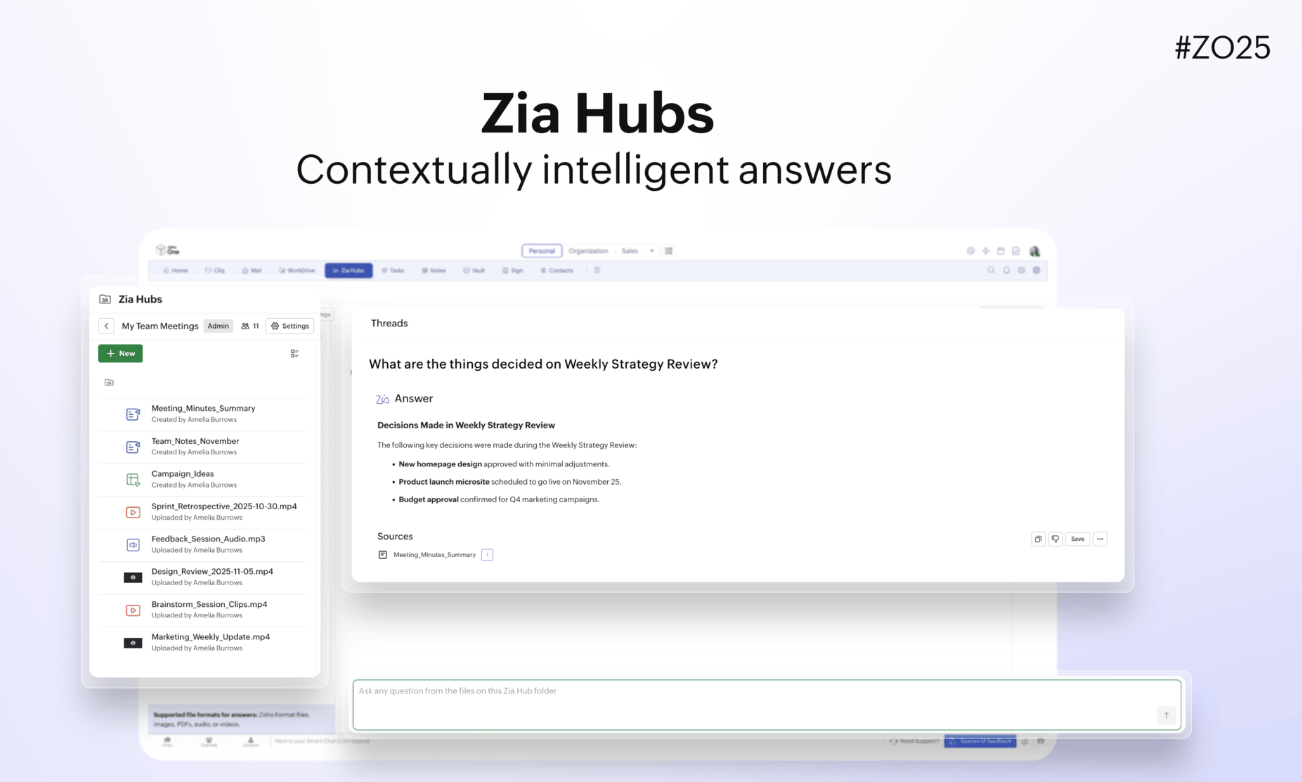
The AI agents from Zoho are a fast follow from the launch of Zia Hubs and Zia LLM, its proprietary B2B model.

Among the agents launching:

  • Lead Generation Agent works across Zoho Mail and CRM to go through unread messages, identify sales queries and converts them into a lead in Zoho CRM.
  • AI Base Creation enables customers to create a use case with a prompt. Zia will create a base with relevant tables, sample data and linked fields. The agent works within Zoho Tables.
  • Resolution Expert, which works within Zoho Desk, documents ticket resolutions for other agents to resolve similar issues.

  • Agreement Intelligence, which is used in Zoho Sign, generates drafts of contracts, agreements and documents.
  • HR agents in Zoho Recruit include Candidate Matches, Job Matches and AI-Assisted Assessment Generation.

Philip Edey, Business Analyst at Arctic Spas Inc., said in a briefing that Zoho's AI tools are enabling the company to scale and manage nearly 1,000 leads a week, up from 300 leads. Edey said:

"Integrating AI and agentic systems into our workflow is key for the next six months to the year and going forward. With 14 corporate stores and a huge network of dealers, we want to try to make these tools work for us and work for our staff to make it a better user experience. Zoho's AI driven suite can help us get there."

Vegesna said Zoho is rolling out agents and new Zia capabilities. The approach is "to open it up to a limited set of people, and as we gain feedback, refine it," said Vegesna, who noted cybersecurity is a key area.

Data to Decisions Future of Work Next-Generation Customer Experience Innovation & Product-led Growth Tech Optimization Digital Safety, Privacy & Cybersecurity New C-Suite Sales Marketing zoho ML Machine Learning LLMs Agentic AI Generative AI Robotics AI Analytics Automation Quantum Computing Cloud Digital Transformation Disruptive Technology Enterprise IT Enterprise Acceleration Enterprise Software Next Gen Apps IoT Blockchain Leadership VR Chief Information Officer Chief Executive Officer Chief Technology Officer Chief AI Officer Chief Data Officer Chief Analytics Officer Chief Information Security Officer Chief Product Officer

Salesforce, Google comingle Agentforce 360, Gemini models

Salesforce and Google expanded their existing partnership in a move that brings Google Gemini models to Agentforce 360, integrates Agentforce into Google Workspace for sales and IT service and brings Gemini Enterprise to Slack.

The addition of Gemini to Salesforce's Agentforce 360's Atlas Reasoning Engine goes along with support for models from OpenAI and Anthropic.

Google Cloud announced Gemini Enterprise ahead of Dreamforce and joint customers are likely to endorse the connections between Agentforce 360 as they stitch together AI agents.

Dreamforce 2025

Key parts of the Salesforce-Google expanded partnership include:

  • Gemini users can deploy AI agents in Salesforce for multistep enterprise workflows.
  • Salesforce and Google will expand capabilities in large action models, which automate processes, with fine-tuned Gemini models.
  • The AI agents on the respective platforms will be tied together via Model Context Protocol (MCP) and Agent2Agent (A2A).
  • Users can access Salesforce Customer 360 apps like Agentforce Sales and Agentforce Service from Google Workspace apps like Gmail and Meet.
  • Salesforce customers can access and view data and insights across the Gemini app and Workplace tools such as Sheets, Docs, Drive and Meet.
  • Agentforce IT Service will have integrations with Google products including Workspace, ChromeOS and Looker.
  • Gemini Enterprise will be integrated into Slack's Real-Time Search API. Gemini Enterprise users will be able to ground responses within the most current conversational data and files.
  • Gemini Enterprise agents can be used directly within Slack.
Data to Decisions Future of Work Next-Generation Customer Experience Innovation & Product-led Growth Tech Optimization Digital Safety, Privacy & Cybersecurity Google salesforce ML Machine Learning LLMs Agentic AI Generative AI Robotics AI Analytics Automation Quantum Computing Cloud Digital Transformation Disruptive Technology Enterprise IT Enterprise Acceleration Enterprise Software Next Gen Apps IoT Blockchain Leadership VR Chief Information Officer Chief Executive Officer Chief Technology Officer Chief AI Officer Chief Data Officer Chief Analytics Officer Chief Information Security Officer Chief Product Officer