Results

Google Gemini to power Apple Intelligence

Google Gemini to power Apple Intelligence

Apple Intelligence as well as a new Siri will be based on Google's Gemini models.

The news, initially reported in August by Bloomberg, is a big win for Google. Apple has a partnership with OpenAI and has embedded ChatGPT into Apple devices.

Here's the joint statement:

"Apple and Google have entered into a multi-year collaboration under which the next generation of Apple Foundation Models will be based on Google's Gemini models and cloud technology. These models will help power future Apple Intelligence features, including a more personalized Siri coming this year.

After careful evaluation, Apple determined that Google's Al technology provides the most capable foundation for Apple Foundation Models and is excited about the innovative new experiences it will unlock for Apple users. Apple Intelligence will continue to run on Apple devices and Private Cloud Compute, while maintaining Apple's industry-leading privacy standards."

A few takeaways:

  • Google Gemini gets the win over OpenAI, which increasingly wants to compete with Apple devices.
  • This partnership between Google and Apple was the result of a favorable antitrust ruling in September.
  • Apple's use of Google's Private Cloud Compute makes for a nice customer reference.
  • If Apple can get its AI game together--no matter what it is paying Google--without the capital expenditures others in tech have spent the company is going to be a 2026 winner.
Data to Decisions Next-Generation Customer Experience apple Google Chief Information Officer

Google launches agentic commerce tools, Universal Commerce Protocol, Gemini Enterprise for Customer Experience

Google launches agentic commerce tools, Universal Commerce Protocol, Gemini Enterprise for Customer Experience

Google is making its play to lead agentic AI commerce across its units as it combines AI Mode commerce features and agents with a new end-to-end commerce protocol and Google Cloud's Gemini Enterprise for Customer Experience.

Google launched Universal Commerce Protocol (UCP), a standard for agentic AI commerce, checkout directly through AI mode along with direct offers and interactions to connect brands and shoppers. Google Cloud also unveiled Gemini Enterprise for Customer Experience, a suite that includes a shopping agent, customer experience agent studio, Vertex AI powered search and food ordering agent.

The announcements, timed for the National Retail Federations 2026 conference, add up to Google providing various tools to enable agentic commerce in multiple forms with a unified platform.

In a nutshell, Google is looking to offer tools to enable shopping across the customer journey. Carrie Tharp, VP of Global Solutions and Industries at Google Cloud, said AI is moving from a passive tool to one that's more active and autonomous.

"Agents can execute complex, multi-step, prescriptive actions across every consumer and operational touch point, and every retailer now has the opportunity to bring their value proposition to life in fundamentally new ways through these agentic experiences," said Tharp. "Most retailers are still in the early days of evolving discovery and the modern customer journey is very fragmented with shoppers jumping between apps, search and physical aisles because legacy systems don't talk to each other. This is simple. AI isn't retailers' competition. It should be their superpower. We believe AI must serve retailers and shoppers alike."

Although Google faces plenty of commerce competition from OpenAI, Microsoft, Amazon and a bevy of others, the company does occupy a unique position given that it touches nearly every part of the retail budget from marketing and demand to back-end functions via Google Cloud. Google CEO Sundar Pichai was a headliner at NRF 2026.

Here's a breakdown of what Google announced at NRF 2026.

Universal Commerce Protocol (UCP)

UCP is designed to be an open standards for agentic commerce that works across the entire shopping journey from discovery and buying to post purchase support.

Vidhya Srinivasan, VP and GM of Ads and Commerce at Google, said UCP "sits between agentic experiences with consumer services on one hand and the business back-end on the other." She added that UCP is built to walk across industries and is compatible with Model Context Protocol, Agent2Agent and Agentic Payments Protocol.

UCP is supported by 20 retail and commerce players including Shopify, Etsy, Wayfair, Target, Best Buy, PayPal, Visa, Stripe and American Express.
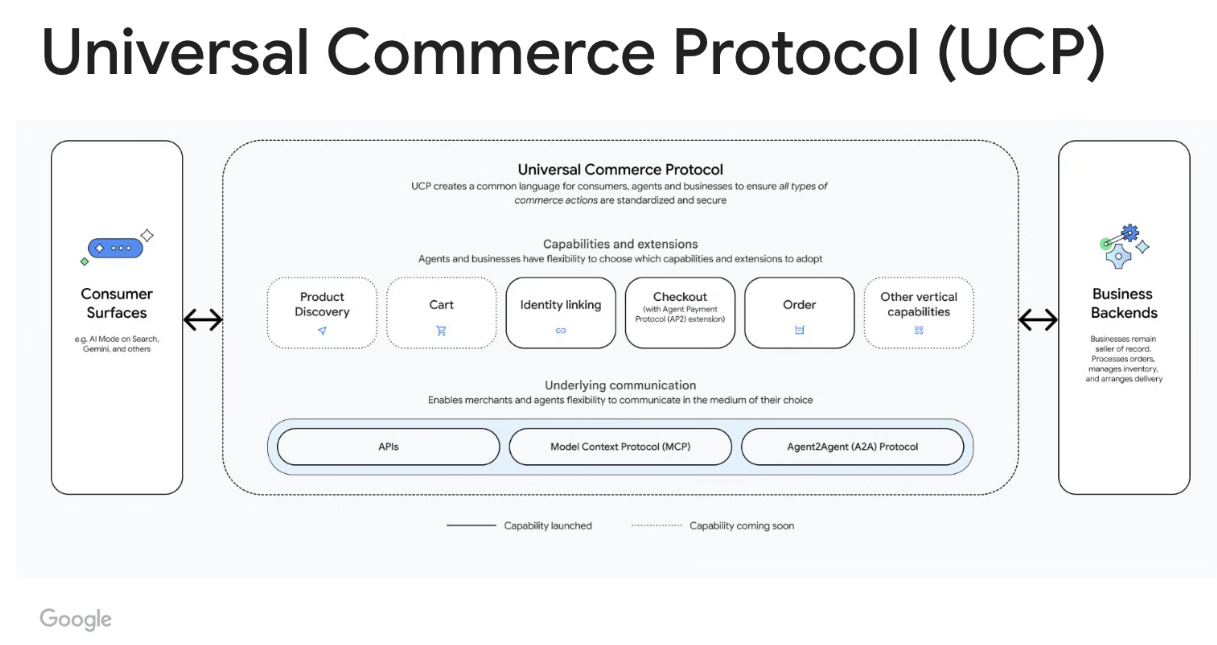
Srinivasan said UCP will power a new checkout feature in Google's AI Mode and in search, but the company will add more partners and capabilities including discovering related products and applying loyalty rewards.

Shopify's Vanessa Lee, VP of Product, said UCP is designed to address more seamless checkouts.

"Checkouts are simple from a consumer perspective and we put a lot of energy and work as retailers and platforms to make that checkout experience seamless," she said. "But one of the things that we did with UCP was we wanted to acknowledge that there's actually a lot of work that goes on behind the scenes to make that checkout as seamless as possible. One thing that we learned over the last two decades was that every single checkout is unique, and we want agentic shopping to not just be for a subset of checkouts. We wanted it to be for ubiquitous across all of shopping."

UCP sets up a series of new agentic shopping features from Google.

Business Agent, Direct Offers

Google is launching Brand Agent as a headliner of a set of agentic commerce features and tools.

The company launched Business Agent, which chats and answers questions about retailers within a search. "One way to think about it is think it's think of it as a virtual sales associate that can just answer product questions in the brand's voice during those critical shopping moments, so that the retailers can just help drive sales," said Srinivasan.

Business Agent is live with anchor retailers including Lowe's, Poshmark and Reebok. In the months ahead, retailers will be able to train agents with their own data and insights and enable direct purchases in AI Mode.

Google also announced multiple new attributes in its Merchant Center to improve discovery in AI Mode and Gemini. "These new attributes complement retailers' existing data feeds, and they go beyond the traditional keywords to include things like answers to common product questions, things like compatible accessories or even substitutes. We'll be rolling these out to a set a group of retailers soon, with plans to expand in the coming months," said Srinivasan.

The company is also launching a new ads pilot called Direct Offers, which moves beyond traditional ads and targets people shopping in AI Mode. Free shipping, bundles and special deals would be included in Direct Offers. Shopify merchants, Rugs USA, e.l.f. Cosmetics, Petco and Samsonite are piloting Direct Offers.

Checkout in AI Mode is available through Google Pay.

Google Cloud Gemini Enterprise for Customer Experience

The company said the company's launch of Google Cloud Gemini Enterprise for Customer Experience is designed to give retailers the ability to build agents for retailers that maintain brand voice at every interaction across channels.

"These agents are not just for answering questions. They can inform the customer about inventory availability, guide them through order processing, suggest products they love, and handle a return seamlessly. Every touch point becomes an opportunity to delight and drive more business," said Darshan Kantak, VP of Product, Applied AI at Google Cloud.

The shopping agents in Gemini Enterprise for Customer Experience can carry out complex reasoning, multimodal interactions and execute actions. Papa John's Kevin Vasconi, Chief Digital and Technology Officer, said 85% of the company's orders are digital and the goal is to remove friction from the purchase.

Vasconi quipped that buying pizza isn't considered to be stressful unless you're ordering for your child's travel soccer team and navigating preferences and dietary restrictions.

"We're always thinking about how we turn a transaction into a personal experience. Not everybody has a personal shopper and we think this is a beautiful application of multimodal AI. We're trying to figure out how do we take the friction out of the experience. As good as it is, there's still a lot of friction in the experience," said Vasconi.

Google Cloud Gemini Enterprise for Customer Experience follows an emerging Google Cloud playbook as Gemini Enterprise is being rolled out to multiple verticals.

"Think of it as an ecosystem of smart, interconnected agents that are orchestrated to understand reason and to take action. It enables businesses to drive that high touch premium service from initial product discovery to post purchase resolution, while maintaining continuous context across each of the touch points," said Kantak. "When a retailer uses this technology, the AI experience belongs to them. It's built for their brand in their persona."

Gemini Enterprise for Customer Experience is also multimodal to handle images, video and voice as well as text. Kantak said Kroger and Lowe's are launch customers.

Kroger's Yael Cosset, SVP and Chief Digital Officer, said the grocer has a rich data set that can leverage agentic AI to tailor offers, make recommendation and give customers time back. "Consumers want to eat more at home, but have lack of time for the complexity and how overwhelming it can be to plan and ultimately shop for their groceries," he said. "The shopping companion Google is going to allow us to develop and roll out features that will alleviate that complexity. Agentic commerce is going to be a huge unlock to accelerate that emotional connection with the customer."

The company also launched a Customer Experience Agent Studio where customers can upload transcripts, products and product information and an agent builds another one and evaluates quality. Monitoring is also built in.

Kantak added that Google Cloud is also looking to connect human agents and AI agents with two new customer service tools--AI Coach and AI Trainer. AI Coach provides real-time guidance to human reps and AI Trainer speeds up onboarding.

Other additions include:

  • Discovery Engine, which uncovers service trends with natural language queries.
  • Quality AI, which is a system that understands every conversation happening, creates insights and scorecards.
  • Food Agent, which is part of the Google Cloud Gemini Enterprise for Customer Experience suite, and can enable voice ordering across kiosks, drive throughs and car dashboards. The Food Agent will also have the ability to upsell and automate processes. Papa John's is a launch customer.
Data to Decisions Matrix Commerce Next-Generation Customer Experience Innovation & Product-led Growth Marketing Transformation Revenue & Growth Effectiveness Future of Work Tech Optimization Digital Safety, Privacy & Cybersecurity Google B2B B2C CX Customer Experience EX Employee Experience business Marketing eCommerce Supply Chain Growth Cloud Digital Transformation Disruptive Technology Enterprise IT Enterprise Acceleration Enterprise Software Next Gen Apps IoT Blockchain CRM ERP Leadership finance Social Customer Service Content Management Collaboration M&A Enterprise Service AI Analytics Automation Machine Learning Generative AI ML LLMs Agentic AI Robotics Quantum Computing VR Chief Information Officer Chief Revenue Officer Chief Technology Officer Chief Customer Officer Chief Data Officer Chief Digital Officer Chief Executive Officer Chief Financial Officer Chief Growth Officer Chief Marketing Officer Chief Product Officer Chief Supply Chain Officer Chief AI Officer Chief Analytics Officer Chief Information Security Officer

Why enterprise AI leaders need to bank on open-source LLMs

Why enterprise AI leaders need to bank on open-source LLMs

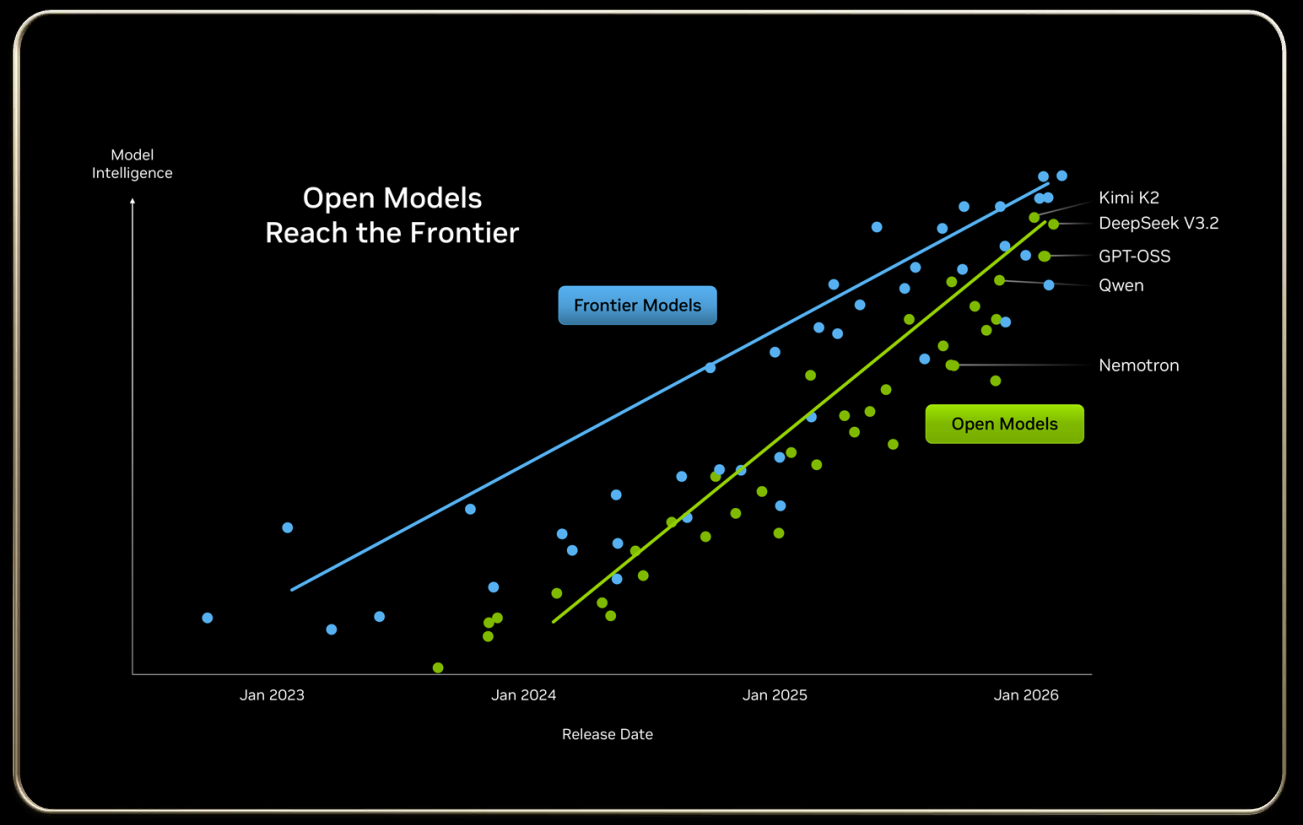
Nvidia, which is quickly becoming the champion of AI open-source models in the US, argues that open AI models are roughly six months behind more expensive proprietary frontier models. If that's the case, CxOs should base nearly all of their AI plans around open-source models.

In Nvidia CEO Jensen Huang's CES 2026 keynote, there were a lot of talk about agentic AI systems, physical AI and robotics, but his open-source comments stuck with me. He said the following (emphasis added):

"We now know that AI is going to proliferate everywhere with open-source and open innovation across every single company and every industry around the world is activated at the same time. We have open model systems all over the world of all different kinds and they have also reached the frontier. Open-source models are solidly six months behind the frontier models, but these models are getting smarter and smarter."

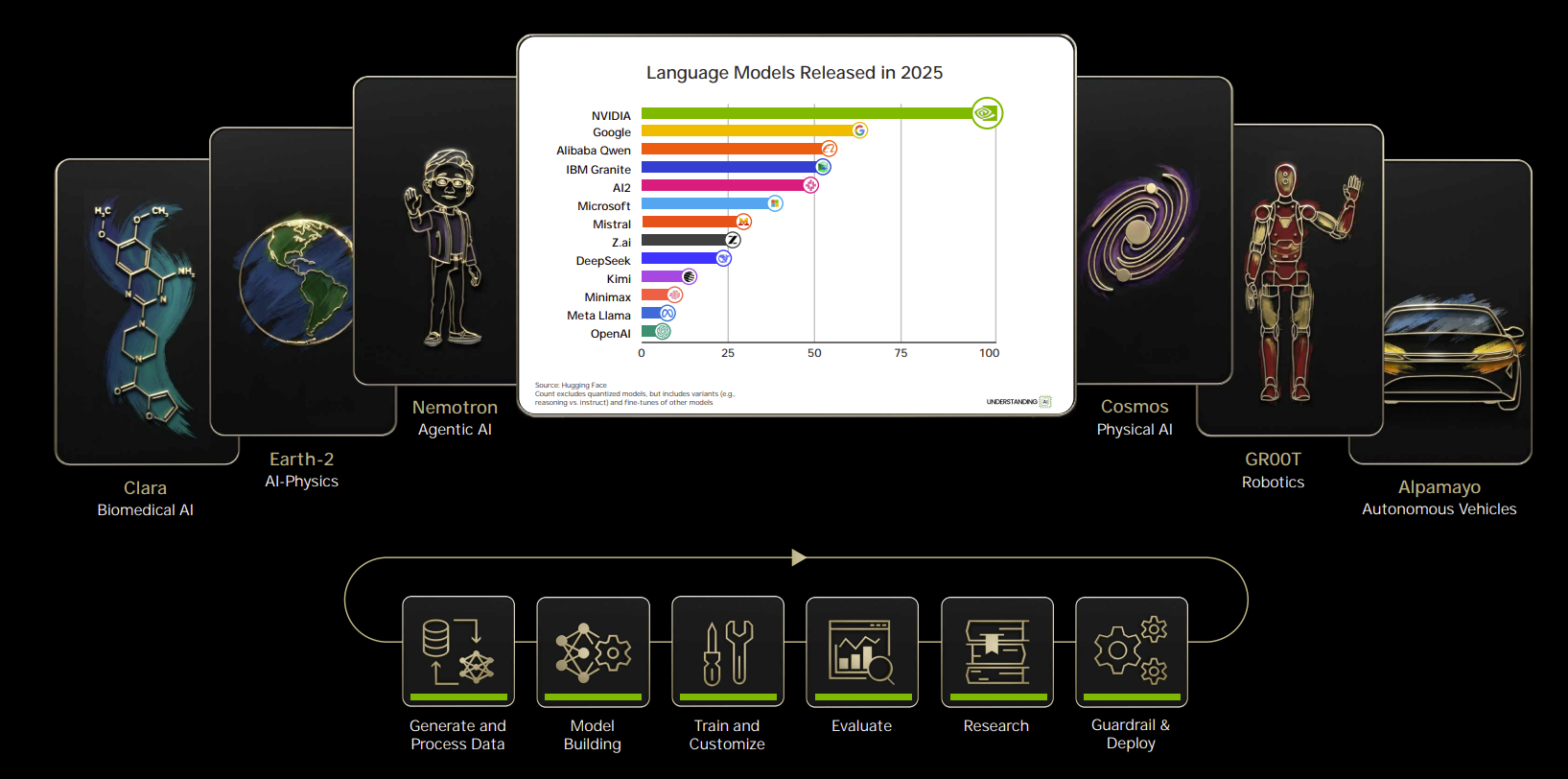
Nvidia backed up its open model case with releases of new Nvidia Nemotron models (speech, RAG, Safety) for agentic AI, Cosmos models for physical AI, Alpamayo for autonomous vehicles, GR00T for robotics and Clara for biomedical.

The number of companies using Nvidia's open-source models are very familiar including ServiceNow, Cadence, CrowdStrike, Caterpillar and a bevy of others. "Not only do we open,source the models, but we also open source the data we used to train those models. Only in that way can you truly trust how those models came to be," Huang said. “That's something Meta never did with its Llama model.”

Huang said 80% of startups are building on open models, and that a quarter of OpenRouter tokens are generated by open models.

With the gap between open-source AI models and proprietary models closing why would an enterprise bet on a frontier model that will only have a lead of 6 months?

What's in it for Huang? Nvidia will obviously have the GPU and AI stack for the training and inference. Nvidia's software stack also dominates for AI. Simply put, Nvidia doesn't need a model for its business model. In other words, commodity LLMs are fine for most use cases--including yours.

Good enough and cheap enough

Huang's comments aren't that surprising given that enterprises are tweaking commodity models with their proprietary data. One of the bigger announcements out of AWS re:Invent revolved around easy customization of its Nova models. Nvidia’s software and models are being integrated into Palantir, ServiceNow and Siemens. ServiceNow used Nvidia Nemotron for its Apriel Nemotron 15B reasoning model for lower cost and latency agentic AI. Siemens expanded its Nvidia partnership that includes integration of Nemotron models.

“We built on Nvidia Nemotron for the next generation of our platform, which enables customers to do extraordinary things with large language model power at a fraction of the big model cost, zero latency, total security, no hallucination and a cost-effective ROI,” said ServiceNow CEO Bill McDermott, on the company’s third quarter earnings call.

Although software vendors are leveraging Nvidia’s Nemotron models, making most CxOs users by default, there are signs enterprises are going Nvidia and open models. Caterpillar outlined its AI plans with a dose of Nvidia Nemotron and Qwen3 models as did PepsiCo with digital twin efforts via Siemens. Hyundai said it was leveraging Nvidia Nemotron models last year.

Salesforce CEO Marc Benioff also noted that LLMs are commoditizing. He said in December: "We use all of the large language models. They're all great. We love all of them. We love all of our children, but they're also all just commodities, and we can have the choice of choosing whatever one we want, whether it's OpenAI or Gemini or Anthropic or there's other open-source ones. They're all very good at this point. So, we can swap them in and out. The lowest cost one is the best one for us, making us basically the top user of these foundation models."

Benioff’s mantra applies to enterprises too: The lower cost one is the best one.

What's in it for you?

I'd argue that there will be few if any enterprise use cases that will require a bleeding edge LLM. And if you can wait six months for an open-source option to catch up (likely from Nvidia at this point) why would you blow your cost curve on a high-end model?

You can use a series of open models to form an agentic system. The whole is greater than the parts and the parts need to be cheaper.

You'll obviously have to evaluate open-source options, commoditized LLMs and cheaper models and gauge ease of customizing with your data, but there should be a high bar to go proprietary where you just might be locked in.

It's unclear what this will mean for the likes of OpenAI, Anthropic or Google and Gemini, but that's not your problem. Your job is to drive AI returns and that'll increasingly mean open-source and commoditized models.

Data to Decisions Future of Work Next-Generation Customer Experience Innovation & Product-led Growth Tech Optimization nvidia Chief Executive Officer Chief Information Officer Chief Technology Officer

Leadership in the Age of AI-Driven Cyber Threats | DisrupTV Ep. 423

Leadership in the Age of AI-Driven Cyber Threats | DisrupTV Ep. 423

Leadership in the Age of AI-Driven Cyber Threats

What Boards, CEOs, and General Counsel Must Do Now

As organizations head into 2026, leadership is being tested by a perfect storm of AI acceleration, escalating cyber threats, geopolitical uncertainty, and regulatory complexity. In DisrupTV Episode 423, hosts R "Ray" Wang and Vala Afshar sat down with Ken Banta, Andre Pienaar, and Dr. David Bray to unpack what modern leaders—and boards—must do to stay ahead in an era of converged risk.

The message was clear: cybersecurity, AI strategy, and leadership capability can no longer be treated as separate conversations. They are deeply intertwined—and failing to address them holistically puts enterprises, governments, and societies at risk.

Why Cybersecurity and AI Budgets Must Rise Together

Andre Pienaar, CEO and founder of C5 Capital, opened with a stark reality: cyberattacks are becoming more sophisticated, faster, and increasingly AI-driven. Threat actors are no longer operating with manual tools; they are deploying automation, machine learning, and increasingly autonomous systems to exploit vulnerabilities at scale.

For boards and executives, this means a fundamental shift in investment strategy.

  • You cannot increase AI adoption without simultaneously increasing cybersecurity investment.

Andre emphasized that AI expands the attack surface just as much as it enhances productivity. Organizations deploying AI without upgrading security architectures are effectively widening the door for adversaries.

Key priorities include:

  • AI-enabled threat detection and response
  • Continuous monitoring of anomalous behavior
  • Security-by-design in all AI initiatives
  • Preparing now for post-quantum cryptography

AI-Augmented Defense: Humans and Machines, Together

Dr. David Bray, Distinguished Chair at the Stimson Center and CEO of LDA Ventures, reinforced that AI alone is not the solution—but neither are humans operating without it.

Cybersecurity success depends on augmented intelligence, where:

  • AI detects patterns of life and anomalies at machine speed
  • Humans provide context, judgment, and ethical oversight
  • Systems continuously learn from both human and machine input

David highlighted a sobering trend: ransom demands are increasing sharply, and AI-enabled attacks are lowering the cost and effort for bad actors. Defenders must respond with equal sophistication.

  • The future of cybersecurity is not human vs. machine—it’s human with machine.

Quantum Computing, Geopolitics, and the New Security Landscape

The discussion also explored the geopolitical implications of AI and quantum computing. Andre and David both stressed that quantum breakthroughs will eventually render today’s encryption obsolete, making post-quantum cryptography a near-term planning requirement—not a distant concern.

At the same time, AI policy and regulation are fragmenting globally. David argued that:

  • Cities and governments must collaborate to harmonize AI governance
  • Organizations need to compartmentalize AI experimentation while maintaining oversight
  • Leaders must understand which geopolitical “technology matrix” they are operating within

AI strategy is now inseparable from national security, economic competitiveness, and global alignment.

Leadership Under Converged Uncertainty

Ken Banta brought the conversation back to leadership fundamentals—at a time when uncertainty is no longer episodic, but constant.

He emphasized that self-awareness is now a core leadership capability, not a soft skill. Leaders must understand:

  • How their words and actions are interpreted
  • When to slow down versus accelerate decisions
  • How to build trust through consistency and transparency

Ken shared a powerful reminder: people don’t just follow strategy—they follow signals. In high-risk environments, leaders set the tone for ethical behavior, risk tolerance, and psychological safety.

The Critical Role of General Counsel in AI and Cyber Risk

One of the most compelling insights centered on the evolving role of the General Counsel (GC). Ken described GCs as:

  • The conscience of the organization
  • Key advisors on AI governance and cyber risk
  • Central to decision-making under uncertainty

As AI systems influence decisions at scale, GCs are increasingly responsible for ensuring:

  • Regulatory compliance
  • Ethical use of data and algorithms
  • Alignment between risk, innovation, and corporate values

Leadership today is no longer just about vision—it’s about judgment under pressure.

From Awareness to Action: What Leaders Should Do Next

A recurring theme throughout the episode was urgency. Talking about AI and cybersecurity is no longer enough—leaders must operationalize governance, preparedness, and accountability.

One proposed next step:

  • Create an AI checklist for boards covering cybersecurity, data handling, governance, and regulatory compliance.

This kind of structured approach helps boards move from abstract risk discussions to concrete oversight.

Final Thoughts: Leadership Is the Ultimate Security Layer

DisrupTV Episode 423 made one thing abundantly clear: technology does not fail in isolation—leadership does.

In an era defined by AI-driven threats, quantum disruption, and geopolitical tension, the most resilient organizations will be led by executives who:

  • Invest proactively in AI and cybersecurity together
  • Embrace human–machine collaboration
  • Build trust through self-awareness and transparency
  • Empower General Counsel and risk leaders as strategic partners

As Ken Banta concluded, leadership itself is the ultimate control system. And in a world of converged uncertainty, how leaders think, decide, and act will determine whether organizations merely survive—or truly endure.

Related Episodes

If you found Episode 423 valuable, here are a few others that align in theme or extend similar conversations:


Tech Optimization Digital Safety, Privacy & Cybersecurity Chief Executive Officer Chief Information Security Officer Chief Privacy Officer Chief Technology Officer On DisrupTV <iframe width="560" height="315" src="https://www.youtube.com/embed/d2Fv4btAA1w?si=JlVRvA5FdYVzidbs" title="YouTube video player" frameborder="0" allow="accelerometer; autoplay; clipboard-write; encrypted-media; gyroscope; picture-in-picture; web-share" referrerpolicy="strict-origin-when-cross-origin" allowfullscreen></iframe>

NRF 2026: Agentic AI commerce, frontline workers, customer experiences

NRF 2026: Agentic AI commerce, frontline workers, customer experiences

Retailers are busy trying to figure out agentic AI driven commerce and keep frontline workers engaged so they can drive customer experience.

Those are the key themes from the National Retail Federation Big Show in New York City. Like previous years, the show features a parade of tech vendors pitching retailers on how to leverage the latest innovation. In 2026, that innovation is all about shopping agents, AI and employee experience.

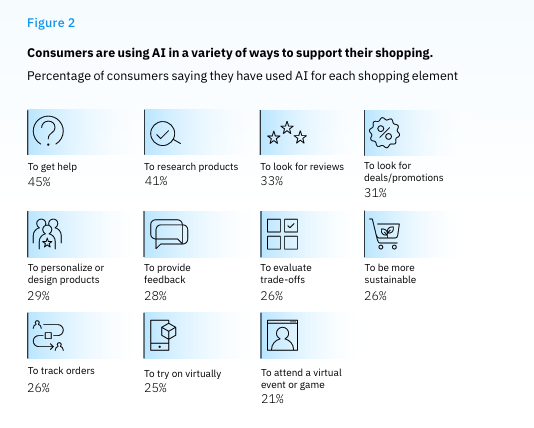
Tech vendors, consumers and retailers are aligned on the idea that AI will drive buying journeys and experiences. According to IBM's Institute for Business Value in collaboration with the National Retail Federation (NRF), 72% of surveyed customers still shop in stores and 45% turn to AI for help.

Meanwhile, there's a renewed focus on frontline workers from the likes of Workday and UKG.

Here's a look at the news to know.

Agentic AI

Microsoft outlined its Copilot Checkout, which is designed to convert conversations into sales, and Brand Agents, which provide guidance to shoppers on a retailer's site.

The Microsoft effort is aimed at a shopping use case where a consumer is looking to compare products, make decisions and purchase within one window. Google, Microsoft, OpenAI and a bevy of others including Shopify and Paypal are looking to do something similar.

Ultimately, retailers will be embedded into the primary chat interfaces. At NRF, commerce players such as Etsy were supporting multiple efforts.

Microsoft's Brand Agents are designed to bring an in-store experience from an associate into a chat interface at this point. Brand Agents offer guidance but can also upsell and cross-sell. Brand Agents are built within Microsoft Clarity, which is an analytics tool to help merchants understand shopper behavior.

Accenture said it invested in Profitmind, which offers an agentic AI platform to help retailers automate decisions for pricing, inventory and platform. The two companies also inked a strategic pact.

Profitmind uses a network of AI agents to surface recommendations for pricing, inventory and promotions.

Manhattan Associates rolled out updates to its Manhattan Active Omni platform including three new AI agents. The agents include:

  • Store Associate Agent.
  • Contact Center Agent.
  • OMS Configuration Agent.

Manhattan also rolled out its Manhattan Active Point of Sale, which features a display where customers can view their carts in real time, enter loyalty information and get receipts.

Blue Yonder outlined updated AI agents for merchandise and assortment planning, allocation and replenishment and inventory operations.

More retail:

Frontline worker experiences

Workday announced a series of hospitality and retail customer wins including Alterra Mountain Company, Brookshire Grocery, Hungry Jack, and Zaxby's. The company also said that it integrated recently acquired Paradox and made it available through Workday's platform.

Paradox focuses on frontline worker engagement and connects candidates and employers.

Workday also outlined Workday Frontline Agent, which handles shift swaps and hour limits. The Workday Frontline Agent will be available in the Spring of 2026.

UKG demonstrated its Workforce Operating Platform and features such as UKG Rapid Hire, which compresses the time to hire, Dynamic Labor Management to address staffing gaps, UKG Frontline Worker Network and UKG Wallet to pay employees on demand.

The company also said Jetro Restaurant Depot saved $2 million in sourcing and onboarding costs with UKG Rapid Hire.

Customer experience

Technically, AI shopping agents impact customer experience, but here are a few notable in-store efforts. 

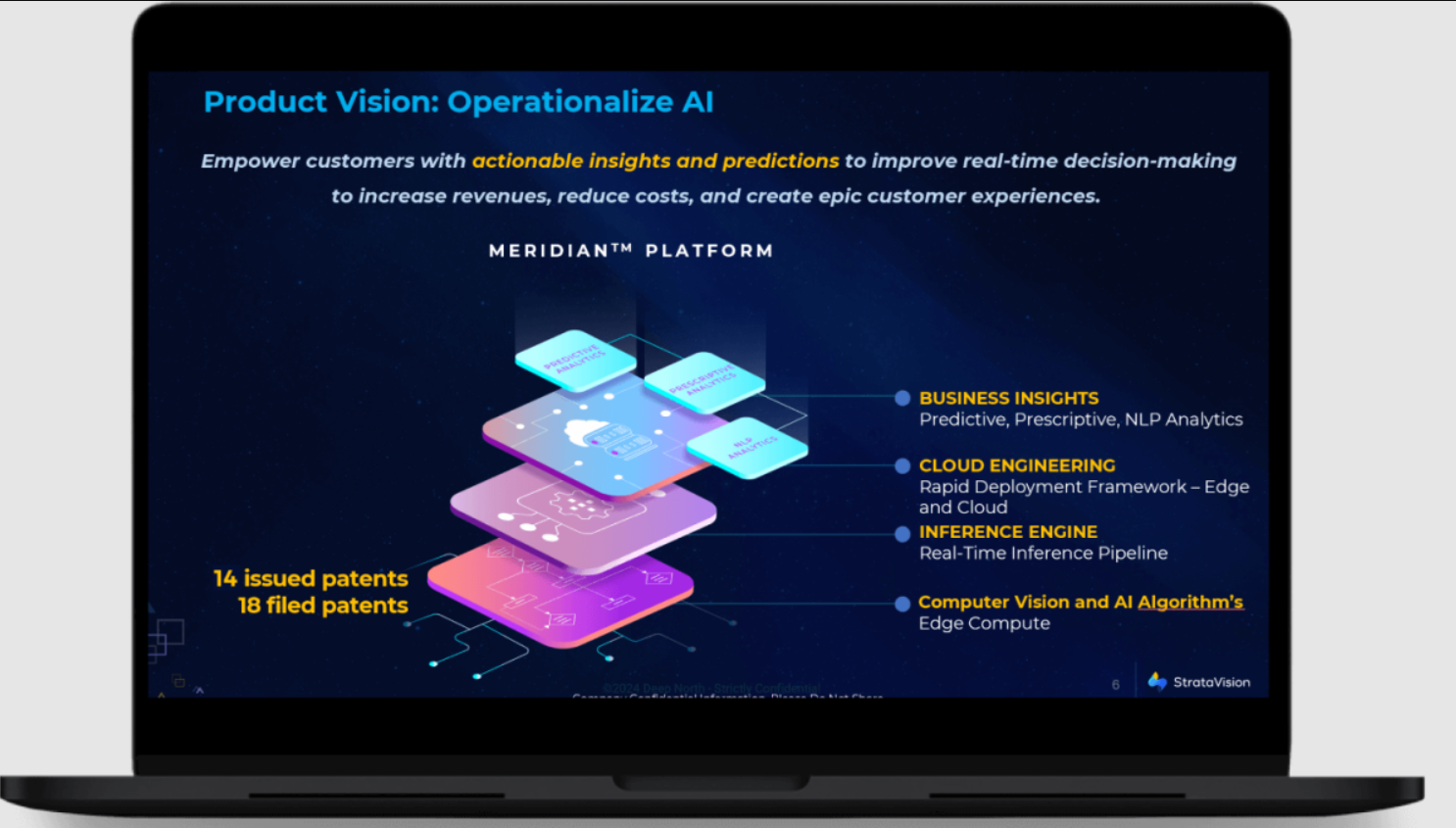
Stratavision, a computer vision company, launched its fitting room intelligence platform to help retailers optimize fitting room utilization.

The fitting room intelligence tools are tied into Consumer IQ, which analyzes customer paths and behaviors, aligns staffing to demand, increases engagement and lowers costs.

Denso is showcasing its Indoor Positioning System (IPS) to highlight how its automotive grade micro location technology can be used in retailing. Denso's IPS system is integrated with EPAM software to highlight retail media activations and personalized interactions and wayfinding.

Data to Decisions Matrix Commerce Next-Generation Customer Experience Innovation & Product-led Growth Future of Work Tech Optimization Digital Safety, Privacy & Cybersecurity B2B B2C CX Customer Experience EX Employee Experience business Marketing eCommerce Supply Chain Growth Cloud Digital Transformation Disruptive Technology Enterprise IT Enterprise Acceleration Enterprise Software Next Gen Apps IoT Blockchain CRM ERP Leadership finance Social Customer Service Content Management Collaboration M&A Enterprise Service AI Analytics Automation Machine Learning Generative AI ML LLMs Agentic AI Robotics Quantum Computing VR Chief Information Officer Chief Customer Officer Chief Data Officer Chief Digital Officer Chief Executive Officer Chief Financial Officer Chief Growth Officer Chief Marketing Officer Chief Product Officer Chief Revenue Officer Chief Technology Officer Chief Supply Chain Officer Chief AI Officer Chief Analytics Officer Chief Information Security Officer

OpenAI doubles down on health, targets providers and patients

OpenAI doubles down on health, targets providers and patients

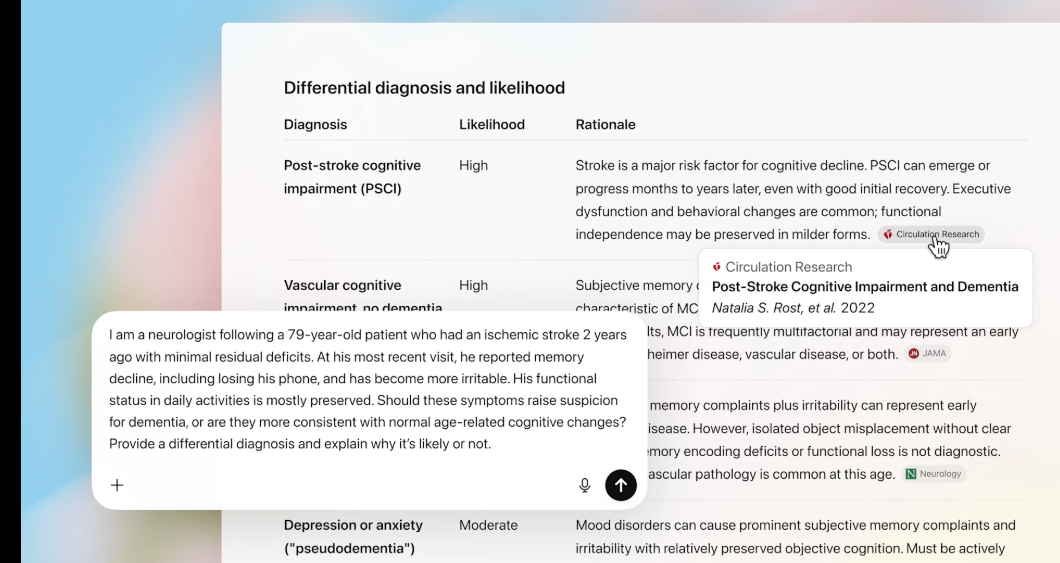
OpenAI is planning on being a healthcare industry AI player with the launch of OpenAI for Healthcare, a HIPAA-compliant version of ChatGPT for clinicians, just days after debuting ChatGPT Health for consumers.

The rollout of OpenAI for Healthcare makes it clear the company is betting that health is going to be a big vertical. OpenAI is looking to make ChatGPT a key tool on both sides of the healthcare equation. Anthropic has also launched Claude for Life Sciences and has embedded its models into healthcare workflows. Both model providers will compete and partner with healthcare efforts from multiple software and cloud vendors.

ChatGPT for Healthcare is rolling out with some major customers. In a blog post, OpenAI said AdventHealth, Baylor Scott & White Health, Boston Children’s Hospital, Cedars-Sinai Medical Center, HCA Healthcare, Memorial Sloan Kettering Cancer Center, Stanford Medicine Children’s Health and University of California, San Francisco (UCSF) will use ChatGPT for Healthcare.

OpenAI said healthcare providers have been tailoring OpenAI API to be HIPAA compliant. ChatGPT for Healthcare can help with serving up medical knowledge, admin work and personalize care. OpenAI provided sample prompts and use cases for ChatGPT for Healthcare.

ChatGPT for Healthcare includes:

  • GPT-5 models specifically built for healthcare and tested by physicians and benchmarked.
  • Citations for evidence retrieval to check sources.
  • Integrations with enterprise tools so healthcare providers align ChatGPT for Healthcare with policies, document repositories and best practices.
  • Templates for workflow automation for patient instructions, discharge summaries, clinical letters and authorizations.
  • Governance and access management based on roles.
  • HIPAA compliance. Content shared with ChatGPT for Healthcare isn't used to train models.

ChatGPT for Healthcare appears to have a better footing in the enterprise with big name customers already in the fold. It remains to be seen how ChatGPT Health fares with consumers.

Launched earlier this week to a small number of customers, ChatGPT Health is a dedicated experience where consumers can share medical records, data and wellness information. ChatGPT Health promises to keep conversations encrypted and isolated.

ChatGPT Health also integrates with Apple Health, Function and MyFitnessPal and will likely expand its roster of health apps in the future. OpenAI said that ChatGPT Health conversations won't flow over to regular chats. Ultimately, OpenAI sees ChatGPT Health as an advisor to prep consumers for doctor visits, improve nutrition and craft exercise programs. The service will even digest your lab results and point out what's important.

What could go wrong? Given that health is a primary use case for ChatGPT already, I didn't expect much wariness from health savvy consumers in my circle. Instead, the answers were unanimous with some form of "hell no." Biggest concern was sharing your data with OpenAI. Now this informal poll isn't scientific, but there will be some set of consumers that won't trust OpenAI's dedicated health service without some HIPAA-like promise.

Either way, ChatGPT for Healthcare may take care of patient usage. It'll just be a question of whether patients use OpenAI directly or indirectly.

Data to Decisions Future of Work Next-Generation Customer Experience Innovation & Product-led Growth Tech Optimization Digital Safety, Privacy & Cybersecurity openai ML Machine Learning LLMs Agentic AI Generative AI Robotics AI Analytics Automation Quantum Computing Cloud Digital Transformation Disruptive Technology Enterprise IT Enterprise Acceleration Enterprise Software Next Gen Apps IoT Blockchain Leadership VR AR Chief Information Officer Chief Executive Officer Chief Technology Officer Chief AI Officer Chief Data Officer Chief Analytics Officer Chief Information Security Officer Chief Product Officer

At CES 2026, humanoid robots are everywhere, but don't expect ROI to follow

At CES 2026, humanoid robots are everywhere, but don't expect ROI to follow

At CES 2025, you really couldn’t avoid the humanoid hype. Humanoid robots were everywhere.

Nvidia CEO Jensen Huang shared the stage with a bunch of robots.

Huang said AI and robotics will go together and will advance the industry. He noted that there will be more than humanoid robots. “The next era for robotic systems is going to be robots, and these robots are going to come in all kinds of different sizes,” he said.

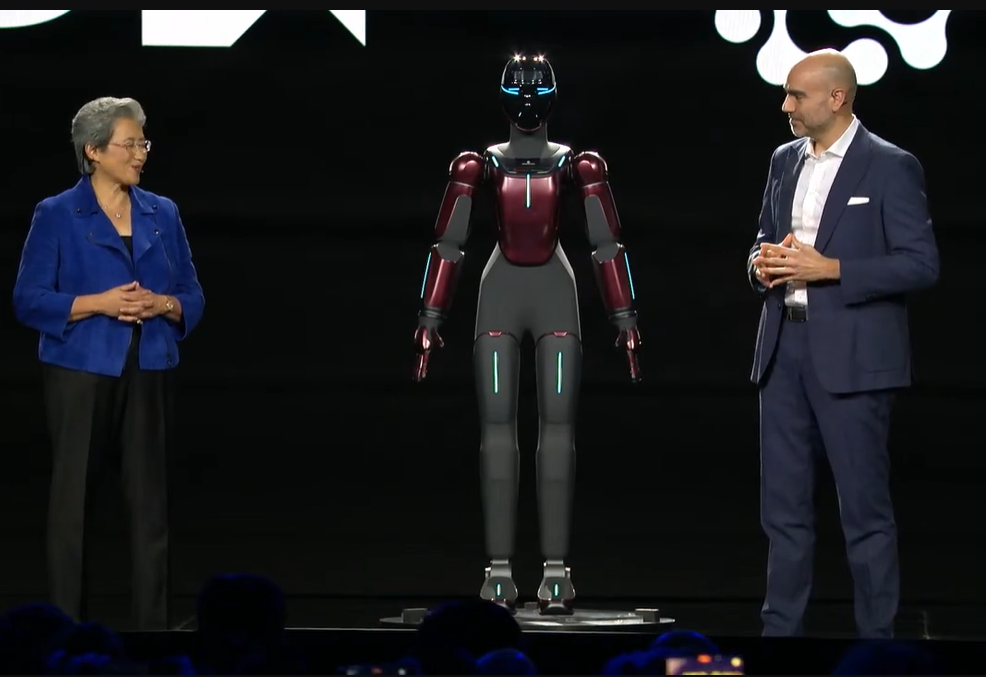
AMD CEO Lisa Su brought on Generative Bionics CEO Daniele Pucci. Generative Bionics is a spin-off of the Italian Institute of Technology. Humanoid robots were the ultimate in keynote crutches.

Pucci argued that AI can sense the world but robotics can enable it to experience it.

Boston Dynamics also introduced the latest version of its Atlas humanoid robot. CES 2026 was a parade of humanoids with a few even offering cleaning services. 

And now for the reality check via Constellation Research’s Chief Distiller Esteban Kolsky. In his recent newsletter designed for boards of directors, Kolsky dissed the humanoid construct for robots. Kolsky is clear that AI and robotics are going to combine and deliver enterprise value. 

But the humanoid form factor makes no sense. Kolsky said: “Let’s get the ugliest part of this out of here: humanoid robots are the worst possible path we can take. Despite Hollywood’s love of anthropomorphized animatronics, there are many deficiencies in human-shaped and look-alike robot.”

For starters, the human body isn’t efficient. If humans were starting from scratch we wouldn’t have engineered this system. Why spend billions trying to replicate (poorly in most cases) a human with a robot? In addition, humans don’t adapt well to new environments. Guess what? Humanoid robots don’t either.

Here’s a video of Kolsky riffing on humanoids.


Data to Decisions Future of Work Innovation & Product-led Growth Chief Information Officer

Snowflake acquires Observe, expands into telemetry data observability

Snowflake acquires Observe, expands into telemetry data observability

Snowflake said it will acquire Observe to integrate observability tools into its platform.

With the move, Snowflake can extend into IT operations management software and keep their telemetry data within its AI Data Cloud.

According to Snowflake, the plan is to integrate its data and Observe's AI Site Reliability Engineer (SRE) to proactively head off production issues. Snowflake added that it will have one architecture based on Apache Iceberg and OpenTelemetry to manage the telemetry data for AI agents and adjacent applications.

Snowflake CEO Sridhar Ramaswamy said the complexity involved with AI agents and data applications means "reliability is no longer just an IT metric. It's a business imperative."

Key points include:

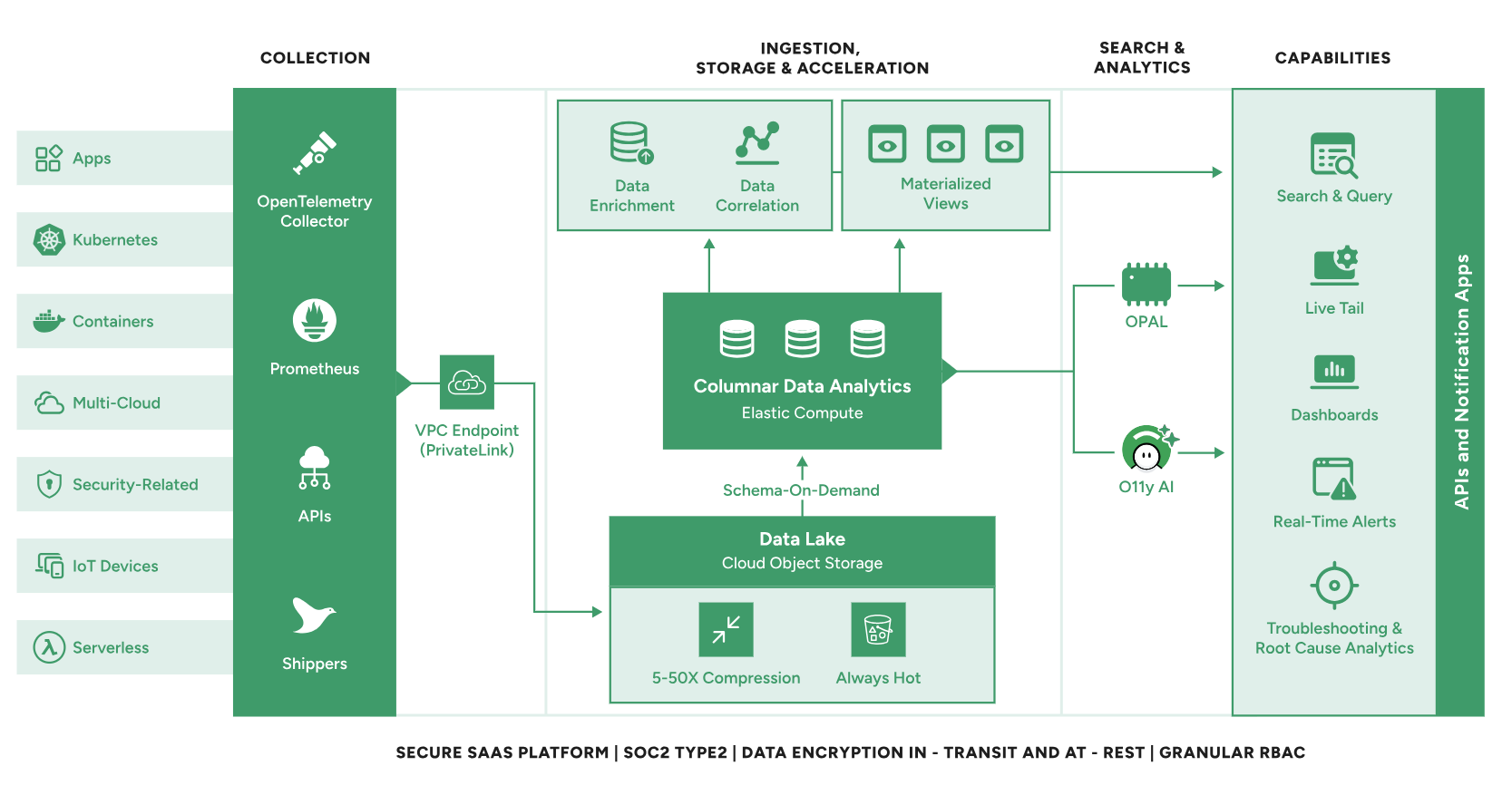
  • Observe Site Reliability Engineer (SRE) uses a unified context graph that will enable Snowflake to correlate logs, metrics and traces.
  • Telemetry data will be "treated as first-class data" in the Snowflake AI Data Cloud.
  • By combining Snowflake data and Observe's platform, enterprises won't have to rely on sampling and short retention windows to manage costs.
  • Terms of the deal weren't disclosed.

Here's a look at Observe's platform that will be connected to Snowflake.

Data to Decisions Tech Optimization Innovation & Product-led Growth Digital Safety, Privacy & Cybersecurity Future of Work snowflake Chief Information Officer

UserTesting buys User Interviews, eyes high-end human feedback loops

UserTesting buys User Interviews, eyes high-end human feedback loops

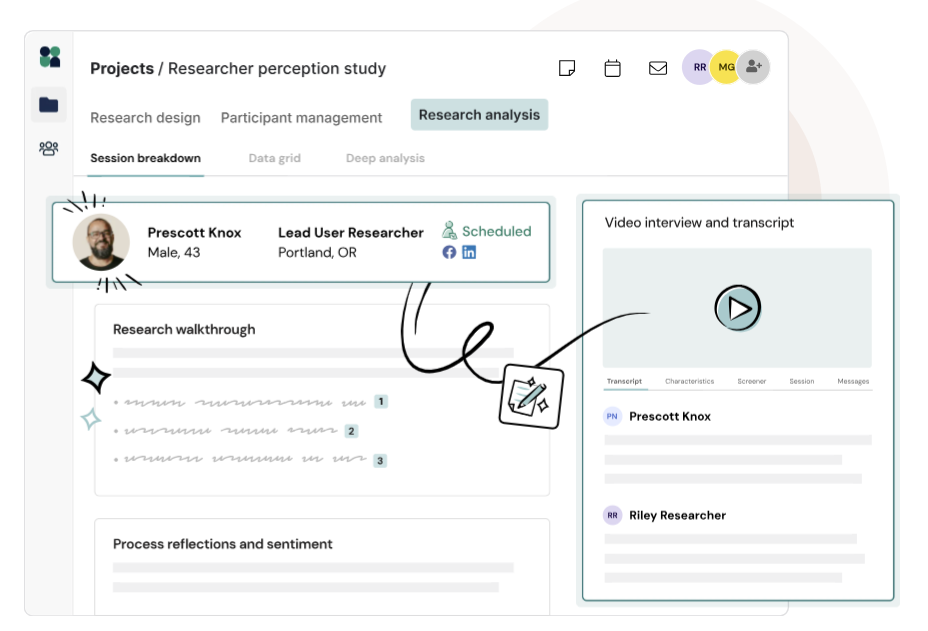
UserTesting, which provides customer experience insights, said it has acquired User Interviews, a platform for recruiting people for user and market research as well as AI training.

The move brings together two complementary companies that have multiple joint customers. UserTesting and User Interviews appeal to designers, researchers, product managers and marketers.

Terms of the deal weren't disclosed.

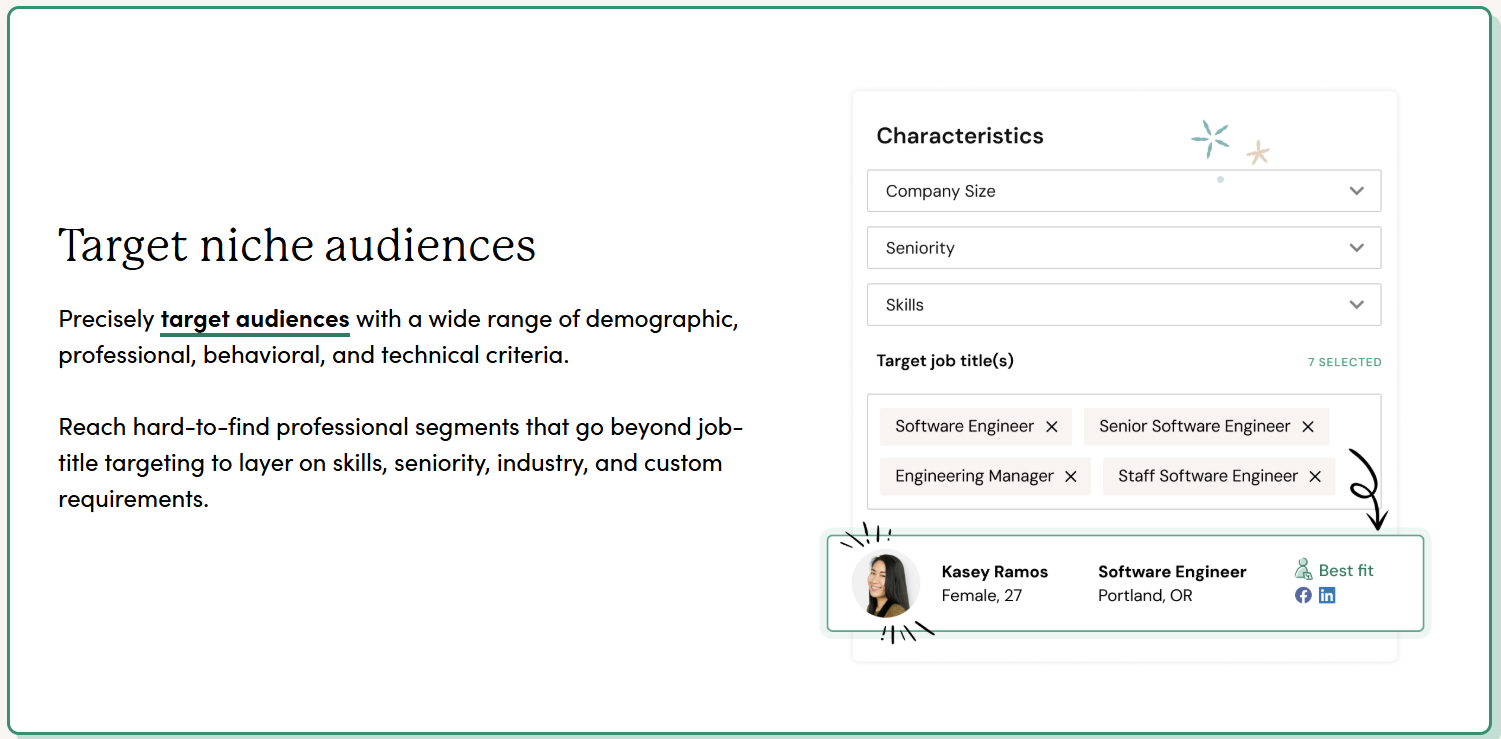
UserTesting provides an insights platform and a global general population network. User Interviews has a premium participant marketplace. UserTesting CEO Eric Johnson said the companies together will make it easier to recruit the right participants for feedback across multiple industries and research use cases. The combined offering will also be able to ground AI deployments, products, marketing and customer experience efforts with real human insights.

"By bringing UserTesting and User Interviews together, we’re creating the fastest and most reliable way for teams to understand their customers and make better, smarter decisions with confidence," said Johnson.

User Interviews CEO Basel Fakhoury said combining the company's panel capabilities with UserTesting's platform will be a win for enterprises and joint customers looking for customer insights.

The combined company reckons that it will have more reach, precise targeting and matching, proprietary fraud detection, scale and enterprise-grade trust.

Constellation Insights caught up with Johnson and Fakhoury to talk shop. Here are the takeaways.

The rationale behind the deal. Johnson said he has been meeting with customers since taking over as CEO in September 2024. The one feedback that kept coming back was to find the right participants to deliver the right feedback. "This acquisition is incredibly strategic. Our customers said the one thing they need is they need the right participants to get the feedback right," said Johnson. "They need the right human beings. In many cases, the customer actually wants a B2B professional. It could be a doctor, lawyer or developer. It's a really bespoke person and those people are not the easiest to find."

User Interviews had built a platform that can deliver those bespoke people. "What we're doing is we're bringing together the best overall customer insights company and general population panel with the best company on Earth to go out and find these hard to find people," said Johnson.

Johnson and Fakhoury began talking roughly a year ago about partnerships. Over time it became clear that customers and employees thought a merger made sense.

Finding the right panel participants. Fakhoury said User Interviews has built a platform that has a broad number of people with specific characteristics. To reach those people, email doesn't work. "SMB owners or doctors are generally not in these networks. If you get emailed to participate in a study, and then you don't get selected for that study, you're not going to apply to the next one. It's just not worth it," said Fakhoury. "We've invested in the matching algorithms so that when someone launches a project we send it to the people most likely to qualify. The participants end up trusting us. That matching technology is really our differentiation. We think about the participant experience. It's a virtuous cycle."

"We built this network and these flywheels that I think are really hard to reproduce, and that's allowed us to be very efficient at what we've done," added Fakhoury.

Feedback fatigue and delivering value. Johnson and Fakhoury both noted that the survey and feedback fatigue is real. That's why finding the right people, paying them and finding the right human fit matters so much. "I didn't come from customer insights before, but entering this market, what I realized is the value of this. This is actually really hard but it is the most important part to getting rich feedback, because if you don't have the right people, no matter how great your feedback mechanisms are, no matter how great your AI is, you have nothing. And so that's why, as a company, our business strategy is to do this part exceptionally well," said Johnson.

Johnson added that the human feedback loop is critical to AI. "You start with the quality of the data you put into it. Because we have the best ability to talk to the right humans, and we have the largest volume of customers generating this kinds of feedback, we are uniquely positioned to provide the best AI, whether it's AI summarization, whether synthetic feedback, or whether it's AI simulations," said Johnson.

Constellation Research’s take

Constellation Research analyst Liz Miller assessed the deal.

“On the surface, this is a masterclass in acquisitions: an emerging player with great technology, great product and great customers gets picked up by a bigger player that can immediately accelerate technology roadmaps thanks to the great technology. The combined company can immediately offer mutual customers greater flexibility and opportunity while simultaneously taking advantage of new customer opportunities. The fit feels obvious here.

Below the surface is where this acquisition gets interesting because as many have pointed out, we are in this age of AI where brands can and should access intelligence about the market, product, or customer in a moment. The problem remains that these insights systems are already running out of the data needed to continue to make contextual decisions well. We need new and more valued sources of insight. And we can’t wait for traditional focus groups or even modern paths to synthetic data to get the job done. We want and need humans in THIS loop. We can analyze all the data in the world with AI, but human-centric panels and opportunities for interview-based insights takes customer-driven decisioning to a whole new level. That’s what UserTesting + User Interviews can offer: accelerated access to humans to ensure that human-in-the-loop decisioning isn’t just possible, it's easy. “

Data to Decisions Next-Generation Customer Experience Innovation & Product-led Growth Chief Customer Officer Chief Executive Officer Chief Information Officer Chief Marketing Officer Chief Product Officer

Epicor set final on-prem release dates for Kinetic, Prophet 21 and BisTrack

Epicor set final on-prem release dates for Kinetic, Prophet 21 and BisTrack

Epicor outlined its schedule of final releases for on-premise versions of Epicor Kinetic, Epicor Prophet 21 and Epicor BisTrack. Future versions of three enterprise resource planning (ERP) offerings will move to Epicor Cloud.

The company offers a set of ERP systems along with supply chain management, retail management, financial management, manufacturing execution and data management and analytics. Epicor has 23,000 customers, 4,600 employees and 2.3 million daily users.

According to Epicor, moving customers to cloud versions will deliver innovation, business agility and AI tools faster.

Vaibhav Vohra, President and Chief Product & Technology Officer at Epicor, said the final on-premise releases represent a milestone for the company and represent an inflection point in delivering cognitive ERP. "We will closely work with our customers every step of the way via Epicor Support, through our AI-powered Ascend with Epicor migration program, and with our industry-first innovations such as conversational ERP," said Vohra.

Epicor said that customers using on-premises versions of Kinetic, Prophet 21, and BisTrack will continue to receive support. After the final on-prem releases support will transition into Active Support followed by Sustaining Support. Epicor and its partners offer a series of migration tools and programs.

Here's a look at the timelines

Kinetic

  • Final on-premises release: 2028.1 tentatively scheduled January 2028
  • Active Support for release 2028.1 through December 31, 2029
  • Sustaining Support begins January 1, 2030

Prophet 21

  • Final on-premises release: 2028.1 tentatively scheduled May 2028
  • Active Support for release 2028.1 through June 30, 2029
  • Sustaining Support begins July 1, 2029

BisTrack

  • Final on-premises BisTrack Web Browser & API release 2028.1 tentatively scheduled July 2028
  • Active Support for on-premises BisTrack Web Browser & API release 2028.1 through June 30, 2029
  • Sustaining Support for on-premises BisTrack Web Browser & API release 2028.1 begins July 1, 2029
  • BisTrack Desktop final release 2026.2 tentatively scheduled December 2026
  • Active Support for BisTrack Desktop through December 31, 2028
  • Sustaining Support for BisTrack Desktop begins January 1, 2029
  • BisTrack UK 3.9 (2017): Active Support through December 31, 2026; Sustaining Support begins January 1, 2027


Data to Decisions Digital Safety, Privacy & Cybersecurity Innovation & Product-led Growth Tech Optimization Future of Work SaaS PaaS IaaS Cloud Digital Transformation Disruptive Technology Enterprise IT Enterprise Acceleration Enterprise Software Next Gen Apps IoT Blockchain CRM ERP CCaaS UCaaS Collaboration Enterprise Service Chief Information Officer Chief Technology Officer Chief Information Security Officer Chief Data Officer