


US v. Google ruling: GenAI will do our work for us
A federal judge ruling in the Google antitrust trial is more damning than you'd think. Yes, Google won't have to divest Chrome or Android, but the ruling is basically a bet that generative AI is going to erode the company's search dominance.
In other words, the LLMs are coming for Google search.
The coverage of the ruling basically boils down to this:
- Google gets the win and won't have to divest Chrome or Android.
- Apple still will get paid for using Google search.
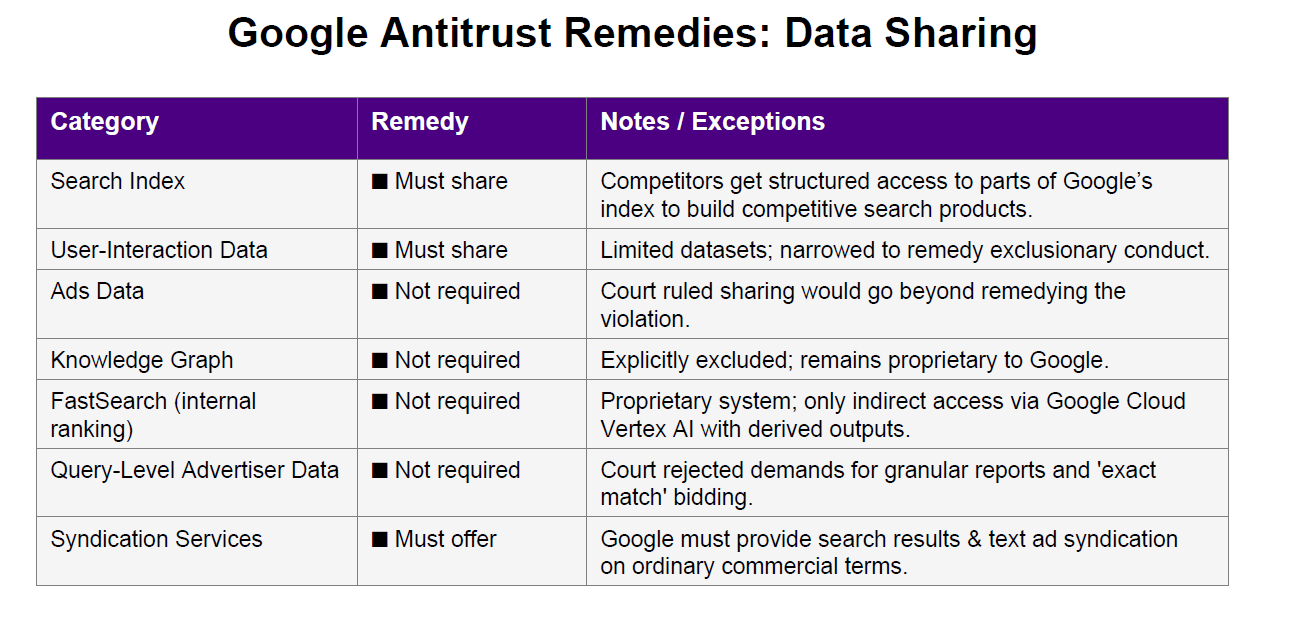
- Google has to share its search data with "qualified competitors," but the remedy is manageable.
- The remedies fall short say some observers.
- And Google will continue to rake in dough.
However, I can't ignore the generative AI comments in the ruling.
U.S. District Judge Amit Mehta wrote:
- “Much has changed since the end of the liability trial, though some things have not. Google is still the dominant firm in the relevant product markets. No existing rival has wrested market share from Google. And no new competitor has entered the market. But artificial intelligence technologies, particularly generative AI (“GenAI”), may yet prove to be game changers. Today, tens of millions of people use GenAI chatbots, like ChatGPT, Perplexity, and Claude, to gather information that they previously sought through internet search. These GenAI chatbots are not yet close to replacing general search engines (GSEs), but the industry expects that developers will continue to add features to GenAI products to perform more like GSEs."
- "The emergence of GenAI changed the course of this case...These remedies proceedings thus have been as much about promoting competition among GSEs as ensuring that Google’s dominance in search does not carry over into the GenAI space."
- And finally, the court defined a qualified competitor in a way that ensures search data is shared with OpenAI, Anthropic and Perplexity. As defined in the ruling a qualified competitor is (1) a provider or potential entrant in search, search ads, or GenAI; (2) that meets strict data security/privacy standards; (3) agrees to oversight by the Technical Committee; (4) shows a credible plan to invest and compete in/with Google’s monopolized markets; and (5) poses no national security risk.
In the long run, sharing search and user interaction data may hamper Google and give genAI rivals a fast-forward button to compete.
Constellation Research analyst Holger Mueller said:
"In this landmark case, a government moved forward with no parties showing damages and asked for massive market changes with the sale of Chrome. Judge Mehta prevailed with this rationale: Exclusive deals always have the potential to lock out the competition. We will now see how enterprises will revisit thousands of these deals, fearing that antitrust authorities may potentially prosecute them."
Larry Dignan is Editor in Chief of Constellation Insights at Constellation Research, where he leads editorial coverage focused on enterprise technology, digital transformation, and emerging trends shaping the future of business. He oversees research-driven news, analysis, interviews, and event coverage designed to help technology buyers and vendors navigate complex markets with clarity and context. ...
Read morePublished
Author
