


Nvidia highlights its robotics momentum as Qualcomm makes its platform case
Nvidia released new Cosmos and GR00T open models for both learnings and reasoning and a new framework for robotic training workflow. The company also outlined a strong ecosystem for autonomous machines and the availability of the Blackwell Jetson T4000 module.
At CES 2026, robotics was the big theme with a lot of hype focused on humanoid robots. Constellation Research analyst Esteban Kolsky argued in his newsletter that the focus on humanoid robots is a mistake. "Humanoid robots are the worst possible path we can take. Despite Hollywood’s love of anthropomorphized animatronics, there are many deficiencies in human-shaped and look-alike robots," said Kolsky in The Board: Distillation Aftershots.
Nevertheless, the combination of robotics and AI will be powerful and Nvidia and challengers such as Qualcomm all want to be dominant platforms. Robotics company Boston Dynamics, owned by Hyundai, outlined a collaboration with Google on models.
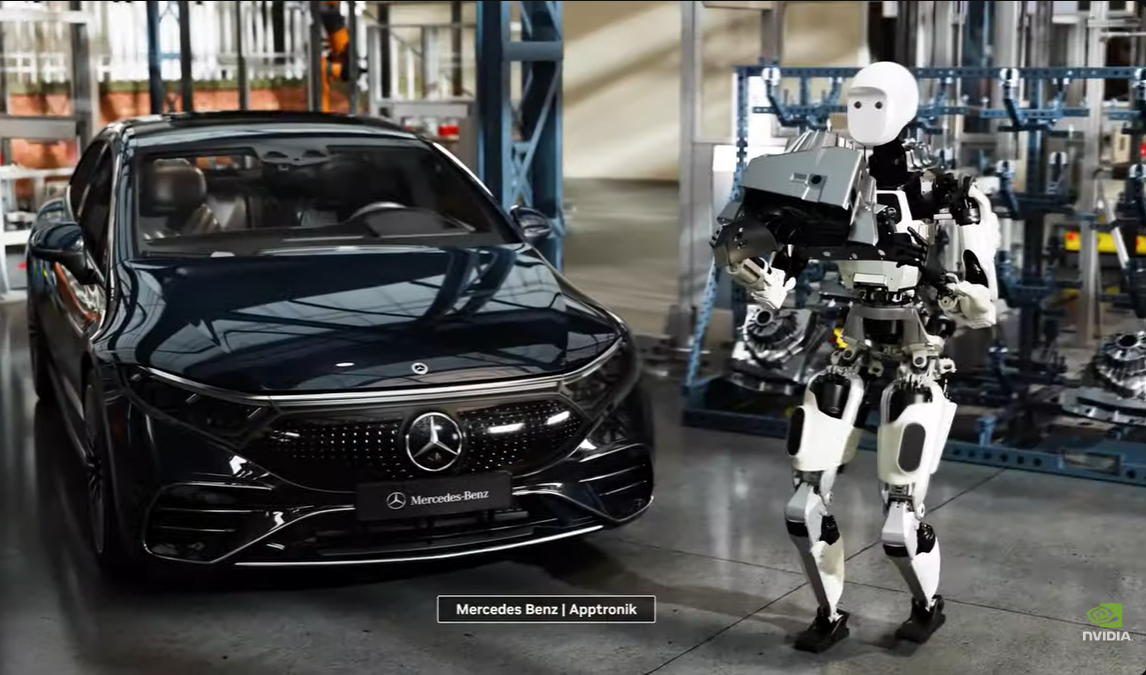
During his CES 2026 keynote, Nvidia CEO Jensen Huang couldn't resist bringing out a cast of robots. The not so subtle message: Nvidia's platform powers robots from Boston Dynamics, Caterpillar, Franka Robots, Humanoid, LG Electronics and NEURA Robotics. Nvidia is also integrating its Isaac models and libraries with Hugging Face and LeRobot.

"Nvidia’s full stack of Jetson robotics processors, CUDA, Omniverse and open physical AI models empowers our global ecosystem of partners to transform industries with AI-driven robotics," said Huang.
Nvidia launched the following open robotics models.
- Cosmos Transfer 2.5 and Cosmos Predict 2.5, two world models that can be customized.
- Cosmos Reason 2, a reasoning vision language model.
- Isaac GR00T N1.6, an open reasoning vision language action (VLA) model for humanoid robots.
Huang pointed out robotics use cases for healthcare, manufacturing and construction via a collaboration with Caterpillar.
Nvidia is clearly going for scale. The company said its new Jetson T4000 module brings Blackwell to robots and can bring costs to $1,999 at a 1,000 unit volume. Huang highlighted a partnership with Siemens for physical AI and robotics.
"As the global labor shortage worsens. We need automation powered by physical AI and robotics more than ever," said Huang.
Qualcomm's robotics plan
Qualcomm at CES rollout out its robotics architecture that combines hardware, software and AI. Qualcomm also outlined its next-gen robotics processor for industrial robots as well as humanoids with its Qualcomm Dragonwing IQ10 Series.
In a nutshell, Qualcomm wants to be the energy efficient brain in robots that are mobile and autonomous. Qualcomm is also building a robotics ecosystem with partnerships with Figure, which makes humanoid robots, and other players including Advantech, APLUX, AutoCore, Booster, Figure, Kuka Robotics, Robotec.ai, and VinMotion.
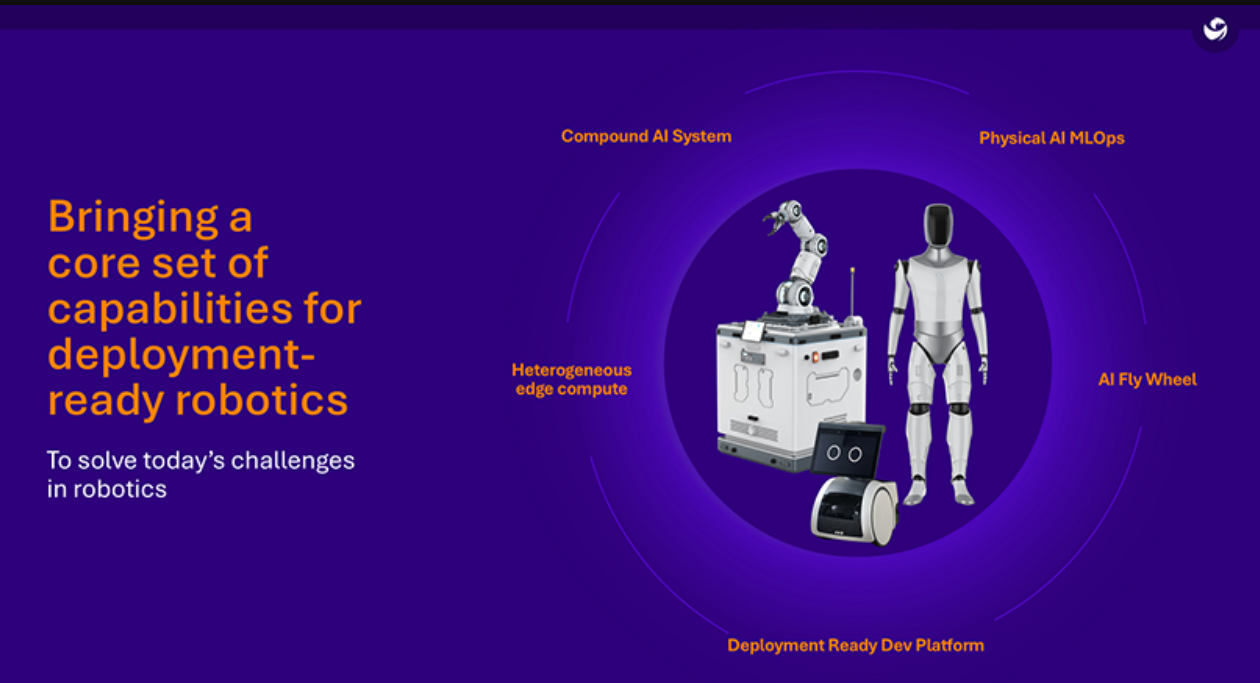
Key items include:
- Qualcomm's Dragonwing industrial processor roadmap is designed to power multiple robotic form factors.
- The architecture supports perception, motion planning and AI models that enabled human interaction and generalized manipulation.
- Qualcomm has a bevy of developer tools for covering multiple robotics use cases for edge computing, software, machine learnings operations and what it calls the AI data flywheel.
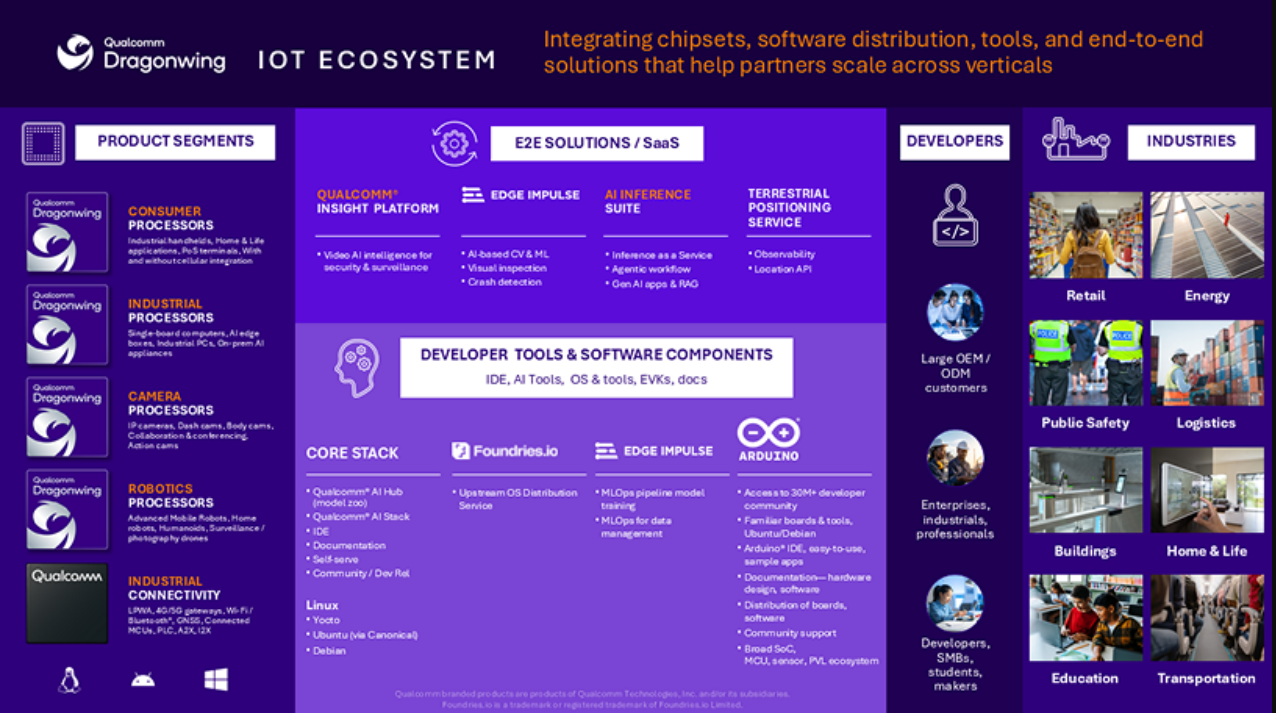
The robotics play is part of the broader IoT plan for Qualcomm, which has built its broader IoT platform via the acquisitions of Augentix, Arduino, Edge Impulse, Focus.AI and Foundries.io. At CES, Qualcomm outlined its Q‑7790 and Q‑8750 processors designed to power on-device AI across multiple devices. Here's the stack.
Larry Dignan is Editor in Chief of Constellation Insights at Constellation Research, where he leads editorial coverage focused on enterprise technology, digital transformation, and emerging trends shaping the future of business. He oversees research-driven news, analysis, interviews, and event coverage designed to help technology buyers and vendors navigate complex markets with clarity and context. ...
Read morePublished
Author
