


Costco approaching AI in ‘very Costco way’
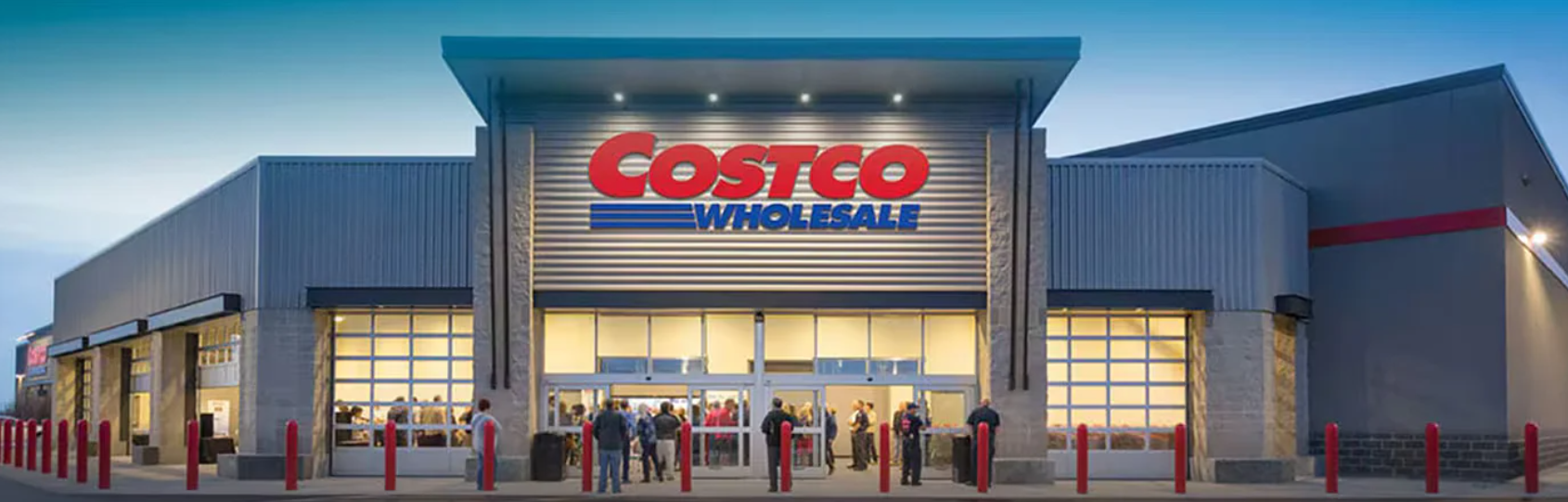
Costco is weaving artificial intelligence throughout its operations but doing it in what CEO Ron Vachris calls a "very Costco way."
"AI is also being interwoven into our business where we believe it can strengthen our model," said Vachris. "We're approaching it in a very Costco way, practical, member-focused and grounded in tangible business value."
Indeed, Costco isn't into doing enterprise AI proclamations. In fact, its IT architecture is built on Microsoft Azure with Google Cloud's Vertex AI platform for AI with a heavy dose of proprietary applications. Costco Travel leverages Microsoft Dynamics 365 on Azure. Costco's app is functional but doesn't dazzle you either. That's the beauty of Costco though. The big-box retailer has a cult-like following and a private-label brand Kirkland Signature, not to mention the hot dog and soda combo for $1.50.
Yet that following and experience is why there's so much upside in leveraging enterprise technology and AI.
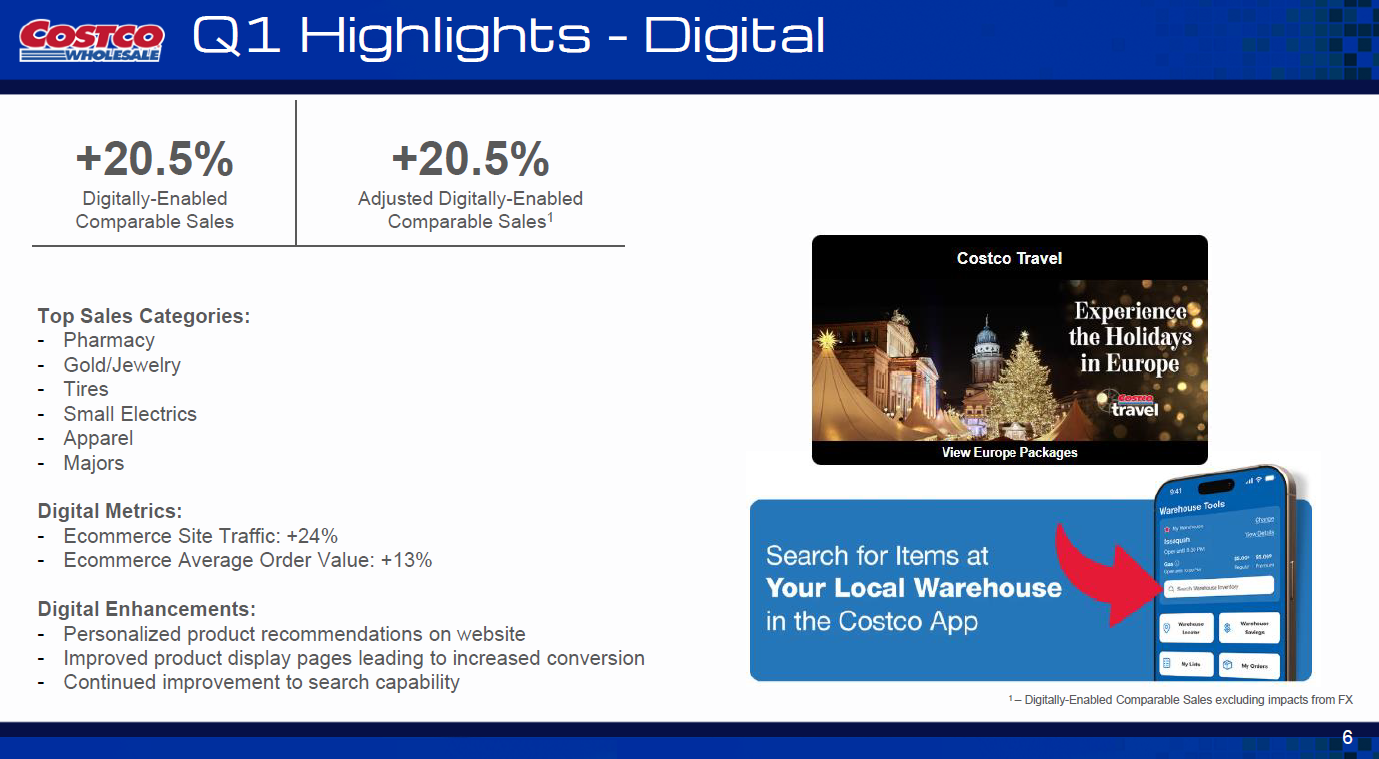
For Costco, e-commerce and digital efforts can provide a lot of revenue upside. For instance, Costco's e-commerce operations accounted for 7% of net sales in 2025. Including Costco Travel, digital sales were 10% of 2025 revenue. For comparison, Walmart's Sam's Club had e-commerce sales that were more than 27% of revenue for the nine months ended Oct. 31.
Costco said in its annual filing with the Securities and Exchange Commission that it needs to close the digital gap. "We must keep pace with changing member expectations and new developments by our competitors. Our members are increasingly using mobile phones, tablets, computers, and other devices to shop and otherwise interact with us. We are making investments in our websites and mobile applications. If we are unable to make, improve, or develop relevant member-facing technology in a timely manner, our ability to compete and our results of operations could be adversely affected," the company said.
In 2017, Costco said it would build its hybrid cloud operations on Microsoft Azure. Costco is also using Google Cloud's Vertex AI and data cloud services and recent job postings for developers emphasize know-how on the hyperscaler's offerings.
Vachris, speaking on Costco's first quarter earnings call, said:
"This isn't about technology for technology's sake, it's about using technology to strengthen the fundamentals that makes Costco who we are, increasing member loyalty, driving top-line sales and improving efficiency in our operations so that we can bring goods to market at the lowest possible price."
Vachris outlined a few key use cases for Costco. Vachris said the implementation of scanning memberships at entry, the Costco Digital Wallet and pre-scanning small- to medium-sized baskets is leading to better member experience and improved productivity.
"The warehouses that are first to adopt this pre-scan technology have shown checkout speed improvements of up to 20%. And across our U.S. warehouses overall, we achieved record levels of checkout productivity in the final weeks of the quarter," said Vachris.
Costco is also focusing on personalization in its apps and product recommendations. Vachris said Costco is seeing a sales lift due to more relevant product recommendations.
On the back end, Costco is focused on leveraging AI in its inventory systems.
"An early use case has involved integrating AI into our pharmacy inventory system. This system now compares prescription drug pricing across vendors and autonomously and predictively reorders inventory, improving our in-stocks to more than 98%," said Vachris. "This change has played an important role in helping us achieve mid-teen growth in pharmacy scripts filled and has improved margins while lowering prices to our members."
Now Costco is looking to improve its gas business with AI tools. "We're now in the process of deploying AI tools in our gas business, which we expect will improve inventory management and drive incremental sales by ensuring we are always delivering the best value to our members," said Vachris.
Rolling out AI-driven tools at Costco is the result of fundamental changes that have been underway for multiple years. Vachris said:
"Technology and bringing the company along has been a focus for several years. A couple of years ago, we really focused on our fundamental base systems and our core systems behind the scenes that will allow us to build for the future. And so, we're now coming to a fruition where we're starting to see the benefits of that hard work of all the backroom systems that we had to build that are now coming to light and coming to the front phase for our members. We feel that technology is going to be part of the -- big part of our future.
Our mantra is to bring goods to market at the lowest possible price. And we think AI has a great asset to that, and it really can help us become a much better merchant out there."
Indeed, at Constellation Connected Enterprise 2025, Indy Cho, VP Analytics and Data Products, said the retailer is looking to create a flywheel between data, inventory, demand and pricing. "Understanding the demand at a localized level is an incredibly challenging task. Every time you shop that's a demand signal. We get that back to buyers, and we they go through a tremendous amount of analysis to figure out how much product needs to get to the right location," said Cho. "The bar for a higher level of accuracy is absolutely necessary but that doesn't mean we don't stop experimenting."
Productivity gains and expansion
Gary Millerchip, Costco CFO, said the technology investments have led to gains that have held the line on expenses. "These productivity improvements fully offset wage investments and the impact of extended operating hours and would have created positive leverage in the quarter had we not experienced higher health care costs. Central was lower or better by 3 basis points," said Millerchip.
In its first fiscal quarter, Costco delivered revenue of $66 billion, up 8.2% from a year ago. Net income in the quarter was $2 billion, or $4.50 a share. Same-store sales in the first quarter were up 6.4%, comparable tickets were up 3.2% and digitally enabled sales grew 20.5%.
For its fiscal year ended Aug. 31, Costco's gross margins were 11.12% of sales, up from 10.92% in fiscal 2024. Sales, general and administrative expenses as a percentage of sales were 9.25%, up slightly from 9.14% in 2024. For fiscal 2025, Costco reported net income of $8.1 billion, or $18.21 a share, on revenue of $275.23 billion.
In addition, Costco's efficiency push has enabled it to expand into new revenue streams. For instance, Costco has multiple revenue streams that complement its core retail business. The retailer ended the first quarter with 81.4 million paid memberships that form the base of its data flywheel.
Costco has its travel business as well as a retail media unit as well as financial services. In the first quarter, Millerchip noted that Costco's travel business and media unit were tailwinds in its first quarter. These businesses also create a data flywheel that can be leveraged.
"The first priority with personalization is to deliver a better member experience and deliver more targeted relevant messaging so we drive more items in the basket, more visits to the warehouse, more visits online. And as you do those things, it just creates an even more compelling value proposition for our media partners. While we're building and executing on that capability."
Takeaways
- Costco is a fine example of pragmatic AI and IT.
- Costco's anti-hype approach to AI is refreshing given the hype-fest today.
- The real differentiation for Costco is in inventory, pricing and warehouse efficiency.
- The stack for Costco isn't flashy or bleeding edge but focused on value.
- Costco's experience and business logic is what's proprietary. Technology is just a means to deliver.
- But if Costco can simply close the technology gap between it and rivals it has plenty of digital commerce upside to complement its real-life customer experiences.
Larry Dignan is Editor in Chief of Constellation Insights at Constellation Research, where he leads editorial coverage focused on enterprise technology, digital transformation, and emerging trends shaping the future of business. He oversees research-driven news, analysis, interviews, and event coverage designed to help technology buyers and vendors navigate complex markets with clarity and context. ...
Read morePublished
Author
