Results

Digital Transformation Digest: Oracle's New Database Release Schedule, Kohl's Weathering Amazon's Storm, and DARPA's Bid for 'Explainable' AI

Constellation Insights

Oracle shakes up database release naming convention: The Oracle database has long been and remains the market-share leader. Now the company is making a major change to its database release numbering structure, one that could have mixed results from a marketing and customer-satisfaction perspective.

In short, Oracle will move to an annual release cadence with releases named by the year, as Mike Dietrich, master product manager for database upgrades and migrations, explains in a blog post:

In my own words we basically rename the patch sets and name them what they were since years: Full releases. This means, Oracle Database 12.2.0.2 will be Oracle 18. And Oracle 12.2.0.3 will be Oracle 19. And so on.

Therefore there won’t be any Oracle 12.2.0.2 anymore – and obviously no Oracle 13.1 followed by Oracle 13.2.

Along with the annual release, Oracle will issue quarterly release updates. Historically, Oracle database customers have largely waited until the second rendition of a major release before upgrading, with the thinking being it will be more stable than the first. That approach hasn't been necessary for quite a while, but it's been hard to get that across to customers, Dietrich says:

Patch sets are full releases. Patch sets were full releases for years. In Oracle 12.1.0.2 (a so called “patch set” containing only as little as 13000 fixes on top of 12.1.0.1) we introduced complete huge and important new features such as Oracle In-Memory. Patch sets became full releases since at least Oracle 11.2.0.2.

This will hopefully end discussions. Nobody has to justify to go live on the first release. There is no first release. And there weren’t first release for many years. It were full releases.

So yes, I’m happy with this change. And it makes a lot of sense.

POV: A H/T goes to the Register for flagging Dietrich's post. Oracle's previous numbering convention was favored by developers, but this won't be the first shift toward a more marketing-minded approach, nor the first shift that takes place before the dreaded Release 13, says Constellation VP and principal analyst Doug Henschen: "Software release 13.xs are about as popular as 13th floors in office buildings."

But it's not clear that a revamped numbering convention will be enough to spark faster uptake of new database releases, Henschen adds. "Whatever the release designation of the database might be, organizations will continue to consider the lifecycle of holistic deployments, not just the latest features introduced with each new database release."

Kohl's continues evolving toward multichannel: It appears that large retailer Kohl's is having some luck weathering the competitive storm clouds generated by Amazon, reporting quarterly results on Thursday that contained positive news regarding online sales as well as improving synergies with its brick-and-mortar stores.

At Kohl's, online demand sales rose 19 percent and 31 percent of those orders were picked up in stores. (Kohl's also ended the quarter with 1,154 stores, up from 1,150 one year ago.) In addition, Kohl's smartphone app is looking pretty sticky, with 66 percent of its online traffic and 42 percent of online revenue coming through that channel. Overall, Kohl's revenue dipped very slightly to $4.14 billion, but net income shot up 49 percent to $208 million.

Kohl's goal is to continue driving foot traffic toward its stores by leveraging online ordering and in-store fulfillment, which it says leads to significant upselling opportunities. CEO Kevin Mansell said it is continuing to open new stores this year, but they are "very different" than past designs. There also shouldn't be any news regarding store closures this year.

POV: Traditional department stores like Kohl's have been some of the hardest-hit by Amazon's ability to discount, offer a massive selection and deliver a pleasurable overall customer experience. While Kohl's has plenty of work ahead of it, the company at this moment seems like a good example of a legacy business making the right, if sometimes painful steps, toward transformation and ultimately survival. 

DARPA funding research into AI that explains itself: The U.S. Defense Advanced Research Projects Agency (DARPA) is bankrolling research with the end goal of creating artificial intelligence systems that can explain to humans how they arrived at a given result.

The Palo Alto Research Center, a subsidiary of Xerox, has been awarded a DARPA contract to create a system called COGLE (COmmon Ground Learning and Explanation), as the company describes in a release:

The key idea behind COGLE is to establish common ground between concepts and abstractions used by humans and the capabilities learned by a machine. These learned representations would then be exposed to the human via COGLE’s rich sense-making interface, enabling people to understand and predict the behavior of an autonomous system.

It's all about gaining crucial context for an AI system's conclusions, as well as to develop trust in the system. COGLE will first be developed in conjunction with an unmanned aircraft system but its design will be applicable to other types of autonomous systems later. Carnegie Mellon University, West Point, the University of Michigan, the University of Edinburgh and the Florida Institute for Human & Machine Learning are also involved in the research.

POV: It's not just DARPA that's interested in AI that is explainable, as financial organizations also insist on recommendations and automated decisions that are explainable for reasons of legal and regulatory requirements, notes Constellation VP and principal analyst Doug Henschen.

"When it comes to decisions on lending, risk, pricing and claims, financial organizations have to avoid black-box approaches because they have to be able to explain to regulators why certain decisions were made," he adds. "Regulators want to ensure there isn't bias or bad math behind the scenes. The challenge of ensuring human transparency in decision systems will become more challenging as organizations seek to rely on machine learning or cognitive systems that constantly adapt to the results, as expressed in data, of each new decision."

Data to Decisions Matrix Commerce Tech Optimization Chief Customer Officer Chief Financial Officer Chief Information Officer Chief Supply Chain Officer Chief Digital Officer

Future of Work Shortlists - Personal Productivity and Group Collaboration

This week Constellation released the latest versions of our Constellation ShortLists. These lists help organizations decide on which vendors they should be evaluating across various markets. They are not rankings, but rather guides to help the decision making process. The current lists for my coverage in the area of the Future of Work are:

These five lists represent only a small part of my overall coverage areas.  The video and graphic below provide a more complete picture:


Future of Work

Constellation's Tech Trends AstroChart for The New C-Suite, Q3 2017

Inaugurating the New AstroChartâ„¢ of Tech Trends for The New C-Suite

Designed for strategic planning and roadmap development by executives, leadership, and key digital decision makers, Constellation’s AstroChart™ of Tech Trends for The New C-Suite is designed to be a highly usable visual guide to the top-level technology trends. The position of a given technology on the Astrochart maps its strategic urgency and impact to today's digital enterprise. The vertical axis rates adoption from mainstream and early adopters, all the way to the bleeding edge of experimentation. The horizontal axis estimates the technology's overall impact on an organization’s business model, from incremental to transformational to exponential. As a reminder, a key objective of a Constellation AstroChart is to move beyond the hype and constraints of the traditional two-dimensional rating grid.

Culled from numerous data points including industry discussions, bespoke research, client advisory sessions, and surveys of CXOs over the last year, Constellation has compiled this AstroChart of how current technology trends in the digital enterprise -- specifically at boardroom and C-Suite level -- are evolving and maturing. As is typical for an AstroChart, these trends will be updated approximately every 180 days and will reflect what’s placed into our Futurist Framework and PESTEL model as well as industry inquiries and our own primary research.

The New C-Suite: Digitally Savvy Business Leaders

As a notion and emerging coverage area for Constellation, The New C-Suite espouses a leadership-centered focus on the business and technology issues impacting the enterprise today at the most strategic levels. This coverage is tailored especially for CIOs, CDOs, CMOs, CEO, CHROs and other C-level roles grappling with existential digital issues and opportunities. Consequently, the topics included on this AstroChart either have a) broad applicability to the majority of organizations globally in the near-term and/or are b) still cutting-edge but our analysis shows will become a significant priority soon enough.

In terms of inclusion, the Tech Trends AstroChart for the New C-Suite covers strategic technologies that are profoundly affecting today's digital revolution by making possible major advances in the primary operating environments for organizations today. In each case, these technologies are either making new markets or upending existing ones, though in some cases they will also enable incremental improvements of competitive significance. Today's CXOs are encouraged to be familiar with and fluent with issues involved in employing these technologies to tranform their businesses, as these advances will drive both top-level opportunity and disruption today for most organizations in the majority of industries and geographies.

Designed as a guide and roadmap for CXOs, the Tech Trends AstroChart for The New C-Suite will have some occasional crossover with other Constellation guides, such as the overall Tech Trends AstroChart, though the individual topics themselves may have different positions, depending on the maturity and impact the trends have at a strategic and leadership level. We believe this guide will cut through the noise by emphasizing what matters most to today's senior leaders with top-level digital responsibilities.

Figure 1. Constellation’s AstroChart of Tech Trends for The New C-Suite

Constellation Astrochart of Emerging Enterprise Tech Trends for The New C-Suite

The Tech Trends C-Suite Astrochart

The technologies arrayed across the nine categories in The New C-Suite Tech Trends AstroChart provides key inputs and rankings for strategic planning for both IT departments and digital business groups, as well as to organizations that are improving their strategic digital posture or seeking to maintain a fast follower position.  The nine categories in this AstroChart include:

  1. Bleeding edge – Exponential. These technologies are still on the emerging edge for the enterprise. This segment is currently dominated by the industry conversation around artificial intelligence and machine learning in virtually all aspects of the enterprise. Other key technologies such as industry clouds, which provide capabilities for specific industries or Industry 4.0 frameworks, as well as outcome-based value-as-a-service (VaaS) offerings based on a pay-per-result SaaS model.
  2. Bleeding edge – Transformational.  Strategic accelerators for digital transformation are beginning to emerge in the form of ready-to-go target platforms that have proven change pathways associated with them. At the same time, technologies for employee engagement and real-time performance management are changing the nature of the digital workplace, while immersive digital experiences in the form of virtual and augmented reality (AR and VR) are poised to remake both the customer and workplace experience. Blockchain is revolutionizing digital recordkeeping while simultaneously creating new products, services, and markets in the process, just as artificial intelligence looms as a potent new way to actually manage and lead the next-generation enteprise.
  3. Bleeding edge – Incremental.  While office robotics is still around the corner, it appears likely to have significant ramifications in many industries in terms of the future of the workforce. At the same time, logistics is being transformed from supply chain to end-point delivery by new forms of automation and intelligence. Digital twins will soon be instrumenting our organizations like never before, providing the ability to both model and monitor organizations strategically. Digital boardrooms as next-generation dashboards that provide insights and prescriptive analytics to senior leaders and are becoming compelling enough for day-to-day use and major decision making.
  4. Early adopter – Exponential. The Internet of Things (IoT) is connecting companies to customers in sustained new ways that create both major challenges and opportunities. Open APIs are quickly becoming a C-level topic as organizations must rapidly position themselves in 2017 as ecosystem-savvy and ready players. Systems of intelligence and innovation are poised to offer blueprints for both functions in the cloud for a growing number of organizations.
  5. Early adopter – Transformational.  Marketing is becoming ever more cross-channel with requisite and voracious demands for data to drive the customer journey as well as to manage the customer experience as a whole. Digital learning and skill building is becoming essential to uptalent and crosstalent the workforce in the digital age. Public cloud is getting increasingly enteprise-ready as organizations broadly shift most new IT investment towards it. The fragmention of marketing into thousands of point solutions will soon drive both a mass die-off as well as a drive towards far better integration to support better customer experience, the top value differentiator when it comes to digital experience.
  6. Early adopter – Incremental.  As today's enterprise has to be increasingly digital-ready in all aspects, microservices has emerged as C-level discussion to build the next generation of revenue generating functions in the modern organization in key industries like health care. Prescriptive analytics is coming into its own to create actionable recommendations that rapidly propel organizations down high value, strategic decision trees, heading off the competition in the process. Master data managment is improving to create a more holistic and actionable view of what organizations know and can do, while adaptive cybersecurity remains the top new tool to combat the challenges of keeping enterprise systems in all forms safe and secure. Risk management technologies round on one of the top digital technologies that organizations must employe to keep digital performing positively on a sustainable basis.
  7. Mainstream – Exponential.  The majority of potential in digital technologies remains outside of the mainstream high growth path (in fact, virtually no traditional enteprises have ever achieved expontential growth or potential), and this segment is currently not occupied though Open APIs and Internet of Things are both poised to move into this position soon.
  8. Mainstream – Transformational.  Mobility is still in the process of remaking digital experience, and still has a good way to go in the majority of organizations. Public cloud has now become a mainstream force for IT, but still has years of major evolution and new potential ahead of it. Digital talent platforms and business intelligence/analytics round out now mainstream technologies that are still steadily changing organizations today.
  9. Mainstream – Incremental.  A bit longer in the tooth in terms of being considered emerging tech, yet still relevant for strategic purposes for the majority of organizations, mainstream technologies such as big data, cloud ERP, customer relationship management, and digital workplace round out tech that still key for C-level leaders to watch closely.

Plan Your Digital Strategy With The Constellation’s AstroChart for Tech Trends for The New C-Suite

Digital leaders can stay abreast of strategic technology and business trends by adoption rates and business model impact using Constellation’s AstroCharts. Use the AstroChart to develop your overall boardroom strategy and to benchmark your organization’s adoption. Constellation notes the following:

Organizations should take an assessment of their strategyic digital priorities and use the AstroChart to determine portfolio management.

  • Market leaders tend to bet 50% of their portfolio on disruptive projects
  • Market leaders tend to bet 30% of their portfolio on bleeding edge projects
  • Fast followers tend to bet 80% of their portfolio on early adopter projects
  • Exponential – bleeding edge bets require a very informed or founder driven board, innovation fund, or startup partners(s)

Become The New C-Suite

Would you like to take advantage of the Constellation’s AstroCharts for The New C-Suite? How have you built out your strategic investment map? Have you prioritized and fully resources your digital efforts? Learn how organizations can apply this business trends roadmap and Constellation's unique frameworks to disrupt digital businesses.

Note: This chart, as well as the Business Trends for The New C-Suite are part of a forthcoming research report that details how these trends must form the foundation of the next generation of your organization. You can also explore my overall take on the enterprise technologies to watch in 2017 on ZDnet.

Please add your comments, suggestions, notes on additions/omissions, and other commentary below. You can also reach me via email: dion (at) ConstellationR (dot) com or @dhinchcliffe on Twitter.

Finally, please let us know if you need help with your digital business and transformation efforts. Here’s how we can assist:

  • Developing your digital business strategy
  • Connecting with other digital leaders
  • Accessing the latest digital best practices
  • Understanding the vendor space
  • Identifying options for implementation partners
  • Validating roadmaps and playbooks
  • Providing advisory and education to CXOs and boards

Additional Reading

Constellation's AstroChart For Business Trends, Q4 2016

CEN Member Chat: Trends for 2017 - Using the AstroCharts for Strategic Planning

Data to Decisions Digital Safety, Privacy & Cybersecurity Future of Work Marketing Transformation Matrix Commerce New C-Suite Next-Generation Customer Experience Tech Optimization Chief Customer Officer Chief Digital Officer Chief Executive Officer Chief Financial Officer Chief Information Officer Chief Marketing Officer Chief People Officer Chief Procurement Officer Chief Revenue Officer Chief Supply Chain Officer

Digital Transformation Digest: Microsoft's New Blockchain Play, IBM and Bank Team Up Against Paper Overload, and More

/cINSIGHTS

Microsoft's plan for enterprise-ready blockchains: In the works at Microsoft is the Coco Framework, what Redmond calls "a first-of-its kind innovation that will advance enterprise adoption of blockchain technology. (Note: Constellation believes despite the term blockchain's enduring popular usage, better ways to describe the core concept are distributed ledger technologies and synchronous ledger technologies.) Here's how Azure CTO Mark Russinovich describes the Coco Framework and its value proposition:

As enterprises look to apply blockchain technology to meet their business needs, they’ve come to realize that many existing blockchain protocols fail to meet key enterprise requirements such as performance, confidentiality, governance, and required processing power. This is because existing systems were designed to function—and to achieve consensus—in public scenarios amongst anonymous, untrusted actors with maximum transparency. Because of this, transactions are posted “in the clear” for all to see, every node in the network executes every transaction, and computationally intensive consensus algorithms must be employed. These safeguards, while necessary to ensure the integrity of public blockchain networks, require tradeoffs in terms of key enterprise requirements such as scalability and confidentiality.

Today I am proud to introduce the Coco Framework, an open-source system that enables high-scale, confidential blockchain networks that meet all key enterprise requirements—providing a means to accelerate production enterprise adoption of blockchain technology.

Coco achieves this by designing specifically for confidential consortiums, where nodes and actors are explicitly declared and controlled. Based on these requirements, Coco presents an alternative approach to ledger construction, giving enterprises the scalability, distributed governance and enhanced confidentiality they need without sacrificing the inherent security and immutability they expect.

The framework is not an attempt to reinvent the wheel. Rather, it relies on existing blockchain protocols, trusted execution environments (TEEs) and cryptopgraphy. In addition, Microsoft has begun integrating Coco with leading ledger technologies, including Ethereum, Quorom, Hyperledger Sawtooth and Corda, Russinovich wrote. It is also working with Intel with respect to TEEs. Microsoft started Coco with teams from Azure and its research arm, but intends to open-source the code in early 2018, hoping to scale up its development more quickly.

POV: A technical whitepaper goes into greater depth on Coco, for those in search of such information. However, the paper also gives the strong impression that Coco is more of a statement of intent or pre-announcement, rather than anything truly finalized, says Constellation Research VP and principal analyst Andy Mulholland.

"Microsoft clearly feels that it must have a position and be represented in the current enthusiasm to develop blockchain, or blockchain-like, distributed ledger dolutions," Mullholland says. In addition, Azure is an ecosystem under the control of Microsoft, and as such it is possible to avoid some of the challenges of any-to-any interactions occurring between ecosystems, clouds, or products where an unknown must create a trusted relationship with another unknown. The whitepaper suggests that Azure will act as a â€˜universal’ bridge between unknowns to assist in solving this problem."

While Coco may be taken as a statement of intent from Microsoft based on the strong market position of Azure, it nonethless has to be taken as a serious move that merits carefully watching as it develops, Mulholland adds.

Meanwhile, it is great to see some attention paid to blockchain user keys in TEEs, says Constellation VP and principal analyst Steve Wilson. "This is one of the missing pieces," he says. "The original anarchic blockchain lacked key management. It was everyone for themselves. The market recognized a need for 'hardware wallets' but it's still a Wild West. With Intel's involvement, I see a long overdue opportunity to standardize or at least normalize proper user key safety—in secure elements, mobile phones, smartcards or whatever form factor makes sense."

HSBC, IBM using cognitive computing to cut paperwork: IBM and large trade financing bank HSBC are working on a project meant to nearly eliminate the need for manual review huge amounts of trade finance documents. Here are the key details from their joint announcement:

HSBC’s Global Trade and Receivables Finance (GTRF) team facilitates over USD500 billion of documentary trade for customers every year, and in doing so must manually review and process up to 100 million pages of documents, ranging from invoices to packing lists and insurance certificates.

The new solution uses IBM’s advanced analytics technology, including intelligent segmentation and text analytics, to identify, digitise and extract key data within these documents before feeding it into the bank’s transaction processing systems; boosting accuracy whilst freeing up staff for more value-adding activities.

“The average trade transaction requires 65 data fields to be extracted from 15 different documents, with 40 pages to be reviewed,” said Natalie Blyth, HSBC’s Global Head of GTRF. “By digitising this process we will make transactions quicker and safer for both buyers and suppliers, leading our industry forwards, and we will reduce compliance risks through an enhanced ability to manage huge volumes of data.”

Right now, HSBC's implementation supports English-based import and export bills, with French, Spanish and Chinese support to come.

A Financial Times article notes that HSBC is also implementing blockchain in its processes. In June, it and six other banks announced participation in a trade finance platform based on the Hyperledger distributed ledger project at the Linux Foundation.

POV: HSBC's deployment is a good example of mature technology being put to effective use against the lingering challenges of paper documents in the financial sector.

Advanced optical character recognition and intelligent character recogition technologies have employed machine learning since the 1990s to learn to recognize even handwritten characters, notes Constellation VP and principal analyst Doug Henschen.

These capabilities have evolved thanks to much higher computing power, allowing even variable, non-standard documents to be processed without human intervention, Henschen says. While contracts and invoices may vary in format from among trading partners, they usually contain the same data elements and cognitive capture systems can therefore be trained to recognize and extract the right data elements, he adds. IBM's capabilities for this are rooted in its 2010 acquisition of Datacap, but it has "clearly advanced the state of the art."

Legacy watch: Aussie hospital opening allegedly delayed by stumbling EHR project: Two construction companies building a new AUS$2.3 billion hospital in Adelaide has filed a AUS$185 million lawsuit, saying that delays in completing a new EHR (electronic health records) system made it impossible to finish the job by the original deadline of April 2016, as the Adelaide Advertiser reports:

The case has been brought by two building firms that combined in a joint venture to construct the new RAH — CPB Contractors and Hansen Yuncken — against the private consortium overseeing the project, Health Minister Jack Snelling and the state of SA.

The Government plans to run the new RAH without old-fashioned patient records and instead use the computerised Enterprise Patient Administration System, which has been dogged by cost blowouts and time delays. The builders claim they were delayed because EPAS was not ready on time for installation.

“For technical completion to have been achieved under the construction contract, the state ICT was required to have been successfully installed, tested and commissioned,” the claim states.

“The state’s failure ... means that it was impossible for the builder to achieve technical completion and, as such, commercial acceptance under the construction contract.”

A mix of paper and digital records will be used when the hospital opens on September 5.

POV: The EHR industry is dominated by just a handful of players, with Epic, Cerner and MEDITECH garnering around two-thirds of the market on their own. EHR implementations can be fiendishly complicated and wildly expensive even before taking into account unexpected cost overruns. The Adelaide system is budgeted at AUS$422 million, but the U.S. Department of Defense's ongoing EHR project has had a projected $11 billion price tag.

It is also difficult to find cases of hospital staff falling in love with their EHR systems, and indeed, doctors surveyed by the Australian Medical Association about the Adelaide system called it the "worst medical software I have ever used."

It's based on a product from Allscripts, which was awarded the bid in 2010. User acceptance—as well as proper training—is key to any successful software project, and from the sound of it, health system officials have work to do.


Data to Decisions Digital Safety, Privacy & Cybersecurity Matrix Commerce Tech Optimization

New Constellation ShortList for Marketing Analytics

Our cycle for refreshing the Constellation ShortLists completed in July and in addition to my B2B and B2C Marketing Automation reports, I’m pleased to release a new ShortList specific to Marketing Analytics. Today’s CMOs face an increasingly challenging landscape of marketing channels and technology to manage while needing to prove their efforts are impacting sales. Although there is no shortage of analytics solutions in the market, I evaluated close to 30 standalone analytics solutions that are powerful enough for organizations with a marketing data science team, yet simple for the non-technical marketer to operate. I looked for solutions that:
 
  1. Provided role-based dashboard views to help marketers in different functional areas gain insight into campaign performance quickly.
  2. Contained attribution models that could provide first-touch/last-touch and weighted multi-touch attribution.
  3. Easy integration with existing marketing and sales technology stack (marketing automation, ad platforms, social networks, and CRM). Several of the solutions evaluated include embedded Artificial Intelligence capabilities to help surface intelligent insights for marketers to make better campaign, spend, and segmentation decisions.
My goal is to find solutions to help CMO’s prove revenue contribution and enable marketers to be more productive and make better/faster decisions.
 
The following five standalone solutions (in alphabetical order) made the Constellation Marketing Analytics ShortList. I recommend these solutions to early adopters pursuing digital transformation. 
 
For more information and the full evaluation criteria, please visit Constellation ShortList Marketing Analytics
Data to Decisions Marketing Transformation Sales Marketing New C-Suite Innovation & Product-led Growth Next-Generation Customer Experience Tech Optimization Future of Work Marketing B2B B2C CX Customer Experience EX Employee Experience AI ML Generative AI Analytics Automation Cloud Digital Transformation Disruptive Technology Growth eCommerce Enterprise Software Next Gen Apps Social Customer Service Content Management Collaboration Machine Learning business SaaS PaaS CRM ERP Leadership LLMs Agentic AI IaaS Enterprise IT Enterprise Acceleration IoT Blockchain finance Healthcare Chief Marketing Officer Chief Information Officer Chief Technology Officer Chief Information Security Officer Chief Data Officer

Data-to-Decisions Trends Meet the Constellation ShortList

What’s up in data cataloging, data lake management, hybrid- and cloud-ready databases, and business intelligence and analytics? Here’s my biannual take via Constellation ShortLists.

As the Data-to-Decisions (D2D) analyst at Constellation Research, I cover a broad domain, from data platforms, orchestration and integration up into the business domain, where business intelligence (BI), advanced analytics, embedded services and real-time decisioning help to put insight into action. Twice each year (Q1 and Q3) I make note of the things that impress me through Constellation ShortLists, which are freely available to the public. We’ve just published the latest updates to our ShortLists, so I thought I’d connect the dots among the nine lists that I publish with this post on D2D trends.

'Big' Isn't the Point

The big data bubble has burst. Don’t get me wrong: the data landscape has changed for good (and for the better), and most organizations are now making use of next-generation data platforms like Hadoop and NoSQL databases. But just having access to unprecedented volumes and varieties of data doesn’t matter much if you can’t figure out what’s inside these new platforms and whether that data might drive new insights and better outcomes.

Data cataloging tools explore and make accessible data and metadata across high-scale data lakes and other sources. The best options use machine learning to automatically discover data and detect usage patterns. Collaboration capabilities enable technical and business users to rate and review data assets, annotate what’s known about them and enable authorized users to reject or modify tags and classifications.

My Data Cataloging ShortList still lists just two best-or-breed vendors (click on the link to discover their names). It’s not that it’s a stagnant market. In fact, new cataloging products are coming out of the woodwork, including new products from industry giants. The ShortList is not a checklist, however, so before adding recommendations to the next ShortList in Q1 2018, I’ll be talking to customers, looking for evidence of many successful deployments and signs of significant demand.

On another big data topic, the concept of data lakes is morphing quickly, with cloud-based Hadoop services and cloud object stores rapidly gaining popularity as lower-complexity and lower-cost options for building data lakes. Reality is also setting in that most organizations will have more than one data lake. These trends have introduced new management and governance challenges. Nonetheless, my Data Lake Management ShortList remains unchanged since Q1. Here, too, new options aren’t emerging, but I’m still looking for compelling evidence of adoption and success before adding new names to the list.

Cloud, Yes, Lock-in, No

We’re seeing strong gravitation toward cloud computing, and the appeal is understandable. Agility, limitless scalability, and low and steadily declining costs are among the attractions. Getting locked into one cloud vendor? Not an attraction!

My new Hybrid- and Cloud-Friendly database ShortLists (one for relational databases and one for NoSQL stores) cite products that are available both as software (for on-premises deployments) and as services on multiple popular public clouds. Sure, you can run software on any cloud on infrastructure as a service, but doing so takes away much if not most of the agility, cost and administrative advantages of just tapping into services.

Cloud services offer agility, cost and ease-of-deployment-and-admin advantages, but it’s best if such services are available on multiple clouds. Better still if those services are run by the cloud providers or the software developer (and not a third party). That way you minimize finger pointing when something goes wrong. Most providers of popular database products are making services available across multiple public clouds. For now it’s about having options, but some vendors are hoping to support seamless service portability across clouds using container technology.

Self Service Expands, Meets Cloud

Demand for self service, which really means liberation from IT dependency, is gathering steam. Democratization has been the dominant theme in business intelligence for nearly a decade. My new Self-Service Data Preparation ShortList recommends three vendors, while my previously published Self-Service Advanced Analytics ShortList adds a fifth recommended vendor.

Over the last three years I’ve seen rapidly growing demand for supporting BI and analytics in the cloud. Cloud-based BI services have been around for more than a decade, but interest has spiked as data is increasingly stored, managed and generated in the cloud. I added one maturing vendor offering to my Cloud-Based BI and Analytics Platforms ShortList while dropping another vendor that has shifted its strategy to providing insight services (rather than a general-purpose, cloud-based BI and analytics platform). The changes are explained in the ShortList report.

Two other selections that remain unchanged from Q1 appear in my latest Cloud Performance Management ShortList and Integration Platform-as-a-Service ShortList. These are two more cases where I’m actively considering new competitors. In addition to taking briefings with vendors who think they deserve to be on a ShortList, I talk to plenty of customers and want to see evidence of successful deployments and growing customer demand.

If you have any questions about these ShortLists, feel free to contact me at [email protected]. I’m happy to hear more about your needs and to discuss recommendations that might best suit your specific challenges, use cases and environment.

Media Name: Data Visualization.jpg
Data to Decisions Tech Optimization Chief Financial Officer Chief Information Officer Chief Digital Officer

Digital Transformation Digest: IBM and AWS on Collision Course, Tableau Invests in NLP, Larry Ellison On Best-of-Breed

Constellation Insights

IBM lawsuit reveals plans to take fight to AWS: Former IBM CIO Jeff Smith is trying to take a job with rival Amazon Web Services, but a lawsuit filed by Big Blue this week is tryiing to put the kibosh on his move.

IBM says Smith is in violation of his noncompete agreement, which would prevent him from working for a direct competitor until May 2018. The suit argues that Smith was far from merely in charge of internal IT at IBM. Rather, he was a high-level executive who spent ample time meeting with customers and marketing IBM products, while being privy to secret details of the company's product strategy—in particular, a next-generation cloud computing service set for delivery in the near term.

Smith's knowledge of the infrastructure, speed, security and cost of IBM's forthcoming IaaS would be extremely valuable to AWS, the suit argues. Without giving specifics, the suit suggests that IBM intends the new service to be highly competitive with AWS on cost. IBM is asking the court to enact an injunction against Smith barring him from working for AWS until May 2018, along with assorted damages.

POV: The full text of the lawsuit goes into much more detail and is well worth a read. (Huge tip of the hat to the Register, which spotted and posted the document.)

As for the competitive implications it spells out, AWS is probably not too worried about IBM's upcoming cloud service, says Constellation VP and principal analyst Holger Mueller. "But IBM has enterprise access, something that AWS wants more of," he says. "If AWS hired 100 of the best IBM salespeople and they then succeeded in selling AWS, the damage would be big."

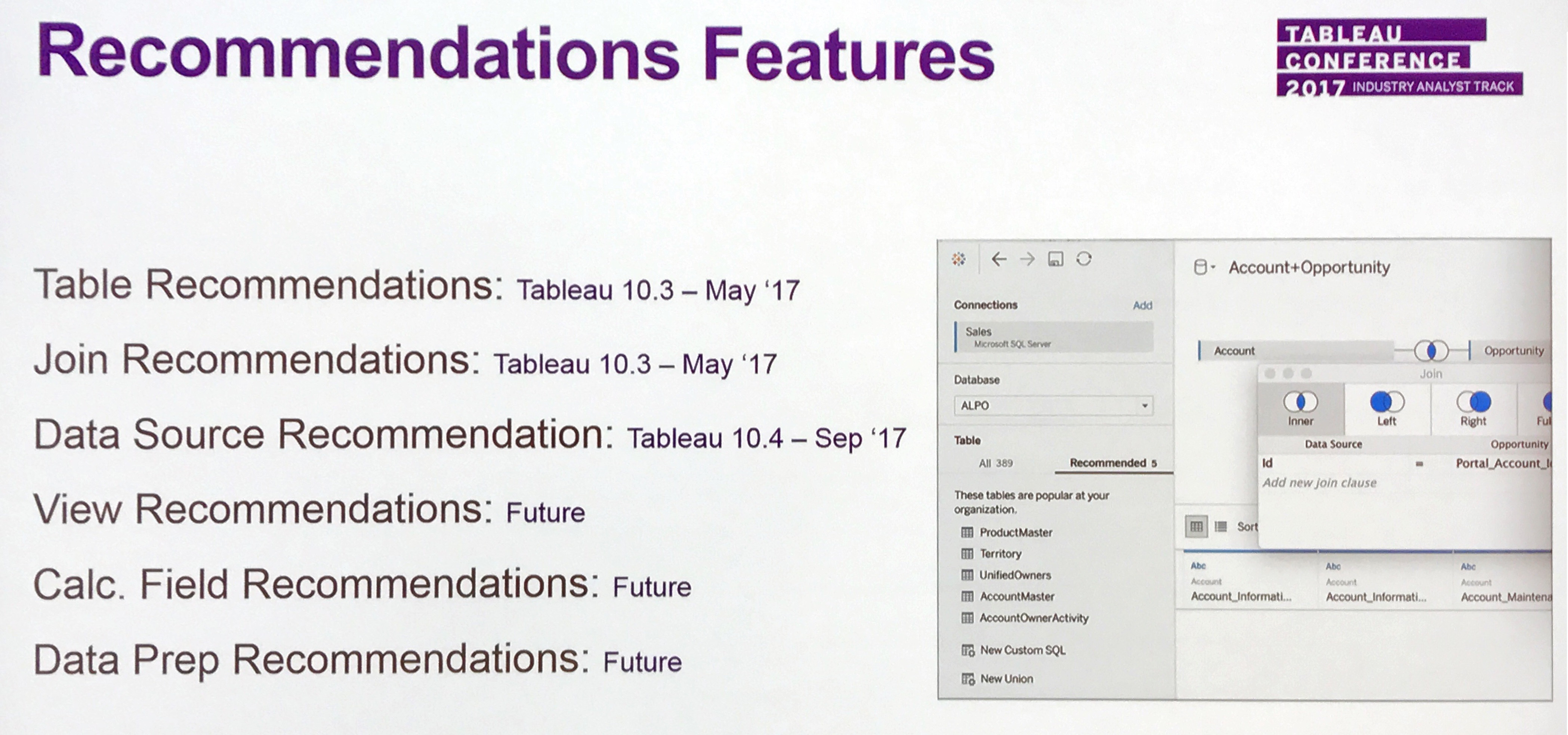
Tableau gains NLP with ClearGraph buy: Data-visualization specialist Tableau is adding natural language processing capabilities with the acquisition of ClearGraph. The move will give Tablea users a familiar and easy way to interact with data, the company says:

ClearGraph makes it easy to analyze data using natural language. It brings a consumer-like experience to users by connecting disparate data sources and making them accessible and intelligible through simple conversational style search. ClearGraph’s unique natural language query technology stores semantic data in knowledge graphs that can expand and learn over time. Accessing and analyzing data using ClearGraph requires no technical training, as the system can infer users’ intent through natural language. For example, people could ask questions such as, “Total sales by customers who purchased staples in New York,” then filter to, “orders in the last 30 days,” then group by, “project owner’s department.”

POV: Buying ClearGraph ties into Tableau's goal of making data analysis more accessible to everyone, says Constellation VP and principal analyst Doug Henschen. "Business intelligence and analytics vendors have been experimenting with natural language querying for years, but with advances in NLP and voice-to-text translation, we're seeing big advances in human-to-machine interaction, as demonstrated by popular consumer services such as Amazon Alexa and Google Now," he says. 

Querying is often a multi-step process of refinement, and ClearGraph appears to have made progress in retaining the context of an initial query to support drill-down analysis, Henschen adds. Its capabilities will benefit a coming wave of smart recommendation and analysis features Tableau has in the works.

Legacy Watch: Larry Ellison's best-of-breed screed, revisited: The 2004 book Softwar by Economist writer Matthew Symonds was and remains a must-read for anyone interested in knowing the inner workings of industry legend Larry Ellison and Oracle. One of its many remarkable passages contains the following comments from Ellison, who was discussing the release of E-Business Suite 11i:

It was, Ellison boasted, the only integrated suite that could do everything that most business customers would ever need it to do.

The consequence, Ellison argued, was that it was no longer necessary to hire expensive systems integrators from IBM or Accenture to glue together market-leading applications from different software vendors—the practice known as bringing together best-of-breed. "Building an integrated system out of several different software products that were never designed to work together is a very difficult task. At Oracle, we used to sell and deliver these best-of-breed systems; selliing was easy, delivering was hard. IBM has thousands of consultants eager to help you make it work. The more complex the integration project the more likely it will be late and over budget. It may even fail completely.

The best-of-breed software product assembly approach is absolutely unique to the computer industry. If Detroit ran like Silicon Valley, nobody would sell cars—just parts. Customers would have to figure out which were the 'best' parts—a Honda engine, a Ford transmission, a BMW chassis, GM electrical system—and buy them and try to assemble them into a working car. Good luck. I know it sounds crazy, but that's how companies put together business systems today.

POV: The best-of-breed vs. integrated suite question is a bit different today, given the rise of SaaS, dedicated integration players such as Dell Boomi and SnapLogic, and the consolidation of smaller SaaS vendors by large vendors including Oracle. Still, Ellison's comments have a resonance that still sustains nearly 14 years after he made them. 


Data to Decisions Tech Optimization Chief Information Officer Chief Digital Officer

Constellation ShortList™ Portfolio Update for Q3 2017

It’s that time again! Today, we are releasing an update of the Constellation ShortList™ portfolio. We offer 46 lists across our coverage areas, including 13 new lists launched today:

Back in October 2016, we officially unveiled the Constellation ShortList portfolio. Each Constellation ShortList offers recommended technology solutions across our coverage areas, helping buyers of technology identify the services and products they need to achieve successful digital transformation.

Our analysts will update the Constellation ShortList portfolio every six months or so to keep up with the quickly evolving technology landscape. These frequent updates will enable you make decisions with the most up-to-date information available. Products and services named to each Constellation ShortList meet the threshold criteria as determined by our analysts through client inquiries, partner conversations, customer references, vendor selection projects, market share and internal research.

Updates to the portfolio published today:

  • B2B Marketing Automation
  • B2C Marketing Automation
  • Campaign to Commerce
  • Cloud Customer Service and Contact Center Software
  • Cloud Identity Management
  • Cloud-Based Business Intelligence and Analytics Platforms
  • Cloud-Based Performance Management
  • Configure Price Quote (CPQ)
  • Customer Experience (CX) Services: Global
  • Customer Experience (CX): IOT Platforms
  • Customer Loyalty
  • Data Cataloging
  • Data Lake Management
  • Digital Adoption Platforms
  • Digital Asset Management (DAM) for DX
  • Digital Asset Management (DAM) for High Volume Commerce
  • Digital Experience (DX) Integrated Platforms
  • Digital Performance Management
  • Digital Transformation Target Platforms
  • Enterprise Cloud Finance Apps
  • Enterprise File Sharing
  • Enterprise Group Messaging
  • Enterprise Low Code Tools and Platforms
  • Field Service Management
  • Global HCM Suites
  • Global IaaS for NextGen Apps
  • Hybrid- and Cloud-Friendly NoSQL Stores
  • Hybrid- and Cloud-Friendly Relational Database Management Systems
  • Integration Platform as a Service (IPaaS)
  • Learning Marketplaces
  • Marketing Analytics
  • Matrix Commerce Order Management
  • Meeting Management Tools
  • Partner Relationship Management (PRM)
  • Pricing Optimization Solutions
  • Robotic Process Automation
  • Sales Force Automation
  • Sales Productivity
  • Self-Service Advanced Analytics
  • Self-Service Data Preparation
  • Smart Services Digital Monetization Platforms
  • Social / Digital Media Listening / Monitoring / Engagement Platforms
  • Social Task Management
  • Synchronous Ledger and Blockchain Platforms
  • Synchronous Ledger Technology Services
  • Talent Management Suites

Constellation ShortList Evaluation Services

Constellation clients may work with analysts and the research team to conduct a thorough discussion of a Constellation ShortList, vendor selection, and contract negotiation. Request a meeting here.

For more information, visit https://www.constellationr.com/shortlist.

Data to Decisions Digital Safety, Privacy & Cybersecurity Future of Work Marketing Transformation Matrix Commerce New C-Suite Next-Generation Customer Experience Tech Optimization Innovation & Product-led Growth ShortList AI ML Machine Learning LLMs Agentic AI Generative AI Robotics Analytics Automation Cloud SaaS PaaS IaaS Quantum Computing Digital Transformation Disruptive Technology Enterprise IT Enterprise Acceleration Enterprise Software Next Gen Apps IoT Blockchain CRM ERP CCaaS UCaaS Collaboration Enterprise Service developer Metaverse VR Healthcare Supply Chain Leadership ShortList Chief Customer Officer Chief Digital Officer Chief Executive Officer Chief Financial Officer Chief Information Officer Chief Marketing Officer Chief People Officer Chief Procurement Officer Chief Revenue Officer Chief Supply Chain Officer Chief Technology Officer Chief Data Officer Chief Analytics Officer Chief AI Officer Chief Information Security Officer Chief Product Officer Chief Operating Officer Chief Experience Officer

Updated Constellation ShortList of Synchronous Ledger Technologies

No new technology since the Internet itself has excited so many pundits as blockchain, but the mania has largely settled down, and I have warmed to the third generation ledger technologies carefully researched and developed from the ground up, by R3, Hyperledger and Microsoft, to name a few of the main players in this field.

Experience and sharper analysis exposed the inherent limitations of the original blockchain.  R&D continues at a frenetic pace on fundamental algorithms, service delivery models, and applications. As the field continues to evolve, one feature is shared by all important blockchain spinoffs: they all help to orchestrate agreement on some property of a complex set of transaction data. Hence, I’ve suggested the label Synchronous Ledger Technologies, which is more precise than “blockchain” and more accurate than “Distributed Ledger Technology”.

I see three broad approaches to the commercialization and delivery of blockchains and SLTs.

First, there are dedicated Dedicated SLT Developers working on special purpose, often industry-specific systems; these include Evernym and the Sovrin Foundation, R3 and Swirlds.  Secondly, several consortia and large consulting firms have established platforms in which businesses can explore, conduct pilots, and, where appropriate, collaborate; for example, Deloitte, the Enterprise Ethereum Alliance, Hyperledger, and Wipro. And thirdly, managed services are emerging which promise to offer SLTs in the cloud, with catalogues of standardized data management services with solution consulting; “Blockchain as a Service” might well come to dominate SLT delivery but at this time there are two leading providers: IBM and Microsoft.

All of these are works in progress. For the majority of businesses today, I recommend they select SLT services from a shortlist of the following labs and providers:

  • Deloitte has the most comprehensive SLT effort of any of the professional services firms, with a highly diverse technology stack – including Chain, Ethereum, Hyperledger, IPFS, Ripple, and Stellar – and physical labs in Dublin and New York City.
  • Hyperledger is a cluster of open source communities managed by the highly reputable Linux Foundation, hosting several SLT collaborations focused on different problem sets and technology families. Hyperledger’s most significant output to date is the comprehensive Fabric SLT platform.
  • IBM High Security Blockchain Network (HSBN) is a high-performance, high-security implementation of Hypledger Fabric in IBM’s cloud, currently hosting over 100 SLT pilots across almost every industry.
  • Microsoft Azure BaaS was the first blockchain-as-a-service (under “Project Bletchley”) which was supported by the solid Microsoft Research and the company’s major cloud computing capability.
  • R3 – a well-funded consortium of 40-odd institutions, dedicated to SLTs for financial services – pioneered third generation distributed ledger development, distinguishing itself firstly with a thorough experimental comparison of available algorithms, followed by the best explained R&D program in the field.
  • Wipro has invested in a multi-technology SLT lab, leveraging the company’s partnerships with IBM and Microsoft, incorporating multiple independent blockchain options like R3’s Corda, J.P. Morgan’s Quorum, and Ripple, and supported by in-house consulting frameworks.

Constellation’s updated ShortList of Synchronous Ledger Technologies was released yesterday.

Digital Safety, Privacy & Cybersecurity Matrix Commerce New C-Suite Tech Optimization Innovation & Product-led Growth Data to Decisions Blockchain AI Chief Executive Officer Chief Information Officer Chief Supply Chain Officer Chief Digital Officer Chief Technology Officer Chief AI Officer Chief Data Officer Chief Analytics Officer Chief Information Security Officer Chief Product Officer
Hyperledger Sets Out Reference Architecture: What It Means

Constellation Insights

The Linux Foundation's Hyperledger consortium has gained steady momentum over the past year, growing to well over 100 members and releasing the 1.0 version of its Fabric platform in July. Now the Hyperledger Architecture Working Group has released the first in a planned series of formal papers outlining the consortium's approach. The first paper's goals are summarized as follows:

• Outline the overarching Hyperledger design philosophy for permissioned blockchain networks.
• Explain how our approach optimizes the development of flexible, interoperable enterprise blockchain technologies.
• Identify the core permissioned blockchain network components that the Architecture WG has been and will continue to define through its work.
• Provide a generalized reference architecture for consensus.
• Explore how each Hyperledger business blockchain framework manifests the reference architecture.

In the future, the working group will release papers focused on blockchain components, including the smart contract layer, communication layer, data store abstraction, crypto abstraction, identity services, policy services, APIs and interoperation.

POV: The group's decision to publish the paper series is a welcome move, says Constellation VP and principal analyst Andy Mulholland. "Anything published on the topic of blockchain seems guaranteed to get attention, yet very little is published about the requirement to develop solution architectures that allow blockchain, or more correctly distributed ledger technology, to achieve its primary purpose of being a shared functionality between and across a wide variety of different enterprises, functions and enterprise applications," he says.

"All too often, current debate on distributed ledger technologies has been at cross-purposes due to lack of consistent understanding, causing the confusion that has long been a hallmark of blockchain," he adds. "Constellation Research welcomes this work and urges those working on deployments for digital business and IoT to read this paper."

The material is of good quality and it's also good to see the maturation of ledger technology and terminology, says Constellation VP and principal analyst Steve Wilson. "But I would state that the term blockchain is stale and obsolete," he adds. "With so many advanced ledgers now superceding the original public blockchains, I find the term misleading, and more so when one consortium attempts to standardize a reference architecture with certain services."

For one thing, it's too early to standardize a smart contract layer, as the concept remains debatable and will likely be settled over the next few years, Wilson says. The same goes for identity services. Some ledgers need an identity service while others actually implement identity as a service. That means identity layers will vary from one technology to another, Wilson says. "It cannot be a standard layer."

Wilson reiterates that blockchain has become a rather archaic term. "The Hyperledger work is several generations past what most people think of as a 'blockchain,'" he says. "The more this modeling advances, the more it becomes apparent that synchronous ledger technology is a better word for the category, and that different models will deliver SLT in different forms.

Go here to read Wilson's recent blog post in which he makes the case for synchronous ledger technology as a more suitable term.

Data to Decisions Tech Optimization Chief Financial Officer Chief Information Officer Chief Supply Chain Officer Chief Digital Officer