Results

2023 SuperNova Award Finalists Announced

We are excited to announce the finalists for our 13th annual SuperNova Awards! This year’s frontrunners include outstanding leaders and teams who are implementing disruptive and innovative technology initiatives within their industries and communities.

The SuperNova Awards represent the largest digital transformation case study library in the world. With over 250 case studies on business transformation in the Constellation Research library, our Constellation Executive Network provides subscribers with the world’s largest case study library for practitioners. The case study submissions highlight many of the top technology projects over the past year from industries, geographies, and companies across the globe.

Now, it’s time to narrow down the finalists and choose the winners. But to do that, we need your help! The polls will be open from August 7 to September 1, so be sure to cast a vote for your favorite nominee in each category before the deadline.

The results will be announced at Constellation’s Connected Enterprise on October 25, 2023. Constellation analysts will reveal the winners during the SuperNova Awards Gala, held on the third night of Connected Enterprise.

Here are this year’s finalists…

2023 SuperNova Award Finalists

AI and Augmented Humanity

Data to Decisions

Digital Safety, Governance, and Privacy

ESG & Sustainability

Future of Work: Employee Experience

Future of Work: Human Capital Management

Marketing & Sales Effectiveness

Next-Generation Customer Experience

Tech Optimization and Modernization

The 2023 SuperNova Award judges, comprised of technology thought leaders and journalists, selected finalists who demonstrated success in implementing leading-edge business models and emerging technologies for their organizations.

Were you named a finalist? Learn how to register for Connected Enterprise, get more information about the public polling, and more. Check the SuperNova Award Finalist Resources page here.


Chief Information Officer Chief Data Officer Chief Technology Officer

AMD sees AI interest, AMD Instinct MI300A and MI300X GPUs on track

AMD CEO Lisa Su said multiple customers are at the chipmaker to power AI projects and have "initiated or expanded programs supporting future deployments of Instinct accelerators at scale."

Su made the comments as the company reported second quarter earnings. The company reported second quarter revenue of $5.36 billion, down 18% from a year ago, with net income of $27 million, or 2 cents a share. Non-GAAP earnings for the second quarter were 58 cents a share.

Wall Street was expecting AMD to report non-GAAP earnings of 57 cents a share on revenue of $5.32 billion.

As for the outlook, AMD projected third quarter revenue of about $5.7 billion, give or take $300 million.

AMD's earnings report lands after Intel's second quarter financials, which spurred hope that the PC market is recovering. AMD is also gunning for Nvidia since workloads are favoring AI deployments. Su said AMD is on track to launch its M1300 accelerators in the fourth quarter.

According to AMD, the company's AMD Instinct MI300A and MI300X GPUs are sampling to HPC, Cloud and AI customers.

By business unit, AMD said its data center business had second quarter revenue of $1.3 billion, down 11% from a year ago. AMD said data center sales were down due to soft enterprise demand and elevated cloud inventory levels.

The client unit, focused on PCs, delivered second quarter revenue of $998 million, down 54% from a year ago. AMD cited a weak PC market and inventory correction. AMD's gaming unit had $1.6 billion in revenue, down 4% from a year ago. Embedded revenue was $1.5 billion, up 16% from a year ago, due to industrial, vision, auto and healthcare demand.

Speaking on a conference call, Su said data center market demand remains mixed, but the company is seeing more cloud instances powered by EPYC. In enterprise, EPYC saw sequential wins, said Su, noting that EPYC revenue should grow at a double-digit clip sequentially in the third quarter. Su said that AMD's AI strategy revolves around its broad portfolio, open software and partnerships. "We delivered on all three parts in the second quarter," said Su.

AI is a multi-billion dollar opportunity for AMD, said Su. She said AMD has increased investments in engineering, R&D and go-to-market. 

On the PC side, Su said she's expecting improvement in the client unit in the second half. "We see AI being a PC demand driver," said Su, who added that AMD has a roadmap to "fundamentally change the PC experience."

Key items in the quarter include:

  • AMD said it will invest about $400 million over the next 5 years to expand R&D and engineering operations in India.
  • AMD EPYC CPUs have SAP application instances on Google Cloud. AMD 4th Gen AMD EPYC processors added to AWS instances.
  • Phil Guido joined AMD as chief commercial officer. Guido was strategic sales lead at IBM, where he held multiple positions over 30 years.


Tech Optimization Data to Decisions Innovation & Product-led Growth Future of Work Next-Generation Customer Experience Digital Safety, Privacy & Cybersecurity Big Data AI GenerativeAI ML Machine Learning LLMs Agentic AI Analytics Automation Disruptive Technology Chief Information Officer Chief Technology Officer Chief Information Security Officer Chief Data Officer Chief Executive Officer Chief AI Officer Chief Analytics Officer Chief Product Officer

A futurist’s capstone and AI's impact over the next decade

Lee Rainie, former director of internet research at Pew Research Center, wanted to wind down his career of collecting data with capstone project. Why not predict the best and worst changes over the next decade due to artificial intelligence?

Rainie, appeared on DistrupTV Episode 330, and walked through a massive report from the Pew Research Center. The report (actually more like a short book), As AI Spreads, Experts Predict the Best and Worst Changes in Digital Life by 2035, is worth a read due to the balance between pessimism and optimism. Let's just say prognosticators left their rose-colored glasses at home. 

"There's a futurism hat that I wear but Pew is also really well known for general population surveys. You must orient a lot of your questions in a way that the average citizen can interpret and understand. We just did a questionnaire about who has used ChatGPT and 42% of American adults had never heard of ChatGPT," he said.

The survey had 305 respondents and comments from a bevy of futurists, including Constellation Research CEO Ray Wang. "As experts think about AI it's a balanced picture, but lots of people were saying they were equally excited and concerned. Concern is very much on their minds," explained Rainie.

Here's a look at the worst impacts of AI.

  • "Profit motives and incentives are driving so much of the most advanced change in generative AI. They worry about data surveillance and collection. Whether it will lead to more human autonomy or less human agency in the world," said Rainie.
  • Experts are "worried about the surveillance of citizens particularly in our authoritarian countries. It's just so easy now to keep track of people and to infer what they're going to do and predict," said Rainie.
  • While there are ways AI developments are going to lead to better health outcomes, experts are worried think a lot about mental health, wellbeing and the anxiety and depression we've seen come out of social media.
  • AI sentience is also going to be an issue. What kind of rights will sentient AI have?
  • Wang also surfaced competitive risks. He said:

"What I was really worried about was the largest companies vs. the smallest companies. There's going to be a disparity between small companies that can't compete with large companies for AI and data because the network effects. Individuals can't compete with governments who are going to oppress folks. It's going to be very important for large language models because society is not going to leave anything in the public models. Everything is going to be private and hid behind firewalls. What's going to happen in the future is we're probably going to have to take LLMs and treat them like patents and trademarks. There will be an expiration date, and everything gets turned back into the public good because if you don't do that there will be no more human knowledge."

Despite an appetizer of pessimism, there are a few AI developments worth cheering. Here's a look.

  • "There will be amazing health and well-being breakthroughs whether they're the protein folding vaccines, fitness and well-being regimes or personalized medicine changes," said Rainie. "When you bring smartness to all manner of objects of things and organizations, you're just going to get a lot of benefits to society."
  • While people are worried about surveillance, these new technologies will give people more power to access information and learn things, said Rainie.
  • "A lot of these experts are hopeful that the that the course of human history shows enough times that we've managed change in a way that the species comes out better in the long run," said Rainie.
  • AI will drive some clarity for humans. Rainie said:

"One of the meta themes of these expert reports is we're in a period of transition where essentially we're going to sort out the biggest question humans have ever faced. What are we good for and what are what can machines do better than us and what can machines help us do?"


Data to Decisions Digital Safety, Privacy & Cybersecurity Innovation & Product-led Growth Future of Work Tech Optimization Next-Generation Customer Experience AI GenerativeAI ML Machine Learning LLMs Agentic AI Analytics Automation Disruptive Technology Chief Technology Officer Chief Executive Officer Chief Information Officer Chief AI Officer Chief Data Officer Chief Analytics Officer Chief Information Security Officer Chief Product Officer

New Relic goes private in $6.5 billion deal, aims to accelerate observability platform ubiquity

New Relic is going private via a $6.5 billion acquisition by Francisco Partners and TPG in a move that aims to speed up a business model transformation and expansion plans.

The Francisco Partners and TPG deal wasn't unexpected and talks had been reported in various outlets for weeks. New Relic shareholders will get $87 per share in cash, good for a 26% premium to the company's 30-day volume weighted average. Like most mergers, customers will wait and see what the deal means for them.

For its part, New Relic CEO Bill Staples said the company has made "significant progress" toward moving to a business model based on consumption going private will give it "the resources and flexibility to complete the final chapter of this transition, but also accelerate our strategy."

Staples added that the buyout will also give customers innovation and avenue to standardize data practices to monitor, improve and debug. Francisco and TPG said New Relic can optimize observability and be well positioned to create a unified platform.

TPG's active portfolio investments include Boomi, Noodle.ai, Planview and Tanium to name a few. Francisco Partners is also a technology veteran with active investments in e2open, Payscale and a series of software providers focused on industries.

New Relic is on Constellation Research Shortlists for observability, DevOps and digital performance management. The company competes with Cisco's AppDynamics, Datadog, Splunk, Dynatrace and a bevy of others.

New Relic's transition

Before agreeing to the Francisco Partners and TPG deal, New Relic was approaching $1 billion in annual revenue and 80% of customers were under a consumption model.

Staples laid out the strategy at New Relic's May 25, analyst day. In a nutshell, New Relic wants to be the single source of truth so engineers can make data driven decisions during the software life cycle.

"We've been striving to turn observability from a collective set of reactionary monitoring-focused tools that have been built up over the past decade that really serve a limited set of production-focused engineers into a standardized data-driven practice for every engineer that every company can benefit from.

In a word, we are striving to make observability ubiquitous."

Staples added that New Relic's platform is critical to monitoring public cloud, applications, digital experiences and artificial intelligence tools.

"Increasingly, every piece of infrastructure, every application and service emits telemetry data through open standards, like open telemetry, in the form of events, traces, logs, metrics that must be captured and analyzed in real time and then stored for future query by millions of engineers who build these systems."

In other words, New Relic wants to be the standard engineering platform so enterprises can optimize, be more efficient and deliver customer experiences better. The ubiquity play is New Relic's consumption model, which is designed to add more customers and users.

In 2020, New Relic set out to unify its products into a platform with one data architecture. That and the move to a consumption model--and a free tier on-ramp, has given New Relic 60,000 active users on its platform.

Staples said the pivot to consumption is built around playing the long game with customers. New Relic moved from a licensing model to one based on pay for what's used and aligned sales compensation accordingly.

Gunning for ubiquity

At New Relic's analyst day, Manav Khurana, Chief Product Officer, explained how most customers start with the free tier and move up based on consumption.

The biggest reason for boosting consumption is that New Relic can surface dependencies beyond application performance monitoring. He said:

"Engineering teams need data-driven insights to make sure that the application and the services they provide are serving their business properly for the key transactions. They need to understand the end user experience. They need to understand the security posture. As they go from just the break/fix use case to serving full life cycle use cases, customers end up getting more value, and we see our data revenue and user revenue growth as a result of it."

Khurana added that AI use cases make observability even more critical.

New Relic also has more than 600 integrations with its platform and open standards. Khurana also said that New Relic is building out pipelines for large enterprises that have compliance requirements.

Is the New Relic platform ubiquitous today? No. The bet is that the company can accelerate its strategy by going private.

With the acquisition announcement, New Relic reported its fiscal first quarter results. The company reported a net loss of 54 cents a share, non-GAAP earnings of 43 cents a share and revenue of $242.6 million, up 12% from a year ago.

According to New Relic, 75% of its customers are using more than 5 monitoring tools. The plan is to get those customers to standardize. What remains to be seen if going private gets more New Relic customers on the standardization path.

Constellation Research's take

Constellation Research analyst Andy Thurai gave the following assessment of the New Relic deal:

"Despite the acquisition New Relic made in 2020, (Pixie Labs - a Kubernetes observability platform), the company struggled to make inroads with the cloud-native companies. The newer players like Chronosphere, Observe, Lightstep (ServiceNow), and Honeycomb have all established a lead over New Relic in cloud-native enterprises. Even the legacy players such as Splunk, Datadog, and Elastic via acquisition or organic growth have been aggressive in the cloud-native market and have a solid hybrid observability story. AppDynamics/Cisco fell behind after its acquisitions and allowed New Relic to gain some customers in the traditional APM as well as in the total observability space with the legacy clients.

The transition from a subscription-based ELA model to a consumption-based model is almost complete and NewRelic is surprisingly able to hold the pricing power. The company had 18% YoY growth with about 76% of the customers converted to the consumption-based pricing model. However, some of the customers have complained about the higher cost of observability for the New Relic solution in the consumption-based model and the sticker shock of prices at the end of the year.

One of New Relic's pitfalls is the shortness of storage duration. By default, the observability information (which can be very heavy and sizeable data if logs are turned on) is stored ONLY for 30 days. If the customers choose to increase to 90 days then the cost goes much higher. Some of New Relic's competitors offer cheaper solutions such as Amazon S3 and partner with log optimization solutions such as Cribl. For customers who are interested in doing longer-term analyses, New Relic could get very expensive. On the positive side, their customers always mention the real-time dashboards and reporting.

The purchase price of $6.5 billion (26% premium over the 30-day weighted average closing price) seems rather high for a company that is not growing as fast and facing stiff competition from a new breed of players."
 

Data to Decisions Tech Optimization Innovation & Product-led Growth Digital Safety, Privacy & Cybersecurity Future of Work New C-Suite Big Data ML Machine Learning LLMs Agentic AI Generative AI Robotics AI Analytics Automation B2B B2C CX EX Employee Experience HR HCM business Marketing Metaverse developer SaaS PaaS IaaS Supply Chain Quantum Computing Growth Cloud Digital Transformation Disruptive Technology eCommerce Enterprise IT Enterprise Acceleration Enterprise Software Next Gen Apps IoT Blockchain CRM ERP Leadership finance Social Healthcare VR CCaaS UCaaS Customer Service Content Management Collaboration M&A Enterprise Service Chief Information Officer Chief Technology Officer Chief Information Security Officer Chief Data Officer

Why AWS may need a new generative AI narrative


This post first appeared in the Constellation Insight newsletter, which features bespoke content weekly.

AWS dutifully rolled out a bevy of generative AI tools and model choices for developers. As usual, the AWS cadence is quick. But the bigger question is whether AWS is speaking to the right crowd when it comes to generative AI. The cloud land grab was bottoms up starting with developers. Generative AI is a boardroom issue and Microsoft and Google Cloud appear to have the better CXO narrative relative to AWS.

At AWS' New York Summit, Swami Sivasubramanian, VP of Databases, Analytics, and ML at AWS, outlined a bevy of generative AI updates to Amazon Bedrock, introduced new models and instances and talked vector data stores. "Generative AI has captured our imagination. I believe it'll transform every industry and business," said Sivasubramanian.

From there, AWS launched multiple models for Amazon Bedrock and other generative AI services. The theme: AWS has the infrastructure and the developer base. Give that base the tools and be the generative AI enabler. This approach is straight from the AWS playbook that has worked so well for years.

What's changed? The decision-makers. Microsoft and Google are simply talking a better generative AI game right now and appear to be capturing mindshare as well as workloads. You can debate whether Microsoft picked a fight with Google that it can't win, but what's more interesting is how AWS isn't mentioned much.

To hear Microsoft CEO Satya Nadella tell it, Azure and Microsoft Cloud are in the generative AI pole position. During Microsoft's fourth-quarter earnings conference call, Nadella said:

"We have grown Azure over the years coming from behind. And here we are as a strong #2 in the lead when it comes to these new workloads. So, for example, we are seeing new logos, customers who may have used out of the cloud for most of what they do, or for the first time, sort of starting to use Azure for some of their new AI workloads.

"We are seeing new customers starting to use Azure for some of their new AI workloads. We also have customers who have used multiple clouds start new data and AI projects."

Nadella talks about CoPilot, intelligent data platforms and all the things CXOs talk about: Productivity, efficiency and process. Toss in a few big-name customers like Chevron and boardrooms listen. It doesn't hurt that enterprises are often Microsoft shops.

Google Cloud is playing a different game, but CEO Sundar Pichai is well-versed in AI and sprinkling generative AI throughout its portfolio. Pichai talks about infrastructure but also returns. Google Cloud also courts developers but is using generative AI to upsell its base of customers.

Pichai said:

"We are making it easier for others to innovate using AI. One way is by providing Google Cloud's high-performance infrastructure, optimized for a range of generative AI models. It's being used by thousands of customers and partners to transform their businesses."

Google Cloud, which is playing from behind at No. 3, is betting generative AI will boost its addressable market. Pichai continued:

"Our new generative AI offerings are expanding our total addressable market and winning new customers. We are seeing strong demand for more than 80 models, including third-party and popular open source in our Vertex, Search and Conversational AI platforms with a number of customers growing more than 15x from April to June. Our generative AI capabilities also give us an opportunity to win new customers and upsell into our installed base of 9 million paying Google Workspace customers."

Pichai said Google Cloud is "engaging in more conversations" with enterprise executives.

Even the AWS-obsessed Oracle CTO Larry Ellison is in on the act when it comes to AI workloads.

What's unclear is whether generative AI ultimately means AWS loses a material amount of market share. AWS is the clear cloud leader, but now the company looks like it needs a storyline that appeals to CXOs as much as developers. Stay tuned for AWS' second quarter results Aug. 3. 

Data to Decisions Tech Optimization Innovation & Product-led Growth Future of Work Next-Generation Customer Experience Digital Safety, Privacy & Cybersecurity Google amazon Microsoft SaaS PaaS IaaS Cloud Digital Transformation Disruptive Technology Enterprise IT Enterprise Acceleration Enterprise Software Next Gen Apps IoT Blockchain CRM ERP CCaaS UCaaS Collaboration Enterprise Service AI GenerativeAI ML Machine Learning LLMs Agentic AI Analytics Automation Chief Information Officer Chief Technology Officer Chief Information Security Officer Chief Data Officer Chief Executive Officer Chief AI Officer Chief Analytics Officer Chief Product Officer

Enterprise IT vendors see gradual demand improvement, AI-driven buying

Enterprise technology demand has stabilized, and vendors are expecting gradual demand improvement into the second half with pockets of generative AI-driven strength.

Financial reports from key enterprise tech vendors are confirming what a Constellation Research survey has found. CXOs are more optimistic, positioning for growth and looking toward automation and generative AI projects. In fact, there's a decent bit of IT spending optimism--or at least the theory that the worst is over.

Constellation Research's 2023 H1 "CxO Business Confidence Survey" found that 32% of the IT budget is going to investments that add to top-line growth and 28% is going to efficiency. That balance is reflected in comments from enterprise technology vendors. Here's a look at what vendors say on earnings conference calls. 

Francois Locoh-Donou, CEO of F5

"From a demand perspective, we are seeing some early signs of stabilization. Q3 demand played out slightly above our beginning of quarter forecast, which was up from Q1 and Q2 this year, though still off from FY '22 levels."

Ben Suh, SVP of IR at Samsung

"We expect global IT demand in the business environment to recover gradually, driving improved results especially in our component businesses. However, challenges associated with a demand recovery are also likely to persist due to macro risks and other factors."

ServiceNow CEO Bill McDermott

"We see a sustained demand environment and pipeline for all of our product businesses, geographic regions and industry verticals. We're set up very well for a strong second-half.

This is a dynamic period for the IT industry. Think about it this way. Every leader in every department, in every business, in every industry is writing a new playbook for the AI world. CEO's are sponsoring them. The C-suite across all functions is funding them." 

ServiceNow launches two generative AI use cases with proprietary LLM, outlines commercialization plans

Seagate CEO Dave Mosley

"In today’s earliest stages of gen AI development, you’re seeing the necessary first steps of building and training of AI models. These efforts require significant investment in compute architecture, and we’re seeing that investment ramp today. The next stage of development will yield enterprise-specific use cases that leverage trained AI models to convert data into value-enhancing applications."

Microsoft CEO Satya Nadella

"Every customer I speak with is asking not only how, but how fast they can apply next-generation AI to address the biggest opportunities and challenges they face, and to do so safely and responsibly."

Microsoft Q4 better than expected with Azure revenue gains of 26%

PROS Holdings CEO Andres Reiner

"Across the B2B industries we serve, sales cycles with new customers in 2023 are 30% faster year-over-year. We're also driving rapid time to value, leading to rapid expansions."

Alphabet CFO Ruth Porat

"Google Cloud Platform revenue growth remained strong across geographies, industries and products. That being said, we saw a continued moderation in the rate of consumption growth as consumers optimize their spend."

Google Cloud revenue in Q2 tops YouTube ads

Related:

New C-Suite Data to Decisions Innovation & Product-led Growth Future of Work Tech Optimization Next-Generation Customer Experience Digital Safety, Privacy & Cybersecurity Leadership AI GenerativeAI ML Machine Learning LLMs Agentic AI Analytics Automation Disruptive Technology Chief Executive Officer Chief Financial Officer Chief Information Officer Chief Experience Officer Chief Technology Officer Chief AI Officer Chief Data Officer Chief Analytics Officer Chief Information Security Officer Chief Product Officer

Transforming IT with Unified Software Services: An Evolving Strategy for CIOs

In the context of the modern IT, technology has become the bedrock for most businesses worldwide, a fundamental enabler of growth and innovation. Despite being essential, it has driven IT infrastructures to an unparalleled level of sophistication, consuming a significant portion of budgets and resources just to keep it properly coordinated and well-managed. This constant balancing act between managing existing systems and embracing new advancements is now the new norm. I am finding that CIOs today are engaged in a steadily growing effort to manage this technology complexity, in concert with the ever-increasing numbers of vendors and service providers required to successfully deliver all these technological capabilities to the business. . 

Thus, the technological landscape of organizations continues to be fraught with an broad swath of tech solutions, data silos, and the hefty operational overhead of ensuring security, integration, optimization, and evolution, and technical debt are all addressed. In my experience, a majority of Chief Information Officers (CIOs) now see this complexity as a leading challenge in the IT management sphere today. Consequently, almost half of organizations are seeking to outsource day-to-day support and maintenance services to focus on more strategic and innovation-centric projects.

Looking at Emerging Models to Manage Complexity in IT Services

Third-party IT services are rising in demand, growing by about 7% annually, according to our firm's most recent estimates. These vital outside services, encompassing a wide array of functions from cybersecurity to IT support and digital transformation, can help streamline and simplify IT infrastructures. As enterprises grow, the demand for more integrated systems, better access to data across silos, added functionality, and increased automation has led to the cultivation and consumption of an increasingly diverse enterprise services portfolio. This has driven growth of the IT services industry year-of-year for a decade, but it has also introduced a significant new layer of complexities.

That's because the introduction of each new service provider is accompanied by the need for onboarding, vendor management, and time investment to overee them and integrate them into the IT service fabric, which then becomes another bottleneck and source of inconsistency in service delivery. As IT becomes critical for rapidly changing requirements and operating conditions, the need for better-coordinated enterprise services is at an all-time high. This need is further fueled by a significant talent shortage in the IT sector, ranging from operations to cybersecurity, further driving organizations to either outsource, and further silo the work being done, or to find other solutions. There has to be a better way.

In 2023, CIOs have reported that they spend most of their time on activities like security management, improving IT operations, aligning IT with business goals, modernizing infrastructure, and leading change efforts. A significant portion of these activities can potentially be outsourced to third-party IT services, as costs and talent availability remain significant concerns. But only if this does not signifciantly exacerbate service delivery and IT management overhead.

The Updated Unified Software Services Model for 2023

Unified Software Services as a Leading New Model

The 2023 Report on Unified Software ServicesAs I unveiled as a significant emerging IT trend in a major research report last year, The Rise of Unified Software Services, the IT services industry has responded with a new strategic approach: Unified Software Services (USS). This model enables enterprises to engage service providers in a more encompassing and holistic manner. A USS provider offers a long-term services strategy, catering to everything from basic security and IT modernization to digital transformation. 

One of the key insights is that a USS offering can provide a better-integrated solution to meet an organization's needs. Adopting a USS approach can result in faster, smoother, and more efficient delivery of IT services, with benefits ranging from cost optimization to improved agility and governance. 

While the USS model offers a multitude of benefits, the critical, breakthrough advantage is the reduction in overall complexity. When IT is simpler to manage, evolve, and govern, the path to future becomes significantly easier to travel. A shift to USS can provide organizations with numerous benefits, from cost savings to improved agility and shorter time to value. 

Constellation Research recommends IT departments to consider the benefits of USS and start integrating it into their IT services mix. A shift of between 20% and 50% towards USS can provide significant benefits and reductions in complexity. In 2024 and beyond, organizations are encouraged to transition to and adopt USS to advance their existing portfolios and meet their emerging technology agendas, such as with AI and advanced cybersecurity. 

I've updated my current research on USS as well as taken at look at how it can aid in delivering on some of the latest industry trends in a brand-new follow-up report, The Evolution of Unified Software Services. It explores how USS can be used to bettter deliver consistently across projects and prgrams. The report also examines how USS can specifically help new focus areas and practices such FinOps, sustainability and ESG, industry clouds, reallocation of tech talent/nearshoring, cloud adoption for cost reduction, and artificlal intelligence.

CIOs and IT executives are encouraged to evaluate the USS model as technology continues to grow in overall enterprise spend. Oganizations need to find more efficient ways to manage the services they consume, and I believe that Unified Software Services currently offers one of the most mature current path to optimize IT delivery, management, and support today, whilst also facilitating the transformation of IT and business for the future. For CIOs and IT executives, the USS model emerges as the most flexible, integrated, and efficient method to manage their IT services, shaping the future of their organizations.


My video exploration of the rise and evolution of Unified Software Services.

Update: Rimini Street has graciously made this report available to the general public for a limited time. You can download a copy here.

My Related Research

Private Cloud a Compelling Option for CIOs: Insights from New Research

An Update on IBM Cloud for the CIO

How CXOs Can Attain Minimum Viable Digital Experience for Customers, Employees, and Partners

Cloud Reaches an Inflection Point for the CIO in 2022

An Oracle NetSuite Roadmap for the CIO and CFO

Objectives and Key Results (OKRs) Turns COOs into Transformation Leaders

To Strategically Scale Digital, Enterprises Must Have a Multicloud Experience Integration Stack

Unleashing Human Potential in a Data-Driven AI World | Impact TV Episode 3

Co-hosts R "Ray" Wang, founder of Constellation Research and Teresa Barreira, CMO of Publicis Sapient explore how data and #Al are powerful tools for augmenting human creativity, offering new insights, and exploring boundless possibilities. They interview the following data & AI experts:

00:00 - Introduction
03:30 - Ray Valez, EVP Data and AI, Publicis Sapient
17:08 - JoAnn Stonier, Fellow of Data & AI, Mastercard
33:23 - Rishad Tobaccowala. Founder, Rishad Tobaccowala LLC

🗓️ Subscribe to Constellation's YouTube channel for episode 4 of Impact TV, coming down the pipeline in the coming weeks!

On <iframe width="560" height="315" src="https://www.youtube.com/embed/yRjUUXHvJ7w" title="YouTube video player" frameborder="0" allow="accelerometer; autoplay; clipboard-write; encrypted-media; gyroscope; picture-in-picture; web-share" allowfullscreen></iframe>

Intel's Q2 better than expected, issues remain

Intel's second quarter results weren't as bad as feared as the company saw an uptick in its Intel Foundry Services business and declines elsewhere.

The company, which is lagging Nvidia in processors used for AI workloads, reported second quarter revenue of $12.9 billion, down 15% from a year ago. Intel delivered net income of $1.5 billion, or 35 cents a share, in the second quarter. The company reported second quarter non-GAAP earnings of 13 cents a share.

Wall Street was expecting Intel to report a loss of 3 cents a share on revenue of $12.13 billion, down 21% from a year ago. At the end of the first quarter, Intel forecasted second quarter revenue of $11.5 billion to $12.5 billion with a non-GAAP loss of 4 cents a share.

As for the outlook, Intel projected non-GAAP third quarter earnings of 20 cents a share on revenue of $12.9 billion to $13.9 billion.

While the second quarter results were better than expected, Intel is still facing multiple issues. Its PC chip business was down 12% from a year ago to $6.8 billion and its data center and AI business had revenue of $4 billion, down 15% from a year ago. Network and edge saw revenue fall to $1.4 billion, down 38% from a year ago.

Intel noted the following:

  • In the client computing unit, revenue fell as PC makers worked through excess inventory.
  • For the data center and AI group, Intel said it saw lower revenue due to competitive pressure (AMD and Nvidia) as well as a shrinking total addressable market for CPUs.  
  • In network and edge, revenue ws lower on weak telecom demand. 

On the bright side, Intel Foundry Services had second quarter revenue of $232 million, up 307% from a year ago.

Intel CEO Pat Gelsinger said the company was "well-positioned to capitalize on the significant growth across the AI continuum by championing an open ecosystem and silicon solutions that optimize performance, cost and security to democratize AI from cloud to enterprise, edge and client."

The company also said it's on track to deliver $3 billion in cost savings in 2023.

Speaking on a conference call with analysts, Gelsinger said the following:

  • Intel said the company is regaining customer trust with expectations of a "modest second half 2023 recovery."
  • The client business performed better than expected with share gains in consumer and education. Gelsinger added that the AI PC will drive demand as well now healthy inventory levels. 
  • The CPU server market remains soft in enterprise and internationally. Gelsinger said focus has been on AI accelerators. He expects the server market to recover in 2024. 
  • "Our strategy is to democratize AI across the continuum," said Gelsinger, adding that Intel will bring AI to cloud to edge to client. 
  • Foundry services is "a significant accelerant to our Intel 2.0 strategy" and diversifies the semiconductor supply chain outside of Asia. Gelsinger said it is investing in additional capacity. 
  • "I'm pleased to report all of our programs or on track or ahead of schedule," said Gelsinger, noting that Intel plans to close the power and performance gap by 2025. 
Tech Optimization Data to Decisions Innovation & Product-led Growth Future of Work Next-Generation Customer Experience Digital Safety, Privacy & Cybersecurity Big Data ML Machine Learning LLMs Agentic AI Generative AI AI Analytics Automation business Marketing SaaS PaaS IaaS Digital Transformation Disruptive Technology Enterprise IT Enterprise Acceleration Enterprise Software Next Gen Apps IoT Blockchain CRM ERP finance Healthcare Customer Service Content Management Collaboration Chief Information Officer Chief Technology Officer Chief Information Security Officer Chief Data Officer Chief Executive Officer Chief AI Officer Chief Analytics Officer Chief Product Officer

ServiceNow launches two generative AI use cases with proprietary LLM, outlines commercialization plans

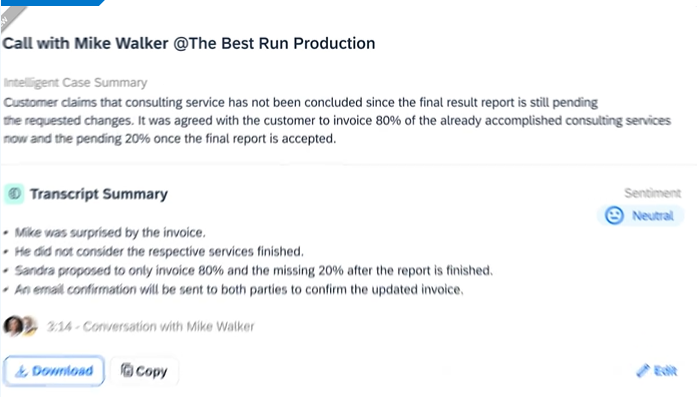
ServiceNow launched case summarization and text-to-code generative AI tools built on its ServiceNow LLM, which is optimized for its platform. On the commercialization front, ServiceNow said it will introduce new premium generative AI offerings across IT service management, customer service management and HR service delivery in September with its Vancouver platform release. 

Large language models (LLMs) are a big focus for enterprises looking to add generative AI capabilities to improve productivity. ServiceNow's approach is to create purpose-built generative AI capabilities that can be deployed quickly across IT, HR and customer service cases. The two new use cases are part of ServiceNow's Now Assist family of generative AI features. ServiceNow's Generative AI Controller enables enterprise to connect to ServiceNow instances, Microsoft Azure OpenAI Service and OpenAI API LLMs. 

Premium SKUs for generative AI features are also a big topic since it can fuel ServiceNow's growth. ServiceNow saw strong growth for its current premium offerings, ITSM Pro and CSM Pro and it's likely that technology buyers will be kicking the tires on the company's generative AI "Pro Plus" offerings. ServiceNow is lining up partners such as KPMG to reinvent finance, supply chain and logistics using its platform. ServiceNow also launched AI Lighthouse, a program with Nvidia and Accenture to speed up enterprise generative AI deployments. 

ServiceNow CEO Bill McDermott said the company "is already seeing our own significant productivity increases with the generative AI solutions we're releasing to the market." 

In the second quarter, ServiceNow topped estimates on multiple fronts. 

The company saw subscription revenue growth of 25% compared to a year ago. ServiceNow had 70 transactions worth more than $1 million in net new ACV and 45 customers with more than $20 million in ACV. ServiceNow reported second quarter revenue of $2.15 billion, up 23% from a year ago, with net income of $1.04 billion, or $5.08 a share. Non-GAAP earnings for the second quarter were $2.37 a share. 

"We have more than 1 trillion workflows running through ServiceNow each year. Our trajectory is being supercharged by generative AI," said McDermott. 

McDermott said large deals for ServiceNow were evenly distributed across products in the second quarter and the company saw sustained demand.

Previously:

As for the outlook, ServiceNow projected third quarter subscription revenue growth of $2.18 billion to $2.19 billion, or about 26% growth from a year ago. For 2023, ServiceNow is projecting subscription revenue growth of $8.58 billion to $8.6 billion, or about 25% growth.

Constellation Research analyst Andy Thurai said:

"It is no surprise that ServiceNow is doing some generative AI use cases. What is good is that ServiceNow trained its own LLM instead of using one of the existing LLMs which would have raised a lot of security, privacy, tenancy, and data sharing questions. However, this will obviously bring the question of the accuracy of these models compared to the other existing high-performance models such as LLAMA and also the question of how often it will be retrained, etc. Assuming those issues are addressed and mitigated, I really like the case summarization use case. Summarization from documents is one of those cool low risk use cases where Generative AI can perform really well."

ServiceNow LLM is engineered to save time and speed up resolution time. Here are the key points:

  • ServiceNow LLM is proprietary and part of the Now Assist family of generative AI features.
  • Text-to-code converts natural language text prompts to executable code for the Now Platform.
  • Case summarization streamlines essential information to simplify resolution processes and automate manual data entry.
  • ServiceNow LLM was built on a specialized version of the 15 billion parameter StarCoder LLM.
  • ServiceNow LLM was trained and tuned with Nvidia accelerated computing and DGX Cloud.

According to ServiceNow, case summarization and text-to-code are available to a limited set of customers and will be generally available in the ServiceNow Vancouver release in September.

Data to Decisions Innovation & Product-led Growth Future of Work Tech Optimization Next-Generation Customer Experience Digital Safety, Privacy & Cybersecurity servicenow ML Machine Learning LLMs Agentic AI Generative AI Robotics AI Analytics Automation Quantum Computing Cloud Digital Transformation Disruptive Technology Enterprise IT Enterprise Acceleration Enterprise Software Next Gen Apps IoT Blockchain Leadership VR Chief Information Officer Chief Executive Officer Chief Technology Officer Chief AI Officer Chief Data Officer Chief Analytics Officer Chief Information Security Officer Chief Product Officer