Results

CX Trends, AI Tech, Earnings News | ConstellationTV Episode 62

On Episode 62 of ConstellationTV, co-hosts Liz Miller and Holger Mueller discuss #technology news, including Oracle and SAP earnings calls and UK pressures on Adobe/Figme. Then Liz outlines her latest report on connecting experiences from employees to customers, and Holger discusses IBM's #ai technology, WatsonX. As always, watch to the end for bloopers!

00:00 - Introduction
01:57 - Tech News Updates
14:57 - Holger's Trends Report on AI Technology
19:52 - Liz's Trends Report on Customer Experience
25:52 - Bloopers

ConstellationTV is a bi-weekly Web series hosted by Constellation analysts. The show airs live at 9:00 a.m. PT/ 12:00 p.m. ET every other Wednesday. Brought to you by Constellation Executive Network: constellationr.com/CEN.

On ConstellationTV <iframe width="560" height="315" src="https://www.youtube.com/embed/qu3wDT3zL98" title="YouTube video player" frameborder="0" allow="accelerometer; autoplay; clipboard-write; encrypted-media; gyroscope; picture-in-picture; web-share" allowfullscreen></iframe>

AWS launches generative AI tools for developers

Amazon Web Services made its case for generative AI workloads starting with developers.

At AWS' New York Summit, Swami Sivasubramanian, VP of Databases, Analytics, and ML at AWS, outlined a bevy of generative AI updates to Amazon Bedrock, introduced new models and instances and talked vector data stores.

"Generative AI has captured our imagination. I believe it'll transform every industry and business," said Sivasubramanian, who stayed on point despite having his keynote interrupted a handful of times by protesters.

AWS New York Summit came hours after both Microsoft and Google reported earnings and executives talked about generative AI driving cloud demand. AWS has been relatively quiet about its generative AI story but has the infrastructure and enterprise heft to run those workloads.

"AWS is always about providing Lego building blocks for developers. AWS Bedrock offers model selection between multiple LLMs to developers. They are about developers and always have been. Always will be," said Constellation Research analyst Andy Thurai.

Here's a look at some of the AWS updates from New York.

  • Amazon Bedrock gets new foundation models and fully managed agents. Amazon Bedrock, which is in preview, is a managed service for foundation models from the likes of Amazon, AI21 Labs, Anthropic, Cohere, and Stability AI for developers to use via API. Sivasubramanian also outlined a preview of agents for Amazon Bedrock so developers can automate the prompt engineering and orchestration of user requested tasks.
  • Amazon EC2 P5 Instances with Nvidia H100 Tensor Core GPUs. AWS said Amazon EC2 P5 instances with Nvidia's H100 GPUs are generally available.
  • AWS announced vector engine for Amazon OpenSearch Serverless, which provides an API for storing and querying billions of embeddings. AWS said all databases will have vector engines over time.
  • AWS launched AWS HealthScribe, which is a HIPAA-compliant service that automatically generates clinical notes by transcribing and summarizing physician-patient conversations.
  • Amazon QuickSight gets generative BI that allows users to ask questions about their data using natural language tools to create visuals, answers and calculations.
Data to Decisions Innovation & Product-led Growth Future of Work Tech Optimization Next-Generation Customer Experience Digital Safety, Privacy & Cybersecurity amazon AI GenerativeAI ML Machine Learning LLMs Agentic AI Analytics Automation Disruptive Technology Chief Information Officer Chief Executive Officer Chief Technology Officer Chief AI Officer Chief Data Officer Chief Analytics Officer Chief Information Security Officer Chief Product Officer

Tech M&A may perk up again
The market for tech mergers and acquisitions appears to be opening a bit—especially for smaller deals that round out capabilities for larger vendors.

Teradata said it has acquired Stemma, which provides a cloud data catalog platform. Stemma, founded in 2020, is best known for its machine learning that surfaces data and metadata for customers. Teradata said Stemma will broaden Teradata’s analytics engine for artificial intelligence and machine learning. Terms of the deal weren’t disclosed.

Meanwhile, Haveli Investments, a private equity firm, said it will acquire Certinia, which was previously known as FinancialForce. Haveli Investments bought Certinia from Advent International and Technology Crossover Ventures.

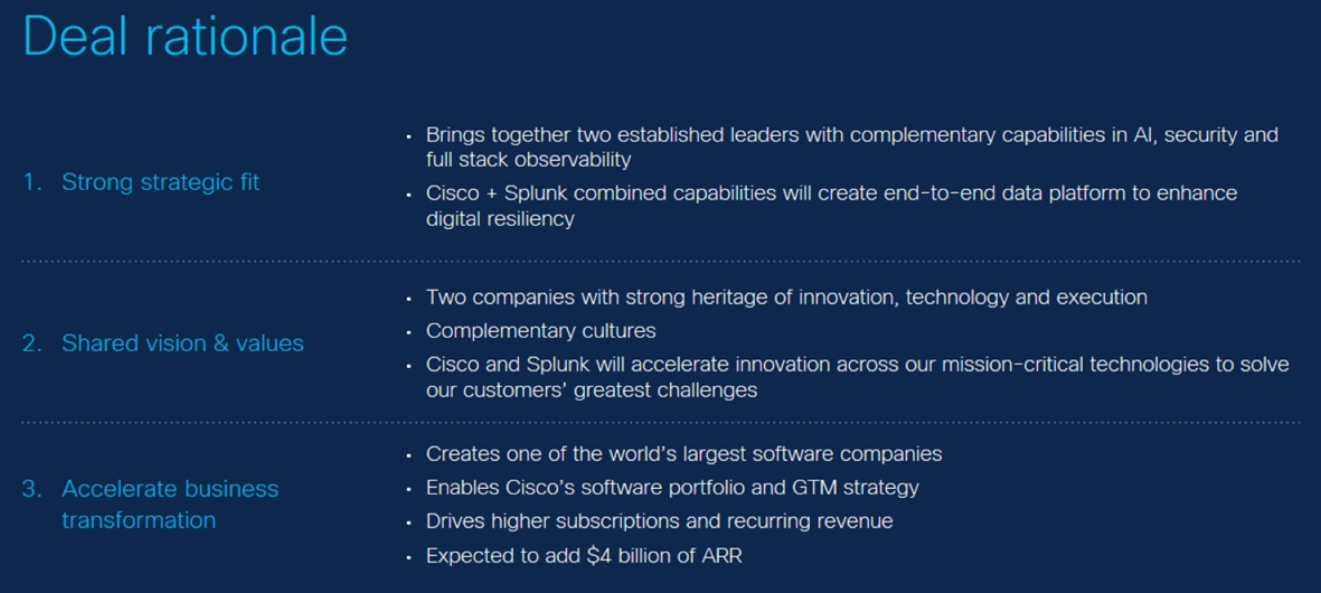
These smaller deals land as small- and mid-cap tech companies get scooped up. Maybe IBM's purchase of Apptio for $4.6 billion and Databricks $1.3 billion acquisition of MosaicML are just appetizers.

It’s wait-and-see for big deals, but things are starting to look up.

A US federal court shot down a request by the Federal Trade Commission to block Microsoft's deal to acquire Activision Blizzard. Meanwhile, the EU granted conditional approval to Broadcom's VMware purchase for $61 billion. These deals aren’t completed but headed in the right direction.

The jury is still out on M&A, but the music has stopped for startups looking for funding and those companies could be bargains for the right players.


New C-Suite Revenue & Growth Effectiveness Innovation & Product-led Growth Data to Decisions Tech Optimization Chief Information Officer

Google Cloud revenue in Q2 tops YouTube ads

Google Cloud revenue in the second quarter topped $8 billion as parent Alphabet reported better-than-expected results and said CFO Ruth Porat will take on a new President and Chief Investment Officer role Sept. 1.

Porat was the longest serving CFO at Google. Alphabet's move to put Porat in charge of investments is notable. She will be responsible for Alphabet's "Other Bets" portfolio. Porat will also work with policymakers and regulators.

Alphabet reported second quarter revenue of $74.6 billion, up 7% from a year ago, with net income of $18.4 billion, or $1.44 a share.

Wall Street was expecting Google to report second quarter adjusted earnings of $1.34 a share on revenue of $72.82 billion, according to Refinitiv. Google Cloud was expected to deliver revenue of $7.87 billion, according to StreetAccount.

CEO Sundar Pichai said the company is “driving the next evolution of search and improving all of our services” with AI. Porat added that there was an acceleration of revenue growth in search and YouTube and momentum with Google Cloud.

Indeed, Google Cloud revenue in the second quarter topped YouTube ad sales of $7.66 billion. Google Cloud operating income was $395 million in the second quarter, compared to a loss of $590 million a year ago. 

Google has been busy this quarter adding capabilities to Bard, its generative AI technology, and sprinkling generative AI throughout its portfolio. Google Cloud also launched a series of AI-driven enhancements to its platform. While there will be multiple generative AI winners in the tech sector, Google vs. Microsoft, which is partnered with OpenAI, is the main card. It’s a battle that will take years to play out.

Here’s a look at some of the notable enterprise technology headlines from Google this quarter.

Alphabet ended the quarter with 181,798 employees, up from 174,014 a year ago. Alphabet said the majority of employees affected by workforce reductins are no longer included in the headcount totals.  

Speaking on a conference call with analysts, Pichai made the following points:

  • User feedback to generative AI in search has been strong. "We see this new experience as another jump-off point for users to go deeper," he said.
  • Google has sped up response time of Bard in search. Bard is also improving coding productivity.
  • Ads will continue to play a role in the generative AI evolution of search. "We are testing and evolving placements and formats," said Pichai, who added AI is also being used in Google's ad products.Generative AI is being used to create ad formats. 
  • Google Cloud is being optimized to work with multiple generative AI models. "We see continued growth," said Pichai. "Our AI infrastructure is optimized for training and serving generative AI models."
  • Machine learning and AI are making data centers more efficient.
  • Generative AI is driving Google Workspace demand and upsell opportunities to existing customers.

As for the outlook, Porat said the company sees stabilization in advertising revenue for YouTube, YouTube Music, YouTube Premium, search and hardware, which was fueled by the Pixel 7a launch in the second quarter.

Regarding cloud, Porat said the company is excited about demand for its AI offerings, but customers continue to optimize their spending.

Porat added that Google is optimizing its cost base through slower organic hiring, redeploying workers on more high value projects and improving efficiency. The largest capital expenditure was servers in the second quarter, but the rest of 2023 will feature more spending on data centers, GPUs and TPUs.

Data to Decisions Digital Safety, Privacy & Cybersecurity Innovation & Product-led Growth Tech Optimization Future of Work Next-Generation Customer Experience Google Cloud Google SaaS PaaS IaaS Cloud Digital Transformation Disruptive Technology Enterprise IT Enterprise Acceleration Enterprise Software Next Gen Apps IoT Blockchain CRM ERP CCaaS UCaaS Collaboration Enterprise Service ML Machine Learning LLMs Agentic AI Generative AI AI Analytics Automation business Marketing finance Healthcare Customer Service Content Management GenerativeAI Chief Information Officer Chief Technology Officer Chief Information Security Officer Chief Data Officer Chief Executive Officer Chief AI Officer Chief Analytics Officer Chief Product Officer

Microsoft Q4 better than expected with Azure revenue gains of 26%

Microsoft reported better-than-expected fiscal fourth quarter earnings and Azure growth was 26% compared to a year ago. Azure growth was 40% a year ago and has fallen each quarter in fiscal 2023.

The software and cloud giant reported fourth quarter net income of $20.1 billion, or $2.69 a share, on revenue of $56.2 billion, up 8% from a year ago. CEO Satya Nadella said the company remains “focused on leading the new AI platform shift.”

Wall Street was expecting Microsoft to report fourth quarter earnings of $2.55 a share on revenue of $55.47 billion. Leading up to Microsoft's earnings, investors and analysts were upbeat about the software giant's revenue gains from its new Microsoft 365 Copilot pricing.

Microsoft 365 Copilot will run you $30 per user per month for Microsoft 365 E3, E5, Business Standard and Business Premium customers.

While there will be multiple generative AI winners in the tech sector, Google vs. Microsoft, which is partnered with OpenAI, is the main card. It’s a battle that will take years to play out.

Nadella said on a conference call with analysts that Azure is taking share when enterprises redeploy workloads. Nadella said the priority is making Azure the go-to cloud for generative AI and interest in CoPilot has been strong. 

Key recent headlines include:

Microsoft’s cloud business was the main attraction. Microsoft is looking to infuse AI throughout its stack, but it’s unclear how fast customers can leverage AI.

CFO Amy Hood said:

"In Azure, we expect revenue growth to be 25% to 26% in constant currency, including roughly 2 points from all Azure AI Services. Growth continues to be driven by our Azure consumption business, and we expect the trends from Q4 to continue into Q1. Our per user business should continue to benefit from Microsoft 365 suite momentum, though we expect continued moderation in growth rates, given the size of the installed base."

By the numbers for the fourth quarter:

  • Microsoft Cloud fourth quarter revenue was $30.3 billion, up 21% from a year ago.
  • Office Commercial products and cloud services revenue was up 12% from a year ago.
  • LinkedIn revenue was up 5%.
  • Intelligent Cloud revenue was $24 billion, up 15%.
  • Windows OEM revenue fell 12% and devices revenue fell 20%.
  • For fiscal 2023, Microsoft delivered net income of $72.4 billion, or $9.68 a share, on revenue of $211.9 billion, up 7% from a year ago.
  • Search and news advertising revenue excluding traffic acquisition costs was up 8% in the fourth quarter.
  • Office Commercial seat growth in the fourth quarter was up 11% from a year ago. 
  • Microsoft said it had 67 million Microsoft 365 Consumer subscribers. 
  • For fiscal 2023, Microsoft spent $27.2 billion on research and development, up from $24.5 billion a year ago. 

Data to Decisions Future of Work Innovation & Product-led Growth New C-Suite Tech Optimization Next-Generation Customer Experience Digital Safety, Privacy & Cybersecurity Microsoft AI GenerativeAI ML Machine Learning LLMs Agentic AI Analytics Automation Disruptive Technology Chief Information Officer Chief Experience Officer Chief Executive Officer Chief Technology Officer Chief AI Officer Chief Data Officer Chief Analytics Officer Chief Information Security Officer Chief Product Officer

Nvidia DGX Cloud now available on Oracle Cloud Infrastructure

Nvidia DGX Cloud, built on Oracle Cloud Infrastructure and Nvidia, is generally available with supercomputer clusters starting at $36,999 a month.

The GPU maker is among the early generative AI winners since Nvidia infrastructure is being used to train generative AI and large language models.

In March, Nvidia launched DGX Cloud, an AI supercomputing service, at its GTC conference. Nvidia GTX Cloud includes clusters of supercomputing as well as software. Oracle Cloud Infrastructure, a key partner of Nvidia, was out of the gate first with a supercluster that includes a purpose-built RDMA network, bare-metal compute and high performance local and block storage with scale to over 32,000 GPUs.

Constellation Research analyst Holger Mueller was upbeat about the launch since it will make training generative AI models more cost effective.

"Nvidia has taken a key step to secure its future relevance with making available Nvidia DGX Cloud. In the past it would deliver its GPUs and machines, practically being an arms dealer, and now it is providing the whole platform. And CxOs care for it, as Nvidia offers the portability of their models between on premises and the cloud.

Interesting – but not surprising – choice that Nvidia choose Oracle Cloud – which is uniquely well setup to run AI workloads – with being able to efficiently connect compute nodes with AI. Turns out that the ideal cloud infrastructure design point for database and SaaS apps – is also ideal for AI platforms."

Constellation Research's Andy Thurai added that the Nvidia DGX Cloud option can scale up generative AI training. "Given the market craze and appetite for training bigger and better LLM/generative AI models, single GPU or GPU clusters are not going to be enough to train such massive models like GPT-4," said Thurai. "These models require a supercomputer to train these models so it makes sense that NVIDIA is taking this route. It is not surprising as HPE recently made similar announcements to use their Cray supercomputers for AI model training services as well."

Microsoft Azure and Google Cloud are expected to host DGX Cloud in the future.

Each instance of DGX Cloud features eight NVIDIA 80GB Tensor Core GPUs for 640GB of GPU memory per node as well as Nvidia Base Command Platform software and Nvidia AI Enterprise for pretrained models and AI frameworks.

Nvidia DGX Cloud use cases span multiple industries including healthcare, financial services, insurance and software.

Data to Decisions Innovation & Product-led Growth Future of Work Tech Optimization Next-Generation Customer Experience Digital Safety, Privacy & Cybersecurity nvidia Oracle ML Machine Learning LLMs Agentic AI Generative AI AI Analytics Automation business Marketing SaaS PaaS IaaS Digital Transformation Disruptive Technology Enterprise IT Enterprise Acceleration Enterprise Software Next Gen Apps IoT Blockchain CRM ERP finance Healthcare Customer Service Content Management Collaboration GenerativeAI Chief Information Officer Chief Executive Officer Chief Technology Officer Chief AI Officer Chief Data Officer Chief Analytics Officer Chief Information Security Officer Chief Product Officer

J.D. Power, Palantir team up on generative AI apps for auto value chain

J.D. Power and Palantir Technologies will create generative AI and predictive analytics tools for the auto industry.

The two companies said the plan is to combine J.D. Power's vehicle configuration and performance data points with Palantir's Foundry and AIP platforms. That offering will be aimed at automakers, dealers, insurers and financing companies to provide insights via generative AI.

In many ways, J.D. Power is like other companies that find new data licensing models and partnerships. Generative AI and large language models are likely to monetize a bevy of proprietary datasets. For instance, Shutterstock has paired up with OpenAI on training data and technology collaborations.

For Palantir, J.D. Power's data on incentives, retail sales, valuations, vehicle configuration, service and warranty, inventory and customer experience will give it a foothold in the auto industry and showcase its platform.

So far, J.D. Power data on Palantir Foundry is being used to offer:

  • Repair Analytics, an application that monitors warranty costs and gives manufacturers and dealers the ability to predict and manage repair costs.
  • Intelligent Alerts, a system to track vehicle sales activity and trends so companies can optimize incentives in real time.
  • EV Battery Health Analytics, a monitoring app that analyzes battery health in large fleets and provides data to manage performance.
  • Digital Journey Optimization, a hub that combines customer engagement data with J.D. Power pricing and insights information to better target customers.

At Palantir's AIPCon conference, J.D. Power Chief Digital and Technology Officer Bernardo Rodriguez demonstrated the combination of the company's data with Palantir. The two companies have been working together closely in the last 6 months or so.

J.D. Power's demo focused on using its data and Palantir to train LLMs and then extended to other use cases.

Rodriquez said LLMs have made it easier to leverage disparate data sets and make them more accessible. "Our job is to build solutions that move the needle in the auto industry," said Rodriquez.

He added:

"What we've done is to field and aggregate data sets that show the inner workings of the auto industry. We have a complete view of the auto industry.

We decided a year ago to get into AI with more conviction."

Rodriquez said proprietary data sets from the likes of J.D. Power would be real time for LLM training relative to something like ChatGPT. Current data is critical given the money at stake. For instance, the auto industry spends $2.4 billion in incentives in a month.

Data to Decisions Innovation & Product-led Growth Future of Work Tech Optimization Next-Generation Customer Experience Digital Safety, Privacy & Cybersecurity AI GenerativeAI ML Machine Learning LLMs Agentic AI Analytics Automation Disruptive Technology Chief Information Officer Chief Data Officer Chief Executive Officer Chief Technology Officer Chief AI Officer Chief Analytics Officer Chief Information Security Officer Chief Product Officer

At Chevron, a CTO becomes CFO

Chevron revamped its management team as it waived the mandatory retirement age for CEO Mike Wirth and said CFO Pierre Breber will retire and be replaced by CTO Eimear Bonner.

That move from CTO to CFO is a rarity. CTOs and CIOs often report to CFOs if not the CEO. Bonner as CTO was president of the Chevron Technical Center, which aims to use a host of technologies to boost efficiency at the oil giant.

While Bonner's move from CTO to CIO is rare, she has held a bevy of positions over her 24-year career at Chevron. Another reason a CTO can become a CFO: Chevron's ability to drive returns and efficiency is enabled by technologies including analytics, robotics, machine learning and high performance computing.

At Chevron's February Investor Day, Bonner outlined key technology projects. Here's a look at the interplay between Chevron's technology projects, strategy and efficiency drive:

Carbon capture. Bonner walked through carbon capture efforts and challenges with the water management system. Chevron improved its surface equipment and is continually tweaking. Bonner said Chevron has the fiber optics, modeling and data surveillance to improve.

"We’re piloting technologies in the San Joaquin Valley to learn how to capture carbon efficiently. To better understand CO2 storage and reservoir dynamics, we’re leveraging fiberoptics, novel seismic, and high-performance computing," said Bonner. "We look to subsequent assets where we would inject CO2, so all of that subsurface technology expertise, all of the surveillance expertise, all of the seismic expertise, all of that will be able to leverage for growing new energy business."

Methane management is another area of focus. "We’re leveraging machine learning to predict and prevent emissions and we’ve tested advanced technologies, including satellites, to detect and make timely repairs," she said.

Efficiency. Chevron has a bevy of efficiency projects leveraging everything from process mining to technologies that lower costs. Breber noted:

"The objective is to grow the company with the least amount of capital. We are not a growth investment."

Bonner added that Chevron's goal is to lower carbon intensity of its existing assets. "Our goal is to abate the maximum amount of carbon for every dollar that we spend. We have a large portfolio of projects, over 100 projects. We’ve got great momentum building around execution," said Bonner.

Robotics. Bonner said Chevron is piloting the use of robots to inspect tanks at its Salt Lake City refinery.

Seismic imaging. Bonner said Chevron is optimizing field development to get higher quality seismic images faster. This project is aimed at driving higher returns in the Gulf of Mexico and other "challenging geological environments."

Analytics. Chevron is testing tools that integrate operational, reservoir and economic data to enable faster development decisions and cycle time.

Data to Decisions Tech Optimization Innovation & Product-led Growth Future of Work Next-Generation Customer Experience Big Data Chief Financial Officer Chief Technology Officer Chief Information Officer Chief Information Security Officer Chief Data Officer

Can ODDITY disrupt health, wellness with data, AI models?

This post first appeared in the Constellation Insight newsletter, which features bespoke content weekly.

ODDITY Tech, a tech-meets-cosmetics company, generated a bevy of headlines due to a successful initial public offering, but the success of its AI models is what's really worth watching.

The company has leveraged its data platform and models to grow two brands, IL MAKIAGE and SpoiledChild, with more on deck via ODDITY Labs.

"We deploy algorithms and machine learning models leveraging user data seeking to deliver a precise product match and seamless shopping experience," explained the company in its prospectus. "We harness our user data to develop physical beauty and wellness products that deliver excellent performance and functionality. We never settle on quality. If our data doesn’t show it is the best we can deliver, we won’t launch it."

ODDITY is marrying two different worlds of tech and physical products via data and models. ODDITY has a platform of 40 million users, 1 billion unique data points on beauty preferences and 4 million active customers.

Here's why ODDITY could be more than just a hot stock: It may be an example of a company that's built on top of AI, data and machine learning where the technology enables a physical product. Today, ODDITY is aimed at the health, wellness and cosmetics category. But if data, technology and the ODDITY Platform are the real differentiators then ODDITY could go into any market.

Research: CX, Data to Decisions, Matrix Commerce

I'm thinking about ODDITY largely due to generative AI. Generative AI will be implemented by enterprises and the technology will create new types of companies just like cloud computing and mobile did. A company like Uber wouldn't exist without cloud and mobile. Technology has enabled new businesses throughout history.

Enter ODDITY, which lives up to its name from a business model perspective. The company is part technology, part e-commerce and part media and relies on AI models to drive its business.

A tour through ODDITY's regulatory filings reveals a company that's as much about data science, machine learning and AI as it is health and wellness products. In addition to ODDITY's datasets, the company has proprietary algorithms and models, computer vision tools and Kenzza, a collection of on-demand bespoke beauty media content.

This data flywheel is designed to improve model training, drive product sales and fuel returns.

ODDITY makes it clear that its data flywheel is critical to the business. One of ODDITY's biggest risk factors is AI model accuracy. ODDITY said in its filing that if it can't continue to improve it AI models its business will suffer. ODDITY said:

"AI presents risks and challenges that could affect our products’ further development, adoption, use, and therefore, our business. AI algorithms may be flawed, and data sets may be insufficient, of poor quality, or contain biased information. Inappropriate or controversial data practices by data scientists, engineers, and end-users of our systems could impair the acceptance of AI solutions."

ODDITY, based in Israel, also said that if its models can't accurately analyze facial or hair features or computer vision fails it will face higher returns and costs. The company added that errors, bias and restrictions on third-party data used to train and improve models can also hurt sales.

Luckily, 40% of ODDITY's workforce are technology employees. So far, ODDITY's data-driven business model is working well. For 2022, ODDITY delivered net revenue of $324.5 million. For the six months ended June 30, ODDITY is projecting revenue between $300 million and $310 million with net income between $40.5 million and $44.5 million.

Here's ODDITY's approach relative to other direct-to-consumer companies.

 
Data to Decisions Matrix Commerce Next-Generation Customer Experience B2C CX Chief Information Officer Chief Digital Officer Chief Data Officer

SAP's AI ambitions depend on migrating customers to cloud, S/4HANA

SAP CEO Christian Klein made the case for Business AI as a transformation engine. But first, SAP needs more enterprises to move to S/4HANA.

The company posted earnings of €0.62 on revenue of €7.55 billion. SAP also narrowed its outlook with €14 billion to €14.2 billion for 2023, down from €14 billion to €14.4 billion. SAP's cloud revenue was up 19% in the second quarter.

Speaking on SAP's second quarter earnings conference call, Klein cited Barcardi, Bayer AG, Versuni and Tech Mahindra as customers that recently went live via RISE with SAP. Versuni went live in 18 months and Tech Mahindra accomplished the transition in 3.5 months.

Klein said:

"The success of RISE with SAP is clear. This is SAP's signature offering, which helps customers move to the cloud and transform their business processes at the same time. It's also very important to emphasize that SAP's newest innovations and capabilities will only be delivered in SAP public cloud and SAP private cloud using RISE with SAP as the enabler. This is how we will deliver these innovations with speed, agility, quality and efficiency. Our new innovations will not be available for on-premise or hosted on-premise ERP customers on hyperscalers."

SAP's plan is to migrate its customers to the cloud and S4/HANA so it can roll out new AI capabilities as well as generative AI. To migrate mid-market customers, SAP launched GROW with SAP.

Constellation Research analyst Holger Mueller said SAP still has convincing to do.

"SAP keeps struggling to convince its customer base to upgrade to S/4HANA as management thought it would--no matter whatever initiatives SAP throws at customers, which is not a surprise. The surprise is that SAP management was surprised by it as well."

The bet is that SAP's Business AI can double its total addressable market and boost sales.

SAP aims to infuse generative AI throughout its applications: Here's everything from SAP Sapphire 2023

Klein laid out the SAP ambition.

"Imagine one trusted data layer across your entire company that enables AI to pull together the wide data in seconds. This will bring us significant opportunities for market expansion through new AI-based solutions and new premium offerings."

"Based on unique business data and business process context, we can deliver the most reliable business AI. Reliable AI hinges on applying the wide data to the wide model. By using SAP DataSphere to leverage substantial contact switch industry-specific data, business AI system can drastically improve accuracy, generate more relevant content and minimize AI hallucinations."

According to Klein, SAP will announce more AI capabilities in the fall to follow up on its investments in Aleph Alpha, Anthropic, and Cohere.

Generative AI will also expand SAP's reach, said Klein.

"With generative AI, and I think we really sit on a data of over 400,000 customers and the material flows, the financial flows, employee customer data. And now we are taking this data, not only with Signavio to benchmark and give business process recommendations. I mean we see it in the first prototypes that we are going to be able to not only that the system can self-learn on this data on how to improve all these workflows."

But first SAP needs customers to move to the cloud faster.

Data to Decisions Digital Safety, Privacy & Cybersecurity Innovation & Product-led Growth Tech Optimization Future of Work Next-Generation Customer Experience SAP AI GenerativeAI ML Machine Learning LLMs Agentic AI Analytics Automation Disruptive Technology Chief Information Officer Chief Technology Officer Chief Information Security Officer Chief Data Officer Chief Executive Officer Chief AI Officer Chief Analytics Officer Chief Product Officer