Director of Marketing, Communications & Operations
Constellation Research
Elle is the Director of Marketing at Constellation Research and producer of the weekly enterprise tech show, DisrupTV. She leads marketing and communications efforts across all avenues while also managing an array of programs including the SuperNova Awards, Business Transformation 150, AX100, AI150, S50 and ShortLists. She has previous experience in public relations and has a strong passion for the marketing world.
Contact Elle at [email protected]
...
We have an unmatched amount of people to feed with populations growing around the country and world. Despite the globalization of trade, advances of technology, and rapid growth of available food, did you know we are still operating on pretty archaic systems?
The world also is experiencing unprecedented levels of foodborne illnesses. The World Health Organization estimates that 1 in 10 people fall ill due to foodborne diseases each year. In the U.S., the Centers for Disease Control and Prevention estimates that roughly 48 million get sick, 128,000 are hospitalized and 3,000 die of foodborne diseases every year!
Waste is also a huge issue. According to the FDA, food waste is estimated at between 30–40% of the food supply in the U.S. alone! Given these major challenges, most people also want to know where their food came from, who made it, what types of pesticides are being used (if any), and if the label is truly accurate.
Luckily, one group has taken a seat at the table in order to solve this cluster of a problem.
Building on their initial work with blockchain to improve how food is transported, IBM, Walmart and Tsinghua University came together to create the IBM Food Trust to address food fraud, freshness, supply chain efficiency, waste and more.
The team created a reliable and secure way to know exact details when something goes eschew, implement a safer farm-to-table journey and reduce food waste. The technology behind this solution encompasses a shared view of food ecosystem information, with convenient data publishing and controlled sharing of information. This means that we maintain data ownership, access and permissions and locate items from the supply chain, all while being protected under the highest level of encryption.
The Food Trust is impacting the food industry around the globe. With the addition of Carrefour, Nestle, Dole, Driscoll’s, along with small to medium farms and producers, the Food Trust network is laying the foundation for better management of our global food supply. Using the reliability, security, and power of blockchain technology, they are providing insights into what happened when something goes wrong, reducing waste, and a safer journey from the farm to our local markets and, ultimately, to our dinner table.
The IBM Food Trust not only influenced the way we interact and move food from farm-to-table, but the way we value reliable, consistent and secure data in order to advance in a modern society.
If you have or know a team that is causing innovative disruption, then make sure you submit your nomination starting in March!
Vice President and Principal Analyst
Constellation Research
Title: About Dion Hinchcliffe
Dion Hinchcliffe is an internationally recognized business strategist, bestselling author, enterprise architect, industry analyst, and noted keynote speaker. He is widely regarded as one of the most influential figures in digital strategy, the future of work, and enterprise IT. He works with the leadership teams of large enterprises as well as software vendors to raise the bar for the art-of-the-possible in their digital capabilities.
He is currently Vice President and Principal Analyst at Constellation Research. Dion is also currently an executive fellow at the Tuck School of Business Center for Digital Strategies. He is a globally recognized industry expert on the topics of digital transformation, digital workplace, enterprise collaboration, API…...
I had the opportunity recently to attend the invite-only SAP Executive Summit at TechEd Barcelona to gain a current understanding of the state of their cloud partners ecosystem. Headlined by Jurgen Mueller, SAP‘s new CTO as of January, 2019, it was clear from the outset that the enterprise software giant sought to present the most thought through go-to-market for data-driven cloud platforms currently available.
There is a lot of interest right now particularly in how SAP works with all of the large, hyperscaler cloud providers. This was another key focus as SAP seeks to work as a high-order enterprise business platform on top of existing commodity cloud offerings. Overall, the day succeeded in its goal, but the fuller story is better revealed in some of the key details, particularly in the extensive and mature partnerships with top-tier vendors like Microsoft and Red Hat.
Figure 1: Incoming CTO Juergen Mueller kicks off the SAP Exec Summit at TechEd Barcelona
Five Levels of Data-Driven Organizations
Key to unpacking the day was Mueller’s opening talk about the five levels of thinking about data-driven organizations, a strategic idea he's been talking about publicly over the last year. These ideas, which were echoed repeatedly in subsequent presentations, are presented -- rightfully in my view -- as the full range of options organizations must embrace to be digitally competent and competitive in the cloud today.
Juergen has come up with “five hypotheses”, or approaches for organizations to make money or extract value from data. The first strategy is just having a culture of data-driven decisions that are delivered to the “complete extremities” of the organization. That’s not only the management level, which is thinking that “I have all my fine dashboards, but it's each and every person in the front row. Are they thinking analytically? Are they making decisions with actual data?” The second pattern that he sees is companies saying, “Hey, if I have so much data, maybe I can automate the process completely.”
The third aspect of this model is getting even more deeper into deriving the value of data as it gets embedded in products and services. More and more companies are realizing that if there are two competitors, and one provides a product or service and the other provides product and service with contextual data embedded in it, customers are willing to pay a premium for the latter. Juergen made clear this is the value add that SAP is aiming at offering. The fourth part of the pattern that he is seeing, as companies even evolve further, is that they're looking at the data and realizing they can make a completely new business entirely driven by this data.
The fifth and final part of the cloud enablement of data is the business model change it directly helps realize. If enterprises can reinvent what their businesses are, based on what they’re reading from their data, and understanding the market better, they can offer new insights and other data-driven value streams that the market will pay for.
Figure 2: Five strategies for turning data into business value
Juergen’s view of data as a strategic asset can be much better understood through the agility, elasticity, and cost effectiveness of the cloud, since the cloud is a much more natural home for an integrated view of enterprise data across all systems.
Then came a series of talks that explored how this vision is actually realized using a wide range of partner solutions that each run SAP, by employing delivery frameworks that empower modern cloud strategy.
Explaining the details of SAP’s cloud strategy was Damien Johnson, Chief Architect of SAP’s Cloud Business Group. He explored new customer research that showed their customers were encountering an experience gap when it came to achieving both cost reductions and business impact using the cloud. Early on, new to cloud, they don’t necessarily know the right practices to employ or have predefined blueprints that enable them to deploy faster and quicker and cheaper, with less risk.
Enter SAP’s Embrace initiative, a way of accelerating customer success by combining well-defined migration pathways, ready-to-use digital business capabilities, reference architectures, and open, extensible, and composable SAP solutions.
Figure 3: The Embrace initiative for quickly adopting SAP cloud solutions
The key to this model of course is that a business will run SAP’s business applications that range from customer experience to enterprise resource planning, but the actual digital core underneath these systems is entirely in the cloud service providers arena. This model gets SAP out of the highly commoditized hyperscaler business, and keeps them closest to their zone of excellence, which is running the day-to-day business operations of enterprise customers.
The sweet spot of the Embrace initiative is the concept of a ready-to-run migration program complete with a set of services, scenarios, and agreements to help facilitate the move from on-premises customers to Microsoft Azure in a manner aimed at reducing time-to-value and reducing risks.The Embrace initiative also makes good use of SAP’s existing partner ecosystem, such as their global service providers, as well as conferring the ability to our customers to leverage the underlying value that’s provided by the cloud service providers, such as economies of scale, usage elasticity, and very low capital expenditure.
I expect that if consistently successful, the Embrace collaboration with Microsoft will be used widely as a rapid path to maturity, low risk, and fast ROI by enterprise customers as they adopt new SAP platforms, applications, and solutions, including those of partners. Notable in the approach is SAP’s support of the full range of on-premise, cloud, and hybrid scenarios, which reflects the complex reality in which large enterprises operate.
One insight that was made evident is that SAP is far from solely focused on its own solutions when it comes to customer success. The company made that abundantly clear by dedicating most of the rest of the executive summit to top vendor partners that enable SAP in the cloud in some way. Certainly, this is a critical approach as most serious enterprise scenarios today involving digital systems requires a whole constellation of other products and vendors, from networking providers to cybersecurity. By establishing close partnerships with top vendors like Microsoft, Red Hat, and others, SAP ensures better uptake, faster adoption, deeper integration, more rapid deployment, and the long-term success of its solutions.
SAP Cloud Means Choice of Commercial Clouds and Implementors
Kicking off the third-party vendor portion of the executive summit was Matt Ordish, head of product for SAP Solutions on Azure. Arguably the hyperscaler cloud with the most enterprise uptake, Microsoft laid out a case that its customers have long used both companies’ products extensively.
Moreover, the two firms have a partnership going back 25 years. Microsoft is a 100% SAP shop when it comes to ERP, and is one of the largest SAP customers in the world. Microsoft runs its SAP S/4HANA instances entirely on Azure, and so is very experienced at connecting the two platform stacks.
Figure 4: The three evolutionary stages of how SAP is used on Azure
Matt noted that running SAP solutions on Azure is basically straightforward today. The issue is more of a cultural one. That’s because as a company shifts how it thinks about running compute today on premise, that when running the same workloads in a cloud, the principles are fundamentally different. That means accepting how hyperscalers operate, especially their security principles and their networking principles.
As the key partner in SAP’s Embrace initiative, Microsoft is looking at more than just lifting and shifting existing SAP customers onto Azure. They are specifically sitting down and asking SAP customers what kind of outcome they are seeking to create with their move to the cloud.
Matt also explored Costco’s migration of SAP to Azure and how it gave them the ability to dynamically compose IT in a way that enabled new types of on-demand data warehouses that were not possible before due to the poor malleability of previous legacy systems.
So, although a lot of the focus that we’ve seen on the industry is to make SAP run on hyperscalers like Azure, the next chapter is how does that focus mature, so customers can then move on to accelerate to capture new digital opportunities and function on a higher operational plane. This is where Microsoft and SAP are collaborating to establish a jointly proven roadmap to maturity for SAP solutions running on Azure.
Although Azure is the leading hyperscaler for running SAP today, there are plenty of customers using SAP or who want to use SAP solutions using a private cloud or hybrid cloud model.
To address this customer segment, SAP partner Red Hat, now a part of IBM, presented their vision for an data-intelligent private/hybrid cloud stack they call E2E. Based entirely on open source, the stack is fully-enbabled as an SAP-ready architecture. It enables integration, intelligence, automation, interoperability, and robust of cloud structure, pulling in SAP’s or Red Hat’s solutions and services wherever they make the most sense, often both.
Figure 5: Red Hat offers an end to end open source cloud run time for SAP solutions
Red Hat is perhaps the most respected name in high end, open source private and hybrid cloud. They provide a unique and differentiated offering for SAP customers that want to move to the cloud while having more control in an incremental fashion.
To round up the different ways that SAP customers can move to the cloud, Hitachi company oXya presented how they can provide a complete, turnkey managed service for cloud-based SAP solutions running on platforms like Azure.
By creating economies of scale across many clients, then steadily proving out processes, methods, governance, and security, oXya can cost manage SAP’s cloud solutions far better than any individual organizations could achieve in their own.
To recap, SAP does not really provide it's own native cloud-based infrastructure. Their business solutions, ranging from ERP to customer experience, analytics and IoT, are all focused higher up in the realm of business domain. They then allow customers control and choice over which hyperscaler cloud runtime to use to operate these solutions.
Overall SAP’s partner vision for the cloud makes sense and has a reasonable choice for most customers. It’s clear that each one of the partners is dedicated, experienced, and mature when it comes to deploy and SAP solutions using a variety of cloud models and configurations.
Figure 6: The six elements of SAP cloud strategy across experience and operations
Mature Cloud Partnerships Strengthen SAP's Go To Market
SAP’s overarching vision that separates the business platform from the technical platform will almost certainly pay off for them long term by being inclusive and diverse when it comes to technology stack that customers can mix and match. How the company increasingly delivers on its vision on operations, experience and analytics as the three major pillars of its business platform will require that this partner strategy continues and evolves.
Enterprises today, however, are likely to find an option that suits their pre-existing choices of cloud runtime and vendors as they move their SAP solutions to the cloud — or acquire new SAP solutions — particularly as the software giant's offerings and grasp expands across more and more key business functions in the enterprise.
Vice President and Principal Analyst
Constellation Research
Title: About Dion Hinchcliffe
Dion Hinchcliffe is an internationally recognized business strategist, bestselling author, enterprise architect, industry analyst, and noted keynote speaker. He is widely regarded as one of the most influential figures in digital strategy, the future of work, and enterprise IT. He works with the leadership teams of large enterprises as well as software vendors to raise the bar for the art-of-the-possible in their digital capabilities.
He is currently Vice President and Principal Analyst at Constellation Research. Dion is also currently an executive fellow at the Tuck School of Business Center for Digital Strategies. He is a globally recognized industry expert on the topics of digital transformation, digital workplace, enterprise collaboration, API…...
It's been fairly apparent for several years now that our organizations are steadily shifting towards a vital new set of models for creating and exchanging value with stakeholders. The prime motivation for this is that the ever-more fragmented and siloed world of our organizations -- along with the technologies and digital tools that enable them -- has increasingly been unable to support how the modern world works today.
By this I mean broadly that organizations have steadily been moving away from the traditional model of siloed enterprise efficiency, where each type of task is carried out in specialized areas of the business for reasons of cost effectiveness, economy of scale, and required skills, to one where everything is seemingly connected to either one, two, or all three of the top-level value streams that now essentially constitute the vast majority of what most organizations do today to create value for their stakeholders and sustain themselves. (For those not familiar with the business jargon, a good definition of a value stream is the set of steps that a firm operating in a specific industry performs in order to deliver a product or service that is valuable.)
These value chains are so important to modern organizations -- essentially representing the trinity of core actiities that enterprises must focus on creating, innovating upon, removing all friction from, streamlining, and supercharging in effectiveness -- that to focus on anything else would mean to lose the game. Furthermore, the data tells us the story of the true state of affairs today: While 80% of organizations believe they provide a good customer experience, for example, as little as 8% of their customers agree.
The Three Core Stakeholder Experiences
This means that, for executive leaders, there is simply nothing more important today that focusing on ensuring the three main value streams of stakeholder experience not only right, but on a sustainable evolution for the long term. In rough order of importance, though all three are essential, these are the three core enterprise value streams: Customer experience, employee experience, and partner experience.
Why use the lens of experience to frame these value streams? Because the term experience describes the critical boundary across which value is exchanged with stakeholders. Creating and exchanging value is very the reason we exist as enterprises, and the experience is the most powerful construct we currently have to decribe the place where this happens.
Thus, customers experience a company through its products, services, and the workers that serve and support them. Employees experience their work through the physical, digital, and cultural aspects of their workplace. Partners experience their relationship with other companies through their associated physical, digital, and personal channels. Combined, these experiences form a complete operating model that we can reason and act upon.
All of this is a realization that's come slowly, however. Yet most of us have heard some form of the rallying cry of phrases like "Everyone is in marketing now." Or "all workers should be customer obsessed." And one of my favorites, "you can't have a great customer experience without a great employee experience." Although the future is indeed decentralized, what that really means is that most of the organization contributes in some way to these three experiences, yet far too much in isolation.
As businesses, we used to focus much more on individual processes, tools, and technologies in an organization were everything we did was already decomposed. Function was far more important than form or innovation in many cases, because efficiency and optimization was often the most highly prized in a world that didn't change much and in which there wasn't very much choice. These priorities -- while still key -- have been turned on their head by the Exponential Era. As I often say, leaders that attempt to cope with exponential change using yesterday's linear tools are hopelessly outmatched.
Data Fuels Both Experiences and New Change Models
The reality is that most organizations today are still running mostly open loop when it comes to real-time or even recent measurement of the effectiveness of their stakeholder experiences. Though they often have some data about customer experience, they usually have very poor operational measures of the key attributes of the other two value streams (shown in the first figure above.) This status quo has to change substantially if improvements are to take place.
As a result, I've long championed decentralized change at scale and growth to overcome the mismatch in approaches used -- though very much loosely coordinated centrally by leadership -- by using methods and tools that are matched to the scope and speed of the challenges and are also highly data-driven to ensure feedabck from reality rapidly goes back into the effort. I've been very fortunate to have been at the helm of several such efforts that have systematically employed exponential techniques like Networks of Excellence or distributed communities of change agents, both which work quite well to marshal far more change -- and are faster -- than traditional methods. I've closely watched other such efforts succeed in the industry as well. Overall, this is quite good news: We now have early but workable frameworks and tools that can effect transformation effectively and repeatably at scale.
However, as effective as such high scale change methods can be -- especially if they are carried out in conjunction with ready removal of any and all barriers between people, systems, and data in a coherent and integrated digital foundation -- it's my analysis that they are still held back by one last, very important obstacle. Namely our top level organizational structures that are organized around silos that typically cut right across, thereby literally disconnecting and disassociating, the three core experiences in our organizations.
Most of us are all too familiar with customers getting bounced around across marketing, sales, delivery, customer service, and other functions. Each one has its own silo that uses their own technologies, tools, and platforms, and typically rolls up to a C-level executive that has no accountability to any of the other functions. This creates large impediments in so many ways to offer a consistent and high quality experience for customers, for instance, despite the fact that great customer experience is the single most important differentiator for a business that there is. The reasons for similiar such issues in employee and partner experiences are different, but the results are the same: Complexity, dysfunction, inability to change, inconsistency, poor usability, stakeholder rejection, and the list goes on.
For organizations to survive and be competitive today, they must embark on an all-out effort to rapidly transform and organize around these three core stakeholder experiences. Otherwise, digital transformation and other large scale initiatives will continue to turn in the same very limited results until this restructuring is realized. This is in large part due to an effect known as Conway's Law, that says that no matter what you do, the design of your technology product or service will merely reflect the organizational structure of the entity that creates and operates it. For those not in the technology business, it's hard to understate how true this really is: Our new digital world, because of its connectedness, is generally a mirror reflection of how we go about creating it.
Becoming an Experience-Driven Organization
Thus, I've taken my last few years of research and put it into a first-gen operating manual of sorts on how to execute such an organizational shift. It's in a marquee new Constellation Research report titled "Experience-Driven Organizations." While you can consult the report for details, here is a summary of the key steps of the process below:
Assess your organization honestly to determine the true maturity of current digital capabilities, end-to-end.
Dispassionately compare these results against benchmarks and your industry peers.
Turn key strengths and weaknesses into goals for digital capabilities, emphasizing streamlining and resilience.
From these goals, develop new initiatives and org changes in a transformation roadmap using breakthrough new change methods at scale.
The reality is that organizations must systemically achieve a minimum viable set of modern stakeholder experiences in as short order as possible, and do so sustainably. It will require several bold changes in organization structure, a rapid shift to a modern technology foundation, and the relentless, even ruthless, removal of barriers to the key aspects of stakeholder experience. These key aspects are, again in rough order: Useful functionality, high usability, effectiveness of outcome, relability, trust, high engagement, and shared value creation. There are also stretch objectives within these experiences as well (see top figure above.)
As we learn more about how to structure and operate our organizations in this digital era, we will continue to learn new methods and approaches that will help us get there. It is currently urgent that we modernize our organiations for present conditions, where experiences are the core value streams that run our businesses. I believe the mindset and approach is a natural one that most organizations will eventually make on their own. We should consequently move the process along if that is the best end state. Finally, I am also finding it vital that we share best practices across the industry when we can, given how fast change is taking place. Please send me a note to share your own experiences on digital and business transformation and in this regard I'll summarize them with credit in any updates.
Principal Analyst and Founder
Constellation Research
R “Ray” Wang is the CEO of Silicon Valley-based Constellation Research Inc. He co-hosts DisrupTV, a weekly enterprise tech and leadership webcast that averages 50,000 views per episode and blogs at www.raywang.org. His ground-breaking best-selling book on digital transformation, Disrupting Digital Business, was published by Harvard Business Review Press in 2015. Ray's new book about Digital Giants and the future of business, titled, Everybody Wants to Rule The World was released in July 2021. Wang is well-quoted and frequently interviewed by media outlets such as the Wall Street Journal, Fox Business, CNBC, Yahoo Finance, Cheddar, and Bloomberg.
Short Bio
R “Ray” Wang (pronounced WAHNG) is the Founder, Chairman, and Principal Analyst of Silicon Valley-based Constellation Research Inc. He…...
Navigating the Future of Work: Leadership, Customer Experience & Digital Transformation | DisrupTV Ep. 173
In DisrupTV Episode 173, hosts R “Ray” Wang and Vala Afshar engage with three industry leaders to explore the critical skills and strategies shaping modern leadership, customer experience (CX), and organizational culture.
Featured Guests
Mike Ettling – Chief Executive Officer at Unit4, leading the charge in transforming enterprise software to empower people-centric organizations.
Patricia Hatter – Senior Vice President of Global Customer Services at Palo Alto Networks, sharing insights on building customer trust and delivering exceptional service.
Larry Dignan – Editor-in-Chief at ZDNet, providing analysis on technology trends and their impact on business and society.
Key Takeaways
Empowering People-Centric Organizations: Mike Ettling emphasizes the importance of designing enterprise software that empowers people, enabling organizations to focus on their core mission and drive innovation.
Building Customer Trust: Patricia Hatter discusses the significance of building and maintaining customer trust, highlighting the role of transparency, responsiveness, and delivering on promises in fostering long-term relationships.
Understanding Technology Trends: Larry Dignan provides insights into emerging technology trends, discussing their implications for businesses and the need for organizations to adapt and innovate to stay competitive.
Notable Quotes
“Empowering people through technology is the key to unlocking organizational potential.” — Mike Ettling
“Trust is the foundation of every customer relationship; without it, everything else falls apart.” — Patricia Hatter
“Understanding technology trends is crucial for businesses to remain competitive in the digital age.” — Larry Dignan
Final Thoughts
This episode underscores the interconnectedness of leadership, customer experience, and technology in today's business landscape. Leaders must prioritize empowering their teams, building trust with customers, and staying informed about technological advancements to drive sustainable success.
Director of Marketing, Communications & Operations
Constellation Research
Elle is the Director of Marketing at Constellation Research and producer of the weekly enterprise tech show, DisrupTV. She leads marketing and communications efforts across all avenues while also managing an array of programs including the SuperNova Awards, Business Transformation 150, AX100, AI150, S50 and ShortLists. She has previous experience in public relations and has a strong passion for the marketing world.
Contact Elle at [email protected]
...
The number of older individuals is increasing all over the world with the advancements in modern medicine, and this poses a serious issue with the complexities and costs of our healthcare system today.
Older adults require more care and personalized services, but in a typical setting, the services they receive are provided by a complicated and fragmented support system. It’s not uncommon for an older, independent adult to rely on a constantly changing mix of family members, home health care providers, local hospitals, and others. This is a very stressful, insufficient and pricey combination. And most people just want to continue living comfortably in their own homes.
How do we better serve these individuals, make the system more efficient and cost effective, while offering non-intrusive monitoring? Seems impossible?
The good news is, Singapore Management University (SMU) has taken action to solve this looming crisis.
Researchers at the iCity Lab, led by professor Hwee Pink Tan, piloted an Assisted Living solution, which combines sensor-enabled homes, personalized home care, and a medicine adherence care model. By using community assistance through a caregiver network and not the healthcare system, the Assisted Living solution helps control costs significantly while still enabling the last-mile human touch.
Through the use of machine learning and data tracking, the team has been able to accurately monitor people in their homes. The most innovative part of their program is the indistinct sensors to learn specific patterns that could predict any need for outside assistance. This mode of tracking enables the elderly to live comfortably and independently while retaining a safety net – without feeling they are being overly checked.
This team has disrupted the status quo of caring for older adults. They turned something deemed expensive and inefficient into reliable and effective. The program has a lot of amazing growth opportunities for the future of our healthcare system. This is why they won the 2019 Constellation SuperNova Awards for AI and Augmented Humanity. Kudos to Singapore Management University, TCS and the entire team for making a difference in the lives of our elderly today and hopefully for us in the future.
If you have or know a team that is causing innovative disruption, then make sure you submit your nomination starting in March!
Vice President and Principal Analyst
Constellation Research
Title: About Dion Hinchcliffe
Dion Hinchcliffe is an internationally recognized business strategist, bestselling author, enterprise architect, industry analyst, and noted keynote speaker. He is widely regarded as one of the most influential figures in digital strategy, the future of work, and enterprise IT. He works with the leadership teams of large enterprises as well as software vendors to raise the bar for the art-of-the-possible in their digital capabilities.
He is currently Vice President and Principal Analyst at Constellation Research. Dion is also currently an executive fellow at the Tuck School of Business Center for Digital Strategies. He is a globally recognized industry expert on the topics of digital transformation, digital workplace, enterprise collaboration, API…...
The global workforce market is in the midst of one of the largest transitions in its long and varied history. It's a change that anyone who has used Uber or TaskRabbit will be quite familiar with. Instead of hiring somebody to do work directly, one taps into a community of people within a digital platform to do the work instead.
Often referred to, sometimes unappreciatively, as the "Gig Economy", this steadily evolving model of crowdsourcing work has matured in recent years from a way to accomplish specific, easy-to-outsource tasks that are largely tactical in nature -- such as designing a logo or providing virtual accounting services -- to more sophisticated and higher order knowledge work like application development or project management for even the largest organizations.
Gig Economy employment has sometimes been perceived as an activity more in the margins than the mainstream. However, this is significantly changing around the world. The steady year-over-year growth (double digit for the next several years, to become a very respectable $455 billion industry by 2023, according to Mastercard), combined with relatively conservative predictions from McKinsey that 375 million workers will change their fundamental job categories by 2030 paints a picture of the real future of work: A much more blended workforce of fewer permanent hires that are well augmented by more flexible, personalized, and dynamic work relationships.
One key nuance that's often missed in this discussion is that so-called gig economy platforms are really much more online communities than they are job boards. The latter is primarily transactional and occasionally used to locate work, with little personal connection. The former is more relationship-based, used often with high levels of engagement, and with a real, and often lasting, connection. These platforms are designed to sustain careers long term, while working directly for businesses is more used to sustain individual steps in a career.
Today there is no shortage of what I often to refer to as "task companies", that will find you someone to fix something, transport something, or carry out a straightforward task. There have been nuermous attempts over the years attemping to increase the capabilities of gig economy solutions to address more sophisticated -- and far more valuable -- work activities. But they were typically lacking an understanding of what businesses really need to adopt Gig Economy workers (support for teams, data analytics/reporting, global coverage), or what workers would require to switch their preference of employment source from a business to a digital platform.
Given its newness and unfamiliarity to many, the Gig Economy has sometimes been heralded as the "End of Employees". Yet that's a gross oversimplification of the trend. What we really need to understand is how the gig economy, in its best form, represents the personalization of employment and the empowerment of workers. For businesses, its about being able to tap into on-demand talent in a more convenient and customized manner.
Consequently, understanding what exactly is possible today with more mature Gig Economy solutions is something that would help many professionals currently sourcing talent for their organizations, projects, or teams, given how the employement landscape is currently changing so much today as a result of technology advances.
To help get a handle on this, I sat down recently with Chris Keene, the CEO of Gigster, one of the top firms in gig economy services for the enterprise at our recent Constellation Connected Enterprise event in Half-Moon Bay. I sought to obtain a current picture of the digital freelancing when it comes to its current state in the enterprise. The video is below and a transcript follows. Key advances in thinkng and practice are evident, including:
Silicon Valley is setting the pace for much of the future of work. Enterprises need a way to adopt these advances faster and Gig Economy platforms can help.
Performance improvements when using Gig Economy freelancers is significant and now quantifiable.
Those seeing dramatic results are thinking big and creating new virtual organizations to match the scale of the opportunities.
Gig Economy platforms can provide a wealth of data-driven analysis that can be used to improve every aspect of work across industries.
Consumer Gig Economy tends to focus on individual workers and tactical tasks, while Gig Economy for the enterprise can field entire teams.
A need to rapidly deploy more effective teams that can deliver on innovation and customer experience is a driving force in Gig Economy for the enterprise.
Interview with Dion Hinchcliffe and Chris Keene
Transcript of Dion Hinchcliffe, VP and Principal Analyst of Constellation Research, of his interview with Chris Keene, CEO of Gigster.
Chris Keene: Companies need to decide whether they want to join the club of digital innovators and adopt Silicon Valley style thinking and culture or whether they're okay staying where they are.
Dion Hinchcliffe: So Chris, tell us about yourself and a little bit about Gigster.
Chris Keene: Great. I've been a public company and private company CEO for the last 20 years and had had different companies that I took public and sold to companies like VMware. I came into Gigster to help create a new kind of software platform, a new experience that we deliver both as a managed service for enterprises, as well as a platform that enterprises can adopt to manage their own in-house and contract labor and deliver software and innovation much more quickly.
Dion Hinchcliffe: Well, the Gig Economy has been with us for a while now. How has it better adapting to the needs of businesses?
Chris Keene: We're seeing a lot of enterprises who say "we want to have a more flexible workforce" and "we want to adopt a lot of these Silicon Valley capabilities" and for example, a very large telco company has started to create these hybrid teams of freelancer workers with their own employees and managing them in such a way that they believe they can deliver software as much as twice as fast. Densu, which is the world's fifth largest advertising company, has actually created an entire organization using the Gigster platform to allow them to staff, both in-house as well as freelancer work, and then manage that work to deliver innovation enterprises need, a cultural shift that is completely focused on the customer experience, and that includes what we call the success formula, finding the right talent, whether they're your employees or whether they're freelancers or contractors. That has not just the right skills but also really a passion for solving customer problems. Tying that with techniques like agile and lean, making sure that what you're building really does meet customer needs to deliver the right solution, at about twice the rate of traditional approaches.
Dion Hinchcliffe: What do you recommend that organizations do to supercharge their workplaces today?
Chris Keene: So the question is, how do you create a culture of looking at your employee and your employee experience from a digital lens the way a Silicon Valley company would and look at this more of a cultural journey that a technical journey. Then I think that opens up a possibility to change managerial structures and compensation structures.
Dion Hinchcliffe: So what's coming next in the gig economy that's must-watch or must-experiment with?
Chris Keene: So when you start orchestrating distributed teams, marry that quantitative data with qualitative data about what kind of customer experience was produced and how happy are the team members working with each other and how happy is the customer with the team. We believe Gigster is uniquely positioned to capitalize on this data stream coming from staffing and managing projects, because our platform allows us to capture data at every step of the way.
Dion Hinchcliffe: It sounds like moving to a culture of innovation would be a really big step. How do companies get started?
Chris Keene: I think Gigster platform really kind of comes in two flavors, we staff and manage software delivery projects, either with us doing the management, and then blending your people and our people on a team, or with you doing the management, and now you're running all of the dials. And one of the things that I think really differentiates Gigster as a company, is that the platform that we created for staffing and managing delivery of software projects, is something that we built doing it 5,000 times ourselves. And that's given us a level of data and a level of optimized process, that's allowed us now to offer that same platform to our customers to help them better manage their processes.
Dion Hinchcliffe: So how do you compare and contrast, your digital transformation approach to the big integrators who have pretty advanced and large practices today?
Chris Keene: The first is not to deliver a specific set of functionality. Our goal is really to help you change your culture by co-innovating with you, so everything we do is from a team perspective, and our process is focused on in particular teams that are focusing on customer-centric outcomes. So that's really quite a lot different than a traditional staffing provider.
Dion Hinchcliffe: So how does Gigster help enterprises access here to for inaccessible talent?
Chris Keene: Gigster makes it possible for people to enter the digital talent space in a way that doesn't depend on where they went to school or who they know or where they live, but it's really just based on the value and quality of the output that they produce.
Director of Marketing, Communications & Operations
Constellation Research
Elle is the Director of Marketing at Constellation Research and producer of the weekly enterprise tech show, DisrupTV. She leads marketing and communications efforts across all avenues while also managing an array of programs including the SuperNova Awards, Business Transformation 150, AX100, AI150, S50 and ShortLists. She has previous experience in public relations and has a strong passion for the marketing world.
Contact Elle at [email protected]
...
Flying to Mars, self-driving cars, and surgical robots. What do they all have in common? They all started as an idea with an entrepreneur who someone probably called crazy and a team crazy enough to step outside of the box and make it happen. The bigger question is, how do you disrupt before being disrupted? How do you avoid common pitfalls and failures to ensure you see your dreams become a reality? How do you embrace the crazy without going… crazy?
On a recent episode of DisrupTV, our host R “Ray” Wang and special guest host Liz Miller caught up with Guy Kawasaki, Chief Evangelist at Canva, Joanne Moretti, Founder & Chief Executive Officer at JCurve Digital, and Dave Evans, Co-Founder & Chief Executive Officer at Fictiv, to discuss what it takes to be an entrepreneur, how to make real change and how to survive in a world of unending optimism and horrific pitfalls.
Entrepreneur Dos and Don'ts
Silicon Valley has dramatically evolved over the past decade. One thing that hasn’t changed – it’s fundamentally filled with optimists trying to make a big dent in the universe, shared legendary tech evangelist Guy Kawasaki.
He explained, “To be an entrepreneur, you have to be a delusional optimist.” That’s what real success takes - having that idea that changes everything. Successful entrepreneurs are not just trying to flip a company and make money. They need to change the world.
So what advice does Guy, a valley legend who regularly works with serial entrepreneurs, have to share? First, rethink before you speak. If you have ever stepped in front of an investor and used any of the following – “We have a world-class team.” “The beta testers love our product.” “All we need is one percent of all the people in China; how hard could that be?” – you have already fallen into the trap of telling the same lies that every company tells and sells. Stop. Don’t do it.
Nobody ever steps up to the plate and says, “We are really good at being second best.” We all want to share glowing tales of our “pride and joy” aka our startup. But Guy emphasized the importance of focusing on how you plan to make revenue and sales. Go in with real value when standing in front of an investor. The leading cause of failure in companies is loss of money. When sales stop, it’s over. As long as you have sales, you are successful, VCs stay happy, and you can go out and buy that ping pong table!
Embrace Delusion
Dave, a “delusional optimist," and his brother set out to upend manufacturing by taking on the parts, not the process. Together, they are unlocking innovation with their disruptive business model and trying to make a substantial impact. They are taking their bite and not stopping until the world is changed – no matter what their mother thinks they are really doing.
Fictiv’s goals are big: How do we get hardware companies to move at the speed of software? Their "delusion" may have been even bigger: Why should so few people have access to disruptive technology? Fictiv looks to lower the barriers to rapid production so everyone can act on opportunity. Very similar to what’s happened in software – it’s about access not ownership! This is real exponential change.
Disrupt or Be Disrupted
If you don’t want to lose sales and go bankrupt, how do you purposefully disrupt so you can make that “dent in the universe”? If Guy is the sage and Dave the dreamer, then Joanne Moretti is the oracle and agent of change that makes it all happen. For Joanne, everything centers on the glorious chaos of change. A seasoned executive and board member (who works with Fictiv), Joanne admitted that she had retired, quite happily, but the reality was she just couldn’t stay away from the “delusional optimists.” This time around, she’s applying everything she has accomplished to help the dreamers reach reality.
Disruption is about four things, said Joanne:
You’re either trying to improve your business performance
Change a customer experience
Create a new business model
Change the world in some way to make it better
Be realistic but stick to what is really going to make an impact. It’s not about building a product and making money. You need to choose to be a disruptor and make the change we need in this world.
If you are an entrepreneur or a leader trying to grow your team, be sure to check out the full episode on video replay hereor the podcast. This was one of the best episodes of 2019 full of amazing lessons.
One last lesson that really stuck out: Be good to the intern. You never know who will impact your future. You can learn something from everyone on your team, from the intern to the highest executive in your company. Years back, Guy hired an eager intern named Marc. Most people now know him as Marc Bennioff, co-founder and CEO of a little company called Salesforce. "The lesson is be nice to your interns because you don’t know who or what they’re going to end up doing.”
Vice President & Principal Analyst
Constellation Research
About Liz Miller:
Liz Miller is Vice President and Principal Analyst at Constellation, focused on the org-wide team sport known as customer experience. While covering CX as an enterprise strategy, Miller spends time zeroing in on the functional demands of Marketing and Service and the evolving role of the Chief Marketing Officer, the rise of the Chief Experience Officer, the evolution of customer engagement, and the rising requirement for a new security posture that accounts for the threat to brand trust in this age of AI. With over 30 years of marketing experience, Miller offers strategic guidance on the leadership, business transformation, and technology requirements to deliver on today’s CX strategies. She has worked with global marketing organizations to transform everything from…...
Think about the last 10 years of your career as a marketer. I’d be willing to bet that some of it – despite the successes in rapid digital evolution, massive wins in engagement and completely changing the face of actual person to brand engagement – has been spent apologizing for the actual function of marketing and re-explaining what marketing actually DOES for the organization.
With the rise of automation and incredible digital engagements has come an age of unheard-of measurement and revenue boosting results. When John Wanamaker complained about not knowing which half of his ad dollars were wasted, he didn’t have all the tools we have today. Too bad executives outside of Marketing haven’t quite figured out that Wanamaker and his 19th century lament was just that…a 19th century problem. Today, we have 21st century solutions.
Why do we get called to the carpet to hear this same refrain ad nauseum? Why is it that non-CMOs love to replay the Wanamaker-whine as if we are still blind babes in the woods unsure about where, when and how to spark engagement? And can we PLEASE get people to finally understand the difference between spending money on Marketing and wasting money on Advertising???
I digress.
The age of blind brand spending and guessing dressed up as strategy is over. Marketing has firmly taken on the role of growth drivers and engagement leaders. We have abandoned the foolish notion that marketing, and marketing alone, “owns” the customer experience. (Oh, and if you haven’t…seriously…make it your resolution for 2020!) We have embraced the notion that while the entirety of an organization must own, embrace and value the larger holistic customer experience strategy, marketing’s ownership is over orchestrating the moments of engagements. Ensuring that engagements are crafted by anticipating need and connecting moments into the greater experience.
There are a couple amazing paths that have led us here:
CMOs are powering the growth engine – this shouldn’t come as a big shock. As the C-Suite leader that sits at the intersection of brand and buyer, who is better suited to map and action on growth strategies?
Creativity is BACK! Marketers used to be shamed for creativity – “the coloring in department”, “the PowerPoint team” – but now, creativity is back in a big way, powered by automation and empowered by a deep understanding of the customer thanks to data and analytics.
Budgets aren’t just justified; they are proven in revenue – Gone are the days of made up vanity metrics used to justify investment. Modern marketing analytics are tied to revenue and retold in the language of the business.
Yet we still languish in a legacy of broken dreams, failed promises and slashed budgets that can feel like we are back in the age of 2009-levels of marketing-austerity. To be fair, we marketers are probably to blame for our current state of affairs. We continue to talk about marketing as if engagement was a commodity. We keep adding to these martech stacks as if one new arm will suddenly make the Frankenstack beautiful and perfect.
Welcome to the age of authentic marketing. Let’s clarify what I mean by that. Authentic marketing is NOT a riff on influencer marketing or user generated content or just another way of saying “be honest.” It isn’t a call to use “real people” in ads or to promote “real voice” in content. It is about actually getting back to the job of being Marketers. It is about knowing so much about our customers AND our business that we clearly, creatively and consistently communicate when and where opportunity is greatest.
Authentic marketing is a strategy that is based in the facts as delivered by the customer, stays true to the personality, spirit and character of the brand while purposefully developing relationships with customers and industry. It isn’t random. It isn’t a scheme, gimmick or pilot program. It is rooted in bi-directional conversations between the brand and our buyers and leverages trust as its primary currency.
Authentic marketing demands that CMOs and marketing teams unabashedly embrace creativity, content and connection. It releases us from the legacy of the 4P’s (Product, Price, Place, Promotion) of marketing that, if we are being honest, have been out of our grasp for some time now. Authentic marketing re-centers and re-focuses on the 3R’s – Revenue, Relationship and Reputation -- and the actionable strategies marketing must establish to turn each into a revenue driving, sales enabling, brand lifting engagements.
Most of all, Authentic Marketing demands we stop apologizing for being marketers. Yes…we are creative, artistic, fanciful beasts with endless ideas colored by flights of fancy and gut. But we are ALSO the digital transformation leaders establishing purpose-built engagement stacks that deliver rich analytics and robust customer data in an endless stream that pushes growth forward.
We put in the work to be both left and right brain beasts of business. Stop pretending we aren’t!
Oh…and about John Wanamaker…HE WAS A MARKETER. Yes, his bio might say Politician or Businessman, but I argue he was one of the giants of experience design and engagement strategy. He invented the price tag as a way for customers to clearly see prices up front, forever changing the shopping experience with transparency. He reinvented experience again with the first ever “money back guarantee” program and the then unheard-of practice of product returns. He was the FIRST retailer to place a half and then full-page newspaper ad, writing his own copy. Think it is just a coincidence his revenue’s doubled from $4 million to $8 million during the same time he employed the first ever full-time copywriter?
Wanamaker was an experience and marketing GURU! But he was also a believer that happy customers were created by happy employees. He provided free medical care, education, pensions and profit-sharing for his employees. He understood that experience delivery happened on the front lines. He understood that people could BUY anywhere…but loyal customers would always buy at Wanamaker’s. Wanamaker was a MARKETER and I'd be willing to bet he knew EXACTLY which half of his investment was wasted.
P.S. There is more about Authentic Marketing, including what got us to this age, where it will take us in the next year and why NOW is different. Check it out here.
Title: About David Chou
David Chou is vice president and principal analyst at Constellation Research, covering the intersection of the healthcare systems’ stringent processes and regulations and the transformational power of technology. With nearly 20 years of experience as a senior IT executive across various health systems, David brings a CIO’s practicality to his advisory practice on emerging technologies and disruptive innovation. He offers guidance to healthcare institutions and practitioners navigating digital mega trends and how to strategically apply them to hospital operations to maximize their technology investments.
David’s expertise is helping a health system transition toward becoming a digital enterprise in the healthcare setting. He has worked on building a digital…...
Key technology initiatives for CIOs working in the healthcare providers space will include technologies that focus on the following:
remote patient monitoring
possible the use of VR technology
iOT and sensor integration
enhancing the virtual care offerings
CIOs are working hard to ensure that their IT strategy aligns with the organization's long term objective of improving access while providing a great digital experience.
"Our organization's strategic initiatives are around access & growth, patient value, quality, safety, and innovation. IT is partnering with the business to develop capabilities to enable the health system to deliver on these priorities" - Ben Patel, CIO, Cone Health.
"Acceleration of digital services with a patient and consumer digital front door incorporating AI and focusing on relationship management initiatives that include the use of self-service" - Craig Richardville, CIO, SCL Health
"Our organization has three focus areas: quality, patient experience, and affordability. IT is developing a digital platform focusing on clinical productivity and patient experience while driving innovation for the organization" - Raymond Lowe, CIO, AltaMed
Key enterprise initiatives for the CIO include the following:
Modernize the ERP system
Upgrade the IT security posture
Optimize the current EMR system.
"Optimization and transformation initiatives with Epic Refuel and ERP replacement to simplify and standardize workstreams" - Craig Richardville, CIO, SCL Health
"Continue to improve my security posture with the focus on known threats. Reduce Physician and Nurse dissatisfaction and burnout by optimizing the EHR" - Tom Stafford, CIO, Halifax Health
"Zero Trust Security Model implementation - going from reactive to authentication/zero trust throughout. Starting with policies in FY20 and moving to systems in FY21 and beyond" - Aaron Miri, CIO, Dell Medical School & UT Health Austin
"ERP and EMR optimization are two of the top initiatives that the IT department is working on for 2020" - Zafar Choudry, CIO, Seattle Children's Hospital
This is a good preview of what to expect from the healthcare provider CIOs. Stay tuned for the healthcare 2020 trends reports.
Principal Analyst and Founder
Constellation Research
R “Ray” Wang is the CEO of Silicon Valley-based Constellation Research Inc. He co-hosts DisrupTV, a weekly enterprise tech and leadership webcast that averages 50,000 views per episode and blogs at www.raywang.org. His ground-breaking best-selling book on digital transformation, Disrupting Digital Business, was published by Harvard Business Review Press in 2015. Ray's new book about Digital Giants and the future of business, titled, Everybody Wants to Rule The World was released in July 2021. Wang is well-quoted and frequently interviewed by media outlets such as the Wall Street Journal, Fox Business, CNBC, Yahoo Finance, Cheddar, and Bloomberg.
Short Bio
R “Ray” Wang (pronounced WAHNG) is the Founder, Chairman, and Principal Analyst of Silicon Valley-based Constellation Research Inc. He…...
Awards Showcase What Was Top Of Mind In Enterprise Technology At The End of The Decade
This year the Constellation Research team attended over 270 events, engaged in 1000s of inquires and briefings, conducted 1000s of media inquiries, and almost touched one billion impressions in the social sphere. As disruptive technology in the past decade evolved from cloud, AI, social, mobile, IOT and big data, 2019 saw the evolution and maturity of IOT, 3D printing, 5G, robotics, mixed reality, AI, and quantum computing. Top of mind business themes included the privacy rights, data-driven digital networks, stakeholder capitalism, augmented humanity, and digital ethics.
Before the team ushers in the new decade, Constellation takes one last moment to reflect on 2019, an era of the best US economy in history, the most divisive politics and discontent around the world, and a year where technology remained in the spotlight for political, economic, societal, environmental, and legislative mind share. Tech went from a force of good to a force for evil in a blink of an eye.
Amidst this backdrop, the Constellation Research team is proud to announce the 2019 Enterprise Awards.
BEST ENTERPRISE SOFTWARE STARTUP
This category recognizes when an enterprise software startup achieved escape velocity in mind share and relevance.
Outreach, which is a sales acceleration app that automates contact sequences and gives inside salespeople prioritized activities and recommended next best actions. It may sound pretty simple, but what they do helps companies operate like they have much bigger sales teams, get more quickly to the real opportunities that are likely to close, and focus on sealing the deal. They're officially a unicorn with the latest round of funding they got earlier this year--now valued at $1.1B on about $100M in revenue that is growing like crazy.
DataGrail made their big splash as the purpose-built privacy platform taking on GDPR compliance. So, it is understandable that in their early days, their primary marquee customers were EU based grappling with the realities of compliance. But now, the Menlo Park, CA based venuetackles all things privacy, trust and transparency just in time for California, Nevada and New York to usher in punishing data privacy, security and governance demands via regulation. DataGrail allows an organization to identify and map applications and the data they bring into the enterprise…think of them as the easy button of compliance with hundreds of pre-built application connectors and integrations for data lakes and the promise of no-code on-boarding. The goal here is that new systems can be automatically detected, and privacy requests performed without involving application owners. In other words, you can check off the opt-out, inventory and tracking demands of new regulations like CCPA while also managing the opt-in, security, quality and permissions tracking demands of GDPR. Considering how much chaos is expected in the privacy space in 2020, DataGrail might prove to be the right startup at the right moment in time.
Bellevue, Washington based EagleView'saerial imagery, data analytics and geographical information system solutions pioneers in the global aerial imagery market. With a $125M patent court win against rival Verisk and its Xactware Solutions unit behind them, and the arrival of Michael Park in January, this company is building a data-driven digital network that fights insurance fraud, improves government planning, enables smarter construction, and allows utilities to scale maintenance.
Invoca, whose AI-based solutions analyze call conversations (mostly sales, but anything inbound) to identify customer insights. Invoca's tools get used to drive tighter connections between marketing campaigns, advertising spend, and business results. Along the way--and this is what I find most impressive about it--the tools highlight all kinds of issues that impact customer experience (like IVR systems that aren't programmed effectively, hold times to get to salespeople that are way too long, support issues that are diverting potential upsets). They're providing the substance that allows different departments (often marketing or analytics teams) to have the right conversations with other parts of the business to make the changes that lead to really significant improvements. This is the kind of stuff that helps to grow top line revenue and drive bottom-line cost savings at the same time.
San Francisco-based Sisustood out in a crowded BI and analytics market by taking a focused approach to addressing business problems instead of piling on yet more tools for developing reports and dashboards. Sisu focuses on delivering diagnostic analytics that go beyond telling organizations what happened to informing them why things changed. Sisu does root-cause analysis over time to make it clearer why key performance indicators are headed in the right or wrong direction. It's the crucial first step to knowing how to act to ensure better outcomes.
BEST ENTERPRISE SOFTWARE VENDOR
This category recognizes the enterprise software vendor who improved their customer relevance, market share, customer satisfaction, and brand standing.
Zoho has emerged as one of the winners in delivering business productivity and enterprise class applications to the small and medium sized business market. Their success gives them an opportunity to go up-market to the enterprises who continue to see escalating costs and a slowdown of innovation in the enterprise software market.The company's ever-expanding portfolio is designed as constituent parts of a greater whole, so everything works together. Led by Sridhar Vembu, the co-founder and CEO, Zohohas found a formula to digitize businesses at scale. With an estimated valuation of $2 billion (USD) for Zoho, the company remains private and has not taken any investments from venture capitalists. The relentless focus on reinvention and new ways of working has enabled the organization to deliver not only innovation at scale, but also a massive breadth of business applications and platform.
Splunk, a popular cloud-based analytics platform has been on a roll for several years now, recently reaching 18,000 enterprise customers. The company has reached an inflection point with the installation current CTO, Tim Tully, mantra product design says that products such as theirs should be “indulgent”, beautiful, and eminently usable. The company’s stylish user experiences and famously incisive analytics visualizations rank at the top of the industry.
Smartsheet, a publicly traded SaaS company that offers enterprise-grade work management solutions, has one of the most engaged and enthusiastic customer followings in the tech business. Far from being cultish, however, the company achieves this passionate status by delivering one of the most practical and effective collaboration tools in the industry.
BEST ENTERPRISE SERVICES VENDOR
This category recognizes the enterprise services vendor that transforms delivery models and crafts new client-centric market approaches.
Massive mind-share among clients, continuous string of tuck-in acquisitions, deep technology partnerships, and overall client satisfaction boost Accenture to the top. With thought leaders across every technology team and the first female CEO in the company's history, the managing director team bench strength remains just as strong as the college recruits. Accenture's growth over the past 5 years has shown a stock price from under $100 to above $200.
Capgemini acquisition of Altran for product engineering services placed the European based global powerhouse in the midst of the biggest growth area for the global services sector. As the firm transitions from the legendary leadership of Paul Hermelin, the last of the Serge Kampf disciples, to CEO in waiting Aiman Ezzat, they enter a new era where organizations must determine when enterprises move to full automation, augmentation of humans by machine, augmentation of machines by humans, and full human judgment. Capgemini has often played a significant role in helping organizations think different and take a more humanistic view of technology.
Source: TCS
The TCS team and CEO Rajesh Gopinathan continue to execute and take market share at a time the service market faces massive challenges in building top line growth and managing operating profitability per employee. Areas such as TCS interactive and the Research and Innovation teams are powering the future growth of the venerable Global Services firm. TCS has found the right balance in crafting digital offerings and supporting the real work needed to modernize IT.
BEST TECH ACQUISITION
This category recognizes the enterprise tech acquisition that has the most impact for customers, market landscape, and the overall industry direction.
Winner: Google - Looker
Why did they win?
Google Cloud is currently in a distant third position when it comes to cloud provider market share. To gain market share it needs to get more of a share of enterprises IT spending, and a Analytics / BI solution like Looker fills exactly that role. Looker caters also well with the bigger Google Cloud play of bringing AI, BigData and ML to the masses - the technical savvy business user. Looker's ability to be embedded gives Google Cloud additional load and CxO in enterprises more options to address analytics and visualization needs in the next generation application projects.
Looker's strengths include its centralized data-modeling and governance, which promotes consistency and reuse. It runs on top of modern cloud databases, including Google BigQuery, AWS Redshift and Snowflake, but it's biggest partner before the acquisition was Google. With each joint deployment, customers bring significant amounts of data for analysis onto the Google Cloud. The early, encouraging signs are that Google will give Looker enough autonomy to retain tight integrations with Redshift, Snowflake, Azure SQL and whatever sources and platforms customers might want to use. Yet to be seen is whether Google investment and AI and ML technology will help Looker bolster its self-service and augmented analytics capabilities.
Runners Up: Apple - Intel Mobile Business, and Thales - Gemalto
Why did they win?
In July 2019, Apple acquired a majority of Intel's smartphone modem business worth $1 billion. This patent trove, talent pool, and self-sufficiency gives Apple a leg up to push back on Qualcomm chips in its future devices. Apple also brought over 2200 Intel employees and over 17,000 core patents from protocols for cellular standards to modem architecture, and modem operations. With the clock ticking on the 6-year truce with Qualcomm, Apple has the ability to finally break free from licensing deals. In fact, the fully integrated supply chain and technology platform will free Apple from third-party dependencies. Recent revelations show Intel lost multiple billions of dollars in the sales as it battled against Qualcomm's anti-competitive behavior.
Thales Groupannounced the $4.65 billion acquistion of Gemalto in December 2017. After a long delay with the European Union competition commission, Thales unloaded the Thales General Purpose HSM unit to Entrust Datacard as part of the settlement to finally close the deal in April 2019 . The acquisition led to the aggregation of a comprehensive suite of hardware key management, smart card, and epersonal identity devices with one mega conglomerate.
BEST PARTNERSHIP
This category recognizes the enterprise partnership that delivered the most impact for customers and the market.
Winner: Google's Ascension Health partnership
Why did they win?
Healthcare took center stage this year with the public cloud companies clamoring over healthcare partnerships. One of the nation’s leading non-profit health systems, Ascension, partnered with Google Cloud's AI and ML solutions to improve healthcare experiences and outcomes. With over 2600 sites of care including 150 hospitals and over 50 senior living facilities, this mega-partnership drew concern among regulators. More than just shifting workloads to the cloud, using GSuite, and putting new tools to work for front line healthcare delivery teams, Project Nightingale, seeks to modernize healthcare with a data-driven approach to transforming the continuum of care. Asscenion's reach provides Google with massive population health data and a good cohort data set to apply ML and AI. This deal represents the battle for industry data in data-driven networks and will be the first of many across industries.
EMR and healthcare tech giant, Cerner, takes a major step towards modernizing their enterprise applications with a cloud first mentality. Historically, the Cerner culture built applications with a not invented here approach. However the opportunity to build in the cloud with Amazon Web Services (AWS), opened up opportunities to rethink and recreate the core Cerner application. Migrating the core Cerner application to AWS, along with the utilization of AWS machine learning platform will hasten the move for Cerner clients towards population health management and value based care.
BEST CEO
This category recognizes the best enterprise CEO. Enough said.
Aneel Bhusri has shown the persistence and patience that is needed to potentially change the ERP category for the better. With the closure of the Analysis, Planning and Execution cycle, the back office gains all the innovations of the latest technologies delivered in the cloud. Originally starting with HCM, then adding Finance and more recently Operations capabilities, Workday has set out to inherently integrate analysis, planning and integration automation needs. As with all fundamental changes to the value proposition of a software category, this transition takes time and education of the markets. Both have been given and delivered by Workday with Bhusri pushing through numerous product development architectures as well as acquisition to get the 'virtual cycle' of ERP to a new level. Workday's next step will be the move of Workday's product to the public cloud, in order to take advantage of cheap compute and availability to fuel AI / ML capabilities that are needed to take ERP to the 21st century. Add a deep bench of management talent and a customer focused mission, Workday has delighted a wide range of customers to take market share from legacy players. The mission and purpose started by Co-Founder Dave Duffield and passed on to Aneel Bhusri appears to be on course to transform core operations software in the next decade.
Source: Constellation Research, Inc.
Runners Up: Thomas Kurian (Google), Marc Benioff (salesforce.com)
Why did they win?
It was a surprise when Oracle product leader and President, Thomas Kurian, switched his commute exit to a few exits south on US 101 from Ralston Road to Mathilda Avenue for Google Cloud. Since his hiring, Kurian has not rested as he expanded on the vision of Google Cloud way beyond the original vision of previous leader Diane Greene. No longer is AI / ML and security are the key value propositions, but Google Cloud has aggressively pursued next gen compute load, with Google Anthos. A bigger focus on GSuite for the future of work and a vertical apps agenda (e.g. in M=media) give Google Cloud a new and better shot at moving up from its current #3 position. A more ISV and open source friendly approach makes Google an attractive cloud provider for vendors that are worried to be squeezed out by larger IaaS players. An executive team overhaul, a bigger focus on go-to-market capacity and commitment to enterprise requirments round up the increased potential of Google Cloud in 2020.
Source: Google
Marc Benioff continues to find the balance between tech for social good and innovation sherpa for enterprises seeking business transformation. From hiring the top talent into salesforce.com for the past two decades to creating new roles such as Chief Equality Officer and creating the Office of Ethical and Humane Use, Marc has pioneered what the modern corporation may look like in the re-emerging trend of stakeholder capitalism. Since inception, Benioff has espoused an integrated philanthropic approach of pledging 1% of product, time, and resources, known as the 1-1-1 model. Salesforce.com has given more than $240 million in grants, 3.5 million hours of community service and product donations of more than 39,000 non-profits and educational institutions. Marc's presence at the World Economic Forum and Business Roundtable have shifted the corporate mindset and shown how tech companies can lead the way to improving global issues.
Source: Insider Associates, LLC
BEST NEW ENTERPRISE CATEGORY
This category recognizes the best new enterprise category that made an impact to the market.
Winner: Sales Engagement Platforms
Why did they win?
This category of tools pulls data from CRM systems, productivity tools (e.g. email, phone, collaboration, etc.), and other sources of customer information to organize, prioritize, and automate sales activities to improve close rates and deal sizes. In effect, Sales Engagement Platforms deliver a type of low-code workflow management tool (with a dash of ML and AI). Purpose built for sales people, the systems encapsulate best practices gleaned from actual results. With over 60+ sales engagement solutions in the market, this new category separates the wheat from the chaff. Key vendors embracing this category include: Clearslide, Dealhub, Groove, MixMax, Outreach, Reply.io, RevenueGrid, SalesLoft. Scaura, and Xant.
Runners up: Gig Economy For The Enterprise and Data Driven Digital Networks
Why did they win?
GigEconomy for the enterprise recognizes the ability to bring just in-time skills and resources and crowdsourcing platforms together in the future of work. The blending of free-lancers and full timers enable the best talent to be applied to the right engagement and project at all times. Vendors such as Gigster's PeopleCloud and Wipro's TopCoder exemplify this category.
Data-Driven Digital Networks apply disruptive and exponential tech such as Cloud, 5G, IOT, Blockchain, and AI to craft new businesses models with a subscription commerce, smart services, cross value chains, or joint venture approaches. The value of the network comes from the insight, not the transactions. These digital feedback loops power next best action, recommendations, and contextual decisions. IBM FoodTrust won this year's SuperNova Awards in this new enterprise category.
BEST NEW ENTERPRISE SOFTWARE MARKETING OF THE YEAR
This category showcases the best marketing campaign, ad, or perception transformation in the enterprise.
Legendary category king creator Chris Lochhead teamed up with Splunk's CEO Doug Merritt and CMO Carrie Palin to rebrand and relaunch Splunk as the Data To Everything Platform. The launch included President Obama's debut on the tech conference speaking circuit, rock-solid messaging, branding, and go-to-market playbooks. As one of the most sophisticated launches of the decade, the flawless execution has led to massive results with a 40% increase in software revenues, ARR of $1.44B up 53% year over year.
Source: Splunk
Runners Up: SAP, Oracle, and Google Cloud
Why did they win?
SAP's "Make The World Run Better" campaign features Clive Owen humanizing tech in a classy manner. With signs of the invisible hand of Marty Homlish of SAP and Omnicom fame, the ad hits hard at the tech lash and shows a shiny light forward. Think of this ad as the inside joke mockery of enterprise software the way Dennis Quaid makes fun of insurance ads for esurance.
Oracle took the sports marketing coup of the year with the transition from AT&T Park in San Francisco to Oracle Park. With the Oracle Arena housing the Golden State Warriors moving to the Chase Center, Oracle's marketing team, led by Judith Sims, picked up naming rights from AT&T. The 20 year and estimated $200M naming rights put competitors Adobe, Coupa, Salesforce, and Workday under the Oracle shadow on the giant scoreboard.
Google Cloud's push to make the enterprise "Googly" led to some creative and expensive ads with the second year of the NCAA partnership . While most sports fans could care less about the ads, the content was relevant and humorous and helped grow the brand awareness at a time Google Cloud Platform critically challenges Amazon Web Services and Microsoft Azure for cloud dominance. The Constellation team found the ads almost at the high-brow level of the Adobe ads of 2017 and 2018. Hopefully in 2020, the Google Cloud marketing team, led by Alison Wagonfeld will focus on more account based marketing activities, field marketing, and event based activities as that's what effective enterprise marketing comes down to, not airport campaigns, and multi-million dollar ad spots. Yet, these ads were well done and award worthy and thus a runner-up.
BIGGEST TECH FLOP OF THE YEAR
This category simultaneously recognizes the highest potential and largest failure in enterprise tech
Winner: Foldable Phone Fail
Why did they win?
In searching for a new form factor away from the single surface and touch screen, Samsung, Huawei, and Royole attempted to launch a foldable phones in the upper $2000 price range. While the concept was attractive, the execution turned out to be a failure for both the Samsung Galaxy Fold, Huawei MateX, and Royole. Delays during the summer and a heated trade disupte dampened the launches for Huawei while Samsung faced another phone disaster with early users peeling of a key film thinking it was a protective cover. At the end of the day, the foldable phone fad came and went like the emphemeral Cannabis ruderalis. Despite this massive flop, expect Samsung to announce the improved and revamped version in February 2020 ahead of Mobile World Congress. Meanwhile, the new Motorola RAZR is back with a reimagined flip phone for 2020!
The overall tech IPO scene led a round of failures culminating in WeWork. The confluence of quadrillions of investor money, a rush to dominate markets as a monopoly, immature startup-founders, and a rush to build data driven business models with little experience led to WeWork's demise. In fact, this lack of good investment vehicles has every VC, PE firm, and sovereign wealth fund concerned about the lack of billion dollar unicorn prospects. How Andrew Neuman managed to score a G650 private jet for him and his wife with a board asleep at the wheel fully epitomizes the excesses of this era.
Facebook continued a massive fail in supporting privacy policies as Mark Zuckerberg's ethical relativism and Sheryl Sandberg's bad judgment calls over the past five years came home to roost as Facebook faced one massive scandal after another. With the government's three letter agencies chomping at the bit for an enforcement case and big fines, the distractions mounted at Facebook.
The big blue whale fail hit hard when containerization poster child Docker was acquired by a lesser-known but competent cloud consulting firm, Miarantis. Docker lost in adoption to the more nimble Kubernetes despite raising $280M in funding and failing to IPO or achieve profitability. Pure arrogance met hubris galore in the halcyon halo of early success. The merger may give Docker new life in the Miarantis Cloud Platform, however, Docker lost the battle and Google's Kubernetes won big league.



 We have an unmatched amount of people to feed with populations growing around the country and world. Despite the globalization of trade, advances of technology, and rapid growth of available food, did you know we are still operating on pretty archaic systems?


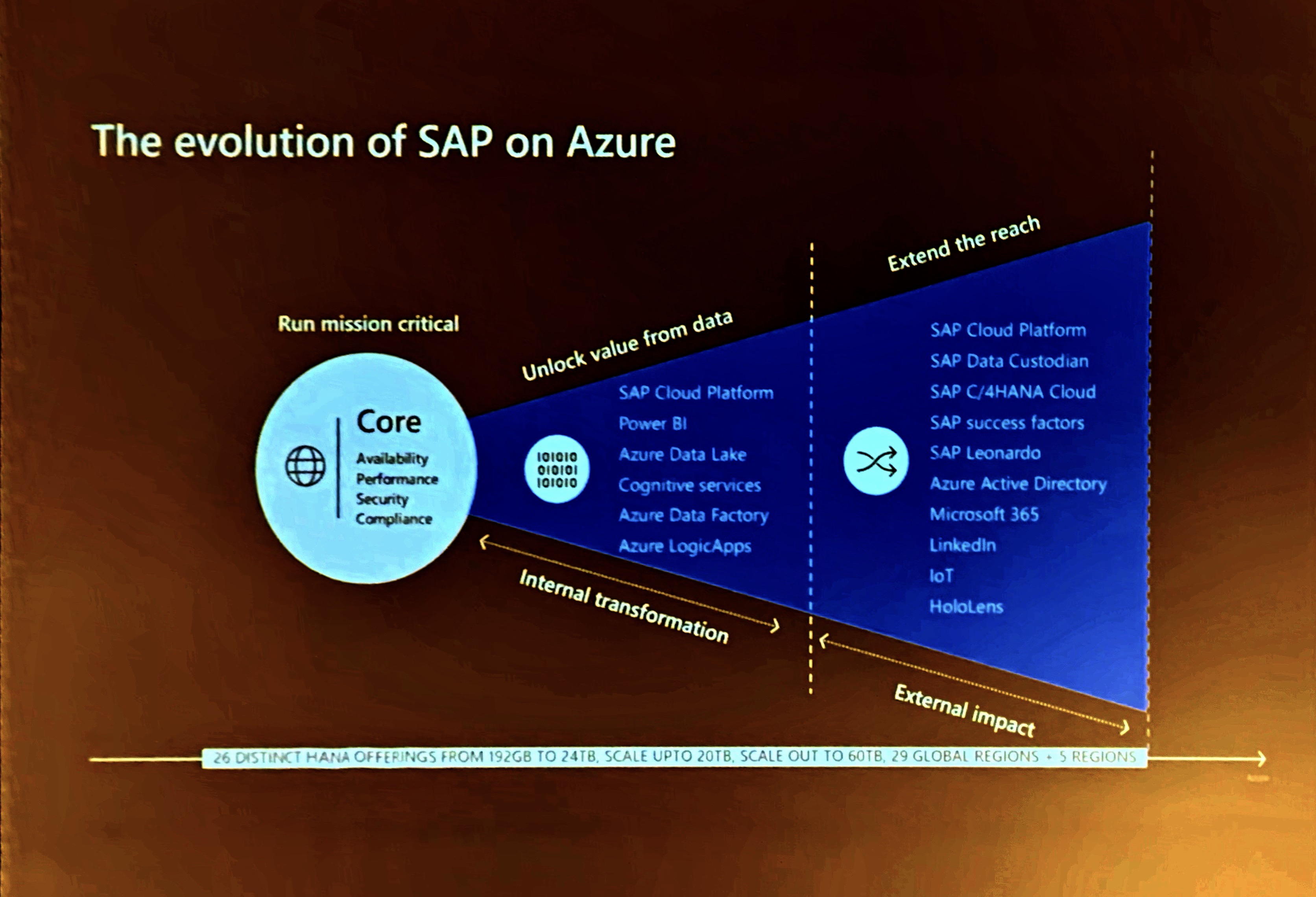
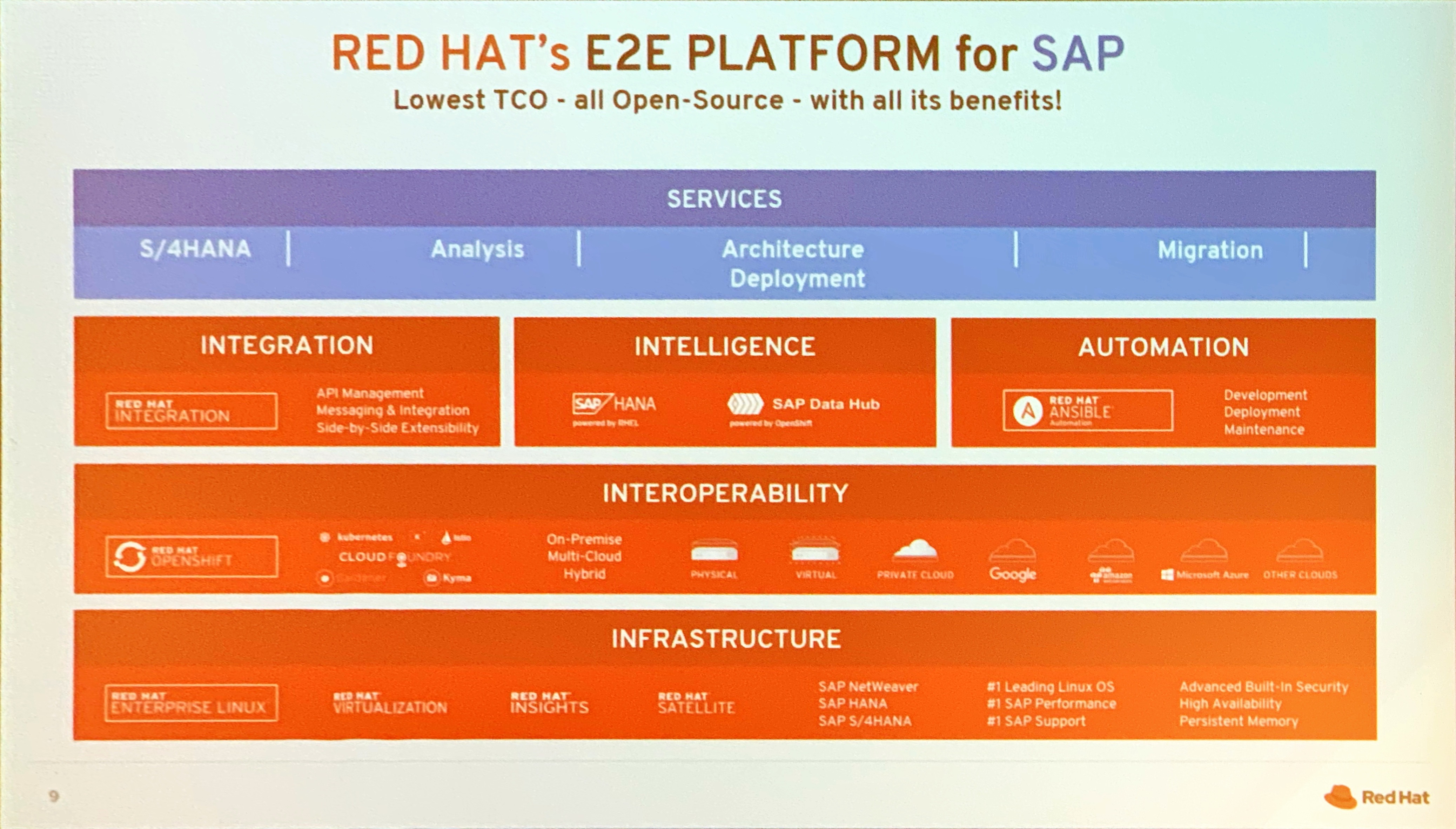

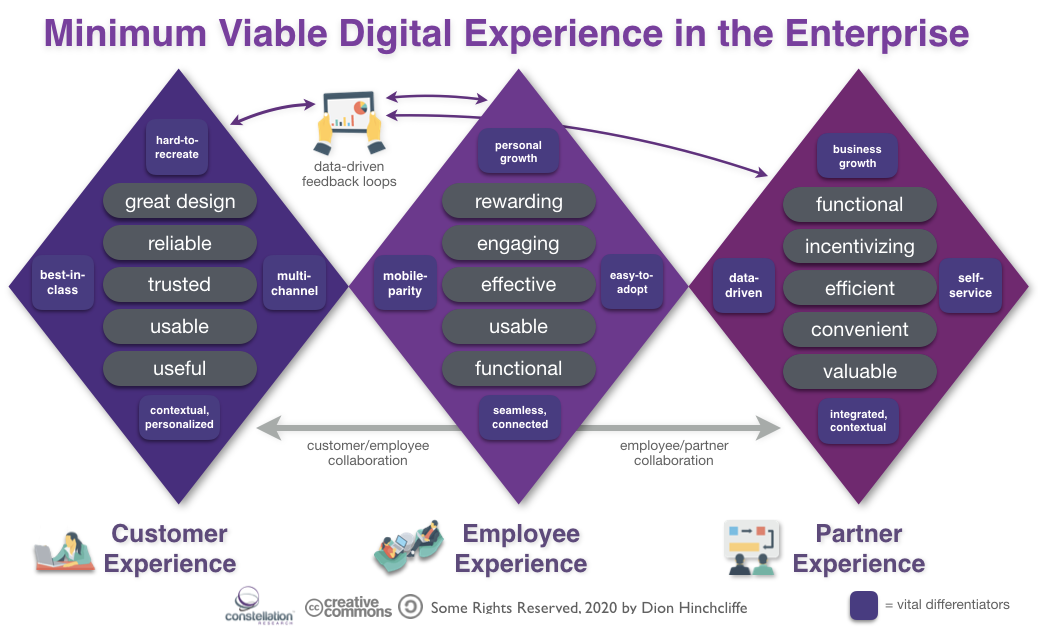
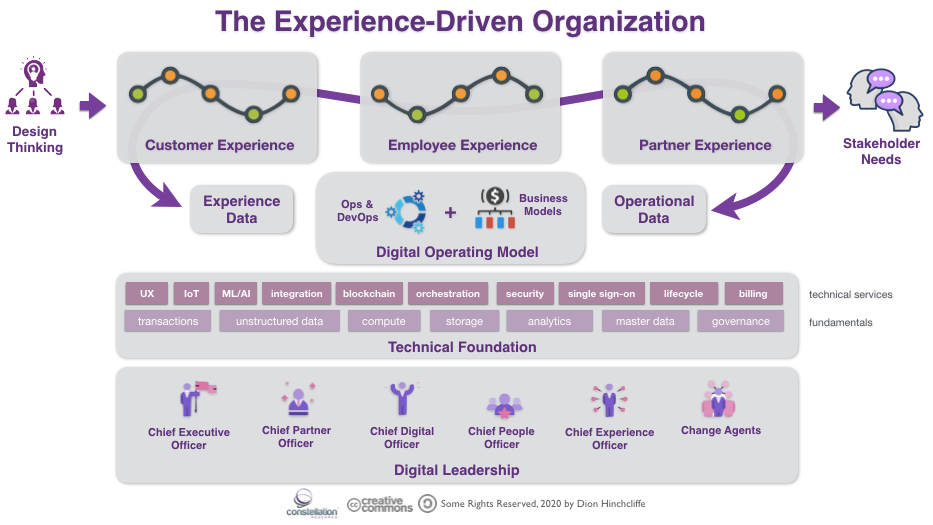

 The number of older individuals is increasing all over the world with the advancements in modern medicine, and this poses a serious issue with the complexities and costs of our healthcare system today.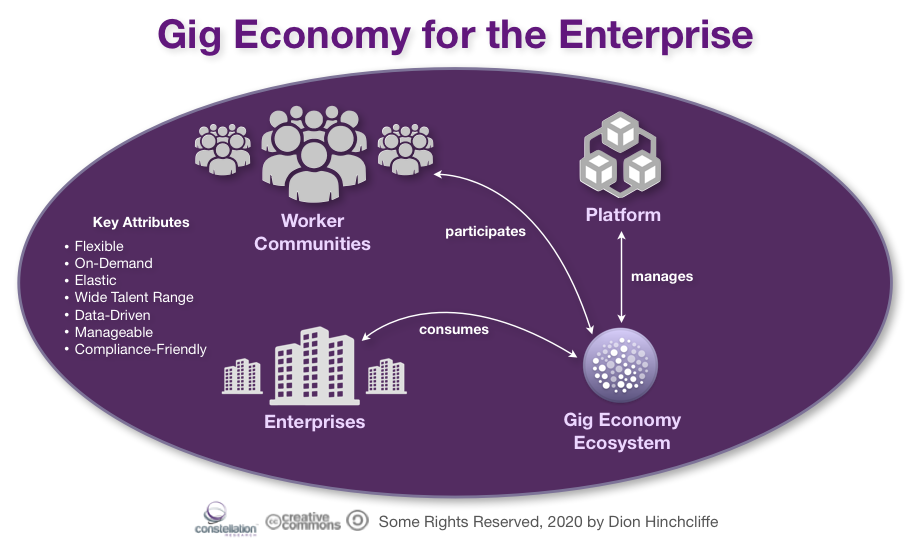

















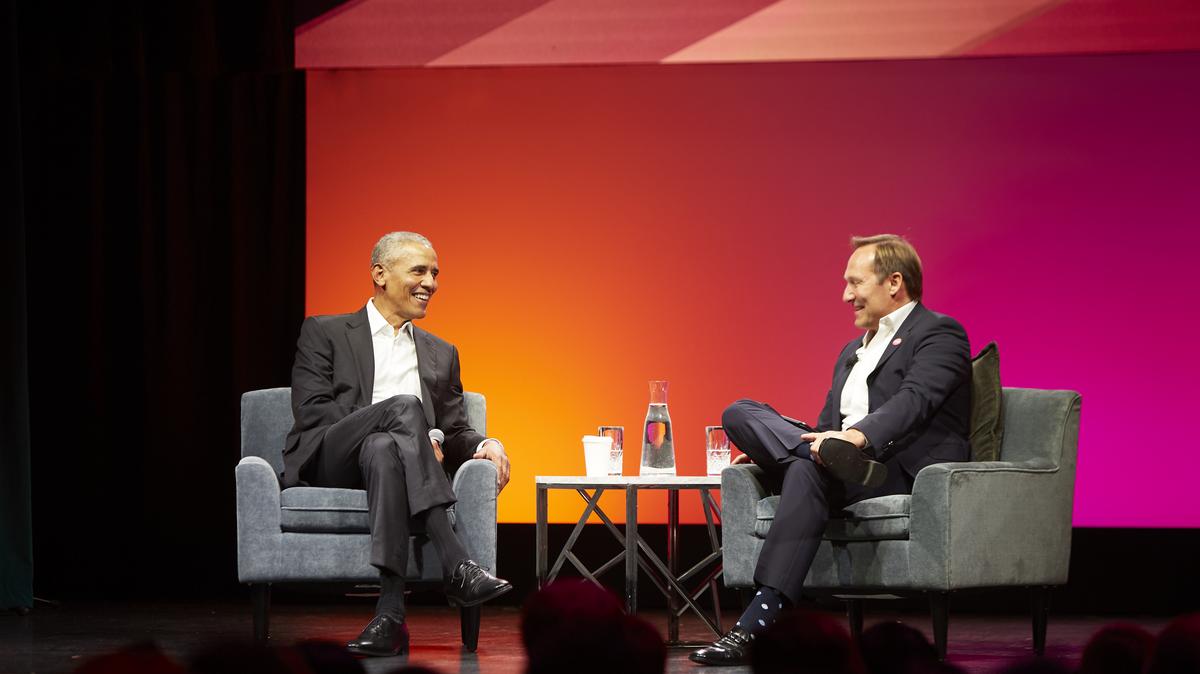
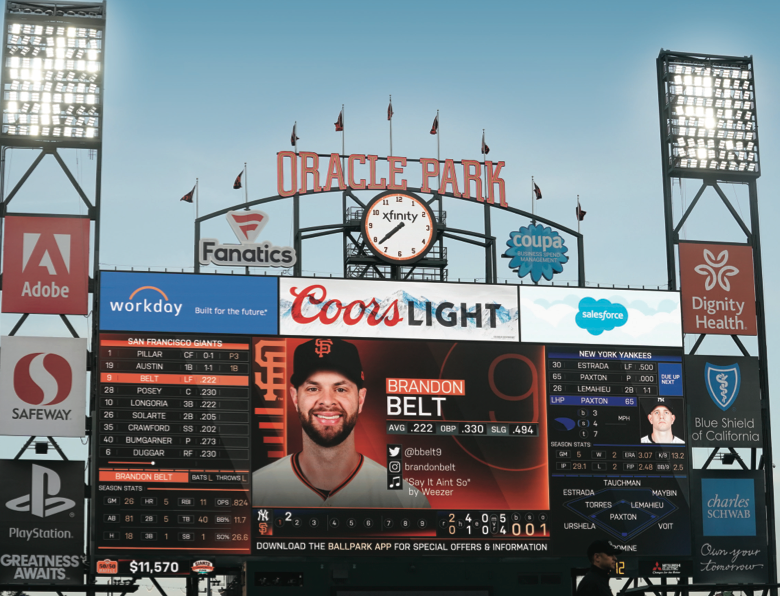

/cdn.vox-cdn.com/uploads/chorus_image/image/65934521/huawei_matex_mwc19_vsavov19.0.jpg)