


Disruption coming for ERP and not from where you'd think
The enterprise resource planning software category is about to get a lot more interesting over the next 12 to 18 months amid new entrants, margin compression, new experiences and AI agents.
This scrum, if played properly, can work out well for enterprises. First, let's outline why ERP is back in play. Agentic AI will take over as the interface for applications and data, but systems of record remain among the most defensible enterprise software categories. That moat makes ERP appealing to vendors. It's not that surprising given the number of older ERP systems still in place. Simply put, replacing an ERP system is like performing brain surgery on a rocket ship.
Nevertheless, enterprises are seeking ERP workarounds. Like SaaS vendors, ERP giants are being re-evaluated. Tech debt can be deadly with the compressed timelines businesses face. The solution will be augmenting current ERP systems for removal later.
ERP incumbents clearly want you to stay and keep spending on maintenance, using their AI and moving to the cloud. SAP has its Joule AI agent that will use context from process and business data to help you optimize your operations. Workday bought Sana as a layer to make its platform on people and money more accessible. Oracle has its AI layered throughout its applications all running on Oracle Cloud Infrastructure. ServiceNow and even Salesforce are trying end runs around ERP.
However, enterprises are going to shop around. You may leave those systems of record in place but abstract them away via the likes of ServiceNow and potentially Anthropic and OpenAI. You may just add a second vendor for subsidiaries just to squeeze your incumbent (or replace them).
- DSAG: SAP customer spending selective, AI drags
- Constellation ShortList™ Product-Centric Cloud ERP
- Constellation ShortList™ Enterprise Application Platforms from non-ERP vendors
- Constellation ShortList™ Services-Centric Cloud ERP
Here's a look at the disruption ahead.
Zoho ERP and the vendor pricing squeeze
The launch of Zoho ERP in India in January could turn out to be a watershed moment globally over time. Why? Zoho ERP is being used by large enterprises in India including Asian Paints, Swiggy, the Instacart of India, and Mercedes Benz India, which has also used Zoho for its dealer management system.
Zoho ERP in India has an architecture that includes an experience layer, workflow automation, unified general ledger and payment integration for money flow. That latter point is notable since Zoho is taking a payment-centric approach to ERP.
- Zoho Day 2026 themes to watch: ERP, SaaS, customer value, AI, sovereignty
- Zoho just delivered the best SaaS defense vs. AI
- Integration Tax is the new AI tax, Zoho plans to crush it | ZohoDay 2026 Recap
The Zoho strategy is to not treat ERP, FinTech and banking as separate silos, but one integrated platform, said Siva Iswaran, Global Head of Finance and Operations at Zoho and CEO of Zoho Payment Technologies. "We look at finance and operations as an interplay between your ERP systems, FinTech and banking systems. One integrated platform to run the business, manage the money and manage the risk," said Iswaran.
Zoho's ERP modules span accounts receivable and billing, spend management, accounting and tax, compliance, inventory, commerce, payroll and HR with a vertical focus on manufacturing, retail, distribution and nonprofits. "We look at ERP as not just back-office software, but as a digital nervous system of the business," said Iswaran.
Current customers in India appear to be startups and midmarket companies that started with Zoho and have grown up as well as large enterprises that are using Zoho ERP to abstract away legacy systems and add new capabilities.
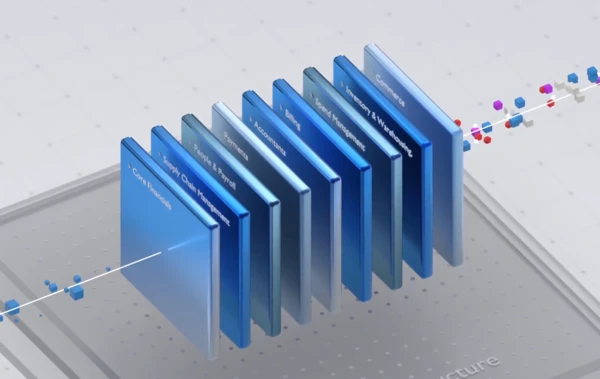
Zoho ERP will be coming to the US later in 2026. Here's where things get disruptive. Zoho ERP will be priced in line with Zoho's other plans. Think of roughly $30 a month per person for an admin and $3 a month per user. Compare what Zoho is charging in India, translate it to US dollars and you can see the margin compression ahead. When I asked Zoho executives whether Zoho India ERP pricing will be similar to what's offered in the US, I got a nod. Multiple Zoho executives have noted that SaaS providers are charging customers too much.
The upshot here is you'd be negligent if you didn't kick the tires on Zoho ERP when it lands in your region.
ERP graduation paths are in place at Intuit
The working progression for businesses was that they start on something like Intuit's QuickBooks and ultimately graduate to something like NetSuite or a midmarket ERP. Once in a while, smaller and midmarket enterprises will get some attention from big vendors like SAP.
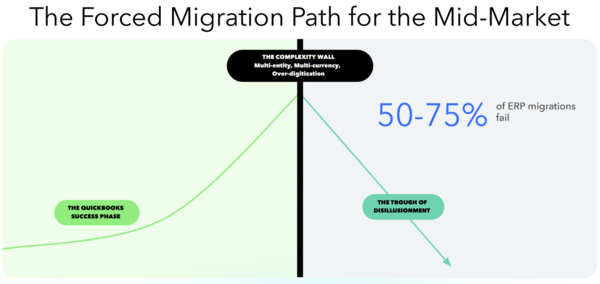
Now Intuit has a destination for smaller businesses with Intuit Enterprise Suite. Intuit is currently building Intuit Enterprise Suite out, but the company has a platform, business context and an artificial intelligence meets human intelligence approach that resonates for businesses.
- Intuit's Enterprise Suite could upend midmarket ERP
- Intuit starts to scale AI agents via AWS
- Intuit, OpenAI forge integration pact: Why it could be a $100 million win-win
During Intuit's second quarter earnings call, CEO Sasan Goodarzi called out the potential of Intuit Enterprise Suite, which just launched an edition for the construction industry.
Revenue for QuickBooks Online Advanced and Intuit Enterprise Suite grew 40% in the second quarter. The average revenue per Intuit Enterprise Suite contract is $27,000 a year. Seventy-four percent of Intuit Enterprise Suite customers are multi-entity.
"We just launched a construction edition for Intuit Enterprise Suite, the first in a series of industry-specific, AI-native ERP solutions designed for the mid-market. Construction firms face highly complex financial and project workflows, yet many still rely on fragmented systems and manual processes that limit visibility, slow decisions and increase risk as they scale," said Goodarzi. "Built on our AI-native ERP financial platform, this construction edition brings financial and project data together in a single system, combining the rigor and control of an ERP with the flexibility, speed and intelligence modern businesses need to operate and grow with confidence."
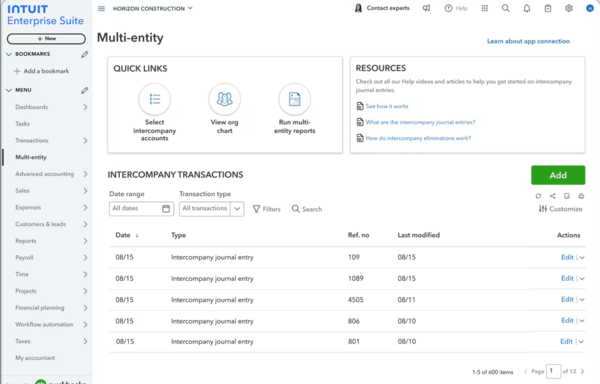
Goodarzi cited a construction customer that reduced peak month-end reconciliation time by 90% and reclaimed 16 hours to 18 hours of accounting work per week. Intuit has added a direct sales team that has grown new Intuit Enterprise Suite contracts by nearly 50% sequentially. "We're seeing strong initial adoption and feedback, particularly around the incremental value firms are getting by managing their operations and gaining valuable insights, all in one place," said Goodarzi.
Intuit Enterprise Suite isn't sold as a standard subscription but ranges anywhere from $8,000 to $15,000 a year depending on requirements, users and capability.
ServiceNow
ServiceNow isn't an ERP player, but the vendor is keen to abstract systems of records and orchestrate the workflows, AI and AI agents. Now ServiceNow seems to be more focused disrupting the CRM market at the moment, but it is arguably a headache for incumbent ERP vendors too.
- ServiceNow integrates Moveworks, launches Autonomous Workforce, EmployeeWorks
- ServiceNow delivers strong Q4, expands Anthropic partnership
CEO Bill McDermott said on ServiceNow's fourth quarter earnings call that the company is a consolidator.
"We are also the great consolidator of hundreds of feature- and function-specific software solutions into end-to-end business processes with our AI control tower for business reinvention," said McDermott. "You need AI plus workflows because AI is probabilistic, which by definition means we can't be certain about the results. Workflow orchestration is deterministic, predictable, no randomness, which is required given the sophistication and governance of running global enterprises. AI doesn't replace enterprise orchestration. It depends on it. It depends on governance; it depends on scale."
The general idea is that ServiceNow will be the great overlay of enterprise systems. The proof of ServiceNow's ERP ambitions can be found via its partnership with Rimini Street. Rimini Street, which made its name providing third-party maintenance for customers looking to keep away from the ERP upgrade merry-go-round, is using ServiceNow for its agentic ERP offering.
See:
- Rimini Street CEO Ravin: CxOs have to lower costs, preserve autonomy over tech stack
- Rimini Street’s second act will include heavy dose of agentic AI, UX
Anthropic and OpenAI
Anthropic's Claude Cowork and a wide range of plugins and connectors and OpenAI's Frontier platform aren't going to replace ERP systems. But the LLM duo's AI agents and orchestration could provide a nice workaround.
Enterprises seem to be on the case. Anthropic's biggest use case after software engineering is back-office automation.
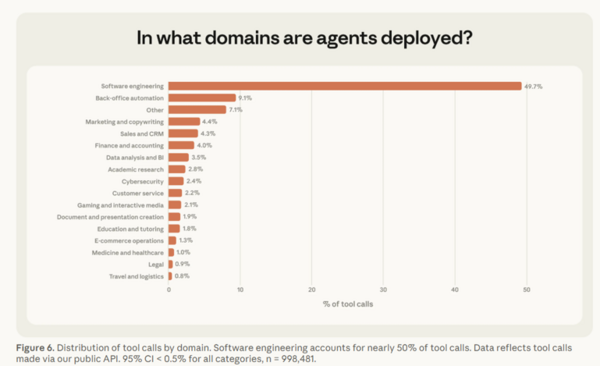
When you boil down what Anthropic and OpenAI is trying to do with AI agents and orchestration there's the potential to upend a category like ERP. Anthropic and OpenAI won't be ERP replacements per se. You aren't going to vibe code an ERP system.
However, Anthropic and OpenAI can be the overlay that puts the brakes on further ERP spending and upgrades. In that view, Anthropic and OpenAI rhyme with ServiceNow, which is a partner to both companies.
- Amazon, OpenAI forge multi-faceted partnership: Dissecting the deal
- OpenAI launches OpenAI Frontier, aims to be AI agent orchestrator
- Anthropic expands Cowork plugins across enterprise functions
- SaaS under the microscope: How to evaluate your vendor
- Anthropic launches Claude Sonnet 4.6 with computer use upgrades
Workday, SAP and incumbents
Workday as disruptor? What?!? Workday is an example of how the incumbents aren't standing still. In many ways, incumbent ERP vendors are trying to evolve to provide AI agents, interfaces and process automation. You could replace SAP or Oracle as a subject and make the same point, but Workday is interesting because it used to be the disruptor.
CEO Aneel Bhusri said: "Our application domains are really, really hard to build. I've been working in the HR and ERP space for over 30 years. These are true systems of record that must process transactions with absolute accuracy and speed, enforce complex security models and comply with statutory and regulatory requirements all over the world."
- Workday's fiscal 2027 subscription revenue outlook light, but Bhusri optimistic
- Workday launches Workday Data Cloud, Workday Build, more AI agents
- Workday spends $1.1 billion on Sana, aims to be front door to work
The future of ERP and AI? Workday's acquisitions of Sana for $1.1 billion provides a big hint. Workday bought Sana to be the front door to its platform. Workday said the future goes like this:
"It's the marriage of deterministic enterprise apps with probabilistic AI that leads to three things, a redefined user experience that is prompt-based a greatly improved business process automation, execution platform with work done by agents and humans, and lastly, much deeper AI generated insights. Marrying the best system of record for HR and finance with the reasoning capabilities of domain-specific LLMs is the future," said Bhusri.
Speaking at a Morgan Stanley investment conference March 3, SAP's Muhammad Alam, Lead Product engineering and Member of Executive Board, had a take the rhymed with what Bhusri said. For starters, ERP is different than the SaaS field because it's is involved with mission critical processes. "Not all applications are created equal," said Alam. "SAP is very much like an operating system of a business."
Alam added that SAP has 50 years of logic and business processes that are embedded in its software. The collective knowledge and data around it only makes agentic AI stronger.
Like Bhusri, Alam said the value will come from adding AI on top of the context in SAP systems. He teased SAP Sapphire and said the company has "one of our most ambitious launches in terms of now taking the opportunity and what's possible with GenAI and AI in general, putting it on top of the sort of core OS of applications that are unlike any others with its enterprise readiness, localization breadth, industry depth, and creating value, which is what our customers are looking for."
For SAP, the key is adding agentic experiences on top of the data model, knowledge graph and process knowhow. "The shape of the stack is changing because there's a new layer now on top, which is this agentic experience layer that sits on top of everything below," said Alam, who added that SAP plans to play in that layer too.
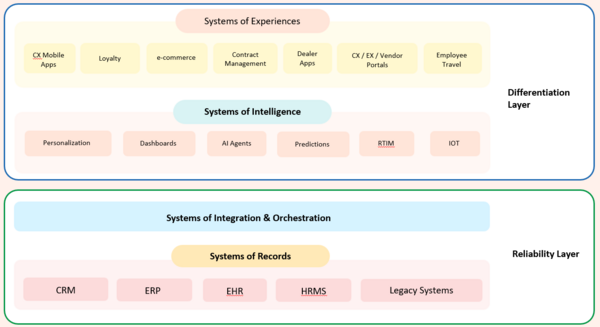
What remains to be seen is whether incumbents like Workday and SAP can disrupt ERP by disrupting themselves. For now, Workday seems most capable of agentic AI evolution.
Larry Dignan is Editor in Chief of Constellation Insights at Constellation Research, where he leads editorial coverage focused on enterprise technology, digital transformation, and emerging trends shaping the future of business. He oversees research-driven news, analysis, interviews, and event coverage designed to help technology buyers and vendors navigate complex markets with clarity and context. ...
Read morePublished
Author
