Results

Work Coordination Platforms - Organize Projects and Processes

Introducing the Constellation ShortList for Work Coordination Platforms. This vendor recommendation list is an evolution of the previously Social Task Management category. Vendors are not selected on features alone. Instead, factors including funding, customer wins, integrations, management/executive team, services, strategy and long term vision also play a role.

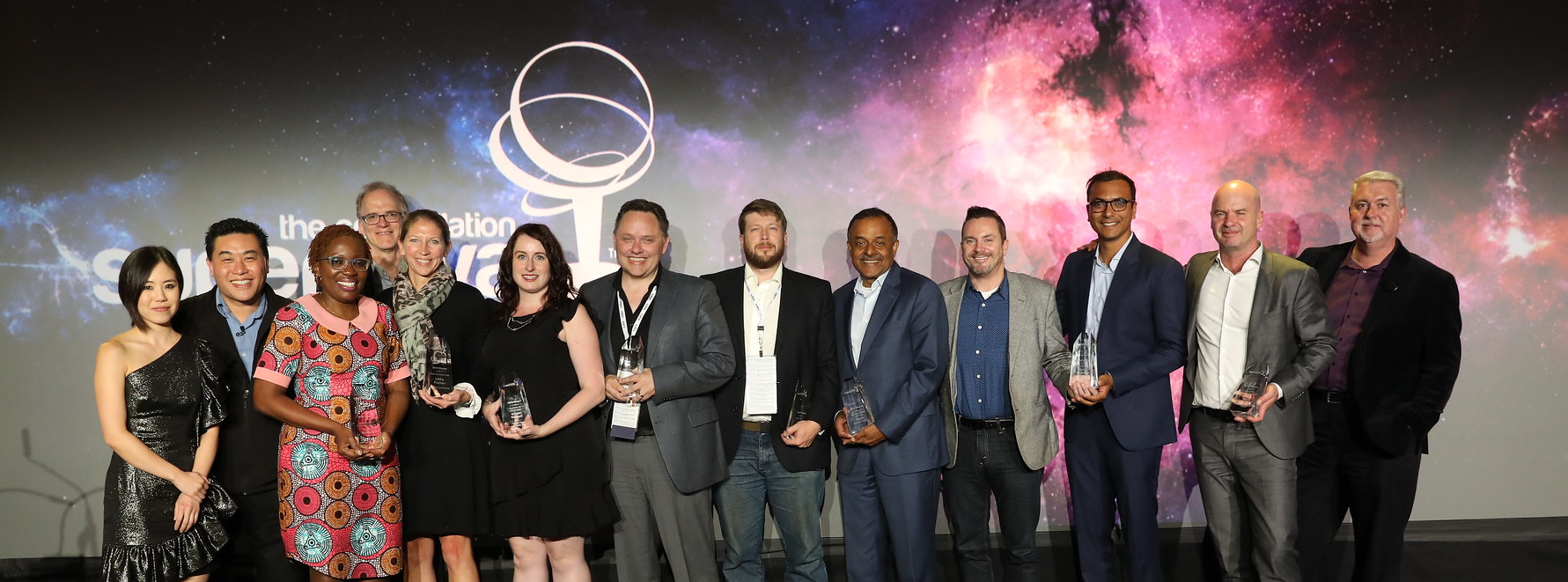
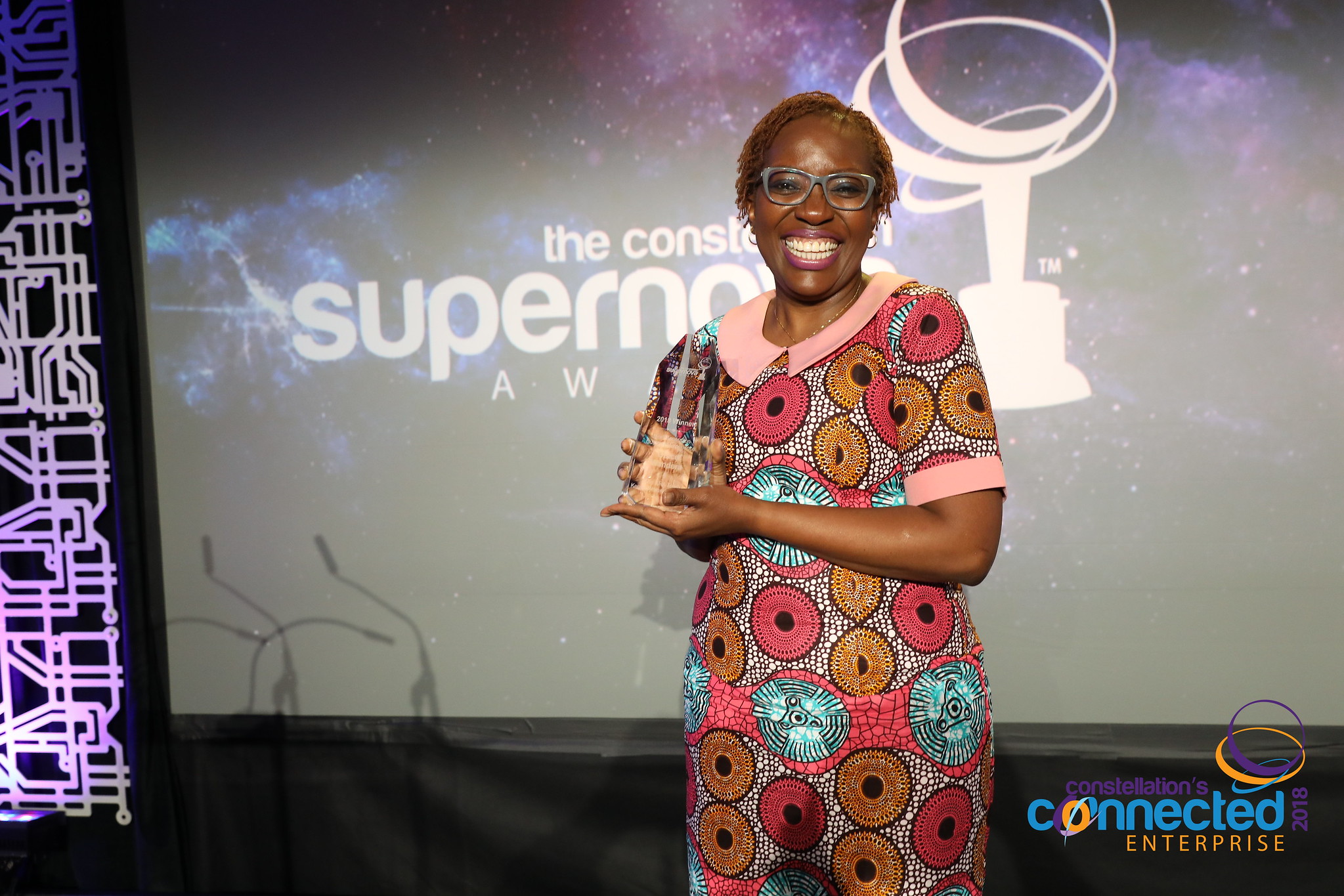
Congratulations to the current awardees: Asana, Clarizen, Microsoft Planner, Sensei Labs Conductor, Smartsheet, Trello (by Atlassian), Workfront, and Wrike

The video below provides an introduction to Work Coordination Platforms.

Constellation ShortLists are updated throughout the year as information changes. If you're a vendor who would like consideration for future inclusion, please reach out to us for a company/product briefing.


Future of Work

AvePoint LMS and the Microsoft Education Ecosystem

Yesterday I had the pleasure of meeting with Dux Raymond Sy and his team at AvePoint to discuss their new Learning Management System and the state of the Microsoft Education portfolio. As a top Microsoft Business Partner, AvePoint has a deep understanding the Microsoft platform and is leveraging components of Microsoft Azure (such as AI for audio and video transcription) and Office 365 to build new business solutions which can be surfaced in AppSource catalog. Learning Management Systems are not just for schools and universities, they play a vital role in the training and certification of employees in businesses of all sizes.

Here are my thoughts around AvePoint LMS and Microsoft's Education offerings including OneNote, Teams, Surface, Hololens, LinkedIn, Lynda and more.


Future of Work

Progress Report - Microsoft wants to enable the digital feedback loop with its Biz Apps and more

We had the opportunity to attend Microsoft's first Business Applications analyst meeting, in Seattle on February 11th till 12th 2018, held at its HQ in Seattle. The event was well attended with over 30 analysts, including my colleagues Cindy Zhou, Dion Hinchcliffe and Ray Wang, look for their findings of the event here


Prefer watching over reading – here is my short video summary (if it doesn't show up, check here): 


Here is the 1 slide condensation (if the slide doesn't show up, check here):

Want to read on? Here you go:

The Digital Feedback Loop

All vendors need some thought leadership piece de resistance where to align their offerings around, and for the Microsoft Business Apps team it is digital transformation and there specifically supporting the digital feedback loop. Unsurprisingly it features the product areas where Microsoft has most SaaS support – around People, Customers and Products with Data and AI / Intelligence at its core. 

 
Microsoft Business Apps Holger Mueller Constellation Research
Microsoft's new TriFoil: The Digital Feedback Loop with People, Customers and Products
Source: Twitter (@holgermu)

 
MyPOV – Good to see People / HR prominently, Digital Transformation is a pitch that is aging fast to hang your hat on as a SaaS vendor, but it seems to work for Microsoft (seeing the reaction from customers recently, it looks this is a mainstream concern for the target group, always a good reality check). If "products" flies well for the services target group remains to be seen. For traditional ERP the Finance decision makers may not see their 'home' right away. But we will see more of the feedback loop from Microsoft this year, likely with some tweaks.
 

The Platform as the Differentiator

SaaS has arrived on PaaS (and IaaS) – Microsoft has moved all its Business Applications (aka MSFT Dynamics) to the its Azure IaaS and PaaS stack, starting with a new unified user experience. Under the hood, the suite now takes advantage of PowerBI for analytics, PowerApps and Flow for low code / no code extension and customization, and there is a data fabric underneath the whole suite. The latter wasn't shared, as weren't too many details on the ongoing integration of the 3 graphs (see below) as well as integration with Office (and there notably Teams). 

 
Microsoft Business Apps Holger Mueller Constellation Research
The Microsoft Marketecture
Source: Twitter (@holgermu)


MyPOV – It's always hard for SaaS vendors with a PaaS and IaaS to use the latest PaaS / IaaS capabilities. The latter products move faster than traditional enterprise applications and re-certifying the SaaS suite on them takes time and resources. Nonetheless Microsoft has achieved that, which may explain the relatively few functional highlights on the roadmap for the rest of the year. But Microsoft is doing what everybody expects – prospects and clients – that is that all Microsoft products work together in a consistent and synergetic way. The resulting differentiation and efficiencies will be appreciated by customers and prospects.
 

The Graph Data Differentiator

Windows, Office and LinkedIn – Microsoft is combining three massive graphs at the moment: The Windows graph (devices, networks, logins etc.), the Office graph (all your documents, OneDrive, Teams (?) and the LinkedIn graph. Conceptually there needs to be a Microsoft Business Apps graph (or a customer graph etc.) as well, but wasn't mentioned. Combining these and exposing these are substantial engineering, architecture and usability challenges. Not to mention the privacy aspect. But Microsoft is in the process and I guess it will be later in the year where we will learn more about this in detail. The usual feature shown was the LinkedIn Sales Navigator – but that is an older integration, even from the time before Microsoft acquired LinkedIn. 

 
Microsoft Business Apps Holger Mueller Constellation Research
Alysa Taylor walks by the 3 Graphs - Windows, Office and LinkedIn
Source: Twitter (@holgermu)


MyPOV – A very compelling undertaking by Microsoft, finally delivering on its founder's vision of "Information at your Fingertips". Without the connective tissue of a multi-dimensional graphs, that cannot work and today we know that it could not have worked (in today's scope) back then. Kudos for Microsoft to tackle the problem now, with CosmosDB playing a key architecture role (not mentioned at this meeting, interestingly). There are almost infinite opportunities and benefits for users from this, they have to be made more tangible by Microsoft going forward, across the product portfolio. 2018 should be the year where this offering is ripe enough.


Finally a HCM Story: Microsoft Talent

Pressed in time, but nonetheless (finally) present was Microsoft's HCM story – starting with Microsoft Talent. A good place to start, given the LinkedIn acquisition. It also includes key HR Core capabilities which the Talent product name does not pay justice. As well as partnerships in the payroll space, starting with Ceridian (I expect more to follow this year).

 
Microsoft Business Apps Holger Mueller Constellation Research
The Digital Feedback Loop - People Dimension Details
Source: Twitter (@holgermu)


MyPOV – A key area to address by Microsoft, even before LinkedIn. You cannot run an enterprise ignoring the biggest expense (and investment) for an enterprise, people. But Microsoft is not acting as a Top 3 (maybe even #1) HCM vendor – just based on the LinkedIn revenues. LinkedIn is de-factor an HR software company, probably larger than SAP and Oracle (who don't break out revenues) with a small sliver of Talent Management, Talent Acquisition. Clarifying the road forward between the Microsoft and LinkedIn HCM roadmaps is going to be key portfolio and messaging homework, as it's confusing for customers…


Overall MyPOV

Good to have the inaugural event, which was overdue from many angles. Good to see Microsoft investing into synergetic benefits across all offerings, something customers always expect, but not always see vendors deliver. But that takes time and resources, and the usually associated functional pause needs to overcome now by Microsoft Business Apps. The gaps and white space are the largest in the HCM space, where Microsoft's offerings are to new to compete on an overall end to end suite with the established players. But differentiators like LinkedIn can help, though Microsoft needs to work on the product, platform and commercial integration. I expect a similar line of thinking coming from my colleagues Cindy Zhou and Ray Wang along the lines of the Adobe partnership.

On the concern side, Microsoft is late to the ERP suite game. It certainly has put the leadership team in place, now it comes to delivering. 2018 already saw the ERP market leader announce an on premises product, a key lesson learnt that when you don't develop fast enough, customers will dictate the platform. In this scenario Microsoft has Azure Stack, but that was not mentioned at all on Day #1 of the analyst meeting. And Microsoft needs organic, in-house SaaS load to scale Azure successfully. But for that customers need attractive automation benefits: If Microsoft can be half as successful as it was with its CRM offerings in the other key areas of ERP automation (Finance, SCM, Procurement and HCM) – it will be in a great place for customers in a few years. But that's a big ask.

But it's early in 2018, much more to come this year, and it's a good start for Microsoft Business Applications. Stay tuned.

Want to learn more? Checkout the Storify collection below (if it doesn't show up – check here).


Tech Optimization Data to Decisions Future of Work Innovation & Product-led Growth New C-Suite Sales Marketing Next-Generation Customer Experience Digital Safety, Privacy & Cybersecurity AI Analytics Automation CX EX Employee Experience HCM Machine Learning ML SaaS PaaS Cloud Digital Transformation Enterprise Software Enterprise IT Leadership HR IaaS Disruptive Technology Enterprise Acceleration Next Gen Apps IoT Blockchain CRM ERP CCaaS UCaaS Collaboration Enterprise Service Chief Information Officer Chief Customer Officer Chief People Officer Chief Human Resources Officer Chief Technology Officer Chief Information Security Officer Chief Data Officer Chief Executive Officer

Event Report: Microsoft Biz Apps Analyst Day Highlights Strategic Transformation

Microsoft Dynamics 365 Seeks End To End Coverage Of Business Apps

On February 10th to 12th, 2018, industry analysts converged onto Building 92 at the Microsoft Campus in Redmond, WA, for an update on the Microsoft Business Applications.  The Business Applications Analyst Forum was hosted by key executives including:

  • Jeff York, Finance Director, Microsoft Dynamics
  • Hayden Stafford, VP of Global Sales of Microsoft Business Applications Group
  • Alysa Taylor, General Manager of Microsoft Business Applications Group
  • James Phillips, Corporate Vice President of Microsoft Business Applications Group
  • Clare Henry, General Manager of Microsoft Analyst Relations

Conversations with the leadership team highlight the major shift in strategy for Microsoft Business Applications.  Since the last analyst summit in 2015, five major changes define the new strategy:

  1. Digital feedback loop brings together a unified data model to drive business insights and artificial intelligence.  Microsoft has envisioned all the touch points that surround customers, people, and products in a modern organization.  The digital feedback loop provides a model to understand not only digital transformation technology requirements, but also where organizations must invest in business capability.  Instead of just transactional systems across a unified data model, customers can take advantage of a digital feedback loop built on engagement systems that power actionable business insights.

    Point of View (POV): The competitive advantage will come from bringing together digital signals that power machine learning and future artificial intelligence.   Consequently, PowerBI plays a key role in enabling this shift from software to insights.

  2. Future of Microsoft Business Applications move beyond CRM and ERP.  The traditional view of Microsoft Dynamics shifts to categories such as Sales, Customer Service, Field Service, Talent, Finance and Operations, Retail, Project Service Automation, Marketing, and Customer Insights.   Pricing models reflect this shift of a mega Microsoft Dynamics 365 plan broken into Customer Engagement (CRM) and Unified Operations (ERP).   Packaging models allow for customers to buy at the category level and piece together what they need by bite-sized applications.

    (POV):  Customer and prospects can expect Microsoft to fill key gaps in the overall strategy.  For example, the acquisition of LinkedIn brought investment in the empowered employee and has led to early offerings in talent management and recruiting to bolster existing HR capabilities.  Constellation expects organic and inorganic investment in open areas such as commerce, billing, procurement, experience management, and advertising tech.

  3. A complete cloud stack provides a competitive advantage.  Only a handful of competitors can battle for critical computing power in the enterprise.  Alibaba, Amazon, Google, IBM, Microsoft, and Oracle have made the significant capital investments in data centers to compete for cloud workloads.  Providing a IaaS, PaaS, and SaaS layer gives Microsoft customers a full stack to standardize digital transformation efforts.  Moreover, customers benefit from deployment choice for on-premises, hybrid, and pure cloud across multiple regions and geographies.

    (POV):  Using the cloud to aggregate transactional data, provide compute power, and reduce processing time, customers can power new digital business models built on insights to enable contextual decisions and suggest next best actions.

  4. Target markets shift to handle Global 2000.   Constellation’s recent digital transformation survey shows that 29% of CEO’s drive overall efforts.  With CEO’s expecting end-to-end solutions and not just point solutions, the Microsoft Business Applications team has organized go to market efforts to target the digital transformation requirements of large enterprises.   These efforts range from Azure to Office 365 but provide an account based strategy as opposed to a product approach.  In fact, the growth in $1M+ deals has doubled, overall Microsoft Dynamics 365 revenue growth is up 67% YoY, and more than 80% of enterprises have chosen a cloud deployment option.

    (POV):  As a result, the team has succeeded with larger deal sizes and customers have seen a One Microsoft approach in action.  The result is a greater demand for customer success management resources and more co-innovation and co-creation with customers.  While Microsoft has moved up market, the team and its partners have not forgotten its SMB roots. In addition to the large enterprise strategy, selling motions continue to include partner led strategies that address the departmental sales for customer engagement and unified operations and specific solution sales in areas such as Sales Navigator by LinkedIn.

  5. Low code/no code development platforms provide the last mile.  Built on the common data service, PowerApps and Flow provide customers with the ability to differentiate for competitive advantage.  PowerApps allows customers to deliver on infinite ambient orchestration.  Customers can connect various systems to create new data, quickly build apps with little coding experience, and publish and use on different platforms including the web and mobile.

    (POV):  Early adopters have found the PowerApps Studio easy to use in creating new apps and found the On-premises Data Gateway a great tool to support hybrid deployment options across multiple form factors.

The Bottom Line: Microsoft Business Applications Is A Significant Player In Digital Transformation

From leadership changes and departures to the re-integration of the Dynamics unit into the mothership, customers, partners, and industry influencers have left perplexed about the future of Microsoft Dynamics.  From an industry analyst point of view, this year’s Business Applications Analyst Forum has provided much needed clarity and rationale on the overall strategy.   For those who have seen the Microsoft Dynamics division in the past as just apps, the transition shows a more holistic view of the overall Microsoft value to a customer.

The bottom line – Microsoft is a cloud company that happens to have business applications.

In fact, Microsoft sees the business applications group as a critical pillar in helping organizations with their digital transformation efforts.  Those efforts may require packaged applications, low code last mile innovation, partner led solutions, and access across the Microsoft portfolio.  Should the teams becomes successful in reaching their goals, this fundamental shift puts the entire portfolio of the Microsoft ecosystem in the hands of customers and prospects willing to bet on the complete stack.


Tech Optimization Data to Decisions Future of Work Innovation & Product-led Growth New C-Suite amazon ML Machine Learning LLMs Agentic AI Generative AI Robotics AI Analytics Automation B2B B2C CX EX Employee Experience HR HCM business Marketing Metaverse developer SaaS PaaS IaaS Supply Chain Quantum Computing Growth Cloud Digital Transformation Disruptive Technology eCommerce Enterprise IT Enterprise Acceleration Enterprise Software Next Gen Apps IoT Blockchain CRM ERP Leadership finance Social Healthcare VR CCaaS UCaaS Customer Service Content Management Collaboration M&A Enterprise Service Chief Customer Officer Chief Digital Officer Chief Executive Officer Chief Financial Officer Chief Information Officer Chief Marketing Officer Chief People Officer Chief Procurement Officer Chief Revenue Officer Chief Supply Chain Officer Chief Technology Officer Chief Data Officer Chief Analytics Officer Chief Operating Officer Chief Information Security Officer Chief Experience Officer

Digital Transformation Digest: Oracle Bets Big On Cloud, Eye On Amazon Domination, and New Investments In Enterprise Tech

Oracle Bets Big On Cloud With New Data Centers, SLA, And Autonomous Cloud

Oracle Corporation announced this week plans to add 12 new data-center “regions” as it ramps up competition with Amazon, Microsoft, Alibaba, and Google.  Critical to the delivery of cloud infrastructure services and eventually artificial intelligence, the capital spending to quadruple Oracle’s current presence will require significant investment as Oracle plays catch up.  Oracle currently runs cloud data centers in Phoenix, Arizona; Ashburn, VA; London, UK; and Frankfurt, Germany.  Current plans include an additional two to the US, two in Canada, one each in Japan, Korea, Singapore, India, Netherlands, and Switzerland.  In China, Oracle will partner with Tencent.   The middle east may include Saudi Arabia through partnerships.

On the contact side, Oracle announced new enterprise service level agreements (SLAs) with a end-to-end financially backed cloud warranty for Infrastructure-as-a-Service (IaaS).  Oracle already has an SLA for uptime at 99.995 guarantee for its Oracle Autonomous Database.   In the new SLA,

“Oracle Cloud Infrastructure guarantees it will deliver more than 90 percent of published performance every day in a given month. If it falls below that level for even as few as 44 minutes a month, customers may claim service credits according to Oracle's terms of service”

Adding to the news from the latest Oracle Cloud World in New York, Oracle added to its end to end automation quest for both the Cloud and the Database.  New autonomous database services include Oracle Autonomous Data Warehouse Cloud Service for analytics, Oracle Autonomous Database OLTP for transactional and mixed workloads, and Oracle Autonomous NoSQL Database for fast, massive-scale reads and writes.  On the Oracle Cloud Platform, services include application development, mobile and bots, application and data integration, analytics, and security.   The new Oracle Digital Assistant used applied machine learning and neural networks to correlate data and automated user behavior with both SaaS and PaaS services.

Constellation’s Point of View (POV):  Success in the next wave of computing requires significant investment in the cloud infrastructure.  Those who control the keys to massive data aggregation and analysis, low cost compute power, and intelligent processing capability will have the foundation for the next artificial intelligence driven wave.  Oracle’s push to completely autonomize IT operations across its “Red Stack” gives customers a cost effective option.  As Oracle plays catch up in the cloud, the automation and AI differentiation will prove to be an asset as it competes with rivals earlier to market but with older architectures.  Oracle’s success in the market will provide clients with an option as  Amazon, Microsoft, Alibaba, and Google rush to fill workloads and grab marketshare.  Customers will benefit as Oracle pushes out innovative products, packaging, and pricing in the market.

Amazon Continues Vertically Integrated Monopoly Quest

The Wall Street Journal last week reported Amazon’s ambitions to deliver “Shipping with Amazon” to debut in Los Angeles and additional cities in the future.   While the investment to go all Amazon with 1.2 to 1.3 billion packages a year seems far off, and the tens of billions of dollars required for planes, trucks, and sorting centers seem enormous, the quest for last mile seems to be in Amazon’s ambitions.  Today UPS handles 20 million packages a day while FedEx handles 12 million packages a day.  The goal is to monetize the empty trucks out for delivery to focus on pick-up.

Recent reports have also surfaced from healthcare executives and news outlets of Amazon’s forays into the medical supply business.  Pitting up against McKesson and Cardinal Health, Amazon sees new ways to drive down cost and improve margins through Amazon Business.  Amazon is touting a more secure and safe approach using modern technology.

Constellation’s (POV):  Today’s digital ecosystems often represent vertically integrated monopolies when one organization aggregates content (i.e. product, service, insight, outcome), network (i.e. distribution capability), and technology (i.e. exponential technologies).  Amazon has succeeded in content categories from commerce, to media, to enterprise software. Amazon has always targeted the high margin, high volume categories and medical supply appears ripe for a target market.

Technology innovations in the cloud, drone delivery, and automation put Amazon as top in class leaders.  On the distribution side, Amazon has leveraged the United States Postal Service on delivery as well as built 100 distribution centers in North America.  The quest to take full control reflects their belief that from a cost and delivery aspect, they need to take the last mile on physical delivery to ensure full barriers to entry in their market and increase margins on Amazon Prime.  Consequently, partners and customers who may compete with Amazon in future endeavors should take note on the overall strategy and plan contingencies in future relationships.  Those who are subsidizing Amazon’s ability to deliver scale should understand the strategic impact to their markets.


Venture Capital Funding Heats Up In Adjacent Enterprise Areas

Investment in enterprise and enterprise cross-over, start-ups often reflect a 12 to 18 month indicator on what feature battles will emerge next.  The recent $17.5M bet by White Star Capital on Unacast focuses on the value of location data.  Unacast has a value prop in providing an aggregation of data supplier partners using GPS signals from cell phones.

Meanwhile, the $25M investment led by Google Ventures in UJET for customer support brings multi-modal interaction for customer support agents.   The goal of bringing all the required contact agent information across immersive channels can drive down support costs and speed up resolution.

Constellation’s POV: As organizations seek mass personalization at scale, contextual data such as location remains locked up in the hands of social and consumer giants.  With Google, Facebook, and Apple collecting most of the world’s location data, other organizations may feel too dependent on a tech giant to provide much needed context and thus turn to Unacast.  Customers can than use this location data to improve marketing efforts in both research and targeting.

The value prop behind UJET, enables innovations in customer support to match innovations in work environments and technologies.  With more home based and mobile customer support agents, the need to provide advanced call details and next best actions will require new delivery models across multi modal channels.  This means lower cost customer support and more effective first call resolution.


Tech Optimization Data to Decisions Future of Work Innovation & Product-led Growth New C-Suite Next-Generation Customer Experience Digital Safety, Privacy & Cybersecurity ML Machine Learning LLMs Agentic AI Generative AI Robotics AI Analytics Automation B2B B2C CX EX Employee Experience HR HCM business Marketing Metaverse developer SaaS PaaS IaaS Supply Chain Quantum Computing Growth Cloud Digital Transformation Disruptive Technology eCommerce Enterprise IT Enterprise Acceleration Enterprise Software Next Gen Apps IoT Blockchain CRM ERP Leadership finance Social Healthcare VR CCaaS UCaaS Customer Service Content Management Collaboration M&A Enterprise Service Chief Customer Officer Chief Digital Officer Chief Executive Officer Chief Financial Officer Chief Information Officer Chief Marketing Officer Chief People Officer Chief Procurement Officer Chief Revenue Officer Chief Supply Chain Officer Chief Technology Officer Chief Data Officer Chief Analytics Officer Chief Operating Officer Chief AI Officer Chief Information Security Officer Chief Product Officer Chief Experience Officer

New Release: Q1 2018 Constellation ShortList Portfolio Updates

We’re rolling out the updated Constellation ShortList™ portfolio over the next three weeks. Today, we released 19 new and updated lists from across our coverage areas. Below is the full list:

Technology buyers use these reports to identify the services and products they need to achieve digital transformation. Products and services named to each Constellation ShortList meet the threshold criteria as determined by our analysts through client inquiries, partner conversations, customer references, vendor selection projects, market share and internal research.

Be sure to check back for updates over the next two Tuesdays! 

Constellation ShortList reports are part of Constellation’s open research library and are free to download. Updates are shared every six months.

Constellation ShortList Evaluation Services

Constellation clients may work with analysts and the research team to conduct a thorough discussion of a Constellation ShortList, vendor selection, and contract negotiation. Request a meeting here.

For more information, visit https://www.constellationr.com/shortlist.

Data to Decisions Digital Safety, Privacy & Cybersecurity Future of Work Marketing Transformation Matrix Commerce New C-Suite Next-Generation Customer Experience Tech Optimization Sales Marketing Revenue & Growth Effectiveness Innovation & Product-led Growth ShortList AI Blockchain Marketing B2B B2C CX Customer Experience EX Employee Experience ML Generative AI Analytics Automation Cloud Digital Transformation Disruptive Technology Growth eCommerce Enterprise Software Next Gen Apps Social Customer Service Content Management Collaboration HCM Machine Learning SaaS PaaS Enterprise IT Leadership HR ShortList Chief Customer Officer Chief Digital Officer Chief Executive Officer Chief Financial Officer Chief Information Officer Chief Marketing Officer Chief People Officer Chief Procurement Officer Chief Revenue Officer Chief Supply Chain Officer Chief Experience Officer Chief Technology Officer Chief AI Officer Chief Data Officer Chief Analytics Officer Chief Information Security Officer Chief Product Officer Chief Human Resources Officer

News Analysis - Oracle wants to make the whole cloud stack autonomous

At CloudWorld today, Oracle announced additional capability on the road to self-driving technology stacks, the Oracle Cloud Platform Autonomous Services. 


Important enough to dissect the press release in our customary style, it can be found here:

Oracle President of Product Development Thomas Kurian demonstrated the latest advances in Oracle Cloud Platform, expanding its Oracle Cloud Platform Autonomous Services beyond the Oracle Autonomous Database, to make all Oracle Cloud Platform services self-driving, self-securing and self-repairing. With its enhanced suite of autonomous Cloud Platform services, Oracle is setting a new industry standard for autonomous cloud capabilities. Oracle is applying AI and machine learning to its entire next-generation Cloud Platform services to help customers lower cost, reduce risk, accelerate innovation, and get predictive insights.
MyPOV – When Ellison announced the self-autonomous database at Oracle OpenWorld in fall 2017, something was missing: The application of the same principles to the overall technology stack. After all – what is an autonomous database good for, when it gets compromised by network security issues that do not have the benefits of autonomous capabilities. So, this is a key follow up announcement.

 
As organizations focus on delivering innovation fast, they want a secure set of comprehensive, integrated cloud services to build new applications and run their most demanding enterprise workloads. Only Oracle's cloud services can automate key operational functions like tuning, patching, backups and upgrades while running to deliver maximum performance, high availability, and secure enterprise IT systems. In addition, to accelerate innovation and smarter decision making, Oracle Cloud Platform is incorporating additional autonomous capabilities specific to application development, mobile and bots, app and data integration, analytics, security and management.
MyPOV – Good description. Usual 'only Oracle' claims, that others will be able to contest, taking away credit from the overall holistic approach by Oracle that is truly unique. Other vendors focus on single areas like e.g. security, server access, DevOps etc.

"The future of tomorrow's successful enterprise IT organization is in full end-to-end automation," said Kurian. "At Oracle, we are making this a reality. We are weaving autonomous capabilities into the fabric of our cloud to help customers safeguard their systems, drive innovation faster, and deliver the ultimate competitive advantage with smarter real-time decisions."
MyPOV – Good quote from Kurian about what Oracle plans to do / is doing. The key point is the benefit that mundane and routine tasks are going away, freeing up resources for other priorities.


Oracle's autonomous capabilities are integral to the entire Oracle Cloud Platform, including the world's first autonomous database unveiled at Oracle OpenWorld. The Oracle Autonomous Database uses advanced AI and machine learning to eliminate human labor, human error and manual tuning delivering unprecedented availability, high performance and security at a much lower cost. Multiple autonomous database services, each tuned to a specific workload, will be available in 2018, including Oracle Autonomous Data Warehouse Cloud Service for analytics, Oracle Autonomous Database OLTP for transactional and mixed workloads, and Oracle Autonomous NoSQL Database for fast, massive-scale reads and writes.
MyPOV – Good summary reaching back to OpenWorld, but also a reminder that the autonomous database is still all about future capabilities to be shipped in 2018.


In addition to the Oracle Autonomous Database, Oracle Cloud Platform autonomous capabilities for application development, mobile and bots, integration, analytics, security and system management, are scheduled to be available in the first half of calendar year 2018. Oracle Cloud Platform services all share foundational autonomous capabilities including:
MyPOV – Important information here – all the below capabilities seem to be catching up to the database announcement, which means that Oracle likely has held back on the announcement and building capabilities in quiet… notice though that none capabilities are explicitly mentioned. 

• Self-Driving to Lower Costs and Increase Productivity: Eliminate human labor to provision, secure, monitor, backup, recover and troubleshoot. Automatically upgrade and patch itself while running. Instantly grow and shrink compute or storage without downtime.

• Self-Securing to Lower Risk: Protect from external attacks and malicious internal users. Automatically apply security updates while running to protect against cyberattacks, and automatically encrypt all data.

• Self-Repairing for Higher Availability: Provide automated protection from all planned and unplanned downtime with up to 99.995 percent availability, resulting in less than 2.5 minutes of downtime per month including planned maintenance.

MyPOV – Good summary of the benefits of a self-driving platform – or as Oracle calls it an autonomous platform. The good news for customers here is that it's a win / win for them as providers – like Oracle – try to improve availability and increase SLAs.


Examples of additional autonomous capabilities being added to functional areas across the rest of the Oracle Cloud Platform include:

Application Development

• Automated artifact discovery, dependency management, and policy-based dependency updates increasing code quality and developer productivity

• Automated identification and remediation of security issues throughout the CI/CD pipeline significantly reducing security risks

• Automated code generation with single button deployment enabling rapid application development even by line of business users

MyPOV – Increasing developer productivity and automating the code production pipeline is key for enterprises, as they become software companies and need to build more software faster.


Mobile and Bots

• Self-learning chatbots observing interaction patterns and preferences to automate frequently performed end-user actions freeing up time for higher productivity tasks

• Unsupervised, smart bots using machine learning to learn from user conversations enabling fluid, contextual conversations

• Automated caching of API calls to the nearest data center in real time for lowest latency responses based on end user location

MyPOV – Voice is the new UI was a slogan some years ago, and the underlying benefits are still strong, it's the providers of platforms who have made it hard for enterprises to build them – and then to maintain and updated them. More self-driving bot capabilities are a good move by Oracle.


Application and Data Integration

• Self-defining integrations automate business processes across different SaaS and on-premises apps

• Self-defining data flows with automated data lake and data prep pipeline creation for ingesting data (streaming and batch)

MyPOV - Self Driving application and data integration are a no brainer for vendors in this space, and several announcements have been made, good to see Oracle joining the trend.


Analytics

• Automated data discovery and preparation

• Automated analysis for key findings along with visualization and narration delivering quicker real time insights

MyPOV – Same as for data integration, one can only hope that in the near-term future an expensive, white collar worker does not have to spend time to chart a timeline and business data in tool. It's time to see this capability in action.


Security and Management

• Machine learning-driven user and entity behavior analytics to automatically isolate and eliminate suspicious and malicious users

• Preventative controls to intercept data leaks across structured and unstructured data repositories

• Unified data repository across log, performance, user experience and configuration data with applied AI/ML, eliminating need to set and manage performance and security monitoring "metadata" such as thresholds, server topology, and configuration drift

MyPOV – The traditional area where most of the activity of vendors, good for Oracle customers to see Oracle catching up here.


Oracle today also demonstrated a single Oracle Digital Assistant for users to interact across Oracle's SaaS and PaaS services including analytics. Oracle Digital Assistant provides centralized connection for the user to converse across the user's CRM, ERP, HCM, custom applications and business intelligence data and uses AI to intelligently correlate data and automate user behavior. Oracle Digital Assistant capabilities include:

• Integration to speech-based devices like Amazon Echo (Alexa), Apple Siri, Google Home and Speech, Harman Kardon (Cortana), and Microsoft Cortana

• Deep neural net based machine learning algorithms to process the message from the voice based devices to understand end user input and take action

• Intelligent routing to the Bot with the knowledge to process the end user input

• Deep insights into user behavior, context, preferences and routines that is used by the Oracle Digital Assistant to self-learn to recommend and automate across all data sets on behalf of the user

MyPOV – This maybe the more important announcement. The ability to be build bots and use all the leading speech recognition platforms is important for enterprises. Even more interesting (and important) is the reference for neural network support. More details are needed though – what type of neural network and where do they run. Does it have deep learning ability (because that is what self-driving applied to neural network means).


[…]
 

Overall MyPOV

Oracle could not stop with the autonomous database, the whole autonomous stack is needed, with forays into PaaS, changing the SDLC fundamentally. That was a missing part on the vision and it is good to see Oracle making up with this announcement at Oracle Cloud World. Now Oracle has to deliver in 2018, we will see how much will happen in this FY (ending in May).

More important is the assistant announcement – as it refers to a neural network – void the details though. All the autonomous capabilities need to be powered by a neural network, a deep learning one ideally (as it would not be autonomous otherwise) and exposing it in assistants is a good start.

On the concern side, Oracle that just had its stack together, has to do back to the drawing board and bolt on machine learning capabilities to realize the vision of a self-driving stack as well as fundamentally changing how software is created, integrated, and finally how data is moved, interfaced and analyzed. It's a great test of the design principles of the Oracle stack – and a validation if it is really as API driven as Oracle has said in the past. Speed of Oracle providing these autonomous features will be the proof… the timelines are aggressive – making me mildly optimistic.

But for now, exciting times. Oracle came late to cloud, and who comes late must have some serious point of attraction to get attention of the party goers. Self-driving or autonomous as Oracle calls it definitively has that – so well done. Remarkably the usual competitors have not yet matched the Oracle vision. But it's early in the year and I expect similar offerings from all infrastructure and platform players to come out later this year. Stay tuned, exciting times.


Tech Optimization Data to Decisions Innovation & Product-led Growth Future of Work Next-Generation Customer Experience Digital Safety, Privacy & Cybersecurity ML Machine Learning LLMs Agentic AI Generative AI AI Analytics Automation business Marketing SaaS PaaS IaaS Digital Transformation Disruptive Technology Enterprise IT Enterprise Acceleration Enterprise Software Next Gen Apps IoT Blockchain CRM ERP finance Healthcare Customer Service Content Management Collaboration Cloud CCaaS UCaaS Enterprise Service Chief Information Officer Chief Executive Officer Chief Technology Officer Chief AI Officer Chief Data Officer Chief Analytics Officer Chief Information Security Officer Chief Product Officer Chief Digital Officer Chief Operating Officer

Digital Transformation Digest: Arizona Accepts Crypto For Tax, Google Rumored With iMessage Competitor, HomePods Sound Good

State of Arizona Senate Passes Bill To Accept Tax Payments With Blockchain Technologies

On February 8th, 2018, the Arizona Senate passed a bill allowing payment of taxes by cryptocurrencies.  With a Senate Finance Committee vote of 4-3 on January 24th, and a 16-13 vote in favor by the senate on February 8th, Arizona Senate Bill 1091 now heads to Arizona’s House of Representatives for approval.   Switzerland, through the munincipalities of Zug and Chiasso, have led the way for payments by cryptocurrencies such as Bitcoin

Should the bill be adopted, Arizona would be the first US State to accept tax payments through a payment gateway for cryptocurrency in the year 2020.  Based on language in the bill, payments must be converted to US dollars within 24 hours.

Constellation’s Point of View (POV):  As the value exchange mechanisms for blockchain grow in user adoption, acceptance of cryptocurrencies by a growing number of entities will eventually result in fiat currency status.   Organizations seeking to accept new payments should consider implications on volatility of conversion and the adoption rate of the cryptocurrency before making any considerations on acceptance.  Recent announcements by Singapore Airlines that their loyalty program, KrisFlyer, would use blockchain technology and a digital wallet, show how the value exchange mechanism is being expanded through digital wallets.  Singapore Airlines worked with KPMG Digital Village and Microsoft to complete their Proof of Concept to create digital KrisFlyer miles.  They expect the offering to be rolled out in the summer of 2018


Will Google Android Finally Have It’s Apple iMessage Competitor with Project Ditto?

Recent rumors in Silicon Valley have Google working on a project to compete directly with Apple’s iMessage.  The built-in message app’s ability to go from machine to mobile and back remains a significant feature advantage for most Apple users. While there are many third party Android apps, the rumors if true, show Google’s desire to consolidate its messaging services with a desktop version with a browser extension.  While Google has not made any official comments, rumored features from inside sources include Wifi network texts and a leap ahead feature with payments without the use of google wallet.

Constellation’s POV: The open ecosystem has given Google an advantage in adoption as well as a disadvantage with centralizing core functions and upgrades.  Constellation’s Future of Work Vice President and Principal Analyst, Alan Lepofsky, noted “Google needs to dramatically simplify their messaging portfolio. There is Google Allo, Duo, Hangouts Chat, etc.  In order to drive adoption they’re (Google) going to have to reduce the barriers to entry.  To win, Google must show they can work on both Android and iOS devices, whereas Apple is IOS only. However, the challenge for Google is to get any iOS user to break free from iMessage.”

Constellation believes that even with a new offering, they face health competition as there are already cross platform options such as WhatsApp or Facebook Messenger.  Organizations should prepare for messaging platforms to serve as payment gateways and also a key pillar in delivering on immersive experiences for the customer.

Can It Be True? Apple’s HomePod Sounds Better Than The KEF X300A

In a review of the Apple Homepod by WinterCharm for Reddit Audiophile review, the reviewer pitted the AppleHomePod against the $999 KEF X300A, a reference audiophile grade speaker.  As quoted by WinterCharm:

I am speechless. The HomePod actually sounds better than the KEF X300A. If you’re new to the Audiophile world, KEF is a very well respected and much loved speaker company. I actually deleted my very first measurements and re-checked everything because they were so good, I thought I’d made an error. Apple has managed to extract peak performance from a pint sized speaker, a feat that deserves a standing ovation. The HomePod is 100% an Audiophile grade Speaker.

The tests used a MiniDSP UMIK-1 USB Calibrated Microphone with  Room EQ Wizard (Version 5.18 on macOS 10.13.3) on a 2011 MacBook Pro.

Constellation’s POV:  The proliferation of listening devices and speakers from Alexa to Google Home have shown how large consumer tech companies have managed to infiltrate the home and office environments with conversations as a service.  However, Apple’s entry into the market shows their intention to start with high quality audio that happens to have a conversational UX instead of having vast mass market adoption.  From an adoption and training of AI, Amazon’s Alexa has taken a different strategy by improving mass adoption and accelerated training of Alexa in order to catch up with Google Home’s product offering lead.  With AI emerging as the new UX, Constellation believes that the offering with the greatest adoption and usage will emerge as the key player in the Conversational UX wars.  Consequently, enterprises seeking conversational interfaces should keep Google Home and Amazon’s Alexa in their short lists.


New C-Suite Tech Optimization Innovation & Product-led Growth Data to Decisions Future of Work Next-Generation Customer Experience Digital Safety, Privacy & Cybersecurity AI Blockchain ML Machine Learning LLMs Agentic AI Generative AI Analytics Automation business Marketing SaaS PaaS IaaS Digital Transformation Disruptive Technology Enterprise IT Enterprise Acceleration Enterprise Software Next Gen Apps IoT CRM ERP finance Healthcare Customer Service Content Management Collaboration B2B B2C CX EX Employee Experience HR HCM Supply Chain Growth Cloud eCommerce Leadership M&A Enterprise Service Chief Customer Officer Chief Executive Officer Chief Information Officer Chief Digital Officer Chief Technology Officer Chief AI Officer Chief Data Officer Chief Analytics Officer Chief Information Security Officer Chief Product Officer Chief Operating Officer Chief Experience Officer

Event Report - ADP ReThink - Great event and a lot in the making

We had the opportunity to attend ADP's ReThink 2018 conference in Monaco from January 29th till February 1st, 2018. The conference targets ADP customers who use its Global View product, most of them large international enterprises. The enterprises who made it to Monaco represented 6T US$ in global revenue… 


Prefer watching over reading - here is the event video (if it doesn't show up, click here):


Here is the 1 slide condensation (if the slide doesn't show up, check here):


Want to read on? Here you go:

An event that stands out
There is pretty much no event that can compete with ADP ReThink from a quality of speaker and location perspective. Last year in Barcelona the headline speaker was Amal Clooney, this year there was former UK Prime Minister Right Honorable David Cameron and the youngest Nobel prize winner Malala Yousafazi, interviewed by magazine editor legend Tina Brown… who also shared her life story and view on women topics. It’s great to see ADP going for speakers that can tackle common, but also controversial topics (e.g. Brexit) and let speakers share their views freely. Customers certainly appreciated the caliber of speakers… and few events happen in a hotel, where you sleep over a Formula 1 GP track, exiting to the most famous hairpin curve in the world… very well done.


Malala Yousafzai Tina Brown ADP rethink Holger Mueller Constellation Research
Malala Yousafzai in a conversation with Tina Brown
 

Global Cloud Connect makes progress - ADP’s key new product for global customers, Global Cloud Connect (GCC) is making satisfactory progress.  For the first time with GCC, ADP had one of their client design partner’s join them on stage. The global nuclear energy company shared their experience mapping and transforming data with GCC, which the client’s payroll expert even referred to as ‘fun’. An emotional status seldom associated with global payroll setup… the customer shared that they had moved from 80 to 3 relevant interfaces. That is a substantial reduction in complexity for a global company, in any automation area, particularly payroll. ADP is currently working to begin GCC pilot clients, beginning the first wave of pilot implementations in February with an expected GA in June 2018. The scope of GCC is massive, but the prize is well worth it. ADP progresses with usual ADP caution, but that is probably warranted given the scope and importance of the task. Getting payroll 99.9% right is not good enough…
 
Jimenez Holger Mueller ADP Rethink Constellation research
Jimenez and what ADP does with GCC


ADP gears up for Gig Economy ADP acquired WorkMarket a few weeks ago, becoming the first large HCM vendor to get into automating the Gig Economy (see my Market Move blog post here). If only half of the optimistic forecasts on the gig economy come true, all HCM vendors need to provide the relevant capabilities for the new best practices a contingent workforce requires. WorkMarket was present in Monaco, showing their product to great interest of attendees. With WorkMarket ADP has acquired one of the leading vendors powering the Gig Economy, now the new area on how to keep operating and integrating a Gig Economy platform with a traditional HCM platform looms. Few weeks in and certainly too early to ask and address, but something ADP will have to tackle in the coming quarters.

 
Weinstein Holger Mueller ADP Rethink Constellation research
Weinstein on how is doing the work


Strategy and Technology on appealing track – Both Don Weinstein for overall ADP strategy and Roberto Masiero for the technology vision presented in Monaco, and both are on track in regards of direction. Weinstein described the Future of Work (always like when keynotes are named identically to the research area at Constellation Research….) and how ADP plays a role in this. Masiero always has some interesting nuggets out of the innovation labs to share. If ADP delivers on half on the strategy shared by Weinstein and half of Masiero’s technology plans soon, ADP will be sitting well in regards of the demands and hopes of people leaders making system decisions in the next year.

 
Masiero Holger Mueller ADP Rethink Constellation research
Masiero with the "1st Spreadsheet"
 

MyPOV

ADP is quickly moving on expanding its core competence of (global) payroll to overall HCM vendor for global enterprises. Mentioned only on passing, but asking attendees to take a look, ADP mentioned its new HCM system, Lifion. Good to see that ADP wants its international customers to take a look at the product. ADP did not mention its new payroll – PI – understandable as most customers are GlobalView customers at the conference, but it will have to get less shy about talking more software going forward. The event had close to a dozen customer testimonials, which are always interesting for attendees, as all grapple with the challenges of global HCM systems, learning about the challenges, opportunities and best practices is always a great topic for any conference. The key product for the audience is GCC, that appears to be on track and customers took note.

On the concern side, ADP will have to switch the format of the event from vision heavy to more product centric. It would almost be a crime in the positioning category not showing and sharing with its global customers what is happening with Lifion and Pi. That changes the character of the conference a bit, but in my view for the better… at the end enterprises send their representatives to a great conference like ADP ReThink to get their arms around products, understand their ability, maturity and roadmap ahead. On the flip side ADP has its hands full with Lifion, Pi and GCC, so the traditional steady pace of rolling out innovation is a good, quality minded approach. But ADP needs to get all of its innovations in front of its global customers. An ‘always on’ payroll matters for international companies, too.

But for now, congrats to ADP to one of the top events in the industry. Hard to top in 2019, but that’s a good problem to have. And the need to morph the event to more hands-on product mix is a good opportunity to open new categories of automation for customers.

Future of Work Matrix Commerce Innovation & Product-led Growth New C-Suite Next-Generation Customer Experience Revenue & Growth Effectiveness Digital Safety, Privacy & Cybersecurity Data to Decisions Tech Optimization ADP AI Analytics Automation CX EX Employee Experience HCM Machine Learning ML SaaS PaaS Cloud Digital Transformation Enterprise Software Enterprise IT Leadership HR Chief Customer Officer Chief People Officer Chief Human Resources Officer

If a Picture Is Worth a Thousand Words

A quick tour of my home office and some of the devices I use to create videos.

Product links:

Blue Snowflake microphone

DJI Osmo steadycam

Insta360 camera

Logitech Brio webcam

Microsoft Surface Book laptop

Microsoft Windows 10 Mixed Reality


Future of Work