Results

Social Business News - March 16 2015

Social Business News - March 16 2015

The following video contains news about:

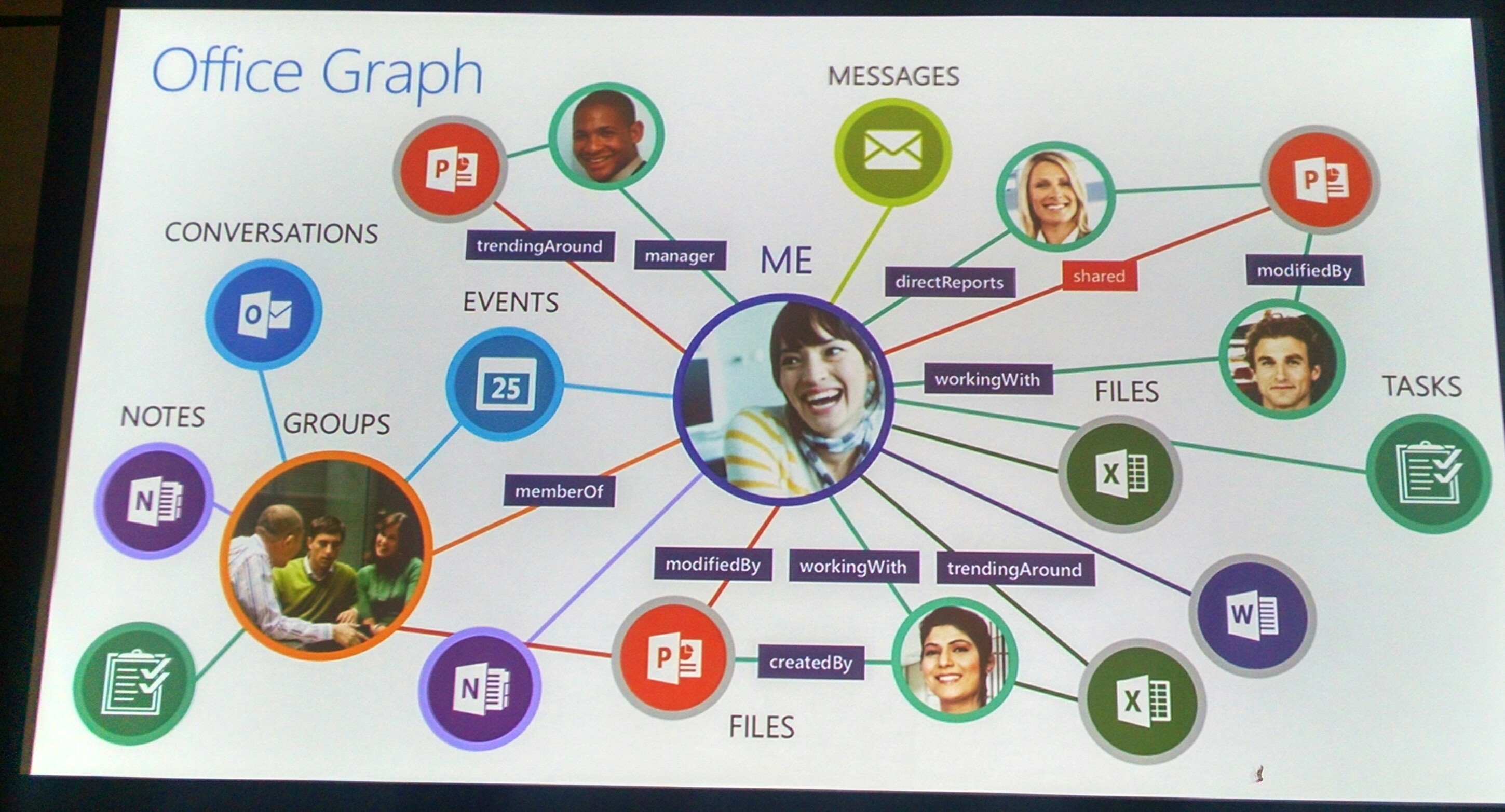
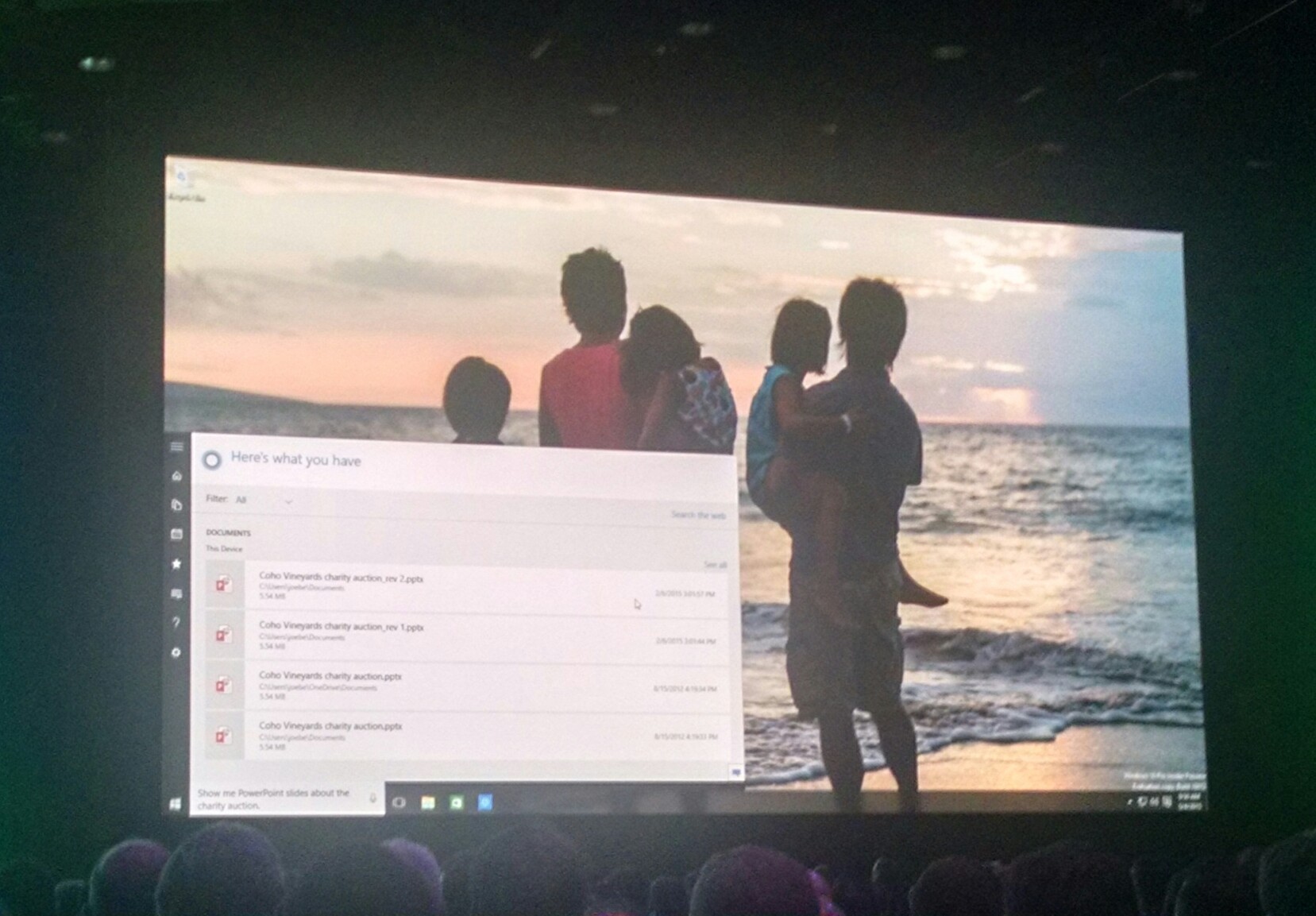
  • Microsoft Office 365 Delve rolling out to eligible customers
  • LiquidPlanner's new dashboard features
  • The new Adobe Document Cloud
  • Unify Circuit's new (and upcoming) integrations
  • IBM and Twitter partnering for new insights in IBM BlueMix and IBM Watson Analytics


Future of Work Sales Marketing Next-Generation Customer Experience Revenue & Growth Effectiveness Chief Marketing Officer Chief People Officer Chief Revenue Officer

Sell more today then its Digital Business; survival is Smart Business

Sell more today then its Digital Business; survival is Smart Business

Many Enterprises see their adoption of Digital Business being driven by Sales and Marketing additions to their current products and activities. Sadly this is unlikely to be enough as many Industry sectors are becoming transformed markets adding a imperative time scale for individual Enterprises to reconsider their need to grasp Digital Business.

In the fifty plus years from 1955 to 2014 only 61 companies have remained in the Fortune 500 listing of the top companies, an astonishing 89% of them didn’t recognize how their business was being lost to external transformation.

Research report now available: The Foundational Elements for the Internet of Things (IoT)

But why suggest the current transformation is about Smart Business rather than Digital Business? Because there is a single factor that underpins the real transformation; ubiquitous connectivity leading to a massive increase in the information available to make smarter business decisions in a dynamic manner. When Buyers, Sellers, Partners, and any manner of value chains, become integrated around information then an industry sector is a transformed marketplace. The term Digital Business seems to have become linked to merely improving sales and marketing techniques in the current industry sector business model.

The forces driving the transformation may be subtly different, as is the timing, in different sectors, but the impact usually makes its self felt by a change in demand. The motor industry is an interesting and visible example starting with an amazing shift in one of the top competitive features of a car over a period of little more than three years.

In 2015 between twenty and thirty percent of customers for a new car place Internet connectivity in their first three factors they consider! That Internet connection changes the game, and the relationships between what a car is, and what a car can do. For the Manufacturers it introduces competing around software and services as much as the classic mechanical engineering.

It arguable that the starting point was manufacturers leading the way with online Digital Business for the sales and marketing models, the resulting understanding and comparisons buyers could make often exceeded the knowledge of showroom sales staff. Now smarter customers want a new level of connected cars so they can continue to be smarter customers when travelling in their cars. But of course that’s the most visible factor driving change, there are several primary factors driving a sector transformation;

1) Government Legislation

The EU requires all cars to be fitted with ‘eCall’ capability for automatic respond to a detected emergency involving the car from 2018. This feature alone ensures that all cars have to have an onboard operational SIM service, and are therefore ‘connected’ cars using onboard sensing for smart behavior management.

2) Car Buyers Requirements

A number of surveys have been carried out, all of which broadly agree that a significant shift towards onboard connectivity as a necessary sales feature is occurring in line with general smart phone connected use.

  • Telefonica survey of 5000 people; more than half said a connected capability would be a key part of their next car purchase requirements
  • McKinsey survey of 2000 people; 13% would rule out of their next purchase any car that didn’t have connected capability, whilst more than a quarter would prioritize connected capability above engine power and fuel consumption
  • BI Intelligence report; sales of connected cars are 45% higher than the equivalent models that do not offer a connected capability.

3) Product Design

In common with many other products the amount of compute power and software, has dramatically risen with the result that McKinsey reported many cars now had twenty times the power of the average home PC. This may be difficult to precisely verify given the number of variable factors, but its undeniable that manufacturers have become skilled software engineers. All this compute power has made cars themselves ‘smarter’ as clean fuel-efficient engines, hybrid engine management, assorted safety features are the norm. in a move recognizable from customization of other digital devices, driver controlled ‘soft’ settings for drive comfort or sports handling are the new competitive battleground. Ultimately the demands for increased safety move towards various forms of Driver Assistance and into the realm of driverless cars

The car of today increasingly relies on, and competes, through the use of computer technology to turn them into Digital Products. The cars of the next five years will use connected capabilities to transform a car from a closed mechanical environment into being part of a connected smart services market environment. For a car manufacturer the whole basis of their industry Sector has been transformed into a new and entirely different place with the competitive and revenue emphasis being increasingly changed.

It’s not only a battle amongst the current players, if it was then perhaps the speed of change and nature of the competition might take place at a different, and perhaps slower rate. New players have already emerged making both headlines to awake the interest of car buyers, as well as offering new views of how the next generation car, or motorcycles, will be smarter.

Tesler Motors not only confounded the market by launching a high performance expensive car as a starting point rather than selling a battery car as a budget conscious choice, it also changing the traditional industry model of dealerships with a sell direct approach. Tesla enjoys a relationship with its customers with frequent feature upgrades more akin to Apple than a car manufacturer.  At the same time your Tesler car integrates with the other digital aspects of your life such as interfacing with the drivers online diary to find a suitable date for a service.

Zero Motorcycles have followed a similar path with high performance machines being at the front of their product introductions and setting a brand image far from other electric ‘scooters’. Zero Motorcycles set new standards for managing relationships with their customers, personalizing everything from the pre purchase enquiry into ongoing ownership. Meanwhile rumors, and indeed R&D expenditure suggests that Google with its driverless Smart Car, or Apple will extend Apple CarPlay might move into the motor industry to complete its transformation into a Digital Product market place.

The first question today’s market leaders face as the car market transforms into a market based around connected Smart Services is how they transform their existing enterprises from competing in todays ‘hardware’ market to competing with new skills as a ‘software’ company. The second is how to take their share of the new revenues, even control the use of Apps in a manner more akin to the smart phone industry, or even as broker in transportation operations in emerging smart cities.

Is the Motor industry a unique case? Hardily given what has already happened as Mobile Phones were transformed to Smart Phones, as Smart Buildings become common to managing a buildings use of resources, as music moved from hardware, (CDs etc), formats to Smart personalized selections based on Services. The major shift in each case has been the same common feature of connectivity introducing a leveling and sharing of knowledge that changes what and how a product is defined, paid for, and consumed towards being a Smart choice.

In 2010 Mark Johnson identified in his book‘ Seizing the white space’ 19 new Digital Business models, or perhaps Smart Service models. The book accurately identified and predicted, as its sub title promised, ‘Business Model Innovation for Growth and Renewal’ at a time when the technologies of the Cloud, Mobility with Apps and Services were just starting to make an impact. Certainly in 2010 few would predict that just five years latter how customers choices when car buying would have changed so much!

With the benefit of hindsight it is interesting to recognize how many of the Enterprises named have been able to ride the transformation of their Industry sector to become global leaders. A position from which they have in turn further driven the speed of transformation to their advantage! Its also worth remembering that this was before the widespread adoption of the term Digital Business, these first wave Enterprises grasped the principle of ‘connected’ business via the Internet as the real innovation in capability.

As the term Digital Business has become associated with sales and marketing transformation, today it would be better to recognize that true Industry Sector transformation path arising from the 19 models occurs through the ‘connected’ integration of market places (buyers, sellers, partners, collaborators, etc) leads beyond this. Connected and integrated around information leads to a transformed market place aroiund ‘Smart Business’.

The message is simple, adding new ways to address your existing customers within your existing Business and Industry sector model is unlikely to be enough to ensure your enterprises long-term survival, let alone a prosperous future. A competitive strategy to out perform competitors in the existing Industry sector business model is no more than securing a short term tactical advantage. An advantage related to deploying a sales and marketing Digital Business initiative. True strategic change in the structure of your Industry sector and therefore your business undoubtedly lies ahead;

The future risk and the future rewards lie in the timing, and extent, which your industry sector will transform into a truly connected market place where buyers and sellers will compete around the speed in which they can turn pooled knowledge into intelligence supporting Smart Business actions.

If you are unconvinced that this will happen then take a look at the Carpe Diem blog of Mark J Perry in which he analyses the difference between the Fortune 500 companies on 1955 listing versus the companies listed in 2014. Only 61 companies stayed in the list and incredible 89% have failed in one way or another though what he refers to as ‘Creative Destruction’. Its pretty safe bet that these guys thought that their industry couldn’t transform too!

Research report now available: The Foundational Elements for the Internet of Things (IoT)

Innovation & Product-led Growth Tech Optimization Future of Work AI ML Machine Learning LLMs Agentic AI Generative AI Analytics Automation B2B B2C CX EX Employee Experience HR HCM business Marketing SaaS PaaS IaaS Supply Chain Growth Cloud Digital Transformation Disruptive Technology eCommerce Enterprise IT Enterprise Acceleration Enterprise Software Next Gen Apps IoT Blockchain CRM ERP Leadership finance Customer Service Content Management Collaboration M&A Enterprise Service Chief Information Officer Chief Technology Officer Chief Digital Officer Chief Data Officer Chief Analytics Officer Chief Information Security Officer Chief Executive Officer Chief Operating Officer

Progress Report - Cloudera's is all in with Hadoop - off to verticals

Progress Report - Cloudera's is all in with Hadoop - off to verticals

We had the opportunity to attend the yearly Cloudera analyst meeting at the beautiful historic Mark Hopkins hotel in San Francisco. The vendor had a remarkable audience of almost 40 analysts attending, documenting the importance of Cloudera for the BigData market.
As usual, here are my top 3 takeaways of the event:
 
BigData has traction – As we also see in our interactions with enterprises, BigData is a key driver for new investment into next generation applications. CEOs intuitively approve BigData proofs of concepts, trials and projects, as the value proposition for insight applications it tangible: When you merge all the information from sources an enterprise paid many multiples more for than for a BigData project, there is a high likeliness that better insights will result from a merge of all of these data sources in BigData clusters. Cloudera sees a similar growth opportunity, enjoying a 150% growth rate. But with growth come the challenges, and Cloudera needs to grow in its go to market and partner ecosystem dimensions. Not easy to solve, but the management team had the right answers how to tackle these two growth areas in the years to come. To exemplify the scale of the problem, Cloudera on average ramps up two partners and hires two employees on a working day. But these are good problems to have for any software vendor, as it shows solid execution on the product side. When asking about Q&A, the vendor shared that the largest investment on the R&D side currently goes into the quality area certainly a good step and direction,. We see quality concerns and potentially resulting delivery issue as the biggest concerns from CIOs / CTOs around the country – once they have bought into the basic value proposition of BigData.
 
Cloudera CEO Tom Reilly talks Intel investment and partnership
More verticals – During the part of CEO Tom Reilly, he shared that after Cloudera created a CDH and a number of security improvements, it was now time to look at more vertical applications. And the focus industries for the near future are – no surprise – Financial Services and Telco, two of the industries known for larger IT budgets and spend. Cloudera will of course not send away any business of other customers, e.g. keep working with retailers, the government etc. – but there will be more attention and focus to these two industries. Reilly did not make specific announcements – but it is certainly good to see that Cloudera plans to create vertical value propositions for prospects and customers.
 
The gentleman who started it all... Doug Cutting 
Partners matter – We heard for many times that we are still in the early times of BigData. The main challenge for Cloudera is to ramp up partners, that leverage the Cloudera products. Cloudera’s sales strategy relies on partners to create value for enterprises, as Cloudera tries to close enterprise wide deals with the CIO / CTO. The next step then is to bring partners in, that leverage the existing Cloudera platform for their products. If partners cannot show / create value for a customer, the TCO of the overall Cloudera solution won’t be favorable, so Cloudera’s success stands and falls with the value proposition partner can bring to the table.
Brave 7 Cloudera Execs in Analyst Q&A

MyPOV

An insightful analyst summit by Cloudera, that I had to leave early unfortunately, so baring the one to ones that happened next day, it is clear that Cloudera has made a lot of progress and probably maneuvered itself into a leading position in the BigData space. The vendor has added significant functionality and has an ambitious product agenda for the next 18 months. The strategic question for the vendor is – will a leading position on the database side be enough to let Cloudera earn the fruits of its work, or does the vendor have to move in the PaaS and maybe analytical SaaS applications space. Right now that is a partnering opportunity, but we know that historically PaaS and SaaS vendors command multiples of the database vendors in share of wallet. The good news is, that the Cloudera executives are aware of the risk and know they need to keep an eye on the PaaS and analytical SaaS applications space. Or in other works: Enterprises use Cloudera to build next generation applications – the vendor needs to be close to the use cases and make sure it keeps a large enough piece of the overall enterprise spending. 
 
More posts on the BigData / OpenSource space:
 
  • News Analysis - Pivotal pivots to Open Source and Hortonworks - or: Open Source always wins - read here
  • Market Move - Oracle buys Datalogix - moves into DaaS - read here
  • News Analysis - SAP commits to CloudFoundry and OpenStack - Key Steps - but what is the direction? Read here
  • Event Report - MongoDB is a showcase for the power of Open Source in the enterprise - read here
  • Musings - A manifesto: What are 'true' analytics? Read here
  • Musings - The Era of the no-design Database - Read here
  • Musings - Time to ditch your datawarehouse .... - Read here
 
Find more coverage on the Constellation Research website here.
2012, 2013, 2014 & 2015 (C) Holger Mueller - All Rights Reserved
Data to Decisions Tech Optimization Digital Safety, Privacy & Cybersecurity Innovation & Product-led Growth Future of Work Next-Generation Customer Experience Hortonworks Hadoop SaaS PaaS IaaS Cloud Digital Transformation Disruptive Technology Enterprise IT Enterprise Acceleration Enterprise Software Next Gen Apps IoT Blockchain CRM ERP CCaaS UCaaS Collaboration Enterprise Service Chief Information Officer Chief Experience Officer

The Google Advisory Council

The Google Advisory Council

In May 2014, the European Court of Justice (ECJ) ruled that under European law, people have the right to have certain information about them delisted from search engine results. The ECJ ruling was called the "Right to be Forgotten", despite it having little to do with forgetting (c'est la vie). Shortened as RTBF, it is also referred to more clinically as the "Right to be Delisted" (or simply as "Google Spain" because that was one of the parties in the court action). Within just a few months, the RTBF has triggered conferences, public debates, and a TEDx talk.

Google itself did two things very quickly in response to the RTBF ruling.  First, it mobilised a major team to process delisting requests. This is no mean feat -- over 200,000 requests have been received to date; see Google's transparency report. However it's not surprising they got going so quickly as they already have well-practiced processes for take-down notices for copyright and unlawful material.

Secondly, the company convened an Advisory Council of independent experts to formulate strategies for balancing the competing rights and interests bound up in RTBF. The Advisory Council delivered its report in January; it's available online here.

I declare I'm a strong supporter of RTBF. I've written about it here and here, and participated in an IEEE online seminar. I was impressed by the intellectual and eclectic make-up of the Council, which includes a past European Justice Minister, law professors, and a philosopher. And I do appreciate that the issues are highly complex. So I had high expectations of the Council's report.

Yet I found it quite barren.

Recap - the basics of RTBF

EU Justice Commissioner Martine Reicherts in a speech last August gave a clear explanation of the scope of the ECJ ruling, and acknowledged its nuances. Her speech should be required reading. Reicherts summed up the situation thus:

  • What did the Court actually say on the right to be forgotten? It said that individuals have the right to ask companies operating search engines to remove links with personal information about them - under certain conditions - when information is inaccurate, inadequate, irrelevant, outdated or excessive for the purposes of data processing. The Court explicitly ruled that the right to be forgotten is not absolute, but that it will always need to be balanced against other fundamental rights, such as the freedom of expression and the freedom of the media - which, by the way, are not absolute rights either.

High tension

Everyone concerned acknowledges there are tensions in the RTBF ruling. The Google Advisory Council Report mentions these tensions (in Section 3) but sadly spends no time critically exploring them. In truth, all privacy involves conflicting requirements, and to that extent, many features of RTBF have been seen before. At p5, the Report mentions that "the [RTBF] Ruling invokes a data subject's right to object to, and require cessation of, the processing of data about himself or herself" (emphasis added); the reader may conclude, as I have, that the computing of search results by a search engine is just another form of data processing.

One of the most important RTBF talking points is whether it's fair that Google is made to adjudicate delisting requests. I have some sympathies for Google here, and yet this is not an entirely novel situation in privacy. A standard feature of international principles-based privacy regimes is the right of individuals to have erroneous personal data corrected (this is, for example, OECD Privacy Principle No. 7 - Individual Participation, and Australian Privacy Principle No. 13 - Correction of Personal Information). And at the top of p5, the Council Report cites the right to have errors rectified. So it is standard practice that a data custodian must have means for processing access and correction requests. Privacy regimes expect there to be dispute resolution mechanisms too, operated by the company concerned. None of this is new. What seems to be new to some stakeholders is the idea that the results of a search engine is just another type of data processing.

A little rushed

The Council explains in the Introduction to the Report that it had to work "on an accelerated timeline, given the urgency with which Google had to begin complying with the Ruling once handed down". I am afraid that the Report shows signs of being a little rushed.

  • There are several spelling errors.
  • The contributions from non English speakers could have done with some editing.
  • Less trivially, many of the footnotes need editing; it's not always clear how a person's footnoted quote supports the text.
  • More importantly, the Advisory Council surely operated with Terms of Reference, yet there is no clear explanation of what those were. At the end of the introduction, we're told the group was "convened to advise on criteria that Google should use in striking a balance, such as what role the data subject plays in public life, or whether the information is outdated or no longer relevant. We also considered the best process and inputs to Google's decision making, including input from the original publishers of information at issue, as potentially important aspects of the balancing exercise." I'm surprised there is not a more complete and definitive description of the mission.
  • It's not actually clear what sort of search we're all talking about. It's not until p7 of the Report that the qualified phrase "name-based search" is first used. Are there other types of search for which the RTBF does not apply?
  • Above all, it's not clear that the Council has reached a proper conclusion. The Report makes a number of suggestions in passing, and there is a collection of "ideas" at the back for improving the adjudication process, but there is no cogent set of recommendations. That may be because the Council didn't actually reach consensus.

And that's one of the most surprising things about the whole exercise. Of the eight independent Council members, five of them wrote "dissenting opinions". The work of an expert advisory committee is not normally framed as a court-like determination, from which members might dissent. And even if it was, to have the majority of members "dissent" casts doubt on the completeness or even the constitution of the process. Is there anything definite to be dissented from?

Jimmy Wales, the Wikipedia founder and chair, was especially strident in his individual views at the back of the Report. He referred to "publishers whose works are being suppressed" (p27 of the Report), and railed against the report itself, calling its recommendation "deeply flawed due to the law itself being deeply flawed". Can he mean the entire Charter of Fundamental Rights of the EU and European Convention on Human Rights? Perhaps Wales is the sort of person that denies there are any nuances in privacy, because "suppressed" is an exaggeration if we accept that RTBF doesn't cause anything to be forgotten. In my view, it poisons the entire effort when unqualified insults are allowed to be hurled at the law. If Wales thinks so little of the foundation of both the ECJ ruling and the Advisory Council, he might have declined to take part.

A little hollow

Strangely, the Council's Report is altogether silent on the nature of search. It's such a huge part of their business that I have to think the strength of Google's objection to RTBF is energised by some threat it perceives to its famously secret algorithms.

The Google business was founded on its superior Page Rank search method, and the company has spent fantastic funds on R&D, allowing it to keep a competitive edge for a very long time. And the R&D continues. Curiously, just as everyone is debating RTBF, Google researchers published a paper about a new "knowledge based" approach to evaluating web pages. Surely if page ranking was less arbitrary and more transparent, a lot of the heat would come out of RTBF.

Of all the interests to balance in RTBF, Google's business objectives are actually a legitimate part of the mix. Google provides marvelous free services in exchange for data about its users which it converts into revenue, predominantly through advertising. It's a value exchange, and it need not be bad for privacy. A key component of privacy is transparency: people have a right to know what personal information about them is collected, and why. The RTBF analysis seems a little hollow without frank discussion of what everyone gets out of running a search engine.

Further reading

Digital Safety, Privacy & Cybersecurity Security Zero Trust Chief Customer Officer Chief Information Officer Chief Information Security Officer Chief Privacy Officer

Microsoft Convergence Conference Day 1

Microsoft Convergence Conference Day 1

What I found most interesting at the Convergence conference is the emphasis on people. And the acknowledgement that technology is there to empower people. There’s been, as many of you know, this rub between the “business” and “IT” and their differing agendas. A couple of examples of customer’s at the Microsoft Convergence Conference showed today clearly that there are companies that have overcome the rub between these two differing parts of a business.

When we were in the analyst and press meeting I asked, “Do you see the rub between IT and the business still in the clients you work with?” They answered very honestly. They told us in clients that “get it” that IT and the business do partner. And often the CIO is the Chief Digital Officer or is truly tapped into the business. And what I loved  the results that you see when that happens.

An example of that was how AccuWeather used the business intelligence to know where trains could avoided tornadoes & Eddie Vedder avoided a lightning strike based on AccuWeather intelligence. This example showed how it’s possible to really make the leap of the digital disruption. Another example was Wash Laundry with 900 employees & 70,000 locations. They are improving their ability to collaborate. Both used Microsoft products.

They also said that they still see some companies not “getting it.” And these companies I worry about. The digital disruption isn’t that you have a Facebook page or a mobile app. It’s that you have truly changed the way you see your business, how you have constructed your business model and found budget to transform the customer and employee experience to be the best they can be. This take organizational change and strong leadership.

Which camp does your company fall into?

@drnatalie

VP and Principal Analyst, Constellation Research Covering Marketing, Sales and Service to Create great Customer Experiences

Next-Generation Customer Experience Innovation & Product-led Growth Event Report Microsoft Executive Events Chief Customer Officer

The Scapegoat Mentality

The Scapegoat Mentality

1

This is a combination between a bad Jerry Maguire scene and the conclusions of many months of conversations around many topics (yes, I woke up at 3:30 AM from a bad dream about “scapegoat” execution and had to write it and share it; I may get fired but my boss is quite understanding since he is more into results and outcomes than into looking good doing things…)

As a stream of consciousness post I may get some parts wrong (and feel free to correct or change what I say in the comments; that’s why they are there); as an observational post it is going to be a summary of the past 6-12 months of my conversations, observations, research, and work.

Here it goes.

First, we are entering what has been called many names (investment years, executions years, GSD – getting “stuff” done moments, etc.) but all points to the same: we are done talking about things and having big ideas and “thought leadership” moments and we need to make things happen. As an analyst it is a scare stage: I make my chops as a thought leader pointing to the future and what may be and now it is about to become reality.  For the next 2-5 years (and maybe longer) and as long as we don’t screw up the economy somehow we are going to have banner years of investment and implementations (and this is not just in the enterprise software world where I live – everything in the world is coming around to be at the same level).  This is what paradigm shifts and transformation looks like at the beginning.

Second, the moment of big ideas is behind us and we are to the second part of the plan: get them done.  I had the pleasure to participate in an innovation summit last week and one of the speakers was from Amazon; as he was talking he reminded me of the guiding principle that Jeff Bezos always talks about: stubborn vision, flexible execution.  We are past vision – better be formed and in place.  If you don’t know what your business is going to look like in 36 months right now (and can recite it with your eyes closed and backwards in 10 languages) you are too late.  You will miss the boat and be a laggard instead of a mainstream or advanced adopter. Nothing anyone can do to fix that now – you either have it (because you invested the past 18-24 months preparing) or you don’t and will implement a half-baked vision and “shoot from the hip” as you go along (not always a good idea, unless you are an itinerant execution and have succeeded at that before – but even then, weaker model than knowing where you are going).

Third, you have 18-36 months to invest and you won’t see the results until then.  You may see small incremental results before then – but not the big picture all put together.  We keep repeating obsolete (I wanted to say stupid, but don’t want to insult lots of people) phrases (culture eats execution for breakfast, relentless pursuit, passionate driving, continuous improvement and some others) spun out by pundits looking for notoriety (or should I call them ninjas and rockstars? doesn’t matter – they are still nothing more than catchphrases and sound bites) but the bottom line is that transformation is hard and will take 2-3 years to see results (note: this is better than last time we did this and took 4-5 years; cycles have greatly improved – but still takes time).

Fourth, We love to follow leaders (the real ones, not the ones that speak in platitudes and sound bites and have no idea what they are doing – but look good doing it) but I see few of them.  For all the talk for transformation of marketplaces, workplaces, and schools – they are mostly an inch deep.  There are some serious changes that happened in our societies in the past few years (online communities changed the nature of the world, everyone is more empowered with more and better access to information and knowledge, traditional models have collapsed under their own complex weight, and more like that) but very few people who totally understand and have figured out a way to carve a path forward and have people follow them.

Fifth, this is inevitable.  We are at a crossroads in history and we need to make something happen.  There is time if you want to come from behind but no more if you want to lead the early charges.  You need to have a strategy mapped out, a timeframe built up, and your key players identified already — or continue working in execution and come in as a late mainstream or laggard (and miss the opportunities and rewards of being early to market).

You are reading this and nodding along, I hope, and then you say, “fine – I believe you… but what do you want me to do?

Don’t get into the scapegoat mentality.

It is tempting to put someone without understanding of how the world changed (but that talks big words and good sounding catchphrases) in charge.  A large number of organizations have done that over the past 2-3 years.  The people leading the strategies have proven they could do it in the past, or have proven they could do something in the past, and have been placed in charge.  Because they did it in the past does not mean they can do it again.  Hopefully the qualifying discriminatory stages identified people who get and set a vision (the most critical part is knowing the metrics of success and the urge to iterate instead of arriving at an end-stage) and know how to move towards that.

In spite of my hopes I am finding more and more organizations with the wrong models for implementing transformation.

I look at organizations today and I see three things that make me believe we are more into looking for scapegoats than executing:

  1. Vision is not stubborn or is not there, but sounds like it because “we are going to transform” became the mantra (but there is no effective strategy in place to do so)
  2. The organization is the same hierarchical model as before (and usually top heavy) instead of flat and flexible
  3. The end result is measured by revenue or dollars instead of effective change accomplished

When you get to the point where you think you had to be in 2-3 years one of three things will happen:

First, you will have succeeded to reach the vision you had and learned along the way many things about how to succeed, lead, and more importantly about how to change as you go with flexible execution.  Likely things won’t look like you wanted them 100%, but you will be close and the strategy will be embraced and adopted by everyone.  And you will know it is time to iterate and move to generation 2.0 or even 3.0 of what you are working on.

Second, you will have half succeeded but realized along the way what you missed and why and will improve the vision and strategy as you go along and come up with the second or third generation of the vision – but still be around to implement it and make it work – reaping (eventually) the rewards of achieving the goal – albeit a tad later (which is fine, as long as you iterate effectively instead of “pivoting”)

Third, you will need an scapegoat.  Someone needs to be responsible for the monumental failure stage you reached and whether you remain alive as an entity or collapse and your bones are picked by the organizations in one of the two previous end results, you will need scapegoat; someone has to take the blame for the results (in spite of the many platitudes we speak lately as mantras – fail fast, learn, etc. – we are still a society that needs to points to someone or something as a failure point; its innate).

This is where this post comes in: when you find yourself at that point where you need to point to your failure point and are looking for a scapegoat (which most likely is already identified from the beginning) take the moment to do things right then: don’t just blame, but go through the previous 1,400+ words and see what you missed along the way.

It wasn’t their fault you failed as an organization, there is no a single scapegoat capable of doing that which the organization as a whole couldn’t have done.  The main failure point (and I can tell you this way before you get there) was the stubborn adherence to a business model and organizational structure instead of embracing change and flexile models.  You have a scapegoat to blame for the lack of execution – but the indicators were there way before she or he took that spot: the organization was not ready to execute and no amount of cattle prodding or pushing will change that in a short time and without modifying things and iterating as you go along.

Scapegoats are overrated.  There is no satisfaction in knowing someone is responsible for the failure (in your mind).  You still failed.  Failing fast with a responsible party does not change the outcome – you still failed. Failure is failure.

Instead of looking for an scapegoat preemptively why don’t you focus on empowering each individual in the organization to do things as they see fit, stick to your stubborn vision, and use the empowerment you effected across the organization to succeed at your own pace.

Whereas I hope few people will have implemented an “scapegoat” mentality – I know it is not true.  My hope is to change a few of those with these and subsequent writings.

Welcome to “digital transformation” (but seriously, make the conversation go beyond digital).

Ready?

Data to Decisions Innovation & Product-led Growth Tech Optimization Future of Work AI ML Machine Learning LLMs Agentic AI Generative AI Analytics Automation B2B B2C CX EX Employee Experience HR HCM business Marketing Metaverse developer SaaS PaaS IaaS Supply Chain Quantum Computing Growth Cloud Digital Transformation Disruptive Technology eCommerce Enterprise IT Enterprise Acceleration Enterprise Software Next Gen Apps IoT Blockchain CRM ERP Leadership finance Social Healthcare VR CCaaS UCaaS Customer Service Content Management Collaboration M&A Enterprise Service Chief Information Officer Chief Technology Officer Chief Digital Officer Chief Data Officer Chief Analytics Officer Chief Information Security Officer Chief Executive Officer Chief Operating Officer

Parents: Be careful what you divulge (in front of Barbie)

Parents: Be careful what you divulge (in front of Barbie)

Hello Barbie A few weeks ago, Samsung was universally condemned for collecting ambient conversations through their new voice recognition Smart TV. Yet the new Hello Barbie is much worse.

Integrating natural language processing technology from ToyTalk, Mattel's high tech update to the iconic doll is said to converse with children, will get to learn voices, and will adapt the conversation in an intelligent way.

The companies say that of all the wishes they have had for Barbie, children have longed to talk to her. So now they can, the question is, at what cost?

Mario Aguilar writing in Gizmodo considers that "voice recognition technology in Hello Barbie is pretty innocuous" because he takes Mattel's word for it that they won't use conversations they collect from kids for marketing. And he accepts ToyTalk's "statement" (which it seems has not been made public) that "Mattel will only use the conversations recorded through Hello Barbie to operate and improve our products, to develop better speech recognition for children, and to improve the natural language processing of children's speech."

Come on! That's the usual boilerplate that companies use to reserve their right to do anything they like with personal information. The companies' soothing statements need to be critically challenged. Aguilar admits "data is an advertising goldmine". So, what will Mattel and ToyTalk do to restrain their re-use of personal information about children? What do they do with the extracted transcripts of what the children say? Where is the personal information being sent, and how is it stored? When will Mattel update its Privacy Policy to cover Hello Barbie? Is the ToyTalk statement mentioned by Aguilar publicly available?

It's bad enough that Samsung seems to expect Smart TV buyers will study a lengthy technical privacy statement, but do we really think it's reasonable for parents to make informed consent decisions around the usage of personal information collected from a doll?

Talk about childhood's loss of innocence.

Resources

The State of Privacy in 2015

Download Report Snapshot


Digital Safety, Privacy & Cybersecurity Next-Generation Customer Experience Security Zero Trust B2C CX Chief Customer Officer Chief Information Officer Chief Information Security Officer Chief Privacy Officer Chief People Officer Chief Human Resources Officer

The Social Selling Index: What’s Your Score?

The Social Selling Index: What’s Your Score?

If you are in sales, which in some capacity we all are, you really must begin the road down social selling. As I have worked on research on this topic, I’ve gotten comments that range everything from “What’s social selling?” to “Social Selling is the best thing that has every happened to sales!” So if you don’t know what social selling is – here’s a paper that will help you understand some of what you need to know: How Sales Leaders and Sales Reps Can Create a Social Selling Organization. When I was at the LinkedIn’s Social Selling Conference, I was given my Social Selling Index (SSI). What is that? The Social Selling Index is made up of 4 pillars:

4 Pilllars of the Social Selling Index

The Social Selling Index is measured on a scale of 0-100. Each area has a total possible score of 25. What are the drivers of the Social Selling Index? And why should salespeople care about improving their SSI? Here’s some stats that may surprise you below. LinkedIn Research looked at the people who filled out their profile and it showed that SSI leaders have 45% more opportunities per quarter and are 51% more likely to hit quotas than SSI laggards.* (*Source: LinkedIn Global Survey of 5,000 Sales Professionals, October 2013)

Stats on Social Selling Index natalie petouhoff LinkedIn

Those with a high SSI score were promoted 17 months faster than those with low SSI. Those with a higher SSI could reach VP level 41 months faster than those with a low SSI.

Promotions to Club natalie petouhoff LinkedIn

If you are not sure if social selling is for you, you might want to shift that thinking. Otherwise you might be left behind. Wondering who has already adopted Social Selling Index? Here’s some stats:

Who is using the social selling index natalie petouhoff LinkedIn

Create a Strong Personal Brand

Improving your SSI means that you have to understand each section of the SSI. The first part is about creating a personal brand. I was fortunate that when I began my career I did a lot of writing and established myself as someone who often wrote about the leading edge of what was going on in tech and software. That helped. What also helped was that I had bosses who realized the importance of a strong personal brand. At the time I was a management consultant at PricewaterhouseCoopers. The partner I worked for explained to me that the reason businesses buy from PWC was, and it was in this order: 1. Who I was (my personal brand, the work I’d be doing and the expertise I’d bring to the table 2. The actual work we would do 3. the fact that we were from the firm PWC. At the time PWC was a 150 year old brand. To me, having a well established brand recognize the importance of personal branding was pretty unusual and astounding. But I went with it and it has served me well. Flash forward 15-20 years and now personal branding is — well let’s just say — “in fashion!”

How do you create a personal brand. Part of that can be done on LinkedIn. Research shows that 81% of people are more likely to engage with someone with a strong, professional brand. When I was at the LinkedIn Social Selling Conference, they gave each attendee their social selling index. Mine is below. What you can see is that I score very high (21) in creating a professional brand. However, I score lower in the next two sections of the social selling index. That makes sense because I am an analyst, not a sales person. I score better on building strong relationships, because that is something that is important as an analyst. So if you have not tried social selling, I highly recommend it. It’s truly where the future of selling is going. And note that it may require that you and / or your team get training. It’s important to understand some of the best practices so you can maximize your social selling success!

LinkedIn Profile Dr Natalie Social Selling Index3

And here’s a link to a paper on some best practices on social selling that I put together: How Sales Leaders and Sales Reps Can Create a Social Selling Organization.

@Drnatalie

VP and Principal Analyst, Constellation Research

Covering Marketing, Sales and Customer Service to Create Better Customer Experiences.

Marketing Transformation Next-Generation Customer Experience Future of Work Innovation & Product-led Growth New C-Suite Sales Marketing Digital Safety, Privacy & Cybersecurity Revenue & Growth Effectiveness Chief Customer Officer Chief Marketing Officer Chief People Officer Chief Human Resources Officer Chief Revenue Officer

Apple Watch – it’s about time, not really.

Apple Watch – it’s about time, not really.

This past week has been a buzz about watches. Remember those devices? Would sit on your wrist and tell you what time of the day it was, much better than carrying a sundial or an hourglass around. Unfortunately for watches, the emergence of the ubiquitous mobile phone has diminished the primary value of the watch – telling time. With most of us staring at our smart phones between 60 – 90 minutes a day, we can see what time it is with a simple glance to the top of our mobile phone screens. By some studies as many as 50% of mobile phone users have no longer a need to wear a watch. So why is Apple, and by some accounts from Mobile World Congress, so many other technology players coming out with watches? Click here for a good piece on MWC from a fellow Constellation Research member.

Here is why it makes sense – it isn’t about the “watch.” These technology players are all trying to get into this space because they want to make sure they get a piece of the real estate that is being battled over – the wrist. The reality is watch sales (non smart watches) has not gone away and is actually on an upswing.

No one is buying watches? Not so fast...

No one is buying watches? Not so fast…

The fact that mechanical types are growing rapidly would reinforce the notion that watches are not about telling time but about fashion, they are closer to Cartier than to Blackberry. The truth is the best watches for time keeping are the digital quartz watches you can purchase at CVS for $10. An automatic watch from Jaeger-LeCoultre probably doesn’t keep time as precisely as a digital Casio – but if you spend the thousands of dollars on a Jaeger-LeCoultre or an A. Lange & Söhne you aren’t doing it because you look at your wrist for the time. We should not think about Apple and the likes trying to compete in the same space as the Omegas, Baume & Merciers and Patek Philippes are in. Wearables are the next wave of connectivity for consumers and corporations. While we are not about to give up our smart phones, the real estate on our wrists has yet to be fully exploited. Of course we have items such as Fitbits that are already finding their way to our arms. Entertainment giants such as Disney are already leveraging the technology with their Magicband. But what is in play for Apple, Samsung, Motorola etc is getting their platform on us. What is done with that platform depends on where application providers’ imaginations can take us. Some use cases that make this more than a watch:

  • Wellness – think of a Fitbit or a Garmin Vivofit with beefed up computation power. Devices will be able to be even smarter with our health. It will not be just about how many steps we took but how has it impacted our glucose levels or our heart rate.
  • Mobile payment – the wallet is really under increased pressure. Payment can be done by the swipe of our wrist. Since we are wearing the device could we integrate some biometrics to validate that we are the actual user…sure beats remembering all those passwords.
  • Manufacturing efficiencies – Many companies are working with the likes of Google glass to bring a wearable the manufacturing floor. Having a device on the wrist that can be voice controlled opens up the door for an array of manufacturing applications. Adding some valuable functional possibilities in the supply chain.
  • Better pick n pack for warehouse and retailers – Warehouse operations are always seeking to find new labor efficiencies with how they find inventory, pick it and prepare it for shipment. This is also true in retail, especially when more retailers are starting to use their physical stores as distribution centers.

Of course we are still in the early stages of these types of wearables and their use cases. Adoption will be tied to the price, not sure if the $10,000 Apple Watch will be the driver for adoption (if I had that kind of disposable

I would take one of these with the $10k

I would take one of these with the $10k

income for a wrist device, it would be a real automatic watch!). The $349 price point for the Apple Sport Watch should be low enough to get some traction  with consumers.

For the business uses the price point will have to come down further. Much like tablets, when the iPad came out the $500 price tag was too high for much industrial adoption, it was only when Android tablets at lower price points did the tablet become more ubiquitous.

Apple once again has created a disruptive device. Question remains will it, like the iPod, iPhone and iPad, have the same level of adoption for both consumers and business usage? But let us not compare what Apple and others are putting out as a “watch.” It is the correct first letter but it is closer to an Apple Wearable. Just like the iPhone is really more than a phone. It became a canvass for application providers to express their creative services.

New C-Suite Matrix Commerce Data to Decisions Future of Work Innovation & Product-led Growth Tech Optimization Chief Customer Officer

Software AG isn’t picking sides

Software AG isn’t picking sides

It must be the season for analyst days, for the second week in a row I attended an event specifically for industry analysts, the media and financial analysts. These events are a great way to get a quick update, spend some quality time with executives and see old friends. Plus this one was a few blocks away in Boston! Software AG rolled out their executives to provide a recap on where they came from in 2014 and more importantly where they see the future for the German software giant.

Software AG stressed their transition to helping their customers’ transition to a digital business. Where does digital disruption come from? From Dr John Bates presentation, Software AG pointed out three areas they are seeing disruption come from:

  • Connected customer: This is nothing new, but we are all aware that the consumers’ voice is growing in importance. Digital aspects such as social media, mobile, big data to name a few, force companies to seek a 360-degree view of their customers.
  • IoT – the Internet of Things: In a way IoT is making machines and devices as connected as the customer. Having this level of connectivity brings great opportunity as well as potential additional IT strain to companies.
  • Proactive risk compliance: This is particularly true in such industries as finance, but also in other verticals such as life sciences and even food and beverage.

In order to address these disruptors and empower their customers they are focusing on providing a digital business platform. An agnostic middleware that will allow developers to create applications that can be created “as needed.” All interesting ideas and make sense. The main question moving forward is how will Software AG balance their desire to remain neutral and agnostic, while trying to create the suite and ecosystem that can propel the software vendor in to a leadership position. Their belief is that the software industry has changed and that the old style that package application vendors went about developing solutions cannot meet the needs of today’s businesses.

There is some merit to this point of view. The fact software has “eaten” the world is the reality of the business environment we live in. Companies will look to have the flexibility and tools available to quickly spin up necessary applications. Solutions that are crucial for these companies to respond to their business needs. For example companies such as Turkcell can ensure they have the proper solutions in place to respond to their demands. 

Leaning on SAG to address customer demands

Leaning on SAG to address customer needs. Being capable of flexibly creating solutions that address demand creation and shaping are vital to drive their retail practice. Turkcell is dealing with the connected customer, where demands and needs are constantly evolving. The ability for Turkcell to have the flexibility to create solutions to address these ever changing needs is crucial. Taking advantage of this flexibility has offered Turkcell the ability to offer their customers the right promotion at a precise time, yielding $15m of additional revenue.

Software AG is heading in the right direction and is providing relevant case studies when it comes to creating a true digital business platform. The question is can they continue to be Switzerland (with regards to their neutrality) of the solution providers or will they eventually have to commit themselves to an ecosystem?

Matrix Commerce Innovation & Product-led Growth Tech Optimization Future of Work Data to Decisions New C-Suite AI ML Machine Learning LLMs Agentic AI Generative AI Analytics Automation B2B B2C CX EX Employee Experience HR HCM business Marketing SaaS PaaS IaaS Supply Chain Growth Cloud Digital Transformation Disruptive Technology eCommerce Enterprise IT Enterprise Acceleration Enterprise Software Next Gen Apps IoT Blockchain CRM ERP Leadership finance Customer Service Content Management Collaboration M&A Enterprise Service Chief Supply Chain Officer Chief Information Officer Chief Technology Officer Chief Digital Officer Chief Data Officer Chief Analytics Officer Chief Information Security Officer Chief Executive Officer Chief Operating Officer