Results

AI's boom and the questions few ask

AI's boom and the questions few ask

The money being thrown around AI talent and infrastructure is staggering, but the return on investment may be sketchy for longer time frames. What happens if AI demand doesn't deliver triple-digit growth forever?

In recent weeks, we've seen the following:

Oracle is predicting revenue gains for fiscal 2028. CEO Safra Catz told employees Oracle is off to a strong start in fiscal 2026 and the company signed multiple large cloud deals "including one that is expected to contribute more than $30 billion in annual revenue starting in FY28." Bloomberg later reported that Oracle's big cloud deal was with OpenAI.

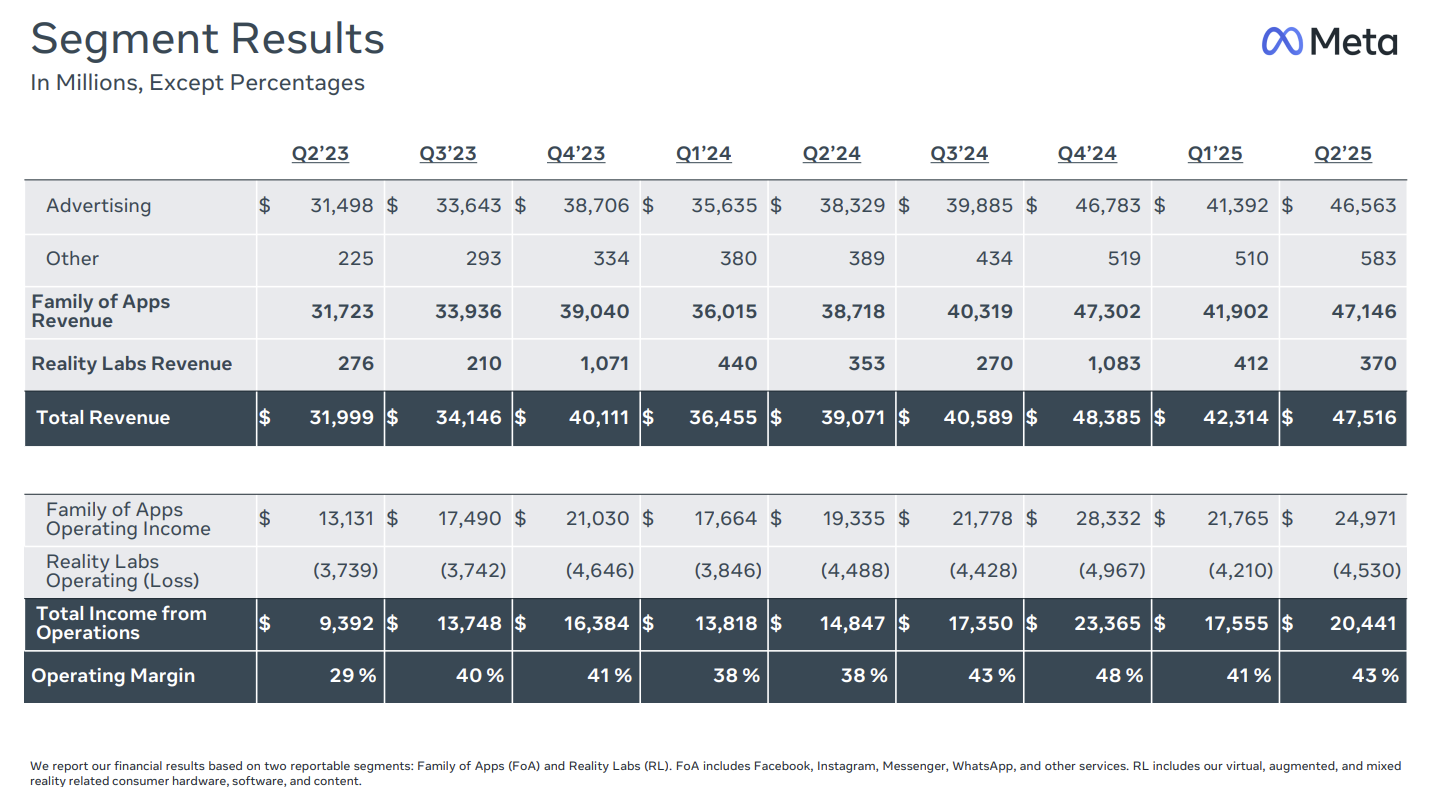
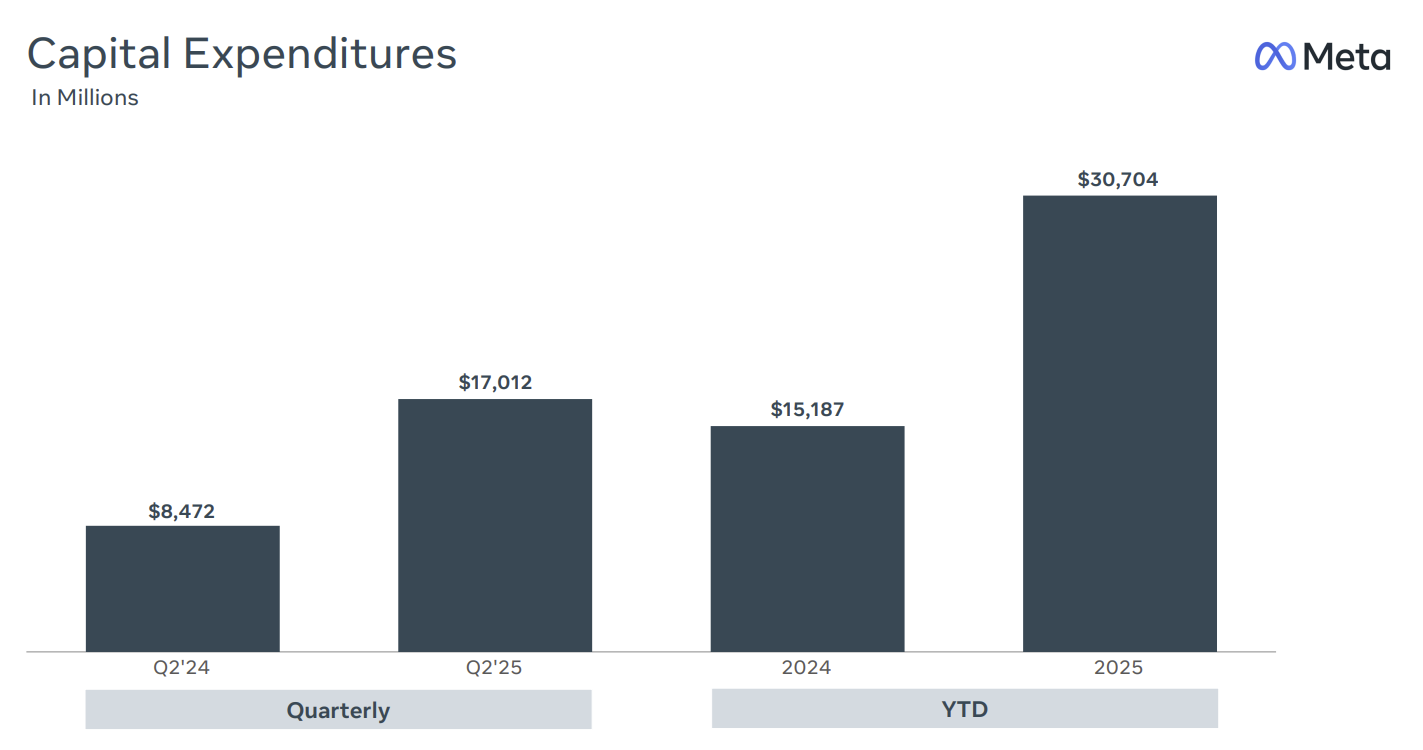
Meta CEO Mark Zuckerberg is trying to hire a dream team and throwing billions into the effort. Zuckerberg is chasing superintelligence, but supergroups can be tough to manage.

CoreWeave said it’s the first AI cloud provider to deploy Nvidia's GB300 NVL72 systems for customers. CoreWeave has also signed a $11.9 billion deal with OpenAI for future compute capacity for model training. CoreWeave's model is fairly simple: Lever up with debt ($8.8 billion as of March 31) and grow your way out of it as future demand materializes. The issue: CoreWeave paid $460 million to service its debt for the first quarter ended March 30 and delivered overall net cash of $61 million. Simply put, CoreWeave would be a great business if it didn't have to pay interest rates between 9% and 15% depending on the credit facility. The company has cash and equivalents of $1.3 billion as of March 31. CoreWeave raises $7.5 billion in debt financing for AI data center buildout

As previously noted, the AI infrastructure game is really just a big leveraged bet that's working for now, but it's worth asking a few questions.

  • How much of the AI boom is dependent on OpenAI posting crazy growth years into the future? Turns out a good bit. Oracle is building like mad on the bet that OpenAI is going to be bigger, badder and superintelligent in two years. What could go wrong? Well, Google, China's AI champions, Microsoft competition, hardware risks and a model training wall to name a few. CoreWeave is betting that OpenAI will be "a significant customer in future periods." Let's hope so. Microsoft was 72% of revenue in the first quarter. Three customers were 83% of CoreWeave revenue.
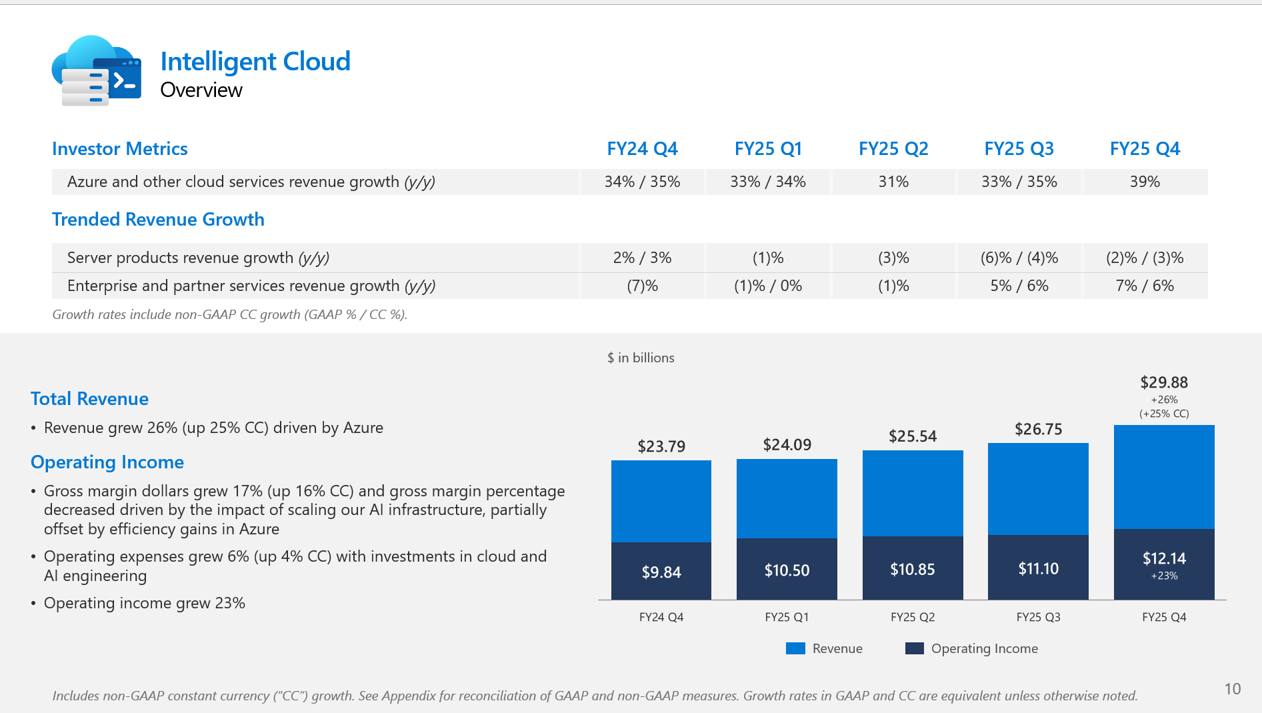
  • Is Microsoft the smartest of the bunch? Microsoft is allowing OpenAI to diversify its infrastructure spending so it doesn't have to fork over so much dough. Microsoft and OpenAI are bickering over the terms of their partnership as the latter tries to ultimately go public and needs a new structure.
  • Will Nvidia's rivals be good enough? The base of this AI infrastructure boom is Nvidia. Giants are spending mostly on Nvidia, but the market is diversifying with hyperscale cloud custom silicon and AMD. Is it possible that levering up to buy Nvidia GPUs isn't a slam dunk?
  • When will the AI infrastructure music stop? The only guarantee is that the spending boom will pause and there will be glut. Timelines are debatable, but rest assured that deals based on demand years into the future are going to produce spectacular failures.

Add it up and AI infrastructure is looking a lot more like the sports world. Billionaires are spending hundreds of millions if not billions of dollars on player that may produce into the future (or not). A $300 million contract for a player often doesn't pay off. These AI deals aren't much different.

Data to Decisions Tech Optimization Big Data Chief Financial Officer Chief Information Officer Chief Technology Officer Chief Information Security Officer Chief Data Officer

Grammarly gets more interesting with Coda, Superhuman deals

Grammarly gets more interesting with Coda, Superhuman deals

Grammarly built a strong business by bringing its AI writing assistant to wherever you work, but recent acquisitions of Coda and Superhuman and new capital point to much larger ambitions.

The company's acquisition this week of Superhuman, which gives Grammarly a native email platform, is just the latest in a series of moves to redefine the company in the AI age. Grammarly is best known as a handy writing tool, but large language models (LLM) threaten to usurp it.

The fix? Grammarly, which has annual revenue of more than $700 million, is going to become an AI-native productivity platform.

Here's the recap of recent events:

Mehrotra, former CTO and product chief at YouTube, noted that Grammarly has "a massive opportunity to reinvent productivity as we know it." Grammarly with Coda set out a mission to focus on how AI agents can improve applications and work across the enterprise.

Grammarly's writing assistant is used across 500,000 apps and more than 40 million people daily. Coda brought Coda Docs, a productivity suite, and Coda Brain, which surfaces corporate knowledge, to Grammarly.

Mehrotra said Superhuman will give Grammarly customers a place to collaborate and be a staging ground for orchestrating AI agents. Grammarly works across more than 20 email providers, but it can do more with a native email platform.

The vision here is that the Grammarly platform will use AI agents to triage your inbox, schedule meetings, analyze your content and write full emails in your voice.

As for the future, Grammarly said the following:

"The future platform will enable scenarios where users can work with multiple agents simultaneously. For example, while writing a customer memo, users could have Grammarly’s trusted communication agent handle spelling and grammar, while a sales agent ensures accuracy of sales facts, a support agent provides context about recent customer issues, and a marketing agent suggests optimal feature positioning."

Now what?

Grammarly clearly has the parts for a broad productivity platform and now has to integrate them. Grammarly is selling its various parts separately, but the magic will really happen with an integrated platform.

Rest assured that a platform launch is on deck.

It's also possible that Grammarly is going to need a rebrand. Grammarly is certainly handy enough to drive $700 million in annual revenue, but sounds like a feature more than a productivity suite. Perhaps, Grammarly simply becomes Superhuman or comes up with a new moniker.

Constellation Research's take on Grammarly's moves were generally positive and strategically on point. It remains to be seen whether Grammarly can pull its users into a broader productivity platform.

Estaban Kolsky, an analyst at Constellation Research, said Grammarly's recent moves are a "way to ensure survival in AI world." He added that "Grammarly's core offering is superseded by AI now so the company needed a new hook. Superhuman is a decent one, but unclear if too little too late."

Holger Mueller, an analyst at Constellation Research, said that Grammarly needed to have more native email support and Superhuman fills the void. The ability to integrate with multiple email systems was useful, but Grammarly needed native support for email, which is the most written document type and natural collaboration space.

Liz Miller, an analyst at Constellation Research, noted that Grammarly just got a lot more interesting with the Superhuman purchase since it makes its future of work mantra more of a reality. Don't understate Grammarly's core offering though.

"Users like it, it delivers the exact value they believe they are opting in for and Grammarly's understanding of language and its imperfections is a tangible and sellable asset to anyone," said Miller, who agreed with the idea that Grammarly needed a new hook.

Constellation Research analyst Michael Ni added:

"This Superhuman purchase isn’t just Grammarly buying an email client—it’s a full-blown AI productivity fabric play. Start with always-on assistance that already has mass appeal, drop into real-time action in Superhuman, and pull it all together in Coda. Boom. It’s AI at the point of thought, decision, and execution. Expect this to challenge those who are playing for the worker "pane of glass" for where work gets done and how it gets measured."

Data to Decisions Future of Work Innovation & Product-led Growth Next-Generation Customer Experience Tech Optimization New C-Suite Chief Information Officer Chief Experience Officer

Boardroom AI Investment, Customer Success, Agentic Fatigue | ConstellationTV Episode 108

Boardroom AI Investment, Customer Success, Agentic Fatigue | ConstellationTV Episode 108

Don't miss ConstellationTV episode 108! 📺 This week, co-hosts Larry Dignan and Martin Schneider kick off with #enterprise tech trends, including the slow of AI adoption, innovation fatigue/data challenges, and how practical AI with measurable productivity trumps agentic AI hype. 

Next, Martin tees up his latest Market Overview on customer success, focusing on...
📌 CustomerSuccess as a full-journey strategic function
📌 Moving beyond renewals to driving growth and expansion
📌 Leveraging AI, community tools, and education platforms

Finally, 2025 AI150 inductee David Bray, PhD, shares AI wisdom for the boardroom. Bray recommends that boards need 9-12 month flexible plans, embracing decision elasticity, and prioritizing adaptability over rigid strategies. 

Watch the full episode below!👇 

00:00 - Meet the Hosts
00:23 - Enterprise Tech News
11:56 - Customer Success Research
17:37 - Interview with David Bray

Data to Decisions Future of Work Innovation & Product-led Growth New C-Suite Next-Generation Customer Experience Tech Optimization Chief Analytics Officer Chief Customer Officer Chief Data Officer Chief Digital Officer Chief Executive Officer Chief Financial Officer Chief Information Officer Chief Information Security Officer Chief Marketing Officer Chief People Officer Chief Privacy Officer Chief Procurement Officer Chief Product Officer Chief Revenue Officer Chief Supply Chain Officer Chief Sustainability Officer Chief Technology Officer On ConstellationTV <iframe width="560" height="315" src="https://www.youtube.com/embed/-Oyx7jcZMD0?si=RSIxf7_n60mrBRyD" title="YouTube video player" frameborder="0" allow="accelerometer; autoplay; clipboard-write; encrypted-media; gyroscope; picture-in-picture; web-share" referrerpolicy="strict-origin-when-cross-origin" allowfullscreen></iframe>

HPE completes Juniper Networks purchase, eyes integration next

HPE completes Juniper Networks purchase, eyes integration next

HPE's has closed the acquisition of Juniper Networks in a move that will double its networking business.

Completing the deal took more than 18 months.

The company announced plans to buy Juniper in January 2024 for $14 billion, received shareholder approval in April the same year and then ran into regulators and a new administration in the US.

Last month, HPE said it settled with the US Department of Justice and agreed to divest its Instant One campus and branch networking business and provide limited access to Juniper's Mist AIOps technology.

HPE, which just held its Discover annual conference, is looking to use Juniper to offer a complete AI stack and improve its margins. Juniper delivered first quarter net income $64 million on revenue of $1.28 billion, up 11% from a year ago.

CEO Antonio Neri said HPE is looking to capitalize on the convergence of AI infrastructure and network and expand its total addressable market. In a blog post, Neri added:

"AI relies on vast, distributed datasets that must be connected securely and sustainably to train or fine-tune foundational or agentic models, and to deploy them for inferencing. That means the network must do more than simply connect users, servers, and storage. It must adapt, scale, and continually become more intelligent."

With the deal closed, now the hard work begins. Here's what HPE said it would do with Juniper in the fold.

  • Integrate Juniper networking with HPE's stack across AI infrastructure and hybrid cloud.
  • Expand into adjacent markets including data center, firewalls and routers.
  • Develop AI-centric integrated systems.
  • Offer a complete stack via HPE's global sales teams and channel.
  • Grow non-GAAP earnings in the first year after the close with the combined networking business accounting for more than 50% of HPE operating income.

Constellation Research analyst Holger Mueller said:

"A deal that looked like it may not clear regulatory hurdles has made it to the finish line. A compliment for HPE and its leadership tenacity - and a strategic win for HPE as it bolsters its networking business - almost a decade after the Aruba acquisition. Juniper gives HPE key capabilities of software defined networking and even more importantly - sizeable public cloud revenue, which has been an area of growth that has eluded HPE. The deal takes HPE back to the future when it was an HP that offered all most all a CIO needed to buy for an enterprise."

Here’s a look at Juniper’s trended revenue it will bring to HPE.

In its first quarter commentary, Juniper said:

“Product orders remained strong and were better than expected, growing double digits year-over-year for the fourth consecutive quarter. Cloud orders continued to be particularly robust, growing triple digits on a year-over-year basis and double digits sequentially, as these customers invest to enable their AI initiatives. Enterprise orders saw double digit year-over-year growth, with orders for Mist and other products attached to the Mist cloud growing more than 40% year-over-year. Service Provider orders were down on a year-over-year basis.”

Data to Decisions Tech Optimization Innovation & Product-led Growth HPE Big Data Chief Information Officer Chief Technology Officer Chief Information Security Officer Chief Data Officer

Cloudflare's pay per crawl system takes aim at AI crawler freebies

Cloudflare's pay per crawl system takes aim at AI crawler freebies

Cloudflare said it is offering a "pay per crawl" plan where web sites will automatically block AI crawlers and can charge for access. Is this the start of the data dark ages for AI?

The move by Cloudflare makes a lot of sense. Publishers and content creators are providing data to AI models to consume for free as traffic tanks. Some sites have licensing deals, but many don't. As Cloudflare noted, people are getting content from models and not driving traffic to sites. We're consuming derivatives not original with large language models in the middle.

Cloudflare is proposing a system where news sites, publishers and social media platforms can be paid per crawl. Basically, we're talking about a pay wall for humans and machines.

The pay per crawl system is in private beta and could be the start of similar models. While this effort is focused on content producers, it does raise a few interesting potential developments for enterprises.

Brands will want their content out there and would enable AI crawlers. The downside for users is that if all content creators blocked AI crawlers we'd have a web of marketing speak.

Will models advance without unfettered free access to content? If we live in the land of pay walls for humans and machines the data scarcity issue will only get worse. Constellation Research CEO R “Ray” Wang has noted that data is going to become scarce and create a data dark age in 2027.

Constellation Research analyst Michael Ni said the Cloudflare move highlights three issues:

  • It reflects the broader trend of open data, going dark as collective look to monetize
  • It also reflects the shifting business model needed to fund quality information.
  • Implications to those needing data to ensure accurate decisions - whether automated or guided.

Perhaps LLMs will be evaluated on their access to the most current and accurate information for grounding purposes. If grounding becomes a larger part of LLM evaluation, it's likely that Google and its Gemini models would have an edge.

How Cloudflare's pay per crawl system develops is worth watching and enterprises will need to ponder the following going forward.

  • What's the impact on model performance if there's data scarcity for new information?
  • Should industries form data collectives to ensure there is accurate information for model training?
  • Will enterprises need to rely on synthetic data setups if a data dark age emerges?
  • How do content pay roads impact AI agents? Cloudflare said:

"The true potential of pay per crawl may emerge in an agentic world. What if an agentic paywall could operate entirely programmatically? Imagine asking your favorite deep research program to help you synthesize the latest cancer research or a legal brief, or just help you find the best restaurant in Soho — and then giving that agent a budget to spend to acquire the best and most relevant content."

Data to Decisions Big Data Chief Information Officer Chief Data Officer Chief Technology Officer Chief Information Security Officer

Hi-Fi process management needs to be foundation for AI

Hi-Fi process management needs to be foundation for AI

To close the loop between insights and actions enterprises will need to double down on process intelligence and efficiency, or what Constellation Research analyst Holger Mueller calls high-fidelity (hi-fi) process management.

In a report, Mueller said hi-fi process management--a higher quality process-centric approach to driving insights--can be enabled by object-centric process mining (OCPM).

The topic is timely since enterprises and vendors are rushing toward AI agents that will be able to be autonomous, make decisions and carry out tasks. The problem, as I've noted before, is that agentic AI without process intelligence is simply going to scale bad processes. The worst case: Agentic AI is just going to be a lift of shift of inefficiency.

Mueller's report couples two big ideas: Enterprise Acceleration and Infinite Computing. For enterprises to move faster and be more agile, insights will be the enabler of action. The issue is reports, spreadsheets, data warehouses and platforms, big data, visualizations and distribution of insights haven't lived up to expectations.

According to Mueller:

"Unlike generic insight-to-action approaches based on traditional business intelligence (BI), process mining delivers actionability by design—because it starts with a deep, system-level understanding of how processes actually run. By mapping real execution data, process mining not only uncovers inefficiencies but also provides the contextual insights needed to drive precise, high-impact optimizations. This makes it inherently more suited to enabling sustainable, enterprise-scale transformation."

Mueller walks through the advances and OCPM vs. traditional process mining and argues that process needs to be included in data and AI strategies. In fact, process is the glue between the two and the "foundation of the underlying AI."

Mueller added:

"Every 5-10 years the underlying techological capabilties for whole enterprise software categories enable new best practices. In most cases vendors just do a 'lift and shift'. In the case of process mining - the technical capabitlies are powered by Infinite Computing - changing both the operator paradigm from human to software and the ability to model an enterprise with an infinite method - object centric process modelling."

Related research:


Data to Decisions Tech Optimization Innovation & Product-led Growth Future of Work Next-Generation Customer Experience Revenue & Growth Effectiveness Digital Safety, Privacy & Cybersecurity ML Machine Learning LLMs Agentic AI Generative AI Robotics AI Analytics Automation Quantum Computing Cloud Digital Transformation Disruptive Technology Enterprise IT Enterprise Acceleration Enterprise Software Next Gen Apps IoT Blockchain Leadership VR Chief Information Officer Chief Executive Officer Chief Technology Officer Chief AI Officer Chief Data Officer Chief Analytics Officer Chief Information Security Officer Chief Product Officer

Meta Superintelligence Labs: A look of the challenges ahead

Meta Superintelligence Labs: A look of the challenges ahead

Meta CEO Mark Zuckerberg has hired away AI experts from OpenAI, Google and Anthropic to create Meta Superintelligence Labs, a supergroup that will allegedly give Meta the ability to develop frontier models that "deliver on the promise of personal superintelligence for everyone."

In a memo published by CNBC and first reported by Bloomberg, Zuckerberg said Meta will put all of its AI groups under Meta Superintelligence Labs (MSL). Meta is committed to Llama 4.1 and Llama 4.2 and will pursue next-gen models with the new group, which will be led by Alexandr Wang, who was the ScaleAI CEO. Nat Friedman will partner with Wang to lead the new group. Friedman, who led GitHub at Microsoft, will lead work on AI products on applied research for MSL.

Zuckerberg named another 11 AI leads from Google DeepMind, OpenAI and Anthropic. Wall Street is cheering the hiring spree, but super teams don't always deliver. Here's a look at the challenges MSL will face:

Time. Meta is clearly playing catch up or it wouldn't be hiring so heavily and paying out what is likely vast sums to poach AI experts. Zuckerberg said MSL will begin work on next-gen models in the next year. If you assume, work started today it's an open question of whether Meta can realistically close the gap with rivals that aren't exactly standing still.

Management. Many people--including investors--saw Zuckerberg's hiring spree as a positive development. I saw a lot of egos to manage and it may take time Meta doesn't have for MSL to gel as a team.

Llama, open source and developers. Meta didn't do the open source riff that usually appears when the company talks AI. It remains to be seen what the approach is with MSL, but Zuckerberg has spent a lot of money to be on the frontier. He'll want to keep the spoils.

Meta has money, but it's unclear if it's uniquely positioned. Zuckerberg said: "We have a strong business that supports building out significantly more compute than smaller labs. We have deeper experience building and growing products that reach billions of people," said Zuckerberg in his memo. Google, Microsoft, Amazon, OpenAI and much of the field can say the same.

ROI. Zuckerberg has spent billions of dollars on the metaverse and AI served as a nice distraction from the lack of ROI. Facebook and Instagram look tired relative to TikTok. It's possible that Meta's core businesses remain great, but the company faces the same ad disruption as the rest of the field.

Data to Decisions Innovation & Product-led Growth meta Chief Information Officer

ShortList Spotlight: DAM Just Got Smarter - Why Smartsheet + Brandfolder is a Game-Changer

ShortList Spotlight: DAM Just Got Smarter - Why Smartsheet + Brandfolder is a Game-Changer

DAM Just Got Smarter: Why Smartsheet + Brandfolder is a Game-Changer

Digital Asset Management (DAM) isn't just storage - it's the secret sauce of modern marketing. In the AI era, DAM transforms how we create, manage, and analyze brand assets, turning every image, video, and model into a strategic experience. 

CR analyst Liz Miller sees Smartsheet's Brandfolder not only as a storage solution but as a strategic powerhouse that transforms how marketers create, track, and optimize brand experiences. That's why they were listed as a top solution on Constellation's DAM for Digital Experiences ShortList.

Key capabilities include: 

  • Turning assets into actionable intelligence
  • Project management meets creative analytics
  • AI-powered metadata and performance tracking

The future of marketing isn't just about creating content - it's about understanding its impact instantly. Watch the full video to learn more!

Marketing Transformation Tech Optimization Innovation & Product-led Growth Chief Marketing Officer On ShortList Spotlights <iframe width="560" height="315" src="https://www.youtube.com/embed/DGjwv2G1sGI?si=m69U0AFv51DEPEHU" title="YouTube video player" frameborder="0" allow="accelerometer; autoplay; clipboard-write; encrypted-media; gyroscope; picture-in-picture; web-share" referrerpolicy="strict-origin-when-cross-origin" allowfullscreen></iframe>

What we learned from enterprise tech buyers in first half of 2025

What we learned from enterprise tech buyers in first half of 2025

Enterprise technology buyers are half way through 2025 and still lack the visibility to make strategic investments with longer time horizons. That said, enterprises are chasing technologies--notably artificial intelligence--to transform, become nimble and optimize so there's a cost cushion due to productivity.

In addition, buyers are also navigating a lot of hype (mostly agentic AI) and trying to comb through technology advances that change almost weekly.

Accenture CEO Julie Sweet recently summed up what enterprise buyers are facing. "We continue to see a significantly elevated level of uncertainty in the global economic and geopolitical environment as compared to calendar year 2024," said Sweet. "In every boardroom and every industry, our clients are not facing a single challenge. They are facing everything at once, economic volatility, geopolitical complexity, major shifts in customer behavior."

Those comments have been echoed on earnings calls repeatedly across industries as companies reported first quarter earnings in April and beyond. AMD CFO Jean Hu said June 3 that "the macro uncertainties are a lot." "We cannot predict what's going to happen," said Hu. "We are trying to really be mindful of the macro environment and make sure we are conservative about the second half."

Coca Cola CFO John Murphy said something similar before noting that a strong balance sheet helps. CarMax, FedEx, Lennar and Truist all noted the uncertainty about the economy due to multiple factors. These comments were all made in the last two weeks.

Simply put, enterprise technology buyers are operating through 2025 in a world where long-term thinking is challenging when every other day there's a dramatic shift. It could be tariffs today, recession tomorrow and war next month. Take your pick or mix and match your set of challenges.

With that backdrop, let's look at the enterprise buyer lessons from the first half of 2025.

Agentic AI. Vendors are agent-washing, but buyers are wary. We heard this repeatedly from CxOs: AI agents are going to be a thing, but right now there's a lot (standards, security, multi-system orchestrate, data and process) preventing me from moving beyond proof of concept.

Now these blockers to agentic AI are being resolved quickly, but skepticism abounds. Agents within applications and silos (CRM, HR, ERP) can work, but the dream for agentic AI is to cut across multiple systems, processes and potentially ditch UI.

Our BT150 CxOs were definitely skeptical.

The rise of practical AI. Amid the AI hype, leaders are looking for practical returns and worrying about vendor control and sprawl. Governance of AI is also a key theme. Practical AI means that CxO aren't getting caught up in the bleeding edge technologies when older tools may drive better returns.

AI driven transformation is about industries. While AI is typically considered to be a broad and horizontal technology, the real transformational use cases are in industries. Perhaps this isn't so surprising when you consider that financial services companies are basically all about technology.

For instance, JPMorgan Chase's organization is almost a master class in driving data and AI use cases. But there are plenty of giants (Bank of America, Goldman Sachs, Citigroup) leveraging AI and digital transformation.

Retail and consumer good companies are all about the optimization. Across every industry, AI is picking up steam and driving results. A sampling of industry-focused AI use cases.

Exponential efficiency equates to resilience. The one big theme in the first half of 2025 was efficiency. Drive efficiency and productivity and bank the savings for a rainy day, which is probably coming 15 minutes after you read this. When you're in another-day-another-crisis mode, resilience is everything.

Supply chain optimization. The close cousin to efficiency is supply chain automation and optimization, which is being used by the giants (Walmart, Amazon, P&G to name a few) to move fast at scale.

The supply chain has had to optimize and retool for the last 5 years due to pandemics, tariffs, and various disruptions. Enterprises are becoming very savvy in AI, robotics, automation and optimization in the supply chain.

Customer and employee experiences are being rewritten due to data and AI. At the Constellation Research Ambient Experience Summit 2025, there were a bevy of takeaways on how AI is changing the game in CX and EX. The Constellation Research AI Forum also featured a bevy of use cases.

Given that much of the agentic AI action is being driven by Salesforce and ServiceNow duking it out for CRM, it's not surprising that CX is a key theme.

Data to Decisions Future of Work New C-Suite Leadership Chief Information Officer Chief Experience Officer

Industrial AI investments start to pick up

Industrial AI investments start to pick up

Industrial AI investment is picking up for infrastructure and component vendors indicating that use cases are in the pipeline for manufacturing, automotive and other asset-heavy industries. The quarters ahead will likely see investment move up the technology stack.

Although it's early, the breadcrumbs pointing to industrial AI demand are starting to pile up. Consider:

  • Micron Technology, which reported better-than-expected third quarter results and outlook, said it is expanding its memory manufacturing to support aerospace, defense and industrial markets. Micron CEO Sanjay Mehrotra said: "In industrial, we are seeing a resumption in our growth as customers increase their investments for the adoption of AI, including in key areas like factory automation."
  • Nvidia CEO Jensen Huang said on the company's most recent earnings call and at the company's Paris GTC event that investment in digital twins, industrial AI and robotics is ramping.
  • Hitachi Digital Services highlighted the intersection of IT and operational technology as a key growth area. Manufacturing is looking to AI and automation at factories.
  • Amazon and Walmart are increasingly highlighting the use of AI and automation in the supply chain and distribution centers.

These industrial AI use cases are likely to proliferate in the quarters ahead as physical AI models roll out, enterprises need to automate to cut costs amid economic volatility and manufacturing moves away from China to some degree.

Data to Decisions Chief Executive Officer Chief Information Officer