Results

CrowdStrike Q3 strong, puts outage in rear view mirror

CrowdStrike reported a better-than-expected third quarter results and said it retained 97% of customers as it moved past its July outage.

The company reported a third quarter net loss of $16.8 million, or 7 cents a share, on revenue of $1.01 billion, up 29% from a year ago. Non-GAAP earnings were 93 cents a share. The company delivered annual recurring revenue of $4.02 billion, up 27% from a year ago.

Wall Street was expecting CrowdStrike to report third quarter earnings of 81 cents a share on revenue of $983.03 million. Analysts leading up to the earnings were confident that the company has put its July outage behind it without a hit to customer retention. CrowdStrike recently said it would acquire Adaptive Security.

CrowdStrike’s report comes a week after Palo Alto Networks report, which was better than expected as the company indicated its ongoing platformization strategy was winning share. CrowdStrike has also been seen as a company that can benefit as enterprises consolidate vendors and platforms.

Module adoption rates for five or more modules was 66% in the third quarter.

As for the outlook, CrowdStrike projected fourth quarter revenue of $1.0287 billion to $1.035.4 billion with non-GAAP earnings of 84 cents a share to 86 cents a share. For fiscal 2025, CrowdStrike projected revenue of $3.923.8 billion to $3.930.5 billion. Non-GAAP earnings for the year will be $3.74 a share to $3.76 a share.

On a conference call with analysts, CrowdStrike CEO George Kurtz said Falcon Flex, the company's flexible licensing program launched a year ago, is resonating with customers:

"Our Falcon Flex subscription model is supercharging Falcon platform adoption. With CrowdStrike, cybersecurity consolidation is rapid and ROI is measurable. Falcon Flex is increasing both our share of wallet and enterprise real-estate, furthering CrowdStrike as cybersecurity' AI-native platform of record.

We closed more than 150 Falcon Flex transactions, with these customers representing more than $600 million in total deal value."

Kurtz added that Falcon Flex has increased the stakeholder conversations with the CFO most interested in the program as part of vendor consolidation efforts.

More CrowdStrike:

Data to Decisions Digital Safety, Privacy & Cybersecurity crowdstrike Security Zero Trust Chief Information Officer Chief Information Security Officer Chief Revenue Officer Chief Privacy Officer

Dell Technologies Q3 server and networking revenue surges in Q3, but PC business lags

Dell Technologies reported better-than-expected third quarter results and strong demand for its AI servers, but weak consumer PC sales.

The company reported third quarter net income of $1.127 billion, or $1.58 a share, on revenue of $24.37 billion, up 10% from a year ago. Non-GAAP earnings were $2.15 a share.

Dell was expected to report earnings of $2.06 a share on revenue of $24.72 billion. Leading up to the report, Wall Street analysts were betting that the company would be a big beneficiary of SuperMicro’s accounting issues along with HPE. Dell Technologies has also been moving to create modular bundles for AI factories based on Nvidia, AMD and others.

Jeff Clarke, chief operating officer, said that AI demand is showing “no signs of slowing down” and the company saw AI server orders demand of $3.6 billion in the third quarter. Dell Technologies pipeline in the quarte rwas up 50%. Dell’s infrastructure solutions group had operating income of $1.5 billion on revenue of $11.4 billion, up 34% from a year ago. Servers and networking revenue was up 58% and storage revenue was up 4% in the third quarter.

In prepared remarks, Clarke said:

"We continue to gain traction with Enterprise customers, large and small, with over 2,000 unique Enterprise customers since launch. Increasingly, Enterprises see the disruptive nature and the innovation opportunities with GenAI resulting in growing GenAI experimentation and proof of concepts."

Clarke added that Dell sees "profit pools" to surround AI servers including power management and distribution, cooling systems, networking gear, maintenance and services. 

According to Clarke, enterprises are consolidating data centers for power and efficiency and "freeing up valuable floor space and power that will support their AI infrastructure."

However, Dell said its client solutions group saw third quarter revenue of $12.1 billion, down 1% from a year ago. Commercial PC revenue was up 3% from a year ago to $10.1 billion. Consumer PC revenue fell 18% in the third quarter to $2 billion. Dell's focus is on commercial PC and workstations. 

He said enterprises are upgrading PCs, but "lining up their upgrade cycles with new AI PCs in the first half of next year." Clarke said enterprises are balancing their need to refresh while future proofing purchases. 

Consumer demand "continues to be challenged," but expects demand to pickup as Windows 10 nears end of life in 46 weeks.  

"Dell had a good quarter, largely because its data center revenue is now large enough that its growth can compensate for the stagnating client solutions group. The next quarter maybe the inflection point, when data center revenue will pass client solution group," said Constellation Research analyst Holger Mueller. 

Dell CFO Yvonne McGill said IT spending is "dynamic" in that some areas (AI servers) are surging and others (consumer PCs) are lagging. 

Dell projected fourth quarter revenue to be between $24 billion and $25 billion. Infrastructure revenue growth rate will be in the mid-20s range with the PC business revenue growth in the low single digit range. Non-GAAP fourth quarter earnings will be about $2.50 a share give or take 10 cents a share. 

For the year, Dell said revenue is expected to grow about 9% with non-GAAP earnings of $7.81 a share. 

Dell didn't provide an outlook for fiscal 2026, but McGill said:

"We expect multiple tailwinds going into next year, including more robust AI demand supported by our strong five quarter pipeline. There's also an aging install base in both PCs and Traditional servers that are primed for a refresh.

We expect ISG growth to be driven primarily by AI servers followed by Traditional servers and storage. We expect CSG to grow as enterprise customers refresh a large and aging install base."

Data to Decisions Tech Optimization Innovation & Product-led Growth Future of Work Next-Generation Customer Experience Digital Safety, Privacy & Cybersecurity dell Big Data ML Machine Learning LLMs Agentic AI Generative AI AI Analytics Automation business Marketing SaaS PaaS IaaS Digital Transformation Disruptive Technology Enterprise IT Enterprise Acceleration Enterprise Software Next Gen Apps IoT Blockchain CRM ERP finance Healthcare Customer Service Content Management Collaboration Chief Information Officer Chief Technology Officer Chief Information Security Officer Chief Data Officer Chief Executive Officer Chief AI Officer Chief Analytics Officer Chief Product Officer

Workday names Enslin chief commercial officer, reports solid Q3

Workday said Rob Enslin, most recently CEO of UiPath, will become president and chief commercial officer. Workday also reported better-than-expected third quarter results.

Enslin will be stepping into a newly created role. Enslin, who is also an alum of Google Cloud and SAP, will be responsible for Workday's revenue growth, sales, partnerships and customer experience. Enslin will join Workday effective Dec. 2. He stepped down at UiPath in May.

Workday reported third quarter earnings of 72 cents a share, non-GAAP earnings of $1.89 a share, and revenue of $2.16 billion, up 15.8% from a year ago. Wall Street was expecting Workday to report third quarter non-GAAP earnings of $1.76 a share on revenue of $2.13 billion.

CEO Carl Eschenbach said Workday delivered "solid performance" and that "organizations are increasingly consolidating on the Workday platform to reduce total cost of ownership, simplify their operations, and our AI solutions."

As for the outlook, Workday said fourth quarter subscription revenue will be $2.025 billion, up 15% from a year ago. For fiscal 2025, Workday is projecting subscription revenue of $7.703 billion, up 17%.

Speaking on a conference call with analysts, Eschenbach said the company saw growth in most of its geographies and industries, but government and education stood out. He said 90% of wins in the quarter were full suite implementations. 

He added:

"AI is top of mind for every CEO right now, and they're all looking for the right partner to guide them through this transformation. Our customers know that an investment in Workday is an investment in AI, and we're seeing a ton of excitement and demand for our AI solutions. In Q3 alone, more than 30% of our customer expansions involved one or more AI solutions."

Eschenbach said that Workday Illuminate and its AI agents will drive growth going forward. 

Constellation Research's take

Constellation Research analyst Holger Mueller said:

"Workday had a good quarter beating the street on the top and bottom lines. Workday broke the $2 billion quarterly revenue mark – a key milestone, as it is on the way to $10 billion in revenue. The growth and good cost discipline helped Workday to grow 30 cents in EPS year over year. The addition of Rob Enslin should help Workday expanding its customer access, as he brings C-Suite relationships from his time at both SAP and Google. The pressure is on Carl Eschenbach and team is on the go-to-market side. On the product side, Workday will have to get going and make its AI strategy tangible, and show what difference it can make for customers' employees daily."

Data to Decisions Future of Work New C-Suite Tech Optimization Leadership AI Analytics Automation CX EX Employee Experience HCM Machine Learning ML SaaS PaaS Cloud Digital Transformation Enterprise Software Enterprise IT HR Chief People Officer Chief Information Officer Chief Experience Officer Chief Customer Officer Chief Human Resources Officer

OpenText Secure Cloud Platform Review, Designed for MSPs

Hear from Constellation analyst Chirag Mehta on the importance of cybersecurity platforms and post-breach resilience. Mehta explains that cybersecurity platforms, like the OpenText Secure Cloud Platform, create a common fabric with open APIs, allowing different security products to integrate and improve overall security posture without vendor lock-in. Learn more about the critical need for post-breach resilience (the ability for organizations to quickly resume business operations after a security incident). Most companies will experience a breach and having the financial resources to recover is essential.

To address this, OpenText has partnered with a cyber warranty provider to offer gap insurance for small and medium-sized businesses, helping them bridge the financial gap between a breach and traditional cyber insurance payouts. The OpenText Secure Cloud Platform gives MSPs a unified operational view across customers, enhancing visibility and streamlining security management. OpenText also plans to integrate the buying of cyber warranties directly into their platform, further consolidating security and billing for MSPs and their clients.

Listen to the full recap to learn more!

On <iframe width="560" height="315" src="https://www.youtube.com/embed/dWK-LQW-CRs?si=UjoKARM5zw_d6Omw" title="YouTube video player" frameborder="0" allow="accelerometer; autoplay; clipboard-write; encrypted-media; gyroscope; picture-in-picture; web-share" referrerpolicy="strict-origin-when-cross-origin" allowfullscreen></iframe>

BT150 Spotlight: Insight Global's DeWayne Griffin on HR, AI and Humans in the Loop


DeWayne Griffin, Chief Digital and Information Officer at Insight Global, said artificial intelligence has a big role in human resources, staffing and recruitment, but you will need a human in the loop to assess soft skills and cultural fit.

I caught up with Griffin shortly after Constellation Research's Connected Enterprise conference where it was inducted into the 2025 BT150 class.

Here are the takeaways of my conversation with Griffin.

Multiple views of the business: Griffin leads Insight Global's internal technology organization and joined in June 2023 after a 22-year career at State Farm Insurance, but became familiar with the company as a board member in 2021 to help with digital transformation. Those roles gave Griffin a good view of the business and technology's role in it across multiple touchpoints in the hiring journey.

"Insight Global at its simplest form helps people find jobs. We have to really understand Fortune 1000 hiring needs and then match them with a wide field of candidates," said Griffin. "My job is to power that connection through the use of technology."

The role of data. Griffin said Insight Global is focused on the known data in job candidates and then there's data still exploring. "We are still going through the digitization of various parts of our business to understand insights and meaning to help us deliver our services at a higher level," said Griffin. "Data is the anchor of our business and it starts with our candidate-consultant population. We have about 30,000 consultants who trust us to help put them to work. We have a rich pool of data from understanding that population as well as data from our 20-year history to help match."

Job demand. Insight Global provides staff and professional services and a core part of the business is in the technology sector. "It has been a difficult market over the past few years and the market has contracted," said Griffin. "If there's AI connected to a role, there's high demand. Other roles are data roles and data science roles. Engineering roles are in high demand and so is cybersecurity."

Griffin added that Insight Gobal also has healthcare roles to fill, but the key is finding new roles as they come up. "There are different pockets of new roles and exploration that we're following the market to go after," he said.

Use of AI internally. Griffin said AI has taken over the conversation since he joined the company. "Where AI has made a difference for us is improving the richness of our data sets around candidate and consultants. We have used AI to help matching industry needs for skills against our pool of candidates and available consultants coming off engagements," said Griffin. "We're using AI, not generative AI per se, and machine learning for the predictive modeling. We've differentiated when we're helping align a candidate who has been interviewed and selected for an opportunity. We've modeled risks of competing offers, delays in hiring and behaviors of hiring managers."

Use of AI in the hiring process. Griffin said AI is already involved in the hiring process and Insight Global said there's value add of AI being used in applicant suitability, skills assessment and training. "There's also this nuance that AI has enhanced the confidence of value and efficiency in the hiring process, but it can't replace the human decision making," said Griffin. "We've seen the investments, but now it's about how AI and human decision-making intersects." 

Human in the loop. Griffin said the human in the loop in hiring revolves around the human interaction and behaviors around culture, fit and soft skills. "Hard skills that are on the resumes can be synthesized as can a one-way video interview, but there has to be a human interaction with the recruiter," said Griffin.

The tech stack. Griffin is heavily focused on infrastructure primarily in the cloud with some data centers for core corporate functions. He said Insight Global is modernizing its data estate to be in a position for AI use cases. Global Insights will buy software for common functions, but build for differentiation. "You have to have the ability to buy and build. I think you should buy and build," said Griffin. "If there's something that we think makes us special in how we deliver our services we build those things. Otherwise, we buy world-class software and integrate it with the flow of data."

Advice to college grads. Griffin said recent grads may want to think about contract and temp work. "When we start our careers we want experiences and you can get that through contract work that can get you professional service engagement, scrum teams and other skills," said Griffin. "It's all about staying sharp with your skills--technical and soft skills. What gets lost in this world of digital interactions is soft skills and in-person interactions. Add those soft skills to your repertoire."

2025 plans. "I'm really focusing on the journey of our customers and anticipating processes and the job posture where there is economic uncertainty," said Griffin. "That uncertainty is going to require some agility for us to help meet those core skills in demand. We will be using AI in more advanced ways, take advantage of our cloud services and building out our overall enterprise data strategy. A big part of our innovation agenda is about chasing the growth opportunity."

BT150 interviews:

Next-Generation Customer Experience Data to Decisions Innovation & Product-led Growth Future of Work Tech Optimization Digital Safety, Privacy & Cybersecurity BT150 HCM HR Employee Experience AI GenerativeAI ML Machine Learning LLMs Agentic AI Analytics Automation Disruptive Technology Chief People Officer Chief Information Officer Chief Customer Officer Chief Executive Officer Chief Technology Officer Chief AI Officer Chief Data Officer Chief Analytics Officer Chief Information Security Officer Chief Product Officer

Zoom reports strong Q3, adds contact center, Workvivo customers

Zoom Communications reported better-than-expected third quarter results and raised its fourth quarter outlook as the company grew its contact center customer base.

The company reported third quarter net income of $207.1 million, or 66 cents a share, on revenue of $1.177 billion, up 3.6% from a year ago. Non-GAAP earnings were $1.38 a share.

Wall Street was expecting Zoom to report third quarter earnings of $1.31 a share on revenue of $1.16 billion.

Speaking on an earnings conference call, Zoom CEO Eric Yuan said Zoom AI Companion monthly active users grew 59% sequentially. Zoom's Workvivo, which is benefiting from a Meta partnership, saw its customer base jump by 72%.

"Zoom Contact Center set a record with an over 20,000-seat deal in EMEA, and Workvivo secured its largest deal ever with a Fortune 10 company, showing our success in landing and expanding with global enterprises that recognize the promise of our integrated Workplace and Business Services platform," said Yuan.

Yuan added that the number of Zoom Contact Center customers topped 1,250, up 82% from a year ago. "Our Enterprise revenue grew approximately 6% year over year, reflecting a continued shift to Enterprise which now makes up 59% of our total revenue," said Yuan.

Constellation ShortListâ„¢ Unified Communications as a Service (UCaaS) | Constellation ShortListâ„¢ Contact Center Workforce Engagement Management (WEM)

As for the outlook, Zoom said its fourth quarter revenue will be between $1.175 billion and $1.18 billion with non-GAAP earnings of $1.29 a share to $1.30 a share. For fiscal 2025, Zoom revenue will be between $4.656 billion to $4.661 billion. Non-GAAP earnings for fiscal 2025 will be between $5.41 a share to $5.43 a share.

By the numbers:

  • Zoom said it had 3,995 customers contributing $100,000 in trailing 12 month revenue.
  • The company reported 192,400 enterprise customers.
  • Online churn in the third quarter was 2.7%.
  • Non-GAAP gross margin in the third quarter was 78.9%, down from 79.7% a year ago due to investments in AI.
  • The company authorized another $1.2 billion to buy back shares. Zoom said it had $2 billion to buy back shares with purchases expected to be complete by the end of fiscal 2026.

Constellation Research's take

Constellation Research analyst Holger Mueller said:

"Zoom continues its transformation from being the synchronous video platform – to an overall communications vendor. And we see why – growth is slow despite the substantial capability growth and widening the total addressable market for Zoom. The problem is the competition and commoditization of the synchronous communication. About 50% of Zoom's growth in net income is fueled more by the doubling of its ‘other income,' which grew from a quarter of operating income a year ago to now 50% of that measure. Zoom is doing the right thing, but it just needs to find ways to grow faster with its new offerings as its core business is being pressured. Next quarter will tell."

Data to Decisions Future of Work Innovation & Product-led Growth New C-Suite Sales Marketing Next-Generation Customer Experience Tech Optimization Digital Safety, Privacy & Cybersecurity zoom ML Machine Learning LLMs Agentic AI Generative AI AI Analytics Automation business Marketing SaaS PaaS IaaS Digital Transformation Disruptive Technology Enterprise IT Enterprise Acceleration Enterprise Software Next Gen Apps IoT Blockchain CRM ERP finance Healthcare Customer Service Content Management Collaboration Chief Information Officer Chief Executive Officer Chief Technology Officer Chief AI Officer Chief Data Officer Chief Analytics Officer Chief Information Security Officer Chief Product Officer

Unlocking the Power of AI in Customer Experience: Lessons from the Five9 CX Summit


At the recent Five9 CX Summit, Liz Miller sat down with #CX expert Nick Delis to discuss the evolution of #AI and customer experience. Here are some of the key takeaways...

🔑 2023 was the "year of failure" as companies experimented with AI, 2024 the "year of learning", and now 2025 is poised to be the "year of execution" - where we see tangible value from AI investments.
🤖 The key is balancing AI automation with empathy and human touch. AI can enhance agent performance and deflect simple queries, but empathy is critical for sensitive customer situations.
🌍 In regions like Latin America and Iberia, the human connection is highly valued. Successful CX strategies need to adapt to local cultural preferences while leveraging the power of technology.
💬 It's not just about the data and metrics - the emotional impact on both customers and agents is crucial. Small gestures can make a big difference.

Watch the full interview!

On cx_convos <iframe width="560" height="315" src="https://www.youtube.com/embed/qPIR0ZsE0Co?si=PvxJjauDer20iyH_" title="YouTube video player" frameborder="0" allow="accelerometer; autoplay; clipboard-write; encrypted-media; gyroscope; picture-in-picture; web-share" referrerpolicy="strict-origin-when-cross-origin" allowfullscreen></iframe>

AWS launches Quantum Embark program to jump start quantum computing deployments

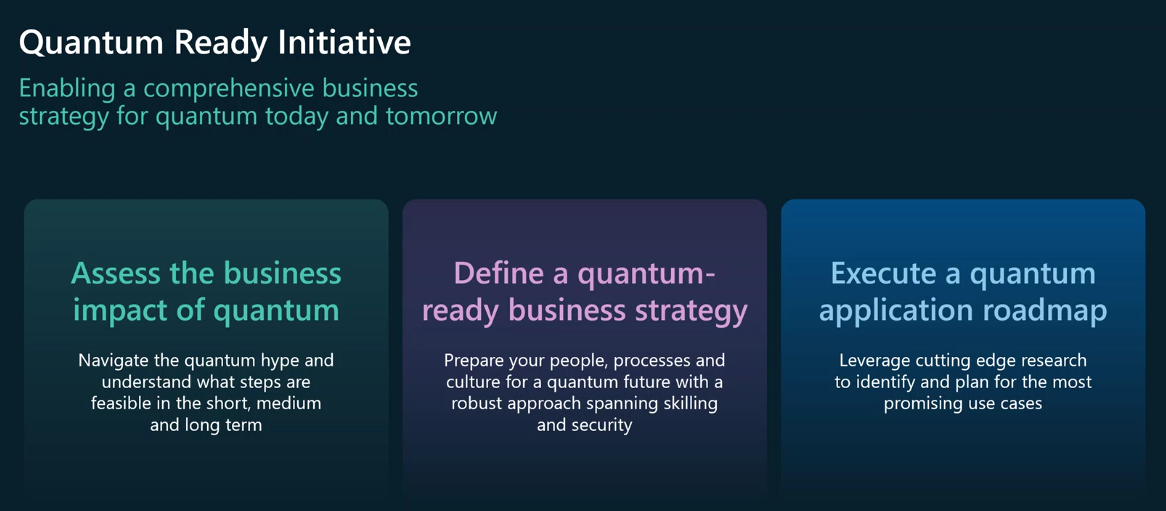
Amazon Web Services launched a services unit to help customers adopt quantum computing. Combined with Amazon Braket, AWS is positioning itself to be a trusted neutral party in quantum computing much as it has done with generative AI.

The cloud giant launched Quantum Embark, an advisory program for customers to get ready for quantum computing. AWS also has Braket, a marketplace of quantum computing services.

AWS' announcement, which was outlined last week ahead of re:Invent, comes as hyperscalers are starting to talk up quantum computing more. In addition, quantum computing players are looking at hybrid applications with supercomputers. The quantum industry has pivoted to current use cases that can deliver value to enterprises. Quantum computing all in on hybrid HPC with classical computing

Quantum Embark includes advisory services that revolve around use case discovery, technical enablement and deep dives for target applications.

AWS cited early customers such as Westpac and Vanguard. Quantum Embark is available within the Amazon Braket console. The AWS spurred a surge in publicly traded quantum computing companies included on the Constellation Research Shortlists for quantum computing.

More: IonQ’s bet on commercial quantum computing working, acquires Quibitekk | IonQ's quantum computing bets: Quantum for LLM training, chemistry and enterprise use cases


Constellation Research analyst Holger Mueller said:

"In another sign of quick maturation of quantum computing, AWS launched its quantum evaluation / onboarding program. Cloud infrastructure vendors like AWS have a lot of interest in quantum, as it will be the first computing platform being almost exclusively accessed in the cloud for enterprises. There is a lot of cloud spend around quantum, from data, networking, data prep and error correction to just name a few. With the announcement AWS is positioning itself even more as a Switzerland that allows access to multiple quantum platforms through its Bracket program and easier onboarding and evaluation through Embark."

More quantum computing:

 
Data to Decisions Tech Optimization Innovation & Product-led Growth amazon Quantum Computing Chief Information Officer

BT150 zeitgeist: AI agent questions, SaaS ate the opex and job woes

AI agents are going to run into problems with standards, operating budgets are being squeezed by SaaS vendors and the war for talent is going to get interesting.

Here's a look at some of the takeaways from Constellation Research's November BT150 call, which operates under Chatham House rules.

AI agents won't live up to expectations

  • Agent orchestration critical, but there are a lot of loose ends to tie up. AI agents will mean dependencies across platforms and it's unclear how the compatibility between agents will evolve. AI in 2025 will move from the infrastructure layer to the platform. Enterprises will struggle to bundle AI applications together.
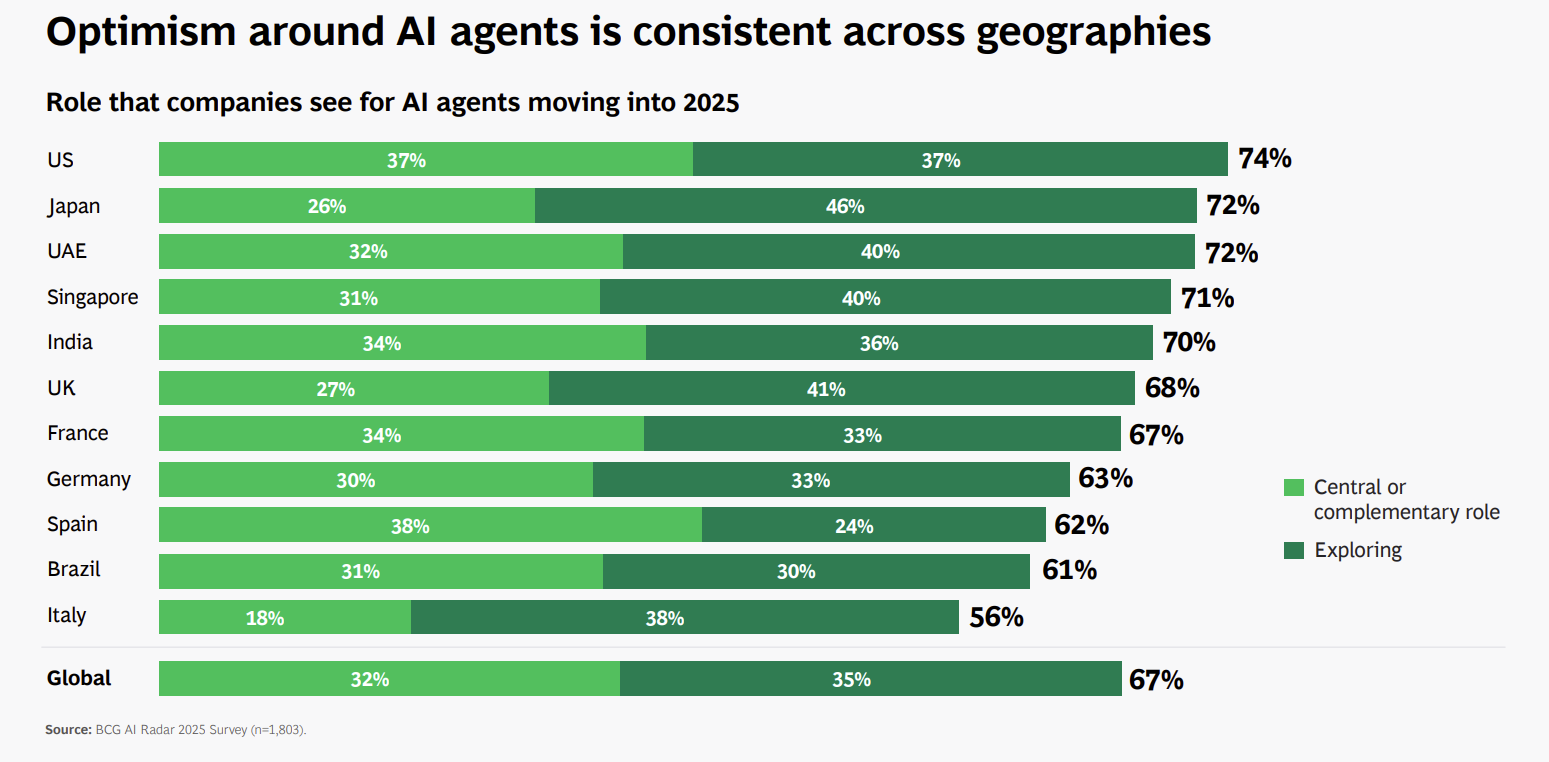
  • Vendors are racing to build out their AI agent ecosystems. Salesforce has its Agentforce partner network and Google Cloud's marketplace will now feature agents from third parties. Boomi is pushing AI agent registries.
  • Be wary of these agent ecosystems since they can result in customers locked into platforms.
  • It's quite possible that 2025 will be a building year for AI agent deployments and enterprises will be slow to adopt them. Why? There aren't open standards yet for agent coordination and you'll need those in place to scale.

Also see: The art, ROI and FOMO of 2025 AI budget planning | GenAI's 2025 disconnect: The buildout, business value, user adoption and CxOs | Agentic AI without process optimization, orchestration will flop

Operating expenses squeezed by SaaS

  • Enterprises are running out of operating expenses and SaaS vendor pricing is leaving little for services or implementation. As a result, contracts are moving to bigger deals where services firms may discount and hope AI and automation makes up the difference.
  • CxOs on the call continued a common theme in 2024--they aren't seeing value from their SaaS providers, which increasingly aiming to be the sole data store for customers. Salesforce was cited as a vendor that wanted to be the data store for everything. "I'm like no, we're not locking in and bringing in external data to Salesforce," said one CxO. "The prices are ridiculous and I'm not seeing value."
  • One CxO said they've been aiming to use automation to reduce costs and become more efficient, but the technology is becoming more expensive.
  • Another CxO noted: "We have to budget for annual 10% increases on SaaS renewals but some incumbent vendors are pushing for 30%. That's ridiculous. We're back in legacy land."

Also see: Enterprise software 2025: Three big shifts to watch | Disruption is coming for enterprise software | BT150 zeitgeist: Dear SaaS vendors: Your customers are pissed

More from the BT150 calls:

Macro themes

  • Repatriation of talent has begun. Countries are offering US workers with visas deals to move home, keep their US salary and work in-country for 3- to 5-years. US executives are jumping at these offers in countries like India and Latin American countries.
  • Enterprises are pulling back on campus hiring and not hiring college grads at previous rates. The CxO concern is that this lack of hiring will mean companies will have trouble filling roles requiring four- to five-year experience in the future.
  • M&A is going to boom as well as the IPO market. The bet for 2025 is that IPOs and mergers and acquisitions will ramp with a change in administration in the US.

BT150 interviews:


Data to Decisions Future of Work Innovation & Product-led Growth New C-Suite BT150 Leadership Chief Information Officer Chief Experience Officer

Nvidia CEO Jensen Huang has a dream...

Nvidia CEO Jensen Huang poked holes in all the arguments against the company during the company's third quarter conference call. Concerns about power, costs, LLMs hitting a wall and hyperscale cloud providers digesting all the GPUs already acquired were all brush aside.

Yes folks, Huang has a dream. In this dream, Nvidia demand remains insatiable until $1 trillion worth of data centers are upgraded for the AI age. See: Nvidia strong Q3, sees Hopper, Blackwell shipping in Q4 with some supply constraints

In this dream...

  1. Nvidia platforms continue to make exponential gains that cut costs, keep competition at bay and warrant a premium due to price for performance.
  2. LLMs will continue to scale and improve without a plateau.
  3. Cloud service providers that are accounting for Nvidia's data center growth don't pause to digest existing purchases. “I believe that there will be no digestion until we modernize a trillion dollars with the data centers,” said Huang.
  4. All companies will be in the inference game and generating tokens that add to data to train AI.
  5. AI factories will solve the looming energy and sustainability problems.
  6. And if the GPU growth plateaus, Nvidia can offset with networking, robotics, automotive and quantum.

In many ways, Huang sounded like an NFL coach that listens to sports talk radio, doesn't necessarily admit to tuning in, but aims to rebut fan arguments. Much of what Huang said on Nvidia's earnings call was designed in part to offset concerns that are bubbling up even though the financials remain stellar.

Huang concluded Nvidia's earnings call with the following:

"The age of AI is upon us and it's large and diverse. Nvidia's expertise, scale, and ability to deliver full stack and full infrastructure let us serve the entire multi-trillion dollar AI and robotics opportunities ahead. From every hyperscale cloud, enterprise private cloud to sovereign regional AI clouds, on-prem to industrial edge and robotics."

I ran the Nvidia transcript on OpenAI to assess sentiment and the result was "overwhelmingly positive." The word cloud looked like this.

Let's take on the Huang AI dream and address by key parts.

Costs. Huang has been consistent with its take that Nvidia systems are becoming more efficient and driving total cost of ownership gains.

On the third quarter conference call, cost of compute, training and inference was addressed about 10 times on par with the second quarter and at a Q&A at a Goldman Sachs investment conference in September.

Huang said:

"We're on an annual roadmap and we're expecting to continue to execute on our annual roadmap. And by doing so, we increase the performance, of course, of our platform, but it's also really important to realize that when we're able to increase performance and do so at X factors at a time, we're reducing the cost of training, we're reducing the cost of inferencing, we're reducing the cost of AI so that it could be much more accessible."

My take: For now, Huang isn't wrong. The efficiency gains in Nvidia's software stack and platforms are impressive. However, there will be a point--likely starting in 2025--where good enough will work. It shouldn't be overlooked that all of the hyperscalers are developing their own AI accelerators and diversifying with AMD and others.

LLMs capabilities stalling? Questions about LLMs continuing to scale spurred a dissertation from Huang. After all, if training techniques hit a wall so does the FOMO driving Nvidia sales.

He said:

"Foundation model pre-training scaling is intact and it's continuing. As you know, this is an empirical law, not a fundamental physical law, but the evidence is that it continues to scale. What we're learning, however, is that it's not enough that we've now discovered two other ways to scale. One is post-training scaling. Of course, the first generation of post-training was reinforcement learning human feedback, but now we have reinforcement learning AI feedback and all forms of synthetic data generated data that assists in post-training scaling."

Huang said OpenAI ChatGPT o1 is an example of how LLMs haven't hit a plateau. "We now have three ways of scaling and we're seeing all three. And because of that, the demand for our infrastructure is really great," he said.

My take: It's unclear whether LLMs will advance at the current pace. Enterprises may also leverage LLMs that are cheaper to train and tailor. Even a yearlong pause in LLM gains could trip up Nvidia's ability to hit already inflated expectations.

Cloud service providers (CSPs) are going to continue to spend like drunken LLM trainers. Huang said:

"All of these CSPs are racing to be first. The engineering that we do with them is, as you know, rather complicated. And the reason for that is because although we build full stack and full infrastructure, we disaggregate all of the AI supercomputer and we integrate it into all of the custom data centers in architectures around the world. That integration process is something we've done for several generations now. We're very good at it, but still, there's still a lot of engineering that happens at this point. But as you see from all of the systems that are being stood up, Blackwell is in great shape."

Nvidia said half of its data center revenue was cloud service providers, but the other half was consumer internet and enterprise. I'm guessing that other half is dominated by Meta.

My take: The argument that CSPs won't pause spending is tenuous. History rhymes and I doubt this time is different as AI infrastructure is built out.

All inference all the time. Huang talked up the agentic AI game, noted AI Enterprise revenue is going to double over the year. Huang said:

"We're seeing inference demand go up. We're seeing inference time scaling go up. We see the number of AI-native companies continue to grow. And of course, we're starting to see enterprise adoption of agentic AI that really is the latest rage. And so, we're seeing a lot of demand coming from a lot of different places."

My take: In Huang's dream, every time you open a PDF or PowerPoint you'll generate tokens at the edge. These inputs will continue to drive models forward. Huang is on target, but we may be debating about the timing of this inference nirvana for years.

Energy and sustainability. Huang said continued efficiency gains from Nvidia systems will alleviate concerns about energy consumption.

Huang said data centers are moving from 10s of megawatts to 100s of megawatts to ultimate gigawatts. "It doesn't really matter how large the data center is, power is limited," he said. "Our annual roadmap reduces cost, but because our perf per watt is so good compared to anything out there, we generate for our customers the greatest possible revenues."

My take: The biggest issue here isn't performance per watt, but sourcing the power. The grid is tapped and innovations like small nuclear reactors are years from scaling. Nvidia isn't going to improve performance per watt so much that it'll have no impact on power consumption.

Nvidia has plenty of other innovations on the runway. Huang noted that Nvidia is growing its software, networking, robotics and automotive businesses. He said:

"There's a whole new genre of AI called physical AI. Physical AI understands the physical world and it understands the meaning of the structure and understands what's sensible and what's not. That capability is incredibly valuable for industrial AI and robotics."

My take: The reality is that Nvidia's data center business is carrying the company. However, Nvidia is well positioned for the next big thing--including quantum.

Data to Decisions Innovation & Product-led Growth Future of Work Tech Optimization Next-Generation Customer Experience Digital Safety, Privacy & Cybersecurity nvidia AI GenerativeAI ML Machine Learning LLMs Agentic AI Analytics Automation Disruptive Technology Chief Information Officer Chief Executive Officer Chief Technology Officer Chief AI Officer Chief Data Officer Chief Analytics Officer Chief Information Security Officer Chief Product Officer