Results

Business Users Vs. Data Scientist: Will Business Ever Prosper From Big Data?

Business Users Vs. Data Scientist: Will Business Ever Prosper From Big Data?

While Data Scientist and Business Analyst are uncovering incredible insights, the big question is how useful is that information to the business and business user? Data Scientists understand the analytics and the data, often using data science language. This can create a barrier to business users. They don’t want to say they don’t understand it or that they don’t have the aptitude or desire to become a Data Scientist. The fact is if you are not a data scientist you probably don’t want to become one. If  you wanted to be one, you would become one. 

So how can business users make sense of all the data that is being collected? Business users speak in business terms – lead conversion rates, reducing churn, increasing customer lifetime value. And that is NOT SQL language. However, to make better decisions about their campaigns and their overall business, they do need to use big data insights. I emphasize insights, but data itself is not helpful unless it provides actionable insights. To use the data, business users are craving an easy to use interface and interactions through visualizations. And they need it to be convenient to use, so they can get the answers they need whenever they need it.

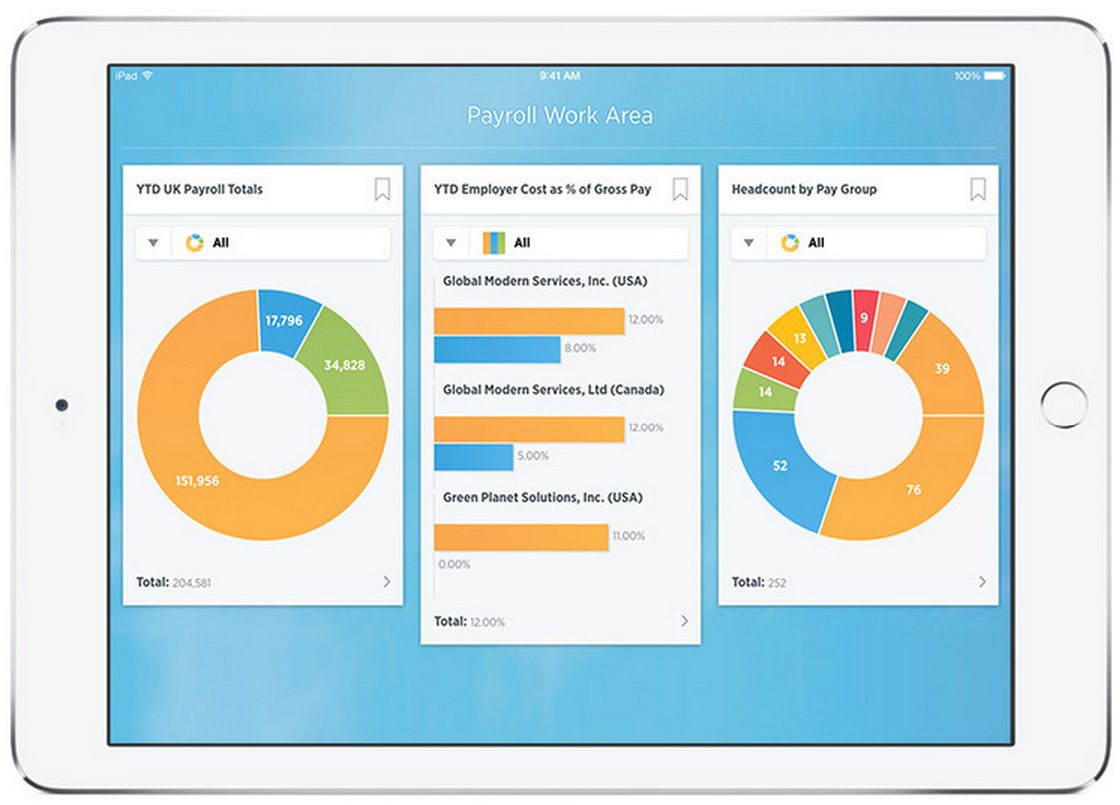
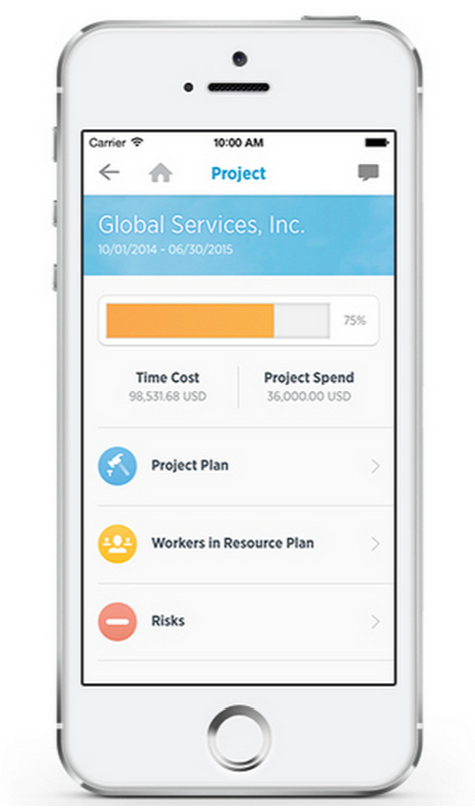
Teradata, for instance, has taken a step forward to solve this dilemma with a new solution by expanding its technology solutions to include applications that make the analytics accessible and consumable for the typical business user. It’s very important to assure business users that the data is in scalable and reusable apps that so that it makes sense to business users.

Teradata calls this capability Big Data Apps. They are purpose-built apps designed to answer specific business questions. They were created by the data science experts who were focused on solving a business issue, like understanding the path of a customer who is about to churn and customer sentiment. In other words, they see these big data apps as a self-service big data discovery designed for non-data scientists to be use specifically by business users to delivers powerful, interactive visualizations to enable quick, impactful decisions and provide the fastest time to value.

Often extracting value from big data requires specialized skills & resources. The big data apps expand big data access to a broader set of users. The industry specific big data apps provide a number of vertical industries support to make better business decisions. Those include: retail, telco and cable, healthcare, travel and hospitality, entertainment and gaming as well as consumer financial institutions.

As an example, for retail, the business issues the big data apps are designed to solve are:

  • Paths to Purchase
  • Attribution (multi-channel)
  • Shopping Cart Abandonment
  • Checkout Flow Analysis
  • Website Flow Analysis
  • Customer Product Analysis and
  • Market Basket & Prod Recommendations.

In the retail sector, for instance, the retail app could be applied to shopping carts and product recommendations. For example, determining the affinity between specific products plays an important role in understanding what products should be recommended to consumers based on past and current purchases and where products should be placed on store shelves. In this scenario, the way the big data app would work is that it would use the Aster Collaborative Filter and Recommender functions to output recommendation data and a visualization of the data.

how to use teradata output

In the healthcare industry, the big data apps provide information on:

  • Paths to Surgery
  • Admission Diagnosis Procedure Paths
  • Patient Affinity of Symptoms and Medicines and Cures
  • Patient Compare of Illnesses and Symptoms
  • Impact Analysis of Patient Care and
  • Drug Prescription Affinity Analysis among similar and dissimilar patients.

And in Travel & Hospitality, the big data apps provide:

  • Customer Review Text Analysis
  • Website Conversion Paths
  • Diminishing Loyalty and
  • Customer Review Sentiment Analysis.

So the question is – is this enough? Will this help business people find big data useful. Everyone was in the race to get big data. Now the race seems to be for the ability to make big data useable. Looking forward to talking to some of Teradata’s customer who are using the big data apps to hear what they think.

@drnatalie

Constellation Research

Data to Decisions Next-Generation Customer Experience AI ML Machine Learning LLMs Agentic AI Generative AI Robotics Analytics Automation Cloud SaaS PaaS IaaS Quantum Computing Digital Transformation Disruptive Technology Enterprise IT Enterprise Acceleration Enterprise Software Next Gen Apps IoT Blockchain CRM ERP CCaaS UCaaS Collaboration Enterprise Service developer Metaverse VR Healthcare Supply Chain Leadership B2C CX Chief Customer Officer Chief Information Officer Chief Technology Officer Chief Information Security Officer Chief Data Officer Chief People Officer Chief Human Resources Officer

Income Inequality Is A Sustainability Issue

Income Inequality Is A Sustainability Issue

1

In January, Aetna CEO Mark Bertolini announced to employees that the company was raising its minimum wage from $12 to $16 per hour, and announced an improved health benefit for lower-income employees.

Why? "The turnover, lost productivity and recruitment costs that this should help address are significant. I'm willing to make this investment," he said. "I hope it benefits our employees, and we will learn how it helps our overall business. That is the nature of innovation versus just managing a business." This cost-benefit approach doubtless plays well with business analysts. But it turns out there was more on Bartolini’s mind. “Companies are not just money-making machines,” he told James Surowiecky a month later. “For the good of the social order, these are the kinds of investments we should be willing to make.”

What’s going on?

Since 2011, the issue of income inequality in the United States has moved from the surprise of Occupy Wall Street to the forefront of a national conversation. Oxfam recently reported that between 2009 and 2014 the share of wealth owned by the top 1 percent has increased from 44 percent to 48 percent, and the World Economic Forum put the issue first on this year’s list of global trends.

Income inequality

Nixon-era Economic Advisor Herbert Stein had a wonderful saying: “If something cannot go on forever, it will stop.”

So how will it end? With legislation, as in the creation of Anti-trust laws to curb the market power of monopolies in the Gilded Age?  With legal action, as in the efforts to act on the research showing tobacco caused harm to its users? With self-regulation, as when the food industry phased trans-fats out of its offerings as evidence mounted that they were unhealthy?  (For completeness, we can add revolution, as in France or Russia when the elite became disconnected from the rest.)

The issue is economic as well as political: Recent research has suggested that societies with more equal income distributions have better outcomes in terms of physical and mental health, crime and imprisonment, and other social problems, and that, contrary to economists’ prior beliefs, the savings from these outcomes add to the efficiency of these countries’ economies.

This is a question for policy-makers and society at large.  But for corporations, the trend poses substantial risks:

·       Reputation. The ubiquity of information now leaves companies with little room to hide when their activities are perceived to be harmful. Public pressure is in play with respect to all kinds of  corporate behavior: General Motors hurt its standing by suppressing recent safety problems; Apple, on the other hand, responded in a matter of months to concerns about working conditions in the factories of their Chinese suppliers. Income Inequality will join the list of issues customers care about, and   corporations risk being seen as a contributor to the problem if they do not take control of the narrative.

·       Demand. Companies serving mass markets may see no growth in demand as their customers’ consumption expenditures stagnate.

·       Talent. Data about the values of the next generation of talent in the U.S. suggests that a company’s social posture affects its desirability as an employer.

·       License to Operate. For decades, host countries have imposed requirements on foreign investors with respect to local content or ownership; might India, say, begin to insist that companies meet certain standards of compensation equity in order to do business locally?

How should companies respond to these risks?

Over the past fifteen years or so, corporations have increasingly embraced their “externalities,” that is, the costs they impose on others who have no power to prevent them.  Most visibly, mainstream companies have taken ownership of their environmental externalities, establishing efforts to be “green” under the banner of CSR. On balance, corporate behavior has evolved from denying responsibility, to challenging evidence of impact, to embracing sustainability.

But even for these companies, Social sustainability is not a recognized concern—yet. As noted, recent research finds that income inequality creates externalities: higher rates of murder, teenage pregnancy, mental illness, imprisonment, obesity, etc., causing both suffering and expense.  Richard Wilkinson’s book The Spirit Level  is analogous to Rachel’ Carson’s Silent Spring, the 1962 book that documented environmental concerns  for the general public.

I’ve interviewed a handful of corporate executives about social sustainability. Thus far, all concur with the diagnosis that income inequality: (1) presents an increasing risk, particularly with respect to reputation and demand and (2) could be treated as a sustainability issue. However, although companies reported internal conversations about these issues, I found none that have made a commitment (internal or public) to any systematic program to address them. Some expressed fear that raising awareness further will just exacerbate their exposure. Nonetheless, some are engaged in activities that could ameliorate the problem—Whole Foods, Walmart, the Container Store, and others who embrace “Conscious Capitalism” take increasing responsibility for their externalities.  But they have not named income inequality among them.

Companies are still coming to grips with the scope of corporate responsibility, and adding social sustainability to the mix increases the challenge.  Companies cannot take ownership of every perceived social concern, but need to be seen as rationale in the choices they make.  One framework (described in this HBR “Big Idea”) distinguishes three levels of responsibility:

·       Taking Ownership: When an externality is clearly traceable to a company’s operations, someone will measure and publish the impact, and expect the company to remediate it. P&G has taken responsibility for keeping its packaging out of landfills, for example.

·       Taking Action: Coca Cola’s operations in India were lowering the local water table, but they were far from the only water user. The company acted to convene the stakeholders and develop a plan for sustainable use.

·       Taking an Interest: Royal Dutch Shell doesn’t sell cooking oil, but is committed to a goal of universal access to clean energy.  So the Shell Foundation supports NGOs that distribute cleaner stoves to families in Bangladesh.

What does this framework say about corporate responsibility for income inequality?  My interviews suggest the answers are far from complete, but they offer some hints.

Ownership

Companies control how they compensate their people. “The average multiple of CEO compensation to that of rank-and-file workers is 204, is up 20 percent since 2009,” according to Bloomberg. The Dodd-Frank law mandated that companies report this ratio, but “some of America’s biggest companies are lobbying against the requirement,” Bloomberg reports.

Meanwhile, some companies are taking positive steps, such as explicitly investing in the development of human capital.  The Brazilian company, Cosmeticos Natura, employs about one million women in Latin America. For many, it is their first job outside the home. About 30 percent move on to other employers each year.  But Natura doesn’t see departure as a profit leakage; they see the improved earning power of their former employees as part of their output, a contribution to the economies that give them their license to operate.  Is investment in people a cost, or an output?  Taking responsibility for growing the human capital they employ helps companies attract talent and increase productivity, while benefitting the society. Hyatt Hotels is training every employee to deal positively with customers, helping to promote porters to customer service representatives.

Action

Aetna, of course, represents a direct action to increase compensation at the bottom end. According to Surowiecky, Bartolini  simply “said that it was not “fair” for employees of a Fortune 50 company to be struggling to make ends meet.”

Supplier pay is a prime opportunity for action. Paying farmers a fair share for their products (Fair Trade for coffee, for example) and insisting that workers are paid what they are promised (the Electronic Industry Association standards) are examples. Whole Foods invests in its suppliers, in some cases overcoming their limited access to capital.

In the environmental sphere, Walmart used its leadership position to insist its suppliers’ packaging become less wasteful. Might another company similarly use its clout to establish a wage floor higher than the legal minimum wage?  Or perhaps lead a major franchise group to make such a commitment?

Take an Interest

Some businesses will argue that raising the wages of its lowest paid employees, or restraining the compensation offered to its leaders, or investing more than its peers in employee development will put it at a competitive disadvantage.  These propositions are seldom tested, but clearly it takes courage to flout this view and invite shareholder scrutiny. 

But there is safety in numbers. Industry groups have an opportunity to get in front of the issue of sustainable income distribution, rather than be dragged into it.

From Isolated Action to Consolidated Effort

As with anti-trust and labor issues during the early industrial age, society will likely reign in this trend through some combination of regulation, legislation, court action, and social pressure.  To be perceived on the right side of this issue, at a minimum, businesses can begin to mitigate the risks posed by continuing concentration of income by coming together to take a position that the sooner the curve is bent, the lower the risk to all businesses.  And rather than opposing regulation like an increase in the minimum wage that might raise short term costs, they might look at the whole system and see, as they have come to in the case of “green,” that getting in front of, or at least joining, the parade will be good business in the long run.  Kraft, Nestlé et al had replaced transfats long before the first state regulation banning them was passed.

If this sounds unlikely, consider the Risky Business Project., an effort led by financial heavyweights including Mike Bloomberg, Bob Rubin and Henry Paulson urging corporations to begin today to do what’s necessary to manage the risks of climate change—an externality issue once too contentious to to deal with has evolved into the motivation for long-term business strategy. The same will happen with social sustainability and income inequality in particular.

Facing the issue head on can create a new consumer segment, grow markets and build a trajectory of profit sustainability. And according to “The Good Jobs Strategy,” better paid workers contribute to profits, rather than diminish them.

The corporate sector has more to gain than to lose by embracing social sustainability alongside of environmental sustainability. And beyond their narrow interests, they could take the initiative where political leaders seem unable to. Because it is not just corporations that are at risk, but the societies in which they operate.  To quote the Commission on Inclusive Prosperity:

History tells us that societies succeed when the fruits of growth are broadly shared. Indeed, no society has ever succeeded without a large, prospering middle class that embraced the idea of progress. Today, the ability of free-market democracies to deliver widely shared increases in prosperity is in question as never before.

Future of Work Chief Executive Officer

A Model for Anticipatory Analytics

A Model for Anticipatory Analytics

1

I hope you read my last post about what’s wrong with Predictive Analytics – that’s the basis for this post.

I would like to explain how Anticipatory Analytics should work – and give you an idea of what the value is.  This is, in essence, what predictive analytics should’ve been in generation 1.0, and how we evolve from that definition of predictive to today’s model.  As I mentioned before, I see predictive as being badly implemented more than anything and am hoping this model can improve and replace those faulty implementations.

The outcome for this model: explore the art of the possible.  Let’s start with a theoretical example to illustrate better the art of the possible.

A consumer purchases an airline ticket to a tropical destination. In today’s world of traditional marketing the email confirmation would contain links to typical tourist attractions with whom the airline has established relationships. If the consumer buys, they get a percentage of the purchase price – but the number of consumers that take those offers is extremely low.

Any incentive to purchase, or any special offer, will not be customized to that specific consumer to augment the chance of purchase.

Fast forward to predictive analytics events, and the airline may do better than just offer a bunch of random attractions, they might even filter by age and gender of the consumer – or even look at past events and see if they opted for one of the previous offers and then make the offer to the consumer. Since the confidence of these offers is greater, and the recipient is thought to be better known, the offers the consumer gets may be more customized and even addressed to their individual preferences (based on information the airline captured before).

Picture1-MBP

In a world where everything is possible we see a different scenario. The airline would use data from their own repositories, but also from other sources. Compiling information from social channels, communities, partners and alliances, even accessing credit card information from the past they can, close to real time, construct a very effective profile of what offers would or wouldn’t attract the interest of the consumer and extend deeply discounted, but almost guaranteed, offers customized to the preferences of the consumer. Not necessarily based on information that was stored before, but based on analytics conducted ad-hoc on the many data streams related to the consumer.

Each choice the customer would make would then change the potential outcomes of the many other options – which would then be recalculated and the most likely chosen – not the next best, but the next most likely.

In this example we see a consumer that instead of getting an email with 10-12 “opportunities” would get a highly customized package of offers that are almost guaranteed to be interesting and appropriate. Further, if the airline could obtain financial information from a partner about the user, the offers could be of higher or lower value appropriate to each user and further increase the chances of adoption.

Even more interesting, any choice that the consumer makes would alter the calculations for the many other options – in real time resulting in better offers being tendered instantaneously.

This new model, from expecting a consumer to repeat a behavior from someone else in the past to foretelling what a consumer may do based on his or her individual data and needs, and adapting it along the way based on their choices and other data, is the art of the possible today.

Great, you say – so how do I make this work?  That’s next week’s third and final post on this series… stay tuned, once more.

Data to Decisions Next-Generation Customer Experience ML Machine Learning LLMs Agentic AI Generative AI AI Analytics Automation business Marketing SaaS PaaS IaaS Digital Transformation Disruptive Technology Enterprise IT Enterprise Acceleration Enterprise Software Next Gen Apps IoT Blockchain CRM ERP finance Healthcare Customer Service Content Management Collaboration Chief Customer Officer Chief Marketing Officer Chief Information Officer Chief Technology Officer Chief Information Security Officer Chief Data Officer

The True Value of Social Business is Still to be Unlocked

The True Value of Social Business is Still to be Unlocked

1

Realising the value of any business initiative – especially when it involves some form of transformation or change management – can take months or even years. In fact, the benefits of some changes can continue to accrue for decades. Little wonder then, that business is taking time to bring its social media / social business programs to account. After all, it’s not just about allowing Facebook access through the firewall and launching a new Fan Page.

For business to generate value from their investments in social initiatives, integrated programs need to be rolled out across five dimensions:

  • Goals – it’s essential for your program to set goals. These goals will, over time, become more refined, but even ad hoc programs should establish clear parameters
  • Commitment – understanding how your teams will use social media helps determine the level of resourcing, governance and support that will be needed. Essentially, you need to determine your organisation’s accepted level of commitment
  • Ability – how will social be deployed within your organisation and by whom? What level of training and best practice sharing will be put in place? How will you formalise this?
  • Measurement – are you achieving your goals? Are you failing? And are you even measuring the right things?
  • Scalability – who’s job is social? Thinking through this question will help you confront the challenges of scaling social within your business.

To understand the way that organisational maturity can be built over time, I created this social business maturity model. But when it was first developed back in 2011, there was a paucity of data available on the impact of social business. This is now beginning to change.

The Sloan Review/Deloitte’s findings from their 2014 global study on social business reveals that as social business matures, value begins to build across the enterprise – not just within the marketing and sales divisions. Almost 60% of B2B companies are finding that social business initiatives are “positively impacting business outcomes”. And that central to the realisation of business value is the support of the C-suite.

Those experienced in the world of change management will know the importance of “top down” support. And social business transformation is no different.

Read the full report here – and then roll up your sleeves. With only 51% of business sitting in the early stages of the maturity model, there’s plenty of opportunity to grow and create value.

SocialBusiness-infographic

Marketing Transformation Sales Marketing Next-Generation Customer Experience Innovation & Product-led Growth Future of Work New C-Suite Digital Safety, Privacy & Cybersecurity Revenue & Growth Effectiveness Chief Marketing Officer Chief Customer Officer Chief People Officer Chief Human Resources Officer Chief Revenue Officer

Rethinking Marketing: From Media to Experience

Rethinking Marketing: From Media to Experience

1

In the marketing industry, we have been talking, writing and even creating a shift in the way that we do business for over a decade. Early blogs and (what is now called) social media provided an inkling into where the shift was going – away from paid media into “owned” and “earned” media. This was a difficult, but relatively understandable transition because we were essentially talking the same language – the language of media. Accordingly we shifted from media planning and strategy towards “content planning and strategy” – we were still talking about the same processes behind the brand curtain – it’s just that some of those activities happened on the other side:

  • Paid media – traditional advertising like print, television, radio, direct mail, retail/channel and the kind of placement that you have to pay for. The benefits of paid media is that you get (mostly) what you pay for – control over the context, content, use of your logo and other branding, messaging, focus and tone of voice.
  • Owned media – your own properties like your website, microsites and blogs, forums or branded communities. To an extent, your Facebook fan pages, Twitter profiles and YouTube channels etc fall into owned media – though you have less precise control over interaction/commentary, overall look and feel (ie your Facebook page is always going to look like it belongs to Facebook).
  • Earned media – the word of mouth, social mentions (tweets, status updates, mentions, reviews, blog posts) and so on that are produced about your brand by your fans. You have little influence over the structure, timing or even appearance of your messaging or branded assets – but it ranks as one of the most influential forms of media.

But while we (marketers) were talking about the different kinds of media, technology companies and startups were out there changing the form and function of that media. They weren’t interested in the marketer’s view of media – looking instead for ways that technology could extend, enhance or accelerate the flow of that media from brand to consumer. Accordingly they focused their efforts on four technology trends – creating an enterprise-scale IT model known as SMAC which combines Social, Mobile, Analytics and Cloud. And while this works from an inside-out point of view, it must be revisited and reframed to deliver value and relevance to our customers.

Experience as the beating heart of brands

It’s easy to rant about poor customer experience. We see it on social media all the time. Sometimes it is warranted. Sometimes it isn’t. But SMAC has removed the barriers to entry for the vast majority. All we have to do is take a photo upload it to Facebook or Twitter and tag it with #fail and it will reach not only our friends and connections but others who monitor and amplify these kind of failures of brand experience (yes, these people really do exist).

Take a look at this single tweet from Mashable about a “Valentines Day flower failure”. With over 5 million followers and hundreds of retweets – a poor customer experience can turn a bad day into an unfolding disaster.

The point, however, is that we – as consumers – experience brands at a very personal level. With this in mind, it is worth reframing SMAC and media from the outside-in. It’s time to understand the behavioural triggers that arise out of SMAC and create engagement that works for our fans, customers, and advocates.

Paid

  • Social: The Social dimension has the potential to deliver powerful, personal yet scalable CONNECTION. It offers a single conversational channel, builds trust and offers a way to accelerate a resolution or conversion process
  • Mobile: The Mobile dimension delivers LOCATION. With a connected device in your pocket (close to your beating heart), a mobile phone is the convergence point where the digital and the “real” worlds collide
  • Analytics: The power of big data is not in crunching everything known about a customer. The real value is in delivering AWARENESS to a network. This effectively means creating USER context from the social, mobile and business data signals available
  • Cloud: And the cloud provides the mechanism for SERVICE. To remain relevant to customers, brands must re-acquaint themselves with the value of service. And Cloud provides the mechanism to do so.

Combining SMAC with an understanding of customer behaviour means that SERVICE can be delivered conveniently at the right time, in the right space in the right context. And even in the right environment.

Is it the future of marketing? Don’t look too far towards the horizon, for this future has already happened. Only some heard it knocking on the door.

Marketing Transformation Data to Decisions Future of Work Innovation & Product-led Growth New C-Suite Sales Marketing Next-Generation Customer Experience Digital Safety, Privacy & Cybersecurity Marketing B2B B2C CX Customer Experience EX Employee Experience AI ML Generative AI Analytics Automation Cloud Digital Transformation Disruptive Technology Growth eCommerce Enterprise Software Next Gen Apps Social Customer Service Content Management Collaboration Chief Marketing Officer Chief Customer Officer Chief People Officer Chief Human Resources Officer

How Many Security Breach Notices Have You Gotten? Time Cloud Providers Step Up

How Many Security Breach Notices Have You Gotten? Time Cloud Providers Step Up

I don’t know about you, but I do worry about cybercrime. I just got another notice in the mail from a company saying that they “may have had a security breach.”  The security of CRM or customer data is clearly something that customers care about. It has become so common that it’s almost not a shocker when I get letters like this. CRM vendors, especially those that put customer records, data and customer analytics in the cloud must step up their security. I was relieved to hear about the independent auditors that verified that Microsoft Azure, Office 365, Microsoft Dynamics CRM Online, and Intune align to ISO/IEC 27018, which provides a uniform, international approach to protecting Personally Identifiable Information (PII) in the cloud.

The company hit other privacy milestones last year, including confirmation from European data protection authorities (Europe tends to have stricter regulations than the US) that its enterprise cloud contracts are in line with “model clauses” under EU privacy law, and was among the first companies to sign the Student Privacy Pledge. In a blog post by Brad Smith, General Counsel & Executive Vice President, Legal and Corporate Affairs, Microsoft, he said the privacy standard, known as ISO/IEC 27018, was developed by the International Organization for Standardization (ISO) to establish a uniform, international approach to protecting privacy for personal data stored in the cloud.

What does this mean for companies and their customers? Adherence to ISO 27018 assures enterprise customers that customer privacy will be protected in several ways.

  • Companies are in control of their data. If they use the Microsoft products that adhere to ISO 27018, that adherence to the standard ensures that Microsoft only processes personally identifiable information according to the instructions that a company provides to Microsoft. So if you are a Microsoft customer, time to make sure the CRM folks and the IT/ Security folks are having lunch and meetings to discuss, plan and execute on their privacy strategies.
  • Companies know what’s happening with their data. Adherence to the standard ensures transparency about Microsoft’s policies regarding the return, transfer, and deletion of personal information the company stores in the data centers. Microsoft will not only let the company know where their customer’s data is, but if Microsoft works with other companies who need to access your data, Microsoft will let the company know who Microsoft is working with. In addition, if there is unauthorized access to personally identifiable information or processing equipment or facilities resulting in the loss, disclosure or alteration of this information, Microsoft will inform the company of this.
  • Microsoft provides strong security protection for a company’s customer data. Adherence to ISO 27018 provides a number of important security safeguards. It ensures that there are defined restrictions on how Microsoft handle personally identifiable information, including restrictions on its transmission over public networks, storage on transportable media, and proper processes for data recovery and restoration efforts. In addition, the standard ensures that all of the people, including Microsoft’s own employees, who process personally identifiable information must be subject to a confidentiality obligation.
  • Your customer’s data won’t be used for advertising. Enterprise customers have been expressing their concerns about cloud service providers using their data for advertising purposes, especially without consent. The adoption of this standard reaffirms Microsoft’s longstanding commitment not to use enterprise customer data for advertising purposes.
  • Microsoft will inform companies about government access to data. The standard requires that law enforcement requests for disclosure of personally identifiable data must be disclosed to a company as an enterprise customer, unless this disclosure is prohibited by law. Microsoft already adheres to this approach, and the adoption of the standard reinforces this commitment.

So as a consumer, do you feel safer or not? That’s the important thing. It’s a very good step in the right direction for Microsoft and it’s products. Now what to do about those cybercriminals?

@drnatalie

VP and Principal Analyst, Constellation Research

Covering Customer Experiences that Engage, Empower and Ensure High Customer Lifetime Value


Share

Digital Safety, Privacy & Cybersecurity New C-Suite Next-Generation Customer Experience Tech Optimization Chief Customer Officer Chief Information Officer Chief Marketing Officer Chief Digital Officer

What Does Plugged-In Mean? Computers In Class & Conference Rooms

What Does Plugged-In Mean? Computers In Class & Conference Rooms

1

A colleague recently shared this Washington Post article with me: This year, I resolve to ban laptops from my classroom. Yes, I have seen the studies about long-hand versus typed notes (long-hand wins). But that is comparing across one dimension -- something everyone in any of my classes or workshops knows is not what you want to do.

Your learning experience or meeting is not about lecture and taking a test... or at least it shouldn't be. It should be about the full process: The best course design or collaboration using the best tools (electronic or not), designed to work in the best way with your own skills, context, and needs.

Mixing Human, Technical, and Organizational Dimensions in Your Work

Being plugged-in is about the mix of human, technical, and organizational dimensions. If all we did were listen to lectures, take notes, and then take tests, I might suggest you keep the computer in your bag. If you simply don't have the self-control to stay off of your social streams, then too, maybe leave the computer in the bag until we need it for a specific task.

But, if the computer is giving you a way to link what we're doing in class or in a meeting to how it's going to help you at work, or how it relates to other material -- or if it's the way you're co-creating the learning experience or work product -- then I'm going to ask you to have an "internet enabled device" as part of your toolkit.

Learning By Integrating

I'm just back from a conference where a colleague said he'd banned computers in the classroom. I said I'd have to drop his course. My notes, even those from that conference, are a combination of what's being said plus links back to other material. I think I even sent follow-up emails to colleagues not at the conference so we could take a related action. I'm fully engaged, both with the inflow of the information in the room, but perhaps more importantly, with how that information relates to my own work. Yes, I could create those links after the class or conference session, but few of us get the chance for that kind of reflection. I'll also admit that I may have missed a talking point while integrating a previous point with a possible action item. (Might a different session design have pauses built in to allow for this integration?)

I'm also at a loss when a meeting kicks off with a request to close the laptops or put down the tablets. There is a presumption that all the information we'll need to do our work is in our heads, that we don't have the self-control to stay focused on the topic, and/or that we couldn't be leveraging our tools to do the work of the meeting (taking group notes, getting information from others not present, starting the draft of the report while we can all be looking at the result, etc.) Rarely can I as a meeting leader guess at the best way for the session to go. I need to be confident that my colleagues are making good choices - and of course I want to provide a clear agenda in advance so they can.

The Answer

Plugged-In doesn't mean always connected. It means engaging appropriately with all the human, technical, and organizational dimensions of your work and learning.

  • Stop and consider the context and goals of the session, both for you and your colleagues.
  • Build your approach to match these goals. Think of it as as negotiating change, even if it's just for yourself.
  • Share (think out loud) with your colleagues and look for improvements to your practice. They'll appreciate you're aware of the issues and you may co-create a better overall approach for reaching your goals.

And if you are checking Facebook rather than engaging with your colleagues, realize that the camera documenting the course or meeting, is also pointed right at your screen....

Future of Work Chief Executive Officer Chief People Officer

Marketing and Dating: How to Get a Date by the Numbers

Marketing and Dating: How to Get a Date by the Numbers

1

Dating is big business. There are generic dating sites designed to help you find a date, a life partner or someone just to hang out with. There are also incredibly focused dating sites that are designed to introduce you to other people who have the same particular passions and interests as you. Maybe you are looking for a “sea captain” or perhaps you just hate it when Movember finishes and need to sate your passion for the tache. Whatever the case, if you look hard enough you’re bound to find a dating site designed just for people like you (yes, you crazy cat lady).

In many ways, the challenge of dating is the same challenge that marketers face. We’re all looking for that one-to-one connection – though often we struggle to a way to meet and start a conversation. In both cases (marketing and dating), digital disruption is creating both opportunities and challenges. And at the heart of this is data.

Inga Ting reveals that what we say in our dating profiles and what we want are often completely different. Dating sites – just like data-driven marketers – are less interested in “stated intentions” and more interested in actual behaviour. By looking at online behaviour – the things that we like, connect with, share and return to – marketers can adjust their profiling to reach and more deeply engage potential customers. This algorithmic approach relies not on focus groups and market research but on an adaptive approach which operates between your stated profile (self designed) and the actions you take online. In the world of online dating it means operating in-between spaces:

Behaviour-based matching is adaptive. It compares what you said you wanted with how you behave to work out things you might not even know about yourself.

For example, you said you wanted a partner with a steady income but you keep messaging “pro-bono computer game testers” and “freelance writers”, so the algorithm changes its recommendations.

Our profile

But, of course, while there can be volumes of data about ourselves online – we are also highly visual. The rise of photo based apps like Tinder for example shows that sometimes dating (and even marketing) is only skin deep. Relying on your photo and your location information, Tinder matches people based on whether they are close and interested (you swipe a prospective date’s photo to the left to reject and to the right to connect).

For those who are serious about dating, perhaps a single app is not the answer. The “multichannel” approach that works for marketers may yield better results. Take for example, the data from Axciom’s infographic (ht Will Scully-Power) that reveals that, in Sydney:

  • Single females outnumber males at all ages except the 18-24 age group
  • Potts Point is home to the most singles
  • Wine enthusiasts are most likely to reside in the Eastern and Inner West suburbs

If you were a male in the highly competitive 18-24 age group, a multichannel (or omnichannel) marketing approach to maximising your chances would include:

  1. Establishing your base profiles on high traffic sites
  2. Create a profile image that shows your passion for fitness and interest in fine wine (please be tasteful)
  3. Spend time in cafes in Potts Point using Tinder

Of course, you could pepper your profile with quotes from Shakespeare, but that may be overkill. Remember, that the algorithms will override your stated profile anyway – so your true intentions will always be revealed in the data – based on who you swipe right and who you swipe left, who you message, like and connect with. And like all good marketing, the question comes down to ROI, engagement and outcomes. I hope you get your algorithm right!

acxiom-valentine-infographic-hires

Marketing Transformation Chief Customer Officer Chief Marketing Officer

News Analysis: Rumors On Apple's Foray Into Cars "Project Titan"

News Analysis: Rumors On Apple's Foray Into Cars "Project Titan"

Project Titan May Put Apple Into The Auto Business

The February 13th, 2015 Wall Street Journal story spotlighted many of the rumors around the developments behind Apple going into the car business.   Framed around challenging Tesla Motors, the story discussed how Apple may be putting together an Apple branded electric vehicle.  Vice President Steve Zadesky of iPod and iPad fame is said to be leading the charge with a mandate to hire up to 1000 folks both internally and externally for the code named Titan project.  Apple has neither confirmed nor denied any elements of the Wall Street Journal story (see Video 1).

Video 1: CNBC Interview on Prospects Of An Apple Car

The Bottom Line: Apple Seeks Continuity Across The Digital Lifestyle

While there have been key hires across the board with auto experience and that’s one part of the equation, the other part is reimagining the broader digital lifestyle in new pallettes. Stripping away the hype and focusing on the Apple core, Constellation believes this is about finding new markets for Apple’s operating systems.   Similar to how mobile put Apple back on the map for not just a device, but also an operating system with an ecosystem, Apple sees cars, homes, and other areas of the digital lifestyle as opportunities to embed the operating system and build out new networked economies.

The focus on continuity of experience is at the heart and soul of Apple.  This is the foundation behind health kit, home kit, watch kit, and car play.   Apple is focused on delivering its ubiquitous experience from walking outside, checking your wrist, to hopping in the car, making a payment, to the in home experience.  The car puts Apple’s OS in the proverbial driver’s seat.

Unfortunately, putting together an auto company is not an easy thing to do. The barriers of entry are high for most prospective entrants. Tesla couldn’t pull it off without all the government  subsidies and tax write offs, including carbon credits in California.  Apple is one of the few companies in the world who have the cash and the  ability to pull the know how together.

However, the car may be the concept  that becomes a platform others build on.  Apple may not get into the car business but they may provide all the pieces required to deliver the new digital experience for auto makers to build on top of.  If they choose this route, they can create another area of the Apple OS to grow market share and increase and already impossibly high total addressable market.

Your POV.

Ready for a car from Apple, Google, or someone else?  Think Apple can disrupt the auto world with a car?  Add your comments to the blog or reach me via email: R (at) ConstellationR (dot) com or R (at) SoftwareInsider (dot) org.

Please let us know if you need help with your Digital Business transformation efforts. Here’s how we can assist:

  • Developing your digital business strategy
  • Connecting with other pioneers
  • Sharing best practices
  • Vendor selection
  • Implementation partner selection
  • Providing contract negotiations and software licensing support
  • Demystifying software licensing

Resources

Reprints

Reprints can be purchased through Constellation Research, Inc. To request official reprints in PDF format, please contact Sales .

Disclosure

Although we work closely with many mega software vendors, we want you to trust us. For the full disclosure policy,stay tuned for the full client list on the Constellation Research website.

* Not responsible for any factual errors or omissions.  However, happy to correct any errors upon email receipt.

Copyright © 2001 -2014 R Wang and Insider Associates, LLC All rights reserved.
Contact the Sales team to purchase this report on a a la carte basis or join the Constellation Customer Experience

The post News Analysis: Rumors On Apple’s Foray Into Cars “Project Titan” appeared first on A Software Insider's Point of View.


New C-Suite Marketing Transformation Next-Generation Customer Experience Sales Marketing Data to Decisions Innovation & Product-led Growth Revenue & Growth Effectiveness Tech Optimization Future of Work SoftwareInsider AI ML Machine Learning LLMs Agentic AI Generative AI Robotics Analytics Automation Cloud SaaS PaaS IaaS Quantum Computing Digital Transformation Disruptive Technology Enterprise IT Enterprise Acceleration Enterprise Software Next Gen Apps IoT Blockchain CRM ERP CCaaS UCaaS Collaboration Enterprise Service developer Metaverse VR Healthcare Supply Chain Leadership Marketing B2B B2C CX Customer Experience EX Employee Experience Growth eCommerce Social Customer Service Content Management business HR HCM finance M&A Chief Customer Officer Chief Marketing Officer Chief Digital Officer Chief Information Officer Chief Technology Officer Chief Information Security Officer Chief Data Officer Chief Executive Officer Chief Analytics Officer Chief Financial Officer Chief Operating Officer Chief Revenue Officer Chief Experience Officer Chief People Officer Chief Human Resources Officer

Fixing The Suckiness of Predictive Analytics

Fixing The Suckiness of Predictive Analytics

1

You have been so nice to respond to my publishing of “old” work that was never shown that I want to continue doing that.

What follows is the fist of a three part series (when you are breaking down a 3-4 page writeup into pieces three parts seems to be about ideal).

I was tasked last year to focus on how to make predictive better.  I was never a fan of how predictive analytics was implemented (I am fine with the concept, but I don’t think anyone cares about the concept – instead deteriorating it into a parrot-act of repetitiveness with no good results).

In conducting the research came upon come long-forgotten concepts and ideas, and mulling through them gave me a new idea: the one you will read about in next week’s installment :-)

First, let me set the playing field.

Predictive analytics is finally changing.

An art form of sorts, revived by the recent interest in Big Data and analytics shown by global corporations in the past decade, predictive was never intended for the current uses.

The definition of predictive analytics puts it at odd with the current usage.

Predicting a behavior was not intended to be used as a harbinger of a customer’s intention to purchase but rather as a lagging indicator of an occurrence or event so that the knowledge could be used to build better analytics models.

The thought that an occurrence will repeat many times over because of past data points indicating a similar setup is criticized by many analytics experts – even when adopted by most organizations.

The difference is the narrowness of what predictive can do today. We are simply focused on one path, one way to get from point A to point B. If last time we were at point A we took a bus to get to point B, we will do the same today. The complexity of today’s world makes those “guesses” just about impossible. What if, for example, it is raining heavily and I am in a rush? Could I take a taxi instead? Or, what f I have time and it is a beautiful day? Could I walk? Or, what if I am with someone who owns a motorcycle? As you can see, the many variables that are traditionally ignored by predictive (we look for a pattern, and then try to repeat it when similar data points are recognized in the same sequence) are what make the new models far more interesting.

Keep in mind, this is not what predictive intended to be – but what became from the poor implementations along the way.

A successful bad implementation will  be repeated.  A failed good implementation never sees the light of day again.  This is how Twitter came be used for Customer Service (but I digress)

Instead of trying to predict behavior step-by-step as most predictive applications do, why not use the pattern as a loose guideline of a sought outcome, break down the steps, and consider the many options available at each step. What yonder could’ve been a monumental step in calculating and analytics is very possible today thanks to advances in data capture, storage, management, and analysis.

The “Big Data” era brought the capabilities to analyze just about any data set in real-time and add many more variables as part of the analysis yielding far more interesting insights.

And it is within this new approach that we find not predictive analytics – but anticipatory analytics: the ability to dynamically and actively generate insights at each step of the way based on previously impossible to include variables and elements: intent, decision-making by users in real time, and untold goals and objectives.

As a result, my phone may hail a taxi for me (and maybe offer me a discount) if it detects rain or nudge me towards walking on a nice day – not because I did it before, but because I am about to do it. This is where predictive transforms to become the art of the possible.

What does anticipatory analytics look like?  Come back next week to see…

Matrix Commerce Next-Generation Customer Experience B2C CX Chief Customer Officer Chief People Officer Chief Human Resources Officer