Results

IBM Cloud makes good progress, but needs to attract more load

IBM Cloud makes good progress, but needs to attract more load

We had the opportunity to attend the analyst summit for IBM’s cloud efforts, held last week in New York at the brand new and beautiful Watson HQ at Astor Place. The event was very well attended, despite the summer season and the Friday date, showing the interest that IBM has gained in cloud matters in the analyst community. 


We learned a lot of things, tough to distill the Top 3 – but here you go:

Messaging Improvement – Discounting transcontinental travel and a hot day in New York City, I was impressed by the improved messaging by IBM executives, listening to LeBlanc, Rippert et al. It looks to me that the formation of the new Cloud Business Unit has helped, also that IBM has hired a number of key executives from the outside. So it’s no longer about speeds and feeds, but about business model change, creating differentiation for customers, enabling new business models, understanding the power and relevance of open source as a platform, and enabling enterprises to build next generation applications with a modern PaaS, Bluemix. It is still early days, but IBM can speak more about customers using this than ever before, we were walked through about a dozen customer scenarios and references as the day progressed. The good news is not only to have these customers stories, but getting uptdates about their usage of the IBM cloud product and equally learning about broader initial uptake of the IBM cloud product in new accounts. 
 
Leblanc opens the IBM Cloud Analyst Summit in NYC
LeBlanc opens the Cloud Summit

Hybrid is on the rise – We have advised, talked, presented and blogged about 2015 being the year of the rise of the hybrid cloud in terms of product enablement. And no surprise IBM is no exception, with most of Sabbah’s presentation focused on the topic. IBM plans to deliver a product (I guess for now) called the ‘Hybrid Controller’, which is tasked to combine on premise and cloud resources securely and reliably across different data centers. It is clear that IBM hears from its customer that pure public cloud is not the immediate path and desire for all of them, so for IBM to enable to play on all angles of the cloud economics spectrum, from value on traditional servers in traditional data centers, over private, to dedicated (aka managed) to public cloud is key. Being able to do this across public clouds (Amazon AWS, Microsoft Azure were logo mentioned on the slides - see below) is important for IBM to keep its position as a trusted advisor of the CIO, beyond only IBM product and brands. Finally the acquisition of BlueBox (see my News Analysis here) is a key enabler in the immediate future for IBM to enable the hybrid cloud reality.
 
The IBM Hybrid Cloud vision
The IBM Hybrid Cloud vision 


Bluemix more and more in the mix – It is becoming clear how essential Bluemix is for the IBM cloud strategy, and that starts with adoption. Robinson shared uptake numbers of Bluemix and given the product is only officially 1.5 years old – they are notable: Bluemix is the largest CloudFoundry deployment on record, it has over 400k users and is adding 8000 users every week. In April Bluemix logged 1B API calls, an impressive number. But IBM still wants to see even more and has put social media / community veteran Carter on the community outreach for Cloud / Bluemix. IBM is also doing well on the partner front with Twitter, CitiBank, Box, Apple and NASA, as well as very good system integrator uptake, with Accenture, CapGemini, Deloitte, EY, KPMG, PWC, TechMahindra and Wipro being mentioned.
 
IBM Bluemix traction
 

MyPOV

IBM momentum keeps growing, as IBM keeps investing into datacenter locations, additional software capabilities and ecosystem building. It looks like the organization with a dedicated cloud group under LeBlanc is paying off, as the team is in place, seems to be working well together, and most importantly is focused only on the IBM cloud success.

On the concern side, IBM is the only cloud player with no ‘organic’ load. It reminds us of the 1000 SaaS properties that are in the IBM fold, but that’s not enough to reach the economics of scale that are needed to succeed long term in the cloud. When I asked LeBlanc on this, it was good to see that IBM has realized this and sees them main growth of load coming from Strategic Outsourcing deals. IBM has signed a number of those in the last quarters, but will need to push the gas pedal down even more, as traditional (hardware) competitors Cisco, Dell and HP get their cloud game (finally) together and will create more competition. But it is good to see that IBM executives are aware of the challenge and are addressing it.

Overall a good event for IBM, that is focused and investing into cloud and has some key differentiating assets over the competition, starting with more data center locations around the world, an enterprise grade PaaS product with Bluemix and attractive differentiators in cognitive computing with Watson, Analytics, BigData and Security. And last but not least IBM has access to almost all CIOs around the world, so it will be interesting to see how well IBM can leverage that going forward. We will be watching.


More on IBM :
 
  • Market Move - IBM gets into private cloud (services) with Blue Box acqusition - read here
  • Event Report - IBM InterConnect - IBM makes bets for the hybrid cloud - read here
  • First Take - IBM InterConnect Day #1 Keynote - BlueMix, SoftLayer and Watson - read here
  • News Analysis - IBM had a very good year in the cloud - 2015 will be key - read here
  • Event Report - IBM Insight 2014 - Is it all coming together for IBM in 2015? Or not? 
  • First Take - Top 3 Takeaways from IBM Insight Day 1 Keynote - read here
  • IBM and SAP partner for cloud - good move - read here
  • Event Report - IBM Enterprise - A lot of value for existing customers, but can IBM attract net new customers? Read here
  • Progress Report - The Mainframe is alive and kicking - but there is more in IBM STG - read here
  • News Analysis - IBM and Intel partner to make the cloud more secure - read here
  • Progress Report - IBM BigData an Analytics have a lot of potential - time to show it - read here
  • Event Report - What a difference a year makes - and off to a good start - read here
  • First Take - 3 Key Takeaways from IBM's Impact Conference - Day 1 Keynote - read here
  • Another week and another Billion - this week it's a BlueMix Paas - read here
  • First take - IBM makes Connection - introduces the TalentSuite at IBM Connect - read here
  • IBM kicks of cloud data center race in 2014 - read here
  • First Take - IBM Software Group's Analyst Insights - read here
  • Are we witnessing one of the largest cloud moves - so far? Read here
  • Why IBM acquired Softlayer - read here
Find more coverage on the Constellation Research website here and checkout my magazine on Flipboard
Tech Optimization Innovation & Product-led Growth Future of Work Data to Decisions New C-Suite Next-Generation Customer Experience IBM softlayer SaaS PaaS IaaS Cloud Digital Transformation Disruptive Technology Enterprise IT Enterprise Acceleration Enterprise Software Next Gen Apps IoT Blockchain CRM ERP CCaaS UCaaS Collaboration Enterprise Service Chief Information Officer Chief Technology Officer Chief Digital Officer Chief Data Officer Chief Analytics Officer Chief Information Security Officer Chief Executive Officer Chief Operating Officer

Time To Convert Your Social Engagement Into a Sales Funnel?

Time To Convert Your Social Engagement Into a Sales Funnel?

1
 

megaphone
We’ve all heard the analogy of social media acting like a megaphone, digitally amplifying your voice to a large crowd. While this is technically correct, amplification  no longer the end-goal of social media marketing.  Well, at least it shouldn’t be.

When we were first introduced to “Web 2.0,” marketers were excited about the fact that technology would allow two-way conversations to occur via the web (as opposed to traditional one-way broadcast messages found in print and television advertising).  Where the Internet promised a free and open platform to market yourself or your business, Web 2.0 gave everyone  – individuals, small businesses, and large businesses alike – the option to be content producers and offer real-time feedback to others’ content.

With the addition of social networks into the mix, marketers sought to take advantage of platforms where large groups congregated around ideas or associations. With a timely tweet or an inventive video, their messages could quickly go viral among those platforms and communities.  Yet, not all campaigns met with success.

Social Media Failing to Meet Expectations

Enterprising marketers understood that certain people in those communities were more likely to generate buzz and garner attention and so influence marketing re-surfaced as a “the next big thing” in social media marketing. However, it didn’t take long for businesses to realize that social media – as insanely popular as it was – was still in the early adopter stage, and digital platforms, devices, and channels were still relatively few.

Today, as more people are using the Internet and social media for longer periods of time, for more reasons, and through more devices, we’re hitting a saturation point on content; capturing people’s attention is becoming near impossible.

Using the megaphone model, where we used social media to attract and engage larger and larger communities, was a good first step in the evolution of the media for the marketing industry. Eventually, CIOs began challenging the practice by asking for bottom-line results for the investment incurred in building the communities – and the results were not to their liking. It’s not that social media and community building were not worthy investments; marketers simply did not yet understand how to close the loop.

Social Media as Microscope Instead of Megaphone

The practice of influence marketing has taught us that engaging people who can use social media as a megaphone to amplify a brand message or product recommendation may earn valuable earned media, but the positive correlation between that earned media and sales or profit are often anecdotal.

Still, now’s not the time to throw in the towel when it comes to influence marketing. The key is to stop focusing on using the medium as a megaphone and start thinking of it as a microscope.  The large communities of active fans are only valuable to a business’s bottom line if marketers, sales teams, and customer service departments can effectively data mine those groups to understand the relationship between engagement and purchase behaviors or the effect on customer life-time value.  This analysis could include:

  • define who influences actual purchase decisions instead of who simply drives brand awareness
  • use natural language processing to identify and segment who within the social community is active and what stage they are at in the customer life cycle
  • identify triggers in those engagements that propel someone to the next stage of the life cycle and use those lessons learned as a blueprint for future communication efforts
  • identify how the digital touch-points your brand has with consumers affect their impression of the brand and their likelihood to continue to purchase and/or advocate for it
  • synchronize consumer communications in social channels with sales and customer service programming so each department has a real-time view of the brand-customer relationship and is triggered to take action at the right time (this is where social relationship software comes in)

Time To Convert Your Social Engagement Into a Sales Funnel?

It really just comes down to closing the loop on the increased community engagement in which businesses have been investing  for the past ten plus years.  Traditionally, marketing teams built the sales funnel and salespeople worked on converting those leads. Closing ratios were analyzed and compared to the factors that drove the lead, the demographic of the consumers, and the campaign strategy used.  That data was used to improve the quality of the funnel.

Social media marketing should allow marketing and sales professionals to access this information and better analyze it more quickly and effectively, but too many are stuck on building and measuring the size of the community and not treating those communities like traditional sales funnels.

Sensei Debates

Can/should social media communities be managed like traditional sales funnels to be worthy of investment? Or are the earned media benefits enough? Share your point of view in the comments below.

Sam Fiorella
Feed Your Community, Not Your Ego

The post Time To Convert Your Social Engagement Into a Sales Funnel? appeared first on Sensei Marketing.

Marketing Transformation Sales Marketing Next-Generation Customer Experience Revenue & Growth Effectiveness Chief Marketing Officer Chief People Officer Chief Revenue Officer

Apply for a SuperNova Award - Recognizing leaders in digital business

Apply for a SuperNova Award - Recognizing leaders in digital business

Constellation SuperNova Awards for leaders in digital business
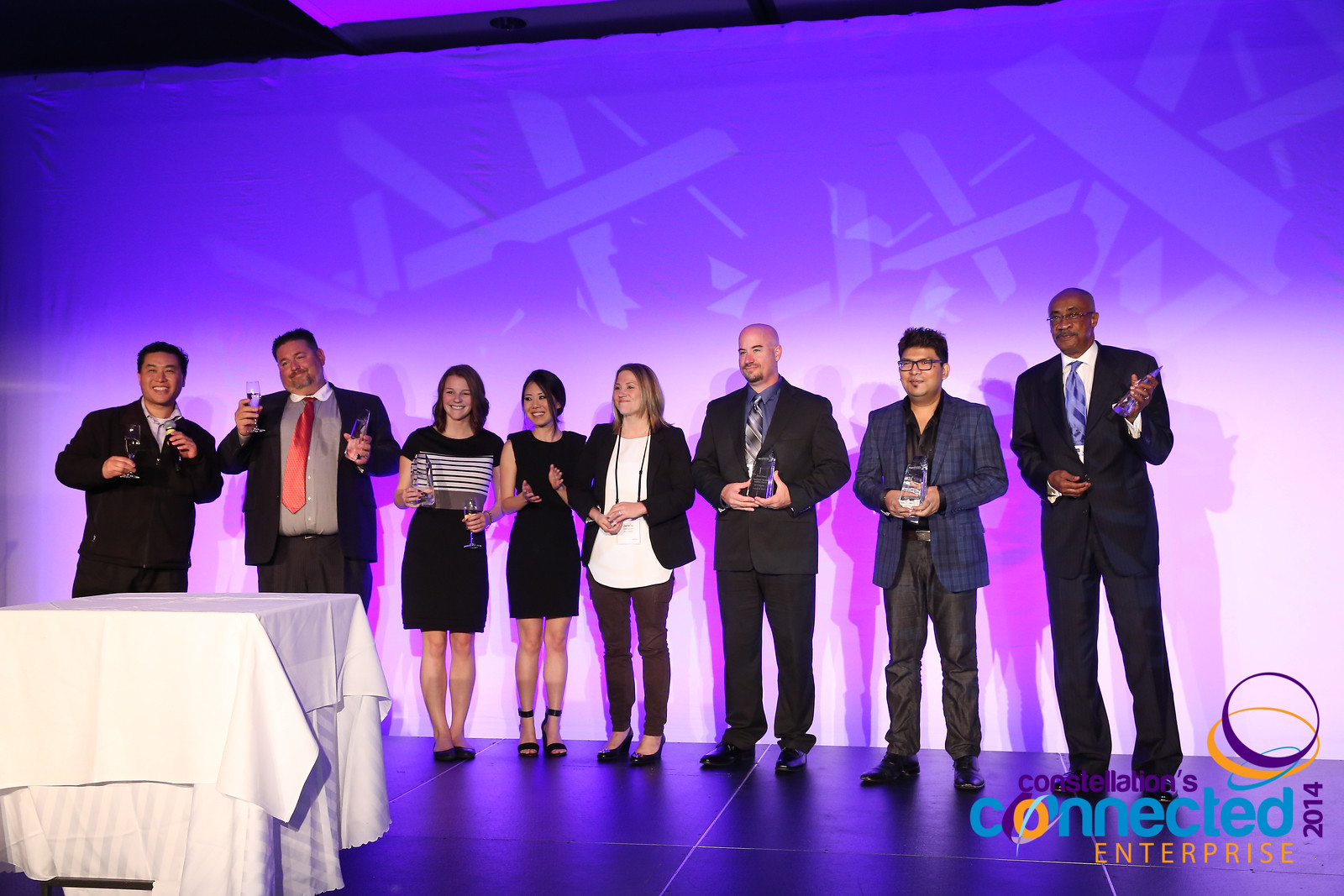
Every year the Constellation SuperNova Awards recognize eight individuals for their leadership in digital business. Nominate yourself or someone you know by August 7, 2015. 

The SuperNova Awards honor leaders that demonstrate excellence in the application and adoption of new and emerging technologies. 

In its fifth year, the Constellation SuperNova Awards will recognize eight individuals who demonstrate true leadership in digital business through their application and adoption of new and emerging technologies. We’re searching for leaders and teams who have innovatively applied disruptive technolgies to their business models as a means of adapting to the rapidly-changing digital business environment. Special emphasis will be given to projects that seek to redefine how the enterprise uses technology on a large scale.

We’re searching for the boldest, most transformative technology projects out there. Apply for a SuperNova Award by filling out the application here: 

APPLY NOW

SuperNova Award Categories

5 reasons to apply for a SuperNova Award:

Timeline

  • August 7, 2015 last day for submissions
  • September 2, 2015 finalists announced and invited to Connected Enterprise.
  • September 14, 2015 voting opens to the public
  • October 2, 2015 polls close
  • November 4, 2015 Winners announced, SuperNova Awards Gala Dinner at Connected Enterprise 

Learn more about the SuperNova Awards. 

What to expect when applying for a SuperNova Award. Tips and sample application.  

Data to Decisions Digital Safety, Privacy & Cybersecurity Future of Work Marketing Transformation Matrix Commerce New C-Suite Next-Generation Customer Experience Tech Optimization Innovation & Product-led Growth AI ML Machine Learning LLMs Agentic AI Generative AI Analytics Automation B2B B2C CX EX Employee Experience HR HCM business Marketing Metaverse developer SaaS PaaS IaaS Supply Chain Quantum Computing Growth Cloud Digital Transformation Disruptive Technology eCommerce Enterprise IT Enterprise Acceleration Enterprise Software Next Gen Apps IoT Blockchain CRM ERP Leadership finance Social Healthcare VR CCaaS UCaaS Customer Service Content Management Collaboration M&A Enterprise Service AR Executive Events Chief Customer Officer Chief Digital Officer Chief Executive Officer Chief Financial Officer Chief Information Officer Chief Marketing Officer Chief People Officer Chief Procurement Officer Chief Supply Chain Officer Chief Technology Officer Chief Data Officer Chief Analytics Officer Chief Information Security Officer Chief Operating Officer

Capgemini continues the journey to becoming the innovation company

Capgemini continues the journey to becoming the innovation company

Two weeks ago I was on the road again…I know I know…. what a surprise! I can’t complain since I was home, Paris France, where Capgemini was hosting their summer analyst day at their fabulous training center (see picture). While the setting at Les Fontaine captured the tradition and history of France, the discussions with Capgemini were dominated by the theme around innovation and how Capgemini is working with leading firms across a variety of industries to infuse innovation into their every day DNA.

Not a bad place for a 2 day meeting.

Not a bad place for a 2 day meeting.

Capgemini is correct in focusing on how the digital revolution we are undergoing, will have a wide and deep impact on industries. While there were a number of examples from all the businesses they work with, the ones that caught my attention were, no surprise, around supply chain.

  • Capgemini and large European retailer discussed their thinking around an important customer centric project. At the base of this project is the need to implement a large and comprehensive CRM system. Speaking with an executive from the retailer, it was evident that they recognize the importance to create a 360-degree view of their customers. The goal being to nurture the customer experience, constantly and continually. The notion of a sequential relationship – customer has a need, customer seeks solution, customer buys product and transaction is consummated – is no longer how the retail/consumer relationship works. The retailer has identified the need to be much savvier when it comes to their consumers’ data. As they work through the technological needs, it was clear in my discussions that they are exploring new and powerful ways of leveraging the information they expect to extract from their CRM solution to better service their customers, which is really about providing an enhanced retailing experience.
  • Speaking with some of the Capgemini executives it was clear that they regard supply chain improvements as holding great opportunity. The thinking focuses on how digital is disrupting the entire supply chain, and the opportunity to target the parts that are “hidden” from the general public. Of course this is music to my ears. A wonderful example of this in action is the work Capgemini is doing with Nokia and their world class supply chain. The Finnish telecom giant has looked to Capgemini to overhaul their production and sourcing processes – to harmonize the supply chain. The work is not simply about buying a new software solution, but rather about identifying the business processes that must change and some that need to be adopted. Not a small task. But the work Capgemini is accomplishing at this level with Nokia could and should lead to more transformative projects within their supply chain – leveraging the digital transformation for future business cases.
  • The Internet of Things (IoT) and the impact it has with manufacturing. Digital manufacturing within such areas as the automotive industry was highlighted as well. Speaking with the Capgemini heads of the automotive sector, the discussion revolved around the base line use cases many companies are using IoT for: asset management, predictive maintenance and field enablement. However in my discussions around this topic we began to explore the possibility of new use cases emerging from IoT. Around greater customer experience, enhanced store utilization and new business models between manufacturer and customer. Some of which may never see the light or day, but Capgemini is clearly thinking about disruptive this technology will truly become. More importantly, Capgemini is partnering with their customer base about how to take advantage of IoT.

Following up from my meetings with Capgemini this March in Chicago, the digital disruptive theme continues to be a vital theme to what Capgemini is executing on with their customers. Their ability to continue to help their customers innovate around digital, will determine how successful Capgemini is in becoming a leading services firm in this space. Companies, from all industries, will need these types of partners as their industries become transformed and disrupted by digital changes.

We are all witness to the transformation every day – for example while in Paris with Capgemini we were subject to a strike by an traditional business, taxi drivers, against a digital disruptor Uber. We are all seeing and thinking about how each industry will be impacted by this change, companies like Capgemini are working on a valuable services partner to help navigate the journey. 

Matrix Commerce Next-Generation Customer Experience Sales Marketing Revenue & Growth Effectiveness Innovation & Product-led Growth Tech Optimization Data to Decisions Future of Work New C-Suite capgemini B2B B2C CX Customer Experience EX Employee Experience business Marketing eCommerce Supply Chain Growth Cloud Digital Transformation Disruptive Technology Enterprise IT Enterprise Acceleration Enterprise Software Next Gen Apps IoT Blockchain CRM ERP Leadership finance Social Customer Service Content Management Collaboration M&A Enterprise Service AI Analytics Automation Machine Learning Generative AI Chief Customer Officer Chief Procurement Officer Chief Data Officer Chief Digital Officer Chief Executive Officer Chief Financial Officer Chief Growth Officer Chief Information Officer Chief Marketing Officer Chief Product Officer Chief Revenue Officer Chief Technology Officer Chief Supply Chain Officer

Sentiment Analysis: The New State Of The Art

Sentiment Analysis: The New State Of The Art

How do you get to the next level of customer understanding? The July 15-16 Sentiment Analysis Symposium in New York offers an update on the latest in textual insight into consumers of products, financial services, healthcare, media, hospitality and much more.

There are three reasons why I’m looking forward to the July 15-16 Sentiment Analysis Symposium in New York. First, recent briefings on the topic by SAS and Lexalytics have stoked my interest in new and maturing uses of sentiment analysis in several vertical industries. Second, applications appears to be moving beyond the basics of tracking mentions and thumbs-up/thumbs-down sentiments. And third, the event agenda promises a bevy of real-world examples on points one and two.

On the industry front, analysis of investor sentiment by financial services has emerged as a predictor of price movement, according to Seth Grimes, organizer of the Symposium and the deepest expert I know on text analytics and natural language processing (NLP). That trend inspired a July 16 workshop session on Sentiment Analysis for Financial Markets, with notable presentations including “Financial News Analysis for Equity and Credit” and “Extracting Intent & Influence for Predictive Trading Strategies.”

Sentiment Analysis

In another industry trend in sentiment analysis, the text-analytics experts at SAS tell me that manufacturers, healthcare payers and providers, and life sciences companies are getting increasingly sophisticated about sentiment analysis. In manufacturing, for example, a leading goal is to spot and fix product problems before they snowball into huge warranty liabilities. At the Symposium, for example, an exec from manufacturer Lenovo will present on “How to Detect Pervasive Issues Early Through Voice-of-the-Customer Analytics.” A Teradata exec will present on the topic of “Mining Text to Pinpoint Customer Reactions to Products.”

In healthcare, payers and providers are tapping into (aggregated and anonymized) electronic medical records to better understand patient behaviors and correlate that with outcomes to improve practices and process efficiency, according to SAS. Presenters at next week’s Symposium will focus on social and survey sources, with presentations on “Social Media Data Mining to Inform Health Behavior Change Campaigns” and “Voice of the Patient: Deriving Insights from Patient Satisfaction Surveys.

The state of the art in sentiment analysis is moving beyond just social listening for the sake of monitoring brand, product and competitor perceptions, according to Lexalytics. (An OEM supplier to customer-sentiment specialists including Sprinklr, Spredfast, Cision and Bottlenose, Lexalytics is the company behind the Salience text-analytics engine and Semantria NLP cloud service.) In one example of this maturation, some companies are mining the text around sales leads to gain insight on requested features. This helps marketing figure out what new or existing product features to highlight to help shorten sales cycles.

Contextual understanding of language is also improving as companies develop industry-specific applications, according to both Lexalytics and SAS. (The latter is preparing the latest release of SAS Contextual Analysis, which blends machine learning with subject-matter expertise to automate both content categorization and domain-specific sentiment analysis.) For example, “denial of service” has a very specific (and not necessarily bad or good) meaning in the context of networking security. By contrast, “hard bed” and “soft bed” are both almost always negatives in the hospitality industry, whereas “perfect mattress” or “comfortable mattress” is what hotel chains like to hear in reports from vendors such as Sprinklr.

If you want to dive into the details and hear what notable companies including Bloomberg, Instagram, Lenovo, and Verizon are doing to advance the state of the art, head to next week’s Sentiment Analysis Symposium in New York.


Data to Decisions Marketing Transformation Chief Customer Officer Chief Information Officer Chief Marketing Officer Chief Digital Officer

Retail Disrupted-Consumers Get Smarter says IBM Study

Retail Disrupted-Consumers Get Smarter says IBM Study

1

I have a love-hate relationship with shopping. Actually, when I think about it, I quite like shopping as an experience. What I don’t like the way retail transforms that experience. You see, retail shopping is filled with frustration:

  • There’s no or limited stock
  • Loyalty programs are more of a burden than a benefit
  • The digital experience is out-of-kilter with the in-store experience
  • Customer service is an after thought.

And it seems I am not alone. The 2015 IBM Smarter Consumer Study: Shoppers Disrupted gauged global sentiment about consumers’ shopping behaviour. The extensive survey of 28,500 online respondents across 15 countries saw more than 1,800 Australians respond to the survey.

Some of the key findings include:

  • Australian shoppers are less loyal than ever – 10% act as advocates while 37% act as antagonists
  • 38% of 20-39 year olds prefer to shop online
  • Online shopping is up across all categories (esp consumer electronics)
  • Shoppers prefer to be in control – and that means a mobile experience.

You can register and download the full report here.

Now, much of this is not new. I have been analysing the structural, technological and strategic problems with retail for years. But Australian retail, in particular, has been slow to respond to the challenges (and opportunities) of digital disruption. And when they do respond, they often do so with the blinkered vision of incumbency. Does this leave the door open for nimble competition or does is just breed consumer mistrust and apathy? I’d love your thoughts.

The big question, of course, is when will retailers fix these problems? Those that do will reap the reward of an increasingly digitally-savvy customer base. Those that twiddle their thumbs will see their customers switch allegiances – or worse – become antagonists.

IBM_Smarter_Consumer_Study_2015_infographic

Matrix Commerce Sales Marketing Next-Generation Customer Experience Innovation & Product-led Growth Revenue & Growth Effectiveness Tech Optimization Data to Decisions B2B B2C CX Customer Experience EX Employee Experience business Marketing eCommerce Supply Chain Growth Cloud Digital Transformation Disruptive Technology Enterprise IT Enterprise Acceleration Enterprise Software Next Gen Apps IoT Blockchain CRM ERP Leadership finance Social Customer Service Content Management Collaboration M&A Enterprise Service AI Analytics Automation Machine Learning Generative AI Chief Customer Officer Chief Data Officer Chief Digital Officer Chief Executive Officer Chief Financial Officer Chief Growth Officer Chief Information Officer Chief Marketing Officer Chief Product Officer Chief Revenue Officer Chief Technology Officer Chief Supply Chain Officer

Digital Disruption within the Technology Industry sees major players repositioning;

Digital Disruption within the Technology Industry sees major players repositioning;

As a general rule I don’t reference product releases by the mainstream technology players as I figure that they have enough marketing muscle of their own, but occasionally I make an exception because a release seems to offer more than the obvious headlines suggest, and as such, may be don’t get picked up and read through in what I consider to be the full context. 

Last time was nearly a year ago, and back then, as now, it was Cisco, moving into service capabilities with the generic sounding InterCloud offering that was probably beyond the remit of the ‘Infrastructure’ operations team, but extremely valuable to the Cloud operations team.

Its Cisco’s problem that the name is synonymous with Networking to the point that non-networking staff almost certainly belief that Cisco products will not be of interest to them.  But when everything that is driving technology and business capabilities today is dependent on the Internet, to a level that requires new sophistication in Internetworking to be tightly integrated within all the new Clouds, Apps, etc., its time to pay attention to certain Cisco releases.

Cisco recent Internet of Things System announcement takes them beyond networking connectivity and into higher-level interaction functions.

Should you be interested in IoT? The answer may depend on the extent to which you are a business manager versus a member of the IT department. In certain industry sectors IoT adoption is strongly business driven, adding Internet of Things sensors to instrument, and intelligently manage, the previously ‘un-manageable’ is a boardroom topic. The quickest way to understand this and update your knowledge is to take a look at the Industrial Internet Consortium, IIC, members listing, then carry on to browse the rest of the web site. 

Impressive, but also consider the following paragraph written by Jurgen Anke, who describes himself as a researcher on Quora in respect of the challenges for full scale IoT development; ‘From my point of view, there are the following major hurdles to overcome’ and first on his list is;

  1. Interoperability. Besides network level connectivity using the protocols that Antony Passemard has mentioned, we also need standardized data formats and semantics (think DLNA, Bluetooth profiles etc). They describe how devices can operate together. Once that is in place, vendors can develop solutions that customers can mix and match rather than isolated silos. This does not only lower development cost for the vendor but makes it future proof for the customer. Standards will probably emerge in various domains such as energy, health, mobility, and smart home at different points in time’.

The Internet of Things, IOT, or as Cisco call it The Internet of Everything, IOE, is a visible reality as more and more consumer items alone are connected to enjoy an Internet based Apps and Services. Add the Industrial connections and we are all well on track to reach the projected numbers you all have seen in recent months. BUT it does all depend on a new level of Internet Networking Services that’s why developers should now be playing closer attention to Cisco announcements!

The VP and GM of the IoT Systems, Kip Compton at Cisco, states: “The Cisco IoT System provides a comprehensive set of IoT technologies and product that change and accelerate the deployment of infrastructure for the IoT. This new systems approach delivers a framework that creates it attainable to deploy, accelerate and innovate with IoT.”  His blog giving full details, and his colleague’s blog, complete with other embedded links, describe in full the six principle elements of the Cisco IoT System;

Six Pillars of Cisco IoT System

Network Connectivity                        Fog Computing                                 Security: Cyber & Physical

Data Analytics         Management and Automation          Application Enablement Platform

The diagram below shows Cisco moving beyond their traditional networking connectivity infrastructure layer as they add new layers of capabilities and services. It is likely that Cisco will not be the only Technology Player seeking to drive a new understanding of what it brings to the new wave of technology and business activities, its not called Digital Disruption for nothing!

ps; Please excuse the quality of this blog, it was a quick response to the Cisco announcement on IoT, a topic that follow closely, and was written in a public library in the Netherlands whilst away on my summer sabbatical!

New C-Suite Data to Decisions Future of Work Innovation & Product-led Growth Tech Optimization

Book Summary: Lesson 9 From Disrupting Digital Business - Deliver Intention Driven, Mass Personalization At Scale

Book Summary: Lesson 9 From Disrupting Digital Business - Deliver Intention Driven, Mass Personalization At Scale

Get All 10 Lessons Learned From Disrupting Digital Business

As with the beginning of every revolution, those in the midst of it can feel it, sense it, and realize that something big is happening. Yet it’s hard to quantify the shift. The data isn’t clear. It’s hard to measure. Pace of change is accelerating. Old rules seem not to apply.

Sometimes when you are in the thick of it, it’s hard to describe what’s happening.  In the case of digital business, these models have progressed over the past 20 years.  However, non-traditional competitors have each exploited a few patterns with massive success. However, as the models evolved, winners realize there are more than a handful of patterns.

Lesson 1 – Transform Business Models And Engagement

Lesson 2 – Keep The Brand Promise

Lesson 3 – Sell The Smallest Unit You Can

Lesson 4 – Know That Data Is The Foundation Of Digital Business

Lesson 5 – Build For Insight Streams

Lesson 6 – Win With Network Economies

Lesson 7 – Humanize Digital With Digital Artisans

Lesson 8 – Democratize Distribution With P2P Networks

Lesson 9 – Deliver Intention Driven, Mass Personalization At Scale

In fact, the impact is significant and now quantifiable with 52% of the Fortune 500 gone since 2000 and the average age of the S&P 500 company in 1960 is down from 60 years to a little more than 12 projected in 2020.  That is a 500% compression that has changed the market landscape forever in almost every industry.

Over the course of the next 10 weeks, I’ll be sharing one lesson per week.  For traditional businesses to succeed, they will have to apply all 10 lessons from Disrupting Digital Business in order to not only survive, but also relearn how to thrive.

Deliver Intention Driven, Mass Personalization At Scale

Lesson 9: Deliver Mass Personalization At Scale

The shift from analog to digital systems represents a continued march to delivering on mass personalized systems.  These systems over the next 20 years will start with a design point of intention driven, solve the issue of massive individual scale, and enable personalized experiences.  As these systems traverse space time continuum and tap into P2P networks, what we learn from these systems is that they do not replace their predecessors. In fact, with each wave, the systems abstract information from the older systems to create new paradigms (see Figure 1).

Delivering on these customer segments of one will require a few foundational concepts:

  1. Choose your own adventure type of journeys.  With no real beginning nor end, expect these systems to work like a Choose Your Own Adventure book. Funnels fall aside as customers, partners, employees, and vendors jump in across processes, make their own decisions, and craft their own experiences on their terms.  Journey maps must account for infinite journeys and support the customer centric points of view.
  2. Continuity of experience.  A customer may start an experience on a mobile device, carry it with them to a car, jump into the  office, and then come back to the home.  Regardless of channel, device, platform, or situation, context is carried.  Experiences are delivered with massive context and personalization.  While customers do not expect a disruption in the experience, they do expect relevancy regardless of the context.
  3. Intention driven design.  Currently the fashionable approach is predictive.  Predictive does a great job of using past history to predict future patterns.  Intention driven tests for shifts in patterns by setting up hypotheses and awaiting the results.  If we know a person  always gets a specific type of coffee at the same time every day. that’s predictive.  An intention driven system will test to see what type of coffee is purchased based on time of day, weather, relationships, location, and even sentiment gathered from heart rate or actions. The test comes from an offer or studying shifts in patterns and behaviors.  This self learning and adjusting capability is powered by cognitive computing approaches.

Figure 1. Moving from Analog Systems To Digital Systems

From Analog To Digital

Homework

Constellation recommends that technologists take these steps:

  1. Start with an assessment of your business model design points.
  2. Take stock of existing technologies and place them into one of the five systems.
  3. Conduct a delta analysis of the business model requirements and the existing systems.
  4. Determine which core platform investments in a build, partner, or buy decision matrix
  5. Pilot out new platforms and identify the technology roadmap to support the business model design.

The Complete 10 Lessons Learned From Disrupting Digital Business

For those attending the full keynotes and book tours, you’ll get the complete session and in many cases a copied of a signed booked.   For those following virtually, I’ve provided the slimmed down slide share deck for your use.

You now have the 10 lessons learned to disrupt digital business in your hands. You can take this information and change the world in front of you or choose to sit on the knowledge as the world passes you by and digital darwinism consumes your organization.

I trust you will do the right thing. And when you want some company, come join us as a client at Constellation Research where we’re not afraid of the future and the art of the possible.

Get The Book Now Before Digital Darwinism Impacts You

Purchase on Amazon
Bulk Orders: contact [email protected]
About Disrupting Digital Business

Join the Digital Disruption Tour. Events in San Francisco, Atlanta, London, and Amsterdam!

Your POV.

Are you ready to disrupt digital business?  Have you ordered the book?

Add your comments to the blog or reach me via email: R (at) ConstellationR (dot) com or R (at) SoftwareInsider (dot) org.

Please let us know if you need help with your Digital Business transformation efforts. Here’s how we can assist:

  • Developing your digital business strategy
  • Connecting with other pioneers
  • Sharing best practices
  • Vendor selection
  • Implementation partner selection
  • Providing contract negotiations and software licensing support
  • Demystifying software licensing

Resources

Reprints

Reprints can be purchased through Constellation Research, Inc. To request official reprints in PDF format, please contact Sales .

Disclosure

Although we work closely with many mega software vendors, we want you to trust us. For the full disclosure policy,stay tuned for the full client list on the Constellation Research website.

* Not responsible for any factual errors or omissions.  However, happy to correct any errors upon email receipt.

Copyright © 2001 -2015 R Wang and Insider Associates, LLC All rights reserved.
Contact the Sales team to purchase this report on a a la carte basis or join the Constellation Customer Experience

The post Book Summary: Lesson 9 From Disrupting Digital Business – Deliver Intention Driven, Mass Personalization At Scale appeared first on A Software Insider's Point of View.

Data to Decisions Digital Safety, Privacy & Cybersecurity Future of Work Marketing Transformation Matrix Commerce New C-Suite Next-Generation Customer Experience Tech Optimization Sales Marketing Innovation & Product-led Growth Revenue & Growth Effectiveness SoftwareInsider AI ML Machine Learning Generative AI Analytics Automation B2B B2C CX EX Employee Experience business Marketing SaaS PaaS Growth Cloud Digital Transformation eCommerce Enterprise Software CRM ERP Leadership Social Customer Service Content Management Collaboration LLMs Agentic AI HR HCM IaaS Supply Chain Disruptive Technology Enterprise IT Enterprise Acceleration Next Gen Apps IoT Blockchain finance M&A Enterprise Service Metaverse developer Quantum Computing Healthcare VR CCaaS UCaaS Robotics Chief Customer Officer Chief Digital Officer Chief Executive Officer Chief Financial Officer Chief Information Officer Chief Marketing Officer Chief People Officer Chief Procurement Officer Chief Supply Chain Officer Chief Technology Officer Chief Data Officer Chief Analytics Officer Chief Information Security Officer Chief Operating Officer Chief Revenue Officer Chief Experience Officer

News Analysis - AWS learns Hindi - Amazon Web Services announces 2016 India Expansion

News Analysis - AWS learns Hindi - Amazon Web Services announces 2016 India Expansion

Amazon AWS surprised markets with its announcement to put an AWS region into India in 2016. AWS has been relatively slow to roll out data center regions in the past, partly because they are massive pieces of infrastructure, always have a redundancy site etc.


The press release can be found here – let’s analyze in custom Constellation style:

India-based AWS Infrastructure Region will enable customers to run workloads in India and serve Indian end-users with even lower latency

MyPOV – AWS until now said that locality did not matter given the massive number of Edge locations (50+) AWS operates. [Update July 7th: AWS correctly points out that there is a difference between Edge locations and regions, and that it has a world wide rollout schedule for regions. Fair enough, we agree that both are not the same.]

The case of India shows that ultimately Edge locations do not help when the latency to the server is too long. And Indian customers have to deal with slow and high latency networks already. Anyone who has downloaded corporate email in Mumbai or Bangalore knows speed is an issue. So good to see Amazon acknowledge this.

SEATTLE--(BUSINESS WIRE)--Jun. 30, 2015-- Amazon Web Services, Inc. (AWS), an Amazon.com company (NASDAQ:AMZN), today announced that it will open an AWS infrastructure region in India for its cloud computing platform in 2016.

MyPOV – 2015 sees a departure from the so far practiced policy of AWS to announce regions only when they were going GA, as practice last in Germany (read the launch news analysis here).

"Tens of thousands of customers in India are using AWS from one of AWS's eleven global infrastructure regions outside of India. Several of these customers, along with many prospective new customers, have asked us to locate infrastructure in India so they can enjoy even lower latency to their end users in India and satisfy any data sovereignty requirements they may have,” said Andy Jassy, Senior Vice President, AWS. “We're excited to share that Indian customers will be able to use the world’s leading cloud computing platform (AWS) in India in 2016 – and we believe India will be one of AWS's largest regions over the long term."

MyPOV – Jassy nails the issue of data center location, speed and sovereignty requirements. Interesting that he mentions India will ultimately be the largest AWS region in the long term. India certainly has a lot of potential, but one could also interpret that (at this point) AWS does not play any data centers between e.g. Germany and Australia on the Eurasian route between the two locations. Not surprisingly traditional secretive AWS does not mention the location, but we expect it to be in Northern India to reduce not only latency inside of India, but also adjacent geographies.

Customers in India such as Hike, PayTM, ZEDO, Freshdesk, Inmobi, Capillary Technologies, HackerEarth, Getit, Ferns N Petals, redBus, Druva, Vserv, Hungama, Tata Motors, Jubilant Food Works, STAR India, Future Group, Manipal Global Education, Classle, NDTV, Dalmia Bharat Sugar, Usha International, Macmillan India, Apeejay Stya and Svran Group are already using AWS to drive cost savings, accelerate innovation, speed time-to-market, and expand geographic reach in minutes.

MyPOV – That is impressive load, and possible a longer customer list (at least what AWS mentioned publicly) then when they opened the German region recently.

Tata Motors Limited is a leading Indian multinational automotive manufacturing company headquartered in Mumbai, and is part of Tata Group. The company’s customer portals and its Telematics systems, which lets fleet owners monitor all the vehicles in their fleet on a real-time basis, are running on the AWS Cloud. Tata Motors has recently built a parts planning system to forecast spares demand by using ordering and inventory patterns. They use AWS for development landscapes immediately after the project kicks off, which shaves four to six weeks of setup time in a typical project cycle. “Whenever we plan on rolling out a new project or experimenting with a new technology, AWS helps us in quickly provisioning the required infrastructure and enables us in getting up and running at a fast pace,” said Jagdish Belwal, Chief Information Officer of Tata Motors. “AWS has helped us become more agile and has drastically increased our speed of experimentation and therefore, innovation.”


MyPOV – Good to hear from an Indian marquee brand like Tata Motors. What is not mentioned is that Tata (like all other Indian customers) will be more productive in their new development and test systems thanks to lower latency to the new Indian region. From own experience of switching data centers into India, this can be a substantial and often dramatic performance improvement.

NDTV is India's leading media house with TV channels watched by millions of people across the world. NDTV has been using AWS since 2009 to run their video platform and all their web properties on AWS. During the May 2014 general election, NDTV using AWS was able to handle the unprecedented web traffic that scaled 26 times from 500 million hits on a normal day to 13 billion hits during election day, and regularly peaked at 400,000 hits per second. “We have been an early adopter of AWS and the benefits that we experience is beyond just cost savings, it is the agility that enables us to move fast with new projects that makes a positive impact and real difference to our business,” said Kawaljit Singh, CTO of NDTV Convergence. “We are very impressed with the staff and tech support teams of AWS, who have been most helpful in providing support and guidance throughout our cloud journey. They worked hand-in-hand with our team so that we are able to handle the massive scale and unpredictability of workloads for the general election event last year, and as a result, the entire process took place without any hitch at all.”

MyPOV – Another great showcase for benefits of a local Indian region – streaming and media house NDTV. Again a bandwidth hungry and performance critical use case.

Ferns N Petals is a leading flower and retailer in India with 194 outlets in 74 cities and delivery across 156 countries worldwide. Prior to using AWS, Ferns N Petals was running its IT infrastructure in a traditional datacenter. They turned to AWS in the year 2014 when their business grew rapidly and decided to move their entire online business to AWS. Since moving to AWS, they are able to manage rapid growth of their users’ traffic that peaks at 80 percent during the festive seasons. “Our experience with AWS over the past year has been excellent. AWS is now the cornerstone in our growth strategy, “ said Manish Saini, Vice President of online business for Ferns N Petals. “We have recently launched two new businesses that include new overseas expansion that are all running on AWS. We are now able to spend more time and resources in areas that matter to our customers such as new mobile app development that will enhance their buying experience.”

MyPOV – Another well picked reference by AWS, Ferns N Petals. Bringing a region to India will not only serve local customers, but also – like in this case – sway them more to the AWS platform as it allows to standardize platforms for global expansion.

Novi Digital is a wholly owned subsidiary of STAR India, one of the largest media and entertainment companies in India. The company uses AWS to run hotstar, a flagship OTT platform for drama, movies and live sporting events. With more than 20 million downloads in four months, hotstar has seen one of the fastest adoptions of any new digital service anywhere in the world. In fact, during one of the Cricket World Cup matches, hotstar and starsports.com combined reached a record total of over 2.3 million concurrent streams and more than 50 million video views. “The reliability of the highly scalable AWS cloud platform has enabled hotstar to break many records in the last four months,” said Ajit Mohan, Head of Digital, STAR India. “AWS has been a key partner in helping us deliver a compelling and seamless experience for millions of users.”

MyPOV – Another media company, always good showcases.

AWS also has a vibrant ecosystem in India, including partners that have built cloud practices and innovative technology solutions on the platform. The AWS Consulting Partners in Indiainclude Accenture, Blazeclan, Frontier, Intelligrape, Minjar, Progressive, PWC, SaaSforce, SD2labs, Team Computers, Wipro, and many others. Among the AWS Technology Partners inIndia are Adobe, Druva, Freshdesk, Indusface, Microsoft, Newgen, RAMCO, SAP, Seclore and many others. For the full list of the members of the AWS Partner Network, please visit:https://aws.amazon.com/partners/

MyPOV – Good to see that the services side is equally engaged in India. And India is always a technology partner / ISV play as we can see. More importantly to be in India.


Overall MyPOV

A good move by Amazon, as India is a key location both from a high tech vendor presence, a market and future potential perspective. Additionally latency aspect can be addressed, which play a role in the geographic regions, not to mention data residency and sovereignty implications. From the other major cloud IaaS vendors, only IBM already had a datacenter there. It will be interesting if and how Google and Microsoft will respond. Both have significant load in India. And Oracle and SAP have large ecosystem and development teams in the country, so don’t be surprised they will stake a flag in the ground there, too.

On the concern side the question is where else should Amazon have invested earlier or is not investing now? Given the vendor departed from announcing a region when up and running (last practiced in Germany), we can probably safely assume no other regions will overtake the India region announcement / go live wise. But you never know. Notable is no Latin American, Mexican, South African and Chinese presence. Russia’s recent data privacy and residency requests make it a more popular location, too.

Finally curious the announcement was made on the same day as Amazon had the AWS Summit in Berlin. I don't think CTO Werner Vogels spent more than 10 seconds on the announcement. The German audience seemed to care less or at all. Why both overlapped, not clear to me, but 6/30 - last day of the quarter may be a hint for someone financially more astute then me. But overall a good move by Amazon, hitting all the right cords on why to put an instances into India from latency, over data residency and sovereignty as well as a growing and attractive market.

More on AWS

 
  • Event Report - AWS Summit San Francisco - AWS pushes the platform with Analytics and Storage [From the Fences] read here
  • Event Report - AWS re:invent - AWS becomes more about PaaS on inhouse IP - read here
  • AWS gives infrastructure insights - and it is very passionate about it - read here
  • News Analysis - AWS spricht Deutsch - the cloud wars reach Germany - read here
  • Market Move - Infor runs CloudSuite on AWS - Inflection Point or hot air balloon? Read here
  • Event Report - AWS Summit in SFO - AWS keeps doing what has been working in the last 8 years - read here
  • AWS  moves the yardstick - Day 2 reinvent takeaways - read here.
  • AWS powers on, into new markets - Day 1 reinvent takeaways - read here.
  • The Cloud is growing up - three signs in the News - read here.
  • Amazon AWS powers on - read here.

Other cloud related:
  • Musings - Are we witnessing the rise of the enterprise cloud? Read here
Find more coverage on the Constellation Research website here.


New C-Suite Tech Optimization Innovation & Product-led Growth Future of Work Google IBM amazon SaaS PaaS IaaS Cloud Digital Transformation Disruptive Technology Enterprise IT Enterprise Acceleration Enterprise Software Next Gen Apps IoT Blockchain CRM ERP CCaaS UCaaS Collaboration Enterprise Service Chief Information Officer Chief Marketing Officer Chief Digital Officer Chief Technology Officer Chief Data Officer Chief Analytics Officer Chief Information Security Officer Chief Executive Officer Chief Operating Officer

Genpact Brings Data-Driven Decision-Making To Scale

Genpact Brings Data-Driven Decision-Making To Scale

How do you get to repeatable, analytical decision making? IT services and outsourcing firm Genpact helps companies bring automated, predictive systems into production so they can sense, act and respond in real-time.

“I've heard consultants suggest that business problems are an equation that can be solved, but it’s not as simple as doing the math,” said Paul Burton, senior VP of analytics and research, speaking at Genpact’s Analyst & Advisor Forum earlier this month. “I would go so far as to say, if all you’re doing is math, you’re probably not going to solve the problem, because point-in-time analyses don’t age very well.”

This is an important perspective to consider for any company striving to get to data-driven decision making. Amid all the talk about the new data sources, new big data platforms and new analytic tools and frameworks, we hear far too little about operationalizing these new types of analyses.

Burton uses the analogy of a simple straight ladder, akin to the tools and manual analyses companies might first try to get to the next level of insight. A next step might be to the stepladder stage, with, perhaps, a portfolio or predictive models and embedding of decision services into applications.

Genpact, a global IT services, outsourcing and strategy advisory and consulting firm, advocates an industrialized approach. Think of an escalator offering continuous operation and capable of bringing an end-to-end business system to the next level with stability, speed and scale. Genpact calls it Intelligent Operations. Key components include an automated layer that takes care of the managing and positioning of data and algorithmic analysis across multiple systems and disparate data sets. In a data-to-decisions context, the approach spans data capture, cleansing, analysis, model management, decision services, and round-trip feedback of operational performance data back into the next round of sensing and responding to the dynamic operational environment.

Genpact touts its Intelligent Operations approach as reimagining business processes with analytics and technology so they can be operationalized at scale.

Genpact touts its Intelligent Operations approach, pictured above, as reimagining business processes with analytics and technology so they can be operationalized at scale.

Genpact applies this Intelligent Operations approach in nine industries: life sciences, retail and commercial banking, insurance, capital markets, consumer goods, healthcare, high-tech, and manufacturing. One of the fastest-growing areas of interest for the approach is in Internet of Things (IoT) applications, where there are built-in expectations for real-time operation at scale.

Duke Energy Renewables (Duke), one of Genpact’s IoT customers, is getting help moving beyond labor-intensive, manual methods to support predictive analysis. The company has wind and solar energy projects in 12 states, and Duke and Genpact are collaborating on optimizing power output and cutting long-term maintenance costs at 15 wind farms in the U.S. In all Duke Energy Renewables wind farms have 1,600 megawatts of capacity – enough to power half a million homes.

Most of Duke’s wind farms have dozens of turbines. The largest, in Sweetwater, TX, has 392 turbines. The equipment is supplied by seven different manufacturers, including GE, Siemens and Vestus. Most of these manufacturers offer monitoring software of their own, but because Duke uses a variety of turbines and because the equipment ranges in age, with many turbines coming off warranty, Duke is building its own, centralized monitoring systems for power optimization and predictive maintenance.

“We have good relationships with all of our suppliers, but we want our own view of the data so we can save money on parts replacement and maintenance,” said Duke Energy Renewables President, Greg Wolf, speaking at Genpact’s analyst event. “Our system gives us our own perspective on the data, operational conditions, and maintenance and parts planning.”

Rather than relying on a hodgepodge of OEM software, Duke is working with Genpact to build its own operational decisions into a centralized management system, working with the turbine manufacturers, wind farm operators, and weather experts. Duke is collecting more data than manufacturers call for on heat and vibration across its fleet of turbines because replacing gear boxes is expensive. By balancing power output against long-term wear and tear, Wolf says Duke is confident it can save as much as tens of thousands of dollars per year, per turbine by keeping units in service longer, avoiding unanticipated breakdowns, and reducing part and maintenance costs.

Taking a centralized approach, where the focus is on entire wind farms, rather than one turbine at a time, Duke wants to move to an automated, production-oriented approach, so it could no longer sustain what Wolf described as a “quasi-manual approach.” That’s where Genpact came in.

“We started the discussions with Genpact around data capture, data cleanup and how we're going to use the information,” said Wolf. “For us it was getting our engineers and operational folks out of the business of managing and scrubbing the data and into the role of analyzing and driving decisions.”

Genpact's take on potential value drivers in Internet of Things application scenarios.

MyPOV On The Need For Strategic Thinking

The IoT and SMAC (social, mobile, analytics, and cloud) trends and interest in innovation are driving many firms to become software companies. Duke Energy Renewables took the first step toward predictive maintenance, but it needed to scale up. Using a baseball analogy, Wolf says Duke is “in the fourth inning” of its wind farm project, and “Genpact is helping us to think through those next-level analytics we need to do drive better decisions,” he said.

When you talk to software vendors, whether database, big data platform, middleware, application, analytics, cloud, or, in Duke’s case, OEM equipment suppliers, you often get a piece-part view of what ultimately must be part of a larger, operational system spanning multiple systems and data sources. It’s in these cases where outfits like Genpact -- and competitors such as Accenture, TCS, Infosys, CapGemini and Wipro -- bring a broader view to the business problem.

In Genpact’s case about 60% of its work is in business process outsourcing, 20% in technology implementation services, 10% in business-process and systems design, and another 10% in data and analytics. This holistic capability and perspective comes into play in cases where business process need to be resigned and when systems need to be developed from scratch.

And when business process scale, scope, costs, and compensation models don’t make sense internally, Genpact can help companies run selected process as shared services, outsourced services or in a hybrid model. That, too, is beyond the scope of most tech vendors, but it’s an important option to consider when innovation and a reassessment of core competencies call for a change in approach.

Media Name: Genpact Intelligent Operations.jpg
Media Name: Genpact Intelligent Internet of Things.jpg
Data to Decisions Future of Work Tech Optimization Chief Customer Officer Chief Executive Officer Chief Information Officer Chief Marketing Officer Chief Digital Officer