Results

I’m Judging the SuperNova Awards: Make Sure to Submit Your Case Study

I’m Judging the SuperNova Awards: Make Sure to Submit Your Case Study

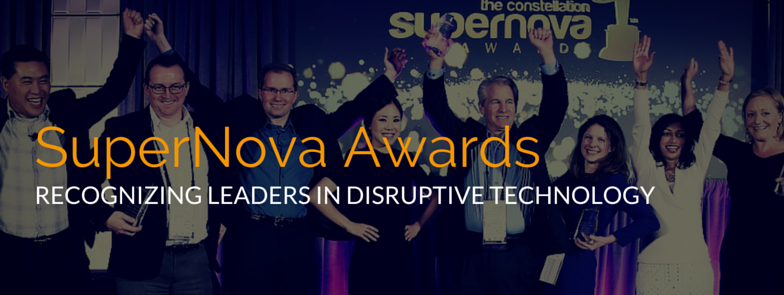
I’m judging the 2016 Constellation SuperNova Awards! Every year the Constellation SuperNova Awards recognize individuals for their leadership in digital business. Nominate yourself or someone you know before August 8, 2016.
 

About the SuperNova Awards
The SuperNova Awards honor leaders that demonstrate excellence in the application and adoption of new and emerging technologies. In its sixth year, the Constellation SuperNova Awards will recognize individuals who demonstrate leadership in nine categories:
 
•  Internet of Things – A network of smart objects enables smart services. (sensors, smart ‘things’, device to purchase, artificial intelligence)
 
•  Data to Decisions – Using data to make informed business decisions. (big data, predictive analytics)
 
•  Digital Marketing Transformation – Personalized, data-driven digital marketing.
 
•  Future of Work: Social Business – The technologies enabling teams to work together efficiently. (enterprise social networks, collaboration, digital assistants)
 
•  Future of Work: Human Capital Management – Enabling your organization to utilize your workforce as an asset.  (talent management, benefits, HR core)
 
•  Matrix Commerce – Commerce responds to changing realities from the supply chain to the storefront. (digital retail, supply chain, payments, ‘ubiquitous-channel’ retail)
 
•  Next Generation Customer Experience – Customers in the digital age demand seamless service throughout all lifecycle stages and across all channels.  (crm, customer experience)
 
•  Safety and Privacy – Strategies to secure sensitive data (blockchain, digital identity, authentication)
 
•  Technology Optimization & Innovation – Innovative methods to balance innovation and IT budgets. (innovation in the cloud, ENSW cost savings, cloud ERP, efficient app production)
 
The SuperNova Awards are seeking leaders and teams who have innovatively applied disruptive technolgies to their business models as a means of adapting to the rapidly-changing digital business environment. If you have what it takes to compete in the SuperNova Awards submit your application today: https://www.constellationr.com/events/supernova/2016
 
If you are doing something really interesting, make sure to send in your case study! It’s your time to be recognized for your hard work!
 
@DrNatalie Petouhoff, VP and Principal Analyst, Constellation Research
Covering Customer Facing Applications that Drive Awesome Customer Experience

Share

Next-Generation Customer Experience Chief Customer Officer

When a merger is an acquisition CSC “Merges” with HP Enterprise Services

When a merger is an acquisition CSC “Merges” with HP Enterprise Services

1

Today, May 24th 2016, CSC and HP Enterprise (HPE) announced that the HPE Services unit would be spun out of HPE and merged with CSC which recently spun out its government business. This surprising deal is being positioned as a merger, but as indicated by the Press Release from CSC, with the headline address of Virginia, and Mike Lawrie as CEO, it is clear that this is fundamentally an acquisition, albeit by the smaller of the two providers.

Note that this is on the heels of the deal in Australia for CSC to acquire UXC. With the benefit of time, this deal and the scale of the comparative Australian entities was a good test ground for CSC and HPE to go global. CSC acquires UXC – Boosts Australia

The key facts of the merged entity are as follows:

  • Total Revenue – US$ 26B
  • Total Countries – Over 70
  • Total Clients – 5,000
  • Services Firm Ranking – 3rd largest globally (according to CSC/HPE)

The new and as yet unnamed firm will clearly have significant strength and capability in Infrastructure. It is stunning to realise that the 2nd, 3rd and 4th largest IT services providers 8 years ago are now all the one firm as HP ate EDS, and CSC now has merged/acquired HPE Services. This fact alone highlights how difficult the market has been for Infrastructure Services providers; particularly those who have struggled to maximize the cloud opportunity and shift the delivery model for both application and infrastructure services.

The number of employees of the new entity was not released, but it is clear that there will be “significant synergies” realized in this part of the business. That is of course corporate talk for downsizing. It is however hard to see how much can be cut from the HPE Services business which has been hit in an ongoing manner since the EDS acquisition.

Key Strengths

From the capioIT perspective, these are the key strengths of the deal

  • Scale of infrastructure reach and capability
  • Depth of partnerships with key providers, particularly Microsoft
  • Enhanced reach in core markets such as the US, Australia and UK
  • Strength in security capability and IP
  • Industry strength in Insurance, Transportation and Healthcare

Key Weaknesses

From the capioIT perspective, the key weaknesses are

  • Lack of depth in cloud capability and investment
  • Applications strength will lag several other providers despite recent focus
  • Subscale capabilities in key growth markets of Analytics/Big Data and mobility
  • Industry momentum has dissipated since EDS issue at HPE, hence reliant on smaller CSC industry footpath
  • More disruption for employees, particularly legacy EDS who have been unsettled for many years.

2016 has been the year of mergers in the IT Services sector. This has been predicted for years, and has clearly ratcheted up in pace. This year we have had three very significant and different acquisitions occur (alongside numerous smaller deals)

  • NTT Data acquire Dell Services
  • IBM acquire Bluewolf
  • CSC acquire/merge with HPE Services.

This consolidation will only accelerate. There are now several vendors who are subscale and struggling to adapt to the new business ecosystem. Firms such as CapGemini, CGI and the legacy Indian firms, alongside older firms such as Fujitsu, have to radically change their business to maintain leadership and innovation. On that note, HPE/CSC would do worse to add the likes of CapGemini to their new group to build out their application services, and EMEA capabilities.

The shift of IBM away from hardware and the jettisoning of IT Services by hardware based vendors such as Dell and HP has shown that the model of the integrated IT giant is no longer relevant. Fujitsu from the Japanese perspective at least is now the outlier.

Capture Point

Will the new business work? That is of course the $26 billion dollar question. There is no doubt that the integration has to happen incredibly quickly. The market is moving too dynamically for there to be any delay. CSC and HPE clients are not going to show the same patience in 2016 for a slow or challenged integration. It creates an infrastructure giant alongside an at times vulnerable IBM, so whilst it is a surprise, if the integration happens decisively and the clients stay to course, then the pain of recent years may enable the environment to make it a success. Failure on any of these counts will mean that it is a failure of the deal, and that will impact all parties from clients, partners and employees.


Tech Optimization Chief Information Officer

Mobility and the experience of identity

Mobility and the experience of identity

We all know that digital transformation is imminent, but getting there is far from easy. The digital journey is fraught with challenges, not least of which is customer access. "Online" is not what it used to be; the online world by many measures is bigger than the “real world” and it’s certainly not just a special corner of a network we occasionally log into. Many customers spend a substantial part of their lives online. The very word "online" is losing its meaning, withoffline becoming a very unusual state. So enterprises are finding they need to totally rethink customer identity, bringing together the perspectives of CTO for risk management and engineering, and the CMO for the voice of the customer.

Consider this. The customer experience of online identity was set in concrete in the 1960s when information technology meant mainframes and computers only sat in “laboratories”. That was when we had the first network logon. The username and password was designed by sys admins for sys admins.

Passwords were never meant to be easy. Ease of use was irrelevant to system administrators; everything about their job was hard, and if they had to manage dozens of account identifiers, so be it. The security of a password depends on it being hard to remember and therefore, in a sense, hard to use. The efficacy of a password is in fact inversely proportional to its ease of use! Isn't that a unique property in all consumer technology?

The shame is that the same access paradigm has been inherited from the mainframe era and passed right on through the Age of the PCs in the 1980s, to the Internet in the 2000s. Before we knew it, we all turned into heavy duty “computer” users. The Personal Computer was always regarded as a miniaturized mainframe, with a graphical user interface layered over one or more arcane operating systems, from which consumers never really escaped.

But now all devices are computers. Famously, a phone today is more powerful than all of NASA’s 1969 moon landing IT put together). And the user experience of “computing” has finally changed, and radically so. Few people ever touch operating system anymore. The whole UX is at the app level. What people know now is all tiles and icons, spoken commands, and gestures. Wipe, drag, tap, flick.

Identity management is probably the last facet of IT to be dragged out of the mainframe era. It's all thanks to mobility. We don’t "log on" anymore, we unlock our device. Occasionally we might be asked to confirm who we are before we do something risky, like look up a health record or make a larger payment. The engineer might call it “trust elevation” or some such but the user feels it’s like a reassuring double check.

We might even stop talking about “Two Factor Authentication” now the mobile is so ubiquitous. The phone is your second factor now, a constant part of your life, hardly ever out of sight, and instantly noticed if lost or stolen. And under the covers, mobile devices can make use of many other signals – history, location, activity, behaviour – to effect continuous or ambient authentication, and look out for misuse.

So the user experience of identity per se is melting away. We simply click on an app within an activated device and things happen. The authentication UX has been dictated for decades by technologists, but now, for the first time, the CTO and the CMO are on the same page when it comes to customer identity.

To explore these crucial trends, Ping Identity is hosting a webinar on June 2, Consumerization Killed the Identity Paradigm. To learn more about customer identity and how to implement it successfully in your enterprise, please join me and Ping Identity’s CTO Patrick Harding and CMO Brian Bell.

Digital Safety, Privacy & Cybersecurity Marketing Transformation New C-Suite Next-Generation Customer Experience Tech Optimization Security Zero Trust Chief Customer Officer Chief Information Officer Chief Marketing Officer Chief Digital Officer Chief Information Security Officer Chief Privacy Officer

9 Executives Share What Keeps Them Up at Night

9 Executives Share What Keeps Them Up at Night

Have you ever wondered what executives lose sleep over when it comes to thinking ahead about business, innovation, and staying ahead of the curve? What can executives, ranging from healthcare to financial services or consumer packaged goods possibly have in common? It's not supply chain logistics, and they certainly are not all battling for #fintech industry dominance in our current mobile-savvy, tech-savvy world where millenials are anti-banking institutions and not to mention big corporations.* 

Find out what 9 executives have to say about what keeps them up at night in this quick 3-minute video. Some of the answers may surprise you. You’ll hear from executives who work in diverse industries, including healthcare, consumer packaged goods, real estate, entertainment, airline, food and beverage distribution, financial services, and more. What brings them together in their thinking is that they all have innovation and/or the disruption of digital business on their minds. They shared this and more at Constellation's innovation summit, Connected Enterprise.


video: What Keeps Executives Up at Night?

If you want to meet forward-thinking strategists, thinkers, and doers like these, join us at Connected Enterprise on October 26-28, 2016. It’s held at The Ritz-Carlton in Half Moon Bay, California, right by Silicon Valley. What you are you waiting for?

Meanwhile, you can join executives like these in the Constellation Executive Network where you can secure fast answers to questions about disruptive technologies and business models from Constellation’s expert analysts or stay ahead of the curve with #CRInsights, which gives you daily updates on curated news affecting the enterprise technology that you need to be aware of.

Although you have many resources available that you can gain information and knowledge, whether it’s CNBC, The Wall Street Journal, Fortune, TechCrunch, Mashable, Re/Code, or something else, Constellation Research can you with a business #LifeHack and take the guesswork out of what you need to pay attention to. By connecting with our analysts through the Constellation Executive Network, you can ultimately save time, money, and stay focused on business essentials, whether it's running your business, addressing the needs of your diverse customers, driving explosive business growth, or something else.


* As an aside, if you want to confirm any rumblings that you may have already heard about about the #fintech revolution, you can check out this 60 Minutes story for a glimpse.

SAP Feels Your Pain, ‘Storms Ahead’ on New Apps, Consumer Insights

SAP Feels Your Pain, ‘Storms Ahead’ on New Apps, Consumer Insights

SAP is stepping up customer guidance on S/4HANA deployments, but it’s full speed ahead on app modernization, predictive analytics and data services. Here’s a look inside SAPPHIRE 2016.

SAP CEO Bill McDermott admitted at this week’s SAPPHIRE NOW conference that some prominent customer CIOs had recently offered some unfavorable reviews, telling him that SAP wasn’t listening hard enough to their needs.

It’s not that SAP’s “lack of empathy” had gotten in the way of success. In fact, McDermott said that over the last year SAP had signed up more than 3,200 customers to move to the company’s next-generation S/4HANA applications suite, making it the company’s fastest-growing product ever. Behind the scenes, 160 are live, 800 are implementing and the balance have purchased but are "in the pipeline," as my colleague Holger Mueller reports.

But a few shortcuts were taken in the rush to market, McDermott admitted. That’s why he pledged to provide detailed product roadmaps, industry-specific migration paths and a business-exec-oriented “value assurance guarantee.” It’s not that the technology wasn’t ready, he said. What those CIOs wanted was more guidance on who would do what and when in a migration of the old Business Suite to S/4HANA. What’s more, C-level peers wanted more assurance that the investments would yield business benefits.

Inside SAP SAPPHIRE NOW 2016

Having set the stage with its empathy pledge, SAP spent the balance of SAPPHIRE on announcements aimed at accelerating the maturation and adoption of S/4HANA and the HANA Cloud Platform and on SAP’s own disruptive digital initiatives:

SAP-Microsoft Alliance: In an extension of a longstanding partnership (remember Duet?), SAP and Microsoft announced new and deeper ties. The deal starts with S/4HANA and HANA certification to run on the Microsoft Azure public cloud. In return, SAP is expanding on existing integrations to Office365, such as links between Outlook and Concur for reporting of expenses and between Outlook and SuccessFactors to facilitate HR requests and alerts.

MyPOV: SAP already had an implementation and cloud alliance with IBM, but I see even greater potential in the Microsoft deal. The Azure public cloud is surpassed only by Amazon Web Services in popularity. What’s more, many customers in Microsoft’s vast small- and midsized-company customer base (as well as many of its large customers) are predisposed to the cloud. Now they have a familiar platform on which to run S/4HANA.

SAP API Business Hub: SAP announced a beta version of this API hub as part of the latest HANA Cloud Platform release. The Hub is designed to make it easier for customer and partner developers to access, collaborate on and develop new application programming interfaces.

MyPOV: The SAP ecosystem wants APIs largely to gain access to data in SAP systems and external systems in order to create new apps and services, executive board member Bernd Leukert told me during a Q&A session. The Hub will support APIs not only for conventional SAP apps, but also for cutting-edge capabilities such as artificial intelligence, cognitive computing, data-visualization and geospatial analysis. Easy API access is a must have, but it’s good to see there’s a bigger vision for the API Business Hub.

Rebranding Under BusinessObjects: SAP announced a consolidation and simplification of its analytics portfolio under the BusinessObjects brand name. The two big categories are SAP BusinessObjects Cloud (formerly SAP Cloud for Analytics) and SAP BusinessObjects Enterprise for everything BI/analytics that runs on premises. The recently acquired Roambi mobile analytics app portfolio is now SAP BusinessObjects Roambi, and it’s included with BusinessObjects Cloud and offered with BusinessObjects Enterprise as a low-cost option.

MyPOV: It wouldn’t be SAP without a few changes in brand names. Let’s hope these new names stick. SAP seemed to be drifting away from the BusinessObjects brand, but in my book you either have to use it or lose it. SAP still has tens of thousands of BOBJ customers, and many of them use no other SAP products. If you don’t put next-generation products like BusinessObjects Cloud (previously SAP Cloud for Analytics) in the portfolio, you cut off the future of the brand.

BusinessObjects Cloud Gets Predictive: Beyond the name change, a key update is the addition of predictive analytics capabilities. This first wave includes time-series forecasting and “guided machine discovery.” SAP says it will continue to add algorithms to the portfolio.

MyPOV: BusinessObjects Cloud now has more than 1,000 customers in various stages of trial use or active subscription. The predictive capabilities will add to this product’s appeal, bringing forward-looking insight to plans and analyses. The competition includes cloud-based IBM Watson Analytics, which has more algorithms under the hood at this point, but its predictive capabilities are rather black box. Anaplan recently announced a predictive push, but its cloud platform is focused entirely on planning. BusinessObjects Cloud is a single product spanning planning, business intelligence (data discovery and visual analysis) and now predictive. I’m eager to see how SAP balances ease of use with selection and control over best-fit algorithms.

SAP Digital Consumer Insight Service: In the digital world, analysts can explore data on referring URLs (where site visitors came from), dwell time (how long they stayed on a site, page or item), and the entire digital path to purchase. The SAP Digital Consumer Insight Service announced at SAPPHIRE offers the equivalent of these measures for the physical world. Customers can download up to three days of mobile traffic data on any location in the U.S. The insights are derived from aggregated, non-personally identifiable mobile phone data from Sybase 365, which interconnects traffic between the major mobile networks.

The Consumer Insight Service lets you specify a store location, a restaurant near a potential store location, a zip code or any other geo-defined area. Potential insights include where people came from, where they went to, dwell time, age, gender and device used. The cost is $439 per report (in the form of a CSV data download), with a volume discount of five downloads for the price of four.

MyPOV: It’s nice to see SAP practicing what it preaches on coming up with innovative new business models — in this case monetizing its own data. I was surprised that the sales approach is limited to credit card purchasing exclusively through SAPStore.com. I could easily imagine a variety of pricing schemes geared to large businesses, but Jonathan Becher, chief digital officer and head of SAP Digital, tells me SAPStore.com is aimed at the consumerization of IT. The goal is low-cost, no-human-touch online purchasing of SAP software and services with an eye toward a truly broad market. It’s a digital disruption from within SAP, and it’s worth a closer look.

My Take on SAPPHIRE 2016

S4/HANA. “The technology got ahead of the people,” said McDermott of S/4HANA. That may be, but from what I hear, future progress with S/4HANA is not just a matter of creating reassuring roadmaps, migration paths and value-assurance guarantees. One insider tells me “most S/4HANA customers are net new [greenfield] deployments because the functional coverage isn’t wide enough (yet) for brownfield.” A third-party integrator that helps SAP customers with S/4HANA implementations tells me that changes from S/4HANA release to release and process deprecations have led to reimplementation requirements.

The bottom line is that much technical work remains to be done with S/4HANA. Legacy applications are still being simplified or rewritten from scratch. “We’re storming ahead,” Hasso Plattner was proud to say during his keynote, and he pointed to several all-new, never-before-possible applications such as the RealSpend real-time cost analysis app introduced at SAPPHIRE. The keynote case example of Nestle’s S/4HANA deployment clearly shows that larger and larger enterprises are taking the plunge with S/4HANA, but customers will need time to work through sensible migration paths to new applications and processes.

Advice to SAP customers: Don’t make decisions based on any generic roadmaps, migration-path documents or brochures. As Constellation Research tells customers in its advisory work, you must first understand your current-state processes and exactly how the technology is used. SAP and systems integrators have diagnostic tools that can show you exactly how your people interact with applications and processes. You need in-depth understanding before you can commit to migrating to new apps and processes.

BusinessObjects Cloud. BusinessObjects Cloud has huge promise, but I have to wonder how incented the legacy product channels and sales teams are to promote this option? Success with BusinessObjects Cloud could well mean disruption for BusinessObjects Enterprise. Constellation Research believes that the future will be as much or more about the data outside your four walls as it is about the same old transactional records. Incumbent customer business intelligence leaders and old-school software salespeople may not see that future. It’s up to the innovators within your company to spark experiments with managing, merging, analyzing and perhaps even monetizing data in the cloud.

Data and Disruption. The SAP Digital Consumer Insight Service is exciting, but I’m surprised SAP has been quiet, thus far, on plans to help SAP customers to become data disruptors in their own right. Constellation Research advises companies on data-monetization strategies, so we know that many companies are interested in third-party data enrichment and using new combinations of data to drive new business models. It’s an area that SAP competitors IBM, Oracle and Qlik are pursuing aggresively.

The good news is that SAP’s learnings on monetizing its own data and on bringing partners into the API Business Hub will be easily transferrable to customers. We’ll be on the leading edge of sharing SAP’s strategy on this front and we’ll advise you on how that strategy fits with your own data strategy.

Related Reading:
SAP Bets On Cloud For Analytics, BPC Optimized for S/4 HANA
SAP TechEd: Inside Cloud For Analytics
Anaplan Scales Platform, Prepares for Prediction
Qlik Extends Its Platform As Cloud Disruption Looms


Data to Decisions Future of Work Tech Optimization Chief Customer Officer Chief Information Officer Chief Digital Officer

Google I/O 2016 - Android N, Google assistant, and VR / AR

Google I/O 2016 - Android N, Google assistant, and VR / AR

We had the opportunity to attend Google’s I/O conference, the vendor’s premiere developer conference that has moved out of San Francisco back to Mountain View, to Shoreline Theater, an unusual venue, but Google did a very good job transforming the event space into a conference space. 

 
Google had over 20+ announcement – for the most important ones, checkout CEO Pichai’s blog here
 
So take a look:


No time to watch - read the one slide summary:
 
 
More time? Read on: Check out my First Take on the Day #1 keynote here, and below is what I thought are the Top 3 from an enterprise perspective:

Android N is the platform – Google is pushing forward its Android mobile OS with version N, which for the first time has no name yet. Android head Burke even offered to crowdsource the name of the next Android version. Google is shipping / delivering Android earlier to headset makers than ever, so there is a sense of urgency on Android at Google. We got briefed in detail on Android Studio, which is the IDE for 90+% of Android developers, the new version has a clear cut focus on efficiency, with faster build times, better UI design tools and improved test automation. Firebase is doing well as ecosystem management tool – both in the direction of test and monetization. But the key takeaways is that Android is doing well, it’s the platform for Google next Virtual Reality (VR) with Daydream as well as the vendors Augmented Reality (AR) ambitions with Tango. Android apps now run on Chrome OS devices, and new container based running applications that do not need to be installed, application ‘slicing’ regardless of app install and fast browser based execution are all differentiating capabilities for a mobile OS. For enterprises it means that Android is both a key platform for internal deployments as well as a platform customers will be using, so it is key to account for it in the mobile platform plans for the next 3-5 years (no surprise, but a confirmation).

Artificial Intelligence Everywhere – Google launched its general purpose software based assistant with Google assistant, leveraging the very good (it understands even me!) speech recognition of Google Now. Google showed some impressive longitudinal conversations that allowed follow up questions. And coupled with the more consumer centric Google Home device, Google assistant can be a powerful consumer solution. Both matter for enterprises who want to do business with consumers, as they need to build the applications that can communicate with the consumers / users. Google said it will ship the tools / frameworks to build these apps later in the year. With Facebook and Microsoft also launching chat / conversation based offerings, it is clear that enterprises who need and want exposure in conversations / chats need to look at the framework to build these apps. Unfortunately – similar to mobile platforms – enterprises will face a variety of different platforms to build chat / conversation apps with e.g. Facebook Messenger, Skype and WhatsApp – and now the new announced Google chat client Allo (and video conversation app Duo). In the backend this drives massive amounts of compute that can only be provided by the cloud, and that’s what all three players are angling for (and let’s not forget AWS here, too). Here a finishing keynote comment by Pichar in regards of Tensor Processing Units (TPUs - purpose built GPUs that run Google’s open sourced machine learning platform TensorFlow) was a little nugget of insight.

VR 2.0 is here with Daydream – but it takes two to Tango (pun intended) – Google spend a lot of time show casing and launching its VR offering with Daydream, that runs on Android N. Google choose the ‘Android’ approach by publishing spec for headsets and devices, limiting itself to the important controller. That differs from Facebook’s and Microsoft’s approach to AR / VR / Mixed Reality – so it will be interesting to follow the space. The graphic capabilities in the demos were a little pedestrian, but it is early days. On the AR side, Google Tango was shown in smaller meetings, it is Google’s AR offering. Why both are not presented together, at the same event is a mystery to me.

MyPOV


A good I/O conference for Google, more in the style of a Google I/O than the older editions of Google I/O – which today would be ‘Alphabet I/O’. Maybe that explains why we did not hear about Project Brillo / Weave. In the Home demo we briefly saw a Nest device powering a home down. It is good to see that Google is doing housekeeping and productivity moves for Android, it is clear the vendor wants to move Android to 2B users, an ambitious, but possible goal. Good to see also how Google is getting its AR / VR act together, that started with the cheap and cheerful Cardbox 2 years ago. It was always clear Google would not be able to stop here, but it is good to get going with Daydream. We are also positive that Google looks for cross company synergies around its Machine Learning and Predictive Capabilities that are powered by Google Cloud Platform (GCP). GCP was very little mentioned, maybe even too little, as all Android developers work with GCP – knowingly or not.

On the concern side Google is coming late to get users for conversations / chats with Allo – compared to the competition. But if Allo fails to attract users, Google always has Search, and if Search gets continued into a conversation in Allo / something Allo like, Google will get enough conversation starters from Search. The bot framework will be key sooner than later. It’s also early days for Daydream and Tango, both have to step up to compete with other offerings from Facebook and Microsoft.

Overall good progress by Google, which is more relevant for enterprises on the Android side than on the GCP side (for now). Both are inextricably linked for Google so enterprises better familiarize themselves with both. Determining if chat / conversation based apps are key for an enterprise needs to be a decision consumer facing enterprises need to take before the summer vacations start. Waiting out during summer may prove to be too late in fall. Speaking orders into devices is so ‘naturally human’ that it can take off, very very fast. Google is well positioned to take advantage of this opportunity. Stay tuned.


More about Google:
  • First Take - Google Google I/O 2016 - Day #1 Keynote - Enterprise Takeaways - read here
  • Event Preview - Google's Google I/O 2016 - read here
  • Event Report – Google Google Cloud Platform Next – Key Offerings for (some of) the enterprise - read here
  • First Take - Google Cloud Platform - Takeaways Day #1 Keynote - read here
  • News Analysis - Google launches Cloud Dataproc - read here
  • Musings - Google re-organizes - will it be about Alpha or Alphabet Soup? Read here
  • Event Report - Google I/O - Google wants developers to first & foremost build more Android apps - read here
  • First Take - Google I/O Day #1 Keynote - it is all about Android - read here
  • News Analysis - Google does it again (lower prices for Google Cloud Platform), enterprises take notice - read here
  • News Analyse - Google I/O Takeaways Value Propositions for the enterprise - read here 
  • Google gets serious about the cloud and it is different - read here
  • A tale of two clouds - Google and HP - read here
  • Why Google acquired Talaria - efficiency matters - read here

Find more coverage on the Constellation Research website here and checkout my magazine on Flipboard and my Youtube channel here
 
Tech Optimization Innovation & Product-led Growth Next-Generation Customer Experience android Google SaaS PaaS IaaS Cloud Digital Transformation Disruptive Technology Enterprise IT Enterprise Acceleration Enterprise Software Next Gen Apps IoT Blockchain CRM ERP CCaaS UCaaS Collaboration Enterprise Service Chief Information Officer Chief Technology Officer Chief Information Security Officer Chief Data Officer

Google I/O 2016 - Introducing Allo, Duo, and Spaces

Google I/O 2016 - Introducing Allo, Duo, and Spaces

Yesterday at the Google I/O 2016 conference they announced several new products. In the video below I share some thoughts about the new collaboration/communication tools Allo, Duo and Spaces. Some topics include:

  • Where do these tools fit into the portfolio? How do they compare to Messenger and Hangouts?
  • No matter how good the tools are, how do you get people to use them versus Facebook Messenger, WhatsApp, FaceTime, SnapChat and others? It’s like Google+ vs Facebook, the best tool does not always win, as what matters is where is your network?
  • What's up with Spaces vs Sites vs Keep?
  • How will these tools integrate with Gmail, and Google Apps for Work 

For more on Google I/O, take a look at my colleague Holger Mueller's video blog about Android N, Google assistant, and VR / AR

Future of Work

Report: The Future of Work on Digitally Proficient Teams

Report: The Future of Work on Digitally Proficient Teams


Announcing my latest Constellation Research report: The Future of Work on Digitally Proficient TeamsThe New Cultural and Technical Skills Required

This report contains information that can help all organizations plan for what type of people that want to hire, and for what type of training they want to provide employees.

Here is the executive summary:

Not long ago, many employees’ resumes included their typing speed and skills such as "proficient with word processing and spreadsheets.” But a very different set of skills is required in today’s digital workplace. Now, people need to work across time zones and language barriers. They need to be available almost any time, any place via mobile or wearable devices. They need to know how to create interactive content using social media and live-streaming videos. People need to move beyond boring slide decks and reports and instead visualize data patterns and derive insights to guide more informed decisions. Today’s top employees don’t just do their own jobs, they also embrace the role of company advocates and act as unofficial sales, marketing and customer support staff. Today’s employees even need to recognize that some colleagues are not even human, as artificial intelligence and personal digital assistants become part of our everyday workflow.

The main topics include:

  • Work Is Shifting from Communication and Collaboration to Conversation and Coordination
  • Conversations Power the Routine Part of Business Processes
  • Work Is What You Do, Rather than Where or When You Do It
  • Moving from Content Creation to Storytelling
  • Cognitive Digital Assistants Help Get Work Done
  • Employees Use Data to Work More Effectively
  • A Person’s Digital Proficiency Matters More than Age
  • Recommendations: Get Started on New Ways to Work

You can download an excerpt here

You can purchase the report here.


Future of Work Chief People Officer Chief Information Officer Chief Marketing Officer Chief Digital Officer

SAP Sapphire Day #2 Keynote Recap

SAP Sapphire Day #2 Keynote Recap

We had the opportunity to attend Sapphire in Orlando, held from May 17th to 19th in Orlando. The Day #2 keynote is traditionally about product, and so it was also in 2016.
 
 
The keynote was divided across the three board members Rob Enslin, Bernd Leukert and Steve Singh. Take a look at my musings on the event here:
 
 
No time to watch – here is the 1 slide condensation:
 

Want to read on? Here you go: Always tough to pick the takeaways – but here are my Top 3:
 
S/4HANA has traction  - but is it enough? Robert Enslin shared what he called the ‘digital imperative’ to become a digital enterprises, where SAP provides the digital core with S/4HANA. Enslin shared that over 3200 S/4HANA licenses have been sold, 800 projects are implementing and over 160 customers are live. That’s good progress over the year, but not too much given the vast install base of SAP. I asked Enslin and Leukert on what may hold back S/4HANA adoption – and their view was in general, that all is well as S/4HANA adoption has surpassed expectations. Enslin said SAP has now to ramp up implementation resources and training, and roadmaps for customers, something to expect by end of Q2. Leukert shared that S/4HANA has made the HANA Enterprise Cloud (HEC) one of the faster growing products. Brave answers from both board members, but in my view it is clear that S/4HANA adoption - especially in public cloud, remains a challenge for SAP. 
 
HANA Cloud Platform (HCP) and PaaS debut in Sapphire keynote – For the longest time I have been wondering what holds SAP executives back from mentioning HCP in keynotes… well no longer the case – as Leukert spoke about PaaS and HCP multiple times. HCP was key in a demo (shown by legendary SAP demo man Ian Kimball) on manufacturing cars and in an (how else could it be in 2016) an IoT demo. Leukert did not stop there and went through the 3 core HCP scenario of Extend (SAP apps), integrate (SAP and 3rd party apps) and Create brand new applications. And HCP was the core of Leukert’s presentation – as HCP Integration capabilities are now the standard SAP integration platform between S/4HANA and all the other SAP SaaS properties.

The network apps vision gets a healthcare perspective - It was for Steve Singh to close the keynote, with refreshing thoughts, like thinking what best practice will be best practice in the future - not what is being done right now. Obviously connectivity is key for network applications, so he spend time on the topic of connectivity to the user, 3rd parties and SAP (I reversed the sequence to a better one IMO), all done via microservices and HCP (again!). The big news of his keynote was the announcement of a healthcare initiative, starting with a medical record. Certainly a connected application with a lot of potential as network application. SAP went so far to even invest in a healthcare player, benefits analytics vendor Castlight (see here).  
 

MyPOV

A good keynote by the three board members, each picking a specific area. The Nestle CIO conversation was certainly a highlight of Sapphire and should become a school book example for customers on how to behave on stage at a conference. He wasn't shy to mention the good, the bad and the ugly - very well done. 
 
On the concern side we have the S/4HANA adoption. To a certain problem this is a challenge of SAP's making, since this is the largest disruption since SAP customers moved from R/2 to R/3. And then lower operating costs made enterprises move to R/3 as soon as SAP was ready to provide the R/2 scope...  Today the value proposition to move is more challenging, as the cost advantages are not tangible, the cloud is uncertain and often (still) faced with concern and SAP has not provided the full / similar scope of the Business Suite. One could argue that SAP will never have to deliver the same functionality in the cloud era, but customers are concerned that they maybe missing out on something that is very important to them. Unfortunately customers cannot articulate too well often, what is really important to them, too. 

But overall a good keynote and key progress with (finally) mentioning and positioning HCP, an the GA of HANA VORA, the Spark based Hadoop / BigData capabilities that SAP announced late summer of last year. Both are crucial to help customer adoption, solve the integration challenge and keep SAP at the table when enterprises select vendor for next generation application platform selections. 

Looking forward to Day #3 - traditionally the Plattner keynote.... 

More on SAP:
 
  • News Analysis - SAP and Microsoft usher in new era of partnership to accelerate digital transformation in the cloud - read here
  • First Take -  SAP Sapphire Bill McDermott Day #1 Keynote - read here
  • Event Preview - SAP Sapphire 2016 - What to expect and look for - read here
  • News Analysis - Apple & SAP Partner to Revolutionize Work on iPhone & iPad - read here
  • Progress Report - SAP SuccessFactors makes good progress - now needs appeal beyond SAP - read here
  • News Analysis - SAP HANA Vora now available... - A key milestone for SAP - read here
  • Event Report - SAP Ariba Live - Make Procurement Cool Again - read here
  • News Analysis - SAP SuccessFactors innovates in Performance Management with continuous feedback powered by 1 to 1s  - read here
  • Event Report - SAP SuccessFactors SuccessConnect - Good Progress sprinkled with innovative ideas and challenging the status quo - read here
  • News Analysis - WorkForce Software Announces Global Reseller Agreement with SAP - read here
  • First Take - SAP SuccessFactors SuccessConnect - Day #1 Keynote Top 3 Takeaways - read here
  • News Analysis - SAP SuccessFactors introduces Next Generation of HCM software - read here
  • News Analysis - SAP delivers next release of SAP HANA - SPS 10 - Ready for BigData and IoT - read here
  • Event Report - SAP Sapphire - Top 3 Positives and Concerns - read here
  • First Take - Bernd Leukert and Steve Singh Day #2 Keynote - read here
  • News Analysis - SAP and IBM join forces ... read here
  • First Take - SAP Sapphire Bill McDermott Day #1 Keynote - read here
  • In Depth - S/4HANA qualities as presented by Plattner - play for play - read here
  • First Take - SAP Cloud for Planning - the next spreadsheet killer is off to a good start - read here
  • Progress Report - SAP HCM makes progress and consolidates - a lot of moving parts - read here
  • First Take - SAP launches S/4HANA - The good, the challenge and the concern - read here
  • First Take - SAP's IoT strategy becomes clearer - read here
  • SAP appoints a CTO - some musings - read here
  • Event Report - SAP's SAPtd - (Finally) more talk on PaaS, good progress and aligning with IBM and Oracle - read here
  • News Analysis - SAP and IBM partner for cloud success - good news - read here
  • Market Move - SAP strikes again - this time it is Concur and the spend into spend management - read here
  • Event Report - SAP SuccessFactors picks up speed - but there remains work to be done - read here
  • First Take - SAP SuccessFactors SuccessConnect - Top 3 Takeaways Day 1 Keynote - read here.
  • Event Report - Sapphire - SAP finds its (unique) path to cloud - read here
  • What I would like SAP to address this Sapphire - read here
  • News Analysis - SAP becomes more about applications - again - read here
  • Market Move - SAP acquires Fieldglass - off to the contingent workforce - early move or reaction? Read here.
  • SAP's startup program keep rolling – read here.
  • Why SAP acquired KXEN? Getting serious about Analytics – read here.
  • SAP steamlines organization further – the Danes are leaving – read here.
  • Reading between the lines… SAP Q2 Earnings – cloudy with potential structural changes – read here.
  • SAP wants to be a technology company, really – read here
  • Why SAP acquired hybris software – read here.
  • SAP gets serious about the cloud – organizationally – read here.
  • Taking stock – what SAP answered and it didn’t answer this Sapphire [2013] – read here.
  • Act III & Final Day – A tale of two conference – Sapphire & SuiteWorld13 – read here.
  • The middle day – 2 keynotes and press releases – Sapphire & SuiteWorld – read here.
  • A tale of 2 keynotes and press releases – Sapphire & SuiteWorld – read here.
  • What I would like SAP to address this Sapphire – read here.
  • Why 3rd party maintenance is key to SAP’s and Oracle’s success – read here.
  • Why SAP acquired Camillion – read here.
  • Why SAP acquired SmartOps – read here.
  • Next in your mall – SAP and Oracle? Read here
 
And more about SAP technology:
  • Event Prieview - SAP TechEd 2015 - read here
  • News Analysis - SAP Unveils New Cloud Platform Services and In-Memory Innovation on Hadoop to Accelerate Digital Transformation – A key milestone for SAP read here
  • HANA Cloud Platform - Revisited - Improvements ahead and turning into a real PaaS - read here
  • News Analysis - SAP commits to CloudFoundry and OpenSource - key steps - but what is the direction? - Read here.
  • News Analysis - SAP moves Ariba Spend Visibility to HANA - Interesting first step in a long journey - read here
  • Launch Report - When BW 7.4 meets HANA it is like 2 + 2 = 5 - but is 5 enough - read here
  • Event Report - BI 2014 and HANA 2014 takeaways - it is all about HANA and Lumira - but is that enough? Read here.
  • News Analysis – SAP slices and dices into more Cloud, and of course more HANA – read here.
  • SAP gets serious about open source and courts developers – about time – read here.
  • My top 3 takeaways from the SAP TechEd keynote – read here.
  • SAP discovers elasticity for HANA – kind of – read here.
  • Can HANA Cloud be elastic? Tough – read here.
  • SAP’s Cloud plans get more cloudy – read here.
  • HANA Enterprise Cloud helps SAP discover the cloud (benefits) – read here
Want to learn more? Checkout the Storify collection below.

Find more coverage on the Constellation Research website here and checkout my magazine on Flipboard and my YouTube channel here
Tech Optimization Data to Decisions Digital Safety, Privacy & Cybersecurity Innovation & Product-led Growth Future of Work Next-Generation Customer Experience SAP SuccessFactors SaaS PaaS IaaS Cloud Digital Transformation Disruptive Technology Enterprise IT Enterprise Acceleration Enterprise Software Next Gen Apps IoT Blockchain CRM ERP CCaaS UCaaS Collaboration Enterprise Service Chief Information Officer Chief Technology Officer Chief Information Security Officer Chief Data Officer

Google I/O 2016 - Day #1 Keynote - Enterprise Takeaways

Google I/O 2016 - Day #1 Keynote - Enterprise Takeaways

First Take – Google I/O 2016 – Day #1 Keynote – Enterprise Takeaways [From the Fences]
It’s a busy week in May and I missed being in person in Mountain View for the Day #1 keynote of Google I/O due to another conference, incoventiently located in Florida, but that gave me a chance to watch the livestream recording on the flight back.
 

Instead of rehashing all announcement – here are my Top 3 takeaways for the enterprise, so take a look:
 
 
No time to watch - take a look at my one slide summary:
 
First Take - Google Google I/O - Day #1 Keynote - Enterprise Takeaways from Holger Mueller

I plan to add more commentary later today.
 

MyPOV

A good start of I/O for Google. The event has the format of the 2015 edition of I/O - full focus on Android, no distractons, no moonshots, the message is clear - build Android apps on the Google (Cloud) Plaform, using differentiators like speech recognition, artificial intelligence and virtual reality (more of a future). 
 
When Google misses a platform - like for chat - it is in the good position to 'just' create one - with Allo and Duo. Both have an uphill battle to really get the clicks, attention, typing, talking of the users - as there are many, more popular as longer introduced chat products. What is clear for enterprises that are consumer facing - it's time to look at the chat / bot / conversation frameworks. Too much eyes and investment is on this right now, and the risk to be late and left out key business, assuming all this will work and will be widely adopted, is simply to big. 
 
It's good to see that Google is doing clear housekeeping on Android, improving performance, adding features. And the approach to virtual reality is very consistent to the overall Android approach - device diversity across many headset and phone makers. We now have three very different approaches how to tackle the VR / AR future across Facebook, Google and Microsoft - so it will be interesting to watch how this pans out. Stay tuned for more from Google I/O this week. 


Tech Optimization Innovation & Product-led Growth Next-Generation Customer Experience android Google SaaS PaaS IaaS Cloud Digital Transformation Disruptive Technology Enterprise IT Enterprise Acceleration Enterprise Software Next Gen Apps IoT Blockchain CRM ERP CCaaS UCaaS Collaboration Enterprise Service Chief Information Officer Chief Technology Officer Chief Information Security Officer Chief Data Officer