


Huawei said it has licensed a broad set of Qualcomm patents to cover 5G, compute, AI and networking. Terms of the multi-year patent deal weren't disclosed.
October 5, 2026 3:36:42 AM




Huawei said it has licensed a broad set of Qualcomm patents to cover 5G, compute, AI and networking. Terms of the multi-year patent deal weren't disclosed.
SpaceX will apparently change its AI unit's name from SpaceXAI to SpaceXSI for superintelligence. It's worth noting in the comments on Elon Musk's post on X that SpaceXSI could be confused for extra small intelligence. May the memes begin.
Microsoft launched a set of models as it steps up its Microsoft AI efforts. The company launched MAI-Transcribe-2-Streaming, MAI-Voice-2.1 and MAI-Voice-2.1-Flash. The takeaways beyond the models are the following:
Amazon said it will spend $1 billion over the next five years for infrastructure upgrades where it hosts its data centers. The effort lands amid data center backlash and Amazon used its blog post on the investment to debunk what it calls myths.
Cloudflare launched Clef and Clef-flash, two open-weight multimodal decision models. Cloudflare said Clef and Clef-flash outperform Qwen 3.8 27B and Qwen 3.5 9B. Decision models are designed to make classifications to help agents decide how to act.
Nebius released its third quarter platform update with private multicloud connectivity, new enterprise ops and security features and serverless AI and developer experiences. Here's the update.
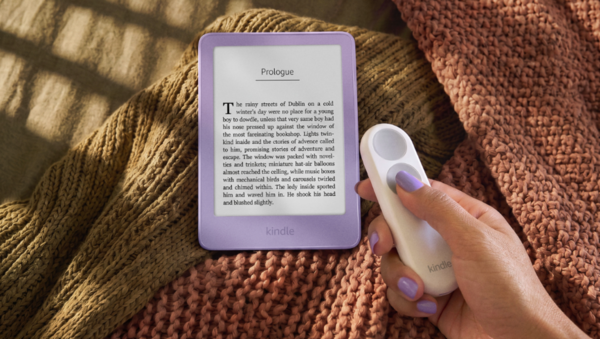
Amazon updated its Kindle family with solid updates for Kindle Paperwhite and Kindle and improved colors on Kindle Colorsoft, but what got my attention was the remote control to turn pages. On the surface, a remote for a book seems a bit absurd, but I can see it resonating with some.
Micron Technology put up ridiculous fourth quarter earnings results. The company reported fourth quarter net income of $37.7 billion, or $32.87 a share, on revenue of $54.3 billion, up from $11.32 billion a year ago. Adjusted earnings were $33.42 a share.
Wall Street was looking for adjusted earnings of $31.82 a share on revenue of $51.5 billion.
Micron's outlook indicates that it's going to be good to be a memory company for a while.
Boston Consulting Group reported that nearly half of companies are capturing meaningful value from AI, corporate AI spending has doubled in a year to 3.3% of revenue with most of it outside the IT budget and 42% of companies expect to give AI agents decision-making authority by 2030.
Salesforce said it has acquired Listen Labs, an AI customer research and human simulation platform. Listen Labs creates AI agents focused on designing studies, conducting studies and automating feedback efforts. Listen Labs will be integrated into Salesforce's broader platform.
Anthropic said that Z.ai's GLM-5.3 approaches Claude Mythos Preview for building cyber exploits autonomously. In other words, you can roughly get Mythos with an open model. Why would Anthropic post something like this? The company is trying to ring the bell on regulation and paced releases. Anthropic said:
"In this post, we share our analysis of GLM-5.3, the latest AI model developed by Zhipu AI (known outside of China as Z.ai). Like Claude Mythos Preview, GLM-5.3 has strong capabilities for autonomously building end-to-end cyber exploits. But GLM-5.3 is unlike other frontier models in that it has been released without meaningful safeguards to limit misuse. We find that attackers can bypass GLM-5.3’s safeguards between 64% and 100% of the time with simple techniques in our simulated tests. In contrast, these attacks did not succeed against safeguarded Claude models in our testing. We assess that GLM-5.3’s lax safeguards significantly increase the cyber capabilities available to malicious actors. At the same time, these capabilities can also benefit defenders working to secure their systems."
That's a good bit of word soup, but the takeaways are this:
Workday said it has laid off 2.5% of its workforce and reorganized its product and technology team. The company said it also shed leased office space. Workday in an SEC filing said it will take a charge of $65 million to $80 million with most of it recognized in the third quarter.