Results

CCE 2025: AI agents: Dreams, reality and what's next

CCE 2025: AI agents: Dreams, reality and what's next

Enterprises chasing agentic AI are likely to run into a reality check, but there's considerable upside ahead if they can navigate the moving parts.

At Constellation Research's Connected Enterprise 2025, CxOs discussed the current state of play for AI agents, the reality and what's ahead.

The week in CCE 2025:

Here’s a look at the AI agent game from CxOs.

The dream

Pick through the hype of agentic AI and the various vendor pitches and the dream revolves around autonomous enterprises that simply flow. They're living, breathing businesses that aren't siloed and can evolve, react and get things done unsupervised.

Salesforce evangelist Vala Afshar is working on a book about becoming autonomous. At Constellation Research Connected Enterprise, Afshar said:

"Autonomous machines will have not just situational awareness, but horizontal awareness, marketing, sales, commerce, every department, once you become an agent, enterprise, will eventually create that anticipatory muscle you have where one signal can really activate your business to have beyond situational awareness. When you become autonomous, you resemble living organisms. All living organisms are flow based."

Business flow comes from culture, roadmaps, customer engagement and ecosystems. "Be mindful of flows in and out of your business," said Afshar.

The working theory is that AI agents and the orchestration platforms will keep these flows going. Ultimately, enterprises will use agentic AI as a circulatory system for processes and business operations.

The reality

If there was one takeaway from Connected Enterprise 2025 it's that the reality behind AI agents is vastly different than the dream.

Simply put, we're not there yet but may be in a year. CxOs don't have a comprehensive strategy, are lining up data to be AI friendly, overwhelmed with platforms and in many respects would prefer to build systems that recapture the funds that go to SaaS vendors.

Platform fatigue is setting in.

Fiona Tan, CTO of Wayfair, said the platform pitch from SaaS is something enterprise customers need to be wary about. She said:

"We're looking for a horizontal platform partner that we can work with. Some of those integrations we will do directly, and then some of them we will look for with SaaS partners. The difficulty right now with SaaS is that they're also trying to go horizontal. We want to access enhanced capabilities of each of the SaaS partners, but control it. We may not want that necessarily."

The AI agent strategy conversations are happening. Are they fully baked? No. They're getting there.

AI agents need a manager

Boomi CEO Steve Lucas said that orchestration is going to be more important than creating AI agents. Like human workers, oversight will be critical.

Dr. Janice Presser, Founder of Teamingscience.com, said deploying AI agents needs the same thought behind it as hiring a human.

"Whether you're hiring a human being or a carbon based life form or silicon based life form, you need to kind of narrow down how you want them to be and what you want," said Presser.

Presser noted the following:

  • AI agents will team with humans.
  • Both types of workers will need to be managed differently. "Agents are for work. Humans are for love," said Presser.
  • You'll need to pick the right tasks for agents just like you would for human employees.
  • Since you're building a team you will need AI agents that complement each other and act in different ways. You can empower AI agents to act like a human with creativity or simply handle tasks.

"At the end of the day, you have to have these agents talking to each other and coordinating. There's no getting away from that," said Babak Hodjat, CTO of AI at Cognizant.

The journey is exhausting

The rate of change for AI is exhausting and there's so much flux CxOs are wary about making any big bets on platforms as well as models. Flexibility is the key word.

Not surprisingly, build vs. buy was a key debate. The consensus among the Constellation Research community was more in the build camp. Ultimately, enterprises are going to do both build vs. buy.

In other words, there's no easy button for AI agents and unless you have your data house in order it's hard to chase the dream.

An industry like banking, financial services and insurance is regulated can scale into AI agents because it has historically leveraged data for competitive advantage.

"This is a perfect opportunity for a huge amount of automation, which we can then augment with a human in the loop," said Sudhir Jha, Founder & CEO of Golconda AI. "Instead of trying to solve one particular problem, think about the entire flow and how to make the entire process more efficient using AI agents."

What's next?

AI agents are going to create multiple challenges beyond the technology issues. Here's a look.

  • Leadership challenges. Patrick Naef, Managing Partner Boyden Global Executive Search, said there will be leadership challenge due to AI. "We've trained over the last decade to move away from hierarchical cost designs to empower people, sharing missions, strategies, cultural goals, and then the people decide what to do," said Naef. "Will that work with AI or do we need to redefine hierarchical structures and still empower people. That's quite a challenge. The interesting thing is how we're going to talk about passion when centralizing that one process and workflow."
  • Develop a high-level strategy. CxOs repeatedly argued that the AI agent movement can result in a sprawl of vendors, platforms and digital workers.
  • Think organization. Corregan Brown, Director of Engineering, CTS Restaurant Experience at Chick-fil-A, said AI agents and the future of work will revamp organizational structures. "Organization is going to go from caterpillar to butterfly. There will be some major org that was structured in some way that made sense to us, and it's going to come out incomprehensibly different next year," said Brown.
  • Work on the building blocks that can enable AI agents. There will need to be platforms, orchestration tools, AI agent builders and data strategy. Enterprises are in various stages with those efforts.
  • Realize that you may be overthinking the AI agent play. On an HCM panel, Constellation Research analyst Holger Mueller said AI agents won't be on the org chart and shouldn't be. He said: "My view is that agents are just machines. Agents are run by hardware and software. They're just machines.”

More:


Data to Decisions Future of Work Innovation & Product-led Growth Tech Optimization Next-Generation Customer Experience Digital Safety, Privacy & Cybersecurity ML Machine Learning LLMs Agentic AI Generative AI Robotics AI Analytics Automation Quantum Computing Cloud Digital Transformation Disruptive Technology Enterprise IT Enterprise Acceleration Enterprise Software Next Gen Apps IoT Blockchain Leadership VR Chief Information Officer Chief Executive Officer Chief Technology Officer Chief AI Officer Chief Data Officer Chief Analytics Officer Chief Information Security Officer Chief Product Officer

AWS delivers outage post mortem: When automation bites back

AWS delivers outage post mortem: When automation bites back

Amazon Web Services delivered a detailed post mortem on its widespread outage this week and perhaps the biggest takeaway is that automation can go wrong.

On Monday, many websites and apps were down or severely hampered over a DynamoDB bug that resulted in multiple connection failures across AWS. Simply put, automation caused the outage and made it harder to recover. Typically, automation is what keeps AWS' complex system running.

The lessons here are likely to be valuable given the tech sector is bullish on the promise of AI agents, which will presumably make decisions autonomously and continually optimize processes. What happens when these automations wind up amplifying issues when they go bad?

According to AWS, the root cause of the outage was the cloud provider's automated DNS management system for DynamoDB. AWS has a system called DNS Planner and Enactor to automatically publish DNS records for internal and external endpoints.

A "race condition" in the automation caused the system to write an empty or incorrect DNS record for DynamoDB's main endpoint in the US-East-1 region. The system that was supposed to notice the issue didn't trigger due to the same automation logic.

DynamoDB then went down for the count. The outage brought down multiple services including AWS Lambda, CloudFormation and EC2. Load balancers designed to automatically replace faulty EC2 instances failed. More automation made load issues worse. Simply put, self-healing did just the opposite.

AWS was forced to stop automation jobs to recover. Automation typically keeps AWS running seamlessly, but in this case it scaled problems because the underlying logic was wrong.

For now, AWS has disabled the DNS Planner and Enactor automation until it adds safeguards. AWS is also adding rate limiters to prevent automated systems from changing too much too fast and building in manual reviews. EC2 will get an additional test suite to augment AWS' existing scale testing. 

Lessons learned:

  • Start planning for what happens if automation goes bad.
  • Design for redundancy.
  • Think through automation resiliency.
  • AWS outage may wind up being just the first time we notice the downside of automation.
Tech Optimization Chief Information Officer

CCE 2025: What the CxOs are saying about CX, AI, process

CCE 2025: What the CxOs are saying about CX, AI, process

Agentic AI will alter processes, customer experience flows and enterprise structures.

Those are some of the conclusions from the buy side. Here are some of the takeaways from CxOs speaking at Constellation Research's Connected Enterprise 2025.

More from CCE 2025:

Customer Experience

Ashley Hart, Chief Marketing Officer at Intellect, leads go-to-market strategy and brand transformation for the company's AI-powered Quality Management Systems platform. She said customer journeys have to be efficient but also include content so they can manage through adversity. Hart said:

"When I think about 2026 it's about being able to provide the right customer journey and then being able to bring them through that kind of funnel. How do I make sure that I'm getting the right content and right experience?

"Everything we've been in tech has been about becoming more efficient. Our big industry is manufacturing and everything is being impacted by tariffs. So if they're going to invest in this technology, then they have to be able to understand it well now."

Keri Dawson is the Global Head of Designit, an award-winning experience innovation company that helps organizations build competitive advantage and deliver positive change through strategy, design, marketing, and technology. Dawson said:

"Brands have an opportunity to pivot on human experience, customer experience, employee experience, product experience, service experience. If we start thinking through the lens of human experience we understand the interaction between the employee and the customer and the products and the service. We then drive towards a decomposition of that experience that becomes less technical and more humanistic. We talk about journeys, buyer personas and customer personas, but the reality is the persona is misleading because it also has to do with mindset. It has to do with context, it has to do with motivation, it has to do with emotion, and it has to do with empathy. Increasingly, customers want empathy in their experience."

Leadership

Ash Rangan, CEO of DoubleCheck Solutions, is a rare executive that has made the jump from CIO to CEO. He recapped the transition.

"Of all the transformations, there are two major transitions I think of. One is my own and going from being the guy who was managing technology to being the guy managing the business.

We can't manufacture time. So I keep pushing on people saying I need more, faster, better all the time. And that's new behavior for me. That transition is hard. The other transition is for my team. They are going through a cultural shift because the technology environment is transitioning so fast. It's like I'm constantly behind already, and that's pressure, not only to run the business, keep up as much as possible, and push the art of possible.

You may be good, you may actually be brilliant, but you have to keep up, and that's hard."

Organization and AI

Corregan Brown, Director of Engineering, CTS Restaurant Experience at Chick-fil-A, said:

"Organizational history is all about expanding the power of what you can do. If we look at it, we've been increasing these layers of abstraction with process, with more advanced technologies and so on. And I think that with AI agents, we're going to see the same thing. Agents are going to come in on the ground floor, and they're going to replace a lot of entry level tasks. But what is also going to happen is your first level humans are going to start to think more like managers.

A software engineer has to change a little bit with more managerial skill, more procedural thinking and abstraction, and a little bit more organizational psychology."

Manish Gupta, CIO and Managing Director at Nagarro, said:

"AI companies have abandoned legacy organizations. What we need now is the fusion of CIO, CMO, CTO, to drive this technology. Because the biggest problem right now is the innovation cycle. It's quicker than one cycle, so you can be really flexible, and gaps, you need people with that experience to understand the organization."

AI agents and process

Andrew Nebus, Senior Director, Defense Programs at ASRC Federal, said:

"We've always dealt with process improvements and technology in the instance. Now agents allow us to do more things that we can't scale easily. As that happens it forces us to really focus on the person, culture, and who we want to be in the room."

Kristina Chambers, Chief Data and Analytics Officer at TTX Company, said:

"We're fundamentally saying, replace the business process. Do we understand that process? What do you need to successfully achieve that process? It's also important to think about the maturity, the success or failure or accuracy of the existing environment. We all expect computers to be 100%. What's tolerable? If it's 95% you'll take the 5% hit because the speed of AI will be much faster.

I think one challenge most enterprises face right now is that as you're starting to incorporate a lot of these copilots in your daily work, and the context at different levels varies significantly, and that that increases or decreases the quality of the output that you're getting. I could put together a prompt and get a really nice summary of a large scale project that was completed over three years, and it will provide very accurate with thorough responses. Someone else in my team is not going to have access to the same level of information and so the context will be very different.“

Indy Cho, VP Analytics and Data Products at Costco, said:

"Understanding the demand at a localized level is an incredibly challenging task. Every time you shop that's a demand signal. We get that back to buyers, and we they go through a tremendous amount of analysis to figure out how much product needs to get to the right location.

The bar for a higher level of accuracy is absolutely necessary but that doesn't mean we don't stop experimenting."

Innovation and AI

Judy Yee, Director of Marketing Innovation, at The Clorox Company, said AI is speeding up the innovation cycle.

"AI is a partner in our discovery journey. We're able to shave off two-thirds of the innovation cycle and get faster with better predictability and base decisions on more signals.

We can get a signal within minutes and shaves time. We're then able to ideate within the AI platform and come an idea and its articulation. An idea can become a concept that's developed and tested in real time with both live consumers and AI.

Right now we have a patchwork of tools, but we'll get to an entire enterprise platform where you go from trends to a prototype to flight on one system."

Data to Decisions Future of Work Innovation & Product-led Growth Next-Generation Customer Experience Tech Optimization Digital Safety, Privacy & Cybersecurity ML Machine Learning LLMs Agentic AI Generative AI Robotics AI Analytics Automation Quantum Computing Cloud Digital Transformation Disruptive Technology Enterprise IT Enterprise Acceleration Enterprise Software Next Gen Apps IoT Blockchain Leadership VR Chief Executive Officer Chief Financial Officer Chief Information Officer Chief Technology Officer Chief AI Officer Chief Data Officer Chief Analytics Officer Chief Information Security Officer Chief Product Officer

Anthropic to use Google Cloud TPUs as it diversifies capacity

Anthropic to use Google Cloud TPUs as it diversifies capacity

Anthropic said it will expand its use of Google Cloud's TPU chips t train its Claude models and meet demand for its services.

The expansion of the deal highlights how Anthropic is diversifying its infrastructure usage from Amazon Web Services. Anthropic and Google Cloud have been partners since 2023. That initial Google Cloud partnership gave Anthropic distribution through Vertex AI and Google Cloud Marketplace. Both AWS and Google are investors in Anthropic.

According to the companies, the expanded Google Cloud and Anthropic partnership will give the LLM provider access to more of a gigawatt of capacity coming online in 2026.

Anthropic said in a blog post:

"Anthropic’s unique compute strategy focuses on a diversified approach that efficiently uses three chip platforms–Google’s TPUs, Amazon’s Trainium, and NVIDIA’s GPUs. This multi-platform approach ensures we can continue advancing Claude's capabilities while maintaining strong partnerships across the industry. We remain committed to our partnership with Amazon, our primary training partner and cloud provider, and continue to work with the company on Project Rainier, a massive compute cluster with hundreds of thousands of AI chips across multiple U.S. data centers."

In a statement, Anthropic said will have access to 1 million TPU chips and other Google Cloud services. Anthropic said the Google Cloud TPUs will give it efficiency gains with strong price performance.

For Google Cloud, the Anthropic win is significant. Google Cloud is also providing capacity to OpenAI. Google Cloud CEO Thomas Kurian said, "we are continuing to innovate and drive further efficiencies and increased capacity of our TPUs."

Constellation Research analyst Holger Mueller said:

"This is a big win for Anthropic and an even bigger one for Google Cloud. Anthropic continues its compute diversification, which is wise as it avoids Nvidia shortages and prices and gets access to the most efficient AI platform. Google can show that TPUs are not 'just' for Google workloads. And it's a win for customers since the deal allows Anthropic to be more cost competitive. Google can create further economies of scale for TPUs."

Data to Decisions Tech Optimization Chief Information Officer

AI, CxO recruiting and boards: What matters now

AI, CxO recruiting and boards: What matters now

AI is fundamentally changing executive recruiting, what boards of directors look for and creating a boom market for PhDs.

Here's a look at a few job market vignettes across two panels at Constellation Research's Connected Enterprise 2025.

"What are you doing in AI?"

Kathryn Ullrich, Managing Partner - Technology, Private Equity and Diversity at DHR Global, has an executive recruiting firm that's been a bit busy due to AI and CIO job searches.

Ullrich said there are definitely good and bad answers when it comes to AI.

"I ask everybody what you are doing in AI because I can tell you what a good answer, what a great answer is and what you shouldn't do because you won't get the job," said Ullrich.

For starters, don't mansplain LLMs.

Ullrich said she interviewed a healthcare candidate and he said the AI project was deploying ambient listening. "That's just table stakes in healthcare and AI," she said.

Ullrich added:

"The better answer is, well, we looked at everything from when you come in and get admitted to when you're discharged, and the 25 different workflows and touch points that AI could affect. And here are the 12 different pilots we're doing, and we're looking at, should we add AI, augment our people, or will it cause a nuisance? And then go into that level of detail."

More from CCE 2025:

What's an AI PhD worth?

Ullrich said people coming out of PhD programs in AI are getting $50 million packages in some cases.

Other executive job searches are tepid.

Patrick Naef, Managing Partner at Boyden Global Executive Search, agreed that PhDs are being snapped up in Europe. "There's a war for talent in AI," he said.

And if you're not a PhD?

Naef said he has been looking for executives with a set of projects in their portfolio. He said:

"I think we need to look at people who are open to learn, have curiosity and can understand quickly new technologies and how they can adopt the technology for their business. The people who will be successful in the future are ones that don't just move services but make a real impact in their business and explore new business opportunities and new business models."

His main takeaway is that enterprises need to look at experience and downgrade the degree.

How technology is changing CEO succession, boards

Naef said that most boards are lacking technology knowhow. Technology will define the future of the business and CIOs are increasingly in a better position to know the business than the CFO.

"You don't need a degree to be on a board. You need the experience. When you get to the board you have to shift your resume to the value you deliver to the board," said Ullrich. "It's strategic risk management and things like that instead of functional nature."

Ullrich added that there's no substitute for domain knowledge in a category like manufacturing, retail and other industries and technologies like cybersecurity and AI.

Daphne Jones, Founder and CEO, The Board Curators; Independent Director, AMN Healthcare, said boards need to realize that every company is a technology company. "Every company is a technology company or is digital," said Jones. "If they don't believe it they won't be in business very long."

Be a translator

Jana Eggers, CEO, Nara Logics, Non Executive Director at Amadeus, said she has landed a board role due to expertise in AI. However, Eggers said you have to translate AI into other domains.

"I've always said I'm a translator," said Eggers. "I understand technology and understand business. I was brought onto the board because of my AI expertise, but wouldn't have been able to get on that board if I didn't have a solid understanding of the financial side."

Jones said it's critical that technologists know how to speak business. "A lot of mistakes that technologists make is they talk about the things that they've done, that they've done cloud migration with serverless computing, but what if you're talking to a CEO of a retail company or CFO of healthcare company?" said Jones. "You want to be that person that talks about growth acceleration, efficiency, cost savings and revenue. Show you understand the flow of business, information, data, money, and all that stuff. Technology is just something that enables you."

AI and recruiting

Ullrich said job search experts are telling everyone to put their job specs and resume into ChatGPT to tailor you for that job.

"Guess what? If people are using those algorithms they'll get the answer absolutely correct, but are you getting that best candidates," said Ullrich. "A client posted for a high-level IT position and about 300 to 400 applications came in. We might have talked to two to five of those people. They were interesting but not the best fit. The AI can game the system."

Naef added that his firm uses AI to identify profiles, but there's more than just skill sets. Naef said:

"I feel that the mindset is at least as important as a skill set. AI will match a CV with a profile, but there's nothing I've seen that can judge whether the person fits within that management, has the right culture and clicks. With AI you're getting 10x the number of resumes you were before and they all sound great, but you need to do the interviews and hard work."

Ullrich also said that AI screening can surface competency and hard skills but soft skills land you the gig. "AI will over index on the hard skills, but you've got to interview for soft skills and cultural fit," she said.

Data to Decisions Future of Work New C-Suite Next-Generation Customer Experience Leadership Chief Information Officer Chief Experience Officer

SAP Q3 mixed, outlook for 2025 at low end

SAP Q3 mixed, outlook for 2025 at low end

SAP delivered third quarter revenue growth of 7% with cloud sales up 22%. The company said its 2025 cloud revenue will be at the lower end of its range of €21.6 billion to €21.9 billion.

The enterprise software giant reported third quarter net income of €2.05 billion, or €1.72 a share, on revenue of €9.08 billion. Adjusted earnings in the third quarter were €1.59 a share.

SAP CEO Christian Klein said:

"We are gaining market share as our customers are adopting solutions across the entire Business Suite, including Business Data Cloud and AI at accelerated pace. For Q4 we are executing against a strong pipeline - which gives us confidence in our accelerating total revenue growth ambition for 2026."

Constellation Research analyst Holger Mueller said:

"The SAP effort to upgrade its customer to S/4HANA in the cloud has slowed down remarkably. After a strong start in Q1, the argument that the need for AI is making SAP customers upgrade seems to have fizzled out. SAP did the right thing with creating the SAP Business Data Lake, but it also has created a 'wait & see' for its customer base. Now it all comes back to the out of the box value - with content in BDC, AI frameworks with Joule and back end APIs in S/4HANA. Q4 will show if SAP headed in the right direction."

By the numbers:

  • SAP reported Cloud ERP suite revenue of €4.59 billion. ERP suite revenue includes RISE with SAP as well as SAP Cloud ERP, SAP Business Technology Platform, financial- and spend management, supply chain management, core solutions for human capital management, commerce, business transformation management and AI.
  • SaaS and PaaS revenue was €5.21 billion, up 23% from a year ago.
  • In the third quarter current cloud backlog was €18.84 billion, up 23% from a year ago.

Data to Decisions Chief Information Officer

IBM Q3 strong, carried by AI, IBM Z mainframe

IBM Q3 strong, carried by AI, IBM Z mainframe

IBM reported better-than-expected third quarter results and said its AI book of business now tops $9.5 billion.

The company reported third quarter earnings of $1.7 billion, or $1.84 a share, on revenue $16.3 billion, up 9% from a year ago. Non-GAAP earnings were $2.65 a share.

Wall Street was expecting IBM to report third quarter non-GAAP earnings of $2.45 a share on revenue of $16.09 billion.

As for the outlook, IBM said its revenue will top more than 5% with free cash flow of $14 billion, up from its previous projection of $13.5 billion.

CEO Arvind Krishna said IBM "accelerated performance across all of our segments."

In the third quarter, IBM delivered software revenue growth of 10% with infrastructure up 17% driven by its new mainframe cycle. Consulting revenue was up 3%.

Here's the segment breakdown:

  • Software revenue of $7.2 billion in the third quarter was driven by hybrid cloud (Red Hat), automation, up 24%, and data, up 8%.
  • Hybrid infrastructure was up 28% and IBM Z revenue was up 61%.

Data to Decisions Tech Optimization IBM Chief Information Officer

AI, SaaS, and Data Strategies | CCE 2025 Day 1 Recap

AI, SaaS, and Data Strategies | CCE 2025 Day 1 Recap

In the relentless storm of technology buzzwords, it’s easy to feel overwhelmed. Professionals are constantly bombarded with hype around the next revolutionary AI model or game-changing digital platform, creating a sense of pressure to adopt, adapt, and innovate at a breakneck pace. The noise can be deafening, making it difficult to separate genuine trends from fleeting fads.


Against this backdrop, the Constellation Connected Enterprise (CCE) 2025 conference offers a refreshing dose of reality. In a live analysis after CCE day one, Constellation analysts addressed the skepticism, fatigue, and genuine uncertainty that many organizations are experiencing behind closed doors.


This post distills the six main takeaways from their discussion and offers a more straightforward path forward for anyone navigating the complex modern tech landscape.


1. The "Pick a Platform" Play for AI is Fueling Executive Fatigue


The idea that every business problem can be solved by adopting a new platform is facing significant backlash. According to the CCE panel, IT buyers are experiencing severe SaaS and platform fatigue, particularly when it comes to AI. CR Editor in Chief Larry Dignan confirmed this sentiment, providing a detailed view of the specific pain points:

“There are some serious SaaS concerns among IT buyers because they’re not sure about this platform play. They’re tired of platforms. They’re worried about pricing, and they are looking at options.”


This isn't just a matter of financial caution; it's an emotional exhaustion with the entire paradigm. Analyst Liz Miller captured the feeling of many technology leaders with a candid and widely shared frustration:
“Every time someone would be like, here’s what you gotta do with AI. You’ve got to pick a platform and go. And then everyone was like, okay. What platform?... but I’m really sick of platforms.”


This insight serves as a critical reality check for the entire tech ecosystem. For vendors, it signals that differentiation and transparent value are no longer optional. For buyers, it validates the need to demand more before adding another "solution" to the pile. This skepticism is forcing a fundamental re-evaluation of IT strategy, starting with the age-old question of whether to build or buy.


2. It's Not 'Build vs. Buy' Anymore

The long-standing debate over whether to build a proprietary solution from scratch or buy an off-the-shelf product has become a staple of IT strategy sessions. The discussion at CCE, however, decisively reframed this dilemma, signaling a maturity in the market. The new perspective moves away from an "either/or" mindset and toward a more nuanced, strategic approach. As one analyst stated directly, the question has changed: "It’s not build versus buy. It’s what you're going to build and what you’re going to buy."


This simple but profound shift requires businesses to conduct a more sophisticated analysis. Instead of choosing one path, leaders must now honestly evaluate their goals, capabilities, and existing tech ecosystems to find their unique, optimal mix. It’s a move from a simple choice to a complex, strategic composition tailored to the specific needs of the organization.


3. The AI Agents Are Already Talking to Each Other

While much of the public conversation around AI focuses on standalone models, the next wave of innovation is already here, and it’s fundamentally altering business models.


Analyst Martin Schneider declared, “The AI exponentials are here… services will be provided… pricing models are changing.” This isn't just a technical evolution; it's a commercial one, driven by the rise of interconnected, "agentic" ecosystems. In practical terms, this means individual AI agents are beginning to interact with each other across different platforms, creating an entirely new layer of automated digital workflow. This isn't a far-off concept; it's happening now. Schneider underscored the urgency for organizations to prepare:


“What your agentic AI orchestrator is… because these agents are here. They’re getting used to it, and they are talking to each other, and it’s multi-platform.”


This evolution from standalone AI tools to a collaborative network of agents signals a fundamental change in how digital operations will be structured. Understanding this interconnected future is a critical first step for any organization looking to leverage AI for a true competitive advantage.


4. It's Okay to Be Learning as You Go

In the high-stakes world of enterprise technology, conferences are often stages for experts who present themselves as infallible authorities. One of the most surprising and valuable takeaways from the CCE panel was a direct contradiction of this culture: a refreshing admission of collective uncertainty.


The analysts openly acknowledged that when it comes to emerging technologies, nobody has all the answers. This honesty stands in stark contrast to the typical industry posturing. Analyst Holger Mueller perfectly captured this counterintuitive insight:


“Very few people know stuff with no offense. Right? They’re all learning. Nobody is coming as an authority and saying, This is the data lake I want to use… this is the AI framework which we’re going to use. But nobody has that certainty.”


This admission is incredibly liberating. It gives organizations permission to move past "analysis paralysis"—the fear of making the wrong choice in a rapidly changing field. This collective humility is not a sign of weakness, but a prerequisite for genuine innovation. Success will come not from picking the "perfect" solution from the start, but from embracing flexibility, experimentation, and a culture of learning by doing.


5. The Best First Step Isn't Action—It's a Strategy

After days of absorbing new ideas and discussing cutting-edge tools, the temptation for conference attendees is to rush back to the office and start implementing. However, the CCE panel offered a crucial piece of grounding advice: strategy must always come before action. Liz Miller provided a final reality check that cut through the post-conference excitement:


"I’m just not sure how much action we’re going to be taking, but the conversation is being had. And I think the lesson to be learned and the best practice is… You need a strategy."

Her point is a vital reminder that for any new initiative to be sustainable and impactful, it must be guided by a clear roadmap. In an environment saturated with trends, prioritizing strategic planning over impulsive implementation allows an organization to stay focused on its long-term objectives and avoid the costly, directionless churn that comes from chasing every new tool.


6. Your AI Strategy is Only as Good as Your Data Foundation

In the rush to adopt sophisticated AI and analytics tools, the most critical component is often the most overlooked: data. The panel stressed that a clean, well-structured data foundation is the absolute backbone of success. Ignoring this fundamental layer risks building a digital house of cards.


This insight serves as a powerful counter-narrative to the hype around shiny new technologies. Analyst Mike Ni brought the conversation back to this grounding truth:

“Start first with your platform, make sure you have your data foundations right… It does come back to the data.”


Without a solid data strategy, any investment in the "agentic AI ecosystems" discussed earlier is premature and likely to fail. Data remains an untapped goldmine for most organizations, and focusing on a robust data architecture is the essential first step to unlocking its value. Before scaling operations or deploying new AI, you must first get your data house in order.


Conclusion: Are You Ready for What's Real?

The overarching theme from the CCE 2025 analyst panel was one of readiness—not for a hypothetical, hype-fueled future, but for the complex reality of today. True preparedness in this era of technological uncertainty comes from a pragmatic blend of strategic patience and agile learning. It requires embracing honest assessments of platform fatigue, committing to a clear strategy, and continuously learning in a field where no one has all the answers.


Ultimately, the path forward is paved with fundamentals. Before chasing the next big thing, the most effective organizations will be the ones that ensure their data foundations are rock solid. In a world selling easy answers and perfect platforms, what is the one strategic question your organization needs to ask before making its next move?

Digital Safety, Privacy & Cybersecurity Future of Work Innovation & Product-led Growth New C-Suite Next-Generation Customer Experience Tech Optimization Data to Decisions Big Data ML Machine Learning LLMs Agentic AI Generative AI AI Analytics Automation business Marketing SaaS PaaS IaaS Digital Transformation Disruptive Technology Enterprise IT Enterprise Acceleration Enterprise Software Next Gen Apps IoT Blockchain CRM ERP finance Healthcare Customer Service Content Management Collaboration Chief Analytics Officer Chief Customer Officer Chief Data Officer Chief Digital Officer Chief Executive Officer Chief Financial Officer Chief Information Officer Chief Information Security Officer Chief Marketing Officer Chief People Officer Chief Privacy Officer Chief Procurement Officer Chief Product Officer Chief Revenue Officer Chief Supply Chain Officer Chief Sustainability Officer Chief Technology Officer Chief Operating Officer Chief AI Officer

#CCE2025 Day 1 Recap | ConstellationTV Episode 117

#CCE2025 Day 1 Recap | ConstellationTV Episode 117

🎥 ConstellationTV episode 116 is LIVE from Half Moon Bay, recapping themes from Day 1 at Constellation Connected Enterprise. Here's a few things that stood out, according to Constellation analysts: 

- SaaS skepticism: IT buyers are growing wary of platforms and pricing models—many are asking, “What’s next?”

- AI’s exponential rise: We’re witnessing a paradigm shift as AI agents and orchestrators become central, but the challenge is deciding your approach—build, buy, or both?

- Back to data basics: Every strategic move with AI relies on robust data foundations. Yet, even as everyone’s building, nobody has the “perfect” platform or all the answers.

- It’s early days: From framework selection agents to composable platforms, leaders are taking baby steps—testing, learning, and seeking best practices.

- Ready for action: There’s a buzz on what’s possible and a collective determination to turn strategy into action.

Stay tuned—Day 2 will dive into functional applications, from HR and sales to data and customer experience.

On ConstellationTV <iframe width="560" height="315" src="https://www.youtube.com/embed/Dw3fQruU8M8?si=j4he75RNBbQ1Qb2e" title="YouTube video player" frameborder="0" allow="accelerometer; autoplay; clipboard-write; encrypted-media; gyroscope; picture-in-picture; web-share" referrerpolicy="strict-origin-when-cross-origin" allowfullscreen></iframe>

Google claims quantum advantage with Willow breakthrough

Google claims quantum advantage with Willow breakthrough

Google said its Willow quantum computing chip has achieved quantum advantage. Google's breakthrough hit pure play quantum computing companies.

In a post on X, Google CEO Sundar Pichai said Willow ran an algorithm called Quantum Echoes 13,000x faster than the world's faster supercomputer. The Quantum Echoes algorithm explained interactions between atoms in a molecule using nuclear magnetic resonance.

Google's breakthrough was published in Nature.

2025 is the year of quantum computing | Constellation ShortList™ Quantum Computing Platforms | Quantum Computing Software Platforms | Quantum Full Stack Players

The company explained:

"This implementation of the Quantum Echoes algorithm is enabled by the advances in quantum hardware of our Willow chip. Last year, Willow proved its power with our Random Circuit Sampling benchmark, a test designed to measure maximum quantum state complexity. The Quantum Echoes algorithm represents a new class of challenge because it models a physical experiment. This means this algorithm tests not only for complexity, but also for precision in the final calculation. This is why we call it “quantum verifiable,” meaning the result can be cross-benchmarked and verified by another quantum computer of similar quality. To deliver both precision and complexity, the hardware must have two key traits: extremely low error rates and high-speed operations."

Other key points.

  • The current-generation Willow chip features fidelities of 99.97% for single-qubit gates, 99.88% for entangling gates, and 99.5% for readout across its 105-qubit array.
  • Google said its next milestone will be a long-lived logical qubit.
  • The company also showed its progress against its quantum roadmap.

The fallout

Quantum computing stocks, which have been on a tear of late, took a hit on the Google news.

Why?

Many of the pure play quantum computing companies are using different technology than Google, which is focused on superconductors for quantum. IBM, which is also focused on the same technology as Google, was up.

IonQ, Rigetti, D-Wave and others were down double-digit percentages.

The big question is whether quantum computing is nearing its VHS-Betamax moment when it's clear one type of technology will win out.

Here's a look at the types of quantum computing and the vendors in that category.

  • Superconducting qubits are seen as general quantum computing options and vendors in this category include IBM, Google and Rigetti Computing.
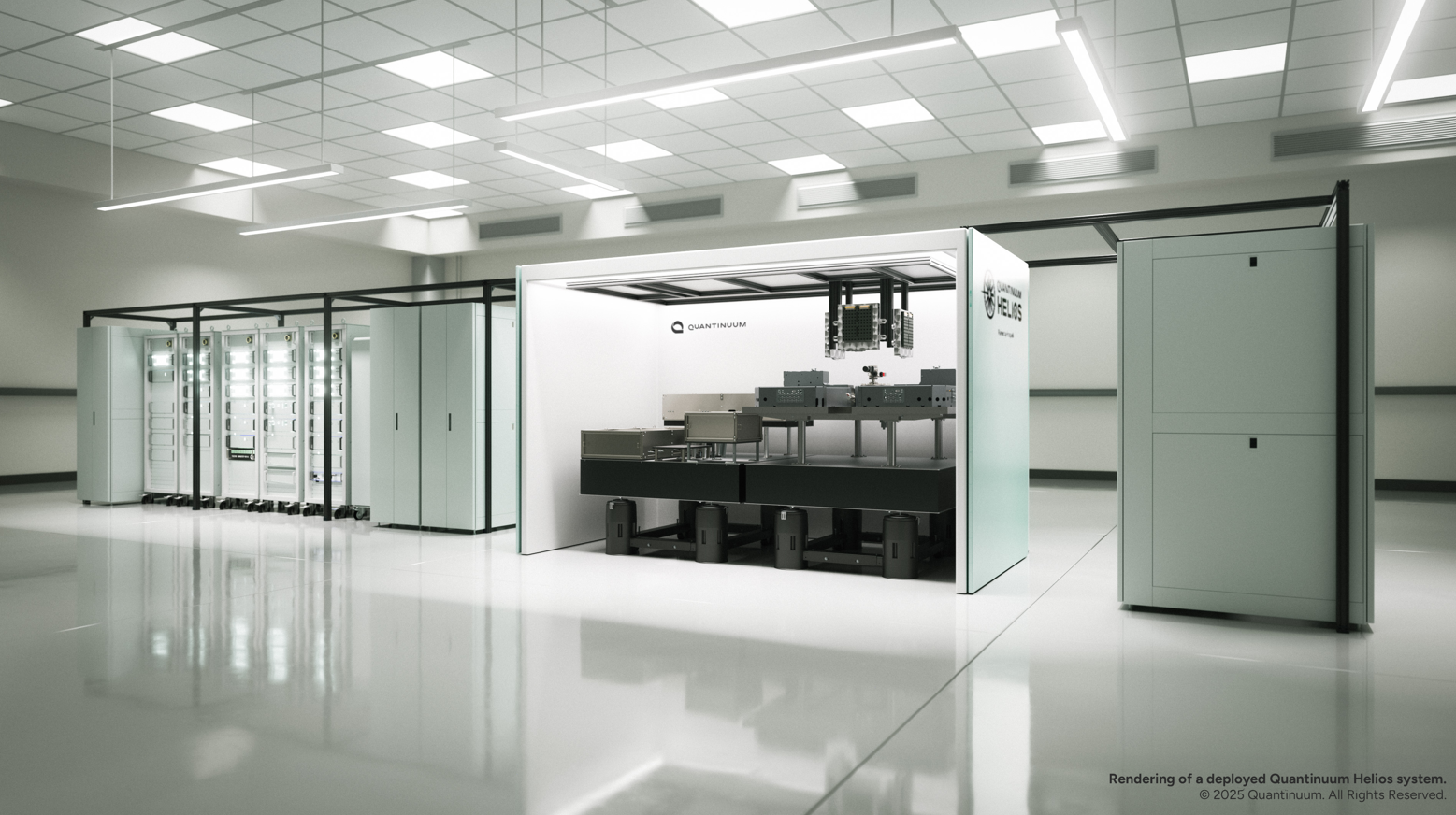
  • Trapped Ion quantum computing has high fidelity and long coherence times. IonQ is the big player in this category along with Quantinuum, which was created by the merger of Honeywell's quantum unit and Cambridge Quantum.
  • Neutral atom quantum computing has the potential to scale better and QuEra is a player here.
  • Quantum annealing is designed for optimization over general purpose computing and D-Wave has championed this approach.
  • Topological quantum computing has the potential to be more fault tolerant and is an avenue being pursued by Microsoft. Topological quantum computing uses a concept similar to semiconductors using "anyons," which can arrange qubits into patterns.

Today, quantum computing chatter talks about the sector as if all the vendors are all using the same technique. Ultimately, CxOs will have to ponder use cases and how they align to the various flavors of quantum computing.


Data to Decisions Tech Optimization Innovation & Product-led Growth Quantum Computing Chief Information Officer