


Among CxOs, SaaS platform fatigue setting in
Every enterprise software vendor likes to talk about its platform as a way to enable AI transformation, automation and AI agents. But there are signs that platform fatigue is setting in among buyers.
These technology buyers are continuously hearing platform pitches from software as a service vendors in multiple categories. At Constellation Research's Connected Enterprise, platform fatigue was a clear topic. One audience member even said that the word "platform" should be eradicated from software lingo.
More from Connected Enterprise:
- Boomi, IBM point to AI agent orchestration inflection point
- Constellation Research’s sneak peak at 2026
Here's a look at some of the platform weariness from enterprise buyers.
The platform pitch
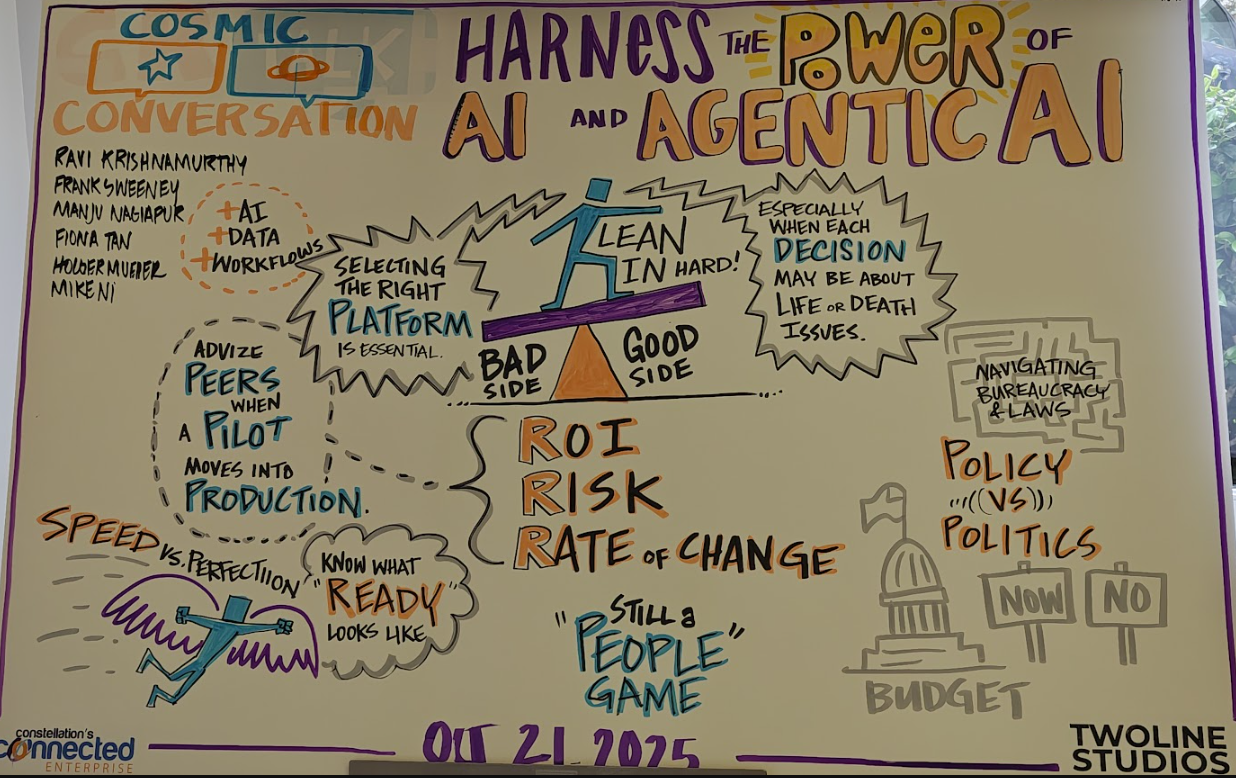
Fiona Tan, CTO of Wayfair, said the platform pitch from SaaS is something enterprise customers need to be wary about. She said:
"We're looking for a horizontal platform partner that we can work with. Some of those integrations we will do directly, and then some of them we will look for with SaaS partners. The difficulty right now with SaaS is that they're also trying to go horizontal. We want to access enhanced capabilities of each of the SaaS partners, but control it. We may not want that necessarily."
Tan is like most CxOs that have to navigate through multiple vendors touting platforms that are pitched to be an AI easy button. A few recent examples:
- Oracle’s application strategy: Industries, AI, automation, integrated stack
- Salesforce makes its Agentforce 360 case to be your AI agent platform
- Amazon Bedrock AgentCore generally available
- Google Cloud launches Gemini Enterprise, eyes agentic AI orchestration
- ServiceNow launches Zurich release, inserts process, task mining into AI agent workflows
Cut SaaS costs to fund other projects
Constellation Research CEO R "Ray" Wang frequently notes that CxOs often complain that the two costs that never fall are SaaS and healthcare. The SaaS budget is eating up more of the IT budget.
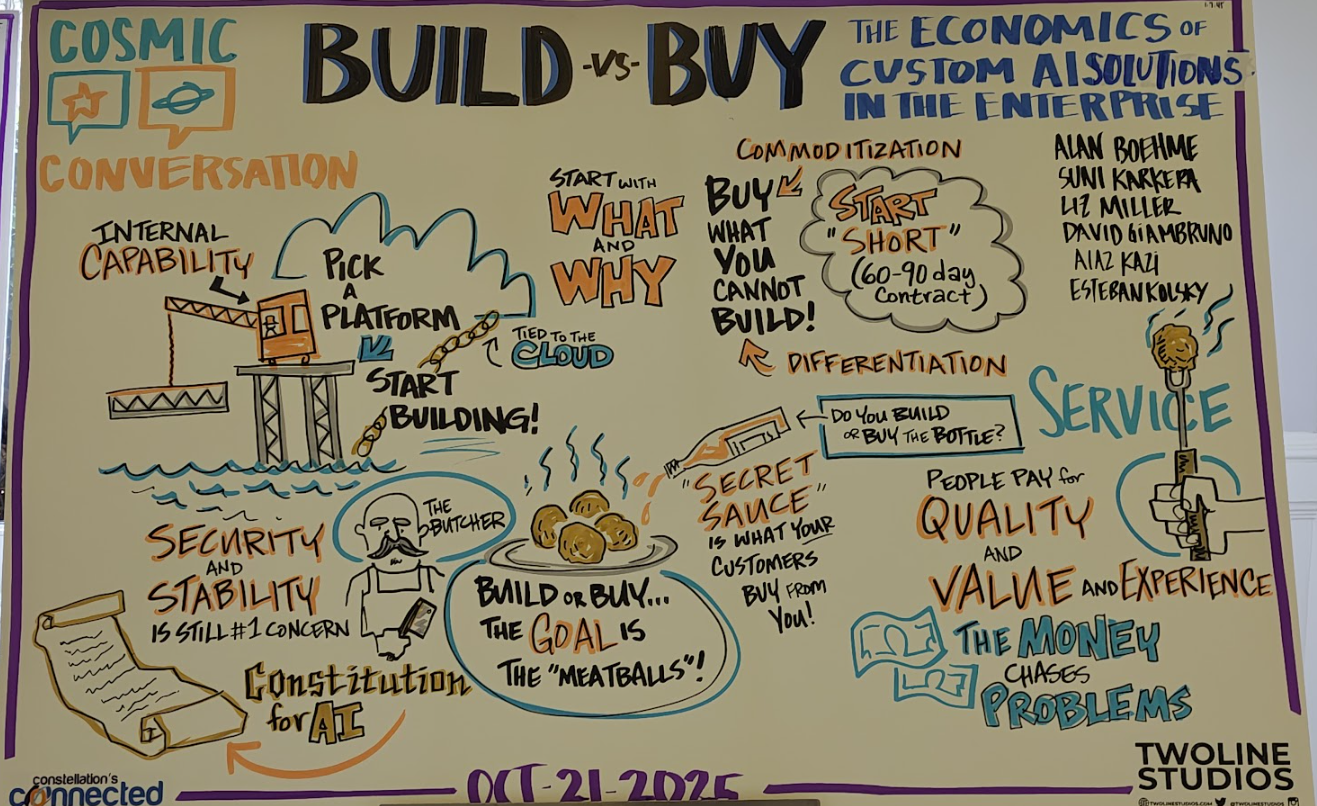
"If you want to go get money, build a legal lab. We're testing it. It took about three weeks loaded up a million plus contracts worth $3.5 million of annual SaaS spend. Look at your SaaS cost, because most of it you can replace, and self-fund every funding venture you want," said David Giambruno, VP of Tivity Health.
Worries about SaaS costs aren't new and moves to consumption models have only amplified those concerns. SaaS providers are moving to offer more pricing options, but enterprise buyers say vendors should move toward more outcome-based pricing.
- For AI agents to work, focus on business outcomes, ROI not technology
- Neptune Insurance highlights AI exponential, data, build vs. buy trends
- Soul of the Machine: AI proof of concepts a waste of time
- AI agents, automation, process mining starting to converge
- BT150 zeitgeist: AI agent questions, SaaS ate the opex and job woes
"Contract to outcomes that have shared risk. Make sure that you're not the only one with the seat at the table that's taking on majority of the risk for the money that you're trying to drive," said Kim Smith, Chief Revenue Officer at Clinical AI.
Revisit history, don't repeat it
Enterprises are looking toward AI agents and thinking they can collapse software platforms. After all, how many software platforms can a company support? How many platforms should they support?
Aiaz Kazi, Founder and CEO at rtZen Inc., said enterprises should be careful not to repeat previous platform mistakes. "We've been having the same conversation for 30 to 40 years. That's how SaaS came about," said Kazi. "I'd argue the difference now is that you should not be buying a platform. You're not buying agents. You're buying services. The entire point of an AI agent is that your end-to-end workflow should be more efficient and controllable. Why are you buying disparate agents? We will wind up managing them the same way we manage disparate applications today."
- Citigroup AI agent pilot underway for 5,000 workers
- Goldman Sachs eyes next AI transformation from position of strength
What AI agents can do is collapse various software suites and give enterprises the ability to focus on services and processes. In other words, AI agents have the potential to realize the business process outsourcing dream with much lower costs.
Larry Dignan is Editor in Chief of Constellation Insights at Constellation Research, where he leads editorial coverage focused on enterprise technology, digital transformation, and emerging trends shaping the future of business. He oversees research-driven news, analysis, interviews, and event coverage designed to help technology buyers and vendors navigate complex markets with clarity and context. ...
Read morePublished
Author
