Results

Databricks, Palantir forge integration pact

Databricks and Palantir said they will integrate platforms in a move designed to enable AI workflows and data architectures.

In a statement, the companies said they will forge a strategic partnership that does the following:

  • Combines Databricks Data Intelligence Platform and Palantir AIP, which is gaining traction with enterprises.
  • The partnership revolves around a data architecture that combines Palantir's Ontology System with Databricks data processing.
  • The integration will be facilitated by combining Databricks Unity Catalog through Delta Sharing and Palantir's multimodal security system.

According to Databricks and Palantir, the companies already have a set of joint customers benefiting from the integration including the Department of Defense, the Department of the Treasury, the Department of Health and Human Services and BP.

Databricks recently outlined a partnership with SAP. For its part, Palantir has been gaining enterprise customers and tight integration with Databricks and similar platforms will help its cause.

The news was announced ahead of Palantir's AIPcon where enterprises showcase various use cases.


Data to Decisions Innovation & Product-led Growth Future of Work Tech Optimization Next-Generation Customer Experience Digital Safety, Privacy & Cybersecurity AI GenerativeAI ML Machine Learning LLMs Agentic AI Analytics Automation Disruptive Technology Chief Information Officer Chief Executive Officer Chief Technology Officer Chief AI Officer Chief Data Officer Chief Analytics Officer Chief Information Security Officer Chief Product Officer

Agentic AI, DeepSeek, AI-Powered Search | ConstellationTV Episode 100

ConstellationTV just hit a major milestone - Episode 1️⃣ 0️⃣ 0️⃣ ! 🎉 That makes 50+ hours of hashtag#enterprise news updates, insights, and trends from market leaders, and of course, hilarious bloopers!

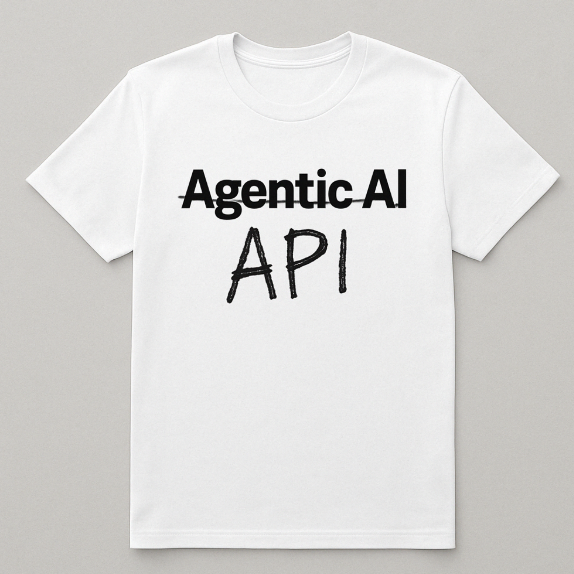
In this episode, Martin Schneider and Larry Dignan riff on advancements in hashtag#agenticAI from Microsoft and ServiceNow, and Rocket Mortgage's recent acquisition of Redfin. 

Next, Larry interviews Laura Macdonald, Chief Growth Officer at Hotwire, about how the company has built an AI-powered search and discovery tool that aggregates information from various hashtag#data sources to understand key trends and topics that are important to CTOs. 📊 

Finally, Martin and Larry recap key takeaways from Constellation's AI Forum, covering topics like the impact of Deepseek, the future of AI models, and the role of AI in optimizing small businesses. 🔮 

On ConstellationTV <iframe width="560" height="315" src="https://www.youtube.com/embed/Li1r1UybdLo?si=_471H9A_QL43wzWM" title="YouTube video player" frameborder="0" allow="accelerometer; autoplay; clipboard-write; encrypted-media; gyroscope; picture-in-picture; web-share" referrerpolicy="strict-origin-when-cross-origin" allowfullscreen></iframe>

Intel names Tan CEO

Intel has its new CEO. Lip-Bu Tan, formerly CEO of Cadence Design Systems, will take over as CEO, effective March 18.

He will replace interim co-CEOs David Zinsner and Michelle (MJ) Johnston Holthaus.

While Tan will put the uncertainty of the CEO search to bed, Intel still faces multiple challenges including Intel Foundry's losses and the chipmaker's positioning in AI data centers where Nvidia leads.

Zinsner will remain CFO and Holthaus will remain CEO of Intel Products. Frank Yeary, interim executive chair, said Tan's track record, knowledge of the semiconductor industry and his role as a board member were big wins.

Tan said:

"Intel has a powerful and differentiated computing platform, a vast customer installed base and a robust manufacturing footprint that is getting stronger by the day as we rebuild our process technology roadmap."

Tech Optimization Data to Decisions Big Data Chief Information Officer Chief Technology Officer Chief Information Security Officer Chief Data Officer

Adobe reports strong Q1, adds Firefly subscriptions

Adobe delivered-getter-than-expected first quarter earnings and said it is focused on taking advantage of AI and taking the "opportunity to reimagine our technology platforms to serve an increasingly large and diverse customer universe," said CEO Shantanu Narayen.

The company reported first quarter net income of $1.81 billion, or $4.14 share, on revenue of $5.71 billion, 10% from a year ago. Non-GAAP earnings in the quarter was $5.08 a share.

Wall Street was expecting Adobe to report first quarter earnings of $4.97 a share on revenue of $5.66 billion.

The company reaffirmed its outlook for the fiscal year. Adobe has a bevy of releases on tap at Adobe Summit next week as well as an Investor Day.

In prepared remarks, Narayen said Adobe is using its platform to give creative professionals access to a variety of models. These AI features will include new Firefly web app subscriptions.

Digital Media revenue in the first quarter was $4.23 billion, up 11% from a year ago. Digital Experience revenue was $1.41 billion in the first quarter, up 10%.

Narayen said:

"While Adobe’s commercially safe Firefly models will be integral to this offering, we will support additional third-party models to be part of this creative process. The Firefly app will be the umbrella destination for new creative categories like ideation. We recently introduced and incorporated our new Firefly video model into this offering, adding to the already supported image, vector and design models. In addition to monetizing standalone subscriptions for Firefly, we will introduce multiple Creative Cloud offerings that include Firefly tiering."

Adobe is also refining how it will report results from its primary audiences--business professionals and consumers and creative and marketing professionals. "We will win by focusing on “Business Professionals and Consumers” and “Creative and Marketing Professionals” with a unified product strategy and go-to-market. We will start to provide financial visibility into these two new groups starting this quarter and expand on this at our Investor Day at Summit next week," said Narayen.

As for the outlook, Adobe projected fiscal second quarter revenue of $5.77 billion to $5.82 billion with non-GAAP earnings of $4.95 a share to $5 a share. For fiscal 2025, Adobe said revenue will be $23.3 billion to $23.55 billion with non-GAAP earnings of $20.20 a share to $20.50 a share.

Data to Decisions Marketing Transformation Next-Generation Customer Experience Innovation & Product-led Growth Future of Work Tech Optimization Digital Safety, Privacy & Cybersecurity adobe B2C CX AI GenerativeAI ML Machine Learning LLMs Agentic AI Analytics Automation Disruptive Technology Chief Information Officer Chief Marketing Officer Chief Revenue Officer Chief Data Officer Chief Executive Officer Chief Technology Officer Chief AI Officer Chief Analytics Officer Chief Information Security Officer Chief Product Officer

D-Wave claims quantum supremacy breakthrough, reports Q4

D-Wave Quantum said its quantum computer has outperformed a classical supercomputer in solving magnetic materials simulation problems and proves quantum computational supremacy.

The breakthrough, published in Science, revolved around using D-Wave's annealing quantum computer, Advantage2, performed magnetic materials simulation in minutes. That problem would have taken nearly 1 million years for a classical supercomputer.

Quantum annealing is one flavor of quantum computing. Annealing is designed for optimization over general purpose computing and D-Wave has championed this approach.

Even though it's early in the year, 2025 appears to be the year of quantum already. In March, the news from the quantum computing industry continued to roll.

Constellation ShortListâ„¢ Quantum Computing Platforms | Quantum Computing Software Platforms | Quantum Full Stack Players

In a statement, D-Wave said:

"An international collaboration of scientists led by D-Wave performed simulations of quantum dynamics in programmable spin glasses—computationally hard magnetic materials simulation problems with known applications to business and science—on both D-Wave’s Advantage2 prototype annealing quantum computer and the Frontier supercomputer at the Department of Energy’s Oak Ridge National Laboratory. The work simulated the behavior of a suite of lattice structures and sizes across a variety of evolution times and delivered a multiplicity of important material properties."

Dr. Alan Baratz, CEO of D-Wave, said the demonstration of quantum supremacy on a useful problem is an industry first. "D-Wave’s annealing quantum computers are now capable of solving useful problems beyond the reach of the world’s most powerful supercomputers," said Baratz.

The milestone took two years of collaboration across 11 institutions worldwide. D-Wave's Advantage2 prototype is now available via its D-Wave Leap quantum cloud service.

Constellation Research analyst Holger Mueller said:

"Quantum computing is maturing quickly, and the question enterprises need to watch is how capable the latest Quantum machines are, and then see which use cases can be automated. D-Wave's news here is of relevance as it puts all industries on notice that need simulation of new magnetic materials. If you don't have a quantum platform for this, you can no longer compete. Every enterprise that created new magnetic materials or want to simulate how magnetic material will interact with a larger product is now on notice."

D-Wave takes aim at rivals

D-Wave executives moved to defend its claims of quantum supremacy. That defense was a common theme on D-Wave's conference call.

Baratz on a conference call said:

"This was not just solving a problem that can't be solved classically, this was solving an important, useful real-world problem. It happens to be in the area of magnetic material simulation, and solving it in a matter of minutes, whereas it would take nearly a million years to solve on classical computers, and it would require more than the world's annual energy consumption."

He added:

"This is a first for the industry. The other physicist papers published this week do not come close to achieving what we accomplished on the D-Wave advantage to quantum computer, and their claims are just claim confusing the public."

Dr. Andrew King, Distinguished Scientist at D-Wave, noted that there have been other claims about quantum supremacy, but they didn't measure up to what D-Wave accomplished. "They didn't reproduce the suite of simulations we performed," said King. "You don't just need to do the easy simulations. You need to do the hard ones as well. And nobody has demonstrated that. This is why we call this quantum supremacy, because it's a problem that you cannot solve if you don't have a quantum computer."

D-Wave Chief Development Officer Dr. Trevor Lanting said it now has several research customers doing magnetic simulation work to accelerate scientific discovery and annealing systems for quantum simulation overall. Next up, D-Wave plans on launching its Advantage2 system to general availability. Baratz said the system will be available before the end of the year. 

Q4 earnings and outlook

D-Wave also reported fourth quarter earnings. In the fourth quarter, D-Wave reported a net loss of $86.1 million, or 37 cents a share, on revenue of $2.3 billion, down 21% from a year ago. The non-GAAP net loss as 8 cents a share. 

For 2024, D-Wave reported a net loss of $143.9 million, or 75 cents a share, on revenue of $8.8 million flat with a year ago. D-Wave ended the year with 135 customers, up from 133 a year ago. 

As for the outlook, D-Wave said first quarter revenue will top $10 million due to the sales of an Advantage annealing quantum computer. 

D-Wave ended the year with $178 million in cash. In the fourth quarter, D-Wave raised $161.3 million. 

Data to Decisions Innovation & Product-led Growth Tech Optimization Quantum Computing Chief Information Officer

HOT TAKE: ServiceNow’s Moveworks pickup and Agentic AI Push Solidify CRM Aspirations

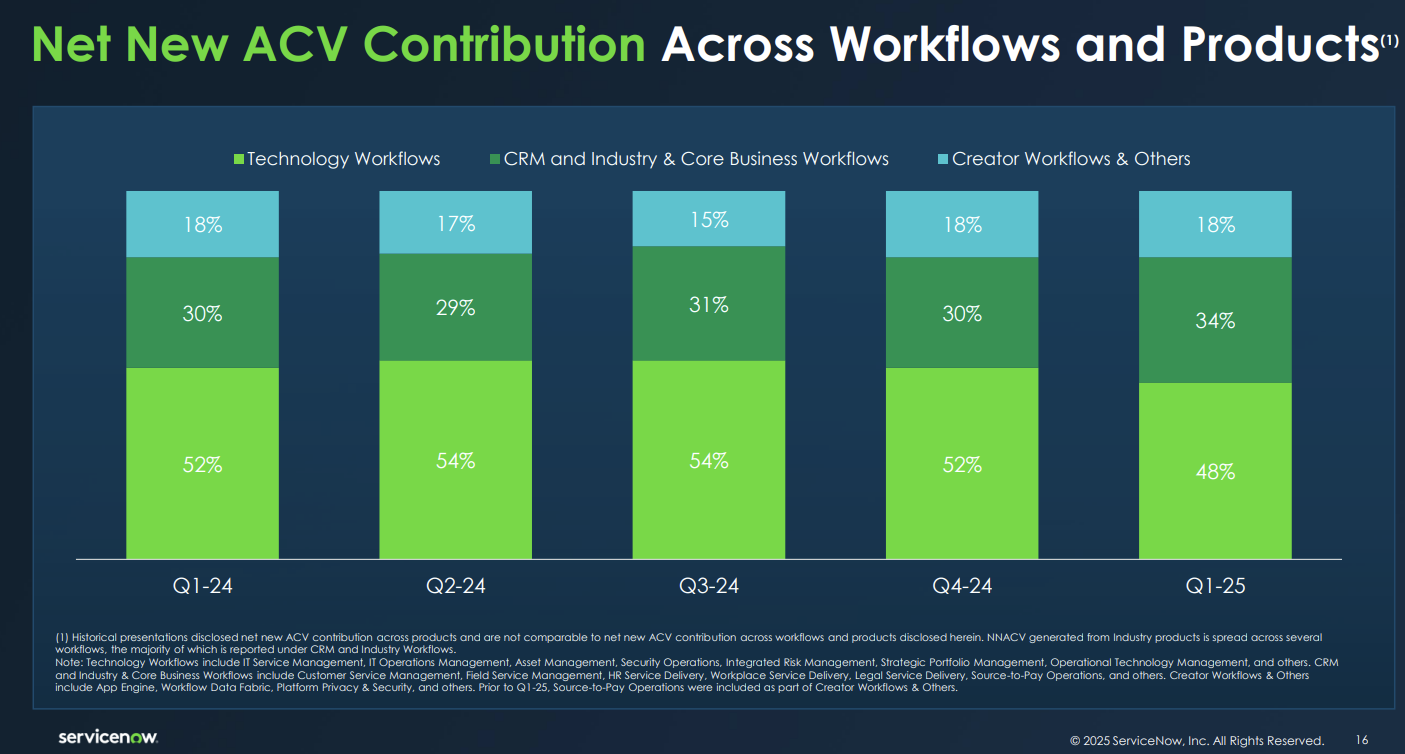
ServiceNow has had a busy week. Monday it announced the acquisition of MoveWorks, a front-end AI assistant that augments core CRM, HR and other key business processes. Today, the company announced the next phase in its agentic AI roadmap, wherein it is embedding more agentic AI capabilities into nearly every aspect of its platform. These agentic AI advancements are part of the company’s latest release dubbed Yokohama. 

ServiceNow’s agentic AO story is all about workflow - which makes sense, as AI agents are essentially workflow ready applications that can perform tasks semi-autonomously or fully autonomously. The AI agents are weaved into the core workflow engine, and new tools have been added to better create and manage these agentic flows. The company’s AI Agent Studio enables the lo/no code creation of new AI agents.  An AI Agent Orchestrator enables users to manage how the various agents and how they interact. 

The Orchestrator is interesting as it not only enables the management of multi-agent flows for core Ai agents built inside  ServiceNow, but the tool can also be used to track and manage multi-agent agentic flows between ServiceNow and other systems, such as an ERP or HR system. 

“Our AI agents have the ability to connect to other systems. So, our ServiceNow platform is able to have integrations with any system in the enterprise. The same applies to our AI agents. So if you want to, as part of a flow, connect to Workday to submit a PTO request, or if you want to connect to JIRA to pull some information, we can do that. We actually do some of it with our existing early adopters. So…when we say [our AI agents] are able to access every corner of the enterprise, we mean it. We're launching more than 50 different integrations for our AI agents as part of the Yokahama release, and you're going to see more of that come in in the upcoming releases,” Dorit Zilbershot, ServiceNow VP of AI Experiences said in a recent analyst briefing. 

The Moveworks deal adds significant AI tools to the ServiceNow portfolio. Namely, new front-end conversational AI assitants and AI-powered search that can streamline CRM use cases, but also expand the access and value of CRM insights to more individuals both inside and outside of a company. In short, the addition rounds out both ServiceNow’s AI strategy but also its deeper investments into the CRM space. 

For ServiceNow users, the good news is that these AI advancements seem fairly seamless, presented as tools that can be accessed quickly and provide quick wins against any AI strategy. In addition, the Moveworks acquisition makes ServiceNow a tool that users should be advancing into their CRM initiatives in more ways than simply help desk and case management. The ability to leverage AI assistants and agentic flows to aid sales and order management means ServiceNow can augment legacy sales automation tools - allowing the company to coexist with Salesforce, oracle and others in the enterprise but still providing value for dollars spent. 

And, it should be noted that ServiceNow is becoming a compelling choice for companies looking to standardize on a CRM platform. The company has built up its sales capabilities, and AI agents and the ease of building new workflows makes ServiceNow a modern, flexible choice for process automation around key sales and support processes. However, the marketing automation side of the equation is still light. It will be interesting to see how either agentic AI or another timely acquisition like the Moveworks deal moves the needle in this department. 

Next-Generation Customer Experience Data to Decisions Innovation & Product-led Growth Future of Work Tech Optimization Digital Safety, Privacy & Cybersecurity New C-Suite Sales Marketing ML Machine Learning LLMs Agentic AI Generative AI Robotics AI Analytics Automation Quantum Computing Cloud Digital Transformation Disruptive Technology Enterprise IT Enterprise Acceleration Enterprise Software Next Gen Apps IoT Blockchain Leadership VR business Marketing SaaS PaaS IaaS CRM ERP finance Healthcare Customer Service Content Management Collaboration Chief Revenue Officer Chief Executive Officer Chief Information Officer Chief Technology Officer Chief AI Officer Chief Data Officer Chief Analytics Officer Chief Information Security Officer Chief Product Officer

ServiceNow Yokohama release ups AI agent game

ServiceNow launched its Yokohama release of its Now Platform including AI agent orchestration, analytics and a workflow data fabric that integrates apps, data warehouses and lakes, and a workspace and studio to design and integrate agents.

The release highlights ServiceNow's broader strategy, which is to leverage its ability to tap into workflows and data across multiple enterprise systems and connect those dots to enable AI agents. ServiceNow, which scaled due to its role as a neutral workflow orchestrator, is betting it can also enable multi-agent flows across the Now Platform and third party apps and platforms.

ServiceNow’s Yokohama release is a fast follow up to its $2.85 billion acquisition of Moveworks.

"We are focused on a future where AI agents work autonomously with and for people to unlock outcomes and transform business," said Amit Zavery, ServiceNow's President, Chief Product Officer and Chief Operating Officer. "Right now, many AI agents are stuck in the same isolated systems that have created siloed ways of working for decades."

Simply put, ServiceNow is aiming to be the connective layer for agentic AI and adding context via the Now Platform's access to data, records and workflows. Yokohama will bake in AI agents throughout the ServiceNow platform to address use cases across IT, CRM, HR, security, finance and application development.

"We are building multi-agent systems to control workflows and independently solve tasks with proper governance," said Zavery. "Work doesn't really happen in silos, and neither does our AI, our orchestration capabilities connect every function through AI powered workflows."

ServiceNow's Yokohama release is also the first release under the company's hybrid pricing model that includes AI agents in Pro Plus and Enterprise Plus licensing models. As a result, enterprises will be able to use AI agents without additional charges, but there is a limit with consumption charges after that.

The release, which has ServiceNow's Workflow Data Fabric at its core, also has an updated Common Service Data Model (CDSM), a standardized framework for managing IT and business services.

CEO Bill McDermott has called ServiceNow's pricing model a win-win and a Goldilocks scenario in terms of enabling customers to adopt AI agents at their own pace without commitment up front. ServiceNow has more than a 1,000 customers using its AI agents.

Internally, ServiceNow said it has been using its AI agents to improve case deflection rates by 80% in the last 6 months in go-to-market operations, providing answers to seller questions 99% faster than request tickets and driving 20% productivity increases across HR and IT support.

Key parts of the Yokohama release include.

  • AI Agent Orchestrator and AI Agent Studio are generally available for customers.
  • AI Agent Orchestrator monitors agents, oversees them and develops plans for them to work together. ServiceNow's AI agents have the ability to connect to other systems. There are more than 50 integrations set for the AI agents in Yokoyama.
  • AI Agent Studio enables customers to build agents with guardrails, workflows and actions and tools and data available.
  • Service observability, which unifies multiple monitoring and observabilities tools in one dashboard.

A screenshot of a computer

AI-generated content may be incorrect.

  • Preconfigured AI agents for security incident lifecycle, change management and proactive network test and repair. The autonomous change management AI agents generate custom implementation, test and backout plans based on impact, historical data and similar changes.
  • Voice input for hands free interaction to summarize incidents and generate knowledge articles.
  • AI agent analytics to gauge efficiency, productivity and alignment with enterprise KPIs.

A screenshot of a computer

AI-generated content may be incorrect.

  • ServiceNow Studio, an AI-powered workspace where developers can use no-code, low-code and pro-code tools to build and deploy workflows and AI agents. ServiceNow Studio is integrated with AI Studio.
  • The ability to create robotic process automation (RPA) bots with natural language to speed up development.

Early adoption

ServiceNow's Dorit Zilbershot, Group VP of AI Experiences and Innovation, said early adopters of AI agents are developing use cases with a "wide range of complexity."

Support is an obvious use case for AI agents, but one ServiceNow customer is using agents to navigate policies and how to address requests. That work is now automated, but it took hours for humans to address, said Zilbershot.

Sunil Tulyani, Service Management Platform Leader at Eaton, a power management company. Tulyani said Eaton started with ServiceNow for IT service management and then expanded into HR.

Eaton, which has been a ServiceNow customer, for more than two years has adopted Now Assist and the vendor's generative AI tools. "We gained the value from Now Assist already in this last year of just getting it," said Tulyani, who noted that Now Assist has removed manual tasks and helped Eaton engage with customers in forums and portals.

Eaton's AI agent goals include:

  • Boosting productivity and becoming more efficient.
  • Resolving tickets at a higher level with better customer service, resolution and speed.
  • AI agents won't replace people, but for Eaton it's doing more with the same number of people.
  • "We plan to expand and we can double our capacity over the next four years, but with our same headcount to support and drive the business," said Tulyani.

Eaton has started an AI council to leverage AI across the company. Tulyani noted that Eaton will use multiple models and plans to focus on use cases with ServiceNow being the core data structure, chassis and technical debt buster. "Our AI council is going to be evaluating which AIs are ready for us to integrate," he said.

Moving parts Tulyani said Eaton must navigate as it looks at AI agents include:

  • "We see AI adopted well on the user side, but it was a little slower on productivity," said Tulyani. "We're focusing more on the productivity side with AI agents, but have issues and concerns."
  • Those concerns include better data quality and Eaton has a project to clean up data and prep it for AI use cases.
  • Eaton is looking for more automation to move data into the story and create structured data. The process is too manual today.
  • AI will be used earlier in the data cleansing process to leverage AI later.

Tulyani didn't comment on Eaton's plans for managing consumption pricing as AI agents are adopted down the line. He did note that ServiceNow "was a little expensive," but worthwhile since it was delivering value and shedding tech debt.

Data to Decisions Future of Work Next-Generation Customer Experience Innovation & Product-led Growth Tech Optimization Digital Safety, Privacy & Cybersecurity servicenow ML Machine Learning LLMs Agentic AI Generative AI Robotics AI Analytics Automation Quantum Computing Cloud Digital Transformation Disruptive Technology Enterprise IT Enterprise Acceleration Enterprise Software Next Gen Apps IoT Blockchain Leadership VR GenerativeAI Chief Information Officer Chief Executive Officer Chief Technology Officer Chief AI Officer Chief Data Officer Chief Analytics Officer Chief Information Security Officer Chief Product Officer

Rocket buys Redfin, pays $437.5 million per petabyte of data

Rocket Companies is buying Redfin in a move that can reinvent the real estate purchase funnel by bulking up the first party data used to train AI models.

Under terms of the all-stock deal, Rocket will acquire Redfin for $12.50 a share, or $1.75 billion. The plan is that Rocket will benefit from Redfin's nearly 50 million monthly visitors. Those leads at the top of the funnel can feed Rocket's mortgage business as well as other consumer services.

On the surface, Rocket and Redfin can combine forces and lower costs of real estate purchases. But you may want to look at the Rocket-Redfin deal through a data and AI lens.

We've previously chronicled Rocket's master plan and AI efforts. The company is built on first-party data and ongoing purchase signals that feed its AI models.

To look at Rocket's acquisition of Redfin in a different way consider that the company is paying $437.5 million per petabyte of consumer data. In a statement, Rocket CEO Varun Krishna said the purchase of Redfin is about creating a unified search and financing process in real estate. "Together, we will improve the experience by connecting traditionally disparate steps of the search and financing process with leading technology that removes friction, reduces costs and increases value to American homebuyers," he said

. A diagram of a homeowner's platformAI-generated content may be incorrect.

"The companies with the most data will win, and no industry is safe from the disruption or the opportunity that AI creates," said Krishna. "As commoditization and disintermediation accelerate, access to scaled proprietary data is what separates industry leaders from the rest."

Redfin is also well positioned with its brokerage services since real estate compensation has been revamped. Glenn Kelman, CEO of Redfin, will continue to run that business and noted that "we want a customer to be able to check her phone and find out what she can afford, see which homes are right, schedule a tour and get a prequalified loan in minutes."

The ultimate goal for both companies is to create an AI-driven real estate buying experience. To deliver that experience, it takes data.

A diagram of a homeowner's journey

AI-generated content may be incorrect.

A few key figures:

  • The combined companies will have more than 14 petabytes of data with information about homebuyers, sellers, agents and a repository of more than 100 million properties.
  • This data repository will generate revenue across search, real estate brokerage, mortgage origination, title and servicing.
  • Rocket expects the combined company to save more than $200 million in annual expenses by 2027. Rationalizing operations will represent $140 million of that total with another $60 million coming from revenue synergies.
  • Redfin facilitated 61,000 home transactions in 2024.

Krishna said the goal of Rocket and Redfin are to disrupt real estate. Speaking on a conference call, he said:

"For far too long, the home ownership process has been outdated and disconnected. Home search, brokerage, mortgage title closing, servicing all exist in separate ecosystems, forcing consumers to piece together a complex and frustrating journey. This disjointed system creates confusion, adds friction and drives up transaction fees totaling roughly 10% of a home's cost, and yet this inefficient, costly experience is still the accepted norm."

Krishna said the aim is to leverage the data from the combined companies to create a virtuous cycle that will boost efficiency and enable Rocket to pass along savings to consumers. "Rocket and Redfin sit at the crossroads of technology and human connection. We empower our team members with AI driven tools to help them provide the best client service in the industry. AI eliminates paperwork and administrative work, allowing agents and loan officers to focus more time on advising clients," said Krishna.

A screenshot of a diagram

AI-generated content may be incorrect.

For instance, Rocket's AI has enabled loan officers to serve 54% more clients per team member than the previous years. Rocket also doubled its automation rates for appraisal and asset verification in 2024, and saved more than 1 million hours equating to $40 million in savings with AI.

In fiscal 2024, Rocket reported net income of $636 million on revenue of $5.1 billion, up 34% from the previous year amid an uncertain real estate market.

Krishna said that the combined company will ramp its investment in data and AI. "We want to invest deeply in data, in AI, and we see this deal as really accelerating both," he said.

Data to Decisions Next-Generation Customer Experience Innovation & Product-led Growth Future of Work Tech Optimization Digital Safety, Privacy & Cybersecurity B2C CX AI GenerativeAI ML Machine Learning LLMs Agentic AI Analytics Automation Disruptive Technology Chief Customer Officer Chief Information Officer Chief Marketing Officer Chief Revenue Officer Chief Analytics Officer Chief Data Officer Chief Executive Officer Chief Technology Officer Chief AI Officer Chief Information Security Officer Chief Product Officer

Asana: AI-driven work orchestration promising, but CEO search, multiple transitions ahead

Asana projected decelerating growth and is starting a search to replace CEO Dustin Moscovitz, but sees strength for its AI work coordination platform, AI Studio, amid economic uncertainty.

The company is about to make its AI Studio generally available with the aim of coordinating human and digital labor and automating workflow. Moscovitz cited use cases such as using AI to model workflows of SAP process testing, cybersecurity coordination as well as multiple workflows across industries.

"Unlike standalone AI Chatbots or simple task automation, we provide a structured, intuitive framework that both humans and AI can navigate and evolve together. This enables us to deliver AI capabilities exactly where teams work, with the essential context and security controls that enterprises demand. And our power extends beyond our proverbial walls," said Moscovitz. "Our strategy is to be the essential coordination layer for humans and AI across all teams and tools."

Asana plans to build more autonomous capabilities in AI Studio to make work management more adaptive. Asana has integrated Amazon Q Business into its platform for more insights on work.

"Our competitive advantage doesn't depend on owning massive amounts of data," said Moscovitz. "We excel at orchestrating work across multiple AI agents and human teams, managing complex access controls and governance frameworks, and connecting cross-system workflows with enterprise-grade reliability."

The issue is that Asana's fourth quarter was largely in line. The company reported a net loss of 27 cents a share on revenue of $188.3 million, up 10% from a year ago. On a non-GAAP basis, Asana broke even. For fiscal 2025, Asana delivered revenue of $723.9 million, up 11% from a year ago.

As for the outlook, Asana said revenue growth will decelerate. Asana is projecting non-GAAP earnings of 2 cents a share on revenue of $184.5 million to $186.5 million, or growth of 7% to 8%. For fiscal 2026, Asana projected non-GAAP earnings of 19 cents a share to 20 cents a share on revenue of $782 million to $790 million, up 8% to 9%.

The deep dive on Asana is warranted for a few reasons. First, Asana has expanded into non-tech verticals and revenue from those customers were up 15% in the fourth quarter compared to a year ago. Asana's fastest growing verticals were manufacturing, energy, retail and media. That expansion also gives Asana a better view of the economy.

In addition, Asana's AI Studio is consumption-based, agentic AI-led and focused on "human AI coordination." Asana's goal is to have the "definitive platform for human AI coordination." said Moscovitz, who noted AI Studio is seeing strong demand. However, there are growing pains.

A screenshot of a computer program

AI-generated content may be incorrect.

My hunch is what Asana is talking about is going to be repeated by other SaaS vendors in the quarter ahead. Customers are growing cautious, agentic AI will be consumption based and enterprises will wrestle with visibility and vendors are going to see lumpiness ahead.

The CEO search. Moskovitz's retirement means that there's a search underway that's just getting started. The search will be internal and external and Asana will be patient about finding the right person. Moscovitz said he's at the helm for the duration. "I really think of the fiscal year ‘26 plan as my plan. And my personal goal is to be able to build the fiscal year ‘27 plan together with the next person," said Moscovitz.

Takeaway: It's unclear whether Moscovitz's retirement will affect buying behavior from enterprises. It’s difficult to replace a long-tenured CEO.

The consumption model. A quarter ago, Moskovitz was very bullish on AI Studio and its uptake. He still is, but AI Studio could be "a solid base hit for the company or it could be a grand slam." He said it has been hard to narrow the range of expectations because Asana doesn't have enough data to forecast the uptake by customers.

Moskovitz said:

"When we've been forecasting internally, we repeatedly come to two specific variables that the model is incredibly sensitive to, but they're actually tiny percents with very large error margins.

So they create big swings in the outcome. The first is how many of our customers are going to adopt AI Studio at all? And generally, how many of our users are potential workflow builders? We've started by approaching our power users, the people who we think make great early adopters. That's going really well. I think we can forecast that now. But there's a much larger potential population of non-power users. And the difference between converting 1% or 3% or 5% of that population is just a massive swing in the model. And it's really going to depend on things like how effective our marketing is and how easy we make it to customize out-of-box workflows."

A screenshot of a computer

AI-generated content may be incorrect.

Asana is moving away from seat-based pricing and offering a credit-based consumption model focused on AI Studio Basic, which all customers have, and a Pro tier that includes credit. Most enterprise software vendors are moving to this seat-consumption hybrid model.

Takeaway: Asana is going to launch self-service for AI Studio and it will be able to tweak the experience and better model adoption. This refrain from Asana is likely to be a common theme from other SaaS vendors moving to consumption models.

Consumption models can be lumpy and customers and vendors will need to be able to model usage. Moscovitz noted that all consumption models are going to be tricky to model. The current approach is vendors and customers are trying to model and average level of consumption. Moscovitz said:

"There's going to be a stratification with a small portion of customers consuming the vast majority of credits, like an 80-20 rule or probably a power law distribution. And I've seen plenty enough to be fully confident we're going to have some of those, as we refer to them, whales. Individual customers paying six figures, maybe even seven figures for consumption by the end of the year. But I haven't seen enough to know whether there's going to be five of those or 50 or even 5,000. So again, massive swing on the model."

He added that Asana's channel network is another swing factor for AI Studio.

Takeaway: What's unclear for Asana, and other SaaS vendors, will be whether consumption whales spread the love to multiple vendors or prefer one or two.

The pricing environment is at an inflection point and enterprises are wary. Asana's Moscovitz talked repeatedly about product, pricing and packaging. Asana is looking for "a menu of options to align price to value." This menu "is specific to both regional and macro dynamics," he said.

"What I've observed in the macro cycle is just more cautious buying behavior and customers becoming more budget conscious. And that means the growth opportunity involved in getting those details right has dramatically increased. The previously inelastic patterns are now more elastic. Customers want a lot more agency in choosing how their budget is leveraged."

Takeaway: Enterprise customers may be able to customize contracts a bit more.

A graph of a number of customers

AI-generated content may be incorrect.

Tech customers vs. non-tech customers and a potential recession. Asana said it has made a lot of traffic with verticals such as manufacturing, but those customers are the ones that are most cautious about adopting something like Asana AI Studio. Non-tech customers will expand Asana's market reach but that cohort is also more cautious.

However, Asana noted that tech customers are also showing signs of caution.

Anne Raimondi, Chief Operating Officer and Head of Business, said:

"Tech is definitely continuing to adjust spend and decision timelines continue to be elongated. We have not seen customer sentiment degrade thus far, but we also appreciate there's just a lot of uncertainty right now and things can and will likely change quickly. We're paying close attention to that in all of our customer conversations. I do think our focus over the last year on diversification and investments in additional verticals like retail, manufacturing, financial services have helped us with kind of steady and consistent growth, especially outside the U.S. But again, we know things could change rapidly."

Takeaway: Note the talk about customers becoming more cautious. Enterprises can't plan with any confidence due to tariff whipsaws, uncertain economic moves and flagging consumer confidence.

Constellation Research's take

Liz Miller, analyst at Constellation Research, said:

"Work management has been a hot space for early interest and experiments with AI in the hope that agentic intervention and process automation could transform work itself. However, as we see from Asana and other players in the space, once the lowest hanging fruit of efficiency and operational effectiveness that can be achieved by, for example, automating the repeatable or mundane, or expanding beyond to address precision automation and decision velocity has been a slower road marked by caution from buyers. 

The space is also being challenged by platform players looking to integrate work management and project management into their overarching workflow and work management. For example, Asana is not just facing competition from the likes of Smartsheet that has capabilities across work and project management, but also includes the Brandfolder product for asset and brand asset management. There is also pressure from enterprise platforms like Adobe that arguably knows the work of specific use cases like Marketing just as well if not better than Asana. Work management is at risk of becoming a commodity and not a strategic differentiator…and that is exactly where Asana should be looking to advance the conversation."

Data to Decisions Future of Work Next-Generation Customer Experience Innovation & Product-led Growth Tech Optimization Digital Safety, Privacy & Cybersecurity ML Machine Learning LLMs Agentic AI Generative AI AI Analytics Automation business Marketing SaaS PaaS IaaS Digital Transformation Disruptive Technology Enterprise IT Enterprise Acceleration Enterprise Software Next Gen Apps IoT Blockchain CRM ERP finance Healthcare Customer Service Content Management Collaboration Chief Information Officer Chief Executive Officer Chief Technology Officer Chief AI Officer Chief Data Officer Chief Analytics Officer Chief Information Security Officer Chief Product Officer

Oracle Q3 a miss, but backlog portends big revenue growth ahead

Oracle continued to put up strong cloud and infrastructure as a service revenue growth, but its third quarter results fell short of expectations. However, Oracle said its cloud backlog is pointing to revenue growth of about 15% in the new fiscal year that starts in June.

The company reported third quarter earnings of $1.02 a share on revenue of $14.1 billion, up 6% from a year ago. Non-GAAP earnings for the quarter were $1.47 a share. Oracle has been wrestling with currency exchange rates vs. the US dollar like other global firms.

Wall Street was expecting Oracle to report earnings of $1.49 a share on revenue of $14.39 billion.

Nevertheless, Oracle's cloud growth has been impressive. By the numbers:

  • Oracle cloud revenue in the third quarter was $6.2 billion, up 23% from a year ago.
  • IaaS revenue was $2.7 billion, up 49% from a year ago.
  • SaaS revenue was $3.6 billion, up 9% from a year ago.
  1. Catz, Oracle CEO, said the company signed sales contracts worth more than $48 billion in the third quarter. "We have now signed cloud agreements with several world leading technology companies including: OpenAI, xAI, Meta, NVIDIA and AMD. We expect that our huge $130 billion sales backlog will help drive a 15% increase in Oracle's overall revenue in our next fiscal year beginning this June," she said.

CTO Larry Ellison said the company is "on schedule to double our data center capacity this calendar year." He added that Oracle's database revenue from Microsoft, Google and Amazon is up 92% in the last three months. GPU consumption for AI training was up 244% over the last year.

In addition, Oracle said it is signing its first Stargate contract. Stargate is an effort by the US government, OpenAI, Oracle, Softbank and others to invest $500 million in domestic AI infrastructure.

Ellison added that Oracle is seeing "enormous" demand for AI inferencing on customer private data. Oracle is launching Oracle AI Data Platform that connects "OpenAI ChatGPT, xAI Grok and Meta Llama directly to Version 23ai of the Oracle Database with advanced vector capabilities," said Ellison.

Speaking on a conference call, Catz said "the growth of our power capacity under contract is even higher than the growth in the number of data centers, and we expect that our available power capacity will double this calendar year and triple by the end of next fiscal year."

That capacity will double this fiscal year and triple by the end of next fiscal year. "What we are seeing in the market is that we are the destination of choice for both AI training and inferencing. This is due to the fact that our gen two cloud is faster and therefore cheaper than our competitors, and also due to our ultra high speed networking engineering that we started decades ago and that is now highly relevant for AI," she said. 

Other key items from Catz:

  • Component delays have slowed expansion this year, but should ease in the first fiscal quarter. 
  • Cloud infrastructure revenue growth should top 50%. 
  • Oracle revenue growth will be 15% in fiscal 2026 and accelerate to 20% in fiscal 2027. 
  • Fourth quarter will continue to see currency headwinds. In constant currency, Oracle will see revenue growth of 9% to 11% in constant currency and 8% to 10% in US dollars. 
  • Total cloud revenue will grow 25% to 27% in the fourth quarter in US dollars. 
  • Fourth quarter non-GAAP earnings will be between $1.61 a share to $1.65 a share. 
  • Stargate is not included in Oracle's remaining performance obligations. 

Holger Mueller, analyst at Constellation Research, said Oracle is clearly doubling down on cloud even though the third quarter was mixed. 

"Oracle had a tough quarter, slipping into the single zone 'pedestrian' growth, and barely beating inflation. It is clear that Oracle needed the Cloud @ business to maintain its level of revenue. What stands out is that Oracle doubles down on cloud with record capex close to $15 billion. Safra Catz usually invested 50% of cash flow into datacenters. Now it's 75%.  2025 will show if Oracle's doubling of OCI capacity can be monetized. AI workloads seem to be a key growth engine. But customers can also be fickle." 


Data to Decisions Tech Optimization Innovation & Product-led Growth Future of Work Next-Generation Customer Experience Digital Safety, Privacy & Cybersecurity Oracle Big Data ML Machine Learning LLMs Agentic AI Generative AI AI Analytics Automation business Marketing SaaS PaaS IaaS Digital Transformation Disruptive Technology Enterprise IT Enterprise Acceleration Enterprise Software Next Gen Apps IoT Blockchain CRM ERP finance Healthcare Customer Service Content Management Collaboration Chief Information Officer Chief Technology Officer Chief Information Security Officer Chief Data Officer Chief Executive Officer Chief AI Officer Chief Analytics Officer Chief Product Officer