Results

Childish Thoughts

Childish Thoughts

1

I have the eyebrow-raising honor and immense pleasure of being father to four children, all girls, who's ages span a quarter of a century. I am now into my third (quarter of a century), enjoying the realization that the more one knows, the more there still is to know and discover, including, and mostly, from one's offspring. Any mildly attentive parent has - hopefully - experienced that nirvanic feeling of seeing both the world and themselves through their child's eyes, and gained fascinating perspective in the process. As an avid user, observer and commentator of/on life and technology, my kids are the golden geese of user-experience data points and priceless insights, accentuated in my case by their temporal spread. Being with them and melding into their worlds (insofar as they will let me), be they toddlers or young adults, is probably the closest I or anyone will ever get to time travel. 

These things therefore, I now know to be not absolutely but mostly and increasingly true: Facebook is for old people. Old, narcissistic voyeurs to be more precise. Email will follow fax is following typed letters and quill-penned parchments into documentary history. Wikis, google docs, drop-boxes and the like are pioneering forays into the new world of truly shared and beautifully liberated information, but we haven't seen the real breakthrough just yet (we're not even at Betamax vs VHS). MS-Office documents are information prison cells. Document management systems are little better than shared drives or any other storage medium and they are all the prisons. Microsoft will go the way of Novell (MS is bigger so it will take much longer - it wouldn't suprise me if their next play was major consulting). The smartphone has not yet peaked in its ability to integrate multiple, increasingly vital functions of our lives, but that too will rise and then level off, just like the height of sky-scrapers and the speed of air-travel. When you think about it, the Blackberry was always destined to die. Apple is nearing the end of its current s-curve and urgently needs a paradigm shift to maintain dominance (some have tried to imply that Apple is for old people but not successfully). Samsung smartphones just aren't that good or original - the difference is that they spend more on marketing than most of the world's countries do on running themselves (and that's a true statement) . The internet of things is very exciting but hugely fragmented for now and due for large-scale consolidation (witness the recent purchase of Nest - more to come there). Laptop computers as we know them now are on the way out, following the trend already set by traditional desktops, and if either survive it'll be in an unrecognizable format, especially OS-wise (tablets used with bluetooth keyboards are just the first example of this ground-gaining shift). The extraordinary gap between home and office technology will continue to close, as it is already with iPhones replacing BBs as officially endorsed corporate devices. Traditional ERP is going to die too (yay!) but all too slowly (boo). Growing pains aside, Workday can and should be a genuine game changer. Transactional data and substantive content are becoming less and less distinct; the transmogrification of constructs as simple as invoices is already underway. Real innovation truly is a garage thing, at least in mentality, and cannot be bought or mandated: money can help but is no guarantee (The only thing that Google+ and Garage have in common are two gs). Young peoples' ability to filter and ignore advertising on line (and on TV, for that matter) is growing; marketing paradigms will struggle to adapt. And so, everything we think is for sure really isn't - a big shift is brewing and some major trends are about to emerge and change how we do things yet again. If I knew exactly what I'd be very wealthy, but I feel the wind unmistakably.          

Did I get all that from my kids? Well ok, some of it is mine, but definitely under their influence. Still, most is theirs: the older two are both business analysts, one of them fast becoming a process re-engineering and business effiiceny specialist, persuading her multinational employer to avoid defunct solutions (like lifeless, old-school ERP) and successfully implementing several of an emerging palette of highly effective tools such as K2, Podio, the Atlassian suite, Basecamp and many more. The other has moved from re-designing billing systems into creative marketing, and is helping her firm target younger audiences through mechanisms they relate to, with quality information they relate to, rather than carpet-bombing them with phony messages which are immediately recognized as such, on any open channel available. Both young ladies are of course highly connected, but you can't get them to respond to an email in under a week. They communicate avidly through apps I've never heard of, IM'ing with whatsapp predominantly for now (yes, I have that one), but always probing for something better. My 14-year old is an artist, has always shied away from math and science, but since discovering tumblr (and a few others I can't recall) is now writing html with more expertise than a professional and wants to do a web programming course this summer right after her arts camp in the Adirondacks. Document files and emails don't even exist in her deeply-engaged on-line experience, but she gets by fabulously, submitting homework on line, and winning nation-wide essay competitions the while. And the baby, well, I'm not letting her near any electronics for another few years. The child kept quiet in the restaurant or on the plane with cheap cartoons on a phone or tablet just hurts me to watch; ours is engaged, doesn't act up, enjoys the food and interaction and all-round experience. What I learn from her is to be in the moment, observe, breathe and laugh. All I know for sure is that for her, Windows will always be just panes of glass, without the need for a capital W, unless at the beginning of a sentence.    

Future of Work Data to Decisions Innovation & Product-led Growth New C-Suite Tech Optimization Chief Experience Officer

Cisco Does A Song And Dance With Jive

Cisco Does A Song And Dance With Jive

Today Jive Software and Cisco announced they are partnering to provide integrated collaboration and unified communication (UC) solutions.  There are two main components to the announcement:

1) "By combining Jive's industry-leading enterprise collaboration platform with Cisco's real-time technologies like WebEx and Jabber, the result is a complete communication and collaboration offering"

For customers using both technologies, a seamless experience between both styles of work will be a welcome benefit. For example, being able to launch a WebEx meeting directly from with a Jive Community or start a Jabber conversation directly from Jive'€™s activity stream.  

However, the combined offering will not make them unique in the collaboration market. Other vendors which already provide a seamless experience between collab and UC include:
- IBM with IBM Connections and IBM Sametime
- Microsoft with Office365, Yammer and Lync
- Citrix with GoToMeeting and Podio
- Salesforce.com with Chatter, although so far we'€™ve only seen the result of their DimDim acquisition provide chat, they have not yet released integrated web-conferencing
- Unify (formerly Siemens Enterprise) has invested heavily into Ansible, their new collaboration and UC platform

Also, new entrants to the market are coming at a rapid pace, including:
- A team of former Yammer executives runs Fuze which provides web-conferencing with a heavy focus on working together, not just having meetings
- LogMeIn is pushing their popular web-conferencing product Join.me into the enterprise space and working on integration with their file sharing and collaboration too Cubby

2) "Cisco and its partner network will now resell Jive solutions as a fully integrated component of the Cisco collaboration family."

I don't see much of a downside to this for Jive, as having an extra channel can only lead to more sales. However, I don'€™t predict this with have a large (think doubling) impact on their revenue either. Cisco'€™s channel has already proven to be unsuccessful at even selling their own collaboration solution, as WebEx Social (which began as Cisco Quad) never really gained much steam in the market. Also to complicate things, in March Cisco announced a similar partnership with Google, saying they will be working on integrations between WebEx/Jabber and Google Apps for Business. So which product will the Cisco channel by pushing, Google Apps or Jive Software?


Outstanding Questions

In 2012, Jive acquired unified communication company meetings.io. What does the deal with Cisco mean for that technology? Will they be focusing on Jabber and WebEx instead?

Will the WebEx/Jabber integrations work with Jive'€™s on-premises deployments, or just their cloud versions?

Last year Cisco acquired social task management vendor Collaborate. This product competes directly with the company Jive acquired, Producteev. Jive has invested heavily in Producteev, so where does that leave the Collaborate product? Perhaps Cisco acquired it mainly for the URL collaborate.com?


MyPOV

This type of integration is not new to Jive, as they have done similar deals with Box for file sharing and Bunchball for gamification. This allows Jive to focus on their strengths, while their partners fill in the other areas of collaboration. For Jive customers the addition of WebEx will be a welcome feature. Jive already offers excellent integration with Microsoft Outlook and Office, the addition of web-conferencing and chat will only make the platform stronger. For example, in use-cases such as customer support, an agent may be able to switch between answering questions in a Jive Community and directly providing answers via either a chat or web-conference. 

Similarly, for Cisco discontinuing WebEx Social will allow them to focus on the communication aspects that they are known for and let Jive focus on the collaboration tools. But what does this mean for WebEx Social customers? How smooth will the migration be to Jive, or does this open the door to move to another competitive product. Nike one of Jive's original customers made a big splash when they switched to become a lighthouse customer for WebEx Social. However, some departments at Nike remained on Jive, so perhaps there will be a full migration back for them, or will they look at alternatives like Microsoft? How many customers move from WebEx Social to Jive and how many move to competitive offerings remains to be seen.
 

Cisco's sunsetting of WebEx Social is another example of how it requires more than just having a good product to be successful in the social business market. Last year VMWare sold off their Zimbra and SlideRocket products, which at one time were speculated to become part of a VMWare branded collaboration offering combined with SocialCast.

Data to Decisions Future of Work Innovation & Product-led Growth New C-Suite Sales Marketing Next-Generation Customer Experience Digital Safety, Privacy & Cybersecurity cisco systems Chief People Officer Chief Information Officer

Oracle launches the Oracle Marketing Cloud

Oracle launches the Oracle Marketing Cloud

1

Yesterday Oracle formally announced the launch of the Oracle Marketing Cloud.

If you’ve been watching the industry, you may be wondering “didn’t they already have a marketing cloud?” They’ve had all of the pieces, yes. Before yesterday there was an Oracle Social Cloud comprised of the solutions formerly known as Vitrue, Collective Intellect, and Involver. And the company had other marketing solutions including Eloqua, Responsys, Compendium, and BlueKai. As of yesterday, those pieces are now formally brought together as a single solution:

Oracle Marketing Cloud

Oracle’s POV on its marketing cloud positioning (Source: Oracle)

This launch matters in the context of Oracle’s overall go-to-market and here’s what matters:

1) Potential for revenue growth.

Oracle is a $40 billion company. According to President Mark Hurd, the marketing cloud gives Oracle an application to sell in to a new audience: the marketing department. The market for enterprise applications is dominated by a handful of heavyweight contenders including SAP, Oracle, and IBM. All three of these firms are interested in leveraging their longstanding CIO/CTO relationships to connect with the CMO and become the enterprise system of record. The Marketing Cloud business is worth “hundreds of millions of dollars” modeled as annual recurring revenue and selling in to complement financials, operations, and other systems would be a strong source of revenue growth for the company. But Oracle can’t walk into a CMO’s offer with a menagerie of acquired point solutions — the single Marketing Cloud product allows sales to offer an enterprise-level platform.

2) Integration will make or break the Cloud.

Marketing Cloud General Manager Kevin Akeroyd stated the critical success factor in the near-term competitive landscape: “anyone with access to capital can acquire companies, but whoever integrates best will win.” This requires integration of code in order to facilitate data sharing between solutions; in Oracle’s case, it offers a Universal Customer Profile as the customer-centric backbone of its systems. Moreover, change management is just as important in ensuring post-merger integration success and the Oracle teams cite a high retention rate of management from Vitrue and other firms indicating positive results.

3) There’s something missing.

Oracle openly acknowledges there’s additional work to be completed in building out the Marketing Cloud solution. Although AppCloud offers connections to a wide variety of point solutions, Oracle still needs a tightly integrated solution to deliver on the need for marketing metrics tied to business objectives. And not just social media measurement or web analytics — marketers need customer-focused omnichannel metrics with proper attribution to understand campaign performance.

Final thought: social becoming increasingly siloed

It’s interesting to see Oracle’s Social Cloud subsumed by the larger Marketing Cloud. While social media had its heyday and undoubtedly plays an important role in customer engagement strategy, it’s ultimately just one element in the larger marketing picture. Over the course of this year, look for the word “social” to disappear from product offerings and marketer lexicons, just as “.com” disappeared from company names and logos once brands discovered that digital business is really just “business.”

In the other direction, the cloud competition is becoming increasingly expansive and the stakes can’t get much higher. James Bond fans might remember the video game that Sean Connery plays in Never Say Never Again called “Domination,” that delivers electric shocks to the loser. Except in this case the price of defeat is going to cost a lot more than $267,000.

Marketing Transformation Tech Optimization Sales Marketing Data to Decisions Digital Safety, Privacy & Cybersecurity Innovation & Product-led Growth Future of Work Oracle Marketing B2B B2C CX Customer Experience EX Employee Experience AI ML Generative AI Analytics Automation Cloud Digital Transformation Disruptive Technology Growth eCommerce Enterprise Software Next Gen Apps Social Customer Service Content Management Collaboration Chief Customer Officer Chief Marketing Officer

Event Report - IBM Impact - what a difference a year makes - and off to a good start

Event Report - IBM Impact - what a difference a year makes - and off to a good start

We had the chance to participate at IBM’s Impact conference this week in Las Vegas. Impact is the show formerly centered on WebSphere, but the product centricity of IBM events seems to be a thing of the past. Rightfully all events need to address the attendees’ desire to learn more about cloud, mobile, BigData and social. That said, social was a little bit absent this week, but well compensated by more mobile than I expected. And of course, it's no IBM event without Watson. 


I blogged already on my Top 3 takeaways from the Day 1 Keynote here - and will build on that. 

MobileFirst (Pun intended)

And while Mobile loomed already at Day 1 - it was even more prominent on Day 2- where most of the keynote was dedicated to mobile. IBM has expanded on the Worklight product (acquired a little more than two years ago) and is making it easier for customers to build mobile applications on premises. Given that BlueMix also has mobile development capabilities, IBM now needs to educate customers on where to build which kind of mobile application. The good news is, that the app as the outcome are more or less the same - but the way how to build these mobile apps - conventionally on premises or on a PaaS (BlueMix) - makes for a very different development, deployment and operations scenario. It will be very interesting to see which paths IBM customer will have chosen in a year from now.


IBM Youtube Video on IBM and Nuance Partnering

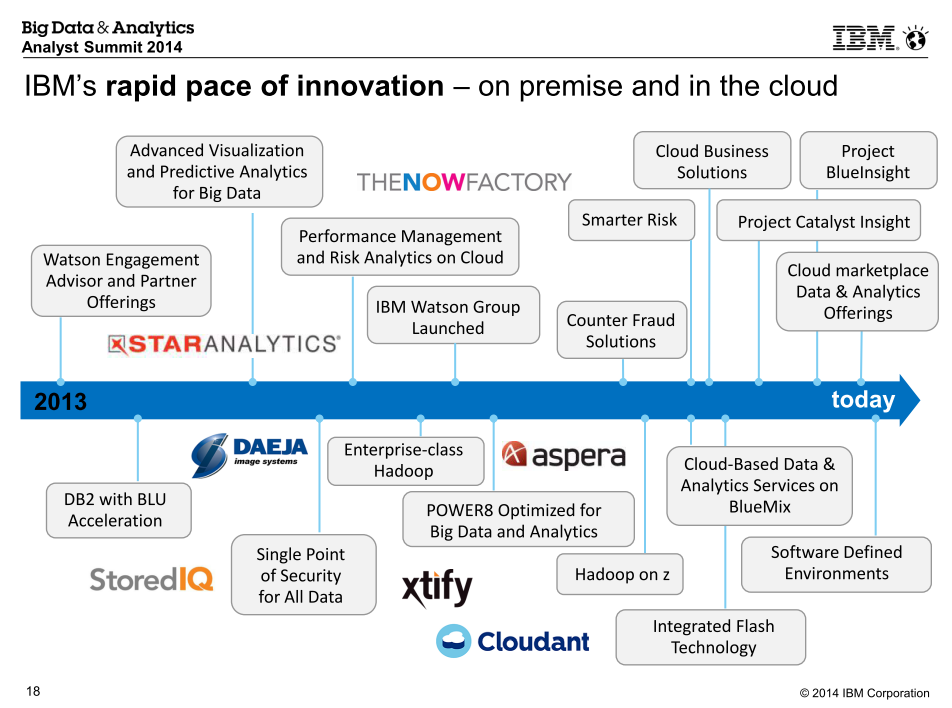
And as a testament of the new and fast moving IBM, the recent Cloudant acquisition that happened during Pulse - is a key asset that IBM makes available for mobile development. And to help customers to come up to speed even faster, IBM is providing a number of pre-packaged applications, called Ready Apps. As with all pre-packaged efforts - they need to stand their value in practice, but the demos we have seen were promising. The vertical flavor IBM has put into them certainly helps them to be more ready for consumption - or at least a significant reduction of implementation costs. To a certain point Ready Apps are a sign of the IBM to come - which is definitively less about hardware, and probably less about services and more about software. Prepackage offerings like Ready Apps certainly move the needle towards software.


Screenshot a Ready App - Retail for role of Store Associate

To foster adoption and education, IBM will open 18 IBM MobileFirst studios around the globe - a standard play book move. The question certainly is, how many innovation center like locations does an IBM customer need to visit to come up to speed - but mobile certainly has enough gravitas to deserve its own centers (right next to the BlueMix Garage - which will show mobile development in a PaaS).


Doing good things with IBM technology

IBM keeps following its direction of looking for early adopters in the healthcare space (see the recent hospital references). At Impact it was a partnership between Corriel Life Sciences and CareKinesis, that will use IBM technology (Softlayer, WebSphere, Cloudant were mentioned) to help seniors with counter indications of prescribed pharmaceuticals. Certainly an area where improvement is needed and it’s good to see technology benefitting mankind. Will be interesting to see, where the project will be in a few quarters from now.


More services in the BlueMix Garage

On the BlueMix side IBM announced 30 additional new cloud services - quite remarkable if you keep in mind that BlueMix was just announced in February. And of course it is easier to do this in the cloud age, and yes it is CloudFoundry, which has an active ecosystem, so IBM does not need to do all the work. Pitney Bowes picking BlueMix was an interesting, but logical choice. To get more traction IBM will have to show similar partnership at a rate of half a dozen a quarter. Let’s not forget that IBM not only has to make the platform work and get developers to build on it - IBM also needs to attract service providers to expose and provide their services to the BlueMix platform. A chicken and egg problem - as you cannot get the one without the other - so it will be interesting to see, how IBM will expand BlueMix services and uptakes.

Of course customers need to learn more about BlueMix and IBM announced to open up (surprise surprise) BlueMix garages - grungy enough to attract developers at least in name - in practice we will have to see. Good choice with the first location being in San Francisco - if IBM can attract developer beyond the honeymoon and trial phase there - then it will work in other locations, too. Partnering with the Galvanize co-learning space (or Incubator?) is certainly a smart move. Maybe location will become a competitive battle ground for PaaS vendors? We will see and look forward to visit.


IBM Youtube Video on launching BlueMix Garages with galvanize

Connections vs Pulse vs Impact

Having attended all three major IBM conference in the last 4 months - I was most impressed by Impact. No celebrities, bands or dancers in the keynotes - only Kevin Spacey at the very end of the Day 3 keynote. And no external moderator with more or less lucky attempts to entertain the audience. It was impressive to see a customer (CEO of Tangerine) open the conference - a first at least for me and for the rest it was all customers, partners and IBM execs working the keynotes. And plenty of live demos. It was also a welcome change and a first (ok for yours truly) to have women anchor the whole keynotes and both Marie Wieck (on day 2) and Mychelle Mollot (on day 3) did great.
 

All coming together: API Economy = (SoftLayer + BlueMix + APIs) / Marketplace

The overall IBM strategy going forward has become even clearer now, that where it already was after Pulse (see here). IBM’s vision of an API economy where API providers publish their APIs and API consumers use a tool (BlueMix) to compose their applications and then run that in a hybrid cloud with the help of SoftLayer is unique. Composed Apps are sold and purchased on a marketplace, which was IBM’s big announcement for Impact - though it was mentioned and previewed at Pulse a few weeks earlier.

So in Pseudo-Math the IBM Strategy can be expressed in the formula of the header of this section - and it is a very compelling vision. It sets IBM apart from the competition and is an expression of IBM’s deep understanding of the enterprise’s automation needs. As mentioned earlier - IBM is different from its competition having a major consultant force on its books and with that the undesirable - but possible outcome - that composing next generation applications with BlueMix is more labor intensive than originally expected - may not be desirable, but is an outcome IBM can stomach. Imagine Amazon or Microsoft needing consultants to deliver next generation applications - they simply with their current abilities, could not deliver them. Oracle may be able to go a little further and HP even a little further, but IBM has definitively the most hands in consulting amongst the cloud players. And of course one could say - they all can and have to partner - but partnering with cutting edge technology always has unwanted variables in ramp-up speed of partners and ensuring early adopter success.
 

Implications, Implications...

So what does it mean for... 
  • IBM customers & prospects - We largely remain with our analysis from Pulse in February. It’s good to see a vendor innovate as well as IBM is innovating. Adding 30 new cloud services to BlueMix is a good pace, a pace that IBM need to keep up for the quarters to come. The Marketplace is in its infancy - so do not let your aspirations be limited by what you see on the market place - but work actively with IBM to see what can and could be done - and even more importantly what not.

    For potential mobile projects we would advise customers to use Worklight, especially in more conservative settings. Especially if it’s a mobile only project. For broader next generation projects, beyond a mobile usage but including mobile we encourage decision makers to look at BlueMix.

    IBM SaaS customers should have a watchful eye on BlueMix and the marketplace - and making sure that IBM delivers on their respective SaaS product roadmap. Given the BlueMix progress we now tend to advice customers with ambitious integration plans to put these on the shelf and see what happens with BlueMix. Some integrations and integration capability may come for free - or be much easier to implement in the next quarters.

    Prospective customers should compare with competitive offerings, but if your enterprise automation has been less than a good fit in the past - the API economy vision and direction is something to keep an eye on. With IBM not having unveiled pricing yet - both prospects and customers need to be cautious on cost implications.
     
  • IBM Partners - Existing IBM partners who want to keep playing a role need to look at BlueMix and draft their value proposition in the API economy going forward. IP centric partners should get at the front of the line, service oriented partners need to draft their go forward strategy. It’s likely IBM customers will still pay for large implementations, but partners should not feel to secure of the cloud not squeezing implementation budgets in a similar way as it has already for traditional enterprise software implementations.

    It’s a great time for prospective partners - both with an IP and services background to get in the fray and claim a stake in the IBM cloud ecosystem better early than late.

    Lastly partners should not underestimate the marketplace, while still in its infancy today it may mature sooner and faster than partners anticipate and the potential self-service enablement of line of business decision makers can create havoc in revenue plans.
     
  • IBM - We wrote after Pulse:

    IBM needs to keep adding and building more services and APIs into BlueMix. Early references, success stories will be key to show impact and get the large - and mostly conservative - IBM install base to move to BlueMix faster. Obviously, get the pricing right, easier said than done. Look into exposing more products that were features at IBMConnection as a differentiator to other cloud PaaS out there. Publish a road map both for the SoftLayer expansion to Power as well as the addition of APIs from the SaaS portfolio to BlueMix.

     
    So IBM did well on adding more services in short 2 months. The rest of our advice stands - what we additionally see is that, IBM will need to find their Netflix - a large customer cloud load that does not come from the usual customer segments, and may even be a competitor. At Impact all of IBM’s strategy was organic, services engagement one customer at the time. And that will still be good business for IBM, but not enough to win the cloud wars, which are all about economies of scale. In order to attract these loads, IBM will have to define, evangelize and service logical fold lines in its architecture. APIs, composition, virtualization come to mind. But first things first - pricing and a roadmap for clients and prospects to align their strategic plans with those of IBM.
     
  • Competitors - IBM is moving fast and has a viable platform with SoftLayer. That wasn’t the same a year ago - when the smarter xxx landscape was not really ready for prime time in the cloud. Pent up demand and new found dynamics all play in IBM’s favor - so it’s time to create a differentiating value proposition. On the IaaS side it is pretty clear what is a hand, on the PaaS side determine both threat and potential of an API strategy. There is no loss of honor in imitating and implementing maybe even better. And on the SaaS side it’s time to pick a next generation platform to build on. Some SaaS vendors may have the potential to become the aforementioned Netflix of IBM (with that we allude to Netflix’s decision to run most of its IT on Amazon AWS, a competitor on the market - but a strategic partner in IT).

MyPOV


A very good Impact conference and good progress since Pulse by IBM. Is there an event in 2 months to check-in again - no. So we will have to trust IBM to keep the pace it has set and deliver more services, a more capable marketplace and more data centers to run the load. In the meantime IBM needs to educate customers - Centers and Garages can only do so much - but must also show the path on how to migrate in the future. Roadmaps and pricing are the key deliverables. A future that looks much better for IBM than it did 12 months ago. What a difference a year - and an acquisition - SoftLayer - can make. 


P.S. I did not go into the whole DevOps side - Jazz is now DevOps by the way - needs a whole separate blog post - less on product specifics but overall industry philosophy..

-------------
More on IBM by me:
 
  • First Take - 3 Key Takeaways from IBM's Impact Conference - Day 1 Keynote - read here
  • Another week and another Billion - this week it's a BlueMix Paas - read here
  • First take - IBM makes Connection - introduces the TalentSuite at IBM Connect - read here
  • IBM kicks of cloud data center race in 2014 - read here
  • First Take - IBM Software Group's Analyst Insights - read here
  • Are we witnessing one of the largest cloud moves - so far? Read here
  • Why IBM acquired Softlayer - read her


Tech Optimization Data to Decisions Future of Work Innovation & Product-led Growth New C-Suite Digital Safety, Privacy & Cybersecurity User Conference IBM Google amazon SAP Oracle PaaS SaaS IaaS Cloud Digital Transformation Disruptive Technology Enterprise IT Enterprise Acceleration Enterprise Software Next Gen Apps IoT Blockchain CRM ERP CCaaS UCaaS Collaboration Enterprise Service Chief Information Officer Chief Technology Officer Chief Information Security Officer Chief Data Officer Chief Executive Officer

Tealium Announces Record First Quarter Results and $20 Million in Additional Growth Financing 


Tealium Announces Record First Quarter Results and $20 Million in Additional Growth Financing 


Are the cloud wars over? Many companies are or have choosen a marketing stack. The issue can be that whatever capabilities that marketing stack has, the CMO is stuck with. And it may be that the stack has every thing they need, but maybe it doesn’t. That may mean that a marketer ends up choosing a number of different solutions, which generally don’t talk to each other or update the customer profile. That could be a competitive disadvantage.

But what if those various marketing solutions could talk to each other and be informed by data from other systems? It could mean that those solutions could actually be more valuable. And this is the topic at hand and is on the real-time futurescape of Tealium®, the market leader in enterprise tag management and solutions who announced not only record first quarter results, but also an additional $20 million in growth financing led by Silver Lake Waterman. The funding will be used to accelerate global expansion across all business segments, including engineering, sales, customer service and marketing.

Jeff Lunsford, Tealium CEO said, “An estimated $1.5 trillion is spent annually on global marketing and communications and approximately $130 billion of this is spent on marketing technology. The rapid adoption of Tealium’s award-winning solutions can help enterprises get much higher returns from their marketing investments.” Why? It doesn’t matter which marketing clouds or point solutions companies are using, Tealium creates a data foundation that allows the marketers to control, own and act on their data stream. But wait, there’s more… The part that really caught my eye is the ability to make those applications work better together to help drive more profitable, real-time customer interactions across all digital channels.

In the age of collaboration (personal / company) for which my colleague Alan Lepofsky at Constelation is known for, the idea that software vendors could really live in an ecosystem that makes them individually and also separately more successful seems like where the future should take us. However, the competitive nature of the vendor scape has made the idea of collaboration where the individual and the collective become more valuable is not always the first thing on everyone’s mind.

My point of view is that every software solution has some sort of historical technological footprint – meaning that they started out doing one thing really well. And then as customers requested more features and functionality or engineers / developers saw new opportunities to expand the product, they added more capabilities. And as time goes by those point solutions grow into suites – either by developing their own features and functions, but also often by acquiring companies.

Now let’s look at the model of collaboration Tealium is proposing as future picture of how software vendors can become more successful. Providing software vendor collaboration to make the parts and the whole more successful is a different way to look at expanding the features, functions and capabilities as well as benefits of any one “point solution” or “software package suite.” Perhaps I grew up idealistically hoping that the world would see that when each of us wins, we all win. That was the point in the movie, A Beautiful Mind. But it’s not really how many CEOs think – yet. Perhaps this type of thinking, and the ability to execute on it, will create that shift.

Tealium’s $20 million in growth financing, led by Silver Lake Waterman, brings the total the company has raised since January 2012 to $47.5 million, with Battery Ventures and Tenaya Capital leading earlier financings. Shawn O’Neill, Managing Director and Co-Head of Silver Lake Waterman said, “We are pleased to be supporting Tealium’s global expansion efforts. Enterprises will continue to invest heavily in technologies that improve their customers’ experiences across all digital touch points, and we see Tealium as the market leader in the space.” What I like about what O’Neill said was that we may now be able to transform that customer experience. It’s a topic near and dear to my heart; as a customer advocate I’ve been writing about this topic for a good 20 years. It seems now the technology is starting to catch up with the ideals we in the customer service and customer experience world have been writing about. And do it at scale.  More to come soon. 

Tealium®'s Enterprise Tag Management Capabilities

Tealium®’s Enterprise Tag Management Capabilities

If you want to catch Tealium’s social media conversations, you can find them here:

Facebook: https://www.facebook.com/tealium

LinkedIn: https://www.linkedin.com/company/tealium

Twitter: https://twitter.com/tealium

And here’s Tealium’s Q1 operating highlights, in case you don’t know much about them:

·   120% revenue growth, buoyed by strong global demand for its market-leading solutions.

·   100% growth in enterprise customers worldwide, with select new customer wins and expanded strategic relationships, including Calendars.com, Carhartt, Kabbage, Kimberly-Clark, Mason Companies, Solstice Sunglasses, Wet Seal, Wine.com, the world’s largest toy retailer, and one of the industry’s largest semiconductor chip manufacturers.

·  Tealium continued its strong growth in e-commerce and now has 68 clients listed in the prestigious Internet RetailerTop 500.

·  120% revenue renewal rate during the first quarter, resulting from a total commitment to customer success and the industry’s most comprehensive training and education program.

· Management team expansion, adding technology veterans Tracy Hansen, formerly of CA Technologies and NetApp, as CMO, and Doug Lindroth, previously with Limelight Networks and Memec, as CFO.

·  Tealium AudienceStream, the company’s new audience segmentation and data distribution solution, was namedNew Technology of the Year by the Digital Analytics Association (DAA) as part of its Awards for Excellence Program in March.

·  Recognized by Forbes Magazine as one of America’s Most Promising Companies for 2014.

·   Tealium’s global user conference, Digital Velocity, drawing hundreds of customers, strategic partners and digital marketing thought leaders from around the globe. Customer speakers included Ancestry.com, Lenovo, Lincoln Financial Group, Citrix and many more. The event concluded with Tealium University, a formalized training program for tag management and real-time unified marketing initiatives.

I’m very curious to see how this all pans out. Will vendors see the value in using a vendor like Tealium to make their software better and create better customer experiences? Or will they go into hoarding mode and be short sited?
@DrNatalie

New C-Suite Marketing Transformation Tech Optimization SaaS PaaS IaaS Cloud Digital Transformation Disruptive Technology Enterprise IT Enterprise Acceleration Enterprise Software Next Gen Apps IoT Blockchain CRM ERP CCaaS UCaaS Collaboration Enterprise Service Chief Customer Officer Chief Information Officer Chief Marketing Officer Chief Technology Officer Chief Information Security Officer Chief Data Officer Chief Executive Officer

News Analysis - SAP moves Ariba Spend Visibility to HANA - Interesting first step of long journey

News Analysis - SAP moves Ariba Spend Visibility to HANA - Interesting first step of long journey

SAP today announced that it has moved a vital analysis piece of Ariba, the Ariba Spend Visibility functionality, to HANA and that it plans to move the Ariba Network to HANA. 


Let’s dissect the press release and comment along the lines:

WALLDORF, Germany — April 29, 2014 — Continuing its commitment to seamless innovation, SAP AG (NYSE: SAP) today announced that Ariba, an SAP company, is moving to SAP® HANA, the leading in-memory platform for real-time computing. The initial step, involving the transition of Ariba® Spend Visibility™, was completed with zero down time, demonstrating the ease and simplicity available through SAP HANA.

MyPOV – Good move by SAP delivering on its statement of moving its products to the HANA database and platform. It is starting with probably one of the easier and more appealing pieces of Ariba functionality- the Spend Visibility tool. Spend Visibility is a planning process in purchasing where the buyers analyse the quality of their suppliers and decide, if changes on the supplier side are necessary – mostly for business risk and viability reasons. For that SAP enriches supplier data with Dun & Bradstreet (D&B) data. So it is a nice DaaS (Data as a Service) appliance, enriched with 3rd party data. One can wonder if that analysis has to run in memory – it certainly runs faster, starting with the load of purchase data. From a pure code perspective this should be a low hanging fruit use case – but you can’t blame anyone, even SAP, to start with the easier tasks when migrating to a new platform. The DaaS and 3rd party aspect certainly caters well for the analytical ambitions SAP has with HANA.

The company is now shifting the Ariba® Network to the platform, which will enable participants in the business-to-business trading community to gain new insights into their operations and act on them more quickly than ever to drive unprecedented business outcomes and competitive advantage.

MyPOV - Credit to asap to share the next step. Moving the Ariba Network over to HANA is more challenging, as the supplier network is a living structure with constant changes. At the point of blogging we do not know if SAP went for an expansive re-write of the functionality – making e.g. each supplier atomic across multiple customers – or not (yet). It will be also interesting to learn, if SAP used the opportunity to use its new graph search capability.

The Ariba Network on SAP HANA will create an entirely new cloud offering possible only from SAP. Companies will be able to glean predictive intelligence on risks, performance, capabilities, rates and more from the more than 15 years of transaction and relationship data and community-generated content that reside in the world’s largest, most global business network. Leveraging the speed and power of SAP HANA, they can instantly process this information and enable innovative processes that dramatically improve their performance and productivity. […]

MyPOV – So this paragraph points in the direction of a re-write – but we will wait for details till calling what the new offering will be. The analytical capabilities on top of the network data are intriguing and a great showcase for HANA’s (new) analytical capabilities.

Smoothing the Transition
Customers across industries are already experiencing the benefits. SAP transitioned Ariba Spend Visibility to SAP HANA without disruption, upgrading thousands of companies and more than 4.7 million individual users instantly. These users are now processing key operational and analytical reports up to 100 times faster.


MyPOV – We will always give credit to vendors who announce after the fact – and this paragraph sounds like that SAP has moved the spend data for the Spend Visibility analysis already. It will be interesting to learn how often and with which processes SAP refreshes the data in HANA from the Ariba OLTP system.

Seeing the Future
As SAP moves the Ariba Network to SAP HANA, companies will be able to analyse the vast volumes of information they have on their businesses faster than ever before. This includes structured data on production, marketing, sales and pricing, HR, finance, facilities and operations, as well as transaction-level data from supplier, customer and partner relationships, and unstructured data such as blogs and Tweets.


MyPOV – Interesting new functionality – but we are talking about future development that needs to happen.

With SAP HANA, data loads 30 times faster and is instantly accessible. So once a sourcing project, contract or invoice is initiated on the network, companies can immediately perform more complex analyses based on an expanded set of variables, including cost centers, purchase price variances and micro regions, and receive results in real time.

MyPOV – No surprises that HANA can load data faster than other – non in memory databases. If the described reports justify the cost of moving (and holding) sourcing project and related data in memory – remains to be seen.

Leveraging SAP® Lumira™, the company’s visualization software, they will be able to see and interact with their data in entirely new ways and outline more informed strategies that advance their business goals. Suppliers, for instance, will for the first time be able to access their complete transaction history with a given customer and create intuitive data visualizations that allow them to understand how their payment cycles are trending or whether their invoice rejection rates are improving. […]

MyPOV – No surprise again – SAP has again and again positioned (see BI 2014 here) Lumira as the go to platform – at least for the HANA Cloud Platform where we assume these offerings are being built on.

The new capabilities, which can be added on an “opt-in” basis, will provide buyers and sellers with complete flexibility and choice to meet the demands of their business and accelerate the results that they deliver. SAP will preview these capabilities and show the power of the Ariba Network on SAP HANA at SAPPHIRE® NOW, being held June 3-5, 2014, in Orlando, Florida

MyPOV – We will need to understand what the ‘opt-in’ basis means in detail, especially if and what costs are involved in that.


Overall MyPOV

It is good to see SAP making good on its commitment to bring all products to the HANA platform. As mentioned before – that SAP starts with relatively easier use cases and with scenarios that make HANA more attractive is a legitimate choice. We hope for some clarity on potential license cost – if any. And there can be no doubt SAP is enabling new and interesting functionality for Ariba customers. If the benefit of that new functionality justifies SAP’s investment will have to be seen. And more challenging scenarios – like the transactional Ariba and SuccessFactors portfolio look – will be the true test of HANA as an all purpose database. We know you can load and analyse data very fast in memory, complemented by good analytics and likely the graph search (in the future for the Supplier Network). So a good start with an attractive scenario for SAP – but the road to get rid of other database running under the hood of SAP applications is still long.


And more on overall SAP strategy


  • Market Move - SAP acquires Fieldglass - off to the contingent workforce - early move or reaction? Read here.
  • SAP's startup program keep rolling – read here.
  • Why SAP acquired KXEN? Getting serious about Analytics – read here.
  • SAP steamlines organization further – the Danes are leaving – read here.
  • Reading between the lines… SAP Q2 Earnings – cloudy with potential structural changes – read here.
  • SAP wants to be a technology company, really – read here
  • Why SAP acquired hybris software – read here.
  • SAP gets serious about the cloud – organizationally – read here.
  • Taking stock – what SAP answered and it didn’t answer this Sapphire [2013] – read here.
  • Act III & Final Day – A tale of two conference – Sapphire & SuiteWorld13 – read here.
  • The middle day – 2 keynotes and press releases – Sapphire & SuiteWorld – read here.
  • A tale of 2 keynotes and press releases – Sapphire & SuiteWorld – read here.
  • What I would like SAP to address this Sapphire – read here.
  • Why 3rd party maintenance is key to SAP’s and Oracle’s success – read here.
  • Why SAP acquired Camillion – read here.
  • Why SAP acquired SmartOps – read here.
  • Next in your mall – SAP and Oracle? Read here.

And more about SAP technology:

  • Launch Report - When BW 7.4 meets HANA it is like 2 + 2 = 5 - but is 5 enough - read here
  • Event Report - BI 2014 and HANA 2014 takeaways - it is all about HANA and Lumira - but is that enough? Read here.
  • News Analysis – SAP slices and dices into more Cloud, and of course more HANA – read here.
  • SAP gets serious about open source and courts developers – about time – read here.
  • My top 3 takeaways from the SAP TechEd keynote – read here.
  • SAP discovers elasticity for HANA – kind of – read here.
  • Can HANA Cloud be elastic? Tough – read here.
  • SAP’s Cloud plans get more cloudy – read here.
  • HANA Enterprise Cloud helps SAP discover the cloud (benefits) – read here.


Tech Optimization Data to Decisions Digital Safety, Privacy & Cybersecurity Innovation & Product-led Growth Future of Work SAP Oracle Microsoft SaaS PaaS IaaS Cloud Digital Transformation Disruptive Technology Enterprise IT Enterprise Acceleration Enterprise Software Next Gen Apps IoT Blockchain CRM ERP CCaaS UCaaS Collaboration Enterprise Service Chief Information Officer Chief Technology Officer Chief Information Security Officer Chief Data Officer Chief Executive Officer

Monday's Musings: What Organizations Want From Mobile

Monday's Musings: What Organizations Want From Mobile

Mobile Is The Entry Point To Digital Business

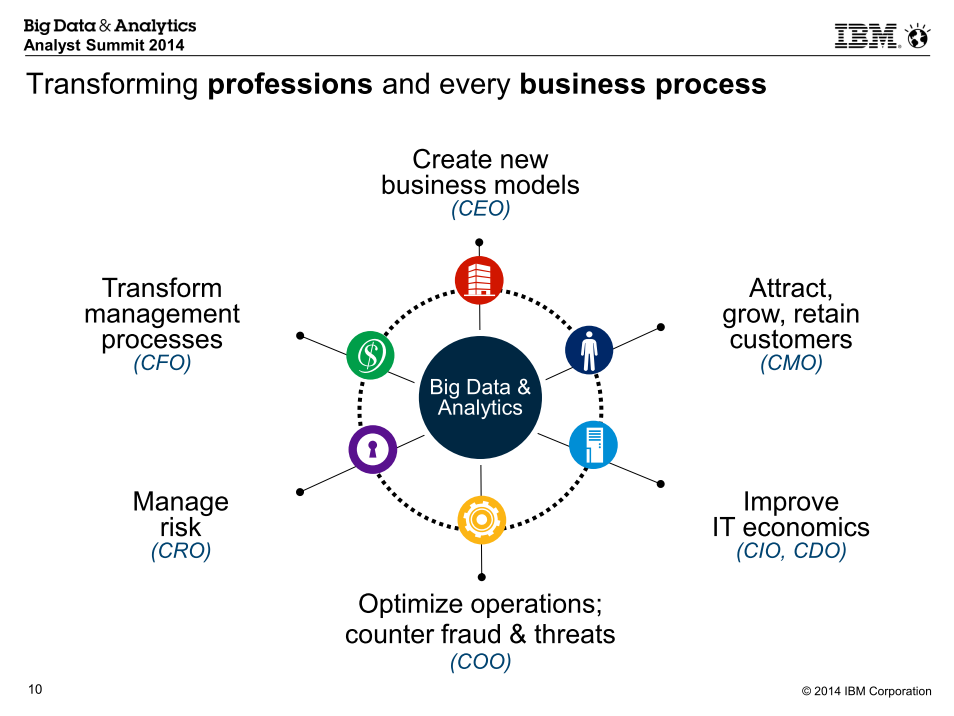
Mobile is a key entry point into digital transformation and digital business initiatives.  Along with cloud, social, big data/analytics, and video, mobile is one of the five pillars of digital.  Mobile is more than the first screen of interaction for many users.  Mobile describes how users expect to access and engage.  While modern smartphones have more computing power than what was used to send a man to the moon, mobile often works with cloud as cloud provides the storage and computational power when connected.   Constellation estimates that by 2018, 2 billion mobile phones will be shipped and that there will be more phones than people in the world.  Today’s use patterns reflect mobility as the first touch point into the digital world.  Further, the average person is no further than 3 feet or 1 meter away from a phone at any point during the day.

Requirements For Mobile App Development Reflect New Patterns Of Use

Conversations with market leaders and fast followers indicate seven key requirements from mobile app dev platforms that reflect these new patterns of use (see Figure 1):

Figure 1. What Organizations Want From Mobile

  1. Write once and really deploy everywhere. Users expect responsive design, yet they also expect access to native device features.  The inefficiency of supporting multiple platforms, channels, and interfaces inhibits rapid design and deployment.  Expect mobile development and cloud computing to go hand in hand.
  2. Centralize security management. Developers prefer to embed security policies and device management at design instead of deploying security policies for every operating system, device, and application combination.
  3. Support BYOD policies without customization. The bring your own device (BYOD) movement comes with a cost as organizations often deploy various policies at a granular level.  Organizations need to support mass personalization at scale without incurring mass overhead.
  4. Manage upgrades with ease. The upgrade process today is fraught with inefficiencies.  Many manual steps are required to design, test, and deploy.
  5. Deliver context in right time not just real time. Users expect context drivers such as roles, relationship, time, location, sentiment, and intent to carry seamlessly across all business processes and journey maps.  Delivering context at scale requires a process point of view.
  6. Enable wearables and support for Internet of Things (IOT). Requirements must support new data and sensor capture requirements.  Online and offline support for access to information power future big data business models.
  7. Allow for agile development methodologies.  Developers expect support for a variety of development methodologies to enable rapid iteration and scale.  Today’s approaches often limit developers to a handful of approaches.

The Bottom Line: Start With Mobile First For Digital Business

Mobile initiatives provide an entry point into digital.  Mobile first is more than a mantra.  Why?  By applying design thinking to solving specific and purposeful tasks and processes, organizations can rethink the digital journey with mobile projects.  More importantly, mobile enables organizations to break the silos of existing systems from mainframes to on-premises systems and bring new life to legacy applications usage.  Many market leaders and fast followers have mobilized their mainframe and enabled users to access data and information with minimal additional cost with a transformed user experience.  Others have used mobile as an opportunity to break down functional fiefdoms and process silos in their digital transformation efforts. 

Your POV.

Are you still seeing the world through the lens of Social, Mobile, Cloud, Analytics, and UC/Video?  Does this help you take the bigger perspective? Ready for digital disruption by starting with mobile?  Add your comments to the blog or reach me via email: R (at) ConstellationR (dot) com or R (at) SoftwareInsider (dot) org.

Please let us know if you need help with your Digital Business transformation efforts. Here’s how we can assist:

  • Developing your digital business strategy
  • Connecting with other pioneers
  • Sharing best practices
  • Vendor selection
  • Implementation partner selection
  • Providing contract negotiations and software licensing support
  • Demystifying software licensing
Resources

Reprints

Reprints can be purchased through Constellation Research, Inc. To request official reprints in PDF format, please contact Sales .

Disclosure

Although we work closely with many mega software vendors, we want you to trust us. For the full disclosure policy,stay tuned for the full client list on the Constellation Research website.

* Not responsible for any factual errors or omissions.  However, happy to correct any errors upon email receipt.

Copyright © 2001 -2014 R Wang and Insider Associates, LLC All rights reserved.
Contact the Sales team to purchase this report on a a la carte basis or join the Constellation Customer Experience


New C-Suite Next-Generation Customer Experience Sales Marketing Data to Decisions Innovation & Product-led Growth Revenue & Growth Effectiveness Tech Optimization Future of Work SoftwareInsider AI ML Machine Learning LLMs Agentic AI Generative AI Robotics Analytics Automation Cloud SaaS PaaS IaaS Quantum Computing Digital Transformation Disruptive Technology Enterprise IT Enterprise Acceleration Enterprise Software Next Gen Apps IoT Blockchain CRM ERP CCaaS UCaaS Collaboration Enterprise Service developer Metaverse VR Healthcare Supply Chain Leadership B2B B2C CX EX Employee Experience HR HCM business Marketing Growth eCommerce finance Social Customer Service Content Management M&A Chief Executive Officer Chief Information Officer Chief Technology Officer Chief Information Security Officer Chief Data Officer Chief Digital Officer Chief Analytics Officer Chief Financial Officer Chief Operating Officer Chief Marketing Officer Chief Revenue Officer Chief Experience Officer

3 Key Takeaways from IBM’s Impact Conference - Day 1 Keynote

3 Key Takeaways from IBM’s Impact Conference - Day 1 Keynote

We have the opportunity to attend IBM’s Impact conference - happening in Las Vegas right now. The conference is well attended with over 9000 attendees.
 
 
Here are my Top 3 Takeaways from today’s keynote:
 
 
  • Marketplaces are essential - In the new world of elastic resources and next generation requirements, customers want to make their licensing process more agile, too. That will more and more replace traditional marketing and sales efforts - in the ideal case seeing a business executive looking for a solution, purchasing and potentially even starting to deploy it. The infrastructure of choice for this transformation is a marketplace and it’s no surprise, that IBM launched its marketplace today. And it brings together a lot of IBM assets - starting with SoftLayer at the infrastructure, BlueMix at the platform and the IBM SaaS portfolio on the application level. More importantly IBM also opens the marketplace to partners and starting with 200 partners is a key milestone.

    In the IBM vision of the API economy - the marketplace is where commercial success will crystallize for this new way of configuring, delivering and consuming next generation applications. And certainly IBM has hit a user friendly interface to use the marketplace - but as the number of solutions grows we will have to see how the user interface will evolve. Behind the scenes it is the WebSphere (not mentioned a single time by name in the keynote) patterns which are key to automate loads, especially hybrid loads. As we have blogged before IBM is in the enviable situation that when early versions of the marketplace will err more in the direction of more professional service engagement - that is not a bad outcome for IBM.
LeBlanc demos (live!) the market place
  • Mobile remains a priority - IBM spent considerable bandwidth in the keynote with Marie Wieck walking through mobile scenarios and presenting showcase customers and patners. Obviously IBM thinks the train for the mobilization of enterprise content has not really left the station and that IBM now has a viable offering with the SoftLayer, BlueMix and WorkLight offering. Wieck stressed the importance of agility and BigData as capabilities (Cloudant acquisition) - good ingredients and a differentiator for IBM mobile applications. Now IBM will have to show that it can create traction in a mix of mobilizing existing apps and as well building next generation apps.
The new markeplace look & feell
  • Watson is IBM's higher ground - And last but not least it was Mike Rhodin to talk about Watson - and sharing the groundwork IBM is laying with exposing the Watson cognitive APIs to the developer community. IBM has seen a lot of success with its request for ideas, with the semifinalist being unveiled in the keynote. So good ecosystem blocking and tackling, the real value of Watson for the API economy lies in the monetization of cognitive APIs by IBM and the differentiation partners can achieve by using these APIs. It will be interesting to see in the next months how this will develop - in the meantime nobody can really reach 
Rhodin talks Watson

MyPOV

A very good start of Impact for attendees and IBM. This may well have been the first time Robert Leblanc demoed software live in a keynote - for close to +20 minutes. A very powerful testament for the usability of the marketplace, a good demo topic - but also a symbol for the new IBM. With Impact being the former WebSphere conference - I would have expected a few more references to that product - most attendees are using WebSphere in production and IBM needs to be careful to connect status quo in its customer base with an attractive and quickly developing future product landscape. The customer base implicitly knows what is being used and what evolves to what - but sometimes explicit statements (and roadmaps - still MIA) help to chart an enterprises course of future investment. But in the meantime congrats to IBM for an innovation speed very few would have thought would be possible for this company. 
 
 
More on IBM by me:
 
  • Another week and another Billion - this week it's a BlueMix Paas - read here
  • First take - IBM makes Connection - introduces the TalentSuite at IBM Connect - read here
  • IBM kicks of cloud data center race in 2014 - read here
  • First Take - IBM Software Group's Analyst Insights - read here
  • Are we witnessing one of the largest cloud moves - so far? Read here
  • Why IBM acquired Softlayer - read here


New C-Suite Tech Optimization Data to Decisions Digital Safety, Privacy & Cybersecurity Innovation & Product-led Growth Future of Work softlayer SAP Google IBM amazon Oracle Microsoft SaaS PaaS IaaS Cloud Digital Transformation Disruptive Technology Enterprise IT Enterprise Acceleration Enterprise Software Next Gen Apps IoT Blockchain CRM ERP CCaaS UCaaS Collaboration Enterprise Service Chief Customer Officer Chief Information Officer Chief Technology Officer Chief Information Security Officer Chief Data Officer Chief Digital Officer Chief Analytics Officer Chief Executive Officer Chief Operating Officer

Briefings this week: April 28 - May 2

Briefings this week: April 28 - May 2

1

Here’s who I’m briefing with this week: Tuesday Salesforce ExactTarget Marketing Cloud Wednesday Oracle Marketing Cloud   As a reminder, I’m interested in hearing from companies that enable customer experience management, provide marketing services (including agencies and consultancies) and support innovation agenda items. If you are interested in briefing Constellation Research on your marketing technology, visit the Contact Us form. 


Marketing Transformation Chief Customer Officer Chief Marketing Officer

Some Thoughts On The Downfall Of Google+

Some Thoughts On The Downfall Of Google+

It has not been a good week for Google+. Yesterday Vic Gundotra head of the Google+ division announced he was leaving Google, then today TechCrunch is reporting 1000-1200 employees will be moved off of Google+ onto other projects.  

Many of you may not even know what Google+ is, and there in lies the problem. On the surface, the easy explanation is that Google+ is Google's version of Facebook. It's a social network where people create circles of friends, family and colleagues allowing them to share status updates, pictures, videos, etc. with each other.

However, thinking of Google+ as just a social network does not do it justice.  Yes, feature-wise, Google+ is far superior to Facebook. Circles are much better than lists. The Google+ stream has much more functionality than Facebook's news feed. Hangouts are far more advanced than FacebookB Messenger. Google+ photo albums are way better than Facebook's, and the list goes on.  But Google+ is more of a "social layer" that a social network.  The core components of Google+, including your Google ID, circles and +1's together create a framework that ties together not only Google products, but potentially any other website as well.

So why is it not as popular as Facebook?

There are two theories most commonly discussed:

1) The network effect, where the value of a service is dependant on the number of people using it. In this case, it boils down to "Everyone is already on Facebook, so why would anyone ever use Google+"? Still, there are some communities that are very active on Google+, such as photographers and writers. They have taken to Google+ because of some of the features I've mentioned above were important enough for them to move. Well probably not move, but use Google+ as well as Facebook. But for most people, Facebook does enough of what they need, so why would they use both. Essentially Facebook wins because they were there first. Sure other networks such as Pinterest, Instagram, WhatsApp have come along and won over millions of users. But in each case they provided something Facebook did not, not just a better version of it.

2) Google annoys people by pushing Google+ on them. This one is more technical and impacts less people, but if it bothers you... it really bothers you! What Google did was take Google+ and make it the unifying layer across almost all of Google's services. That means Gmail, calendar, Youtube, Piccasa, Hangouts, Drive and many other products all become linked together via Google+. For example, if you're in your Gmail you can sort or send messages by Google+ Circles. If your posting a file to Drive, you can easily share it to Google+. The one that really annoyes people is that comments on Youtube videos became conversations in Google+.

It's this second theory that troubles me the most. As someone with around 20 years of experience in collaboration software, my advice to Google would have been to do exactly what they did, integrate all their services into a more seamless platform. In fact, here's what I wrote back in 2012:


April 16, 2012 - MyPOV: Google should provide integration with Gmail, Google Docs & Google+ to make their upcoming Google Drive file sharing service standout. Imagine sharing files with specific circles. Imagine saving a file in Google Docs and broadcasting that event to your Google+ stream.

Sept 26, 2012 - I imagine a time in the near future (2013ish) where there will no longer be distinctions between Google, Google+, Google Apps, Gmail, Google Chat, etc.  Instead there will just be "Google" which offers many (seamless/integrated) modes of context creation, discovery, communication and collaboration.

I wish I could predict the lottery numbers as accurately.

However, I also wrote
March 10, 2012: I've been asking the non-tech people in my life if they've heard of Google+ and the overwhelming response has been "No. Is that a new search tool?" By no means am I jumping on the "Google+ is a ghost town" bandwagon. I like Google+, but it is clear that it is still FAR from mainstream or a household name the way Facebook and Twitter are.

And that remains true still today.

Yes, Google made several "execution errors" with Google+, starting with the "real name required" scandal up the Youtube comment annoyance, but for me the network effect issue is the main reason I don't spend much time there anymore. It's a shame, because it's a great tool.

What do you think?


***********************

Some other posts of mine that provide supporting information about Google+ as a "social layer"

March 11, 2012 

Google 1.0 was a new company that changed the way we search for content on the internet and it became a household name.
Google 2.0 developed a set of consumer services like email, apps, maps, YouTube, etc.
Google 2.5 started to provide those services to the Enterprise and Education markets
Google 3.0 built a revenue model to layer onto #2 via advertising. The majority of non-techies probably have no idea that this is their core business
Google 4.0 is about building a new "social DNA" across all Google properties as well as across the web. This will try together people and content, and provide even more context for Google's Ad business.

June 27, 2012 
I think Google is creating an incredible foundation for collaboration with circles and +1's. They are showing what's possible by building UI instances of this DNA with things like Google+, Hangouts, Events and are adding integration with Picassa, YouTube, Google Docs, Gmail and more

March 10, 2012
A private and integrated offering composed of Google Dashboard (iGoogle + Google+'s stream), Google People (Google+'s profile + a nice directory + Circles for groups), a combined version of Google Apps (email, calendar, doc, spreadsheet, presentation) and Google Sites (where circles provide access), Google Media (Video + Picassa) and Google Communications (chat + Hangouts) all wrapped with Google Search, Google Analytics and +1s would be an awesome enterprise collaboration platform.


New C-Suite Future of Work Innovation & Product-led Growth Sales Marketing Next-Generation Customer Experience Digital Safety, Privacy & Cybersecurity Data to Decisions Google Chief Customer Officer Chief Executive Officer Chief Marketing Officer Chief People Officer Chief Human Resources Officer