Results

First Take - SAP BW/4HANA - Data Gravity and Cloud win

First Take - SAP BW/4HANA - Data Gravity and Cloud win

A few days ago SAP formally launched its newest offering, its BW product as BW/4HANA. No surprised on HANA, as it dominates branding with SAP these days, the 4HANA suggests a sister relationship to the OLTP / ERP S/4HANA. 
 

So catch the video of the key areas to watch:


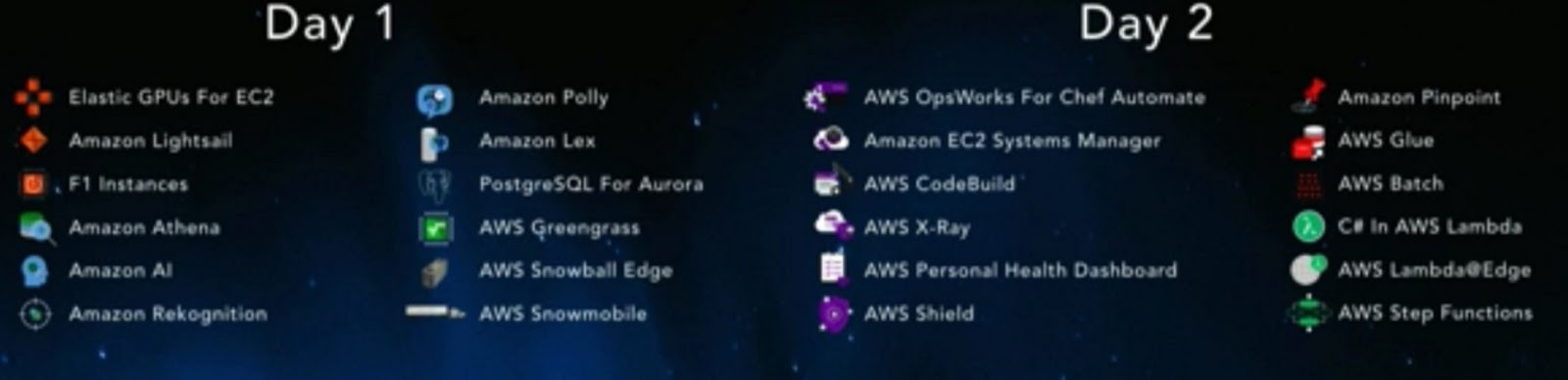
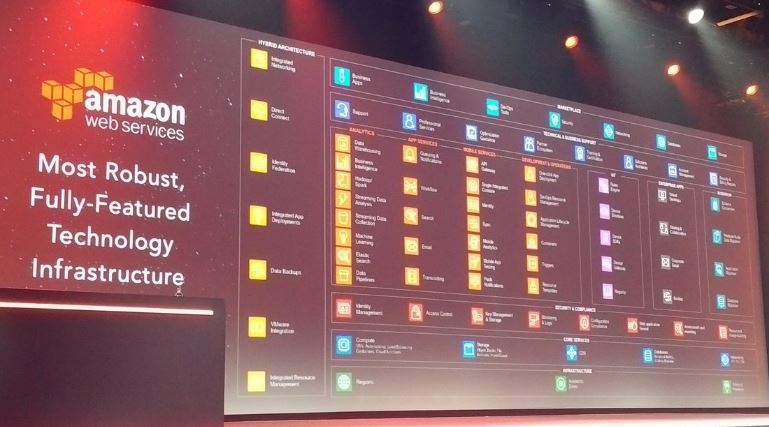
No time to watch here is the one slide summary:


Want more detail, then read on:


Data Gravity Wins – The concept of data gravity, that more data will attract and almost like a black hole ‘suck’ in lesser data has been talked, written about a lot (see my March 8th 2013 post on this here). The question of course was – when will land mark products and vendors account for this shift. With the launch of BW/4HANA SAP – maybe unwillingly – caters to data gravity. As enterprises are building next generation applications that they can only scale in the cloud, the need to complement that information with key data and processes from its other enterprise systems. With offering BW/4HANA SAP basically offers all SAP ERP information as available for enterprises who want to build these next generation applications.

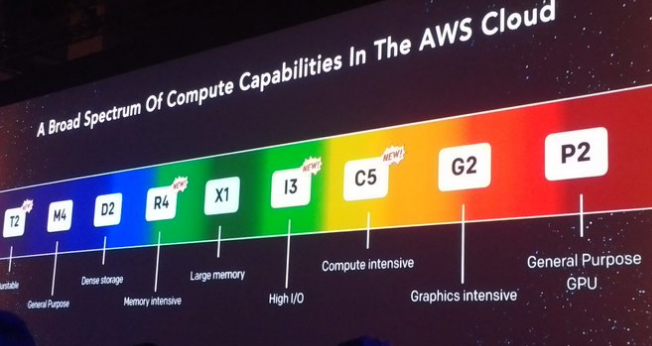
Cloud Wins – While SAP both offers BW/4HANA on its venerable HEC (HANA Enterprise Cloud) and AWS, it is pretty clear that the AWS platform is the winner. With X1 instances of up to 15 TB of RAM, AWS has provided a platform for SAP customers that cannot only run the largest BW/4HANA deployments, but also S/4HANA – should customers realize the size of these platforms. To procure and operate similar machines on premises (and also on HEC as I think) is not cost effective, especially in the days of early deployments.

SAP goes multi-platform – SAP has been signing IaaS partnerships now for close to a year, starting with IBM (read here), then Microsoft Azure (read here) and now Amazon’s AWS. It is a sign of SAP not pushing that much its own cloud infrastructure but starting to leverage partners. We may see a comeback of the former database choices, but this time for IaaS. A good move by SAP as it needs to support multiple public cloud infrastructures… likely AWS at this point was the only IaaS partner to allow a BW/4HANA deploy at this scale.


MyPOV

A good move by SAP, that may not even realize what it has done: Move customers to the public cloud with an offering, where they cannot even argue why it should not be there. SAP customers with next generation applications will want their business context and data next to their next generation applications data, to enable the necessary new business processes. SAP has the opportunity to provide more micro services on top of that and monetize them. And I would not be surprised to see customers follow with S/4HANA into the public cloud – once all their BW data is there, why hold back on the transactional system? And: It does not make sense for companies to buy, operate and maintain 15 TB in memory machines, when they can get them in 7 locations from AWS on demand – right away, with SAP support. Why buy, implement and carry the risk of installing and operating BW/4HANA right.

And a major win for AWS, getting more of the SAP load, though starting with a new offering with BW/4HANA. But AWS is in there for the long run, and if things work out as I think they will work out – the data gravity of the next generation applications has already ‘sucked in’ the enterprise data warehouse… nothing holding back the transactional system. SAP makes it easy – as they all run on HANA, the same / similar platform.

For SAP customers this means another proof point that, if they want to remain a SAP customer, they need to adopt HANA. No surprise, we have seen data points before, but by now it is clear there will be no course reversal in the HANA destination. And it also means to make platform decisions for next generation applications first, the rest – the data warehouse and the transactional systems will follow suite. When SAP as largest enterprises vendor does it this way, there is little room to do it differently as an enterprise. Closer to IaaS it means likely that HEC is not a final destination to run SAP applications, with manifold implications.

So congrats to SAP to honor data gravity and ship a large scale product in V1 on a public IaaS, congrats to AWS to snatch some load with massive long term potential. Stay tuned.
And more on SAP (more on AWS below):
  • Event Report - SAP SuccessFactors SConnect - Push on all fronts - read here
  • Event Report - SAP Insider Vienna - HCP, BI and SuccessFactors are the takeaways - read here
  • Event Report - SAP Sapphire 2016 - Top 3 Positives & Concerns: SAP changes - probably for the better - read here
  • First Take - SAP Sapphire Day #2 Keynote - read here
  • News Analysis - SAP and Microsoft usher in new era of partnership to accelerate digital transformation in the cloud - read here
  • First Take -  SAP Sapphire Bill McDermott Day #1 Keynote - read here
  • Event Preview - SAP Sapphire 2016 - What to expect and look for - read here
  • News Analysis - Apple & SAP Partner to Revolutionize Work on iPhone & iPad - read here
  • Progress Report - SAP SuccessFactors makes good progress - now needs appeal beyond SAP - read here
  • News Analysis - SAP HANA Vora now available... - A key milestone for SAP - read here
  • Event Report - SAP Ariba Live - Make Procurement Cool Again - read here
  • News Analysis - SAP SuccessFactors innovates in Performance Management with continuous feedback powered by 1 to 1s  - read here
  • Event Report - SAP SuccessFactors SuccessConnect - Good Progress sprinkled with innovative ideas and challenging the status quo - read here
  • News Analysis - WorkForce Software Announces Global Reseller Agreement with SAP - read here
  • First Take - SAP SuccessFactors SuccessConnect - Day #1 Keynote Top 3 Takeaways - read here
  • News Analysis - SAP SuccessFactors introduces Next Generation of HCM software - read here
  • News Analysis - SAP delivers next release of SAP HANA - SPS 10 - Ready for BigData and IoT - read here
  • Event Report - SAP Sapphire - Top 3 Positives and Concerns - read here
  • First Take - Bernd Leukert and Steve Singh Day #2 Keynote - read here
  • News Analysis - SAP and IBM join forces ... read here
  • First Take - SAP Sapphire Bill McDermott Day #1 Keynote - read here
  • In Depth - S/4HANA qualities as presented by Plattner - play for play - read here
  • First Take - SAP Cloud for Planning - the next spreadsheet killer is off to a good start - read here
  • Progress Report - SAP HCM makes progress and consolidates - a lot of moving parts - read here
  • First Take - SAP launches S/4HANA - The good, the challenge and the concern - read here
  • First Take - SAP's IoT strategy becomes clearer - read here
  • SAP appoints a CTO - some musings - read here
  • Event Report - SAP's SAPtd - (Finally) more talk on PaaS, good progress and aligning with IBM and Oracle - read here
  • News Analysis - SAP and IBM partner for cloud success - good news - read here
  • Market Move - SAP strikes again - this time it is Concur and the spend into spend management - read here
  • Event Report - SAP SuccessFactors picks up speed - but there remains work to be done - read here
  • First Take - SAP SuccessFactors SuccessConnect - Top 3 Takeaways Day 1 Keynote - read here.
  • Event Report - Sapphire - SAP finds its (unique) path to cloud - read here
  • What I would like SAP to address this Sapphire - read here
  • News Analysis - SAP becomes more about applications - again - read here
  • Market Move - SAP acquires Fieldglass - off to the contingent workforce - early move or reaction? Read here.
  • SAP's startup program keep rolling – read here.
  • Why SAP acquired KXEN? Getting serious about Analytics – read here.
  • SAP steamlines organization further – the Danes are leaving – read here.
  • Reading between the lines… SAP Q2 Earnings – cloudy with potential structural changes – read here.
  • SAP wants to be a technology company, really – read here
  • Why SAP acquired hybris software – read here.
  • SAP gets serious about the cloud – organizationally – read here.
  • Taking stock – what SAP answered and it didn’t answer this Sapphire [2013] – read here.
  • Act III & Final Day – A tale of two conference – Sapphire & SuiteWorld13 – read here.
  • The middle day – 2 keynotes and press releases – Sapphire & SuiteWorld – read here.
  • A tale of 2 keynotes and press releases – Sapphire & SuiteWorld – read here.
  • What I would like SAP to address this Sapphire – read here.
  • Why 3rd party maintenance is key to SAP’s and Oracle’s success – read here.
  • Why SAP acquired Camillion – read here.
  • Why SAP acquired SmartOps – read here.
  • Next in your mall – SAP and Oracle? Read here
 
And more about SAP technology:
  • Event Prieview - SAP TechEd 2015 - read here
  • News Analysis - SAP Unveils New Cloud Platform Services and In-Memory Innovation on Hadoop to Accelerate Digital Transformation – A key milestone for SAP read here
  • HANA Cloud Platform - Revisited - Improvements ahead and turning into a real PaaS - read here
  • News Analysis - SAP commits to CloudFoundry and OpenSource - key steps - but what is the direction? - Read here.
  • News Analysis - SAP moves Ariba Spend Visibility to HANA - Interesting first step in a long journey - read here
  • Launch Report - When BW 7.4 meets HANA it is like 2 + 2 = 5 - but is 5 enough - read here
  • Event Report - BI 2014 and HANA 2014 takeaways - it is all about HANA and Lumira - but is that enough? Read here.
  • News Analysis – SAP slices and dices into more Cloud, and of course more HANA – read here.
  • SAP gets serious about open source and courts developers – about time – read here.
  • My top 3 takeaways from the SAP TechEd keynote – read here.
  • SAP discovers elasticity for HANA – kind of – read here.
  • Can HANA Cloud be elastic? Tough – read here.
  • SAP’s Cloud plans get more cloudy – read here.
  • HANA Enterprise Cloud helps SAP discover the cloud (benefits) – read here


More on AWS:
  • Event report - AWS Enterprise Summit 2016 Frankfurt - The German Road to Cloud adoption is ... long - read here
  • News Analysis - Amazon Web Services Cloud now speaks… Hindi - Indian AWS Data Centers available - read here
  • News Analysis - Salesforce selects AWS as preferred Public Cloud Infrastructure Provider - Good move - read here
  • Event Report - AWS re-Invent - AWS lobbies for the enterprise - DB and IoT are the cheese - read here
  • First Take - AWS reInvent Wednesday Keynote - Good start & AWS is going for the enterprise read here
  • Event Preview - AWS re-Invent 2015 - watch / read here
  • Event Report - AWS Summit Berlin - AWS spricht Deutsch - but when will the Germans speak cloud? Read here
  • News Analysis - AWS learns Hindi - Amazon Web Services announces 2016 India Expansion - read here
  • Event Report - AWS Summit San Francisco - AWS pushes the platform with Analytics and Storage [From the Fences] read here
  • Event Report - AWS re:invent - AWS becomes more about PaaS on inhouse IP - read here
  • AWS gives infrastructure insights - and it is very passionate about it - read here
  • News Analysis - AWS spricht Deutsch - the cloud wars reach Germany - read here
  • Market Move - Infor runs CloudSuite on AWS - Inflection Point or hot air balloon? Read here
  • Event Report - AWS Summit in SFO - AWS keeps doing what has been working in the last 8 years - read here
  • AWS  moves the yardstick - Day 2 reinvent takeaways - read here.
  • AWS powers on, into new markets - Day 1 reinvent takeaways - read here.
  • The Cloud is growing up - three signs in the News - read here.
  • Amazon AWS powers on - read here.

Find more coverage on the Constellation Research website here and checkout my magazine on Flipboard and my YouTube channel here.
 
Data to Decisions Tech Optimization SaaS PaaS IaaS Cloud Digital Transformation Disruptive Technology Enterprise IT Enterprise Acceleration Enterprise Software Next Gen Apps IoT Blockchain CRM ERP CCaaS UCaaS Collaboration Enterprise Service Chief Information Officer Chief Technology Officer Chief Information Security Officer Chief Data Officer Chief Executive Officer

Oracle OpenWorld 2016 - What to expect, what to watch for in the cloud

Oracle OpenWorld 2016 - What to expect, what to watch for in the cloud

We have the opportunity to attend this year’s edition of Oracle’s mega user conference, Oracle OpenWorld, held in San Francisco from September 18th to 23rd 2016. Expect it to be a big event on all levels, attendees, press releases, news, lines, exhibitor and parties. 
So catch the video of the key areas to watch:
 

No time to watch here is the one slide summary:

Want more detail, then read on:

Thomas Kurian splits the Oracle cloud offerings usually in 4 areas, so we follow his lead:

IaaS re-launch, better work this time! Oracle has had a few pivots and re-starts on IaaS, which all did not help, given the relatively late start to IaaS. Kudos all the way to Ellison to acknowledge this last OOW. In the earnings call Ellison hinted that this is ‘version 2 of IaaS – we will see how well the nested hypervisor as well as the Ravello capability can attract enterprise load. Oracle keeps designing at a price point that it maintains is lower than Amazon AWS. It probably has to attract enterprise load and get more scale for its offering.

PaaS – what will be Oracle’s path to PaaS? – There are two extremes on how PaaS vendors go to market at the moment – the Chinese menu approach (e.g. AWS) or the more packaged, this is the way to do it (e.g. Pivotal, IBM) approach. The former caters more to developers, the latter caters more to enterprise executives who want to take the mystery, myth and risk out of PaaS delivered projects. Oracle to a certain point needs to cater to both, as both user groups are its customers, but we think that it needs to come to a more packaged offering going forward. We also are curious on the low code / no code capabilities that Oracle has been working on now for a while.

DaaS – Customer Adoption Check – Kurian has been one of the earliest and most consistent vendor executives to talk about DaaS. We know that Oracle and its leaders get the value proposition, and Oracle has been acquiring companies along the way to become a DaaS player, on top of its native DB, Analytics and BI DNA. The Oracle Identity Graph is a very valuable information offering, now it comes to what Oracle can do to leverage and monetize it beyond the traditional use cases of the recent acquisitions.

SaaS – Different Maturity – Different things to look for  – With little doubt the most mature and advanced Oracle SaaS automation area is HCM. For HCM it will all be for Oracle to show how it will differentiate its product going forward, and create compelling value for more market success to both customers and prospects. For both Finance and CRM Cloud, the question is more on customer adoption, as both products have made progress, but have to reach more market penetration before they are on a similar level like HCM. And finally SCM / Manufacturing, which is traditionally late with Oracle, here the question will be how real the first customers on core manufacturing, order management and more advanced purchasing scenarios are.


MyPOV

It will be another busy event this year at OOW, all eyes will be on the new IaaS capabilities. I have asked Oracle executives for year what will happen when this is fixed, and what the repercussions will be for the higher levels of the Applications stack… and the answer was always the technically correct one – all is encapsulated well with APIs, programmatically…. And that’s good – now we will have to see how smooth PaaS, DaaS and SaaS products will be able to take advantage of the new IaaS platform. 

Stay tuned for more updates from Oracle OpenWorld, fist look on Twitter, then Video – and if you are there – try to catch me in real life – nothing beats that!


Tech Optimization Future of Work Innovation & Product-led Growth Next-Generation Customer Experience New C-Suite Data to Decisions Openworld Oracle SaaS PaaS IaaS Cloud Digital Transformation Disruptive Technology Enterprise IT Enterprise Acceleration Enterprise Software Next Gen Apps IoT Blockchain CRM ERP CCaaS UCaaS Collaboration Enterprise Service AI Analytics Automation CX EX Employee Experience HCM Machine Learning ML Leadership HR Chief Information Officer Chief Technology Officer Chief Digital Officer Chief Data Officer Chief Analytics Officer Chief Information Security Officer Chief Executive Officer Chief Operating Officer Chief Experience Officer Chief Customer Officer Chief People Officer Chief Human Resources Officer

ADP Analyst Day 2016 - ADP Rights Vantage HCM

ADP Analyst Day 2016 - ADP Rights Vantage HCM

We had the opportunity to attend the ADP Analyst Day, held on September 15th on Pasadena, at the ADP innovation center. Always good to be at a location where ‘work and innovation happen’, after having the event twice at the New York Innovation center it was great to see a new location (and not to see TSA on the travels to get there). The event was well attended, with all firms, colleagues pretty much in attendance. 

So take a look at my musings on the event here: (if the video doesn’t show up, check here)
 
No time to watch – here is the 1-2 slide condensation (if the slide doesn’t show up, check here):


Want to read on? 

Here you go: Always tough to pick the takeaways – but here are my Top 3:

Vantage is alive and growing – A few years ago ADP’s in house efforts on its Talent Management Suite where at a decision point – partner or keep investing. ADP decided for the latter and it is good to see that this decision pays off, ADP was able to grow the customers for Vantage HCM from low 200s to almost 500, almost a doubling in 12 months. Considering that the potential market is approx. 3000 customers, very good progress and it is clear that ADP customers now know that there is a native ADP Talent Management offering for them. And ADP keeps investing into Vantage HCM, new Onboarding has come live, more efficient ways to Recruit and already a while ago, the new ADP UI has found its way to Vantage. ADP will have to keep pushing the gas pedal, here as pretty much every Vantage HCM sales is a competitive replacement, and enterprises already have a Talent Management solution in place, even if they are ADP Payroll customers.

ADP Data Cloud is a DaaS enabler – ADP has been and keeps investing into its Data Cloud, which powers not only the insights into the overall labor market, that usually beats the government forecast, but into individual salary decisions. As such it has the potential to replace the traditionally outdated and inaccurate salary surveys that still are the tool of choice for compensation planners today- but these days maybe counted. The value proposition lies in the fact that what ADP can provide, is an actual (and not a historic) paycheck. But the ADP Data Cloud is also the platform for the mundane task of Reporting, which ADP has rebuilt. Some innovative features like drag and drop of OLTP fields into the report writer and a compelling user interface make it an appealing Reporting solution. Finally, the Data Cloud powers all the (really) interesting advanced / predictive analytics scenarios, e.g. predicting flight risk, giving insight in pay levels considering diversity levels and more. Good progress on the product, now ADP is pushing it beyond the US market. Data Cloud can / could be the enabler of new revenue streams for ADP, enabling advanced Data as a Service (DaaS) scenarios, a not to be underestimated future revenue stream for software companies that hold real, relevant data, like e.g. paychecks. At one point I counted a dozen benchmarks in the product already (see the Storify).

Focus on Global – ADP also delivered on its promise to bring the new ADP UI to the MNC solutions, that now feature the same compelling UI. Some features, e.g. the interactive paycheck, are even more value able in international settings, given no direct local and small time window phone support for any paycheck related questions of an international worker. ADP also shared a new ambition on the integration side, where ADP wants to create an integration platform / product (named Global Cloud Connect), that will integrate various HR Core systems with the ADP products, on the Payroll, Talent Management, Time and Attendance as well as Benefits. Interface Technology has progressed and ADP has been establishing REST based interfaces with Workday and SAP, and more partner integrations are to come. It is a good time for ADP to re-establish integration strategies and platform, given the changes and innovations that have recently happened in the integration space. Even more valuable in the more heterogeneous environment, so good to see the new ambition, way too early to predict the execution and state of the offering.

Marketplace grows – SAP launched its marketplace quite a while ago and it is growing well. The most remarkable characteristic remains that ADP allows anyone to submit their complimentary and competitive (with the exception of Payroll) product to the ADP products. This ‘sink or swim’ approach towards uptake of its own products is unique in the enterprise software space, but makes the ADP marketplace truly valuable for ADP customers. And certainly more attractive to ISVs and future / existing partners.


MyPOV

We already have written plenty about the new ADP, good to see the further execution, and good to see that innovation has more than a New York pocket. Scaling innovation is always a problem for software vendors, and tapping into diverse talent in different markets as well. It looks like ADP has mastered this challenge at the moment. And ADP does well what matters most for customers: Deliver what it has previously put on the roadmap, and then grow from there, as we saw e.g. with Onboarding.

ADP’s role in the market is also changing, it is becoming more of a formal partner than ever before, with recent partnerships with Workday (read here) and SAP in place, and there are more to come. It almost looks like REST technology and the ease of plugging e.g. a Payroll ‘under the hood’ of another HR Core system have accelerated these efforts by ADP. And for all payroll vendors nothing is more interesting than getting more scale on their platform, as it reduces the cost of R&D and maintenance for it with every additional paycheck run through it. It’s a win / win / win across ADP, partner and joint customer. ADP gets more utilization of assets it has built and needs to maintain anyway, the partner avoids having to build and maintain a payroll and customers get more scale, a trusted provider and proven offering, at lower prices (hopefully). Certainly a flywheel in the payroll business.

On the concern side ADP cannot afford to rest. While the current UI is still appealing, it is no longer as fresh and in tune with the latest innovations in UI that are happening these days. Likewise its Data Cloud is on the right architecture and platform, given these decisions were taken 2+ years ago, but a fresh start today may consider other platforms, designs and architectures. But it is good to for ADP to have ‘Innovator Dilemma’ now, something many observers not too long ago would not have been a challenge for ADP due to lack of innovation and market success. These days are history now, good news for ADP customers and new innovative offerings may come out of the labs sooner than later. E.g. we saw a conversation UI prototype, that nicely tied together a different user interface with deep insights that ADP can provide.

So few things not to like at the moment at ADP, the vendor needs to keep executing, revisit some recent innovations in regards of staling and maybe some platform decisions as the pace of innovation on analytics and BigData is not slowing, but accelerating.

Want to learn more? Checkout the Storify collection below (if it doesn’t show up – check here).


Find more coverage on the Constellation Research website here and checkout my magazine on Flipboard and my YouTube channel here.
Future of Work New C-Suite Data to Decisions Innovation & Product-led Growth Revenue & Growth Effectiveness Matrix Commerce Tech Optimization Next-Generation Customer Experience ADP Leadership AI Analytics Automation CX EX Employee Experience HCM Machine Learning ML SaaS PaaS Cloud Digital Transformation Enterprise Software Enterprise IT HR Chief People Officer Chief Customer Officer Chief Human Resources Officer Chief Experience Officer

Monday’s Musings: Understand The Spectrum Of Seven Artificial Intelligence Outcomes

Monday’s Musings: Understand The Spectrum Of Seven Artificial Intelligence Outcomes

Successful AI Projects Seek A Spectrum Of Outcomes

As artificial intelligence (AI) continues to move from the summer of hype to the fall tech conference news cycle, mass confusion has begun on what AI can be used for. From fears of SKYNET, to hopes for the computer in StarTrek and Jarvis in Iron Man, the value will come from defining the proper outcomes. AI is more than just a fad. With a market size of $100B by 2025, Constellation sees the AI subsets of machine learning, deep learning, natural language processing, and cognitive computing taking the market by storm (see Figure 1).

FIGURE 1. ARTIFICIAL INTELLIGENCE MARKET WILL SURPASS $100B BY 2025

The disruptive nature of AI comes from the speed, precision, and capacity of augmenting humanity. When AI is defined through seven outcomes, the business value of AI projects gain meaning and can easily show business value through a spectrum of outcomes (see Figure 2):

  1. Perception describes what’s happening now. The first set of outcomes rudimentary describe surroundings as manually programmed.
  2. Notification tells you what you asked to know. Notifications through alerts, workflows, reminders, and other signals help deliver additional information through manual input and learning.
  3. Suggestion recommends action. Suggestions build on the past behaviors and modify over time based on weighted attributes, decision management, and machine learning.
  4. Automation repeats what you always want. Automation enables leverage as machine learning matures over time and tuning.
  5. Prediction informs you what to expect. Prediction starts to build on deep learning and neural networks to anticipate and test for behaviors.
  6. Prevention helps you avoid bad outcomes. Prevention applies cognitive reckoning to identify potential threats.
  7. Situational awareness tells you what you need to know right now. Situational awareness comes close to mimicking human capabilities in decision making.

FIGURE 2. SPECTRUM OF SEVEN OUTCOMES FOR AI

The Bottom Line: Form Follows Function In AI Powered Approaches

AI driven smart services will power the future business models. As with most disruptive business models, form must follow function. Just enabling AI for AI’s sake will result in a waste of time. However, applying a spectrum of outcomes to transform the business models of AI powered organizations will indeed result in a disruptive business model and successful digital transformation.

Data to Decisions Innovation & Product-led Growth Future of Work Tech Optimization Next-Generation Customer Experience Digital Safety, Privacy & Cybersecurity ML Machine Learning LLMs Agentic AI Generative AI AI Analytics Automation business Marketing SaaS PaaS IaaS Digital Transformation Disruptive Technology Enterprise IT Enterprise Acceleration Enterprise Software Next Gen Apps IoT Blockchain CRM ERP finance Healthcare Customer Service Content Management Collaboration Leadership Chief Executive Officer Chief Information Officer Chief Technology Officer Chief AI Officer Chief Data Officer Chief Analytics Officer Chief Information Security Officer Chief Product Officer Chief Experience Officer

SAS Analytics Experience 2016 Event Report - Where Data Scientists and Marketers Converge

SAS Analytics Experience 2016 Event Report - Where Data Scientists and Marketers Converge

The ultimate gathering of thousands of data scientists, enthusiasts, and business practitioners, SAS’s Analytics Experience conference in Las Vegas this week served as the launch pad for several business applications on their new Cloud platform, Viya.

 
Viya Brings Data Scientists and Business Analysts Together - The message from SAS is clear, the collaboration between data scientists and business analysts needs to be tighter than ever and the platform needed to appeal to both sides. The expectations are also higher now for the next phase of predictive analytics so Viya has cognitive computing capabilities embedded across the various applications. Conversations with various customers and partners at the event indicated that they are excited about SAS’s new open approach with Viya, allowing for development in SAS, Java, Python, or Lua, and connections to REST APIs.   
 
Marquee Customers Leveraging Deep Marketing Analytics Capabilities - Specific to the marketing side where my interest lies, the case studies for SAS’s Customer Intelligence 360 Marketing Automation solution were a standout of brands including Ansira with Panera Bread, 1-800-FLOWERS, and Synchrony Financial. These case studies on SAS’s Customer Intelligence Marketing Automation solution, illustrate how brands are leveraging advanced data analytics to power digital Marketing excellence. 
 
As an example, data marketing agency and SAS customer, Ansira, works with Panera Bread to leverage advanced segmentation and analytics to run the popular MyPanera loyalty program. With the goal being 1-to-1 personalized marketing, Panera leverages customer analytics on flavor preferences, days to next purchase, etc. to optimize offers to “delight” customers. The analytics are what led to the developments such as Panera’s Rapid Pickup program to improve customer experience by reducing wait times.  In comparison, 1-800-FLOWERS takes a multi-brand, multi-campaign approach to cross-promote their diverse brands from Harry and David to Cheryl’s cookies, but standardize on a single reward program.  
 
Customer Intelligence 360 Developments Increases SAS’s Competitiveness - SAS’s Marketing Automation has been under the radar in comparison to other marketing automation solutions as the company has taken an analytics-first approach versus campaign execution.  The marketing campaign design features and user experience are not as simple for marketers to use in comparison to the other marketing automation solutions with roots in campaign design.  Previously, pricing was a barrier to entry for many marketers, but Customer Intelligence 360 lowers the cost of ownership and opens new opportunities for SAS to compete with the other Marketing Automation providers.  Conversations with SAS’s product management team shows an increased focus in highlighting the campaign execution capabilities for digital marketers in upcoming releases and messaging. In particular the capabilities around real-time personalization across channels to create customer journeys and track performance. SAS customers that I spoke with casually throughout the event cited great ROI results due to the insight from SAS’s robust analytics capabilities and overall satisfaction with the solution is high. 
 
The Modern Marketer Needs to Increase Analytical Skills - Although the conference’s primary audience is not marketers, the amount of attendees and presenters from the business side of organizations was high.  Many presenters in the marketing automation sessions referenced, “Our data scientists are right there working side by side with our marketing and creative teams.” The silos are coming down and the modern marketer has to balance the art and science of marketing and recognize the importance of leveraging data analytics to improve or rethink campaigns.  The next wave of predictive intelligence through cognitive capabilities and machine learning for Marketing is here now and marketers need to increase their understanding of the “science” aspect to be competitive.  
 
See my Storify collection of tweets from SAS Analytics Experience 2016 below:


Data to Decisions Marketing Transformation Chief Customer Officer Chief Marketing Officer Chief Digital Officer

Market Move - Dell Technologies is here - 3 scenarios and a bonus perspective

Market Move - Dell Technologies is here - 3 scenarios and a bonus perspective

Dell Technologies came into existence on September 7th 2016 (see here) – almost a year after the original announcement – and after clearing all regulatory hurdles. 

 
So take a look at the video (check out Ray Wang and my first take here, too):
 

Want to learn more – here is the 1 slide update:


Want to read on here -you go:

When new companies are formed, the question is of course, what is their business model and market going forward, we take a look at 3 scenarios:

Nothing changes (in the private to public cloud ration) – Dell is no doubt well positioned, serving the existing level on premises / private cloud computing, not only providing all gear to build and operate a data center, but also important software that enterprises beyond that (e.g. think of Pivotal products, VMware EUC). Those enterprises that don’t want to run local data centers – there is a good / interesting offering with Virtustream. Dell also has a veritable services business that will not see turmoil, as buying decisions would support the status quo, as such giving time to fine tune services model. The only problem in this scenario: It never happens that nothing changes.

Slow move to public cloud (10 years till we reverse today) – Here we assume a slow move to public cloud, reversing that the 10-20% of enterprises load that is in the public cloud will be the level of private cloud / on premises remaining in 10 years. This scenario is still favorable to Dell, as it allows for Dell to build products and services that will be in demand of that transition. To a certain point the recent VMworld and EMC World events gave a glance into this area, where both vendors pointed out offerings that will make it easier for enterprises to move to the public cloud. The private nature of Dell, being shielded from quarterly earnings pressure, may also allow Dell to build the hardware and software it needs to equip the large public cloud vendors, that are at the moment not using any Dell gear and software (it doesn’t help they are not using any competitor’s offerings either). The changing services model can be addressed with new services offerings, re-skilling people at a realistic pace and innovating with new services for the modified landscape. So with some hard work and successful innovation Dell can do well in this scenario.

Fast move to public cloud (3 years) – Here we assume that in 3 years from now only the above 10-20% of enterprise load remain on premise. This scenario is not favorable for Dell, as the investment required to make this scenario happen, will happen with known technology decisions of the current public cloud vendors, that do create any or only very little revenue for Dell. R&D and innovation will be under massive time pressure to deliver in the next 3-6 quarters, something that is hard for any R&D organization. As a matter of fact, Dell has a showcase for this in house now, with VMware, that despite knowing enterprise load more intimately than any other vendor, was not able (so far) to capitalize in any substantial way from the move of enterprises load to the public cloud (barring e.g. the partnership with IBM, see here). So this scenario is most bearish on Dell.

Bonus Scenario – Continuous Asset Sale – This week’s news that OpenText is picking up EMC’s Content division, including Documentum (read here) reminded me of the option. Dell may sell non-strategic products and services along the way of its transformation, becoming leaner, meaner and potentially more focused on the ultimate prize. While it certainly will help the cash position, this constant sale is not helping to keep prices up, makes it hard for customers to understand what the new Dell really will be and is not positive on employee morale. An unlikely scenario in my view, but one to keep an eye on. It certainly would help if Dell declared what assets will be Dell ‘forever’ at least for the next 2-3 years to come, customer deserve to know and are sensitized to the topic, given the recent developments at HP.

MyPOV

It’s always good to try and win / fail that not trying at all (Roosevelt said something along the lines), so definitively kudos to Dell for engineering the largest merger in the high tech industry history and certainly trying. And the combined new Dell has a number of strong assets, it has the #1 PaaS product with CloudFoundry, it has a strong EUC and MDM portfolio in VMware, it has the leading hosting solution for hosting (older) SAP with Virtustream, that are clearly standing out. Then we get into the weaker or slowly fading areas of PCs [Dell points out that with over 62 million shipments in Q2 according to another analyst firm this is sizeable business,  we agree, but the overall market is not growing.] , servers (at Dell) [Dell points out that the vendor just surpassed a key competitor in server shipments this Q2 according to another analyst firm to become #1, we still maintain that this is the shrinking on premises market.], virtualization (at VMware), Databases (at Pivotal) and converged on premise storage (EMC) and security (RSA). Some innovative R&D e.g. with Photon at VMware has peaked out in the past. A large part of the Dell business will be hardware, and despite Dell building market share with PCs, overall PC sales are slowly dwindling, and servers that Dell can built are commoditized to the point that the don’t need to be purchased from Dell (neither its competitors). The area to watch is if any of the large IaaS provider and maybe IBM will build data centers with Dell products. There are rumors of a Microsoft Azure data center being largely built on Dell, but if true and a success, I am sure Dell would have been out there already touting the benefits.

So it all depends on the Trillion-dollar IT industry question – timing and volume of the move to public cloud infrastructure. We don’t debate the If anymore, but only the When. Dell will need time to make its offerings more attractive, the next quarters will tell us more on how fast enterprises are moving, and how fast Dell can innovate new attractive offerings for the more public cloud future. Stay tuned.


More on recent Market Move 
 
  • Market Move - Randstad to acquire Monster Worldwide - Bridges a moat, now it has to work - read here
  • Market Move - Oracle acquires NetSuite - Oddly consolidation means more options for customers - read here
  • Market Move - Microsoft acquired Linked - Tons of synergies, start with Cortana, maybe too many - read here
  • Market Move - Oracle acquires Ravello Systems - makes good on nested hypervisor roadmap - read here
  • Market Move - Atos completes acquisition of Unify - gets more into IP - read here
  • Market Move - Dell plans to acquire EMC, VMware, Virtustream, Pivotal and more - read here
  • Market Move - IBM acquires StrongLoop - nodejs comes to BlueMix - read here


More on Dell:
 
  • Market Move - Dell plans to acquire EMC, VMware, Virtustream, Pivotal and more - read here
 
 
More on VMWare
  • News Analysis - IBM and VMware announce partnership to accelerate enterprisehybrid cloud adoption - read here
  • News Analysis - VMware unveils Workspace ONE – will the EUC adoption begin now? Read here
  • Market Move - Dell plans to acquire EMC, VMware, Virtustream, Pivotal and more - read here
  • Event Report - VMware VMworld 2015 - VMware stays the course - executes - progresses on fight for long term relevance - read here
  • Musings – What will it be this year at VMWorld - read here
  • Market Move - EMC to acquire Virtustream - More paths to the cloud - read here
  • News Analysis - Pivotal makes CloudFoundry more about multi-cloud - read here
  • News Analysis - Pivotal pivots to Open Source and Hortonworks - or: Open Source keeps winning - read here
  • News Analysis - VMware makes progress towards the (hybrid) cloud - now let's watch the adoption - read here
  • Speed Briefings at VMworld - read here
  • Event Report - VMware makes a lot of progress - but the holy grail is still missing - read here.
  • First Take - VMware's VMworld Day 1 Keynote - Top 3 Takeaways - read here.
  • Progress Report - Good start for VMware EUC - time for 2nd inning - read here.
  • Speed Briefings at VMworld - inside and outside the VMware ecosystem - read here.
  • VMware defies conventional destiny - SDDC to the rescue - read here
 
More on Pivotal / Cloud Foundry
  • Event Report - Pivotal SpringOne Platform - Spring in its 2nd spring - read here
  • Event Report - Cloud Foundry Cloud Foundry Summit - It's good to be king of PaaS - read here
  • News Analysis - Pivotal makes Cloud Foundry more about multi-cloud - read here
  • News Analysis - Pivotal pivots to OpenSource and Hortonworks - Or: OpenSource keeps winning - read here
  • New Analysis: Pivotal Now Makes It Easier Than Ever to Take Software from Idea to Production - read here
Find more coverage on the Constellation Research website here and checkout my magazine on Flipboard and my YouTube channel here
Tech Optimization New C-Suite Data to Decisions Innovation & Product-led Growth Revenue & Growth Effectiveness Digital Safety, Privacy & Cybersecurity Future of Work dell vmware Leadership SaaS PaaS IaaS Cloud Digital Transformation Disruptive Technology Enterprise IT Enterprise Acceleration Enterprise Software Next Gen Apps IoT Blockchain CRM ERP CCaaS UCaaS Collaboration Enterprise Service Chief Information Officer Chief Technology Officer Chief Information Security Officer Chief Data Officer


Teradata Amps Up Cloud & Consulting

Teradata Amps Up Cloud & Consulting

Data to Decisions Chief Information Officer Off <iframe src="https://player.vimeo.com/video/182851683?badge=0&autopause=0&player_id=0" width="1280" height="720" frameborder="0" title="Teradata Amps Up Cloud &amp; Consulting" webkitallowfullscreen mozallowfullscreen allowfullscreen></iframe>

Teradata Amps Up Cloud And Consulting Offerings

Teradata Amps Up Cloud And Consulting Offerings

Teradata is thinking outside of box sales with VMware, AWS and Azure deployment options and new solutions and consulting services.

At this week’s Teradata Partners Conference in Atlanta the company hit several important cloud milestones with its “Teradata Everywhere” and “Borderless Analytics” announcements. And in another sign that it’s evolving, Teradata also announced a range of analytic solutions supported by consulting services.

Teradata Everywhere is the ability to run the same database and workloads without alteration in multiple deployment environments. The choices include on-premises systems, VMWare-based private-cloud instances, Teradata’s Managed Cloud services and Teradata Database on public clouds including Amazon Web Services and, by year end, Microsoft Azure.

Teradata Amps Up Cloud & Consulting from Constellation Research on Vimeo.

The newest options here are Teradata on VMware and parallel processing support on Amazon Web Services. The Teradata Database on AWS offering was introduced earlier this year, but it was initially limited to single-node deployment. Now you can exploit the power of massively parallel processing on up to 32 nodes, and Teradata says it will keep raising the node ceiling. MPP deployment on Microsoft Azure is set for the fourth quarter.

MyPOV on Teradata Everywhere. Teradata pre-announced most of these offerings last year, but it’s good to see it following through on both MPP (without that, what’s the point of using Teradata?) and Microsoft Azure. What was surprising was seeing an Amazon Web Services exec keynoting at Partners. That’s a good sign that Teradata is truly embracing the cloud, but I think the VMware option will be even more popular than the public cloud options -– at least for existing customers. For now, VMware deployment is capped at eight virtual servers and 32 virtual nodes, but that’s big capacity and Teradata says server and node capacities will increase over time.

Software Supports ‘Borderless Analytics’

It’s all well and good to have multiple deployment options, but the key to hybrid success is flexible data-access, querying and systems management. The borderless concept is supported by the latest versions of Teradata QueryGrid, for accessing data across heterogeneous environments, and Teradata Unity, for automated workload orchestration across multiple Teradata systems.

QueryGrid already supported unified access and querying against Teradata, Teradata Aster, third-party relational databases, Hadoop, and analytic compute clusters. That support extends to cloud instances of these sources. QueryGrid brought together what were separate Teradata-to-Hadoop, Teradata-to-Oracle and Teradata-to-Aster connectors. A rewrite due out by year end will unify the underlying architecture so there will be single connectors for all target systems instead of multiple connectors. The new version will deliver better and more consistent query performance, and, according to Teradata, better support for security, encryption and performance monitoring across all sources.

Teradata Unity software automates workload distribution to ensure high availability and query performance within service-level demands. The latest release extends that workload balancing capability across on-prem, private, managed and public cloud Teradata instances. A Unity upgrade expected in the first half of 2017 will capture data changes on one Teradata system and automatically copy them to other Teradata systems. This will support cloud-based backup and disaster recovery use cases, for example, by automatically keeping on-premises and cloud-based systems in sync.

MyPOV on Borderless Analytics. QueryGrid is very popular among Teradata customers. Most connections are bidirectional, and it can push down queries into source systems including Hadoop to reduce overall query times. Unity is an extra-cost option, but the automation and workload distribution capabilities are hugely helpful when running multiple Teradata systems. As companies tap cloud instances, they’ll use Unity to support bursting scenarios wherein they seamlessly shift spikey or low-priority workloads into the cloud to better handle peak workloads and meet service-level agreements.

Teradata As Solutions Provider

Teradata got its start by selling to the business, not IT. In his keynote at Partners, Teradata CEO Victor Lund, who was appointed this spring after Mike Koehler was ousted, admitted that the company lost its way in part because it lost sight of selling to business needs. About half of Teradata’s revenue is already tied to solutions and consulting, but that ratio may grow given the Partners announcement of new analytic solutions, methodologies and accelerators backed by Teradata consulting.

Customer Journey Analytic Solution: This offering blends Teradata’s Real-Time Interaction Manager, Customer Interaction Manager and Teradata Aster ensemble analytics to track end-to-end customer paths across channels (email, online, in-store, call center, etc.). It then delivers recommended next-best actions and offers based on historical as well as  in-the-moment behaviors.

The Customer Journey Analytic solution is differentiated from similar-sounding offerings in that it addresses on-premises and call-center interaction as well as digital channels, says Teradata. And by incorporating real-time context, you’ll avoid pushing offers when someone just received that offer in a different channel, just purchased or is trying to resolve a service problem and is in no mood to purchase.

teradata-customer-journey-analytic-solution

RACE Services and Business Value Frameworks: RACE is a Rapid Analytic Consulting Engagement. The first step is aligning with the customer around Business Value Frameworks that provide starting points for high-value use cases. The prebuilt  Frameworks define hundreds of analytic use cases, according to Teradata, covering domains including customer and marketing, supply chain, product, operations, and finance and risk. Example use cases include Customer Satisfaction Index and Communications Compliance.

Analytics of Things Accelerators: Based on proven engagements with large industrial companies, these accelerators combine professional services with prebuilt starting-point content including data models, data transformations, analytic models, data visualizations and KPIs. The idea is to speed and take risk out of IoT projects. The first four accelerators are: Condition-Based Maintenance (think predictive maintenance and parts ordering); Manufacturing Performance Optimization (think maximizing equipment uptime); Sensor Data Qualification Accelerator (to determine which sensor data to clean up, filter out and keep); and Visual Anomaly Prospect Accelerator (for detecting actionable patterns in data).

MyPOV on Teradata’s Solutions Focus. Teradata is understandably putting an even bigger emphasis on solutions and consulting given that revenue from on-premises systems is and will remain under pressure. Data warehouse optimization projects are accelerating that trend as companies shift workloads onto Hadoop or cloud options including Teradata’s own services. The shift is one reason Teradata in 2014 acquired ThinkBig Analytics, which specializes in Hadoop and open source services and consulting. In July the company upped the ante by acquiring London-based Big Data Partnership, a startup that provides big data solutions and training.

The open question for Teradata is whether it can grow the pipeline of solutions and consulting engagements even as the pace of on-premises deployments and upgrades declines. New hardware purchases have historically triggered such engagements, so Teradata will have to find new ways to get its foot in the door. Another competitive threat is systems integrators that have typically been Teradata partners but that are ramping up analytics practices of their own. Teradata’s enviable list of existing customers and new cloud engagements are obvious places to look for solution and consulting opportunities.

What was clear at the Partners Conference is that market forces and this year’s leadership change have sparked both new thinking and a back-to-basics focus on business value. That’s leading to innovation and lots of new deployment and solutions options aimed at fast and flexible deployment and delivering value to the business.

Related Reading:
Teradata Disrupts Self With Cloud Push
SAP Reportedly Buying Altiscale to Power Big Data Services
Democratize the Data Lake: Make Big Data Accessible


Data to Decisions Chief Information Officer

Father of the Internet Vint Cerf to Keynote at Constellation's Connected Enterprise

Father of the Internet Vint Cerf to Keynote at Constellation's Connected Enterprise

Today, in a press release, we annouced the headlining keynote speakers for our sixth annual executive innovation conference, Connected Enterprise.

Vint Cerf, one of the “fathers of the Internet” and chief Internet evangelist at Google, will anchor a keynote panel alongside Doc Searls, distinguished author and journalist, and Mei Lin Fung, social change agent and co-founder of the People Centered Internet. Dan Heath, founder of the Change Academy and best-selling author of “Made to Stick,” and Whitney Johnson, award-winning author of “Disrupt Yourself,” will also join the main stage.

If you haven't attended, Connected Enterprise is an immersive three-day summit that features interactive panels, 1:1 interviews with visionary market makers, executive exchanges, fireside chats and disruptive technology demos. Executives from across the globe, including leaders from American Cancer Society, Atlanta Hawks, Bayer, Capgemini, Clorox, Intel, General Electric, Google, Johns Hopkins University, Salesforce, San Francisco Giants, Tesla, The University of Texas System, and the U.S. federal government, attend the conference and leave with the knowledge and network to instill a culture of innovation and transformation for their organizations. 

During the event, we will also announce the winners to the 2016 SuperNova Awards on Thursday, October 27. Voting is now open, so be sure to get in your votes before September 21. In additon, we'll be celebrating our sixth anniversary with our traditional Cosmic Feast.

Can't wait to see you October 26-28, 2016 at the Ritz-Carlton in Half Moon Bay, California. 

Data to Decisions Future of Work Innovation & Product-led Growth New C-Suite Tech Optimization Connected Enterprise Chief Experience Officer

CEN Member Chat: The Latest on Next Gen Apps & Future of Work

CEN Member Chat: The Latest on Next Gen Apps & Future of Work

Following a few Constellation Insights highlights from Chris Kanaracus, Managing Editor, Holger Mueller, Constellation Research VP and Principal Analyst, shares his expertise about Next Gen Apps and the Future of Work. 


Future of Work Tech Optimization Chief People Officer Chief Information Officer On <iframe src="https://player.vimeo.com/video/182647855" width="640" height="360" frameborder="0" webkitallowfullscreen mozallowfullscreen allowfullscreen></iframe>
Media Name: cen-member-chat-hmueller-sep2016.png