Results

Samsung Galaxy Note7 More Enterprise-Ready Than Ever - Product Review

Samsung Galaxy Note7 More Enterprise-Ready Than Ever - Product Review

Customers Will Benefit From Samsung’s Investment in Enterprise-Grade Mobile Solutions

In Constellation’s surveys, mobile enablement continues to be the top priority for CXOs.  Unfortunately, concerns about enterprise-grade capabilities continue to hamper mobile adoption. Enterprise-class security, field-ready ruggedness, battery life, alternative user interfaces, payments and mobile wallets, dedicated enterprise sales and support, and industry-vertical focus top the list of barriers.

Samsung unveiled its flagship Galaxy Note7 device on August 2 in New York City. The new device showed a number of improvements that continue to win over customers who seek an enterprise-grade mobile solution. My latest research report, Samsung Galaxy Note7 More Enterprise-Ready Than Ever, examines features of the Samsung Galaxy Note7. 

Samsung Galaxy Note7 review

The Bottom Line: Consider Samsung for Enterprise Mobility Short Lists

CXOs seeking enterprise-grade mobile solutions have seen improvements across the board as device manufacturers slowly cater to the demand from enterprises and organizations balancing out the consumerization trends and enterprise requirements.  While still not at the level of traditional PC manufacturers, investments in enterprise solutions have seen improvements in management teams, product offerings, service levels and key features. Samsung’s efforts to win over the enterprise over the past three years have shown significant improvements that warrant Constellation’s recommendation for short list consideration. 

Samsung Galaxy Note7 More Enterprise Ready Than Ever

Click Here To Purchase or Download an Excerpt of Samsung Galaxy Note7 More Enterprise-Ready Than Ever. 

Your POV.

Ready for digital disruption by starting with mobile?  Do you see Samsung as more enterprise ready than Apple or Microsoft?  Add your comments to the blog or reach me via email: R (at) ConstellationR (dot) com or R (at) SoftwareInsider (dot) org.

Please let us know if you need help with your Digital Business transformation efforts. Here’s how we can assist:

  • Developing your digital business strategy
  • Connecting with other pioneers
  • Sharing best practices
  • Vendor selection
  • Implementation partner selection
  • Providing contract negotiations and software licensing support
  • Demystifying software licensing

Resources

News Analysis: Inside the First Industry-Specific Mobile Apps by the IBM MobileFirst for Apple iOS Partnership

Monday’s Musings: Why The Third Generation Of Enterprise Mobile Is Designed For Digital Transformation

Monday’s Musings: What Organizations Want From Mobile

Quips: Good Technology Data Validates That Apple iOS Is Still King of Enterprise Class Mobile in The US

Reprints

Reprints can be purchased through Constellation Research, Inc. To request official reprints in PDF format, please contact Sales .

Disclosure

Although we work closely with many mega software vendors, we want you to trust us. For the full disclosure policy,stay tuned for the full client list on the Constellation Research website.

* Not responsible for any factual errors or omissions.  However, happy to correct any errors upon email receipt.

Copyright © 2001 – 2016 R Wang and Insider Associates, LLC All rights reserved.
Contact the Sales team to purchase this report on a a la carte basis or join the Constellation Customer Experience

The post Research Summary: Samsung Galaxy Note7 More Enterprise-Ready Than Ever appeared first on A Software Insider's Point of View.

Future of Work Matrix Commerce New C-Suite Next-Generation Customer Experience Innovation & Product-led Growth Leadership Chief Information Officer Chief Experience Officer

CXOs Seek Enterprise-Grade Mobile Solutions Despite Seven Barriers

CXOs Seek Enterprise-Grade Mobile Solutions Despite Seven Barriers

Understand The Seven Barriers To Successful Enterprise Mobility

Constellation’s annual survey of disruptive technologies among leading CXOs consistently places mobile enablement as a top three priority. In the 2016 survey, more than 58 percent of respondents revalidated that mobile enablement was their number one priority. Unfortunately, most CXOs and their organizations often find mobile solutions to lack the enterprise-grade capabilities required to move beyond consumerization.

In conversations with leading CXOs, the following seven barriers often limit success for enterprise mobility adoption:

Barriers to Enterprise Mobility

  1. Enterprise-class security. Organizations expect enterprise-class solutions to address corporate policies, while enabling employees anywhere, anytime access. Consequently, leaders expect mobile device management, mobile application management, and mobile email management to enforce corporate policies, but also address corporate data segregation, manage email and browser access, secure an app catalog, deliver updates, manage configurations, monitor content, and provide remote testing and diagnostics.
  2. Field-ready ruggedness. While not all users will require support for harsh work environments, devices often need to meet temperature, pressure and weather requirements. Water resistance and protective casings often top the list. Two key standards – Ingress Protection (IP) rating and Military Standard (MIL-STD) – often are used to test ruggedness.
  3. Poor battery life. The last thing users want is constant battery life anxiety. While battery life depends on active usage, fast charging, efficient chip sets and larger capacity, users want any advantage to help extend battery life. Constellation’s estimates show that users expect shorter charging times under 90 minutes and batteries to last 12 hours or more.
  4. Lack of alternative user interfaces. Users consistently expect alternative interfaces. Voice-to-text remains a key feature. The stylus has risen in popularity. Some still seek a physical keyboard.
  5. Payments and mobile wallets. The ability to exchange value among users is key. Payments provide the capability to send money. Over time, the capability of the mobile wallet will expand and play a role in managing identity.
  6. Dedicated enterprise sales and support. The challenge with most consumerization of IT programs is the lack of dedicated sales and customer support teams. Enterprises expect service-level agreements to match their business models and ensure device uptime.
  7. Vertical-industry focus. For many, enterprise class requires industry specialization. Leaders want to know that key regulatory and industry-specific requirements are thought through and designed into solutions.

The Bottom Line: Overcome Barriers When Evaluating Enterprise Class Mobile Solutions

From devices to enterprise software, the future of mobility depends on technology providers who overcome the concerns from CXO’s and organization’s seeking long-term solutions and platforms.  Constellation’s seven barriers should serve as a checklist for leadres seeking enterprise class mobility solutions.  As enterprises realize the need for enterprise grade solutions, expect customers to demand more from their mobility solutions.

Your POV.

Ready for digital disruption by starting with mobile?  Add your comments to the blog or reach me via email: R (at) ConstellationR (dot) com or R (at) SoftwareInsider (dot) org.

Please let us know if you need help with your Digital Business transformation efforts. Here’s how we can assist:

  • Developing your digital business strategy
  • Connecting with other pioneers
  • Sharing best practices
  • Vendor selection
  • Implementation partner selection
  • Providing contract negotiations and software licensing support
  • Demystifying software licensing

Resources

News Analysis: Inside the First Industry-Specific Mobile Apps by the IBM MobileFirst for Apple iOS Partnership

Monday’s Musings: Why The Third Generation Of Enterprise Mobile Is Designed For Digital Transformation

Monday’s Musings: What Organizations Want From Mobile

Quips: Good Technology Data Validates That Apple iOS Is Still King of Enterprise Class Mobile in The US


Reprints

Reprints can be purchased through Constellation Research, Inc. To request official reprints in PDF format, please contact Sales .

Disclosure

Although we work closely with many mega software vendors, we want you to trust us. For the full disclosure policy,stay tuned for the full client list on the Constellation Research website.

* Not responsible for any factual errors or omissions.  However, happy to correct any errors upon email receipt.

Copyright © 2001 -2016 R Wang and Insider Associates, LLC All rights reserved.
Contact the Sales team to purchase this report on a a la carte basis or join the Constellation Customer Experience

The post Monday’s Musings: CXOs Seek Enterprise-Grade Mobile Solutions Despite Seven Barriers appeared first on A Software Insider's Point of View.

Future of Work Matrix Commerce New C-Suite Next-Generation Customer Experience Innovation & Product-led Growth Leadership Chief Information Officer Chief Experience Officer

News Analysis: Salesforce Inbox Calendar - Sales “Sidekick" Up-levels Productivity

News Analysis: Salesforce Inbox Calendar - Sales “Sidekick" Up-levels Productivity

CRM usage and adoption by the broader field sales reps has been one of the top challenges for companies.  With sellers tasked with higher quotas, large swaths of territory to cover, and taking on more when it comes to customer satisfaction and overall account management, updating CRM falls to the bottom of the to-dos. Leadership requires accurate forecasts and depend on the deal insight, but sellers have struggled with the tedious, manual nature of data entry.  This issue has been a constant topic of frustration and I’m encouraged by the recent wave of productivity tools announced by various vendors aimed at benefiting individual sellers. You can talk all day about data analytics on deals, but you have to get the data into the system first.

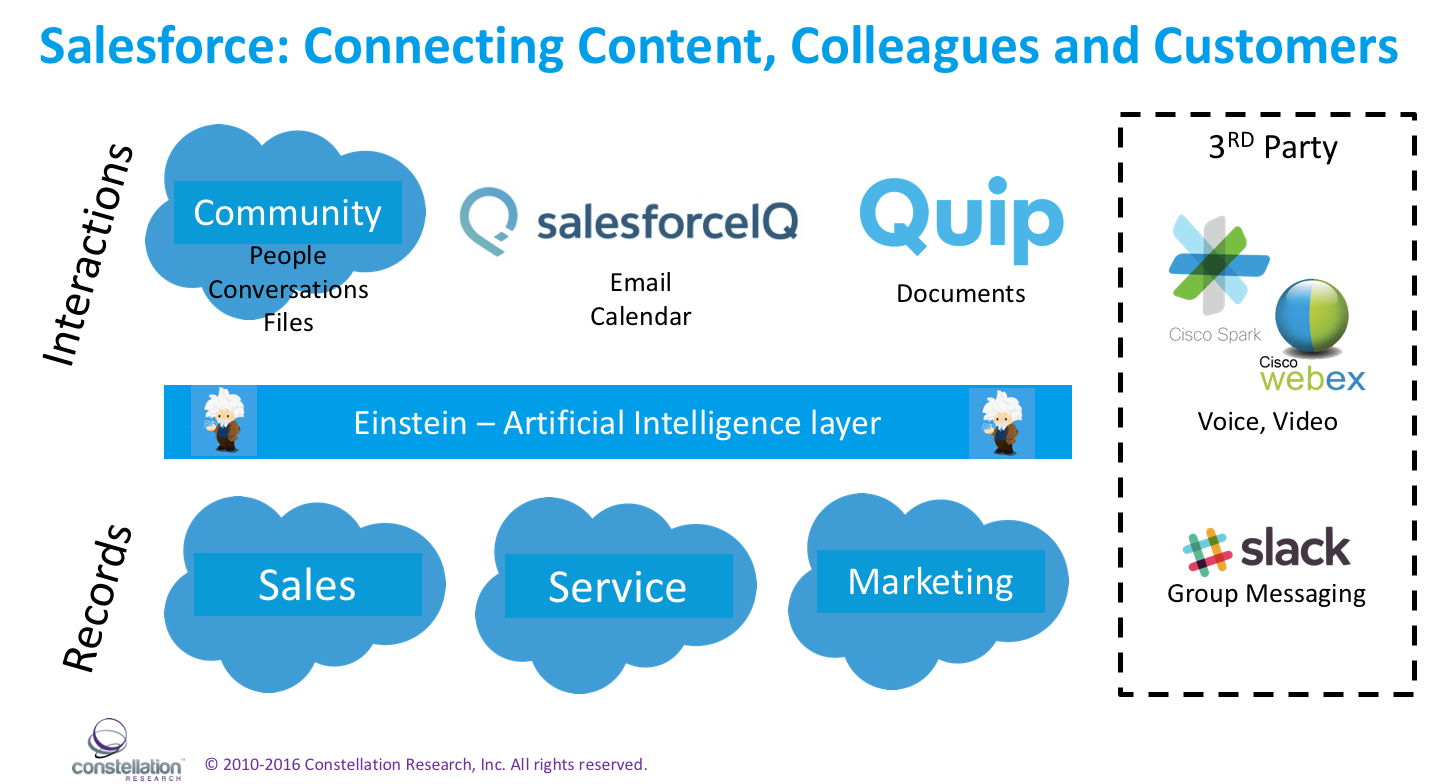
Salesforce announced today the upcoming October availability of Salesforce Inbox Calendar, an intelligent calendaring add-on to Salesforce Inbox. Leveraging functionality from both the RelateIQ and Tempo A.I. acquisitions and previously branded as SalesforceIQ Inbox, the updated product contains new features that can power seller productivity for existing customers of Sales Cloud. From recent briefings I had with the SalesforceIQ and Sales Cloud teams, their vision is an intelligent sales companion that can help automate manual tasks such as calendar appointment setting, logging of activities into Salesforce Sales Cloud and provide news feeds on accounts and contacts.

The primary features of Salesforce Inbox and Inbox Calendar that stood out to me included:
  • Calendar scheduling - Send calendar availability with one click scheduling. Integrated views across Outlook, Gmail, Mobile Calendar and Salesforce reduces the need of toggling to/from multiple calendars.
     
  • Email response templates - Configure sales email templates for quick mobile replies and enable notification of messages read.
     
  • Customer news / data aggregation - View aggregated news feeds with relevant Salesforce data on meeting attendees for more insight to tailor discussions.
     
  • Lightning Sync and Integrated workflows for logging of meetings - Sync calendar entries with Salesforce Leads and contacts. Attach notes and log meetings to Accounts, eliminating duplicate manual data entry.
     
  • Single-click launch of web conference meetings - Web conference links embedded in the calendar invite reduces the need to launch calls from separate apps or manual dial-ins.
These features provide what I’ll call a “sidekick” to sellers, keeping them engaged and working within the Salesforce apps. Sellers can benefit from the productivity enhancements and spend more time working in the app eventually leading to improved opportunity data analytics for leadership.
 
One caveat, for organizations on Outlook, Salesforce Inbox, and Inbox Calendar is only available on web-based Outlook 365 for now.  According to Salesforce, the desktop version is on the roadmap for early 2017. Sellers can still utilize the features, but it will require logging in and using the web client (this is apart from the mobile app).  The service is also available for Gmail.
 
The Bottom Line:  Current Salesforce Sales Cloud/IQ customers, Salesforce Inbox combined with intelligent calendaring is a premium add-on worth exploring to increase seller productivity and reduce the manual data entry effort for both field and inside sales teams. Depending on your organization size, suggest involving test group of sellers before broad rollouts. Salesforce Inbox’s announced pricing of $25 per user could be well worth the reduction of seller manual data entry complaints and improve deal insights.
 
 
Data to Decisions Marketing Transformation Chief Customer Officer Chief Marketing Officer Chief Digital Officer

News Analysis - Workday, IBM Form Strategic Partnership on the IBM Cloud - The IaaS vendor race for SaaS load is on

News Analysis - Workday, IBM Form Strategic Partnership on the IBM Cloud - The IaaS vendor race for SaaS load is on

 Earlier today IBM and Workday announced a partnership with the intent of Workday using IBM’s Cloud for its development and test systems. Announcements of SaaS vendors (like Workday) and IaaS vendors (like IBM) are popular these days, and we have commented on them earlier (e.g. Salesforce chooses AWS, SAP choosesMicrosoft (and earlierIBM), JDA choosesGoogle Cloud Platform, all the way back Infor choosesAWS.


But let’s dissect the press release in our usual style (it can be found here):
 
ARMONK, NY and PLEASANTON, CA – 15 Aug 2016: IBM (NYSE: IBM) today announced Workday(NYSE: WDAY), a leading provider of enterprise cloud applications for finance and human resources, has adopted the IBM Cloud as part of a multi-year strategic partnership. IBM Cloud will become the foundation for Workday’s development and testing environment providing Workday with greater efficiency, flexibility, and global scale.
 
MyPOV – Describes well what is going – Workday ‘has adopted’ IBM Cloud (likely SoftLayer) but will become the foundation for Workday’s development and test environments. Development and test environments are usually of less interest to SaaS customers, but the cost of providing, provisioning and maintaining them is a large chunk of CAPEX for any ISV / SaaS provider. The ease of use of provisioning instances does not only matter to enterprise building next generation applications, but also to ISVs / SaaS vendors and their developers. A lower TCO both in physical and labor cost to get an instance may even affect how many developers can work how efficiently on providing code, as it all comes from a development / R&D budget.
 
As IBM Cloud becomes the primary platform for Workday’s development and testing, Workday will continue accelerating the pace of innovation for its applications and services. IBM Cloud will also provide important capacity expansion in support of Workday’s growing development and testing requirements.
 
MyPOV – Describes what Workday gains, more flexibility to focus on its own application instead of running environments. Testing requirements also matter to customers, as often the so called ‘sand box’ environments run under that label – and easier and faster to access sand box environments mean easier and faster access to code for customers trying to familiarize themselves with upcoming release capabilities.
 
 “IBM and Workday are both delivering transformative applications and services in the cloud,” said Aneel Bhusri, Co-Founder and CEO, Workday. “Workday will use IBM Cloud to continue accelerating Workday’s internal development and testing efforts to support our ongoing global expansion.”
 
MyPOV – Good quote from Bhusri, interesting to see the focus on global. IBM Cloud’s is in a leading position here compared to the IaaS competitors – with close to 50 locations. And location matters both for performance in general – but for HR and Finance applications (as Workday builds) from a statutory and legal compliance perspective. When e.g. employee data needs to be in country (e.g. Russia), testing of code with the real customer / production data should be happening in the same country, too. A major challenge for all SaaS vendors at the moment, given the accelerated rate of regulatory changes we predict in the near term future.
 
"Leading enterprises like Workday continue to turn to IBM Cloud for its global reach, flexibility, and resiliency," said Robert LeBlanc, Senior Vice President, IBM Cloud. “Through a preferred cloud partnership with IBM, Workday can accelerate its innovation efforts to better serve clients around the world.”
 
MyPOV – Good quote of LeBlanc, too – highlighting the faster pace of innovation that is possible when an ISV / SaaS vendor gets rid of running their own environments.
 
IBM’s global cloud data center presence includes nearly 50 highly scalable and security-rich IBM Cloud datacenters in 17 countries on six continents. The company delivers enterprise cloud services ranging from analytics and Watson to Blockchain and Internet of Things to provide clients with more choice and flexibility in their digital transformation.
 
MyPOV – Important to mention the location number in the 50ies, with the closest competition working through the twenties in regards of numbers of location. IBM benefits here from the comparatively very small pod size of a SoftLayer data center compared to the competition, which allows IBM to open IBM Cloud locations with less load in a location than the competition.
 
Workday intends to expand the use of IBM Cloud over time beyond development and testing. Today’s announcement builds on the IBM and Workday partnership, which includes IBM’s global Workday Consulting Services, the 2015 acquisition of Meteorix–a leading Workday services partner–and IBM’s own use of Workday Human Capital Management for its global workforce. 
 
MyPOV – No ISV / SaaS vendor moves development and test environments to a platform without thinking what comes after that. Sandboxes, Learning environments, production environments etc. The elimination of any environment variable that may slow down the release of software with new capabilities or fixes is something DevOps and Product teams at ISVs / SaaS vendors strive for. Though even not mentioned, the question will be soon when e.g. production environments will run on the IBM Cloud.
 

[Updated August 15th 2016] I had a chance to catch up with IBM's Jim Comfort and Workday's David Clarke earlier today and there are a few additional takeaways:

  • Only the beginning - As usual with partnerships both partners point out that there is more to come... in this case I'd be more optimistic that this will happen given that SoftLayer supports Workday's architecture well, IBM is more than only a IaaS vendor but has e.g. Workday implementation business with Meteorix (see a tidbit on this in my Rising Event Report here).
  • Partnership synergies - It escaped me when writing the original blog post - IBM partnered with VMware earlier in the year (see here) and that partnership was important for the Workday partnership, as the vendor is using VMware for some aspects of its technology stack. A good example how partnerships enable partnerships.  


Overall MyPOV

As mentioned before, software vendors are looking for IaaS partnerships to reduce their cost of product development. It is a good time, as the IaaS vendors are almost desperate to get the load from ISVs / SaaS vendors onto their infrastructure, as the load is uniform. For an IaaS vendor to get 100 production environments from 100 enterprises is 100 sales, consulting and implementation cycles. In other words, a custom process. Compare that with becoming the cloud of choice for an ISV / SaaS vendor – those 100 production environments come from 100 customers of that vendor. And all are the same profile in regards of technical requirements, footprint etc. – and best the ISV / SaaS vendor will move them over time - themselves. So no surprise the race for the uniform load of ISVs / SaaS vendors is in full swing. As a matter of fact, it is the biggest prize for IaaS vendors at the moment.
 
How prized the ISV / SaaS load is can be seen in the case of Workday, with the industry anecdote that happened over three years ago: At HP Discover then COO Veghte saidthat Workday was moving to HP’s Cloud, dropping AWS. AWS CTO Werner Vogels quickly de-bunked that on Twitter, with re-confirmation from Workday. In the meantime, Workday has shared at their Tech Summits that it is using public cloud infrastructure for development and test environments. So let’s check what Vogel tweets or any other official reaction.
For the long time enterprise software observers, this comes as a little bit of a deja-vu, too – as over 12 years ago, shortly before the acquisition of PeopleSoft by Oracle, Workday picked the IBM technology stack to build its next generation of its software on. This announcement is different though, as it affects more the operational side, the Workday tech stack (seems to) stay fully intact and is not affected by the environment.
 
AWS CTO Vogels tweet back in 2013, when HP claimed Workday cloud load for the HP cloud
 
 
As always with partnerships – let’s look at this from the customer view first: 
 
It is good news for Workday customers when Workday can lower development costs, provide internal environments fast and more efficiently and provide environments in more locations. At the moment Workday does not develop in low cost / high talent locations (aka 'offshore' unless you count Ireland as such a location), but the IBM partnership gives the vendor that option. So ultimately the chance for more hands building code and code in more places. 
 
The good news for IBM customers is that IBM cloud has signed a large uniform SaaS vendor deal, which lowers the cost for IBM to run its cloud, may make locations more commercially viable and may even bolster the opening of locations beyond the 50+ locations IBM supports today. In difference to the partnership IBM has with SAP, that was more focused on the older SAP technology implementations, and presenting single customers with savings, this partnership has the potential of adding (over time and a few more decisions favorable for IBM) a lot of load to IBM’s cloud. Last but not least, the bare metal nature of the IBM / SoftLayer based cloud comes with advantages when speaking with more conservative organizations in regards of putting their sensitive Finance and HR data in the cloud. Being able to ‘see, touch & control’ a server takes away a lot of cloud angst from many CIOs and CTOs in more concerned geographies and cultures.

Overall a good move for both vendors, and most importantly for their future joint customers. Now we need to understand more, e.g. Workday confirmed running on OpenStack, IBM supports OpenStack, this will be a move that will make the partnership even more palatable to CIOs / CTOs as OpenStack is a known technology for them. And then the 1B$ question will be if and when production environments may move from Workday data centers to IBM data centers… plenty of questions. Stay tuned. 


More Apps / SaaS vendor and IaaS vendor partnerships (in chronological order):
 
  • Infor runs on Amazon AWS (read here)
  • SAP on IBM Cloud (read here
  • Lumesse on Salesforce Cloud (read here) and
  • NetSuite on Microsoft Azure (read here)
  • JDA chooses Google Cloud Platform (read here)
  • SAP chooses Microsoft Azure (read here)
  • Salesforce chooses AWS (read here

More on IBM:
 
  • News Analysis - IBM Boosts Support to OpenStack's RefStack... first serious attempt to make OpenStack interoperability real - read here
  • Event Report - IBM Interconnect - IBM innovates and partners into the hybrid cloud era - read here
  • News Analysis - IBM and VMware announce partnership to accelerate enterprise hybrid cloud adoption >> Looking promising - read here
  • Event Preview - IBM Interconnect 2016 - read here
  • Site Visit - IBM Design Studio Austin - read here
  • MarketMoves - IBM strikes 3x in Fall - Cleversafe, The Weather Company and Gravitant - read here
  • News Analysis - IBM launches Industry's First Consulting Practice Dedicated to Cognitive Business - a good move it's early times - read more
  • News Analysis - IBM plans to acquire Cleversafe to propel Object Storage into the Hybrid Cloud >> a good move. Read here
    Market Move - IBM acquires StrongLoop - nodejs comes to BlueMix - read here
  • News Analysis - IBM and ARM Collaborate to Accelerate Delivery of Internet of Things - The IBM NextGenApps Stack emerges - read here
  • Progress Report - IBM Cloud makes good progress - but needs to attract more load - read here
  • Market Move - IBM gets into private cloud (services) with Blue Box acqusition - read here
  • Event Report - IBM InterConnect - IBM makes bets for the hybrid cloud - read here
  • First Take - IBM InterConnect Day #1 Keynote - BlueMix, SoftLayer and Watson - read here
  • News Analysis - IBM had a very good year in the cloud - 2015 will be key - read here
  • Event Report - IBM Insight 2014 - Is it all coming together for IBM in 2015? Or not? 
  • First Take - Top 3 Takeaways from IBM Insight Day 1 Keynote - read here
  • IBM and SAP partner for cloud - good move - read here
  • Event Report - IBM Enterprise - A lot of value for existing customers, but can IBM attract net new customers? Read here
  • Progress Report - The Mainframe is alive and kicking - but there is more in IBM STG - read here
  • News Analysis - IBM and Intel partner to make the cloud more secure - read here
  • Progress Report - IBM BigData an Analytics have a lot of potential - time to show it - read here
  • Event Report - What a difference a year makes - and off to a good start - read here
  • First Take - 3 Key Takeaways from IBM's Impact Conference - Day 1 Keynote - read here
  • Another week and another Billion - this week it's a BlueMix Paas - read here
  • First take - IBM makes Connection - introduces the TalentSuite at IBM Connect - read here
  • IBM kicks of cloud data center race in 2014 - read here
  • First Take - IBM Software Group's Analyst Insights - read here
  • Are we witnessing one of the largest cloud moves - so far? Read here
  • Why IBM acquired Softlayer - read here
 
More on Workday
  • News Analysis - Workday Delivers Payroll for France Customers - read here
  • Progress Report - Workday Tech Summit - Good Progress, More Insights, Less Concerns - read here
  • News Analysis - Workday and ADP partner to Deliver a Seamless Customer Experience for Global Payroll - read here
  • Event Report - Workday Rising - Learning is there and good housekeeping - read here
  • News Analysis - Workday completes Talent Management with Learning - Finally - or too late? Read here.
  • Event Preview - What I would like Workday to address this Rising read here
  • News Analysis – Workday to Expand Suite of Applications for Healthcare Industry - with a SCM twist - read here
  • News Analysis - Workday supports UK Payroll - now speaks (British English) Payroll  - read here
  • Workday 24 - 'True' Analytics, a Vertical and more - now needs customer proof points - read here
  • First Take - Top 3 Takeaways from of Workday Rising Day 1 Keynote - The dawn of the analytics era - time to deliver Insight Apps - read here
  • Progress Report - Workday supports more cloud standard - but work remains - read here
  • Workday 22 - Recruiting and rich Workday 22 are here - read here
  • First Take - Why Workday acquired Identified - (real) Analytics matter - read here
  • Workday Update 21 - All about the user experience and some more - read here
  • Workday Update 20 - Mostly a technology release - read here
  • Takeaways from the Salesforce.com and Workday partnership - read here
  • Workday powers on - adds more to its plate - read here
  • What I would like Workday to address this Rising - read here
  • Workday Update 19 - you need to slow down to hurry up - read here
  • I am worried about... Workday - read here
New C-Suite Data to Decisions Innovation & Product-led Growth Revenue & Growth Effectiveness Digital Safety, Privacy & Cybersecurity Tech Optimization Future of Work softlayer workday IBM Leadership SaaS PaaS IaaS Cloud Digital Transformation Disruptive Technology Enterprise IT Enterprise Acceleration Enterprise Software Next Gen Apps IoT Blockchain CRM ERP CCaaS UCaaS Collaboration Enterprise Service AI Analytics Automation CX EX Employee Experience HCM Machine Learning ML HR Chief Information Officer Chief Technology Officer Chief Digital Officer Chief Data Officer Chief Analytics Officer Chief Information Security Officer Chief Executive Officer Chief Operating Officer Chief Customer Officer Chief People Officer Chief Human Resources Officer

Lead Generation or Lead Prevention? 5 Tips on Web Form Design

Lead Generation or Lead Prevention? 5 Tips on Web Form Design

My inbox is filled with email promotions and once in a while I come across one for a webinar or content that looks interesting enough to register for. This was the case a few weeks ago for a vendor webinar featuring good speakers. However, after I clicked over to the landing page, I was faced with a 14 required question form to complete (screenshot below) -- note the asterisks for required info. Yes, this form is real and to protect the anonymity of the vendor, I’ve removed all references to their company information. I was interested in the webinar topic and would’ve registered, but exited the page in frustration instead.

Instead of lead generation, this company is unknowingly performing lead prevention.

As a marketer, I understand that for lead qualification and routing purposes, this company felt the need to cram all the info they needed onto one form, but they forgot the most important element - the customer’s experience. My guess is the overall conversion rate for this webinar was low.

It pains me to see marketers make these mistakes, so here are five tips when it comes to web form design:

  1. Use the KISS principle  -  For high valued content such as webinars, customers and prospects are willing to provide their information. The key is to apply the KISS principle (I’ll define it as Keep it Short & Simple vs Keep it Simple Stupid).  Collect the basic information you need such as name, company name, email, but no more than 5-6 fields max for the best conversion rates.
     
  2. Add a contact augmentation service - determine what information you really need the prospect to complete versus utilizing a company/profile appending solution such as Data.com, DiscoverOrg, InsideView, Hoovers, etc. to round out the remaining information you need for lead qualification and routing.  In this example, questions like company size, industry, country and state are all easy to find without asking the prospect, eliminating nearly 30% of the form questions.
     
  3. Leverage progressive profiling forms - Marketing automation systems like Hubspot, Marketo, Pardot, etc. have progressive profiling capabilities. These are intelligent forms where you can start with a series of short questions and as prospects engage and view more content, serve them additional questions.
     
  4. Test forms before launch - Review and test your form for any issues before turning them live. I've come across my fair share of broken forms where after completing the information it won't submit, so don't forget to test, test, then test again.
     
  5. Monitor and track conversion numbers - Review the landing page metrics multiple times per week. If your page abandonment rate is high (over 40%) this signals that you’ve received lots of visitors but they're not converting/registering.

Aim to strike a balance between gated (with a form) and un-gated (no form) content.  Your goal is to create a continuous stream of engagement with the customer and if you gate every piece of content with a form, your conversion rates will suffer.  Always consider the customer's experience first and ask yourself, would you want to spend time filling out this many required questions?

Remember marketers - your goal is lead generation, not lead prevention. Apply these tips and watch your conversion rates rise!


Marketing Transformation Chief Marketing Officer

CEN Member Chat: PESTEL Framework

CEN Member Chat: PESTEL Framework

R "Ray" Wang, Principal Analyst & Chairman of futurist analyst firm, Constellation Research, covers the first 3 topics in his popular PESTEL framework: political, economic, and social trends to be watch for.

If you are not a Constellation Executive Network member yet, join our analysts in this private community to talk shop and solve business problems in real time. 

Data to Decisions Digital Safety, Privacy & Cybersecurity Future of Work Marketing Transformation Matrix Commerce New C-Suite Next-Generation Customer Experience Tech Optimization Chief Customer Officer Chief Digital Officer Chief Executive Officer Chief Financial Officer Chief Information Officer Chief Marketing Officer Chief People Officer Chief Procurement Officer Chief Supply Chain Officer On <iframe src="https://player.vimeo.com/video/178265972" width="640" height="360" frameborder="0" webkitallowfullscreen mozallowfullscreen allowfullscreen></iframe>

Randstad to acquire Monster Worldwide

Randstad to acquire Monster Worldwide

Earlier this week Randstad surprised the market by publishing its intent to acquire Monster, the job posting site. The acquisition demonstrates how the talent acquisition market has changed. Vendors that, fifteen years ago, seemed ready for the coffin (Randstad) are acquiring the undertaker with little effort.
 

But let’s dissect the press release in our customary style, it can be found here:
AMSTERDAM, NETHERLANDS and WESTON, MASS. – August 9, 2016 – Randstad Holding nv (AMS: RAND), a leading human resources services provider, and Monster Worldwide, Inc. (NYSE: MWW), a global leader in connecting jobs and people, today announced the signing of a definitive agreement under which Randstad will acquire Monster. Under the terms of the merger agreement, Randstad will pay $3.40 per share in cash, or a total purchase price of approximately $429 million (enterprise value).
MyPOV – Sums up the deal, Monster was losing money (here the link to its last quarter), so Randstad likely got a good deal. Randstad has declared a ‘reinvention’ strategy and this acquisition is part of it. More below.

By leveraging Monster’s multiple distribution channels to bridge two different but complementary parts of the extended recruiting industry, Randstad intends to build the world’s most comprehensive portfolio of HR services. Monster will continue operating as a separate and independent entity under the Monster name.
 
MyPOV – Describes well what Randstad is up to – grow its portfolio of HR Services, and be more than the vendor that comes in the picture for temporary workforce usage. As described, the talent acquisition capabilities of Monster can also help recruiting a contractor workforce, so there may well be synergies on paper and in business, but the new combined entity need to create them first. 
 
“In an era of massive technological change, employers are challenged to identify better ways to source and engage talent,” said Jacques van den Broek, CEO of Randstad. “With its industry leading technology platform and easy to use digital, social and mobile solutions, Monster is a natural complement to Randstad. The transaction is aligned with our Tech and Touch growth strategy and reflects our commitment to bringing labor supply and demand closer together to better connect the right people to the right jobs. We look forward to welcoming the Monster team and working together to shape the evolving global job industry.”

MyPOV – Good quote from van den Broek, aligning it with the Randstad strategy of ‘Tech and Touch’ – where Randstad does not shy away from technology acquisition to bolster its overall ‘human touch’ service portfolio.
 
“Joining Randstad provides a unique opportunity to accelerate our ability to connect more people to more jobs,” said Tim Yates, CEO of Monster. “Together with Randstad, Monster will be better positioned to fulfill our core mission, and our employees will benefit from becoming part of a larger, more diversified company. Equally important, this transaction offers immediate value to our shareholders. We are excited to join and be supported by Randstad, as we continue to build the best recruiting media, technologies, and platforms. We look forward to working with the Randstad team to ensure a smooth transition.”
MyPOV – Also good quote by Yates, showing the potential for Monster as being part of Randstad. And that is tremendous, Randstad is more European than Monster, so growing in Europe is a tangible opportunity for Monster.

Strategic and Financial Benefits

Brings Together Complementary Visions to Lead Transformation: Randstad and Monster have a shared vision for the global job industry, which is rapidly transforming as a result of technology advances. The transaction is intended to accelerate their ability to develop new and innovative capabilities that deliver greater value to job seekers and employers by bringing labor supply and demand closer together.
MyPOV – Always good to hear about vision compatibility, but it will be better to test and see that on a joint roadmap. Too early for now but should be there in the next quarters.
 
Creates Most Comprehensive and Technologically Advanced Capabilities for Human Resources Services: Randstad continues to enhance its business model in the rapidly shifting landscape, placing annually more than 2 million people worldwide through its network of more than 4,500 branches and client-dedicated services. With the addition of Monster’s leading recruiting media, technologies, and platforms which connect people and jobs in more than 40 countries, Randstad intends to further expand its services to offer both clients and candidates tools for increased efficiency and engagement, connecting more people to more jobs. […]

MyPOV – Good description of what Randstad is really up to – and how Monster fits into the picture. There are certainly synergies between the two vendor – we will look at it below.


Implications, Implications…

Let’s look at the implications that this acquisition has for the different constituents of the HCM market:
 

Implications for Randstad customers

There are no immediate implications. There is no overlap or potential functionality that may be replaced by Monster on the Randstad side, if a customer still thinks so and sees that (Randstad operates in 20+ markets and has different capabilities in each of them), then it is time to contact Randstad and understand the implications. As usual, Constellation recommends to get everything in writing in regards of operation of products and capabilities that may now be in question. In a few quarters it will be interesting to see how all the many acquisitions that Randstad has done in the last 12 months will come together.
 

Implications for Monster customers

There are two areas of good news – Monster is on much better financial feet and Randstad has said it will keep operating the Monster business as a business unit and under the Monster name. Everything else would be unproductive from a brand recognition and overall market value position. Even though it is not fully clear at the moment what the new ‘Randstad Monster’ will do. Clients should reconfirm roadmaps, future items and SLAs. It is unlikely that anything will change or even deteriorate in the short term, but enterprises should ask the new Randstad owned Monster what the new positioning and capabilities will be. Adding more temporary worker recruiting capability could be a welcome addition for enterprises that use or plan to use temporary workers. If that is not in the future of an enterprise, it is time to take a hard look how good longer term the Randstad permanent worker acquisition tools will be.
 

Implications for Partners

There is no expectation of an immediate impact, though any partnerships that Monster may have had with Randstad competitors will get some scrutiny. Let’s hope the adults are at home and all we be handled in a way where the customer must win, which is always a good true north for companies in acquisition mode.
 

Implications for Competitors

This is an interesting move and may give the executives at Adecco, Kelly Services, Manpower, Robert Half and more some food for thought. If Randstad can become more strategic for HR decision makers and enterprises overall, then all will have to react. In the meantime, they may sit on the sideline and hope Randstad may get distracted and may not deliver, but that’s a risky strategy. There are enough Monster competitors with similar structural market challenges – their valuation maybe on the rise.
 

Overall MyPOV

Randstad is going through a transformation, trying to become more than the trusted staffing partner. The vendor as acquired and made a number of investment, just in the last quarters it acquired RiseSmart (see here), entered Talent Management with twago (see here), and changed its staffing need e.g. with Careo Group in Japan (see here) or Obiettivo Lavoro in Italy (see here) and most recently in France with Ausy (see here). On top of that Randstad is open to disrupt itself with putting no limits on the investment objectives of the Randstad Innovation Fund (see here). These are serious investment, that are changing who and what Randstad is. Tucked in the Monster press release is a statement that the pace will not remain as frantic, as Randstad expects ‘only’ expenditures on acquisition to be around 100M Euro. Certainly good to see as buying goes faster than integrating, educating the market on new capabilities, training sales people and getting the first lighthouse customers.
 
And that also leads to the concern side, Randstad may have chewed up more than it can handle. On the flipside it is a very large company with deep pockets on stable revenue stream. The other concern is that Monster has been on steady decline since more or less 2000. Very similar to recently acquire Yahoo! When the web property was the one and only place where business would be done. But recruiting has changed, not just with the rise of social networks like Facebook and Linkedin (my take on the acquisition of the vendor by Microsoft here) for how Recruiting should (and will work) see my post here. So Randstad may have acquired the 'yesteryear' best practices vendor. 

But overall it is always a good sign when a vendor is trying to make it easier for customers, and that is Randstad’s leitmotiv here, with the genuine business interest of becoming more strategic for its customers and prospects. It has to bridge a traditional 'moat' in the enterprise software landscape - as staffing, job sites and HR vendors have not come together in the past. Now we will have to see if Randstad can deliver on the vision, it has made the acquisitions and has the resources to make it happen. We will be watching.


More on Randstad:
  • Progress Report - Randstad Sourceright - Good Progress and the beginning of a balancing act – read here

More on Recruiting
  • Musings - How Technology Innovation fuels Recruiting and disrupts the Laggards - read here
  • Musings - What is the future of recruiting? Read here
  • HRTech 2014 takeaways - read here.
  • Why all the attention to recruiting? Read here.
Find more coverage on the Constellation Research website here and checkout my magazine on Flipboard and my YouTube channel here
 
Future of Work Chief People Officer

Inside Constellation's Futurist Framework 2016 - video

Inside Constellation's Futurist Framework 2016 - video

Use The PESTEL Futurist Framework To Drive Strategic Board Level Planning Assumptions

Constellation updates its futurist framework on a biennial basis.  Using a PESTEL model, political, economic, societal, technological, environmental, and legislative factors drive the overall planning assumptions.  These planning assumptions power strategic planning sessions for board rooms and executive teams.  The final PESTEL model plays an integral part of Constellation’s planning process and underlying core research.

On August 9th, 2016, Constellation Research shared a high level overview with the firm’s Constellation Executive Network members.  This broadcast is now available for a limited time and should provide input into 2017 planning activities.

CEN Member Chat PESTEL Framework with R “Ray” Wang from Constellation Research on Vimeo.

To qualify for Constellation Executive Network Membership, click here.

Your POV.

Are you exploring your digital transformation options?  Have you worked with Infor or another software vendor or system integrator to co-innovate and co-create? Let us know what your experiences have been and feel free to reach out.  Add your comments to the blog or reach me via email: R (at) ConstellationR (dot) com or R (at) SoftwareInsider (dot) org.

Please let us know if you need help with your Digital Business transformation efforts. Here’s how we can assist:

  • Developing your digital business strategy
  • Connecting with other pioneers
  • Sharing best practices
  • Vendor selection
  • Implementation partner selection
  • Providing contract negotiations and software licensing support
  • Demystifying software licensing

Resources


Reprints

Reprints can be purchased through Constellation Research, Inc. To request official reprints in PDF format, please contact Sales .

Disclosure

Although we work closely with many mega software vendors, we want you to trust us. For the full disclosure policy,stay tuned for the full client list on the Constellation Research website.

* Not responsible for any factual errors or omissions.  However, happy to correct any errors upon email receipt.

Copyright © 2001 -2016 R Wang and Insider Associates, LLC All rights reserved.
Contact the Sales team to purchase this report on a a la carte basis or join the Constellation Customer Experience

The post Research Summary: [VIDEO] Inside Constellation’s Futurist Framework appeared first on A Software Insider's Point of View.

Data to Decisions Digital Safety, Privacy & Cybersecurity Future of Work Marketing Transformation Matrix Commerce New C-Suite Next-Generation Customer Experience Tech Optimization Innovation & Product-led Growth Leadership Chief Customer Officer Chief Digital Officer Chief Executive Officer Chief Financial Officer Chief Information Officer Chief Marketing Officer Chief People Officer Chief Procurement Officer Chief Revenue Officer Chief Supply Chain Officer Chief Experience Officer

Plex Adds Supply Chain Planning With DemandCaster Acquisition

Plex Adds Supply Chain Planning With DemandCaster Acquisition

Key Supply Chain Planning Functionality Bolsters Manufacturing Cloud Offering

@rwang0 @plex @demandcaster banner

On August 9, 2016, Manufacturing Cloud pioneer Plex, announced the acquisition of DemandCaster, a cloud based sales forecasting and inventory planning software provider based outside of Chicago, Illinois.  Founder Ara Surenian built DemandCaster from his operational consulting experiences in demand planning, supply planning, and sales and operations planing software.  This first acquisition by Plex in the company’s history will:

  • Add critical supply chain planning and distribution requirements planning functionality.  DemandCaster provides Plex customers with formal sales and operations planning (S&OP) structure, capacity planning and scheduling, automated safety stock and order point options, and dashboards and reporting (see Figure 1).  The S&OP capabilities include collaborative data gathering, demand planning, supply planning, reconciliation of plans, and finalization and release of plans.  Capacity planning and scheduling allows planners to explode forecasts and customer orders using the bill of materials (BOM) including independent forecasts through dependent components, daily MPS, stock out root cause analysis, rough cut capacity planning, and ability to drill to specific work enters to view work order schedules.  Safety stock and order point options allow location specific forecasts to control inventory across multiple sites, calculate safety stock values without hierarchical duplication, ensure matching of supply to demand, and compare actual and peak demand against order points.  Dashboards and flexible reporting allow for user specific custom reports, templates, basic excel reports, pivot tables, and hierarchical grids.

    Point of View (POV): Despite the small size of the company, DemandCaster packed a punch of functionality.  Customers often cited ease of use of the product, rich features, and easy reporting as the benefits.  Most customers chose DemandCaster for four key use cases including supply lead time reduction, inventory reduction, stock-out reduction, and overall operational productivity improvements.  The biggest complaint about DemandCaster was the lack of available resources and the company’s small size.  Acquistion by Plex will help DemandCaster scale out customer service, professional services, and sales.

Figure 1.  Plex Rounds Out The Manufacturing Cloud

@rwang0 @plex #manufacturingcloud

Source: Plex

  • Improve overall and supply chain analytics and IOT for Plex customers. While Plex has had a robust ERP and MES capabilities, the supply chain planning gaps were filled by the OEM relationship with DemandCaster from a year ago.  With a full acquisition, Plex can provide customers with full visibility and related analytics for planning, control, and execution.  Customers can communicate supply disruptions and respond quickly enough to reshape demand or redploy inventory. Moreover, the acquisition adds to the IntelliPlex analytics offering.

    (POV): Customers in the cloud will expect the next set of exponential improvements to come from anlaytics.  Today's IntelliPlex offering provides advanced reporting, customized templates, and the beginnings of basic analytics.  The need for more advanced analytics has been the key driver for organizations to add technologies such as Steel Wedge and Kinaxis to their supply chain solution.  More than visibility and control, customers will expect their data sets to drive future capabilities in artificial intelligence and machine learning.  The result – the dramatic ability to improve operational performance with augmented decisions.  With all the data in the manufacturing cloud, customers can expect these improvements in the future roadmap.


  • Take out a key Netsuite partner.  DemandCaster built a strong business with Netsuite customers.  As part of the SuiteApp.com ecosystem, many customers turned to DemandCaster for the same reasons Plex acquired them. DemandCaster brings over 40 customers with 10 joint customers on Plex.

    (POV): While the partnership will most likely continue, expect most of the resources to focus on cross-sell to Plex customers.   DemandCaster shares many common components in the Microsoft cloud stack with Plex which improves integration.  Expect future functionality to expand integration within the Plex stack and apps.

The Bottom Line For Customers

The first acquisition by Plex provides a win-win for customers who seek consolidation of capabilities in the cloud.  Here’s Constellation’s take:

  • Customers gain massive benefits.  Customers win with end to end manufacturing execution, ERP, and supply chain capabilities from one cloud vendor.  The OEM partnership paved the way for a smooth transition for customers.
  • Prospects can keep Plex in the short lists for Manufacturing Cloud.  While large vendors such as Oracle and SAP try to move down market, prospects continue to complain about the high cost of ownership and complexity despite a cloud delivery.  Smaller competitors Rootstock and Kenandy still lack the full functionality of Plex.  Netsuite’s acquisition by Oracle may cause some distractions during post-merger integration.  The result – limited players in the space.  JD Edwards on-premises and Microsoft Dynamics remains a worthy competitor though both lack the rich supply chain planning capabilities out of the box.

Your POV.

Are you a Plex customer seeking supply chain planning? Have you used DemandCaster? What are your thoughts about the acquisition?

Add your comments to the blog or reach me via email: R (at) ConstellationR (dot) com or R (at) SoftwareInsider (dot) org.

Please let us know if you need help with your Digital Business transformation efforts. Here’s how we can assist:

  • Developing your digital business strategy
  • Connecting with other pioneers
  • Sharing best practices
  • Vendor selection
  • Implementation partner selection
  • Providing contract negotiations and software licensing support
  • Demystifying software licensing

Resources

Reprints

Reprints can be purchased through Constellation Research, Inc. To request official reprints in PDF format, please contact Sales .

Disclosure

Although we work closely with many mega software vendors, we want you to trust us. For the full disclosure policy,stay tuned for the full client list on the Constellation Research website.

* Not responsible for any factual errors or omissions.  However, happy to correct any errors upon email receipt.

Copyright © 2001 -2016 R Wang and Insider Associates, LLC All rights reserved.
Contact the Sales team to purchase this report on a a la carte basis or join the Constellation Customer Experience

The post News Analysis: Plex Adds Supply Chain Planning With DemandCaster Acquisition appeared first on A Software Insider's Point of View.

Matrix Commerce Tech Optimization Innovation & Product-led Growth Leadership Chief Information Officer Chief Experience Officer

DisrupTV: Building a Business Around People

DisrupTV: Building a Business Around People


It’s all about the people.

Top companies hire great employees and focus on those who buy their products. Especially for B2B selling, it’s not a company that is the target but the people who will be using the products and services. Last week on DisrupTV, we caught up with strong leaders with missions to build and expand their companies’ or clients’ cultures and brands by focusing on the people who matter.

Building a Culture Within Creates a Strong External Brand


Mike Ettling (@mikeettling), president of SAP SuccessFactorsbelieves leaders should invest in and focus on their talent (aka employees); it’s one of the things he admits to “keeping him up at night.”

When recruiting, Mike believes the talent shortage is a myth. It really depends on the pond where you are fishing. Leaders need to think outside of just poaching the competition and get inspired by diversifying where to find good talent around the globe. Once your teams are in place, he advised that a company needs to nurture and value its people in the context of its business model and how it operates.

The cloud-based business model is extremely different than other types of businesses, and companies should understand this and how to best build and maintain their cultures. Mike explained that his company works in a “sprinting all the time” culture. While this can be exhausting, providing the right tools and support for teams can help boost innovation and growth. Building a strong, supported team within the company’s “four walls” should trickle across to external-facing stakeholders - e.g., partners and customers.

This can be difficult for leaders when they’ve come from different types of business models. David Cancel (@dcancel), CEO at Drift, echoed this sentiment by saying that leaders need to check their egos at the door; to learn and grow, it cannot get in the way. Be open to new ideas and focus on the people that make a company successful.

People Not Places Are Your Customers

To truly innovate and really disrupt a market, everyone across the company should be focused on the customer outcome. Building plans around charts, dashboards and spreadsheets doesn’t really offer much learning. Focusing on the people and delighting customers is the key to creating scale for companies, explained David.

To do this, leadership needs to take a stance at where they want to be and define what customer service means for their companies, discussed Shep Hyken (@Hyken), Chief Amazement Officer at Shepard Presentations. Walmart focuses on lower prices and big selections, while ACE Hardware focuses on helpful, knowledgeable experiences with trained salespeople. Invest in the right tools for your vision combined the right teams now or your competitors surely will, warns Shep.

He continued to explain that customer service hasn’t gotten worse; it has just become a “spectator sport.” When people complain, they have numerous channels to broadcast their disapproval - e.g., Twitter, Yelp, and Facebook - and others feed off of these comments.

Based on the “instant-gratification” culture we live in and the extra information we have at hand, companies are held to a much higher standard for customers. Just remember - mistakes happen, but if a company alleviates the problem quickly, the customers will know they can count on your company during good experiences and even the bad.

To build a strong, respected company, always focus on the people. They are what keeps your company moving and thriving each and every day.

For the full interviews, watch the video below, and be sure to watch DisrupTV on Fridays at 11 a.m. PT/2 p.m. ET on blab. BONUS: Catch Shep’s top recommendations for toasted ravioli! Interested in networking with executives and leaders like those in this post? Check out the Constellation Executive Network, which puts on DisrupTV each week.


DisrupTV Episode 0027 Featuring Mike Ettling, Shep Hyken & David Cancel 8.5.16 from Constellation Research on Vimeo.