Editor in Chief of Constellation Insights
Constellation Research
Larry Dignan is Editor in Chief of Constellation Insights at Constellation Research, where he leads editorial coverage focused on enterprise technology, digital transformation, and emerging trends shaping the future of business. He oversees research-driven news, analysis, interviews, and event coverage designed to help technology buyers and vendors navigate complex markets with clarity and context. ...
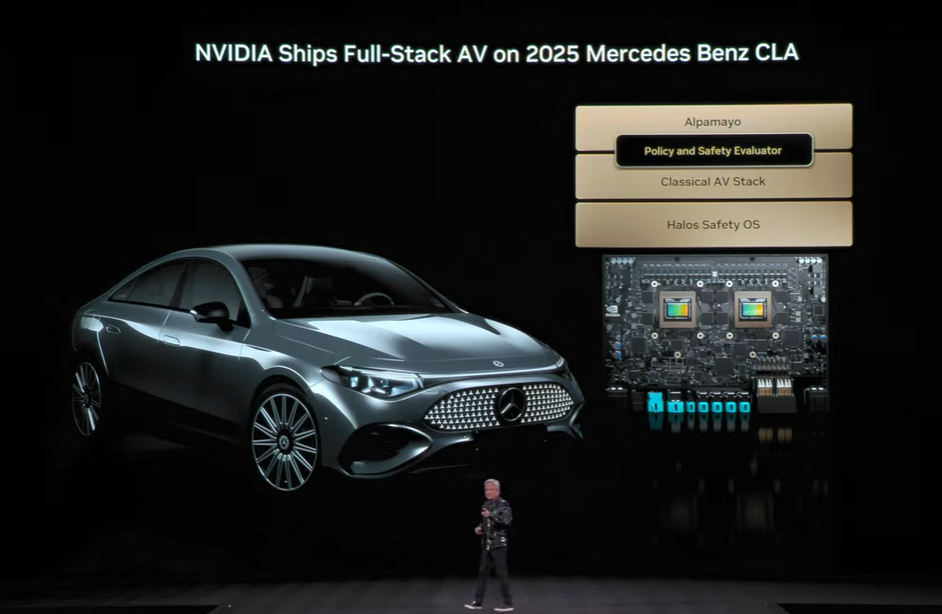
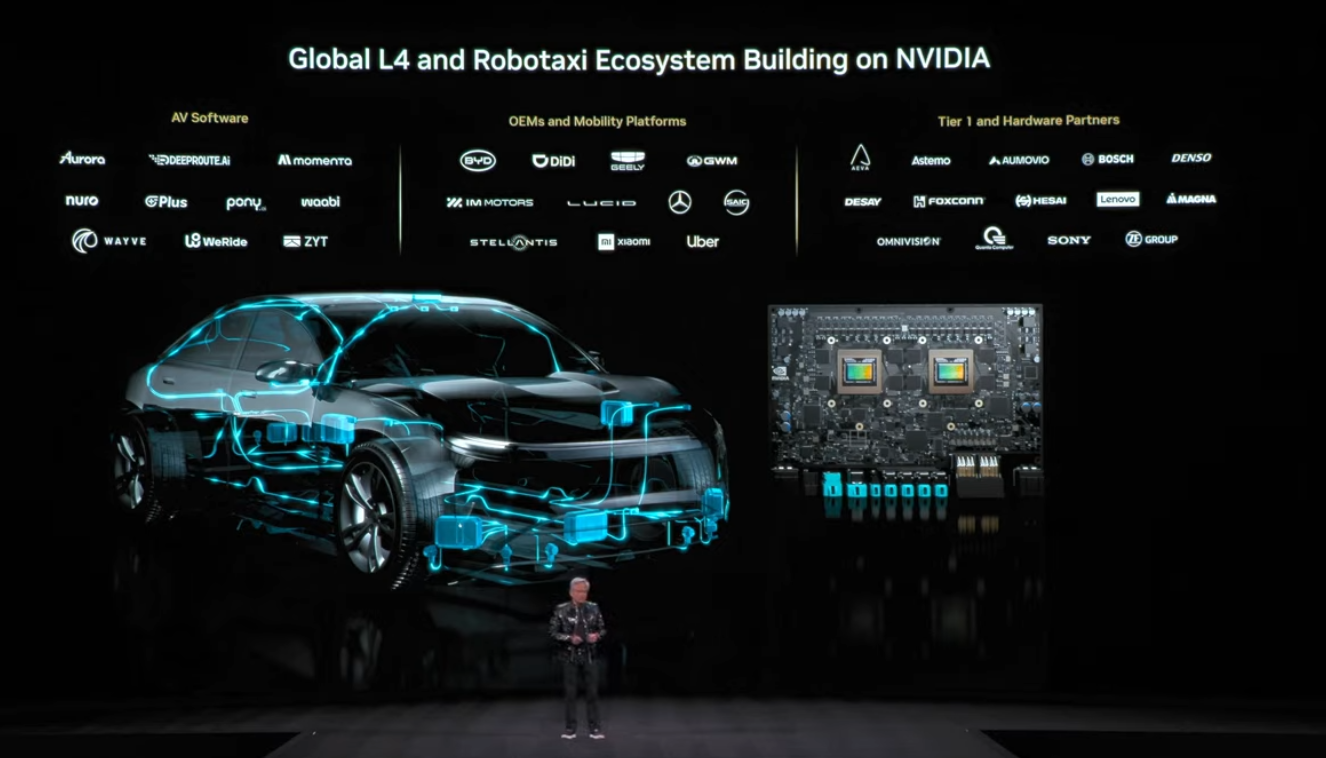
Nvidia outlined its Alpamayo open AI models and datasets to bring reasoning to autonomous vehicles. At CES 2026, Nvidia CEO Jensen Huang said Mercedes Benz with Alpamayo will hit the road in the first quarter.
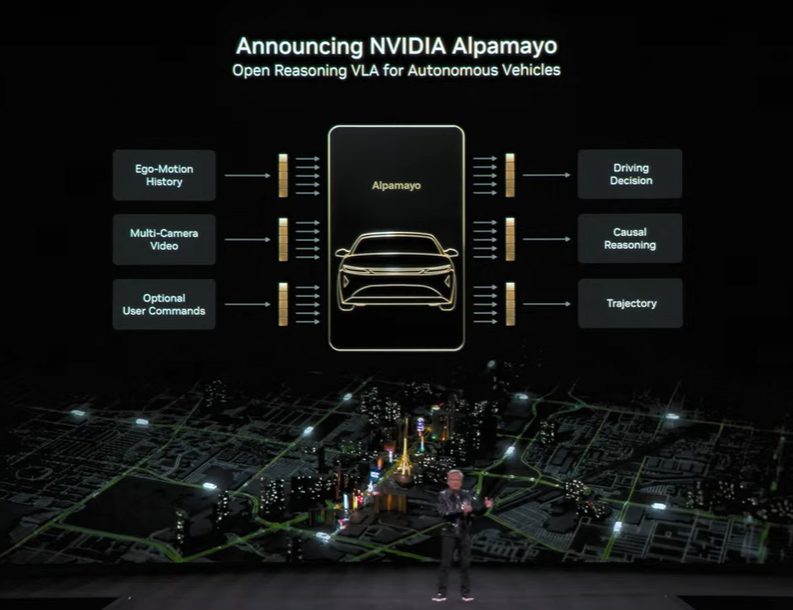
Huang said Alpamayo and its collaboration with Mercedes Benz is its first full-stack effort for autonomous vehicles (AVs). The approach with Alpamayo revolves around reasoning-based vision language action (VLA) models that bring human thinking to autonomous vehicle designs.
"Our vision is that someday, every single car, every single truck, will be autonomous," said Huang.
It's a vision shared by Ola Kallenius, CEO of Mercedes-Benz Group AG, spoke on a panel about the company's AV efforts with Nvidia.
"I had a chance with the combined Mercedes and Nvidia team to drive it through San Francisco and down into Silicon Valley is point to point navigation," said Kallenius, who noted the AV was operated by "a very sophisticated level two system.
Kallenius noted that the system with Nvidia is more like level 2 plus. "It feels that the car is on rails you're just driving, and it does everything. I drove uninterrupted for more than an hour through pretty heavy traffic," he said.
The general idea behind Alpamayo is to create a model and system that can handle novel or rare driving scenarios. Huang said Nvidia will support the models and AV systems on a long-term basis. For Nvidia, the AV effort is a bridge to robotics.
Nvidia released:
Alpamayo 1, a chain-of-thought VLA model for AV researchers. The model is on Hugging Face and has a 10-billion parameter architecture. The model uses video input to reason and show its logic.
AlpaSim, an open source end-to-end simulation framework.
Physical AI open datasets with more than 1,700 hours of driving data.
Nvidia said Lucid, JLR, Uber and Berkeley DeepDrive were showing interest in Alpamayo. Huang added that Nvidia's full autonomous driving stack includes Alpamayo, a policy and safety evaluator, classical AV tools and Halos Safety OS.
According to Huang, the effort with Mercedes Benz took several thousand people and at least five years of work. "This entire stack is vertically integrated. Of course, in the case of Mercedes Benz, we built the entire stack together. We're going to deploy the carbon, operate the stack, and maintain the stack for as long as we shall live," said Huang.
Kallenius said the Nvidia collaboration with Mercedes Benz revolves around safety.
"If you're moving an object that weighs 4,000 pounds, and it's moving at 50 miles an hour, sorry is not going to cut it. There needs to be a higher level of certainty and safety. You don't have to rush into the market. You don't have to be the first but you got to make sure that what you do is robust," said Kallenius.
Editor in Chief of Constellation Insights
Constellation Research
Larry Dignan is Editor in Chief of Constellation Insights at Constellation Research, where he leads editorial coverage focused on enterprise technology, digital transformation, and emerging trends shaping the future of business. He oversees research-driven news, analysis, interviews, and event coverage designed to help technology buyers and vendors navigate complex markets with clarity and context. ...
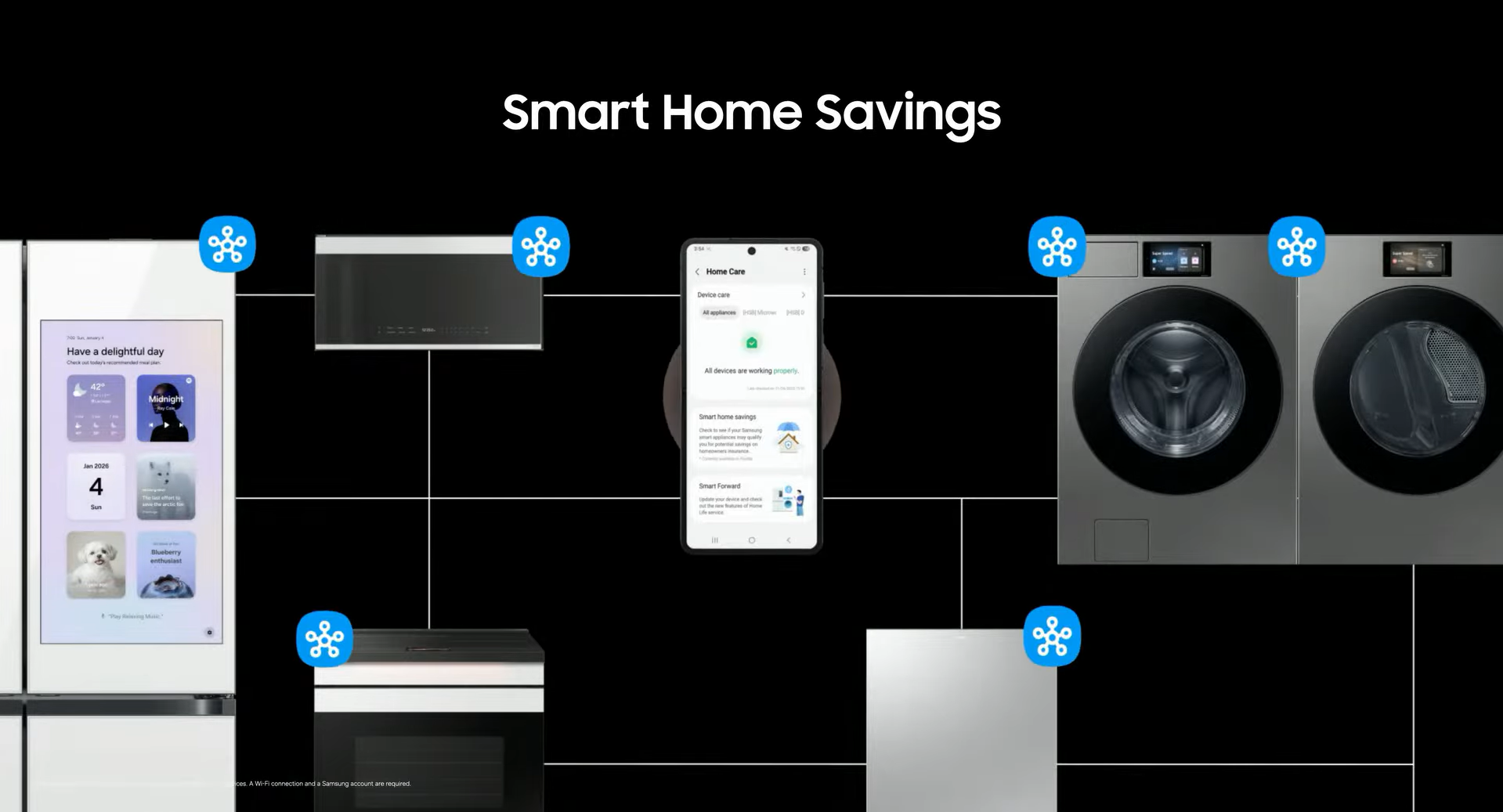
Samsung and Munich Re's Hartford Steam Boiler (HSB) unit, which offers insurance for equipment breakdown, are planning to leverage IoT sensors, AI and smart appliances to spin up personalized home insurance. Welcome to the 2026 monetization of AI use cases.
The model was outlined as part of Samsung's First Look presentation at CES 2026, which included a plan that revolves around connecting and embedding on-device and cloud AI throughout its appliance lineup with a unified OneUI experience. More thoughts on that later including my working theory that consumers will pay premiums to have dumb appliances that just do what they're supposed to and are reliable.
But the HSB-Samsung partnership is worth noting because it's a financial incentive that may prod consumers to bring more AI into their everyday experiences. Now you may not need or want Bixby as an AI experience or Google Gemini powered AI vision to examine the food in your fridge or AI recipe recommendations, but with some financial incentives you might. The catch: HSB insurance appears to mean that everything in your house needs to be connected via Samsung's SmartThings.
Based on Samsung's presentation, even your steam wrinkle iron needs a Qualcomm Dragonwing processor.
However, the HSB partnership with Samsung is going to expand beyond a pilot in the US to more states. HSB President and CEO Greg M. Barats said smart appliances connected to SmartThings can lower risk and premiums.
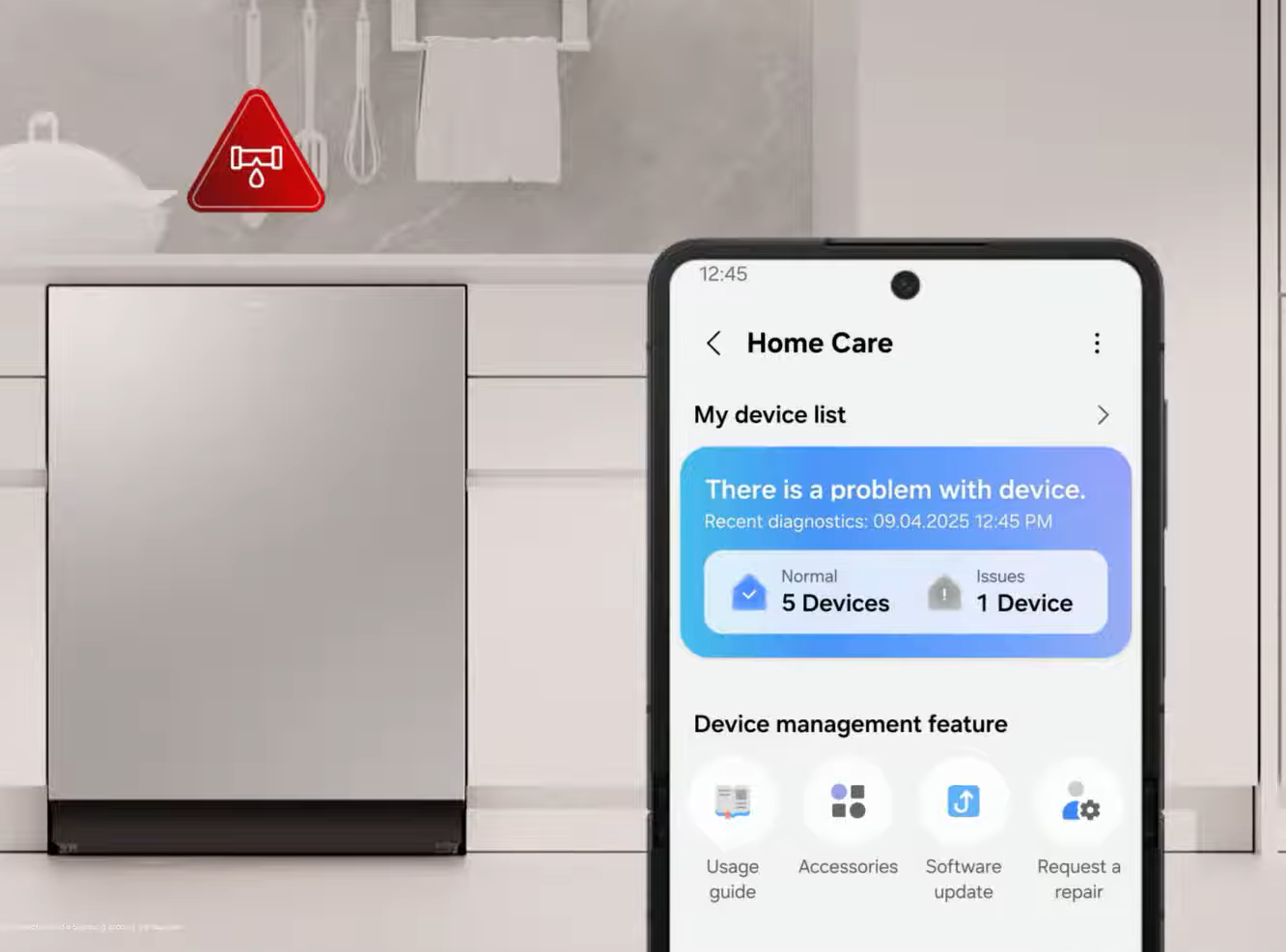
"Using information from these connected appliances, we assess the characteristics of your smart home and enable a truly personalized offer, knowing that you have appliances smart enough to alert you a small leak before it floods your kitchen, we can help you avoid costly, time consuming claims."
In a nutshell, HSB and Samsung want to apply the industrial AI preventative maintenance use case to your home.
This pilot with HSB and Samsung is worth watching since it highlights how AI may be monetized going forward. Use of AI and models in insurance is also notable.
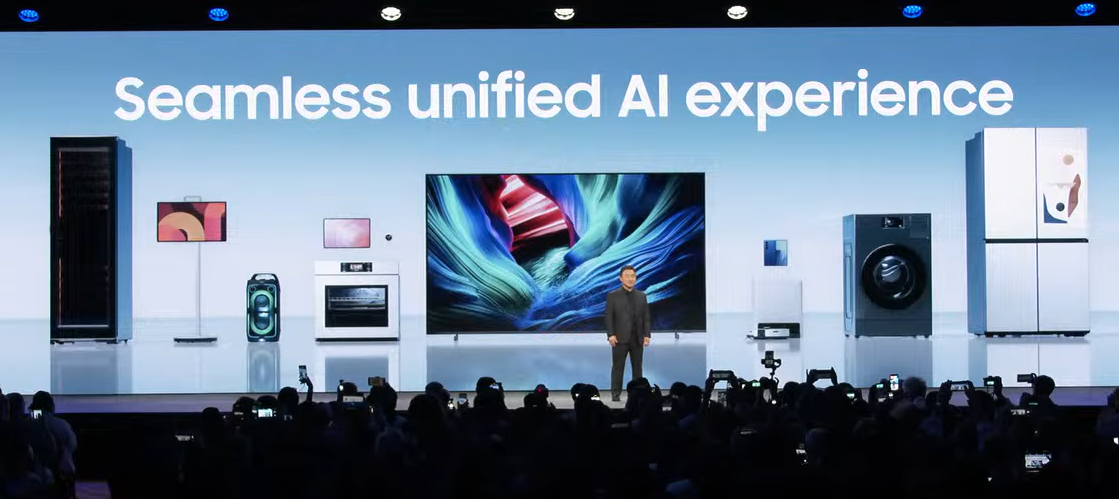
Samsung's First Look included a 130-inch TV, an AI-driven Family Hub refrigerator, a Bespoke AI Laundry Combo that eliminates the need to transfer loads of laundry and a Bespoke AI Jet Bot Steamer.
TM Roh, CEO and Head of Samsung’s Device eXperience (DX) Division, said:
"Our mission is clear to be your companion to AI living, and our strategy is simple. We will harness the full scale of Samsung to create technologies and experiences that surely matter to people. We will embed AI across every category and every product and every service to deliver one seamless, unified AI experience. Our device portfolio puts us in every moment of daily life, giving us unique consumer understanding."
Here's the opportunity and the problem:
Samsung ships more than 500 million devices each year and has a treasure trove of consumer data. But my confidence that Samsung can provide one unified experience isn't high. Samsung can't resist layering its Bixby assistant on top of Gemini. App conflicts are everywhere on a Samsung smart phone to the point where I ditched Samsung for Google's Pixel and Motorola's Razr. I don't need that UI disaster on my fridge.
It's not clear anyone is asking for AI features on their appliances. I just want my washer and dryer to work without some Samsung sensor freaking out. Confession: My Samsung dryer is a royal pain and works once in a while. If the Samsung appliance didn't come with the house it wouldn't make the cut.
AI everywhere sounds interesting on stage, but annoying in real life.
Ultimately, people will pay up for dumb appliances. Some appliance maker should just market with a line like: "Dumb appliances that just do what they're supposed to do reliably. Every time. For years."
Samsung has a good security ground game with Samsung Knox and on-device AI, but it's unclear whether consumers are going to be into sharing data with insurers. The data sharing will depend solely on the size of the discount. Details on the HSB discounts were sparse in Samsung's CES 2026 keynote.
Editor in Chief of Constellation Insights
Constellation Research
Larry Dignan is Editor in Chief of Constellation Insights at Constellation Research, where he leads editorial coverage focused on enterprise technology, digital transformation, and emerging trends shaping the future of business. He oversees research-driven news, analysis, interviews, and event coverage designed to help technology buyers and vendors navigate complex markets with clarity and context. ...
Enterprises will get all-you-can eat agentic AI pricing, data tools are going to be a headache, AI agents will look more like a feature than a revolution and physical AI will matter. Those are some of the trends to watch in 2026.
Here’s a look at the trends and predictions in enterprise technology for 2026 grouped by confidence levels.
High confidence
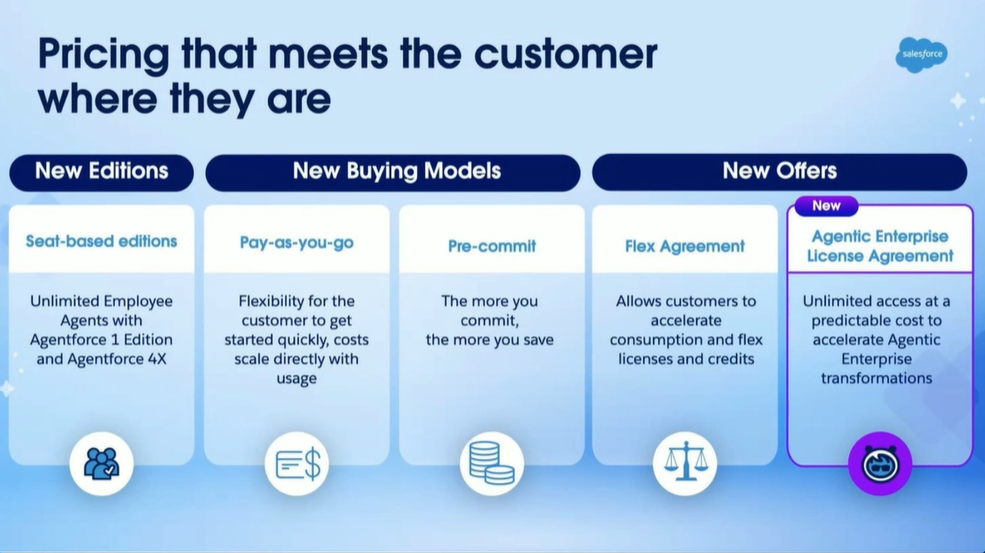
Agentic enterprise license agreements will become the norm as CxOs push back. In 2025, enterprise software vendors, which were worried about losing seats, introduced consumption models. The idea was that a hybrid approach would be the best of both worlds for CIOs. However, consumption models were unpredictable and CIOs, not to mention CFOs wanted predictability. Enter the agentic AI enterprise license.
Salesforce's Miquel Milano, president chief revenue officer, laid out the rationale behind Salesforce's AELA, Agentic Enterprise License Agreement. "AELA is for customers that have already experimented. They're ready to scale. They want to go all in so we agree on a flat fee, and then it's a shared risk," said Milano.
ALEA is all you can eat with Agentforce or whatever other cloud is thrown in. Of course, once you're all in Salesforce can better monetize the platform next contract. In 2026, it's highly likely you'll see similar arrangements from SaaS providers.
Here's the catch: SaaS providers may ink ALEAs at a loss as they play for the renewal (when you're completely locked in). Milano is looking at lifetime value of a customer. "If the customers are smart, they can rob the bank. They can really make a great deal out of that. We take the risk because we want our customers to be successful. I would love to have a customer where I price an AELA at $5 million incremental, and the customer has deployed so much that the deal is not profitable for me. If the deal isn't profitable for me, it means that the customer is the happiest customer in the world. And then I have another 20 years to monetize that customer," said Milano.
Enterprise data tolls and API economics are going to be a headache. Celonis is suing SAP over data access. In October, U.S. District Judge Vince Chhabria in San Francisco ruled the SAP must face the Celonis lawsuit. Toward the end of 2025, The Information reported that Salesforce was raising prices on apps that tap into its data. CIO.com noted that these connector fees are likely to trickle down to IT budgets.
As agentic AI is deployed and agents connect, there will be multiple skirmishes in 2026 over these data tolls. There will need to be some standard toll to cover compute costs, but enterprises need to keep in mind that they own the data. In some cases, your vendor may feel otherwise.
Connection fees are going to be the new cloud egress to move data. I'd argue that data fees are going to be the biggest risk to scaling AI agents.
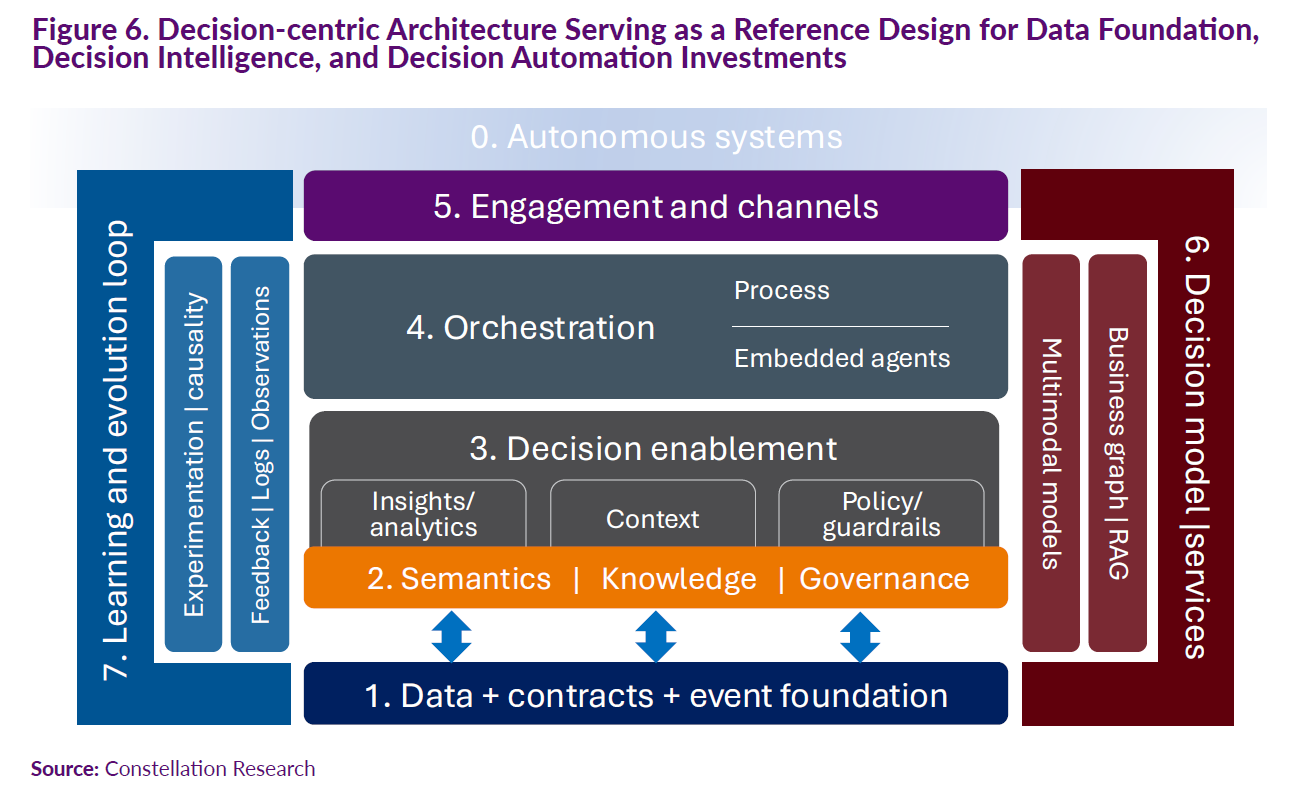
Agentic AI is a feature and the real deal is decision velocity.This theme is Michael Ni's department, but decision velocity--how quickly smaller decision trees and processes can be automated at scale--will be a core theme. When Ni, in a video chat, said agentic AI was merely a feature I had two reactions. First reaction: How many pixels have been spent on a feature?!? Second reaction: Mike has a point. The game is decision velocity and you're task in 2026 will be to put the pieces in place to get there.
"What we're seeing is the first decisions are smaller decisions, automations on the backside of that leading to human engagement. Then we start to collapse these decision trees to get to some of the 5x, 10x improvements. We're seeing leaders actually able to achieve with decision automation," said Ni, who noted that 2025 was a year where a lot of the decision velocity building blocks were put in place.
In-house forward-deployed become a necessity. Software vendors—all cribbing a play from Palantir—talked up forward deployed engineers almost every time executives talked agentic AI deployments. In 2026, enterprises are going to realize they need their own forward-deployed engineers to work through data, process, architecture and AI automation. These engineers will know the business and industry better than the ones you’ll borrow from software vendors and services firms.
Medium confidence
The AI market will bifurcate as the bubble pops either in 2026 or 2027. Concerns about AI infrastructure capital expenses and debt will be what really scales in 2026. But don't get distracted with your AI plans. Chances are 2026 will highlight how the easy money in training LLMs, raising capital at a ridiculous clip and fabulous remaining performance obligations is over. That AI market, dominated AI's circular economy and OpenAI, will be completely different than the enterprise AI version. That productivity boom is just starting as AI and process automation converge.
Build will beat buy. The build vs. buy debate continues as AI agents make it easier to create applications you used to buy. In addition, build looks like a great option since customers are beginning to push back on SaaS deal inflation. SaaS costs go up annually. It's almost as bad as healthcare.
In 2026, there will be an inflection point where enterprises become convinced that applications custom to their use cases are the way to go. Sunk costs in enterprise systems will be abstracted away using agentic AI as a user interface.
AI benefits broaden out to more levels of the enterprise stack. Software vendors are going to show revenue and productivity gains from AI. On Wall Street, enterprise software vendors finally join the AI rally. Nvidia and AI infrastructure plays will be flattish in 2026.
Physical AI gets its moment. Manufacturing and industrial sectors start to leverage physical AI to deliver real value. In addition, physical AI breakthroughs will begin to rival the early days of LLMs. This physical AI focus drives optimism about robotics as well as edge AI applications.
Not absurd, but unlikely for 2026
Nvidia shares close the year flat to down year, but the fall isn't enough to result in real selling. Sales growth begins to slow as hyperscalers increasingly rely on their custom silicon. There's a concentrated effort in the industry to break Nvidia's hardware and software moat around AI.
AI infrastructure is overbuilt due to hardware and software advances that don't require as much compute and energy. Wall Street rewards companies like Apple that didn't go crazy building AI infrastructure. AI backlash builds as multiple NIMBY grassroots efforts thwart plans to build data centers in small towns and rural areas. Note I said something similar to this in 2025 to no avail.
OpenAI realizes it can't continually raise money forever goes on with an austerity push to show it can generate cash flow and become profitable.
Quantum use cases go mainstream in the enterprise as quantum supremacy comes early. It also becomes clear that superconducting quantum computing is the clear technology winner and that reality causes a mad scramble for companies focused on trapped ions, neutral atoms, annealing and other techniques.
Meta revamps its AI operations again once it's clear that its new management team and focus doesn't yield results. Meta's AI operations resemble the New York Mets, a massive payroll that doesn't deliver wins.
High memory costs create a buyers strike for PCs, servers and smartphones.
2026 becomes one of the biggest years ever. for IPOs as Databricks, Anthropic, OpenAI, SpaceX and Stripe all go public. Two of those five headliners trade under their IPOs prices after 3 months.
TikTok usage plunges under new ownership as the US algorithm is tweaked.
Scorecard from 2025
Here's a look at my predictions for 2025 that worked out and other areas where my crystal ball was cracked. In 2025, I included probability of a prediction playing out.
On target:
2025 was more volatile than usual.
AI productivity gains broadened in enterprises.
OpenAI and Microsoft became frenemies without a doubt.
Enterprises will try new SaaS revenue models and scream. Consumption sounds great...until you get the bill.
ERP comes under fire. ERP didn't go anywhere but is being abstracted.
Off base:
That alleged run on vendor consolidation never played out.
Agentic AI will usher in autonomous processes. We're clearly still in the early stages. The buy side is still wary of lock-in.
The AI data center buildout will stall. Actually, it just accelerated in a few days after I made that prediction.
Nvidia growth slows. Nvidia still faces the law of large numbers and more competition, but 62% revenue growth is pretty sweet.
Edge computing becomes more critical for AI workloads. It'll happen but sure didn't in 2025.
Editor in Chief of Constellation Insights
Constellation Research
Larry Dignan is Editor in Chief of Constellation Insights at Constellation Research, where he leads editorial coverage focused on enterprise technology, digital transformation, and emerging trends shaping the future of business. He oversees research-driven news, analysis, interviews, and event coverage designed to help technology buyers and vendors navigate complex markets with clarity and context. ...
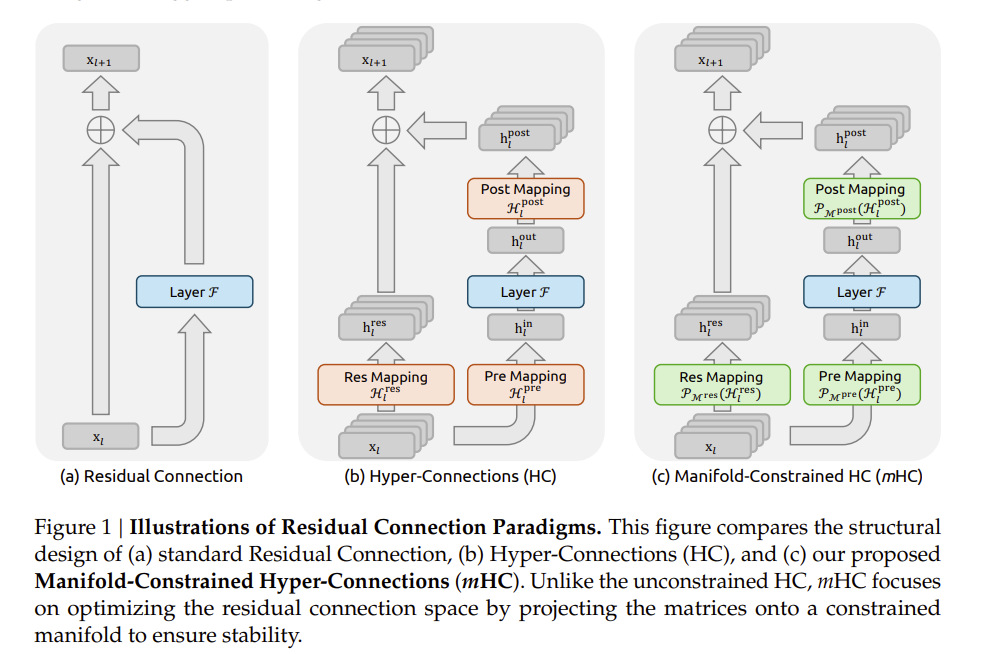
DeepSeek published a technical paper co-authored by co-founder Liang Wenfeng that argues for a new architecture to train foundational models.
The paper, which details Manifold-Constrained Hyper-Connections (mHC), argues that a new architecture is needed to better scale deep learning without signal divergence. Granted, the mHC paper is wonky, but the key takeaway is that you can have large-scale training that's more efficient with better quality.
"Empirical results confirm that mHC effectively restores the identity mapping property, enabling stable large-scale training with superior scalability compared to conventional HC. Crucially, through efficient infrastructure-level optimizations, mHC delivers these improvements with negligible computational overhead."
Given that DeepSeek's paper landed the day after New Year's Day, it's unlikely to garner a ton of attention. However, DeepSeek's paper is just another development leading to the following: The muscle head era (error) of AI is coming to an end.
The AI market to date has been driven by muscle head logic. The answer for everything in the last two years has been more muscle. In AI's case that approach means more GPUs, more farm land going away, more energy usage, more water and by all means more data centers, debt and capital expenditures.
Almost a year ago, DeepSeek's LLM rattled the AI market because it appeared to be more efficient and trained without the latest and greatest from Nvidia. After an early freakout over DeepSeek, the US-driven part of the AI market went right back to the Stargate happy approach. Toward the end of 2025, investors were starting to question the capital expense and debt load behind the AI buildout.
In 2026, we're likely to see more engineering excellence and less muscle head logic. Here's some evidence to why that theory may play out.
Price and performance matter. LLM giants were busy diversifying their chip bases. Google's TPUs and Amazon Web Services' Trainium are going to be threats to Nvidia as inference becomes the main event.
Capital expenditures and debt loads are being questioned. Just ask Oracle and Meta.
NIMBY is brewing. Yes, tech titans would pave over every inch of land for an AI factory, but you need power. Communities are going to become wary of paying higher electric bills for AI. Sen. Bernie Sanders of Vermont and Florida Gov. Ron DeSantis agree on little, but both agree AI's data center boom is a raw deal.
China is pushing new architectures that are easy on compute. The US has deprived China of Nvidia's best chips (until recently). As a result, China has eyed more efficient training and embraced open source. DeepSeek has the incentive to push new AI architectures. The US is more muscle over elegance.
These developments mean you can't just see DeepSeek's paper in a vacuum. It's just one more piece of evidence that AI is going to become way more efficient and that potentially means less compute.
Editor in Chief of Constellation Insights
Constellation Research
Larry Dignan is Editor in Chief of Constellation Insights at Constellation Research, where he leads editorial coverage focused on enterprise technology, digital transformation, and emerging trends shaping the future of business. He oversees research-driven news, analysis, interviews, and event coverage designed to help technology buyers and vendors navigate complex markets with clarity and context. ...
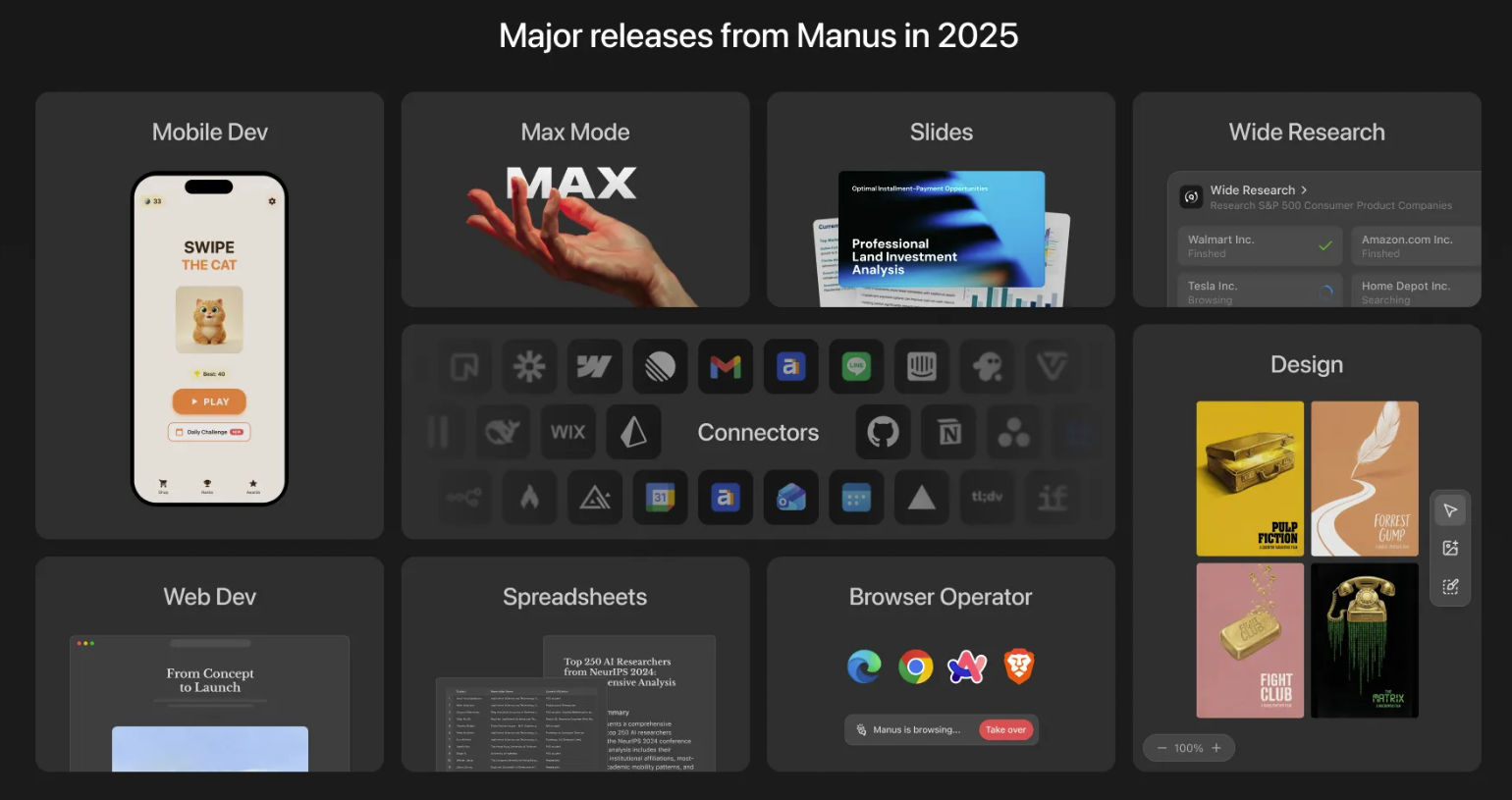
Meta acquired Manus in a deal that aims to give the company a rare win in artificial intelligence after a year of revamping. Manus is critical to fleshing out Meta CEO Mark Zuckerberg's dream of a universal AI assistant to get work done across its products.
Whether Meta allows Manus to run or bogs it down remains to be seen, but there are some fun facts worth noting.
The company is growing 20% month-over-month since it releases Manus 1.5.
Manus' portfolio of agents is focused on getting work done including making presentations, design and a laundry list of other things SMBs need to do. Manus has multiple connectors to various systems.
The company released its General AI Agent earlier in 2025 and the goal is to enable users to delegate tasks.
In many respects, Manus was able to move faster than the giants with AI agents that actually deliver results for various use cases.
Manus plans range from $20 a month to $200 a month with Team plans available.
Yes, Manus flew under the radar relative to OpenAI and Anthropic, but can accelerate Meta's plans. What are Meta's AI plans other than handing out massive pay packages, spending big on capital expenditures and falling behind on LLMs? Here's what Zuckerberg said in October about the company's AI research spending and agentic AI.
"The research is going to enable new technological capabilities to exist. And then those capabilities can get built into all kinds of different products. So the ability to reason more intelligently is, for example, very important across a large number of things. It would be useful for an assistant. It will also be useful in business AI. It will also be useful in the AI agent that we're building to help advertisers figure out what their campaigns are going to be....
There are lots of different capabilities to build. I'm not sure that any one company is going to be the best at all of them. I doubt that's going to be the case. But a lot of what we're trying to do is not like -- not kind of do some things that others have done. We're really trying to build novel capabilities."
In July, Zuckerberg said:
"I believe every business will soon have a business AI, just like they have an e-mail address, social media account and website. Our focus is now deepening the experience and making Meta AI the leading personal AI. As we continue improving our models, we see engagement grow."
Manus should be able to get Meta closer to its AI agent vision. Meta said in a statement that it will "we will continue to operate and sell the Manus service, as well as integrate it into our products."
The paths forward for Manus could go like this:
Meta will run Manus independently and it'll become a business AI brand that scales to a multi-billion revenue unit. Meta has built out its Instagram and WhatsApp businesses as part of a portfolio so there's some precedent.
Manus agents will be built into a series of Meta products and absorbed. The technology remains, but Manus as a standalone business fades.
Meta both operates Manus as a business and leverages it internally to maximize returns. Manus and Meta iterate on products and services.
Xiao Hong, CEO of Manus, said "joining Meta allows us to build on a stronger, more sustainable foundation without changing how Manus works or how decisions are made."
For now, Meta's Manus acquisition puts it back into the AI conversation as something more than a big spending also-ran.
Constellation Research's take
Holger Mueller, an analyst at Constellation Research, said the Manus deal is more of a hedge against its core advertising business. It's also an agentic AI play, but don't forget the ad angle.
Mueller said:
"In a world where it is not clear how AI is going to change how ads are going to be presented, consumed and paid for, Mark Zuckerberg is doubling down on AI and human supervision. The Manus agents pose interesting automation potential for knowledge workers, and an advertisement funded version of Manus, delivering AI automation first and then the ad at the moment of supervision. Brownie points for Meta if they are context and action aware."
Principal Analyst and Founder
Constellation Research
R “Ray” Wang is the CEO of Silicon Valley-based Constellation Research Inc. He co-hosts DisrupTV, a weekly enterprise tech and leadership webcast that averages 50,000 views per episode and blogs at www.raywang.org. His ground-breaking best-selling book on digital transformation, Disrupting Digital Business, was published by Harvard Business Review Press in 2015. Ray's new book about Digital Giants and the future of business, titled, Everybody Wants to Rule The World was released in July 2021. Wang is well-quoted and frequently interviewed by media outlets such as the Wall Street Journal, Fox Business, CNBC, Yahoo Finance, Cheddar, and Bloomberg.
Short Bio
R “Ray” Wang (pronounced WAHNG) is the Founder, Chairman, and Principal Analyst of Silicon Valley-based Constellation Research Inc. He…...
From AI breakthroughs to infrastructure investments, 2025 reshaped the tech landscape. CGTN's Sally Ayhan spoke to Ray Wang, Principal Analyst at Constellation Research, about the year's biggest tech milestones and what's driving competition heading into 2026.
Source: CGTN America
The Biggest AI Breakthroughs In 2025 Came Fast and Furious
AI dominated and permeated every aspect of our lives in 2025. Generative AI moved to the mainstream and models improved ability to process text, images, audio and video. This multi modal ability to analyze and create content improved. The shift from generative to Agentic AI showed enterprises that they could automate work processes and start to accelerate decision velocity. Humanoid robots made progress and raised hopes in the west that Physical AI would be ready in time as aging populations faced lower birth rates. Cybersecurity had breakthroughs in offense and defense for AI driven attacks.
Billions In Infrastructure Changed The Competitive Landscape
Big tech poured billions into infrastructure - chips, power and data centers. The impact on the venture capital, private equity, and startup funding changed forever. In fact, the battle for data center dominance took the market by surprise. Data centers outstripped commercial real estate as the largest category for investment. Data centers drove over $61B in deals and investment for 2025. The Amazons, Googles, Microsofts, Meta, and others dominated investments while NeoClouds such as CoreWeave, Oracle, and others added to the frenzy.
China’s major players Alibaba, Tencent, ByteDance, DeepSeek, Zhipu AI, Baichuan And others pledged investments of up to $70B in data center expansion for 2026. What we learned in 2025 was that natural resources and real assets have more value than ever as power, water, real estate, and critical minerals are the linchpins to any AI project.
Market Sentiments Towards AI Fluctuated From Short Term Gain to Long Term Pain
Investor pushback questioning AI's return of investment picked up in the Fall of 2025, after nine months of giddiness. There were some reports that showed AI burnout or overload but those were short lived. Companies with real AI success showed 10X to 100X gains and outpaced those who waited too long. Those dabbling are following behind A class of AI exponentials who have emerged to outclass competitors who do not have AI capabilities. Ultimately, AI is a game of long term investment for a winner takes all market.
China Shows Strong AI Development
Constellation Research estimates $150B in AI industry value as AI is being embedded In smart cities, llogistics, healthcare, pharma Agriculture, robotics, and consumer chatbots into China. China's growth in embedding AI into real economic sectors was quite significant by all counts. From AI models, semiconductors, robotics, over $125B in state funding went to companies such as DeepSeek, Huawei, Alibaba, Tencent, and Zhipu AI. Alibaba Tongyi and Qianwen took off as Open Source LLMs had their moment.
AI robots like Agibot took hold as the race for humanoid robots showcased not only how far they have come but also their major limitations. Huawei launched the Ascend 910 chip. Meanwhile, DeepSeek R1 and Wudao 3.0 plowed ahead with open Source LLMs. Overall the race between China and the US was quite competitive with the US slightly ahead.
The Forecast For 2026 Looks Brighter and Bolder
Heading into 2026, AI agents and autonomous workflows are expected to grow rapidly. Expect leadership to focus on a few areas such as chip dominance. Expect faster chips, more power efficiency, and expansion of TPU's for inference. getting faster chips, TPU advancements. On the model adoption front, the battle for Chinese Open Source vs Western Models and their ecosystems will be decided by the developers.
In the area of data dominance, the battle for data sets will increase as companies scramble for data sources to feed the voracious appetites of models and the constant updating of signals. The emergence of Data Inc companies and their business models will come to fruition in late 20206.
Real world ROI will be prevalent in every outcome based conversation. The winners will achieve exponential efficiency and infinite possibilities.
Expect Fierce Rivalry In The China vs US AI War
The race continues on. This battle is about mass adoption and investment. China has the lead on power efficiency and open source LLMs The US has the models, the chips, and market ecosystems The real question is who will have the better business models and which system will be bankrupt first from AI investments and which countries will have the greatest returns. This will be what we will be watching for in 2026.
Your POV
What were your top highlights for 2025? What are your wishes for 2026?
Working with your boards to keep them up to date on technology and governance.
Connecting with other innovation minded leaders
Sharing best practices
Vendor selection
Implementation partner selection
Providing contract negotiations and software licensing support
Demystifying software licensing
Reprints can be purchased through Constellation Research, Inc. To request official reprints in PDF format, please contact Sales.
Disclosures
Although we work closely with many mega software vendors, we want you to trust us. For the full disclosure policy,stay tuned for the full client list on the Constellation Research website. * Not responsible for any factual errors or omissions. However, happy to correct any errors upon email receipt.
Constellation Research recommends that readers consult a stock professional for their investment guidance. Investors should understand the potential conflicts of interest analysts might face. Constellation does not underwrite or own the securities of the companies the analysts cover. Analysts themselves sometimes own stocks in the companies they cover—either directly or indirectly, such as through employee stock-purchase pools in which they and their colleagues participate. As a general matter, investors should not rely solely on an analyst’s recommendation when deciding whether to buy, hold, or sell a stock. Instead, they should also do their own research—such as reading the prospectus for new companies or for public companies, the quarterly and annual reports filed with the SEC—to confirm whether a particular investment is appropriate for them in light of their individual financial circumstances.
Editor in Chief of Constellation Insights
Constellation Research
Larry Dignan is Editor in Chief of Constellation Insights at Constellation Research, where he leads editorial coverage focused on enterprise technology, digital transformation, and emerging trends shaping the future of business. He oversees research-driven news, analysis, interviews, and event coverage designed to help technology buyers and vendors navigate complex markets with clarity and context. ...
Quantum computing hogged the headlines in 2025 and it was ok to say it was the year of quantum--or maybe qubits--after just a few months. The quantum computing developments were flying, but it's worth noting that we're years away from big commercial adoption.
Nevertheless, CxOs need to get ready. After all, the boardroom is getting tired of AI. The AI trade lost steam. Boardrooms are going to start asking about your quantum computing plans in 3, 2, 1.
Why was 2025 the year of quantum? For starters, there was a new development almost weekly. Pure play quantum stocks were hot. Hyperscale cloud players were deadly serious about quantum, with AWS, Microsoft Azure and Google Cloud all running credible efforts. Quantinuum threaded the needle between AI and quantum computing. IBM scaled aggressively. And real use cases emerged as companies like IonQ cited projects with DARPA, AstraZeneca, and others.
IonQ, University of Maryland and State of Maryland announced a $1 billion investment to create the "Capital of Quantum." Under the initiative, IonQ will be an anchor partner as it continues to pursue federal government contracts. IonQ at the University of Maryland's Discovery District, which is near Washington, DC and Annapolis, MD.
Microsoft launched Majorana 1, a quantum computing chip with a Topological Core architecture. Topological quantum computing uses a concept similar to semiconductors using "anyons," which can arrange qubits into patterns. A topological superconductor is a material that can create a new state of matter. It's harnessed to create a more stable qubit that can be digitally controlled.
Nvidia CEO Jensen Huang at Nvidia GTC 2025 hosted the company’s first quantum day. A panel that featured most of the quantum computing CEOs amounted to a mea culpa tour following Huang’s comments in January.
Quantinuum quantum computers have created true verifiable randomness in a project that could be valuable to cybersecurity. In a paper in Nature, Quantinuum along with JPMorganChase, Oak Ridge National Laboratory, Argonne National Laboratory and the University of Texas have generated true randomness critical to cryptography and cybersecurity. Quantinuum said the latest advance was built on research from Shih-Han Hung and Scott Aaronson of the University of Texas at Austin.
Rigetti Computing and Quanta Computer said they will spend a combined $500 million to accelerate development and commercialization of superconducting quantum computing. The company also reported fourth quarter revenue of $2.27 million and 2024 revenue of $10.79 million. The net loss for 2024 was $200.99 million.
April
IBM said it will spend $30 billion in R&D in the US as part of a broader $150 billion spend. That R&D in part will be devoted to quantum computing. IBM CEO Arvind Krishna said on the company’s first quarter earnings call: "In Quantum, we are proud to partner with the Basque Government to deploy Europe's first IBM Quantum System 2 in Spain, a milestone in global Quantum leadership." IBM also published a paper on how quantum addresses problems in combinatorial optimization.
IonQ moved to expand its reach. It established a quantum computing and networking hub in Chattanooga, Tennessee in a $22 million deal. The company also outlined an agreement with Toyota Tsusho and AIST to expand quantum computer reach in Japan. IonQ also signed a memorandum of understanding with Intellian to extend into South Korea. IonQ also said its Forte Enterprise system is available through Amazon Braket.
D-Wave and Davidson Technologies, a defense technology company, assembled D-Wave's Advantage2 annealing quantum system at Davidson's Huntsville, Alabama headquarters.
Classiq, a quantum software development company, and Wolfram Research joined CERN’s Open Quantum Institute (OQI). The two companies will target quantum-based technologies to optimize electrical networks.
Researchers at Tokyo University of Science, Japan unveiled DSAPS, a chip system that overcomes capacity and precision limits with dual scalable annealing processors.
U.S. Defense Advanced Research Projects Agency’s (DARPA) Quantum Benchmarking Initiative (QBI) selected host of companies to evaluate a variety of technologies for creating quantum bits. The companies include: Alice & Bob, Atlantic Quantum, Atom Computing, Diraq, Hewlett Packard Enterprise, IBM, IonQ, Nord Quantique, Oxford Ionics, Photonic Inc., Quantinuum, Quantum Motion, QuEra Computing, Rigetti Computing, Silicon Quantum Computing Pty. Ltd. and Xanadu.
May
IonQ went shopping again with the acquisitions of Lightsynq Technologies, a startup focused on photonic interconnects and quantum memory, and Capella Space, which specializes in quantum space networks. See: IonQ’s plan: Quantum networks extending into space
IBM launched a Flex Plan for access to its quantum computing hardware in a move that aims to expand access for organizations, enterprises and researchers who want access without monthly limits. The IBM Quantum Flex Plan provides access on day one with an entry point of $30,000+ to gain access to Big Blue's entire fleet of quantum systems. Flex plan users will also get the advanced software features, support and early access to new releases.
Classiq, a quantum computing software company, said it raised $110 million in Series C funding. The company is looking to build the software stack for quantum computing. The funding, led by Entrée Capital and a bevy of other investors, will be used to build Classiq's go-to-market, customer success and R&D teams globally.
D-Wave Quantum said its Advantage2 annealing quantum computer is now commercially available and is likely to contribute to revenue growth. Advantage2 is available via D-Wave's Leap quantum cloud service as well as on-premises deployments. Dr. Alan Baratz, CEO of D-Wave, said the system is a milestone in the company's development and able to "solve hard problems outside the reach of one of the world’s largest exascale GPU-based classical supercomputers."
Cisco is entering the quantum computing networking ring with a lab and prototype processor. The move is notable since Cisco is a networking giant in the enterprise. In addition, quantum networking has been seen as a key piece of infrastructure.
Quantum Computing Inc. raised $200 million with an At-the-Market equity offering.
IBM and Riken, a national research laboratory in Japan, unveiled the first IBM Quantum System Two ever to be deployed outside of US. The quantum computer will be co-located with Riken's supercomputer Fugaku.
Rigetti completed a $350 million At-the-Market equity offering.
IBM updated its quantum computing roadmap heading into IBM Quantum Starling, a large-scale fault-tolerant quantum system in 2029. Big Blue said IBM Quantum Starling will be delivered by 2029 and installed at the IBM Quantum Data Center in Poughkeepsie, New York. That system is expected to perform 20,000 times ore operations than today's quantum computers.
July
D-Wave raised $400 million with an At-the-Market equity offering. The move left D-Wave with about $815 million in cash. D-Wave also outlined a strategic development effort to advance cryogenic packaging.
Rigetti Computing said its 36-qubit multi-chip quantum computer is generally available and outlined a plan to build a 100-qubit system with 99.5% fidelity by the end of 2025, but quantum advantage is likely 4 years away. Second quarter results fell short of estimates.
IonQ, which has been on an acquisition spree, reported second quarter results with a net loss of $177.5 million on revenue of $20.7 million. IonQ had $1.6 billion of pro forma cash and equivalents as of July 9. IonQ also filled out its leadership team with David Chung as VP, Corporate Development; Shad Reed as VP, Engineering Public Sector; Petrina Zaraszczak as VP, Business Operations & Integration; and Sterling Zumbrunn as VP, Product Management Networking.
Rigetti said it landed two orders for quantum computing systems for $5.7 million. Rigetti also announced a $5.8 million AFRL contract with QphoX.
Quantum Computing closed a private placement of common stock to raise $500 million.
IonQ announced purchase of Vector Atomic, completed the Oxford Ionics acquisition and inked a US Department of Energy memorandum of understanding to deploy quantum technology in space.
IonQ launched a federal unit to focus on US government use cases. The company also named Inder M. Singh as Chief Financial Officer and Chief Operating Officer.
SPACs are back as Horizon Quantum said it would go public via a merger with dMY Squared Technology Group.
October
Quantum computing companies, often with minimal or no revenue, raise funds at a brisk pace to fortify balance sheets. Raise money when you don't need to is a good motto for CFOs to have. Even after a recent pullback Rigetti shares are up 200% on the year and IonQ is up 50%. D-Wave is up 356%.
Swiss Quantum Technology inked a €10 million to deploy D-Wave's Advantage2 system.
The Basque Government and IBM launched Europe's first IBM Quantum System Two in Donostia-San Sebastián.
IonQ priced a $2 billion equity offering to fortify its balance sheet following a run-up. IonQ also completed its acquisition of Vector Atomic.
Arqit Quantum said its second quarter revenue wil be $460,000 to $470,000 with fiscal 2025 revenue of $525,000 to $535,000. The company had $36.9 million in cash.
Quantum Computing announced a private placement of common stock to raise $750 million.
IonQ named Scott Millard Chief Business Officer and acquired Skyloom Global.
December
IonQ and KiSTI finalized plans to bring a 100-qubit quantum system to South Korea.
D-Wave said it will outline its commercial quantum plans at CES 2026.
Quantum Computing Inc. named Dr. Yuping Huang CEO and acquired Luminar’s photonics business for $110 million.
D-Wave launched a US government unit.
What now?
One thing worth noting here is that 2025 became the year of quantum readiness and development rather than deployment. That said, CxOs need to start thinking about quantum. Constellation Research analyst Holger Mueller broke down how you should be thinking about the year of quantum.
If you need to protect IP against state actors, you should deploy quantum key encryption today.
If you have smaller planning and simulation issues in your business, get your pilot going.
If you are on process manufacturing, chemical, pharma etc. - you must have quantum pilots. You likely have them on annealing and laser gate already but need to keep an eye on all super conducting players.
Everybody else can sit back and get the popcorn, but keep an eye on medium-scale planning and simulation use cases. All enterprises have those. On the tech side, watch stabilization, componentization and then scale loop. IBM is the most advanced and learn from their process.
Editor in Chief of Constellation Insights
Constellation Research
Larry Dignan is Editor in Chief of Constellation Insights at Constellation Research, where he leads editorial coverage focused on enterprise technology, digital transformation, and emerging trends shaping the future of business. He oversees research-driven news, analysis, interviews, and event coverage designed to help technology buyers and vendors navigate complex markets with clarity and context. ...
Groq announced it has entered a non-exclusive licensing agreement with Nvidia for Groq's inference technology. Groq CEO Jonathan Ross and team will join Nvidia, but Groq will operate independently with GroqCloud.
CNBC reported that Nvidia is acquiring Groq for $20 billion. CNBC's David Faber cited Groq investor Alex Davis, CEO of Disruptive, has his primary source. Groq, founded in 2016, had a valuation pushing $7 billion.
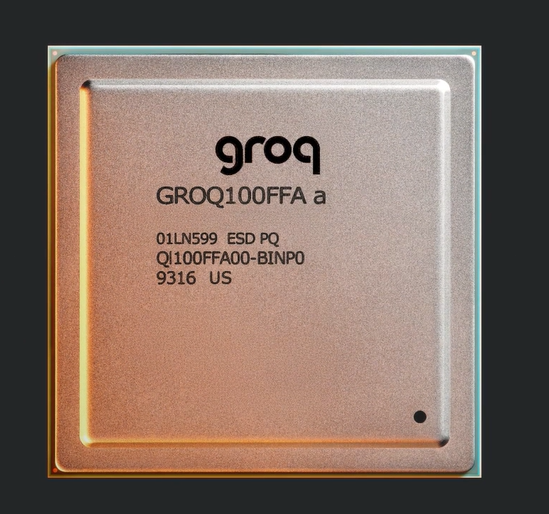
Groq’s secret sauce is a processor it calls the LPU (language processing unit). ‘The LPU integrates hundreds of MB of SRAM as primary weight storage (not cache), cutting latency and feeding compute units at full speed. This enables efficient tensor parallelism across chips, a practical advantage for fast, scalable inference,” said Groq. Groq's LPU is designed specifically for efficient AI inference.
Following the CNBC report, Groq announced it has entered a non-exclusive licensing agreement with Nvidia for Groq's inference technology. Groq statement in full:
“Today, Groq announced that it has entered into a non-exclusive licensing agreement with Nvidia for Groq’s inference technology. The agreement reflects a shared focus on expanding access to high-performance, low cost inference.
As part of this agreement, Jonathan Ross, Groq’s Founder, Sunny Madra, Groq’s President, and other members of the Groq team will join Nvidia to help advance and scale the licensed technology.
Groq will continue to operate as an independent company with Simon Edwards stepping into the role of Chief Executive Officer.
GroqCloud will continue to operate without interruption."
The Groq-Nvidia deal rhymes with how Meta handled the Scale AI deal. In that deal, Meta invested in Scale and gave it a valuation of $29 billion. Scale's founder Alexandr Wang agreed to work for Meta and now leads its AI efforts.
Principal Analyst and Founder
Constellation Research
R “Ray” Wang is the CEO of Silicon Valley-based Constellation Research Inc. He co-hosts DisrupTV, a weekly enterprise tech and leadership webcast that averages 50,000 views per episode and blogs at www.raywang.org. His ground-breaking best-selling book on digital transformation, Disrupting Digital Business, was published by Harvard Business Review Press in 2015. Ray's new book about Digital Giants and the future of business, titled, Everybody Wants to Rule The World was released in July 2021. Wang is well-quoted and frequently interviewed by media outlets such as the Wall Street Journal, Fox Business, CNBC, Yahoo Finance, Cheddar, and Bloomberg.
Short Bio
R “Ray” Wang (pronounced WAHNG) is the Founder, Chairman, and Principal Analyst of Silicon Valley-based Constellation Research Inc. He…...
Exponential Efficiency and Infinite Possibilities with AI. AI is going to have a productivity effect and will create new types of companies that we have not imagined. These tiny teams can operate with massive scale and few people.
IPO boom ahead. Lower interest rates meets IPO boom meets AI investments. AsScott Shelladymentioned in the program earlier in the day, the effects of the One Big Beautiful Bill will be coming soon into 2026. This stimulus will have a bigger impact and potentially move GDP past the 4.6% growth we saw this past month.
Battle for cheap energy. Europe's $.25 kWh costs and America's $.15 kWh costs can not compete with China's $.08kWh costs. The ideological green programs have left the West behind. Further, China's moving to $.04 kWh. This means that China’s energy dominance will give them an advantage on AI compute, manufacturing, and war time capacity.
Return to real asset basics. AI has shown that there is a battle for assets – water, power, gold, rare earths, and real estate. The focus on tangible assets will grow into 2030.
Massive shift in the workforce. Last generation of managers to only manage humans. Human managers will be managing agents, robots, devices and in some cases vice versa. This will create a cultural shift but also come in time as overall populations decline in the West.
ServiceNow Buys Armis For $7.75B
On December 23rd, ServiceNow's announced its acquisition ofArmisfor $7.75B. Armis was reaching 300M in ARR in mid 2025 and on a trajectory to 1B in ARR by 2026. ServiceNow has had organic growth with the Rule of 50. Together ServiceNow's customers now have the ability to bring operational technology (OT) with information technology (IT) and manage post-breach resilience from a cybersecurity landscape. As my colleagueChirag Mehtaoften mentions, this is the main priority in cyber security today - what happens after a breach and how to stem the damage.
Leveraging workflows and the CMDB from ServiceNow and security from Armis, customers will be able to secure both physical objects and cyber security. The AI control towers give company’s visibility into their environment The long term goal is situational awareness across the physical and digital world. Overall a great deal
Working with your boards to keep them up to date on technology and governance.
Connecting with other innovation minded leaders
Sharing best practices
Vendor selection
Implementation partner selection
Providing contract negotiations and software licensing support
Demystifying software licensing
Reprints can be purchased through Constellation Research, Inc. To request official reprints in PDF format, please contact Sales.
Disclosures
Although we work closely with many mega software vendors, we want you to trust us. For the full disclosure policy,stay tuned for the full client list on the Constellation Research website. * Not responsible for any factual errors or omissions. However, happy to correct any errors upon email receipt.
Constellation Research recommends that readers consult a stock professional for their investment guidance. Investors should understand the potential conflicts of interest analysts might face. Constellation does not underwrite or own the securities of the companies the analysts cover. Analysts themselves sometimes own stocks in the companies they cover—either directly or indirectly, such as through employee stock-purchase pools in which they and their colleagues participate. As a general matter, investors should not rely solely on an analyst’s recommendation when deciding whether to buy, hold, or sell a stock. Instead, they should also do their own research—such as reading the prospectus for new companies or for public companies, the quarterly and annual reports filed with the SEC—to confirm whether a particular investment is appropriate for them in light of their individual financial circumstances.
Editor in Chief of Constellation Insights
Constellation Research
Larry Dignan is Editor in Chief of Constellation Insights at Constellation Research, where he leads editorial coverage focused on enterprise technology, digital transformation, and emerging trends shaping the future of business. He oversees research-driven news, analysis, interviews, and event coverage designed to help technology buyers and vendors navigate complex markets with clarity and context. ...
As CxOs zoom out on 2025, it's clear that the year was characterized by AI building blocks and the need for real returns. Agentic AI platforms aren't quite mature, but the industry standards and connections are making deployments more realistic.
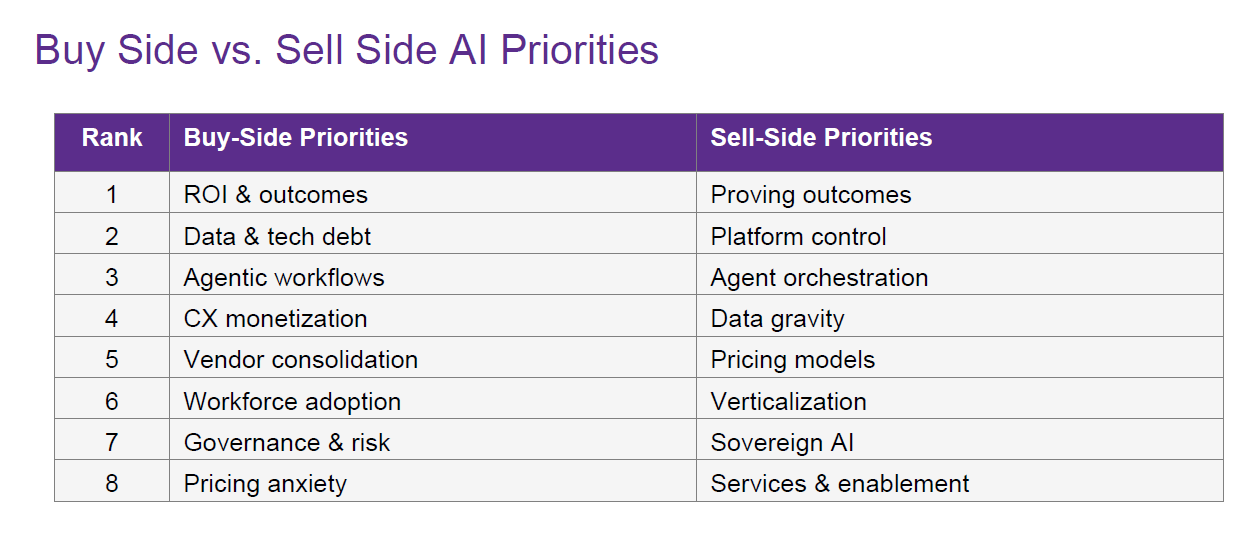
If you're an enterprise technology buyer the onus is on the vendors for showing value and more than proof of concepts. The game for both the buy side and the sell side revolves around use cases that show returns and can scale across the enterprise.
For vendors, the appeal of this use-case-by-use-case motion is selling a platform that can create, manage and orchestrate AI agents. For CxOs, the chase is the autonomous enterprise and efficiency and productivity gains that can fund more AI efforts.
In many respects, 2025 was a tale of two halves. The first half was dominated by economic volatility and skepticism about what vendors were pitching.
In the second half, the vendor platforms matured and proofs of concepts began to move to production. There also seems to be consensus that AI, automation and process are comingled.
For the 2025 analysis, I homed in on all the Constellation Insights articles posted throughout the year and analyzed the broad themes in enterprise technology, the buy side and the sell-side vendors.
Common themes in 2025
Agentic AI grew up, but still isn't what any reasonable executive would call mature. Agentic AI is a heavy lift that includes forward-deployed engineers, an enterprise data strategy that works, services and use case refinement. Simply put, it's easy to build an AI agent. Scaling them with guardrails and building enough trust to let these models run your company is another matter entirely.
AI economics in flux. Salesforce's recent move to offer an agentic enterprise license agreement is notable because it gives enterprises predictability. The consumption approach from SaaS didn't work out for many buyers. Vendors want to monetize the value they're creating, but enterprises are tired of bills continuing to rise. A consensus emerged that there will be multiple models that are combined to optimize for price performance. Hyperscalers are working custom silicon to commoditize compute and models will be rightsized for the task at hand.
Everything is a platform. SaaS providers are branching out beyond their core markets to become broader AI agent platforms. There isn't a vendor that doesn't have a horse in the AI agent platform race.
The real wins will revolve around industry-specific use cases and first-party data. Enterprises are beginning to leverage their unique data to train models and optimize use case by use case and industry by industry. Context is everything. Again, it's easier said than done.
The buy side
AI is an excuse to change operating models. Enterprises are beginning to use the agentic AI push as a way to optimize operations across all processes and use cases. These efforts would take longer under yesterday's transformation projects, but AI is giving smart companies air cover to accelerate plans.
Models are a commodity. Enterprises are no longer wowed by the latest and greatest models. China's DeepSeek and Qwen from Alibaba changed that proprietary model thinking in early 2025. Now enterprises are just as likely to use Nova models from AWS or open source as they are the big three models. That said models are a key ingredient of buying decisions of broader platforms.
Multi-cloud, multi-model, multi-everything. Enterprises have always been wary of lock-in (and still do it anyway), but AI is advancing so quickly that CxOs want neutrality and options. Interoperability is a requirement and AWS, Google Cloud and Microsoft Azure are beginning to connect. AI sprawl isn't a concern yet, but will be soon.
Technology strategy and business strategy merge. Spend on infrastructure, applications, models and ecosystems are driven by margins, agility and resilience of all types. Enterprises will look to AI as a way to abstract away technical debt.
Value over vision. Enterprises are shrinking budget cycles and demanding measurable impact. Enterprises care about efficiency, productivity, customer experiences and revenue gains. Vanity pilots are kaput. Practical AI is in.
It's still all about data. The enterprises that have a coherent data strategy, data quality and modern pipelines and platforms can win in the AI age. Too few enterprises have their data game down.
The sell side
Every vendor wants to be your sole platform. A tenured CxO would chuckle at these AI vendor developments. Why? Vendors have always wanted to consolidate all of your spending with them. Picking a vendor that can be your one go-to agentic AI platform isn't easy.
The value sales pitch. Vendors increasingly talked enterprise value, use cases and process optimization. They're certainly talking a good game. By mid-2025, this value-based sales pitch became the norm. Enterprise vendors and even OpenAI and Anthropic are all using the industry and use case playbook with partners or via direct sales.
LLM giants build ecosystems. OpenAI and Anthropic, not to mention Google's Gemini, are building ecosystems and applications that can leverage their models. What's unclear is whether these LLM giants can be the overarching interface that relegates enterprise software to plumbing. Also keep an eye on Databricks and Snowflake, which could leverage their data platforms to be the overarching enterprise layers.
Orchestration is the big thing. Vendors are pitching themselves as your go-to AI orchestration layer. For a vendor, agent orchestration will drive stickiness and revenue and lock-in. It's also possible that orchestration and data gravity will go together and drive vendor revenue.
Hyperscalers gain clout.Aside from ServiceNow, hyperscalers and integrators are the most natural fit to be that overarching AI platform, abstraction and orchestration layer. The big three cloud players are horizontal, touch every part of the enterprise and have pricing models that naturally go together with AI agents. Add it up and AWS, Microsoft Azure and Google Cloud all gained clout in 2025.




 Groq's LPU is designed specifically for efficient AI inference.