The Foundation Components For Digital Transformation
1
(note: I have to give many thanks for my good friend Sameer Patel who took at first look at this and said “let me tell you what you got wrong” – thus helping me improve it immensely – you should thank him too when you see him, the first pass needed lots of TLC – not perfect yet, but can be shared for wider commenting)
You’ve heard from many people that Digital Transformation is all the rage now. right?
Can you explain what it is?
How about what you have to do in your organization to be prepared (or even to be able to understand it enough to have a decent conversation)?
If you said no, or are not sure, you are not alone. Virtually everywhere I go these days this is the conversation we are having: what it is, how it works, what do I need to know and do, and what is the timeframe to get it done.
I will try to address as much as possible of these questions, and this post will frame my thinking for the research I am conducting in the next 2-3 years. This is the biggest thing to hit Enterprise Technology since I started, am looking for at least a decade if not longer of expansion and excitement.
This post is not even beginning to scratch the surface and all these items will be covered in far more detail in future writings. But, it is a a start – so let’s start at the beginning.
Why is this happening?

I could use the “perfect storm” analogy, but I prefer to call it confluence of event.
Of course, y’all like perfect storm better. Perfect storm it is – for now.
There was a perfect storm that caused this:
Customers In Control. We have been saying for some time now, at least five or six years, that customers have gained control of the conversation (good friend Paul Greenberg wrote very eloquently about this at the beginning of the “Social CRM Craze of 2008-2012?).
But what exactly does it mean?
It means that customers are more demanding of service times, of companies listening to them, and of making their voices heard. No small coincidence, of course, that this happened at the same time that online communities (including social networks) saw an expansion – a case can be made for a chicken-or-egg situation actually… In either case, the control of the conversation shifting to the customer was the first – er, cold-front in this storm.
Everything Went Digital. I am not going to assume anything about you and how you work and live – but, as an example, this morning I had to print and mail a document (remember that?). I have been in this office for over a year and a half – and never before had to use my printer — I know, because it was not connected to my wireless network.
I have gone so far digital that I can check my snail-mail once a month and throw away all the mailers and coupons without even checking (I do, don’t worry if you send checks). I even sold and bought a house last year – and not a smidgen of paper in my archives.
Granted, I am not a business – but if you agree with the statement above about customers going online – they are producing all the information in digital form. And the businesses that dealt with me throughout my two house transactions were indeed businesses – and they had also gone digital.
When was the last time your customers mailed you a survey (wait, I meant to ask – what is the return rate for paper surveys you mail out or ask customers to mail in? I know some still do, but rates are plummeting). A warranty card (remember those) back? A registration card?
Content, data, knowledge – all has gone digital. And we are not even talking about the expectations and demands from digital natives and digital immigrants – the people who live in digital world – that is another element altogether that influences the amount of data and content that has gone digital as well.
Add the oh-so-famous Internet of Things with connected devices and machinery giving more data, social networks, constant generation of blogs, communities conversations, interactions between customers and web sites, web logs, navigation logs for customers – and that is just scratching the surface of how much digital information we are producing.
You get the idea. Information is digital, and if not today – very soon.
Business Cycles Are Ending-Restarting. Business is cyclical. I know, shocker – everything we are doing today we did before (just faster, better, cheaper, easier now – supposedly).
Businesses evolve in cycles. The last few cycles you can relate to:
- ERP implementation (some 25-30 years ago) which was about automation and digitizing the work organizations did to stay alive;
- CRM Implementation (some 15-20 years ago) which was about digitizing interaction of customers;
- Internet Implementation (some 10-15 years ago) which was about bringing digital information from all over the universe to the organization; and
- HR implementation (past 5-10 years and ongoing) about digitizing relationships with employees
All these moves gave us more digital information and processes that we know what to do with. And all these moves in business also share common characteristics – they were executive conversations started at the highest levels of the organizations, with no technology or software solutions that defined and did what they proposed. They were conversations on how to improve / change / automate / speed up processing of different areas of the organization.
There is a lot of similarities between Tom Siebel talking to Executive Boards about providing visibility into their pipelines and interactions with customers two-to-three years before the first workable version of Siebel CRM came out (ibid for Dave Duffield from PeopleSoft and HCM and Hasso Plattner from SAP and ERP) and the discussions we are having these days in executive boards about Digital Transformation.
Generational Shifts Giving Way to Paradigm Shifts. I wrote this some time ago, but every fifteen years (give or take) we have (usually in concordance with business and / or technology cycles) a shift in the organization.
This is either a generational shift (a slow progressing movement that organizations can react to in time) or a paradigm shift (a massive societal, workplace, and marketplace shift that organizations need to react to quickly). It is not a sudden transition,. where one ends and the next one begins – as with all ongoing entities there is an overlap of a certain time between them.
We are navigating the final stages of the generational shift that brought us the Social / Collaboration “Revolution” (more like an evolution to be honest).
This means that we are also starting the paradigm shift that is known as Digital Transformation (see picture below for a better explanation of these shifts in the world).
Paradigm shifts are characterized by breakneck speed of change, very similar to the conversations we are having today about Digital Transformation.

These are the four occluded / cold / warm fronts (I really hate this comparison to a perfect storm) that are all happening and aligning at the same time to create this perfect storm.
Sourcing The Vision
You are probably asking yourself how do I know this, where do I get this.
Among the many in-person, over the phone, and even email exchanges I had in recent months, I had this Twitter exchange with some smart folks and friends. The question was “Where is the conversation about Digital Transformation happening?”
Before we move forward, and this is where Sameer helped me clarify this earlier, one caveat.
There is no purchaser – yet – for Digital Transformation.
This conversation on Twitter was clarified by an in-person conversation and we agreed that there are 1) no solutions available to purchase, 2) no purchasers. There are conversations between the consulting firms that get it and their clients:
- There are executive level and CEO level conversations about this;
- The four trends above are being discussed in the context of changing the organization;
- There are early steps taken by competitive-advantage driven early innovators;
- There are some examples starting to see the light of day.
You’ve probably seen or heard of the early examples: Salesforce.com’s CEO Marc Benioff has mentioned and exulted the virtues of Burberry’s for the past three or four years, as well as some of their other customers.
The transformation at Burberry was driven by their CEO (Angela Ahrendts, now working at Apple to make the same change happen at their retail stores) who had undertaken a radical change to how they do business. The realization that their customers did not wait at home for a catalog or mailer to come to them with the latest trends led to a change on how information is shared, interactions are captured, and recognition is given to customers’ voices.
And the fact that retail is seen as the next frontier for Digital Transformation is no surprise, it has been going on for a while.
My friend Paul Greenberg also talks about Karmaloop, one of the pioneers in e-tailing, in some of his presentations; a company change driven at the highest levels. The company understood that their customers were either digital natives or immigrants and transformed their processes and KPIs to support and leverage digital channels and interactions.
The results were impressive: one percent of their community (created by digitally transforming their marketing efforts) drives fifteen percent of their business.
I have had these conversations around the world in the past six-to-twelve months with executives and directors of companies of all sizes, located anywhere – and they all agree. This is the next change coming to business, this is going to be our next decade: adopting and implementing Digital Transformation.
Awesomer.
Vision Definition
The confluence of events (sorry, perfect storm) above seems to do the job of explaining at length how this transformation is coming of age but it is a tad long to go through it. In executive circles sometimes the attention span is just not there to listen to the whole explanation.
We need a tweetable definition of Digital Transformation.
Finally, I was able to come up with one that I am quite comfortable.
In case you cannot read the picture of the tweet above, it says:
The world went digital and biz must adapt. Not from being analog. From having little know-how for digital owned.
That is the best way to define what Digital Transformation means and how it becomes our next business cycle.

Plug-for-a-friend-break.
If you have not yet get the book Christopher Morace (Chief Strategy Officer at Jive Software) co-authored . It is not a how-to book for DT, but it is an amazing resource to understand this shift.
You can get it for Kindle or old-format at Amazon (click the picture, not an associate link, I don’t get anything out of this).
Back to work.
Thanks for hanging in for that first part, I could break this into many posts, but half of you will complain that it should’ve been one (and the other half stopped reading after the third paragraph anyways). So, keeping it as one.
Besides, this is the best part coming up, see the picture right below.

I know, I know. Cray-cray as my 11-year-old daughter would say.
Let me ‘splain.
First, I am not a graphic designer – this is very crude, but it highlights what you need to know – the foundation elements for digital transformation and how they interact and relate to each other. This is a good way to understand where everything fits, and why.
If you have any additions or comments, please lay them down in the comments section, contact me, or email me.
You will need an infrastructure layer, an information management layer, and an experience layer to make this happen. In addition, you will show this via interfaces, and you will augment the power of your transformation by focusing on optimization, personalization, and automation as ideal outcomes (also called the Greek layer – get it? Greek…. OPA….Greek…. oh, never mind; no more jokes)
But I am getting ahead of myself.
Let’s talk about each component first.
The Commoditized Cloud
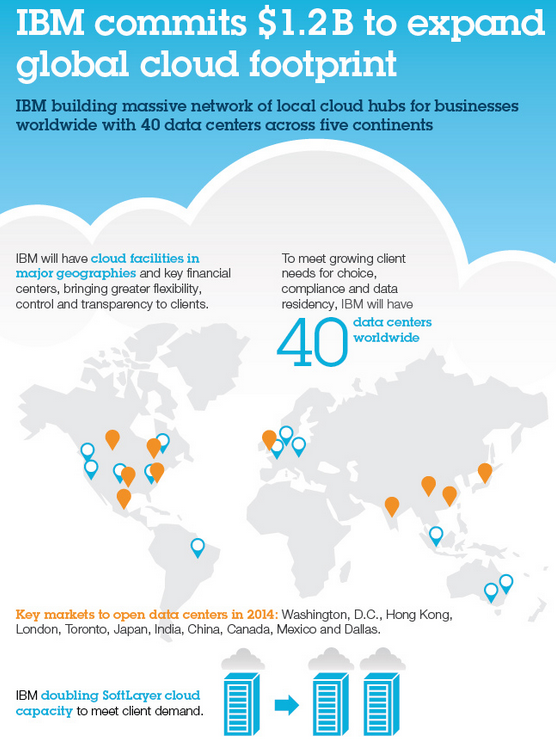
To say the cloud is commoditized would be disingenuous. The open, three-layer cloud has less than 10% adoption in the organization. The SaaS-as-cloud, private-cloud-as-cloud, hosted-applications-as-cloud, and other-monstrosities-we-cannot-call-cloud-being-called-cloud has around forty-percent adoption across all organizations (all sizes, all verticals, all geographies, etc.). If you don’t like those numbers, feel free to insert your own – still makes my point.
Although we are all talking about cloud as a given, commoditized concept – it has not yet reach mainstream adoption in the organization. However, it is also not an item of differentiation where companies can say “because we are cloud, we are better”. The fact that hosted applications that provide multi-tenancy solutions as a service can call themselves cloud gave every on-premises vendor the ability to call themselves cloud. And thus, it is no longer a differentiation.
The reason I mention this is because the underlying infrastructure for digital transformation is an open cloud infrastructure (I don’t recognize private cloud as being cloud, nor hosted applications as being cloud – but they are good interim steps, stepping-stones towards adopting the cloud in larger, more complex, compliance-heavy organizations; they don’t have a long life ahead of them, but they are a good starting point).
There is not a single CIO or IT department in the world that has not undertaken in the past two-to-three years a migration project to embrace open cloud. Even those slow-to-move, compliance-heavy, and laggards of adoption. They may not be there yet, but it is their goal to get there. There are too many advantages to the model not to leverage it fully.
We will discuss the software layer of the three-tier model as we get deeper into the discussion of interfaces, but it is the platform layer that will make the most significant difference. I wrote a bit about what an open platform can bring to an organization (and you also have more links in there as well as definitions) when I wrote about Salesforce1 – please use that for reference of what a platform is.
Indeed, adopting an open platform model is what is going to prepare the organization better for a digital transformation. The ability to both quickly integrate with just about anything, and to create customized applications that deliver personalized performance via a multitude of interfaces will become critical – but this is not the place for that discussion – you will need to have a three-tier cloud infrastructure to make Digital Transformation happen.
The Information Layer
I have had many interesting discussions and strategy sessions in this past year or two where the discussion was whether knowledge or content or data were more important to deliver personalized experiences to customers.
I even presented at EBEDominicana earlier this year about this. I was asked to talk about Social Knowledge and how organizations can prepare, but when I get to the event I discovered that the concept of Social Knowledge was nowhere near what attendants wanted to discuss. I spent almost an entire day talking to attendants and finding out what they wanted to cover and the answer was clear: content.
I went back to my research notes that night (after spending some time learning the basics of merengue dancing –another time) and found a lot of common topics between the work I had done around content and knowledge. Turned out, after a long time of contrasting, that the issues, the topics, and even the lessons learned (at a high level) are about the same. Out of curiosity I did the same analysis for data – since I had many times in the past said there is no marked difference in how an organization must handle data and knowledge.
Low and behold, same principles can be applied to data (I don’t distinguish between big, small, or average data). I have been making this argument for a long time, and finally got a small break: content, data, and knowledge are similar resources. And it all can be called information (because, well — that’s what it is).
Think about it, any information you get from an organization or use in a business situation has all three: it has data (usually customer identifying, product identifying), knowledge (this is more like static data, things we know to be true and we use to make a point), and content (more like static knowledge if you want to define it – it is approved and usually has knowledge in a specific format).
 The use of all three, or two or one, of these elements in any one interaction means that they should (at least from the strategic level) be handled and managed together. We will discuss this and explore more as time goes by – but for now, think of all three elements as siblings: data, content, and knowledge are the Cerberus of the customer interaction.
They fiercely guard customer interactions to make sure they have the right answer.
The Experience Layer
I wrote a series of blog posts over the summer that were published by my friends at Oracle. The topic was Customer Experience, the first one had the ever-pressing question: “Who Is In Charge Of The Customer Experience” (others dealt with people, processes, and technology related to customer experience – it is a good series and likely you missed it — but fear not, available now by clicking on those links).
The question of customer experience has become all the rage lately. These past two years we have seen an onrush from organizations to implement “customer experience — something”. Whether it is management, or service design initiatives aimed at understanding customers better, or analytics software to better create customer experiences — or, well, too many different projects and initiatives to name them all. Chances are that in the past three years or so your executives came down from the mountain with the mandate to implement customer experience.
And chances are that you have done something in this area. In my latest survey of Customer Service practitioners we found that over 80% of organizations have a customer experience initiative under way.
The problem is that since Ed Thompson and I co-wrote the ultimate book of customer experience in 2004 when I was at Gartner (must be Gartner client to read, sorry), not much has changed (well, that’s not true – Ed’s gotten smarter about customer experience, but he was pretty smart to begin with). It is not to say we don’t know more about it, we do – we had plenty of experiences and we learned a lot about how to do it — but we still continue to approach it as a single purpose project.
Experiences, not customer only, is something that all organizations must embrace for all stakeholders. Whether we are talking about customers, partners, allies, providers, employees – or any other constituency (citizens?), they all need to work together. We cannot design an experience for customers without considering that a) they are going to be part of an end-to-end process (and thus must be an end-to-end experience), and b) they must accommodate all parties involved in this end-to-end delivery.
When talking about experience, you must begin to think of them as  end-to-end and encompassing many stakeholders along the way – and design and implement them that way. That is what I been pushing for years now using the Experience Continuum. Indeed, experiences must be done as an all-or-nothing initiative that considers employees, partners, and all other concerned stakeholders – even if their systems and information are not controlled by your organization.
This means that as you advance your digital transformation plans and begin to implement them you will need to interact and work together with many, many different people and use their information in many ways.
Aren’t you glad you decide to adopt and open cloud as I explained in the first section above? Yes, you are – and now you get why that is necessary.
The Analytics Layer
This could be the start of a book that could be written just to define and describe what is meant by Analytics.
I am not going to define it and try to convince you that is necessary. Bottom line, the middle layer of the model above needs to be analyzed. Period. Thus, you need analytics.
Without analysis, all you got is a series of structured ones-and-zeroes that really don’t mean much going forward. Sure, they can tell you what happened, but cannot prepare you for what MAY happen.
Now that we defined the need, let’s debunk the most common myths about it: it is hard to do, and it is magical. Magical is what many users think it is – if you implement an analytics package all you need to do is point it to your data and — voila! finds relationships and insights you did not even know they were there. Of course, this is neither true nor possible – no analytics package knows the relationships between your data, their meaning, or even what it means!
Simply knowing that a data field is called Sales_Total does not mean the computer knows what it is, how it is used, or what to do with it. Even if you, as a user, can describe it and relate it to other data fields – you still don’t know what to do with the data — why on earth you think the analytics package would? This is what brings the second myth: ti is hard to do and requires scientists to analyze.
Without a deep debate on the term or the concept, it does not. If a stakeholder knows what the data means, where it comes from, and how to use it – the new tools and packages for analytics will handle the rest. This applies equally to knowledge and content, by they way – not just data. And this is why analytics is changing and is no longer the mysterious “thing” it has been assumed and we can now focus on the outcomes, not the definition.
The most important aspect of analytics is the outcomes – which so far you’ve been told they’re insights. We put so much emphasis into generating insights (and I will count myself as one of them as i often encouraged clients to find actionable insights into what they do — without much explanation of what they are or how to get them) that we miss out on the applications of those insights.
That is what you need to do in the new digital world with the data / content / knowledge triumvirate of inputs: find the expected outcomes and aim achieve them.
There are three outcomes you should be seeking via analytics:
- Optimization (improving processes and functions, even innovating by finding new and different ways to do things)
- Personalization (make sure that each user gets what they need, when they need it, as they need it – and no more or less), and
- Automation (leverage the optimization and personalization to take some of the interactions away from users and traditional processes and allow them to happen automatically)
These outcomes are not in any order nor are the three required from any single implementation (although eventually you will get to use all three as your strategy improves and grows). They are the outcomes you should seek from data, content, and knowledge post-analysis independent of function that is using those inputs.
There is a lot more to cover on this, much more, but we will do so in research during the next 2-3 years. For now, make sure you realize that analytics is not what you thought, and that is has a primordial role as the tool that will make things happens in the world of digital transformation; after all, it is the aggregate of the expected outcomes.
The Interfaces Layer
Thanks for hanging in there, almost done.
The final layer is the interfaces layer. This layer serves two purposes, both incredibly important for digital transformation. First, they are the connecting point to all things “legacy”.
A three-tier cloud architecture calls for the Platform layer to serve as an integration brokerage house of sorts – it creates trusted, verified, secure link to other platforms and brings the information from that platform to complete the services it runs, and it also sends information to the other platforms so they can do the same.
This works great in a three-tier cloud-to-cloud communication, but lacks some of the finesse when dealing with legacy applications and APIs. Some of the older applications and those with not-so-good APIs require more work than the platform can do in a secure environment that requires token security to operate. Some of the legacy applications and interfaces require a point-to-point traditional API call. This is where the interfaces layer performs one of the key functions: it serves as the central integration point to all applications and information that cannot be accessed or serviced directly.
The other function it performs is to make sure that the outcomes of the analytics layer are properly displayed and used in any interface: mobile, desktop, internet-of-things, laptops, tablets, and just about anything else that may have access to the DT platform and needs information from it.
As simple as it may sound, the ability to interface with a three-tier cloud, all layers in the DR architecture proposed in this post, and legacy applications at the same time and make sure that information flows properly it’s quite complex. Think of what EAI (enterprise application integration) components used to do in client-server world – but exponentially more complex due to the multitude of displays and application environments it has to tender to.
Alas, the infrastructure layer and the three-tier cloud model help a lot on this, especially the platform layer that can serve any device, any interface, any need as long as the proper paths to find the service and or application that can deliver the necessary information is known and documented. This simplicity is what this layer promises – while delivering the outcomes delineated above.
Where to Now?
As i said earlier, this is an oversimplification of a concept that is likely to require an entire book to be explained properly (things that make you go hmmmmm).
But the concept is there, and three things will happen now:
- You will help me improve it. All the content in this blog is licensed under the creative commons CC 3.0 initiative. You are welcome to use it and improve upon it as long as you don’t use it for commercial reasons and you always credit the source (that’d be me). Take it for a spin and let me know what think. Write down your experiences down in the comments section, or contact me with more details.
- It will slowly be implemented and improved. The one thing I learned from creating visions for the future and implementation models while at Gartner is that there is a modicum of my visions that are great, a sensible part that is useful, and the rest if between can-be-ignored and unusable. As you begin to work in your digital transformation using this post as one of the data points in your journey – please let me know how it works. I make the commitment to improve it with your feedback and — of course, give you full credit for your contributions.
- I will continue to research this. This is my “research agenda” for the next few years. I cannot even begin to see this being implemented in less than 2-3 years – and getting close to five is more likely. I will continue to research and find information to substantiate and improve the model, while you continue to do the things you do – implement. I will continue to do research on these layer by talking to users and practitioners, discussing it with analysts and consultants, and continuously write about ways to get it done and make it better.
OK, just about 4,500 words and here we are – your turn. Before I begin to post more and more research in relation to this model — what do you think?
Are you thinking this may work? Do you see the possibilities? Or do you see it won’t work? Both answers are likely to be correct – I just want to hear the rationale for either.
Help me improve this architecture of foundation elements for the DT world.
I appreciate it.