Results

Event Report: #NRF14 Preview - Retail's Big Show Hints At Lessons Learned In #MatrixCommerce

Event Report: #NRF14 Preview - Retail's Big Show Hints At Lessons Learned In #MatrixCommerce

Retails Big Show Transformed For 2014

Over 29,000 people are expected to gather at the National Retail Federation’s big show (NRF) this Sunday, January 11th, 2014, in New York City.  #NRF14 brings the intersection of new retail business models, products, store concepts, technology, society, and culture together!  Early indications highlight a few trends expected at the 2014 event:

A few big trends emerge based on conversations with our clients attending the event:

  1. Building out matrix commerce. Retail faces rapidly changing business models and new payment options that are often misunderstood and poorly integrated. Matrix commerce describes the fusing of demand signals and supply chains in an increasingly complex world of buyers seeking frictionless buying experiences. Channel move from multi-channel to total channels. As the world revolves around the buyer, channels, demand signals, supply chains, payment options, enablers, and big data will converge to create what Constellation coined in 2011 as Matrix Commerce. Matrix Commerce spans across disciplines as people, process, and technologies continue to transform today’s commerce models.  This shift to a buyer centric model will result in continued consolidation of retail technologies as stacks and ecosystems form around real buyer needs.  Lessons learned: There is no single end to end solution.  However,  open standards, and a focus on buyer centricity will help provide guide rails to success.
  2. Dealing with digital disruption. The convergence of the five forces of consumerization described in 2009 and 2010 serve as the five pillars of digital business.  Retailers recognize that they no longer sell products and services, as buyers seek experiences and outcomes. Market leaders and fast followers now democratize the data to decisions pathway to enable innovation at all levels of the organization. Brands realize that B2B and B2C are dead. It’s a P2P and M2M world. Customer efforts focus on context as right time relevancy beats real time information overload. Organizations now shift from engagement to mass personalization at scale.  Recent trends at #CES14 indicate that this automation and mass personalization will occur within the next 18 months.  Lessons learned: Digital disruption is among us.  Customers and even workers now fit five generations of workers by digital proficiency, not age.
  3. Enabling data driven decision democratization. With the hype of big data past us, most retailers are focused on identifying the patterns in existing data and asking the key questions of the data sets they have or have access to.  Having this data requires retailers to simplify how non data scientists can assemble patterns to enhance decision making.  Data will provide the demand signals.  Data will provide relevancy and right time context.  The simplicity of information presented (i.e. data visualization) is required to provide contextually relevant information.  For example, knowing that a customer is a repeat customer and always purchases 24 roses for valentine’s day on February 12th, could help personalize the experience.  Consequently, surfacing an alert at check out with customer history would improve the experience.  Lessons learned: Context by purchase, role, relationship, location, time, sentiment, and intent are seven key drivers to consider. Success requires enabling the employees for self sufficiency.
  4. Empowering the work force for success. Retailers seek any and every possible advantage in automating or creating self-service scenarios for repetitive tasks.  Beyond automating time cards and scheduling systems, managers have a mandate to improve recruiting, training, and career development have risen in importance.  While robotics and automation would be preferable, high touch, high value experiences requires a different skill set.  Lessons learned:  Despite the unemployment numbers, the available jobs require higher level skill sets.  The war for talent is fought for highly skilled, highly coherent associates.  Expect rising demand and poaching for the best and the brightest as bifurcation of highly skilled and easily automated work continues.
  5. Deciding to friend or not friend Amazon. Given that Amazon’s business model successfully convinces competitors to subsidize their operating costs while simultaneously taking out a competitors high margin products and leaving them with low margin commoditization, many competitors have woken up to the seriousness of the issue.  Retailers realization that their subsidy of Amazon is funding their long term competitor.  Expect a coalition of the beaten to figure out who could assist them in delivering the same level of commerce infrastructure as Amazon has built with their competitors money.  Just watch out for the synergies from the Washington Post acquisition to disrupt media and commerce.  Smart cloud and commerce companies could partner with Google, IBM, Microsoft, and Oracle to scale up similar levels of service.  Lessons learned:  If you fund your competitor with free data, payment for services, and even your business model, don’t expect to survive unless you have also grown your business to the same scale in another defensible component of your business model.  Otherwise, you may have hastened your own death.

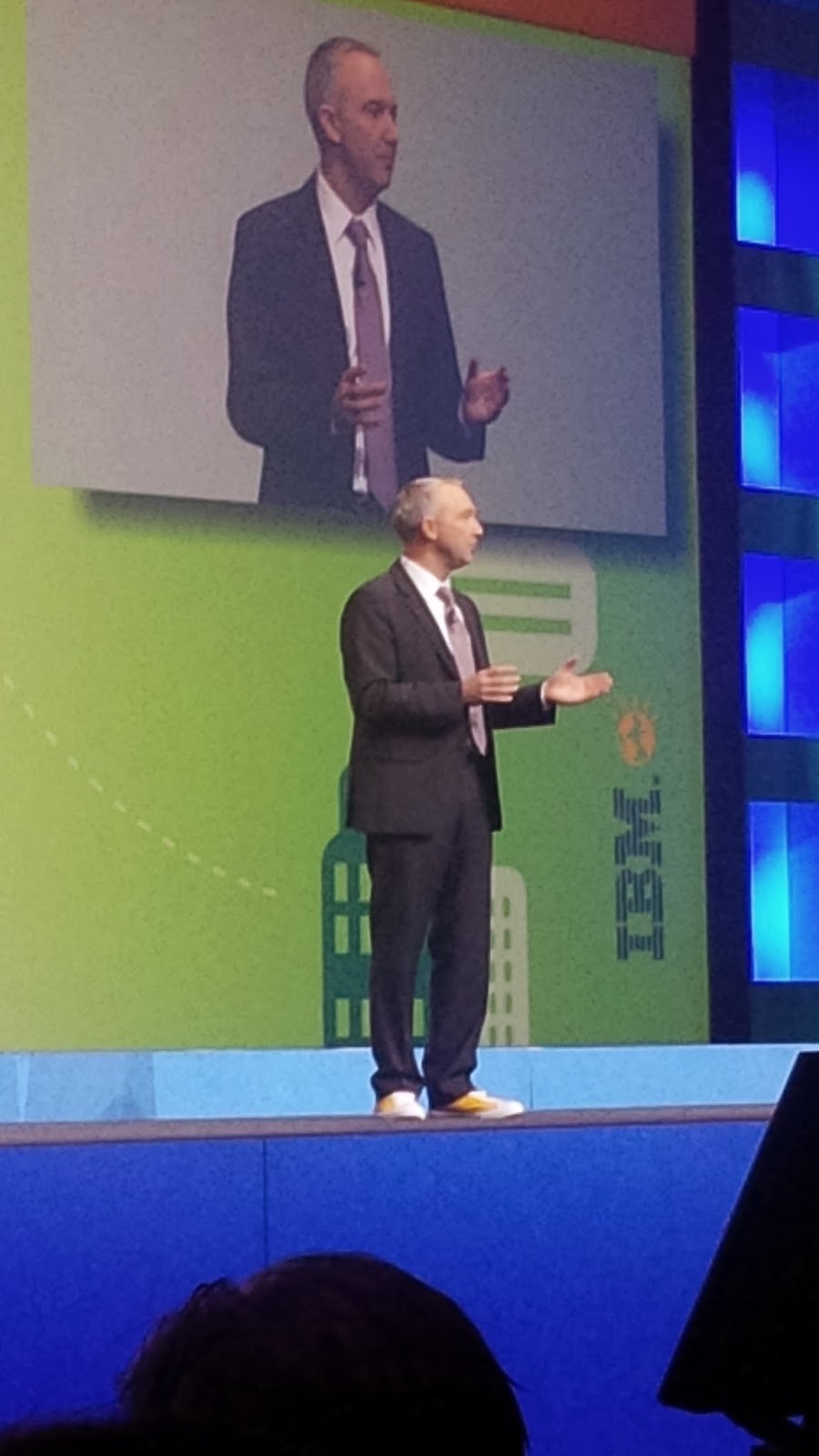
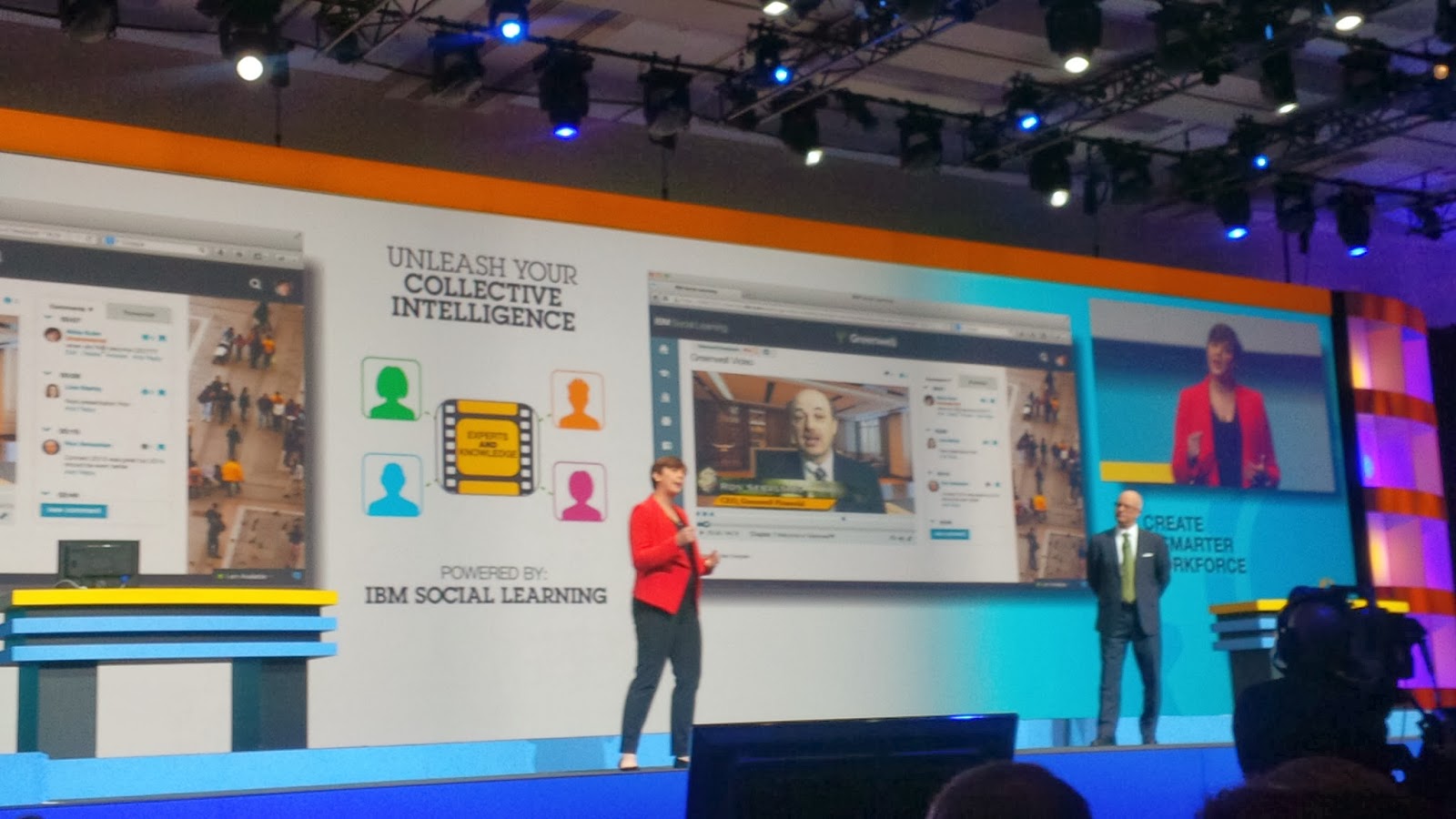
Figure 2: The Flickr Stream From NRF 14

Source: 2014 R Wang, Software Insider Associates. All Rights Reserved.

The Bottom Line: NRF14 Showcases The New Digital Disruption For A Buyer Centric World

With 52% of the Fortune 500 companies gone, bankrupted, or merged since 2000, the competition is intense.  US retail continues to face an assault from minimal product differentiation, stagnant economies, rising real estate and energy costs, and short term board room mentality.  2014 is about retail transformation with data, technology, and leadership in tow  While retail transformation is nothing new,  attendees to this NRF will find a renewed sense of innovation in mobile, kiosks, payment tech, ad tech, and retail solutions.  Expect vendors to deliver new partnerships that work towards buyer centricity and deliver on the matrix commerce promise.  However keep in mind, the future is about transforming business models, not incrementally improving operations.  Retailers who get this shift to digital disruption will emerge as leaders. Those who stay focused on narrow operational efficiencies will cease to exist.

Your POV.

Are you attending NRF?   What are your expectations for this year’s show? Drop us a line and we can connect!  Are you embarking on a digital business transformation?  Let us know how it’s going!  Add your comments to the blog or reach me via email: R (at) ConstellationR (dot) com or R (at) SoftwareInsider (dot) org.

Please let us know if you need help with your Customer Centricity and Digital Business transformation efforts.  Here’s how we can assist:

  • Assessing customer centricity readiness
  • Developing your digital business strategy
  • Connecting with other pioneers
  • Sharing best practices
  • Vendor selection
  • Implementation partner selection
  • Providing contract negotiations and software licensing support
  • Demystifying software licensing

Related Research:

Reprints

Reprints can be purchased through Constellation Research, Inc. To request official reprints in PDF format, please contact Sales .

Disclosure

Although we work closely with many mega software vendors, we want you to trust us. For the full disclosure policy, stay tuned for the full client list on the Constellation Research website.

* Not responsible for any factual errors or omissions.  However, happy to correct any errors upon email receipt.

Copyright © 2001 – 2014 R Wang and Insider Associates, LLC All rights reserved.
Contact the Sales team to purchase this report on a a la carte basis or join the Constellation Customer Experience!


Marketing Transformation Matrix Commerce Next-Generation Customer Experience Tech Optimization Innovation & Product-led Growth Future of Work Revenue & Growth Effectiveness Data to Decisions Digital Safety, Privacy & Cybersecurity New C-Suite intel SoftwareInsider AI Analytics Automation CX EX Employee Experience HCM Machine Learning ML SaaS PaaS Cloud Digital Transformation Enterprise Software Enterprise IT Leadership HR Marketing B2B B2C Customer Experience Generative AI Disruptive Technology Growth eCommerce Next Gen Apps Social Customer Service Content Management Collaboration business Supply Chain Enterprise Acceleration IoT Blockchain CRM ERP finance M&A Enterprise Service LLMs Agentic AI IaaS Robotics Quantum Computing CCaaS UCaaS developer Metaverse VR Healthcare Chief Customer Officer Chief Information Officer Chief Marketing Officer Chief People Officer Chief Human Resources Officer Chief Technology Officer Chief Information Security Officer Chief Data Officer Chief Digital Officer Chief Executive Officer Chief Financial Officer Chief Growth Officer Chief Product Officer Chief Revenue Officer Chief Supply Chain Officer Chief Analytics Officer Chief Operating Officer Chief Experience Officer

You Are What You Endorse–Google Shared Endorsements

You Are What You Endorse–Google Shared Endorsements

1
 

Remember that old saying that “when the product is FREE, the product is YOU”? Well Google are putting their advertiser’s money where your mouth is – with shared endorsements now being incorporated into search results. This brings together two powerful web transformation engines – search and social – in the one interface.

That means that those online reviews etc that you have contributed over the years are being aggregated behind the scenes and will begin to appear in the search results that you and your friends see when using Google Search. Your friends will know it is you, because the results will show your name and photo along with the review, +1, follows or shares that you have published on the web.

As Google explains, it will look like the image below …

GoogleSharedEndorsements

Over the last 12 months or so, Google has been requiring Gmail users to sign up to Google+. So even if you are not a dedicated G+ user, so long as you are signed into Gmail, your browsing habits, interests etc are being collected, analysed and tagged in preparation for this style of endorsement.

But if you are not keen to lend your personal brand, reputation or face to these businesses (and to Google), you can opt-out of Shared Endorsements here.


Marketing Transformation Innovation & Product-led Growth Next-Generation Customer Experience Tech Optimization Future of Work AI ML Machine Learning Generative AI Analytics Automation B2B B2C CX EX Employee Experience business Marketing SaaS PaaS Growth Cloud Digital Transformation eCommerce Enterprise Software CRM ERP Leadership Social Customer Service Content Management Collaboration Chief Customer Officer Chief Marketing Officer

Will 2014 Move Past the Private/Public Health Care Debate and Onto Preventative Health?

Will 2014 Move Past the Private/Public Health Care Debate and Onto Preventative Health?

1

2014-01-10-iStock_000023006253Small.jpg


How a pound of prevention could soon render our current health care system irrelevant.

When was the last time you saw someone on the side of the road with an alternator burnt out or a fried carburetor? Not lately, since cars have long been instrumented with sensors telling us how specific parts are performing, with the data from these sensors alerting us that preventative action is required in order to sidestep automotive "trauma." Fix-it shops have largely been replaced by preventative maintenance service centers.

Like cars experienced, we are at a crossroads of a historic inflection point where human health care could tip from a focus on cure to one on prevention. At the risk of sounding like a Miss America contestant describing her platform to "change the world," that's precisely the kind of radical paradigm shift I'm proposing.

I'm talking about third-dimension thinking movements that take success beyond money and power to wellness in the personal realm, progress beyond people/profits to planet in the commercial realm, and a movement beyond private and public health care/delivery to preventative health ownership in the health realm. In studying the industrial redesign of the health care and delivery ecosystem, I've begun to see the tremors of a global movement from traditional, cure-based health care/delivery to preventative health.

What exactly is preventative health?
Preventative health can be described, in the words of scientist-inventor Daniel Kraft, M.D., as "stage zero" of a disease -- the ability to use information and technology to better predict and potentially, avoid traumatic health/disease events. Many debate there is nothing new here, and in a narrow sense, this is true. "An apple a day" is the hallmark of the prevention philosophy. Consider an exponential magnification of that precept, one that may perhaps only best be seen with the benefit of hindsight. Fast-forward five years and look back: You'll see that 2014 marked a historic point of inflection for the preventative health transformation and the beginning of a brave new world view of health care.

What is driving the point of inflection?
In order for mankind to get ahead of the need to cure disease, we need to be able to predict health trauma. This foretelling should ideally be informed by our behavior (eating well, exercising) and our genetics (hereditary strains, the raw genetic information) but the incidence of disease shows that such general awareness falls far short when it comes to taking ownership of our health. What is triggering an impactful prediction of health trauma and the movement of preventative health third dimension thinking is a real-time, steady flow of health information.

We at are at the tipping point of how much health information we have, how it is delivered to us, and how we can use it.

Today, there are countless lab-in-a-box type devices, such as pregnancy tests, blood pressure tests, and other simple devices measuring static, "single point in time" health indicators. We have scores of analog-to-digital devices such as the wear-ables, patches, implants, and others that measure the "stream" of health indicators, converting the body's analog physiology to digital health information. Health information has gone from a "system of record design" to a "system of engagement design." This means that health information is finally no longer something collected, measured, and locked away as a medical "record," never to be looked at again. Health information is collected, streamed, and actively served to us to effect preventative behavior to act. Much like a GPS, health information should tell us where to turn.


2014-01-10-Sensoring.jpg


Although the prevention industry is just being birthed, I already know more about my body's temperature, sleep pattern, steps taken, calories burnt, blood pressure, and the ph balance of my saliva. In just a few years, I'm confident there will be the ability to synthesize all of this information and much more and say, for example:


Richie in the last 90 days, based on the listening systems of your body and your HIPPA preferences, we have seen via clinical cognitive computing, indicators suggesting your likelihood of getting a heart attack by 50 has increased 5 percent over expected levels. We reached out to your insurance company and secured a microscopic payment to a medical wisdom cloud of doctors and medical school students (think taskrabbit.com for medical professionals) who confirmed the machine findings. Here is a coupon code, if you go to any of the three doctors in your area and take the following two tests in the next 90 days, this coupon code will waive your co-pay, and lower your health insurance by 10 percent for the next year. With the tests and changes recommended, you can reverse this temporary deterioration before it is permanent. Proceed.


So our health data can now "activate" us.
The mere knowledge that our habits could impact our wellness and our genetic predisposition could dictate our propensity and longevity did not engage nearly enough of us to act. It is the use of information and technology to deliver engaging health information (think psychologically designed messages targeted to us) about ourselves that will trigger the ownership and intent of behavioral changes leading to the beginning of a preventative health revolution industry.


2014-01-10-HAPI1.00.jpg


Why 2014, and where is the progress?
The future is now. Technology is knocking loudly on the door, breaking into the halls of health care. Movements like the Quantified Self, organizations exploring the human API (application programming interface), platforms and inventions like TEDMED, apps, body sensors, implantable devices, medical printing, and the pressures of the Affordable Care Act resetting the dynamics of the current ecosystem are all creating concurrent strains that impel us to move somewhere. That "somewhere" is the third dimension of health, a place where no society has gone before, one that is far beyond the current private health care or public health delivery debate, and is at the doorstep of the preventative health ownership destination.

Keep the comments critical, keep the conversation alive, and thank you for reading.
-Richie


Innovation & Product-led Growth

Siebel Open UI: Portlets Reloaded

Siebel Open UI: Portlets Reloaded

Alexander Hansal

In his Siebel Essentials blog, Alexander Hansal continues his exploration of  the Siebel Open UI.

As described in an article earlier last year, Siebel Open UI enables us to display individual applets as "portlets" in any web portal. As of the early versions 8.1.1.9 and 8.1.1.10, this was supported but the functionality was to be considered "basic".

 
As of Innovation Pack 2013, there have been some major enhancements around the possibility to display data from Siebel Open UI in external applications.
 
In the following article, I would like to point out these enhancements:
 
Standalone Applets
 
One of the enhancements in IP 2013 is the ability to display applets in external web pages as "standalone" applets, that is without a surrounding view. However, we still have to establish the context to a business object, which we do via a new applet user property named Business Object.
 
So in order to prepare an applet for display as a standalone applet, you must set that applet user property in Siebel Tools and compile the applet.
 
Siebel Tools: Quote List Applet with Business Object user property.
As you can see in the above screenshot, the Business Object applet user prop value is the name of the business object (Quote in the example).
 
URL Options
 
To expose a standalone applet in an external web page, you will have to construct a URL similar to the following:
 
http://myserver/callcenter_enu/start.swe?SWECmd=ExecuteLogin&SWEUserName=SADMIN&SWEPassword=SADMIN&SWEAC=SWECmd=GetApplet&SWEApplet=Quote+List+Applet&IsPortlet=1&SWESM=Edit+List&KeepAlive=1&PtId=ALEX_BW
 
And this is what I got in return for the above URL:
 
Quote List Applet standalone in a web browser.
Obviously, I have entered the minimalist phase of web design but I did this to demonstrate that you can pass the name of a UI theme as a parameter (see below list).
 
Here are the SWE URL parameters you need to return a standalone applet (you also might want to refer to the official documentation):
 
SWECmd=ExecuteLogin: needed when you don't want to resolve authentication with SSO or similar.
 
SWEUserName=[username]: needed in combination with the above.
SWEPassword=[password]: needed in combination with the above.
 
SWEAC: Additional command to be executed
 
SWECmd=GetApplet: Command to get a standalone applet (new in IP 2013)
 
SWEApplet=[applet name]: Name of the standalone applet
 
IsPortlet=1: Needed to specify the applet as a portlet.
 
SWESM=[Applet Mode]: Name of the applet mode such as Edit List.
 
KeepAlive=1: Avoid session timeout
 
PtId=[Name of Open UI theme]: Internal name (e.g. GRAY_TAB) of the Open UI theme to use (new in IP 2013)
 
Search Criteria
 
Once you have the base URL working, you can enhance it by adding search criteria, as described in the bookshelf guide.
 
These search criteria can be specified for fields in the applet BC or the parent BC using the following SWE URL parameter syntax:
 
BCFieldN=field_name&BCFieldValueN=field_value
 
where N is a sequence number starting at 0.
 
To provide search criteria for the parent BC, you use the following:
 
PBCFieldN=parent_field&PBCFieldValueN=parent_field_value
 
Again, N must be replaced with a sequence number starting at 0.
 
For example, after adding the following to my test URL, I got a list of quotes for a specific customer account:
 
&BCField0=Account&BCFieldValue0=BBBC+Inc.
 
Click to enlarge.
 
As stated in the documentation, we should be able to use criteria with query operators like "This Name OR That Name" but I wasn't able to get it to work in my test environment. Also, I found it impossible to use wildcard characters.
 
Displaying Views
 
It is also possible to display an entire view with all applets or just a specific applet which is accomplished by using the well known GotoView command. The bookshelf example is as follows (just showing the part after SWECmd)
 
SWECmd=GotoView&SWEView=view_name
 
Server Parameters
 
The Configuring Siebel Open UI guide specifies some new server component parameters which are meant to enable a secure channel to use Siebel UI artifacts such as applets or views programmatically in the context of other applications.
 
These server component parameters are:
  • PortletAPIKey: a string which is used as a security token by the portlet requester.
  • PortletOriginList: a comma separated list of requester domains which are granted access to the portlets.
  • PortletMaxAllowedAttempts: the maximum number of attempts before access is blocked by the Siebel server.
  • PortletBlockedInterval: the number of seconds how long the access is blocked.
The requester would be a script in the calling application. According to Oracle engineering, this would enable an external application to display a Siebel applet in its own context and trigger navigation without having to re-establish a session (which would happen using the SWE API described above).

Summary

With Innovation Pack 2013, more cowbell has been added to the already useful portal style integration which allows to display Siebel applets and views in another application's context.

have a nice day

@lex

This post originally appeared in the Siebel Essentials Blog.

Tech Optimization Oracle Chief Information Officer

Predictions: the 2014 cloud game for serious players only

Predictions: the 2014 cloud game for serious players only

Since quite some time there as been wide agreement on some criteria for cloud based applications - namely that they had to support multitenancy, all the way down to the database level, they had to be deployed to a public infrastructure, they would only have one production code line and so on.
 

Already slaughtered - no customizing

For a long time the cloud application vendors have been maintaining, that they cannot support any form or shape of customizing - as they otherwise would no longer have a cloud application. 

In my view this was a little bit of a self serving argument as it allowed the vendors to move fast and with little complexity from release to release. But to be fair more and more vendors start to support some  more or less elaborate ways of customizing their cloud applications. So already in 2013 we did not hear the  moniker - 'we are cloud we don't allow customization' (much) anymore.
 

The first to go in 2014 - database multitenancy 

We have already written in mid 2013 that database multitenancy - as we knew it - as being a database containing rows of data owned by different clients - is largely an architecture of the past. It was largely required due to hardware constraints for the very first cloud architectures - but should not be deployed for a modern cloud storage in 2014 and onwards. Too many advantages speak for the end of database multitenancy - most prominently access security, predictable performance, and operational advantages. 

You could argue that database multitenancy has already disappeared in new, state of the art cloud architecture - but probably 2014 will see the more wide stream adoption.
 

Next - public shared infrastructure

A table stake of cloud architectures used to be, that cloud applications had to be deployed on public and shared infrastructures. And while that is desirable for most applications, there are more companies out there, that do not want to have their applications being hosted on a public infrastructure. Some may say it may be triggered by the whole NSA / Prism sensibility, in my view the saturation of early cloud adoptions and the need of cloud application vendors to grow revenue wise, play an equal important role. 

And the vendors are reacting and gearing towards that - the AWS government cloud is an example. Salesforce supporting the HP Superpod is a similar one. And then with most cloud application vendors embracing OpenStack, a deployment of their cloud applications on a on premise OpenStack infrastructure is technically possible and in my view - likely in 2014.

Of course cloud purists will now roll their eyes - and start to argue... we will see what 2014 brings.
 

And then - one release for all

As cloud applications get more and more adopted - it becomes more of a challenge to upgrade these applications centrally and synchronously for all customers. Cloud vendors have for the longest time argued (and in my view even a little hidden) behind the fact, that if a single customer would have their own version of code - they would be no longer a cloud application. That's of course not accurate... and with more flexible deployments in 2014 - we will see cloud vendors to begin supporting different code levels by customer.  
 

Implications for customers

It will be key for customers to make sure their vendor supports the more complex code deployment landscape that results from slaughtering some of the sacred cows. Do not take 'that's not cloud' as an answer anymore in 2014.

Implication for vendors

If you are not revisiting you code delivery and configurability, 2014 maybe a rude awakening for you. Better to disrupt and be early on these trends than be disrupted by the competition. Look at OpenStack as the easy way out, that a number of the larger cloud vendors have already adopted or at least are heavily looking into.
 

MyPOV

Nobody knows what the future holds - otherwise those who knew would play the lottery and win every week.... but it's time for criteria that defined a cloud application for the longest time - are being revised by the market. Even sacred cows do not live forever.

In my view - a lot of that will happen in 2014. 

P.S. Don't miss the 2014 cloud trends that fellow Constellation Research colleague Ray Wang and me have put together here.

New C-Suite Tech Optimization Innovation & Product-led Growth Data to Decisions Future of Work salesforce SaaS PaaS IaaS Cloud Digital Transformation Disruptive Technology Enterprise IT Enterprise Acceleration Enterprise Software Next Gen Apps IoT Blockchain CRM ERP CCaaS UCaaS Collaboration Enterprise Service Chief Information Officer Chief Technology Officer Chief Digital Officer Chief Data Officer Chief Analytics Officer Chief Information Security Officer Chief Executive Officer Chief Operating Officer

Salesforce.com Puts Less Emphasis On Social More On Business

Salesforce.com Puts Less Emphasis On Social More On Business

This morning at Salesforce.com's World Tour event in New York city, I meet with Mike Stone, SVP Chatter Marketing to talk about Salesforce.com's messaging around enterprise collaboration. I mentioned to Mike that if you look back over the last few years, Salesforce.com used to put a lot of emphasis on social business and specifically the Chatter brand, however now both terms have faded from Salesforce.com's marketing. Case in point, out of 16 sessions on today's agenda the word Chatter only appears once.

Mike's response, "Chatter is the social heart of Salesforce1."

I could not agree more. Rather than talk specifically about collaboration or "being social", Salesforce is now focusing on their core business solutions of Sales, Marketing, Customer Service and HR. Chatter, and the collaboration features it provides, are integrated directly into those solutions. Those solutions, along with custom applications sit on top of Salesforce1, Salesforce.com's platform as a service infrastructure. Yes, Chatter is still available as a stand-alone enterprise social network (in both free and paid versions) but its benefits are greater when collaboration is used within the content of one of Salesforce's business solutions.  This type of integration is what I refer to as Purposeful Collaboration.

That's not to say Salesforce is not continuing to improve Chatter. Quite the contrary, actually. Areas such as files and communities are currently getting major attention, and latter in 2014 I expect to see enhancements and additions to areas like content creation and unified communication.

In the Constellation Research report, Salesforce Chatter: The Collaborative Foundation of Salesforce1 we provide details and competitive comparisons around the following five Chatter strengths:

1. Purposeful collaboration across multiple lines of business
2. Feature-rich file sharing capabilities
3. Customized post types enable work to be done in context
4. Recommendations to help you find expertise
5. Massive partner ecosystem emerging around Salesforce1

And weaknesses:
1. No long form content creation
2. No integrated web-conferencing or video chat
3. No advanced stream filtering
4. Unclear roadmap for social task management
5. Missing some key integrations 

If your organization is currently using Salesforce or considering becoming a customer, this report provides information and advice that will be useful to you.

Future of Work Marketing Transformation Matrix Commerce New C-Suite Next-Generation Customer Experience salesforce Chief Customer Officer Chief Executive Officer Chief People Officer Chief Information Officer Chief Marketing Officer

News Analysis: Microsoft Dynamics CRM Acquires Parature For Customer Service Capabilities

News Analysis: Microsoft Dynamics CRM Acquires Parature For Customer Service Capabilities

Dynamics CRM Gains Key Technology and Team To Take Existing Customer Care Assets To Next Level

On January 7th, 2014, The Microsoft Dynamics CRM team announced a definitive agreement to acquire Herndon, VA based Parature for an undisclosed sum.  This acquisition is Microsoft Dynamic’s CRM’s largest to date. Parature is an East Coast software start-up success story founded in 2000 by five Cornell students including Duke Chung.  Originally named Cyracle Technologies, the company’s first product addressed the live chat market.  Current CEO, Ching-Ho Fung, the first angel behind Blackboard, provided the initial angel investment in 2001.  Parature’s key investors include Valhalla Partners, Sierra Ventures, and Accel Partners.  The acquisition is significant for both Parature and Microsoft Dynamics Customers because:

  • Parature fills in a key gap in the Microsoft Dynamics CRM offering. Microsoft CRM currently has a customer care offering that delivers core customer service with case management, universal queuing and routing, and light scheduling and field service.  Parature provides key self-service knowledge base software, core customer service,  live chat, mobile access, survey and feedback capabilities, social monitoring, and Facebook portal capabilities to the Microsoft service offering.

    Point of View (POV): Microsoft’s core strengths have come from the sales automation product and the tight integration with Office.  Since 2012, with the arrival of Corporate Vice President, Bob Stutz, the Dynamics CRM team has sought to round out the rest of the customer experience offering.   (Note: Bob Stutz was a key force in the development of Siebel CRM and SAP CRM.)  The acquisition of Marketing Pilot provided a key building block for marketing automation.  This acquisition of Parature adds to General Manager Jujhar Singh’s investments in customer care.  Dynamics CRM customers gain the knowledge base functionality in Parature, which is the crown jewel.  This knowledge base was recently rearchitected and one of the most modern in the industry.  Parature customers will gain greater investment in the customer service and support product line with deeper integrations to a full customer experience suite.
  • Parature adds 70 million end users to the Microsoft Dynamics CRM ecosystem. The company has built a strong foothold in key industries such as education, gaming, high-tech, non-profit associations, online media, public sector, and travel.  Major brands include Ask.com, Asure Software, ATRA, Brenau University, BuilderMT, CompTIA, e-MDs, EPA, Florida Atlantic University, Hitachi Data Systems, IBM, IGN Entertainment, iWin, NASA SEWP, PlayFirst, SoftChalk, Threadless, Top Down Systems, TMA Resources, and Travel Lodge UK.

    (POV): Parature’s relentless focus on customer success has led to tremendous growth.  In 2013, Parature doubled its end user count from 35 million in 2011 to 70 million.  Microsoft’s team will need to retain key Parature talent and augment them to continue this level of momentum.  More importantly, Microsoft will need to maintain the same level of marketing and sales support if it hopes to maintain the same growth trajectory.  This may prove to be challenging given the current One Microsoft reorganization in progress.

The Bottom Line: Microsoft Dynamics CRM Shows Its Seriousness About Customer Experience

Dynamics CRM is the fastest growing part of the Microsoft Dynamics franchise.  In head to head deals, the Dynamics CRM unit is giving Salesforce.com the most competition.  The acquisition of Parature shows that Microsoft is willing to make strategic bets to accelerate time to market of key offerings such as customer care.  Parature accelerates Microsoft’s efforts in customer care by 24 months.  The additional talent and customer base will provide both Parature and Microsoft Dynamics CRM customers with a win-win.

As with any major acquisition, Parature customers should make sure that existing contracts and key personnel continue into the next 12 months.  Microsoft Dynamics CRM customers should consider the new customer care offerings in future investment plans.  Meanwhile, Dynamics CRM partners should get to know the Parature product lines as soon as possible in order to increase cross-sell opportunities.

Your POV.

Are you a Parature customer?  Wondering what it means to be part of the Dynamics CRM family? Drop us a line and we can assist.  Are you embarking on a digital business transformation?  Let us know how it’s going!  Add your comments to the blog or reach me via email: R (at) ConstellationR (dot) com or R (at) SoftwareInsider (dot) com.

Please let us know if you need help with your Customer Centricity and Digital Business transformation efforts.  Here’s how we can assist:

  • Assessing customer centricity readiness
  • Developing your digital business strategy
  • Connecting with other pioneers
  • Sharing best practices
  • Vendor selection
  • Implementation partner selection
  • Providing contract negotiations and software licensing support
  • Demystifying software licensing

Related Research:

Reprints

Reprints can be purchased through Constellation Research, Inc. To request official reprints in PDF format, please contact Sales .

Disclosure

Although we work closely with many mega software vendors, we want you to trust us. For the full disclosure policy, stay tuned for the full client list on the Constellation Research website.

* Not responsible for any factual errors or omissions.  However, happy to correct any errors upon email receipt.

Copyright © 2001 – 2014 R Wang and Insider Associates, LLC All rights reserved.
Contact the Sales team to purchase this report on a a la carte basis or join the Constellation Customer Experience!


Next-Generation Customer Experience New C-Suite Revenue & Growth Effectiveness Innovation & Product-led Growth Data to Decisions Tech Optimization Future of Work SoftwareInsider Microsoft B2C CX Next Gen Apps Customer Experience ML Machine Learning LLMs Agentic AI Generative AI Robotics AI Analytics Automation B2B EX Employee Experience HR HCM business Marketing Metaverse developer SaaS PaaS IaaS Supply Chain Quantum Computing Growth Cloud Digital Transformation Disruptive Technology eCommerce Enterprise IT Enterprise Acceleration Enterprise Software IoT Blockchain CRM ERP Leadership finance Social Healthcare VR CCaaS UCaaS Customer Service Content Management Collaboration M&A Enterprise Service Chief Customer Officer Chief Information Officer Chief Marketing Officer Chief Executive Officer Chief Technology Officer Chief Data Officer Chief Digital Officer Chief Analytics Officer Chief Financial Officer Chief Operating Officer Chief Revenue Officer Chief Information Security Officer Chief People Officer Chief Human Resources Officer Chief Experience Officer

News Analysis: Verint Announces Intent To Acquire Kana For $514M

News Analysis: Verint Announces Intent To Acquire Kana For $514M

Verint Adds to Vovici and Contact Center Assets To Expand Customer Engagement Offerings

On January 6th, Melville, NY based Verint® Systems announced a $514M intent to acquire Sunnyvale, CA, KANA Software.  Verint is a software vendor with a core in analytical software.  Verint’s core offerings provide enterprise intelligence and security intelligence.  The acquisition is significant in the market because:

  • Big data and analytics meet customer experience. Verint expects to expand its customer engagement optimization offering with the acquisition of Kana.  Verint’s core capabilites, Vovici’s voice of the customer assets, and Kana’s multichannel customer experience solutions allow customers to move from data to information to insight to action or decisions.

    Point of View (POV): Bringing intelligence into customer experience adds context and relevancy. This combination is a key step in moving from systems of engagement to systems of mass personalization at scale.  Constellation expects more acquisitions that combine the 5 pillars of digital business – social, mobile, cloud, big data and analytics, and unified communications.
  • Verint gains key customers and industries. Verint’s key customer base of 10,000 customers gets 900 new customers in six key industires.  Kana’s base includes a variety of marquee brands and public sector agencies in the mid market to enterprise space.  Business service customers include Hyatt, Starwood, USPS, and Priceline.com.  Communications and media customers include O2, Comcast, Cox, Quest, Talk Talk Group, Telekom Austria, Telus, Time Warner Cable,  Tracfone, Virgin Mobile, and Vodafone.  Financial services customers include Admiral, Bank Leumi, Capital One, Chase, Citigroup, Domestic and General HSBC, ING, Barclays,  Standard Bank, and VHI.  Retail and wholesale clients include American Greetings, Avon, Carglass, Conrad, Foot Locker, Hanes Brands, Ikea, JCPenney, Macy’s, Martha Stewart, Redcats, Sears, and Walmart.  Utilities and energy customers include Brabant Water, Belpower, British Gas, Bruce Power, Delta, Eskom, Nicor, PacifiCorp, Scottish Power, Severn Trent Water, Stedin, and Water Net.  Public sector clients include Broward County, Chesire West and Chester, City of Boston, City of San Antonio, City of South Perth, City of Staffordshire, City of Toronto, and the UK HM Revenue and Customs.

    (POV): As with all pending acquisitions, Kana’s customers should seek out current favorable terms in renewals prior to the acquisition.  Customers should be specific on the key personnel they prefer and the specific road map requests they expect to have in the future product direction.   Constellation believes this acquisition is good for Kana customers as they gain a financially stronger parent.  Verint customers, especially the Vovici customers, can now see the long term vision of the customer engagement strategy.

The Bottom Line: Verint Validates Intent To Compete In Customer Experience

When Verint purchased Vovici in 2011 for $76M, most customers and industry watchers thought this would be just an additive play to the contact center offering and a way to block competitor NICE Systems. Building on the enterprise feedback management (EFM) market, Verint’s strategy of applying big data and analytical intelligence to specific horizontals such as workforce optimization and customer experience has emerged as a key differentiator in the market. Why? Voice of the customer programs need to blend multi-channel, leverage unstructured data, and easily loop back feedback.  Should Verint successfully integrate Kana, customers will have actionable intelligence across an end to end capability in customer experience and engagement in all channels.

Your POV.

Are you a Kana customer?  Wondering what it means to be part of the Verint family? Drop us a line and we can assist.  Are you embarking on a digital business transformation?  Let us know how it’s going!  Add your comments to the blog or reach me via email: R (at) ConstellationR (dot) com or R (at) SoftwareInsider (dot) com.

Please let us know if you need help with your Customer Centricity and Digital Business transformation efforts.  Here’s how we can assist:

  • Assessing customer centricity readiness
  • Developing your digital business strategy
  • Connecting with other pioneers
  • Sharing best practices
  • Vendor selection
  • Implementation partner selection
  • Providing contract negotiations and software licensing support
  • Demystifying software licensing

Related Research:

Reprints

Reprints can be purchased through Constellation Research, Inc. To request official reprints in PDF format, please contact Sales .

Disclosure

Although we work closely with many mega software vendors, we want you to trust us. For the full disclosure policy, stay tuned for the full client list on the Constellation Research website.

* Not responsible for any factual errors or omissions.  However, happy to correct any errors upon email receipt.

Copyright © 2001 – 2014 R Wang and Insider Associates, LLC All rights reserved.
Contact the Sales team to purchase this report on a a la carte basis or join the Constellation Customer Experience!


Data to Decisions Marketing Transformation New C-Suite Next-Generation Customer Experience Revenue & Growth Effectiveness Innovation & Product-led Growth Tech Optimization Future of Work B2C CX AI ML Machine Learning LLMs Agentic AI Generative AI Robotics Analytics Automation Cloud SaaS PaaS IaaS Quantum Computing Digital Transformation Disruptive Technology Enterprise IT Enterprise Acceleration Enterprise Software Next Gen Apps IoT Blockchain CRM ERP CCaaS UCaaS Collaboration Enterprise Service developer Metaverse VR Healthcare Supply Chain Leadership Chief Customer Officer Chief Financial Officer Chief Information Officer Chief Technology Officer Chief Digital Officer Chief Data Officer Chief Analytics Officer Chief Information Security Officer Chief Executive Officer Chief Operating Officer Chief People Officer Chief Human Resources Officer Chief Experience Officer

Creating Links in Siebel Message Broadcasts

Creating Links in Siebel Message Broadcasts

Alexander Hansal

In his Siebel Essentials blog, Alexander Hansal continues his exploration of  the Siebel Open UI.

Among the many changes and new features delivered with Siebel Open UI is the way how reports are delivered to end users. You might have noticed the following changes:

After submitting a report, the application gets focus, so the end user can continue to submit (other) reports or use the application. When a report is complete, the user is notified by the message broadcast icon in the upper right corner. The message is implemented as a link, which allows the end user to download the report (see screenshot below).


Recently, we discussed the new features around message broadcasts in Open UI and personally, I was quite intrigued by the possibility of creating a download link in a message. So I decided to do some research.

When you take a closer look at the message which is automatically generated, you find it similar to the following:

Click to enlarge

Abstract: [D] ' Account List... ' report has completed.

Message: BO: Report Administration; BC : Report Output BC; Field :  ReportOutputFileName;File Ext : ReportOutputFileExt; Id: 9SIA-89EK9

As you can see the Abstract field value starts with [D] and the Message field value contains references to the following:

  • business object
  • an attachment business component within the BO
  • a field within that BC containing the file name
  • another field for the file extension
  • the ROW_ID of the file

I admit that out of curiosity, I created a similar message myself, using [D] as the first characters of the abstract and referring to an attachment BC in the message. For my tests I used the Account Attachment BC and referenced an attachment I created for demo purposes.

The abstract I used:

[D] Click to download an attachment

This is what my test message looked like:

BO: Account; BC: Account Attachment; Field: AccntFileName;File Ext: AccntFileExt; Id: 9SIA-89EK5

(The Id value is the ROW_ID of an actual account attachment file)

I was delighted to see that I got a download link just fine and was able to download the account attachment

Further research showed that internally, the GetFile method is used when you specify the message like shown above.

Navigating to a View

Now when we specify the message like the following, there's a different story to tell:

BO:Account; BC:Account; View:Account Detail - Contacts View; Id:1-63Q9

As you can see, we still specify the BO, (parent) BC and an Id (of the parent BC) but now there is a view reference.

This will create a message with a link that allows the user to navigate to a view and open the record specified by the Id.


Note that there is also a different icon displayed.

Summary

Welcome to the new message broadcast. Three little characters in the message abstract "[D]", change the tune and allow us to create download links for attachments and navigation links to views.

This post originally appeared in the Siebel Essentials Blog.

Tech Optimization Oracle Chief Information Officer

2014: The Year of a Siebel Renaissance?

2014: The Year of a Siebel Renaissance?

Renaissance-look

Renaissance - a situation or period of time when there is a new interest in something that has not been popular in a long time.

Merriam-Webster Dictionary

Running down Siebel technology has been popular for a long time. Everyone does it. Competitors, investors, even parts of Oracle itself. There are a number of reasons this has happen:

  • the product has not always been implemented right, 
  • user acceptance has sometimes been slow,
  •  the technology is complex and is designed to solve complex problems.

Finally Siebel technology, which is superb for office workers, has not always supported the field as well. In response to the product’s position in the market sales automation and customer relationship management (CRM) tools have been developed in the cloud. For many businesses, and especially small businesses, cloud solutions offer a better value than on premise applications. So is there really no role for Siebel in the future?


We content there is an important role for Siebel in the decades to come, especially in large organizations. For them, some of the disadvantages of the cloud outweigh the advantages. They include:

Cost – as with any buy/lease decision owning an application and running it yourself is going to be more cost effective in the long run. Although any exact analysis must be done on a case-by-case basis the breakeven point is often only a couple of hundred seats.

Risk – outsourcing applications eliminates some risks while increasing others. For example an organization must be concerned with the financial health of a cloud provider in a way it does not need to worry about an internal IT organization. By the same token building applications in the cloud is also placing responsibility for maintaining security on a provider which may or may not be a good idea.

Data transfers – moving very large amounts of information across the internet can be difficult.
Integration – although inclusion theory layer products hold some promise for new ways to integrate cloud based applications, most system integrators agree it is more difficult to connect products that are not owned by your company.

The bigger and more established the organization, the added number of systems that need to work together, the more data that needs to be transfer, the greater the risk, and the higher the cost.

Advantages of Siebel

In addition, Siebel has evolved as a product. New versions have come out every year since Oracle acquired Siebel in 2006 and more releases are planned until at least 2028. Two releases, a maintenance release in the spring and an enhancement release in the fall, were planned for 2014. The enhancement release in fall 2012 included some significant new functionality, most notably the Siebel Open User Interface (UI), which changes the top layer of the three-tiered architecture and allows the application to run on more devices and browsers and for the look and feel of the application to be customized. The new Open UI product has the potential to extend the useful life of many Siebel implementations and also improve new sales. Not only does the new interface open up new form factors (e.g. iPads, iPhones, Android, etc.), it also creates the possibility of completely changing the user experience.

Over the years, Oracle has added specific functionality for many industries, including pharmaceuticals, finance, telecommunications, insurance, utilities and the public sector.

Oracle Siebel has a strong analytics tool, Oracle Business Intelligence Enterprise Edition (OBIEE), integrated into the product.

Many different levels and flavors of support are available both from Oracle and from third parties. Under its Applications Unlimited strategy, Oracle plans to provide ongoing enhancements and support to all of its application product lines beyond the delivery of Oracle Fusion Applications. Support is also available from third parties like Rimini Street, Eagle Creek Services, and Spinnaker Solutions.

Training for Siebel applications continues to be offered both by Oracle as well as by third parties such as Quilogy Services from Aspect.

Third-party products from vendors such as aMinds, Buzzient, CRMantra, Customer Systems, earthIntegrate, invisibleCRM, KNOA and Selectica are integrated or being integrated both into the most current version of Siebel as well as older versions.

Many of the world’s largest system integrators have very active Siebel practices, including Accenture, Deloitte, Cap Gemini, Tata Consultancy Services, HCL and Wipro.


Finally Oracle Siebel itself can be run in the cloud either by Oracle or by third parties.

Therefore we are predicting that 2014 might be the year of a Siebel Renaissance when the advantages of the product and its place in the computing is recognized as being permanent.

Next-Generation Customer Experience Tech Optimization Chief Customer Officer Chief Information Officer