Results

Google Workspace drops Gemini add-on charge, raises business, enterprise plan prices

Is this the beginning of the end of generative AI add on charges?

Google said Google Workspace will include Gemini for its business and enterprise plans and that it is dropping add-on charges for genAI functionality.

In a blog post, Google said a customer using the Workspace Business Standard plan with Gemini Business add-on previously paid $32 a month per user. Now that customer will pay $14 per user per month, or $2 more than they were for Workspace without Gemini. You can find the new pricing on Google Workspace.

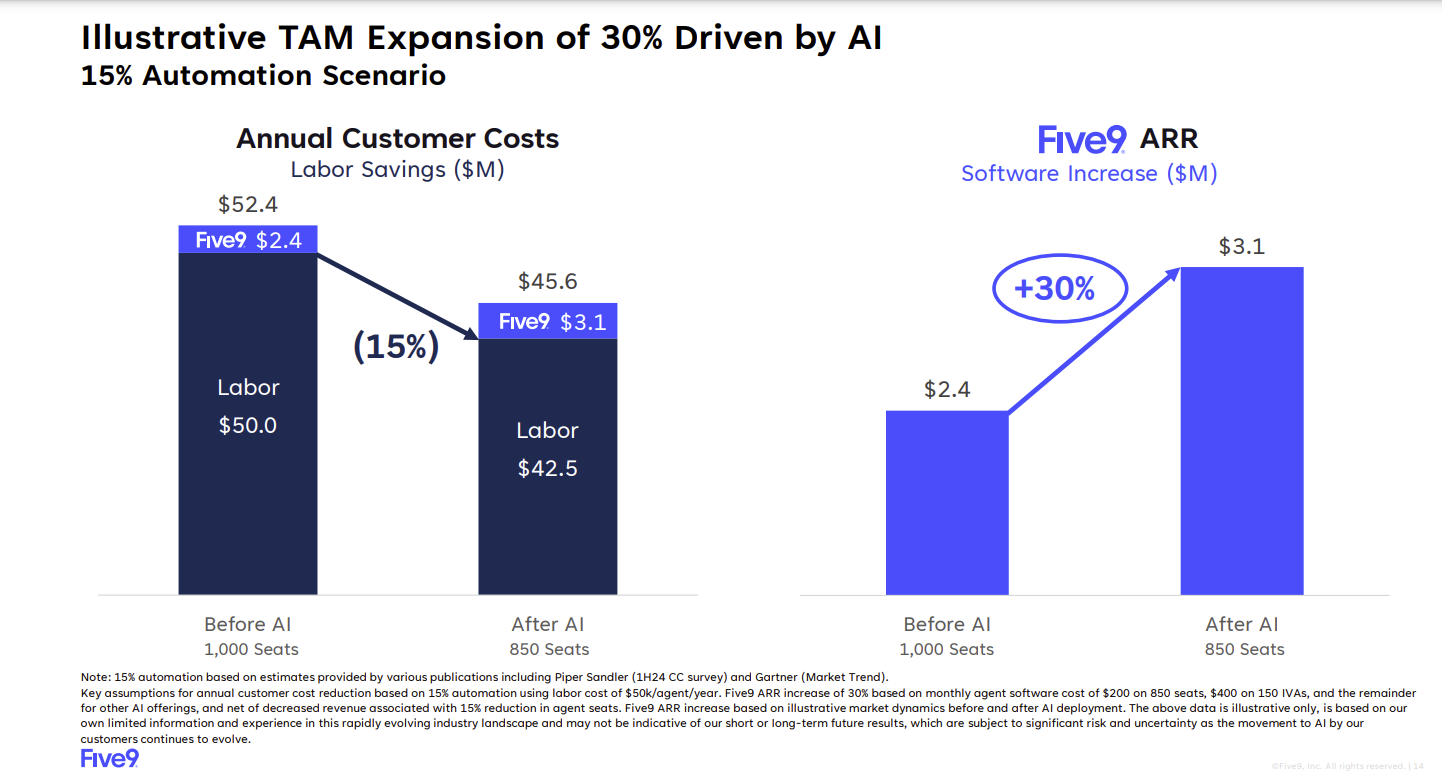
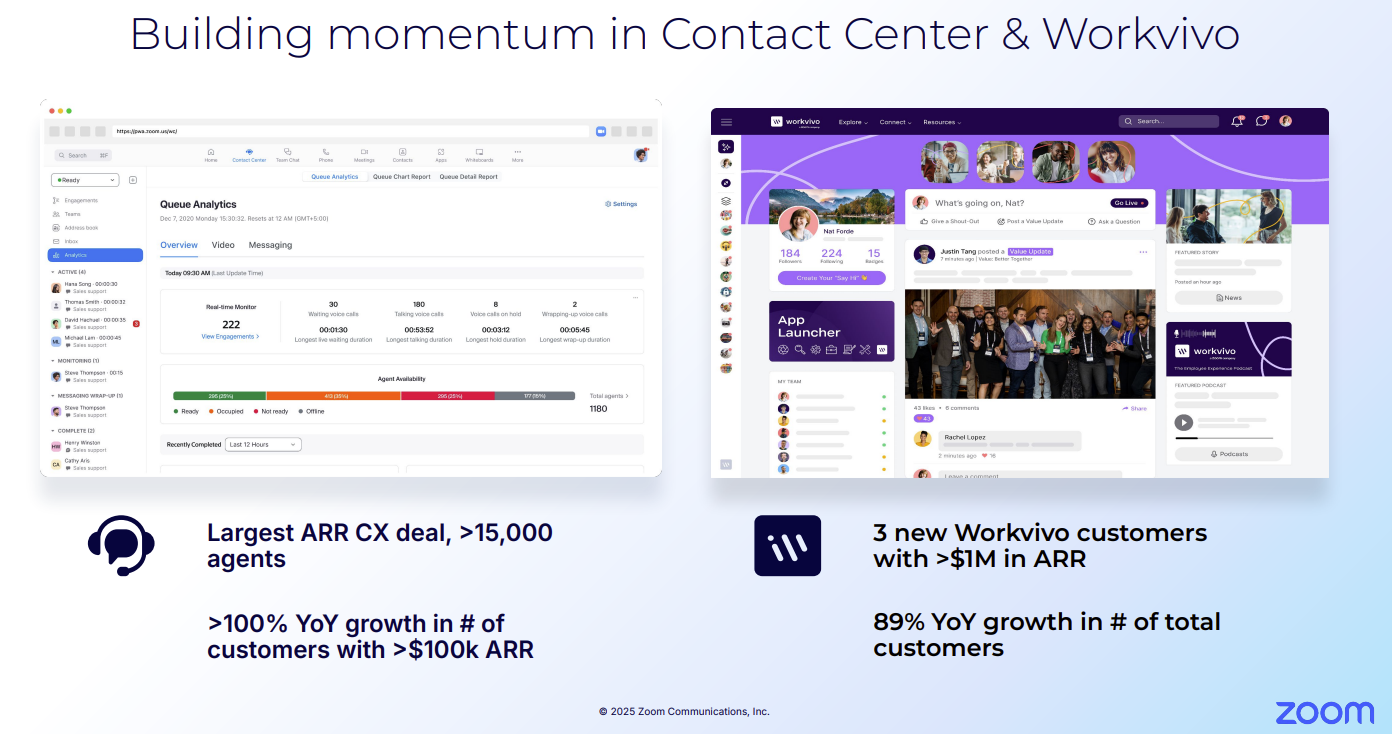
With the launch of generative AI, many vendors went crazy with copilot add-on pricing and plenty of enterprises balked at the changes. A few companies like Workday, Zoom and Adobe refrained from that add-on pricing model. Those vendors either raised overall pricing with AI features included, added a credit model or launched new SKUs.

In many respects, Google may just be getting ahead of a change that's going to happen anyway. AI is a feature set not an upcharge--especially when everyone and their mother has genAI tools now. In fact, Zoom launched a catchy commercial that turns the add-ons back on the competition.

For new customers, the Workspace pricing kicks in tomorrow. If you had an annual or fixed plan, there will be credits. Monthly plans will drop the add-on charges at the end of January.

The upshot here is that Workspace customers will get features like help me write, take notes and NotebookLM Plus.

A few items to note:

  • Google Workspace Business and Enterprise Starter, Standard and Plus plans are affected.
  • Gemini Business, Gemini Enterprise, AI Meetings and Messaging and AI Security plans are going away.
  • If you prepaid your Gemini for Workspace subscription you'll be credited Feb. 1. Credits will be prorated.
  • Google won't renew Gemini for Workspace add-on orders.
  • Existing Google Workspace pricing changes won't start until March 17, 2025.

Data to Decisions Future of Work Innovation & Product-led Growth Digital Safety, Privacy & Cybersecurity Tech Optimization Next-Generation Customer Experience Google Cloud Google SaaS PaaS IaaS Cloud Digital Transformation Disruptive Technology Enterprise IT Enterprise Acceleration Enterprise Software Next Gen Apps IoT Blockchain CRM ERP CCaaS UCaaS Collaboration Enterprise Service AI GenerativeAI ML Machine Learning LLMs Agentic AI Analytics Automation Chief Information Officer Chief Technology Officer Chief Information Security Officer Chief Data Officer Chief Executive Officer Chief AI Officer Chief Analytics Officer Chief Product Officer

Driving AI Adoption, Customer Success, Quantum | ConstellationTV Episode 96

📺  ConstellationTV episode 96 is here! Co-hosts Larry Dignan and Martin Schneider kick things off with a #technology news roundup, including Salesforce's expansion of Agent Force into the retail space and developments in the #quantum computing, including comments and reactions from NVIDIA's CEO.

Next, #Bt150 member Karen Higgins-Carter, a seasoned #CIO and board member, shares her perspective on how boardrooms should approach #AI. She believes in a holistic view across industries, focusing on practical use cases and the critical roles of change management and risk management.

Round out the episode with an overview of Martin's new CR Pulse on Totango and the changing landscape of #CustomerSuccess technology. He explains how Totango's acquisition of Parative and new product launches are transforming the company into a #GrowthOps powerhouse.

00:00 - Meet the Hosts
01:08 - #Enterprise tech news
08:01 - Interview with Karen Higgins-Carter
24:09 - CR Pulse Report: Totango
34:03 - Bloopers!

ConstellationTV is a bi-weekly Web series hosted by Constellation analysts, tune in live at 9:00 a.m. PT/ 12:00 p.m. ET every other Wednesday!

On ConstellationTV <iframe width="560" height="315" src="https://www.youtube.com/embed/SRY4f83gsvA?si=Hj_ChU1FRdd1m3zB" title="YouTube video player" frameborder="0" allow="accelerometer; autoplay; clipboard-write; encrypted-media; gyroscope; picture-in-picture; web-share" referrerpolicy="strict-origin-when-cross-origin" allowfullscreen></iframe>

CxOs upbeat on economy, plan to invest heavily on genAI, AI agents

CxOs are optimistic about the economy and prospects for artificial intelligence, ready to invest and confident they can navigate emerging risks, according to a trio of surveys gauging enterprise sentiment.

Deloitte's CFO Signals survey for the fourth quarter found financial chiefs more bullish than they've been in 10 quarters about the economy. For instance, 72% of CFOs believe the North American economy will improve over the next year and 67% of respondents said it is a good time to take greater risks.

The percentage of CFOs saying it's a good time to take greater risks is the highest since 2018, said Deloitte. Meanwhile, 42% of CFOs are prioritizing risk management and 40% are focused on optimizing costs, according to Deloitte, which surveyed 200 CFOs in North America between Nov. 13 and Nov. 25.

Boston Consulting Group (BCG) in its AI Radar survey found that three quarters of 1,800 executives surveyed said they would make genAI a top-three priority for 2025. BCG said that one in three companies across all markets are planning to spend more than $25 million on AI in 2025.

BCG found the following:

  • 75% of executives rank AI and genAI as a top 3 priority, but only 25% are seeing significant returns.
  • Companies with the best AI returns are focused on an average of 3.5 use cases compared to 6.1 use cases for other enterprises.
  • 60% of companies aren't tracking AI projects with financial KPIs.
  • 67% of enterprises are considering autonomous agents as part of their AI transformation.
  • Less than 10% of executives expect a decrease in headcount due to AI automation, but 68% will get by with their existing workforce.

On the risk side of the CxO pendulum, an Allianz survey focused on enterprise risks. The Allianz Risk Barometer noted that cyber-attacks are the biggest worry for enterprises followed by business interruptions and natural disasters.

More:


New C-Suite Data to Decisions Future of Work Innovation & Product-led Growth Tech Optimization Next-Generation Customer Experience Digital Safety, Privacy & Cybersecurity Leadership AI GenerativeAI ML Machine Learning LLMs Agentic AI Analytics Automation Disruptive Technology Chief Executive Officer Chief Financial Officer Chief Information Officer Chief Information Security Officer Chief Experience Officer Chief Technology Officer Chief AI Officer Chief Data Officer Chief Analytics Officer Chief Product Officer

Microsoft launches Quantum Ready Initiative

Microsoft launched the Quantum Ready Initiative to help businesses prepare for quantum computing as well as align it with business strategy and returns.

The effort lands during an interesting time in quantum computing as vendors scuffle over when the technology will be useful to corporations. Nvidia CEO Jensen Huang put the quantum computing usefulness timeline at 15- to 30-years, but other vendors disagree.

Microsoft's Quantum Ready Initiative launched just a few weeks after the company outlined other quantum computing advances. Microsoft is also building its own quantum computer and partnering to offer services via Azure.

The Quantum Ready Initiative includes industry-specific skilling modules, expert-guided workshops and roadmaps for integrating quantum computing and classical systems. Microsoft has a small services unit, but is aiming to build a quantum computing ecosystem that would include large systems integrators in the future.

Microsoft's Quantum Ready Initiative rhymes with AWS' Quantum Embark Program, an advisory service.

According to Microsoft, the new Quantum Ready Initiative will enable enterprises to build practical hybrid applications, invest in skilling and access to quantum computing, focus on quantum safety and cryptography and prepare to scale.

Microsoft's focus is on hybrid applications for quantum computing--a direction other vendors have followed. In a nutshell, quantum computing and high-performance computing will be paired for developing artificial intelligence and algorithms.

In the near-term, Microsoft is betting that quantum computing will primarily be leveraged for AI applications in chemistry for protein folding and drug candidate use cases and material science. These projects are more proof-of-concept efforts. For the mid-term, Microsoft sees drug chemistry, manufacturing and energy use cases.

"You can tell things are really moving fast in the quantum space when more and more vendors of the caliber like Microsoft join. With its Quantum Ready Initiative, Microsoft couples hardware readiness, software and adoption in the enterprise to make it easier to move to quantum which excitingly is in the foreseeable future, meaning 2025. Now it's all about figuring out what the first use cases will be that companies will be using Quantum for," said Constellation Research analyst Holger Mueller. 

Data to Decisions Tech Optimization Innovation & Product-led Growth Microsoft Quantum Computing Chief Information Officer

Why your IT strategy will be easier (in theory): There's only one path

Enterprise IT strategies are consolidating into one approach that can encompass artificial intelligence and next-generation applications.

That's the gist of a report from Constellation Research analyst Holger Mueller, who argued that there's going to be "a single best-practice IT strategy."

This consolidation of approaches is being forced by a bevy of underlying trends and business requirements. Enterprises need to drive insights from data, enable AI, develop next-gen applications powered by one data foundation and aligning IT costs with the business.

Mueller argued that there's only one IT strategy to accomplish those tasks. The strategy has a series of steppingstones including building one lakehouse with business intelligence capabilities, creating an AI platform on the cloud, developing next-gen applications that are built in-house based on automation and eliminating tech debt, leveraging truly global systems and going with a cloud-native foundation.

The biggest task here is to create the data foundation since it's the building block for everything else.

Mueller said:

"There have always been multiple IT strategies and parallel platform options with their own merits. Often it was also not a question of “if” but “when”: Timing mattered and was rightfully part of strategy discussions. The emergence and viability of GenAI make this obsolete. There is only one IT strategy, and it needs to be implemented now. And it is clear that those who move earlier will learn earlier and execute AI business better and sooner than anyone moving more slowly or waiting."

New C-Suite Data to Decisions Future of Work Innovation & Product-led Growth Tech Optimization Next-Generation Customer Experience Digital Safety, Privacy & Cybersecurity ML Machine Learning LLMs Agentic AI Generative AI AI Analytics Automation business Marketing SaaS PaaS IaaS Digital Transformation Disruptive Technology Enterprise IT Enterprise Acceleration Enterprise Software Next Gen Apps IoT Blockchain CRM ERP finance Healthcare Customer Service Content Management Collaboration Chief Information Officer Chief Executive Officer Chief Technology Officer Chief AI Officer Chief Data Officer Chief Analytics Officer Chief Information Security Officer Chief Product Officer

Practical Advice for the Boardroom: Driving AI Adoption

Constellation #BT150 member Karen Higgins-Carter shares her expert perspective on how boards and executives should approach #AI implementation. As a former #CIO across multiple industries, Karen provides valuable guidance on:

  • Balancing the digital and physical aspects of AI across different sectors
  • Bridging the gap between AI hype and reality in the boardroom
  • Navigating the buy vs. build decision for AI capabilities
  • Effectively managing change and workforce adaptation for AI initiatives
  • Adopting a risk-based approach to drive successful AI adoption

Hear Karen's practical advice for driving tangible business value from AI investments.

Constellation #BT150 member Karen Higgins-Carter shares her expert perspective on how boards and executives should approach #AI implementation. As a former #CIO across multiple industries, Karen provides valuable guidance on:

On Insights <iframe width="560" height="315" src="https://www.youtube.com/embed/bc094gc7VkQ?si=jwLSghvQ9wNmVuBo" title="YouTube video player" frameborder="0" allow="accelerometer; autoplay; clipboard-write; encrypted-media; gyroscope; picture-in-picture; web-share" referrerpolicy="strict-origin-when-cross-origin" allowfullscreen></iframe>

BT150 Spotlight: Karen Higgins-Carter on practical AI approaches

Artificial intelligence is a big opportunity across enterprises in multiple sectors and boards of directors need to think through practical use cases that drive returns, said Karen Higgins-Carter, a former CIO who serves on multiple boards.

Higgins-Carter, a member of Constellation Research's BT150, has been a CIO multiple times including stints at Gilbane Building Company, Webster Bank, MUFG Americas and various GE divisions.

I caught up with Higgins-Carter to talk shop. Here are some of the takeaways.

AI as common opportunity. Higgins-Carter said that boards need to recognize that AI returns cut across multiple sectors and enterprises "AI is a common opportunity across sectors," explained Higgins-Carter. "What comes to mind first is that AI is for a technology, or heavily digital company, but AI also applies to warehouses, planes, trucks, logistics and construction. Sectors with a physical product have a tremendous amount of information flow that is involved in the delivery of the product. Same with pharma and same with financial services. So, make sure that you're thinking about the opportunity holistically and not necessarily from a biased point of view about what business you are in."

What AI doesn't change. Higgins-Carter said boards need to explore AI for their businesses, but in the end businesses are all about creating value in the short- and long-term. "You have to manage unit economics and that doesn't change with AI," she said. "I think boards are interested in practical experimentation, but they're more interested in AI from a strong point of business acumen. What are the practical opportunities in the experiments and inherent risks."

Buy vs. build AI approaches. "If you don't already participate in the technology sector you don't have building your own AI as a core competency," said Higgins-Carter. "Starting with buying and partnering with other companies to develop a capability is a place to start. You can get near-term value. Then you can explore how AI is operationalized within your company; what roles stay and what roles go away?"

Over time, Higgins-Carter said enterprises can figure out AI's implications for workforce planning, culture and commercialization. Companies need to think about opportunities for real differentiation and whether it makes sense to create in-house AI applications.

The buy approach has served Higgins-Carter in her CIO roles largely because the industries were not focused on technology, which was more of an enabler. "I've seen the model that corporations can contribute their knowledge of the industry, their data and develop something unique," she said. "You have to partner with others that bring the depth of technology knowledge to go with industry knowledge."

Hype vs. reality with AI. Higgins-Carter said enterprises are seeing AI automate tasks, but not necessarily roles. Companies are being smarter about tailored approaches to AI, top use cases and process optimization as well as risks. "I think the focus has changed from running a lot of prototypes  to taking a few use cases all the way through the process," she said.

Digital labor and agentic AI. Higgins-Carter said agentic AI will initially support the workforce, but the reality is that it will reshape jobs. "It's a moral obligation for teams to prepare the workforce for that eventuality," said Higgins-Carter. "How people can participate in the future is fundamental to human capital management."

More CxO interviews:


Data to Decisions Future of Work Next-Generation Customer Experience Tech Optimization Innovation & Product-led Growth New C-Suite Digital Safety, Privacy & Cybersecurity AI GenerativeAI ML Machine Learning LLMs Agentic AI Analytics Automation Disruptive Technology Chief Information Officer Chief Executive Officer Chief Technology Officer Chief AI Officer Chief Data Officer Chief Analytics Officer Chief Information Security Officer Chief Product Officer

BT150 zeitgeist: AI, efficiency, vendor angst and finding the right IT structure

A big push to cut costs via IT spending and automation is likely to put a squeeze on enterprise vendors with some companies pondering exit ramps from current suppliers. Can you write your own ERP and CRM systems using generative AI?

Those are some of the core themes that were surfaced on Constellation Research's January 2025, BT150 call. Ray Wang, Constellation Research CEO, noted that 2025 is going to be interesting from a technology spending perspective because the US government's push to cut costs has carried over to the enterprise.

In other words, enterprises are going to look for exponential efficiency and that's going to lead to some creative moves. One creative move that's being pondered is using generative AI to write applications on the fly. Items that surfaced on the BT150 call, which operates under Chatham House rules, include:

  • A tug of war between software vendors and customers. Enterprises need to drive down cost structure, but vendors are trying to jack up rates. AI and automation will play a big role in how this battle plays out. The enterprises that figure out how to rewrite core systems or relegate them to inexpensive plumbing will win.
  • Foundational systems are too expensive. Previously, the idea was to build on top of legacy ERP and CRM systems, but the foundational costs are too expensive. One enterprise has an internally built CRM tailored to its business because of costs. AI and low code means it's easier than ever to move off of established platforms to save money. "There's a tremendous opportunity for us to reset the table here," said one BT150 member.
  • Pegging the IT budget to a percentage of sales. One BT150 member noted that through the retirement of tech debt and using ServiceNow to integrate best-of-breed suppliers, the IT budget is now pegged to a bit more than 1% of sales from about 6%. Process automation is driving that optimization.
  • Invest in minimal amounts on IT and more on change management. Multiple BT150 members said that change management needs more investment if companies are going to transform and optimize.
  • Structure of technology budgets, spend and interface with the business leads is critical. Multiple BT150 members noted that it was critical to get the right IT model in place and sell it to other C-level executives to cut costs. One CxO described a model of layers that include management, operations, administrative and technology. Technology supports the other three and needs a plan to continually cut overhead.
  • AI model training portability. With AI being embedded everywhere, enterprises are realizing that the training is critical. There will be a push toward keep the training and moving the models. Enterprises don't want to be locked into a model.
  • The fires in Los Angeles County are going to surface issues with disaster recovery as infrastructure will need to be backed up and replaced. Disaster recovery strategy isn't the headliner now, but will be worth monitoring.

More from the BT150 calls:


Data to Decisions Tech Optimization Future of Work Innovation & Product-led Growth New C-Suite Next-Generation Customer Experience Digital Safety, Privacy & Cybersecurity BT150 AI GenerativeAI ML Machine Learning LLMs Agentic AI Analytics Automation Disruptive Technology Chief Information Officer Chief Executive Officer Chief Technology Officer Chief AI Officer Chief Data Officer Chief Analytics Officer Chief Information Security Officer Chief Product Officer

Physical AI, world foundation models will move to forefront

Physical AI and the foundational models that go with them will be a recurring theme across enterprises now that Nvidia has laid out its Cosmos world foundation models.

Speaking at CES 2025, Nvidia CEO Jensen Huang launched its own physical AI models with the aim of popularizing use cases across industries and robotics. Huang said Cosmos is needed to jump start the next generation of foundation models. After all, training world foundation models (WFMs) is expensive.

"The ChatGPT moment for robotics is coming. Like large language models, world foundation models are fundamental to advancing robot and AV development," said Huang.

WFMs will use data, text, images, video and movement to generate and simulate virtual worlds that accurately models environments and physical interactions.

Cosmos models have been trained on 9,000 trillion tokens from 20 million hours of real-world human interactions, environment, industrial, robotics and driving data, said Huang. WFMs will usher in a new era where AI can "proceed, reason, plan and act."

The play for physical AI is robotics and autonomous vehicles, said Huang. "There are no limitations to robots. It could very well be the largest computer industry ever," said Huang. "There's a very serious population and workforce situation around the world. The workforce population is declining, and in some manufacturing countries it's fairly significant. It's a strategic imperative for some countries to make sure that robotics is stood up. Human robots will surprise everybody with how incredibly good they are.”

Nvidia's launch of WFMs may jump start physical AI efforts that have been percolating. Consider:

  • Archetype AI raised $13 million in seed funding to develop its WFM called Newton. Archetype AI's funding round was led by Venrock and included Amazon Industrial Innovation Fund, Hitachi Ventures, Buckley Ventures and Plug and Play Ventures. Archetype AI’s primers on physical AI are worth a read.
  • Google DeepMind is putting together a team to create generative AI models to simulate the world.
  • Odyssey raised a $18 million Series A round to train generative AI models for film, gaming and world. The funding is initially being used to capture data from the real world to train models.
  • AI on Demand in Europe is also working on physical AI models. "What distinguishes Physical AI systems is their direct interaction with the physical world, contrasting with other AI types, e.g., financial recommendation systems (where AI is between the human and a database); chatbots (where AI interacts with the human via Internet); or AI chess-players (where a human moves the chess pieces and reports the chess board state to the AI algorithm)," said AI on Demand.

There are other efforts to develop WFMs and physical AI use cases. Huang obviously thinks physical AI is a huge market across multiple industries. It's also likely that all of the sensor data available from Internet of things sensors will also be handy.

Sign up for the Constellation Insights newsletter

Stanford University and Robotics at Google have compiled datasets on physical concepts and properties.

Accenture is also all-in on the physical AI and WFM effort. In Accenture's Technology Vision report for 2025, Karthik Narain, Group Chief Executive of Technology and CTO at Accenture, said:

"We are reaching a watershed moment as the power of generative AI is applied to physics and the field of robotics. Gone are the days of narrow, task-specific robots that require specialized training. A new generation of highly tuned robots with real world autonomy that can interact with anyone, take on a wide variety of tasks, and reason about the world around them will expand robotic use cases and domains dramatically."

What remains to be seen with physical AI will be the various intersections with WFMs. At AWS re:Invent 2024, a few executives noted that IoT is cool again and going to fuel industrial AI use cases.

Physical AI also sounds like it'll rhyme with active inference, a theme at Constellation Research's Connected Enterprise 2024. Denise Holt, Founder and CEO AIX Global Media, said active inference will "create digital twins of everything."

Holt said the agents that power active inference leverage sensor data from IoT, cameras and robotics and measure it against a real-world model. "We will have smart cities, autonomous systems, improving the efficiency of everything, global supply chains, personal and critical systems," said Holt.

Rest assured that physical AI in practice will combine multiple disciplines and technologies. Get up to speed because your board may be asking about physical AI soon.

Data to Decisions Future of Work Innovation & Product-led Growth Tech Optimization Next-Generation Customer Experience Digital Safety, Privacy & Cybersecurity AI GenerativeAI ML Machine Learning LLMs Agentic AI Analytics Automation Disruptive Technology Chief Information Officer Chief Executive Officer Chief Technology Officer Chief AI Officer Chief Data Officer Chief Analytics Officer Chief Information Security Officer Chief Product Officer

CxOs need to focus on quantum computing readiness, not the noise

Quantum computing vendors IonQ and D-Wave Quantum touted strong bookings for 2024 and the fourth quarter and said systems are showing near-term usefulness and commercial potential. The disclosures were timed to counter Nvidia CEO Jensen Huang's take that useful quantum computing systems were 15- to 30-years away.
Huang made the quantum computing comments at CES 2025 in a Q&A with analysts. Specifically, Huang said:

"Someday we'll have very useful quantum computers. We're probably five or six orders of magnitudes away, 15 years for useful quantum computers and that would be on the early side. 30 years is probably on the late side. If you picked 20 years a whole bunch of us would believe it."

Huang's comments cratered quantum computing stocks such as IonQ, Righetti Systems and D-Wave were halved in intraday trading. Quantum stocks took off in late 2023 after Google touted quantum computing gains and AWS announced services to help enterprises prepare for use cases. Even after the stock hit, quantum companies are overvalued due to the immaturity of the market.

For instance, D-Wave said 2024 bookings will top $23 million, up 120% from a year ago. Fourth quarter bookings will be at least $18 million, up 500% from a year ago. Keep in mind that bookings take time to convert to revenue. For the nine months ended Sept. 30, D-Wave reported revenue of $6.52 billion.

D-Wave CEO Dr. Alan Baratz said, "Jensen Huang has a misunderstanding of quantum" and D-Wave's approach is useful today.

IonQ CEO Peter Chapman said the company will hit the high end of its bookings and revenue guidance for 2024. Chapman added that IonQ expects to be profitable with revenue approaching $1 billion by 2030. Chapman said IonQ's current quantum systems are "already providing insight to solutions for customers today" with more powerful systems coming in 2025.

More: IonQ’s bet on commercial quantum computing working, acquires Quibitekk | IonQ's quantum computing bets: Quantum for LLM training, chemistry and enterprise use cases

IonQ is the most mature of the pure play quantum companies with 2024 revenue between $38.5 million and $42.5 million.

For comparison, Righetti Computing revenue for the nine months ended Sept. 30 was $8.52 million.

What's a CxO to do?

Like any emerging technology, there's the Wall Street story, which often runs ahead of reality, and the enterprise planning story.

The enterprise story revolves around cloud providers providing quantum computing instances to test. And companies in certain industries--chemistry, biology and finance--can make use of quantum today.

CxOs need to plan ahead and think through use case for quantum computing. And established enterprise vendors are increasingly becoming quantum technology players. For instance, IBM is networking its Heron quantum systems together and can provide value today. Either way, quantum computing is going to be accessible via your cloud providers such as AWS, Microsoft Azure and Google Cloud whether they offer their own quantum systems or access pure play offerings.

Holger Mueller, an analyst at Constellation Research, has been covering quantum computing in recent years. Mueller said it makes sense for CxOs to stay focused on learning the technology (there are multiple approaches) and use cases that can add value. The rest is noise.

He said:

"If GenAI did not happen, we would all talk about quantum. With quantum encryption already working and delivering its first use case, more use cases are around the corner. All eyes are on IBM to see if the coupling of the Heron processors will work. If it does, quantum use cases will become relevant for enterprises in 2025. Planning and simulation are the horizontal use cases, protein folding and chemical engineering are the vertical ones. CxOs need to get their enterprise ready by moving the relevant data to their cloud of choice (and before assessing the quantum plans of that cloud vendor)."

More:


Data to Decisions Tech Optimization Innovation & Product-led Growth Quantum Computing Chief Information Officer